Magic Bibles

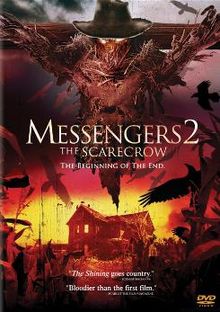
With autumn not far down the road, my mind turns to scary things. Actually, it is that way quite a bit of the time. Nevertheless, movies about farms are often the setting for the creepy—the sense of isolation, the sharp implements farmers use, the rustling of the drying crops in the wind. A couple years back I watched The Messengers. As a horror film it had a number of good scares, but the menace always seemed somewhat restrained. Nothing profound happens, and it is a film fairly easily forgotten. It was a rainy Saturday afternoon and The Messengers 2: the Scarecrow suggested itself to me. I began watching in an ambivalent mood, but when the first scene began with the protagonist (whose name I’ve forgotten) dropping his Bible on the porch chair as he loosens his tie to work on a derelict water pump, I was curious. When his wife arrives home and asks why he left church before it was over, my interest grew. This direct-to-video prequel turned out to be a cut-budget horror flick based squarely on a religious parable.

In a faustian moment of abandon, and at the advice of a jocular neighbor named Jude (Iscariot, anyone?), our hero erects a scarecrow to try to improve his lot (literally). To give credit where it is due, the scarecrow is distinctly disturbing. The scene of John (okay, I looked it up) nailing the scarecrow to the cross is clearly a crucifixion scene, and the blood that will later appear at the foot of the cross bears this out. Before he realizes that the scarecrow is evil, John hears ghostly children singing in his cornfield. The song is “Jesus Loves Me.” There is a strong fertility goddess theme running through the film and when Jude reveals that his wife has a magic book that explains all the benefits of the scarecrow, John decides to cut it down. The scarecrow, predictably, resurrects.

Meanwhile, John’s Christian family thinks he has gone insane. Or worse, backslidden. As he tries to explain to his wife what has happened, John shows her the magic book and she insists “It’s just your old Bible,” and it is. Heathenish occult instruction transubstantiates into Christian scripture. It is tough to tell one sacred writing from another. For cut-rate horror fodder, this is wonderful commentary on religious sensibilities. Although straight-to-video movies are not high art, and will never receive academy award nominations, they do reflect popular religious beliefs. Scholars are now in search of such beliefs in ancient societies since “official religion” almost never reflects what actual hoi polloi think. Lived religion seldom conforms to the intricacies envisioned by religious founders, and yet it is out there on the Internet for all to see. Maybe the messengers in this film are not the crows after all. The point of the parable? Stay true to your Christian upbringing or else the scarecrow will get you.
Ring

Absence of evidence is not evidence of absence. So goes a trite little statement meant to calm the fears of new students of biblical studies who worry that the historical record for biblical events is so sparse. The professor can head off many confrontations by declaring that such-and-such an event could have happened, but if it did it left no mark on the historical record. As I was watching the Japanese movie Ringu last night, I wondered about the apparent absence of religious imagery or themes. I am fully aware that not all horror movies have religious components, but the juxtaposition of religion and fear is so common in the western world that it often shows up in scary movies. I wondered if this translated to other cultures or not. Ringu is a decidedly creepy ghost story that creates considerable tension with little gore and not much in the way of special effects. The social commentary is evident even without the benefit of first-hand knowledge of the culture. The paranormal pervades the film.

Christianity is the matrix of many scary movies made in a North American, or even European, context. Although I have read about Buddhism and Shinto, and even occasionally taught courses on “World Religions,” my knowledge of eastern religious traditions is admittedly still quite basic. I can usually spot a biblical allusion a country mile away, but subtleties of foreign religions are harder to discern. Although many religions coexist in the United States the overall context is still Christian—there can be no doubt for anyone who follows politics. Japan is, like America, largely secular. The religious base, however, tends to involve both Shinto and Buddhism and I’m not sure which, if either, forms the recognizable “religious” basis of the collective consciousness. In many ways “religion” only applies to the Judeo-Christo-Islamic model. Much could have been transpiring in Ringu that I simply missed.

After the first mysterious death in the film a short sequence of a family in mourning is shown. Clearly this is what we in the western world would consider a religious context. The decision to try to calm the avenging ghost by uncovering her murdered corpse also conforms to what we might term religion. The fact is, these are very human concerns. Religions throughout the world treat death with a religious reverence since it is the great mystery of the living. Religion frustrates many scientists just for the fact of its mysteriousness. So, does Ringu revolve around religious fear? I don’t know. With the karmic implications of the story-line I would suggest that maybe it does. I’ll remain agnostic on the point, however. The same goes for the absence of evidence is not evidence of absence. Is it or isn’t it?


Psychotic Vampires

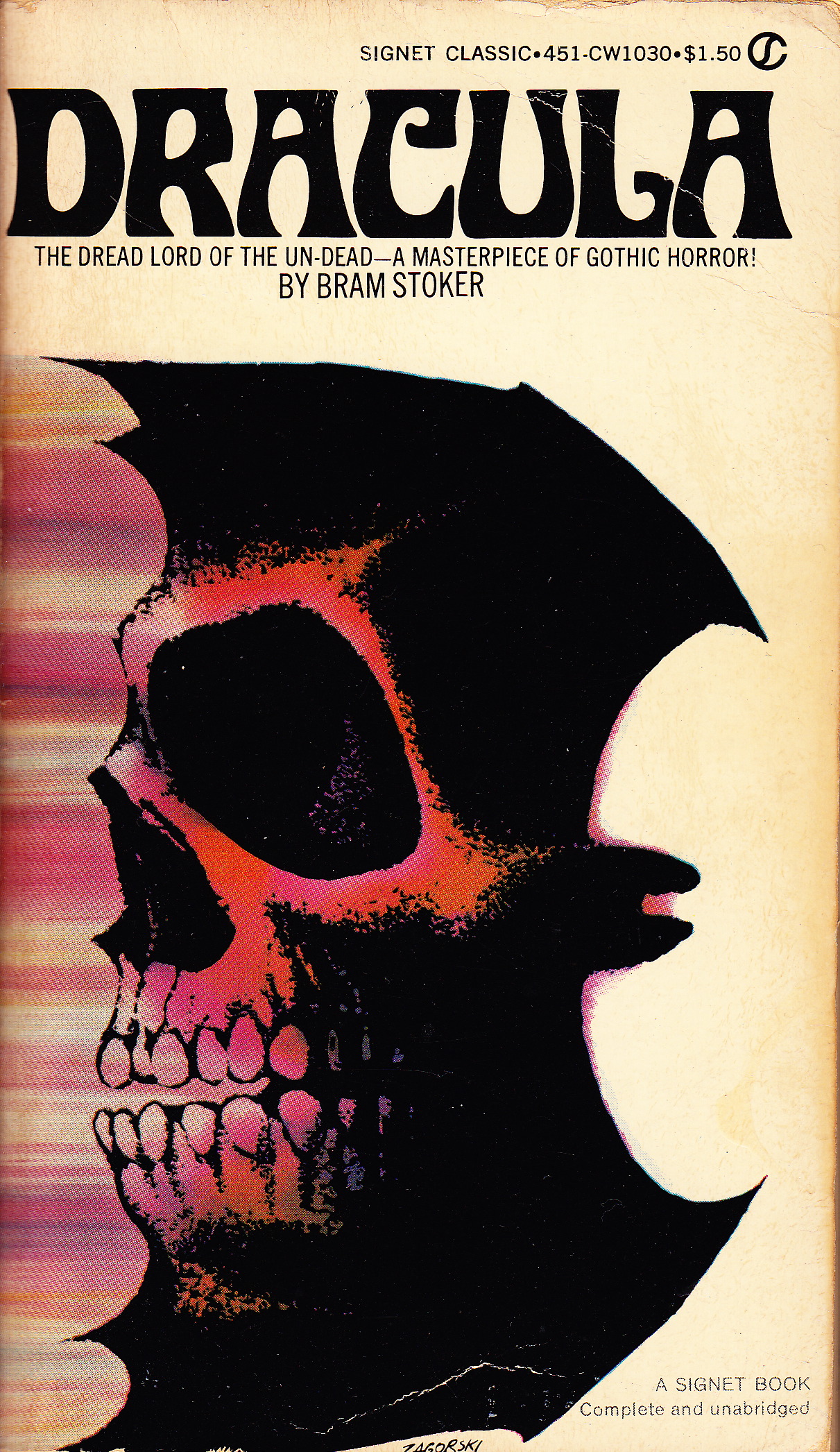
Over the past several months, and unrelated to the current vampire craze, I have re-watched some of the classic vampire movies: Dracula, Bram Stoker’s Dracula, Nosferatu (both Murnau and Herzog), and even Shadow of the Vampire—a movie about making vampire movies. Although the prototype of the vampire goes far back in civilization, in some form back to even the earliest of civilizations, the modern rendition rests mostly on the imagination of Bram Stoker. I’ve been re-reading Dracula to recapture a sense of why this particular telling of the tale has become iconic. One suggestion that comes as I’m reading is that it presses the religious taboos of its Victorian era sensibilities. Indeed, Stoker consciously wrote religiously provocative elements into his story. Of course, in movie form the story is altered to fit the needs of both time and scope.

A character that transforms in these various films is Renfield, the lunatic. In Stoker’s original Renfield is the foil for Dracula himself, his devotion interpreted as insanity by the science of the day. At one point Dr. Seward, Van Helsing’s protege and the man in charge of Renfield, notes with clarion penetration, “for a strong man with homicidal and religious mania at once might be dangerous. The combination is a dreadful one.” Renfield is, as a servant of Dracula, complicit in both homicide and religious mania. He uses Christianesque language when referring to his master. In describing his devotion, Seward notes, “He thinks of the loaves and fishes even when he believes he is in a Real Presence.” To a generation raised without Bible, this confession makes little sense.

I have contended throughout this blog that religion and horror are intimate familiars. To understand the appeal of the vampire, one must explore the religious context. Surely the simple neck-biting and blood-sucking without religious underpinnings would soon grow tedious. It is the sense of mystery—most fully realized in religious thought—that brings the vampire to life in the imagination of a generation lacking traditional religion. Not to mix metaphors too intimately, but there is a dose of Melville to be mixed in as well. Renfield is the epitome of madness, blindly following where he believes he is called. But the reader knows how sadly mistaken he is. So it is that I return to Bram Stoker’s Dracula and in so doing find a form of true religion.


Illini Wisdom

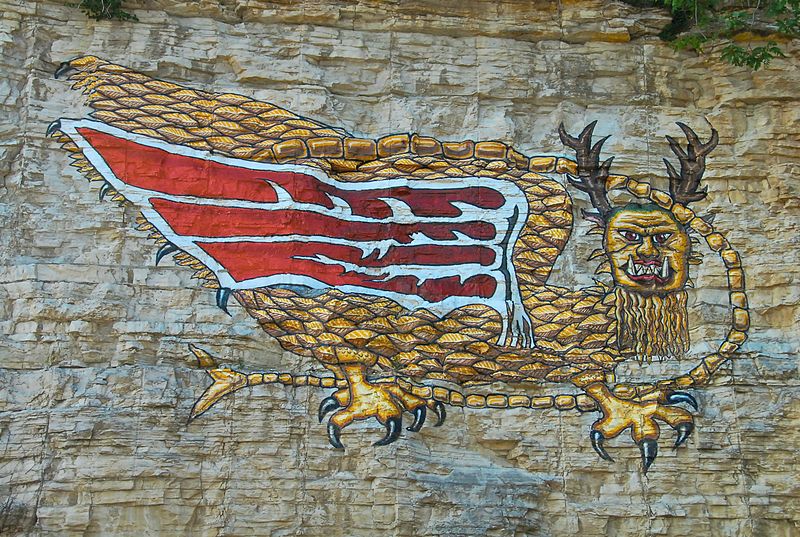
Running through the Midwest like a massive, erosive serpent, the Mississippi River has an unrivalled place in the American imagination. In many locations the relentless river has carved impressive bluffs over the millennia, providing impressive views out over the valley that has been carved in nature’s time. Down near the town of Alton, Illinois, along the eastern bluffs left by the sculpting waters, is a reproduction of the Piasa Bird. Years ago, while living in the Midwest, some relatives took me to see the replica, a local tourist attraction and not a bad place to watch for bald eagles. It was then that I first heard the myth of the Piasa Bird. “Bird” is a bit of understatement, or perhaps a misnomer. The creature was really a monster, by any description. According to the lore presented by the tourist literature, the Piasa was a flying, human-eating beast that terrorized the local Illini tribe. Unsure of what to do, the tribe was at a loss until Ouatoga, their leader, had a dream that revealed an ambush as the means of defeating the monster.

The ambush involved, as is often the case in folkloristic accounts, a victim. Someone had to be bait to draw the Piasa into the ambush of poisoned arrows that had been arranged. Ouatoga, aware of the obligations of leadership, volunteered for the role of the victim and stood in the open to lure the Piasa into the trap. As the monster swooped down on him, the warriors released their arrows, killing the beast and saving their leader. The story bears much in common with myths throughout the world: a frightful beast, a sacrifice, and ultimate deliverance. This framework also appears in many religions, outlining the human condition. It also reflects, in an abstract way, the ideal of pre-modern society; we are all in this together. Banding together against an outside evil, human society might banish the monster and everyone’s chances would be improved. It is the world of mythology.

In our enlightened society the emphasis seems to have changed completely. Our leaders are often our Piasa, snatching from the populace at will and maintaining uneasy control. Ouatoga, in the myth, understood the role of leadership as being willing to sacrifice everything for the good of those who were under his watch. The idea also occurs in the Bible where Ezekiel charges the ungodly kings of Judah with being shepherds who eat the sheep. I still believe in the power of mythology. Stories are preserved because of a truth that resonates with the hearers. Monsters are in no short supply, and a society that is subject to the whims of an oligarchy perhaps has the most to learn from our mythological past. When is the last time a public leader offered to give up anything in order to serve the populace who grants him (sometimes her) his power? Old Man River, he must know somethin’. Looking up at the Piasa, I think I might be able to guess what it is.


Evil Living

Maybe it was just the lack of rationality that comes with driving 700 miles in two days, or just plain glaikitness, but I watched Evil Dead II a couple nights back. I had read on an Internet site (probably already a warning) that it was very scary, but I’ve been a slave to logic for many years. Supposing this to be a sequel, I was confused when the first few minutes replayed the plot from the first movie with just two characters instead of the original five. Budget cuts (literally, as I later learned) meant leaving out characters and supposing that the viewers would catch on. In the first Evil Dead, the catalyst of the evil spirits in the woods was “Sumerian” spells recorded by an ill-fated professor in the cabin in the forest. Playing the recording (still in the first film), the kids release the evil spirits and one-by-one become possessed until Ash has to kill off all his companions. The campiness in both films tends to ameliorate the over-the-top violence and blood, and you know that the film isn’t taking itself at all seriously.

Once I figured that out (it was, after all, a very long drive), I settled in to watch a familiar story unfold. New characters are added in the form of the professor’s daughter, and traveling company, who show up with more pages from the Book of the Dead that will help to dispel the evil. When the characters encounter a ghost of the dead professor, he says something that may be the point of this blog post. He urges his daughter to seek salvation in the pages of the book. So here was a distinctly Judeo-Christ-Islamic theme playing out: salvation comes through obeying a book. It is an example of what I would have called “the Bible as a magical book” back in my teaching days. Movies, both good and bad, tend to portray “Bibles” as books that have the ability to affect the world around them in beneficial ways. Demons are cast out, illnesses are healed, lives are restored.

My fondness for B movies, in the end, is all that redeemed this domestic cinematic experience. I have spent many nights in the woods and I have read and reread sacred books. The two, however, seem to be worlds apart. Nature often feels like a redemptive experience. After many weeks of experiencing the outdoors only in the guise of New York City, a truth that can only be called sacred occurs—people are creatures of nature and nature can still feel sacred to us. Here is a simple reason that environmental integrity must be maintained against those who would exploit the earth for fossil fuels, timber, or drainage of lakes for irrigation. Nature may be our last chance to find something truly sacred. Once one person, company, or government destroys it, it will be gone for a lifetime or more, for everyone. That, in my book, is evil.


Thinking Zombies

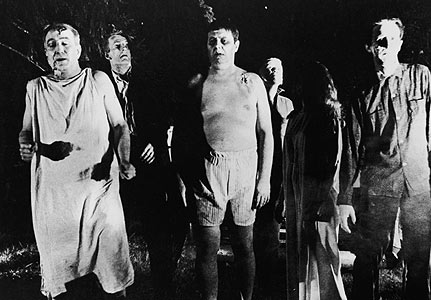
Religion seldom makes as big an impression as when it concerns itself with the undead. Popular culture has gone after zombies to such a degree that they have engaged academic discourse well beyond the field of African-Caribbean religions. In fact, religious specialists tend to shy away from the topic in a kind of first-date embarrassment. Perhaps it’s because zombies in popular culture are so much cooler than their Vodou forebears. Within the past several months, however, zombies have shown up in Time, on the Center for Disease Control website, and now in the Chronicle of Higher Education. An article this week explores the academic implications of a paper by neuroscientists Bradley Voytek and Timothy Verstynen on the zombie brain. The two took on the project as a lark at the behest of the Zombie Research Society. Science fiction writer and head of ZRS, Matt Mogk gave an interesting take on zombies. He’s quoted in the Chronicle as saying, “Zombies are rooted in science, not superstition and myth.”

At the risk of sounding extremely uncool (one that I take rather frequently, I fear), I would point out that exactly the opposite is the case. Zombies are rooted in superstition and myth, i.e., religion. The entire idea that a person can be made to rise from the dead—originally to be made a slave—comes from that heady blend of Christianity and African religion that developed as part of slave culture. Slavers were notorious in not wanting slaves to accept Christianity because that might make slaves think that they were equal with their owners. By suppressing Christianity among slaves, the African religions in which many were raised came to blend with the Christianity that they’d garnered. One of the bi-products was the zombie. The zombie partakes of the Christian concept of resurrection, but in a twisted way. Once the new vision of the zombie presented by George Romero took off, yes, they did move into the realm of science fiction, often the forerunner of science.

A very serious issue underlies the zombie myth—the very religious concern about death. While not all religions comfort with an afterlife, they all in some way deal with ultimate issues. The end of life is about as ultimate, from our limited experience, as they come. Science loudly and repeatedly insists that death is the final frontier. We don’t cross back this way again, according to the available evidence. Scientists do not study ghosts or souls, and are very cagey about near-death experiences. The zombie, who is now threatening the careers of young scientists, is a most religious monster. Everything about the zombie points to its origin as a religious trope. Voytek and Verstynen wanted to interest people in science by taking a comic look at zombie brains. The problem is that zombie brains are brains on religion, not science.


Scotland’s Cryptic Evangelist

Many years ago it was now, on a Victoria Day bank holiday weekend, my wife and I were on a camping trip with friends in the Scottish highlands. Pitching our tents on the banks of Loch Ness, we joked about the potential danger—after all, Nessie had reputedly attached St. Columba, therefore even the pious had no refuge. Early the next morning, our party still intact, we drove to Urquhart Castle, arriving before it opened. Out on the loch we saw something moving through the water, leaving a wake. It was breaking the surface but was too small to be a boat and it was not a bird. It moved at constant speed until it was out of sight. This was in the days of actual film, and slide processing was “dear” as the Scots say, but I snapped off a photo anyway. The slide is too indistinct to make a diagnosis, but our friends, who had a better camera, came to the conclusion that it was a small boat. After looking at their enlargement, I still have my doubts. I’ve always sat on the fence for the Loch Ness monster. Certainly it seems improbable, but we have only a cursory knowledge of sea creatures and Loch Ness is deep and long and isolated. Is there a Loch Ness monster? Maybe yes and maybe no.

Of course, Nessie has been in the news, as my wife pointed out, backed by the considerable creativity of the creationist camp. Seizing a living dinosaur as the death knell of evolution, Fundamentalist schools in several states are using textbooks that argue Nessie’s existence proves that dinosaurs didn’t evolve and that they still walk (or at least swim) among us. An excellent corrective to this “either evolution or special creation” is Victor Stenger’s book God: The Failed Hypothesis, that I reported on a few weeks back. With apologies to the late Stephen Jay Gould, this tactic puts an entirely new spin on the concept of the hopeful monster theory.

Religion and monsters are thoroughly intermeshed. Often this intermingling comes as the result of revulsion against the unclean or impure aspects of life that monstrosity represents. Numerous analysts have shown that monsters tend to be unholy mixes of elements that religions prefer to keep widely separated—animals that would never have made it onto the ark, yet somehow have arisen since the deluge. Human fear at contamination has an excellent basis in evolution; those who never developed the sense to stay away from the sources of contamination grew sick and died off. Monsters, in this sense, serve as useful reminders for avoiding the “strange fire” that so displeases the Lord. Reading how good Christians are now reaching out the right hand of fellowship to their monstrous brethren, I wonder if a long-held belief is being imperiled. Those who would swim with monsters must be very cautious indeed, for above all things, monsters are notoriously unpredictable.


Friday the Sixth

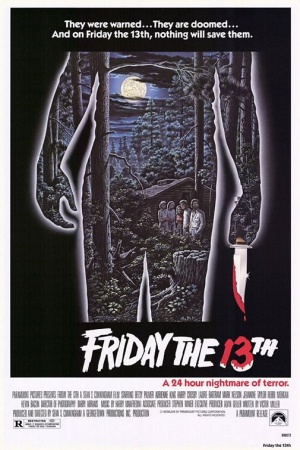
I tend to run behind on the movie front.  In some cases, decades behind.  I have never been a fan of slashers, although I did take a date to A Nightmare on Elm Street in the staid, dry town of Grove City while in college.  We broke up shortly after.  Still, I have a soft spot for “the classics,” and Friday the 13th has spun enough sequels to qualify.  “Jason” is a household name for the heartless serial killer, and the movie is set in New Jersey.  And it was hot outside and lazing on the couch trying not to stick to myself seemed about as much of a challenge as I could handle. Besides, a week from today is Friday the thirteenth. Now that I’ve finished with the excuses, here is a declarative sentence: I finally got around to watching Friday the 13th.  After many other films I’ve seen, I have to say that it didn’t really qualify as scary.  You know in advance that the counselors, by rote, must by killed in what are supposed to be shocking ways.  Shadowy corners and rainy woods and aluminum canoes are to be avoided, if the movie and its successors have taught us anything.  Nevertheless, the religion and scary film equation still applies.  And a strange kind of throwback to an unexpected classic (the literal kind).

The religious element comes in the form of the stock crazy local named Ralph.  Ralph warns the kids that they will die and says he’s been sent by God to warn them.  Of course they don’t listen.  If they had, there would have been no movie. As a child I was always offended by the caricature of the religious crazy, but I have come to see that this stock character is itself a symbol of fear.  Although ubiquitously laughed off, the person passionately driven by religion is indeed a potential danger to society.  In the days of my innocence we had little hard data upon which to hang such fears.  In the post-9/11 world it seems there are far too many sky-hooks for that purpose. Some of those sky-hooks are a little closer to the ground, but they inspire fear nonetheless. I’ve known all along that one of the reasons I watch scary movies is to give myself some advance warning of what might go wrong.  Not that it would help in any real way, but sometimes avoiding the shock by anticipating the worst seems like the only human thing to do.

What about the literal classic that I mentioned? Beowulf falls outside the Greco-Roman period, but is clearly a classic of English literature.  (Spoiler alert for anyone even more behind the times than me—) The only thing scarier than Grendel was, of course, Grendel’s mom.  So in Friday the 13th, the killing is done by Jason’s mom.  Like Grendel, Jason dwells underwater and surfaces to pull down his victim(s).  Like Grendel’s mother, Jason’s mother is decapitated by a sword (actually, a machete in the modern version), on the shore of the Crystal Lake.  After the mother’s death the child (Jason/Grendel) is resurrected.  Whether it was intentional or not, there is a lot going on here. The sacrificial mother is an inherently religious theme although many formal religions make it a male prerogative. The death of the mother brings the son back to life.  I wonder how Christianity might have differed if instead of three male deities, there had been a divine mother.  In such cases resurrection of the son comes only at a very steep price. Just like watching Friday the 13th on a hot summer night.


Gothic Religion

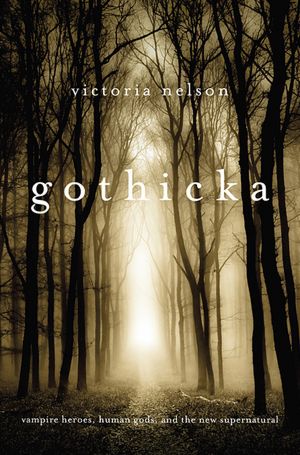
Every great once in a while, you run across a book that seems to have been written just for you. I’m cheap enough to wait for most books to be issued in paperback (and storage is getting to be an issue in our cozy apartment), but sometimes the urgency is too great and I can’t resist. In Providence a few weeks ago, I visited the university bookstore—one of my favorite places in town. On the new arrival table was Victoria Nelson’s Gothicka. For what seemed inexplicable reasons, I always found Gothic tales among my favorite growing up. Poe was a standard, but he was accompanied by other stories that elicited the same cocktail of sensations, accompanying a dark and mysterious atmosphere with a suggestion of menace. Transfixed by even the mere presence of this book, I knew I was in the power of a force to which I would eventually succumb. And, unexpectedly, the book helped to explain part of my childhood.

Not every book I read has to do with religion. Far from it. I expected Nelson to discuss literature and movies and culture—all of which she does—but not necessarily religion. The first three chapters proved a revelation in that regard. Nelson deftly explains how Gothic largely overlaps with the characteristics of religion, bringing the supernatural into human lives and insisting that we tremble before it. Perhaps best explained by pastor Rudolf Otto in The Idea of the Holy; the transcendent is something that terrifies as well as compels. In a culture where organized religion appears to be losing ground, Gothic offer the opportunity to tremble before the supernatural, and many people find it almost a religious experience. As becomes clear, the “almost” may appropriately be dropped.

Tracing the trajectory of my own reading interests, Nelson next provides an insightful chapter on H. P. Lovecraft. In many ways the initiator of worship of the dark divine, Lovecraft’s Cthulhu and kith and kin represent an undisguised secularization of deity. At the same time, the trembling is still very much present—indeed, it is a native part of the experience. Lovecraft, who was an atheist, understood the literary utility of gods. They frightened and haunted him with their very non-existence. That is power. Gothic acknowledges and embraces that power while never relinquishing its darkness. Nelson’s Gothicka holds the potential of a journey of self-discovery. As she ranges deeper and deeper into that world, the reader discovers just how much it is part of being human in a world tormented by fallen gods.


Artifacts or Theodicy?

Last week the Huffington Post ran a story that ties archaeology, religion, and monsters together in a package too neat for some researchers. Digging in a sixteenth-century grave for plague victims (something that strikes me as being so foolhardy as to be religious) archaeologists found a corpse with a brick in its mouth. The preliminary conclusion? Sixteenth-century Italian plague-weary society was attempting to stop a vampire. The find has, of course, been disputed. Other archaeologists, the story notes, claim that a loose brick could have fallen into the cadaver’s agape mouth just making it resemble the little-known technique of stopping a vampire by bricking its mouth open. This story, written with Huffington Post’s usual pluck, raised an issue I quite often encountered as a doctoral student in ancient Near Eastern religions: anomalies are generally categorized as religious.

When my wife first pointed this story out to me I thought I might learn something of vampire lore—itself inherently religious—from the sixteenth century. The fact is, however, that artifacts (including people) under the ground accumulate a lot more than dirt. Mystery attends the lives of yesteryear, and the further back we go in time the less we understand. It was a standing joke among those of us in the textually-based field of religious studies that any artifact for which no function could be discerned would most certainly be labeled “religious” by archaeologists. When no logic attends an action, call it religious. This might be a motto for academics and their approach to the study of religion. There are some who claim religious studies is not a proper field of inquiry at all. Excuse me, but where are you intending to fly that plane?

Vampire scares (whether or not that’s what was found in Italy) do, however, follow their own logic. Although early scientists may have made connections implicating rodents (and their fleas) as carriers of plague, the average citizen would have only seen the supernatural dimension. Morbidity on the scale of the Black Death is almost inconceivable and as Europe suffered through periodic outbreaks of plague it seemed that a good God couldn’t be behind it all. Evil creatures, such as vampires, get God off the hook. They are a device of theodicy. “Theodicy” is the jargon for the theological justification of God in a world full of suffering. When God’s goodness effaces to such a point that people grow frightened, well, isn’t it just easier to say a vampire is behind it all? The conclusion that logic draws is quite different. Nevertheless, I think I’ll be replacing the garlic on my nightstand with a brick. What will the archaeologists of the future say?


Haunted Pilgrim

No visit to Providence is complete without a tip of the hat to H. P. Lovecraft. As someone who dabbles in the noble art of writing, I have great appreciation for those who somehow made an impact (often only after they’ve died) on the literary world. I discovered Lovecraft only after I left Nashotah House, which was probably a good thing. Nevertheless, I have come to appreciate his breadth of vision, populating the earth with ancient gods who emphasize the powerful and heartless side of divinity. His vivid images of Cthulhu pervade popular culture to a level that few of the uninitiated would ever expect. And yet, deep in the depths he lurks. So when I was in Providence over the weekend for my niece’s graduation, I spent an afternoon seeking out some time with H. P.

Place inherently partakes of that we term holiness. Where something happened matters. There is no science to explain it, but it is something people know. It is for this reason that I try to visit the homes and resting places of classic writers. Over the years we’ve visited the haunts of Mark Twain, Laura Ingalls Wilder, Edna St Vincent Millay, Washington Irving, Edgar Allan Poe, and others, as well as H. P. Lovecraft. Simply standing in or near the places they once frequented provides a form of inspiration unavailable in any other way. So it was that I found myself at 598 Angell Street in Providence. It is a house still occupied, with no indication of who once called this building home. Lovecraft lived here from 1904 to 1924. If it weren’t for the Lovecraft walking tour I found on the Internet, I would have never known.

In many ways a provincial man, Lovecraft was born and also died in Providence. Apart from a stint in New York City, he spent his time in his hometown. I walked to 454 Angell Street, the address at which he was born. I knew the building had been razed in the 1960s, but I wanted to see what society deems more important than preserving those places that sequester the holy for haunted pilgrims. Although I couldn’t tell for sure, since house numbers change, I believe his birthplace is now the Starbucks that sits pleasantly in a small commercial district. I wonder how many of the thirsty realize where they’re sitting. Have they read any of Lovecraft’s stories? If so, are they uncomfortable sipping coffee in such a spot? Or perhaps it has become a kind of secular sacrament—a toast to all artists whose pasts have been obliterated.


Gods Will Be Gods

“And it came to pass, when men began to multiply on the face of the earth, and daughters were born unto them, That the sons of God saw the daughters of men that they were fair; and they took them wives of all which they chose.” Genesis 6 begins with one of the most unusual stories in the entire Bible. And that’s saying something! The sons of God mating with the daughters of men? A couple verses on we hear about giants roaming the earth in those days, presumably the children of this divine-human miscegenation. What is this stuff straight from pagan mythology doing in the pages of Holy Writ? Over the centuries, translators have tried to tidy up the boldly direct language of the King James here, making the sons of God into angels or some lesser beings. It is too hard to accept that sacred scripture admits of polytheism.

Monotheism, it is clear, came to the Israelites somewhat late in their history. The Bible is full of bold clues that other gods exist, and, worse yet, they are sometimes as powerful as Yahweh. In the light of later theological development, translators often bow to popular pressure and clean up the Bible’s language a bit. Fact is, Israelites, like most ancients, lived in a world populated with mythical creatures. Gods galore, monsters, demons, angels, witches, giants—they all haunt the pages of the western world’s sacred book. But that’s not what we expect the Good Book to say. The Hebrew text here is unequivocal, these are the “sons of God” we are talking about. Either that, or worse, “the sons of the gods.” More and more deities.

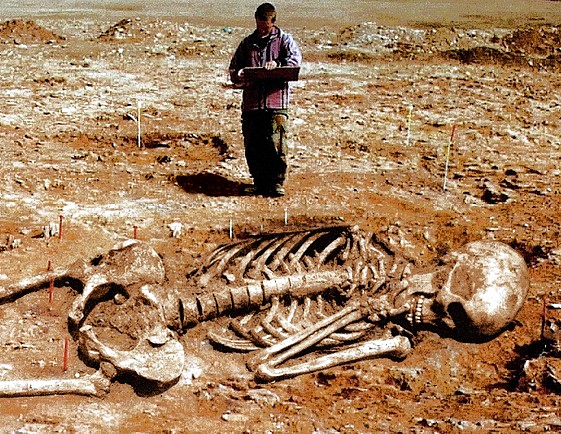
We can’t be sure why the ancient believed in monsters and giants, but it seems likely that such creatures had explanatory value for their world. Lacking science—paleontology was millennia in the future—they had to explain the huge bones found in the earth. We do know that dinosaur bones had been discovered in the Mediterranean basin in antiquity. These big bones often look human to a non-specialist. Heads are frequently missing. It has been suggested that these give rise to our biblical giants. Yet another response has been the recent trend of fundamentalists with Photoshop skills to post photos of archaeologists actually discovering giants on the Internet. Some of these doctored images are very impressive. It is an effort to save the Bible from the truth. A Bible that requires saving, however, should give even the most fervent believer pause for thought. Isn’t it just easier to suggest the sons of God were typical guys and that little has changed since the world was young?


Dark Light

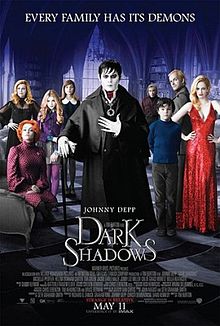
It took a few weeks and five states, but I finally got to see Dark Shadows. Although I’d seen the trailers, there was quite a bit over which I remained in the dark. After all, the television series ran daily for several years and the story of Barnabas Collins was never really resolved, to the best of my knowledge. Trying to fit all of that into a couple hours of cost-intensive Hollywood showmanship would be a tall order. I have come to trust the Burton-Depp collaboration, however, and I had read some time ago that Johnny Depp had wanted to be Barnabas Collins when he was growing up. It is difficult nevertheless to resurrect a vampire after some three-and-a-half decades of slumber. Speaking with some friends after the movie I discovered that I was not the only child discouraged from watching Dark Shadows after school as a child. But watch I did.

Barnabas Collins became a monster as the result of a curse. The series—which I remember principally as a series of impressions and images—and the movie make that clear. The man who has lost control of his own fate is a reluctant monster. An aristocrat who lives by draining the blood of the common folk. Despite the humor and carnality of the movie, social commentary is there. Sometimes buried in an iron coffin, and sometimes in a vintage VW bus from the early ‘70’s. It may not appear full blown on the big screen but it pulses through the veins nevertheless. Barnabas Collins is a reluctant and conflicted vampire, but he does kill others to survive.

Why would a kid raised in a religious setting be so drawn to a creature of evil? Perhaps it was because Barnabas was the ultimate penitent. He had to victimize others, but he always regretted doing so. Like any living (or undead) creature, his nature compels him to survive. He is sad about his lot in the world, but is helpless to change it. Like many children of the monster generation I was nourished by a long series of movies featuring impossible creatures, including vampires. The earliest vampire I knew, however, was Barnabas Collins. Although Bram Stoker had set the type nearly a century earlier, my measure of the vampire was the reluctant denizen of Collinwood. Although I read my Bible dutifully, and never missed church, I still found the plight of this lonely monster compelling. The movie may not live up to the standard of all Dark Shadows aficionados, but if it brings a subtlety of moral ambiguity to a generation of absurdly self-assured modern-day fundamentalist children, the curse of Barnabas Collins may really be a blessing in disguise.


Scary Monstrances

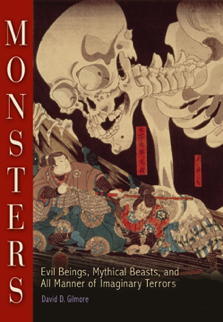
I can’t help myself. I’ve always found monsters fascinating. Now that I’m mostly grown up and am expected to have a modicum of respectability, I try to read academic books on monsters so that I can legitimate what would otherwise be puerile juvenility. David D. Gilmore’s Monsters: Evil Beings, Mythical Beasts, and All Manner of Imaginary Terrors was my latest foray into the forest. As I have come to expect, just pages into the book the first reference to religion emerged. This connection between monsters and religion is not Gilmore’s central theme, but it does recur at several points in the book. I especially enjoyed his discussion of Spain’s Pentecostal dragon. The Tarasque, named after its host town, is a medieval dragon that is still feted to this day in some locations. Considered to be symbolic of the sins of humankind, it accompanies either the holy day of Pentecost or of Corpus Christi. This connection between the church and monsters took me back to my first experience of Corpus Christi.

Raised as solid a protester as a Protestant can be, I had a difficult transition to some aspects of Anglicanism. The ceremonial was great, but some of the popish blandishments I could never quite accept. When a member of Boston’s famed Church of the Advent, the rector asked me to be a torch bearer on Corpus Christi. This involved processing outdoors onto Beacon Hill in full drag (or cassock and surplice, as I’m sure the parsimonious will correct me) to accompany the holy sacrament, carried as it turns out, in a monstrance. The idea that looking at a piece of wafer-thin bread on public display could somehow mediate a divine blessing, I never understood. It felt as much a fairy tale as the dragons of Spain. Monster or monstrance?

Gilmore concludes that monsters are people’s projections of their deepest unresolved issues. He may be right. One of his observations, however, struck me. He suggests monsters predate even gods in the human imagination. I tend to think they entered that gray space at the same time. Our minds have always told us that there were creatures out there to fear. Some of them, we hope, are good. Others are clearly evil. Monsters are difficult to explain in a world created by a benevolent deity. It is perhaps no mistake that Zoroastrians conceived of Angra Mainyu as monstrous. Divinity and diabolism could be fused into one being. There is a profound lesson here, for those able to read. Monsters are among the earliest projections of human imagination. And they remain forever with us.

Angra Mainyu; god or monster?


Vampire Jesus

It was a dark and stormy night. Well, so far that could describe most any night in April or May of this year. Anyway, I had just read about vampire-bots for the first time. Robots, like all machines, require a power source. Those I’ve witnessed up close require rechargeable battery-packs that are surprisingly heavy. I’d read that some robots were being designed to consume their own energy sources—mechanical and chemical eating, if you will. One dreamer figured that blood could work as a source of energy. A robot could be designed to take energy from blood, and thus arises the concept of the vampire-bot. I don’t think such an insidious machine was ever really built, but it is theoretically possible. It is also a reflection of a biblical idea—the life is in the blood. Ancient people tended to associate life with breathing. With no CPR, an unbreathing body was a dead body. Blood obviously played into the picture too, but precisely how was uncertain. Clearly a person or an animal couldn’t live without it. To say nothing of robots.

One of those dark and stormy nights I watched The Shadow of the Vampire. Surprisingly for a monster movie, Shadow had been nominated for two academy awards. Not really your standard horror flick, it is a movie about making a movie—specifically Murnau’s Nosferatu, the classic, silent vampire movie that really initiated the genre. The actor cast as Count Orlock, however, is really a vampire. The premise might sound chintzy, but the acting is very good with Willem Dafoe making a believable Max Schreck (vampirized). Stylistic rather than gory, the story plays out to the fore-ordained conclusion and the vampire disappears in the cold light of dawn.

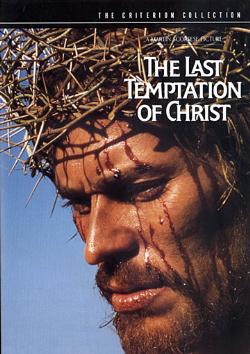
When I was an impressionable child I was told what is likely an apocryphal story about Leonardo da Vinci. The story goes that the man who posed for Jesus in the Last Supper was also the model for Judas, after living a life of dissolution. Willem Dafoe, of course, famously played Jesus in Martin Scorsese’s Last Temptation of Christ. From Jesus to vampire. Both characters are bound by the element of blood. Christianity still celebrates the shedding of divine blood symbolically while the vampire takes blood (also symbolically). Although the vampire cannot endure the sight of the cross, the same man effectively played both sides of the mythic line, almost as if the apocryphal story came true. There are implications to consider here, and not all of them insinuate Hollywood. On these dark and stormy nights, we have something to ponder.