Apostle

Apostleposter

I was teaching in a seminary when Robert Duvall’s The Apostle came out. Seeing the favorable reviews, I put it on my wish-list and somehow it never managed to rise to the top. Perhaps it was because I worked at a religious institution 24/7. Seeing a movie about church felt almost superfluous. Many years on now, my wife bought me the DVD (yes, we’re old-fashioned) and we finally sat down to watch it. I realized, as the preaching started, that I didn’t know what to expect. I assumed that Sonny would be a typical Elmer Gantry-type character, cynical and self-centered, but as I kept waiting for the sneering commentary to come, it never did. The movie didn’t valorize Sonny either—he is a flawed preacher who commits murder out of jealousy and flees the state to start a life elsewhere. Landing in rural Louisiana, he begins building a life doing what he does best—preaching. The local people benefit from his presence, so I was waiting for the cracks to appear, but they never did. The movie is amazingly respectful of Holiness, or Pentecostal religion. It left me quite thoughtful.

Having grown up in a non-denominational setting, the scene of the altar call was one that was familiar to me. Fiery sermons were also something I’d seen before. Theological education, of course, causes one to question much of this, which is why many Fundamentalist churches do not hire seminary graduates to be their clergy. Study tends to refine that ability to let go and have emotion become the substance of the service. Recalling my own childhood, steeped in the Bible and fervent fear of Hell, church was primarily an emotional catharsis for me, not an intellectual enterprise. The problem for me was that I couldn’t stop thinking about it. That’s where it often starts to crumble for those who want to understand emotion-driven religion. It doesn’t mix well with rationality.

The Apostle is made all the more powerful for its use of actual Holiness preachers in the movie. When they’re preaching, they’re not acting. They’re preaching on film. Part of the draw, I suppose, for many viewers is that this is a foreign world. Mainstream church services are often subdued, perhaps even dour, by comparison. They are, however, more rationally driven. The substance of any mainstream liturgy derives in some form from Catholicism. Pentecostalism dismisses all of that, retaining the music and the sermon and the Bible. Otherwise, they are practically different species. The storyline of the movie isn’t anything grand. Preacher commits crime, repents, gets caught. Still, there’s an authenticity to it that makes it compelling. No Jim Jones here. No David Koresh. Just a man, in many ways typical, trying to make his way in the world in the only way he knows how. And that can be inspirational.


Hello, I’m Not In

I recently received two “out of office” replies to my own “out of office” message. Being a fan of futility in all forms, this struck me as a great paradigm for the modern age. Email has made vacation superfluous, of course. I was actually out of town moving my daughter back to college, so email was not high on my list of priorities. When I’ve tried to leave work without putting on a message explaining that I’m not there (I tend to respond to emails quickly for an editor, so I’m told) I’ve been politely informed that it is rude not to let people know you’re away. Or computers. My non-message prompted a non-messages from other vacationers’ email accounts, and when I returned, I had to read them as well as the original email that had received my impersonal reply. Both had sent their replies, despite their out of office messages. This is indeed a brave new world.

It is a world where human interaction is optional, at best. Our industry grinds away making devices and services that people will buy with electronic money sent over a network that no one really controls. And we think nothing of it. Business has blinded us to how meaningless humanity has become. Business runs for business’s sake. Even so, we’re asked to check our email when we’re on vacation, in case something important comes up. I used to think vacation was important. It is the sop we’re thrown for working jobs that lack the visceral appeal of growing our own food and relying upon ourselves. Thoreau on the web.

Benjamin_D._Maxham_-_Henry_David_Thoreau_-_Restored

Science fiction is the great predictor of where we might go. Most of it is completely fiction, or course, but some manages to catch glimpses of the truth. Skynet, or even the Matrix or Hal, have sent messages to us. Machines that think are devices we don’t understand. We haven’t even defined consciousness to a level that satisfies anyone. We know it because we feel it. Oh, I’m not really an alarmist about all that. I do wonder, however, where we are headed when technology races ahead while the humanities are disparaged. All those who emulate Spock seem to have forgotten that his appeal is that he’s half human. We build our aliens to specification. And they now pass polite greetings when they speed past each other on the cyber-highway with no laws.


Time and Again

One score and ten years ago, I graduated from college. I also enrolled in seminary and worked in a United Methodist summer camp. I bought my own car and worked as a bag boy in a grocery store. I also met my future wife. Last night we watched Back to the Future, the sleeper hit and highest grossing film of 1985. There’s been a bit of buzz about it because, discounting the sequels, Doc Brown wants to travel thirty years into the future, yes, 2015, which seemed impossibly far off back then. I have to think his envisioned 2015 was more advanced than what we’ve actually managed. Technology, instead of sending us to Jupiter like Arthur C. Clarke imagined, has instead focused on the incredibly tiny. We now do finally have Dick Tracy wrist-phones with real-time images, but we’re still pretty much earth-bound and our rockets are aimed at other people rather than outer space. Instead of fighting aliens with lasers, we’re shooting fellow humans while at church, synagogue, or mosque. Instead of presidential candidates who want to see how far we can go, we’ve got a stagnant pool of people who want to turn the clock back to, well, 1955.

Back_to_the_Future

Don’t get me wrong—this is a fascinating time to be alive. Just yesterday I sat down to recollect the number of computers we’ve purchased as a family and what each could and couldn’t do. Our first couldn’t connect to the internet since no such thing existed. Our first laptop—which we still have—weights as much as a current desktop and has a black-and-white screen. Now we walk around with the internet in our pockets, never really disconnected from a web in which, I’m sure, lurks a huge spider. But back in 1985 you could make quite a few, as it turns out, false assumptions. Church attendance was healthy and would always continue so. We had space shuttles and were looking to walk on other planets. Rock had matured into a provocative mix of selfishness and social protest. Despite the president of those years, things seemed to be improving.

In Back to the Future, Marty McFly returns to the same Hill Valley he left. A fictional town, I noticed last night, that had a seedy downtown square with adult themed stores and movies. The 1955 square had bullies and manure trucks, but a cleanness that was only on the surface. When Marty’s DeLorean reappears in the square in 1985, he crashes it into a Church of Christ. Although this detail had escaped me before, now it strikes me as somewhat prophetic. Thirty years into the future and, like Marty, we are backing out of the church into an age of nones. Our nones not only refer to our religiously unaffiliated, however. We have nones who’ve lost faith in our government, our economy, and our worldview. Instead of going to Jupiter, we stare at our palms. And like Doc Brown, we look back thirty years with nostalgia and wonder at how wrong we are when we believe in the status quo.


Night Terrors

TerrorInTheNightNightmares are the stuff dreams are made of. Or maybe I’ve got that the wrong way around. Having grown up subject to frequent nightmares, I still occasionally have them. I suppose it is easy enough to assume someone who reads about monsters and watches horror films should not find this unexpected, however, I’m not sure they’re related. My nightmares visit issues that horror films avoid, and most of my monster reading is, well, academic. Surely the scientific study of nightmares has advanced since David J. Hufford’s The Terror That Comes in the Night: An Experience-Centered Study of Supernatural Assault Traditions, but it remains a very important book. As someone familiar with the phenomenon, I found Hufford’s study somewhat therapeutic, and it certainly does raise some interesting questions.

Apart from the unfortunately, inherently sexist, folk-title “the old hag,” Hufford is addressing a universal experience of people of all ages. Using his original setting in remote Newfoundland where his work began, Hufford collected tales of what might technically be called sleep paralysis with a specific hypnogogic hallucination of being attacked. A designation, he acknowledges, that is quite awkward for repeated use. Back in the early 1980’s, when the book was published, these accounts of nighttime attacks—a person waking up, or not having yet fallen asleep, sensing a presence in the room, finding her- or himself unable to move, and sometimes seeing or hearing an entity and feeling it on his or her chest—were rarely discussed. Especially in scientific literature. They seem a kind of embarrassing medievalism related to the ancient concepts of incubi and succubi, and even vampires. Having “the old hag” (a moniker relating to witches) is what the experience is known as in Newfoundland. Hufford, taking these accounts seriously, investigated what the sufferers had experienced. Unwilling to judge whether the event “actually happened,” Hufford’s scientific objectivity is truly admirable. Since the time of his book, the concept has become widely known and the argument is often made that having heard of sleep paralysis episodes feeds those with hypnogogic hallucinations the idea of a supernatural oppressor. In other words, now that we know about it, we don’t have to take it seriously.

Hufford is one of a small number of academics that is willing to engage with the supernatural on its own terms. Religion scholars do, of course, but we are generally dismissed from the starting block anyway. Most scientists disregard the possibility of anything beyond deluded brains and say nightmares are normal. Just deal with it. Those who’ve experienced the nighttime attack know that it feels very different than a garden variety nightmare. You can tell when you’re awake. Of course, we’re of the generation who’ve seen The Matrix and Inception, and we know that, at least in popular thought, reality has become negotiable. Nobody is much surprised any more by the idea of such an attack in the night. Waking nightmares have become as common as the headlines. If only more scholars would take human experience as more than just “old wives tales” we might all be surprised at how just rolling over can change everything for the better.


Contacting Faith

Contact_0001Sometime after the movie Contact came out, I saw it while on a flight to somewhere here or there. As with most movies on airplanes, it didn’t receive my full attention and I seem to recall not hearing a lot of the sound. Having always been intrigued by the possibility of aliens, however, I told myself I’d watch it again. Several months ago I did just that, but as Carl Sagan hoped, much of the story had become somewhat dated. I finally finished reading the novel, and this was a case of the book being better than the movie (as is frequently the case). A number of things surprised me about the story, the primary one being just how prominent religion is in the plot. In the movie some crazy preacher sabotages the first machine just as it’s nearing completion, and even though Ellie Arroway is long connected to Palmer Joss, their relationship doesn’t seem to dominate the script the way it does the book.

Almost immediately upon reading about adult Ellie, it became clear that religion was a major interest that Carl Sagan had. While the chiliasts receive many scathing comments throughout the novel, thoughtful Christian thinkers, such as Palmer, find a way of being taken seriously by Ellie, despite her own personal unbelief. Unable to understand how someone could not accept the evidence before their eyes, she wants to belittle religion but can’t when serious thinkers like Palmer remind her that they have a sophisticated worldview as well. The story represents a long struggle between alternative outlooks. While as a novel it doesn’t always flow, it pulls the reader along, partly based on the intriguing character of Sagan himself.

Carl Sagan believed in life on other planets. He was less sanguine about the possibility of either ancient astronauts or current-day visitors from space, but he kept an open mind. While he was the respected author of numerous scientific papers, other astronomers didn’t always know what to make of such a popularizer. Of course I never knew him, but I have to wonder if his true beliefs didn’t appear in his fiction rather than in his factual writing. At times I found the novel slow and plodding, and as the machine gives ambiguous results, I wondered where the rest of the story could go. Sagan profoundly brings the end back to belief. Without evidence, Ellie finds herself in the place of the religious who believe on the basis of experience and faith alone. And she finds her best friend is a clergyman. Contact, with its God-like aliens, is really a story of finding oneself a place in an infinite universe. To do that well, Sagan seems to have believed, requires both science and religion.


Seeing the Trees

Into_the_Woods_film_posterI first learned of Stephen Sondheim’s musical Into the Woods while liking in the woods of Wisconsin. I was teaching a summer term course of mature students, one of whom used one of the songs to illustrate the point he was making during a presentation. Of course I don’t remember what the point was, but I did remember the movie. Then along came Shrek and fractured fairy tales were back in business. Enchanted brought Disney into the act, and a number of self-aware takeoffs from the brothers Grimm have followed. I’d seen the film of the stage show of Into the Woods before, but it had been a while. Over the weekend we decided to watch the new Disney offering of the story and as we did a couple of familiar, if obscure, ancient mythological motifs came to mind.

Cinderella, as we all know, was sorely abused by her evil step-mother and step-sisters. She seeks solace at her mother’s grave, in the woods, of course, in the movie version. While there, singing somewhere between a lament and a prayer, her mother appears to her in the tree that grew from a branch she’d planted there many years before. It’s a musical number, of course, but my mind couldn’t help going back to Asherah. Asherah is considered by many (without good reason, and I should know) to be the goddess of the trees. Yes, this was a mortal, a dead mortal at that, who spoke from the tree but the way she was presented in the movie was distinctly divine. Indeed, there is similar iconography from ancient Egypt. It was almost enough to make me go back on my own evidence that Asherah wasn’t a tree goddess.

The giant’s wife poses a real threat in this film. Jack’s beanstalk and the effects resembled those of Jack the Giant Slayer, a movie that I only vaguely remember as being one of many I watched with bleary eyes on a transatlantic flight a few years back. Nevertheless, Mrs. Giant is here stomping about the village when Jack and the baker decide to take her out at the tar pit, with the help of Little Red Riding Hood and Cinderella. The preferred weapon is a sling. As the giantess is pelted with stones, she grows annoyed until Jack, in the perfect image of David, strikes the giant between the eyes, slaying her. We all know the fairy tale version ends with the beanstalk chopped down. We’ve entered a new world, however. A world where Bible and fairy tale are harder to distinguish. And not only that, but even fairy tales no longer have the canonical status they once held.


Human Race

PlanetOfTheApesMythFor reasons no one fully understands, Planet of the Apes touched a deep level of responsiveness in American society. I have to admit to having fallen behind a bit; I need to see Dawn of the Planet of the Apes to be back up to speed, but nevertheless, I remember the television releases and airings of the originals, and even have gone through the entire series in the form of home theater offerings. One Saturday long ago on a visit home, I sat through a marathon of the entire five-movies sequence all in a day. It should be no surprise, then, that as soon as I saw Eric Greene’s Planet of the Apes as American Myth it went on my reading list. Race and Politics in the Films and Television Series, the subtitle read. I admit that I grew up in a conservative, but sheltered environment. Having friends who were African-American, although, admittedly, they were a small fraction of the demographic in my small town, I never realized that there was a problem. Not until I took history and social science classes in school. You have to learn things such as racial distrust.

Struck by Planet of the Apes when I first saw it, I had no idea that it was a racial tale. It makes sense now, in the light of Greene’s analysis. To a child fearing evolution as much as Hell itself, the movie was a kind of forbidden fruit, and by making it science fiction, there was no reason to suppose there was a message here. It was a powerful kind of captivity. I have watched the movie, and current adaptations, many times over. Greene does an excellent job of demonstrating that the movies came at a time of great racial distress. Civil rights, the Vietnam War, the fear of the Communist—xenophobia was perhaps at an all-time high when the apes invaded our planet. As the series goes on, the identifications become clearer and clearer.

But more than that, Greene pointed out some very obvious—in retrospect—religious symbolism in the movies. Some of it was so intentional that it was written into the script. Among the scenes from the life of Jesus, the movies borrow most heavily from Exodus. Moses figures abound. Even Charlton Heston, in his role as Taylor, was following up on the Ten Commandments. Holy families and sacrificial victims mark just about every stage of this dystopia, a world where trust is always far from any relationship with someone physically different. It’s about time that I watched Dawn of the Planet of the Apes. And after that, I need to go back to the beginning, and watch them all with renewed eyes. In the light of current events, also with the hope of a more just future.


Christian Horrorshow

Books & Culture is the review organ of Christianity Today. Christianity Today is the evangelical answer to the more liberal Christian Century. Working in publishing, particularly in the field of religion, it is important to keep an eye on what the popular magazines are saying about our books. Well, neither is as popular as it used to be, but still. I’ll grown used to Books & Culture taking a rather wholesome reaction to books that challenge worldviews. In fact, it’s not unusual to find a fairly mild tome castigated as somewhat insidious. Negative reviews tend to sell books as well as positive reviews. Sometimes better.

I was a bit surprised to see a two-page spread in a recent edition of Books & Culture focusing on horror stories. Horror and evangelical generally don’t play well together. Well, maybe I should temper that a little bit. The first article was actually on Shirley Jackson, best known for her excellently moody The Haunting of Hill House. That particular book has spawned or inspired at least five scary movies, two of them versions of the book itself. I have to confess that this is the only Shirley Jackson novel I’ve read. The article, somewhat strangely for an evangelical magazine, had made me want to explore some of her other offerings. Horror doesn’t have to be splatter to be effective.

DSCN0216

The second review in this issue was for an Oxford anthology called Horror Stories. The reviewer, Victor LeValle, also comes out with a positive review of the collection. All of this makes me wonder if I missed something growing up as a conservative Christian who felt distinctively unsavory because his love of monsters and the macabre. I can’t remember ever not liking mild horror stories. They manage to evoke parts of my psyche that most other literature bypasses. I discovered Poe at an early age. That’s not to say that I like being afraid. Fear is not what I’m seeking here. It is a kind of strange redemption. In college many of my evangelical friends couldn’t understand my fascination. “Why don’t you watch something more uplifting?” I’d be asked. I was as surprised as anyone when one of my very few Grove City dates agreed to see Nightmare on Elm Street with me. Not even Shirley Jackson could’ve seen that one coming. I wonder how she’d respond to being written up as an evangelical inspiration?


Becoming an Icon

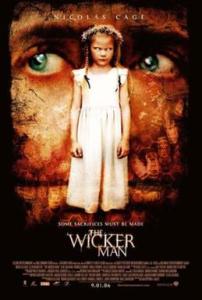
A kid among the Monster Boomers can’t let the death of Christopher Lee go by without comment. How many hours of my childhood were spent watching movies on Saturday afternoon TV with his many personae arresting my attention? And, of course, his prolific output just kept on coming. The Wicker Man, for instance, would never have been among my childhood fare, but his performance as Lord Summerisle is still captivating and sends shivers down my spine. Of course, he wasn’t always a horror movie star. His voice nevertheless conditioned us to be on our guard, for we knew something untoward was about to happen.

Photo credit: Avda, Wikimedia Commons

Photo credit: Avda, Wikimedia Commons

I often ponder the lure of monster movies. As a young boy, I couldn’t get enough of them. I tried to grow out of this stage, and managed pretty well through my doctoral work, but then when I found myself in a Gothic seminary where my life would be shredded and discarded, I suddenly found myself sitting up late to watch movies my family would not care to see. There was a catharsis happening here. Some would claim that it is puerile and immature—they would be the same people who’ve not been forced from careers and faced with unemployment and been dealt a failing hand by an institution that received full commitment during the formative years of an aborted career. No, those who’ve faced monsters cannot easily leave them alone.

Of course, Christopher Lee was only playing monsters. Now many people around the world can instantly recognize his name, face, or voice. We all face monsters. Our society teaches us to deny that they exist, much to our own peril. Little children, bewildered by this insanely complex world that adults have constructed, may be the ones to see most clearly. We watch the monsters on the screen so that we might figure out how to deal with them on the playground or in the boardroom. Christopher Lee was more than an actor. He was a teacher. And his best students learned something of human nature from him.


Molly Picture

Lovely-molly-posterMaybe I’m getting out of practice with my horror movies—I don’t have time to watch them like I used to—but Lovely Molly left me a little confused. I suppose I’m more susceptible to big advertising than I’d like to admit, but I knew about Lovely Molly from the massive Times Square ads back when I was still with Routledge. I’m ambivalent about demonic possession movies, but I put it in my mental bucket list until I had a weekend evening alone to fire it up on Amazon Prime. As I’ve noted, it left me more confused than scared. Yes, watching it kept me tense, not knowing what was going to happen next (I knew nothing of the story beyond that it was a possession story) but as gruesome as a couple scenes were, the question of what’s going on never really got resolved. It’s pretty clear that Molly was abused as a child, turned to drugs to cope, and is having a breakdown after moving into her creepy childhood home. If her newlywed husband didn’t hear some of the sounds, it would seem to be a conventional breakdown story. Eduardo Sánchez doesn’t show us the monster until the very end, and even then, not clearly. I had to turn to online discussion groups to understand what I’d just watched.

While in this post-modern age no one is qualified to say what anything really means, if fans are to be believed, the DVD extra implicate the demon Orobas. I’m no expert on demons, and I couldn’t recall having heard the name before. In the “found footage” scenes where Molly eerily hums to herself while visiting the sites of childhood memory in the house, she does uncover what seems to be the symbol of Orobas. This is a horse-headed, horse-footed demon with the body of a man. Indeed, when she is being stalked by what she believes to be the ghost of her father, Molly hears horse hooves on the floor. In the final scene, she leaves a photo album for her sister to find with her father’s head covered with pictures of horse heads that she’d cut from his wall of framed pictures, apparently of prized beasts.

The real horror here, however, is in what seems to be a misogynistic implication, no matter how justified, that Molly (and her sister) are the murderers. Molly reveals that her sister killed their father, and Molly herself dispatches, it seems, the preacher, her husband, and the girl of the neighbor next door. She, however, is the one who had been victimized. If this is a case of possession, at least by implication, then the male demon is to blame, but it looks like Molly pays the price. The evidence is circumstantial and Molly disappears at the end, leaving open the room for a sequel. While I felt no need to sleep with the lights on after watching it, the movie has enough provocative material to make me think about it, trying to figure out what was supposed to have transpired. I suppose that many horror movies are more straightforward, but the more easily forgotten for being so.


Brain Dead

I’ve been thinking about brains (is there any more existential thing to do?). Reading a book this week about the mind (see Thursday’s post) probably has something to do with it. And also having finished a book on zombies maybe contributes as well. You see, I find it strange when scientists assume that we can figure out all the answers with our limited brains. Although we are endlessly fascinated by them, neuroscientists have long noted that they do have weaknesses—they (brains) are easily fooled, and, for those who find no room for the mysterious in the universe, we’ve made up gods to keep us company. We know that relative brain size—relative to body mass, that is—is a large factor in intelligence, but we seem not to imagine the possibility of larger brains than those we carry around. I suppose it’s not without reason that alien brains are disproportionately larger than our own, according to the standard image of the “grays.” We don’t like to think there’s something smarter than us hanging around. It’s a frightening thought.

Screen Shot 2015-05-02 at 5.35.48 AMOn the more earthy side, brains have been the usual fare for zombies in one sub-division of the zombie movie neighborhood. George Romero gave us flesh eating as a paradigm, but eventually zombies settled on brains. This was on my mind as I finished the epic Strangers in the Land that Stant Litore kindly sent me in Kindle form. I’d read What Our Eyes Have Witnessed on my own, and the author wanted me to read more. Litore’s zombies are more in the canonical Romero sector—they eat flesh and their bite conveys zombiehood. Strangers in the Land takes its base story from the book of Judges. Only Deborah becomes a zombie slayer. Brains aren’t eaten here, but they must be destroyed for a zombie to—what? Redie? Full of colorfully drawn characters, the story rambles through the countryside of ancient Israel, plagued with zombies. It is the brain that keeps a zombie going.

While I have to stand by my recurring assessment that the zombie is a hard sell in novelistic form (here goes my mind again! Reading a book gives your brain too much time to focus on the utter impossibility of bodies missing organs or vital tissue to move, or “live,” even with a brain) Litore is onto an interesting idea here. Looking at it metaphorically (as surely he intends it) helps. Perhaps I just miss the lumbering revenants of Return of the Living Dead calling out “Brains! Brains!” The Bible, however, is endlessly open to reinterpretation. What Our Eyes Have Witnessed was post-biblical. This current installment moves us into the realm of reception history. I’ve been researching reception history and the undead for a few months now. I have some conclusions to share in an academic paper a few months down the road, but for the time being, I’m still trying to figure out brains. Or maybe I’m just out of my mind.


I’m No Legend

First there was The Last Man on Earth with that rare, disappointing performance by Vincent Price. Then there was The Omega Man, putting Charlton Heston into the role that fit him better than Moses. Finally, returning to the original title, I Am Legend featured Will Smith as Robert Neville. Having watched all three movies, I knew I should have read Richard Matheson’s short novel first. After all, it was a vampire story, and who doesn’t feel utterly alone once in a while? I finally decided to make an honest man of myself. It occurred to me as I started to read that I didn’t know how this story would end. All I had ever seen were cinematic treatments—and who writes anything serious about genre fiction? Still, I needed to know.

Last Man

Matheson was one of the writers who had caught Rod Serling’s attention on the Twilight Zone. Having read some of his short stories I could see why. Not knowing the ending, some of them can actually be scary. I Am Legend isn’t exactly frightening. It is, however, thought-provoking and sad. Matheson, a New Jersey native, wasn’t among the most literary of writers. Nevertheless, he conveys some deeply disturbing images of humanity in this particular novel. After all (spoiler alert!) Robert Neville is the evil one. He has been killing vampires with a cold calculation, no matter whether they are living or undead (good or bad). Who has a right to kill whom depends on your point of view.

The-Omega-Man-Poster

In I Am Legend, Matheson makes it clear that Neville, the last man alive, is an atheist. The problem, as it usually is, is theodicy. How could a god allow such a massive tragedy to strike not only himself, but the entire world? After the vampire virus had spread, Neville finds himself dragged into an evangelistic meeting by terrified survivors who had turned to religion to make sense of their tragedy. Neville escapes as quickly as he can. The movie versions tend to ignore this poignant aspect of the narrative. After all, the audience watching must sympathize with Neville or the whole draw of the movie is off. In a nation where atheists are trusted about as much as vampires, it seems that Matheson left us a parable as well as a legend.


Pacific Rim

Pacific_Rim_FilmPoster

Pacific Rim is a movie that once again brings monsters and religion together in the cinema. Since I’m generally late seeing movies, I won’t worry too much about spoilers here, but in case you’re even later than me here’s the gist of it: giant monsters from outer space (properly an interplanetary portal) are emerging from the Pacific Ocean to take over the earth. These radioactive, dinosaur-like aliens are called Kaiju. Although they can be taken down with conventional weapons, the most effective fighting tool is the Jaeger, a colossal robot piloted by two humans acting as the two hemispheres of the brain. These humans must “drift”—share their brains—in order to control these massive machines in unison. Lots of action and destruction, of course, ensue. We later find out that dinosaurs were an earlier invasion of these same aliens, but that our environmental degradation has made the atmosphere much better for them, and this time they’re back for good.

The resistance is led by a mysterious marshal named Stacker Pentecost. Pentecost, of course, is the festival celebrating either the giving of the Torah (Jewish) or the giving of the Holy Spirit (Christian). In either case, it is a holiday celebrating God’s plan for humanity. As Pentecost leads his beleaguered and shrinking army of jaegers against the Kaiju, scientists Geiszler and Gottlieb disagree about how to conquer the beasts. Gottlieb swears, “Numbers are as close as we get to the handwriting of God,” while advocating the predictive elements based on the statistics of the attacks. Science and religion have come to an uneasy truce here. As Geiszler seeks a Kaiju brain to drift, he observes some of the masses in Tokyo praying to the fallen beasts. A blackmarket dealer in Kaiju remains explains that they believe the Kaiju have been sent by God. Pentecost unwittingly concurs when he declares it is time to end the apocalypse.

Pacific Rim, like most Guillermo del Toro films, is a complex movie. There is also more than a sprinkling of H. P. Lovecraft here. The worship of the Kaiju keyed me in to the fact that these were the old gods, come to earth, under the sea, from space. As the first category 5 Kaiju swims past the camera, I couldn’t help but think of Cthulhu. Although Kaiju is Japanese for “monster,” it even sounds like his sacred name. We fear that which is larger, stronger, and unknown to us. When that fear becomes reverence we are on the brink of worship, and our monsters have become our deities.


The Film’s the Thing

BibleFilmIn the context of teaching, I often described how movies portrayed the Bible. There is an aspect of this that may go overlooked since the Bible is, in the nicest possible way, inert. That is, the Bible frequently functions as a character in movies. In a minor, or supporting role perhaps, but clearly it has an impact on what the other characters do or say. The story wouldn’t be the same without it. So it was that I finally got around to reading The Bible in Film—The Bible and Film, edited by J. Cheryl Exum. This is a collection of 11 academic essays about the Bible in various cinematic guises. A number of the essays focused on Jesus, being the most obvious biblical character to star in movies; he had another one this past summer. The collection, however, is wide-ranging in its biblical characters.

More interesting to me, and this is just a personal preference, is the way that the Bible shows up in movies. Those who decry the study of sacred writ seem to be in denial concerning just how deeply embedded in our national psyche the Good Book is. As the various contributors to this volume show, the Bible appears in ways both subtle and overt in many films. Like it or not, the stories represented in the Bible are classics, and many film-makers find a rich source of material here (when they’re not busy making sequels). The Bible is, to a large extent, who we are.

That’s not to deny a religious pluralism to the United States. We are diverse and that is one of our strongest assets. Still, even though our founders were primarily deists, and not evangelical Christians, their culture was pervaded by the Bible. A large difference between then and now is that, although they weren’t “Bible believers” our founders knew their Bible. In a sense that is almost incomprehensible today, they realized that you don’t have to believe it to see its value. The Bible does have some good things to say. Even now when I get overwhelmed, I can still find some balancing sanity in parts of Sacred Writ. It’s not all about killing your enemies or keeping women silent in the churches. It is a very human document. That’s why, in my humble opinion, we keep coming back, as a society, to the Bible. Anything that is so momentous is bound to find its way into our movies and our other art forms. How we take that is, of course, a matter of personal taste.


Final Final Frontier?

Over the past several months my wife and I have been making our way through the Stars. Not really Trekkies or Jediists, we both came of age during the early days of Star Trek and the dawning of the original Star Wars. Both franchises have continued to grow and have become cultural markers in their own rights. We have survived all the episodes of Star Wars I through III, and have made it, so far through Star Trek V: The Final Frontier. As we switched off the DVD player, we mused that we hadn’t seen this particular installment (with good reason) since we had originally watched it together shortly after it came out. It has its moments, but it just doesn’t measure up to what Kirk and Spock can usually muster. Watching it as a somewhat jaded critic of space movies, however, its religious elements simply couldn’t be ignored. After all, this is the episode where they find God, then shoot him in the face.

Opening with Sybok, the emotional Vulcan messiah, with a tacked-on identity as Spock’s brother, healing his first convert, the movie follows a typical kind of progression of a boy and his god. The town on Nimbus III (every Trinity watcher surely caught that reference) is named Paradise. Some wag painted the Miltonesque “Lost” after the town name on the gate through which Sybok rides like Jesus entering Jerusalem. Hijacking the Enterprise turns out to be remarkably easy, even with Spock, Bones, Uhura, Sulu, and Kirk in the shuttlecraft. And soon we’re off to the Great Barrier, which, as it turns out, is just a bunch of colored lights.

When God appears, he takes the shape of a typical Terran, white beard and everything. When Sybok questions him he briefly turns Vulcan, but we get the sense that God is whoever you want him to be. He is definitely masculine, and he has anger issues. His Eden is a barren rock, and he feels trapped and requires a starship to get about. We are forced to conclude that this is no deity after all and life is but a dream.

Despite its many disappointments, Star Trek V is a theologically aware movie. Its conclusion of science trumping the need for the divine leaves us with three old men around a campfire waiting to die. A trinity in its own right, but one where the only hymn to be mustered is “Row, Row, Row Your Boat.” And God lies dead at the center of the galaxy.

Star_Trek_V_The_Final_Frontier