Misremembered

There may be a name for it, but if there is I don’t know it.  Like the more well-known Mandela Effect, it’s a strange memory issue, only it affects the individual.  The Mandela Effect is a collective false memory, often involving the death of someone famous.  Many people—sometime very many—think, for example, that someone famous has died.  The death, or other false memory, is posted in the past and people who don’t know each other all agree that it happened, only it hasn’t.  Instead, what I’m talking about happens to me once in a while and perhaps it happens to others.  Most recently I was listening to The Proclaimers’ song “I’m Gonna Be,” also known as “500 Miles.”  It’s got a catchy chorus and I was thinking it was an oldie, so I looked it up.

First of all, I didn’t know The Proclaimers were a set of twins from Edinburgh.  Second of all, I didn’t know they were (only) my age.  Third of all, I was sure I knew and heard the song from when I was growing up, but it came out in 1988, the year my wife and I moved to Scotland.  I was just stunned by this.  I was sure I’d heard the song, for instance, when I was in college and that it was an oldie even then.  I didn’t and it wasn’t.  In fact, the very year I could’ve first heard it I was busy making plans for an international move, getting married, and starting a doctorate.  This kind of time distortion can be very disorienting, and it says something about memory.

1988

Our lives are the stories we tell about ourselves.  Memory, in an evolutionary way, serves some basic functions such as recalling which other people you can trust, where good food sources are, and where the saber-tooths tend to hang out.  Those with better memories survive longer and procreate more and over time the trait becomes common.  Memory isn’t intended to recall specific dates.  I often wonder if something like the Mandela Effect isn’t behind Trump’s unaccountable popularity.  A kind of memory that refuses to believe the song came out in 1988 although clearly it did.  Believing false memories is the stuff of drama, of course.  That drama can take in whole societies because we misremember that we knew all about propaganda because we learned that in high school, but now we fall for it.  Or it may be a lonely moment when a song comes to mind and we think we’ve known it far longer than we have.


Naming Conventions

Okay, I confess.  Every now and then I do it, but then, a lot of people do.  Perhaps because I’m trying to figure out who I really am, or perhaps because I’m looking for any reviews of my books, I search for myself online.  Various search engines (I prefer Ecosia) bring up different websites near the top, generally those with large numbers of hits.  I was surprised to find a website that gives away lots of personal information, even in the description so you don’t have to click on it.  One bit that caught my attention about myself was where it said “Steve also answers to Steve A. Miller.”  That’s incorrect.  My mother’s second husband was a Miller.  He never adopted us.  One thing that kids fear, however, is being teased and the name “Wiggins” came in for quite a bit of teasing in rural Pennsylvania.  We started using “Miller” since both our mother and stepfather used that name.

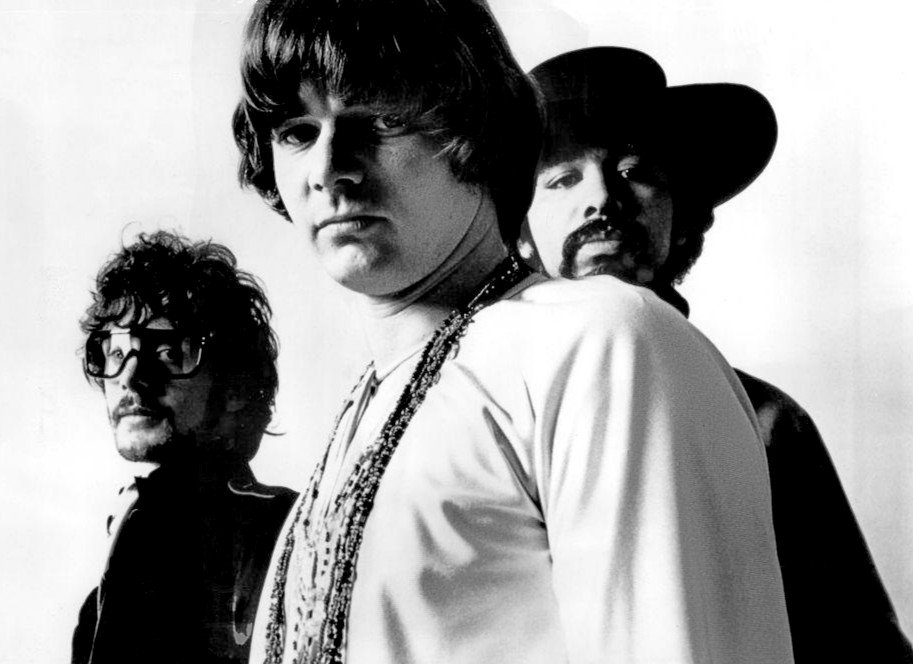
What is it with the singers? Photo credit: Capitol Records, public domain via Wikimedia Commons

Of course, I only later found out that “Steve Miller” was an up-and-coming pop artist at the time.  That singled me out for more teasing.  It didn’t help that I didn’t like Steve Miller’s musical style.  I still don’t.  I kept the name Miller up through seminary.  When I was preparing for ordination I was also rediscovering who I was.  A wise minister I knew told me that since there were two names out there for me, I’d need to nail down one to keep.  Although we’d only recently officially changed names to Miller, my brothers and I had to officially change them back to our birth names.  In a way perhaps inconceivable today, as I recall it, we simply introduced ourselves at our new schools (we had to move after the wedding) as “Miller.”  We registered for Social Security under that name, and nobody batted a lash.  Maybe we talked with an inexpensive lawyer at some point?

Only as an adult did I feel that my birth name was my heritage.  I suppose some of those who friend me on social media, who knew me in high school or college, wonder who “Steve Wiggins” is.  They only knew me as “Miller.”  Changing names is a pain.  I can understand, and support women who want to keep their “maiden” names.  It confuses our dowdy society even now, but one thing about marriage is that it generally involves two individuals.  But then I glanced down at the next entry.  This person, apart from living in a state where I’ve never resided, had even the same middle name as me.  Who’s the joker now?  I don’t answer to that name any more. And no, I didn’t find any reviews.


Connection

I’ve met a few famous people in my time.  Meat Loaf wasn’t one of them.  In fact, the only real rock concert I’ve ever attended was Alice Cooper, back in the first part of the millennium.  Still, the good folks over at WikiTree like to let you know your degrees of separation from the famous.  With the news of Meat Loaf’s passing recently the connections emphasized were rockers, and I ended up being some twenty degrees separated from Michael Aday.  Every time this happens I wonder why our world doesn’t take better account of how closely related we all are.  Fear is a powerful emotion and fear of strangers runs deep.  Even babes in arms often object to being held by those with unfamiliar faces.  We could benefit quite a bit, it seems, by learning to get comfortable with fear.

Looking at the political mess in the United States it seems pretty clear to me that its main fuel source is fear.  It’s been decades now since I first learned that politicians are well aware of how fear makes people behave at the polls.  This fear is carefully crafted and exploited to try to get the election results desired.  If we could learn to master our fears just think of how things would improve!  Instead, those who have something personal to gain use fear to attain it.  Not that there aren’t real reasons for concern.  Facts such as global warming are real and deserve our immediate attention.  To address them we have to work together.  Instead, many chose to use fear for personal gain, and we let them.

For me personally, engaging with horror is a means of handling fear.  Like most people I don’t want to be afraid.  At the same time I’m fascinated by it.  I can’t scroll past a web page listing scariest books.  I try to go through tallies of the scariest movies made.  In doing so I’ve found that many of my phobias (and there are many) have dulled a bit.  Perhaps that comes with age, but then I’ve read that fear tends to increase with age.  Why not get it out of the way when we’re younger?  What has all of this got to do with Meat Loaf?  I suppose it’s the kind of gothic quality of his songs with Jim Steinman that drew me in.  The songs are all stories and the gothic was among the earliest influences of what would become horror.  Now my fear is nobody will be able to fill that need.  Perhaps the answer is connection.


Out of Hades

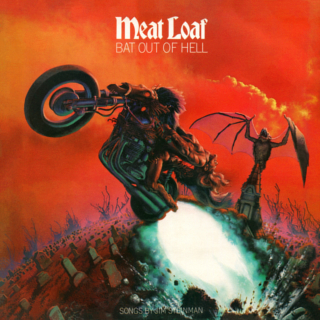
They went together naturally, like chocolate and peanut butter.  Just about seven months ago Jim Steinman died.  Then yesterday, Meat Loaf.  They were both born in 1947 and together they made one of the best selling albums of all time, Bat Out of Hell.  I’m saddened by the loss of perhaps the only truly Wagnerian Rock performer.  After I discovered Bat Out of Hell, raising some eyebrows among those who knew me as a kid, I was hooked.  I bought all the Meat Loaf and Steinman collaborations.  Not only was Meat Loaf’s voice big, it was also sincere.  It was easy to believe the stories he was singing to us, no matter how fantasy-prone they might’ve been.  Once I start listening to one of his albums I end up going through them all.

When we become aware of music helps to define it.  I became aware of Bat Out of Hell during my Nashotah House years.  Still fearful from my evangelical upbringing, I wondered what students might think when they came over.  (Nashotah is a residential campus, and this was largely before the days when faculty were fearful of being alone with a student.)  As strange as it may sound, for a best-selling album, I was unfamiliar with any of the songs before I bought it.  I’ve never been much of a radio listener.  I agonized quite a bit before finally buying the CD.  I quickly came to see why it was so popular.  More than anything, it was the sincerity of Meat Loaf’s voice.

That music saw me through some dark times.  Attending mass in the mornings and listening to Meat Loaf at night proved an effective elixir.  The longer I was at Nashotah the more I came to associate it with the titular geonym.  Eventually Bat Out of Hell II came out.  I was less slow about acquiring it.  The third one appeared only after my teaching career ended.  When things went south at Nashotah, I decided that I would perform some symbolic actions during my departure.  There was nobody there to witness any of them—no person is indispensable to an institution and you’re soon forgotten.  The last thing packed from our on-campus house was the stereo.  I went back alone to get it and the few last-minute belongings from well over a decade in a place of torment.  Just before leaving campus for the last time I cranked the stereo up and played “Bat Out of Hell” at full volume.  An era has come to an end.


He’s Dead, Jim

So there’s this thing called Spotify.  Like most modern contraptions, I approach it warily.  I’m not sure how it works.  Do the artists get paid?  What’s the catch?  Is it only having to listen to a commercial for Amazon every three or four songs, like the radio?  I don’t have a lot of time to listen to music, but when I do have time I like to discover something new.  Then there’s the oldies.  And I can’t help but feel a deep sense of loss at the death of Jim Steinman.  I discovered Steinman earlier than I realized it when “Total Eclipse of the Heart” came out the year my first romantic relationship ended.  That song can still reduce me to a quivering lump of emotion.  All I knew at the time was that it was a Bonnie Tyler song.

Growing up fundamentalist, even album titles like Bat out of Hell, Meatloaf’s Steinman breakthrough, were enough to scare said toponym right out of me.  I never knowingly listened to any of the songs on that album until after earning my doctorate.  When I did I was hooked.  My research skills had grown by that time to include finding out who the writer of a song was.  I discovered that “Wagnerian rock” really spoke to me.  And the only guy who seemed to know how to write it was Jim Steinman.  Most kids, I suppose, settle into their music tastes much younger, but in my thirties and forties I found Steinman a most compelling artist.  I listened to his older stuff, and his newer stuff.  I found out some surprising things, such as that even Air Supply’s “Making Love out of Nothing at All” was a Steinman song.

I seem to be hopeless at playing musical instruments.  I’ve studied piano and taken guitar lessons, leaving bewildered teachers in my wake.  My wife tried to teach me the recorder.  Despite my failure as a player, music means a lot to me.  I don’t listen to it unless I can pay attention to it.  For me it’s not background noise.  When I learned to identify operatic rock, I soon came to realize that it was the work of a singular genius who was covered by a wide variety of artists.  No one else, it seems, could capture the feeling of being young like Steinman could.  Now he’s gone.  In my noodling around with this thing called Spotify, I wonder if I can discover any more of his songs.  Meanwhile, I’m thankful that I found him when I did.


Signal

It’s difficult to tell signal from noise sometimes.  Specialists in such things tell us that it’s easy to mistake noise for signal.  An exception to this seems to be music.  I don’t often write about music for a couple of reasons: one, it’s very personal, and two, I have little formal understanding of it.  Unlike my wife, who can sing well and who can play more instruments than I could ever dream of, I always struggled in music class.  The teachers I had seemed impatient when I couldn’t quite understand what pitch was, or when I had difficulty keeping a beat.  (Part of the problem is that I overthink such things.  I wondered about things like whether a beat represented the beginning, middle, or end of the sound.  Or how, since your voice sounds different in your head than it does on tape, could you tell if you were replicating the pitch of a note.)  I told you it was personal.

Photo by C D-X on Unsplash

None of this detracts from my enjoyment of music.  In fact, it means quite a lot to me.  Growing up I tended to consider it in the form of individual songs I liked.  Since we didn’t have much money I didn’t buy a lot of music, but the radio was free.  My choice of which albums to buy—starting in college, really—was based on whether I liked enough songs on them to justify the expenditure on an entire LP.  I already knew that the quality of 45s was inferior and that many albums were united by a theme.  Something I didn’t do was get to know a band by its “sound.”  That only started for me recently.

I still don’t have a lot of money.  I also object to paying money for MP3s that seem to disappear when you change devices and you have to buy them all over again.  Still, I’ve begun to discover some bands by their sound without being able to point to a specific song.  MCR (My Chemical Romance) was one.  The Pixies was another.  And recently Radiohead.  The voices of the lead singers speaks to me of youth and all its angst.  Although these bands all have quite different sounds, I find them mesmerizing if the mood is right.  I tend to discover bands once they’re beyond their peak popularity, but I’m personally pleased that I’m learning, in my own way, to separate signal from noise.  It reaps rich rewards.


Childhood Music

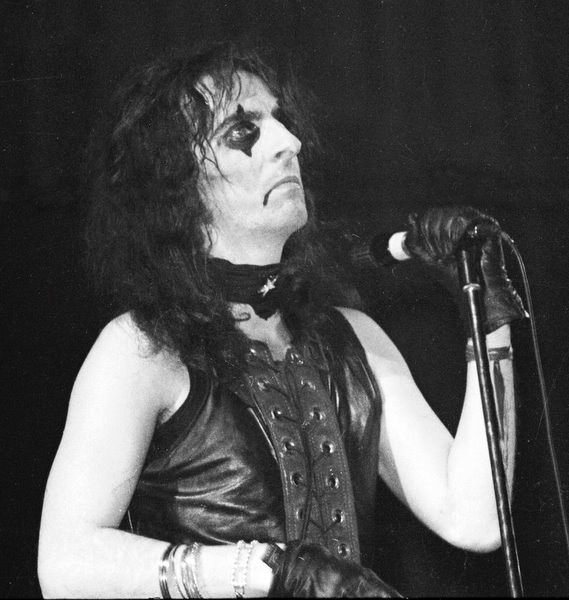
I recently happened to hear the Alice Cooper song “Desperado.”  If you’re thinking of the Eagles’ song, think again.  Cooper’s song is from his 1971 album Killer.  I came to know it as a child from his Greatest Hits album, and I came to know it very well.  Although I’ve not heard the song for probably two decades, I remembered every beat, every word.  In fact, anticipating music videos, as I child I penned a comic-strip rendition of the song.  Although it is long gone, I vividly recall every panel and how poorly they were drawn.  I’m not sure why that particular song spoke to me so intensely, but it is quite clear that Alice Cooper was a major childhood influence.  This was strange because I was an evangelical Christian as well.

Image credit: Hunter Desportes, via Wikimedia Commons

Vincent Furnier has had a tremendous impact on rock music.  When I went to see him in concert on his Along Came a Spider release tour most of the other people there in Atlantic City were guys my age.  I’d probably’ve been afraid of most of them if I’d met them on the street at night, but this wasn’t exactly a sell-out stadium event.  In fact the room for the show wasn’t that large and we could get fairly close to the stage.  You had to have tickets for the after-party, but Cooper was standing outside the room where it was being held, and we passed within mere feet of him on our way back to the car.  I wanted to let him know just how much he’d shaped my identity, primarily through his first solo album Welcome to My Nightmare, but I could barely hear after the show, and besides, I didn’t have a ticket.

I know Nightmares with the Bible isn’t being marketed or sold as a trade book but anyone curious about the title might consider Alice Cooper as an inspiration.  During seventh grade I missed a lot of school due to sickness (I was a sickly child).  During those days off I listened to Welcome to My Nightmare over and over, thinking about death.  Pretty intense for a thirteen-year old, but then I’ve always been that way.  Even at a young age I realized we all die.  It therefore made (and makes) sense to think about it.  That’s something my religion and fascination with horror tropes have in common.  Alice Cooper seemed to be able to blend these things, in his own way.  And that’s a lot to come out of a song last heard decades ago.


Aging Music

Poignant is the word that comes to mind.  Perhaps in stark contrast to my listening to My Chemical Romance, I’ve also been listening to the latest albums by artists such as Bruce Springsteen (Letter to You) and Meat Loaf (Braver Than We Are).  And Leonard Cohen (Thanks for the Dance).  In the last case the album was so late as to be posthumous.  Before that I spend quite a bit of time with David Bowie’s Blackstar.  These albums are, at least in part, about growing older and dying.  Now death is nothing new to rock-n-roll, but it seems as if as some of my favorites age they’re sending a message out from the autumn of their careers.  We may still be here, but we won’t be forever.


I’ve never really been afraid of dying.  In fact, as a kid I often imagined myself as an older man with some anticipation.  Now that I’m approaching that threshold of elderhood the view is just a touch different than it was to a small boy with a lifetime in front of him.  Leonard Cohen, at least, was dealing with aging as early as Various Positions, the album where he gave the world “Hallelujah.”  And Springsteen has toyed with it in various places, such as Devils & Dust.  What I’m hearing in these songs, however, is a kind of acceptance that isn’t really fearful at all.  It’s as if rock suddenly matured.  So many of the original pioneers died young and tragically, and those who survived have been calling to us like ghosts to let us spend our worn-out days in peace.

Perhaps it’s just that it’s November.  Light is becoming a rare commodity, and it will remain in short supply until around the middle of March or so.  Music helps us through the transitions.  There are albums that convince me I’m immortal.  If I weren’t so tired at the end of the day I might continue to believe that.  On a weekend when I had a few free moments I went to a local CD store.  Wearing mask and gloves, I could see that only people about my age were there to buy actual discs.  We’re not the streaming generation.  It gave me some comfort to see the names of bands I’d almost forgotten.  These artists, of course, will continue to live on after they’re gone.  They’ve left us a legacy.  We’d be wise to consider their advice from time to time.  And take a moment or two to reflect on the coming of December.


A Little Bit

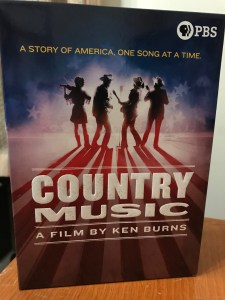
I don’t know about you, but I have a complicated relationship with genres.  As a fiction writer I have great difficulty classifying what I write, and that shows in the reluctance of publishers to embrace it.  We tend to suppose that some kinds of Platonic types exist out there by which we can map what we find here in the physical world.  These genres, however, are far more permeable than they seem.  My wife and I just finished watching the eight-part Ken Burns documentary Country Music.  Neither one of us is what you might call a fan of the genre but I can say that I learned an awful lot.  My stepfather was a country music fan, so many of the names and songs, particularly of the early years, were familiar.  What became clear throughout the century or so covered by the films was that the dividing line was always a blurry one.

While today we tend to think of country music as a southern phenomenon, the documentary made clear that its beginnings were folk music.  And folk lived most places.  While certain styles predominated in certain ages, across the years it was hard to tell some country music from pop music and rock (especially in the early days of the latter).  Even rock is difficult to classify.  What it often comes down to is self-identification.  An artist or band that identifies as country is country.  It is a distinctly American art form and it quite often identifies with religion.  Like rock, it also has some roots in gospel music.  When it becomes secular, gospel can go into many unexpected places.

Another association—again, a generalization—is country music and conservatism.  Partly it’s the promoting of Americanism, but partly it’s based on a false perception.  Performers are actors, after all.  Many of the “clean cut” examples of country singers struggled constantly with drug abuse (often considered the demon of rock-n-roll) and alcoholism.  It’s often right there in the lyrics.  The listeners, however, tend to think of them as stories.  That was the other great takeaway from the series—people are drawn to the stories.  I think that’s something we all know, but country music often excels at the hard-luck story that resonates with people down on their circumstances.  I’m not about to become a country music fan, but watching this series, like any educational venture, has opened me to a new tolerance for what I previously classified as a genre that didn’t have any appeal.


Sinning

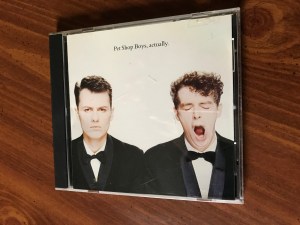
The other day I was searching through the CDs we have and came across the Pet Shop Boys’ album, Actually.  Curious, I googled them and was surprised to learn that they are considered the most successful British pop duo ever, by some metrics.  Who knew?  I lost track of them after 1987.  As I played the album—and synth-pop really isn’t my style—I began to wonder why I’d bought it.  Then “It’s a Sin” played.  The Pet Shop Boys’ second number one hit from ’87, that song was part of my personal history that has led, indirectly, to my last two books.  Let me set the scene:

In 1987 I graduated from seminary.  I was just a small town boy, having grown up in rural northwest Pennsylvania.  My exposure to big cities was limited, and that was one reason I’d chosen Boston for said seminary.  It was there that I began to realize just how much popular culture referenced religion.  “It’s a Sin” is emblematic in that regard.  Everything the boys want to say or do is a sin.  Sounds like Calvinism to me. Still, the song was heard by millions.  I bought the album because of it.

As I recall, there were several pop artists singing about religion at the time.  Joan Osborne’s “One of Us” was still eight years away, but it was becoming obvious to me that people took religious cues from pop media.  I once described the ability to find references to the Good Book as “Bible radar.”  If you’re raised in that culture you learn to spot religion in the most unlikely places.  The concept of sin is a purely religious one.  We all have consciences (I hope) but to make an act Hell-worthy requires religion.  And according to some forms of Christianity just about everything is a sin.

That idea lay dormant for decades.  I read novels and found religion embedded in them, often in biblical form.  I saw it on television.  And in movies.  Even horror movies.  While I sometimes elected to expose myself to intentionally religious media, these references often came from secular sources.  As I began to research this, I came to realize that religion is intricately woven into the fabric of society.  Try to tease it out to isolate it and the cloth starts to come undone.  We like to think of ourselves as more sophisticated than that, but the truth is at some level we still believe it’s a  sin.


A-changin’

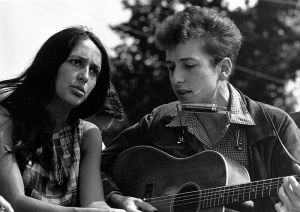
The other day, while engaged in a mindless task, I had Bob Dylan playing in the background.  When I say Bob Dylan I mean the Bob Dylan of the 1960s.  I was an infant when he was singing songs like “The Times They Are a-Changin’” and “Blowin’ in the Wind.”  As much as I cast the 1960s in a rosy glow, I was in fact a naive child through my portion of them.  I knew about the Vietnam War, but I couldn’t point to the country on a map.  Likewise, I knew about the assassinations of John and Robert Kennedy and Martin Luther King, Jr.  I also knew that we had walked on the moon.  My family at this stage didn’t listen to popular music.  I grew up with hymns in my ears and the culture in which I was swimming slowing becoming absorbed through my pores.  Dylan was part of the latter.

One of the reasons I don’t often listen to music is that I really listen to it.  It is so significant to me that I don’t like to relegate it to the background.  While I work from home, for example, I don’t put music on.  I find it difficult to concentrate because, truth be told, I’d rather listen to the music.  As I had Bob Dylan on, I was doing a task where I could listen as the rest of my body went into autopilot.  The angry white men who are running things now, it struck me, were alive in the sixties as well.  As much as they seem like aliens who were beamed down after the expansion of human consciousness, they were lurking in the shadows all along.  If they sing along to Bob Dylan they’re hypocrites.  We need another Dylan.

Photo credit: Rowland Scherman, public domain, via Wikimedia Commons

That’s putting quite a burden on an artist, I know.  But Dylan captured the spirit of the times.  Even as scientism was growing the reality of the Zeitgeist was obvious.  I grew up in the chaotic seventies.  The eighties were bland with the Reaganism reaction—angry white men wanted to get rich at others’ expense, and we let them.  Not enough time has passed for history to decide on the spirit of the fin de siècle, I don’t think.  You see, we seem stuck in a feedback loop.  Dylan’s lyrics are as necessary now as they were more than half a century ago.  I’m growing weary of angry white men and their petty concerns.  Maybe I need to listen to music more often. 


All Been Ready

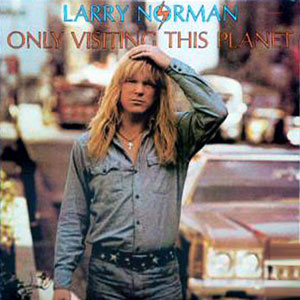
As the pandemic stretches on and getting things in stores—or even from Amazon—isn’t assured, my thoughts go back to Larry Norman.  Specifically to his song “I Wish We’d All Been Ready.”  Made famous for many by its use in the 1972 rapture film A Thief in the Night, the song recounts the state of those “left behind” when a piece of bread could be exchanged for a bag of gold.  The lyrics are haunting in their sincerity.  Here in Pennsylvania, as in neighboring New York, non-essential businesses have closed, per order of the governors.  Periodic forays to the grocery store show the empty shelves of panic buying.  Norman’s song rings in my ears.  Only this isn’t a biblical plague.  We’re just acting like it.

No doubt technology has been of great use in keeping us aware.  I do wonder, however, at how panics seem to come more quickly now.  Slowing down manufacturing will have a knock-on effect for things down the road, of course.  Right now we’re all wondering how we’re going to get through yet another day just sitting in the house.  Meanwhile the lawn is beginning to grow and I’m going to have to get out there with the push mower soon.  I’d been planning on shopping for a better one this year, but plans seem to have suddenly pooled at my feet.  What is essential travel anyway?  Does it count a trip to the big box hardware store to buy a reel mower?  Should I even bother about the lawn when there’s no toilet paper within a fifty-mile radius?  I wish we’d all been ready.

The funny thing about all this is how it makes us focus on the here and now.  While we’re waiting for things to “get back to normal” we’re being told nobody knows how long this might last and we should plan to hunker down for some time.  The International Meeting of the Society of Biblical Literature (being held in Australia this year) was cancelled.  Many of us in the discipline have had our lives revolving around the Annual Meeting in November for all of our adulthood.  If that meeting’s cancelled how will we even know when Thanksgiving comes?  Can it even come without the crowds at the Macy’s parade?  Best not to look too far ahead, I guess.  The rapture is a fictional construct, but the effects of a pandemic are eerily similar.  I do wish all of us had been ready.


Dancing

An artist is never really gone.  I have been listening to Leonard Cohen’s posthumous Thanks for the Dance.  Haunting in the way of Bowie’s Blackstar, there’s a poignancy to listening hard to the dead.  Especially when they saw it coming.  Artists are never really gone, and we can forgive them because they’re oh so very human.  Cohen was an exceptional poet and this album captures a man who knows the end is near.  Still he sings of girls and sins and God.  There’s an eternal soul there, and Cohen captures longing better than just about anyone.  The artist knows longing and understands not knowing for what.  The album struggles with religion and depression, a remarkably common combination.  Memories of glories that linger even as the body ages.

Listening to someone else’s music is taking a stroll through her or his head.  Someone once gave me a disc of songs built around a theme.  Although the theme came through I feared a little of what I heard here.  Some who know me primarily from my overly pious upbringing would be shocked to find Cohen on my favorites list.  For me he has no pretense.  Instead of ignoring religion, sexuality, or politics, he tried to make sense of them through song.  For me—and listening to music is a very personal thing—I think I understand when I’m drawn into his lyrics.  His experience of life was vastly different from what mine has been, yet he’d accurately mapped the direction my mind might wander, if given free rein.  Religion will hold your imagination captive, if left to its own devices.

Those who reduce Leonard Cohen to his over-used “Hallelujah” catch only glimpses of this complex man.  I once read an article about Bruce Springsteen in which a friend of his said that if he hadn’t succeeded in music he might’ve become a priest.  There’s an authenticity to these artists who write probing songs that have deep spirituality yet allow themselves to be human.  Cohen’s songs revealed he could see death with some ambivalence from afar.  Even in albums recorded thirty years ago the hints were there.  Instead of running and attempting to hide, Cohen’s lyrics, at least, indicated that he’d continue to try to live.  Maybe these are just the reflections of a middle-aged man who’s only glimpsed a fleeting connection between an artist in perpetual motion and a one-time scholar sitting up alone at 3:00 a.m., seemingly stuck in one place.  Whatever else they may be, such quiet moments will ones be haunted by Thanks for the Dance.


Seasonal Music

Music is deeply, deeply personal.  That’s why I don’t write much about it.  There are pieces, I swear, if someone walked in to shoot me when I was listening to them I wouldn’t even notice.  This effect is amplified in autumn.  I don’t listen to music all the time.  In fact, I rarely do.  The reason is, counterintuitively, I fear that music may cease being meaningful to me.  Good things have a way of running out.  The music I like is only very slowly supplemented.  So as the clouds encroached this month, I put on some tunes and I began thinking of appropriate songs of the season.  I’ve heard attempts of more recent artists to sound spooky, but their lyrics don’t match the mood I’m seeking—remember, it’s deeply personal.  So what is autumnal music?

Despite being a fundamentalist, I was raised on rock-n-roll.  My favorite artist growing up was Alice Cooper; in fact, to this day Alice is the only secular rock artist I’ve seen in concert.  Two tracks on Welcome to My Nightmare are among those eerie autumn songs: “Years Ago,” and “Steven.”  This album was profoundly sunk in my psyche before I discovered others.  While not scary in the same way, “Brilliant Disguise” from Bruce Springsteen’s Tunnel of Love hits a similar chord.  The melancholy of autumn must be appeased and this song begs to bring it on.  Many of Leonard Cohen’s songs are like the angst of this season bottled up for a restorative tincture, but I was quite a bit older when I discovered Nick Cave.

The Boatman’s Call with its willowy sound and occasionally explicit lyrics, walks that line between a deep-seated spirituality and fear.  There are others, of course, some even fairly recent.  Imagine Dragons’ “Demons” from Night Vision certainly qualifies, as do the first two tracks on Muse’s The Resistance.  But this is my list, and I fear to reveal too much.  Someone who knows your music knows very much about you.  I hear some people discuss music as if it’s a throw-away commodity.  For others of us it has become part of our souls and we’re reluctant to reveal too much.  New members of this autumn music club are added only very slowly, and I reacquaint myself with the long-term members not frequently enough to rob me of their impact.  So it was as the clouds thickened and the cold wind began to blow as the leaves were beginning to turn that I put on my personal songs of the season.  And there was transcendence, but it was, as transcendence tends to be, deeply personal.


The Sound of Musik

“Why is there so much people here?”  The words aren’t mine, but those of a random stranger I heard in Herald Square.  Not only was it grammatically offensive, I always find “much people” in Manhattan, but this was the occasion of the Pope’s visit a few years ago, so more of us were crowded into that area than normal.  It was a feeling that returned last night as my wife and I wandered around Musikfest.  If you’re not from around here, Musikfest is the largest free music festival in the United States, and it takes place in Bethlehem each summer.  Ten days of free, live music and tents hawking wares and all kinds of comestibles, as well as that strangely satisfying feeling of being lost in a crowd.  We ended up there more or less accidentally.

I was an experimental subject.  Those of you who know me will probably not find this odd, and you may well come up with many reasons to find me in the psychology department, some involving locked doors.  This was, however, a voluntary research project that required participants and it had been literally decades since I’d volunteered to be one of the “much people” who was not not part of the university crowd.  It felt good to be on a campus again.  The Lehigh Valley hosts several colleges and universities, and that draw is perhaps related to why Musikfest is held here.  When we got to town my wife realized we might have trouble parking.  Sections of downtown Bethlehem are closed to traffic and there are people everywhere.  I finished my experiment and we became part of the crowd again.

Music and religion, I’ve noted before, hang out in the same crowd.  They both have the ability to be transcendent and people seek out such experiences.  Since we hadn’t planned on attending—accidental musicologists we—we had no groups as targeted hearing while we wandered.  Mostly we marveled at the size of the event.  The city of steel transformed to the city of music.  And the religious feelings music brings.  As I walked from the college back to downtown, a couple strangers accosted me.  “Hi, brother,” they said.  “Heading to Musikfest?”  This, I realized was a congregation.  I was an unknown brother.  Music brings peace.  Dona nobis pacem, sisters and brothers.  Like those crowds a few years back hoping for a glimpse of the pontiff, an entire city had kicked off its shoes for a Friday night of potential transcendence.  Why is there so much people here?  Simply listen and you’ll have your answer.