Born to Shun

Being of rather slight build, I have always held a natural antipathy toward bullies. I’ve always liked to believe that, were I in any position of power, I would care for those under my authority. Emulating this ideal as much as possible in the classroom seems to have made me a popular teacher. The message we send our young, however, shouts at decibels I cannot hope to achieve that throwing your weight around is the only proper way to govern. And some governors carry considerable excess weight. New Jersey used to pride itself on its educational system, a system that is currently being gouged in nearly every possible way by an insatiable governor. And now he is taking shots at Bruce.

I seldom write about my admiration for Bruce Springsteen because it is a very personal matter with me. Having grown up in a working-class family, I discovered Bruce at a fairly young age and I suspected his concern was authentic. That suspicion has grown over the years as he has campaigned for the common worker, never forgetting where he began. Now Chris Christie is attempting to besmirch the Boss. Using the newest entry in the Neo-Con lexicon of swears, Christie has leveled the “L-word” at New Jersey’s native son. Seems liberal is always a bad thing. Good thing Jesus – the original liberal – isn’t here or the Neo-Cons would nail him as well.

I'll see you after school

The Neo-Con movement delights in out-shouting the competition. Shut down National Public Radio because if reason is broadcast on the airwaves some people might end up looking ridiculous. Let us have no dissension here! If you leave the wealthy alone, they will leave you alone. Seems that “conservative” social responsibility was crucified some two millennia ago. Instead of Christ we now have Christie. The devil himself, however, would make a more compassionate governor, if we could ever get him away from the endless tea parties of perdition that occupy all his time.


Time Isn’t Holding Us

Ancient is much more recent than it used to be. Perhaps it has something to do with the two massive earthquakes over the last couple of years that have together sped the earth’s rotation by almost three microseconds. Perhaps. A more likely explanation is that excessive technology makes us soft. We expect new toys, new tech solutions on nearly a daily basis, and with the communications revolution, we are rarely disappointed. I wonder if we’ve forgotten how to help ourselves. This is especially evident in the lack of initiative I sense among many students. Of course, I am ancient.

When exam time rolls around, the present-day student requires a study guide. When I was a student, after dodging all the dinosaurs running around the campus, I never received a study guide for a test. If a test is coming, read, re-read, i.e., study, your notes. Maybe read a textbook? Nowadays a study guide is required for that message to be sent home. And then there’s the emails. Once the study guide is distributed (electronically, of course) the emails gush in asking what exactly I mean by this or that. Since I reiterated the point endlessly in class, accompanied by a PowerPoint slide with the answer writ large, verily, I roll my eyes and drop to my three-legged stool in dismay. Can it really be that college students require detailed answers in advance for a multiple-choice test of only 40 questions? Back in my day, a multiple-choice test was a gift that felt like sixth grade had rolled around again.

Sixth grade: what's he got in his hands?

Time, since Einstein, has been relative. And since I am an antiquity, I can perhaps be forgiven for citing Supertramp’s “The Logical Song.” As a studious young man, religious from epidermis to viscera, I was sent off to get an education. Years later, kicked out of the academy for good behavior, I see the wisdom of the lackluster 70’s band: “But at night, when all the world’s asleep, the questions run so deep for such a simple man.” The lyrics are easily found on the Internet. It is simpler than walking over to the CD rack to check manually. Back in my day, I would never have even imagined skipping an exam and then asking the professor what he was going to do about it in the next class period. Email, in this instance, is easily forgotten. I’ll get back to you once I engage the electronic lock to keep out this velociraptor (if anyone can remember back to 1993).


Crossing Italy

“Poor men wanna be rich, rich men wanna be king, and a king ain’t satisfied ‘til he rules everything” – sage words of a young Bruce Springsteen. Of course, “man” may well apply to institutions as well as individuals. According to a recent story in the New Jersey Star-Ledger, the European high court has ruled that it is appropriate for public schools in Italy to decorate their classrooms with crucifixes. While this may not seem unusual for the heavily Roman Catholic nation, indeed, the homeland of the church itself; nevertheless it reveals much of the nature of religion. Religions, like Springsteen’s human characters, want to take charge of everything. Partial rule just isn’t good enough in a business that deals with absolutes.

Not every citizen in Italy is Roman Catholic. Some are not even Christian. State sponsored schools bearing the insignia of the church’s glory days send a message that can be heard from the highways to the backstreets: Christianity rules! If we wheel the world around a few degrees further we will find similar rhetoric in nations like Iran, only the specific brand of religion has changed. The message is distressingly familiar: Islam rules! There was a time when the church could likely be called the only true superpower in Europe. We remember that time now as the Dark Ages.

As campaigns for next year’s elections in the United States are pumping up, we are hearing quite a bit about candidates’ religious convictions. That which used to be a private affair has become an emblem emblazoned on a flamboyant flag declaring “Gott und Ich” to the world. Worse, the religions are being used to score votes. Once in office, that religion will return to its flaccid state and politics will be business as usual. The populace, however, has trouble seeing through this. Religion is injected with such emotional freight that leaving it out of elections – or classrooms – is like abandoning a helpless infant. As they nail their crucifixes to the walls of public schools in Italy, I’ll be over here with Bruce surveying these badlands.


Gila’s Got the Whole World

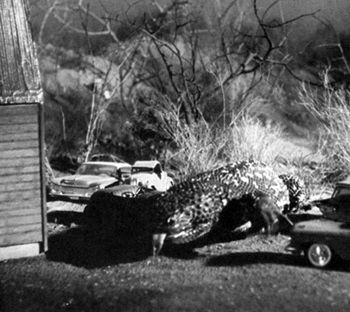
Singing pretty-boys and colossal lizards – it must be time for The Giant Gila Monster. A horror film that portrays all the innocence of the 1950s before the Beat Generation led us down the path to reality, the film has earned cult status in recent years. More accurately titled, “A Regular-Sized Gila Monster Filmed in Close-Up,” the sub-mediocrity of the movie has probably done more for preserving it in popular culture than any other aspect. The film stars the relatively unknown Don Sullivan as a great teen role model who writes and performs his own songs. The number that receives the most Internet attention, and the one that makes this movie of interest to this blog is “The Mushroom Song.” Chase Winstead (Sullivan’s character) has a young sister who is just learning to walk with leg braces. To cheer her, he picks up a ukulele and sings: “And the Lord he said I created for you/A world of joy from out of the blue/And all that is left to complete the joy–/Just the laugh of a girl and boy/And there was a garden, a beautiful garden/Held in the arms of a world without joy/Then there was laughter, wonderful laughter/For he created, a girl and a boy/And the Lord said, laugh, children, laugh/The Lord said, laugh, children, laugh” with the final line repeated numerous times.

Laugh, children, laugh

Perhaps intended to underscore the societal norms of a time when “the Lord” made frequent appearances as an unseen supporting actor in many movies, this song is oddly out of place. The disability of Missy Winstead is obviously a device to raise tension: how will a disabled girl run from a giant lizard? The song, however, provides the resolution – the Lord will take care of all good people. Their response should be to laugh. The reference to Adam and Eve, fitting for teen fantasies of all generations, also belies the evolution of this monster. The gila grows to its great size because of chemicals in the water that wash to the delta somewhere in Texas. This creature did not evolve. The Lord will take care of it. The Lord and nitroglycerin.

Respectful teenagers with predictable haircuts and a society that believes a missing teenage couple could be doing nothing but eloping fits the world of the Religious Right exceptionally well. Even though they may not be perfect, these kids know right from wrong for they live in a black-and-white world with no ambiguity or ambivalence. Children of subsequent generations have grown up with shades of gray or psychedelic colors. The older generation is frightened by new developments, claiming that the world they know is about to end. In fact, an evolution is occurring. Those who try to hold society to the norms of the 1950s would do well to move ahead a decade and at least listen to Bob Dylan. No matter how far we progress, however, it seems that Texas will always delight in producing Lord-loving, bloated threats to rational civilization.


Beside Metallic Waters


My brother recently pointed out the story of Rev. John Van Sloten, a Canadian pastor who has written a book about how he’s come to see the gospel in the songs of Metallica. Yes, Metallica. Even the members of the 1980’s hard rock band found the association a little surprising. It all came about, it seems, through an open mind. The story is narrated in basic form on the Gibson guitar website. Young parishioners at Van Sloten’s church suggested he should listen to Metallica. Perhaps aware of the principally negative conservative Christian reaction to rock in general and hard rock in particular, the pastor says he ignored the advice. Then the minister was presented with Metallica tickets. A divine mix was in the works.

At the concert the pastor had a revelation: the issues wailed against by the band resonate well with the concerns of Christianity. In fact, some of the band’s concerns sound downright prophetic. The concept of prophecy today often revolves around a prediction of future events (à la Harry Potter). Prophecy in the Hebrew Bible far more often concerns social justice, speaking out against the oppressor. Metal bands, from their inception, were vehicles for protest. Disillusionment against a system that perpetuates unfairness either at a governmental or a cosmic level. When I sat down to listen to the lyrics of Black Sabbath for the first time, I was surprised how biblical many of them were (don’t tell Ozzy).

Many religious folks prejudge heavy metal as “satanic” and evil without even listening to it. I have always been struck by how much these groups frequently draw on bleak biblical images. Today we treat biblical characters as paragons of emulation. The Bible does many of its characters no such disservice. Prophets are to be heard, not emulated. We think of Isaiahs or Jeremiahs as pleasant supper guests who happen to have a divine word inside. In the Bible their actions often lead to recriminations, but their uncomfortable message is sound. I grew up in a tradition that discouraged heavy metal, as if something in the music were inherently evil. I applaud Rev. Van Sloten for approaching one of the formative bands of the genre with an open mind. Truth may be found in some very unlikely places.


Winter’s Music

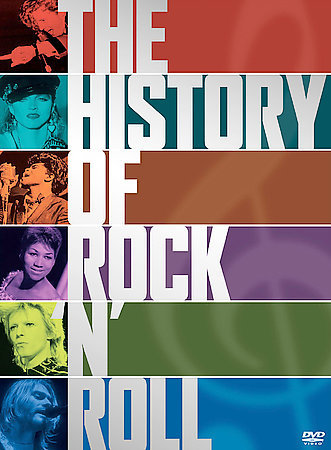
An editorial in this morning’s paper once again raised the question of whether we need a politically correct version of Huckleberry Finn or not. The story led me to recall the origins of rock-and-roll – not that Mark Twain was a rocker, but because I’d recently viewed the first installment of Time-Life’s History of Rock ‘n’ Roll. Both Huckleberry Finn and rock-and-roll owe a vast debt of gratitude to African-American culture, and both bear the scars of prejudice. An unfortunate aspect of life is that few people willingly subject themselves to hard labor when they realize an easier lifestyle is available (thus, Brave New World). This has been true since civilization began. With the advent of the Sumerians we begin to read about the slavery of war-captives. Even today, dressed up in fancy clothes, slavery of various degrees continues to persist. The reprehensible treatment especially of Africans for slavery is a heritage that will not easily be overcome. And yet American culture owes much to its African components.

While already in the back of my head, this was once again brought to the front by the “Rock ‘n’ Roll Explodes” episode of the Time-Life series. Now, being a musically deficient individual, I claim nothing particularly insightful here – my wife and daughter are the musically accomplished ones in this household – rock clearly has its roots in the blues and gospel. In the documentary Little Richard explains how rock was often simply music of the black churches transposed to secular clubs. Xenophobic “white” culture of the 1950s felt threatened by this catchy music and sought to disarm it. Calling it “race music” producers had the more popular songs covered by white singers such as Pat Boone. (His cover of “Tutti-Frutti” always makes me smirk.) The real element at work here was the prejudice against the other.

As a youth I recall literally throwing my rock albums in the trash because of a Fundamentalist tract that declared in no uncertain terms that it was the “Devil’s music.” I’d bought those albums with my own hard-earned money, but sacrificed them to save my soul. Little did I know that “Devil” was a code word for “African” in this fundie literature. Otherwise, why was it alright when Pat Boone (of The Cross and the Switchblade fame) sang the same song? Mistrust runs very deeply in monotheistic religions. Even today many branches of Christianity inveigh against the horrors of rock without acknowledging that the music has its roots in the cry for liberation on the part of slaves, as expressed in Christian worship. Civilization will always insist on retaining its slaves. At the very least modern western culture should say “thank you” for the unrequited gift of the musical voice of the twentieth century.


Hallelujah of a Long Night

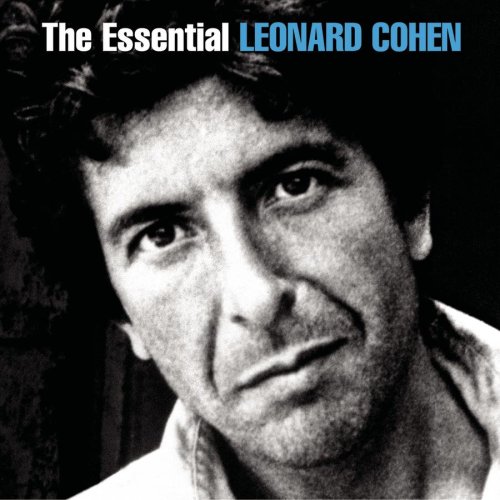
I discovered Leonard Cohen is an unusual way. Having grown up with very limited funds for purchasing music, most of what I listened to growing up was what I heard on the radio out of a small-town station or what I heard emanating from my older brother’s room. My musical tastes, however, always included a “religious” element, whether that be a blatant religious message or provocative lyrics combined with compelling tunes. It was only when I first watched Shrek that I learned about Leonard Cohen. The moving scene where Shrek and Donkey have gone their own ways, both disappointed in love, is framed by John Cale’s rendition of Cohen’s “Hallelujah.” It is particularly poignant even in an animated movie, and I wanted to learn more about the haunted composer. The official movie soundtrack included the song covered by a different artist, but I found Cohen’s name listed as the writer. That’s when I began to explore.

I can’t pretend to be a groupie of any performer, but I find much of Cohen’s music to be moving and provocative. His lyrics, self-effacing and tentatively assertive, seem to capture the ideals of many religions. Reach out but don’t touch. Seek your own fulfillment, but put others first. I was reminded of this the other day while listening to some of his songs. A commentator once described Cohen as an artist with a Psalter in one hand and a picture of a naked woman in the other. An artist who struggles to overcome his humanity, yet who thoroughly enjoys it. “Hallelujah,” Cohen once explained in an interview, began as a religious song and ended up an erotic one.

As the nights grow longer and the days grow colder, my thoughts return more often to his provocative lyrics. After viewing Shrek I began to purchase Cohen CDs (this was back in the day when I was fully employed). I was amazed at what I’d been missing. There is an honesty about Cohen’s work from which many who overtly claim religion could learn. Cohen is the sinner who does not pretend to be a saint. His work openly expresses the struggle. If those who want others to join their religion could learn this simple trick of being honest, they might be surprised by the results. Self-assured bravado cannot convince as readily as the confessions of a lost but sincere seeker.


La Puerta

A musician who has always deserved more acclaim than he has received in his solo career is John Cale. A founding member of the Velvet Underground, a band whose lyrics and insistent – if at times atonal – music capture their era far more effectively than most, Cale has gone on to produce some songs provocative enough to rival those of Lou Reed himself. On his Paris 1919 album, the song “Hanky Panky Nohow” contains these thoughtful lyrics: “nothing frightens me more than religion at my door.” These words are, ironically, prophetic. Religion at the door, in public office, behind major media corporations, has become an insidious threat to the founding principles of this nation. Right, Ms. O’Donnell?

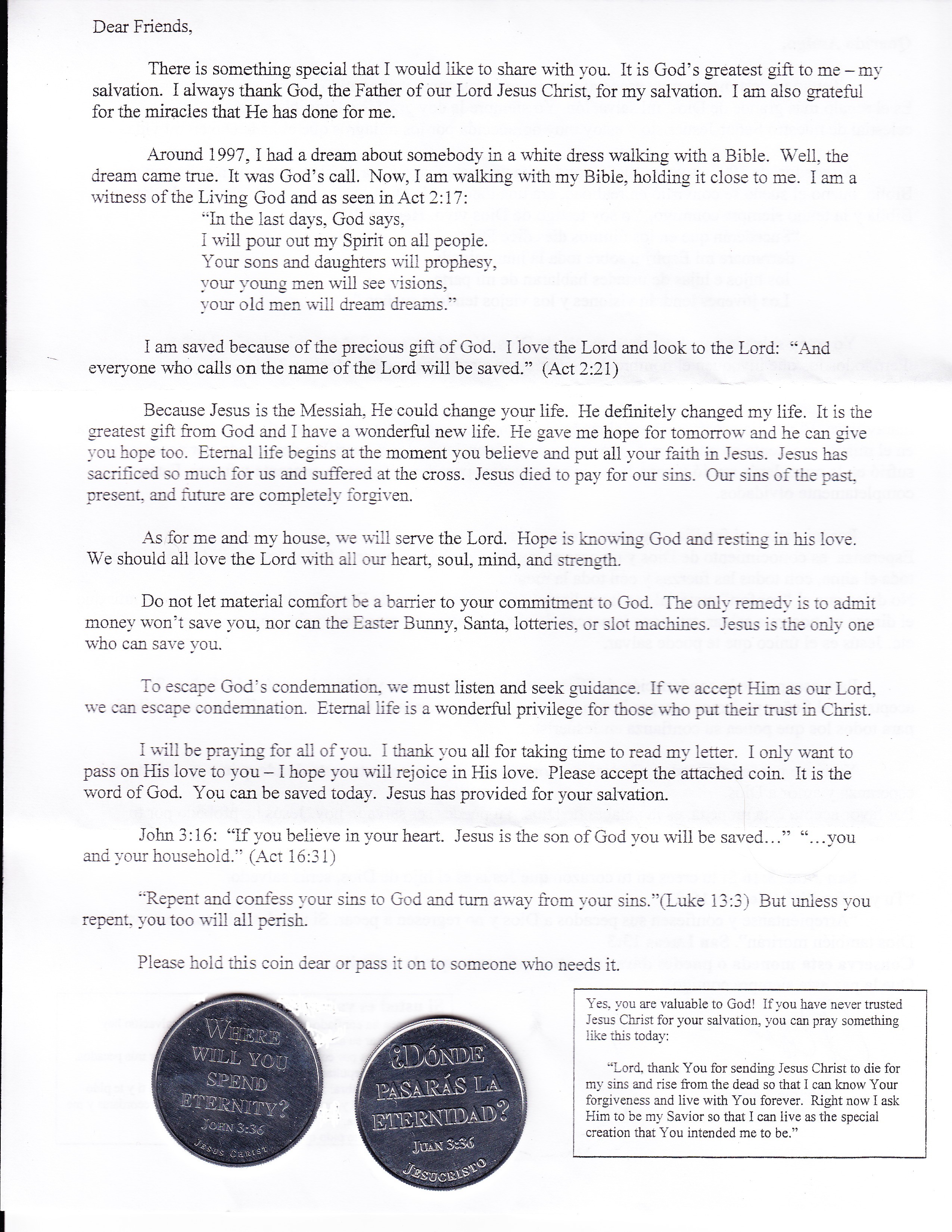
Yesterday morning I went out to get the newspaper. Although I live in a relatively safe town, we are classified as the “Greater New York City” area, and I’m always suspicious of anything unexpectedly left on the doorstep. There was an unaddressed, blank, sealed white envelope there that jingled when I nudged it with my foot. At first I thought it might be a set of keys left at the wrong house, but when I did finally open it I discovered a bilingual set of aluminum faith coins. An accompanying letter assured me that God wants to save me and shared with me a dream of somebody in a white dress carrying a Bible. The letter, amazingly, misquotes John 3.16.

I am the frequent victim of Jehovah’s Witness visits. I have students handing me booklets that will save my soul. I receive offers of golden miracle crosses in the mail – I still carry mine around, but prosperity has continued to elude me – with the assurance that God wants only the very best for me. I open the paper and see the suffering of the people of Indonesia. I see a column about teen suicides resulting from bullying with victims as young as twelve hanging themselves. I see overweight politicians feathering their already overstuffed nests. I turn back to the anonymous letter. “Please hold this coin or pass it on to someone who needs it,” it instructs. I think I’m going to need a truckload of coins. Nothing frightens me more.


Dark Side of Religion

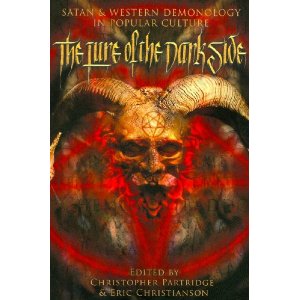
Back in August I received a book to review for Relegere, the new online journal for Studies in Religion and Reception. The volume I received was The Lure of the Dark Side: Satan and Western Demonology in Popular Culture, edited by Christopher Partridge and Eric Christianson. I found this assignment to be a felicitous one for many reasons: the book was very interesting, the topic is intriguing, the authors are scholars who take popular culture to be worth serious study, and it exposes the roots of many perceptions of Satan and the demonic in western society today. While I cannot present the whole review here – I would encourage interested readers to explore the appropriate issue of Relegere when it is published – I would feel remiss if I didn’t at least mention a few of the highlights here.

Scary cover

First of all, the book is a collection of essays that cover the media of music, film, and literature. Many of my students like to point out the propensity of death metal bands for choosing ancient Near Eastern gods and themes for their band names and songs. The first two essays in this book explore black metal and its self-proclaimed Satanic intent. What is interesting here is that what many black metal bands declare as their “religion” does not, in fact, fit with mainline Satanism at all. This aspect of the book is worth reading just to see how religious ideas, both unholy and holy, easily become distorted when transformed into an artistic medium. By far my favorite essays, however, were those that analyzed horror films according to religious themes and concepts. It was refreshing to see serious scholars discussing vampires without flinching, noting how they are part of the same fabric from which religion is cut.

One of the recurrent criticisms of academic writing is that it generally reaches only academic audiences. Certainly at the prices common at academic presses the average layperson would need to be exceptionally motivated to pay out the cost to read what are admittedly generally dry and technical books. Equinox has fortunately released an affordable paperback version of this volume, making the price less of an issue. The content is, for the most part, readily accessible to the general reader. The cover is a tad lurid; when I took it along to the DMV to renew my driver’s license I felt a bit self-conscious in the waiting room. Beyond that, this was a rare academic book that should find a wide readership. For me, the bibliographies and filmographies demonstrated my own deficiencies in keeping up with popular culture. I would recommend it for those with a sturdy constitution who want to know the correct way to dispatch a vampire in the twenty-first century.


From Bragg to Phelps

Religious freedom is proving to be a two-way street. The news is rife with stories of religious groups pushing the limits beyond their right to state an opinion into arguably unconstitutional behaviors. At Fort Bragg, the Army is sponsoring Rock the Fort, a Christian rock concert promoted by the Billy Graham Evangelical Association. Although Christian bands are spiritually minded, they do not perform for free, raising the question whether military (government) money is being spent to promote a particular religion, a particular strain of Evangelical Christianity. In offering this concert, is the government endorsing this one religion? Statements that other religions are free to send their rock groups to Army bases rings hollow when, with rare exceptions, such groups simply do not exist.

Meanwhile, Time magazine brings the curious Westboro Baptist Church of Topeka, Kansas back to the headlines now that Supreme Court has been called in to argue whether their outspoken condemnation of the military is constitutional. Fred Phelps, the founder of the church, has led divine hate campaigns across the country. It is his protests at the funerals of soldiers killed in action that has forced the question of whether his group has the right to condemn indiscriminately. The question of good taste need not even be asked.

What these Evangelical groups are pointing out is that God apparently suffers from schizophrenia. Simultaneously the great general upstairs loves soldiers and wishes to convert them and also hates them and condemns them to hell. The jury, it seems, should be the taxpayers. We are the ones footing the bill for Christian concerts and paying the not-insubstantial salaries for Supreme Court justices to argue about the legality of religious hatemongering. In these days when many feel that Islam is a threat (as Christian clergy threaten to burn the Quran), it might be worth asking where the real threat to religious freedom comes from. Religious zealots often make excellent soldiers, no matter what the religion.

These guys love God, but is the feeling mutual?


Vegetarian Meat Loaf

I’ve never been a hero worshipper. Perhaps the delusion set in when I realized several years ago that nobody really has all the answers. The “experts” (I’m even sometimes shackled with that designation at times) are limited by the same mental capacity as all Homo sapiens. Our elected officials do their best to find solutions, but at the end of the day oil still gushes into the Gulf, priests still violate children, and unemployment continues to wreck lives. No, hero worship is counter-productive and leads only to disappointment. Not that there aren’t people I admire – there are many – but they have their shortcomings too.

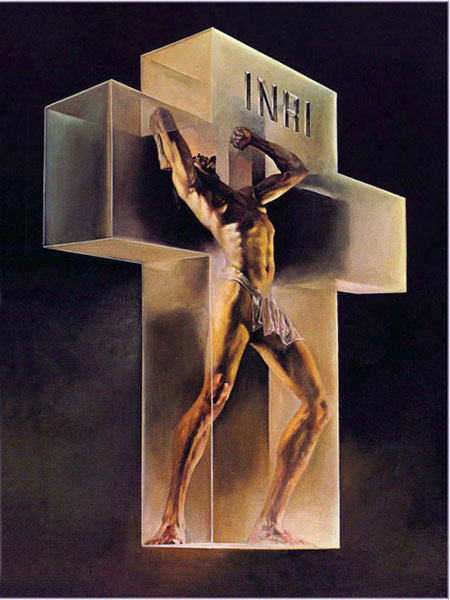
One of my admired people that often surprises those who know me is Meat Loaf. I really don’t qualify as a head-banger, but my tastes in music vary widely. With Meat Loaf the attraction is the sincerity evident in his voice. He may not write his own material, but the man feels the songs he belts out. So it was that I made a rare music purchase when Hang Cool Teddy Bear was released earlier this month. On glancing through the liner notes I was pleasantly surprised to find Boris Vallejo’s Crucifixion among the art.

Boris Vallejo's Crucifixion

Anyone familiar with the fantasy-style artwork in most Meat Loaf albums will not be surprised at finding Vallejo’s work, but this particular piece, reminiscent of Salvador Dali’s “religious” paintings, presents a depth of feeling to the crucifixion that most theologians diminish in their desire for profundity. The Jesus in this piece is sealed within the cross, raging for release. Most devotional paintings show a placid Jesus accepting, with existentialist-type calm, his long-foretold fate. I find Vallejo’s work compelling for the same reason I enjoy Meat Loaf’s performances – there is real emotion here.

Religion has little to offer the world in the way of rationality. Theologians have generally accepted the fact that religion runs counter to reason and therefore its value lies elsewhere. What is left when reason is gone is emotion. When reason tells me there are no heroes left, emotion sometimes convinces me otherwise.


Trite Lite

Fresh out of that improbable world called Nashotah House, I was introduced to a jarring concept while in Oshkosh: a Hasidic rapper called Matisyahu. The strange image brewed in my head did not match the reality of this persona, but the very concept of a religious conservative engaging in protest music just didn’t seem to fit. I make no claims to musical expertise, but I did grow up in the 60’s and 70’s, and I know authentic protest when I hear it. Rap began as a countercultural rebellion, and I knew age had its gray fingers wrapped around me when a friend in grad school claimed that rap was “the end of civilization as we know it.” Civilization didn’t end, it simply evolved.

Rap started to become mainstream, as happens to all radical movements when they become “cool” and the aging performers join their aged fans. Then along comes Hi-Caliber, the pathetic Republican attempt to appeal to the hip, the young, the impressionable. The Tea Party rapper (Zac the Rapper?) inveighs his tired message that progress is bad, privileging the wealthy is good, for the Bible tells me so. And the public sips it in. As a person who can’t help but overthink things, it alarms me how trite answers are easily accepted by so many people. If a person stops to think about the implications of issues, the simple solutions proffered by Tea Partiers simply don’t solve anything, no matter how many rappers, twitterers, or ravers they get on their side. Rather than exercise mental rigor, most voters see the shiny glitz and pull the voting booth curtain. Perhaps my friend was right after all.

I have to face the fact that I’m aging into a guy who casts a nostalgic, longing glance back to the sixties of my youth with a sentimental eye. The cardboard-cutout world of the 1950s seems that it was insubstantial, staged even, compared to the psychedelic colors I first saw through childhood’s wondering gaze. I heard protesters on the radio and saw them on television while being raised in a conservative environment. And even though I never personally rebelled, being the Bible-reading type, I secretly admired those who had the courage to challenge the social evils of the day and damn the consequences. Now I switch on the radio and hear conservative fat-cats clipping out pithy rhymes upholding the man. Where is the authenticity? It all makes me want to turn on, tune in, and drop out.

Authentic Republican wrapper


Eine Kleine Neanderthal-Musik

I suffer a limited form of amusia. No, it’s not a fear of amusement, but rather lack of musical ability. I appreciate music very deeply, but I simply can’t make it. I’ve tried lessons and teachers end up turning away in exasperation. The embarrassing part about all this is that music is an integral part of religion – almost all forms of religion have their musical repertoire, and musicologists have demonstrated that the early human impulse to make music has a religious basis. I can only sit in the audience.

That's me on the left

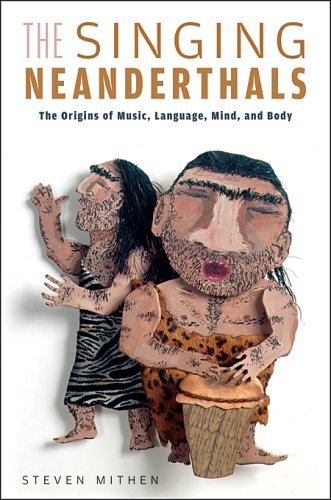
I’m finally getting around to reading Steven Mithen’s The Singing Neanderthals: The Origins of Music, Language, Mind, and Body. A few years back I gave an academic paper suggesting that musical development could be an analog to religious development on a neurological level in the Bronze Age. Since I’m not a neuroscientist I have to rely on others to do the experimental side of the equation. Mithen serves this function nicely. When I read about music and the brain, which I do frequently, I am surprised that more scholars of religion haven’t picked up on this connection. Since music is frequently “background noise” today, many people casually assume that it is insubstantial, a whim. I look at it (listen to it) from a different angle. I seldom listen to background music – if music is playing, I pay attention to it, and something in my unprofessional brain says Mithen is often right on target.

Of course, religion and music is not the main thrust of The Singing Neanderthals, but rather the idea that music was formative for human cognition. Perhaps music even developed before speech. For me this is an important piece of a much larger puzzle: whence did religion arise? Like all inquiries that delve too deeply into the past, the answer is lost among ambiguous artifacts and ancient dust. And yet, those who know more about this than I do seem to be pointing in the direction that both religion and music have their origins in the pre-Homo sapiens stage of our evolution. I’m not surprised. I only wish I could play along.


Saint John, Elton, That Is

“I think Jesus was a compassionate, super-intelligent gay man who understood human problems. On the cross, he forgave the people who crucified him. Jesus wanted us to be loving and forgiving. I don’t know what makes people so cruel. Try being a gay woman in the Middle East — you’re as good as dead.” According to Parade.com, this was Elton John’s take on Christianity. I find the comments endearing in a naïve sort of way. They further demonstrate how people construct their gods in their own images. Compassionate? No question. Super-intelligent? Well, maybe. He certainly was creative, witty, and above average in intellectual celerity. Gay? Not likely. Not for doctrinal reasons, but simply for cultural ones. “Gay” as a lifestyle simply did not exist in the first century. The Bible maintains a steely silence on any aspect of Jesus’ sexual life, so we can never know. Perhaps it’s a case of “don’t ask, don’t tell”? Understood human problems? Bingo! Yahtzee! That is, I believe, what Jesus was all about. In my humble opinion, Elton hit that one dead on.

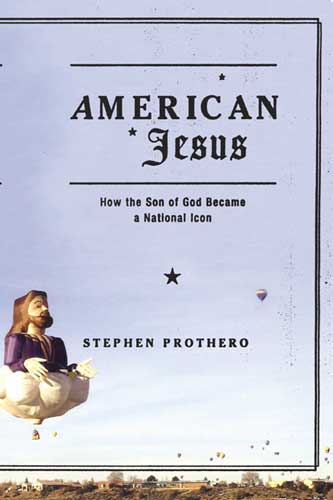
The crafting of Jesus into our own form is a major aspect of Stephen Prothero’s American Jesus. A fascinating romp through a bizarre collection of made-over Jesuses, Prothero’s book should be required reading for anyone interested in civil religion or Thucydides. Even a religion prof from my alma mater, however, didn’t fully convince me that anybody really understands who Jesus was. Such is the way with all truly great individuals.

Unlike some commentators who are clearly upset by Elton John’s summation of Christianity’s founder, I am a bit more circumspect about it. No one has cornered the market on Jesus. As hard as various Christianities have tried, Jesus still emerges in divergent forms to diverse individuals and populations. From Superstar to “super-intelligent gay man,” there is no doubt that Jesus left an eternal imprint on the human population of this planet and that those who believe in him will always portray him in their own image.


Old Father Hubble

“Space. The final frontier.” So I grew up hearing as Captain Kirk and Mr. Spock raced through the galaxy and plucky Will Robinson explored the cosmos with Robot despite the machinations of Dr. Zachary Smith. In Seattle a few years back I visited Paul Allen’s Science Fiction Museum and as I stood before the original Enterprise console and viewed Robot in person, it was almost a personal epiphany. This was my childhood all in one room.

Experience Music Project and Science Fiction Museum, courtesy Gnu

NASA has just announced the release of more deep space images snapped by the new and improved Hubble Space Telescope. These images show objects, galaxies, back to a mere 600 million years after the Big Bang. Look any further back and you’re liable to find yourself staring God right in the eye! These incredibly ancient images are humbling to a scholar of ancient times. In the cosmic calendar Sumer isn’t even on the map. And now we can see back almost to the Big Bang itself. It is another kind of epiphany.

Here's lookin' at you, kids - Hubble's new view

Cosmology is inherently religious. Even Stephen Hawking leaves room for the unknown, “religious” entity in his popular writing. As the infinitesimal biological apex of evolution on our own planet, we are somewhat less than cosmic dust on the grand scale. When we reach out to that cold blackness of outer space metaphors fail us until we fall back on God language. I look forward to the day when the Big Bang is captured on film (or digitally). I am almost certain that when that happens science will become far stranger than fiction.