Who Inherits What Now?

Grading exams is not my favorite activity, so when forced into it by psychopomp and circumstance, I attempt to select appropriate axe-wielding music to accompany the venture. My music collection is modest, so often I have to go back to the classic eras of rock for something that fits the mood. Recently I selected Rush’s 2112. I have a long, if tangential connection to this album. Afraid of its pentagram imagery and heavy metal sound (to my young ears) when it came out in the mid 70s, I only listened to it when my older brother put it on the stereo, and then only furtively enjoying it. Looking back now, I often wonder how any of us survived the 70’s styles and outlook — they feel dingy and hopeless in many corners, while sloppy and simplistic in others. Some of the music, however, has proven timeless.
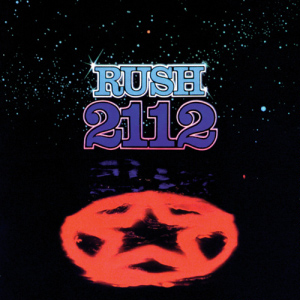
Rush

After the instrumental prelude, the first words on the album are from the Bible: “the meek shall inherit the earth.” This particular statement is among the most easily ignored in the Gospels, just as the meek are easily ignored on the earth. With all the trumpeting and bellowing that sound from self-righteous commentators beating their religion beneath them like an over-taxed war-horse, it is plain to see how the meek might simply get in the way. This particular verse from the Sermon on the Mount, however, is one of the reasons that I cannot give up all faith in traditional religions. It sets the perfect juxtaposition between greed and selflessness out in full light for all to assess. Thus say the priests of the temples of Syrinx.

There was a time when rock became self-righteous to the point of caricature; but Rush’s 2112 was not such a place. The meek inheriting the earth is sticking it to the man unlike any other biblical dart can. And it is probably a good thing to queue up when I’m having to face the onerous task of grading exams once again.

Clothes Make the God

What is it with gods and clothes? Today’s news announces that Rob Halford, the Metal God, vocalist of Judas Priest, has just revealed his own Metal God Apparel line. Now, I try to be equitable, but isn’t metal all about sticking it to the establishment? Isn’t designing your own line of clothing the most establishment-worthy enterprise ever? Where have the rebels gone?

Whip not included

Whip not included

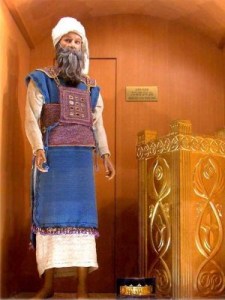
No sooner are people getting the hang of things in Eden than God marks designer clothes first on their list of accessories. Gods seem to be impressed with dressing the part. The Bible details what priests, and especially the high priest, will wear in the temple/tabernacle. Such location-specific wear indicates a very deep awareness of sacred space that pervades most religions. More than that, however, the clothes themselves are highly symbolic. Although modern readers may not be able to come to any consensus on the “symbology” (oh that word!) of each and every ephod and tinkling bell, we can be assured that nothing about the priestly garb was accidental. Indeed, Exodus informs us that God selected the fabrics himself.

Judas Priest, meet High Priest

Judas Priest, meet High Priest

So I’m not so shocked that the Metal God has made his preference known in the line of apparel appropriate to wear to the worship of this particular deity. As I watched a motorcycle club in their well-worn leather roar past me in my timid mini-van this weekend, I was reminded of the power of clothes. We may not be born with the body we want, but if we dress it up right, others might be made to believe that we’re gods too.


God and the Boss

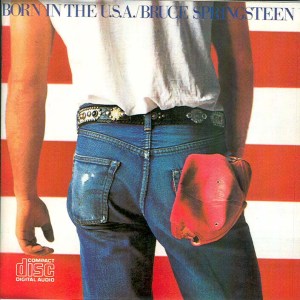
I seldom gush, nor am I given to great displays of emotion. Although I appreciate great accomplishments in others, I have never considered a living person a hero. Only Bruce Springsteen. An article in the newspaper yesterday described the first academic conference on the Boss’s music, held right where it all began — New Jersey. Unfortunately unable to attend, I relish the fact that others see in Springsteen what must be something like I see.

Last year at the Society of Biblical Literature Annual Meeting in Boston, I picked up a copy of a new book, The Gospel according to Bruce Springsteen, by Jeffrey Symynkywicz (Westminster John Knox, 2008). I am not a fan of “Gospel according to —” books, but there is a trenchant depth of struggle with religion embedded in Bruce’s songs that transfixes me almost as much as Melville’s Moby Dick. Now, this is deeply personal with me. I don’t discuss my amazement that borders on worship of Springsteen with anyone. Coming from a decidedly blue-collar background, and having wrestled against circumstance for everything I’ve earned, including my degrees, I hear resonances of empathy throbbing through what Bruce sings. He is not an icon; he is an authentic human being. And his music is a gospel.

Boss

I haven’t read Symynkywicz’s book yet. Whenever I’ve tried to read the popular bios of the Boss I soon become frustrated at how trite they all make it sound. Having survived (barely) the Reagan-Bush era with its utter lack of sympathy for the condition of most Americans, sometimes I just need to crawl into the corner alone, slip on the headphones, and listen to Nebraska over and over again.


Good Book, Bad Seeds

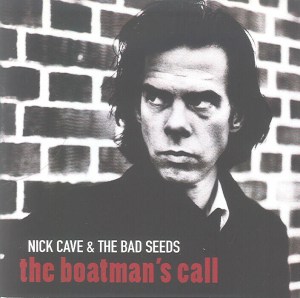
A gray day in September. Nowhere to go, nothing to do. A stark melancholy races on the winds of a distant nor’easter. It is a perfect day for The Boatman’s Call.

Searching for land

Searching for land

I have to admit up front that I found out about Nick Cave & The Bad Seeds from the Shrek movies. The soundtrack crew from the first two movies did their homework exceptionally well, tapping some truly desultory, lugubrious tunes from artists who don’t make the top twenty. I was so taken by “People Ain’t No Good” that as soon as I could afford it I purchased the album (The Boatman’s Call, not Shrek II). The album begins with the line “I don’t believe in an interventionist God, but I know darling that you do . . .” Throughout the album the achingly sacred and profoundly profane are blended in an eerily subdued way. The music is haunting and thought-provoking. Almost each track on the album has a biblical reference, but these references are mixed with what would be crude if handled with any less artistry.

All that I know about Nick Cave is what I’ve read on Wikipedia, but it is clear that he is well versed in the Bible and makes effective, if dark, use of religious imagery. Perhaps the reason I admire this album so much is that Cave’s ambivalence toward religious structures is so honest. He isn’t out to convert anyone, nor is he willing to let go of his religion. The religion that wafts out of the drafty attic of this disc mirrors the complexity that faith ought to possess. Especially on a dark and rainy autumn day.


Edoc Elbib Eht

A number of 40-year commemorations of the Manson Family murders have brought these gruesome events of my childhood years back to memory. I was really too young to understand what all the fuss was about then, and now that I am old enough, I’m not sure I want to. Nevertheless, I have committed myself to exploring sects and violence in a religious setting, and the Manson murders have prongs of both phenomena. While recently refreshing my memory on these horrific events on a gray and rainy day, I noticed something I had not seen before.

Looks like someone's been on the yellow submarine a little too long

Looks like someone's been on the yellow submarine a little too long

Charles Manson was (probably still is) a believer in hidden codes. He allegedly cracked a code in the Beatles’ White Album that led him to the belief in an apocalyptic battle that he was determined to begin. I wondered why the Manson Family tends not to be listed among other apocalyptic groups such as the Branch Davidians or Heaven’s Gate. They all share several traits, and although Manson’s revelations came from the Fab Four rather than the Holy Trinity, a revelation from on high spurred him into actions that had a tragic outcome, just as David Koresh or Marshall Applewhite.

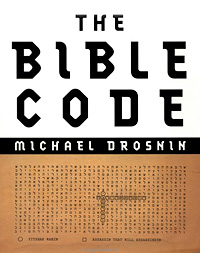
The whole Helter Skelter code also reminded me of another, equally bogus pawning of randomness as divine messages: Michael Drosnin’s The Bible Code. When I read this bestselling bit of intellectual dry rot a few years ago, I was amazed that anyone could possibly take it seriously. God writing hidden messages in a holy book like some hormone enraged high schooler? And figuring out that a singular genius would figure it out just before the apocalyptic end without realizing that it is possible to read messages back into any media after they occur? It seemed all too much for a rational mind to take. In one of my courses at the University of Wisconsin Oshkosh I gave students the option of reading it for a secondary project. To my chagrin, when I had the papers in one particularly tear-stained paper wailed (seriously) that the writer wished she had been warned sooner! This book changed her life! Everyone must know! Unfortunately I left Oshkosh without finding out what became of her.

God may not play dice, but apparently he likes crosswords!

God may not play dice, but apparently he likes crosswords!

I felt bad for introducing an undergrad to such “academic” sleight of hand; some college students just haven’t developed the critical facilities to see through the remarks of Balaam’s various sidekicks. Come to think of it, Manson’s followers accepted his revelations uncritically as well. Maybe the real lesson in all of this is that we must examine very closely those who claim special revelation, whether it be from Lenin, McCarthy, Starr, and Harrington, or just from God Almighty.


Profit Priest and the King

As a staid academic with the internal passion of a Bruce Springsteen or Lou Reed, if I had any musical ability I’d have opted for a life on the stage. As I struggle to forge my passion into words on paper (or in electrons) I consider those who should have perhaps considered other options as well. I have never really been a fan of Christian Rock. The whole rebelliousness and sense of sticking it to the man lose something when you bow your head in submission the Sunday after and ask some ordained member of the establishment for forgiveness. It tastes even worse than Light Rock, the talc of real rock world. Nevertheless, there have emerged in the strange history of Christian Rock a few true innovators who have not only challenged Christian convention, but who have taken music itself in new directions.

Norman's Iconic Look

Norman\’s Iconic Look

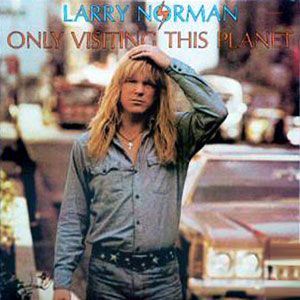
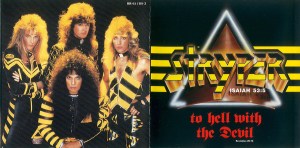
My favorite among the innovators has always been Larry Norman. The original “Jesus Freak,” Norman appeared on the San Francisco rock scene only to be rebuffed by Christian artists who held Pat Boone as a kind of icon, and rejected by mainstream rock as being some kind of Christian fanatic (he was). Norman’s music, however, was a strange blend of tradition and visionary foresight. When they saw there was money to be made, along came other artists trying hard to match Norman’s footsteps, most of them falling far short. Daniel Amos, probably one of the most unusual Christian groups ever, proved themselves way ahead of the curve, and if they’d had a good publicist might have made secular airtime based on their forays into retro and punk before they were trendy. Stryper, a hair band of heavy metal stripe, threw Bibles into the crowd at concerts.

Yes, they're dudes, Father forgive them!

Yes, they\’re dudes, Father forgive them!

They later disbanded because of their concern with hypocrisy, something a true rock-n-roller would never feel compelled to do. Meanwhile, mainstream Christian Rock rendered itself into treacle that would easily wash off with a shower of pure intentions.

Rock addresses head-on those gritty, messy, and even dangerous elements of human life — our emotions. After some 4000-plus years of organized religion we still have difficulty addressing or accounting for their insatiable pull on us. Staring out over the lecture theater and toting up the number of ipods present, I would have to guess that music still meets a need that religion might have missed.

A few years back, in a wave of nostalgia, I went to see Larry Norman in concert. I’d grown beyond any real enjoyment in the genre, but here was a true innovator, one whose name very few Christian Rock aficionados even recognized. The concert was held at a Christian college where there were maybe forty folding chairs arrayed in a depressingly small space in the gym. Norman could still rock, his acoustic guitar and spare band providing all the support he needed. I even had the chance to chat with him after the show; no security guards need apply. As I later reflected, perhaps this is what my life would have been like if I’d had some ability and taken to the stage instead of rocking the glamorous adjunct professor gig. While having my eardrums taken through their paces at an Alice Cooper concert last fall along with a bunch of other fat, balding, wannabe rebels I experienced a kind of secular epiphany. Alice had converted to Christianity some years back — seen chumming with none other than Pat Boone himself — and his music at the time suffered. Now that he’s returned to his macabre fantasy world, his ability to churn out compelling music has returned. Outside, away from the cannabis fumes and liquor-enhanced air, although I didn’t personally participate in their consumption, for a moment it felt like I’d lived my rebellious dream.


Anat, Kali and the Violent Femmes

“Women and men,” runs the chorus of the They Might Be Giants song of that same title, “… everywhere they go love will grow.” Women and men. Thus it has always been. The Sumerians seem to have speculated, on a broken tablet concerning the creation of humanity, that some six varieties of gender had been ordained by the gods. This story reminds me of just how dicey gender definition can be. Despite the howls of protestation from man + woman = marriage crowd, the concept of gender is actually complex and diverse. The lowly slime mold of the genus Physarum has a combination of multiple sex-controling genes mixed with several different types of sex-cells, leading to a bewildering 500 different sexes. You’ve got to wonder what the Physarum bar-scene is like! So the whole women and men combination seems a little tame by comparison.

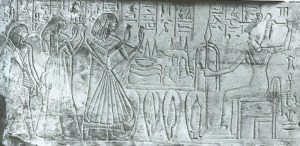
The ancients did, however, toy with standard gender role concepts. The Ugaritic goddess Anat, sometimes described as a “tomboy,” was perceived as a literal femme fatale, joining her in the company of Ishtar and Kali as warrior women-goddesses. She was a proto-Amazon (before they laid aside their male-bashing and set up a very lucrative web-site). Anat wears the severed heads and hands of slain warriors and stomps in blood-puddles, laughing all the while. Where did the ancients derive such violent feminine images as Anat and Kali? Some sociologists suggest that these myths were intended to solidify gender roles, although they seem to confuse the violent male with the shy and retiring female stereotypes. Perhaps the Ugaritians and other ancient folk knew deep down that gender is only a vague attempt to classify something that is really far more complex than it seems. Just when gender is nailed down you find yourself in a bloody mess as Anat swats at you again and again.

Anat ready to smite Egyptians who just don't understand the Violent Femmes

Anat ready to smite Egyptians who just don\’t understand the Violent Femmes

Nashotah is not far from Milwaukee where the folk-punk, genre-defining band the Violent Femmes started out. In college many of my overtly Christian radical friends told tales of how the Violent Femmes were a closet Christian rock group, based on some of the religious themes in Gordon Gano’s lyrics. When I listen to their CDs, however, I hear the same old angst that has plagued humankind for ages — what does a guy have to do to impress a girl (the same question may be reversed, turned upside-down, or dis-and-re-articulated, depending on whether you are female, male, or slime mold). At Ugarit they would have understood the Violent Femmes — listen to “to the kill” and tell me it’s not so! I would suggest that Gordon and the guys aren’t as much closet Christians as closet Ugaritians, struggling with the Anats and other violent femmes of their world and trying to make sense of it all.


Vampires, Mummies and the Holy Ghost

One of the many quirky things I experienced in my teaching days at Nashotah House was the fascination of theological students with the (then current) Jimmy Buffett hit “Vampires, Mummies and the Holy Ghost.” Not really a Buffett fan (I must confess, however, to being strangely touched by “Margaritaville” although I’ve never had a margarita and I’ve never been to Mexico) I was nevertheless intrigued by this juxtaposition. One student confessed to being a vampire-novelist wannabe. The vampiristic connection with the Eucharist was kindergarten, but there was a more ancient tale hidden here.

With a career crashing down around me, I found myself habitually watching horror movies — something I hadn’t done since my own seminary days. One bleary-eyed morning it struck me how our nightmare-zone creatures are religious in origin. Vampires can be traced back to ancient Sumerian mythology. Mummies? Ancient Egyptian burial practice to preserve a body for the afterlife. Ghosts, apart from finding a feared spot in most cultures, are attested in the Hebrew Bible and even earlier. They are, of course, from the supernatural realm. Werewolves are a branch of the lunar worship tree, again an ancient form of religion. Even Frankenstein’s monster toys with the account of Adam’s creation, although Mary Wollstonecraft Shelley associated him with the Greek mythological figure of Prometheus. While Godzilla (apart from his apparently theophoric name) may fall outside this scheme, most of our nightmare creatures are ancient kin of the gods.

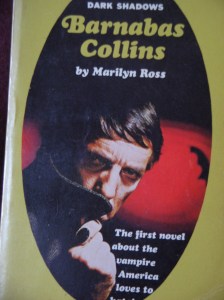
My favorite vampire

My favorite vampire

At a professional conference last year I found and purchased a book entitled Sacred Terror: Religion and Horror on the Silver Screen, by Douglas Cowan (Baylor, 2008). Given my renewed penchant for fright flicks, I was intrigued by Cowan’s contention that religion lies at the heart of horror. Indeed, one may think of them as fellow ventricles in the anatomy of fear. Perhaps ancient religionists were on to something when one of them penned “the Lord taketh pleasure in them that fear him” (Ps 147.11). Religion may be a response to fear, or to a world that for us has become natural and upon which we wish to project a human (or divine) face.