Which Lethbridge Witch?

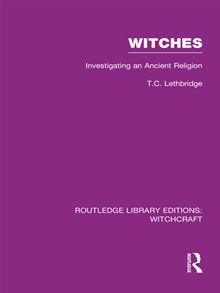
witcheslethbridge Thomas Charles Lethbridge was a twentieth-century explorer. I knew his name only from book covers, and since books published before the cynical 1980s have a feel of the parsimoniousness to them, I tend to be trusting. As a former academic, my choice of reading is, in an odd way, sequential. You see, academic research is often a matter of following leads, rather like Sherlock Holmes with his clues. One thing leads to another. I’ve been learning about paganism at work, and so when I noticed T. C. Lethbridge’s book, Witches: Investigating an Ancient Religion, I figured that I might learn something about belief in witches in the Middle Ages. The book was published by the Routledge Kegan Paul phase of my employer in 1962. I quickly learned that Lethbridge was far from conventional, even in the twenty-first century.

Lethbridge’s book on witches turned out to be a romp through mostly Celtic mythology, with a bit of Norse and ancient Near Eastern myth thrown in for good measure. It turns out that Lethbridge literally did believe in the power of magic and was no slouch when it came to dowsing. In the great Frazerian tradition, Lethbridge brings together some elements that are probably best left separate, but the result is undeniably interesting and entertaining. I’m not sure he would be considered a balanced source for research purposes today, yet his book does contain unexpected insights. But no witches. Witches, according to Lethbridge, were adherents of the old gods. Their worldview collapsed with geocentrism and there was little left for magic to do in an empirical world.

Lethbridge’s constellation has dimmed from the scholarly zodiac. In recent days he has found a new set of disciples, however, who see his work as profoundly prophetic, in a manner of speaking. Lethbridge was an occult investigator before such pursuits became big business. Among mainstream academics these ideas still fall into the category of bogus, naive, or superstitious, but that is beginning to change in some quarters. Lethbridge, as it quickly becomes apparent, reserved a kind of scorn for establishment academics. It is true that stepping out of line has its consequences even in the rarified halls of higher education, but the results of the research are often of high quality. Even witches can be studied with an academic eye. The difference seems to be that T. C. Lethbridge believed what the witches said. That makes him a real explorer.

OMG, MOMA!

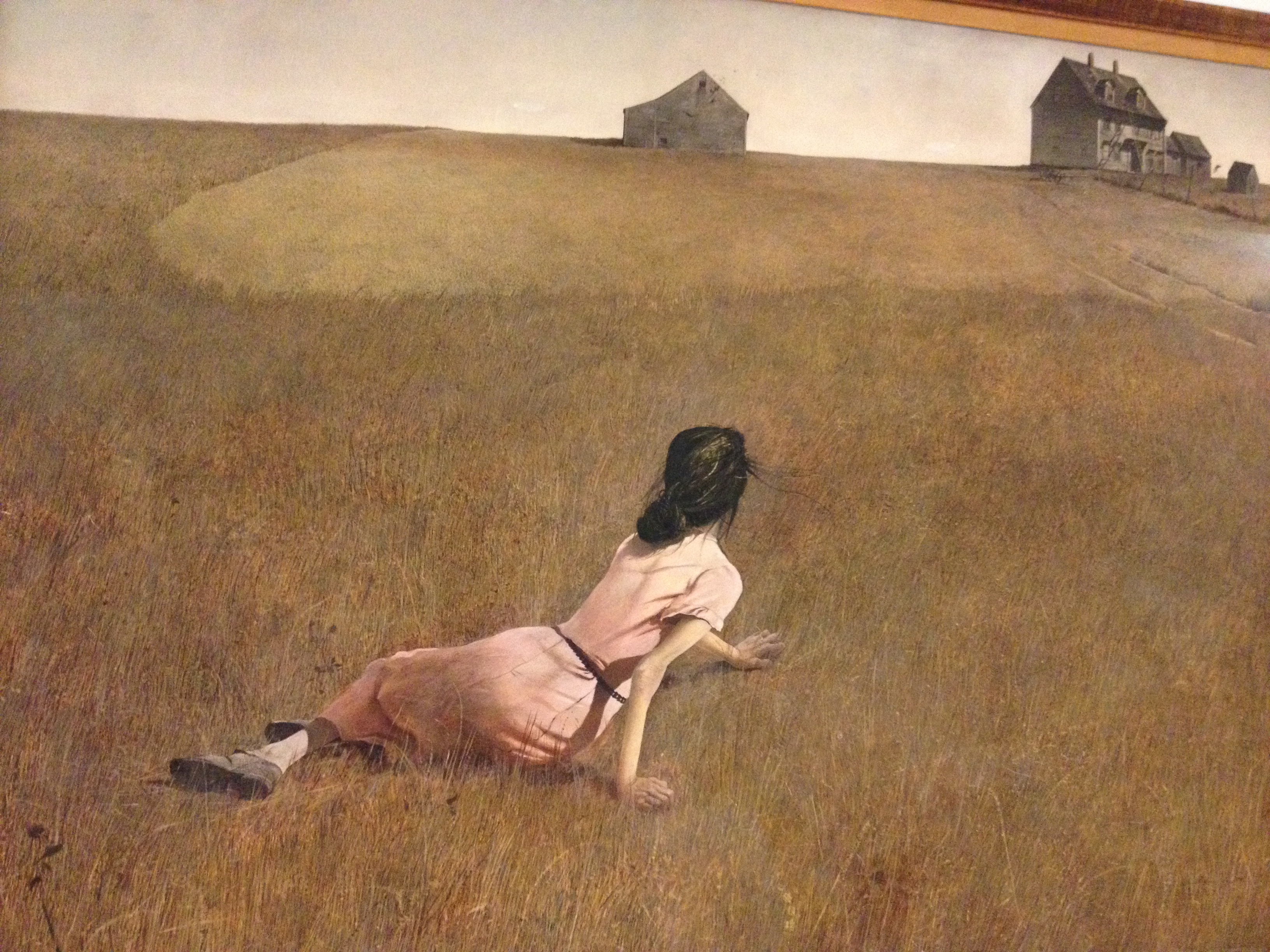
New York City can wear you out, spiritually. I suppose that’s why so many people go there, to face the challenge. Thanks to Target, Friday evenings the Museum of Modern Art gives out free tickets for its world-class collection. We knew that Vincent van Gogh’s The Starry Night was there, and had planned on seeing it sometime. Well, Friday of spring break offered an opportunity, so last night, with several hundred, maybe a few thousand, others, we made our way to MOMA. We arrived around 5 p.m. and found the line literally around the block. It wasn’t as cold as it had been, so we braved the hour to wait our turn. Yes, it was worth it. As my wife noted, it was very good to see so many people wanting to see art. Manhattan offers many, many other diversions for a Friday night, but hundreds opted for art. I had long anticipated this. Since my school days I’d seen replications of many of the paintings in the museum, and it was inspiring to be packed in so close with so many people wanting to be close to art. Hoping, somehow, to commune with the emotion in us all seeking such profound expression.

IMG_0602

It was a little difficult to commune, however, with so many other religious seekers. This is a religious experience, to touch the soul of another. Standing inches away from The Starry Night, I could almost feel the desperate, longing hands of van Gogh stroking out a manic sky, surreal and ethereal. I could almost hear the echo of his spirit. Were it not for the many crowding next to the painting to be photographed with it. Fellow spiritual seekers, I hope. Van Gogh was a troubled soul, as we all know. How many artists take their own lives after reaching out to touch what so few of us even dare. A sadness so profound as he climbed down that mountain. The starry night is the photograph of a suffering soul.

IMG_0614

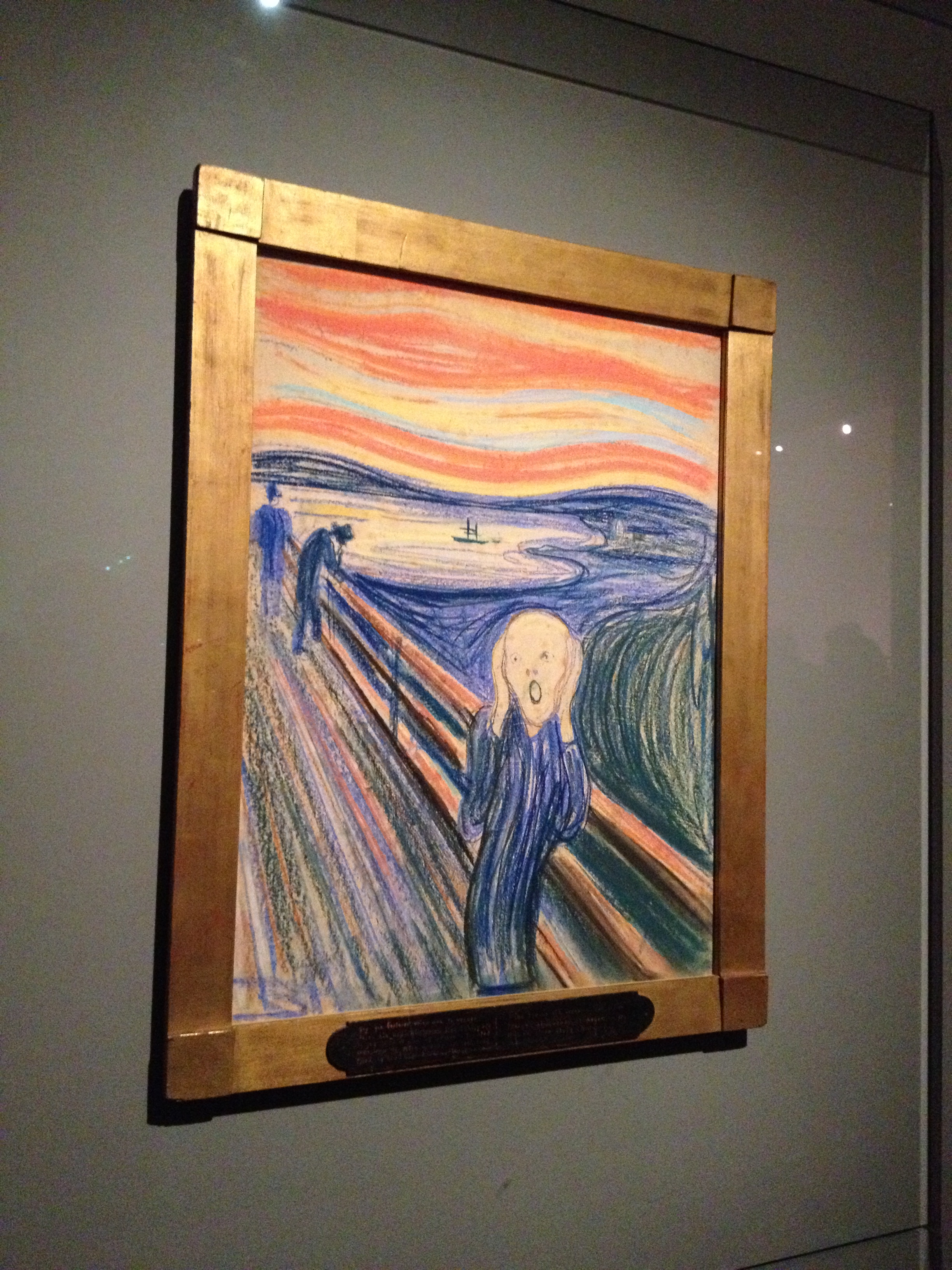
Then there was Edvard Munch’s classic, The Scream. On a limited engagement at MOMA, facing, just across the hall, van Gogh’s Starry Night. Was there ever such depth of soul in such close proximity? It was there that I began to question the faith that I had hoped impelled the countless masses yearning to observe free. MOMA allows photographs, and cameras, cell phones, and iPads were ubiquitous. To reach The Scream was to endure a crunch of strangers’ bodies pressing you forward, cell phones held aloft, illicit flashes popping, worried looking docents. I was anticipating another spiritual moment when I heard a woman say that she had to get close for a picture. “This is going to be my status!” she cried. So this is modern spiritually, the life splayed on Facebook, bragging about bagging Munch. Yes, Edvard, I am screaming too.

IMG_0610


AP Physics

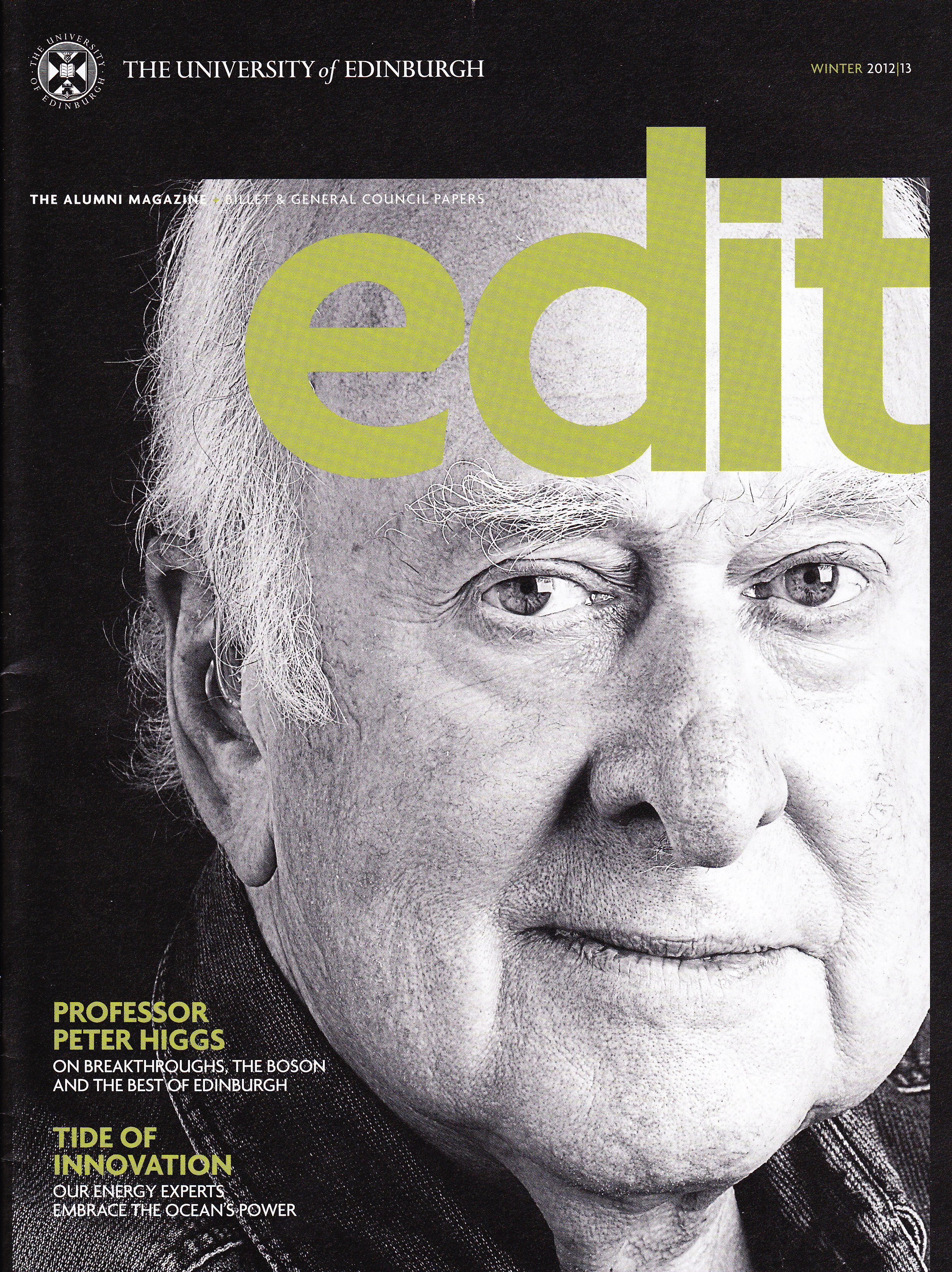
AP Physics. Few words strike terror into high school students like these initials and scientific surname. As a student I didn’t really comprehend AP, and never took any Advanced Placement courses, but I enjoyed physics. It was by far my favorite science class. Even as a Fundamentalist, I saw that here was the explanation for the entire universe, as we knew it. Laws deduced by people far smarter than I could even dream of being could explain everything. But then Heisenberg. And Schrödinger. And quantum mechanics. I remember being taught that nothing was smaller than an atom. (Primarily school teachers in the early ‘60s can easily be forgiven the generality.) Still, on my own I read about protons and neutrons and electrons with wonder. When physics and chemistry brought these to the level of reality, it was like we really understood that each atom was like a solar system and boy didn’t it look intelligently designed! But then we looked closer. Quarks, in a Life-Saver array of juicy flavors, string theory, and the God particle itself, the Higgs boson, coyly showed their elusive faces and physics got weirder and weirder.

Edinburgh does physics (and God) proud

Edinburgh does physics (and God) proud

When my daughter told me about AP Physics recently, I was reacquainted with this world where apparently conscious beings have their choice about reality. The observer bends the results of the quantum experiment. And yes, particles can be two places simultaneously. When a friend pointed me to an article on Quantum Reality in The Waking Times, I was ready to throw open the doors of perception and celebrate life in a universe so strange that the very concept of reality itself is up for grabs. Some physicists now believe the entire physical universe is constructed of energy and that it flashes into and out of existence at a staggering speed that makes me feel a little perpetual-motion sick. Reality is, literally, what we make it.

I have to admit just a little bit of pride on the part of having chosen to study religion here. The more we learn about the quantum world, the more religious it becomes. There will be hard-core reductionists who dispute this, I know. Those who’ve spent any time among the mystics, however, will know what I mean. Back beyond the singularity the laws of physics are so stretched and protracted that even Stephen Hawking can’t sort them all out. And we find ourselves daily living in a world that we help create, on a sub-atomic level. Reality may not be what it seems. I learned this in high school physics. Now that my brain has ossified into patterns that don’t admit much of calculus or accounting any more, I’m beginning to realize that physics is suggesting that reality may be consciously constructed after all. Only this time we’re the gods. And that’s a really weird concept.


Esalen

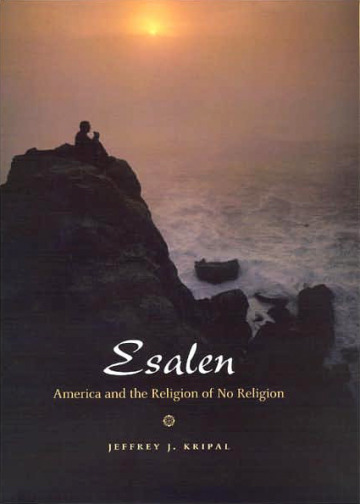
Esalen Every great once in a while, you read an academic book that really makes you think. Not that many books aren’t erudite or thought-provoking, but the ones that cause a reader to question reality are relatively few. I suppose that’s why I’ve been reading Jeffrey Kripal’s books like candy. I’ve posted on his Authors of the Impossible and Mutants and Mystics. Now that I’ve read Esalen: America and the Religion of No Religion, I somehow feel like I missed out on something important that had never entered my awareness. Growing up in the eastern part of the country and not reaching my teenage years until the program at Esalen was already under way and famous on the west coast, I’d never even heard of the institute until I’d started reading Kripal’s books. Esalen, for those who are like I was, is hard to define. Indeed, Kripal studiously avoids doing just that as he narrates its history and impact on the nation, and indeed, the world.

The human potential movement has seldom found institutional support. Since our worldviews determine what we are capable of seeing, and since our reality has largely been defined by a rationalistic monism, an entire universe remains for us to discover, if we were only to open our eyes. Reading about Esalen was like finding a long lost twin—much of what the institution has stood for has found its way into my own psyche in some form or other. I suppose I’ve never really read too much on eastern religions, but I do appreciate what meditation can do. Reading the names of those associated with Esalen over the decades, it would be difficult to disagree.

Our society has come to trust materialism assiduously. How easy it is to forget that even the material world consists of so much more than our limited senses reveal. We know that animals sense the world differently, so we call them non-conscious beings and get on with pretending that if we can’t see it, it doesn’t exist. As the Esalen devotees know, even scientists have come to consider the implications of quantum mechanics. If we are to take the results of physics seriously, the impossible does happen. Right here in our own corner (or arc) of the universe. We lose so much by refusing to believe the impossible. Lewis Carroll knew that and we’ve been talking about going down the rabbit hole ever since. There are rare places in the world where the spiritual, the scientific, the sensuous, and the artistic come together to explore what the human experience truly is. One such place is Esalen, where, I’m told, the religion is no religion.


Spirituality Sampler

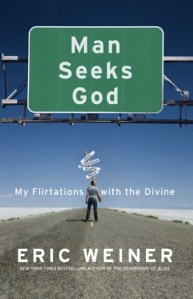
ManSeeksGodSometimes you read a book and wonder if somehow the author got into your head and fished around for material. Although I’m not Jewish, at least not that I know of, I found Eric Weiner’s Man Seeks God: My Flirtations with the Divine to be uncannily familiar at points. Not that I’ve ever been a journalist, nor have I had more than a few hundred people read anything I’ve written, but somehow I just couldn’t shake the underlying connectivity. For those of you unfortunate enough not to have read it, Man Seeks God is Weiner’s spiritual journey through various religions, seeking his God. Born culturally Jewish, Weiner never really resonated with the religious aspect until the last chapter of the book. In between, however, he shows a true pioneer spirit and tries diverse faiths, some of which are not for the fainthearted. As fits the postmodern period, he’s an authentic, intentional spiritual shopper. And he provides many laughs along the way.

Such a book must be difficult to write. There’s a lot of baring of the soul, and even a little baring of the body, at times. Weiner begins with Sufism, the mystical branch of Islam. Yes, it’s based on love. He then travels to Nepal to pursue Buddhist meditation, followed by a stint with the Franciscans in the Bronx. The only one of the “big five” he doesn’t sample is Hinduism. That might have thrown a speed-bump into his ending, though, to be fair. He makes no claims of comprehensiveness. At this point the story takes a turn toward decidedly exotic selections in the cafe of spirituality. I couldn’t read his account of the Raëlians without snorting aloud once or twice on the bus. Taoism takes Weiner to China and into a distinctly more philosophical frame of mind. He explores Wicca and Shamanism, which may be more closely related than he supposes, before coming home to Kabbalah, the mystical branch of Judaism.

Spiritual seeking is as mandatory as breathing for some people. Eric Weiner is one of those teetering on the edge of active exploration and the ability to shut out the questions, if only temporarily. Reading his confessions, it’s clear that he’s a rational, intelligent man. He made it through decades without really feeling the need for religion. When the ineffable pressed itself onto him, however, he turned to the mystical traditions. I was warned, in conservative Grove City College’s religion department, to be very careful of mysticism. The professor was dry-eyed serious as he said that seeking direct experience of God would generally lead to heresy. So there it was, in plain sight. Doctrine has precedence over the truth. Long ago someone smarter than us figured it all out. Our job? Just follow their path. I have a feeling that Weiner, having had some unexplained experiences of his own, might disagree. Sometimes you have to take out a personal ad in the spiritual scandal-sheets to get an idea what the divine really is.