Scientific Voices

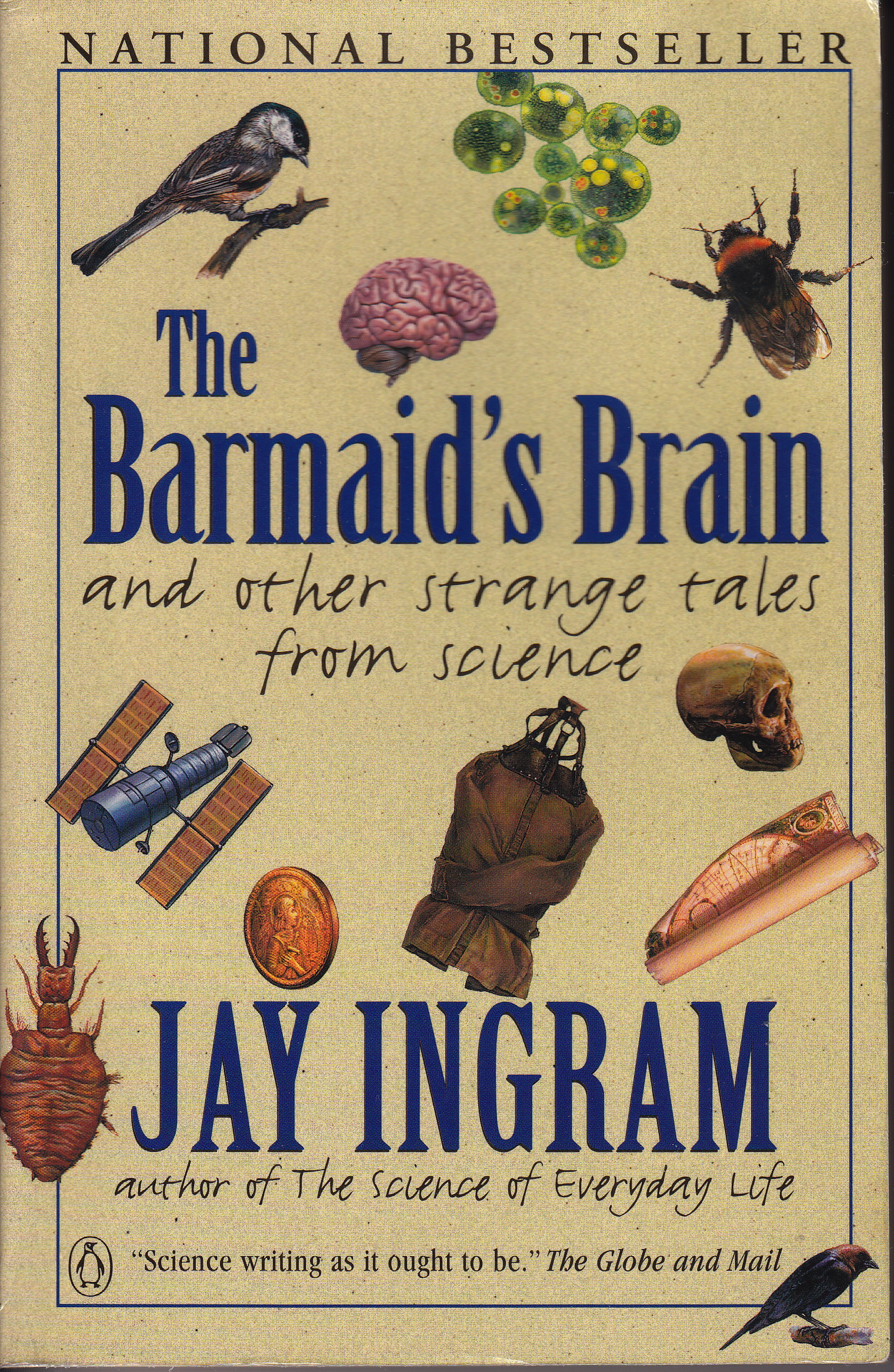
BarmaidsBrainScience requires translation. Even very intelligent people in other fields of study have trouble understanding what scientists have been saying. That’s why science writers are so important. They can distill the heady knowledge that empirical method produces into a palatable tipple for the laity. Jay Ingram’s The Barmaid’s Brain is one such digestible report. As the subtitle (And Other Strange Tales from Science) indicates, this book is about the weird world of science’s often hidden charms. We all pretty much know that quantum mechanics has turned conventional wisdom on its head. We also know (courtesy of the media) that science and religion fight like cats and dogs. What we don’t see is that scientists often disagree on how to interpret data, particularly on the weird end of things. Ingram tells many such interesting tales from nature, psychology, and technology.

The essays in the book are loosely grouped into areas with some common theme. The psychology story that struck me as being particularly appropriate for this blog was the one about Joan of Arc. Joan, as most of us learned from history, was a prodigy. Illiterate, female, and poor, she nevertheless displayed a military genius that led her to the head of a French army trying to hold off the advances of the English. When turned over to the enemy she was treated as a witch, tried for heresy, and burned at the stake. Later she became a saint. The reason that she’s in a book of science essays is that Ingram wonders what exactly was going on when she heard voices and saw visions. Neuroscientists have devised ways of peering into the brain during religious experiences, and psychologists have constructed theories of why otherwise sane people hear voices. Joan doesn’t fit into the category that used to be called schizophrenia, nor does she appear to have been in any way insane. She was religious and her religion spoke to her.

When I was growing up, it wasn’t unusual for scientists to be believers. Nothing was wrong with believing in a god and studying the physical world. Indeed, the idea went back to Isaac Newton and other scientists of the first generation of the Enlightenment. Implications eventually led to the utter absence of deity from the world. People such as Joan were understood as sadly misled by a religion that could not be distinguished from magic. Yet Joan, as Ingram well knows, would hardly be a household name without her visions and her faith. At the end of the analysis, Joan rises from the couch still a mystery. An enigma to science, and suspect to many religious. She was, it seems to me, quintessentially human. We are all, it seems, whether saints or scientists, subject to what empirical evidence will allow us to believe. Most of the time, anyway.


Different Bites

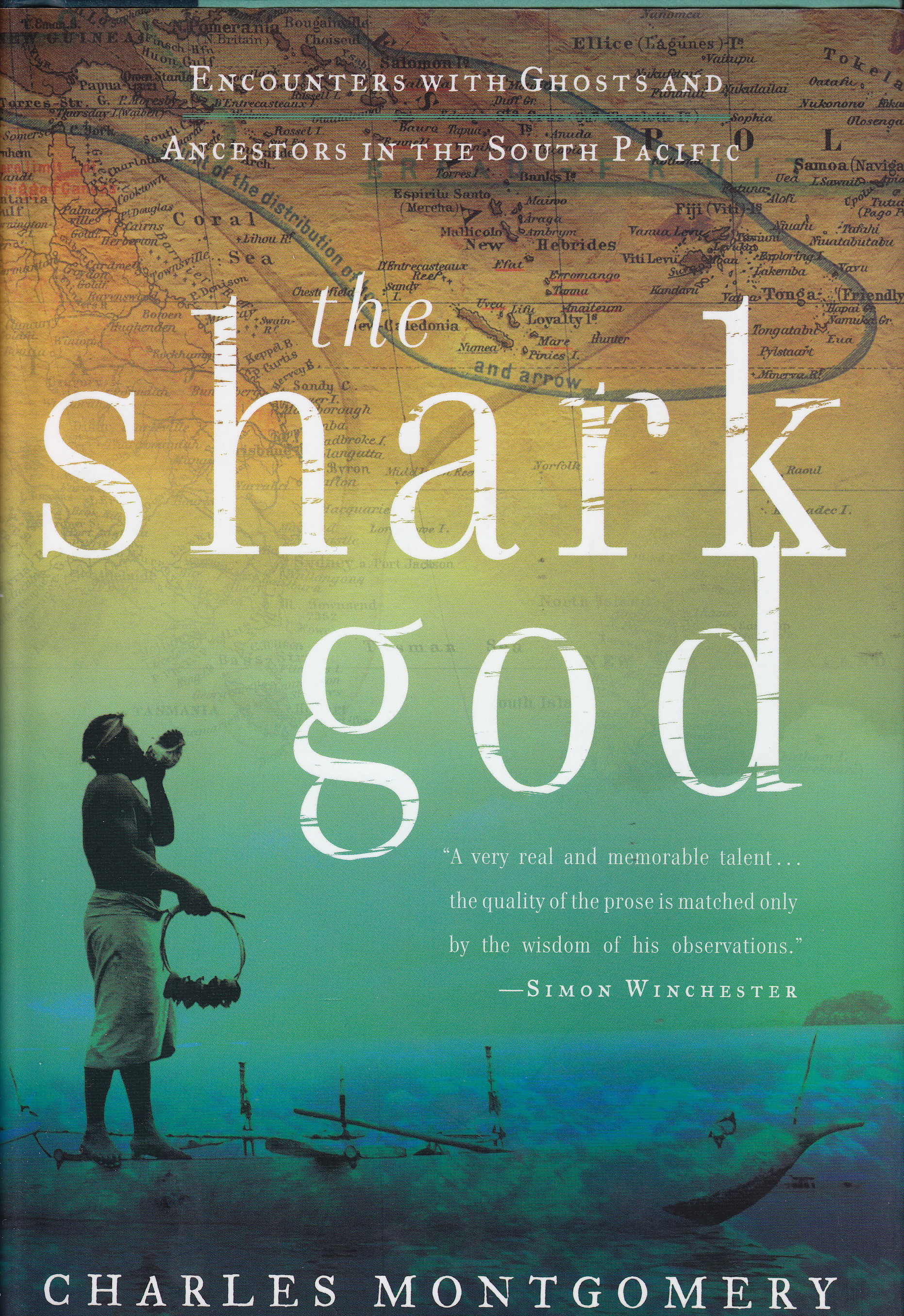
SharkGodThe South Pacific brings to mind light-hearted musicals, uncomplicated lifestyles, and Gilligan’s Island. For those of us born in the eastern parts of North America it can seem pretty exotic. Especially since we can seldom afford to go there. Since my income has wavered around the subsistence level of a reluctant urbanite, I instead travel there in my mind. I came across Charles Montgomery’s The Shark God at a recent book sale. I generally scour the anthropology tables since I find the belief systems of others so fascinating. Montgomery, a journalist, traveled to Melanesia to trace the route his great-grandfather took as a missionary. A non-believer himself, Montgomery wanted to see the magic that a former generation believed in firsthand. Noting that missionaries often despoil the cultures they are trying to “convert,” his tale is full of insights and observations and disappointments. My kind of book.

Montgomery is remarkably open minded. Like many of our generation, he outgrew the religious fervor that seemed so strong just a few decades ago. Still, he is open to the possibilities in the lesser understood cultures of the South Pacific. He notes that E. E. Evans-Pritchard, the famous anthropologist, opined that non-believers made poor anthropologists. Even missionaries might make better, he suggested, since at least they know what it is to believe. And here is the driving tension of Montgomery’s narrative. Sometimes you simply have to be open in order to see. Not all evidence is empirical. He recounts little “miracles” that he later reflects may have been mere diversions. Nevertheless, the world opens up when it is seen through native eyes.

Missionaries, although they may be better equipped to understand foreign (or native) believers, nevertheless try to change them. What I found most fascinating is how even those who fully identify as Christians in the south seas have combined that belief with their indigenous religions. Christianity, even among the clergy, is an overlay for culture. In ways that shock and frustrate missionaries, those converted maintain elements of their culture that fit uncomfortably with doctrine. How do you convert the converted? Or maybe the word is more properly “pervert.” Belief systems grow in cultures and tend to introduce high moral standards, no matter the deities (or non-deities) known. The Shark God is a wonderful window open on the South Pacific, a place to which some of us will only ever be able to travel in our limited minds. We are, after all, products of our culture.


Out There…

Spring is a time of hope. As crocuses poke their heads through the slowly yielding soil, we’re reminded that the long months of darkness are only temporary after all. It was only appropriate, then, that my wife should point out to me the returning of the X-Files. Only a limited season of six episodes, but after hearing rumors for years that the third movie was in the works, we’ll gladly take six episodes to remind us that the truth is out there. I’ve not always been a fan or the X-Files, but there are reasons for that which have to do with living in the middle of the woods in Wisconsin in a seminary where the paranormal was, at times, just a little bit too readily at hand. And also because the very topics addressed are those of taboo. The anomalous is fodder for ridicule. Nobody could be so naive. Meanwhile the show was winning awards and creating enduring cultural memes.

Thexfiles

As I’ve suggested many times on this blog, the paranormal and religion are closely related categories. While not many X-Files episodes directly dealt with religion, the second movie made the connections explicit, blending Bible and spooky effects at a distance with abandon. The X-Files and religion share a fascination with wonder. It is all right not to know. Sometimes wanting to believe is enough. We can find information on nearly any topic instantaneously by pulling out our phones and tapping into the local wifi network. We access any bit of random information with ease. And we wonder at our lack of wonder. Where has it gone?

Thirteen years ago the haunting music died. We’ve been left with a reality that feels dull and devoid of possibility. We need some sign of hope. Ironically, it is Fox that offered a world of possibilities far beyond a Republican purview. This was a realm where humanity was no longer in control. Forces outside of and more powerful than us swept into our mundane setting to remind us that even government control is only an illusion. Human pride requires timely mementos that we are simply the dinosaurs of our age. The incomprehensible overshadows us as we spin away our time on a planet nowhere near the center of our galaxy, let alone our universe. And yet we tell ourselves we are capable of discovering the laws that lie behind it all without stepping foot on even the nearest of other planets. Welcome back, X-Files. Remind us where the truth may be found.


Material to Ponder

EndOfMaterialismFrom my youngest days I remember wanting to be a scientist. This desire was tempered with a real fear of Hell and wish to please. In my career, it seems, the latter won out. Well, mostly. I never planned on being an editor, but it was clear that I missed the hard-core science courses and would always lack scientific credibility. You see, I believed what scientists said, and that included science teachers in high school. To this day I still believe in the back of my mind that you can’t really see atoms with a microscope. One of my teachers had said it was impossible, and although electron microscopes were still a long way off, it was clear that atoms were just too small. The force of materialism first hit me in ninth grade physics. If what I was hearing was true, then if you had enough information, you could figure out the whole universe. But what of Hell?

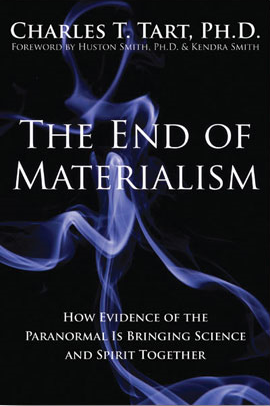
I read Charles T. Tart’s The End of Materialism because of my need for reassurance. Materialism leaves me cold. To find a scientist who feels the same way is a bonus. Not all authorities agree that we’re just excited atoms that can be seen. Tart is willing to consider the spiritual as part of what the evidence reveals. He explores it in the context of psi rather than in the doomed attempt to test religions empirically, but he does make a case for more to this universe than Horatio’s philosophy ever dared dream. And some of that more is decidedly not physical. It’s what we know from our experience of the world. We don’t only reason, we also feel. I have to wonder if reason is really the friend of materialism after all.

You can’t walk across Manhattan without seeing an ambulance most days. Often they’re called out to collect some unfortunate homeless person who collapses from our collective neglect. If we are only matter, then why do we bother to assist those in distress? It’s just a little electricity and some chemicals in a biological organ, right? Consciousness is only an illusion, after all. Unless, of course, the person suffering is a prominent scientist. Then we should all make way for the ambulance lest we lose an asset of great value. Materialism is insidious in its take-no-captives mentality. Feel what you will, there’s nothing more to life than physical stuff. You can make a good living believing that. Why is it that I’m suddenly thinking of Hell again?


Soulful Phantoms

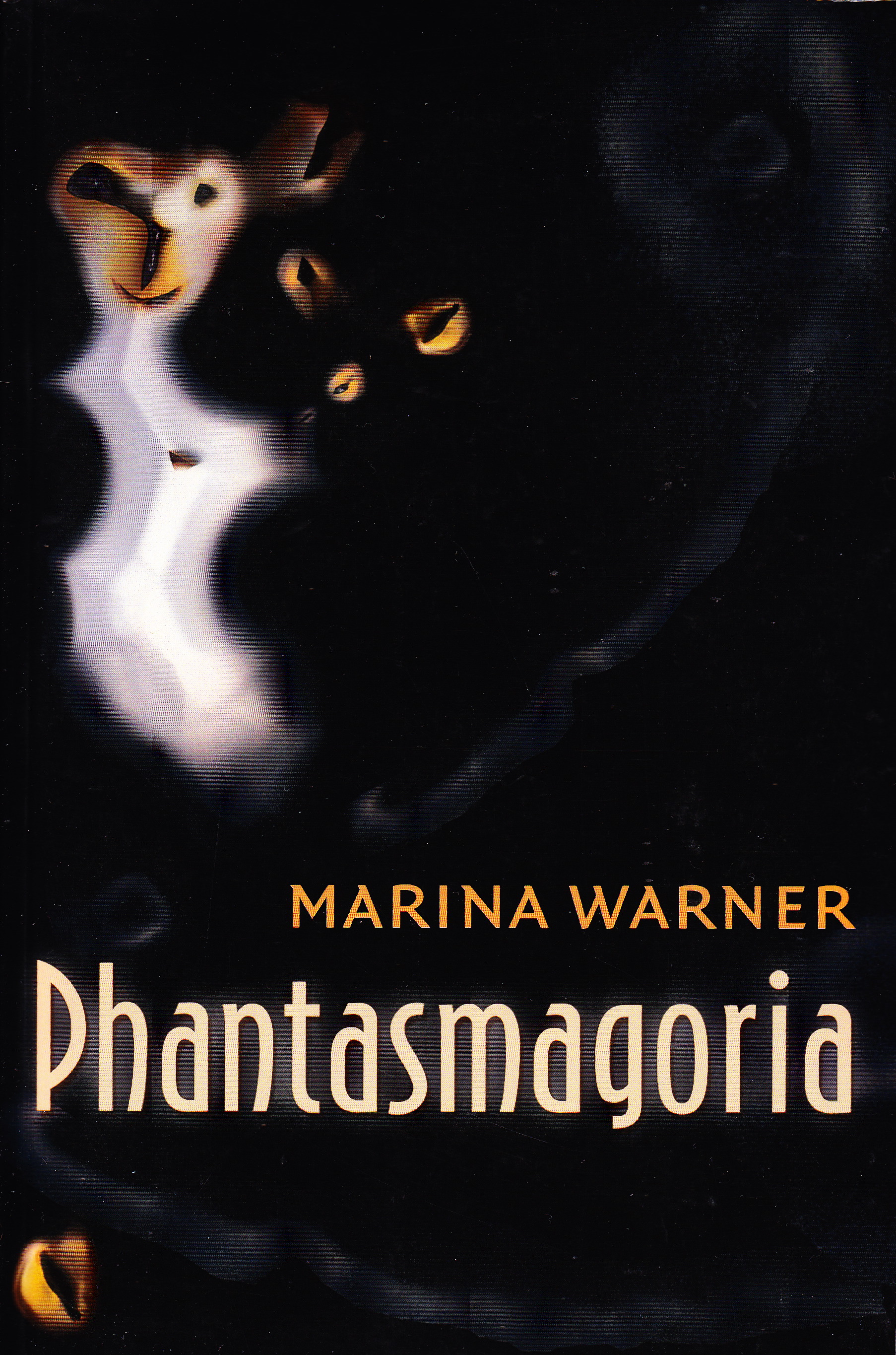
PhantasmagoriaPhantasmagoria is a most appropriate title for the book by Marina Warner that bears that single-word name. The back cover bears none of those helpful tags that give the reader a handle by which to categorize the book. The subtitle helps somewhat: Spirit Visions, Metaphors, and Media into the Twenty-first Century. The book is about ensoulment. The popular rage among many academics is the exploration of embodiment—the times and trials and wisdom of having a physical body. (We all know it, but it is the scholar’s job to think about it.) Warner asks what soul stuff is and pursues this through many media: wax, air, clouds, light, shadow, mirror, ghost, ether, ectoplasm, and film. She’s not suggesting that souls are made of these things, but rather that people have used these media to explore what a soul might be. Apart from being a fine historical resource on these different avenues of exploration, individual chapters in the book focus on various artists, psychologists, parapsychologists, writers, and Scriptures. This makes for a fascinating, if challenging, exploration to undergo.

One of the topics that emerges in the discussion is how soul distinguishes itself from other unquantifiable aspects of being human: what is mind, for example. We can’t really define soul, but it is frequently differentiated from mind or personality, neither of which is particularly well understood. In an era when we’ve not so much ceased to ask these questions as sublimated them into various fictional realms, a book like Phantasmagoria is especially important. The reaction against materialistic reductionism is strong, if not empirically provable. We still flock to theaters to watch zombies on the screen, precisely because we too have become soulless. Romanticism had a place for Gothic sensibilities as well.

Along the way Warner makes a particularly apt observation that politics and entertainment have become difficult to distinguish. Thinking over the number of entertainers who’ve become policy makers, this is a particularly disturbing thought. We trust the media and it gives us entertainment. Most college professors make so little money as to be jokes when it comes to running a political campaign. Where your treasure is, as the saying goes. Media, in all the forms explored, has failed to capture the soul. The chapter on Revelation (the book) is truly spectacular, coming, as it does, in the section on film. It is the embracing of the chimera of the end of the world pieced together from various myths and nightmares that our political leaders find, in many cases, far too compelling. Someone like Warner might be a much better leader to trust, even if she is a scholar.


Bodily Futures

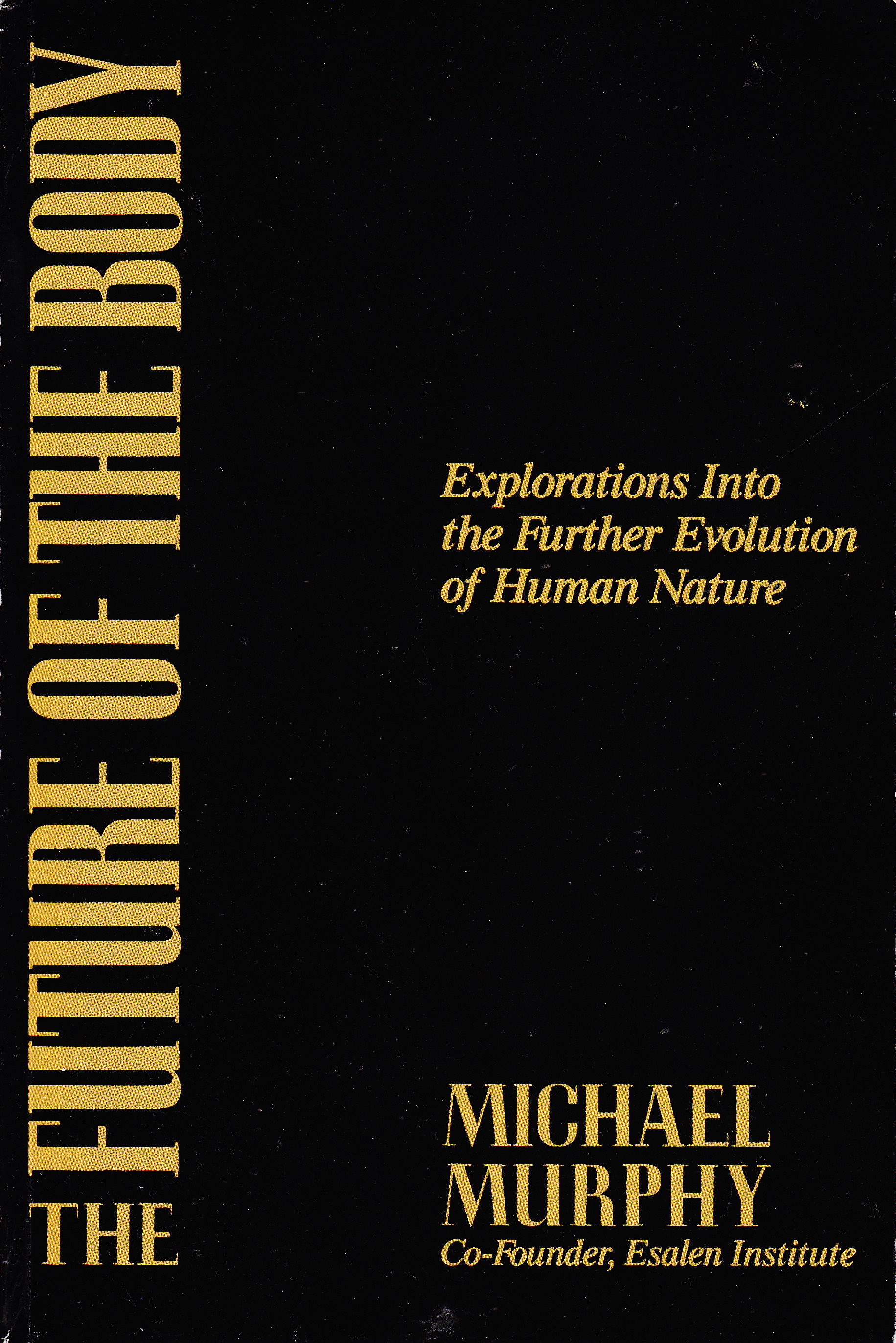
FutureOfTheBodyJust about everyone I know has their own method of curing the hiccups (or, in their more evocative spelling, hiccoughs). Most of these involve holding one’s breath or elaborate ways of drinking a glass of water. Since hiccups are involuntary spasms that can be quite annoying, they can’t be predicted or easily foreseen. Some years ago I realized that the methods I’d been using to rid myself of this unpleasantness were really just ways of getting my attention off of the hiccups—in other words, it was a matter of concentration. I started to respond by thinking the hiccups away whenever they struk me. Cut out the middleman, as it were. And it works. All of this is preamble to the remarkable material to be found in Michael Murphy’s The Future of the Body: Explorations Into the Further Evolution of Human Nature. Murphy is one of the co-founders of the Esalen Institute, about which I’ve posted before. Promoting exploration of human transformative potential, Esalen was a landmark in 1960s culture that I was a little too young to appreciate. Besides, I lived far from California and in a strictly religious mindset. Those who founded Esalen knew, however, that people are capable of more than we appear to be.

Human transformative potential involves matters with which materialistic science is often uncomfortable. Religious practices such as meditation, sports, and martial arts training, all, however, can produce results that shouldn’t be on the books. Whether it is the basketball player who can stay in the air a little too long, or a religious adept who can survive being buried alive for protracted periods of time only to be revived later, or even the remote viewer hired as a spy by the government, people are capable of more than we’re told we are. Murphy suggests that perhaps it is because we are socialized to think this way. Our young minds are open to a realm of possibilities that adult minds have been conditioned to discount. If it’s impossible, it’s impossible. Or is it?

The Future of the Body will take some readers where they do not wish to go. The fact is, however, that faith healers and stigmatics exist without fraud. Just because some frauds imitate reality, it doesn’t follow that the genuine article can’t exist. The usual reductionistic answer is that such things can’t possibly be real—let’s teach our children this fact—we are only robots made of meat. But this view still hasn’t accounted for consciousness, and consciousness is, at least for most of us, inescapably real. We know that because these bodies with whom we are associated do all kinds of things that bring it to mind. We get sick, we experience pain and emotion. We get up and go to work when we don’t feel like it. Most of the time we’re conscious of where we are, and what he have to do. Or do we? It very well may be that matters much larger than the hiccups might just be negotiable.


Are You Fey?

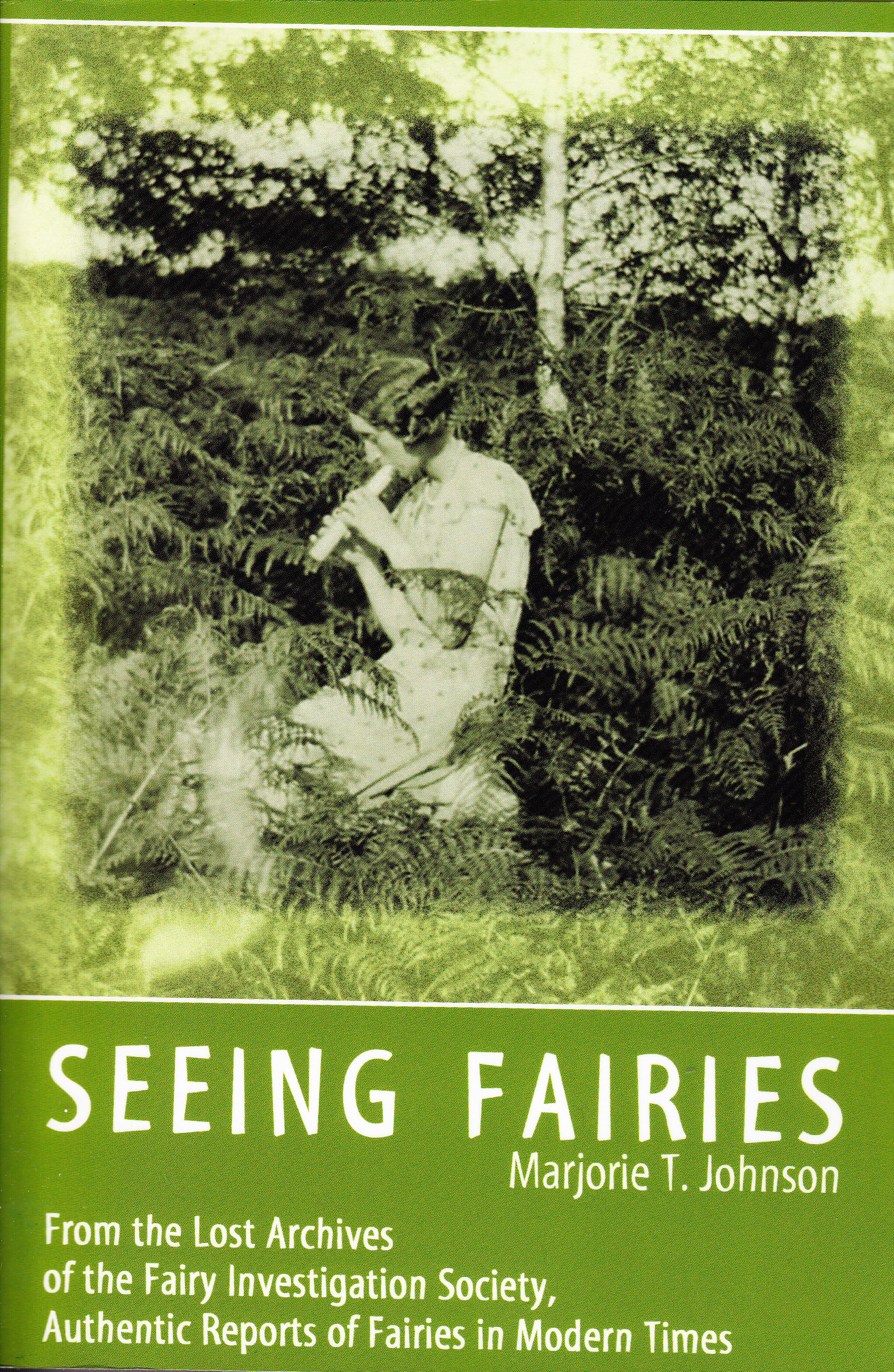
SeeingFairies‘Tis is the time of year that one might make inquiry into elves and the wee folk without being thought too strange. Santa has his cadre of mythic diminutive helpers and even the shepherds have their angels. The two, it seems, are not unrelated. Marjorie T. Johnson’s Seeing Fairies is, in many respects, a charming book. Compiled by the author during a lifetime of corresponding with people who claim to have seen fairies, elves, pixies, sprites, brownies, gnomes, and even angels, the stories—as parsimonious as any sermon—do create an aura of mystery. It is clear that Johnson believed (the book is posthumous) sincerely in the unseen world. As the preface makes clear, she was influenced by Theosophy, and the majority of the material dates from the 1950s and earlier. There is an almost childlike credulousness to the accounts, with Johnson not questioning psychic dreams or astral projection, placing them side-by-side with eyewitness accounts. This is a good example of what an editor might have done for the book.

Many people assume a doctorate in the humanities is a soft thing—pliable in a way that the hard sciences are not. The point of advanced study, however, is to ingrain habits of critical thinking. Nothing is taken at face value. For those of us who study folklore’s first cousin, religion, the task is often to set aside belief in the light of evidence. What can we know about the unknowable? Of course, psychologists and sociologists and anthropologists are now supposed to be better equipped to answer religious questions. Religion, after all, is something people think and do, and what can we really learn from studying it per se? We need an interpretative device—an hermeneutic filter (or pneumatic hammer)—to guide us toward the reality of the thing. And yet science itself is based on observation. Accounting for what our senses reveal about the world around us.

Some people, it is clear, find the world around them filled with wee people. Recently a major road construction was halted in Iceland out of fear of disturbing the elfin habitat. And Icelanders are some of the most literate people on the planet. Johnson’s accounts (some clearly hard to swallow) range across the earth, but center in the British Isles and Celtic lands. Perhaps the light is somewhat different there. Perhaps nearing the North Pole things really do change. What becomes clear from Seeing Fairies is that some highly credible and educated people see, from time to time, what they allow their eyes to see. Believing is, after all, seeing. Johnson ends her book with a chapter on angels, beings she clearly views in continuity with fairies. The difference is that the monotheistic religions allow for, and perhaps even demand, angels. When they become travel-sized, however, the only evidence is that of those with very keen eyesight.


Magnificat

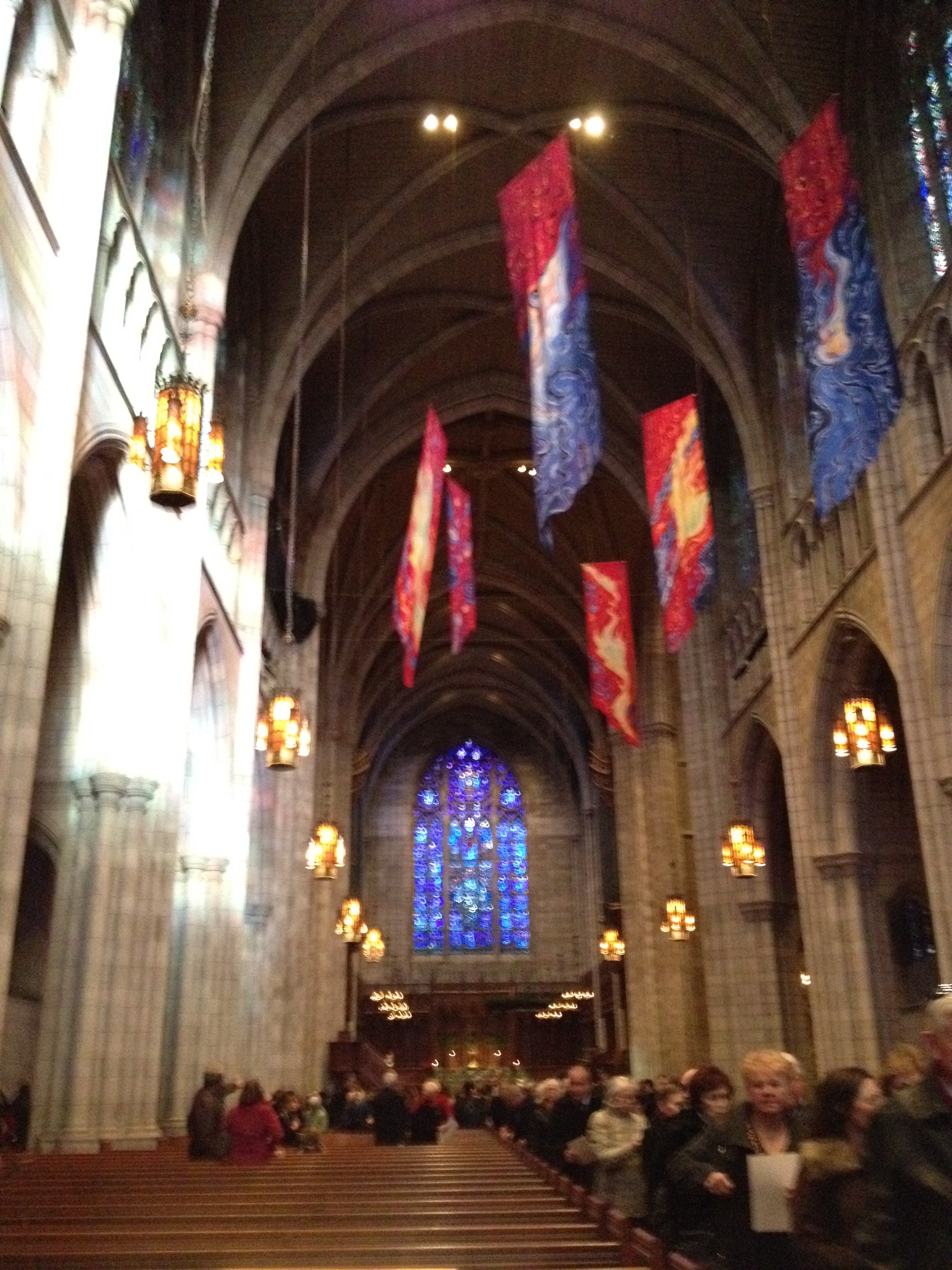
IMG_1857One of the advantages of a huge endowment is the luxury to experience culture. Although we don’t live in Princeton, we don’t live far from it, and most years we venture down to hear the free Advent Concert given by the Princeton Chapel Choir. For those of you who’ve never been to the Princeton campus, or perchance have not visited the chapel there, the setting is part of the experience. On the order of a small Medieval cathedral, the campus chapel at Princeton is by far the largest I’ve encountered, and the acoustics from the soaring stone are impressive, even to an untrained ear such as mine. Since my wife is the musical one in this marriage, she reads the program with an avidity I lack, but I do recognize striking music when I hear it. This year’s concert included a piece I recollected from a few years ago, Christine Donkin’s “Magnificat.”

I’m at the age where it is no longer surprising to find very talented people much younger than myself. Christine Donkin is in this class. A Canadian composer, she has had her music performed in major venues such as Carnegie Hall. Her “Magnificat” is the only piece with which I am familiar, but it is a powerful work that can be compared to a mystical experience in the listening. Written for women’s voices, the piece evokes a spirituality that seems to come easily to those who are submissive. The Magnificat is, by tradition, Mary’s psalm of submission to the divine will, based on 1 Samuel’s account of Hannah conceiving the prophet Samuel. In a world dominated by male humans as well as a male deity, the song of Mary is one of the subtle poems celebrating the upsetting of the entrenched power structures that have held women down. If you listen closely enough, its subversive elements become clear.

Donkin’s “Magnificat,” in a darkening cathedral on a December evening, is a moving experience. It is a piece that leaves me feeling as if I’ve temporarily been somewhere else. And that elsewhere is far from the turmoil and troubles of daily life. And there are no men involved.

Over the years we’ve heard many impressive performances in that stone edifice. None, however, it seems to me, so powerful as that of a young woman confronted with a reality beyond that of everyday life. A reality that men cannot touch, but which, when the circumstances are right, they might hear if they’re willing to listen, and in doing so might find their own burdens lightened for a few minutes on a winter’s evening.


Thinking about the Universe

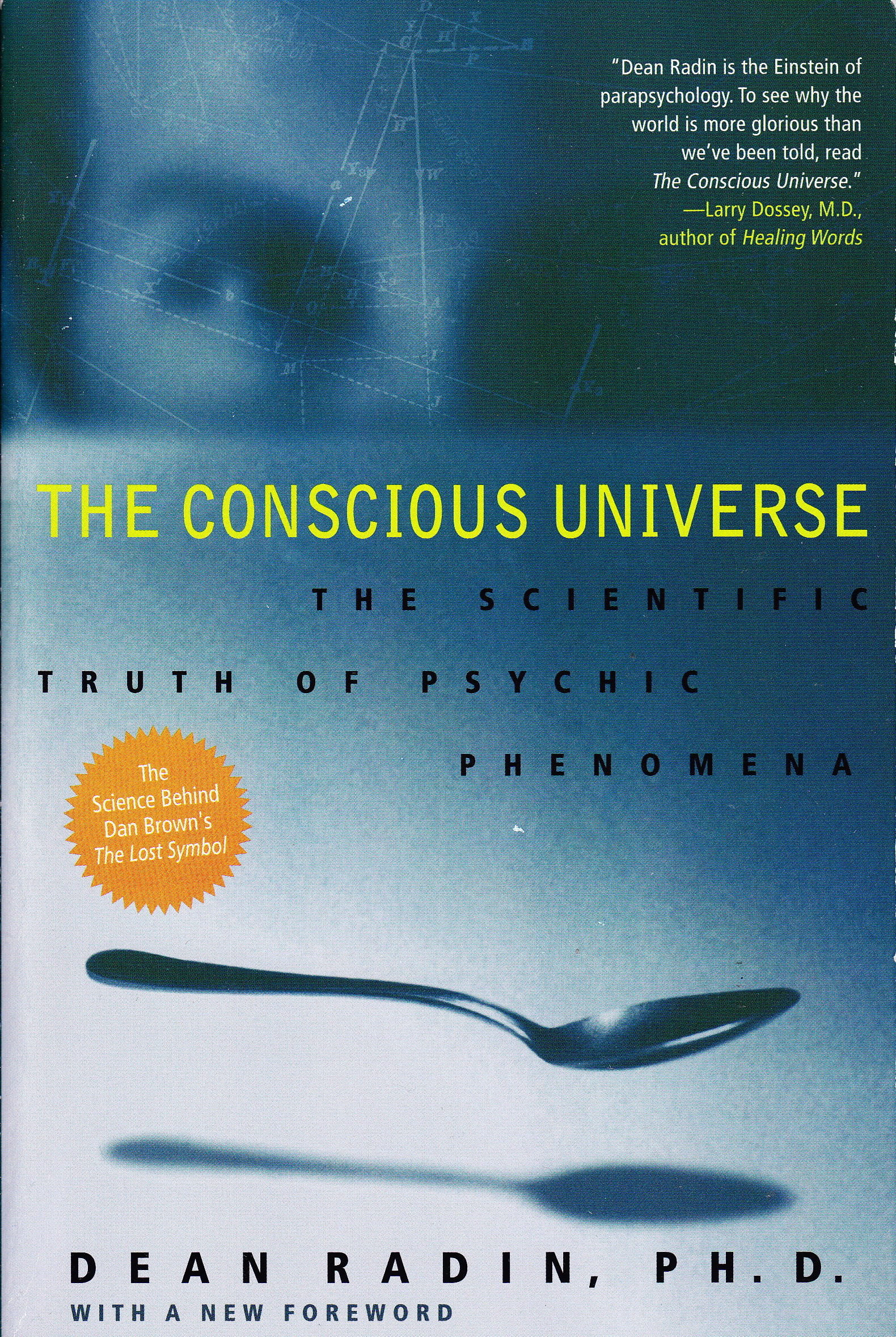
Conscious Universe Notwithstanding appearances, I have been reading. Despite the determination, disruptions to my commuting schedule always throw me off a bit. Having recently read The Holographic Universe, I decided to follow it up with The Conscious Universe. Subtitled The Scientific Truth of Psychic Phenomena, Dean Radin’s book is one of those that you don’t want other commuters examining too closely, although, however, they probably should. Radin is a fully credentialed scientist who has a rare trait: a willingness to follow where the evidence leads. Respectful of traditional scientific method and even mainstream science writing, Radin demonstrates in this book just how risky it is to go against the trends that are like deeply rutted wagon tracks over a sun-baked prairie. Science progresses by examining the evidence, but today science is, in some senses, over-reacting to the refusal of religious thought to, well, give up the spirit. Religion persists and rationalists can’t understand why. Investigating “spooky effects at a distance” is not entirely welcome in such a climate.

Radin, however, approaches psi with scientific rigor. Laboratory experiments, as he thoroughly demonstrates, have revealed with greater evidence than many readily accepted theories, that there is something behind psi. In fact, the government and private industry have invested, and continue to invest, in it. And in our more unguarded moments, most people will generally admit that sometimes coincidences are a little too odd, or that you might, from time to time, really be able to send a thought to someone else. The laboratory results, as Radin clearly shows, are simply dismissed as aberrations because they don’t fit into preconceived (frequently materialistic) worldviews. It is far easier to laugh than to sort out how all of this might actually work.

There is no triumphalism in this. It is simply the willingness to ask honest questions. Quantum mechanics, as physicists know, are not always as mechanistic as they seem. Even Einstein was willing to keep an open mind concerning the larger picture. The universe we envision today is not the same as that which Einstein knew. It isn’t easy to summarize what Radin is addressing in his book, but if I were to try I would say something like this: consciousness is essential. I know materialists dismiss essence, but I believe the evidence goes against them here. Consciousness is an integral part of the universe, and we can’t even define it yet so that all parties agree. If we don’t know what it is, how can we possibly know what it might not be able to do? Radin does what seems to be the only logical response in such a situation: he keeps an open mind.


Holistic Universe

HolographicUniverseThings have been so busy that a satellite landed on a comet and I didn’t even know. I have always wondered about the universe. In fact, as a young man, vying with my tendencies toward ministry I had a vibrant interest in astronomy. The universe, however, has a predilection towards mathematics that frustrates my attempts to understand. I did well enough in my college astronomy class, but I knew it could never be my major. My recent reading reminded me of Michael Talbot’s The Holographic Universe—a book that has been on my shelf since about the time it was published. In my mind, holograph had translated into arithmetic, and every time I picked it up, fear gripped me anew and I vowed I’d read it later. Later caught up with me the last few days, and I found myself plunged down a rabbit hole that I did not even know was there. When I took physics there was no talk of quantum mechanics. It was all the three laws of thermodynamics and the angle of incidence equals the angle of reflection and things like that. Nevertheless, I continued to read science written for the laity, and Talbot’s book rather caught me off guard.

First off, I still have no idea how a holograph works. It is something that seems, to my pragmatic way of thinking, impossible. As Talbot explores this strange concept, however, he introduces a universe I began to recognize. This is one of those realities where the edges don’t quite meet and things that shouldn’t exist show up anyway. In other words, phenomena that are often called “religious” can be made to fit into a holographic universe. Talbot spends a great deal of time discussing miracles and healings. We know that they happen, but we’ve been conditioned to question them. They don’t fit into that universe Mr. Wynecoop told you about in eighth grade. And yet, there they are.

Even after reading the book, I can’t claim to understand how a holographic universe works, but I did come away with a model of reality that allows for the evidence generally swept off the table. Everything from ghosts to time warps are possible in a universe that is a holograph. I’d step off the bus never sure which reality I’d encounter. Still, glancing up at the dark sky, I knew that millions of miles away, someone had recently scored a direct hit on a comet and if we can’t even interpret all that we see on Mars, we’d better be prepared to open our minds for something new. After all, we only see what we allow ourselves to see. Society programs us, just as surely as any computer. And if, like a virus, you play by your own rules, you’ll be the enemy. If you’re willing to ask the uncomfortable questions you’ll be labeled as having tea down a rabbit hole. Maybe, however, I can find a home here. As long as Deacon Dodgson can take care of the math.


Banned Magic

Grimoires“If you believe in the power of magic,” Eric Woolfson plaintively sang, “then I can change your mind.” A song that bewitched my younger years, when the atmosphere is just right, it can still bring a silent tear to my eye. Magic is a powerful elixir.

On my own personal almanac of holidays, Banned Book Week is one that takes the most preparation. In anticipation, for it is next week already, I read Owen Davies’ Grimoires: A History of Magic Books. Since this blog doesn’t get nearly the readership of a banned book, I might explain that witches are among my favorite topics. Despite that, and despite growing up with constant curiosity about religion, I only learned about grimoires recently. Davies makes it clear in his book that apart from some standard texts that have been around for a few centuries, the idea of a magic book is really relatively recent. Yes, the Egyptians and Mesopotamians had books of magic, but the concept of a grimoire only really fits the Zeitgeist of medieval Europe particularly well. Such books may draw on or cite oriental wisdom, frequently stepping into the forbidden territory of Arabic learning and alchemy, but they reflect the worldview of the Middle Ages when magic still seemed possible. In earlier centuries conjuring seems to have been subsumed under the miracles associated with Jesus, and we don’t hear much about magi beyond people like Simon Magus.

Davies packs a lot of information into his book, but my reason for focusing on it here, now, is the banned nature of grimoires. Many of them are considered rare and valuable books today, but in their day they were dangerous and forbidden. The concept that an idea can be suppressed is an odd one. In fact, many ideas have a very difficult time finding receptive minds. Once it is written down, however, an idea can circulate. The surest way to guarantee that it will is to ban it. People want to know what is so dangerous about this idea that it must be kept hidden. It makes an idea powerful, esoteric. Forbidden fruit, we all know if we’ll only be honest, is the sweetest.

Grimoires were considered most efficacious when written by hand. Although it took the printing press to proliferate such books, magic was believed to be most potent in the hand-written form. By writing text, one engages intimately with it. This is a reality we are in danger of losing in the computerized age. I grew up with only a second-hand typewriter acquired by my family when I was in high school. Most of what I wrote—for inspiration seldom comes when you’re sitting at your desk—was done by hand. My own little grimoires. Now we’ve added the interface of a keyboard. It is faster, and more efficient. Clinical even. But often the magic seems to be gone. And that is testified in many banned books. They especially, I would aver, believe in the power of magic.


Waking Up in Galilee

One voice can’t be heard. Unless, of course, it has a publicist. For years, it seems, I have been suggesting in my obscure corner of the internet that we’re not quite ready for the death of religion yet. I’ve never really doubted science, but I have noticed that science frequently draws the same conclusions as religion. Evolutionary biologists and neuroscientists exclaim, with some surprise, that religion has a survival advantage. Of course, big men with white beards sitting on thrones in the sky just won’t do, but the underlying concept has utility. So we’re told. Now Sam Harris, author of The End of Faith, one of the four horsemen of the new atheists, tells us that it’s okay to experience what has been known as, conventionally, a religious experience. Call it transcendent (I always do), but no matter what the chemical mix you concoct in the brain, it will feel good. Perhaps better than anything merely biological ever will. You’ll sell a million books. If you’ve got a publicist.

To me it seems that the religion question is a no-brainer. It wouldn’t persist if we had no need of it. Unlike the appendix, which seems not to have taken the hint that it is entirely vestigial, religion helps people (and perhaps some animals) survive. It doesn’t have to be sitting on an uncomfortable pew on a Sunday morning. It might be in the giddy heights of the Rocky Mountains where you can see to eternity and beyond and the rarity of the oxygen makes you lightheaded with a hologram of immortality. It might be the piercing peace that comes with light refracted through a glass so blue that superlatives fail you. It might be in imaginary vistas of an ice-bound Arctic where, you’re just certain, Nordic gods linger just out of sight. Transcendence can even come from traditional religious experiences, or so the stories of the saints proclaim. Anyone can participate. Those who have never forget.

The New York Times, in the Sunday Review piece by Frank Brunl (Between Godliness and Godlessness) introduces Sam Harris’s new book, Waking Up. I know I’ll read it. According to the article, Harris discusses his own experience of transcendence. When Harris has such a revelation, it is a best seller. Or it will be. For those of us who quietly suggest moderation between bombastic religion and bombastic science, it is merely another day in the life of the quiet ones who observe without being heard. True, it takes courage in this culture to dole religion a knock on the head. It is not, however, going to send faith to a premature grave. We still need our religion. We might not call it that any more. Name it spirituality, or transcendence, or mystic mumbo-jumbo, but when it hits you it’s like an atheist in Galilee. Some call it a electrochemical reaction in the brain. Others call it walking on water.

Dore Walk on Water


Evolution’s Snapshots

DarwinsCameraIn America’s political climate any book about Darwin takes on a religious cast. As strange as it may seem, an odd equation exists between Darwin, evolution, creation, and the Bible. We forget that Darwin was a retiring man with many interests and a very keen intellect. Erstwhile groomed for the clergy, he lived at a time when much of the world was known really only to the local inhabitants, and observations were still mostly made by the human eye in person. So it was that as photography developed, a new avenue into science opened up. Darwin’s Camera, by Phillip Prodger, is a rare look into, as the subtitle says, Art and Photography in the Theory of Evolution. Darwin wrote several books. Among them was The Expression of the Emotions in Man and Animals. This book was among the first scientific tomes published with photographic evidence to illustrate, if not prove, the points being made. Prodger takes us through the process by which Darwin procured and commissioned his photographs for the book and reveals some deeper truths about his life.

Interestingly, one of the sources of early photos was asylums. There was a belief, apparently, that photographs might be used diagnostically. One of the emotions that was presented to Darwin for his consideration was religious rapture. (Not that I can make any great claims here, but having experienced at least mild versions of such states—whatever their physiological cause—I know that they are powerful.) The observation comes through that religious rapture is difficult to distinguish from insanity, on the face of it. This may sound like an anti-religious slur, but it’s not. Ask around the mystics and you’ll see what I mean. Sanity has its uses, to be sure, but mysticism is all about letting go.

The only real religion in this book comes in the confrontations to Darwin’s evolutionary theory. Prodger does, however, briefly delve into Darwin’s late (and brief) concern about spirit photography. Shortly after cameras were developed, photographic tricks evolved. The Victorians, as we all know, had a very palpable sense of death’s nearness. It is no accident that Spiritualism developed during this time period when a reasonable lifespan was anything but assured. Spirit photographers claimed to capture ghosts of the dead revisiting the living. Darwin, who’d lost a beloved daughter prematurely, knew what grief was. He did not, however, allow it to interfere with his critical thinking. Photographs could be used to prove a point, but they could also be used to make a false claim. Darwin’s success in his book on emotions falls somewhere in the middle. He did have to have some staged shots to illustrate his point. Ever the gentleman, however, Darwin’s decisions were made to enlighten, not to deceive. One wonders whether creationism can even remotely make that same claim.


To the Swift

Despite its generally secular reputation, one of the great charms of New England is its churches. I was forcefully reminded of this during my recent trip to Boston. Each city along the way boasts impressive churches that might be glimpsed even from the highway, and although there are now many taller buildings it is possible to imagine the days when the steeples stood over all. Boston’s historic churches remain stunning symbols of the power Christianity once held in this city. We first climbed off the T at Arlington in the shadow of the great stone Arlington Church. On the Esplanade the looming steeple of the Church of the Advent violently reminded me of the deep mysticism that drew me to the Episcopal Church even while I was a Methodist seminary student. Park Street Church, King’s Chapel, The Old North Church, the Old South Church, and finally Trinity Church in Copley Square invited us to gander and ponder. Almost like fossils, these churches remind us of the history of what made the city, or the nation, what it is.

Trinity Church lies nestled at the base of the John Hancock Tower, Boston’s tallest building. A blue glass Brobdingnagian, this prophet of capitalism represents the highest possible aspirations of our race, so we are led to believe. The material triumph over the spiritual. And yet the tourists stop to photograph the stunning church. It is on the street level, down here among us mere mortals. Upon closer examination, I noticed the statue of the tortoise and the hare in the plaza of Copley Square, the holy terrapin racing toward the sanctuary, it appears from my angle. It seems that I have unexpectedly received a kind of epiphany.

Look closely.

Look closely.

I first came to Boston many years ago as a spiritual seeker. In the intervening years during which I was attempting to find out what that might mean in a life that was intellectually honest, many bronze sculptures appeared in this city. The one commemorating Robert McCloskey’s Make Way for Ducklings, installed after I completed my studies at Boston University, would not have caught my pre-parental attention, as I had never read the book. Now you have to stand in line even to snap a picture. The work of local artist Nancy Schön, both “Make Way for Duckings” and “The Tortoise and the Hare” are part of Boston’s continual evolution of character. Officially, we are told, the turtle and rabbit are representative of the Boston marathoners who trudge the final feet past this church toward the finish line. To me, this sculpture suggests something more as the hare dawdles and the tortoise breaks toward the church. It may be a marathon, indeed, but the race, I remind myself, is not always about being swift.


Tongues of Fire

“Do you want to see?” she asked me, fraught with all the emotions of a teen far from home. I’ve often questioned the wisdom of church groups sending large numbers of high school students to retreats or conferences where shear ratios of chaperones to teens guarantees intrigue. She was an attractive girl, and despite my commitments to asexuality early in life, I found her plea compelling. We weren’t supposed to meet after hours without the adults around. I was insanely curious, however. “A few of us will be gathering behind the gym,” she said. I demurred, afraid to break the rules. “Do you want to see now?” she insistently asked. We were in a room largely empty, as the adults were headed toward the food, the way adults always seem to do. I agreed. Nervously she closed her eyes in prayer. When she opened them, they were glassy and far away. A stream of nonsense words effortlessly bubbled from her mouth. This went on for what seemed like minutes, although I knew it was only seconds stolen from a scheduled curriculum. She closed her eyes, and coming back to herself, looked exhausted. “What did you say?” I asked, breathless. “I don’t know,” she admitted.

This was my first experience of glossolalia, or speaking in tongues. I was at the United Methodist Youth Annual Conference, and I’d just met the girl who’d revealed so much. Methodists, as a rule, aren’t much into glossolalia, but the Pentecostal movement has Methodist roots, and teens are the great experimenters of the human race. I can’t recall how I met her, or even her name. I felt an incredible attraction to a girl who could let herself be so possessed, however; so vulnerable to an Almighty deity. I decided not to go to the after dark gathering. Instead I sought out a minister I trusted. He explained that such signs, if truly divine, are only done in the presence of an interpreter. She was misguided. Yet I couldn’t get those glassy eyes out of my mind. Where had she been in those fleeting seconds when her mouth spoke a language she didn’t know?

While reading David Kling’s The Bible in History’s chapter on Pentecostalism, this all came back to me with incredible force. A few years later I attended a Pentecostal service with one of my college roommates who belonged to that tradition. Being in a room full of true believers speaking in tongues at the same time unnerved me. I never went back. Psychologists and neurologists have explanations for how glossolalia occurs. The standard evangelical explanation is quite different. For one young lady whose name I can’t recall, it was a sign she wanted desperately to share. A personal assurance that John Wesley himself encouraged his followers to seek. Not that Wesley ever suggested speaking in tongues. That only began in 1901, after a hiatus of nearly two millennia. To a teenage spiritual seeker in the presence of a young lady, away from home, it was a mystical experience indeed. The assurance, however, would have to wait.

Image credit: Phiddipus

Image credit: Phiddipus