Manuscript Madness

A friend recently pointed me to a story of a “new” manuscript, recently discovered, that portrays Jesus predicting the advent of Mohammad. The article on sott.net, suggests that the manuscript, wanting to be seen by the Pope, may be the Gospel of Barnabas. Of course, the Gospel of Barnabas is already known from a medieval Italian manuscript and a new, authentic discovery would be of great excitement to epigraphists and text critics, but few others. Barnabas is not a canonical gospel and is considered by the majority of scholars to have come from centuries after the fact. Quite apart from the sensational headline “1,500 year-old Bible found in Ankara, Turkey: Vatican in Shock!” (posted in September of last year, before Francis came along), the manuscript raises a number of questions concerning what one colleague calls “the iconic book.” To be sure, there are documents yet to be discovered. The Bible, however, will not be reconstituted and the door has long been sealed shut on written revelation. What remains is the perception of sacred books.

How many movies and novels are based on the premise that an ancient document has been discovered and suddenly everything about the world changes? It is a common enough theme. This idea is based on the magical concept of scripture—the hidden wisdom of the ancients somehow overrides all that we know of the world. It lies in some cave or monastery or synagogue, waiting to be discovered, unleashing divine power. No doubt the dramatic (and dramatized) discovery of the Dead Sea Scrolls plays into this mythos. Nobody knew they were there, but suddenly, new information! How many people on the street today, however, can say anything of what was contained in the Dead Sea Scrolls? They’ve been mulled over by furrowed-browed scholars for over half a century, but haven’t triggered any apocalypses, at least not yet.

There are hidden documents. Working for Gorgias Press put me in the place where I could learn about some texts kept under lock and key in remote monasteries in Syria. They are generally kept for their monetary value rather than their spiritual revelations. The manuscript on sott.net made me think of those manuscripts for the first time in years. In all likelihood, if a manuscript is being hidden it is lucre, not illumination, that is at stake. The Vatican library, researchers who’ve been there tell, requires immense patience and a willingness to be repeatedly turned away. There’s just something about those old texts. No surprise that the Bible and Qur’an lead to such fiercely protective sentiments in some believers. In the meanwhile, I wouldn’t advise selling all your possessions and anticipating the apocalypse. Unless, of course, you take some ancient documents literally.

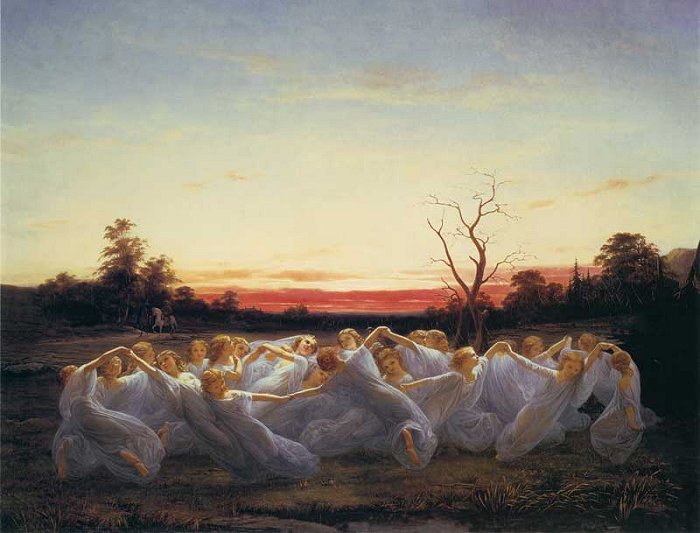
An ancient manuscript (not the hidden one).

An ancient manuscript (not the hidden one).


Deep Religion

Bosnia-Herzegovina is a nation well acquainted with disruption. The tangled history of the Balkans and the misplaced zealotry of political machinery has left this part of the world to rely on faith more than many others. So when a sinkhole suddenly opened up in Sanica, locals began to look for explanations beyond the scientific. Sinkholes are reminiscent of biblical-type punishment. They are relatively unpredictable even in our high-tech era, and they are just a bit eerie. Fear of falling is, psychologists tell us, one of the deepest phobias embedded from our youngest days. It can translate to acrophobia in some adults, but even those who don’t fear high places still shy away from an abrupt edge that appears below our feet. A story by Amel Emric on NBC narrates the responses of some villagers to the growing pit that is already fifty meters wide by thirty meters deep. The hole appeared under a pond shortly after the death of the owner who claimed that he would take everything when he went. The locals wonder whether he absconded with his pond and took it to the afterlife where, I hear, the fishing is choice.

The beliefs of the average citizen flummox the religious specialists. Perhaps it’s because religions have to struggle so hard for any kind of respectability that folk beliefs are simply labeled “superstitions,” but it is what hoi polloi believe that constitutes the main body of religion. One might counter, “but that’s not what really happened”—surely a ghost did not drain a lake and replace it with a perfectly natural sinkhole. Then again, quantum mechanics also tells us that what looks like reality isn’t really what it appears to be either. It may be that a ghost stealing a lake is a lot more plausible than a scientific explanation sometimes.

In a completely unrelated story, my relatives recently gave me an opinion piece from the Des Moines Register. A reader signed as N. W. Iowa Mystic wrote: “Budgets go astray, schedules get out of kilter, plans fail. Why? They are all graven images and the Second Commandment says, ‘Thou shalt not make unto thee any graven images.’ Laugh if you will, but that explanation is as good as any.” I had to stop to ponder in what way a budget was a graven image (I likely would not recognize an actual budget if I saw one). Or a schedule, or a plan. Who am I to say that they are not, however? My definition of “graven” may not match yours. I might consider the name of Job’s friends common knowledge, but for others they have fallen into that sinkhole of multiple bits of useless information. I’m not laughing at our mystic friend. I’m pretty certain that the earth has some very deep holes lurking just beneath the surface.

Sink hole or graven image?

Sink hole or graven image?


Conscientious Ghosts

It’s finally Halloween. In keeping with the spirit of the season, NPR recently ran a story on ghosts. I’ve posted on the topic of ghosts several times since they are inherently a religious phenomenon, whether they actually exist or not. Empirical method only takes us as far as that terminal border, but not beyond. Since we all face death, the question of ghosts is intriguing to many people. In some parts of the world, according to the NPR story, up to about 90 percent of the population believes in ghosts. They have been part of the religious thought of humanity since writing began. Ghosts have haunted us from earliest memory.

What makes the NPR story so interesting is that there is a kind of moral consciousness that runs through the story. An interview with Tok Thompson, an anthropologist at the University of Southern California, makes up part of the story. Thompson notes that ghost stories often concern unresolved justice issues. He cites the overused “Indian burial ground” motif as an example—where there is a collective guilt, ghosts tend to gather. Slavery is another such social injustice, and again, ghosts and slaves are no strangers. Christianity tended to push justice off into the afterlife. The fact is many people do not receive fair treatment in their lives. Some of them are very good folk who just never get a fair chance. That troubled early Christian thinkers into making Heaven into a place where the reward came. It also, unsuccessfully, tried to suppress the idea of ghosts. Ghosts problematize such easy theology. What are they still doing here when Heaven, Hell, or Purgatory should suffice?

Hammersmith_Ghost

The NPR story even addresses the idea of possessed dolls. Tok Thompson notes that the word “doll” derives from the word “idol.” This sheds a whole new light on Barbie, I suppose. An idol is an image representing a deity. In the Judeo-Christian tradition religious statuary was problematic at first. Again, Christianity bucked the trend by allowing images because people naturally want to see what it is they believe. Stories of haunted dolls and statues and other inanimate devices are difficult to accept. They are, however, deeply religious. That’s because ghosts represent what we really believe. Death is the most parsimonious of thresholds. We can’t look over at the other side, but, if ghosts exist, they may give us a glimpse beyond human sight. And that seems like an awful decent thing to do.


Monsters are Due on Main Street

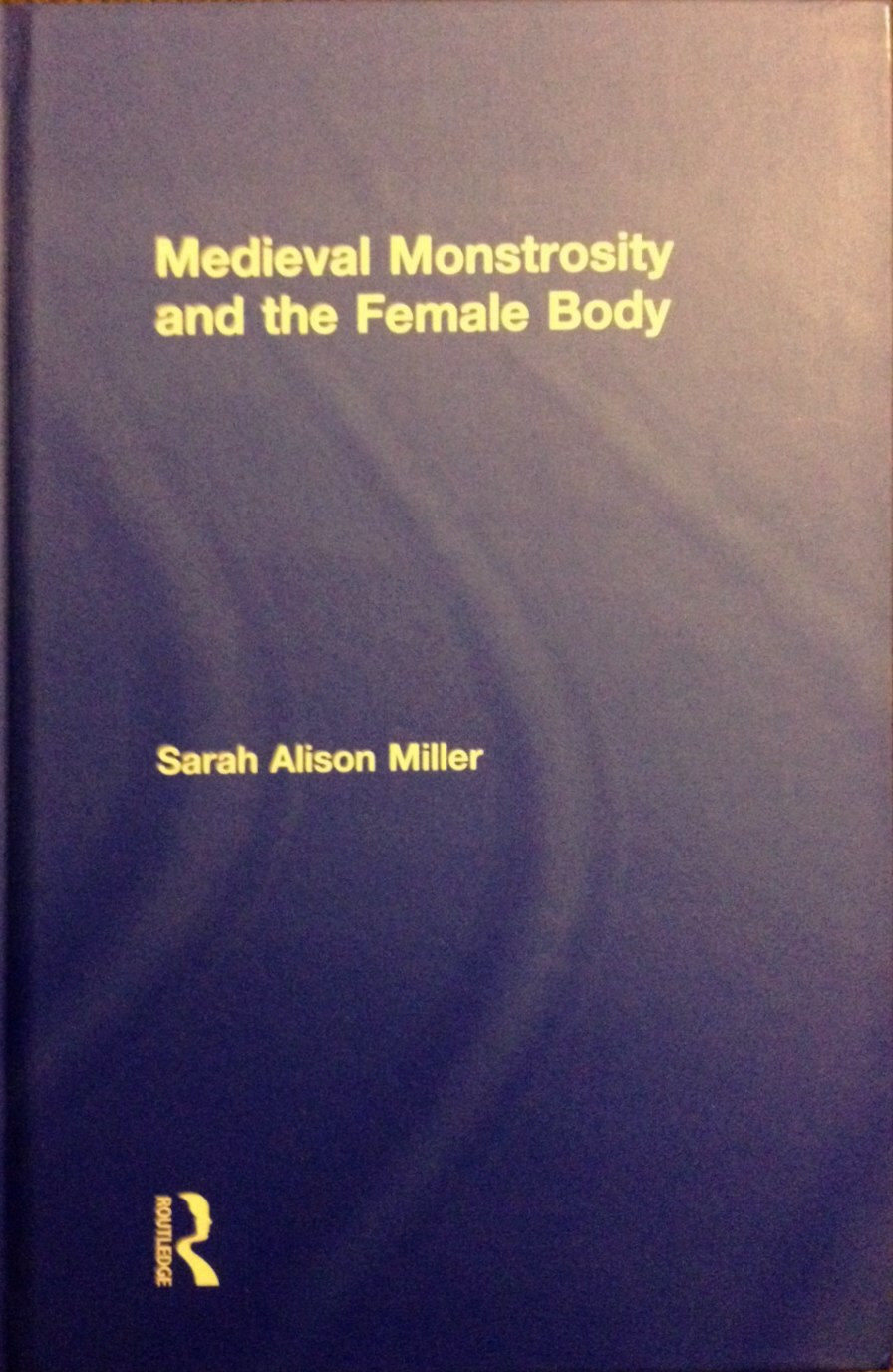
MedievalMonstrosityNow that the slow descent into darkness has begun, my mind naturally turns to monsters. In the early days of this blog I felt as though I had to justify writing about monsters when I was limiting myself (mostly) to religion, but it is now clear that many scholars have recognized the connection. Monsters cross over boundaries, and, given religions’ focus on proper borders, declaring monstrosity is often a sacred task. That comes through clearly in Sarah Alison Miller’s Medieval Monstrosity and the Female Body. Utilizing mainly three medieval texts, Miller draws out how they present various aspects of the female body as monstrous. Predictably, the source of their conviction is frequently the viewpoint of the church, the dominant institution of the Middle Ages. Biology was a touch more advanced than it had been in the biblical period, but despite the figures, many writers assumed the male to be the default model of humanity and the female somewhat suspect. Given the multiple pluralities of the natural world around them, this idea is passing strange.

This book is not for the squeamish. Miller plumbs the depths of bodily fluids and the beliefs surrounding them in a pre-scientific era. Male writers wondering at the changes the female body undergoes, however, may have been a necessary stage in the growth of knowledge. It is easy for us today to suppose that equality should have been always on their minds, but Scripture, a large source of authority for medieval mentality, had cast the sexes into an uneasy opposition. The only figure in the Bible who seems sensitive to the unfairness of it all is Jesus. And even his viewpoint couldn’t change the conservative conviction that somehow God was truly the über-male and that all the females of nature were somehow subordinate. Dare we say it? Monstrous.

Miller closes her brief consideration by delving into the writings of Julian of Norwich. Julian was a most remarkable mystic who wrote of God in strikingly feminine terms. Turning those boundary-violating bodies into the sacred, here was one medieval writer who saw the female as normative, salvific, even. Julian never commanded the kind of authority that a male cleric could, but as Miller shows, even men in this period were considering the feminine aspects of a wounded deity. Reformation, however, snapped a masculine, Protestant lid on any such speculation. Today, ironically, many Protestant traditions have, at first reluctantly, admitted female clergy. The religious body of the Middle Ages, the Roman Catholic church, still keeps women in a separate, somehow subordinate role. Monsters come in many forms and they break down boundaries. Some borders, however, may be meant to be breached.


Gnostic Agnostic

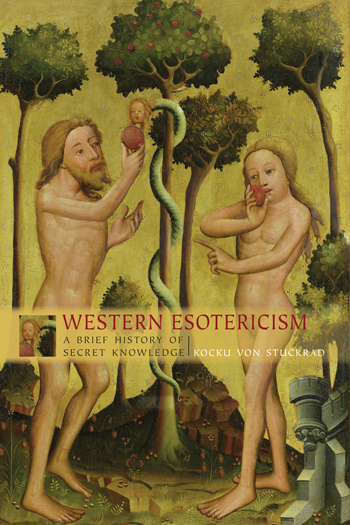
ACU-Stuckrad-WesternEsotericism-COVER.indd Hidden knowledge is sweet. Belief in it is very old. Kocku von Stuckrad’s Western Esotericism: A Brief History of Secret Knowledge offers its own kind of hidden knowledge—well, it’s not so much hidden as it is simply ignored—that even science owes a debt of gratitude to the draw of the esoteric. We are trained to treat such “New Age” ideas with contempt from our tender years, and we are assured that the light of reason has dispelled the gloom of occluded wisdom. Von Stuckrad, however, clearly demonstrates that the desire to explain our world streams from the same font as the belief that a larger, if hidden, reality lies behind what our senses perceive. Such ideas originate in antiquity and continue in various forms up to the present. The impetus to explain it all shows in Galileo’s belief in astrology as well as astronomy and Newton’s fascination with alchemy as well as calculus. Great minds have always been willing to be stretched.

In more recent, and self-assured, days vocal spokes-folk have declared a single way of knowing, and it is empirical and imperial all at the same time. That which cannot be explained rationally cannot be explained at all. Still, our experience of life often suggests otherwise. Sometimes it feels as if science overuses the coincidence excuse, and maybe there is something more going on. The esoteric, without fail, has been assigned to the category of religious thought because, in the current paradigm, the only real opponent to science is religion. If it’s irrational, it must be religious.

Ironically, von Stuckrad’s research demonstrates that the culture that led us to science, in many ways, has its basis in esoteric beliefs. That gnawing suspicion that not everything is explained by numbers and experiments has been with us since the days of Gobekli Tepe, the pyramids, and Stonehenge. Each of these monuments (and many others besides) were astounding feats of engineering—and engineering is applied science—while all being profoundly religious. Science in the service of the unknown. Such complexity need not be considered naive; even scientists can be subject to religious ways of thinking. Von Stuckrad does not advocate esotericism in his book; he merely documents it and treats it non-judgmentally. There is perhaps a hidden lesson here for all of us as well. Instead of declaring a single heavyweight champion of all the world, perhaps true wisdom lies in being fully human with all its complexity and contradictions.


Campbell’s Swansong

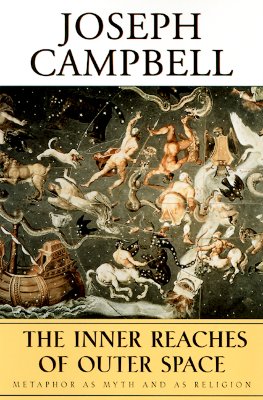
InnerReachesofOuterSpace Joseph Campbell may not be the best reading for the bus. Despite the many signs and placards gently suggesting to passengers both in the Port Authority Bus Terminal, and on the buses themselves, that keeping quiet is courteous, we are a people in love with noise. We are used to annoying electronic beeps, squawks, and farts. People find it difficult to sit more than 20 minutes without talking. I’m trying to read. At the Hunterdon County Library Book Sale I picked up Joseph Campbell’s last book, The Inner Reaches of Outer Space. It requires some concentration. Campbell was a brilliant comparative mythologer. I was reared in the scholarly hermeneutics of doubt, however, especially when it comes to comparing myths from different cultures. Campbell has a great appreciation for Jungian concepts, and soon minor details are blurred and the similarities stand out in stark relief. Still, as I always do with Campbell, I came away with plenty of rich concepts over which to mull.

Campbell, the great inspirer of Star Wars, the original series, was that rare breed of scholar who appreciated without participating. He is recorded as stating he was no mystic, and certainly not any kind of conventional religionist, but he couldn’t get enough of mysticism or mythology. Religion, he implies, is just mythology taken literally. He is, I believe, very close to the truth here. What we know of indigenous peoples today is that they don’t have that sharp and hard line between literal reality and story that marks much of western civilization. We tend to think fact and fiction cannot be of a kind. Looking around, we find no gods, so our choices are not to believe, or to believe too literally. And those who believe literally differently, we tend to want to kill. This is the history of religion in the western world, in a Campbellian nutshell.

Apart from the little gems I located scattered throughout The Inner Reaches of Outer Space, the main theme I found applicable was the driving force of chapter two, Metaphor as Myth and Religion. Metaphor is our way of interacting with a reality we just can’t experience directly. As human beings, we experience the physical world through the mediation of our senses, filtered by our brains. If there is something deeper, more profound than nature, we are even further removed. Our experience of meaning is metaphor. Joseph Campbell may have been a little too swift to spot congruities that are probably best left apart, but he clearly recognized the fact that our religions are not so different from our mythologies, and that both are narrated in the form of metaphor. This is not to devalue them, for metaphor is one of the most potent substances in our chemistry set. Now if only I could find the vial that has the stuff to make people want to keep quiet on the bus, we might all be able to get a bit more reading done.


Which Lethbridge Witch?

witcheslethbridge Thomas Charles Lethbridge was a twentieth-century explorer. I knew his name only from book covers, and since books published before the cynical 1980s have a feel of the parsimoniousness to them, I tend to be trusting. As a former academic, my choice of reading is, in an odd way, sequential. You see, academic research is often a matter of following leads, rather like Sherlock Holmes with his clues. One thing leads to another. I’ve been learning about paganism at work, and so when I noticed T. C. Lethbridge’s book, Witches: Investigating an Ancient Religion, I figured that I might learn something about belief in witches in the Middle Ages. The book was published by the Routledge Kegan Paul phase of my employer in 1962. I quickly learned that Lethbridge was far from conventional, even in the twenty-first century.

Lethbridge’s book on witches turned out to be a romp through mostly Celtic mythology, with a bit of Norse and ancient Near Eastern myth thrown in for good measure. It turns out that Lethbridge literally did believe in the power of magic and was no slouch when it came to dowsing. In the great Frazerian tradition, Lethbridge brings together some elements that are probably best left separate, but the result is undeniably interesting and entertaining. I’m not sure he would be considered a balanced source for research purposes today, yet his book does contain unexpected insights. But no witches. Witches, according to Lethbridge, were adherents of the old gods. Their worldview collapsed with geocentrism and there was little left for magic to do in an empirical world.

Lethbridge’s constellation has dimmed from the scholarly zodiac. In recent days he has found a new set of disciples, however, who see his work as profoundly prophetic, in a manner of speaking. Lethbridge was an occult investigator before such pursuits became big business. Among mainstream academics these ideas still fall into the category of bogus, naive, or superstitious, but that is beginning to change in some quarters. Lethbridge, as it quickly becomes apparent, reserved a kind of scorn for establishment academics. It is true that stepping out of line has its consequences even in the rarified halls of higher education, but the results of the research are often of high quality. Even witches can be studied with an academic eye. The difference seems to be that T. C. Lethbridge believed what the witches said. That makes him a real explorer.


OMG, MOMA!

New York City can wear you out, spiritually. I suppose that’s why so many people go there, to face the challenge. Thanks to Target, Friday evenings the Museum of Modern Art gives out free tickets for its world-class collection. We knew that Vincent van Gogh’s The Starry Night was there, and had planned on seeing it sometime. Well, Friday of spring break offered an opportunity, so last night, with several hundred, maybe a few thousand, others, we made our way to MOMA. We arrived around 5 p.m. and found the line literally around the block. It wasn’t as cold as it had been, so we braved the hour to wait our turn. Yes, it was worth it. As my wife noted, it was very good to see so many people wanting to see art. Manhattan offers many, many other diversions for a Friday night, but hundreds opted for art. I had long anticipated this. Since my school days I’d seen replications of many of the paintings in the museum, and it was inspiring to be packed in so close with so many people wanting to be close to art. Hoping, somehow, to commune with the emotion in us all seeking such profound expression.

IMG_0602

It was a little difficult to commune, however, with so many other religious seekers. This is a religious experience, to touch the soul of another. Standing inches away from The Starry Night, I could almost feel the desperate, longing hands of van Gogh stroking out a manic sky, surreal and ethereal. I could almost hear the echo of his spirit. Were it not for the many crowding next to the painting to be photographed with it. Fellow spiritual seekers, I hope. Van Gogh was a troubled soul, as we all know. How many artists take their own lives after reaching out to touch what so few of us even dare. A sadness so profound as he climbed down that mountain. The starry night is the photograph of a suffering soul.

IMG_0614

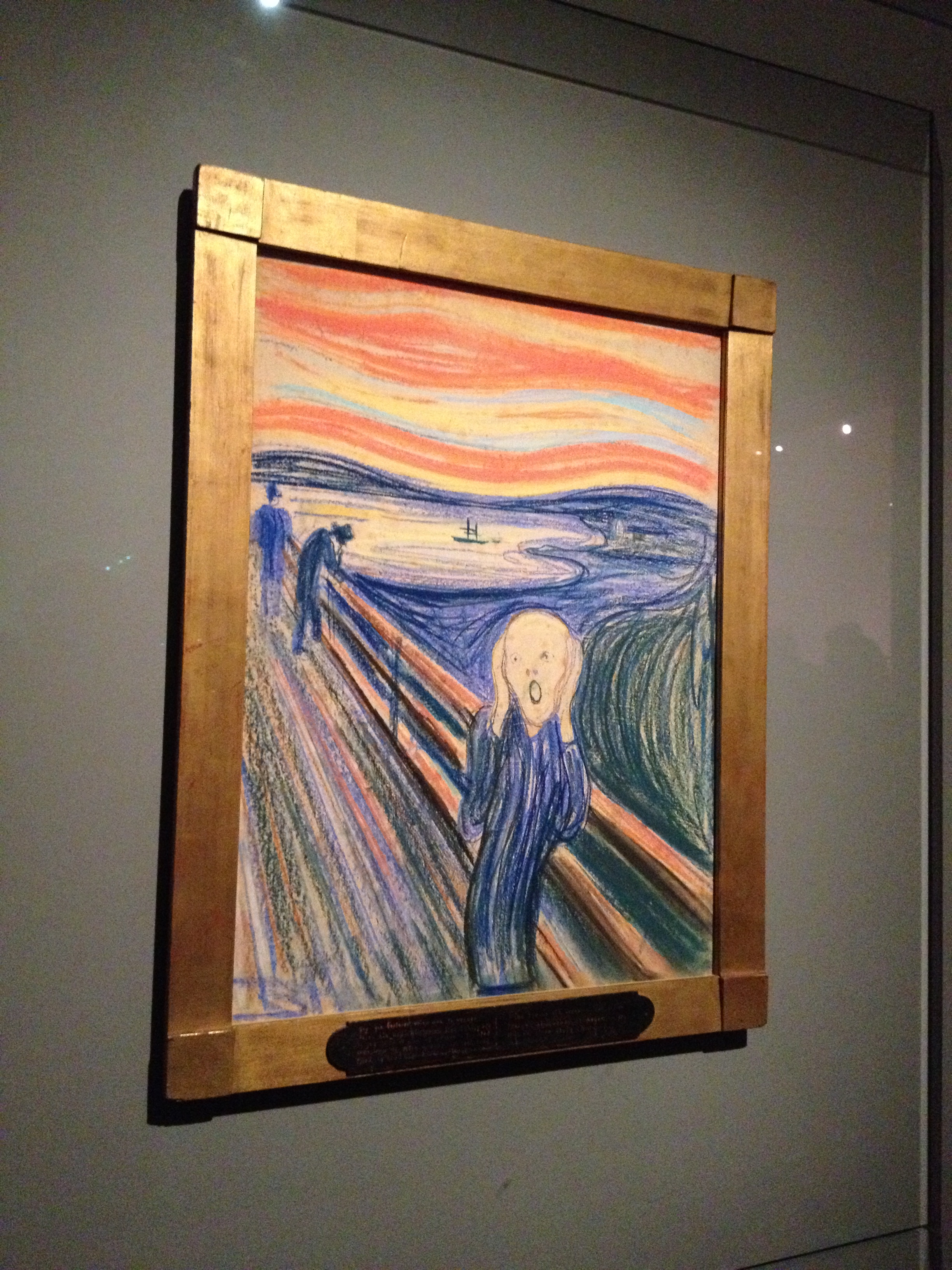
Then there was Edvard Munch’s classic, The Scream. On a limited engagement at MOMA, facing, just across the hall, van Gogh’s Starry Night. Was there ever such depth of soul in such close proximity? It was there that I began to question the faith that I had hoped impelled the countless masses yearning to observe free. MOMA allows photographs, and cameras, cell phones, and iPads were ubiquitous. To reach The Scream was to endure a crunch of strangers’ bodies pressing you forward, cell phones held aloft, illicit flashes popping, worried looking docents. I was anticipating another spiritual moment when I heard a woman say that she had to get close for a picture. “This is going to be my status!” she cried. So this is modern spiritually, the life splayed on Facebook, bragging about bagging Munch. Yes, Edvard, I am screaming too.

IMG_0610


AP Physics

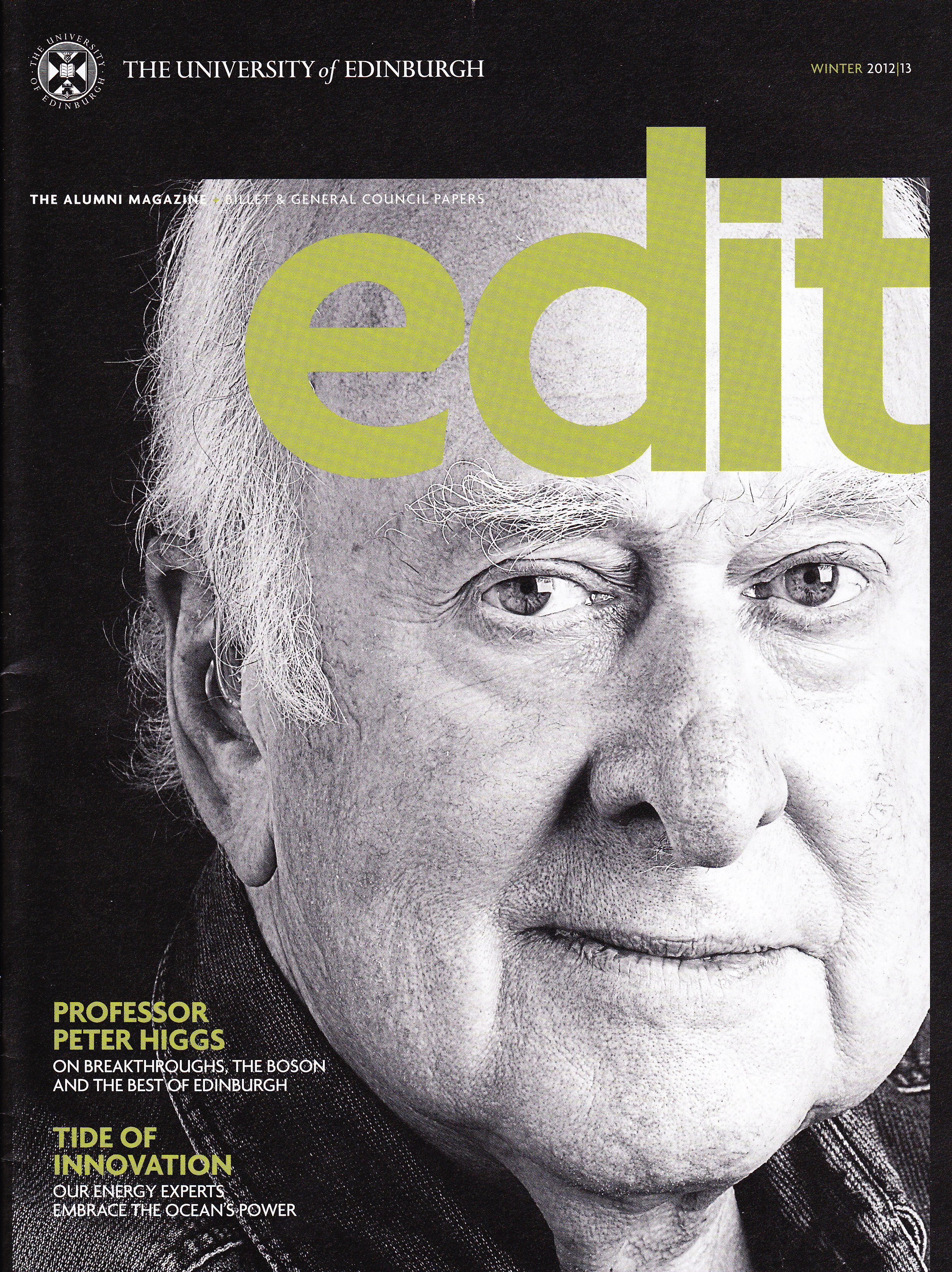
AP Physics. Few words strike terror into high school students like these initials and scientific surname. As a student I didn’t really comprehend AP, and never took any Advanced Placement courses, but I enjoyed physics. It was by far my favorite science class. Even as a Fundamentalist, I saw that here was the explanation for the entire universe, as we knew it. Laws deduced by people far smarter than I could even dream of being could explain everything. But then Heisenberg. And Schrödinger. And quantum mechanics. I remember being taught that nothing was smaller than an atom. (Primarily school teachers in the early ‘60s can easily be forgiven the generality.) Still, on my own I read about protons and neutrons and electrons with wonder. When physics and chemistry brought these to the level of reality, it was like we really understood that each atom was like a solar system and boy didn’t it look intelligently designed! But then we looked closer. Quarks, in a Life-Saver array of juicy flavors, string theory, and the God particle itself, the Higgs boson, coyly showed their elusive faces and physics got weirder and weirder.

Edinburgh does physics (and God) proud

Edinburgh does physics (and God) proud

When my daughter told me about AP Physics recently, I was reacquainted with this world where apparently conscious beings have their choice about reality. The observer bends the results of the quantum experiment. And yes, particles can be two places simultaneously. When a friend pointed me to an article on Quantum Reality in The Waking Times, I was ready to throw open the doors of perception and celebrate life in a universe so strange that the very concept of reality itself is up for grabs. Some physicists now believe the entire physical universe is constructed of energy and that it flashes into and out of existence at a staggering speed that makes me feel a little perpetual-motion sick. Reality is, literally, what we make it.

I have to admit just a little bit of pride on the part of having chosen to study religion here. The more we learn about the quantum world, the more religious it becomes. There will be hard-core reductionists who dispute this, I know. Those who’ve spent any time among the mystics, however, will know what I mean. Back beyond the singularity the laws of physics are so stretched and protracted that even Stephen Hawking can’t sort them all out. And we find ourselves daily living in a world that we help create, on a sub-atomic level. Reality may not be what it seems. I learned this in high school physics. Now that my brain has ossified into patterns that don’t admit much of calculus or accounting any more, I’m beginning to realize that physics is suggesting that reality may be consciously constructed after all. Only this time we’re the gods. And that’s a really weird concept.


Esalen

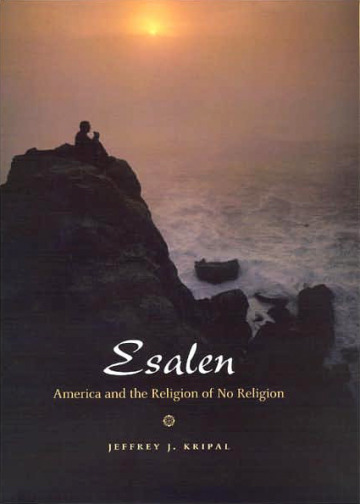
Esalen Every great once in a while, you read an academic book that really makes you think. Not that many books aren’t erudite or thought-provoking, but the ones that cause a reader to question reality are relatively few. I suppose that’s why I’ve been reading Jeffrey Kripal’s books like candy. I’ve posted on his Authors of the Impossible and Mutants and Mystics. Now that I’ve read Esalen: America and the Religion of No Religion, I somehow feel like I missed out on something important that had never entered my awareness. Growing up in the eastern part of the country and not reaching my teenage years until the program at Esalen was already under way and famous on the west coast, I’d never even heard of the institute until I’d started reading Kripal’s books. Esalen, for those who are like I was, is hard to define. Indeed, Kripal studiously avoids doing just that as he narrates its history and impact on the nation, and indeed, the world.

The human potential movement has seldom found institutional support. Since our worldviews determine what we are capable of seeing, and since our reality has largely been defined by a rationalistic monism, an entire universe remains for us to discover, if we were only to open our eyes. Reading about Esalen was like finding a long lost twin—much of what the institution has stood for has found its way into my own psyche in some form or other. I suppose I’ve never really read too much on eastern religions, but I do appreciate what meditation can do. Reading the names of those associated with Esalen over the decades, it would be difficult to disagree.

Our society has come to trust materialism assiduously. How easy it is to forget that even the material world consists of so much more than our limited senses reveal. We know that animals sense the world differently, so we call them non-conscious beings and get on with pretending that if we can’t see it, it doesn’t exist. As the Esalen devotees know, even scientists have come to consider the implications of quantum mechanics. If we are to take the results of physics seriously, the impossible does happen. Right here in our own corner (or arc) of the universe. We lose so much by refusing to believe the impossible. Lewis Carroll knew that and we’ve been talking about going down the rabbit hole ever since. There are rare places in the world where the spiritual, the scientific, the sensuous, and the artistic come together to explore what the human experience truly is. One such place is Esalen, where, I’m told, the religion is no religion.


Spirituality Sampler

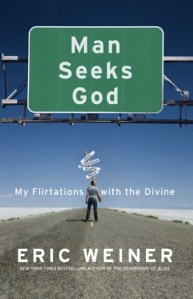
ManSeeksGodSometimes you read a book and wonder if somehow the author got into your head and fished around for material. Although I’m not Jewish, at least not that I know of, I found Eric Weiner’s Man Seeks God: My Flirtations with the Divine to be uncannily familiar at points. Not that I’ve ever been a journalist, nor have I had more than a few hundred people read anything I’ve written, but somehow I just couldn’t shake the underlying connectivity. For those of you unfortunate enough not to have read it, Man Seeks God is Weiner’s spiritual journey through various religions, seeking his God. Born culturally Jewish, Weiner never really resonated with the religious aspect until the last chapter of the book. In between, however, he shows a true pioneer spirit and tries diverse faiths, some of which are not for the fainthearted. As fits the postmodern period, he’s an authentic, intentional spiritual shopper. And he provides many laughs along the way.

Such a book must be difficult to write. There’s a lot of baring of the soul, and even a little baring of the body, at times. Weiner begins with Sufism, the mystical branch of Islam. Yes, it’s based on love. He then travels to Nepal to pursue Buddhist meditation, followed by a stint with the Franciscans in the Bronx. The only one of the “big five” he doesn’t sample is Hinduism. That might have thrown a speed-bump into his ending, though, to be fair. He makes no claims of comprehensiveness. At this point the story takes a turn toward decidedly exotic selections in the cafe of spirituality. I couldn’t read his account of the Raëlians without snorting aloud once or twice on the bus. Taoism takes Weiner to China and into a distinctly more philosophical frame of mind. He explores Wicca and Shamanism, which may be more closely related than he supposes, before coming home to Kabbalah, the mystical branch of Judaism.

Spiritual seeking is as mandatory as breathing for some people. Eric Weiner is one of those teetering on the edge of active exploration and the ability to shut out the questions, if only temporarily. Reading his confessions, it’s clear that he’s a rational, intelligent man. He made it through decades without really feeling the need for religion. When the ineffable pressed itself onto him, however, he turned to the mystical traditions. I was warned, in conservative Grove City College’s religion department, to be very careful of mysticism. The professor was dry-eyed serious as he said that seeking direct experience of God would generally lead to heresy. So there it was, in plain sight. Doctrine has precedence over the truth. Long ago someone smarter than us figured it all out. Our job? Just follow their path. I have a feeling that Weiner, having had some unexplained experiences of his own, might disagree. Sometimes you have to take out a personal ad in the spiritual scandal-sheets to get an idea what the divine really is.