Phobia Therapy

I don’t like being scared.  That’s why I watch horror.  You see, many people deal with fear by running away from it.  Embracing artificial fears, however, prepares you for the horrors life will inevitably throw at you.  We humans have created an artificial environment for ourselves with many natural dangers removed.  For example (and there are always exceptions) we’ve been able to seal ourselves up in our homes and wear masks in public to avoid a killing virus.  For the most part we’ve destroyed our large predators.  As a society we tend to avoid the things that make us afraid which, in turn, makes us fragile when we have to face truly frightening situations.  I wouldn’t suggest becoming a fear junkie, but experiencing scary scenarios can diminish the overall  fear factor.

People often make assumptions about those of us who watch horror, even though it is the majority of Americans.  We’re seen as creepy people who lurk in dark places, unable to get along with our fellow human beings.  Perhaps it’s true, or perhaps it’s a reasonable coping technique.  I tend to think of it as a spiritual practice.  Spirituality is often about feeling, but it’s not completely divorced from rationality.  Often it has to do with that gut feeling that this is really real.  This is something that my years on this weary old globe have taught me is true.  Many times it’s this way in the face of evidence.  Others have trouble believing it, although some bearded guy alone on a mountain top says it’s true.  So life goes.

Spirituality is important.  I have many humanist friends and they are often uncomfortable thinking about spirituality.  It seems dangerous, a superstition that somehow survived enlightenment.  Enlightenment, however, is itself a spiritual idea.  There’s something inside of us that makes us who we are.  Whether it’s something physical or something else, it requires nourishing in order that we might thrive.  We expend a lot of energy arguing about the right (only right) way to do it.  The way to be a more spiritual person.  To me it seems that it’s about discovering what replenishes us.  What makes us into better people.  You find that and you feed it.  Spirituality comes in many forms and shapes.  Some of us have it fed by what others dismiss as mere horror.  There’s more to it than meets the eye, however.  I watch it to learn not to be afraid.


Spirit of Halloween

So it’s Halloween.  It’s also Sunday.  I’ve been thinking quite a lot about the spirituality of this particular day.  Now it’s often treated as a trick, a consumerist holiday with too much candy and befitting spooky decorations.  Like all holidays Halloween has evolved from its origins to how we celebrate it today.  Other than Wiccans and Neo-pagans, however, not too many take it seriously.  At Nashotah House, and therefore likely at some parishes scattered around the world, All Saints Day—which is tomorrow—was a day of obligation.  What we call Halloween was the day before this major festival of praising the faithful.  There is some evidence that All Saints was moved to November 1 to counter the lively celebration of Samhain, or the Celtic fire festival marking the onset of winter.

The Celts included an intellectual class known as Druids.  Druids seem to have been the “theologians” (oh, that word!) of the Celts and they mandated that their teachings not be written down.  A great deal of information was passed on by intensive memorization and only became known to us outsiders because after Christianization it began to be written down.  Their idea of the afterlife seems to have been that it was being born into the other world.  In the otherworld life was different and apparently in some respects better.  When our time there drew to a close, our death led to our birth into this world.  The cycle continued on and on.  Samhain was the time when crossing between worlds could occur.  Death wasn’t a cause for sorrow since the otherworld awaited.  Birth into this world was more problematic.

Fear of death seems natural enough to us.  Even though it’s inevitable and this world’s graveyards are full, somehow we seem to think we can avoid it ourselves.  Our evolved survival instinct runs out of control since we’ve eliminated many of the causes of death that have plagued our species (and many other species) for millennia.  Eons.  As we’ve done so we’ve distanced ourselves from death—dying in hospitals, our corpses prepared in funeral homes, buried and eventually forgotten.  To me, the Celtic idea, from a world where death was likely much more close to hand, seems a more healthy outlook.  Instead of fear, why not consider it a day of wonder and celebration?  To many, I know, that is a spooky thought indeed.  It’s more than a day of masks and candy, however.  And we might learn from it if we stop and ponder.


Angel of Harvest

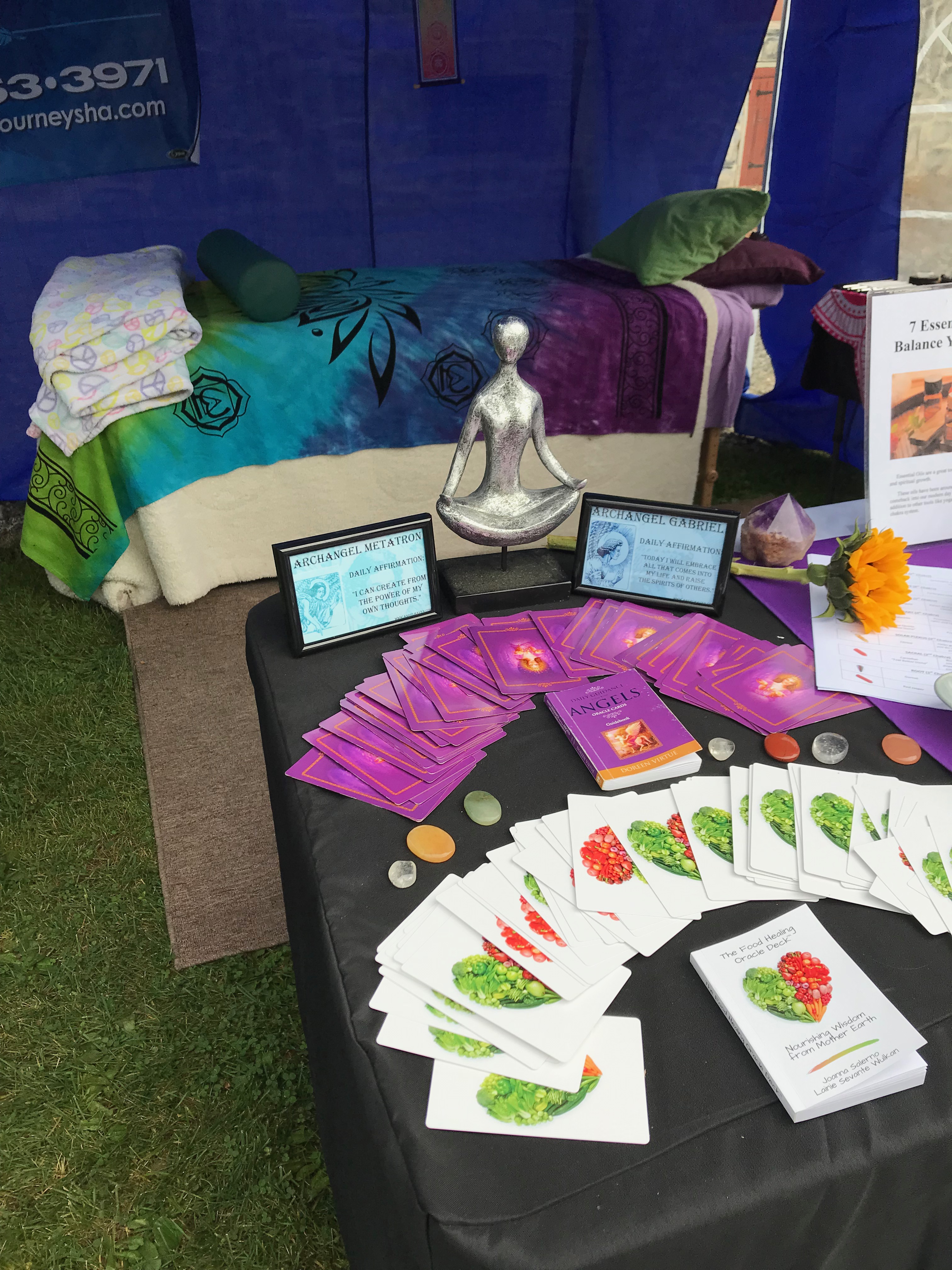
It’s been a few weeks ago now, but one October Saturday we attended the Lehigh Valley Vegstock.  Autumn is the season for harvest festivals and a surprising number of them are now catering to vegetarians, or even vegans.  When I say that, it probably calls to mind a certain kind of individual—perhaps an aging hippie who’s probably into New Age and alternative spiritualities?  If so, you’re not the only one whose thinking goes along those lines.  Among the recycled, reused, and other earth-friendly tents was one that offered contemporary spirituality.  A lot was going on behind my mask so I forgot to take the name of the actual vendor, but I did find the use of angels interesting.

No, I haven’t been living under a rock.  Well, maybe I have.  Even so, I know that angels are popular and have been for several years.  Some people who find themselves uncertain about God are still down with angels.  Back in college—who knows anything at that age?—I did an independent study on angels.  The professor (who’s still at Grove City) didn’t provide much direction, and I soon found there wasn’t too much in our library about the subject.  Like demons and other monsters, scholars tend to shy away from the topic.  That, and I hadn’t yet learned how to use Religion Index One.  Now, of course, there’s the internet.  In any case, the idea of angels stayed with me through my teaching career.  After all, studying ancient gods does bring you into close proximity with other spiritual beings.  Even so, I was interested to see Archangel Metatron on the Vegstock vendor table.

Metatron isn’t biblical.  He makes his first appearance in Jewish literature, including the Talmud and Kabbalah.  Although my research interest was always toward the earlier era of the spectrum, it seems that much of our angelology was percolating during the period after the Hebrew Bible was written.  Jewish scholars were working out the complex spiritual world and later Christian writers would attempt to systematize it.  It is possible, and it appears in some traditions, that Metatron was actually Enoch, translated.  Enoch, who is biblical, receives just a few words in Holy Writ, but he eventually grew in importance.  Genesis indicates that he walked with God and was no more.  What happened to him?  Metatron was one possible answer.  There are other Metatron origin stories, I’m sure.  And one of them was right there in Tatamy in the midst of a harvest festival.


Shifting the Narrative

Wide ranging.  That’s a phrase that comes to mind to describe Vine Deloria Jr.’s book God Is Red: A Native View of Religion.  Another phrase is very important.  I know this book has been available for several years and it’s been on my reading list for many of those.  What is it about?  Some books are just difficult to summarize, but the basic answer is that it’s an American Indian view of how Christianity has distorted the world.  An accomplished academic, student of law, and activist, Deloria knew of what he wrote.  His book explains articulately the view of Christianity from the outside and what a religion that reverences the earth really looks like.  What makes the book so fascinating is that Deloria had theological training and could engage with the Christian worldview over a considerable range of topics.

Controlling the narrative is of primary importance and the fact is white men have controlled the narrative and normalized one view of history, science, and our place in the universe.  First nations peoples had, and some still have, a radically different outlook.  Deloria makes the crucial point that even our science developed out of our religion.  That science, in turn, supports the worldview that created it.  It is possible to look at things differently.  In fact, for much of human history those alternate views were predominant.  The triumphalist view of Christianity claims it’s successful because it’s right.  A native view takes a longer view, saying “we’ll see.”

Very concerned about the state of the planet brought on by the Christian/capitalist partnership, Deloria advocated for not only Indian rights, but environmental protection s well.  Not only is the environment central to Indian spirituality, the concept of sacred spaces is very real.  Many of us not raised with indigenous points of view have experienced this as well.  Some places are special to us.  We hesitate, because of that very science created by the Christian worldview and its view of God, to call such spaces objectively sacred.  Even the “objectively” part is determined by a Christian perspective.  Deloria ends up by asking whether this form of religion has improved the state of the world.  There’s no doubt that some of Christianity’s achievements have lessened human suffering.  It is also true that science has achieved great things.  If I understand correctly, Deloria isn’t disputing this.  His point of view is much more essential.  Is this the only way to live on this planet?  From the indigenous point of view, which is far more important that we want to admit, the question is—is this the only way to see it?


Time To Think

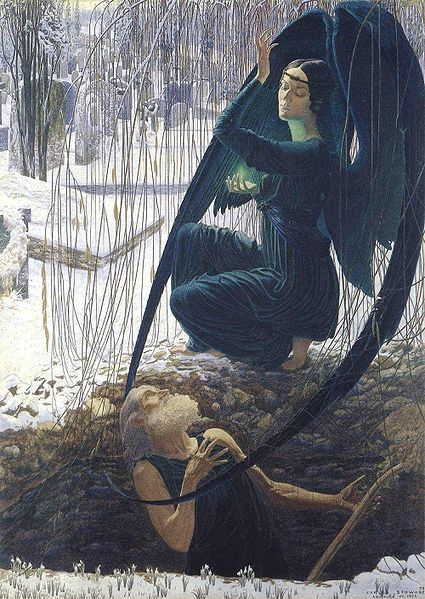
Although I’m not Roman Catholic, I often thought about joining a monastery as a teen and twenty-something.  The idea of spending all my time devoted to contemplating the ultimate reality still has a strong appeal.  I know quite a few rationalists who have no time for spirituality, but it seems to me that we all need it for facing death.  Most people, I know, avoid the topic if at all possible.  Contemplatives, on the other hand, spend quite a bit of time preparing for it.  Since it’s inevitable that makes sense.  I often wonder why people consider the most common thing in human experience with such trepidation.  If it’s a source of anxiety, shouldn’t it be confronted?  That’s not to say we need to look forward to it, but it does mean we shouldn’t run from it either.

Carlos Schwabe, Death of the Undertaker; Wikimedia Commons

The combination of Christianity and rationalism, it seems to me, lead to this terror.  Christianity because it views death as an enemy, and rationalism because it has no comfort to offer.  I’ve been reading about how pre-Christian cultures thought of death.  They didn’t display the fear that Paul seems to have introduced into the equation.  Since American culture is so heavily influenced by the Bible (as was European culture before it), we have adopted the scriptural view that death is a problem.  The Hebrew Bible, in which there was no real afterlife, was less concerned with making sure you avoided Hell—they had no Hell to avoid.  The anxiety seems to have been introduced by, ironically, the concept of resurrection.

I’ve noted on pieces I’ve written for other websites that resurrection is among the favorite themes for horror films.  One of the reasons is precisely this discomfort in taking death at face value.  Our religions keep us aware of the spiritual side of our nature.  They have developed around the world in different forms and all of them address death in some way.  Most without a profound sense of anxiety.  There is some irony in cultures that adopt resurrection as a theological tenet are among those that try to avoid death most assiduously.  It plays into those cultures’ views on abortion and capital punishment.  As well as their performance of social justice.  While Paul asked death where its sting was, and seems legitimately not to have feared it, in the centuries following his position seems to have eroded.  There seems to be plenty to contemplate here, if only secular society had monasteries.


The Spiritual Life

Genuine spiritual experiences don’t sit well with a nine-to-five job.  When something truly profound happens to a person s/he requires time to think about it.  Ponder the experience.  If such a thing occurs on a Sunday (imagine that!), the next morning, still reeling, you need to go to work.  Perform duties that no longer seem significant.  And continue to do so for four more days, until the fire has gone out.  This paradox has plagued me for some time.  Perhaps it’s the fate die cast for an editor who can’t just read submissions for their financial payoff.  Who asks, “What if she’s right?”  Doesn’t that affect everything?  Especially in the case of a religion editor.

Blown away.

I first noticed this in college.  Even there the schedule was quite flexible, according to classes you had to take.  The professors were sincere in their presentation of ideas you should take seriously, but then in the work world your boss indicates that you’re not being paid to do that.  You’re being paid to produce.  Contribute to the machine.  Cogs and sprockets don’t think.  They do.  Then a significant weekend would come (or a holiday, say) where the message would really speak to me.  Change my outlook.  Until Monday morning.  The outlook would still be changed, of course, but the demands on routine would not also be changed.  It’s quite a dilemma.  As the great contemplatives throughout history have known, these ideas must be wrestled with.  Conversed with.  Tried on for size.  Walked with.  Such things can’t be done in the context of what you’re paid to do.  “Do it on your own time.”

What is your own time?  The weekend, essentially.  Work expands to fill the quiet times of weekdays.  Your time is owed to somebody who pays you less than the national average to do something any nonspiritual person could do.  Such is the danger of being open to new ways of looking at things.  Vacations need to be planned.  They are rejuvenating, but spiritual experiences can’t be planned.  They just happen.  HR has no algorithm for them.  Not exactly sick days or floating holidays.  And what if you need more than one day?  That meeting that was scheduled for Tuesday, what about that?  As if such things were really important.  Perhaps you too had the professor late for class because s/he was struggling with an idea, an experience that fit her or his specialization.  There were always office hours to recover.  That’s all fine and good, but it’s time for work.


Animal Spirituality

I had little scientific basis for my claims.  It wasn’t that I didn’t have evidence, but it was more one of those “if you see something say something” kinds of scenarios.  I have been claiming for many years that animals experience some kind of spirituality.  My evidence was drawn from disparate scientific materials I’d read, along with ancient religions.  Egyptians believed baboons worshiped the sun.  Chimpanzees make threatening gestures toward the sky during thunderstorms.  Penguins grieve.  Human spirituality, it seems to me, is part of our kinship with other living creatures.  Then I found an article by none other than Marc Bekoff titled “We’re Not the Only Animals Who Feel Grief and Spirituality,” in no less a prestigious place than Psychology Today.  Bekoff, some of whose books I’ve reported on here, has studied animal emotions professionally.

Our ideas of human exceptionality, it seems to me, often get us into trouble.  Arrogance is perhaps the most dangerous of psychological states.  When we see ourselves as part of a continuum, and realize that it can go on beyond us—yes, there are likely greater intelligences—humility should be an expected response.  Those who are arrogant frequently experience their comeuppance, even if they have to get elected to high office for it to happen.  We share emotions with our fellow creatures, and, now according to at least one expert, we share spirituality.  What is spirituality?  It seems to be an awareness that the body isn’t everything.  In my lexicon it’s listed there right with consciousness, mind, and soul.  We know it because we feel it.

The interconnectedness of the world, and beyond, is something many want to take exception from.  Looking around, such folks say, “Hey, we’re different than all of this.”  Yes and no.  We’re different, but that makes us no less a part of it.  Nature is our matrix.  We build fancy houses, but so do bower birds, and they do it without benefit of opposable thumbs, or even hands.  Of late we seem reluctant to admit that even human beings have spirituality.  That doesn’t stop us from feeling it, however.  I’m glad that others see it in the animal realm also.  Anyone who’s “owned” a dog knows what it’s like to receive worship.  We’ve selectively bred these wolves to adore us.  Is it so much of a stretch, then, to suppose that other animals also feel a sense of admiration for what’s beyond themselves?  Only the most arrogant wouldn’t pause to consider it.


Time for Golem

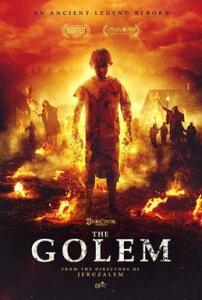
I don’t claim to understand how the film industry works.  My two books on horror and religion deal with interpreting the movies, not their native cinematic environment.  I say this because I limited my treatments in them to films with a theatrical release.  Mainly this was so that readers would have had easy access to them.  Some films, of course, never go to theaters and it seems that happened, in the United States, to the Israeli movie The Golem.  I saw a trailer for it last year and patiently waited for it to arrive.  I recently found it on an online streaming service and finally had a chance to watch it.  Golems, as original Jewish monsters, have shown up in a variety of popular media including The X-Files and Sleepy Hollow.  Film treatments have been rare, and this one makes for a fascinating monster movie.

What makes the golem so compelling is that it is an explicitly religious monster.  To create a golem (according to the film) the maker must use Kabbalah, Jewish mystical texts, to learn how to bring it to life.  Hanna (Hani Furstenberg), the female protagonist, is the only one in her seventeenth-century village willing to try.  The real hook, for me, is that the golem she creates is a little boy.  The role must’ve been fun to play.  Golems cannot speak, so there are no lines to learn.  Kirill Cernyakov nails the part with an ability to portray emotionless menace.  The problem with a golem, you see, is that it goes on rampages, killing even those it’s conjured to protect.  Since the movie is intended to be a retelling of the classic story (involving the golem of Prague), it doesn’t have too many surprises.  It is, however, a thoughtful movie.

Write-ups on it call it “the Jewish Frankenstein,” but scholars who research Frankenstein often go the other way, seeing Frankenstein’s monster as a form of golem.  The basic idea is taking something inert and bringing it to life.  Afterward the creator is unable to control it.  It’s too bad that The Golem didn’t get a wide theatrical release.  I’ve seen far worse horror films that did.  Perhaps the focus on religion was too blatant?  One of the points I make in Holy Horror and Nightmares with the Bible is that religion and horror belong together.  Some Jewish viewers will undoubtedly spot inaccuracies (even this goy did) but the movie isn’t a religious text.  It is an appropriate rebuff to Trumpian “politics” and even features a plague.  It is a movie for our time.


Wild God

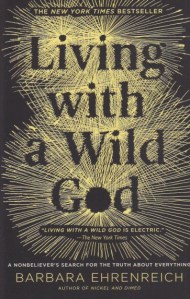
Living with a Wild God, by Barbara Ehrenreich, is one of those books I wanted to put down gently after reading it, for fear that it might explode.  Or maybe it was my head I feared might combust.  Describing it is difficult because it is so wide-ranging.  On the one hand it is an atheist’s view of religion.  On the other hand it is a spiritual biography.  On a third hand it is coming to terms with having had a profound mystical experience.  It is one of those books where, knowing my life has been so very different, yet I feel that Ehrenreich and I have had so much in common that we’d be friends if we ever met.  It is also the work of a woman who is scary smart and whose teenage thoughts were so intense that my own seem puerile by comparison.

But that mystical experience!  I’ve had many of them in my life, but I don’t know you well enough to share them here.  They’ve been recorded in an unfinished book that I may or may not try to publish some day.  (Ehrenreich was smart and took a job as a journalist, which means others assume you know how to write.  Even those of us in publishing have trouble convincing agents and others who hold the keys to non-academic pricing that we understand the craft.)  Mysticism quickly becomes a staid discipline, not at all like the life-directing experiences such encounters themselves actually are.  It’s difficult to explain without sitting down and talking to you.  It’s something academics tend to avoid like Covid-19.

The books that mean most to me are like conversations with an absent author.  Drawn in by an openness, or perhaps by the fact that we’ve lived in a few of the same places over the years, perhaps passed one another unknowingly on the street, you feel that they’ve invited you into their very head.  What you find there has a strange similarity to what is in your own head, while being completely different at the same time.  We should all strive for such honesty in our writing.  In the end Ehrenreich, with a doctorate in science, suggests we need to be open.  That kind of validation is important for those of us who’ve poured our lives into the study of religion.  She was drawn in from atheism, and I have been trying to escape from literalism all my adult life.  We have ended up in places not dissimilar from each other and I’m glad to have met her through this profound book.


Watery

Having watched What the Bleep Do We Know? a few weeks ago, I became curious about Masaru Emoto’s The Hidden Messages in Water.  The book is highlighted in the film, and in a world where money decides truth, the fact that it was a New York Times bestseller must count for something, right?  I am of a skeptical bent, but I like to keep an open mind.  This itself is a delicate waltz at times since just about anybody can make truth claims and find a following.  Curiosity, as they say…  So instead of critiquing Emoto’s obviously slipshod methodology, I want to reflect on whether he really might have been onto something.  Many people around the world thought so, after all.

What it comes down to is water.  If you haven’t seen the movie or read the book, I owe you a brief explanation.  Emoto suggests that water crystals reflect the influences to which they’re subjected.  For example, water frozen as classical music plays forms beautiful crystals.  If heavy metal is played, it doesn’t.  Water frozen in beautiful surroundings forms beautiful crystals.  If that’s not controversial enough, Emoto suggested that emotionally freighted words typed on paper wrapped around the water bottle as it was frozen would reflect the emotions on the paper.  There are lots of problems here, but what I wonder is if water might not somehow be related to consciousness.  Emoto makes that claim, but since science can’t yet explain consciousness there’s no way to test it.  Could it be that water is a recording medium in some way?  Without raising the woo factor too far, some ghost hunters (it is October, after all) suggest moving water has something to do with “recording” spirits.

Like most critical readers, I left Emoto’s book not at all convinced.  I also left thinking that we shouldn’t throw the bath water out with the baby.  There are crazy ideas in the book, for sure.  But there may also be just a hint of insight as well.  That insight comes in the recognition of spirituality as an important aspect of human life.  The book was a bestseller.  Not all people are credulous.  We are, however, spiritual.  Many deny it.  Some violently rail against it but still have feelings along with their rationality.  Water can lift spirits.  The negative ions of breaking water tend to make people feel at ease.  We visit the coast where waves break against beach or rocks.  We visit waterfalls where cascades scatter water particles.  Even a fast-flowing stream will do.  Emoto clearly went too far with his ideas, but I think, deep down, he might’ve been onto something.


Secretly

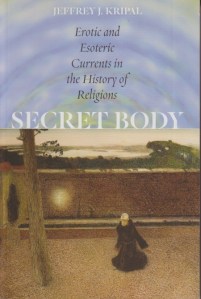
There are not too many books that I would call epiphanies.  I always lay down Jeffrey Kripal’s books with a sense of wonder and awe.  His Secret Body: Erotic and Esoteric Currents in the History of Religions is one book I initially skipped over due (as usual) to not being able to afford even modest academic pricing.  (Hey, my books are even worse in that regard, so that’s not a criticism!)  I’ve met Kripal a few times and have had some conversations with him that always leave me feeling strangely empowered.  That’s the place this book left me.  I’m a slow reader and it isn’t a small tome, so it took me some time.  Also, I didn’t want to rush it.  Doing so would’ve been like trying to jog across a boulder field.  I hardly know where to begin.

Kripal is an historian of religions.  His own experiences in the academy are narrated in this book, so I urge the curious to look.  Many people who know me think that I’m a biblical scholar.  My training, however, is in history of religions.  It’s a fool’s errand to try to classify a doctorate, but my focus was on how ideas appeared in several ancient cultures, with no real expectation of evolution beyond what appeared later in time than something else.  As many who study ancient texts know, this translates to “biblical studies” in the academy and so for many years I taught Hebrew Bible.  Friends in the academy suggested I should shift my research to Bible (as I did in Weathering the Psalms) in order to get a solid placement in academe.  It backfired in my case.  This isn’t a pointless digression.

Secret Body is a trippy book.  It deserves to be read widely and engaged with by academics (among which I no longer count).  It is a ground plan for the study of our field.  Kripal understands, better than just about anyone, why religious studies is foundering.  He’s also brave enough to delve into the unspoken areas that we all know are terribly, terribly significant.  And he isn’t a materialist.  There’s much in this book to give the reader pause.  Indeed, it’s more than a stop sign on the superhighway of the academic business.  It’s the kind of book you need to keep at hand in case “the real world” gets you ensnared in its ropes and chains.  It makes me believe that I need to go back to school all over again.


Being Equal

With all that’s been happening lately—as 2020 shudders along—we find ourselves at the equinox.  For some of us the weather has already been unseasonably cool, feeling like mid-October rather than September.  It stands as a reminder that the wheel of nature continues to turn, despite human foibles and plans.  Some trees have begun to sense the change and have started their winter fast while others keep their green to suck the last possible sugar from the sun.  Days have been getting shorter since late June, of course, but now the drama will increase until the winter solstice has us in the dark for much of the time.  It all depends on where you live, but for me the temperate zones have always been home.

I suspect our various predilections toward the oughtness of the world depend in large measure on what we experienced in childhood.  I knew winter before I ever experienced summer and the transitional seasons have always been my favorites.  The idea that we can take more time and reflect, it seems to me, mirrors what happens in autumn.  It’s cooler, so we spend time indoors a bit more.  Some years that doesn’t kick in until later, when the heat is on and there’s a coziness to a house that’s been left to nature’s fever all summer.  Windows are shut and locked.  Artificial warmth reminds us that we can find some solace inside.  Meanwhile the trees show us the proper way to face harsh conditions, and yet half a year from now we’ll be eagerly watching for buds.  The Celts, temperate zone dwellers, thought of this change as the wheel of the year, slowly turning.

From where I sit in my study, with south and west-facing windows, I watch the path of the sun.  Having worked in a cubicle with no outside windows for years, I was always disoriented at the end of the day.  Now I can watch and begin to understand.  The difference is really striking if you have a single place from which to watch it unfold.  The sun is so much higher in the sky in July that it’s evident we’ve entered a new phase now.  Instead of being overhead at noon, the shining orb rolls more to the south, sending blinding rays directly through my window.  When it reaches the west (where it will, before long, sink before touching that window) I know the work day is over.  It’s no wonder our ancient ancestors kept this transition with holidays we’ve long sacrificed to capitalism.  I can still, however, see the changes and appreciate them for what they are.


Believing and Seeing

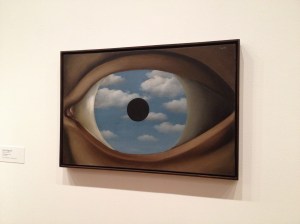
Our eyes locked for a moment.  He wasn’t ten feet away.  Of course, like all famous people he knew that his fans thought they knew him and hoped that he would know her or him.  This isn’t a particularly rare thing to happen in New York City, but the instance in my mind happened in Atlantic City after an Alice Cooper concert that I attended with my brother.  As kids we’d listened to Cooper with some avidity,  and even the concert itself was a somewhat intimate affair (we were both adults at the time).  An audience of hundreds instead of thousands, and many of the attendees about our age—that is to say, not young.  That meeting of the eyes, however, reinforced something I already knew.  Looking is more that your eyes receiving light particle-waves.  It is a connection.

Try this with your bestie—it can be your spouse, lover, or friend.  It especially works if you’ve known her or him for many years.  See how long you can go staring into each other’s eyes.  It’s not easy.  You start to feel that they can see your secrets: your fears and vulnerabilities.  You glance away.  Materialists claim that seeing is a simple matter of light entering our eyes and our brains interpreting it.  We all know, however, what it’s like to be stared at.  How uncomfortable it makes us feel.  We can often tell when someone’s staring at our backs.  I wonder if there’s more to seeing than appears?  Performers often crave the energy of being before thousands of eyes.  They know how it’s just not the same when you have to pretend.  I knew that well as a teacher.

Could seeing really go both ways?  Even animals don’t like to be stared at.  It’s an informal experiment I’ve tried while jogging.  If you break eye contact with a deer, cat, or rabbit, you can get fairly close.  If you stare, however, they dash away.  It doesn’t matter if you turn your head—it’s the eye contact.  I ponder how this relates to narcissists in power.  They crave the eyes on them.  The way to de-power them is to stop looking.  Alice Cooper, I’m certain, has no idea who I am.  He wouldn’t remember me if we ever met.  That night he was standing outside the door of the afterparty where those who’d paid extra could get to meet him.  We didn’t exchange a word, but we made a connection.  There’s more to seeing than meets the eye.


Learning To Fly

It’s perhaps the most deeply rooted human dream.  Flying.  Women Who Fly, by Serinity Young, is a fascinating book.  Subtitled Goddesses, Witches, Mystics, and Other Airborne Females, the book covers all of these and more.  The dream of flying is played out in many ways here, but often the narrative comes back to how patriarchy imprisons women.  Is it any wonder they want to fly?  Very wide in historical scope, the book can’t cover all cases in equal depth.  It nevertheless demonstrates how pervasive the idea is.  Beginning with ancient female figurines bearing bird-like features, Young moves through the related concepts of captivity, transcendence, sexuality, and immortality, showing how female characters are related to these idea in universal and unrelenting ways in the form of flying females.

There are many lenses through which to view patriarchy.  It can be explained as a consequence of settled agricultural existence with its subsequent division of labor.  Such a scenario raises questions of whether women dreamed of flight before that, and I believe the answer must be yes.  For as long as we’ve observed birds and associated the sky with gods we have longed for flight.  Although birds make it look easy, it is an incredibly difficult and costly adaptation.  Still, women dream of travel without obstacles (let the reader understand) to the realms where deities dwell.  It is difficult to summarize a book that covers so much historical territory.  Young doesn’t limit herself to western religions but also spends a fair bit of time among Buddhist, Hindu, and Daoist ideas of flying women.  She covers mythical, folkloristic, human, and historical flying females all the way up to modern astronauts.

As I was coming to the close of the book the real message hit me—I can be thick at times, although much of my own writing is metaphorical—men have actively tried to clip women’s wings for a long time.  Often under the auspices of religion.  Think of it: for centuries of existence the major monotheistic traditions have refused female leadership.  The one (inevitably male) god has set up a boys’ club of sacerdotal leadership.  As Young points out, even the named angels in the Bible are male.  I used to comfort myself with the explanation that male leaders were simply too self-centered to consider others, but it is becoming clearer, the more I read, that men have always had a tendency to try to keep women down.  And thus they fly.  There’s much in this book for both women and men to ponder.


Occam’s Disposable Razor

Since new books are kind of rare right now, I’m reading through some of those I’ve collected but haven’t actually read.  One is Near-Death Experiences: Understanding Visions of the Afterlife, by John Martin Fischer and Benjamin Mitchell-Yellin.  I bought the book because the topic, as addressed by a university press book, is interesting.  Fischer and Mitchell-Yellin approach the subject as philosophers.  Their main focus is on the widely accessible and successful books by Eben Alexander and Todd Burpo.  Also the somewhat less well known efforts of Jeffrey Long and Pim van Lommel.  (Instead of taking up blog space with all these titles, just email me if you’re curious, or read my Goodreads post.)  Applying standard scientific methods to spiritual experiences isn’t easy, and Fischer and Mitchell-Yellin are clear that they aren’t trying to take the value out of Near-Death Experiences (NDEs), but rather they are challenging how these authors try to make them authentic.

Philosophers parse words finely.  The authors show that “real” is not the same thing as “authentic” and demonstrate how some of the more spectacular NDEs can possibly be explained by science.  Those who’d temporarily died might’ve caught onto things that happened just before or just after brain activity ceased or restarted, for example, and then misremembered them.  As a still-living guy who can’t remember where he left his wallet half the time, misremembering is an authentic reality.  Still, I couldn’t help but wonder.  Science and religion ask different questions.  One of the mainstays of scientific method is Occam’s Razor—the solution that requires the least mental gymnastics to explain something is the most likely to be true.  Many times this razor is flashed in the face of those trying to make a religious case for something.

Ironically, the authors here dismiss Occam’s Razor.  They state that sometimes the more complicated solution is the right one.  I happen to agree with them on this, but it proved a real distraction in reading the book.  Many scientists use the exact opposite argument against spiritual things.  It also struck me that a book so brief (less than 200 pages) would necessarily struggle to explain a complex phenomenon convincingly.  Trade books, such as those by Alexander and Burpo, aren’t meant to be held up to the stiff standards of peer review.  They are meant for selling lots of copies.  Their authors aren’t philosophers.  It’s almost a mismatch in categories.  Some academic presses are now publishing on NDEs and asking plenty of questions about them.  It’s no surprise that philosophers favoring physicalism would do the same.  It seems a little hairy, however, to do so with Occam left firmly in the shaving kit.