The Fires of Bureaucratic Porn

My hopeless naivety must show through on this blog from time to time. I mean, I once walked into a Fossil store expecting to find impressions of dead animals instead of trendy accessories. Maybe it is because I grew up in a small town, without cable, with a regular regimen of church attendance and associated activities. Being working class often means taking things at face value. You learn pretty quickly that you don’t have much control over the things around you—someone else signs the checks, and if you don’t do what they say, the checks don’t get signed. I grew up in a refinery town doing lots of dirty jobs. “Excuse me sir, but do you have any trilobites?” There’s one born every minute. Well, more frequently than that, actually.
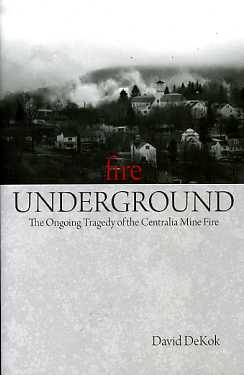
Thus it was with a certain wonder that I first learned about another small, Pennsylvania town with an unearthly problem. David DeKok’s Fire Underground: The Ongoing Tragedy of the Centralia Mine Fire is an unsensationalized ride through the reality of bureaucratic lack of heart and the weighing of peoples’ lives in the scales of cost effectiveness. The Centralia mine fire began the year I was born (1962). It still burns today and has enough fuel, some reports suggest, to last for a thousand years. This is a hellish millennium. Accounts of elderly citizens awaking in the middle of the night with carbon monoxide clouds in their basements, ground temperatures hot enough to melt blacktop, bore-hole readings of over 800 degrees. Under what’s left of the town of Centralia, the heart of the fire is hotter than the surface of the planet Mercury. What DeKok provides is a step-by-step analysis of political side-stepping. Realizing how expensive it had become to fight this fire underground, state officials were repeatedly caught with their skirts over their heads, claiming that they were wearing full-body armor underneath. During the height of the crisis, in the Reagan and Thornburg years, cutbacks in vital services left the working people of this town in an impossible predicament. Those in positions of power would not even change their vacation plans to try to save a thousand lives. When the smoke clears, after a millennium, if there’s anyone left to write histories, we will see where unchecked greed and ambition lead. It is the only hope we have. The book reads like porn for bureaucrats.

In my hometown we worried about refinery fires when I was growing up. As a child I saw such a fire from a distance; it looked like an entire hillside (a mountain in my naive eyes) was aflame. My brothers and I went outside to gather ashes as large as dinner plates that were floating through the sky, falling like demonic snow. (We doubtless would have kept them, alongside our fossils, had my mother not sensibly put down her foot.) Later, when we drove out that way, we saw the great steel vats that held 260,000 gallons of petroleum products bent and folded over like the hem of God’s great robe in the temple. Over forty years later the image is still vivid in my mind. Those who’ve lived with fire know the danger better than plutocratic oligarchs who view human lives in terms of the bottom line. One truth of physics may come to our aid, eventually; heat does rise. Whether it will ever reach the level of those in power, however, will only be answered when I find that trilobite I’m seeking amid the expensive watches and wallets of the Fossil crowd. I’ll find one too, before the Centralia mine fire burns itself out.

Zombie Jesus

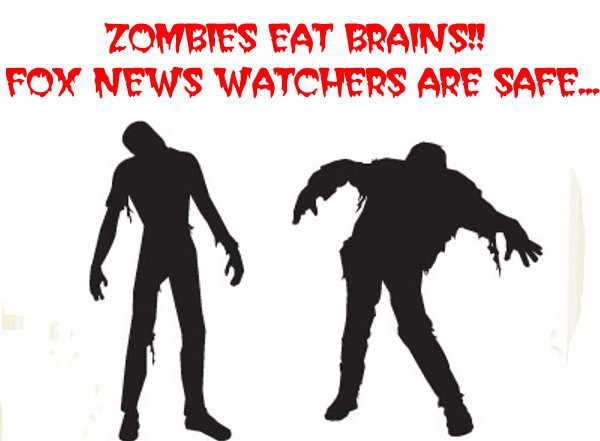
It must still be October. Despite a snowstorm before Halloween (one of nature’s trick-or-treats), all the signs are still there. My daughter showed me a Venn diagram yesterday, during a whole-day marathon of putting plastic around our drafty old windows, showing the intersection of three “monster” traits: resurrected from the dead, local townspeople fear and revere him, and convert as many mindless followers as possible. The creatures that inhabit this eerie universe are Dracula, Frankenstein, Zombie, and, where all three intersect, Jesus Christ. Obviously this was just for a laugh, but interestingly, one of the traits of Penn Jillette’s book, God, No!, is his rather frequent reference to Jesus as a zombie. Then I clicked over to Religion Dispatches, and the lead story is headlined, “Praying to the Zombie Jesus.” Ours is a world of mindless, quick connections where the compelling idea of resurrection has lost its appeal. Despite our religious culture—or perhaps because of it—we have come to see Christianity as just one more peddler of a wonderful, disturbing idea.

As regular readers of this blog know, I find the abuse of religious ideals inexcusable. Using one’s faith to beat another down is just plain wrong. Nevertheless, to focus on the folkloristic aspect of resurrection (or perhaps it is a metaphor) is to miss what drew the very earliest followers to Jesus. Before the idea of rising from the dead came a message that people should love each other and treat one another with respect and dignity. By the end of the first century of the common era, or perhaps as early as Paul, that idea grew to be a quasi-magical resurrection from the dead. No longer were women counted as equals among the followers of Jesus, and no longer were wealthy compelled to give it all up. Paul’s faith looked to a future world, beyond death, and was willing to consider this world, well, to be polite, crap. The reasons for this transformation are legion: the persecution that Christianity was undergoing, the failure of an apocalypse to take place, the disenfranchisement of the believers. They needed something to look forward to.

Zombies are likely a passing fad. When we start seeing books of zombie Christmas carols, zombie haikus, and zombie apocalypse survivors’ guides, we seem to be reaching the peak of the plateau. The zombie is mindless, rapacious, and entirely selfish. It will not go away. It is the perfect denizen of October. When I stare into those uncomprehending eyes, and see the disturbing lack of compassion and the desire to consume human brains, I start to make connections of my own. Analysts often describe zombies as the ghoul of the common folk. But all these characteristics taken together suggest that perhaps the month in which to expect zombies is November. Surviving another snowpocalypse, earthquake, and hurricane, the human spirit is difficult to dominate. And yet, when the polls open up in the darker season of the year, zombies will rise. The plastic on my windows does nothing to stop these chills.

Borrowed from a friend's site


Conversation with Solomon

“The rights and interests of the laboring man will be protected and cared for, not by labor agitators, but by the Christian men to whom God in his infinite wisdom has given control of the property interests of the country,” wrote George Baer of the Philadelphia and Reading Coal and Iron Company. In 1902. Along with Melville I’ve been thinking about old Ecclesiastes and his gloomy prognostications. The writer of this neglected book of the Bible claimed that nothing was new under the sun; what is has been before. I read the quote above in David DeKok’s Fire Underground (on which more later). I thought of Occupy Wall Street and the supposed great wisdom of the “Christian men” that God “himself” has appointed to towers of wealth for our benefit. As long as we keep our mouths shut and our hind-quarters out of Zuccotti Park. The data, Old Solomon, I must admit, are depressing. The staggering wealth of the top one percent is beyond unconscionable. Solomon? Are you still listening? After all, as one of the Lord’s chosen, Solomon was also a king. In his day, according to the book of Kings, silver was as common as the dust in the streets. Is that rain, or just drool from the towers of power?

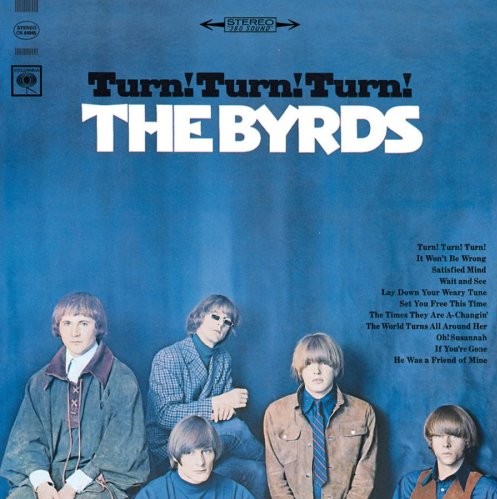
Old Ecclesiastes said the more that things change, the more they stay the same. He also inspired the Byrds’ “Turn, Turn, Turn.” As a society we have become reluctant to turn. Where did all that wealth go, Solomon? Did it not go to the temple and the palace? Seems there was a Religious Right even back then. As soon as Solomon died the common folk revolted. The chosen people split into two kingdoms that were never again reunited. Turn, turn, turn. The Christian men to whom God has given control have abandoned their posts. They’ve taken the cash and shared with their friends. Yes, America has kings. When the disparity is so great no other name applies.

“Cast your bread upon the waters,” Old Ecclesiastes says, “and it will come back to you in time of want.” I doubt that Solomon was ever unemployed. After working for “the Christian men” for over a decade, I was cast out on the waters, never to return. My stint of unemployment wavered in and out for six years. And I am one of the lucky ones. In that time I don’t recall feeling any wealth trickling down. I sure spent a lot getting the requisite degrees for a job that never materialized. So I sit down to read Ecclesiastes. Those who are addicted to wealth and power simply never took the words of the old sage to heart. We can excuse them, I suppose, since most clergy ignore him as well. When in need of some honesty, it is nice to know there’s a book in the Bible that is unafraid to utter the truth.


Tea Party Science

I sometimes jog in the morning before the sun begins his course across the sky. Funny thing is, sometimes I beat him. I know the sun is a guy because the Bible says so. When I startle a bunny from its hiding place along my path, I am amazed that those little creatures chew the cud just like bovines. It is the word of God. Occasionally a suicidal insect tries to fly into my mouth, and unless they go about on all fours, with legs above their feet, I spit them back out. If they do meet Leviticus 11’s strict standards and I accidentally swallow, I try not to think of Deuteronomy 14.19. I am surprised that the Tea Partiers haven’t tried to correct science on this point: the Bible is clear that insects (technically “flying creeping things”) have four legs, not six. Open your eyes people! Six legs? All those sixes seem to be from the antichrist. That’s why I feel comfortable with the potential of handing our nation over to the Tea Party. Certainty is better than scientific orthodoxy, hands down.

“I don’t know how much God has to do to get the attention of the politicians. We’ve had an earthquake; we’ve had a hurricane. He said, ‘Are you going to start listening to me here?’” The words are those of Michele Bachmann. Those of us who were taught that hurricanes result from the heating of Atlantic waters, swirled by the rotation of the earth (it does not move, according to the only proven source of science, the Bible) have egg on our faces. Do I ever feel silly! Empirical evidence suggests that the earth’s crust consists of tectonic plates that sometimes bump and rub and pull apart. Earthquakes result. Last week’s earthquake creates a problem for me, however, since North America is not mentioned in the Bible. I now live in a country that can’t possibly exist. We had better elect leaders who know how all this really works.

According to a Religion News Service poll this year, 40 percent (that’s more than half, in Tea Party mathematics) of Americans believe natural disasters are signs from God. I am relieved that this clearly shows science to be wrong—surely that many individuals must be correct. That’s the way math works. I sometimes imagine the United States as the Titanic (movies are another good source of science). Ismay, the Tea Party, declares, “But this ship can’t sink!” Thomas Andrews, the engineer (representing science) replies, “She’s made of iron, sir! I assure you, she can… and she will. It is a mathematical certainty.” Ismay, believing the rich are too wealthy to die tragically, refutes the findings of science. When the colossal ship slips into the icy Atlantic, however, he’s nowhere on board. Like the rest of his party, he’s already secured himself one of the rare seats on the lifeboats inadequate to save those of us in steerage. Since the ship can’t sink anyway, why are we even worried about this?

Full speed ahead and damn the icebergs...


Tomorrow Ever After

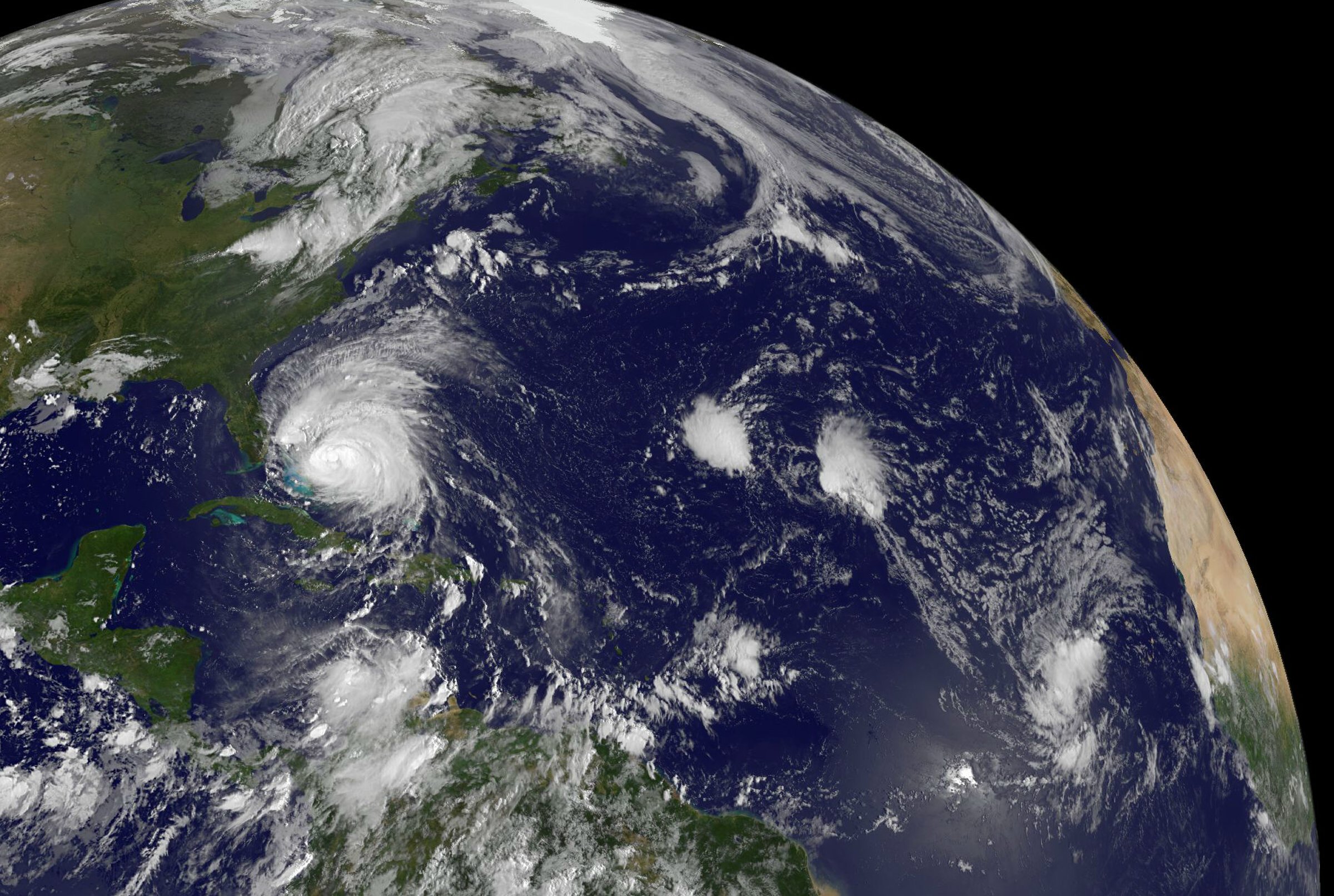
Last night as we said goodnight to Irene, my family decided to watch The Day After Tomorrow. Beyond The Perfect Storm and Twister we didn’t have any other weather-related disaster movies on hand. I became convinced long ago that weather was somehow key in the conception of divinity. Working at a seminary that required attendance at chapel twice daily where we would lugubriously and laboriously recite every verse of every Psalm according to the unforgiving schedule of the Book of Common Prayer, I began to notice the weather. Among the more common images used in the “hymnal of the second temple,” weather was seen as an essential aspect of divinity. Religions with celestial orientations frequently view the sky with a sacred aura. I began to compile all the Psalm references to the weather and eventually brought them together into a book, still unpublished. What became clear at the end of this exercise was that ancient people had no way to interpret the weather other than as a divine phenomenon. Listening to all the hype about Irene, it still seems to be the case.

In The Day After Tomorrow, our ill-fated teenagers are trapped in the New York Public Library as a super-chilled tropospheric wind freezes New York City. They build a fire and when you’re in a library, naturally, you burn books. I kept looking at all the furniture they spared as they consigned the books to the flame. A minor character called Jeremy is shown clutching a Bible. A girl named Elsa asks if he thinks God will save him. Replying that he is an atheist, Jeremy says that this is a Gutenberg Bible, “This Bible is the first book ever printed. It represents the dawn of the Age of Reason. As far as I’m concerned, the written word is mankind’s greatest achievement. You can laugh, but if Western Civilization is finished I’m gonna save at least one little piece of it.” This little dialogue represents the full circle of the celestial god. Jeremy doesn’t believe in this god, and the Bible requires human protection. Instead of being the instrument of war and political badgering and tea parties, it is seen as a symbol of enlightenment. It represents the first steps toward reason.

As Hurricane Irene still gusts outside my window, dropping rain as if New Jersey were a desert receiving its first drink in a century, the Tea Party is busy crafting ways of getting the Bible back in the White House. Their Bible is the antithesis to the Age of Reason. It is the symbol of superstition and prejudice and authoritarianism. It is the means of political power. The god of the Tea Party is a white-bearded man living in the sky, sending his fury against the liberal cities of the East Coast in a mighty wind. He is the punishing god of the Psalms. As the helicopter lifts off over a frozen Manhattan, the teenagers saved by a flawed father who walked from Philadelphia to New York to find his son, the camera pans across Jeremy as he hugs the Bible to his chest. I was in Boston for Hurricane Gloria back in 1985. Watching the waves crash on the beach at Winthrop I felt the power of fierce nature at the beginning of my own journey to, I hope, enlightenment. When it was over, however, there was not yet a Tea Party threatening an even worse, unnatural disaster to follow.

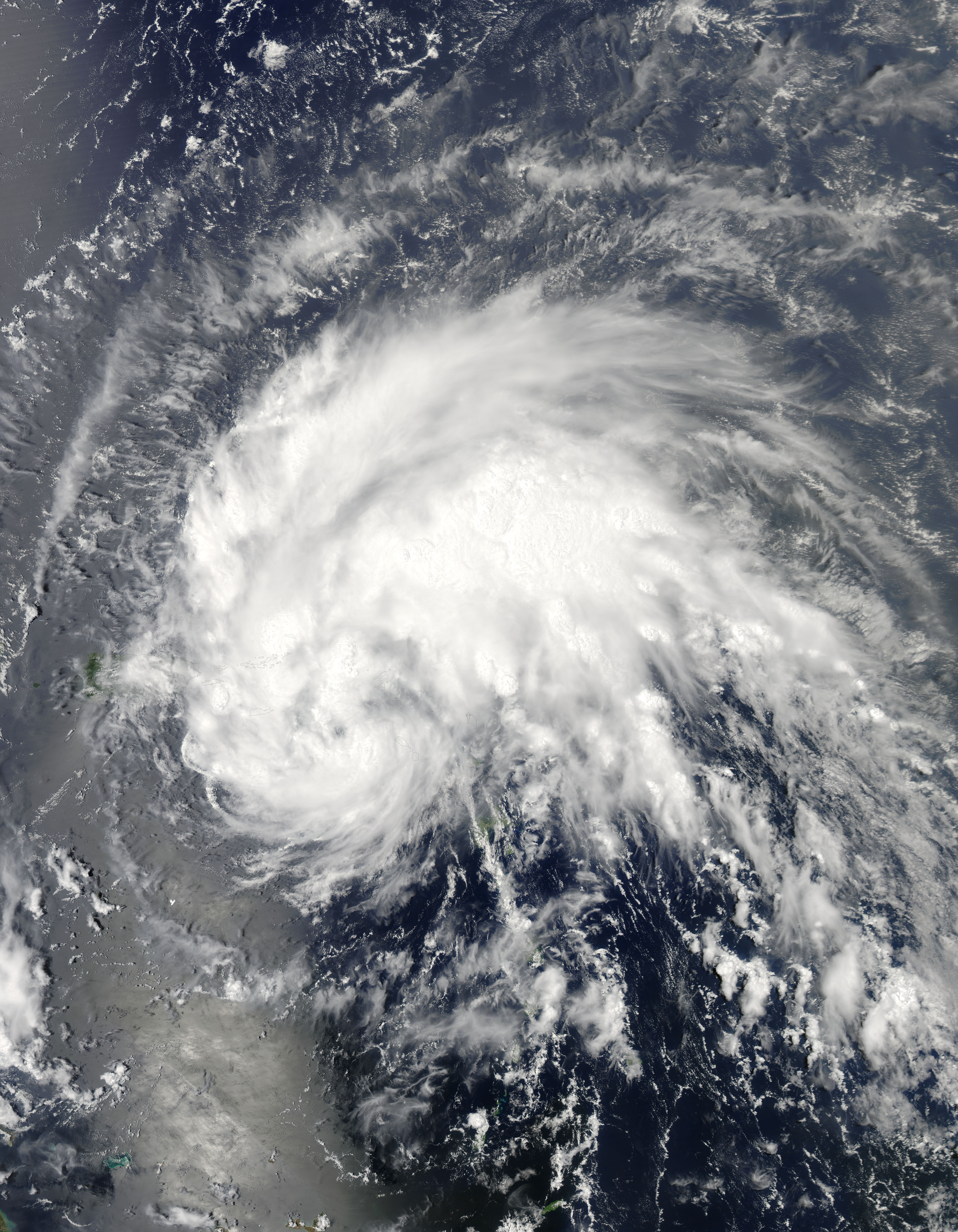
Irene, the early days


Calm Before the Storm

All the build-up for Hurricane Irene masks a deep-seated fear of the uncontrolled. If the storm devastates anyone, there will be Biblicists who say, like Job’s friends, that they must have sinned. Such pronouncements accompany nearly every natural disaster, as if God is huddled over the globe attempting to concoct more horrid and sinister ways to punish sinners. Natural disasters, however, have a way of effecting good and bad alike, just as the benevolent sunrise and the soft kiss of the rain (both according to someone mentioned in the Bible as being the son of someone important). But when danger looks down its barrel at human communities, they don’t neatly divide into sheep and goats. All people are a mix of virtuous and vice-ridden in varying ratios, and only the God of the Marquis de Sade would slam the iron maiden shut on all alike. The East Coast saw this earlier in the week when a benign earthquake shook our world. Barely had the ground stopped trembling before we were informed it was divine punishment. For what, no one could really say.

Interpreting nature according to the Bible is so misguided that it is difficult to know where to begin the critique. Yes, some biblical writers with a flare for the dramatic will claim that Yahweh was behind some disaster. Of course, they had no concept of science, in this case, meteorology, upon which to draw. Nature acts in unexpected ways because God has his fingers in the bowl. Even the early church gave up on that way of interpreting things as soon as natural processes could substitute for God. When religion because politicized, however, we started to see a backlash of backward thinking. It is a simple enough deception to utilize. People fear natural disasters, and the politically savvy know that few have any theological training. You can very easily encourage panicked masses to follow you if you claim to have read the Bible. From years of teaching it, I can certainly affirm that many clergy have not read the whole thing. Yet we use it as the barometer of divine wrath.

I, for one, am not worried about Hurricane Irene. As New Jersey has zigzagged in and out of the predicted track of the storm, it seems as though God may be wavering. If it misses the politically astute will say it is Chris Christies’ righteous policies of helping the wealthy at the expense of the poor. If it hits they will claim it is the sinfulness of the liberal camp that led the winds this way. It is all wind. Having written a book-length manuscript on weather in the Psalms, I know a fair bit about biblical perceptions of weather in the world of ancient Israel. Although over-zealous translators ill-informed about meteorology used to translate a word or two as “hurricane” the fact is that biblical Hebrew has no such word. Due to the rotational direction of the planet (about which they also did not know) hurricanes never hit Israel. Herein lies the basis of my confidence in the face of Irene. If the Bible doesn’t mention hurricanes, they can’t possibly exist. Literalists up and down the coast should heave a sigh of relief. But just in case, I have stockpiled several gallons of water, right next to my Bible.

Good morning, Irene -- if that is your real name.


Elephants and Earthquakes

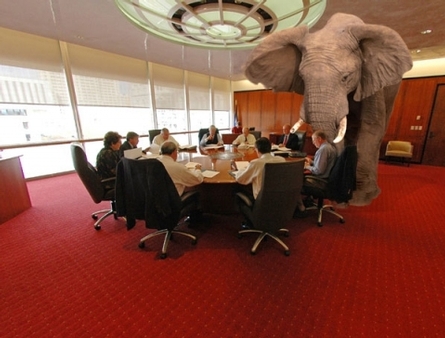
Two things happened yesterday that underscore the danger zone in which we currently live. The more dramatic event, an earthquake in central Virginia felt by many of us along the East Coast, had the social media tweeting for some time. The second event took the form of an editorial in the New Jersey Star-Ledger concerning GOP hopeful Jon Huntsman. Huntsman is quoted as saying, “The minute the Republican Party becomes the anti-science party, we have a huge problem.” An even larger problem is that the clock has moved well beyond the future tense. The editorial cites GOP candidates who routinely dismiss the science of global warming, evolution and other certainties as mere “data-fixing.” Perry and Bachmann have both decided they “don’t believe” in global warming. The elephant in the room, however, goes without mention.

The elephant in the room is religion, and it is a killer elephant, one that has a history of stomping those who attempt to control it. Politicians attack religion—whether or not it is bad juju makes no difference—at their eternal peril. In this “nation under God” (really under God) even a finger pointed towards conservative Christianity becomes a dagger plunged into a candidate’s chest. The Religious Right has been doing its homework for decades: no voice of reason can speak loudly enough to be heard over the songs of praise of the self-righteous. Reason, as scientists have discerned, cannot impact religious fervor. Belief can withstand a full-frontal attack from logic, reason—all that is sacred to rationality—and emerge without a scratch or dent. It is time that those in the middle and left took religious studies seriously.

Then I felt the earth move under my feet. As our house swayed and I checked on my daughter, I couldn’t believe I was feeling my third earthquake. I checked the web to see what in the world was going on. Interestingly, no witch doctors or Fundamentalist soothsayers were being consulted, but the scientists were. The news stories emerging minutes after the ground shook from Pittsburgh to Concord to Chapel Hill rang with the refrain, “scientists say.” Where was Rick Perry and his dowsing rods? Where was Michele Bachmann and her chicken bones? No, the religious war on science was switched off for a moment and those who felt afraid listened to those who actually knew what they were talking about. It was the elephant moving around the room, I say. It will only be a matter of time, however, before it is claimed that the people of Mineral, Virginia did something evil to prod an angry god into action.

Nobody felt anything, right?


Natural Born Killers

Every year I spend some time at the local 4-H fair. I grew up not knowing about 4-H, and the discovery of the organization as an adult has been an education for me. The local university extension that supports 4-H is Rutgers, although on campus you never hear about this rural aspect of the sophisticated world of academia. My daughter has been a member of the cat club for years, and although not a member myself, they are cordial and always offer me a chair (something no university has ever done) to spend a few hours in the shade while the kids showcase their skills and knowledge. Young potential is one of the few sources of optimism I find in a culture obsessed with selfish gain. My daughter’s cat club shares a tent with the alpacas, the epitome of herbivorous tranquility. With wool so soft as to be unbelievable, the alpacas with their long, graceful necks and huge brown eyes, look to be the least offensive creatures at the fair (except maybe the bunnies).

People in crowds, however, often shift dynamics and stress systems that would otherwise find their own balance. While many of the thousands of visitors at the 4-H fair are respectful of the animals, many others seem unaware that loud voices and running children and constant noise can stress even docile animals kept in small enclosures. Kids will find a cat in its cage and bark at it to get a reaction, and we all know the glass-tapping behavior that drives the reptiles wild. The fair has been part of my life for three years now and I’ve never noticed a stressed alpaca. They seem above it all. Yesterday, however, one stressed animal took on a surprisingly human behavior and began to bully a smaller alpaca in its pen. Apart from the caricatured spitting, the larger animal began licking and biting the smaller one, snaking its long neck after the smaller camelid’s head, biting its ears, and generally making its life miserable. The aggression lasted only a few minutes, but it felt to me like the tension of seeing bullies rough up a kid on the playground. The fairgoers felt uncomfortable, with some even wagging their fingers at the larger, aggressive animal.

Club members eventually stepped in to separate the fighting alpacas, and the poor, smaller animal kept trembling for several minutes after the attack. No blood was let; the assault was mostly psychological. I went out to get a snack at the food tent. When I returned I was relieved to see the smaller animal had been removed from the pen, given some space. Later I learned the young animal had died from the stress of the attack. I had seen the incident, and the violence had mostly been of an unrelenting display of dominance with a minimal physical attack. The aura of threat had created the stress. Saddened, I realized that a parable had unfolded before my naïve eyes that afternoon. Like all parables, only those with perceptive eyes may be able to see through the drama and get to the heart of the matter. If only people were as perceptive as even the innocent herbivores, perhaps such parables could finally come to an end. In the meantime, maybe I’ll watch the bunnies and forget what I read in Watership Down.

Just look the other way...


Livin’ On a Prayer

Am I the only one who finds it disturbing that Neo-Con politicians are naïve enough to believe that prayer will solve all our problems? Where was God during the Bush years, for crying out loud? And yet headline after headline speculates about Texas Governor Rick Perry’s prayer-fest scheduled for Saturday. What is more disturbing than the lack of imagination on the part of would-be candidates is the sheep-like following on the part of a large segment of the electorate. If God is going to step in and take charge, he had a great chance back on May 21 and refused to pick up the option. If God was behind politics, why did George W. Bush fail to find Osama Bin Laden? If God is running things, why are so many unemployed? Ah, but the religious pundits have a pat answer: America is a sinful nation. What it takes is religion, Texas-style.

In the many years I spent at Nashotah House, the majority of our students hailed from Texas. They represented the conservative hard-line and doctrinal strappadoes that caused much suffering but still somehow didn’t placate an angry God. That, of course, says more about Nashotah House than it does about Texas. Perhaps it is the logical evolution of a country that began with prominent ministers gleefully describing sinners in the hands of an angry God. Nearly three centuries later and we are being told God is still angry. Thou shalt not hold a grudge, eh? The problem seems less about sinful folks just trying to get by (a la Bon Jovi) than about politicians using their religion to get elected. Centuries down the road it will be the topic of some new series of History’s Mysteries that an affluent, educated, and generally forward-looking nation cluttered its governing bodies with politicians who believed the answer to complex problems is to bow their heads and tell God how to fix it. Are we really half-way there, or have we spread our arms to embrace Jonathan Edwards once again?

In MSNBC’s article on Rick Perry’s prayer day, it is noted that the book of Joel is cited as an inspiration for the event. For such a brief book, Joel has been at the forefront of a ton of damage wrought by prooftexters. Joel wrote three brief chapters about a locust infestation for which the suggested response was prayer. One wonders if Rick Perry simply prays when the termites begin to gnaw on his expensive home, or does he call Ortho instead? Joel was truly old school. The locusts in his day meant literal mass-starvation. No chemical romance to solve the problem there. Unfortunately we don’t know how that one turned out—Joel doesn’t say. I’m just glad that Governor Perry hadn’t been reading Psalm 137 when inspiration struck, and can I get an amen from the pro-lifers on that?

Ricky used to work on the docks?

P.S. Matthew 6.5.


After the Carapture

When my wife showed me the first news article about “Carmageddon” I shrugged my shoulders with a noncommittal “meh.” Now that the nation has somehow managed to survive the two-day closure of a highway in Los Angeles, commentators are wondering what this reveals about our cardolatry. As a nation, the United States worships cars. Last week predictions were made that traffic jams of biblical proportions would disrupt the second largest city in the country and that not even God would be able to sort out the mess. In Norway, in the meantime, a right-wing conservative Christian decided to tip the scales of justice by becoming a mass murderer. Why do we glory in our own destruction?

Human beings only developed what we recognize as religion after the advent of the city. Cities require temples and temples require religious infrastructure. Priests had much to gain in antiquity by proclaiming the wrath of God—the angrier the deity the more offerings that roll in and the wealthier priests become. Religion has evolved over the five-and-a-half-thousand years of civilization, but it has never had a true conversion. It is one among many ways of coping with the stresses of becoming an urban population. We live in cities and we have traffic jams. We live in cities and learn from those far different from us. We live in cities and bomb our enemies in the belief that God finds those far different from us evil. Apparently God approves of the killing of teenagers. Just ask old Ramesses about that one.

Norway is among the most non-violent and secular cultures in the world. Los Angeles is a liberal city among one of the most religious cultures on earth. They experience the wrath of God in different ways, according to the media. Cities gave us religion. When we had had religion long enough, cities began to withdraw from that particular approach to life. When we can’t get our cars where we want, it is the wrath of God. When we can’t get the government to follow our personal religious quibbles, we take the prerogative to introduce the wrath of God. We long for the end of what we have created. No matter how we achieve such destruction, we’ll find religion planted squarely in the middle.

What's coming to your neighborhood?


Floods and Fairytales

Never mind that the Bible gives only a cursory description of “Noah’s ark.” Never mind that the story in Genesis is clearly derivative from Mesopotamian originals such as the epics of Ziusudra, Atrahasis, and Gilgamesh (the Utnapishtim version). Never mind that all species of animals cannot survive within a single, extremely limited biosphere without evolving afterward into the diversity that the world currently hosts, even counting extinctions. Never mind that not enough water exists (with apologies to Kevin Costner) to cover all landforms without every mountain being pounded flat and stacked neatly on top of the ocean floor. In short, never mind reality—people will continue to build replicas of Noah’s ark. As a literary trope the ark has proved invaluable; many of my posts demonstrate how it appears and reappears in books and movies as a symbol of human irresponsibility. And yet, in order to demonstrate the veracity of an ancient myth, we continue to build fundamentalist arks.

Yesterday my wife pointed me to a msnbc story of an ark being built—and sailed—in the Netherlands. Certainly those in the “low countries” have global warming to deal with more immediately that those on higher (geologically, not morally, speaking) ground, and the engineer of this particular ark does not strike the viewer as a rabid literalist (he is a little too unkempt for that, and his shirt is not white and he wears no tie). John Huibers, however, worries about a more localized flood in the Netherlands. The ark may be overkill since polar bears, koala bears and panda bears are rare in Amsterdam, at least when one is not medicated. Arks, however, make great tourist attractions.

In Hong Kong the Kwok brothers built an ark replica in 2009. Greenpeace has one in Istanbul. A Christian theme-park featuring a full-size ark is under development in Kentucky, and just two years ago I drove past a roadside ark being built in Maryland. Most of these arks, interestingly, follow the design in the Sun Pictures’ production In Search of Noah’s Ark rather than the more traditional, mythic design in my children’s Bible. It is a natural human tendency to mistake form for substance. The story of Noah is a cautionary tale that has taken on daunting real-life implications in our treatment of our planet. Water is the signature of life, but for us land-dwellers too much is not a good thing. Thankfully, should a flood come, there will soon be enough arks around the world that would-be Noahs may find themselves in a buyers’ market.

Still my favorite ark


Now Locusts?

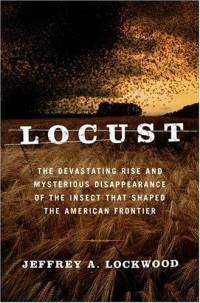
With the same page of the newspaper lamenting flooding in Iowa and drought in Florida, it seems that nature has turned against us in an almost biblical way. A more biblical plague than locusts would be hard to conceive, however, so when my wife pointed me to a current video of a locust invasion in Russia, I took notice. In the United States we seldom consider locusts since they have largely ceased to be a problem with the extinction of the Rocky Mountain locust for unknown reasons, last century. One of the more interesting books I’ve read over the last few years was Jeffrey Alan Lockwood’s Locust: The Devastating Rise and Mysterious Disappearance of the Insect that Shaped the American Frontier. Because the locust is not an American problem, biblical literalists like to transform biblical locusts into something else. The transformation is not necessary. We’ve eliminated the large predators from our planet, and the small ones often go unnoticed.

Each year as I lecture on the book of Joel, I spend a little time with locusts. The Asian varieties of locusts tend to reproduce rapidly and prolifically in the desert. Quickly exhausting the sparse food supply, they take to the air and fly for, literally, greener pastures. They can fly for three days without stopping which means they are suddenly there and eating everything. They look like divine judgment. Each locust eats its own body weight in green matter daily, and when a swarm can contain over 100 billion locusts, that can add up to 50,000 tons of food a day. Like poorly mannered house guests, locusts stay until all the food is gone, then leave. They are fully capable of devastating entire nations.

An actual biblical locust, vintage 1915.

Hal Lindsey famously converted Joel’s locusts into military helicopters, claiming that they presaged the end times. Decades later we are still here and so are, apparently, the locusts. They are part of evolution’s great machinery. The biblical view that we are the purpose behind that machinery has caused endless problems for the ecosystem. Locusts are a problem because they consume the food that we would otherwise eat or waste. In the struggle for survival, as Joel attests, it is not always the biggest that win.


Vulcan’s Anvil

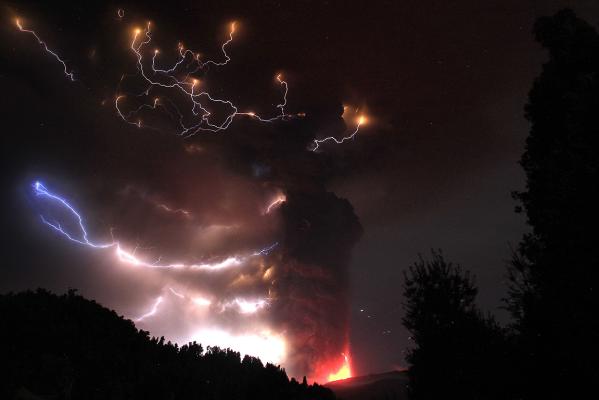
Volcanoes have long been the prerogative of the gods. Saturday’s eruption in the Puyehue-Cordon Caulle volcanic complex in southern Chile joins last month’s outburst from Grimsvotn in Iceland for divine fire-storms. In the days before geology, the only explanation for these impressive explosions was the gods. The concept of Hell was fairly late in the development of ancient Near Eastern religions, otherwise volcanoes might have been labeled as Hell breaking loose, literally. Many historic eruptions have influenced the course of history, most notably Thera and Vesuvius. Ancients would have been hard pressed to see such spectacular—and obviously divine—displays as “natural.” Indeed, the concept of “natural” events was itself slow in evolving since the gods were always lurking in the dark corners of the evolving human psyche.

Fortunately, beyond disrupting some air travel, these two latest outbursts have been fairly benign from a human point of view. This too is an evolved perspective since we tend to see ourselves as the overlords of the natural world. Watching industrialists poke new orifices in the planet’s crust for personal gain even in rare and delicately balanced ecosystems, who can doubt that we are masters of our own domain? Much of the misdirected sense of such entitlement comes from interpreting the Bible as declaring the planet ours from the days of mythical Eden. Some of the more perverse applications of this principle include those who try to force the hand of God into sending the Second Coming due to their creating conditions appropriate to an apocalypse. Others declare that since said Second Coming is nigh, why not trash the environment? We won’t be needing it much longer.

Apart from the obviously failure of logic here, the anthropocentric view is also misguided. The earth was not created for us—we simply evolved on it. The corollary also stands true: long after any human intelligence is here to read these words, our planet will continue on its weary track around the sun until it blossoms into a red giant and consumes our final cinders. There are no horsemen in the clouds, but this planet is all that we have (even the space station depends upon it) and when we grow too arrogant, the planet unconsciously gives us a spectacular display to remind us that we are mere guests upon this globe. We need to treat it with respect.


Eye in the Sky

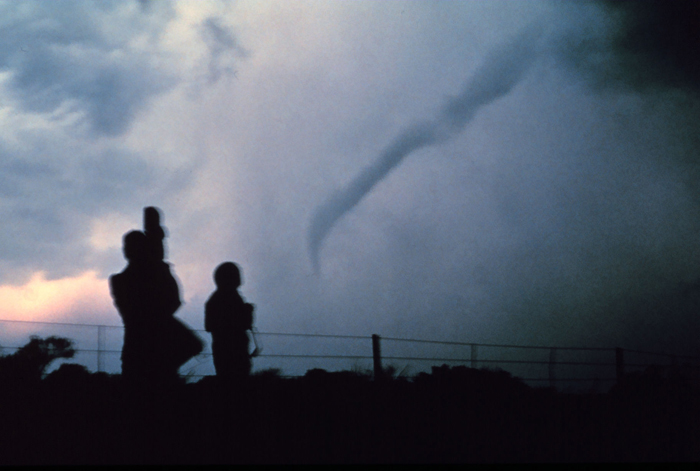
No one is safe. The calamitous tornadoes that have been devastating the south are indeed tragic. Some years ago while working on my weather in the Psalms book, I experienced a brooding fascination with tornadoes. Since I was living in Wisconsin at the time, this was natural enough, but the facet that always gleamed the darkest was the arbitrariness of it all. Tornadoes are notorious for destroying one building while leaving the one next door unharmed in a rapture-like abandon. And there are those who claim the righteous survive while others soberly state the good die young. The fact is life always ends in death, and if tornadoes don’t get you, earthquakes, comets, or microbes will. Our religions help us cope with the fact that consciousness leads to a sense of victimization—things are always after us. Religions teach us that something (God, spirits, Tao, karma) will balance it out. We so hate to see the bad guys win.

Tornadic devastation does have the divine edge, however. Apart from the randomness are the celestial origin, the sharp distinction between those reaped and those sown, and, of course, the angry brow of the frowning wall cloud. What is purely a natural event feels like punishment from our species-specific view. And who doles out the punishment if not a parent stronger than the cowering children? Does religion reassure in this case? The one who is begged for comfort is the same one who sent the storm. As humans the best we can do is help those who are within reach.

The photos emerging from Joplin, Missouri are heart-rending. The more we build the more we stand to lose. Long before European settlers laid claims to this land, cool, dry air masses tumbling over the Rocky Mountains collided violently with warm, moist air flowing in from the Gulf of Mexico. For as long as prevailing weather patterns have been established, there have been tornadoes. Believing in God’s protection and blessing we build on dangerous fault lines, in drought-stricken plains, and in the shadows of biding volcanoes. Disasters are a matter of perspective, for they are as natural as the air we breathe. Perspective transforms them to divine chastening and us into helpless children.

Coming for you?


Of the Zombies, By the Zombies, For the Zombies

In what is sure to be a controversial move, the Center for Disease Control has posted an official government blog post entitled “Preparedness 101: Zombie Apocalypse.” (Be warned, if you click on this link it may be considerable time before the page loads—it has been receiving a tremendous number of hits.) Written by Ali S. Khan, the Assistant Surgeon General and head of the CDC, the article is actually about hurricane preparedness, but with zombie furor being what it is, many on the Internet are taking the warning seriously. Literally even. Citing the tsunami in Japan and the concerns for leaking radiation, the article begins with a lighthearted fear-fest that then reveals the actual concern. Humor in the government? This is something we should all encourage!

The analogue with the current rapture fever was immediately obvious. I grew up in terror of the rapture, but when I began to take courses on the Bible from scholars who knew about apocalyptic literature, its context, and what it was intended to do, I realized that the rapture was invented in the nineteenth century by evangelists with no critical training, misreading the book of Revelation. As much as we like to break history into discrete units, time simply keeps flowing and the current of fear generated in the nineteenth gushed into the twentieth century culminating in the birth of the Christian fundamentalist movement. For many people in the twenty-first century, fundamentalism and Roman Catholicism are the two ancient strands of Christianity that legitimately lay claim to the title. At least half of this history is backward.

The Bible itself, when read in context, shows the errors of the rapture-hungry. The idea is a blend of obscure bits of Paul’s letters, mixed into Revelation and stirred vigorously. Then half-baked. The Bible does not give us a rapture. The CDC does not give us a zombie apocalypse. We know where the myth of zombies originates (I have posted on the topic before) and we know zombies are as fictional as griffons and centaurs. Nevertheless, faith springs eternal. Those dissatisfied with all that life has to offer turn to zombies for an equalizingly grim future for all humankind. It’s all gonna rot, baby. Except, of course, for those who’ve been raptured before it happens. When the zombies fail to show up after Saturday’s non-event, all of us will feel pretty silly just looking at each other as Ali S. Khan comes up with his next zinger.

The author, upon reading the CDC blog.