Prophetic Breakfast

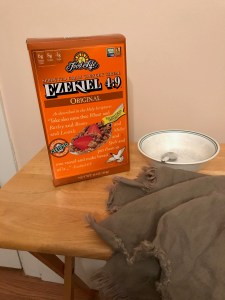
The irony doesn’t escape me—and why does irony always try to do that, anyway?—that Ezekiel 4:9 is about famine.  I’ve posted about the breakfast cereals from Food for Life (yet more irony, from Corona, California) before, but during this time of shortages at the local grocery stores, famine is an apt topic.  I don’t mean to underplay famine.  Death by starvation is something nobody should have to face, but looking ahead, who knows?  The reason I was eating Ezekiel 4:9 is that my usual cereal brand was sold out.  Empty shelves and the prophet seem symbolic, don’t you think?  The box quotes the verse as a kind of health-food recipe, but the point was, in context, that this was not something you’d normally want to eat.  This was food for hard times.

Ezekiel, you see, lived through the collapse of his own society.  In his case it wasn’t because of a virus, but imperial ambition.  The Babylonian Empire under Nebuchadnezzar was expanding and Judah was in the way.  The city was captured and Ezekiel, a priest, was exiled.  His symbolic action of eating poor food was to show people they ought to plan on this as “the new normal.”  Even now we hear people saying, “when things get back to normal…” but I also wonder if that will happen.  Collapse can occur slowly.  The thing about reading history is that we see centuries compressed into a few hundred pages.  Things take time.  Like restocking toilet paper.  Meanwhile empires crumble.

The Babylonian Empire didn’t last long.  Oh, it was long enough to mean some people knew nothing else, but looking back we can see that it held sway for decades rather than centuries.  In the middle of his book, Ezekiel changes his tune.  Once the temple is destroyed, when the worst has happened, he starts looking for a better future.  Many people have been under serious strain since November 2016.  Anxiety levels have been consistently high for damaging lengths of time.  I suspect the book of Revelation hasn’t been so well thumbed for decades.  The seventies were also apocalyptic times, as I recall.  Although we’re living through history, we each do it on the ground.  We experience it in our own little lives.  These seismic shifts can’t help but impact us.  It helps me to act like some things are normal.  I still get out of bed early.  I stumble into the kitchen and fumble on the light.  I settle down for breakfast with a prophet and wait.


New Habits

We are a family of readers.  Still, during the pandemic things change.  Not only is my wife working from home, my daughter is also here, doing the same.  This seemed to be the most logical thing, given that her housemates weren’t working from home, and who needs pointless potential exposure?  What became clear to all of us is that pandemic normal was actually close to our normal normal.  I mean, I don’t get out as much on weekends now, but other than the panic, Monday through Friday are pretty much the same as always.  Awake obscenely early.  Start work before sunrise.  Finish work, eat supper, go to bed.  The real change has been on my reading habits.

When things are “normal” (if that word can ever apply to me), during the time my wife drives home from work, I read.  I also read in the morning and before going to bed, but that latter doesn’t last long if I’m tired.  Now, however, we’re all here and after work is over family time begins.  I don’t begrudge this for a nanosecond, but it does affect my reading habits.  You see, self-isolation has been a way of life for me long before the pandemic began.  Not necessarily because I wanted it this way, but I have always tried to preserve time for books.  I don’t have the reading time of a professor, so I have to carve it out of personal time.  In situations like this even bibliophiles have to admit that people are more important than books.  Still, with only essential businesses open, and Amazon delivering only essential items, books have fallen between the cracks.  Some of us consider them essential.

My daughter said the other day that not being able to buy books was worrying.  Indeed it is.  We’re pretty well stocked here for reading material.  I’ve got plenty of books I want to read, but I lack the time.  Also, one of my reading challenges specifies the particular types of books I need to target, including recent ones.  How am I to get them?  Our local library is closed.  As are the bookstores.  It’s beginning to feel like an episode of The Twilight Zone—being isolated but not having access to new books.  At work they’re suggesting which television shows to binge watch during the long hours of enforced alone time.  Me, I standing in front of my bookshelves staring in wonder and indecision.  Pandemic or no pandemic, it is time to read.


The Essentials

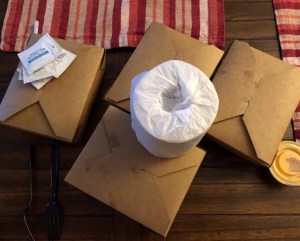
The current crisis, in my mind, dates to Thursday, March 12.  That particular day, at least in my socially distant location, the pandemic became a panic.  Decisions were made to have employees work remotely.  Zoom or Skype meetings were substituted for the face-to-face variety.  Church services were cancelled.  There was a run on toilet paper.  This final aspect has me really vexed.  Why toilet paper?  Experts say if we kept to our usual buying habits there would be plenty for everyone, but the survivalist mentality kicked in and people began hoarding.  If the apocalypse was coming, they wanted to go down fighting with clean underwear on.  We were in Ithaca the next day to see my daughter.  We ordered out from a local restaurant.  When we got home we found a role of new toilet paper in the top of the bag.

According to my amateur dating technique, we’ve been in this state for 13 days now.  Toilet paper, tissues, and paper towels are nowhere to be found.  I looked on Amazon.  They can get you toilet paper, but you’ll need to wait until May.  Why?  Ironically, because it’s being shipped from China.  Yes, the nation where the pandemic erupted has toilet paper aplenty.  Here in the greatest [sic] nation in the world, there’s none to be found.  What does this tell us about a country that self-identifies as “Christian”?  Whatever happened to “if someone demands your coat, give them your shirt also”?  Or perhaps more to the point, “turn the other cheek”?  How has a nation of Bible believers responded to a crisis?  By becoming selfish.  By stockpiling toilet paper.

I’ve spent a lot of time camping.  I’m fairly comfortable with the ways of nature.  Like most other people I prefer a nice, private restroom with all the accoutrements, but if bears can do it in the woods, why can’t we?  I have my Boy Scout guide right here.  But it suggests using toilet paper.  If books could be ordered, I suspect How To Poop [this is the family friendly version] in the Woods would be a current bestseller.  Trump says he wants everyone back to work by Easter, but the toilet paper ordered from Asia won’t even be here by then.  And will offices have access to some secret stash that only those who buy in bulk can find?  Hoarding makes any crisis worse, but this particular one seems especially mean spirited.  It makes me realize just how great America has been made.


All Been Ready

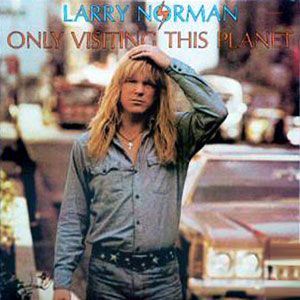
As the pandemic stretches on and getting things in stores—or even from Amazon—isn’t assured, my thoughts go back to Larry Norman.  Specifically to his song “I Wish We’d All Been Ready.”  Made famous for many by its use in the 1972 rapture film A Thief in the Night, the song recounts the state of those “left behind” when a piece of bread could be exchanged for a bag of gold.  The lyrics are haunting in their sincerity.  Here in Pennsylvania, as in neighboring New York, non-essential businesses have closed, per order of the governors.  Periodic forays to the grocery store show the empty shelves of panic buying.  Norman’s song rings in my ears.  Only this isn’t a biblical plague.  We’re just acting like it.

No doubt technology has been of great use in keeping us aware.  I do wonder, however, at how panics seem to come more quickly now.  Slowing down manufacturing will have a knock-on effect for things down the road, of course.  Right now we’re all wondering how we’re going to get through yet another day just sitting in the house.  Meanwhile the lawn is beginning to grow and I’m going to have to get out there with the push mower soon.  I’d been planning on shopping for a better one this year, but plans seem to have suddenly pooled at my feet.  What is essential travel anyway?  Does it count a trip to the big box hardware store to buy a reel mower?  Should I even bother about the lawn when there’s no toilet paper within a fifty-mile radius?  I wish we’d all been ready.

The funny thing about all this is how it makes us focus on the here and now.  While we’re waiting for things to “get back to normal” we’re being told nobody knows how long this might last and we should plan to hunker down for some time.  The International Meeting of the Society of Biblical Literature (being held in Australia this year) was cancelled.  Many of us in the discipline have had our lives revolving around the Annual Meeting in November for all of our adulthood.  If that meeting’s cancelled how will we even know when Thanksgiving comes?  Can it even come without the crowds at the Macy’s parade?  Best not to look too far ahead, I guess.  The rapture is a fictional construct, but the effects of a pandemic are eerily similar.  I do wish all of us had been ready.


Running with Scissors

I suspect that, like many, I’ve come to see the coronavirus as an indictment of political foolishness.  Electing unqualified officials feels like all fun and games until a crisis emerges and the leadership has no idea what to do.  The Trump administration announced itself as anti-science and began breaking down the carefully built institutions that made our way of life possible.  His fans cheered.  Now they’re huddled in their bunkers with their stockpiled Purelle and toilet paper and Fox News on 24/7.  It’s a good thing that a stable genius is in charge.  He’s trying to get Germany to move production of the most promising vaccine to the land of his anti-vaccers, something Germany’s reluctant to do because 45 has a reputation internationally.  It seems he’s made America infectious again.

As those of us with brain stems try to find some way to comfort those we know and love, we keep coming back to the fact that this kind of pandemic is new in the internet-linked world.  No matter what you try to do right now you have to assess whether it involves meeting other people, potentially infected, and whether it’s worth the risk.  I had to go to a grocery store and Target over the weekend.  I’ve never seen so many empty shelves before.  This is what panic looks like.  The difference is that even W., who will never be considered among the smartest of presidents, recognized that institutions are there for a reason.  America’s greatness grew slowly by building on what’d gone before.  Tearing everything down in a narcissistic tantrum and claiming all we need to do is adore our autocrat, we now see how great this country has become.  Greatly afraid, that is.

Coronavirus closed schools more effectively than Betsy DeVos.  Businesses are reeling as the businessman president fumbles with facts and figures he can’t understand and can’t admit that science is real because, well, global warming and all that.  Internationally people are looking for solid leadership and finding that the autocrats they’ve elected have no idea what to do.  Self-aggrandizement is no basis for leadership.  The Republican senate had their chance just two months ago, but they were banking on their personal bank accounts, it seems.  Even in the face of this crisis Mitch McConnell persists on insisting it’a all a game.  As a child raised in a Republican home I was taught never to run with scissors.  But then, I had all my vaccines.  Mad dictator’s disease hadn’t yet been released upon the world.


Travel Ban

I’m not at home.  I know in the current crisis that sounds like heresy, but I can honestly say that getting out of the usual routine where COVID-19 is all you hear about feels right.  More and more organizations are instituting work from home policies—many of them mandatory.  I’ve worked from home for going on two years now.  You need to get out a bit.  I know travel isn’t recommended, but I’m really not afraid to die.  Besides, I put a box of latex gloves in the car and when we stopped for a restroom break, wore them until they could be safely removed.  Exposed surfaces in the rest area were being continually wiped down.  Don’t get me wrong—for an introvert like me working at home is fine.  It’s just the idea of feeling like this virus is some zombie apocalypse happening just outside my door that I needed to dispel.

When I told a friend I was no longer going to be commuting on a regular basis he said if it were him he’d only ever buy sweatpants again.  Now that my reality is life with my wife being the only person I regularly see, I’m beginning to realize just how much our clothes purchases are for impressing others.  My haberdashery is akin to that of Henry David Thoreau; I wear clothes until they’re no longer functional.  They can be badly out of date but they still work.  The fashion industry is built on pride.  To put it in the words of my old friend Qohelet, vanity.  We want others to see what we’re wearing.  If we’re still donning last year’s gay apparel we’re not playing the game.  Never mind those of us whose wardrobes could be carbon-dated.  The pandemic can be revealing.

So I’m away from home for what is really the first time in months.  I had to stop in the grocery store for a few things.  Only one person I saw was wearing a mask, but I was wearing prophylactics, so who’s going to cast the first stone?  Many shelves were bare.  The CDC has become our new gospel provider.  I’m limiting my outside exposure.  Driving door to door, greeting no-one along the way (that actually is the gospel, but substitute the walking for the driving part).  I know when this weekend’s over I’ll be back to my cloistered existence as the rest of the world tries to get used to the loneliness of the sweatpants crowd.  If you’re one of them take it from me—the rest of the world is still out there.


The Wind and Trees

Being invisible, the wind is easily forgotten.  Until it begins to really blow.  I don’t know about where you are, but this past week was a very windy one around here.  Thursday especially.  My office has a couple of windows and each view shows different kinds of trees.  The south window reveals only a stolid oak or maple in a neighboring back yard a few doors down.  I don’t know this neighbor and I’ve never been close enough to get a good look at his deciduous tree.  Its leaves are down, of course, and although its branches moved in Thursday’s gusts there was never really a question of it coming down.  Trunk stout and sturdy, it has stood through many windstorms and will likely see many more.

My west window opens to some lofty pines across the street.  At least sixty feet tall, their trunks, like many coniferous species, stand fairly straight.  The way these trees bent in the wind worried me as a home owner.  And as a human being.  You see, I have done some woodwork.  A guy with as many books as we have either runs himself broke on buying bookshelves or learns to make his own.  I’ve spent plenty of my money on one-inch pine boards—the standard shelving material.  The 1 x 10, which is really 3/4 of an inch by 9 and 3/4, is the usual bookshelf board.  Not even an inch thick, it isn’t easily bent.  Incorporated into the trunk of a tree, it’s absolutely immobile if I press against it.  I’ve tried to move a mature tree trunk.  Even a good-size branch.  Mere humans can’t.  And yet I see these very same trunks swaying like they’re waltzing with the wind.

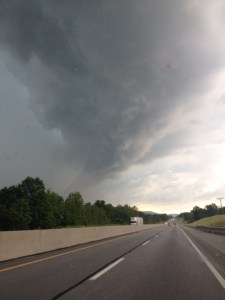
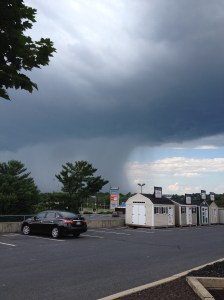
No wonder the weather has always been associated with the gods.  I mean, on Thursday last I saw these giants in the earth bending in arborescent obeisance.  The wind is easily forgotten.  As I worked on Weathering the Psalms, I easily sketched out the chapters on rain, lightning, and even snow.  But wind.  If you exegete a storm often the most damaging aspect is the wind.  Hurricanes and tornadoes damage due to their great wind velocity (the former also from impressive rain dumps).  What we call EF5 (or F5) tornadoes are so violent that any instrument directly in their path can’t survive its onslaught.  Winds swirling over 300 miles per hour are pretty much incomprehensible.  And yet when they dissipate, those violent winds are once again invisible.  Isn’t that just like the gods?


New Religion

Republicanism, it seems to me, has become its own religion.  It started off when the GOP married evangelical Christianity, but the offspring of that unholy union has become a religion all on its own.  It certainly doesn’t adhere to classical Republican principles (tariffs?  Really?).  Nor does it adhere to Evangelical standards (turn the other cheek?  Love thy neighbor as thyself?).  Like most blendings, this new religion has some elements of each parent and it has no lack of fanatic supporters.  The traditional Evangelical, for example, considered the Devil “the father of lies”—one of his biblical titles.  The Republican, however, considers pathological lying to be signs of messiahood.  There’s a tiny disjunction here, but it proves that what we’ve got is the birth of a new religion.

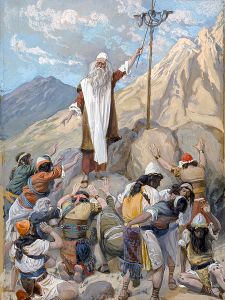
Books and articles have begun to appear on how Evangelicalism has changed.  I don’t believe it’s so much a matter of Evangelicalism evolving as it is Republicanism fulfilling the need for intolerant religion.  In every culture there are those who want to go back to the day of Moses and golden calves and stoning those you hate.  It’s a little more difficult these days, what with secular laws that protect the rights of others, but the GOP has found a way.  My heart goes out to old fashioned Republicans, it really does.  Fiscal conservatives have found themselves in church with a bunch of people with whom they agree on very little.  They have no choice, for their political party has been sanctified.  And the only thing worse than an Evangelical is a bleeding-heart liberal.  Next thing you know the Democrats will start quoting the Bible at you.

The lying thing really takes some wrapping my head around, though.  I’ve always said nobody believes in a religion they know to be false.  This new development challenges that, if it doesn’t challenge the very idea of religion itself.  Republicanism is a religion based solidly on bearing false witness.  Self-aware of it, even.  You can’t tell me that these educated white men don’t know a criminal activity when they see one.  That they can’t read, and reason, and trust their intellect (although it takes the back seat to their overwrought emotions).  Sound like a religion to you?  It sure does to me.  It’s been coming a long time, but it took the last three years (the tradition length of Jesus’ ministry, it’s often said) for this to dawn on me.  The religion of the lying messiah.  I’ve got to wonder what kind of future it’s got.  I smell the fires rekindling in the burnt over district and wonder who’s for dinner.


The Job of Theodicy

Most people, I suspect, don’t think about diseases until someone they know is afflicted.  It’s natural enough to try to avoid thinking of the negative, and I know that I’ve always felt overwhelmed when it came to worthy causes seeking donations.  I surprised myself, therefore, but putting up a Facebook fundraiser for the Crohn’s and Colitis Foundation.  Someone close to me was diagnosed with the disease, and seeing suffering first-hand has a way of changing your perspective.  You want to do whatever you can to help.  Instead of feeling completely at the mercy of chance, I put my fundraiser online and I’m hoping for the best.  A doctor I know informed me that foundations for diseases are among the most helpful websites for those with the condition.

In my mind, as in that of many others, disease is intricately tied in with theodicy—the problem of innocent suffering in the presence of a God supposed to be good.  Theodicy is frequently the first stop on the road to non-belief, as a careful reading of many of the “new atheists” reveals.  No theologian has devised a satisfying theodicy.  The question always comes down to the fact that a universe without debilitating diseases can be imagined by those of us with feeble human abilities, so why not by an almighty being with no limitations?  Human evil can be attributed to free will.  Natural evil, such as diseases not keyed to behaviors that lead to them, is a different matter.  Often we’re left to our own human devices against conditions we don’t fully understand.

Facebook may not be the best place to post a fundraiser, however, it has a reach far greater than this simple blog, and the Crohn’s and Colitis Foundation page helps to get such fundraisers set up.  For all of its problems, Facebook does provide a way to bring people together for common causes.  Seeing someone we know suffering is never easy.  And there are so many worthy causes out there.  The situation naturally reminds me of the book of Job.  People who turn to it looking for an answer to why innocent people suffer (Job is presented as perfect in the prologue to the story) come away disappointed.  No reason is given and the question of theodicy is left unanswered beyond the claim that human understanding is limited.  God may ask how Job has the boldness to question divine action, but there’s no suggestion that he shouldn’t try to find relief with his broken potshard.  My Facebook fundraiser is my potshard, I guess, although the larger questions still remain.


From Above

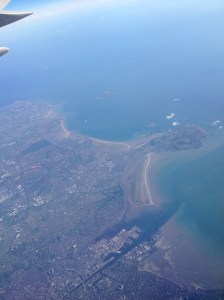
You can see a lot from 35,000 feet.  Alan Parsons Project’s “Eye in the Sky” comes back to me, although I’d never make so bold as to associate myself with Horus.  As I’m preparing for my return flight, I wonder what I might see.  Not much, I expect, since all the window seats were taken and I’ll be sitting in the middle section.  I like to see where I’m going.  On the way over, for example, about three hours into the flight, we were over the Grand Banks.  I’d just finished Brian Fagan’s Fishing, and the Grand Banks were on my mind.  The last land I saw was Cape Cod, although from the monitor I knew we’d passed near Nova Scotia and Newfoundland.   In other words, there was nothing but the north Atlantic beneath us.  We were hundreds of miles from land.  Then I saw it.

Was that an oil platform all the way out here?  I didn’t have enough time to wake my napping phone for a picture, but there was clearly a large platform and a nearby tanker.  Later I checked and, sure enough, Hibernia, the world’s largest oil platform is smack-dab in the middle of the Grand Banks.  A number of thoughts occurred.  We’d been flying for hours, and a platform this far out would make a great setting for a horror story.  (Okay, so my thoughts move in predictable directions sometimes.)  Another thought was this: why are we so dependent on petroleum that we’re all the way out here drilling for a polluting, non-renewable resource?  Is it not for profit margin alone?  This was an epiphany for me.

I still carry a little cautious hope around in a hidden pocket that there might be some places left for humanity to explore, but not exploit.  Fagan mentioned in his book that we’d trawled much of the ocean floor.  Although I admiring the engineering that could plant a platform in the stormy Atlantic, I still can’t help but feel a little bit let down that we’ve driven yet another stake into the unexplored world.  We really know so little about the oceans (apart from the fact that many creatures that live there can be eaten and otherwise exploited).  Our lack of scientific knowledge is addressed by great wells drilled down to draw out pollutants to grease the wheels of capitalism.  Yes, I was using fossil fuel in flying.  I’d be happy with solar-powered planes, if they existed (they’re above the clouds much of the time, so it would seem worth dreaming about).  In the meantime, however, the earth just keeps getting smaller and smaller.  Even from 35,000 feet.


Idol Thoughts

The Enlightenment led, in some respects, to a condescending view of the past.  Historians know, for example, that the basics of science and engineering predate the Middle Ages.  Just consider the pyramids.  The people of antiquity were anything but naive.  We tend to think in Whiggish ways, despite our awareness of past achievement.  Perhaps it’s because we misunderstand past religious thought.  After all, the Enlightenment is generally understood as freeing the human race from “superstition” and leading to empiricism.  Empirical thinking had been there all along, of course, only it hadn’t been the sole way of making sense of the world.  Consider, for example, the “idol.”  In the biblical world food was left for statues of the gods, but it seems to me that people were smart enough to figure out that images didn’t actually eat it.

Elaborate rituals, of course, attended the making of gods.  These symbolic actions were said to make this object more than just a piece of wood, stone, or metal.  Assuming it required food, however, strains credulity.  The symbolic nature of the offering, however, was accepted.  The same is likely true of the offering of food to the deceased.  Even in ancient Israel the time-honored practice of leaving sustenance for the dead was carried out.  Was this symbolic rather than naive?  I tend to think so.  Reason told the ancients that the dead ceased to move, and therefore to eat and drink.  It was nevertheless a sign of respect to leave food, which, in a world of frequent malnutrition, could have been put to better use.  It was a symbolic sacrifice.

Surely they didn’t understand the fine interactions of nature that require microscopes and telescopes to see, but their knowledge relied on the divine world to address what remained mysterious.  We still, for example, have difficulty predicting weather.  We understand that the atmosphere is subject to fluid dynamics and countless minuscule factors that contribute to it.  We’re also aware that global warming is a reality.  Like the ancients we can choose to ignore, or pretend that the obvious doesn’t exist.  Like them, we do so for a reason.  Our political leaders are unwilling to stand in the way of the wealthy.  Reelection and all its perquisites—including personal enrichment—are simply too enticing.  Empirical evidence is worth ignoring for such emoluments.  When we feel tempted to assert our superiority over those of past ages, we might pause to consider that we still offer food to idols.  And get just as much in return.


Bradbury’s Dream

There’s a Ray Bradbury story—I can’t recall the title, but with the Internet that’s just a lame excuse—where explorers on Venus are being driven insane by the constant tapping of rain on their helmets.  They try to concentrate on discovery, but the distraction becomes too much for them.  Living in Pennsylvania has been a bit like that.  I grew up in the state and I knew it rained a lot.  Here in the eastern end we’ve hardly since the sun since March.  And when you’ve got a leak in your roof that only compounds the problem.  If I were weathering the Psalms, mine would be a lament, I’m afraid.  You see, the ground’s squishy around here.  Mud all over the place.  Rivers have been running so high that they’re thinking about changing their courses.  And still it rains.

There’s a lesson to be taken away from all this.  The fact that we use water for our own ends sometimes masks the fact that it’s extremely powerful.  Not tame.  The persistence of water to reach the lowest point contributes to erosion of mountains and valleys.  Its ease of transport which defines fluidity means that slowly, over time, all obstacles can be erased.  It’s a lesson in which we could stand to be schooled from time to time.  Rain is an artist, even if it’s making its way through the poorly done roofing job previous occupants put into place.  Would we want to live in a world without valleys and pleasant streams?  And even raging rivers?

There’s no denying that some of us are impacted by too much cloudiness.  When denied the sun it becomes easy to understand why so many ancient people worshipped it.  Around here the temperatures have plummeted with this current nor-easter and the heat kicked back on.  Still, it’s good to be reminded that mother nature’s in control.  Our high officials have decided global warming’s just alright with them, and we’re warned that things will grow much more erratic than this.  As I hear the rain tapping on my roof all day long, for days at a time, I think of Bradbury’s Venus.  Okay, so the story’s appropriately called “The Long Rain” (I looked it up).  Meanwhile tectonic forces beneath our feet are creating new mountains to add to the scene.  Nature is indeed an artist, whether or not our species is here to appreciate it.  If it is, it might help to bring an umbrella this time around.


Different Kind of Salvation

It’s encouraging and disheartening all at the same time.  And seldom has the evil of money been so obvious.  Last night I attended an environmental panel discussion at a local church.  It was encouraging to see so many people out on a rainy, chilly night in Bethlehem, a city famous for its might steel mill.  Everyone there knew the problem and agreed that something had to be done.  As the speakers gave their presentations it became clear just how corrupt politicians are.  Corruption is bipartisan, of course.  In the name of “economic growth” we allow the fracking rape of our state despite the known and proven environmental hazards.  Despite the fact that Pennsylvania has a green amendment in its state constitution.  Money, as Cyndi reminds us, changes everything.

Shortly after even Mitch McConnell admitted climate change is real, at the state level climate deniers are running things.  It brought to mind the frightening and omnipresent teachings of my Fundamentalist youth: the sooner we can destroy this planet the sooner we’ll make Jesus come again.  Convinced of the absolute certainty of that second coming, there is almost a mandate to ruin, pillage, and plunder natural resources because the Good Book ensures us that, upon a white horse the savior will come in the nick of time.  Politicians, elected officials believe this.  They also believe in mammon.  If you’re gonna go down, you might as well do it in style.  Like John Jacob Astor on the Titanic.  It’s the way of the aristocrat.  Rising seas drown rich and poor alike.

It was a miserable night to be out.  The weather has been freakishly off for some time now, and all the science—real science, that is—predicts it’s only going to get worse.  How the government became the enemy of the planet that gave it birth would be a fascinating story if only it were fiction.  The truth is we’ve elected people that can be bought.  And bought easily.  Laws are passed that violate the constitution of this commonwealth and meetings are held behind closed doors.  Local activists are very active while most of us struggle to keep ourselves employed, heads, as it were, above water.  We need to pause now and again to consider what a wonder this planet is.  We must learn that the only power money has is that which we freely give it.  Rain was pouring down.  Brontide was actual thunder as the state legislature drew up chairs for the last supper.


The Late Vortex

So there was this polar vortex recently, here in the States, that led to a meteorological frenzy.  It was worse than the apocalypse itself since it was so bone-chillingly cold outside.  I had contacts from around the world asking if we were okay.  It used to be called “winter.”  Now, I’m not big on human suffering.  I hate to see anyone cold, hungry, or lonely.  These are things for which theodicy itself will some day have to stand trial.  But it does seem that we’ve caved in to media hype about the weather.  Yes, the cold is not to be trifled with.  It can kill.  Winter, however, comes around every year in the temperate zones, and using our evolved brains can help us survive things like winter’s chill.  Heck, our species has survived ice ages before.  They just had no internet to tell them that.

One morning at Nashotah House we were scheduled to attend a lenten mediation in Milwaukee.  A real winter storm was upon us—whether it was a polar vortex or not I do not know—and the temperature plummeted.  The Dean at the time was undeterred.  He’d hired a van to take us to Milwaukee.  I awoke to the news that the air temperature, not the wind chill, was 42 below zero.  For those of you who read centigrade, it crosses paths with Fahrenheit at 40 below.  The weather forecasters warned that mere minutes outside could be fatal.  Our Dean was no respecter of weather.  We piled into a rented van whose windows frosted over as soon as they were cleared and we made our way to experience lent.

My point is, winter can get cold.  A polar vortex by any other name would be so chilly.  What makes the difference between a cold day and an apocalypse?  The media.  Now that we’re constantly online we know when the chill settles in.  The hype makes it more marketable.  Advertisers pay, but they want hits.  By the end of the winter we’ve survived many apocalypses.  I always did find it ironic when some celibate priest would snort, hitch his pants, and say he was a real man (it actually happens!), but living through winter is something we ought to be used to by now.  On the way home from Milwaukee, we said evening prayer in the van so that we wouldn’t have to go outside to trudge to chapel in the midst of what may have been a polar vortex.  Even real men feel the cold, I guess.


Flight Home

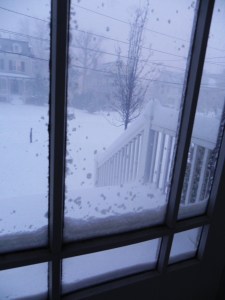
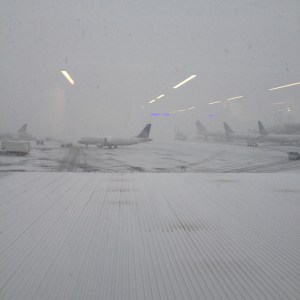
Although I was not looking forward to the long, late flight home scheduled for tonight, I can’t help but think there was something almost prophetic in the weather that prevented my trip.  I awoke in Newark only to confirm with many other stranded passengers that this was not a lot of snow.  I’ve had to commute into New York when much higher amounts were in the forecast.  Many of us, meteorologists included, were asking why this storm was so devastating to travel.  Part of the answer comes down to belief.  Nobody believed we could have this kind of nor’easter in November.  Even now nobody seems to want to discuss the elephant in the igloo.  Global warming, we’ve known for decades, will make erratic weather patterns.  We need to think about weather differently than we have before.

One of the motivations behind writing Weathering the Psalms was that for all of our technology, we still don’t understand, or appreciate, the weather.  Driven by dollars in great collectives, businesses are reluctant to allow employees a “day off,” even when many of them have work laptops at home.  We believe in money, supposing the weather to be only a minor nuisance.  Having bought a house, though, has revealed something to me.  Home and hearth are all about staying safe from the weather.  (Well, and in keeping out wild animals too, but we’ll just drive them extinct.)  A house is a place to keep the water and wind out.  We want to keep dry and to prevent the wind from chasing away our body heat.  Homes are our places to keep the weather outside because we instinctively fear it.  Reverence it.  Weather may well be the origins of at least some religious thought.

Ancient peoples and modern religious fundamentalists believe(d) in gods literally in the sky.  They looked up when wanting to understand matters beyond their control.  Yes, predators attacked, but you could fight back.  Against the sky there’s no recourse.   Weather can kill, and can do so in many ways.  Building shelter helps, but we’ve all seen enough hurricane footage to know that even our structures are subject to the wind.  Computer models were suggesting that this storm might have been pulling back for a real roundhouse punch but our conservative views on the weather (such things don’t happen in November, right, Edmund Fitzgerald?) prevail.  The official stance of our current government is this is all a myth anyway.  It’s only when myths interfere with money that we start to pay attention.