Merry X-Man

XMenComic books were hard to keep up with for a kid of limited means. Consequently, I never heard of the X-Men until the movies started coming out. Since I suppose I fit the profile of the guy whose life has devolved into day after long day in the office, superheroes are burdened with living life for me. I’ve watched the X-Men movie a few times, but after reading Jeffrey Kripal’s Mutants and Mystics my latest viewing took on a different angle. Of course, Mageto is presented as being separated from his parents at a concentration camp in Poland as the film opens. A child on trial for his ethno-religious heritage. That, and the fact that he’s a mutant, lends him a perspective on evolution not shared by many. His scheme to transform world leaders into mutants is premised on his understanding of evolution. He tells Senator Kelly, however, that God is too slow. That apparently minor line may bear more weight than it seems at first.

I can’t see the title “X-Men” without thinking of Xmas. Probably the fact that it is now mid-December has something to do with it, along with the bumper crop of Keep Christ in Christmas media this year. Yard signs, church marquees, bumper stickers. People who don’t know the history of their own holiday fear that they’re losing its meaning. Already by the twelfth century the abbreviation Xmas was in use—this is a centuries old tradition that predates American white Christmases by several hundred years. The X is not a substitute, but rather a symbol. A religion that has lost its appreciation of symbols has become just another set of onerous laws.

Maybe we can learn a lesson from our X-Men and their too slow deity. Not having read the X-Men when I was young, and even now noting that there are just as many X-Women as Men, I had to puzzle out the name on my own. Of course, it wasn’t too hard to see the connection of Charles Xavier with his clan of adopted mutants, and therefore the origin of their X. It is a symbol and no one disparages Cyclops his sight or Storm her lightning (miracles all) for having an apocopated title. I think, too, of how the Grinch stole, and returned, Christmas. Dr. Seuss created a tale that captured the essence of Christmas without so much as a religious vocable in the the book. And his eponymous character has come to represent all those who refuse to celebrate when occasion calls for it. So when God is too slow, X-Men, or even a Grinch in a pinch, can keep the X in Xmas.

Christmas Incorporated

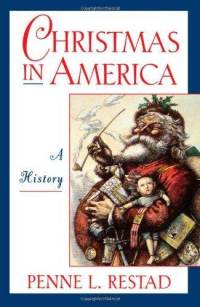
ChristmasinAmericaA number of years ago I wrote a short book on holidays for children. Like most of my books, it was never published. I wrote it when I learned that good books explaining in simple language whence various American holidays came appeared not to exist. The literary agents I contacted quickly showed me why. In any case, I remain curious about holidays and so I read Penne L. Restad’s Christmas in America: A History. There’s a wealth of gifts in this brief book. I’d researched the subject a little bit myself, so I already knew some of the origin stories, but if you’d like to know why we have Yule logs, egg nog, or why Santa prefers red, this is the book for you. As I’ve noted in previous posts, Christmas is a fairly recent star in the constellation of American holidays. In fact, those of us who work for secular companies know just how few holidays Americans officially celebrate. Having lived three years in the Scotland, I know how seriously holidays are taken in at least one corner of Europe.

Christmas didn’t really catch on in America until the nineteenth century. Industrialization was beginning and more and more was expected of the worker who made the robber barons wealthy. It is no accident that the American Christmas had many of its origins in New York City where much of the industry ran non-stop. Restad, however, makes a very good point that Christmas has always been both pro- and anti-commercial. Owners of large retail chains saw the opportunities to sell goods to time-stressed individuals while the giving of presents often promoted a selflessness uncharacteristic of those who stand to profit from consumers. Restad notes the increase in goodwill that Christmas generates in society as a whole. Indeed, I have seen more people giving to the homeless during the past two weeks than I had seen so far this year.

One aspect of Christmas that I hadn’t expected to find in Restad’s treatment was the early emergence of the “prosperity gospel.” Of course, it wasn’t called that in the early twentieth century, but in the millennia since the Christmas story actually originated, some in the church began to take their own righteousness far too seriously. Seeing that clergy who knew how to tug the soul-strings just right could easily gain wealth, they started to suggest that God wants you to be rich. They seem to have overlooked who was born in a stable because there was no room in the inn. Search the Gospels and your search will be in vain if you attempt to find words to console the rich. The “prosperity gospel” is as much a lie today as it was when it began, back in the days when dubious clergy looked for a way to excuse their comfortable lifestyles while many of their flock suffered want. Christmas in America shows itself to have a little bit of the social gospel built in, for it is clear that even the Devil can site Scripture for his own purposes.


Fanpire Club

FanpireIt has become an odd world indeed when thousands of people look to vampires for family values. Although I’ve not read any of Stephanie Meyer’s Twilight books, I have been curious at the reception they have received. A literary agent said, a few years back at an event I attended, that publishers want vampires. There is no end in sight. Perhaps it is my inherent trust of scholars that led me to read Tanya Erzen’s Fanpire: The Twilight Saga and the Women Who Love It. Why would a religious studies scholar write about Twilight? Because Erzen realizes, as many scholars are beginning to that: 1. vampires are very religious monsters, and 2. many more people care about books like Meyer’s than they ever will about scholarly minutiae. I, for one, learned that I’ve missed out on a huge part of pop culture by insisting that my fictional reading must have at least an attempt at depth. Erzen ably points out that there may be truths beneath the surface even here.

When I first became aware of the Twilight books, I was surprised that no one seemed to be making the connection with Dark Shadows. I grew up with the subtle, sensitive vampire who was deeply conflicted. The books that serialized the television series were not profound either, but they evoked an angst that bespeaks a religious need deeply buried. Erzen is able to dig some of this out of Twilight as well. By interviewing fans for whom Twilight has become an ersatz religion, Erzen can show that even squeaky clean Mormon men can’t possibly live up to the vampire standard. The fantasy that has engrossed so many is an image of selfless love. As if Edward Cullen were a less chaste, and more undead Jesus. After all, he gives Bella eternal life and his love never grows cold. The values fit rather well with Latter-Day Saint theology, and provide a model for mortal family values.

More striking is Erzen’s revelation that fandom does not equate to feminism. The women who are empowered to love in unorthodox ways are very much controlled by their men-folk in Meyer’s universe. As Erzen points out repeatedly the ideal lover here is an obsessive stalker with a penchant for abuse (although mostly unintentional). Freedom for women comes at a cost. They may be offered the best in some fields, but even today women do not find equal representations in positions of power in our society. CEOs? Evening news anchors on major networks? Senators? Presidents? Our society is one that talks the talk of equality, but stumbles when it attempts the walk. Vampires cannot exist without victims. Even in the most “advanced” societies in our world, women must struggle in a hierarchy for which the architects, contractors, and supervisors are mostly men. Perhaps women find vampires so fascinating because it matches their experience of a society that takes far more from them than it is ever willing to give back.


Chrismahanukwanzadan

Happy holidays from a pluralistic world! Whenever I see the “Keep Christ in Christmas” signs that crop up this time of year, I think of the wonderful profusion of holidays that people from most faiths can share without being territorial about it. After all, the Pagans got there first—the Christian Christmas predates Jesus by centuries, it turns out. So when my daughter wished me a happy Chrismahanukwanzadan—from a mix of Christmas, Hanukkah, Kwanzaa, and Ramadan—I had to smile. Seems like some in the younger generation are really starting to get it. It doesn’t matter what you call it, but a holiday that celebrates people getting along is worth the effort. Being possessive of our holidays rings of hollow triumphalism—I feel happy because I have something that you don’t. Is this really the spirit of this secular season of giving wrapped in many confessional names? I’m sure shepherds and Magi didn’t exactly share a Weltanschuung.

Those who despair the lack of Christmas have not spent much time with history. As a cultural holiday the celebration of Christmas is younger than the United States, at least in this context. From the beginning Christmas was a pastiche of traditions from different religions celebrating aspects of Odin, Sol Invictus, Jesus, and Zarathustra, at the very least. Bringing these religious figures together into a season that represents the human need for light amid a dark and cold time of year, who would want to exclude others from their own holiday traditions? Having stood in the bleak fields of the Orkney Islands in a massive stone circle aligned to the winter solstice and constructed over a millennium before the birth of Christianity, I have to believe Christmas is one of the earliest expressions of human desire and certainly not limited to Christians.

What makes a holiday holy? Is it exclusive rights like those slapped on every movie you pop into the DVD player? The trademarking of an idea someone else thought of? Religions have a long history of forsaking the spirit of the law for the letter—its most familiar name is dogma. No matter who came up with the idea of doing what we can to bring a little light back into the dreary world around the time when night seems unending, it is a cause that any person of any religion, or none at all, can fully appreciate. Instead of marking territory, should not those who claim Christmas as their own be glad to share it with all? If the one who’s birth the church proclaims at this time of year in no way improves our outlook to others we might wonder if there should be cause to celebrate at all. My answer, such as it is, is Happy Chrismahanukwanzadan!

A holiday in anyone's book

A holiday in anyone’s book


Mutants, Mystics and Memory

MutantsMysticsParadigms. These patterns of thought are self-reinforcing and very useful. As anyone who’s studied foreign languages knows, paradigms are an effective way to keep all those impossible verb tenses in mind. Until you encounter an irregular verb. Once you discover irregular verbs, you start to find there are more of them than you wish. As with language, so with life. Like most boys, I grew up reading comic books. We didn’t have much money, so I wasn’t as fluent in super-heroese as some kids were, but I felt that irresistible draw to garish colors inking exaggerated muscle-tone under a costume that held a body capable of extraordinary things. Everything seemed possible. Then adult responsibility hit. Who had time for comic books and heroes?

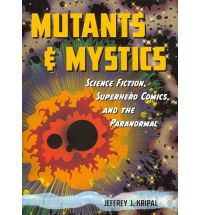
That’s why I was delighted to discover Jeffrey Kripal’s Mutants and Mystics: Science Fiction, Superhero Comics, and the Paranormal. The three sub-topics just about summed up my childhood. But, like Paul declared to Corinthians, the first time around, “when I became a man I put away childish things.” Turns out, maybe my desire to be grown up was premature. I commented on Kripal’s Authors of the Impossible earlier this year. In his work I’d finally discovered that academics can sometimes get away with asking unorthodox questions. Perhaps it was my exposure to biblical studies, a discipline which goes one of two ways—overly facile attempts to maintain a literal reading, or a staid, solid approach tied to serious linguistics and archaeological records—that forced me into a reductionist paradigm. Well, everybody else was doing it! Academic thought had little room for the unusual, the bizarre, the irregular verb. The same applies to our no-nonsense, money driven society. Just shut up and do your job.

Mutants and Mystics, however, shows that our repressed unusual experiences, like a freudian phobia, will find ways into daily reality. It is a mind-stretching book. As for Authors of the Impossible, Kripal is to be congratulated on allowing himself to consider walking down paths that most academics assiduously bypass. Coming to his work as a fellow student of religious studies, I see that he has arrived at similar conclusions to mine, although clearly more advanced. I’d just assumed that since I never had the serious backing of a serious university my way was the low-way. The way of the kid who just couldn’t bring himself to grow up. There is a reason we spent our formative years reading about heroes for whom the impossible was daily reality. Perhaps we were in training after all, and comic books prove the point of old Isaiah that a child may indeed hold knowledge adults often just can’t see.


Freud’s Nightmare

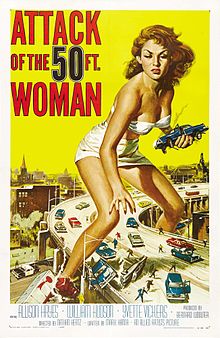
B movies are a guilty pleasure. Weekends sometimes allow for guilty pleasures, when I can check my mind at the door, take a seat near the screen, dim the lights and grab the popcorn. 1950‘s sci-fi reflects paradigms that have ossified in some people’s brains, it seems. It has been many, many years since I watched Attack of the Fifty Foot Woman. I was a child the last time I saw it. As an adult the message is strikingly different. The year is 1958, and my parents haven’t even married yet. Millionaire Nancy Archer has a run-in with an alien in a “satellite,” but he only wants her for her jewelry. Meanwhile her cheating sleaze of a husband, Harry, is making out with the redhead at the local, and plotting to kill his wife for her money. So far the story is fine, if tragic. Then the woman, enlarged by radiation, breaks free from her chains, rips the roof from the bar, and grabs her husband. To the local sheriff, there’s only one option—shoot the “monster.” He unloads a riot gun into her, and, hitting a transformer, electrocutes her. The crowd, aghast, run to see if her trashy husband is alive. The wronged woman they ignore. The metaphorical elephant in the room. Role end credits.

Attackofthe50ftwoman

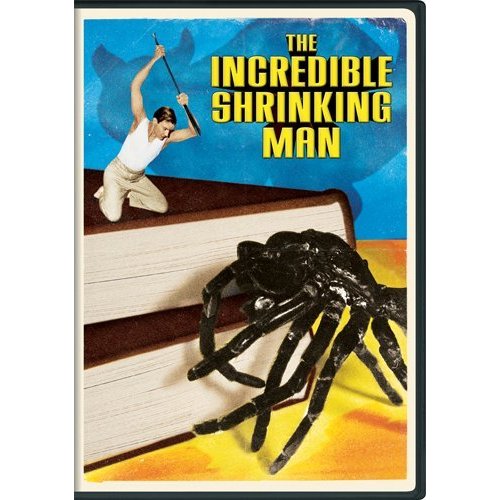
The misogyny of this story escaped me as a child, as did the sexual innuendo. I was only after the cheap thrills of cheap special effects. So I turned to The Incredible Shrinking Man, released a year earlier in 1957. Scott Carey, after sending his loyal wife Louise to the galley for a beer, is hit by a radioactive cloud while on his brother’s boat. An accidental dose of insecticide some months later sets him to shrinking—a freudian fear for all men. As he grows smaller, his will to dominate his wife—now a giant to him, increases. Many scenes end with a tiny man leaving his wife in tears. Even when he is supposed dead, but in reality is too small to make himself heard, Louise is reluctant to leave, in case he still needs her help. Like a short beer, I suppose. The spider scene, which no doubt caused nightmares when I was a child, follows on his monologue about having to dominate his new, tiny universe. The little man shrinks into non-existence with the realization that “to God there is no zero.” What he doesn’t say aloud is, “as long as one is male.”

IncredibleShrinking

These are the 1950s to which some political commentators (and not a few voters) wish us to return. Men fear being dwarfed by women. Call it radiation, or call it social regress, or call it paranoia—the message is all the same. Man must dominate. Women who overshadow are a threat. In the earlier film, Scott Carey is a passively shrinking man. By the next year, when Nancy Archer grows, it is now an “Attack.” Fast forward half a century. Dreamwork’s Monsters vs Aliens makes a parody of Nancy Archer, and Susan Murphy’s fiancé, Derek Dietl (who is clearly modeled on the smug, self-righteous newscaster in Attack of the Fifty Foot Woman) ends up alive, but shamed. The male alien who seeks to dominate her is destroyed. And the male monsters feel somehow less fierce in her presence. As this year’s political posturing clearly demonstrates, there is still a long, long way to go before true equality appears. Many men are clearly stuck in the black-and-white fifties. The full-color, larger than life Ginormica will hopefully better reflect the paradigms of the future.


Read Ban

Someone in the Greenville County Library doesn’t get out much. The LA Times reported this week that a surprised parent got a look at Alan Moore’s Neonomicon, a graphic novel that her child was reading, and went to the library to get it banned. There is a perverse kind of logic to this. The 14-year-old minor checked the book out from the adult section. The story doesn’t say why, but anyone familiar with H. P. Lovecraft would immediately see the familiarity of the title to his fictional Necronomicon. And anyone wanting to read that is surely above the age of innocence. As a result of this imbroglio another book has been banned. As the parent of a teenager I understand concerns about reading material, but then I know that graphic novels can be, well, quite graphic. I know because I read.

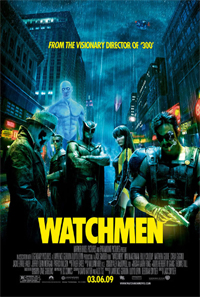
I’m currently reading a fascinating book about religious aspects of comic books. Many of us grew up with comics, and anyone who’s read some psychology knows that people are very much image-oriented. Even our Bibles for children are heavily illustrated—often with drawings nearly as far from reality as those of an Alan Moore story. Adults raised on comic books have been enticed back with such novels as The Watchmen— something that looks like maybe kids are the intended readership, but they’re not. The only way for adults to know is to read. (That, and to consider that the movie version of The Watchmen scored a solid R rating. That little itch should be telling you something.) But reading literature has fallen out of fashion.

While waiting for my bus home one day I decided to take the more local route because the bus was still at the gate when I arrived at the Port Authority. This is a longer ride, but with any luck it might get me home ten minutes earlier. When I asked a woman if I might sit next to her, and I began pulling out my book, she said, “you’re that guy that reads.” Guilty as charged. As I wait for the express bus, I spend the time with a book. Until she said that I never considered that almost nobody else does. Forget the days of earnest looking men, faces hidden behind newspapers, passing the commute by reading. Now it’s all ages and genders, holding electronic devices. Not that I’m surprised. People are visually oriented, after all. But I immediately recognized Moore’s nod to H. P. Lovecraft in naming his novel Neonomicon. I think I might have an idea of what to expect if I were ever to read it. It is, however, far easier to ban books than to take the time to read.

Watchmen


Jolly Saint Nicholas

StNick

Each December the Princeton University Chapel Choir performs a free holiday concert in the impressive university cathedral (actually, it is a chapel, but given its size I’ll stick with cathedral). This year’s concert was Benjamin Britten’s “Saint Nicholas.” The association of Saint Nicholas with Christmas, not really a major holiday until relatively recent times, was an aspect that developed long after his death in the fourth century. The date of his death, December 6, and his association with the giving of gifts, made him an obvious model for Santa Claus (who still bears his name). Most of the gifts I’ve received from bishops involved losing a livelihood and personal dignity, so it is little wonder that Nicholas is venerated. Few bishops of his generosity exist today.

The stories of Nicholas of Myra, however, are full of mythical accounts that bear less resemblance to history than to legends of old. Eric Crozer’s lyric for Britten’s piece invokes several of these miraculous tales. Saint Nick, it seems, stilled a storm at sea, multiplied food and walked on water like Jesus. The lyric also tells the legend of how he raised three pickled boys from the dead, although I have to admit I couldn’t get my mind off zombies after that. This story seems to owe something to the myth of Tantalus, who, like Nicholas, was from Anatolia. In real life we do know that at the Council of Nicaea Nicholas punched Bishop Arius in the ear for his heresy. Theological discussions are like that sometimes. And I wonder if that might not be the origin of another curiosity of which a friend recently reminded me—Saint Nicholas doesn’t travel alone.

Our modern version of Santa Claus takes its roots mostly from germanic traditions. In that culture the saint is accompanied by a more sinister character who doles out punishment to the naughty. He is known by many names: Krampus, Ruprecht, Schmutzli, Zwarte Piet, or simply the Devil. Instead of using their diabolical fists, they generally carry rods to smack the not-so-nice, kind of the Republican side to the liberal Santa. This dark figure does not appear in Britten’s “Saint Nicholas” where a (mostly) kinder, gentler saint appears. A saint who raised briny boys from the beef barrel also belted another theologian upside the head. Life, even for saints, is full of contradictions.


Seeking Sava Savanovic

According to the Associated Press, Sava Savanovic seems to have risen from the grave again. In the world of professional vampirologists, I am a mere hack, but when local Serbian officials start instructing villagers to stuff their pockets with garlic, I know enough to sit up and listen. The Balkans and eastern Europe claim the lion’s share of vampires, but the idea is an ancient one that some scholars trace back even to the Sumerians. While the AP report seems very tongue-in-cheek (as opposed to teeth-in-neck), there is no doubt that ancient fears are as hard to kill as actual vampires. It is no surprise that vampires found their resurrection in the western world as the Enlightenment was catching on. The emphasis on reason and science alone leaves many people very cold. We all may be lemmings headed for the cliff, but we don’t want to be told so. And when the scientists pack up all their equipment and head home, there are still unexplained noises in the night.

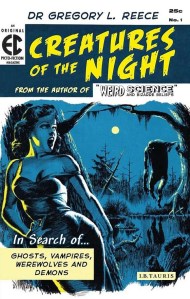
Sava Savanovic may have been a historical person, but not one approaching the stature of Vlad Tepes off to the north and a few centuries earlier. A little closer to home, Peter Plogojowitz, an actual Serbian peasant, was staked for being a vampire in the eighteenth century. Fortunately, he was already dead at the time. The story is recounted in Gregory Reece’s Creatures of the Night and the account remains one of the earliest documented Balkan vampire records. The Enlightenment was under full steam and yet, and yet…

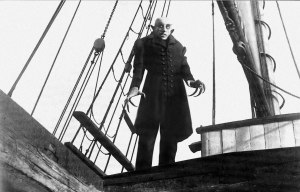
Nosferatu

Interestingly, the report on Newsy shows a Fox News reporter declaring with certainty that no vampires exist. Given the track record of Fox News of catering to causes near and dear to Neo-Con hearts, it is hard to accept that people believing in fairy tales only inhabit the darker regions of the Balkans. No, vampires do not just crave blood. The ancients often believed that they were after reproductive fluids in order to generate more of their kind. A more recent version is the fiend who drains others of their money so that they may live in their remote castles far from the reach of the unwashed populace that has to work for a living. Perhaps we should be envious of those fearing Sava Savanovic—he can be frightened away by garlic and crucifixes, after all. The modern American vampire fears nothing but death and taxes, and the latter they’ve already defeated.


The Last December

December 2012—it is supposedly the last month in the world. Yesterday did dawn with the date being 1212012, but since the local tree farm opened its gates yesterday, my family set out to select a tree anyway. As we wandered amid the pines it was clear that for many the iconic sign of Christmas is the tree. We learned on our first year in New Jersey that you’d better not wait until reasonably close to Christmas to pick out a tree—we visited this very lot then only to discover that precut trees were all that were available (and they were from Pennsylvania) and we had established a tradition of picking our own. Getting to know the tree first. Walking around and looking from all angles, trying to learn if it was healthy or too dry. Were there any gaping gaps that would be an obvious problem? Hard to tell when the tree is wrapped up in fishnet plastic and tucked into a corner like an old umbrella. Here, so close to the Big Apple, you need to claim your tree early. If you don’t want to cut it down right away, you can tag it—claim it as your own and come back later to chop it down. We weren’t the only ones taking great care in selecting.

IMG_0514

Tree farming is a business with a long view. Trees don’t mature overnight. When it’s the last month of the world, one must take these weighty things into consideration. Even before this terminal date, you would need to make an awful lot of money in just one month of the year to keep the business going. Maybe they need a green Christmas. Of course, greenery in winter symbolizes life in the midst of death. The germanic originators of the tradition were keeping a very appropriate pagan idea alive when they dedicated their trees to Christmas. Last year when we couldn’t have a real tree, it felt like we’d lost a friend. Our tree farming friends know that feeling very well.

The “Keep Christ in Christmas” signs and bumper stickers have begun sprouting up in yards and on bumpers in their annual exuberance. Funny thing is, Christmas has its base in ancient pagan customs. To hear the Bible tell it, Jesus’ birth was an understated event. The only people who had an angelic concert were some shepherds (we don’t know how many) on the hills outside of a small town. And, as far was we can tell, it would have probably been in April. As the days grow wearily short, however, we need a little light to keep us going. That was the pagan wisdom behind the Yule Log and various festivals of light to encourage nature to bring some brightness back. These short days can be difficult enough even in the age of artificial light and constantly glowing electronic screens. And knowing this is the last month of the world, we want to festoon our trees with tiny pinpoints of expectation and hope that nature somehow gets the message that we’ve had enough of darkness and wish for a 2013 redolent with light. But we’ll just have to wait and see.


Creature Feature

Gregory L. Reece’s Creatures of the Night is a strangely profound book. I picked it up to read on the plane home from Chicago and I wasn’t disappointed. Promising to explore ghosts, vampires, werewolves, demons and devils, Reece suggests that maybe the key to such fascination rests with the late Rudolf Otto. I had over a decade of students read Otto’s famous little book, The Idea of the Holy. Otto, whose palindromatic surname suggests something uncanny, characterized the holy as the fascinating mysterium tremendum, the wholly other. (I will refrain from calling it the wholly holy.) The mystery that makes us tremble. The monsters that haunt our nights and imaginations are aspects of this utterly other.

Along the way Reece proves an able tour guide. He recognizes, as I have repeatedly stated in this blog, that religion and fear are conjoined twins. He also knows how to get your skin crawling. For Reece there is no question that such things are real. Real doesn’t mean that they are physically lurking outside your window at night—for who is to say that only the physical is real?—but they are as real as religion. No doubt strange things have transpired in history and continue to occur. And the reason we go into church may ultimately be the same reason that we watch a horror film.

As Reece comes upon the topic of demons the air in the room (or plane, or bus) thickens. Here we have documented accounts of impossible events. No amount of rational training can remove the shudder from these stories. Explanations of epilepsy only go so far before terror takes over. By herding them together with vampires, werewolves, and ghosts, Reece stakes his claim that they all are real. Rational reductionists may shrink our world down so tightly that no room appears in the inn for our creatures of the night. But those who are honest, even among the reductionists, will admit to a mysterious tremor, even if unintentional, on a dark and stormy night.


Theology of the Apes

“Alter what you believe to be the course of the future by slaughtering two innocents, or rather three now that one of them is pregnant? Herod tried that and Christ survived.”

“Sir President, Herod lacked our facilities.”

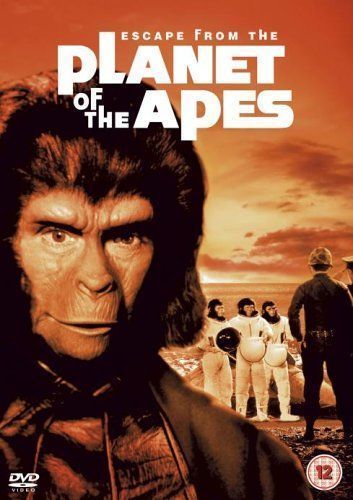
So the conversation between Dr. Otto Hasslein and the President goes in the 1971 continuation of the saga, Escape from the Planet of the Apes. Few probably pondered the weighty theological significance of this dialogue; it is not represented on IMDB’s quotes page from the movie. In fact, many critics aver that the Planet of the Apes movies devolved as they went on becoming less and less original. Nevertheless, the number of serious issues thoughtfully addressed in Escape made it one of the most well received pieces in the series. The world was a scary place in the early 1970’s, as I experienced it. It was easy to believe that we were on the brink of our own destruction—there were enough nuclear warheads to assure mutual destruction, and even a little boy in Rouseville, Pennsylvania could believe that his small town was significant enough to be a target. That message I’d heard as early as the final scene of the original movie.

The Planet of the Apes series is profoundly theological. I rewatched Escape from the Planet of the Apes recently, and was struck by just how many social issues were addressed. Consumerism, abortion, racism, espionage, the arms race, and even eugenics. In each instance the humans are inferior to the apes who had not even developed the combustion engine before learning to fly a spacecraft back through time. The conservative fear of Dr. Otto Hasslein drives the plot; he is ambivalent about the apes and what they portend. It is the destruction of his own comfortable way of life. He suggests quietly killing the apes, succeeding where Herod failed. (Think through the implications!)

“Before I have them shot against the wall I want convincing that the writing on the wall is calculably true,” the President biblically insists.

“How many futures are there? Which future has God, if there is a god, chosen for man’s destiny? If I urge the destruction of these two apes, am I defying God’s will or obeying it? Am I his enemy or his instrument?” Otto Hasslein does not know. His science which tells him there is no God also worries him that he is the very enemy of the non-existent deity. No, the Planet of the Apes movies are not the most profound films ever to escape the camera, but there is, as in any good theology, the raising of questions. And like any theology worthy of latter-day Herods, there will always be far more questions than answers.


Ruby Tuesday

If you’re reading this, you survived Cyber Monday. Not that I personally remember the Middle Ages—I have no desire to return to them—but there was a time when nearly every day of the year was known by a saint’s name. Even as an Episcopalian, nominally Protestant, I was surprised just how many red letter days there were. Black letter days seemed special by comparison. Now, however, our days are named by the shopping expectations. Not only do we have Black Friday and Cyber Monday, we have the moveable feasts of “shopping days before Christmas.” And many other holidays participate in this bonanza dedicated to Mammon. Halloween is a major cash-generating holiday and Valentines can be counted on for buying love. St. Patrick’s for buying green with gold. Ironically, all of these were once, at some remote time, holidays decreed by the church. Many of them are even older than that, going back to pagan times, but religious nonetheless.

In a sluggish economy such times are indeed anticipated. Still, I don’t hear of the one percenters suffering during these difficult times. “Let them eat cake,” Marie Antoinette once was supposed to have said. Cakes are celebratory desserts, of course. We make them everyday occurrences with birthdays that should, in theory, keep the river of cash flowing all year long. The great corporate cathedrals require the offerings of the average citizen, and they insist on far more than a tithe. Then the investment firms complain that people don’t think ahead and save their money for retirement. We see many who live long enough to experience want in their declining years. There should be an app for that.

I wonder if there is something much deeper going on. Those who run so fast usually have something from which they wish to hide. There is the story of King Herod who, according to popular reconstruction, tried to buy the favor of his subjects by monumental building. Herod was not a popular king, and he had a reputation for being bloodthirsty when enraged. It is difficult to verify, but the basics of the story still ring true; when his way of running society was threatened he decided to kill the innocents. Such stories, one might hear a pontiff declare, fall within the genre of the folktale, the story told to make a point. What might that point be? Might it not be that each day is itself a gift and that spending money is not the only way to make time sacred? Of course, as long as you’re online, why not just PayPal your way to true happiness?

A techno-log on Cyber Monday.


Au Fait in the Manger?

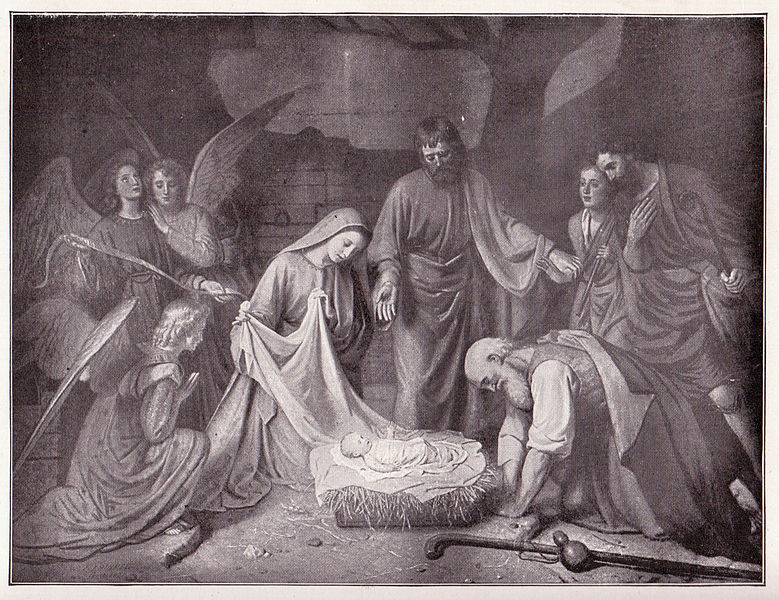
On Friday CNN ran a story about the Pope’s new book “debunking” myths surrounding Christmas. The headline certainly looked intriguing, but it turns out that the “myths” debunked are those of a very dim magnitude. Is anyone surprised—gasp!—that Jesus wasn’t actually born on December 25? And, guess what—those cows you’ve always seen in the manger? The Bible doesn’t actually mention them! Angels aren’t at the manger either! What kind of Christmas will this be? A biblical one, it sounds like. I haven’t read Jesus of Nazareth—The Infancy Narratives, but it really doesn’t sound like I need to. The Bible is very spare on stories about Jesus’ birth; nobody knew he would be a Lloyd Webberian superstar at that point, so we have a few loose traditions that tell of humble origins in an obscure setting. Not very good for commercial interests, however, and besides, the average person doesn’t read the Gospels to find out about Christmas. There are far too many television specials to be bothered with “Lo, there were in the same country…”

Christmas was not a big deal until relatively recent times. Now, don’t get me wrong—I’m not a grinch who believes the holiday shouldn’t be celebrated. I see nothing wrong with people giving things away, even if it is to pretend that they are celebrating an ancient Roman-occupied Judean birthday. This is the essence of what being religious should be all about; holidays should be occasions for thinking about others before one’s self. In my lowly opinion anyway. We’ve built an entire economic cycle on it, however, otherwise Black Friday might just be a free day to spend with family and friends instead of being trampled to death at Wal-Mart. Perhaps if society could find a way to distribute wealth more equitably every Friday would be in the black.

The Pope’s new book is an attempt to make the Catholic tradition appear up-to-date with scholarship. Plans are for the book to be published in an entire Septuagint of languages with a print-run the envy of nearly every academic editor in New York. The problem is there is no real news here. News should be, by definition, new. A book by the Pope declaring the true equality of all people, throwing open full sacerdotal participation to women as well as men, and the distributing of papal wealth to the poor—that would be a Christmas present worth the waiting! Instead, when you pull the shiny paper off this book on December 25, you’ll only discover that you’ve received it on the wrong date and there will be no angels singing. The cattle will be lowing, however, if you can use your imagination.

What’s wrong with this picture?


Phantom Prayers

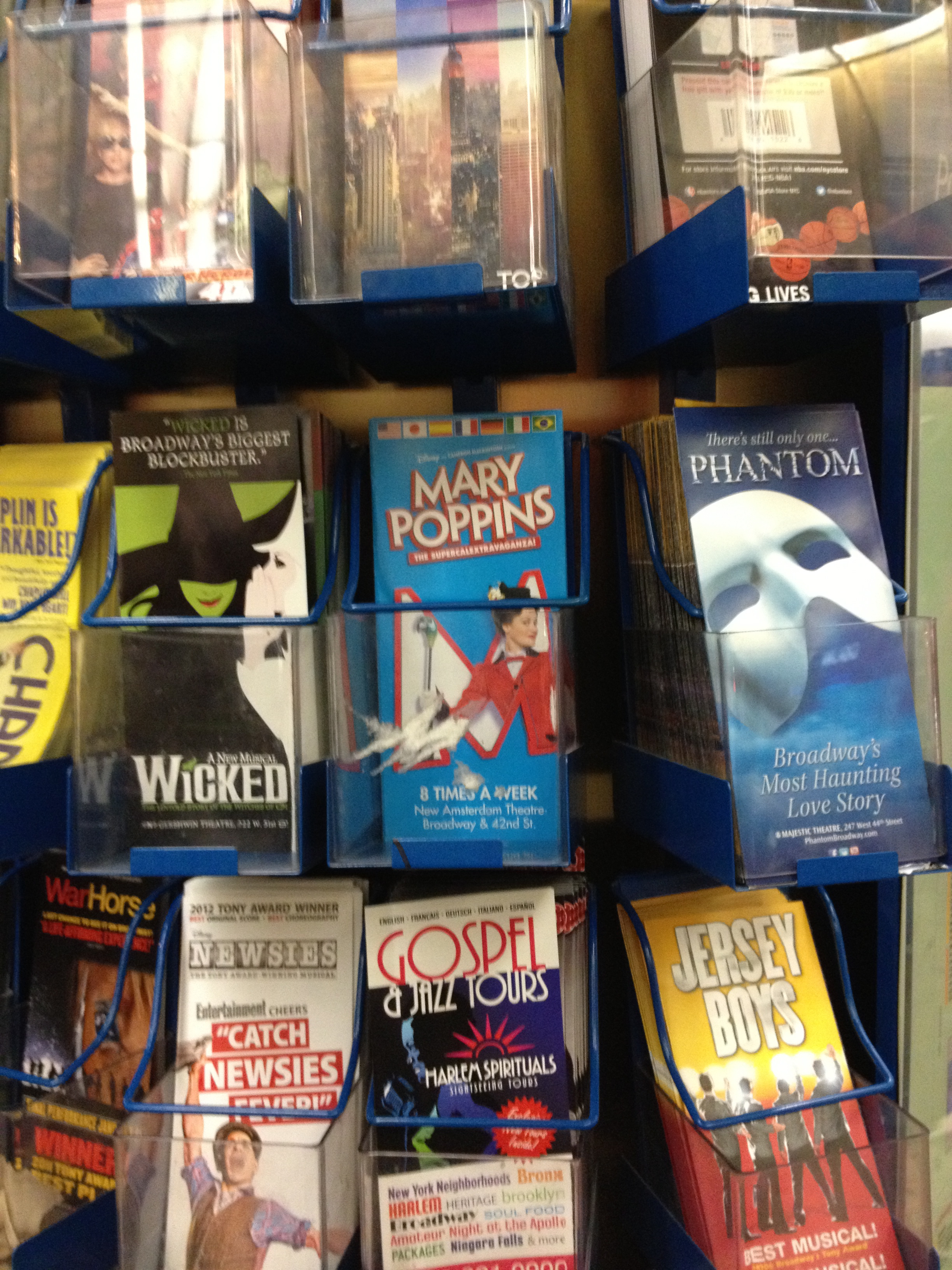
Religion and theater have much in common. I suspect that this is one reason several religious traditions initially protested against the secular theater. Morality plays were one thing, but dramas about purely human matters are quite another. Being given the very generous gift of tickets to the Phantom of the Opera, I recently had the opportunity to experience Broadway’s longest continually running show. It occurred to me that theater can often, if done right, draw in huge crowds—the line to get in was certainly impressive—while other than megachurches and very conservative religious movements based on reaffirmation of one’s superiority, many religious houses struggle to draw people in basically for free. It could be argued that secular entertainment requires less of an attendee than a religious service, but I wonder if that’s true. To receive your money’s worth for a show, you must be willing to put yourself into it.

While Andrew Lloyd Webber has never been afraid of religious themes—think of Jesus Christ Superstar and Joseph and the Amazing Technicolor Dreamcoat, or even Whistle Down the WindPhantom of the Opera is loosely based on the early twentieth century novel by Gaston Leroux, the story of a hideously deformed musician who falls in love with a beautiful opera star. Although characterized as “a monster,” the Phantom is, after all merely human. Lloyd Webber’s adaptation leaves much of the story undeveloped, allowing the imagination to chart its own course. This is precisely where theater diverges from religious performance—imagination. Religions frequently claim to possess all the answers and questioning or imagining new approaches to age-old dilemmas is often discouraged. Unless, of course, the dilemma is how to draw more people in. Those who run megachurches learned the lesson of theatrics long ago.

For all that, Phantom of the Opera is hardly devoid of religious sensibilities. In one moody scene where Christine visits her father’s grave for solace, and perhaps advice, the first set piece visible is the cross atop the tomb. It is from this cross that the Phantom in the guise of the “angel of music” comes to her. Having the representation of death emerge from a cross is a powerful enough symbol. During this scene Christine’s plaintive cries to her father sound like a prayer. The prayer is heard, however, only by a phantom. The end of the story is ambiguous, something religious performance simply cannot tolerate. And yet, as I was being pushed and propelled down a crowded Broadway after the show, amid a flood of humanity that had emerged from many theater doors, I wondered if this “secular” experience might not be religious after all.

Religious tracts?