Virtual Religion

Rabbi and author A. James Rudin, in an op-ed piece in Sunday’s New Jersey Star-Ledger, tolls the warning bells for traditional brick-and-mortar religion in the western world. We live in a virtual world where nearly any need may be met through the Internet. You may satisfy your hunger by ordering out online, and consult a virtual nurse online later when you don’t feel so good. Holiday shopping is a breeze without having to do anything more than tap out a wishlist on your keyboard and then click your mouse. Why should spirituality be any different? Rudin points out that many classics of western religion used to be confined in research libraries, but are now freely available online. Any number of self-appointed doyens of spirituality offer the truth in electronic form. What need have the faithful of starting the car on a cold morning, facing bitter winds and blowing snow, to march into a half-deserted house of worship when God is only a few keystrokes away?

There can be no doubt that the Internet has changed views of religion. Exposure to exotic or unfamiliar practices and beliefs is common. American religion has often been compared to a marketplace, and the best place for comparison shopping is online. This is not, however, cause for alarm. Ancient religions, including the early Judaism that will give birth to Christianity, accommodated other belief systems they encountered. There is no pristine form of religion that preserves the exact original recipe. The change took place more slowly in ancient times, but take place it did. Judaism, for example, moved from a basic, colorless Sheol to a fully populated Hell in Christianity, complete with lakes of burning sulfur and trident-wielding demons. These views were not indigenous to Judaism, but after rubbing shoulders with the Magi, such ideas eventually worked their way in.

All that the Internet has done is speed up the process. Without the web, people took longer to encounter and learn about different religions. Some of us took university degrees to figure out as much as we could. Now it requires little effort and minimal time. Like most e-commerce, if you don’t like what you’ve bought somebody else is offering something similar just a server away. What web-culture has done is to hold up a mirror to our bizarre shopping attitude towards religion. We can see in fast-forward what appeared smooth and organic in real-time. Religions change and the methods of selecting religions change as well. My observation is that clergy who take courses in web-casting will be at the front of the class until the next technological revolution comes along.
Understudy Angels

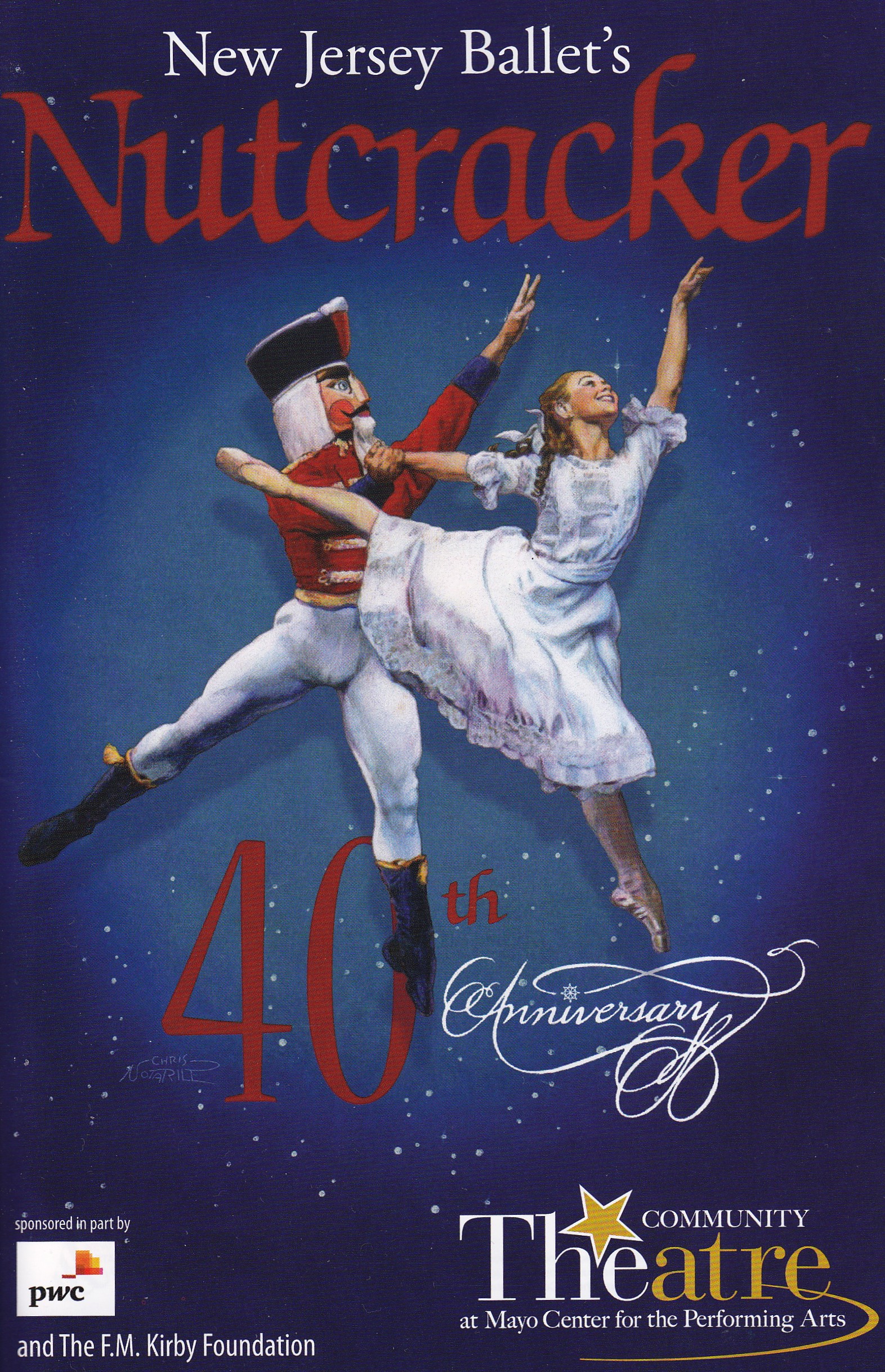
Since moving to New Jersey my family has attempted to sample as much of the vibrant arts scene as we can on our modest income. At times it feels like being a starving man locked in a fine restaurant. So we scrimp, save, and buy the cheap seats when we can. Thus it was on Christmas Eve we found ourselves in the audience for Tchaikovsky’s Nutcracker ballet. I’ve been on this planet for nearly five decades and I’ve never before seen a ballet. I knew the basic story of the Nutcracker: weird uncle gives niece an odd toy, jealous brothers soon break the toy, and the niece has a bizarre, if exceptionally graceful, dream where the toy becomes her escort. Beyond that I didn’t know what to expect. When I looked through the program, I was interested to see that there were angels, snowflakes, clowns, and mice. And there were understudy angels.

Students sometimes ask me what became of the ancient gods. In the cultures surrounding Israel, as well as in early Israel itself, polytheism reigned. Once the Exile had conceived monotheism what happened to the other gods? Did they all get absorbed, Borg-like, into Yahweh? It seems not. Many of these ancient gods continued to eek out their existence as supernatural, yet strictly sub-divinity, beings. We recognize such beings as angels today, and every holiday season they are ubiquitous in store windows and church lawns. It should come as no surprise that with so many angels a few understudies must be necessary.

In popular imagination – (dare I say it?) Christian mythology – angels derive from dead Christians. Many children are taught that if they are good, when they die they become angels wafting through the heavens. This popular doctrine does not match the official teachings of any major branch of Christianity. Angels are different in substance, essence, or whatever else a theologian might care to call it, from humans. You don’t evolve into an angel. Either you’re born one or you’re not. And so it seems we are earth-bound in our existence. No cause to mourn, however; even the gods had to learn how to be angels. We can only hope they had the benefit of many understudies to carry on the tradition.


Battling Billboards

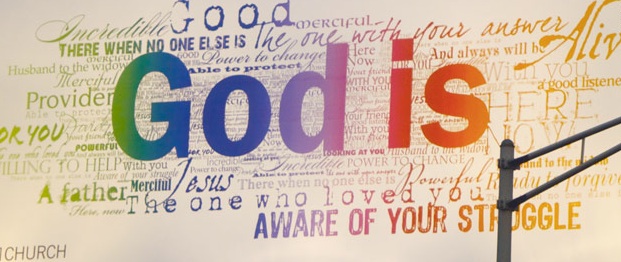
CNN’s Belief Blog carries the beleaguered story of the Lincoln Tunnel billboard battles. Last month a billboard proclaiming that the Christmas story is a myth had been sponsored by American Atheists to try to raise awareness that not all commuters are Christian. In response, the billboard has now been rented by the Times Square Church and newly proclaims “God is” with a number of devotional qualifiers. ‘Tis the season of wearing one’s passions on one’s red sleeves with white trim. Since this is America, it must be writ large.

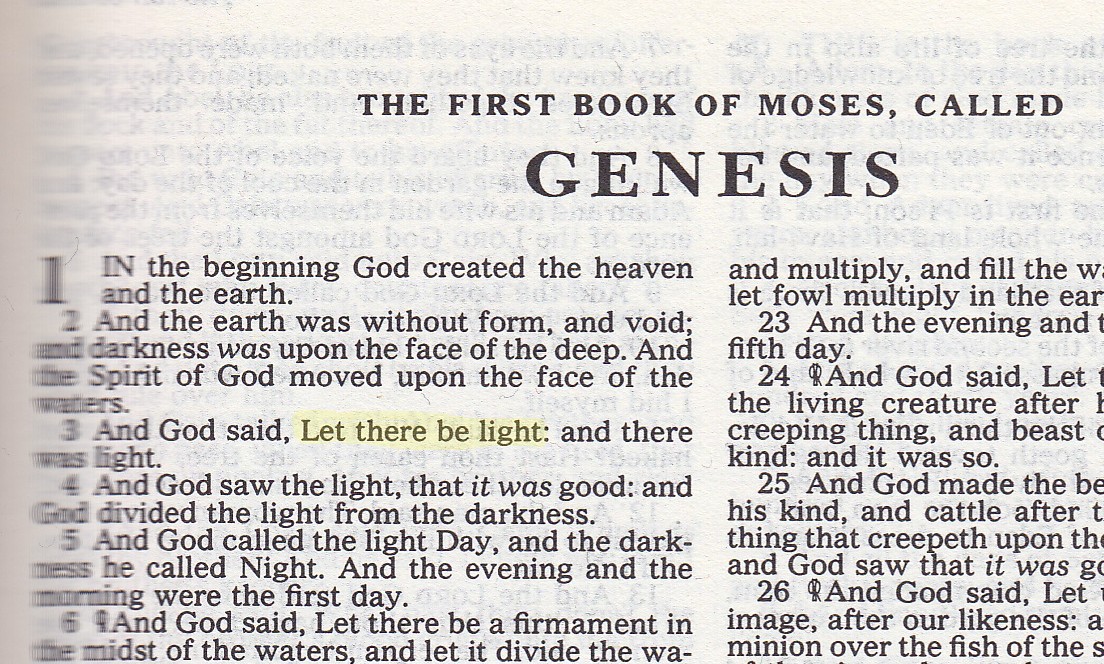
The recriminations fly like childhood accusations: “but s/he started it!” Can’t mature adults agree to disagree? In a world constantly filled with inequality and strife, religion is used as a cudgel to enforce uniformity. The holiday season is much more than various religions marking their territories. The symbolism of the return of light after a long descent into darkness is archetypical, no matter whether it is the finding of oil to light lamps, the birth of Jesus, or the triumph of Sol Invictus or any of a plethora of other celebrations. It should be something that all people are able to share.

It is the “other” that is feared: the groups who do not share our religious outlooks. “He who is not for us is against us.” It is much safer to slap the other with a billboard barrage than to have to look into the eyes of another human being and say, “I respectfully differ.” Instead of welcoming in the light, we dig further into darkness. The Manichean sensibilities are undiminished after all these centuries. Some would argue that all must be brought into conformity for peace to prevail. To them I say, “I respectfully differ.”


Multiverse of Angles

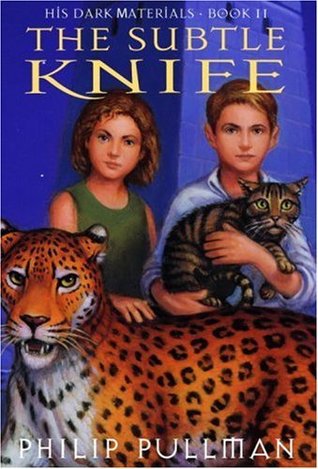
Alternate realities. The concept fits well with astrophysical views of the multiverse that posit undiscovered dimensions and all their implications. Last night my family finished its group reading of Philip Pullman’s The Subtle Knife, as alternate a reality as might be imagined. Plucking Lyra from the uncertain ending of The Golden Compass, Pullman draws his readers into alternate worlds where everything is tied together by the consequences of “the fall” in Eden and where a new battle against the divine is about to take place. In an ambitious attempt to shift perspectives, we are told that the forces against God are, in fact, good. The magisterium, as its uncompromising strength in Lyra’s world demonstrates, will always seek to rule the world. It is an unsettling picture that Pullman paints, a reality where what we thought was Ormazd turns out to be Ahriman.

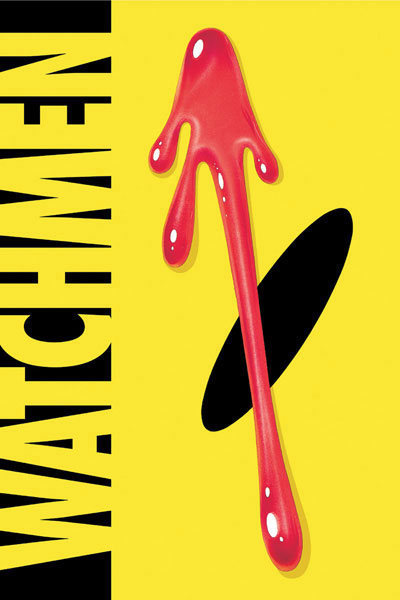
At the same time, I have caved in and begun reading The Watchmen. Not a great fan of graphic novels, I have been faced with a mounting curiosity after watching the movie a few times. In this alternate reality, God is simply irrelevant. Doctor Manhattan elaborates on the nature of a universe without a deity more fully in the novel than audience forbearance would allow on the big screen. This is a world perpetually on the brink of self-destruction, where God is absent and human ambition becomes the driving force behind a petty, short-sighted reality. Despite the comic-book feel, the story is profound and the concepts disturbing. Alan Moore’s dark vision of other worlds allows unrestrained human desire free reign with no divine restraints.

Such alternate realities underscore just how much of our reality is structured by religious beliefs. They resemble our world in significant ways, but their lack of divinity forces a nascent nobility from human characters who are only too aware of their own weaknesses. Flawed people try to create a better world. Some theoretical physicists suggest that all imaginable realities likely exist in the infinitude of universes that crowd in on our limited view of the way the world actually is. The ideas are mind-bending since even the worlds imagined on our own limited universe have both created and destroyed concepts of God. What might God’s role be, should the multiverse (or even a Stephensonian metaverse) turn out to be the true reality?


Dispelling Myths

According to the Los Angeles Times yesterday, Danish scientists have debunked the folk-wisdom that a person can become drunk by soaking his or her feet in alcohol. In the spirit of science, three scientists submerged their feet for three hours in a washtub of vodka (I am very curious what the university requisition form must have looked like). At the end of three hours, the stone-cold sober scientists with pickled feet had dispelled “the myth.” Myth remains one of those loosely defined concepts that can be good and evil, in turns. If a falsehood is being disproved, the myth is misguided and wrong. If a deity is being described and worshiped, the myth is the ultimate truth. Perhaps we need a larger vocabulary.

A semester chock-full of mythology is drawing to an end for me. I taught on ancient Near Eastern myths, classical Greek myths, and biblical myths. Placing these religious stories side-by-side brings things into a sharp focus. No matter how funny or strange their results may seem to us, mythographers were people attempting to make sense of their world. Seldom do they get the scientific facts right, but that is not what they seek. In modern minds where the fine-tuning between truth and factual statements has been effaced, a conflict is inevitable. Especially since some fields of inquiry make lots of money (so much that professors can have happy feet) while others scrape by with the dregs of university funding. Aren’t we all climbing the same mountain?

One of the more disturbing aspects of teaching mythology is seeing undergraduates continually confusing mythology and history. This is not fine-tuning, the dial has broken off completely. I am astonished to learn that Heracles and Theseus really rescued (and sometimes violated) damsels in distress. Yet, on the first day of class, before the roster has been read aloud I could smell the alcohol in the air. A semester of dispelling myths lay ahead. “Kristensen [the Danish scientist] said it was important that the myth undergo scientific scrutiny to prevent students wasting their time experimenting with this activity,” according to Thomas Maugh. I wonder if it might not be best to keep the “mythology” alive – undergrads might well benefit from pouring the alcohol into their shoes rather than into their mouths.

A book undergrads might actually read


Ouroboros

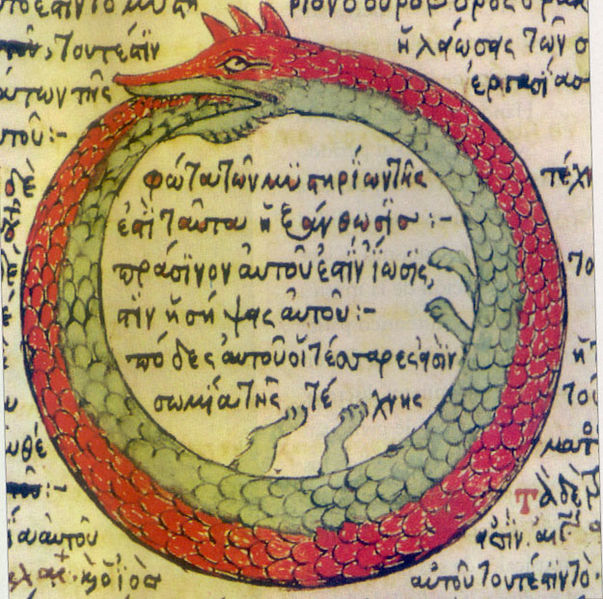
The Science Channel’s program, Through the Wormhole, hosted by Morgan Freeman, has a noble goal: help educate non-scientists with cutting-edge ideas. The series opens with an episode on God: “Is There a Creator?” Interestingly, in our society there are those who turn the question around. Religious folks ask the question: does science really have the answers? It is the classic ouroboros, the snake swallowing its own tail. Perhaps the best way to consider this entrenched issue is to consider its history. Gods emerged as explanatory figures. In the days when the Bible was the oldest known book, it was believable that God had dictated it and therefore the idea of God required no explanation: the ultimate tautology. When extra-biblical material predating the Bible was discovered, a warning bell rang. Most established religions in the western world simply pretended not to hear.

Snake, dragon, whatever.

Neuroscientist Michael Persinger of Laurentian University features in this Wormhole episode, demonstrating his “God helmet.” The principle is that stimulating the specific part of the right hemisphere of the brain that corresponds to the left hemisphere’s region of “selfhood,” a brain will fabricate a presence. While the experiment has promising results, it can’t fully explain God. Other neuroscientists are working on the issue as well. Historically we know that Yahweh was one among a polytheistic entourage of deities. With the stresses and mysteries of exilic existence, monotheism was born. Only one of those many gods survived. By studying the character of Yahweh’s departed compatriots, however, we can learn of the origins of gods as well.

Science entered the picture much later. By the time of truly empirical observation, God was an assumption as certain as ether. When science offered an alternative explanation, religion countered. “I see your Big Bang and raise you one Prime Mover.” And thus it will always go. With no witnesses, alas, no intelligence even yet evolved, our universe began. We can ask the physicist or we can ask the priest. Even if God is discovered and described in the laboratory, with or without a helmet, those standing outside will always believe, with Anselm, that there is an even bigger one somewhere out there.


Pleasant Points of Prayer

Point Pleasant Beach, New Jersey, is a fine place to meet the ocean. On the first day my wife and I were scouting out apartments in the state, my brother drove us to Point Pleasant Beach after dark that October evening. The rollers were thundering on the deserted beach as we raced down to dip our fingers in the Atlantic. We went back on sunnier days to enjoy the miles of delightful beach for which the state is justly famous. Point Pleasant has an old-fashioned boardwalk, hearkening back to more innocent days when entertainment was carnival style and the only electronics involved were the blinking, colorful lights. As a borough, however, Point Pleasant Beach has been opening its council meetings with the Lord’s Prayer for six decades. A judge has called that practice to a halt, according to Saturday’s New Jersey Star Ledger.

Perhaps the greatest challenge to all religions is globalism. Historically, the religions of antiquity developed when pockets of human habitation were relatively isolated from one another. Yes, people traveled, but not with the ease or frequency borne by steam or gasoline engines. Religions evolved slowly and took on the local character of the only people most believers were likely to ever meet. The ancient religions of trading centers already show the traces of syncretism that religious purists so abhor. When the sea-farers of antiquity met new people it was only polite, politic, and profitable to share their religions. Monotheisms, however, demand complete adherence to doctrine. They don’t mix well. In today’s world where travel is easy (if accompanied by strangers groping your privates, if you choose to fly) and lifestyles and religions become connubial, civil meetings have to take their new clientele into account.

The Lord’s Prayer is about as inoffensive piece of Christianity that may be muttered. Nevertheless, it makes assumptions about the religious make-up of the community. New Jersey is startlingly diverse in constitution. It is a fascinating experiment in people from all over the world learning to live together. In the past sixty years the ethnic make-up has shifted and no longer can boroughs assume that all members are Christian. The prayer does affirm the wish that the kingdom of the patriarchal Christian God should establish itself on earth. And as much as tradition is to be valued, so much is religious government, on any level, to be feared.

Simpler times on a New Jersey beach?


Didymus Haunting

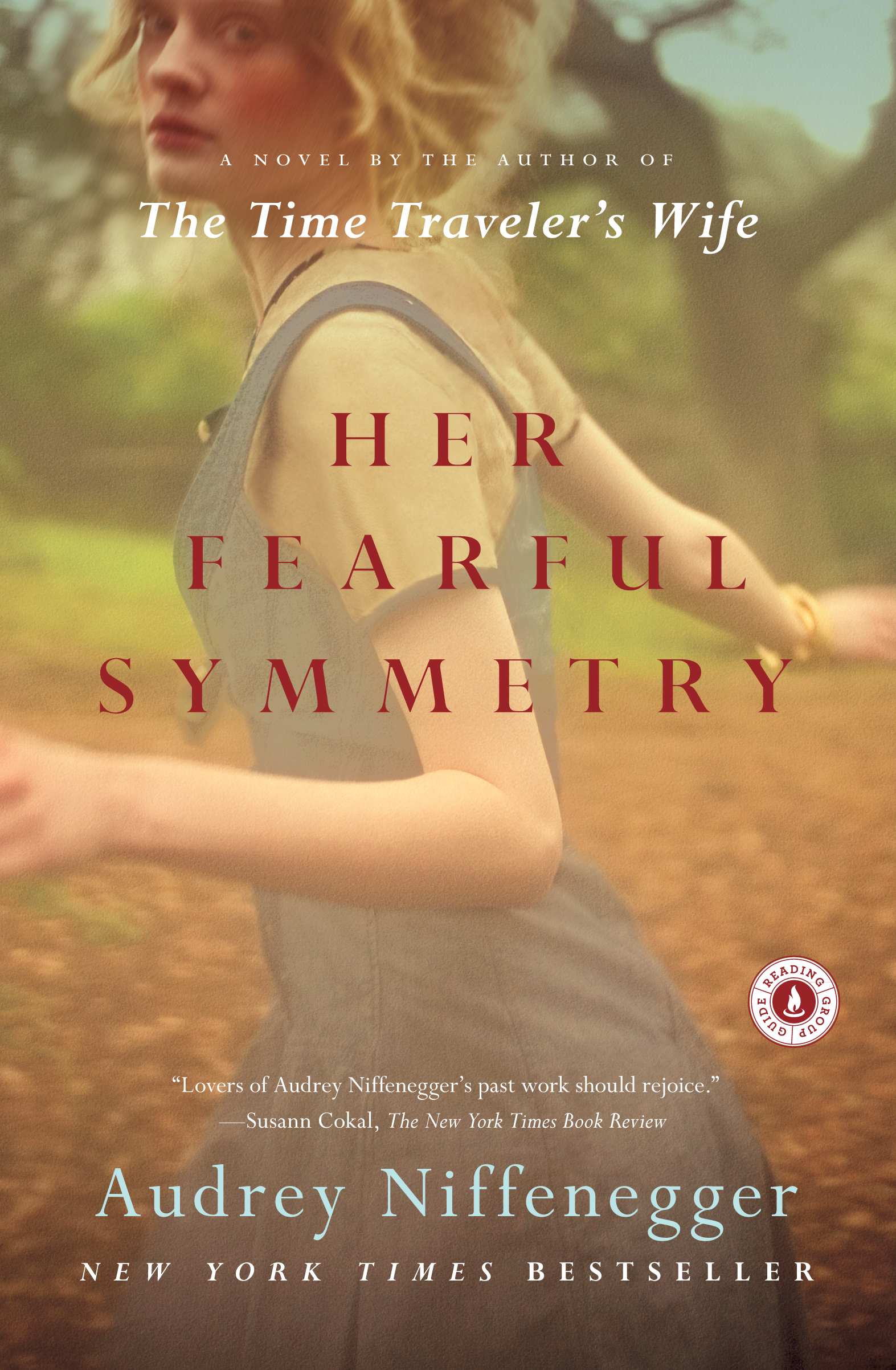
Now that winter is nearly here, the season of reading the autumn books is nearing its end. Each year, in my scant free-time, I seek the perfect book to capture the essence of the dying of the trees, the chill in the air, and the growing length of night. Autumn generates an emotion that is difficult to replicate or even describe. Many people respond by watching spooky movies and those of us old enough to appreciate printed literature turn toward moody books. One of my choices this year was Audrey Niffenegger’s Her Fearful Symmetry. At the constant urging of one of my former Gorgias Press colleagues, I’d read Niffenegger’s The Time Traveler’s Wife this summer. It was well crafted and left me with enough sadness to want to see if this New York Times bestseller might capture the feeling of the season. I was drawn into the book by reviews that mentioned it centered on Highgate Cemetery in London, the scene of a real-life vampire fracas back in the 1970s.

No vampires graced this novel, but ghosts abound. Often Niffenegger’s characters are either wealthy or have managed to obtain fulfilling jobs, features that make them inaccessible to me. Nevertheless, she is able to draw in the supernatural in a way that makes it seem normal and believable. By tingeing her novels with romance she is able to tap into an inexplicably huge readership, but her story development is intriguing even to those who read books with a paranormal slant. It took me a couple hundred pages to really feel much sympathy for many of the characters, but the ghosts eventually take over the story and it becomes very creepy indeed.

For those who’ve ever wondered about the secret lives of twins, Her Fearful Symmetry will provide hours of fascination. The title may be drawn from Blake, but the story is older than Esau and Jacob. The struggle of twins ranges far back in literature and raises questions of what a soul might actually be. Is it possible to share one? What happens when one twin predeceases another? What is the nature of individual identity? Even the Gospels take pains to inform us that Thomas is a twin. I finished the story last night feeling a twinge of autumn, but still hungry. Perhaps it is good that I completed this bedtime reading just in time to get ready for the more Dickensian ghosts of Christmas.


Watchmen Tell Us

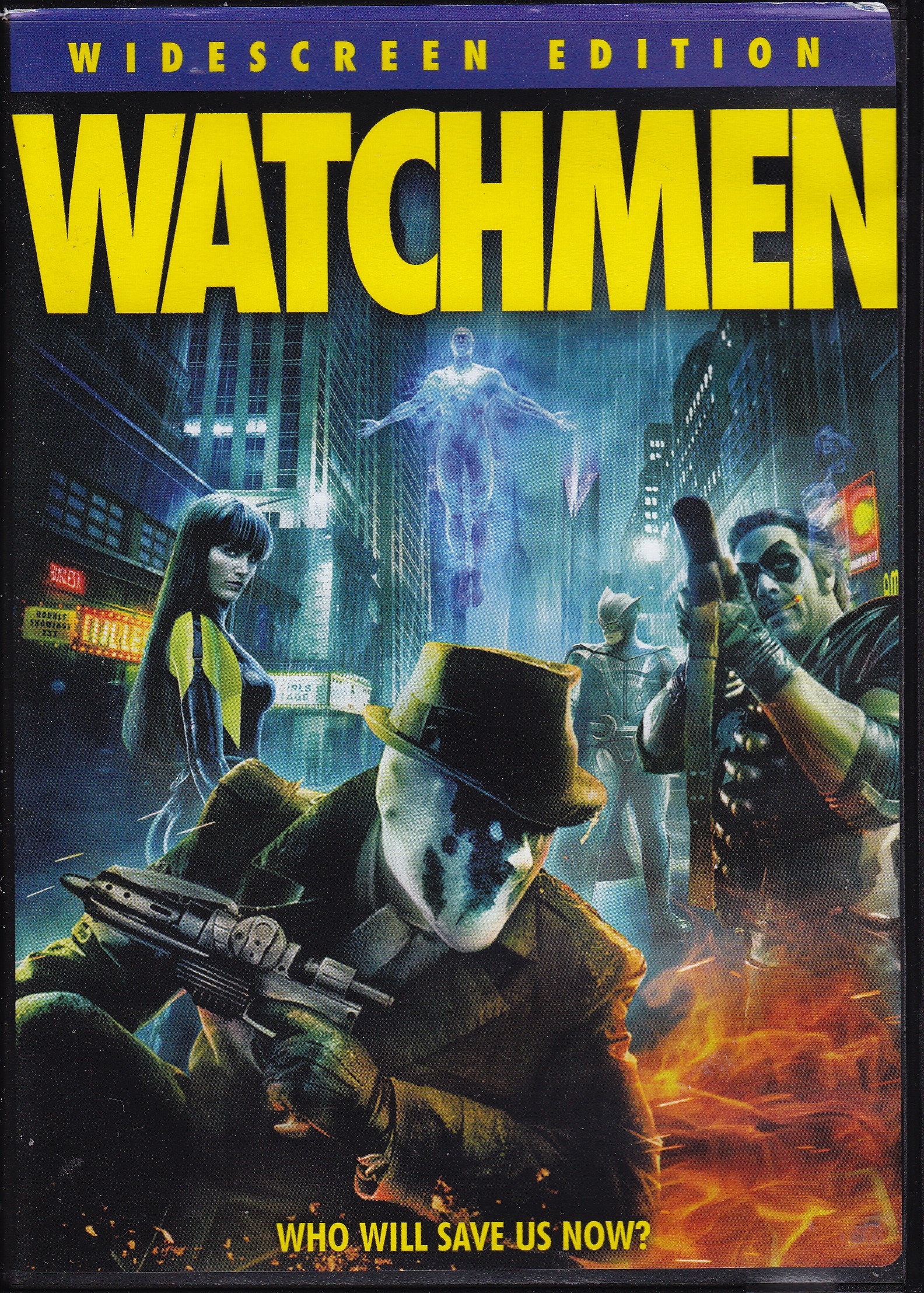
When the local Blockbuster went belly-up a few months back, I was one of the vultures picking the bones. With new DVDs continually creeping up in cost, I look for bargains wherever they might exist. Occasionally I find something for just a couple of dollars that really makes me think. Although I don’t go to theaters often, a couple of years back the previews all featured The Watchmen. I’m not a graphic novel reader either, so it was doubly doubtful that I would ever gravitate to this film. But here it was on sale. Very cheap. The previews had shown Dark Knight-like action and despite my own declarations, I had to admit that I was curious. So I’ve watched it a couple of times and have been intrigued by what an (absentee) role God plays in the movie.

I won’t go into much detail since the story is complex and, to my surprise, sophisticated. Nevertheless, the Watchmen – retired crime-fighters both good and bad – forced out of practice by the government, fear the approach of nuclear war and try to fight back. At several junctures characters declare that there is no God or that they believe there is no God. The setting is an alternate reality in the 1980s, but the crossover between that world and this is evident. Godless heroes may save the day, but with a tremendous human sacrifice required. At first viewing, I was stunned. The message was so bleak and hopeful. The movie could have been made with no mention of God, yet, briefly, his absence was underscored. Strangely, the Bible features in a bedroom scene where a future hero is spending the night with his girlfriend. Why the Bible? Why here?

I would be the first to admit that I do not have the proper background to comprehend the plot. Generally I like to read the book before I see the movie. One of the recurring motifs in the movie version is the doomsday clock that moves dangerously close to atomic war. On top of the Bible is the hero’s watch, ticking inexorably down to midnight. Even I can figure out that the countdown to doomsday is based on the Bible. What the import of this is, however, I can only guess. What kind of world has no God but still has Bibles? A world where Watchmen aren’t wanted and yet are sorely needed. Who will save us now?


Peace on Earth

One of the most ironic of Christmas messages is “peace on earth.” The irony comes in the means of declaring that peace. Apparently first-century angels were declaring peace to the entire world, according to Luke. The peace that we see proffered, however, often extends only to those like us. What is the harm in extending Christmas joy to all? Must one be a Christian of a particular stripe before the joy of giving can be bestowed? Over the last several years various Christian groups have sought to reclaim ownership of the holiday they borrowed from the pagan Romans, Celts, and Anglo-Saxons. Make it exclusively ours. Peace to us, and let others find their own way home.

In a season of charitable giving, understanding seems to have fallen off the list of Saint Nicholas. In his guise as Santa Claus he makes the rounds of the entire world, according to the mythology that children are told. Do we ever really picture Santa delivering gifts to those who live in Iran, North Korea, or Afghanistan? Does peace on earth apply to them? The thing about peace is, unless everybody has it nobody has it.

Can we learn to share Christmas? Those who fret over Xmas forget that first-century Christians abbreviated Christ with an X (chi in Greek), just as they represented him by a highly stylized fish. Today an empty fish on your bumper declares what an X cannot, apparently. The message is that Christmas belongs to us, not secular pretenders who just want an excuse to make their kids happy. For most of the history of Christianity, Christmas had been a low-key event, barely noticed by most of the faithful. When the possibility of material gain was added in, however, the holiday became especially holy. Should we share the doctrine but not the gain, or should we make Christmas a gift to all the world – a season when all might reasonably hope for peace?


Where Are the Wolves?

Spend a leisurely hour at your local commercial bookstore and you won’t be able to avoid seeing vampires. Just yesterday I noticed that a neighborhood bookstore had an entire section entitled “Teen Paranormal.” Zombies also continue to grow in popularity, now having their own line of undead Christmas products. And where is the humble werewolf? Not gone, just lurking in the shadows.

This weekend I finished the third werewolf book by my one-time co-Wisconsinist, Linda S. Godfrey. (She’s still there, but I’m not.) Lest any of my readers think I am casually lumping her work together with the fictional fantasy monsters, I must declare up front that The Michigan Dogman is not a work of fiction. Linda is a careful researcher, a former journalist, and a woman who possesses something many researchers lose over the years: an open mind. The problem with occasional phenomena is that they are almost impossible to test in any empirical kind of way. Since even before the Beast of Bray Road story broke in 1992 occasional reports of bipedal canines had stumbled into the news once in a while, causing headline-happy journalists to push the werewolf button. Underneath the current monster hype, however, is an intriguing question of origins.

Where do all these similar stories originate? While not even close to the number of reported Bigfoot sightings, the dogman/manwolf sightings that Linda has pulled together are impressive for their overall uniformity. Witnesses who’d never heard of the creature repeatedly report fine details that mesh with accounts of individuals otherwise unconnected. The standard answers of hoaxes and misidentifications just don’t cover the three volumes worth of material she had compiled. Few would stand by the assertion that these are shapeshifting humans, but for those with an open mind the werewolf trilogy gives pause (paws?).

The universe is large beyond human comprehension. Simply because we’ve evolved very complex brains doesn’t mean we’ve found all the answers. I’ve never seen a werewolf or any other popular cryptid. But having studied the strange world of religion all my life, I know better than to declare, ex cathedra, that very strange things cannot exist.


The Reality of Movies

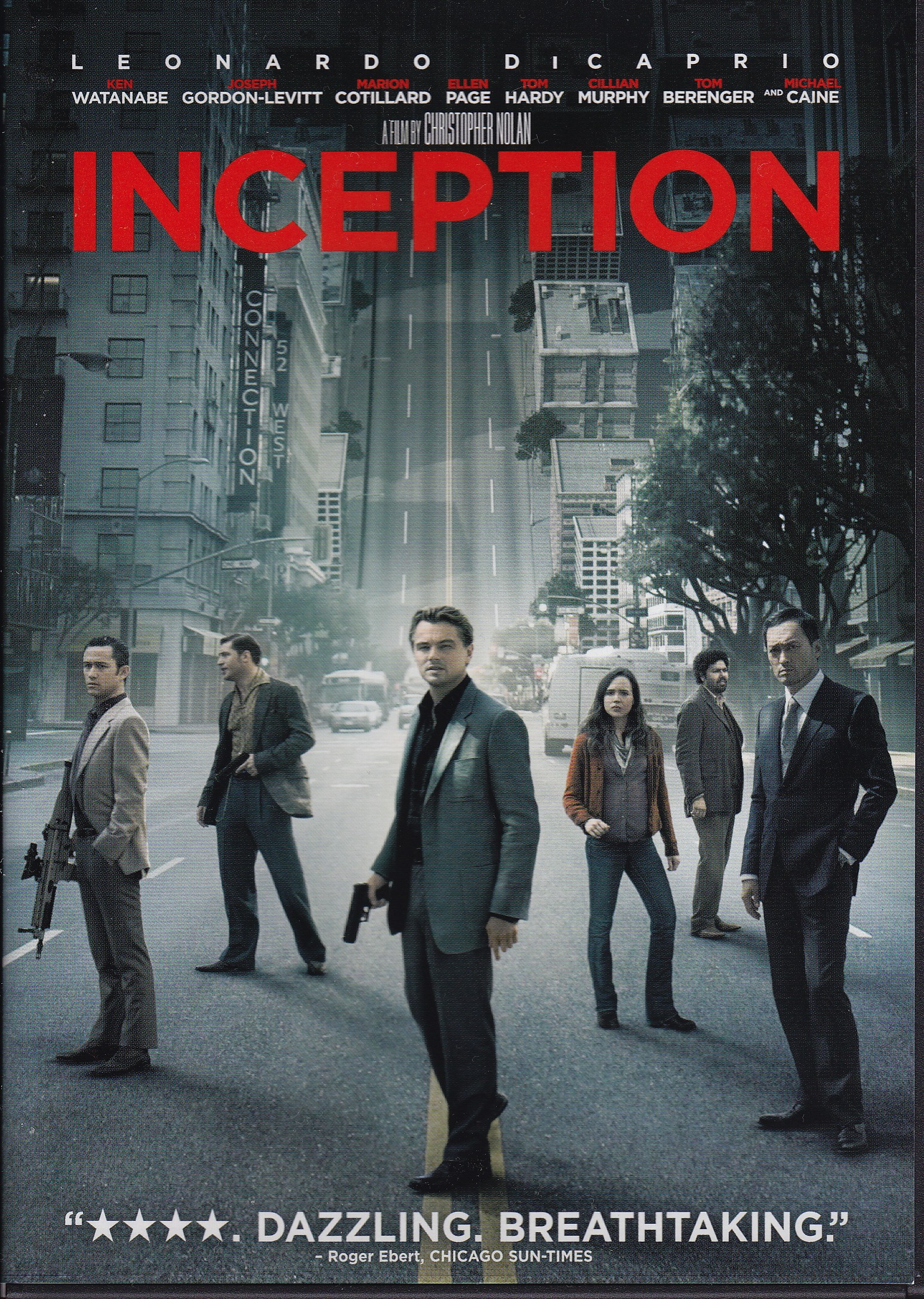
Inception was released on DVD this week, and having a weakness for struggling with reality, I knew I had to see it again. Now, people with a far sturdier grip on life than myself have been blogging about the movie since the summer, writing posts both profound and critical. I wrote an earlier post on the movie, toying with its retelling of the Theseus myth. This time, I am wrestling with the wonderful burden of having a subconscious mind. The crux of the movie is when Cobb has to decide which world is real: Mal’s or his own. The movie, of course, refuses to divulge the answer.

With a finesse that I had previously experienced with the original Matrix movie, Inception ups the ante on what we consider reality. “Reality” is a problematic concept, a bi-product, we are told, of consciousness itself. Reality is generally viewed in exclusive terms, and most of us spend our days in what I learned to denominate “naïve realism,” the concept that what we perceive is pure, unadulterated reality. Perhaps not as Inception or The Matrix, or even eXistenZ would have us believe, scientists today tend to agree that the world is not as it seems. The quantum world has opened up levels of reality undreamt of even by Einstein whose God did not play dice. This is perhaps one of the greatest challenges to traditional religions.

Although many religions gladly point out that there is a mythical reality behind what we experience every day, there is no hard evidence to back up these assertions. This is not the same as declaring they don’t tap into that reality, it is just that we have no final arbiter as to what that reality is. Having been in the business of religion all my life, I am absolutely certain that it isn’t what any fundamentalist group declares it is. They make claims about reality that would leave Jesus scratching his halo-encircled head. Is it Cobb’s, Neo’s, or Allegra’s reality or is it Hawking’s, Witten’s, or Greene’s? I simply don’t know. I just put the disc in an press the play button.


Aye, Aye, Robot

As students gave their final presentations, the very last group discussed the End of the World. This is a topic upon which the Hebrew Bible is generally silent, despite the rants of many who misunderstand the Zoroastrian influence upon the apocalyptic book of Daniel. No, the Hebrew Bible’s apocalyptic material looks forward to a change of ages, a radical new beginning, but not an end of the world. Well, maybe the end of the world as R.E.M. knows it, but not the cessation of everything. In an interesting twist, this group moved from the Hebrew Bible to scientific scenarios of the end of it all. What became obvious is that undergrads these days are faced with multiple doomsday scenarios, most of which are of human origin.

Last month I was inexplicably elected as the president of the adult chapter of my daughter’s high school robotics team. An unemployed religion professor hardly seems the logical choice for leading the way into a technological future. I even declined the nomination but was persuaded to give it a try. Robots have improved the quality of our lives to a degree that most people do not even recognize. So I listened in amazement as the students last night presented the doomsday scenario entitled “iRobot.” Clearly this is a Transformer-like blend of iMac/iPod/iPhone and Isaac Asimov’s sci-fi classic I, Robot. (Is it mere coincidence that his name can be written iAsimov?) Their description was terse and scary: nanobots and more boxy industrial models will commandeer the Internet and take over. We will be Matrix-like slaves. And I am the president of a robotic club booster association. I felt like Judas, with a MacBook.

Robots, we are told, lack empathy. Experience teaches me the same about Republicans. This weird hybrid of religio-politics is not unlike our hypothesized robotic nemeses. Religion has given us a rope to hang Judas that can double as whip against the backs of the underprivileged. Where are Asimov’s Laws of Robotics when you need them? “A robot may not injure a human being or, through inaction, allow a human being to come to harm.” Yes, the old ways are breaking down indeed. I think I’ll take my chances with the robots. At least when a robot is cutting off your life support systems it is not doing so in the name of Jesus.


The Bible Tells Me So

As part of my regular Hebrew Bible class, students prepare classroom presentations for the end of the semester. This gives them a break from constant lecturing and also serves the function of initiating discussion. I assign social issues for them to discuss vis-à-vis the Bible; they can discuss these with each other in group-sessions throughout the semester. Since no one knows “the answer” when it comes to the Bible, I figure we can all learn from each other. I’ve been using this exercise for four years now, and at a school the size of Rutgers, you’d expect a wide variety of perspectives. This occurs, to be sure, as does more predictable stances. After fourteen weeks of instruction, most of them can only find the Bible a trove of prooftexts.

Learning to integrate biblical study into a rational worldview is difficult in our cultural climate. From nearly every medium from which religion wafts – Internet, television, newspaper, personal sermonizing – it comes out literal. The Bible/Quran says… (fill in the blank). What occurred to me during the student presentations is that scriptures of all descriptions become dangerous when their context is lost. Politicians, often among the arguably least educated members of society, argue about what the Bible says. Problem is, the Bible was written from a pre-Enlightenment viewpoint, a perspective that is out of reach to all but the most utterly naïve. Even to understand worldviews from the pre-Enlightenment you need to spend years of serious historical study.

So here’s our dilemma: we live in a society enamored of a book it doesn’t understand. Bible verses are used like Band-aids, pasted over every perceived rupture of continuity, but never quite reaching to the ends of the wound. Even after a semester of bald instruction – in the case of Nashotah House three semesters – students generally revert to what they know. To learn what the Bible instructs, take a pair of mental scissors, snip around the pericope, and tape the verse over the issue. There is, however, always a backside to the page. And most students never learn even to turn the page over to see if both sides agree. They could be ready for a life of politics.


I Can’t Ear You

I bought a box of Q-tips in the store the other day. I noticed that the package shows humans using the cotton swabs in a variety of ways: around the eyes, nose, eyebrows, even on a computer keyboard. Everywhere but an ear. The suggestive shape of the Q-tip, as well as the received wisdom of everything from the South African name “ear buds” to Mad magazine, indicates that they were invented for ears. We all share that somewhat unsavory habit of forming earwax, and doctors warn that using cotton swabs may impact the matter and lead to complications of hearing. Q-tips (originally “Baby Gays” – check out the Q-tips website) are no longer for ears. In the back of my mind I supposed that it was because of lawyers. All it takes is one litigious sophomore and companies run to their attorneys to show that the faulty application wasn’t their suggestion.

Laws run our lives. One of the most famous, but by no means the first, law-givers was Moses. I’m pretty sure Moses didn’t say anything about what to stick in your ears, but he did lay down the laws that Neo-Cons still argue should govern our lives just like the Quran governs the laws of Iran. The laws of the Torah, however, were only meant for the Israelites. Nevertheless, laws have become means of growing wealthy. If we can prove on a technicality that my dumb mistake was somebody else’s fault, why not have that person (or better yet, company) sued to within a millimeter of their lives claiming “damages”? The law has become a means to protect the special interests of those in power. As someone who has tried scrupulously to keep the law my entire life, I sometimes find that old Moses seems to have turned against me.

Laws are meant to protect the rights of people. When did laws shift to becoming instruments of entrapment and means of income? Just before leaving Wisconsin I was driving my family home from a movie. We were talking and laughing when I came to a speed-trap area of my local town where the speed limit drops from 45 to 25 m.p.h. within a matter of inches. Religiously I always complied. Today, in the spirit of the moment, I neglected my usual caution and was pulled over. A policeman young enough to be my son lectured me on unsafe driving (I began driving when he was still wearing diapers, and I had never been given a ticket before because I am not a speeder) before issuing me a citation. My wife couldn’t believe it – she knows that I never speed. One of my last memories of Wisconsin is being unfairly targeted by a law devised to bring money to the local police force. It has nothing to do with safety, since there were no houses or buildings for several hundred yards yet after the slow-down zone. Has the law come to free us or oppress us? Lawyers watch our backs, and law-makers watch their wallets. I want to ask Moses, but I’m afraid I won’t hear him. I seem to have a cotton swab stuck in my ear.

Lead us not into temptation...