Holiday Cheer

Christmas carols are, it seems, intended to fill holiday shoppers with good cheer. Good cheer opens wallets and purses and everybody is happy until January’s bills make their epiphany. Until then, sing songs of gladness. Princeton University, one of the few financially stable institutions of higher education, each year gives a gift to the community. Some Sunday in Advent a free university Chapel Choir concert is given in a campus chapel the size of a modest medieval European cathedral. The music varies from year-to-year, but seldom is the church not full with locals taking time out from holiday shopping or grading papers. One of the carols yesterday, was the 1914 French piece, “Christmas Carol for Homeless Children.”

Princeton, like most schools, does have a heart buried beneath its deep, cold, jobless front. Chapel choirs like to shake up the status quo by throwing in an occasional piece that requires somber thoughts and social consciousness amid the joy. The French carol dates from that fearsome first year of World War One, a time when France was especially under the gun. The wish for the world at the time was peace – material gain had not yet become the measure of God’s grace. The hymn is sober and wrenching:

We have no more house nor home!
Enemies took all we had;
all gone, all gone,
even our own little bed!
The school they burnt;
they burnt our teacher, too.
They burnt the church and also the Lord Jesus Christ,
the poor old beggar too who could not get away!

Singing it in French may take away the vinegar of the words, but wartime is not the only circumstance that finds people without sufficient means. Even unchecked capitalism will lead to the same results. Only, instead of the Lord Jesus Christ being burnt, he is sold in the markets to make a tidy profit.

Baby Jesus says, "Bring on the gold!"

Slash of the Titans

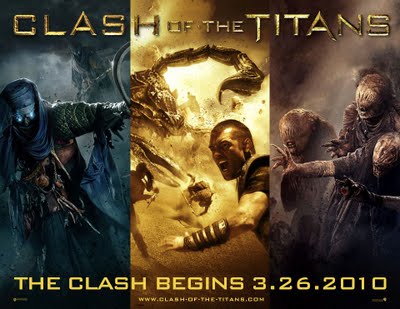
I’m suffering from mythology overload. Last night I watched the mediocre 2010 version of Clash of the Titans on DVD. Since I’ve been grading students papers on mythology non-stop for over a week now, I felt that I needed to see what all the fuss was about. Again. I saw the movie in a theater earlier this year and wrote a post on the post-modern perspective the film has on the gods. To get a better sense of a movie, however, a repeated viewing is awful helpful. The fact is that the public exposure to mythology is often limited to the movies. Students frequently ask if something they saw in the Disney version of Hercules is the way it really happened in the myths. Nothing really happened in the myths.

Meanwhile angry letters have been pouring into the New Jersey Star-Ledger. Rounding out a new losing season, Rutgers University football coach Greg Schiano remains the highest paid employee of the state of New Jersey. Academic voices are feeble, but economics makes people sit up and pay attention. Money talks. Brains are lazy when it comes to rigorous thought. As the collection of heroes gathered in the forest of Calydon to chase the great boar Artemis let loose on the city, the academic world has also chased the glory of the pig-skin. And poor Meleager paid the price of the public outcry when it was over. Even though his team won the biggest college bowl ever.

It is hard to tell the real villain in Clash of the Titans. The writers suggest it might be Zeus, or Hades, Medusa, the “Kraken,” Acrisius, Cephus, or even the “fire priest.” Everybody’s looking for someone to blame. Things aren’t right in Argos. Others blame state legislators, the president of Rutgers University, or the football coach himself. The fact is in both the movie and in the university priorities have been skewed. Nobody is driving except the money, no matter which box office it goes into.

Who's got the pig-skin?


Hunting Vampires

The Mercer Museum in Doylestown, Pennsylvania is a treasure trove of Americana from the turn of the last century. Henry Chapman Mercer, in addition to being wealthy, had the foresight to realize that society was rapidly changing, even back then. He undertook the collection of everyday artifacts from many human industries, poured himself another castle-like concrete building, and housed the baubles there. It is a fascinating walk through nineteenth-century America. And if you visit on a cold day it feels as well as looks like Currier and Ives have just passed through. My main draw, however, was a vampire hunting kit.

If only I had a polaroid lens...

Prominently displayed, the kit includes a Victorian Protestant’s tool chest for any blood-sucking eventuality. A cross (sans corpus), a pistol with “silver” bullets, glass vials with various apotropaic ingredients, even a little stake, all in custom-cut green velvet. Unfortunately, the kit is believed to be a forgery, although the items in it are from the Victorian era. The silver bullets are, for example, pewter. As the placard notes, vampires do not exist, but that doesn’t mean people didn’t believe they might have existed. The museum, naturally enough, hoped that the Victorian era kit might be authentic. Scientific analysis has revealed otherwise despite the fact that many people continue to believe in something that has no basis in reality.

Belief constitutes reality. Otherwise, how could it be that thousands, if not millions, of people don’t accept the fact of global warming? Brash barons of unhindered industrial progress insist that humans can’t harm the planet – it’s just too big. We can suck out all the resources that billions of years have deposited in intricate recesses and that nature has sprouted right on the surface. For, they say, God has given them to us. They believe that. If we held a mirror up to them, what would we see? Maybe we would be forced to change our minds and go after that vampire-hunting kit after all.


Solstice Now!

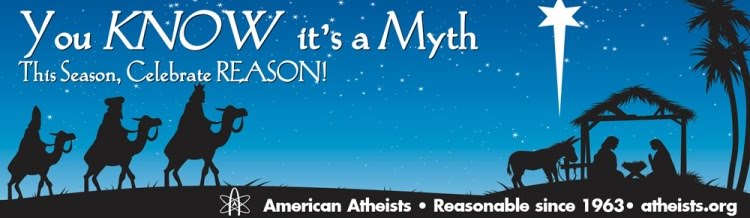
Who owns the solstice? Whoever it is, I wish we could just get it over with. The darkness falls before I step into my 5 p.m. class. It is dark when I drive home. The next morning, leaving for my 8:30 a.m. class, I drive to school in the dark. Back at Nashotah House a colleague once said his wife became “almost pagan” in her yearning to pass the winter solstice and head toward the time of year when light prevails over darkness. My wife pointed out a CNN story concerning a New Jersey billboard sponsored by American Atheists. The billboard, just on the Jersey side of the Lincoln Tunnel into New York, shows the star of Bethlehem, the manger and the wise men. The inscription reads: “You KNOW it’s a myth. This season celebrate REASON.” Naturally, motorists are up in arms. Who owns the solstice?

Before the Thanksgiving leftovers even hit the fridge, Christmas season has begun. Santa always ends the Macy’s Thanksgiving Day Parade, making it official. Since we are capitalists, we do what the red-suited captain of industry says: shop. As long ago as A Charlie Brown Christmas complaints of the commercialization of Christmas have reverberated through the media. Personal properties and billboards enjoin us to “keep Christ in Christmas” and remember “the reason for the season.” Economists tell us to spend more to assist the sluggish economy. Meanwhile the light continues to fade; the days grow darker. Why confuse the issue with religiosity? Why not just spend some money on others, feel the release of endorphins, and be thankful?

Nobody knows when Jesus was born. The church selected December to celebrate the event because the shortest day of the year, for those north of the equator, had long been a time of fervent wishes for the return of light. The first-century Christian rivals, the Gnostics, believed in the continual, literal struggle between light and darkness. When sidelined by Orthodox Christianity, the torch was taken up by those who celebrated Saturnalia, Lupercalia, Hogmanay, Yule, Sol Invictus or any number of other winter festivals. Christmas was a relative late-comer to the celebrations that welcome the resurrection of the sun. So drivers from New Jersey should take it easy. The solstice is everybody’s holiday. I just wish that whoever’s in charge would give us all a little more light.


Holy Horror

Back in October, in the spirit of the season, I attended a local lecture by a ghost hunter at a nearby public library. This sincere young man struck me as perfectly normal, but haunted by his ghostly encounters. During the question session someone asked about TAPS (The Atlantic Paranormal Society, of “Ghost Hunters” fame). The lecturer indicated that TAPS is not above fabricating evidence for ratings, a disappointing but not unexpected factor when it comes to television. He even gave some evidence to back his assertions. Nevertheless, my wife’s whimsical six-month subscription to the TAPS Paramagazine has continued on well past its expiration date, and when the November/December issue arrived, I was interested to see a piece entitled “Sacramental Horror: What scary stories can tell us about what is real.” Well, this was too good to pass up.

The article, written by Presbyterian minister Jonathan Weyer, discusses the value of horror films. The juxtaposition of a clergyman and horror films is a little unexpected, but believable. After all, many horror films feature religious ideals clothed in monstrous form. Dividing horror films into Uncanny/Unsettling horror, gross-out horror, and torture porn, Weyer goes on to explain how uncanny or unsettling horror underscores the moral order of the universe and is therefore appropriate for Christian contemplation. He even draws the Nicene Creed into it. Gross-out horror serves the function of making the viewer contemplate death and perhaps even helps to make fun of it. This is a less noble, but still acceptable Christian enterprise. Torture porn, on the other hand, simply has no redeeming value. Sacramental horror really didn’t enter the discussion. Douglas Cowan’s Sacred Terror takes this issue on more directly.

I really don’t expect much insight from a fanzine that treats the reality of fairies and the prognostications of tarot cards next to the genuinely mysterious, such as ghosts. Finding morality in horror films is often a matter of eisegesis. The fear in such films often emerges from the sacred, either in pure or distorted form. Even if “the pure of heart or, often the virgin” survives while “Wrongdoers get put to the axe,” as Weyer states, seldom is that the intended point of the movie. John Carpenter denies that there was a moralizing message in his Halloween, often cited as the movie that established the “good girl survives” motif. The fact is that horror relates to the sacred in the element of fear. If people were not afraid, there would be little for religion or horror movies to accomplish.


Brave New Whirled

Today marks the triumph of capitalism. Having just finished reading Aldous Huxley’s Brave New World for the first time since my undergraduate days, I found it strangely appropriate and prescient. Huxley foresaw a bleak future where comfort and convenience outweighed concerns for truth and meaning. As the World Controller of Western Europe reveals to Mr. Savage, it was the Nine Year’s War that made people so docile that they would accept complete government control over their private lives. Read “9-11” for the Nine Year’s War, and he pretty much nailed it. Americans today put up with severely restricted freedoms because only the rich and powerful are truly free. We even have Huxley’s “feelies” – we just call it the TSA checkpoint at the airport.

“But I don’t want comfort. I want God, I want poetry, I want real danger, I want freedom, I want goodness. I want sin.” So says Mr. Savage shortly before his tragic end. The remainder of society – those willing to play along with the game, those willing to be anesthetized with the little perks the government throws their way – are already dead. “Let them eat cake.” We have our hedonistic day of shopping frenzy, looking forward to the soma of Christmas. We will comply despite the dehumanization the unemployed, the unwary traveler, the racially profiled, face every other day. As long as we have our electronic toys and the network into which they may be plugged, guide us o thou great Patriot Act. Freedom is not free. Orwell called it doublethink. Today it is doubleclick.

Novels have the capacity to say what libraries full of dusty dissertations cannot. Perhaps the future has not turned out quite the way Orwell or Huxley or Burgess predicted, but they were not far off. November has become the month of the novel. The Office of Letters and Light hosts National Novel Writing Month (NaNoWriMo for those in the know) each year to encourage others to find their creative voice. The challenge: write a 50,000-word novel fully in the month of November. I finished mine in just over two weeks. Perhaps someone who has the good fortune to break into the publishing world will once again sound that warning shot before society takes its next Huxleyian turn. But until then, anyone who says they don’t need a gramme or two of soma, well, they’re just plain lying.


Thanksgiving Day

This post is an excerpt from my unpublished book for young readers giving the history of American holidays:

When you think of Thanksgiving you may see visions of a big turkey dinner and a four-day weekend. If you’re like me (I hope not!) you probably think that ever since the first Thanksgiving dinner in 1621, Americans have had a big November feast every year since. This popular cozy image may be heartwarming, but it is wrong. Thanksgiving in history is a custom that goes back to the Puritan settlers. Puritans came to America so that they could practice their religion freely. They were religious people (not a great sense of humor); things had been pretty tough for them – crossing the stormy Atlantic in small ships, not knowing what to expect when they arrived, lots of people dying on the way – not an easy thing to do! Once they got here, there were no grocery stores and they hadn’t planted crops earlier in the year, they didn’t even know what would grow here. Many didn’t survive, they weren’t America-tolerant you might say.

What we think of as the first Thanksgiving involved English colonists (Pilgrims) in the Massachusetts Bay Colony and the Wampanoag tribe of Native Americans. One of the Wampanoag, Squanto, served as an interpreter – pretty big of him, considering he’d learned English from being a slave. He taught the settlers how to grow corn, which was unknown in Europe. (What the English called “corn” is what we call “wheat.” The more correct word for what we call “corn” is “maize.”) Squanto also taught the Pilgrims how to catch eels to eat – maybe he found a way to pay them back after all! The first Thanksgiving meal in 1621 followed the Pilgrims’ first successful harvest. They ate deer and some wild birds – enter the turkey! – along with their crops.

You see, both the Wampanoag and the English had traditional harvest festivals – many peoples do. “Thanksgiving,” however, has to do with, well, giving thanks. Did I mention that the Pilgrims were religious? They believed that God had successfully brought them here, so they thanked God. Not every early harvest was so great. In a bad year they had a day of mourning rather than a Thanksgiving feast. Some historians place the first “Thanksgiving” in 1923. The Pilgrims had experienced a drought. Frantically they prayed for rain, and, Flanders-like, it came. So they held a Thanksgiving. These Massachusetts Puritans held Thanksgivings in church rather than around a banquet table. For them, these irregular days of giving thanks marked the survival of difficult times, not fancy food. So they held occasional Thanksgivings, not watching football after a big meal, but praying in church. By the middle of the 1600s settlers began to have a harvest-day Thanksgiving pretty much every year, but not always on the same day. They had not set a specific date to give thanks and feast.

Puritans, you must realize, gave thanks at the proverbial drop of a buckled hat. They prayed before meals as a regular practice – something many families continue to do. To set aside a day for special prayers, like Thanksgiving, was as natural for them as women wearing bonnets. The practice of having an annual (yearly) day of giving thanks got underway in Massachusetts around 1630. Other colonies joined in, but not always at the same time. Remember, harvests come at different times in different places.

[See Full Essays for the rest of the story.]


Towing Jehovah

Back before my blogging days began, one of my relatives was reading a book entitled Towing Jehovah by James Morrow. Given my field of study, I was intrigued by the title, made a note of it, and got on with my life. I was reminded of the story when reading a book on religion in popular culture, so it seemed the time was right to pick it up and see what it was about. First of all, it is a work of fiction, so nobody should get too upset. The premise is that God has died and his corporeal body has to be given a proper burial. Since the corpse is huge and since it has fallen into the ocean, a washed-up oil tanker captain is selected by the angels, who are dying out of empathy, to tow the body to its final resting place. Herein lies the tale.

The book won a World Fantasy Award, and is generally an engaging story. Any lifelong student of religion will naturally find bits to quibble with, but the fantasy author’s heart wants what the fantasy author’s heart wants. The question the book raised in my mind was whether it really said much about religion at all. Sure, there are several great one-liners and quirky observations about how the established religions might react to the death of God, but the book itself intimates that humanity does fine without a God, but it required a God to get it started. It is the story of humankind growing up. When I finished the book, however, I was left with the impression that religion is developed here in spite of God.

God, being dead, is a strangely silent character in the book. Western religions have taught us to suppose God is active, and very vocal. Just tune in any televangelist. In Towing Jehovah, God has become an idol, a prime mover that became the main event. It is a provocative yet somehow respectful treatment of God as an idea. James Morrow is often categorized as a secular humanist, yet his book tows God into the consciousness of a world that already largely ignores the divine. In this sense it remains a paradox. No matter what people say, God just doesn’t go away. The reader, cast adrift, like the corpus dei in the novel, keeps bumping back into God. The concept, once born, will live as long as human consciousness survives.


Condom Not?

Newspapers and the Internet have been abuzz with Pope Benedict XVI’s leaked proclamation that condoms may be useful for male prostitutes in preventing the spread of AIDS. Many are astonished, and not a few heads have been scratched at the declaration from the stalwart bastion of “sex is only for procreation” Christianity. The announcement, while humanitarian, is deeply troubling. From ancient times it was recognized that human sexual behavior had more than procreational importance. The matter has been investigated by psychologists since the nineteenth century and the same conclusion was drawn: people engage in sexual practices for a variety of reasons. Meanwhile, the church has been holding out with a Hebrew Bible viewpoint enhanced by the personal outlook of Paul.

In the ancient world, the microscopic world of reproduction was unknown. What was actually happening in conception was misunderstood. Judeo-Christian sexual mores were based on faulty information, from a biological point of view. In such a view, the all-potent male gamete (inappropriately called “seed,” as if a womb were just a place for pre-formed humans to grow) was capable of producing life on its own. Reading a handful of Greek myths will demonstrate this principle nicely (since the Bible has a more demure and blushing way of discussing the idea). The concomitant concept that seed should not be wasted led to the faulty idea that, in the unforgettable words of Monty Python, “every sperm is sacred.” That mental construct has been used by the church to make women subservient to their biology in a way that never applied to males. The Pope’s declaration underscores this double standard.

If male prostitutes may use condoms with the church’s blessing to prevent the spread of AIDS, the only motivation left for heterosexual birth control is female control. The “lost cause” of male reproductive potential in male prostitutes does not apply in heterosexual unions? God holds married couples to a different standard than male prostitutes – why? Is the sperm in these two cases unequal? The Pope is undoubtedly on the right track by endorsing the use of condoms, but the church still has a profound distance to go before it can look women in the eye and say, “we believe you are truly equal with men.” Oh yes, and not blink while saying it.

Remember, these guys lost to the Greeks...


Latest Temptation

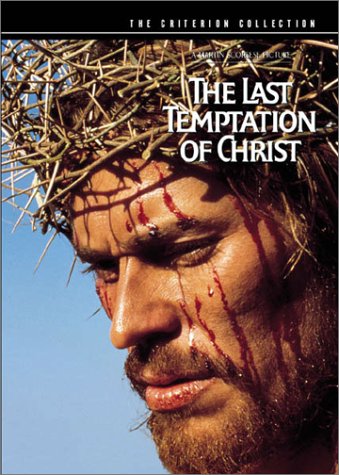
It would be a rare day indeed when I claimed to be the first to see, read, or watch something. Caught up between constant obligations (part-time jobs can be more demanding than their full-time facsimiles) I often find my mind awhirl for a semester at a time, only to discover that inter-term courses start just two or three days after the current term ends. If there’s a great movie out there that everyone’s commenting on, I am lucky to catch it before it leaves the theater. Sometimes I even miss the DVD version. So it was that yesterday I finally got around to watching The Last Temptation of Christ, the 1988 Martin Scorsese movie. This film came out right after I finished seminary, while I shared an apartment with a seminary friend who was an irrepressible movie buff. Together we missed it and, despite teaching in a seminary for a decade and a half, I still missed this one by twenty years and a few. At last I can feel caught up with the late eighties.

I’m not a big fan of Jesus movies. Movie makers shooting such films portray an eminently likeable guy getting beat up and tortured to death with such contempt that it is wrenching to watch. Yes, I know that’s how the story goes, but must we be brought into the Schadenfreude? As a life-long religionist raised in the Christian tradition, however, I feel a professional obligation to see popular portrayals of the foundation stories. The first one I recall viewing was Franco Zeffirelli’s 1977 Jesus of Nazareth, a movie so reverently rendered that it is frequently cited as the best ever. The eponymous Jesus by Peter Sykes and John Krisch came out in 1979 and claims to be the most watched movie of the genre. I saw Jesus Christ Superstar in college, but even Andrew Lloyd Webber’s music couldn’t remove the depressing aspect. Then, of course, Mel Gibson’s The Passion of the Christ in 2004. All of them have left me depressed. Perhaps that is their intended purpose.

The Last Temptation was laden with controversy in its day. I was anxious to see why (okay, so not terribly anxious, but I was curious). So yesterday I got to satisfy an ancient itch. Despite the caveat at the opening of the film, many critics jumped on the portrayal of an indecisive Jesus who has a rather chaste love scene with Mary Magdalene in a “last temptation” vision while on the cross as irreverent. Perhaps two decades and countless movies later this criticism has been calmed, but I found Last Temptation to be a typical Nikos Kazantzakis introspective, full of self-doubt and deluded penance. Kazantzakis’ work is a man’s struggle against his personal demons. Do dream sequences count as theological fodder? The movie suffers from pacing issues and at times contrived dialogue. The best scene is where Jesus meets and dresses down Paul only to have Paul declare himself the true bearer of the message. Even that is in the dream at the end.

In 2004 a Fundamentalist atmosphere pervaded Nashotah House. Newly appointed “theologians” on the faculty easily bought into Mel Gibson’s theatrically distorted view of their faith. By the end of that academic year it was clear that the evangelical leadership had decided on a new victim for the sake of facile Christianity, but that is a story that can wait another couple of decades before being told.


The Good (Face)Book

One of the funnier books I’ve enjoyed has been Sarah Schmelling’s Ophelia Joined the Group Maidens Who Don’t Float: Classic Lit Signs on to Facebook. Its unwieldy title as well as the temporary nature of the subject ensure that this book isn’t destined to be a literary classic, but it is a nuanced and subtle treatment of the Facebook phenomenon. (My daughter found it on the bargain table at Borders, and it cost us less than two dollars.) Schmelling presents the Facebook pages of famous, departed authors, often with hilarious results. For some time I regarded YouTube, Twitter, and Facebook as passing fads, but now I’m beginning to wonder if we’ve become so connected that shutting down the networks would be tantamount to pulling the plug on the respirator. We live to be connected. Humans are social animals, and yet many of us find ourselves isolated and alienated, living apart from family and those who were significant to us in times past. It’s the Internet to the rescue.

My wife pointed out an article on CNN entitled “The theology of Facebook, an online ‘altar’” by Omar L. Gallaga. Gallaga explores the concept that Facebook is now being taken as a spiritual venue by many. Quotes from the Bible or self-righteous, self-congratulatory religious sentiments are very commonly posted. So much so, Gallaga suggests, that some clergy worry about their jobs. Facebook has developed its own “spirituality” quite apart from anything its creator may have imagined. Facebook is evolving. I joined Facebook last year, but I limit my involvement to mostly watching others. Rather like I did as a kid on the school playground.

Is there balm in Gilead? In rereading Brave New World I am reminded of the insidious nature of soma, the feel-good drug. I’ve been to churches like that. Like Bernard Marx I left feeling empty. In Facebook-world it feels the same to me. We are communal creatures by evolution, but we want to talk about our troubles more than we want to listen. We are seeking that mythical, homeopathic cure to the ills our society creates: lack of prosperity (except for the Prosperity Gospel crowd, of course), joblessness, despair. Misery loves company and Facebook loves company. It is like the confessional without the absolution. Gallaga may be right; maybe Facebook has become a religious institution for some. If Facebook had come along a little earlier there would be no lost years of Jesus for us to ponder. We would know through his posts and tweets, exactly what it was like to be the son of God.


Tax Dollar Peep Shows

Yesterday’s New Jersey Star-Ledger ran a column by Paul Mulshine entitled “It may be 2010, but it sure feels like 1984.” The topic, of course, is the increasingly invasive procedures that TSA officers have been granted. For a guy who “held it in” every day for the six years of middle and high school because of bashful bladder syndrome, the airport has begun to feel like the shower room after gym class. Having been raised with the idea that certain body parts were to be viewed by God alone (and the occasional physician), being undressed in front of others was a nightmare scenario. I still avoid public restrooms when at all feasible. Now TSA officials have tickets to a free “scope and grope” fest whenever you want to fly. I say the terrorists have already won.

Perhaps by coincidence, in trying to keep up with my daughter’s reading assignments, I have started to reread Aldous Huxley’s Brave New World. The grandson of Thomas Huxley, Darwin’s bulldog, Aldous had written a foreword in 1946 that was affixed to the front of my college edition of his novel. In it he states his bleak vision of a future where governments have all become totalitarian and control vast numbers of slaves made willing by apathy (read “world-wide web” or “Internet”). Showing your private parts to a total stranger who then gets to grope you later? This is freedom? Abandon hope all ye who enter here.

Have these TSA officials been trained, seriously trained, to deal with the fact that they see what many people would pay good money to glimpse? (Well, not in my case, but you get the picture.) Where are their credentials? No, wait, don’t show me that! If I decide to display myself in public, I could easily be arrested for indecent exposure, but if a pervert wants a free look, all s/he has to do is apply to TSA. What will it take for Americans to shake off their electronically induced haze and say “No more!”? Perhaps I am alone in feeling vulnerable naked before strangers. Perhaps others enjoy giving it all away. Is it not better to survive that flight so that another stranger gets a gander at the jewels when you fly back home? You can kiss my arse goodbye and call it government work. 1984? Brave New World? I think Silence of the Lambs might be a better paradigm.


Hallowed Be Thy Game

I don’t follow sports. At all. This may seem an unmanly confession, but I think of it as more a silent protest against a society that pays excessive bonuses to people who play for a living. It’s not that I have anything against physical fitness – I still jog regularly and have been known to rattle the free-weights around a time or two – it’s simply the recognition that the more difficult achievements, intellectual achievements, are undervalued. Not that I make any claims of being an intellectual – I have no time for those who tout Ph.D.s like intellectual currency – but I see things from a different angle. Usually when I reach the sports section, I simply flip over the whole wad of pages to get onto what’s next. Today, however, a front-page sporty headline caught my attention, “‘God Can Turn Mistakes Into Miracles’ is the message Michael Vick sent out…” I confess, I don’t know who Michael Vick is. But he knows what God can do in some sports venue.

I grew up with God. The information I was given was that those who devote the majority of their time and attention to God will receive their reward. Not always in money, despite what the Prosperity Gospelers bray, but at least in kind. Being the kind of person who likes to follow things through to their logical conclusions, I ended up with an appropriately named “terminal degree” in religious studies. The prosperity came in the satisfaction that I could teach others for a reasonable, if low-end, salary and continue my goal of deeper understanding. Then Prosperity Gospelers took over the seminary and those of us without material cache were kindly kicked out. I was jogging between seven and nine miles a day, looking for answers.

The headlines this year have included tragic college sports-related injuries, one of the more dramatic from my own part-time home of Rutgers. Immediately medics rush to the field and prompt, professional medical care is given. I am covered by no medical plan. Many athletes take my classes, and they can count on the good graces of God and university officials to take care of them. In my opinion they are just as capable of learning as any other students, but the incentives just aren’t there. Why earn a degree in a field that will plant you on your backside all day for minimum returns when you can perform miracles in the athletic world for more money than the average citizen can even imagine? If God can turn mistakes into miracles, perhaps this misspent life of religious studies can turn into a lucrative position after all.

Miracle or mistake?


New York Sinning

Men’s Health, a magazine I’ve never read, is making a foray into spirituality. Or at least religiosity. According to an article in the Friday New Jersey Star-Ledger, the magazine noted for its washboard abs and iron biceps is poised to claim New York City among the least devout cities in the country. Even lower on the scale are New Jersey’s own Newark and Jersey City. Quite apart from wondering what a magazine whose cover frequently involves suggestions on how to improve your sex life has to do with religious devotion, the criteria for this assessment also give pause. According to the article, a city’s saintliness is measured by the per capita number of worship venues, the diversity of religious groups in the city, and the amount collected in donations. Interesting criteria.

I’ve spent enough time in New York to know it is hardly Heaven – still it is one of my favorite venues – but that it is hardly Gomorrah’s brute step-brother either. Per capita places of worship as a measure of spirituality overlooks size of venue and number of services. A Midwestern town with a dozen churches, each with a dozen members and with one service a week scores ahead on such a scale against a city with more than 2000 churches, 1000 synagogues and 100 mosques, many with multiple congregations. Diversity of religious groups? Surely New York and New Jersey must come out in front on that! I’ve been to Europe, and even Israel, and there are days when I’d swear New Jersey has a higher percentage of ethnic groups than any similar-sized region I’ve experienced.

My main concern, however, is with the amount of donations criteria. “Where your treasure is, there your heart will be also,” a famous guy once said. Was the treasure monetary? Precisely the opposite seems to have been the point. True, money today is often a measure of value, but it is not the only such measure. In fact, the same guy who made that statement once said a poor woman’s two cents were worth more than the lucrative eternal investment of the wealthy. I don’t doubt that New York, Newark, and Jersey City have their share of innovative sins. Their citizens, however, are just about as religious as people are anywhere. In my opinion the trouble is not in the souls of the masses, but in the design of the assessment. But with pecs like that, what does it really matter?

A God's eye view of Sin City


Physics of Religion

As an observer on life’s sidelines, I rarely participate in the action. The subject matter is more important than the critic, so I tend to respond in this blog rather than create. Once in a great while, however, someone I know shows up in the media. A number of years back Neal Stephenson introduced me to George Dyson. I instantly felt an affinity for him, and found his book Darwin Among the Machines a great triumph of intelligible science writing. It was no great surprise, then, when George was mentioned in an article in December’s Atlantic magazine, comparing his outlook to that of his father, physicist Freeman Dyson. I was intrigued by physics in high school, but my overwhelming supposition that religion explained life overruled this predilection and so I’ve ended up an unemployed religion professor than a scientist. In the article, however, author Kenneth Brower brings these things together.

Brower asks a pointed question: how can a physicist as brilliant as Freeman Dyson hold factually inaccurate and apparently misguided ideas about global warming? The story contrasts Freeman with his son George as exemplars of two different religions. George represents the environmentalist religion while Freeman represents the belief in humanity’s ability to solve any problem. The use of religion as a means of distinguishing these views again raises a question of definition. I don’t dispute the use of the word – it is entirely apt in this context – but the functional definition here is that religion equates to something deeply believed. I am a little troubled by this. Not because no gods or deities or supernatural forces enter into it, but because for years many evangelicals have boldly declared that science itself is a religion. That idea has been used as leverage to get Creationist ideas equal time with those of science because it comes down to purely a matter of one religion against another.

Belief is a phenomenon that is not well understood. Most people have no difficulty accepting the truthfulness of factual data. Seldom do even religious zealots doubt two plus two equals four. At a more theoretical level, however, facts become formulas incomprehensible to most of us and critics are quick to call this “religion.” Faith in human ability to solve the riddles of the universe. Where is the line with religion crossed? In the year 2000 Freeman Dyson received the Templeton Prize, an honor reserved for those who make significant contribution to the spiritual dimension of life, often with a scientific component. It is the dream of every religionist to be considered for this great honor. Once again, however, the further out we peer into our universe, the more the lines become blurred. That does not worry me. What concerns me is how such ambiguity will no doubt be used by Creationists and their Neo-Con supporters who are only too glad to have a scientist of Freeman Dyson on their side. When religion trumps science not even 2 + 2 = 4 is secure.

Hubble's ultra deep field has yet to detect any deities