Self Reflection

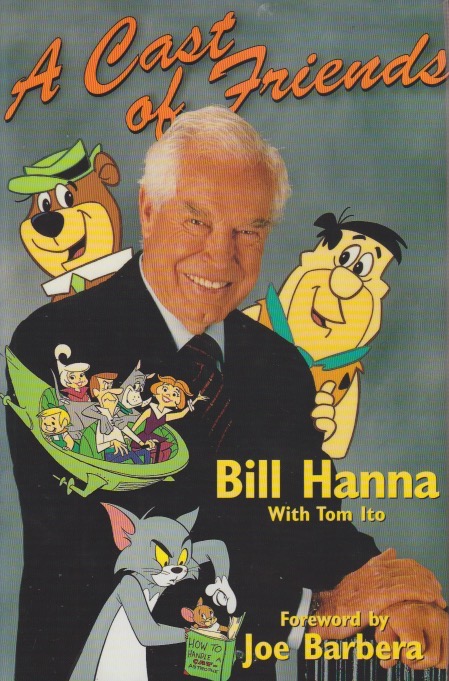
The desire, for some people, is very strong.  The need to record one’s life in words can be undertaken for any number of very human reasons.  Perhaps we want our descendants to know who we were.  Maybe we have a message that we’re trying to give to a world reluctant to listen.  Some may just want to brag.  Now I have to confess that, like most kids of my vintage, Hanna-Barbera cartoons were standard fare in my childhood.  I personally preferred those of Warner Bros., but like a typical addict, any fix will do.  I watched The Flintstones, The Jetsons, but preferred Scooby-Doo and Johnny Quest.  They all had Hanna-Barbera in common.  Bill Hanna published his autobiography, A Cast of Friends, in 1996 and I was curious.  I located a used copy and realized something right off—here was a guy who had a knack for leaving out the best parts of the story. Perhaps it was a cartoonist’s desire to look for the fun?

We generally read autobiographies to learn about the struggles faced, the odds stacked against someone that they somehow overcame.  Often with lingering trauma.  To hear Bill Hanna tell it, his was a bland life with a stable upbringing, good career breaks, and commercial success that led to wealthy old age.  Throughout the narrative there are hints that more was going on behind the scenes, but the carefully controlled image of the Boy Scout who ended up accomplishing much with few obstacles to face prevails.  Image control is also, I suppose, a major reason for indulging in autobiography.  Getting the job you want with minimal drama, however, makes me think there’s something more to why this autobiography was written.  That said, I learned quite a bit about the early animation business—my reason for reading it in the first place. 

Before my mother’s death, I had urged her to write her life story.  There was plenty of drama there, and a strong desire to keep going, for her kids.  Her father, her personal hero and therefore one of mine also, led an interesting life that he summarized in about four pages for his children.  Apart from one or two words I can’t make out in his handwriting, I devoured it with fascination.  He pointed out the oddities, the unexpected things.  Elements that make for an interesting life.  I got the sense from this brief book that more was left unsaid than was being revealed.  Of course, some personality types tend to remember only the positive.  And I suppose that’s cause for rejoicing.  Some of the rest of us, however, wonder about what’s beneath the surface.  Unless someone records it, however, we’ll never know.

Ushering In the New

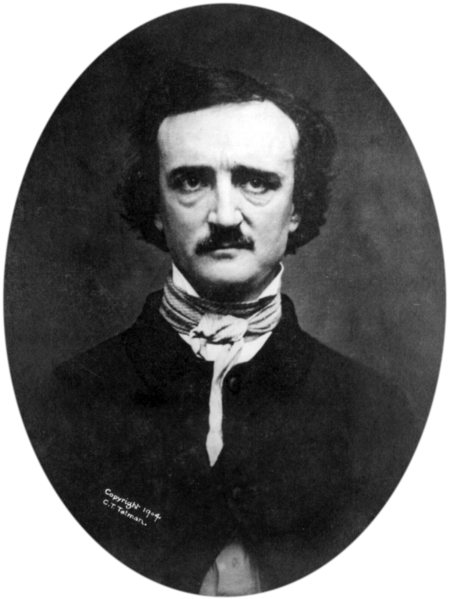
I’m not at all certain I’ll finish it, but at my daughter’s suggestion I watched the first episode of Netflix’s new series, The Fall of the House of Usher.  This isn’t set in Poe’s day.  The action is in the present and it opens with a funeral for three of Roderick Usher’s children.  What’s particularly striking about this funeral is that the priest’s homily is composed of lines from Poe.  I think we all know that Poe is undergoing a great surge of popularity these days, but this series seems not content just to name characters and companies after Poe’s names, but it also weaves his thought deeply into the fabric.  It uses his images in literal ways that add depth to the plot.  I’m not sure that I can spare the time to watch it the whole way through, but I’m sorely tempted to do so.

With C. August Dupin as the Assistant District Attorney, the series ties Poe’s ratiocination stories in with his horror tales.  Like most recent media efforts, the cast reflects diversity in many ways.  This diversity isn’t the reason the house of Usher is falling, but it’s because of disloyalty.  The family owns an unscrupulous company that has shown disregard for the suffering it causes, buying its way out of legal difficulties.  (This part is quite realistic and one can’t help but to think of Trump and others like him who simply buy injustice.)  But someone in the Usher family has decided to speak out.  Dupin won’t reveal who it is, so Roderick and Madeline Usher put the family up to the task of rooting out, and killing, the informant.

Perhaps with some time off over the holidays I’ll be able to catch more of the series.  It intrigues me, however, that Poe is being used essentially as scripture.  Literally.  The priest’s homily fades into the background as the surviving family members check in on each other, but his words are drawn from a variety of Poe’s writings.  I’ve long felt that our canon of scripture is too small.  Inspired literature did not cease to be written in the second century.  As someone who has listened, and still listens to sermons, it’s clear that the Bible alone isn’t a source for knowledge.  I haven’t read all of Poe—he left a massive paper trail through his life—but what I’ve read sticks with me and hearing him as sermon material makes me think I need to try to find time in coming weeks to pick up another episode or two.


Bears Repeating

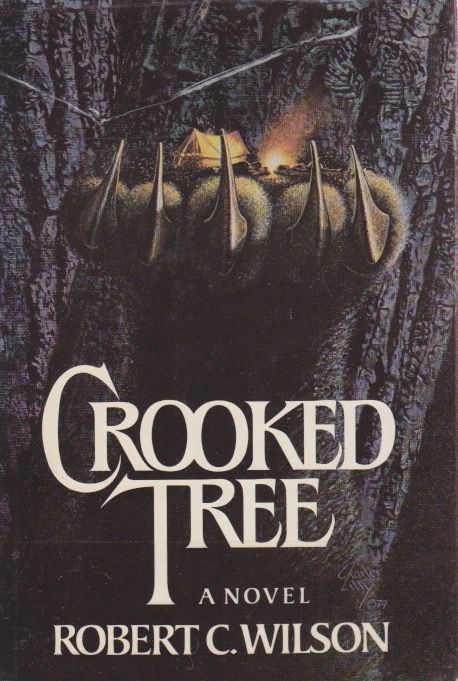
I read Robert C. Wilson’s Crooked Tree before I began this blog, I guess.  I remembered it being better than it seemed this time around, but it works as a horror novel.  In fact, the first third or so was quite unnerving, although I’d read it before.  After that the plot tends to require greater suspension of belief.  But then again, American Indian horror has come a long way since then.  Wilson, according to the limited information about him online, isn’t an Indian.  These days publishers are very concerned with appropriation—something that wasn’t an issue back in 1980.  And these days the work of Stephen Graham Jones, who is both a Blackfoot and an excellent horror writer, raises the bar considerably.  But Wilson is honest about the situation in his laying out of the novel.

Axel Michelson is a lawyer and he’s working to preserve the fictional Crooked Tree State Forest and prevent development.  Many of his colleagues and neighbors in Michigan are Indians, and so is his wife.  Axel’s efforts are hampered by a sudden onslaught of black bear attacks.  The description of the first three or four are scary enough to dissuade you from ever going camping again.  Axel’s assistant is an Ottawa and and he and his family suspect a bearwalk is involved.  This is the reason I read the novel the first time.  As a Native American folkloric monster, the bearwalk is difficult to uncover.  There are a couple more novels—one of them hard to find—that feature the tales, and there’s a university press book on folklore that has some accounts.  Not much more is out there that I can locate.

A bearwalk is a kind of shape-shifter.  A spirit that can control bears, in this case.  Axel becomes the white savior who uncovers the ancient ritual to stop the bearwalk, which has taken control of his wife—his main motivation for stopping it—while the Indians can’t figure out what to do about it.  They do tell him about the ritual, but mourning the loss of their culture, they fear it’s gone forever.  Meanwhile the bear attacks continue but once the shock of the first few attacks has worn off, they don’t scare so much.  There’s also a lot of supernatural involved, mostly drawn from native traditions.  It seems clear that, like Axel, Wilson did quite a bit of research on American Indian folklore.  He treats the Ottawa culture with respect and wrote a novel that might’ve had more influence than it seems. It’s well worth the read the first time around.


Which Love

Perhaps some content creators use genre as a guide when writing, or when filming a movie.  Some categories are pretty well defined—the western, the romance, or in writing specifically, the literary.  Others are less easily settled.  Horror is particularly slippery.  Although The Love Witch was an interesting story with a feminist message, the horror trappings weren’t entirely obvious.  In fact, it reminded me quite a bit of The Wicker Man.  (Not in any literal way, of course.)  Afterward I read that it is also a comedy and that helped make sense of it.  It gets generally high marks although, to me, the acting seemed pretty wooden.  The Love Witch follows Elaine, a young, present-day witch, who’s moving to a small town in California that tolerates witches.  Her husband has recently died and flashbacks imply that Elaine may not have been entirely innocent in the matter.

Once she settles in Arcata, she starts looking for her “prince charming” as she continues to practice the craft.  She finds an emotionally unstable professor who take her home readily enough, but he quickly proves to be too needy.  Part of this is because he took a love potion she gave him.  He dies that very weekend.  Elaine seems less than distraught as she buries him and begins seeking the next possibility.  The husband of a friend comes over when the friend is out of town and he too proves emotionally immature.  After their affair he dies by suicide.  A policeman investigating the missing professor comes to suspect Elaine, but he too feels drawn to her.  The locals, meanwhile, aren’t as witch-friendly as they seem.  They riot in a burlesque club, chanting, “Burn the witch, burn the witch!”  I won’t spoil the ending.

I was watching all of this with the genre “horror” in my mind.  I’d not seen it labeled as “comedy,” and, as an art film there’s nothing so crude as a laughter track or cheesy and obvious comic music.  Instead, the film is an example of “the female gaze.”  Film analysts, and even religion scholars, have long written about “the male gaze,” which looks at women a certain way.  This movie’s writer, director, and producer, Anna Biller, experiments with the female gaze instead.  The results for some men, I suspect, are disturbing.  They certainly aren’t in control in this film.  Retro in execution, it’s unlike most other horror I’ve watched.  Unusual for the genre, the critics responded well to it.  It was a fun flick, but I’m still not sure how wide “horror” stretches, but I do sense that it’s quite inclusive.  And I applaud the female empowerment on display, even if I’m confused.


Could Have Understood Differently

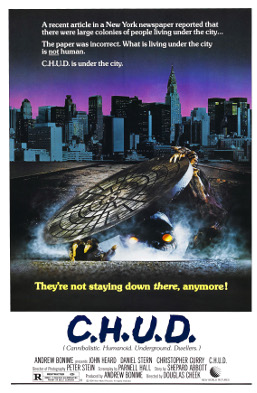
A lesson many authors need to learn (and I include myself here) is that titles matter.  Cutesy, clever titles may work for well-known writers, but something that describes your book, or movie, is essential.  And avoid acronyms.  I avoided watching C.H.U.D. for years, put off by the title.  I’d read a few books where it was discussed, but finally decided it was something I should see.  If you’re as put off by acronyms as I am, C.H.U.D. has a double meaning.  Initially Cannibalistic Humanoid Underground Dwellers, but more importantly, Contamination Hazard Urban Disposal.  I suppose that’s a bit of a spoiler, but since the movie’s been out since 1984 I’ll let it stand.  Although largely panned, I think C.H.U.D.’s a perfectly serviceable monster movie and despite what the critics say, it has a larger message.

Set in a gritty New York City, the film focuses on the homeless who live underground.  Although it’s not preachy about it, the underlying message is that these are people too.  Until, of course, the contamination hazard mutates some of them into C.H.U.D.  Then they start looking for human victims.  In a city the size of New York, they don’t have much trouble finding them either.  A government cover-up is behind all the mayhem.  Nuclear and other hazardous waste is a very real problem, and none of us really knows what happens to it.  With much of government boiling down to political theater, I’ll take my chances watching movies and wondering.  The good guys in this movie are those who actually care about the homeless.  They are a rather unsympathetic photographer and his wife, a police captain with a missing wife, and a guy who runs a soup kitchen.  They learn something isn’t right beneath the streets but can’t get the authorities to admit it.

This isn’t a great movie—there are gaps in the plot all over the place—but it’s not a horrible movie either.  Sympathetic portrayals of the poor are, in my experience, rare.  These are people who’ve organized themselves into a society that’s come under threat because of those who dwell in the light.  Some classify C.H.U.D. as science fiction,  but that’s a very loose use of the term.  It’s actually a low-budget horror film with a bit of heart.  Unfortunately the title obscures that this is a little gem of a monster movie.  I really had little idea of what it was about when I started streaming, but ninety minutes later I was glad I’d done so.  And I went down to the basement afterwards, you know, just to check.


What Poe Saw

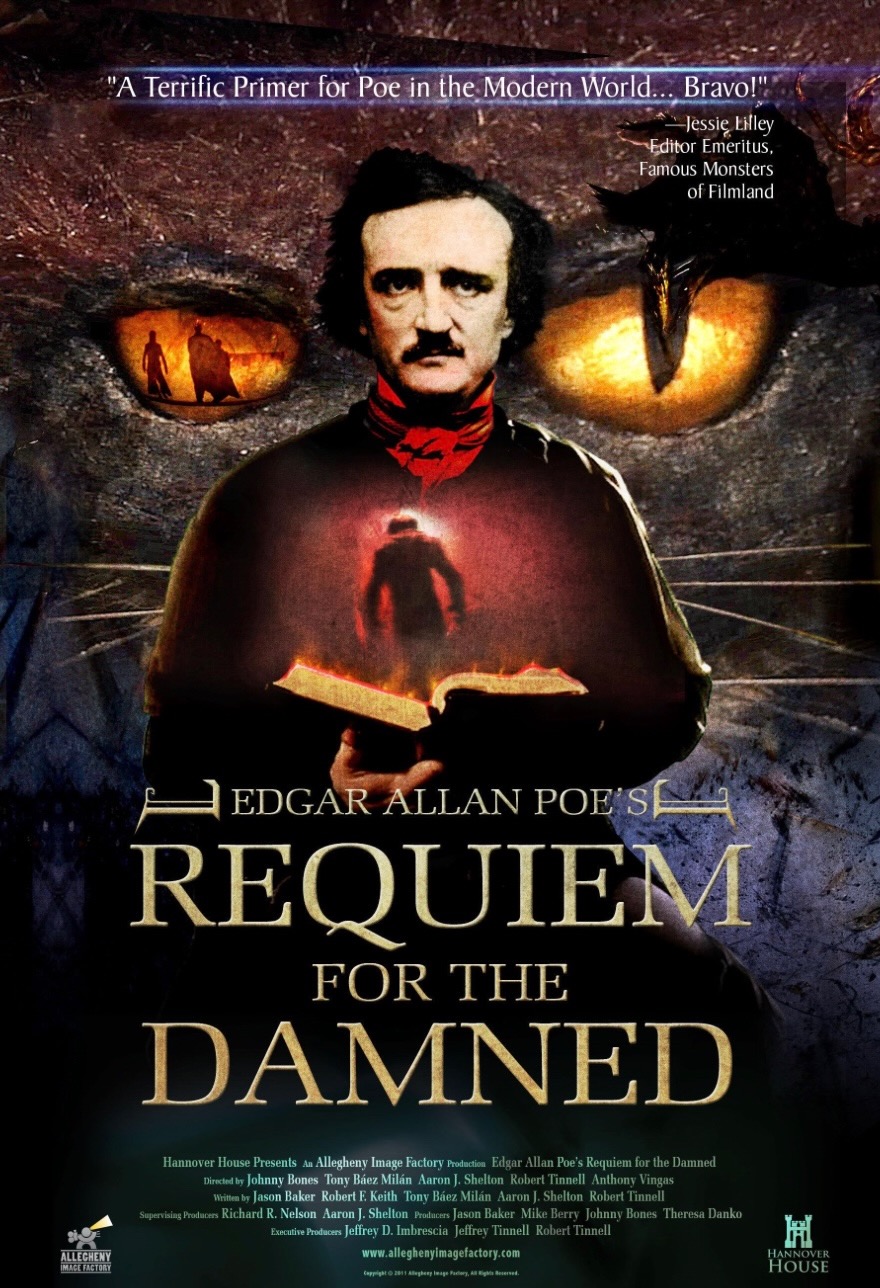
It must be quite a draw, making a film based on Edgar Allan Poe.  The psychology of his tales of terror is compelling and modern filmmaking offers endless possibilities.  I wasn’t looking for anything too heavy, so I watched Requiem for the Damned.  Vignette movies are like a box of chocolates (I’m sure you know how the rest of it goes).  This particular feature doesn’t seem to have had a theatrical release, perhaps because it is an independent film made by students and faculty at the Douglas Education Center.  The opening credits cite the Allegheny Image Factory, and when I think of Pittsburgh and horror my mind eventually wanders to George Romero.  The Douglas Education Center began as a business school south of Pittsburgh and it offers training in filmmaking.  And that seems to explain this particular film.

Five vignettes are taken from Poe’s “Fall of the House of Usher,” “The Tell-Tale Heart,” “The Black Cat,” “Murders in the Rue Morgue,” and “The Pit and the Pendulum.”  Only “The Black Cat” is set in Poe’s period and it is heavily CGI.  The rest are modernized versions of ideas inspired by Poe rather than following his plots.  “Usher” uses Poe’s characters and an introduced illegitimate son, to present the Usher curse—the unfeeling business practices that brought the Ushers wealth have made theirs a haunted estate. “Tell-Tale” has a modern urban legend feel as a guy starts seeing his ex-girlfriend’s broken heart everywhere he goes.  “Rue Morgue” is a lesbian revenge story involving an improvised gorilla suit.  “Pit” is a post-apocalyptic vision with almost no dialogue and a somewhat confusing resolution.

Horror anthologies seldom work.  Like edited volumes in the book world, they lack coherence.  Poe insisted that short stories should be single-sitting forms so that mood could be maintained.  Putting five together, each with different directors, writers, and styles, makes for a disjointed viewing experience.  A couple of the segments, “Black Cat,” and “Pit,” seemed to drag a bit.  The former because you already know the story and the CGI was so abstract that it interfered with the telling and the latter because you really don’t know what’s going on.  The visuals are impressive, but story seems to have been sacrificed.  I was looking for something not too heavy and I did find that.  I also learned about a place where filmmaking is taught and you don’t have to have connections to get in.  Who knows?  Perhaps in another life I might’ve gone that direction.  I tend to follow Poe.


Black Bird

Although we prefer typecasting—it’s so much easier!—Edgar Allan Poe had both depth and width as a writer.  He penned funny as well as scary, love poems and detective stories, even something like a scientific treatise.  One thing I’m sure he didn’t anticipate was his name being suborned for cheap horror movies.  Roger Corman is a Hollywood legend—a good example of a guy making it in the film industry on his own terms.  He paired Vincent Price with a number of Poe titles that had little to do with the actual works of the writer.  One that oddly stayed with me since childhood is The Raven.  This was well before I’d read the poem.  It’s funny how very specific things will stick in your mind.  I remembered the strange hat Price wore.  And I remembered—misremembered, actually—Price using a spinning magical device with sparklers.  Misremembered because that was Peter Lorre’s character, not Price.

That was it.  I didn’t remember that Boris Karloff was also in the film.  I was too young (as was he) to recognize Jack Nicholson as well.  Although I watched The Twilight Zone, I didn’t realize the script was by Richard Matheson.  This film was loaded with talent, but it really was goofy.  I recollected Price was a magician, but I didn’t know this was a rather silly battle to become chief magician.  Lorre’s ad libbed lines were surprisingly funny, even after all these years (I was about one when the film came out).  Surprisingly, the movie did well at the box office, despite its taking a sophomoric approach to perhaps Poe’s most serious poem.  

I’d avoided watching it again for all these years because of that sparkler scene.  I’m not sure why that particular moment wedged itself so firmly in my young brain.  It seemed so not Poe that I couldn’t get back to the movie, apparently.  With Price and Lorre camping it up—Karloff was, by all accounts, most professional as an actor—and Nicholson uncharacteristically timid, the cheap special effects, it’s obvious that viewers enjoyed a good laugh at this one.  It’s not true to Poe, of course.  It’s true to Roger Corman, however, a filmmaker who knew how to deliver cheaply and quickly and still earn some money at it.  I’d last seen The Raven about half a century ago.  I may be tempted to watch it again, after having seen it as an adult, but if I wait too long I’ll need to leave that duty to someone who’s read this and who isn’t afraid of sparklers. 


After Effects

Every once in a while you find a book you wish had been published sooner.  The Exorcist Effect, by Joseph P. Laycock and Eric Harrelson is one of those books.  Although it covers many of the same films I talk about in Nightmares with the Bible, it does so with a different target in mind, and a lower price point.  Drawing on the observation that human recall is often accompanied by “source amnesia,” they explore the idea that famous horror films (and some less famous) get remembered as “facts.”  This seems to be a greater danger to those who don’t actually watch horror or who watch it uncritically.  Movies such as The Exorcist become the basis for what individuals believe about demons.  But it’s far more dangerous than that, because in a culture where everything’s politicized, horror movies become “the truth” for groups like QAnon.

Considering Rosemary’s Baby, The Exorcist, and The Omen as prime examples, they then move on to consider the fascinating, if weird, lives of Ed and Lorraine Warren, and Malachi Martin.  Popularizers such as these three influenced both horror films and general public opinion about demonic possession and exorcism.  The study moves on to the Satanic Panic of the eighties and nineties and how heavy metal music both utilizes and ties into the Exorcist Effect.  This important book ends by discussing the very real dangers of a society that elects presidents and others based on this Effect, which confuses reality and movies.  The book shows how many of the ideas behind conspiracy theories either misremember, or intentionally misuse, horror films.

Back in the days when I started Nightmares with the Bible there was comparatively little published in readable terms that discussed demons or, specifically, the portrayal of exorcism in movies.  Laycock and Harrelson’s book would’ve been a welcome contributor to that dearth of resources.  As someone who works on the fringes of the fringe, I don’t always hear the discussions other scholars have and I’m often left to my own devices when it comes to finding and reading information on horror films.  Without library privileges, it often means having to purchase the books to access them.  I was thrilled when I first learned about this book and I’m glad to have finally had the opportunity to read it.  I’m sure I’ll be coming back to it on occasion.  After writing Nightmares, I took a bit of a break from demons because being in the dark for too long can do odd things to a person.  But not knowing about them, as this book shows, might cause even greater problems.


Who’s Knocking?

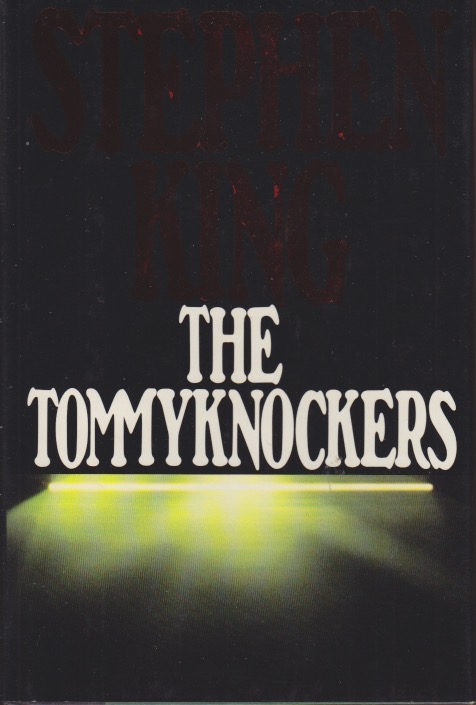
I’m by no means alone in enjoying Stephen King novels.  I’ve read a fair number over the years.  I was put on alert for The Tommyknockers by a scholar who pointed out some of the religious elements in it—again, not rare in King’s oeuvre—but I’d never heard of it before that.  I’m not really a good fan boy, I guess.  In any case, I saw a copy with the shiny copper of King’s name worn off at a library book sale for a buck.  It sat on my shelf for many months because, well, it’s long.  I finally pulled it down in October only to discover that it wasn’t my favorite King story.  For one thing, it’s simply too long.  For another, the characters aren’t the easiest to cotton onto.  If you’ve not read this one and you plan to, a spoiler of two might slip out but I’ll do my best not to ruin the ending.

I think horror when I think King, although I know it’s unfair to typecast authors like that.  Tommyknockers is more King’s hand at science fiction.  Well, at least it has a space theme, which is generally a cue for sci-fi in my book.  Bobbi Anderson discovers a buried flying saucer on her Maine property.  With the help of an alcoholic friend (Jim Gardener) she begins to excavate it.  The saucer, which has been buried for millions of years, is reactivated by their interaction with it and soon the entire town of Haven, except those with a lot of metal in their bodies—like Jim, are under its power.  They invent advanced gadgets (and weapons) using power from the ship and standard batteries.  They begin physically transforming into something less than human.  Jim, mostly immune, tries to help Bobbi out but he, along with a fairly extensive cast of disposable characters, are powerless to stop things.

Like most King novels, it’s well written.  Like some of his other material, it’s over-written.  Having had my own written work chopped down  (and, let’s face it, I’m now an editor), I see places where cuts could be made.  As with any long book, however, I’m left feeling a bit lonely now that characters I’ve read about nightly for many weeks are gone.  Even though I really had a difficult time evoking much empathy for them, hey, they’re people too.  Or so it seems.  Such is the magic of fiction.  Besides, there are bits of the old King horror still present in the book.  I know it won’t ever be my favorite King novel, but it won’t stop me from reading another, when I have the time.  Hopefully the next one will be a few pages shorter.


Hybrid

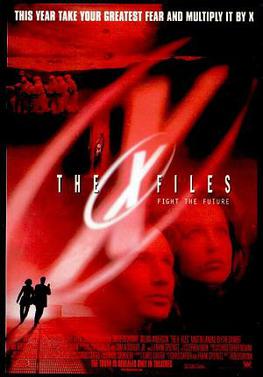
We really need a better category.  Beyond “horror,” I mean.  My wife and I have been re-watching the X-Files on DVD (we know how to stream but we bought these before streaming was a thing).  Having reached the end of season five, we knew it was time to slot in the movie, Fight the Future.  You see, in case your memory’s hazy, the X-Files were closed at the end of season five.  The X-Files movie shows how they reopened.  The X-Files has lots of monsters, some gruesome murders, and some spiritual elements.  It’s categorized in different ways, one of which is horror.  You see, horror and monsters are related.  Others prefer to call it science fiction but that doesn’t really help because sci-fi and horror are closely related and this isn’t exactly like Star Trek.  In any case, we saw the movie when we were first watching the series but I didn’t recall much of it.

As a hybrid—rather like an alien-human mix—it’s both movie and television show.  You could watch the movie without having followed the mythology up to this point, but you’d miss an awful lot.  And you can watch the television series without seeing the movie, since it’s episodic.  You’d also miss some detail that way.  It struck me as strange that this hybrid had trouble working for me.  Was this a movie or a television show?  Our minds (or at least mine) compartmentalize such things.  You know what to expect from television.  You know what to expect from a movie.  Mixing them perhaps adds to the mystique of the X-Files mythology.  The big-budget effects are only temporary, however.

A couple days after, we picked up with season six.  The first episode incorporates the movie into the long-running plot.  You see, movies may be a couple hours long, but a series that runs for several seasons is even longer.  And since the movie is about hybrids, it’s strangely appropriate.  I’ve always been disappointed that they never came out with a third X-Files movie.  It would’ve been nice if they’d wrapped up the mythology in a definitive way.  Although, I suppose, that was part of the draw for the series.  It was open-ended.  And Mulder’s poster said why.  It’s not “I believe,” but “I want to believe.”  That’s the way of the human psyche.  I’m glad to have watched the movie again.  The storyline is intriguing and I’m a fan of mythologies, both ancient and modern.


New Gremlins

I haven’t seen the movie Gremlin in years.  I’m adding it to my Christmas list this year, however.  Probably because I watched Shadow in the Cloud recently.  And although that gremlin wasn’t cute, it led me on a journey of discovery, and that counts for something.  I have to admit, first of all, that I’d never heard of Roald Dahl before a kind family member sent us some of his books when our daughter was young.  We became rather hooked.  His novel The Gremlins was among those we read but there was something I didn’t know (one of trillions of somethings, of course).  And that is that Roald Dahl was probably the reason anyone outside the Air Force knew about gremlins at all.  Dahl was a pilot with the Royal Air Force.  His first children’s book was the aforementioned Gremlins.

Image credit: US Government, public domain, via Wikimedia Commons

I first learned about gremlins from The Twilight Zone.  “Nightmare at 20,000 Feet” came close to giving me literal nightmares.  (And Nope reminds us that there may be things in the atmosphere that we really know nothing about.)  That particular episode was based on a short story by Richard Matheson.  It was also incorporated into the 1983 Twilight Zone movie which I have, unaccountably, never seen.  Of course, I saw Gremlins in a theater back in my college days.  That was before I understood, or really had any interest in holiday horror.  This is one of those instances where the birth of a monster can be traced and its lore can be watched to grow, in real time.

Dahl took something he’d heard about—gremlins weren’t believed to exist by anyone—and made it literal, in the form of a children’s book.  Soon after, other vendors, such as cartoon creators, picked it up.  In the Twilight Zone it began its transition to horror.  Then a regular horror movie was made of them.  All of this has taken place since World War II and there are plenty of people alive who were around at the time.  Shadow in the Cloud was a reboot of a monster generally underused.  There are few times people feel as vulnerable as when they’re flying.  Heck, climbing a tall ladder is enough to give me the willies.  And the movies have shown us that even on the ground we’re not really safe from the monsters of our imagination.  That’s why it seems like a good idea to me to watch Gremlins again.  And to dream of the monsters we invented.


Gateway Horror

I’m in two minds about The Gate.  Part of me says “bad movie” while another part says, “Yeah, I’d watch it again.”  A third part of me knows I probably will.  It came out in 1987 as family-friendly horror.  There’s far too much going on for the run-time and the acting is lackluster (child actors who can really pull horror off are rare; perhaps those with more life experience make it believable).  It does have some Poltergeist vibes, though.  So, Glen (12) and his sister Al (15) are allowed to stay home without a babysitter for three days.  A couple nights before, a storm blew over a tree in the backyard, and Glen, with his friend Terry, accidentally open the eponymous gate at the hole by breaking open a geode, allowing demons to come into the world.  And, of course, the parents are gone.

Glen fears he is losing his sister to, well, growing up.  They used to do model rockets, but now she’s interested in boys.  Terry listens to heavy metal and discovers in an insert to an album of a European band, Sacrifyx, that they’ve opened the gate.  As night falls, the stop-motion demons attack.  They’re little and can be blocked by doors.  Al, Glen, and Terry have to figure out how to stop the demons and seal the gate without the Dark Book insert from the Sacrifyx album.  What to do?  They grab a Bible and try reading a bit.  When it doesn’t seem to be working, Terry utters an expletive and throws the Bible into the hole.  It works!  But, ah, this is only the false resolution.  The really big demon bursts through a hole in the living room floor after Terry and Al are both taken.  Glen, left to his own devices, launches a model rocket at the demon, destroying it.

Okay, sounds bad, right?  The reason, it seems to me, is that it doesn’t put religion to work for itself.  The instincts seem good—use the Bible—but the demons are too corporeal and too physical.  There’s no possession here.  In fact, the demons are the old gods (we’re in Lovecraft territory now) who want to take over the world once again.  There’s some good material to work with in The Gate, and if I ever get around to a sequel to Holy Horror I’ll have to include this one.  Overall, the message seems to be that if the Bible doesn’t work, use a rocket.  Oh, and don’t give up on your sister.


Support Roles

It seems to me that many people who strive for a particular life—say writer, actor, rock star—and don’t break through often end up in supporting roles.  I’ve looked for agents for three of my books (unsuccessfully, of course) and have noticed that many agents list themselves as authors as well.  I’ve not heard of any of their books, but then again, there are thousands of new books (likely closer to two million) published each year.  Nobody can keep up.  Since I can’t break through, I work as an editor.  A support role.  Many colleagues who haven’t made it to tenured professorships settle for the better paying but less rewarding job of being administrators.  Artists become gallery owners, guitar players sound engineers, actors coaches.  You get the picture.  We can’t all succeed at what we set out to do.

There is, however, always hope.  For the past several months I have begun each day seeking out quotes about hope.  Those who struggle, sometimes against great odds, must never give up.  I continue to write books even if they don’t sell or even get published.  Some of the writers I admire most never achieved fame until after they died.  The drive to do something noteworthy with life is strong, even if we don’t know what that is yet.  When we give up hope we become mere drones.  Automatons doing our pre-programmed work.  That is, we identify with our support roles and that becomes our life.

Photo by Faris Mohammed on Unsplash

I read about movies quite a lot.  There are many people involved, often in roles that most of us simply don’t comprehend.  Some of the more versatile people in the industry shift from role to role—director, writer, technician, producer, actor.  Those who break through are the few upon whom society smiles.  I recall learning about the Communist ideal of assigning people roles based on their early aptitudes.  I have no way of knowing if this really happened, but the idea is both scary and promising.  Scary because some of us are late bloomers.  Promising because some of us showed early talents that have been undervalued in our careers.  I don’t give up hope.  Daily, even on vacation, I awake early to work on what I hope to accomplish.  I may never break through—finding success as a writer is elusive, especially if you didn’t major in a subject others expect will lead to a writing career.  A support role gets you close enough, perhaps, to see how it’s done.  And to hope.


Shadowy Clouds

Okay, so it had Chloë Grace Moretz in it, and her face is on the cover of Holy Horror.  And it was tagged as action horror.  And apart from many highly improbable situations, Shadow in the Cloud is a perfectly serviceable movie.  Part “Nightmare at 20,000 Feet,” part Aliens, and part Indiana Jones and the Last Crusade, with any generic war movie thrown in, the movie is fun and a tribute to indy productions.  The plot is, admittedly, convoluted.  Moretz’s character (“Maude Garrett”) is a pilot officer who comes aboard a B-17 on a top secret mission.  She has a high priority parcel that must be kept safe.  The all-male crew use just about every sexist trope in the book but one of the crew takes her seriously.  While in the ball turret, she spies a gremlin.

This is a real gremlin, as implied in “Nightmare at 20,000 Feet.”  Set in World War II, the film has other threats.  Japanese Zeros find them and a dogfight begins.  In the meanwhile it’s revealed that the one crew member who doesn’t dismiss “Garrett” had an affair with her and the secret parcel is actually their infant son.  Meanwhile, the gremlin and the Zeros keep up their attacks, killing several of the crew, including the pilot.  Maude takes charge, and oversees the crash landing of the bomber and when the gremlin, still angry at being shot and hacked by her, steals the baby.  This leads Maude to beat the gremlin to death with her bare hands.  Improbably, both her lover and baby survive intact, along with two other not too bad crew members.

The film manages to be pretty heavy on social commentary, and even shows archival footage of women in various Air Force roles during the closing credits.  The production values and the message are what really save this from being a bad movie.  I mean, this entire mission would’ve ended with everyone dead if not for Maude, driven by maternal instinct, keeping her baby alive.  She’s a pilot, a dedicated mother, an acrobat, and, if you’ll pardon the expression, a total badass.  The film is kind of a tribute to women who served in the military despite the innate sexism of the period.  And it has a monster, so what’s not to like?  From the first few minutes on there’s nothing really believable in the plot, but a woman leading the way, both as the star and as her character, is reason enough to pay attention.


Flights of Horror

I’m never quite sure where to put him. Alfred Hitchcock, that is. Part of the problem is that “horror” is a very slippery genre. Most people classify much of Hitchcock’s work in the “thriller” genre, wanting to avoid the disrespectful older cousin, horror. I recently rewatched The Birds, a movie I first saw in college. You see, Hitchcock is an auteur demanding respect (never mind that many horror directors are highly educated and sophisticated). Even dainty colleges like Grove City considered him worthy of students’ attention. But while watching the extras it became clear that other horror directors considered The Birds horror, or, as they put it, Hitchcock’s monster movie. With its famously ambiguous ending, the film is still a frightening experience. And yet we consider it safe, because it’s Hitchcock.

I think about this quite a lot.  Even in Holy Horror I wondered whether including Psycho was fair game.  There’s no doubt that the remake is horror, and Robert Bloch, the author, was a horror writer and friend of H. P. Lovecraft.  But Psycho is Hitchcock.  Doesn’t that make it more respectable than mere horror?  Horror is often defined as being, or having, monsters.  That’s a bit simplistic in my book, but it is workable.  Pirates of the Caribbean movies all have monsters in them, but they’re blockbuster adventures.  Have the monsters deserted horror?  Or maybe is it that we have an ill-fitting genre title that we just don’t know what to do with?

The Birds is a scary movie.  Animals mass and attack, with the intent to kill.  Daphne du Maurier wasn’t really considered a horror writer, but her books and stories were adapted into horror films.  Like Hitchcock, she’s often considered above mere horror.  It seems that we’re being a bit dishonest here.  Why are we so afraid of horror?  The category, I mean.  Perhaps because the slashers—which Psycho kinda initiated—gave horror a bad rap.  Too much blood.  But there’s blood in The Birds.  Is it the mindless desire to kill?  Just ask the residents of Bodega Bay after the fire broke out.  It seems we have a real prejudice on our hands.  Horror grew up on the wrong side of the tracks and there’s nothing that can be done to make it respectable.  Horror fans object to recent attempts to call certain films “elevated horror” or “intelligent horror.”  Those who use terms like this sometimes imply that the rest of it is, well, for the birds.  It’s time, perhaps, for a new category.