Sinful Thoughts

The driving force behind Holy Horror is the fact that the Bible appears in lots of horror movies.  More than might be expected.  Although I’ve moved on to other projects, I still keep an eye out.  There may not be time or opportunity in my life to write a sequel, but you can’t unnotice the Bible in The Sinners.  The title drew me in, as did its free status on Amazon Prime.  It’s a Bible-based flick, for sure, but even the basic description gets religion wrong.  I generally like movies by female directors, and this one was a project of Courtney Paige whose name, for some reason, sounds strangely familiar.  In any case, one of the biggest blunders movies like this make is that the religion doesn’t hang together.  Of course, it doesn’t say what variety of Christianity it is, but it’s of the literalist stripe.

Seven alpha females at a Christian school in a Christian community form a clique in which they’re each characterized by one of the seven deadly sins.  They’re lead by the pastor’s daughter, of course.  One of the girls keeps a journal in which she confides that she confessed their activities to the pastor.  The betrayed girls decide to scare the offender but she escapes when they’re intimidating her.  She’s found dead but then the other sinners start being murdered.  The police aren’t really effective and the girls try to figure out who’s behind this.  I won’t say who but I will say that it doesn’t really make much sense.  Scenes jump around and characters appear with little or no introduction—it’s disorienting.  But that religion…

I know enough PKs (preacher’s kids) to know they often aren’t as innocent as dad thinks (and it’s generally dad).  I also know that forced conformity of religion builds resentment and resistance.  But there’s something wrong here.  The pastor drinks wine.  Even the truly religious girls drop f-bombs.  One even attends a Satanist meeting with no explanation.  The pastor’s wife is having an affair.  The school librarian has sex with her husband at the school between classes.  They can all quote scripture, and often do.  What religion is this?  I couldn’t really engage with the movie because there were too many distracting religious gaffs.  Hey, I don’t mind when movies show the problems with religions—they’re fair game for commentary, after all.  But if you’re going to do it, try to understand the mindset of the religion you’re criticizing.  There’s a lot to think about in this movie, and it really isn’t that bad.  But for those who know religion there’ll be some question of which it is that’s under fire.  If I ever get back to Holy Horror I’ll say more.


Demonic Night

There’s a type of film—I don’t have the vocabulary for it—where the action is loud, brash, and in-your-face.  Colors are often lurid and, in horror, gross sounds are emphasized.  I’m not sure what it’s called, but it’s the style used with Night of the Demons.  I didn’t realize until after I’d seen it that it was a remake of an earlier film by the same name.  The one I saw was the 2009 version.  I’d just finished a book about demons, and I was looking over Amazon Prime and what I could watch without spending any more money.  Well, I did learn something.  But first, a little plot reveal: a group of friends are going to a Halloween party in a haunted mansion.  Mainly they’re looking for controlled substances and uninhibited sex.  The party hostess has rented said haunted mansion for the night.

Once they get there the final girl, Maddie (and you can tell from the beginning that she’ll be the final girl) starts to realize that there seem to be supernatural forces at play.  The cops show up and break up the rave, but seven kids remain behind since they’ve been locked in.  They find a hidden room where the bodies of six previous victims have decomposed.  This leads to the possession of the woman hosting the group and these demons are transferred either by bite or sex—they are sexually transmitted demons.  So, naturally, all the friends except the final girl fall victim.  These demons dissolve in the sunlight unless they get seven victims, so when Maddie makes it through Halloween night, the demons are defeated.

What makes this moving interesting is the type of demons on show.  These seven demons are so bad that they’ve been kicked out of Hell—they don’t follow the rules.  This made me think.  Logically, no demons in Hell follow the rules.  The root of the word “pandemonium” means “all demons.”  If none of them obey rules, how can any be kicked out for breaking rules?  Laws and rules are what preserve any civilization.  Those who use their money and power to flaunt the law are, in their own way, demonic.  These demons are kept at bay by spells written on the walls of one room in the house.  Those rules they must obey.  Is this a parable about free will?  It doesn’t seem sophisticated enough for that.  Night of the Demons is one of those fast, loud, lurid movies that need a monster.  Demons, which have no basic form, seem to be purpose made to fill such gaps.


Truthful Fiction

Octavia E. Butler is a name I’ve known for some time.  Various people, most of whom I don’t know, had recommended her books, particularly Parable of the Talents.  It turns out to have been one of the scariest novels I’ve ever read.  It’s not horror—it’s science fiction.  It’s scary because it’s just too plausible.  The first inkling I had that something was amiss was when I read how Andrew Steele Jarret ran for president to “make America great again.”  Jarret pretends to be Christian to get the vote and America suffers terribly when he’s elected.  I flipped back to the copyright page.  1998.  I read on anyway.  It’s not too often you find a sci-fi book about someone starting a religion.  And named after a biblical story, as well.  I was doing fine until Jarret’s supporters destroyed Olamina’s peaceful community and enslaved the survivors.

It’s all just too plausible.  Of course, there’s a lot going on here.  Butler was an African-American whose ancestors had been slaves.  The religions presented in the book are a bit too black-and-white, but the followers of Christian America behave like many followers of Trump.  Butler saw this two decades before it happened.  The slavery part of the book was difficult to read.  There was so much pathos here, so much deep memory.  Although Olamina is a flawed character, she is a visionary with the best interest of the human race at heart.  This dystopia is perhaps a little too close to reality.  Those who recommend the book say that it’s hopeful, so I kept on reading.  And yes, there is a hopeful ending.  Getting to it left me floored.

Religion defines us.  In the growing materialism—false, as anyone who feels deeply knows—the idea that a story could be built around religion seems unlikely.  Butler has done that, and done it in spades.  I was surprised to learn that she’d studied at the Clarion Workshop, not far from where I grew up.  Being from an uneducated family I never heard of the Workshop until I was an adult.  And besides, it left Clarion, Pennsylvania for Michigan before I even got to high school.  Still, it gives me a sense of connection with a woman who saw more than many did.  Although Parable of the Sower is earlier, I’m not sure that I have it in me to pick it up.  At least not right away.  I’m still trembling a bit from Butler’s second parable.


Tall and Slender

At first I thought she was mistaken.  A friend mentioned, in a litany of horror films, The Tall Man.  I thought she meant The Slender Man.  Then I saw an online post that referenced The Tall Man and I grew curious.  That curiosity almost cost me my lunch.  Not for the reasons you might assume, but because The Tall Man’s one of those movies that seems to think the camera has to be in constant motion.  I have an inner ear condition that makes me extremely susceptible to motion sickness.  It happens even if I watch train cars passing (which is, indeed, one of the images with which the movie starts).  I kept telling myself, give it a few more minutes, maybe they’ll buy a tripod.  I’m glad I stayed with it because it was inspired by the Slender Man urban legend.  Later, The Slender Man was made into a movie, perhaps inspired by The Tall Man.

Although horror, this probably isn’t what you think.  The reason I was glad that I stuck with it is that, although confusing, it has a good message and everything becomes clear at the very end.  Director misdirection is very common, of course, but this one worked on me.  There’ll be spoilers here—so you’re warned.  The common thread behind both Tall and Slender is missing children.  Some mythical or folkloristic creature snatches them away.  There’s no supernatural in this movie.  It revolves around a widowed nurse in a dying town, Cold Rock, Washington.  The children are suffering and the nurse wants them to live a better life.  Here’s a spoiler—read no further unless you want the ending ruined.  I’m serious.  The next paragraph will spill the beans!

Her husband isn’t really dead.  Working together they kidnap working class children and get them to loving, caring, affluent families.  There’s a ton of social commentary in this film.  As the nurse explains, the system is broken.  Too many children are left to suffer and the only way to break the cycle is to break the rules.  The appearance of William B. Davis made me think X-Files, but his role here is a straight-up sheriff.  There is no “Tall Man,” just like there is no Slender Man, but legends do take on lives of their own.  This isn’t one of my favorite movies, but it is better than I was led to believe.  And having a social conscience, while not rare, is always a good thing to see in a horror movie.  If only they could keep the camera still.


Cinematic Demons

It was because I read The Exorcist Effect.  I realize that there are lots of movies that I could’ve watched for Nightmares with the Bible, but with limited time, limited budget, and limited social contact, I made choices without all the data.  I guess no one ever has all the data, really.  In any case, I could’ve discussed The Crucifixion.  I’ve been taking a bit of a break from exorcism movies, but since this one was based on a true story I’d not heard before Exorcist Effect, I decided to give it a go.  Although highly fictionalized, the movie crew did pick up on significant details from the case of Maricica Irina Cornici, who died after an exorcism in Romania.  The framing story is that of Nicole Rawlins, a journalist who wants to learn the truth.

In fact, the story is really about how Rawlins comes to faith after confronting the demon Agares.  Rawlins has guilt over being an atheist, unable to convince her dying mother to try new treatment and then by letting her die with the knowledge that her daughter has no faith.  In Romania Rawlins drives around a lot and, in one of the most difficult to accept aspects, everyone freely gives information.  Sister Adelina Marinescu, the victim, we’re led to believe, picked up a sexually transmitted demon in Germany.  Her brother, and friends, even the bishop, all freely share their opinions.  Rawlins develops a crush on the local priest, Fr. Anton.  He wants her to regain faith since, as an atheist, she’s an easy target with a demon on the loose.

It turns out that the demon was actually transmitted from a possessed priest, who got it from a possessed farmer.  It then passed to Sister Adelina and from her to Rawlins.  Her possession becomes apparent on the farm of the original possessed man and Fr. Anton performs an unplanned exorcism to save Rawlins from the same fate as Sister Adelina.  Rawlins comes to believe; she saw her mother during a brief moment when, it’s implied, Nicole died.  The film has a rather convoluted plot and many scenes where logic seems to break down, but it is certainly a passable horror film.  Rawlins earns sympathy as the lead, and the Romanian setting is a nice (if historical) touch.  The local festival “like Halloween” adds intrigue.  The movie didn’t rock the critics, but it seems like it works for what it is.  And if I even write a follow-up to Nightmares, it will definitely be included.


Movies, Paused

Technology breaks the world into bits.  It’s not just pixels, or 1s and 0s, it’s culture.  And we let it happen.  I was thinking this when I should’ve been watching a movie.  I don’t have much time for films, nor do I have money to see everything in a theater.  Or even to pay on a streaming service so that I can watch without commercials.  So like any zombie, I just let it happen.  Recently I was watching a movie—it’s here on this blog someplace—that was uncommonly unified by mood.  Edgar Allan Poe was of the opinion, and I think he was right, that short stories should be brief enough to finish in a single sitting.  Poe opined that such a reading allowed for the continuation of a mood set by the writer.  He was a master at doing this himself.  Breaking up movies with commercials reminds us of his wisdom.

Photo by Ramon Kagie on Unsplash

So I was watching a film where the dread builds up slowly.  The shadows, the music, the unspooling plot—try this new toothpaste!  Here’s a silly television show that you can watch on our network!  What was the mood I was in?  It was shattered by people pushing stuff I’ll never buy.  (I’ve got sensitive teeth, Mr. Commercial, and my dentist has recommended a brand that keeps me from gnawing my tongue off.  And that television show, Ms. Commercial, has no appeal to me.  I won’t watch it.)  Back to the mood you were trying to enjoy.  This isn’t anything new, of course.  I grew up watching Saturday afternoon monster movies and they were constantly interrupted by commercials.  You have to endure the sermon if you want the fun of coffee hour.  But still, but still…

Yes, I know the rules.  Subscribe to a service (I use two) and you can watch what we’ve got.  Only some of it will be interrupted by commercials.  Companies as large as ours didn’t get this way by accident, you know.  We had to show the average person what market research indicates they want—whiter teeth, more entertainment.  Forget what you’re watching at the moment.  Isn’t that mood just a little intense?  Don’t you need a little break just about now?  I don’t know how you see these posts, but I pay extra not to have advertising on my website.  I do hope that’s the case, if you see it from a device other than mine.  Besides


Revisiting the Zone

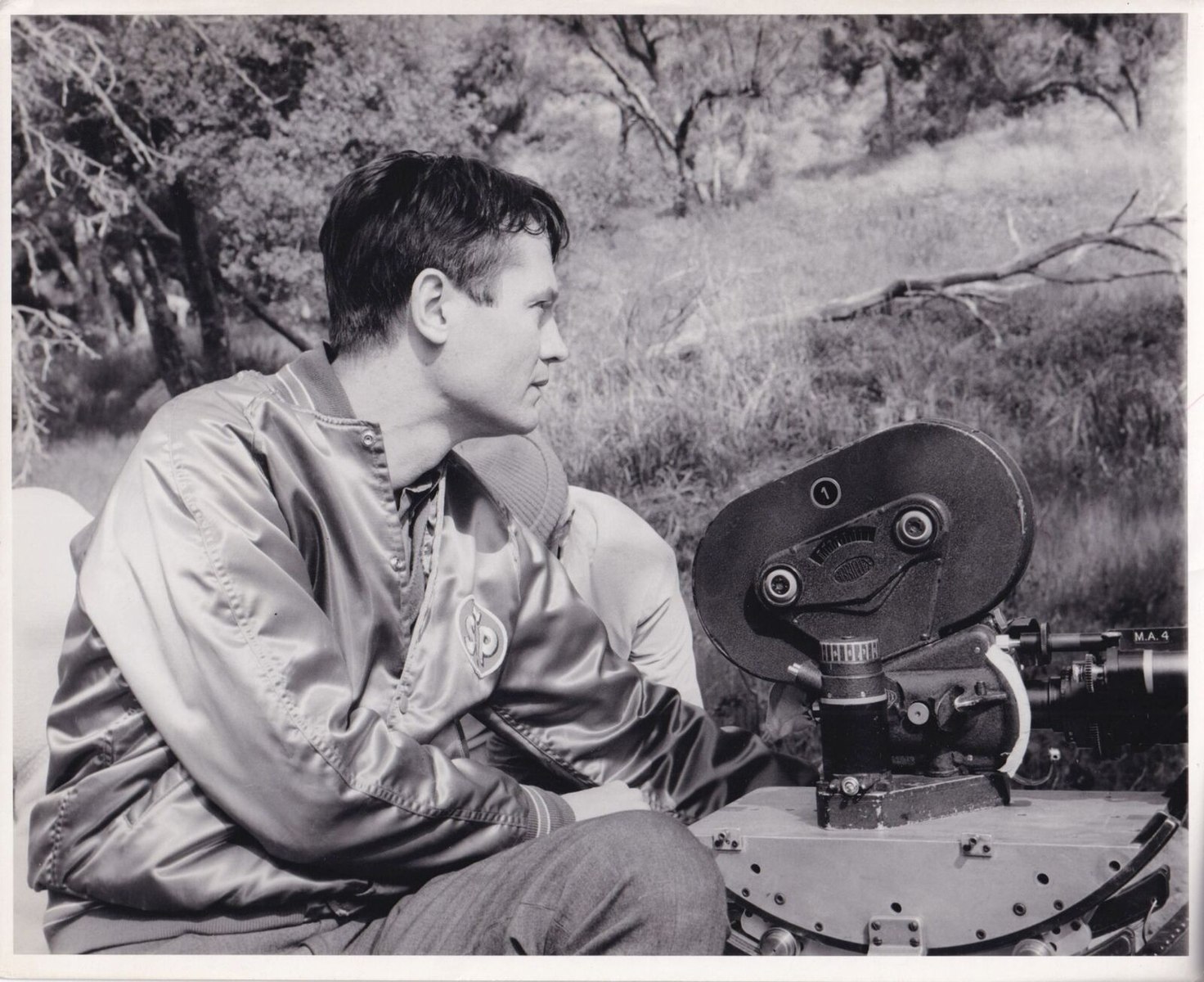
Like many people in the early eighties, I heard about the terrifying accident that killed Vic Morrow, Myca Dinh Le, and Renee Shin-Yi Chen during the filming of Twilight Zone: The Movie.  Because of that I steered away from ever seeing it.  I grew up loving The Twilight Zone, and I was probably enough of a self-assured critic at twenty to suppose the movie would never have been as good as the original series had been.  Still, it didn’t leave my consciousness.  Not entirely.  There have been a couple of television reboots of the series—most recently by Jordan Peele—and it seems that those of the present day still see the cultural value in the original.  Peele’s relaunch, although short-lived, brought the movie back to mind and I finally decided to watch it when I learned that one of the segments was based on “Nightmare at 20,000 Feet,” given my recent gremlin kick.

I knew the film was an anthology and those are always dicey.  I also knew I’d be watching an actor in his final role—the scene in which he and the children actually died was not used in the movie, of course.  I didn’t realize how many stars were in the cast, and I didn’t even know what the other three episodes were.  Critics (paid and un) have opined that the episodes increase in appeal as the movie progresses, and the opening segment has been hailed as one of the scariest introductions among films.  So some forty years after it released I watched it.  I actually found it to be largely in the spirit of Rod Serling.  I don’t know what he would’ve thought of the movie, but it seems to have continued his message.  The first segment, the one in which Morrow starred, wasn’t based on a single original Twilight Zone episode as the other three were.  A few “Easter eggs” exist for fans, such as Burgess Meredith narrating and Helen Foley saying she’s headed to Willoughby on the remake of “It’s a Good Life.”  No doubt, “It’s a Good Life” and “Nightmare at 20,000 Feet” are among the most famous of the episodes in the series.

Part of me is surprised that the film was released at all.  Deaths have occurred, of course, in the making of other movies.  Some in which millions of dollars had already been invested.  Still, watching a final performance like this has a haunted quality to it.  At times it seems that acting can be a dangerous profession.  And certain movies may always be difficult to watch because of it. But should we expect anything different from this Twilight Zone in which we live?


Loving Vampires

Vampires caught my attention early in life.  I believe, apart from ghosts, that they were the first monsters I learned about.  Apart from the fangs and perhaps an ironically anemic look, they appear to be just like us.  I’ve seen a great number of vampire movies over the years—I can’t seem to resist them.  I don’t care for the blood and gore, but the idea of the conflicted undead is a powerful draw.  It’s this conflicted aspect that brought Theresa & Allison to my vampire radar.  This movie is not for the squeamish, and I have to say up front that it is a lesbian vampire movie, with all that that implies.  You have been warned.  Theresa & Allison is also an indie movie—I’ve been watching quite a few of these lately because they’re often free.  This one is also smart and fairly original and it explores humanitarian concerns as well as vampiric ones.

Said Teresa is “made” when a drunken vampire (they get drunk when their victims are inebriated) decides to turn her (make her into a vampire).  She soon learns that vampires are organized and sanctioned by the government, and there are rules to be followed.  Also, some of the standards for vampire lore, we’re told, are male bovine droppings.   Teresa was lesbian before she was turned, and she’s befriended by fellow vampire Allison.  We learn that two major vampire “families” range about New York City—one graceful and kind, the other brutal and unfeeling.  Teresa has real trouble killing people for blood and she’s confused about what she’s become.  She doesn’t know what to make of it when the kinder vampires offer to let her join.  Instead, she follows Allison and finds herself in a blood-drenched nightmare.

Vampire movies are often full of social commentary.  Especially the spate of movies made available by independent auteurs.  Theresa & Allison asks the question of what makes something right or wrong.  It also explores what it means to accept who or what you are while also having the ability to change some aspects of it.  It reflects, it seems to me, the moral landscape of the young.  In that respect, it makes sense that those of us from older generations (let’s not kid ourselves) may have been raised with very different standards.  Culture, however, has continued to evolve.  The internet sped all of that up immensely.  Still, the acceptance aspect of the young is written all over movies like this.  And the internet means there will undoubtedly be more to come.  Vampires are sure getting interesting.


Christmas Monsters

Gremlins holds up pretty well with the years.  My renewed interest was sparked by holiday horror—I had last seen the movie in a theater in 1984, when it came out.  Having grown used to CGI, I was surprised to re-learn that the gremlins were puppets but that it was so obvious was also a surprise.  Although comedy horror, or horror comedy, had been around for years at that point, as critics pointed out, the contrast here was stark.  This could be a kid’s movie (and was one of the reasons behind the shortly new PG-13 rating) but the nasty gremlins could be unexpectedly brutal.  I’d forgotten that Billy’s mother was so effective—killing a gremlin in a blender and another in a microwave.  The story has been retold and/or parodied often enough that a summary isn’t necessary, but given my recent interest in both gremlins and holiday horror, it’s worth a few moments’ reflection.

Holiday horror is more than a scary movie that happens to occur on a holiday.  In my definition, the horror has to derive from the holiday itself.  In Gremlins the gift of Gizmo is based on the fact that it’s Christmas, otherwise Rand wouldn’t have been looking for a gift for his son, starting the whole chain of events.  More than that, the reason I didn’t go back to the movie again in my college and grad school years was the story Kate tells about her father on Christmas.  Like some parents, I felt like what was a fun little story was a bit too distressing given the holiday setting.  Would the story have worked set at a different time of year—remember, it was released in summer—with the commentary that it makes about consumer culture?  No, this had to be a Christmas movie and the fear comes from that fact.

The gremlins are given minimal backstory here, although Murray Futterman tells Billy and Kate  that gremlins come from foreign merchandise and they tinker with machines.  Gremlins had been used in horror before, and given that the canon of classic movie monsters was being set from the thirties through the fifties (gremlins appeared as monsters as early as the forties) they fit right in.  They’re inspired monsters.  People naturally feel vulnerable on planes and monsters in the atmosphere can be particularly frightening.  And the fact that technology frequently malfunctions, well, wouldn’t it be nice to have a monster to blame?  Reading up on the movie made me curious to see the sequel, which, it seems wasn’t too badly received.  I’m glad to have used a small portion of the holiday season to have refreshed my memory.


Self Reflection

The desire, for some people, is very strong.  The need to record one’s life in words can be undertaken for any number of very human reasons.  Perhaps we want our descendants to know who we were.  Maybe we have a message that we’re trying to give to a world reluctant to listen.  Some may just want to brag.  Now I have to confess that, like most kids of my vintage, Hanna-Barbera cartoons were standard fare in my childhood.  I personally preferred those of Warner Bros., but like a typical addict, any fix will do.  I watched The Flintstones, The Jetsons, but preferred Scooby-Doo and Johnny Quest.  They all had Hanna-Barbera in common.  Bill Hanna published his autobiography, A Cast of Friends, in 1996 and I was curious.  I located a used copy and realized something right off—here was a guy who had a knack for leaving out the best parts of the story. Perhaps it was a cartoonist’s desire to look for the fun?

We generally read autobiographies to learn about the struggles faced, the odds stacked against someone that they somehow overcame.  Often with lingering trauma.  To hear Bill Hanna tell it, his was a bland life with a stable upbringing, good career breaks, and commercial success that led to wealthy old age.  Throughout the narrative there are hints that more was going on behind the scenes, but the carefully controlled image of the Boy Scout who ended up accomplishing much with few obstacles to face prevails.  Image control is also, I suppose, a major reason for indulging in autobiography.  Getting the job you want with minimal drama, however, makes me think there’s something more to why this autobiography was written.  That said, I learned quite a bit about the early animation business—my reason for reading it in the first place. 

Before my mother’s death, I had urged her to write her life story.  There was plenty of drama there, and a strong desire to keep going, for her kids.  Her father, her personal hero and therefore one of mine also, led an interesting life that he summarized in about four pages for his children.  Apart from one or two words I can’t make out in his handwriting, I devoured it with fascination.  He pointed out the oddities, the unexpected things.  Elements that make for an interesting life.  I got the sense from this brief book that more was left unsaid than was being revealed.  Of course, some personality types tend to remember only the positive.  And I suppose that’s cause for rejoicing.  Some of the rest of us, however, wonder about what’s beneath the surface.  Unless someone records it, however, we’ll never know.


Ushering In the New

I’m not at all certain I’ll finish it, but at my daughter’s suggestion I watched the first episode of Netflix’s new series, The Fall of the House of Usher.  This isn’t set in Poe’s day.  The action is in the present and it opens with a funeral for three of Roderick Usher’s children.  What’s particularly striking about this funeral is that the priest’s homily is composed of lines from Poe.  I think we all know that Poe is undergoing a great surge of popularity these days, but this series seems not content just to name characters and companies after Poe’s names, but it also weaves his thought deeply into the fabric.  It uses his images in literal ways that add depth to the plot.  I’m not sure that I can spare the time to watch it the whole way through, but I’m sorely tempted to do so.

With C. August Dupin as the Assistant District Attorney, the series ties Poe’s ratiocination stories in with his horror tales.  Like most recent media efforts, the cast reflects diversity in many ways.  This diversity isn’t the reason the house of Usher is falling, but it’s because of disloyalty.  The family owns an unscrupulous company that has shown disregard for the suffering it causes, buying its way out of legal difficulties.  (This part is quite realistic and one can’t help but to think of Trump and others like him who simply buy injustice.)  But someone in the Usher family has decided to speak out.  Dupin won’t reveal who it is, so Roderick and Madeline Usher put the family up to the task of rooting out, and killing, the informant.

Perhaps with some time off over the holidays I’ll be able to catch more of the series.  It intrigues me, however, that Poe is being used essentially as scripture.  Literally.  The priest’s homily fades into the background as the surviving family members check in on each other, but his words are drawn from a variety of Poe’s writings.  I’ve long felt that our canon of scripture is too small.  Inspired literature did not cease to be written in the second century.  As someone who has listened, and still listens to sermons, it’s clear that the Bible alone isn’t a source for knowledge.  I haven’t read all of Poe—he left a massive paper trail through his life—but what I’ve read sticks with me and hearing him as sermon material makes me think I need to try to find time in coming weeks to pick up another episode or two.


Bears Repeating

I read Robert C. Wilson’s Crooked Tree before I began this blog, I guess.  I remembered it being better than it seemed this time around, but it works as a horror novel.  In fact, the first third or so was quite unnerving, although I’d read it before.  After that the plot tends to require greater suspension of belief.  But then again, American Indian horror has come a long way since then.  Wilson, according to the limited information about him online, isn’t an Indian.  These days publishers are very concerned with appropriation—something that wasn’t an issue back in 1980.  And these days the work of Stephen Graham Jones, who is both a Blackfoot and an excellent horror writer, raises the bar considerably.  But Wilson is honest about the situation in his laying out of the novel.

Axel Michelson is a lawyer and he’s working to preserve the fictional Crooked Tree State Forest and prevent development.  Many of his colleagues and neighbors in Michigan are Indians, and so is his wife.  Axel’s efforts are hampered by a sudden onslaught of black bear attacks.  The description of the first three or four are scary enough to dissuade you from ever going camping again.  Axel’s assistant is an Ottawa and and he and his family suspect a bearwalk is involved.  This is the reason I read the novel the first time.  As a Native American folkloric monster, the bearwalk is difficult to uncover.  There are a couple more novels—one of them hard to find—that feature the tales, and there’s a university press book on folklore that has some accounts.  Not much more is out there that I can locate.

A bearwalk is a kind of shape-shifter.  A spirit that can control bears, in this case.  Axel becomes the white savior who uncovers the ancient ritual to stop the bearwalk, which has taken control of his wife—his main motivation for stopping it—while the Indians can’t figure out what to do about it.  They do tell him about the ritual, but mourning the loss of their culture, they fear it’s gone forever.  Meanwhile the bear attacks continue but once the shock of the first few attacks has worn off, they don’t scare so much.  There’s also a lot of supernatural involved, mostly drawn from native traditions.  It seems clear that, like Axel, Wilson did quite a bit of research on American Indian folklore.  He treats the Ottawa culture with respect and wrote a novel that might’ve had more influence than it seems. It’s well worth the read the first time around.


Which Love

Perhaps some content creators use genre as a guide when writing, or when filming a movie.  Some categories are pretty well defined—the western, the romance, or in writing specifically, the literary.  Others are less easily settled.  Horror is particularly slippery.  Although The Love Witch was an interesting story with a feminist message, the horror trappings weren’t entirely obvious.  In fact, it reminded me quite a bit of The Wicker Man.  (Not in any literal way, of course.)  Afterward I read that it is also a comedy and that helped make sense of it.  It gets generally high marks although, to me, the acting seemed pretty wooden.  The Love Witch follows Elaine, a young, present-day witch, who’s moving to a small town in California that tolerates witches.  Her husband has recently died and flashbacks imply that Elaine may not have been entirely innocent in the matter.

Once she settles in Arcata, she starts looking for her “prince charming” as she continues to practice the craft.  She finds an emotionally unstable professor who take her home readily enough, but he quickly proves to be too needy.  Part of this is because he took a love potion she gave him.  He dies that very weekend.  Elaine seems less than distraught as she buries him and begins seeking the next possibility.  The husband of a friend comes over when the friend is out of town and he too proves emotionally immature.  After their affair he dies by suicide.  A policeman investigating the missing professor comes to suspect Elaine, but he too feels drawn to her.  The locals, meanwhile, aren’t as witch-friendly as they seem.  They riot in a burlesque club, chanting, “Burn the witch, burn the witch!”  I won’t spoil the ending.

I was watching all of this with the genre “horror” in my mind.  I’d not seen it labeled as “comedy,” and, as an art film there’s nothing so crude as a laughter track or cheesy and obvious comic music.  Instead, the film is an example of “the female gaze.”  Film analysts, and even religion scholars, have long written about “the male gaze,” which looks at women a certain way.  This movie’s writer, director, and producer, Anna Biller, experiments with the female gaze instead.  The results for some men, I suspect, are disturbing.  They certainly aren’t in control in this film.  Retro in execution, it’s unlike most other horror I’ve watched.  Unusual for the genre, the critics responded well to it.  It was a fun flick, but I’m still not sure how wide “horror” stretches, but I do sense that it’s quite inclusive.  And I applaud the female empowerment on display, even if I’m confused.


Could Have Understood Differently

A lesson many authors need to learn (and I include myself here) is that titles matter.  Cutesy, clever titles may work for well-known writers, but something that describes your book, or movie, is essential.  And avoid acronyms.  I avoided watching C.H.U.D. for years, put off by the title.  I’d read a few books where it was discussed, but finally decided it was something I should see.  If you’re as put off by acronyms as I am, C.H.U.D. has a double meaning.  Initially Cannibalistic Humanoid Underground Dwellers, but more importantly, Contamination Hazard Urban Disposal.  I suppose that’s a bit of a spoiler, but since the movie’s been out since 1984 I’ll let it stand.  Although largely panned, I think C.H.U.D.’s a perfectly serviceable monster movie and despite what the critics say, it has a larger message.

Set in a gritty New York City, the film focuses on the homeless who live underground.  Although it’s not preachy about it, the underlying message is that these are people too.  Until, of course, the contamination hazard mutates some of them into C.H.U.D.  Then they start looking for human victims.  In a city the size of New York, they don’t have much trouble finding them either.  A government cover-up is behind all the mayhem.  Nuclear and other hazardous waste is a very real problem, and none of us really knows what happens to it.  With much of government boiling down to political theater, I’ll take my chances watching movies and wondering.  The good guys in this movie are those who actually care about the homeless.  They are a rather unsympathetic photographer and his wife, a police captain with a missing wife, and a guy who runs a soup kitchen.  They learn something isn’t right beneath the streets but can’t get the authorities to admit it.

This isn’t a great movie—there are gaps in the plot all over the place—but it’s not a horrible movie either.  Sympathetic portrayals of the poor are, in my experience, rare.  These are people who’ve organized themselves into a society that’s come under threat because of those who dwell in the light.  Some classify C.H.U.D. as science fiction,  but that’s a very loose use of the term.  It’s actually a low-budget horror film with a bit of heart.  Unfortunately the title obscures that this is a little gem of a monster movie.  I really had little idea of what it was about when I started streaming, but ninety minutes later I was glad I’d done so.  And I went down to the basement afterwards, you know, just to check.


What Poe Saw

It must be quite a draw, making a film based on Edgar Allan Poe.  The psychology of his tales of terror is compelling and modern filmmaking offers endless possibilities.  I wasn’t looking for anything too heavy, so I watched Requiem for the Damned.  Vignette movies are like a box of chocolates (I’m sure you know how the rest of it goes).  This particular feature doesn’t seem to have had a theatrical release, perhaps because it is an independent film made by students and faculty at the Douglas Education Center.  The opening credits cite the Allegheny Image Factory, and when I think of Pittsburgh and horror my mind eventually wanders to George Romero.  The Douglas Education Center began as a business school south of Pittsburgh and it offers training in filmmaking.  And that seems to explain this particular film.

Five vignettes are taken from Poe’s “Fall of the House of Usher,” “The Tell-Tale Heart,” “The Black Cat,” “Murders in the Rue Morgue,” and “The Pit and the Pendulum.”  Only “The Black Cat” is set in Poe’s period and it is heavily CGI.  The rest are modernized versions of ideas inspired by Poe rather than following his plots.  “Usher” uses Poe’s characters and an introduced illegitimate son, to present the Usher curse—the unfeeling business practices that brought the Ushers wealth have made theirs a haunted estate. “Tell-Tale” has a modern urban legend feel as a guy starts seeing his ex-girlfriend’s broken heart everywhere he goes.  “Rue Morgue” is a lesbian revenge story involving an improvised gorilla suit.  “Pit” is a post-apocalyptic vision with almost no dialogue and a somewhat confusing resolution.

Horror anthologies seldom work.  Like edited volumes in the book world, they lack coherence.  Poe insisted that short stories should be single-sitting forms so that mood could be maintained.  Putting five together, each with different directors, writers, and styles, makes for a disjointed viewing experience.  A couple of the segments, “Black Cat,” and “Pit,” seemed to drag a bit.  The former because you already know the story and the CGI was so abstract that it interfered with the telling and the latter because you really don’t know what’s going on.  The visuals are impressive, but story seems to have been sacrificed.  I was looking for something not too heavy and I did find that.  I also learned about a place where filmmaking is taught and you don’t have to have connections to get in.  Who knows?  Perhaps in another life I might’ve gone that direction.  I tend to follow Poe.