Stay Safe

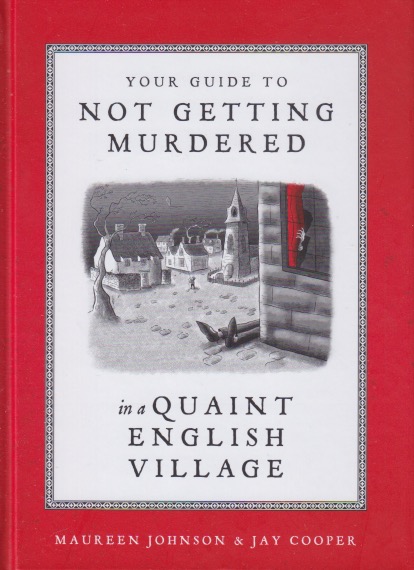
I’m not an impulse buyer.  Having grown up poor, I tend to walk into stores with a list firmly in hand and I don’t deviate from it.  Advertising has virtually no impact.  I don’t pay attention to ads unless they’re for things I know I need, and even then I shut them out most of the time.  I do let my guard down in independent bookstores, however.  So it was that I found in Aaron’s Books in Lititz, Your Guide To Not Getting Murdered in a Quaint English Village.  It was totally an impulse buy, easily read in a sunny afternoon in a caboose motel.  Or a rainy afternoon in an English manor house.  Maureen Johnson and Jay Cooper have produced a wonderfully witty illustrated guide here.  It helps to have lived in the United Kingdom for a few years.

Shelved face out in the thriller section, it’s a great opportunity for murder-mystery, gothic literature, horror movie fan types to laugh at themselves.  Some parts are snort out loud funny.  Okay, so I was on staycation and being a bit free with cash for a change, but I’m sure I will keep this one near my desk and turn back to it from time to time.  Maureen Johnson is known for her young adult novels and Jay Cooper is a children’s book illustrator.  Their talents, however, work together incredibly well for this slightly naughty guilty pleasure read.  The Wicker Man even gets a nod or two.  Something that those who disdain horror don’t often realize is that it quite frequently has its own sense of humor.  It’s an intelligent genre that doesn’t take itself too seriously.  At times it does, of course, but those of us who are fans can tell fantasy from real life.  Maybe.

Independent bookstores are starting to make a comeback.  A significant part of our population isn’t on board with retailers trying to convert everyday life to the metaverse.  We want to hear our music with the occasional pop and microphone hiss.  We want to drive our own cars.  We want to browse in actual bookstores.  Given my buying record online, I have to laugh every time I look at the recommendations.  The electronic world brain doesn’t know me very well at all.  It assumes it knows why I bought that ladder or that round blank four-inch stamped electrical cover.  Some of us play in nontraditional ways with such things.  And we get ideas from wandering into independent bookstores.  As long as they’re not in quaint English villages.

The Horseman

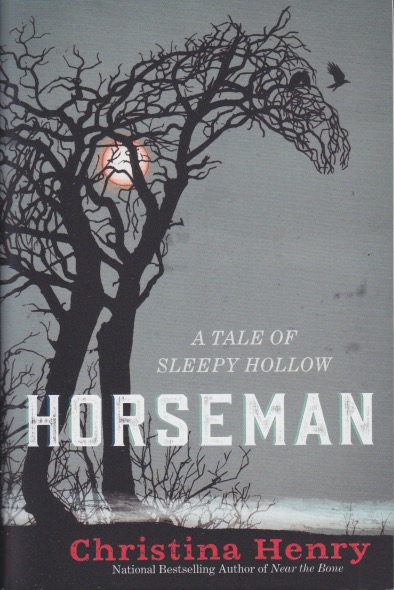
Washington Irving’s tale, “The Legend of Sleepy Hollow,” perhaps due to its being the earliest literary American ghost story, has been retold time and again.  When I saw that Christina Henry had a take on it that came out last autumn, I knew I’d be reading it.  I’d read her The Girl in Red late last year, but I couldn’t wait until fall to read this one.  Henry has a way of taking traditional stories and making them relevant.  Horseman is set two generations after Ichabod Crane and Brom Bones and Katrina Van Tassel, but they all appear in it.  According to Irving’s story—and this is often changed in cinematographic treatments—Brom and Katrina wed.  The narrator of this tale is Ben, who in today’s terms would be considered transgender.  He (his preferred pronoun) is the grandchild of Brom and Katrina.

Henry is a master of magic realism.  There really is something in the woods of Sleepy Hollow and it’s taking children’s heads.  Some influence from Tim Burton’s film version is found here, but the story has its own trajectory and inner logic.  Ben actually sees the monster, but nobody will believe him.  Not until it’s too late.  The one person who does believe is Katrina, Ben’s grandmother.  She, however, wants Ben to act like a girl because he was born female.  She wants him to stay home and learn sewing and cooking.  Ben’s hero, however, is Brom.  He’s a good man, if rowdy.  He married Katrina for love, not wealth.  Ichabod Crane does appear, later in the story, but since how he appears is a spoiler I’ll need to let you read for yourself.

Americans are often raised with the wrong-headed notion of canon as the one way a story goes.  Retelling is as ancient as writing itself.  Homer, Apollodorus, and Ovid were retelling stories.  So were many Bible writers.  People tell one another tall tales.  Washington Irving didn’t invent the Headless Horseman out of whole cloth.  Neither did the people of Tarrytown.  How the story goes is a matter for discussion.  Bet yet, it’s also a matter for retelling.  Henry’s version could be made to fit with Irving’s, but with a bit of prior assumption, some posthumous collaboration.  Hers, however, is a tale for our times.  Just like in Red, the protagonist isn’t conventional, according to conservative sexual standards.  Both are, however, authentic.  And although both may be flawed in various ways, there’s no denying that they’re heroes.


Having X

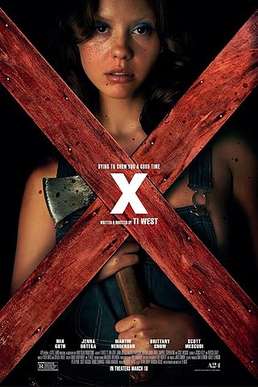
The final girl is such a classic horror trope that even horror novels can be titled after it.  You know the drill—teens hanging out, doing things that teens do, end up being killed off one-by-one by a monster or a disturbed person(s).  The one to survive is the virginal girl who doesn’t drink, use drugs, or whatever.  As a long-term horror watcher, I think the trope has been exaggerated, but it does occur enough times that there was clearly something to be noticed.  Enter X.  Released earlier this year, a slasher that rather obviously juxtaposes religion and horror, X features a “final girl” who is anything but virginal and sober.  The religion aspect is blatant from the beginning when the opening sequence involves a televangelist preaching to a viewership of the dead.

The title derives from the premise (which is a throw-back to the classic slasher era) that a would-be independent movie producer wants to shoot a pornographic movie.  Since this is strictly low-budget, he contacts an elderly gentleman on a remote Texas ranch who has a guest house.  With his one male and two female stars, a cameraman/director, and an assistant he drives to the isolated location.  They are all divided into couples, with each of the women having sex with the male star.  What makes this creepy from the beginning is that the old man, and his elderly wife, create a sinister presence.  She sneaks up on the young people, watching them through the window.  She misses her younger days when she was young and attractive.  As night falls the young people are killed off by the older couple one at a time.  What’s more, they’ve done this before.

X is a reflection on aging.  More than that, it’s a reflection on how religion leads to horror.  To say precisely how would involve giving away a spoiler, so I’ll leave the reader to watch the film to find out.  Suffice it to say, the televangelist is preaching about how sex leads to evil and the older couple kills because they’ve been listening to him preach.  X is not for the faint of heart.  I generally don’t like jump-startles and there were a couple of those that caught me off-guard.  (I try to anticipate them when watching slashers, or any horror, for that matter.)  But what of the final girl?  There is one, but it’s one who flies in the face of horror convention, if there is such a thing.  


Dangerous Fiction

At the suggestion of a friend, I recently watched the documentary Daphne du Maurier in Rebecca’s Footsteps.  I confess I haven’t read much of du Maurier’s work, yet.  From a family fairly well off, du Maurier, perhaps unusually for a writer, found early success and was able to make a living from writing.  Like many authors she valued her time alone, but also had basic human needs.  In keeping with her gothic sensibilities, she fell in love multiple times, both with men and women.  And she lived in that kind of fantasy world that fiction writers often inhabit.  For some reason I had it in my head that she had died young, many years ago.  It was somewhat surprising to learn that she lived until I was 26.  I can make the legitimate excuse that I didn’t grow up in a literate family, though.  I learned about du Maurier from my wife.

Copyright released photo, author unknown; via Wikimedia Commons

That doesn’t mean, however, that I didn’t know her works.  I first saw Alfred Hitchcock’s The Birds when I was in college.  In those days I hadn’t yet learned to pay attention to who the writer of a film was.  That intimate interplay between written literature and film easily ties me into celluloid knots.  My wife is a Hitchcock fan and together we watched some of his earlier du Maurier adaptations, such as Jamaica Inn.  Then she introduced me to Rebecca, du Maurier’s early and best-known novel.  We watched the Hitchcock rendition.  The documentary makes the point that du Maurier’s life, in some ways, played out that novel.  Writing can be a dangerous business, especially fiction.

My own most recent book, on The Wicker Man, which I hope will see the light of day, brought me back into du Maurier’s orbit.  The Wicker Man was, of course, nearly disowned by the studio that had sponsored it (British Lion).  Half-hearted about the effort, they made it a B movie, showing it after Don’t Look Now, a film I admit that I’ve never seen.  I learned from watching this documentary that this was yet another du Maurier story.  I’ve read one or two of her short pieces—they aren’t commonly found in American bookstores, although I see them whenever I visit England—and clearly I need to read more.  That brings up, however, the age-old dilemma: should I try to read the story before I see the movie?  I think I know what du Maurier’s answer would have been, and I think it wise to follow her advice.


Keeping Your Head

Horror is a gift that keeps on giving.  Not many horror fans are among my regular readers, but I like to keep a finger in the pie nevertheless.  Just earlier this month it was announced that Paramount has hired Lindsey Beers to direct a new big screen Sleepy Hollow.  It’s early days, of course, and the movie hasn’t been titled, let alone filmed.  Beers is just wrapping up a prequel for Pet Sematary (not yet titled) that I’ll be eager to see.  Women horror directors tend to bring refreshing angles to the genre—and why shouldn’t they?  Women writers were crucial in developing the Gothic genre that evolved into horror as we know it.  No matter what the Supreme Court says, they are just as important—probably more—than males.

I’ve been reading quite a lot about Sleepy Hollow over the past several months, which is how I came across the intelligence about this new movie.  It’s nice to know that the Hudson Valley is evergreen.  My visits there have offered brushes with the uncanny, but nothing explicit.  A weekend near the ice caves of Sam’s Point, geocaching in the woods outside Poughkeepsie, a visit to Sleepy Hollow itself to visit Irving’s grave and tip my hat to the Old Dutch Church.  With deep family roots in upstate New York, I’ve always thought it would be a great place to live.  Alas, not on an editor’s salary.  It’s been too long since I’ve given the area a visit.

John Quidor, The Headless Horseman Pursuing Ichabod Crane, via Wikimedia Commons

There have been many takes on Washington Irving’s “The Legend of Sleepy Hollow.”  Even in the silent era movies were made of it.  In retrospect, it seems odd that it took so long for Tim Burton to bring it back to the big screen.  There were some television movies, usually with plodding plots to draw the story out to commercial length.  Disney had early on devoted half a feature to it, as if the story couldn’t support its own weight.  For better or worse, that film was probably the first introduction to the tale that many people had—the story itself was written for adults.  Of course, many written kids’ versions have come out since then.  The satirical original was meant for a somewhat sophisticated readership with a sense of humor.  The story lends itself to horror treatments, however, if they’re done well.  It may have been an early viewing of the Disney tale that set me moving in this direction.  I like to think I’ve kept my head over it, however.


Dutch Treat

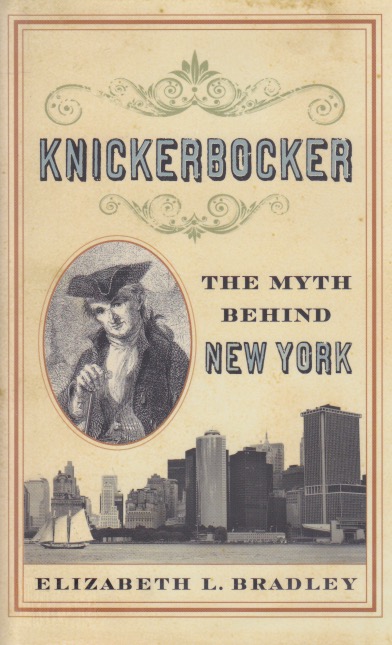
It was back when I was researching my first religion and horror paper that I learned it.  Since the paper was about Sleepy Hollow, I’d been reading about Washington Irving.  I knew little about him beyond that he’d written this story and also “Rip Van Winkle.”  I had no idea that he was the one responsible for the nickname Knickerbocker for all things New York.  Since then I’ve been quite curious about Irving and his world.  A glance at the books noted on this blog over the last few months will demonstrate this.  I found out about Elizabeth L. Bradley from an interview about Sleepy Hollow during the heart of the pandemic.  Irving was first sent to Sleepy Hollow because of a yellow fever outbreak in New York.  It led to his introduction to the lore and folk of the region.

Bradley’s book isn’t about that, however.  She’s writing about how Knickerbocker went from Irving’s nom de guerre to essentially a trademark for Manhattan, and New York City more broadly.  Knickerbocker graces hotels, sports teams, and once upon a time, a brand of beer.  And much more.  All of this is because of a volume I’ve never read, A History of New York by Diedrich Knickerbocker.  Irving was a satirical writer and this history is an extended satire.  He wasn’t Dutch, but he was born in Manhattan and cut his writing teeth there.  An older sibling to America’s other fledgling writers, he gained fame enough to be able to retire near Sleepy Hollow.  That particular story, along with Rip, made him a household name.  Of course, he wrote much else but it’s not talked about so much.

This book is a brief tour of the city and its love affair with Irving’s pseudonym.  Even having commuted to New York for about seven years of my life, I feel I only know very little about Irving’s hometown of Manhattan.  I do know that on my walks across midtown hurrying either to the office or to the bus, I found a quirky little view of the city emerging.  Little sites of significance only to myself—plaques on a seldom-used street, a church nestled between towers for capitalism, a quiet restaurant that made you forget the millions of others just outside.  It gives me hope that a writer can make such an impact on an ever-evolving entity like New York.  And this quick introduction contains much to help one reflect on the enormity of it all.


Redacted

A friend recently introduced me to Redactle.  Yet another of those daily internet games that have become trendy in these pandemic years, Redactle gives you a page that looks like a Freedom of Information Act piece from the government.  Most of the words are blanked out and all you really know it that it is taken from one of the significant pages on Wikipedia.  You get some clues from the format, the way the prepositions and articles they give you are arranged, and occasionally, the punctuation.  You just start guessing words and it fills in the blanks as you get hits.  Like most things of this sort, there’s one puzzle per day, otherwise none of us would ever get anything done.  I’m a sucker for learning games, so we’ve been playing it as a family for a few days now.

A redacted file from the CIA, via Wikimedia Commons

The thing that has surprised me the most in our early on is that the trickiest ones to get right were on religions.  In our first week of play, two of the puzzles were religions: Lutheranism and Shaktism.  We’d been able to guess famous people in two dozen guesses, and countries in about the same.  Religions are trickier.  Despite having studied religion my entire life, my thought process doesn’t include guessing words like “theology” and “worship” for important articles on Wikipedia.  (In the case of Shaktism it took well over 100 guesses.  I taught world religion maybe fifteen years ago, but I haven’t kept up with my Hinduism.)  In the case of both of these religions what eventually gave them away was the place names: Germany and India.

India, of course, has been the birthplace of many religions.  The majority of Indians today are Hindu, but Buddhism, Jainism, and Sikhism were also children of India.  Even in this increasingly secular world, religions remain the driving forces behind lives.  So much so that some religionists consider Secularism a religion.  The fact is we all believe something.  It may not be supernatural, but then not all religions are.  They often brush up against philosophy at their most sophisticated end, and literalism is the least developed form of any belief system.  With some exceptions it doesn’t pay well to be a religionist.  Perhaps that’s because thinking hard about religion reveals uncomfortable truths.  Not only that, studying religion is no guarantee that when you have to fill in the blanks you’ll be able to guess one when it’s right in front of you.  That’s why I appreciate learning games.  


Updating Irving

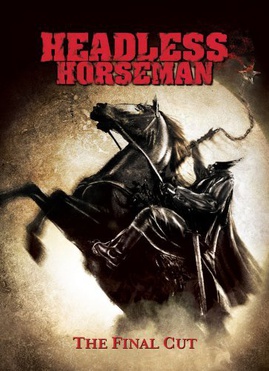
Movie quality is measured by many standards.  It’s pretty clear that budgets can make a difference—Hollywood movies generally outshine television movies.  Streaming services, like Netflix and Hulu, have been gaining ground here, but they still lack some of the qualia that come from long-term players in the industry.  Often this was measured, pre-pandemic, by box office success.  I’m not sure how it’s all quantified now, but I’m sure it still comes down to money.  To me, the deciding factor about the quality of a movie is often the writing.  Even with a modest budget excellent writing can make up a lot of ground.  Headless Horseman originally aired on the SciFi channel (now Syfy) in 2007, and I wrote a tiny bit about it in a former post.  I recently rewatched it with an eye toward how religion is integrated in it.

Headless Horseman is not a great movie.  Its writing doesn’t inspire and it leaves too many gaps in the narrative to carry the viewer along easily.  Still, religion plays an important role in the story.  This one resets Washington Irving’s tale in the south—from the license plates, Missouri.  The horseman is a serial killer who offered his victim’s heads to the hydra, the serpent that guards the entrance to Hell.  When the killer is stopped and his body sent through the gateway, he comes back every seven years to chop heads.  The town where all this takes place has the biblical name of Wormwood, and everyone in it is literally family.  So every seven years they have to trap seven outsiders to make their offering.  The person who originally stopped the killer was the local priest.

Even this brief synopsis reveals how deeply religion is engrained in this retelling.  Irving’s classic story is set in an overtly religious period (particularly Protestant, of the Reformed variety), and wears this lightly.  Everyone can be assumed to go to church and the Headless Horseman is a Hessian mercenary decapitated by a cannonball during the Revolutionary War.  Over time, with many retellings, the horror becomes more and more involved with religion.  To the point that the religion itself is the real engine of fear.  A town protecting a Hell-guarding hellion doesn’t exactly make them Satanists, but it does mean they’re not far from it.  The in-breeding is, however, a bit insensitive.  My recent rewatching wasn’t with an eye toward the Bible, as my last viewing was.  When retelling the story, however, it seems religion will surface where once it was only in the background.


Free Reality

One thing movies can do especially well is to make you question reality.  Early on this was more or less literally true as people couldn’t believe what they were seeing on the screen.  Photography had perhaps captured souls, after all.  A series of movies in more modern days began to ask us to reconsider what we know, with profound results.  In 1998 The Truman Show suggested that we might be living on a stage and God is really a misguided director. The next year The Matrix went further to float the idea we might be living in a simulation—an idea that some highly educated people have taken seriously since then.  They asked us to consider what we meant by reality.  Those questions have haunted us as the cybersphere grew.

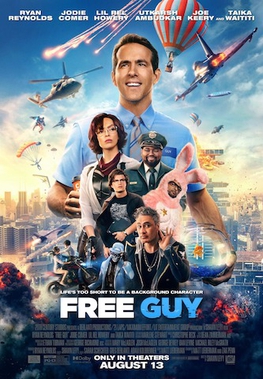
I recently saw Free Guy, a movie that slipped me back into that uncomfortable space.  I’m no gamer, so I’m sure I missed many of the references to memes and characters that are familiar to many.  Still, it was fun and profound at the same time.  It’s not giving too much away to say that Guy is a non-playing character in a shared game.  In other words, he’s just code.  Not conscious, not making any decisions.  Until he starts to.  He turns out to be a form of artificial intelligence.  Teaming up with a human player, he learns to appreciate virtual life and works to make Free City a better place to live.  When the credits rolled I found myself asking what I knew about reality.

Not a gamer, I’m pretty sure we’re not caught in that particular matrix.  I’m pretty sure my wife wouldn’t’ve put up with over thirty years of pretending to be married to me just for ratings.  Still, many times riding that bus into Manhattan I had the distinct feeling that none of it was really real.  I would tell myself that on the way to the office.  Not that I think movies are the whole truth, but they definitely seem to be part of it.  Guy learns to rack up points to level up.  He becomes a hero.  In this reality we can look but not see.  Becoming a hero is unlikely unless someone is actively watching you.  Many heroes on a small, human-sized scale exist.  They don’t get to wear sunglasses, but they can watch movies about those that do.  And if they’re not careful, they might find themselves getting in a philosophical quandary by doing so.


Shaping Water

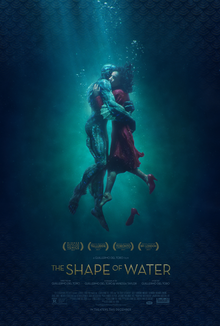
When I write fiction the genre’s difficult to define.  The other thing is I tend to be behind when it comes to pop culture.  It can take me years to find the time to watch a movie.  This preface is an excuse for why I’ve only just seen The Shape of Water.  Is it a horror movie because it features a monster?  It is, of course, primarily a love story.  As a parable the story has many gaps but it’s so enjoyable to watch that you don’t even mind.  In the rare event that you missed the hype, it’s a tale about a woman who falls in love with a somewhat more modern version of the Gill-man.  Indeed, one of the captors, Strickland, mentions finding him in the Amazon—certainly a nod toward the Black Lagoon.

There’s much you can say about a story like this, but one standout feature was that the antagonist (Strickland) frames pretty much the entire movie with the Bible.  He’s not a good man, but he uses the story of Samson to keep Zelda, the Black cleaning woman, in her place.  He uses her namesake Delilah (middle name) to note how she betrayed Samson.  He goes on to say that God is in the image of man, either him or her.  But then he adds, “Maybe a little more like me, I guess.”  This gives you an idea of his character.  He also notes that the creature was thought to be a god in the Amazon.  At the end, as Strickland sets out to kill the creature, he again uses Samson to tell Zelda that he’s going to bring “this temple” down on all of them.  That’s a healthy dose of religious imagery for a species of horror film.

The Creature from the Black Lagoon also begins with a biblical quote.  And like in this movie, the real monsters are the white men who insist on destroying what’s not like them.  Monsters and religion have similar pedigrees and share a number of features.  A concern for those marginalized by society pervades true religion as well as monster movies.  Nevertheless, the academy has trouble giving awards to any movie labelled horror.  There are definitely elements of it here.  It isn’t unusual to see horror defined as a movie that features a monster.  This monster is a god. Interesting, how often that happens. The film’s mood, however, is also romance and a very real concern for the other.  We can all learn from movies like this, even if five years late.


Annotating Irving

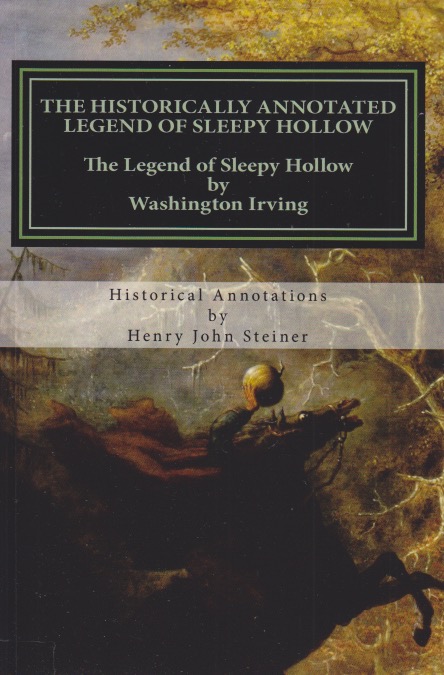
Really concentrating on a short story is sometimes difficult to do.  I don’t have a degree in literature (I took a few courses, but my specialization was religion).  I’ve been on a bit of a Sleepy Hollow kick lately and I wanted to move beyond just the short story by Washington Irving.  Although I’m sure working through the entire Sketch Book of Geoffrey Crayon, Gent., the book in which “The Legend of Sleepy Hollow” was published, would probably be rewarding, it would also be time consuming.  Irving was trying to find his way as a writer and this particular story has been his lasting contribution.  So I turned to local historian Henry John Steiner’s annotated edition.  It has a useful introduction, but still wouldn’t be “book length” without several pages of photos and a large font size.

Sleepy Hollow may lay claim to several signs of historical importance.  It featured in the Revolutionary War.  Washington Irving did eventually settle there.  As a getaway it attracted the wealthy and powerful from New York City because it’s not that far from Manhattan.  Several movie and television renditions have been made of Irving’s story.  This book generally provides local place connections in the annotations.  A visitor to Sleepy Hollow might wonder where this or that event in the story was set.  This book will help with that.  Still, it left me looking for a bit more substantial treatment.  Not necessarily a literary-theory kind.  Let’s face it, academic writers tend to write for other academics. No, a bit more of the folklore, I suppose.

It did allow me to slow down and really concentrate on the story.  Books have an endpoint that really helps in that regard.  This little book (as was the one I recently read on the Old Dutch Church) was published when the Fox series Sleepy Hollow was taking off.  That all-important media tie-in helps to sell books.  Interestingly, the details of a closer reading are revealing.  This isn’t, in origin, a Halloween story.  It’s a tall tale told American style.  Steiner indicates it was based on an older legend—this is something I’d be interested in hearing more about.  Writers are great recyclers.  I suppose a book on the folklore of the lower Hudson Valley might have more of what I’m seeking.  Nevertheless I came away from this edition feeling as if I’d gotten to know the story better.  Irving’s “Rip Van Winkle” also appears in his Sketch Book, but perhaps it’s asking too much to have both analyzed together.


Status Check

It took many months, but one of my few Twitter followers was removed not for trying to take the nation by force, but because he’d died.  If I learn to tweet from beyond perhaps I’ll score a few more followers.  The situation, however, is one of the oddities of our socially mediated world.  I was trying to find some information on a potential author the other day and the only online presence I could locate was LinkedIn.  I clicked on the profile only to see the latest update was “Deceased.”  More than that, the Experience column indicated that “Deceased” continued from the date of passing up to the present.  I guess once you’re gone, your gone for good.  Social media, however, will perhaps find a way to keep you alive.

When I’m gone, I imagine WordPress will shut this blog down because nobody will be paying for it.  It’ll probably take a while for Facebook or Twitter to figure out I’m in the new category of “deceased.”  I do hope Academia.edu will keep my downloaded papers there for free. Real immortality, it seems to me, lies in the writing of books.  They too will eventually disappear, and who knows about the real longevity of social media.  It’s pretty difficult to believe Facebook wasn’t even around at the turn of the millennium.  I drive a car that’s older than Facebook.  I keep thinking of LinkedIn listing “Deceased” as a vocation.  Isn’t it really the ultimate vocation for all of us?  If you can’t be found online, do your really exist at all?

While experts debate social media, my job prevents me from using Facebook or Twitter during the day.  After work I’m anxious to get on to the other things in life that virtual friends and followers have to wait.  Early in the mornings I write and research.  I have mere minutes a day to look over social media.  I check Facebook only for alerts.  Life is short.  Is social media making it better?  It’s easy enough to be overlooked in real life, so why indulge in it virtually as well?  Of course, many see social media as a place to vent their spleen.  Why not try to inject some good into the virtual world instead?  There is hope for the dead, for they may still publish.  Their tweets may become somewhat less frequent.  Only the most callous, however, would drop them as friends for being dead.  Let’s just wait for Zuckerberg or Musk to notice.  It may take a few months.


Television Fed

There have been a number of television shows—The Simpsons primary among them—that instead of castigating the media-raised generation, celebrate it.  As I watch the younger, internet-raised generation, I realize that we were the kids raised on television.  Before the fifties and sixties televisions were too expensive to reach into every home.  Although we were poor, we managed to scrape and scrounge enough to buy a color television by the time I was an early teen (what’s now technically a tween).  And even before that I had a television habit.  Dark Shadows, The Twilight Zone, Star Trek, Gilligan’s Island, Get Smart, The Brady Bunch, The Partridge Family, and the list could go on and on.  Since neither of my parents finished high school, we used television as a window into the wider, more educated world.

Photo by Ajeet Mestry on Unsplash

As an adult I’ve moved beyond that academic stage of being embarrassed about being raised on television.  I’m inclined now to embrace it.  It was forming me long before I started reading and these days I prefer reading to television, which I practically never watch.  Still, I have a great appreciation for its formative influence.  How else are you supposed to learn about the world when you’re poor and uneducated?  Dark Shadows taught me about vampires.  The Twilight Zone made me appreciate the strangeness of life.  Star Trek awoke wonder about space.  Gilligan’s Island and Get Smart taught me to laugh in tough times.  The Partridge Family taught me about music and the Brady Bunch prepared me for Zoom.

For many years I’ve tried to put this behind me as a cause of shame.  I was an academic.  A book-learner.  That way of life, however, shouldn’t deny what has made us who we are.  While following the new rendition of Sleepy Hollow in television format, I came to realize that there was a new direction to go.  Religion in horror had been lurking in the background for many years, even before my career malfunction.  To deny it was to deny the same academic pretentiousness that has refused me a place.  Media can hold meaning for us.  There’s no replacing those younger years in front of the tube, the intravenous meaning that successful writers and media producers of the sixties and seventies were giving us.  When you don’t have the free time for research, you can still access what childhood taught you in the first place.  And perhaps, if you’re lucky, move it forward.


Boone to Some

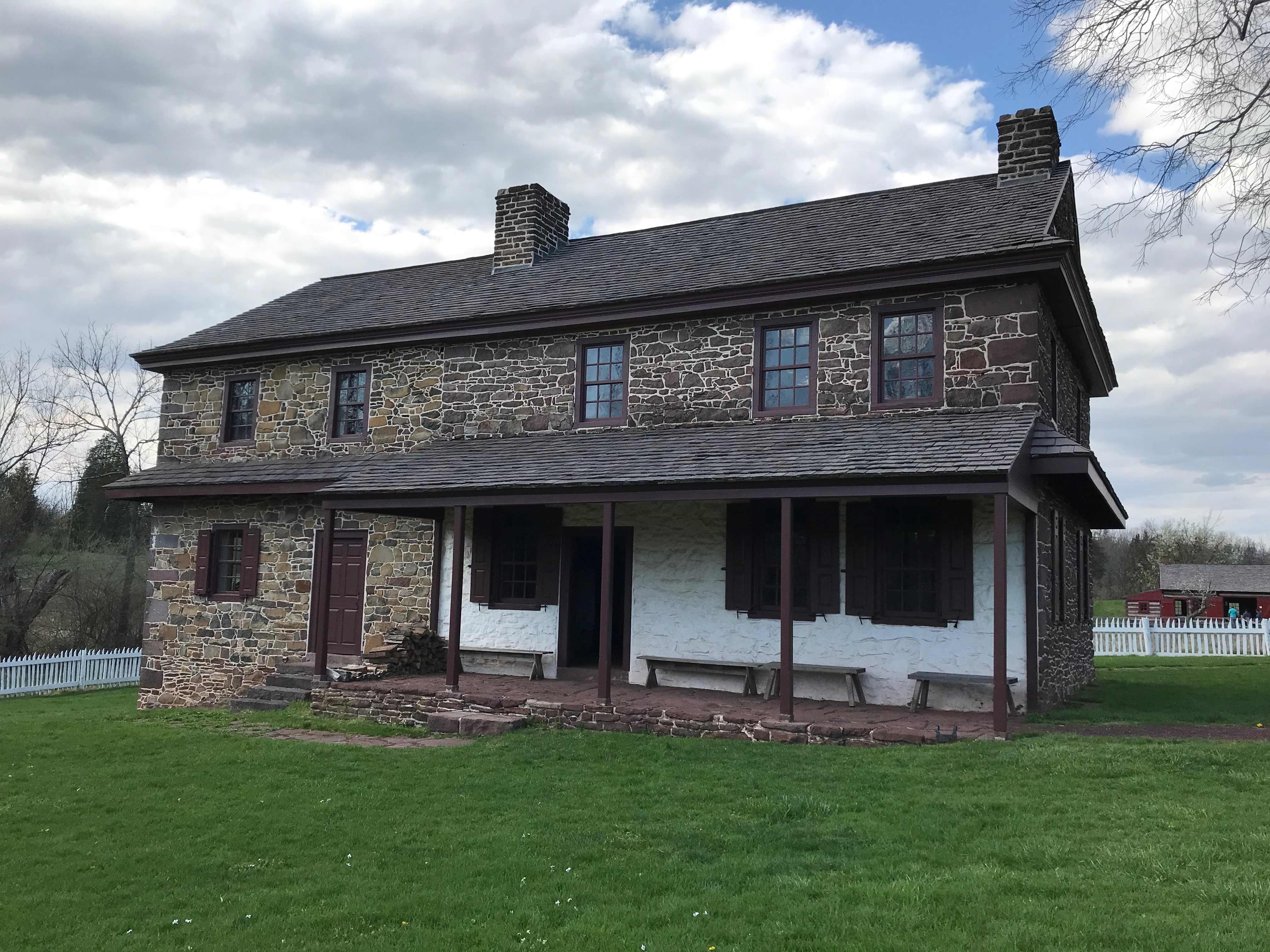
Folk heroes sometimes put us in compromising positions.  We appreciate their importance for where we are and yet we recognize that where we are came at a tremendous cost for those who lived here first.  Still, I was somewhat surprised to learn that Daniel Boone was born right here in Pennsylvania.  Like most people my age, I learned of Boone primarily through the television series that aired in the 1960s.  In other words, I learned the commercial Boone.  In reality he was a fascinating individual who preferred outdoors living to the comforts of home.  His prominence meant that he would meet and know such figures as George Washington and Thomas Jefferson.  He was largely responsible for US westward expansion, leading the first Europeans into the territory of Kentucky.  His association with the south is so pronounced that I was surprised to learn he was born in a homestead, that is today, less than an hour north of Philadelphia.

Of course, the land settled by the Boone family was stolen from American Indians.  The story might be somewhat easier to appreciate if we treated Indians better today, but our culture still insists on repressing them.  Racism runs deep, it seems.  Boone himself seems mainly to have gotten along with the Indians he knew.  The fact is his story is exciting to hear.  He was an able negotiator and both Indians and other settlers respected his position.  When tales of his adventures were written down he became famous, if not wealthy.  What seems to have really struck those who heard his story is that he continued his outdoor existence into his eighties.  At an age when many have become frail, he continued to spend months of the year living outdoors in the wilderness.

Being there where he was born felt like a revelation.  Of course the docent was a gifted storyteller, and she told his story with humor and an obvious pride in the man who’s responsible for her living.  I reflected how television once again had shaped my childhood.  Fess Parker’s portrayal of Boone was among the most popular prime-time shows of the mid-sixties to 1970.  I had no idea that I was consuming pop culture in such quantities as I watched it, along with other staples such as Dark Shadows, Gilligan’s Island, Scooby-Doo, and the Brady Bunch.  Some people worry that the rising generation “learns” its narratives from the internet, but my generation learned them from television.  Daniel Boone would have, and indeed did, learned from the outdoors.


Shadows of Childhood

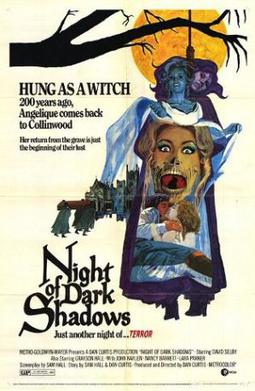
Childhood, it seems to me, is where we define ourselves.  In the days when life expectancy wasn’t terribly long and people generally lived only long enough to reproduce, there was not much of a need to revisit childhood.  Now that we live several decades, however, childhood begins to loom large.  We have time to revisit and reassess.  This is one of the reasons I’ve been addressing Dark Shadows so much, and why my memories of it have been of such interest.  I recently watched the second feature film based on the series, Night of Dark Shadows.  This was aired after the original soap opera had been cancelled.  It focuses on Quentin Collins rather than Barnabas and it again caused me to reassess.

The story is complex—the soap opera was quite literary and intelligent to begin with—and it involves several characters from the series.  In my mind Quentin is a werewolf.  In the movie he’s not.  This made me realize that my image of Quentin is largely from the Marilyn Ross novels, not from memories of the television show.  I never did see the original series through.  Nor did I ever read all the novels.  Like most people my childhood was a pastiche of this and that as I sampled the somewhat small set of offerings made available in a modest family in a small town.  Fossil collecting and exploring within two or three blocks of home were about all the options.  And then there was television.  I watched a lot of it.  When the rigors of homework started to really hit in high school, I stopped watching so much.  I’d begun reading quite a bit by middle school, and many of those books are the ones I’ve been seeking out in recent years.  Not that middle school was that great, but it was formative.

Night of Dark Shadows, although set in Maine, lacks the Collinwood I remembered.  Yes, it’s a grand old house, but there’s no hint of being on the Atlantic coast.  No crashing waves.  No theremin.  Quentin is instead haunted by the ghost of Angelique and is apparently a reincarnation of an ancient ancestor whom she loved.  Angelique decides to kill off Quentin’s young bride so as to have him to herself.  It wasn’t bad, but I guess I was expecting a werewolf movie.  My view of Quentin was formed by the imagination of W. E. D. Ross, I’m coming to realize.  Sam Hall wrote many of the original episodes.  He also co-wrote this movie.  My childhood, however, remembers all of this differently.