A Haunting Story

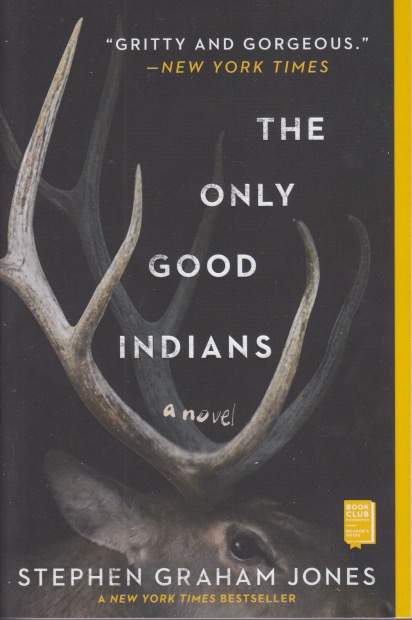
The last book I finished in 2021 didn’t quite make it under the wire for my year-end blog post.  It was the second Stephen Graham Jones novel I read in the year.  I guess I’ve been reading a lot of American Indian books lately.  The Only Good Indians is a horror story and more.  There’s reconciliation.  There’s tradition.  There’s hope.  As part of the privileged “white” class, I’m always a little afraid that writers from oppressed cultures will take it out on me.  It may’ve happened here, but if so it was done in a way that I didn’t feel the sting.  This is a story of friendship, mistakes made, and a monster who has a righteous cause.  There’s a lot going on here.

One of the persistent cultural fears of the unwoke, I suspect, is that there’ll be payback if all things were to become equal.  Perhaps on the scale of karma that’s true, but in reality the people that’ve been oppressed simply want the oppression to stop.  To be recognized and acknowledged as being human.  As if that decision is up to white folk to make.  This novel simply deals with American Indian life as it’s lived.  The characters all pretty much live in poverty but they lack the greed so many white protagonists have.  They’re happy if they have a few hundred dollars, or even a few twenties.  Life is more than playing the capitalist game.  It really all comes down to relationships.  And family.

Stephen Graham Jones writes with a deft hand.  He offers some humor amid scenes of violence and loss.  He speaks plainly and without pretense.  And there are parts of this novel that are genuinely scary.  Since I had no idea how it might end, I wasn’t even sure even while I was on the last page.  

The best monsters are those that teach us to be better human beings.  Quite often they teach us that the truly monstrous ones are those who look and act like people usually look and act.  We take the natural world, assuming it’s ours.  We think our small problems are those of the entire world.  Monsters help to fix our perceptions.  Without them we carry on as if it’s business as usual.  This is a good novel to read in the midst of a pandemic.  There’s hope here that we’ll come out of the crisis better than we went in.  Perhaps scarred and changed for good.  In every sense of the word.
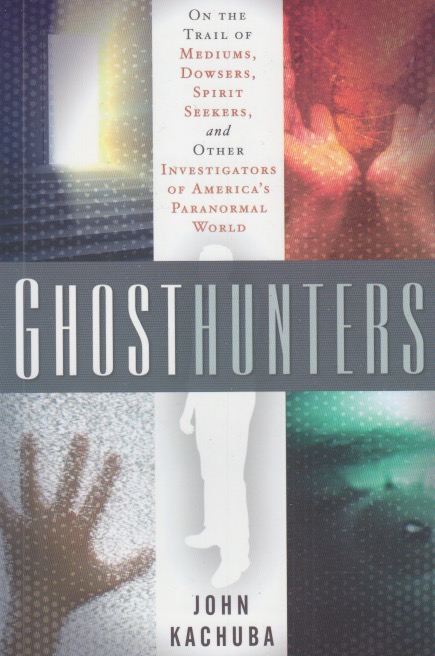

Ghosts Again

In keeping with my holiday ghost interest, I read John Kachuba’s Ghosthunters: On the Trail of Mediums, Dowsers, Spirt Seekers, and Other Investigators of America’s Paranormal World.  Yes, that subtitle is a mouthful.  The book is a series of essays without an overarching thematic arc, but it does contain some interesting accounts.  If you’re hoping to walk away with proof of ghosts this probably isn’t your book, but a few of the people the author interviews have some pretty convincing stories.  Ghosts remain one of the great unknowns.  People of all intellectual backgrounds, every socio-economic class, and every religion have encountered them, and this is true throughout history.  Ghost hunting isn’t a science and has no developed methodology, but then ghosts don’t seem to perform on demand.

I was particularly interested to see what Kachuba had to say about Ed and Lorraine Warren.  They were the original ghost hunters and their work was controversial from the beginning.  One of the consistent problems with the paranormal is that advanced degrees tend to make you quite skeptical.  You look for proof in the fields recognized by your peers and although a few departments of “parapsychology” have cropped up from time-to-time, mainstream science is doubtful and drives doubt into all comers.  Those who investigate ghosts suggest that if you don’t believe you won’t see.  Here’s the basic paradox between faith and proof.  And it only raises questions when you learn that science doesn’t prove but rather provides the best answer, given the data as currently understood.

Kachuba presents himself as neither a firm believer nor a dismisser.  He clearly enjoys ghost hunting himself and several times mentions his Ghosthuntermobile.  He interviews not only Lorraine Warren (Ed had had a stroke by this time) but also a variety of mediums, Spiritualists, and ghost whisperers.  He writes about various haunted locations, but in the accounts he shares he doesn’t see anything that can’t be explained.  Some of the essays are written with a humorous take on the subject, while others are entirely serious.  It’s kind of a grab-bag of a book in that regard.  Like many readers, I suppose, I hope to pin down something certain when it comes to the unknown.  My guess is that if anything definitive appeared we’d know about it.  Given the goings on in the world these days it probably wouldn’t be front-page news, as much as any information on eternity should be.  In the meanwhile we can read and wonder.


Twilight on Christmas

We have too many ornaments for the single Christmas tree we can afford.  There are few reasons for this.  One is that I married into a family with Christmas ornaments.  While on my own I never set up a tree and I owned very little beyond books and some LPs.  Besides, I went home for Christmas.  Another reason is that although I seldom think of Christmas before December, we tend to buy ornaments as souvenirs.  Not for everywhere we go, but we did start a ship sub-collection when visiting coastal locations.  We also have a moose sub-collection.  I spent quite a bit of my early adulthood out in the woods looking for moose, generally in Maine.  Then there’s the “other sub-collection.”  The one that’s be relegated to it’s own mini-tree.

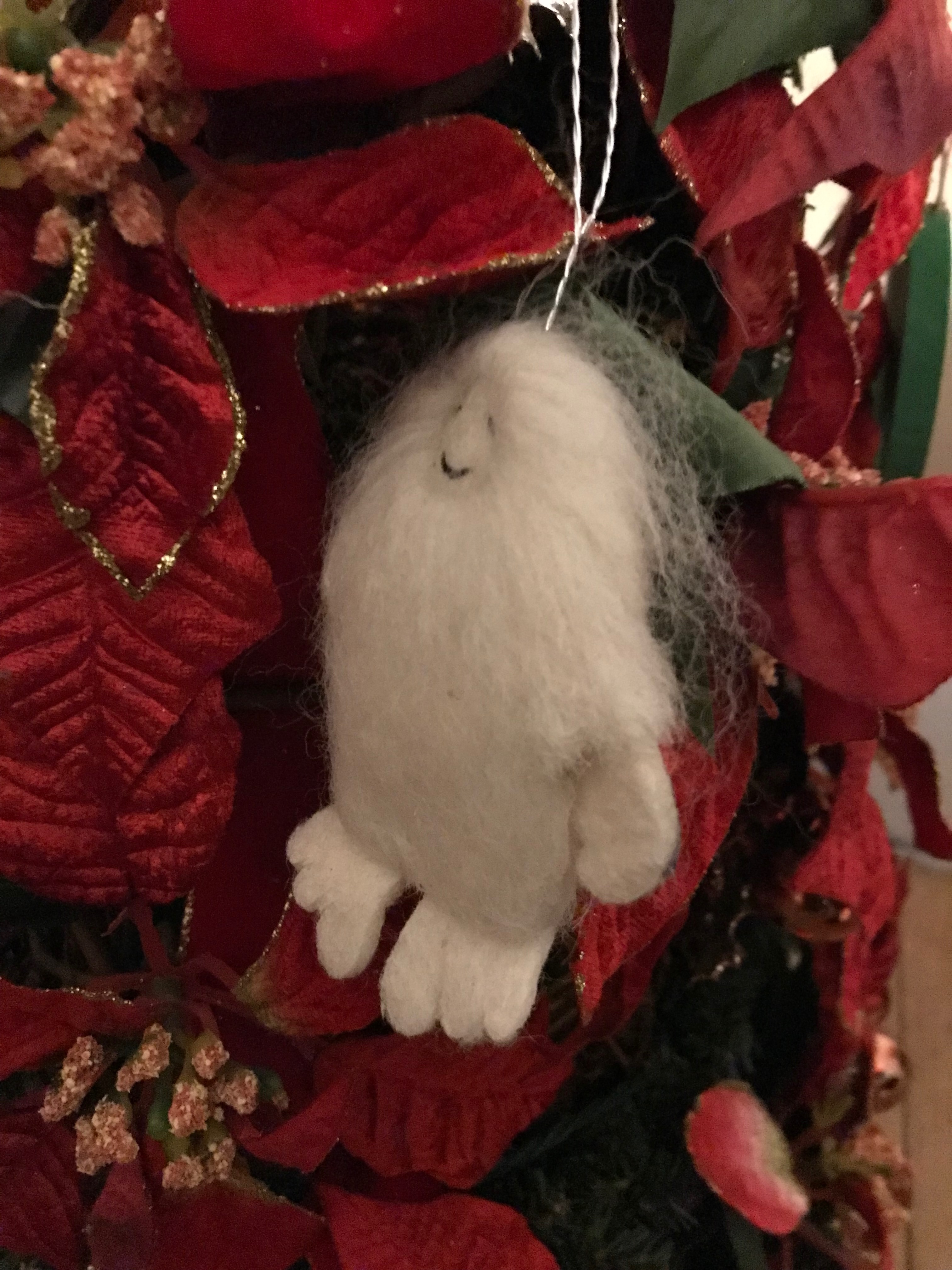
To understand this, let me begin by noting that Christmas is the birthday of Rod Serling (shoutout to my friend John Morehead for pointing this out).  Rod Serling is one of the reasons—he can’t take all the blame, of course—that I’m interested in strange things.  The Twilight Zone affected me profoundly as a child, and probably had more impact on my life trajectory than I might’ve realized.  The “other sub-collection” consists of the weird ornaments.  It began with a Cthulhu ornament I found online a few years back.  Then, at a fair trade shop in Ithaca, I found a yeti ornament.  How could I not support fair trade?  This year at Christkindlmarkt I found an alien head made from a recycled Christmas tree trunk round.  It seems my strange Christmas ideas aren’t unique.

Bethlehem styles itself “Christmas City.”  The celebration in the Lehigh Valley is palpable.  My family generally spends a December Saturday strolling up and down Main Street, visiting the quaint shops.  Last year one of them had ornaments of sasquatch skiing.  I didn’t buy it, thinking someone might pick up on my pointing it out.  This year I went back to the store but they didn’t have it any longer.  A quick online search, however, revealed many options for a cryptid Christmas.  What can I say?  These things make me happy!  This year I’ve been thinking quite a bit about ghosts and the holidays.  It’s an ancient connection that has been lost to the commercialization of Yule and Saturnalia and other December celebrations.  So, Rod Serling was actually born on Christmas day.  I hope that however you celebrate this day it will bring you joy, no matter how weird.


Rats

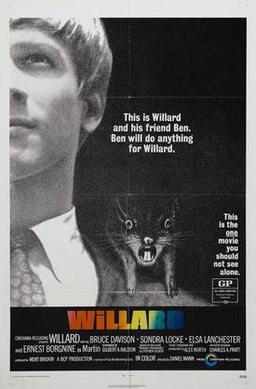
Small town living had its benefits but one of them wasn’t seeing movies.  In the seventies, before the local mall came in, there were scattered movie theaters about.  You could sometimes see reruns on television, if you were free and awake when they were aired.  VCRs weren’t widespread and DVDs and streaming were decades away.  One horror film I very much wanted to see was Willard.  Released in 1971, it did quite well at the box office.  I was only 9 at the time so I never saw it and by the time I became aware of it theaters had long lost interest.  Kids were still talking about it years later, probably from television showings.  When my second resurgence of interest in horror came around, it was still difficult to find.  The DVD wasn’t available and it took some time for it to appear on a streaming service to which I subscribe.

I have to wonder how we got through the seventies, but I finally had a chance to stream it.  The story, since there was a new millennium remake, is probably familiar.  A young man (the eponymous Willard) who doesn’t fit in eventually befriends some rats in the run-down property of his once opulent home.  He teaches them to understand him and eventually has a virtual army of rodents.  He’s a good lad, however, and only uses the rats to redress social inequities.  His boss, a real old school bad guy, stole the steel mill from his father and is trying to drive Willard out.  You can see the boss’s fate coming from afar.  It’s not much of a horror film by present-day standards, but it does have its moments.  It would likely have more impact had I seen it fifty years ago.

The theme song from the sequel, “Ben” (also the title of the next movie), performed by Michael Jackson, rose to number 1 on the charts.  Those of us in the seventies knew it was a song about a rat.  Well, at least some of us knew.  Horror, despite its detractors, often influences mainstream culture.  Indeed, Willard seems to have had some lasting knock-on effects, including the remake just into the new millennium.  Movies from the seventies, although some are excellent, often bear the brunt of the malaise of that period.  Did we ever think big, boxy cars were attractive?  Were men really such chauvinistic pigs?  Still, the story is a good one.  I wasn’t really interested in the 2007 reboot, but having seen the original I’m now curious.  It is, at least, fairly easy to find.


Not Really Nervous

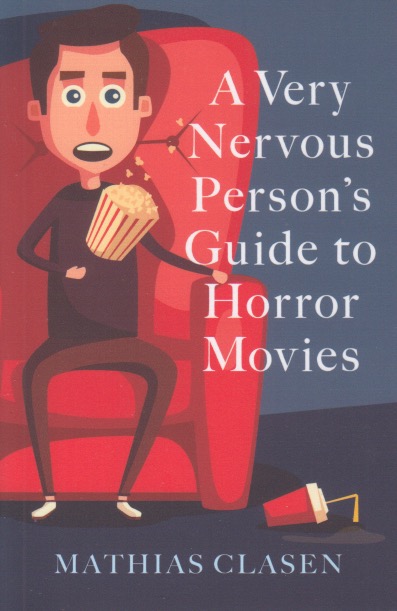
Embarrassment is a not uncommon reaction.  People who knew me as a religion professor or who now know me as a volunteer leader in my local congregation wonder why I watch and read horror.  It helps to know that you’re not alone.  Mathias Clasen is an author I’ve mentioned before.  I read his first book on horror and I was excited to see his A Very Nervous Person’s Guide to Horror Movies, recently out.  I’m not really a very nervous person in this particular regard.  As those who know me will attest, I’m nervous in many aspects of life, just not this one.  Still, after having heard the author describe what his university sponsored fear lab does I was curious how he’d approach horror for the nervous.

Clasen is an academic who clearly enjoys writing.  He’s fun to read.  He admits to being somewhat nervous around horror himself, not watching horror alone.  In fact, the book has several tips—such as not watching horror alone—on how to survive the experience for the curious but cautious.  What I inevitably take away from studies such as this is a couple of things: watching horror isn’t something only I do, and it’s actually good for you.  Studies (and here’s where Clasen is able to point to actual sources) have repeatedly demonstrated that horror has adaptive benefits.  Kids like scary stories, and there’s a reason for that.  The interest in horror generally peaks at the onset of adulthood and tends to decline from there.  Some of us, however, are perhaps arrested at that stage.  Or rediscover it.

There’s a great utility in being able to discuss horror intelligently.  Another point Clasen addresses is that horror is often intelligent but since those who don’t watch it often set the social standards it’s addressed as if it’s juvenile and unsophisticated.  Yes, there’s trash out there.  There is in every genre.  For many people, however, the popularity of slashers in the eighties forever defined horror as naughty teens getting murdered by a bloodthirsty maniac with some kind of blade.  That’s only part of the picture.  Horror has a history as old as cinema itself and the earliest exemplars were based on literature.  It has been an innovative genre from the beginning and when a particularly noteworthy horror film comes out critics and pundits are quick to relable it as a thriller or drama or anything but horror.  We need to give horror its due.  It’s always a pleasure to read a book by someone who has an appreciation of what horror has to offer, even if he’s nervous about it.


Ghosts and Puritans

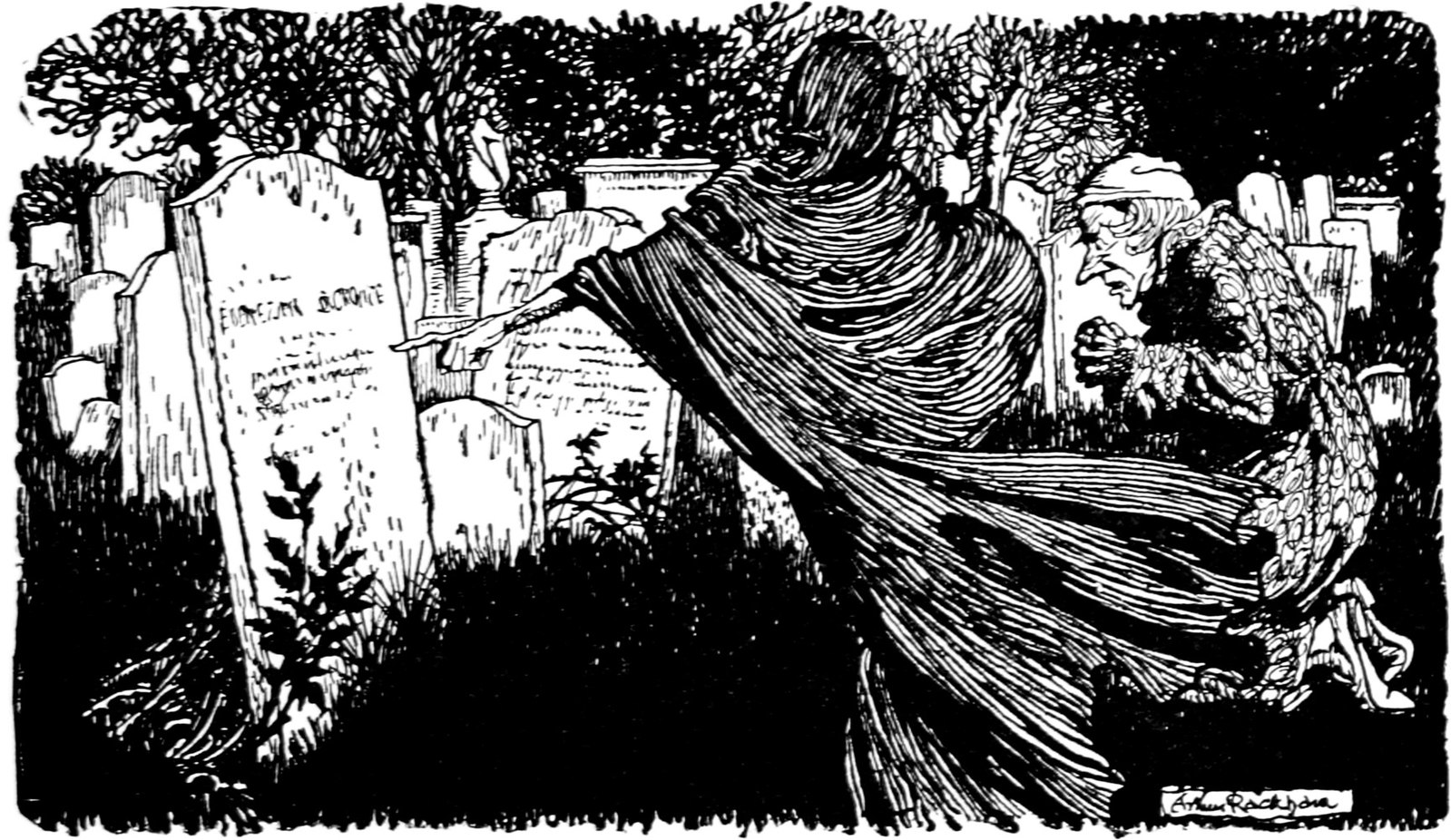
One of the victims of capitalism is the tradition of telling ghost stories at Christmas time.  We tend to relegate such downers to Halloween.  Christmas is a cozy time of getting new things, right?  Who wants to think of ghosts?  I recently read Charles Dickens’ A Christmas Carol.  An article in the Smithsonian  a few years back makes the point that Dickens was cashing in on a venerable tradition.  Instead of sending children to bed expecting Santa Claus, it used to be the custom to tell ghost stories on Christmas Eve.  That makes sense in context.  Christmas was established near the date of the Roman festival Saturnalia and the germanic Yule.  These festivities celebrated the passing of the equinox and the slow, but steady increase in light.  A liminal period.  It seems a natural time to tell ghost tales, no?

Image credit: Arthur Rackham, public domain via Wikimedia Commons

The article by Colin Dickey (who has a history of writing about ghosts), calls for bringing back the tradition.  Do we want our cozy capitalism interrupted by revenants?  Why not?  For me the Christmas season is largely about time off of work.  I spend the time working on fiction writing that I tend to put off when I have a book under contract.  Most of those stories I write are some species of horror, often ghosts.  The real haunting factor is I don’t have time during the rest of the year to do the amount of writing that recharges my batteries.  Work seems to take more and more time and the Scrooge-like results are, I think, pretty obvious.  It’s time to bring back the Christmas ghosts.

Dickey points out that one reason Christmas ghost stories never caught on in America was that Puritans had little taste for them.  The more I look at society the more amazed I am at how Puritan we still are, but without their religious ideals (apart from various prohibitions of human behavior).  The fact that this article appeared in the respectable Smithsonian makes me feel a little more accepted for my disposition.  I know there are many horror fans out there.  Poll after poll indicates that people like horror, but, it seems, most don’t like to admit it.  At least among those I know in the neighborhood.  There are a slew of Christmas monsters.  For those who keep track of holiday horror as a sub-genre the most common holiday represented is Christmas.  In fact, I just had a Christmas horror story published (under a pseudonym, of course).  Maybe ghosts will be able to frighten off the specter of capitalism and bring us back the holiday spirit.


Human Agency

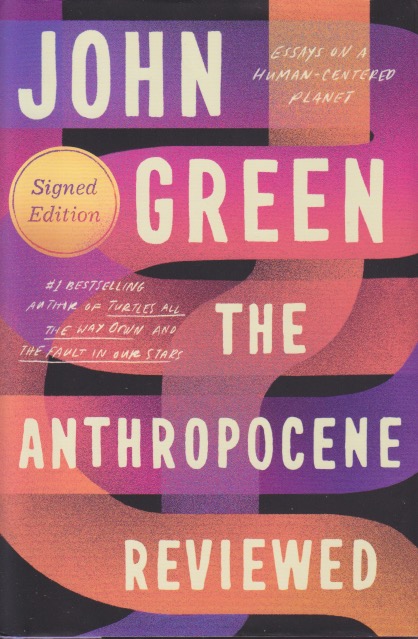
Goodreads Choice Awards elected John Green’s The Anthropocene Reviewed as the Best Nonfiction for 2021.  It’s easy to see why.  Green has long been known both as an internet personality and as a fiction author.  His fiction tends to fall into the Young Adult category, but I’ve read a couple of them as an adult and found them compelling.  Green has an uncompromising way of writing about difficult topics and evoking what it was like to be young.  His main fan base is probably much younger than me, but I always enjoyed his fiction, so why not non?  To understand the context of The Anthropocene Reviewed, it’s important to realize that it is a podcast.  Some of the segments have been written up into a five-star rating system that has been done with quite a bit of humor and some very real tears.  That’s the book version.

For me personally, reading this book was quite a bit like walking the mental paths already in my own mind.  Although we’ve led very different lives, John Green and I share many of the same anxieties, the same love of writing, and similar theological backgrounds.  I don’t know him, of course, but I get the sense that we both still wonder what we want to be when we grow up.  The selection of topics in this book represent Green’s interests well.  Topics are researched and fascinating stories emerge.  It takes quite an author to make me keep reading when sports are invoked.  Some of the topics are sentimental and some of those must be so.  In fact, some of the topics he addresses are things I’ve blogged about.  Some of them even use similar phrases to describe our experiences.

The book is subtitled Essays on a Human-Centered Planet.  From Green’s point of view, this human-centricity isn’t always a good thing.  He nevertheless never loses sight of the fact that humans are fascinating creatures.  Fascinating and disturbing.  We destroy our own environment and each other.  Yet we’re capable of such incredible feats and loving and caring.  Green wrestles with his own neurodiversity here.  He doesn’t shy away from the difficulties that mental illness can present.  He’s also an example of one of us who succeeds despite this liability.  Indeed, our neurodiversity is one of those unacknowledged things that make us so very human.  We expect a world to obey the laws of logic, which it stalwartly refuses to do.  When we notice this we can either cry fowl or we can think about it and invite others to do so.  Read this book and think.


Read Red

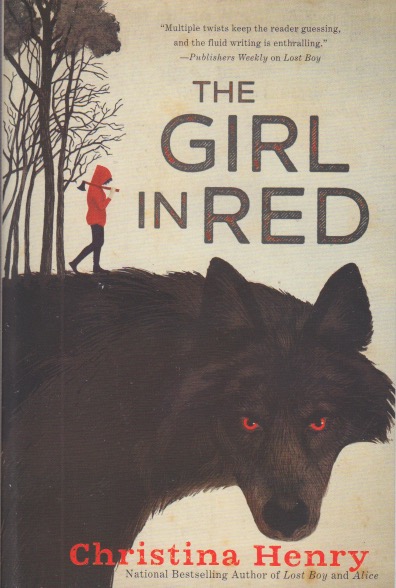
Fairy tales can be pretty gnarly.  I recently picked up a new translation of Grimm but I haven’t read it yet.  For some time I’d been aware of Christina Henry’s The Girl in Red.  As soon as I discovered it I wanted to read it.  The BISAC code says it’s science fiction but I’d call it horror.  More than that, I’d say it is the most tense book I’ve read in years.  Henry knows how to keep readers on edge.  Yes, it’s a take off from Little Red Riding Hood, but in a way that I wasn’t anticipating.  Red is a strong, believable protagonist who finds herself in a pandemic-ravaged world (imagined before Covid-19) where she has to get to her isolated grandmother’s house.  Everything between will surprise, scare, and stun.

The writing carries you along.  A government with secrets, the ever-present threat of roving groups of bandits and militias who are always on the lookout for girls, and the uncertainty of how this will all end make for a powerful tale of what people are capable of.  And not necessarily for good.  Making Red “disabled,” and black, Henry has given us a protagonist we need.  And it’s always a delight when a character finds that watching horror movies has been good training for a world where order has broken down into a Trumpian anarchy.  Scary and witty, the story has so much to like it’s difficult to know where to start beyond the recommendation to read it.

Those who analyze literature sometimes say that the great story-lines have already been taken and that the best modern writers can do is to adapt them.  There may be an element of truth to that, but even if there isn’t the clever retelling of old tales can be quite enjoyable.  This isn’t so much a retelling as a reimagining.  It’s also a poignant reminder that when things start to break down—or even in the status quo—women are put at risk.  Men too quickly resort to guns and violence.  As the story unfolds it becomes clear that Red is capable of surviving in this world, even when at a disadvantage.  There’s also no overcoming of the military.  It’s too well established and too heavily armed.  Red’s run-ins with them allow her to impress those who assume white male superiority.  In that way this is a parable within a fairy tale in a modern guise.  I’ll be reading more of Christina Henry’s books.


Old and New

Annual holiday traditions show just how deeply ritual is established in our behavior.  As the holiday season rolls around we find our familiar customs to be fun and comforting.  I’m not much of a commercialist; for me the end-of-year celebrations are mostly about rest and peace, still a family tradition since settling in the Lehigh Valley is the Christkindlmarkt.  Bethlehem, founded on Christmas Eve by Moravians, has attempted to live up to its namesake and celebrate the season well.  It’s become an established family tradition to visit the Christkindlmarkt and we wander the tents with artisanal goods, some Christmas-themed, and others more just gift-ideas.  We seldom buy much.  It’s the spirit of the holidays that seems to come through and we need something to help us get through winter.

Each year things are a little different.  Many of the mainstays are similar, however, with the same vendors with the same merchandise.  What has changed in the past year is really us.  We’re not the only ones who make an annual tradition of this and we’re not the only ones who see the same scarves, sweaters, pillows, and pottery.  And ornaments—lots of ornaments.  We see new things because we’re different from our selves who’ve wandered through here before.  Hopefully we’re better selves.  Each time I do this I find myself growing more and more reflective.  A celebration of peace and love to all seems to hold, for the most part.  There are lots of people—too many for my comfort at this stage of the pandemic, but we’re wearing masks and hopefully most of these people are vaccinated—peace and love for all.

The end of the year has long been a season of festivities.  Even ancient peoples, especially in temperate regions, longed for the return of warmth and light.  In response to the long hours of darkness around the solstice they instituted holidays.  Times for us to get together and work a little less and relax a little more, recharging our spiritual batteries.  Yule with its Christmas trees and logs, served to bring the message of light into the darkness.  The twinkling of holiday lights is a festive sight, bringing back childhood memories of gifts, special foods, and time off from school.  I’m a different person than the one who’s written a blog post about Christkindlmarkt in the past.  If you’ve read such posts you’re a different person now too.  We all hope that the present person is a better one than the previous as we enter this season of joy and kindness.


After This

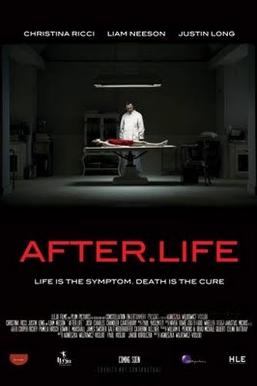
It didn’t rock the critics, but it is distinctly creepy.  After.Life came out in 2009 and quickly fell from sight.  It’s an interesting movie nevertheless.  Any film that features an undertaker, for one thing, gets edgy.  The story of a young teacher who never really felt loved and who is killed in a car crash sounds tragic enough.  Then she finds herself conscious in the preparation room where the funeral director, Eliot Deacon, talks to her, assuring her that he can speak with the dead.  As the movie progresses we begin to wonder if Anna, the teacher, really is dead or if she’s being killed by Deacon for having given up on life.  His name is suspiciously religious, fittingly for a film that deals with such a topic as the afterlife.  Overall, however, it’s pretty bleak.  One of Anna’s students also sees her after she dies and Deacon befriends him, offering to teach him his trade.

Although the critics didn’t like it, it is spooky on many levels.  Not the least of which is the question never satisfactorily answered of how to know when you’re really dead.  The movie presents the soul as a fact, and even dead bodies can move around when the situation merits it.  Death is one of those areas that religion generally enters.  Some secularists maintain their lack of religious thought even in this situation, but many people find religion helpful at this ultimate transition and the soul seems entirely natural then.  It’s unclear in the movie whether Deacon is good or bad.  He’s certainly obsequious, accommodating the wishes of families even when unreasonable.  With the dead, however, he takes a firmer stance, having to convince them that they’re no longer living.  The movie’s a bit confusing in the case of Anna—we’re never really sure if she’s dead or not.

Even with commercial interruptions (it’s free to watch that way) I found myself getting caught up in the story.  Deacon kept asking what it is the living really want.  He’s shown throughout doing the work singlehandedly, from picking up the bodies, to embalming, to even digging the grave.  His loneliness is ameliorated by his ability to speak to the dead, each of whom he photographs and puts on his bedroom wall.  Religion may be behind the soul, but no obvious religious talk pervades the film.  I have to wonder if this might not be the reason it fails to frighten its many critics.  Horror that uses religion effectively often becomes successful.  Those that avoid religion like, well, death, often fail to convince even secular critics.


Brooding

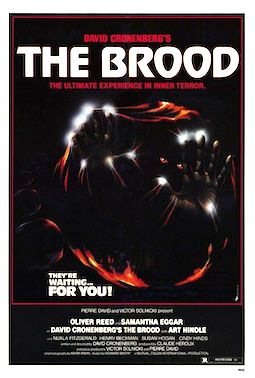
Horror was undergoing a serious development beginning in 1968.  Into the seventies many boundaries were being crossed and new areas of fear were opened.  David Cronenberg is known for his body horror.  Being the squeamish sort, I don’t always seek out his films, but I’d been curious about The Brood for several years.  A holiday weekend afforded the opportunity to see it and, in a strange way I’m glad I did.  The story concerns a psychiatrist who helps his patients embody their neuroses physically in order to deal with them.  The patients manifest in their bodies their deep-seated rage, generally from childhood parental issues.  Those of us who grew up in broken families may seem to wear them on our sleeves, but I suspect most people have issues that were unresolved from that complex parent-child relationship.

The interesting thing here is that there is really no antagonist in the film.  Dr. Hal Raglan isn’t evil, but he does have secrets.  He tries to help his patients, but one of them, Nola Carveth, has major, well, issues.  Abused by her mother, she enters Dr. Raglan’s institute while her husband cares for their five-year old daughter.  Nola’s rage, however, bears a brood of small, gargoyle-like children who, when she focuses her anger on one person, attack and kill them.  Her parents, their daughter’s school teacher, and even Dr. Raglan receive her rage, all murdered by these children born purely from herself.  This strange kind of parthenogenesis makes for a distinct form of body horror.

It’s pretty clear that there is a critique of therapy going on here, but also a kind of therapy is being offered.  I’ve had people ask me if I watch horror as therapy and I freely admit that I do.  The movies I watch are often self-care, or even a spiritual practice.  Many people suggest that horror portrays a negative view of life.  Others of us tend to think of it as more metaphorical.  And besides, the message is often an upholding of conservative social values.  This particular film is difficult to interpret in that regard.  It was written after Cronenberg had gone through a divorce and that makes sense of the central conflict of the movie.  Parenting is as difficult as it is life-changing.  While The Brood may not give solid parenting advice, it may offer a way of understanding ourselves.  If a film does that, it can’t, in my opinion, be all bad.


Remarkable and Beautiful

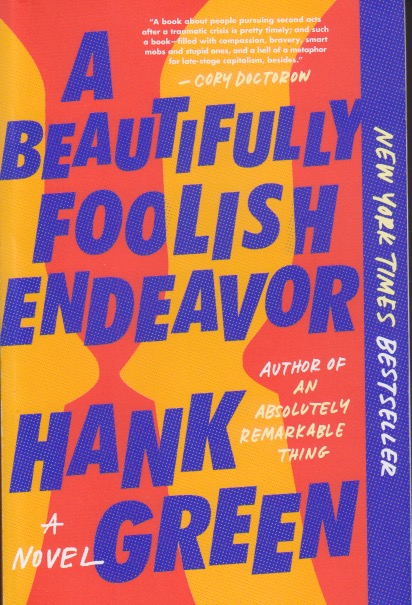
Last year I read and commented on Hank Green’s An Absolutely Remarkable Thing.  I knew there’d be a sequel, but it took some time for it to come out in paperback, and it took a day of flying to give me dedicated time to finishing it.  A Beautifully Foolish Endeavor picks up where the first novel left off, bringing April May back to life.  It’s a story about good and evil and how humans, as flawed as we are, are nevertheless worth saving.  This story takes a further sci-fi and dystopian turn than the first part, moving it more into the regular novel than the “new adult” that seems to better fit the initial book.  Really only six months have passed since the first story, but the still young protagonists have aged in the way experience doles out to people who think they understand the world better than they do.

The world of A Beautifully Foolish Endeavor is dystopian in the sense that corporations have too much power and can (and do) drive the direction of human development.  It’s clearly a novel written after a couple years of repressive Trump rule where autocrats will do anything to keep in the public eye, even destroy their own world.  It becomes Manichaean, or maybe even Zoroastrian in that the extraterrestrial entity Carl, who was the subject of the first novel, reveals that he has an evil “brother” that encourages the corporations in their efforts to rule the world.  The goal of this evil intelligence is to get humanity to destroy itself as a failed experiment.  There’s plenty of metaphor here since the way to get people to destroy themselves is through virtual reality.

As someone who finds quotidian reality difficult enough, I have no desire to see how well some technocrats can imitate what nature already does so well.  Stepping outside with a cold November wind blowing down my collar, threatening snow and driving me back indoors I know I’m in a world not custom built for our comfort.  I am one of billions of scurrying, resistant, persistent creatures doing my best to survive.  I’m sure that virtual reality is an amazing experience, but so is stepping out into that November wind.  Hank Green is gifted at writing compelling, conflicted characters.  From his own internet platform he’s become a significant influencer, gathering the interest of even the White House.  His two novels form a thoughtful set that, like the books of his brother John, make us stop and think what it is to be human.


Erase This

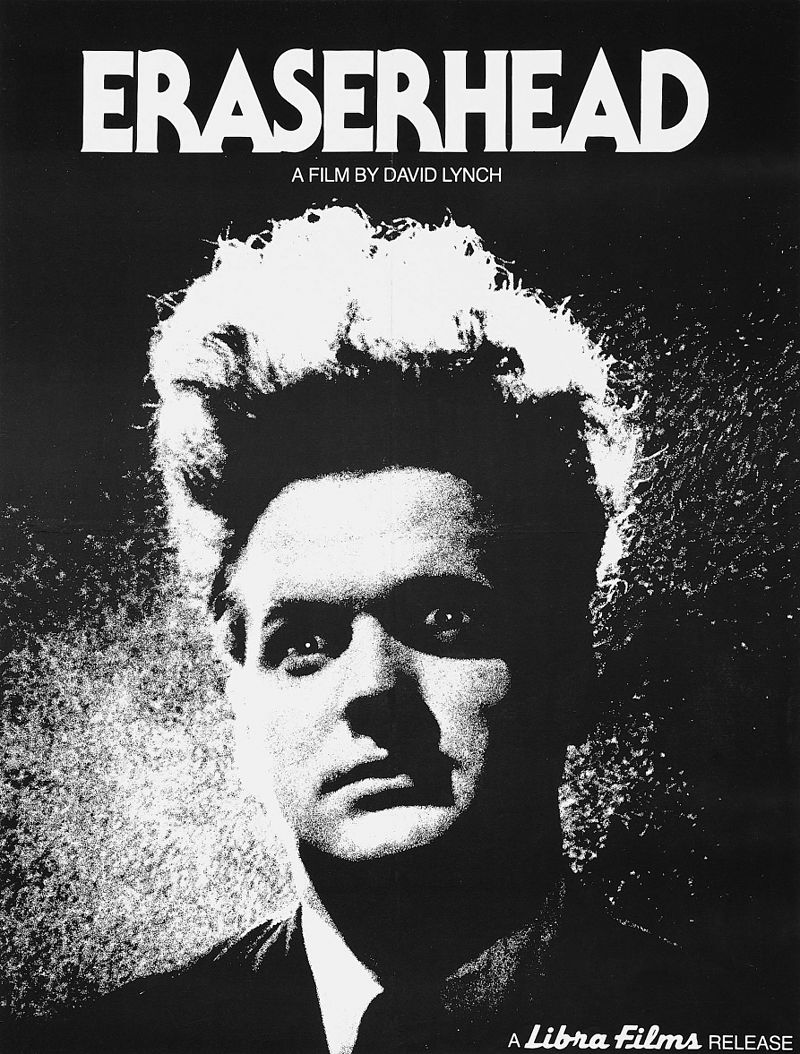
Over the years I’ve read a fair bit about Eraserhead without having ever seen it.  Approaching it I had little idea what to expect—normally classified as body horror, there’s a fair amount of debate as to whether it should be considered horror or not.  Now that I’ve finally seen it, I’d probably call it existential horror.  There are no jump startles, and the quirkiness makes it almost funny at times.  To me it suggests the horror of finding oneself in a world where the most desirous things are also those that scare us the most.  If you’ve not seen the movie this may not make sense to you.  David Lynch, the writer and director (and producer), went on to find fame in more mainstream media, but Eraserhead made the National Film Registry’s preservation list, which says something about it.

Comparison is sometimes fittingly made to Kafka.  Life itself can be traumatic.  Body horror tends to focus on the abject aspects of being incarnated.  We associate intimately with our bodies, but they do things we don’t understand and which sometimes alarm us.  The absurdity of this situation wasn’t lost on the great existentialist writers of the last century.  Faced with these circumstances we carry on because it’s not clear what else to do.  So Henry Spenser doesn’t emote very much.  Life does weird things to you and sometimes just watching the strangeness unfold is the best option.  This level of vanity brings old Qohelet to mind, for even the Bible realizes that some things just can’t be explained.

In an interview on the film Lynch cites the “little torments” of those in the workaday life.  It’s difficult not to feel like a mere cog when your wage is premised upon the amount of time you spend on the clock.  Even for professionals.  The stark divide is like the industrial wasteland the film so ably portrays.  This isn’t where anybody wants to be—no, it’s where one finds oneself.  Comforts are few and the background noise is constant.  Although Eraserhead isn’t widely known among the general public, its influence on other filmmakers is clear.  I could help thinking “oh, this is where that idea comes from.”  Probably most strongly that related to Brazil, a film I saw twice in one week in the theater (something I’ve not done with any other movie).  Having worked within the system, following all the rules only to find they don’t really mean you’ll end up where you hope, the theater of the absurd has always felt natural to me.  I should’ve watched this sooner.


Mag Dash

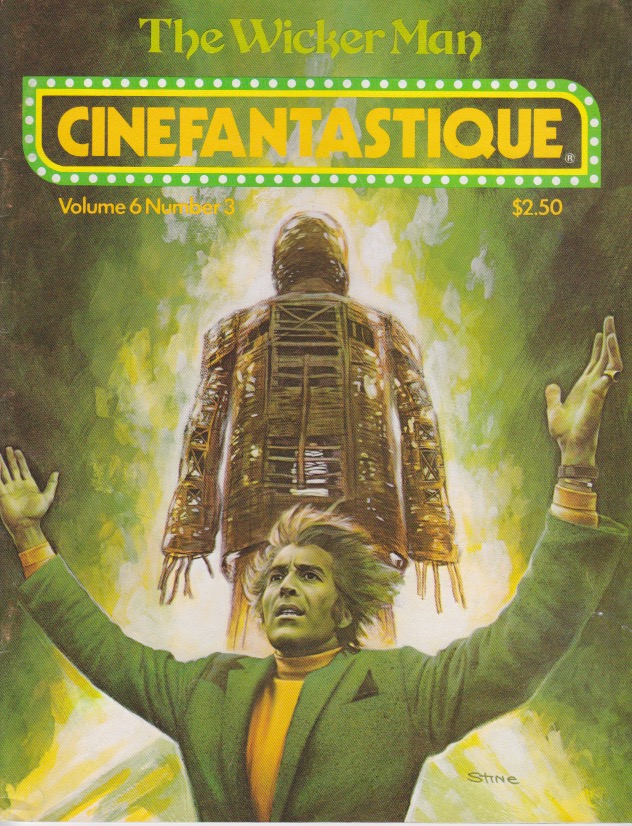
I don’t do much magazine reading.  Back when I had more time (mainly before buying a house), there were a few with which I attempted to keep up.  Mainly, however, I’d buy a particular issue that I wanted to keep.  I suspect that’s because I’m a book reader and my time for pure reading is limited.  Strange thing for a professor/editor hybrid to write, but there you have it.  Each year I “pledge” a number of books to Goodreads to keep me honest, and achieving that goal adds a kind of friendly pressure on my reading time.  Magazines don’t count, and mostly I never read the whole thing.  My current book project is an analysis of the movie The Wicker Man.  This led to some magazine reading.

Horror movies, especially, have been traditionally treated as ephemera with little lasting cultural value.  Fan magazines, therefore, often provide most of the periodical treatment for some of these “B movies.”  The Wicker Man suffered legendary distribution problems and that may have been what prompted Cinefantastique to devote all its feature space to this particular movie back in 1977 (the movie came out four years earlier and was still struggling).  The article is a lengthy one, not quite to the extent of The Atlantic, but still several pages.  It was the origin of the much repeated epithet “the Citizen Kane of horror films.”  To read this I had to locate a copy of the magazine.  There was, fortunately, a seller in Beloit, Wisconsin who wasn’t extortionate (thank you!).  My experience in buying print materials from the seventies has often proven the opposite.

Occasionally someone glimpsing my books will cattily ask, “Have you read them all?”  No.  But then not all print matter is for reading all the way through.  Reference materials, for example, are consulted.  The way my mind works, I need to keep things around so I can find them again.  Studies have shown that retention for electronic media isn’t as reliable as it is for print.  That may change some day as we evolve more and more into extensions of our machines, but for now I use it to justify keeping books.  Since I can’t predict the future, I never know when some forgotten tome might come up again in a new project.  That has happened a few times already while working on my small book on The Wicker Man.  And that includes magazines with good articles.  This one is a keeper.


Numbers Game

I once asked a movie expert—this must’ve been when I was regularly on a campus somewhere, but not Nashotah House—how many movies had been made.  He sighed and said “There’s no way to know that.”  What I was thinking at the time was the Motion Picture Association of America (now the Motion Picture Association) number that comes near the end of the credits.  I wondered how many of those there were.  Of course, the number keeps changing.  It doesn’t account for television movies or straight to video, although, I see it does now include Netflix.  In any case, I was really interested in the statistics.  I still am.  I may not be a math person, but big numbers are intriguing.

The more I read about movies, and I seem to be moving in that direction, the more I realize how nobody can be an expert on all of them.  Even those of us with decades of experience watching horror can’t keep up with that genre.  Many of the books I’ve read are by authors whose families don’t like horror, so they have to carve out time alone to see the films.  This is on top of their jobs, which for some, admittedly, is film analysis—perhaps they’re the lucky ones.  I selected many films to discuss in Holy Horror.  There’s no index of the Bible in films, as useful as such an index would be.  As I continue to watch, and sometimes rewatch, I keep finding more and more material.  At some point, however, you just have to say “what I have written, I have written.”  But how many movies actually engage the Good Book?  There may be a way to know that, but it will take a lifetime of research.

Speaking of large numbers, the stats for how many Bibles are sold each year is a phenomenon unto itself.  It seems inevitable that it would find several of the cracks in American culture and leak in like rain water.  At times it’s the antidote to horror, while at others it’s the dote itself.  Holy Horror was never intended to be comprehensive.  It limited itself in intentional ways.  As I was writing it my naive question kept coming back to me.  When I research a topic I like to read as much written on the topic that I possibly can.  Of course, I spend over eight hours a day for most of the year doing something else.  The number of days like that, I suspect, is frightfully large.