Haunted Landscapes

The Devil’s Advocates series consists of short books focused on a single horror film.  For horror fans they’re a great resource, as they will hopefully also be in teaching settings.  David Evans-Powell’s recent volume on The Blood on Satan’s Claw is a fine example of just how intelligent horror can be, and how it can be interpreted so.  This particular movie from the early seventies was never a major revenue earner, but that in itself is a lesson.  Influence, measured in smaller scales, can still create an impact on people’s lives.  Evans-Powell’s treatment takes several angles, each of which casts light on this unusual movie.  Reading this little book brought quite a few ideas to mind, both about social structures and religion.  The film is set in the early 18th century, with a city judge who is problematic actually saving the day.

Since The Blood on Satan’s Claw is folk horror, quite a bit of the discussion focuses on landscape.  Paying close attention to landscape reveals hidden information.  It becomes almost a character.  At the risk of too many spoilers, the film is about uncovering Satan—or a demon, it’s not terribly clear on the point—from a farm field.  As this evil character gains power the local children are drawn to him and the village authorities are unaware of what’s going on in the nearby woods.  Landscapes reveal and conceal as the creature gains power and the children engage in acts of violence.  The response of the judge is a violence of its own.  The movie doesn’t really deliver all that it promises in that regard, but Evans-Powell explains how the film was made and that, in turn, explains some of the rough edges.

Religion and horror go naturally together.  I suppose any film with “Satan” in the title will address religion somehow.  Not all horror is religious, of course, but many of our fears derive from religious subjects.  It’s almost as if as we ceased to fear the landscape—nature having been tamed to some degree—we began to find fear in religious thinking.  Put another way, religion has kept fear alive.  The Blood on Satan’s Claw was never a major, big-budget release.  Except for fans of British horror it has largely escaped notice.  Folk horror, because of its recent revival, brought interest back to some of these older efforts to explore such themes, many of them implying a religion hidden in the landscape.  This book provide a useful map in exploring that territory.

Degrees of Separation

For some reason lost in the fog of weblandia, I get The New York Times, “The Morning” delivered to my email.  By carefully not clicking the links I can get my day’s worth of fear and paranoia for free.  Not all the news is bad, of course, and I’d be glad to pay if circumstances had been different.  After giving all the sorrow that’s fit to print, “The Morning” ends with an Arts and Ideas section.  By then I’m usually cradling my head in my hands but I look up to see the positive side of humanity.  The other day the article on the Metaverse included this line: “In its simplest form, the term — coined by Neal Stephenson in his 1992 novel ‘Snow Crash’ — describes an online universe that people can share together…” and I realized probably the closest I’ll ever get to the Gray Lady.

I am, as many of my regular readers know, Neal’s brother-in-law.  He mentions me in the acknowledgements to Snow Crash, something that was discovered by someone at work fairly recently, and which probably did more for my stature than my many long hours daily.  When it comes to degrees of separation, fate, I suppose, plays a role worthy of the Joker.  Neal hadn’t written Snow Crash yet when I met his sister.  Her somewhat unlikely friendship with me eventually led to our marriage and it was in the context of a family gathering that the conversation Neal mentions in Snow Crash took place.  Outside publishing, and in particular academic publishing, acknowledgements are seldom read.  I always read them, though, looking for unusual connections.  I’m often rewarded for doing so.

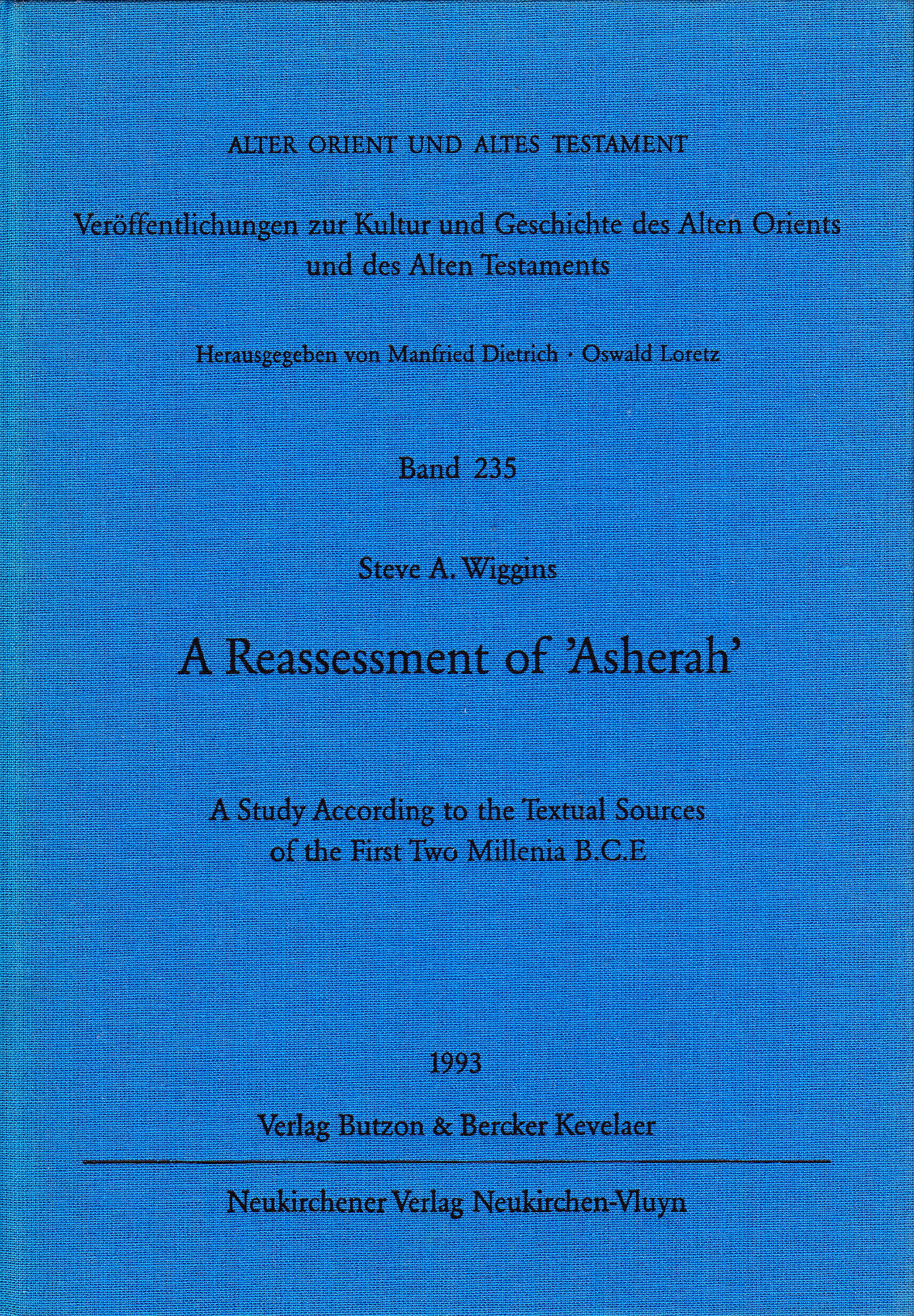
Asherah was, unbeknownst to me at the time, undergoing a resurgence of interest.  My Edinburgh dissertation was published the same year as a more prominent one by Cambridge University Press.  Just a year later, another came out.  Then another.  The internet was really an infant in those days and we learned of such things through printed resources and printed resources are always in arrears by months, if not years.  Of the many Asherah books mine had the distinction of being the most expensive.  Some things never change, I guess.  Suffice it to say, Asherah was on my mind as Neal and I drove to the store to pick up some baby supplies.  I had nothing to do with his coining the word or idea “Metaverse”—he’d already worked that out.  It was Asherah that ended up in the novel.  I was on my way to a short-lived romance with academia at the time.  Family, however, is so much more than degrees of separation.


Walking Bear

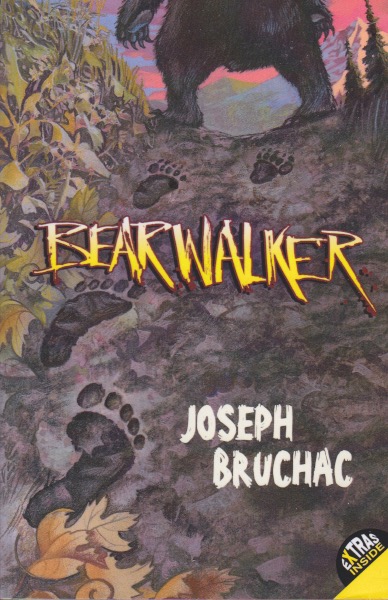
Indigenous peoples have been on my mind over the past several months.  Indeed, I read books by American Indian authors with awe.  In this darkening time of the year the Indian monsters join those of European descent in my imagination.  The wendigo has become somewhat popular in recent years but the bearwalk, or bearwalker, remains obscure.  Although a novel for young readers, Joseph Bruchac’s Bearwalker is a genuine horror story and the author is of American Indian descent.  It took someone giving it to me as a present (mainly because it was for young readers) to get me to pick it up.  I’m glad I did.

As might be expected for young readers there’s some blood but not gratuitous violence.  There are skillful twists in the novel and Bruchac knows how to put his protagonist on a cliff, as the old adage goes, then throw stones at him.  In this case, Baron, a thirteen-year-old Mohawk boy, is tormented by the bullies at his school.  Befriended by a respected teacher, he attends a three-day camping trip to the Adirondacks where a family dispute has led to a plan to terrorize the camp and force its sale.  The plan is to make it the scene of a mass murder with the school children present.  It’s here that Baron is able to demonstrate his worth to his classmates by escaping from the would-be killers and bringing help.

Throughout the story bears feature.  There’s some question as to whether there is a real bearwalker present, but the idea is there.  As with literature for young readers there’s some protective layering—no sex or strong language, for instance—but violence, at least in intent, is clearly there.  It is a very good story with suspense and excitement enough to keep even an adult horror fan going.  The main reason I’d had my eye on the book was to learn how the bearwalker might appear in it.  And also to see the story told from a First Nations’ point of view.  Like Baron in the story, American Indians I read aren’t aggressively angry about the way their people have been treated (which they certainly have a right to be).  There’s nevertheless a sadness and inevitability there.  Still, there’s also a pride in being part of an ancient and surviving culture.  There’s also quite a bit of symbolism in the story; Baron’s parents both proudly serve in the military, despite what the nation has done to their people.  And more subtle indications occur here and there that mainly adults would notice.  Although for young readers this is a real horror story, but one with a conscience.


Everything’s a Nail

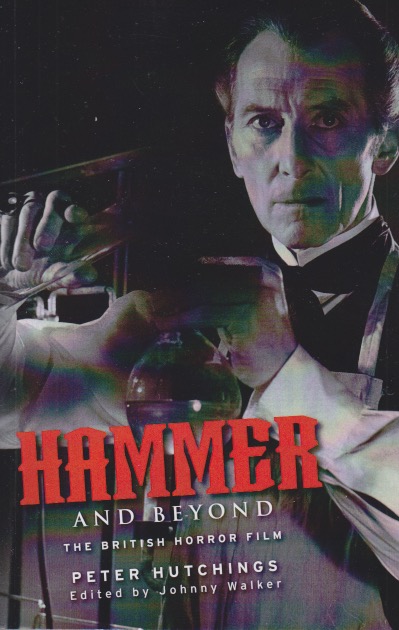
Taking my first, tentative steps into horror analysis, I had read a great many monographs on the subject.  I had watched many horror films over the years, but since my family has no love of the genre, and since habitually under-employed I can’t afford to pay for many, my quota is fairly modest.  I’ve missed out on many.  When I could afford it, I started out with either movies I’d heard of when younger but had never watched, or packs of ultra-cheap B (C or D maybe) movies that nobody has ever heard of.  As I lamented recently, British films were rare—Hammer, which held the English reputation for horror, was the undiscovered country.  Then I saw that Peter Hutchings’ Hammer and Beyond: The British Horror Film had come out in a second edition.  (The new edition contains three of Hutchings’ other articles as well as the original text.)  I had to read it.

Although I’ve not seen many of the movies discussed in the book (again, access issues) it was fascinating nonetheless.  Hutchings considers the elements of gender and Britishness in his readings of the films and there’s quite a lot there.  Horror is generally seen as a conservative genre (it tends to uphold typical social values) and for many Hammer and other films this meant that male prerogative was important.  Equally important, however, is that horror often disrupts this hierarchy.  There are strong, and even fatal, women here.  Horror embodies the acting out of the complex world of fear between women and men.  The study, as befitting a revised dissertation, is laid out chronologically for the most part.

Some readers of this blog have kindly pointed out ways to access Hammer films in the US.  Now all I need is the time.  I’ve been able to keep up with my reading, at least.  And this was a worthwhile book to read, even without having seen much Hammer.  It surprised me, however, that their list of classic horror wasn’t longer.  Having read about Hammer for many years,  I suspected their output was massive.  Instead it was mostly just impactful.  The essays following the main body of the book make the point that British horror was/is distinctive.  These days a lot of international cooperation takes place in the movie industry, and national cinema is becoming more global.  We could use a little less nationalism just about now.  So I’ll continue my quest for Hammer and try to make my way through the movies I really should add to my repertoire.  It’s a good book that can make you want to do that.


Horror Show

The horror film history narrative runs something like this: although there had been some scary movies in the silent era, the term “horror” was first used to describe Universal’s 1931 release of Dracula and Frankenstein.  Some other studios got in on the action and creature features were a staple of US cinema until the fifties when they began to peter out.  By that point a UK horror industry took off, largely due to Hammer Studios.  While these Hammer offerings often remade the standard creature features, they also branched out into less commonly explored areas such as films set in contemporary times focused on the occult.  This phase faded in the sixties just as “modern horror” was taking off with classics like The Night of the Living Dead and Rosemary’s Baby.  Modern horror quickly grew.  Further divisions can of course be made, and the modern period has gone through several transformations as well.  It’s a rich coffer.

There’s a real problem with this, however, for those who might’ve missed a decade or two somewhere in there.  Many of the UK films are still not available in the US for anything like a fair price.  Part of the reason for this is copyright law, but another is apparently the ignoring of demand.  I saw maybe one Hammer film (on TV) growing up.  Saturday afternoon fair was more often American B movies like Zontar the Thing from Venus.  I’ve got a hankering to watch some of those Hammer films, but even in the 2020s they’re difficult to find.  Even with the internet.  Often the DVDs are (because of differing copyright laws) coded so they can’t be viewed in North America.  You can buy a player to see them, but when you think of the inevitability of streaming it hardly seems worth the cost.

Streaming might be the solution, but much of the Hammer oeuvre doesn’t stream in the US, at least not that I’ve found.  If I’m wrong please let me know in the comments!  You see, I spend time reading about horror and when you do this recommendations often arise.  Some Hammer classics are as expensive as the academic books that discuss them.  Is it possible to be a horror connoisseur?   And can you truly be a connoisseur without sampling what’s on offer overseas?  We tend to forget that the world is culturally divided by copyright laws.  If nobody’s watching the movie anymore what’s the harm in making it free?  If people do want to see it, why not sell it to them at industry standard price?  Even trying to watch horror, it seems, has become a horror show.

Photo by Michael Mouritz on Unsplash

Spirit of Halloween

So it’s Halloween.  It’s also Sunday.  I’ve been thinking quite a lot about the spirituality of this particular day.  Now it’s often treated as a trick, a consumerist holiday with too much candy and befitting spooky decorations.  Like all holidays Halloween has evolved from its origins to how we celebrate it today.  Other than Wiccans and Neo-pagans, however, not too many take it seriously.  At Nashotah House, and therefore likely at some parishes scattered around the world, All Saints Day—which is tomorrow—was a day of obligation.  What we call Halloween was the day before this major festival of praising the faithful.  There is some evidence that All Saints was moved to November 1 to counter the lively celebration of Samhain, or the Celtic fire festival marking the onset of winter.

The Celts included an intellectual class known as Druids.  Druids seem to have been the “theologians” (oh, that word!) of the Celts and they mandated that their teachings not be written down.  A great deal of information was passed on by intensive memorization and only became known to us outsiders because after Christianization it began to be written down.  Their idea of the afterlife seems to have been that it was being born into the other world.  In the otherworld life was different and apparently in some respects better.  When our time there drew to a close, our death led to our birth into this world.  The cycle continued on and on.  Samhain was the time when crossing between worlds could occur.  Death wasn’t a cause for sorrow since the otherworld awaited.  Birth into this world was more problematic.

Fear of death seems natural enough to us.  Even though it’s inevitable and this world’s graveyards are full, somehow we seem to think we can avoid it ourselves.  Our evolved survival instinct runs out of control since we’ve eliminated many of the causes of death that have plagued our species (and many other species) for millennia.  Eons.  As we’ve done so we’ve distanced ourselves from death—dying in hospitals, our corpses prepared in funeral homes, buried and eventually forgotten.  To me, the Celtic idea, from a world where death was likely much more close to hand, seems a more healthy outlook.  Instead of fear, why not consider it a day of wonder and celebration?  To many, I know, that is a spooky thought indeed.  It’s more than a day of masks and candy, however.  And we might learn from it if we stop and ponder.


Author Talks

Author talks are one of my favorite perks.  While work obligations mean I often can’t attend, I was glad to have caught this week’s visit by Mathias Clasen.  Clasen has been writing books on horror movies for Oxford University Press, and his talk strangely made me feel less alone.  Let me explain.  First of all, lots of people came.  Yes, Halloween is merely days away, but I get accustomed to thinking I’m the only one who watches horror.  Nobody close to me does.  Learning that many colleagues enjoy the genre was a boost.  Clasen runs the Recreational Fear Lab at Aarhus University.  Their survey of Americans found that 55 percent liked horror films.  I’m actually in the majority, which felt affirming.  

The Recreational Fear Lab studies various aspects of why people seek things that make them afraid.  This ranges from thrill seekers to those who cower in the corner of a theater to watch the latest slasher.  There were several takeaways from his talk.  One was that two main types of people subject themselves to horror: “adrenaline junkies” and “white knucklers.”  Adrenaline junkies are pretty self-explanatory—they like getting scared for the rush of it.  White knucklers, on the other hand, enjoy steeling themselves from fear while subjecting themselves to it.  They try not to scream, but keep control.  I was putting myself in the latter category when he mentioned that further research had revealed a third personality type: the dark copers.

Dark copers are those who use horror as therapy for themselves.  I immediately knew this was my group.  Some people, for whatever psychological reasons, find horror movies therapeutic.  They help us cope.  Interestingly, and in line with other materials Clausen has published, horror is good for people.  It has many benefits and if we deprive children from any stressful situations in their young lives they tend towards neurotic behaviors when they’re faced with stress as adults.  The Recreational Fear lab is a place for the scientific study of voluntary fear experiences.  They operate by grants and have many programs of study from a variety of disciplines.  And some of them watch horror.  Perhaps because when I started this blog I tended to write mostly about religion, I suspect many of my readers don’t really care for the horror posts.  They’ve been there from the beginning, however; my first month I wrote about werewolves, zombies, and Barnabas Collins.  Religion and horror are closely related, even if it makes me feel a bit alone to say so.


Not Quite Quetzalcoatl

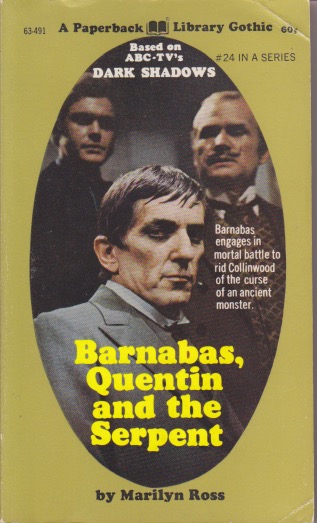
It must be difficult to write the same basic story over and over.  And nostalgic adults like me can be tough critics as we try to recapture faded childhood glories.  Those memories fade like afternoon shading into evening, but still I can’t help myself.  Marilyn Ross wrote 33 gothic tales of Dark Shadows in the spinoff series from the long-running television program, and I’m determined to read them all.  In small doses.  The one, Barnabas, Quentin and the Serpent is actually a bit distinct.  The writing is still journeyman, that of a tired potboiler author, but the plot offers something a little different.  As in the last volume reviewed, Barnabas is free from the vampire curse for a time, allowing him to emerge in the daylight.  And his arrival at Collinwood is actually dramatic and well-timed.  The story is set in the nineteenth century.

Gerald Collins, a professor of archaeology, unexpectedly inherits Collinwood along with his daughter Irma.  They head to Maine from Mexico taking exotic creatures with them, including a dimetrodon that escapes and tries to eat them.  The story revolves around rumors that the professor caught and transported back a flying serpent.  At Collinwood (and let’s think about this a minute—if you add up the body count from all the novels you’ve got to wonder why there’s been no federal investigation) people start to die and reports circulate of a flying snake.  The professor’s going to be driven out of town because angry villagers think he brought this creature back with him.  It’s all very melodramatic.

As in the last novel, Barnabas acts as a detective.  Quentin, who is the werewolf cousin, manages to allude detection by disguising himself.  Even Barnabas is fooled.  The story tries to avoid invoking the supernatural—there’s no such thing as flying serpents—while allowing a werewolf to perpetrate a hoax.  It’s all good fun (except for that body count).  There’s a bit of vim here from our weary journeyman writer, but there are nine novels yet to go in the series.  Writing a series seems to be smart money.  Children (and I first read several volumes of this series as a child) like to complete things and can be loyal series fans.  I never read the full series when I was younger; they were haphazard finds at the local Goodwill book bin.  Of course they were still being published at that time.  I have to admit that I’m curious where it will go from here.  And I do miss Barnabas as a vampire.


New Monster

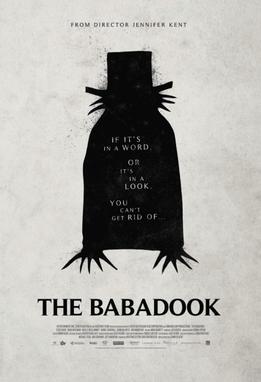
The Babadook is a horror film about loneliness.  Written and directed by Jennifer Kent, it has an arthouse cinema feel to it.  I missed it when it came out in 2014—it didn’t receive major billing and publicity in the United States—but it gained critical acclaim as intelligent horror.  It follows the small family of Amelia and her son Samuel, who has special needs.  I’ll try to avoid too many spoilers here because I think you should see it if you haven’t already.  Amelia’s husband died in a car crash taking her to the hospital to have their first child.  That haunting tragedy drives the film.  And when you throw a monster called the Babadook into the mix, loneliness and sleeplessness make the dark something to fear again.

With wonderful acting, the story of childhood monsters highlights the continuing plight of single mothers.  How are you supposed to survive when you have a child that requires constant supervision and yet you need to make ends meet?  And if sleeplessness begins to distort your sense of reality all kinds of things seem possible.  

Hollywood hasn’t been a friendly place for female directors.  This film was shot in Australia.  I’m not sure that sexual parity is better there, but this movie is a great example of what can happen when a woman shows what horror means to her.  Not too many horror movies have female directors, yet.  It seems to me that women have many things to fear and have much to show us about what horror can be.  It seems to me that loneliness, although often part of horror, isn’t often the focus.  We would rather look away than to see it because it’s too painful.  Horror compels us to look at what we’d rather not see.

Aside from all of this, the film gives us a new monster.  The Babadook was invented for this film and although we don’t have to worry about whether it’s real or not, the issues it brings to the fore certainly are.  There is darkness inside people.  Even those of us who try to do what is right struggle against it.  Often it takes quite a lot even to admit as much.  This movie lets the dark out and finds a new narrative path through which it might flow.  Although a box office success—earning more than it cost—The Babadook is still little known.  It should be discussed more because intelligent horror has some important lessons to teach us.


Documenting Horror

Watching documentaries always seems to raise questions.  I recently found A History of Horror with Mark Gatiss on YouTube.  Produced by the BBC in 2010, the set of three episodes is a selective walk through the horror genre through the eyes of an insider in the film industry.  Divided over three segments, he covers early horror (primarily Frankenstein-related movies), British horror, and the American horror revival beginning in the late 1960s.  It occurred to me while watching this that horror is often—but not always—an intellectual genre.  Many of the plots and ideas are sophisticated and puzzling.  At one point Gatiss says it is nearly the perfect genre for movies.  I would tend to agree.  Many of the payoffs of horror are the reasons I go to see a movie.

Of course, documentaries involve interviews.  While discussing religion and horror—the two are closely related—in the third segment, he considers the impact of what I termed the “unholy trinity” in Holy Horror: Rosemary’s Baby, The Exorcist, and The Omen.  His primary interview for this set was with David Seltzer, the screenwriter for the last of these.  At this point my memory took me back to an interview on one of the extras for my DVD edition of The Omen.  In that interview Seltzer mentions that the antichrist is at that moment (clearly this was shot shortly after the movie came out) walking the earth.  In my mind I compartmentalized this to interpret his stance as that of a religious conservative.  The idea of the Antichrist, after all, is post-biblical, at least in the sense that end-time scenarios are developed.

The Gatiss interview was filmed many years later and he asked Seltzer if he believed in the Devil.  “No,” Seltzer laughed, stating that if he did he wouldn’t work on movies like The Omen.  People’s opinions change over time, of course.  And the Devil and the Antichrist are two separate characters as they develop after the Bible was completed.  Still, I had to wonder if his earlier interview included that comment about the Antichrist being alive now wasn’t intended as a bit of spooky propaganda for the movie.  It’s difficult to know what someone really believes.  Most people mouth what their ministers say, not really considering where said clergy get their information.  For these many years I’ve been thinking that The Omen was considered as some kind of documentary by the screenwriter.  Documentaries always seem to raise questions.


Face Away

I’m avoiding Facebook for a while.  Here’s why.  I started a Facebook account when I first got involved in social media.  (Publishers say you have to build a platform.)  The instructions were very basic and I checked my feed once a day for a total of about 5 minutes.  I still do that.  Some people contact me on Facebook, and often I don’t see it.  In fact, I seldom open it after 6:30 a.m.  I’m pretty easy to reach on the internet.  I have a blog and a Twitter account, Linked-In, Goodreads, and Academia.edu.  They all send me email notices when someone messages me.  Facebook doesn’t.  Also Facebook keeps telling me people have sent friend requests.  It was manageable up until recently.

I thought it was because of the Incarcerated Christian podcast.  (There’s another one coming up on Tuesday!)  The next day I started to get 20+ friend requests a day.  You’ve got to build a platform, right?  I tend to accept friend requests because I spend very, very little time on Facebook.  Then more requests came.  And more.  And more.  Just yesterday I had 846 pending friend requests.  That’s a lot of clicking!  I was going to have to hire an assistant just to say “you’re all welcome.”  Or maybe, “why not follow me on Twitter?”  I would devote my 5 minutes on Facebook to clicking friend requests.  I quickly grew bored with it.  Then the friend requests started coming from other academics.  “Cool!” I said, “people I actually know!”  But when I clicked on the “Accept” button it said, “Friend request sent.”  No, no, no!  That’s not what I wanted to do!  I was responding to a request sent to me, not the other way around.

Lead us not into Facebook…

I quickly clicked out of Facebook in embarrassment.  I don’t want a bunch of academics to know how needy I am—that’s just for you blog readers to know.  I know Facebook sends updated instructions from time to time.  I don’t have time to keep up with them.  If they just sent me a tweet I might read it.  My main social media channel is this blog.  You can read it on Facebook, or Twitter, or even Goodreads.  I think it also shows up on my Amazon author profile page.  I may be needy but I’m not hard to find.  So I’ve decided to retreat from Facebook for a while.  The price of building a platform, it seems, has gone up with just about everything else.


Dark Academia

Genres can be slippery things.  Those of us who dabble in fiction sometimes find it difficult to describe what we do.  Writing is individual expression and it may have elements of this and that.  Given my disposition, much of my fiction has some horror features but I tend to think of it as something else.  My wife recently sent me an article on Book Riot about the genre Dark Academia.  The piece by Adiba Jaigirdar begins by asking the question of what exactly dark academia is.  The label conjures up books about something untoward happening in the halls of learning, and that certainly qualifies.  It’s difficult to be more precise because it’s different things to different people.  Some of my fiction, in my own mind, falls into that category.  Things go wrong in higher education all the time.  Why not preserve it in fiction?

I’ve attended, and worked at some gothic places.  The contemporary university, such as Rutgers—although it’s old by American standards—has continuously modernized and although I don’t know it’s history well, I suspect gothic was never its aesthetic.  The same is true of Boston University where I went to seminary.  Edinburgh University, while also modernizing, has retained much of its gothic feel.  That’s certainly true of New College, where I studied, in the heart of the medieval old town.  There’s a gravitas to such dark settings.  They invite strangeness.  My first teaching job was at the intentionally gothic Nashotah House.  Although I didn’t agree with the politics I loved the setting.

I seem to have slipped from Dark Academia into Gothic Academia.  Indeed, it’s difficult to keep the two distinct in my mind.  When I taught I maintained the tweed jacket and somewhat disheveled look of someone who has something else besides grooming in mind (this is entirely genuine).  Indeed, that’s one of the great charms of higher education.  You need not constantly worry about each hair being in place—they’ll take care of that when they shoot the movie.  Not many people, and probably a diminishing number given the state of things, experience full-time life in academia.  It can be well lit and modern.  If done right, however, it should take you into odd places.  Discovery is generally messy.  Perhaps that’s part of the dark of dark academia.  When we use our brains we end up in unexpected places.  I’m not sure I understand dark academia, but I have a feeling that I’ve lived it even without my fiction.


Book or Movie?

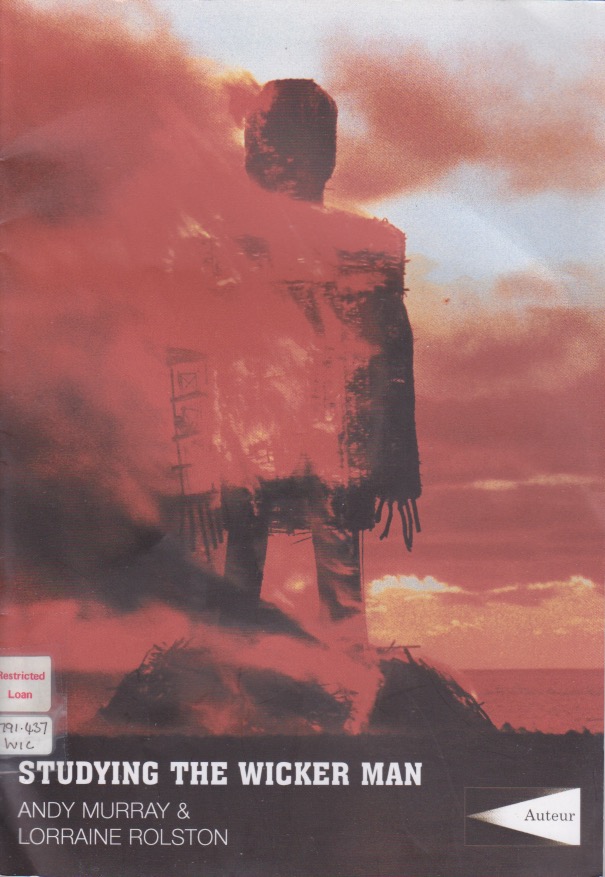
The funny thing about people, or at least one of the funny things, is that when individuals get together we notice different things.  It can happen at in-person meetings or “virtually” through books.  I’m working on a book on The Wicker Man, as I recently noted.  Others have written on the movie, of course, and I’ve read some of their analyses already, but I’m continuing to read more.  Recently I finished Studying The Wicker Man by Andy Murray and Lorraine Rolston.  This particular book—more along the lines of a booklet, actually—has quite a few observations about the movie that I had missed.  Connections, or interpretations, that I’d failed to make despite having watched the movie many times.  It takes the meeting of the minds to bring many things to light.

One of the questions they raised (and there will be spoilers here) is why the movie bears the title it does.  Obviously the climatic moment of the film features a wicker man.  Murray and Rolston noted, however, that more could be going on in this title than is obvious.  Sgt. Neil Howie, the protagonist, is a lot like a wicker man himself.  I won’t repeat their wonderful work here but I will say it’s convincing.  The literary trope of “the hollow man” (it could be woman, or hollow person, but I’m writing from personal experience) can be a poignant one.  We know that life may carry on biologically, but what makes us who we are is what goes on inside.  The hollowness may be intellectual or emotional.  Either way it’s a trial.  It’s something that I wouldn’t have thought of without help.

Studying The Wicker Man may be slim, but it has some powerful ideas.  As a society we’re often impressed with size.  When a promotional photo wants to show an author with gravitas, they generally ask him or her to hold a thick book.  There is certainly a place for large books, but insight can come in any size.  This particular book is obviously designed for film studies courses focusing on this particular movie.  It does point out that “cult classics” become such by not being widely seen, so I realize many of my readers (presuming there are many) won’t be terribly interested in a book that analyzes a movie they haven’t seen.  If you’re one of them, and if you don’t mind a movie with an ending that will stay with you, I would recommend watching the film before reading the book.


More Ethnic Monsters

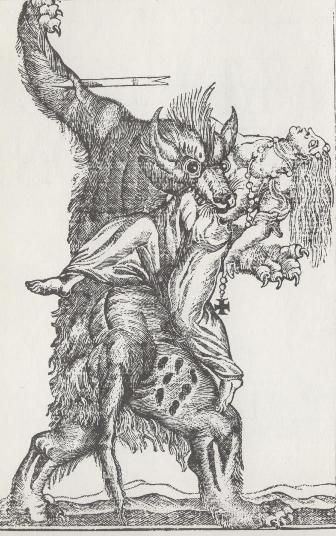
There seems to be a real interest, this haunting season, for cultures to claim their monsters.  I recently wrote about a story on the Jewish background to Frankenstein.  I also saw an article in Greek Reporter titled “The Ancient Greek Origin of Werewolves,” by Tanika Koosmen.  Earlier this year I read a book about the werewolf in the ancient world.  Unlike Frankenstein, or even Dracula, the werewolf has no defining novel.  Perhaps one of the reasons is that human-animal transformation stories have been around a very long time and have been extremely common.  Since monsters are finally becoming a (somewhat) respectable area of academic study, and since the standard role of the werewolf is well established, it’s too late for anyone to write the defining novel now.

As the article, as well as many books, point(s) out, Lycaon was transformed to a wolf by Zeus as punishment.  The ancient Greeks liked stories of such transmutations, as the work of Ovid clearly shows.  Although these aren’t monsters in the Greek way of thinking—they had plenty of monsters—there is a real wonder in the ability to transform.  Becoming something else.  People have long found the idea compelling.  Almost religious.  Animals, although closely related, have incredible abilities we crave for ourselves.  The werewolf, of course, represent the freedom of the beast.  Outside society it lets the pent up violence and frustration out through attacking others.  It’s very primal.  And so very human.

What makes most monsters monstrous is their occluded humanity.  They’re scary sometimes because we wonder what they’re thinking.  Are they thinking of us as humans or as prey?  Do they intend us harm or are they innocently trying to communicate with us?  Are they evil or just misunderstood?  Werewolves, for all of their violence, don’t seem to have been evil in antiquity.  By the late Middle Ages into early modernity, however, they’ve been associated with the Devil rather than with the gods.  People who’ve purposely decided to transform, via a pact with evil, are a different class of monster.  Like the concept of witches at the same time period, Christianity demonized them by making them associates of Satan.  Part of the problem is that werewolves have no origin story that we can point to, no myth that says “here’s what they really are.”  As Koosmen’s article points out, transformations go back much further in history, to ancient Mesopotamia.  The beast, it seems, has always been with us.


Jewish and Christian Frankenstein

Among my many potential book projects already started (I tend to work on several at any given time) is one on Frankenstein.  I’ve read several studies of Mary Shelley’s novel and its afterlives, and I have at least three awaiting my attention on my “to read” shelf.  One of the ideas regarding Frankenstein’s monster, about which I’ve written for Horror Homeroom, is whether it might’ve been influenced by legends of the golem.  The golem was a Jewish monster that was animated clay or mud, brought to life to protect Jews from persecution.  The golem, however, is soulless.  As such, he (and he’s generally male) eventually goes berserk, killing indiscriminately.  The tale has been around for centuries and one of the questions asked by Seth Rogovoy in “The Secret Jewish History of Frankenstein,” is whether Shelley could’ve known of the legend.

Frankenstein’s monster and the golem have quite a bit in common, so the question makes a lot of sense.  Shelley and family friend Lord Byron were certainly well read.  The article points out something I hadn’t realized—one of the Grimm brothers (Jacob, according to the piece on Forward) published a version of the golem story a decade before Frankenstein. Whether Shelley knew of it or not is the question.  The two tales might well have been a case of convergent evolution.  Frankenstein’s creature wasn’t intended as a protector.  He was made of body parts, not mud.  The main thing the two stories have in common is the god-like power to animate inanimate matter and the lack of ability to control what one has created.

Over time Frankenstein’s creature has become a classic monster.  The golem, until about a century after Shelley’s novel and its endless adaptations, remained fairly obscure. A silent film series on the golem appeared in the 1920a.  The golem has, however, more recently come into the light.  Several novels feature a golem and two of my favorite monster-of-the-week shows (The X-Files and Sleepy Hollow) had episodes featuring one.  Frankenstein, it seems to me, has a Christian worldview behind it.  The horror, as noted by Shelley—herself leaning heavily atheistic—was in animating something that nature had declared dead.  Victor Frankenstein, as the subtitle indicated, was a modern Prometheus—a human standing in for a Greek god.  The poetic justice here is that this atheistic, yet Christian context, monster ends up doing the same thing as the Jewish golem.  Both throw society into chaos.  Both warn that creating can be a real problem for those who don’t think through the implications of what they’re doing.  This is a message all people could still stand to learn.