Strange Happenings

It all began with a lazy Saturday, back in those days of trying to make a living as an adjunct professor.  People often ask why such folks don’t do more publishing, but the fact is that as an adjunct most of your time outside class prep and teaching is spent looking for a full-time job.  On a weekend, after all the job postings had been examined, I’d sometimes head to the local FYE and look through the bargain bins.  I’d taken to watching horror as an inexpensive kind of therapy years before.  I came home with a two-fer A Haunting in Connecticut and A Haunting in Georgia.  I hadn’t heard of either one, but hey, this was bargain bin entertainment.  It turned out they were television movie documentaries and they were scary, but not what I was looking for.  I resisted watching the theatrical movies when they came out.

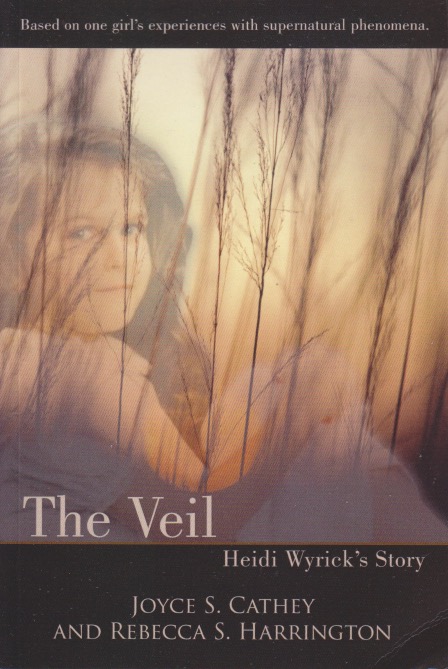
Eventually curiosity got the better of me, and I watched The Haunting in Connecticut and its sequel long after their release.  The strangely named The Haunting in Connecticut 2: Ghosts of Georgia dramatized the story of Heidi Wyrick almost beyond recognition.  Since the documentary had been based on a true story I wondered what had happened.  This wasn’t an Ed and Lorraine Warren case, so I turned to The Veil: Heidi Wyrick’s Story, written by two of Wyrick’s aunts.  Much of the book follows the documentary, only, strangely, with less detail about some of the hauntings.  It’s a quick read, and it’s fairly well paced.  It is, however, self-published.

A real dilemma, I imagine, for anyone wanting to publish their paranormal activities (unless they’re already influentially famous), is how to find a publisher.  From my own experience (and I work in the biz), finding a publisher isn’t getting any easier.  Self, or vanity publishing offers a physical book, but the usual gateways to believability (editors, editorial boards, etc.) are missing.  Established presses have reputation to worry about, and why take a chance when you can afford the luxury of buying projects that come to the top of an agent’s pile?  I enjoyed The Veil—I appreciate the effort of those who have a heartfelt story to tell.  But I couldn’t help thinking how much better it could’ve been with an editor’s guidance.  Those of us who write are often too close to our own work to see the problems—this is the real danger in self-publishing.  Hiring an editor is expensive and you need to have the income to do so, often creating a cycle of unaffordability.  I’m curious as to what really happened in Georgia, and I’m still curious after both the book and movie.
Banning Banning

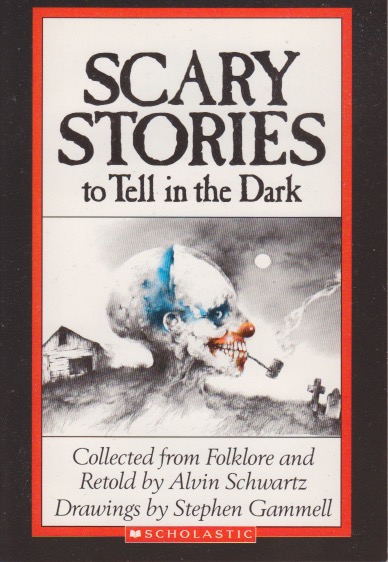
Banned Book Week gets me all aflutter.  There have been years at I’m so busy that it slips by before I notice it, but each year I try to incorporate it somehow into my reading challenges.  This year my book was Scary Stories to Tell in the Dark, by Alvin Schwartz and Stephen Gammell.  Yes, it’s a young readers’ book.  Most banned and challenged books are.  Why censorious adults feel the need to keep ideas out of print is pretty obvious in these Trumpian times.  (Please note, dear Republicans, many Democrats criticize Biden on a regular basis; we do not worship him.  American Marxist my donkey!)  Book censoring only serves fascist tendencies.  Ideas will find a way to be born, regardless.

Scary Stories, of course received a shot in the arm by Guillermo del Toro and his interest in making a movie based on it.  The stories themselves are drawn from folklore—they’re populist, you might say—and reflect what passes around from perhaps less insane times.  As an adult a reader tends not to find these stories frightening.  For one thing, many of them are stories we’ve heard before.  For another, life has already thrown many scary things at us.  Not only that, but we try to ban books to make adulthood even scarier.  You see, folklore doesn’t go away just because children are kept from the books.  These stories find the gaps just as water does.  They get told in the dark.  Instead of trying to censor them we should try to talk about them.

Adults’ own discomfort with ideas such as death and decay often stand behind our efforts to “protect” our children.  Then they reach maturity not prepared for the adult world of sex, exploitation, and dying.  Our modern comfort-based lifestyle tries to shut away the unpleasant aspects of existence.  Books, however, are the food of the imagination.  To ban them is to try to suppress the truths that authors have uncovered.  Growing up in a conservative household, we weren’t subjected to censorship.  I couldn’t afford many books, but my mother never said “No, you can’t read that.”  Some of my early reading faced uncomfortable facts.  I read both Jaws and The Godfather long before I ever saw the movies.  I read Scary Stories to Tell in the Dark as a form of solidarity with young minds.  There are benefits to learning to deal with fear early on in life.  And Scary Stories, even if not so frightening, has an appropriate place in it.


Mental Health

Dark Shadows was a formative part of my childhood.  I don’t recall specifics, or even how I found out about it, but I do recall watching it after school and being completely taken by it.  When I do the math I realize I had to have been watching it primarily before I was ten, and then after that I started reading the books when I found them in the used bin at the local Goodwill where they usually cost a quarter or less.  Now they’re collector’s items.  That fact doesn’t change the reality that they are journeyman writing through and through.  William Edward Daniel Ross, under the pen name Marilyn Ross, wrote thirty-three novels in the series as part of his oeuvre of over 300 books.  The stories are formulaic and feature odd word choices, but they are gothic.  Sometimes gothic is just what you need.

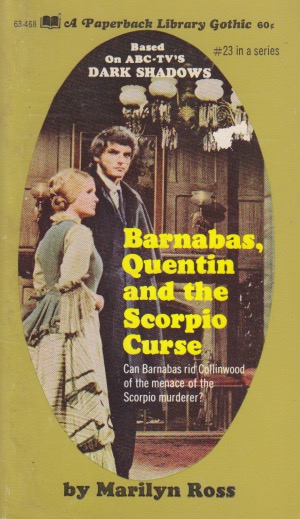
Barnabas, Quentin and the Scorpio Curse is a fun romp through a period when Barnabas has—with no explanation in the novel—overcome the vampire curse.  It introduces some Collins cousins who come to an asylum conveniently located next door to Collinwood where murder breaks out and mayhem ensues.  I have to keep reminding myself to put my critical faculties aside when I read these guilty pleasures.  There are gaps and incredulities that are simply glossed over, and that’s part of the world in which they take place.  Astrology plays a part in this episode, as the title indicates.  It features a psychologist who, it would seem, doesn’t know how to do background checks.

The truly scary part of this Scooby-Doo tale is that the protagonists, Diana and Barnabas Collins, aren’t believed because they’re voluntarily admitted to the asylum.  Mental illness is a serious matter, of course, and it can be difficult to diagnose.  The difficulty here is that it’s used simply to dismiss what Diana observes.  Time and again, as the Scorpio murders continue she’s dismissed as “a mental patient.”  It’s all part of a plot, of course.  It does raise serious issues, though.  In the late sixties and early seventies there was a real stigma attached to mental illness.  There still is, in fact.  Ironically, the more we learn about mental disorders the more common they become.  Just about everyone has some neurosis or worse.  In our efforts to define the “normal” we dismiss those with actually diagnosed conditions.  We’ve come a long way since then, but we still need to work at dispelling the stigma.  One way to do it is, I suppose, to put conflicted vampires into the mix.


Screaming Season

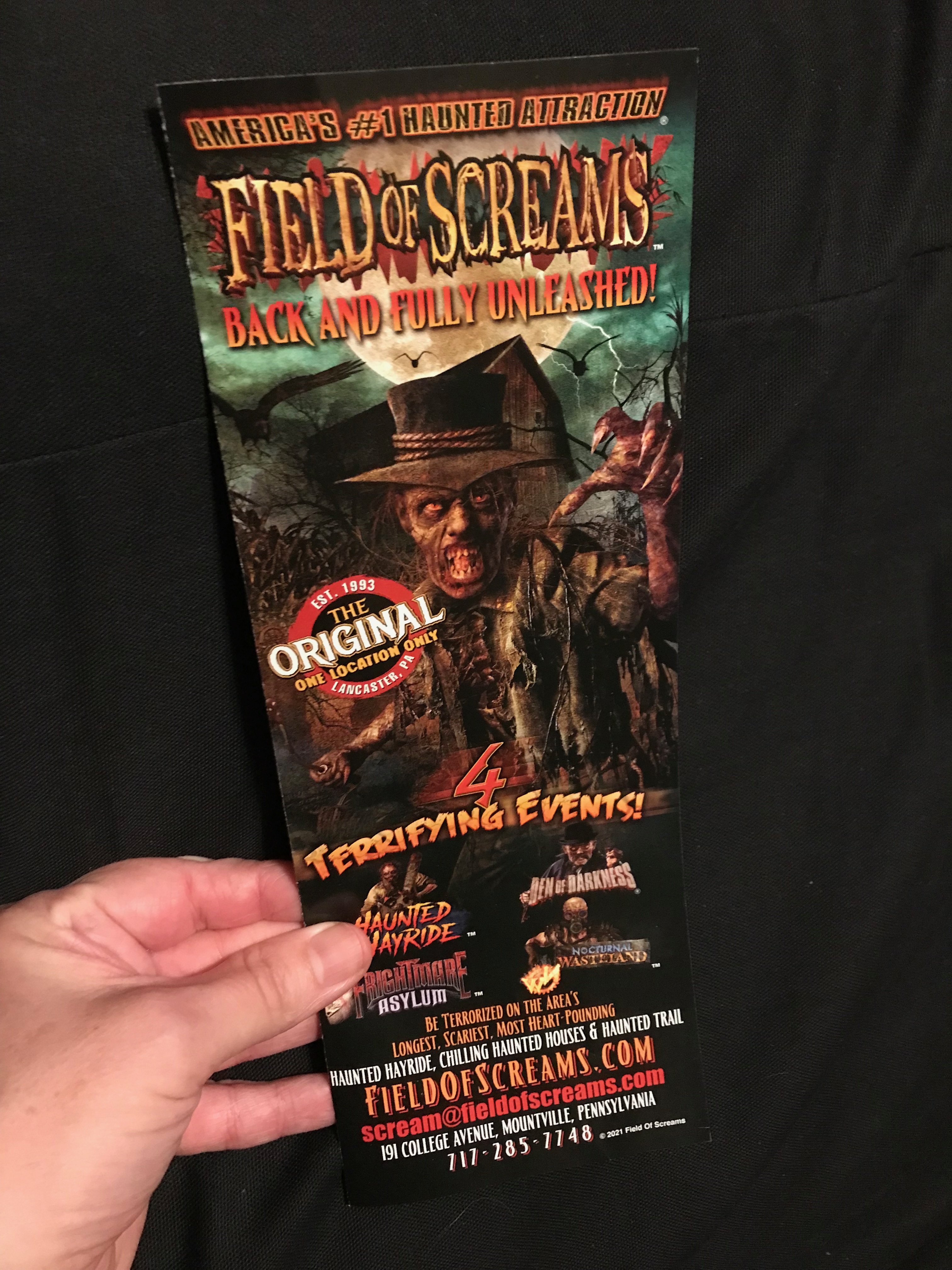
The signs are all around.  The orange and black Spirit Halloween signs are appearing where vacant storefronts stand.  Advertisements for autumnal activities are cropping up.  Brochures broadcasting local haunted festivities now adorn store counters, free for the taking.  I picked up a leaflet for the local Field of Screams the other day although I really don’t like to be in scary situations.  I do appreciate the spooky sense that they generate, however.  This local event runs from early September through early November—the two months enterprising farmers can draw urbanites to their land, cash in hand.  Halloween has been a major money-maker for many years now.  The less doleful minded wonder why, but I think that lots of us are really afraid.  Halloween says it’s okay to be so.

Perhaps it’s the realization that it’s all in good fun and nobody will really hurt you.  I’ve attended a few of these haunted events over the years, but it was more fun to participate in them.  Perhaps it goes back to Nashotah House.  I’m guessing that most of you’ve never been.  Nashotah is a gothic campus, at one time pretty isolated, out in the woods.  Halloween was, once upon a time, a real celebration there.  Our maintenance crew would offer a hayride through farm fields owned by the school, then through the cemetery on campus.  I used to dress in a grim reaper costume and carry a kerosene lamp through the graveyard, awaiting the tractor.  Nobody instructed me to do it, but we all knew it was in good fun.  And I wasn’t the only volunteer who’d pop out from behind headstones.  Students got into the spirit of it too.

These days remembering such shenanigans is more appealing than actually going out at night to have other people scare me.  The last time I went to a haunted maze it was really too unnerving for me to enjoy.  I volunteered instead for a local haunted house in New Jersey.  The run up to Halloween was usually an intensely creative time of designing and fabricating homemade costumes, and thinking of ways to make pumpkins look scary.  Now it’s become a season in its own right.  An important segment of the economy.  I won’t be going to our local Field of Screams, but I will understand those who do.  Changes are in the air.  It’s dark quite a bit earlier these days.  The air is chilly in the morning.  And the local fear fields open this weekend.


Witches of September

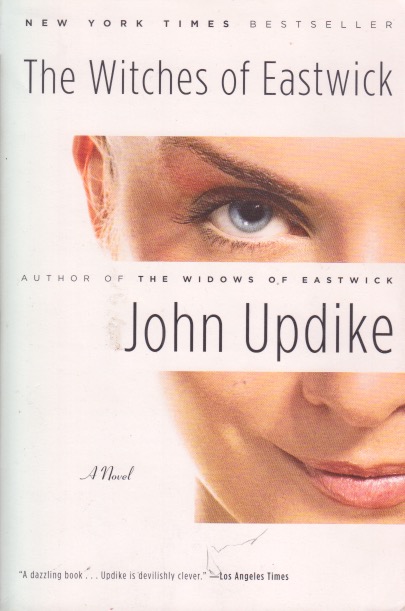
I’ve never read any John Updike before.  I understand that his novels foreground religion, which I didn’t realize.  I have watched The Witches of Eastwick, in movie form, a time or two.  In fact, I wrote a bit about the film in one of my books.  This got me curious to read the novel and I found a copy at a used book sale up in Ithaca some months back.  Now that September’s here, it seemed like an opportunity to see what the original story had to say about witches.  There is a problem, of course, in having watched the movie first.  Not only does it tell you which actors the characters should look like, but it also predisposes your orientation to what will happen.  In this case all that will mislead you.

The movie centers on Jack Nicholson’s Darryl Van Horne—like most Nicholson movies, his character takes over—whereas the novel is definitely centered on the three witches, Alexandra, Jane, and Sukie.  They don’t fall into the background, but neither do they always work in concert.  The movie tells, in other words, a very different story.  Updike’s literary treatment focuses on female characters and the mischief they cause.  Nor is it entirely clear that Van Horne is demonic, as in the movie.  A church features prominently in both versions, amusingly Unitarian in the novel, with Van Horne not upstaging the sermon but giving an invited one himself.  No fear of sacred places here.

The wrath of the witches isn’t directed toward Van Horne either.  A character left out of the film, who marries Van Horne and whose brother is his real target of affection, is hexed and killed by the witches instead.  In many ways this could be construed as a kind of gentle horror story, although it’s never marketed that way.  I kept waiting for certain scenes in the movie to be narrated, as it were, in the flesh.  This led to the revelation that these scenes were invented for the cinematic version.  Both novels and movies are stories.  When shown on the big screen, we expect them to be adapted.  My personal preference is for the film to present the same story.  It can’t always be done, of course.  In this case the movie left some questions open that I hoped the novel would answer.  Since the stories are so different, the questions remain.  I have a feeling I’ll read more Updike down the road, but I’ll avoid watching the movie first.


A Symphony of Horror

Horror season is upon us.  One could argue that it never left since summer has its fair share of horror when air conditioning is required.  The one horror director my wife seems to like, apart from the departed Alfred Hitchcock (and some would say he’s thriller, not horror), is Robert Eggers.  Eggers’ breakout The Witch worked on so many levels, even for non-horror fans.  The attention to historical detail and the solemnity of his approach and the slow build all helped.  The Lighthouse was moody and profound, with superb acting throughout.  The Northman, his viking epic shot in Iceland, is due out next year.  Rumor has it that his fourth film will be Nosferatu.  Anya Taylor-Joy, it is said, will be returning for it.

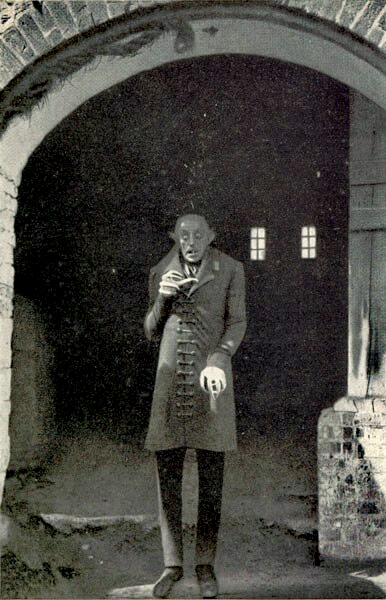
Nosferatu has, as of next year, a century of credibility.  F. W. Murnau’s classic, released in 1922, was technically a violation of copyright and was very nearly lost as copies were ordered destroyed.  This now iconic film, despite its subtitle A Symphony of Horror (eine Symphonie des Grauens), appeared before the category of “horror film” was assigned, and so it’s normally not considered as part of the genre.  The original was given a shot in the arm by Werner Herzog’s Nosferatu the Vampyre in 1979.  My long-suffering wife once agreed to watch it with me.  There are parts of the movie that are distinctly disturbing, but it remains one of the best vampire films ever made.  Many would classify it as an art film more than a horror film, just as Murnau’s was considered Expressionism rather than horror.

It remains to see how Eggers will handle this script.  The original plot was based on Bram Stoker’s Dracula, one of the formative novels of the western canon.  The story of an unassuming individual unexpectedly encountering, through a small conspiracy (in the films), the supernatural.  That which we’re all told is not really there.  Many are beginning to wake, after the election of Trump revealed that evil does really exist, to the understanding that not all is as it seems.  It’s hard not to sympathize with the vampire in the movies, particularly when he’s the victim of a curse.  A vampire’s got to eat, right?  The original, of course, made him out as a devil.  That was in the days when selfish bloodsucking was considered evil, not business as usual.  We have a lot to learn from vampires, and I, for one, am eager to see how Eggers will handle Nosferatu.

Image credit F. W. MurnauHenrik Galeen, and Fritz Arno Wagner; Public Domain in the United States, via Wikipedia

Who Ya Gonna Call?

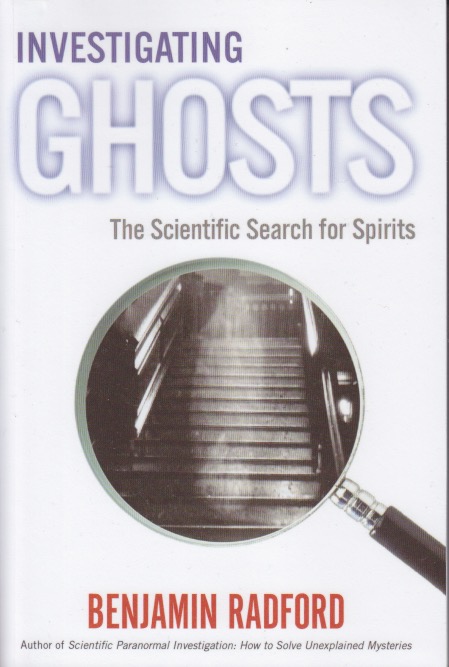
The haunting season is nearly upon us.  Apart from the usual fun of ghost stories, those of us with appreciation of science wonder about whether there’s any hope of confirming some of these tales.  Benjamin Radford’s Investigating Ghosts: The Scientific Search for Spirits is a handy guidebook for those who don’t wish to be gullible.  Radford demonstrates just why much of popular ghost hunting reality television really isn’t scientific at all.  Knowing how science works, Radford is unusual in that he’s open to the possibility of ghosts.  He points out, however, that from the point of view of science there’s a conundrum—there is no consensus on what a ghost actually is.  Different readers and experimenters and experiencers have different ideas about them—everything from the spirits of the dead to “recordings” made by the environment to demons to time-travelers.  Radford’s quite right that to test an hypothesis you need to agree on what you’re testing for.

Ghost hunting groups, as he points out, are actually gathering evidence hoping to prove the existence of ghosts (whatever they are).  Evidence gathering isn’t the same as science, however.  If you’ve ever watched any of these shows you’ll likely enjoy Radford’s take-down of their flawed methodology.  Wandering an unfamiliar location at night with the lights off and gadgets in hand, they go here and there, possibly contaminating each others’ “evidence.”  Their theories behind why ghosts do this or that—make cold spots, turn lights on and off, make white noise into EVPs, or electronic voice phenomena—don’t match the science of basic ideas of ambient temperature, wiring, and audio pareidolia.  These things are well understood, but you have to read about them to apply them. 

The larger question, however, remains.  If ghosts exist, and if they choose (if they have will) not to cooperate, how can we learn about them?  Radford makes the valid point that coming in for one night with lots of equipment and little knowledge of what we might term “the deep history of a location” stands very little chance of achieving results.  It may be fun, and entertaining, and it may catch a legitimate anomaly or two, but it doesn’t, can’t scientifically prove the existence of ghosts.  We still seem to be stuck with the materialism that only measures the physical.  This fact may indeed fuel skeptics to suggest it’s “only this and nothing more.”  But science isn’t the only way we know the world.  It’s a pleasure to read a book from an investigator of this topic who has his head on straight.


The Clairvoyant and the Demonologist

As a special bonus, here’s a post by a Guest Author. Enjoy!

For almost half a century, the couple known as a clairvoyant and a demonologist investigated thousands of paranormal cases that led to film franchises and book deals. You can find films based on their investigations wherever there are streaming horror movies.

Although the Warrens’ wider-known cases spent half a century splashing the headlines, there’s more to their legacy than how Hollywood portrays them.

Ed and Lorraine’s Spooky Origins

Even as children, the two were destined to unite over the supernatural. Ed grew up in a haunted house, witnessing apparitions of his deceased relatives while Lorraine experienced clairvoyant visions. 

After dating as teenagers, the two later married while Ed served in the Navy during World War II. They had a child, Judy. 

Despite Lorraine’s skills as a trance medium, she remained a skeptic until she witnessed more substantial first-hand accounts through their business.

Haunted House Hunters

The couple’s haunted house hunting began as a means for Ed to make a living as a landscape artist. The project quickly grew bigger as they traveled across New England painting potential haunted sites

Ed’s sketches became a friendly gesture to gain entry for tours and then investigations. Their novel networking attempts and cases eventually led to newspaper coverage and TV appearances.

Religious But Not Occultists

The Warrens’ religious beliefs as Catholics both hindered and aided their cause. As self-taught investigators, they aspired to balance their religious beliefs with scientific research.

“The Haunted” TV Series

Though much about The Warrens’ work is showcased in The Conjuring franchise and features spawned from their experiences at Amityville House, Hollywood also adapted an unsung investigation with a television show called The Haunted (1991). 

From the smell of rotting flesh to the sounds of anonymous screams, Jack and Janet Smurl experienced diabolical activity in their Pennsylvania house for years. After going public with their encounters, they gained national attention and then reached out to the Warrens. 

The Warrens confirmed a dark entity inhabiting the Smurls’ house and tried to expel it. Unfortunately, the evil presence refused to vacate.

The Warren’s Occult Museum

The couple founded the New England Society of Psychic Research (NESPR) in 1952, which solved thousands of cases over 50 years. They also opened their home to the public with a museum of the occult featuring artifacts such as the possessed Raggedy Ann doll that inspired Annabelle

Following their deaths over the past decade, their son-in-law now manages NESPR, but the museum closed in 2019.

Today, there is still more ground to cover learning about the supernatural and paranormal. Without the Warrens bridging the gap between the living and dead, vast mysteries about the afterlife could’ve been buried in the dark. 

Their legacy ultimately encourages believers and skeptics to continue searching for answers.


Just Like Us

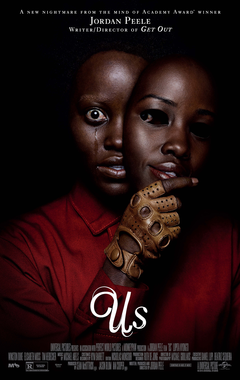
Jordan Peele has been noted for his intellectual, black horror films.  His work is good at making clear that African-American experience is different than white experience in America.  That was especially on view in Get Out, a haunting treatment of being “the other.”  His more recent Us, two years old already, takes a somewhat different angle but still comes to a similar point.  Since the movie has a notorious twist ending that I’d rather not spoil for anyone slower than I am, I’ll try to focus on the film’s use of Jeremiah 11:11—“Therefore thus saith the Lord, Behold, I will bring evil upon them, which they shall not be able to escape; and though they shall cry unto me, I will not hearken unto them.”  This message of the prophet was a warning that Jerusalem would fall to the Babylonians, but clearly it has wider applications.

It’s safe to say, I suppose, that the movie is about substitute people.  Each person has a doppelgänger that shares her or his soul, but is a puppet—it’s not too far to stretch to say “slave”—that must do whatever it is we have it do.  When those doubles, or shadows, arise and organize, things start to get real scary real fast.  Although the metaphors run deep, the biblical citation comes near the start of the movie, setting the tone of what follows.  This is divine judgment for the mistreatment of others.  While it isn’t ostensibly about race, at least not obviously so, the story follows the black Wilson family as the uprising begins.

Jeremiah’s message, although delivered to a specific situation at a particular time in history, could well apply whenever one people threatens another.  Like most prophecy, it’s less about prediction than it is about changing behavior.  Jeremiah presents a good warning tone because he was a prophet who loved his people but also saw that they had to fall in order to be redeemed.  His is a strong message for a country at a crossroads.  Peele has a lot going on in this movie and I suspect more than one viewing will be necessary to pick up on some of the points.  Not all parables have a single message.  Not all prophets are heeded in their time.  Jeremiah 11:11 provides context, and it rewards the biblically literate who know the context it which it originally applied.  Fitting it into the world of black horror is an example of how prophecy continues to be relevant.


Conjuring an Exorcist

In both Holy Horror and Nightmares with the Bible I discuss The Conjuring.  In the latter I actually go through the universe that the films spin around the investigations of Ed and Lorraine Warren.  Like most series where the writers and directors shift, the story line isn’t always consistent.  I suppose that one of the features of the series that appeals to those of us who love monsters is the fact that many of the movies have more than one.  The main threat, however, always seems to be demonic.  I enjoyed exploring this in both my book and in my recent piece on Horror Homeroom—check it out here.  

This series, in financial terms, has been highly successful.  There is little that attracts attention in any media more than money.  The Conjuring universe also shows that people are very interested in the topic.  A materialistic worldview doesn’t work for everyone.  We sense that there’s more going on that what the laboratory reveals.  I’ve often wondered why we can’t consider the world “both and” rather than “either or.”  We seem to think knowledge is some kind of zero-sum game.  I suppose that’s because the spiritual interferes with the material.  If there are outside forces working against the “laws” of physics then all that hard work is open to question.  It’s far easier to suggest that human beings (and other animals) who experience something “supernatural” are deluded.  Or superstitious.  Demons are a good case in point.  If they exist it would complicate the world of science.  And yet people pay good money to see movies based on them.

The Conjuring franchise pays off most of the time.  Some of the stories—those of the main series especially—are based on cases that the Warrens actually investigated.  There’s sometimes an element of the sideshow (the amazing Warrens!) to some of their work, but that doesn’t necessarily detract from the experience of real people.  Experience is an important way to navigate this strange world in which we find ourselves.  I’m not the only one who finds horror films to be a reasonable guide through this territory.  The Warrens’ case files leave lots of opportunities to explore this strange world of demons, and there are further movies in the franchise currently under development.  The most recent film, The Conjuring: The Devil Made Me Do It, changed basic concepts from its early days.  It was delayed by the pandemic.  And yet, it made money.  There must be a lesson to be learned here.


Fear of the Other

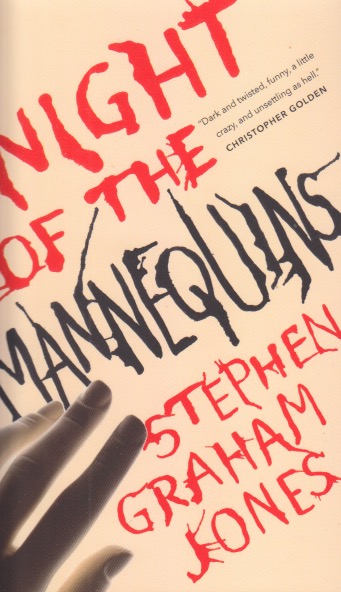
Two things: I’ve been reading about and materials by American Indians lately, and I learned about Stephen Graham Jones through a video of him reading one of his stories.  I was immediately hooked.  It seems to me that those of us who’ve gone through trauma—either personally or ethnically—are disproportionately represented among those who like horror.  I’m not suggesting a simple equation, but simply noticing a trend.  Jones has been winning awards as a horror writer and I was anxious to get started.  Night of the Mannequins didn’t disappoint.  Jones is a member of the Blackfeet nation and, according to the author bio, a real slasher fan.  This story isn’t really a slasher but it is an exploration of what happens when an idea takes over someone’s life.

More about growing up in Texas than being First Nations, it follows a group of teens who find an abandoned mannequin and a practical joke that goes terribly wrong.  It’s a story will a real feel for what it means to grow up beneath the middle class.  The realities for those who do are somehow quite different than from those who can take some measure of financial security for granted.  It also makes a good setting for horror stories as the protagonist tries to figure out what’s going on without the aid of authorities and adults.  It makes for a compelling read.  Jones’ no-nonsense style draws you in and it doesn’t let you go.

The book is fairly recent and I don’t want to give too much away.  I do often think about how a writer’s personal experience leads to the books s/he writes.  The horror genre is wide-ranging and can be deep and intelligent.  Despite its brief extent, there’s a lot of depth here.  The straightforward writing style gives the book verisimilitude.  You could see this actually happening.  Monsters, after all, are frequently in our minds.  That doesn’t make them any less real.  Mannequins tend to inhabit the uncanny valley—they’re human and yet, at the same time they’re not.  There are aspects of growing up in “white” culture that must suggest the same to those who’ve been and who continue to be, oppressed by that culture.  There is a real fear to being controlled by others whose intentions, it must be clear by now, are to make themselves rich.  The world is a richer place, however, for having books by Stephen Graham Jones in it.  I’ll be coming back for more.


Reading Wicker

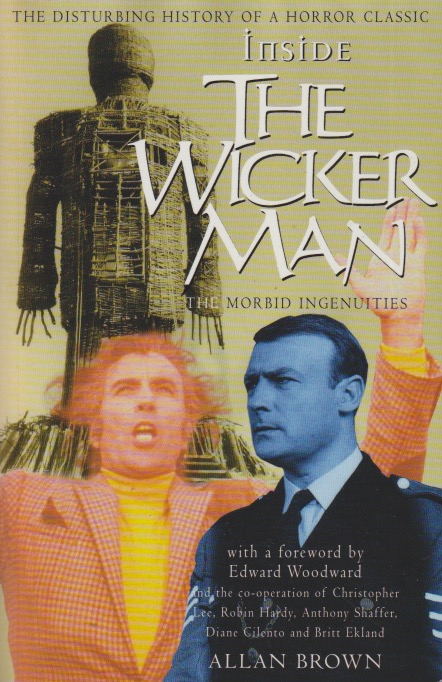
Have you ever read a book where factual errors make you question the larger picture?  I suppose being trained in research makes me more bothered by small inaccuracies.  Don’t get me wrong, I’ve made mistakes myself.  Even in publications.  But when they come near the beginning it’s rather unfortunate.  That’s not to say I didn’t enjoy Allan Brown’s Inside The Wicker Man.  I actually enjoyed it quite a lot.  There’s a real treasure trove here for fans of this cult classic.  I suspect it’s the definitive treatment of the misfortunes the film faced after it was shot, and even during the shooting process itself.  It’s somewhat surprising that so many of us have even heard of it.  When the film’s production company turns against the project it must present special difficulties. Errors are human. Most of the mistakes in the book were about religion.

For Wicker Man fans this book is a great resource.  Not only does it tell the story, but it serves as a useful reference. It includes information on locations, script excerpts, and behind-the-scenes stories.  You get to feel that you know the people involved beyond simply seeing them as characters in a play.  One of the points that Brown makes, while obvious in retrospect, is crucial:  The Wicker Man works as horror not in spite of religion, but because of religion.  I struggle to articulate what the two share in common, but it is useful to be reminded that a prime example comes in this unusual movie.  I wrote about it in Holy Horror, but there’s much even there that I left unsaid.

Brown had the distinct privilege of interviewing many of the people involved in the making of the film.  Most of the cast and crew have since died—the movie was, after all, nearly half-a-century ago.  Even so, when attempting to get at what a novel, movie, song, or piece of visual art means, the realization soon dawns that it’s often in the mind of the observer.  Some songs, for example, speak intensely to some people while being ignored by many others.  The Wicker Man never swam into the mainstream.  I discovered it during an intense period of watching as much quality horror as I could get my hands on.  Immediately I was struck by its intelligence and its strong message.  I’ve watched it several times since, making me, I suppose, a fan.  Enough of one to read this book and enjoy it, in any case.  And to recommend it to others who may be interested in the fascinating film it explores, along with its religion.


April Really Fools

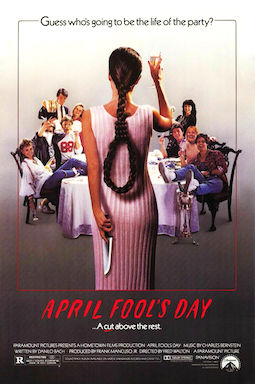
What’s the best kind of April Fools’ Day prank?  What about one that occurs nowhere near April first?  Actually, I’m no fan of practical jokes.  They usually come at the expense of someone and really aren’t that funny.  And where does that apostrophe really go anyway?  Still, because of a project I’m working on, and because it was available on a streaming service I use, I watched April Fool’s Day in July.  An example of holiday horror from the 1980s.  Although moderately successful at the box office, the movie never took off to become a cultural icon like, say, Halloween did.  In fact, I only recently heard of it.  Part of the reason, I suppose, is the ensemble cast is pretty large (nine friends together for a weekend) and none of them played by big names.  In case you don’t like pranks, there will be spoilers below.

The trope of a number of young people—often college students—isolated in some inaccessible location is common enough in horror.  The optimal number seems to be five, otherwise an hour and a half isn’t really time to get to know everyone’s character well enough.  Of course, one by one they get killed off.  Since it’s set on April Fools’ Day you’re led to think some kind of serial killer is loose on the island, but in the end the entire thing turns out to have been an elaborate prank.  Nobody has really been killed and the audience is on the receiving end of an extended practical joke.

As I try to catch up on horror movies I missed I quite often have to rely on those that come with one of the few streaming services I use.  When I was myself a college student I couldn’t afford to go to the movies often.  Home video hadn’t really become affordable yet to people of my economic bracket, and besides, I spent a lot of time studying.  As the only one in my family that watches horror, finding the time to do so remains a challenge.  And there is quite a backlog.  I’ve been trying to watch horror set on specific holidays as a way of keeping myself honest.  Even that can prove a challenge, however.  I can justify the time, however, and the somewhat modest cost, as research. Hey, somebody has to do it.  And that’s as good an excuse as any for watching April Fool’s Day in July.


Scary Folk

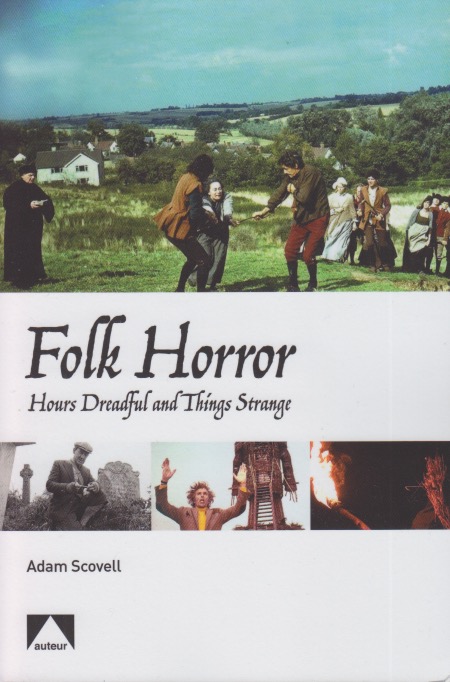
Genre is a useful category.  It can be misused, however.  Straightjacketing a piece of literature, music, or film can lead not only to confusion, but to constraining creativity itself.  Nevertheless, the category of Folk Horror is certainly expansive enough for a book-length treatment, such as Adam Scovell has given it.  Unless you’ve read quite a bit about the subject you might wonder what folk horror is.  A good part of Scovell’s work is definitional—providing the reader to an answer to that very question.   Although it has earlier roots, folk horror was initially a British genre that became particularly noticeable in the late sixties and early seventies.  It comprised movies and television programs that dwell on specific aspects of the landscape—particularly the rural—and isolation within it.

What I find particularly compelling about folk horror is that it is often based on religion.  In the countryside you encounter people who think differently about things.  Believe differently.  Their convictions are enforced upon the stranger who may be there by design or by accident.  Ironically the genre largely emerged in a nation that prides itself for its role in civilized behavior.  It speaks volumes about belief.  Civilization has produced more refined strains of religion, but on its own religion will tend to grow wild, even as the weeds in your yard are distantly related to the cereal grains we cultivate.  Examples of this are everywhere.  Fans of horror can name them off, but even those who don’t care for the genre know the kinds of belief this indicates.

Not all folk horror is about religion, of course.  It can be rural ways in general.  No matter how you classify it, most people can identify Deliverance and the danger it implies about being far from civilization where those who live in the woods can do as they please.  Scovell delves into the urban settings of folk horror as well—most of his examples are British—because it is possible to hide in the city also.  Although the genre reached a high point in the 1970s, it didn’t die out.  The book ends with consideration of some more modern examples, such as Robert Eggers’ The Witch.  The problem, as those of us who write about film know, is that just because you’ve written a book it doesn’t mean future examples won’t change the picture.  The Lighthouse and Midsommar were both released in 2019, after the book was published.  And they demonstrate that the scary folk haven’t gone away.


Altared States

Religion Dispatches is a great website.  I used to write for them from time to time, and according to Google they were probably the most read of my internet publications.  I’m not sure what happened, but a few years back time simply evaporated.  These days literally the only time I have to get things done is on the weekend.  A simple thing like taking the car in for inspection takes advance planning and can throw off my entire schedule for the week.  I have difficulty finding time to write for Horror Homeroom these days.  That’s a long preamble to saying I saw an interesting article by Hollis Phelps on Religion Dispatches titled “Hulu’s ‘Hamilton’s  Pharmacopeia’ Shows that We Can No Longer Ignore Connections between Religion and Drugs.”  There have been a number of suggestions that drugs and religion are related over the years, but our “Christian” culture has declared the former taboo.  (Except wine, of course, and even that’s suspect.)

Photo by Alex Kondratiev on Unsplash

This article has me thinking about chemistry.  Not that I ever did very well in it.  Still, I recall hearing one high school teacher or another saying life is organic chemistry.  I’ve come do doubt the standard definition of life as I’ve aged, but there’s no doubt chemical reactions are a large part of the somatic existence we all experience.  Eating leads to chemical reactions to break down the chemicals in food.  Some of them are good for us, others are not.  Some (but not all) of the really dangerous ones we outlaw.  Drugs are a good example.  I don’t use drugs, but I’m aware that many religions do.  I don’t doubt the altered states of consciousness that reportedly arise from the responsible use of such drugs.

I haven’t watched “Hamilton’s Pharmacopeia” (I have no time).  Still, I have to wonder why Christianity, in particular, came to declare its own war on drugs.  A large part of it, I expect, was the belief in the imminent return of Jesus.  You didn’t want to be caught unawares.  Then there was also the sad fact of abuse of controlled substances.  Alcoholism and the opioid crisis are reminders that these unfortunate aspects can still cause serious problems.  At the same time, research is demonstrating that religious experience and the use of some drugs are related.  American Indians, at least some of the tribes, found religious significance in peyote.  There are present-day religions devoted to cannabis.  Does it all just come down to chemistry?  I don’t know, but if there’s a drug to increase the number of hours in a day that might be a real revelation.