Reptile Puppet

I read about Reptilicus, but I can’t remember where.  A monster movie shot simultaneously in English and Danish in 1960, with two different directors, it was universally panned.  Some times you just have to see a bad movie.  This one qualifies.  I actually laughed out loud a time or two.  The idea behind the story holds promise: some animals can regenerate lost limbs, or even entire bodies from a severed piece.  What if a giant reptile could do the same?  The film’s problem is in the execution.  So, a team drilling for copper above the arctic circle—they’re sweating and working with their sleeves rolled up in a temperate forest—hits a frozen animal in the permafrost under the tundra.  Taken to an aquarium in Copenhagen, the animal’s tail is kept frozen until someone leaves the door open overnight.  When it thaws it begins to regenerate.
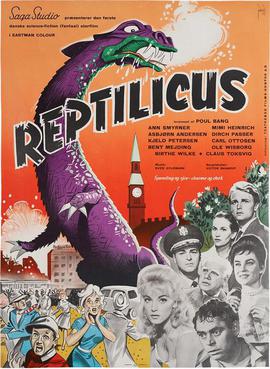
Once fully formed—and nobody could see this coming—it breaks out and terrorizes Denmark.  There are some scenes thrown in to show off Copenhagen, and the film makes liberal use of stock footage from military exercises.  The dialogue, poorly written, is delivered with wooden earnestness by actors who struggle to be convincing in their roles.  The monster, Reptilicus, is so obviously a puppet that it could scare no-one.  But it’s a monster movie!  Those of us who grew up on such fare sometimes feel a need to go back to the well.  To appreciate a bad movie, I always approach it with a certain hopefulness.  Here I am, over six decades later, watching the film.  If that can happen, perhaps someone will see that publishing my novels isn’t the worst you could do?  It makes for a crooked kind of logic.  

The main thing Reptilicus has going for it is its near indestructibility and its ability to regenerate.  How is it finally destroyed?  We’re not shown.  In one scene the general asks the head scientist, something like, “If we can knock it out, you can kill it?”  Receiving an affirmative answer, they drug the monster and send the scientist off to do his work (after he’s suffered a heart attack).  I’ve read novels where it seems pretty clear that the author was unsure how the resolution actually goes—I’ve painted myself into that corner a time or two, so I know how it feels.  If you’ve got a budget and backers, however, you have to deliver something.  The movie performed reasonably well at the box office, which shows just how indestructible some monsters can be.
In the Water

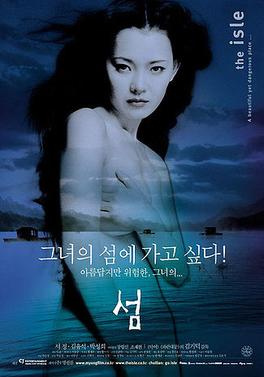
On a list of hard-to-watch horror, I found the South Korean offering The Isle.  I was feeling particularly brave that day, I guess.  I was unfamiliar with Kim Ki-duk’s work, and looking for something that wouldn’t cost me any money to watch.  I found out this was one of those vomit or faint body horrors, but it is otherwise filmed so beautifully and gently that the contrast is downright shocking.  It all takes place at a low budget fishing platform rental business where the proprietor is a mute woman.  She ferries customers to their platforms, delivers food, and female companions, and occasionally takes revenge when customers treat her badly.  One day a fugitive arrives.  She doesn’t immediately know that he’s on the run, but she’s intrigued by him.  She prevents a suicide attempt and the two begin to bond.

Wanting to make sure her customer is satisfied, she starts bringing him a prostitute, but she gets jealous when they start to bond.  When the police come to find potential fugitives, he again tries to kill himself in a particularly gruesome way.  (Probably one on the vomit scenes.)  The proprietor again saves him and hides him from the police.  Apparently drawn to that type, she gets close to him and sees the prostitute as a threat.  She kidnaps the woman and when the prostitute falls in the water, hands and feet tied, she drowns.  The proprietor sinks her body and when the pimp comes looking for her, she drowns him.  The fugitive now realizes that they both have murder in common, but he feels trapped and escapes with her boat until she uses a reverse method of his suicide (another vomit scene) and he rescues her.  The police discover the bodies of their victims and the two take the platform house to a hidden location.  Apparently Kim Ki-duk likes enigmatic endings because the final scene is the proprietor drowned in a partially sunken boat.

I’m not quite sure what to make of this one.  I would agree with the hard-to-watch assessment.  Not only are there gruesome, self-destructive acts, I’m pretty sure that some animals were harmed in the making of the film—particularly fish.  I’m not often in the mood for body horror, but sometimes when I’m trying to save money, I’ll settle.  I very much doubt I’ll ever watch The Isle again.  K-horror is sometimes compelling, though.  This one manages to be emotional, and of art-house quality, but the only monsters are humans and they seem more to be misunderstood than anything else.  And I didn’t vomit or faint.


Keeping House

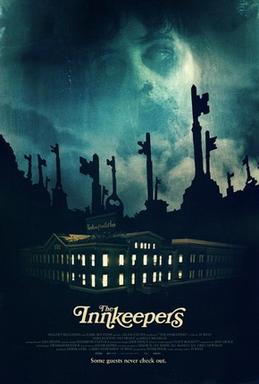
I really wanted to like The Innkeepers.  I’ve appreciated the Ti West horror that I’ve watched and Sara Paxton has a compelling screen presence.  The setting of a hotel that’s about to be shut down is a good set-up, and although the ghost story is somewhat conventional, it’s workable.  Part of the problem was clearly lighting.  Maybe I’m just too old, but when something important takes place in a scene that’s just too dark, well, it loses something.  So here’s how it goes: Claire and Luke are at the front desk for the final weekend of The Yankee Pedlar.  The guests are a woman and her young son, a psychic who used to be a television star, and an old man who wants to stay in the room where he had his honeymoon.  Claire and Luke are also ghost hunting at the hotel and a suicide-bride ghost is said to haunt the property.  When Claire finally does see the ghost, after the old man dies by suicide in the same room as the bride, Claire ends up in the basement where they get her.

The chase through the basement is dark.  I didn’t realize, until reading a summary later, that Claire, who uses an inhaler throughout the movie, died of an asthma attack.  That gives the story a nice ambiguity.  I, for one, couldn’t see that because things just weren’t lit well enough.  The final sequence, before the credits, shows the room in which the psychic was staying (she had a tendency to gaze out the window) and then the door slams on the camera.  The summary said a very light image of Claire is visible, and that she turns toward the camera before the door slams.  I watched the ending twice and couldn’t see her anywhere.  That scene was too brightly lit.  Without those two bits, the ending really doesn’t make much sense.

Movies generally involve many, many people (thus the very long credits).  Although the director is the “conductor” of the piece, sometimes I wonder about the lighting decisions, and whether this was a lighting department decision or West’s.  Whoever it was, I’m sorry to say that it made my experience of seeing the movie a confusing one.  The movie did reasonably well against budget so I suspect plenty of people saw what I could not.  I would be willing to try it again, maybe in a darker room or on a bigger screen.  A ghost story where you can actually see the ghost seems like a winning combination for an October weekend.


Preying

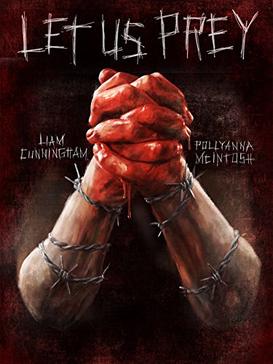
Several aspects of Let Us Prey don’t make a whole lot of sense.  The police in this small Scottish town are all corrupt, at best.  And when push comes to shove, they choose to murder one another.  For some reason the sergeant wraps himself in barbed wire as he tries to bring the wrath of God onto his subordinate officers.  The night starts out with four prisoners being locked up and only one survives.  He’s shown emerging from the sea, with ravens, at the start of the movie and he’s never really explained.  He’s there to collect the souls of sinners and he seems to be able to control other people.  The whole thing turns into a bloodbath before it’s over.  In other words, it lacks the subtlety of much Euro-horror that I’ve watched.  One thing it does have, though, is plenty of use of the Bible.

I suppose with a title like Let Us Prey such a development shouldn’t be unexpected.  Rachel is a new constable in the police station.  The story begins with the stranger, Six—the number of his jail cell—nearly being hit by a car.  Or having been hit.  The teenage driver is arrested and finds a pedophile teacher already in the lock-up.  Two other police officers, after having sex in their patrol car, find the stranger and bring him in.  The local doctor examines him but when the doctor attacks him, he’s arrested as well.  Finally, Six is locked in.  It’s discovered that the doctor had murdered his family earlier in the evening, and the reckless driver had earlier hit and killed a classmate while out driving.  The pedophile kills himself and the two other police officers murder the doctor.  Then the sergeant, who’s a serial killer, comes back to kill everyone left alive.  Six and Rachel survive and Six reveals that he’s collecting wicked souls and invites Rachel to join him.

The Bible quotations (some not accurate) all come in the context of retribution.  The sinners are to be punished.  Rachel, however, escaped a childhood abduction and seems to bear no burden of sin.  The other police—who had all decided Rachel should die—end up dead themselves.  A gritty, supernatural police story, this film suggests a larger backstory without providing a lot for viewers to go on.  The openly Christian sergeant wears a cross, drinks when he drives, and kills his homosexual lovers.  Is there perhaps a message that the movie’s trying to convey?


Nostalgic Shadows

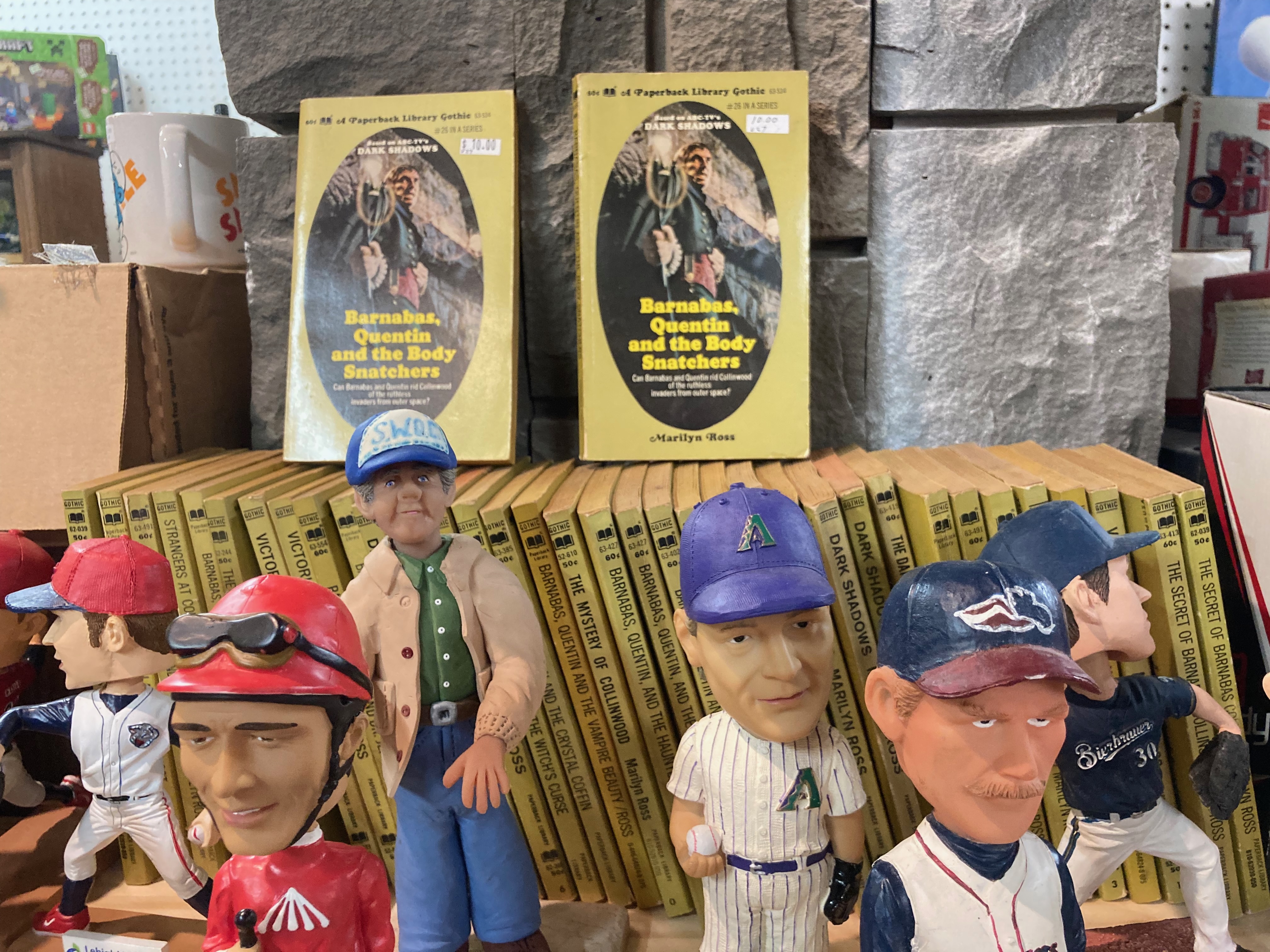
Nostalgia is a funny thing.  Although it can strike at any age, somehow after the half-century mark it’s particularly easy to get swept into it.  As I written about many, many times, I was drawn into the Marilyn Ross Dark Shadows novels as a tween.  In my mid-to-late forties, when the internet made it possible, I started to collect all the volumes from 1 through 32.  It took several years.  I had to find them via BookFinder.com and our level of income didn’t support buying more than one every few months.  Then in 2022, having difficulty locating the last of the original series, I found a seller on eBay offering up the whole set.  The price for that set was less than the least expensive final volume I could find.  I did what any nostalgic guy would do.

We don’t really buy antiques, but I’d been looking for an office desk (this was before the scam).  I’d been using a craft table for a desk for years and it seemed that I really needed something with a better organizational range.  This led me to stop into a local antique shop.  They ended up not having much furniture, but they did have aisles of nostalgia.  A few weeks later when it was too hot and humid to be outdoors, I revisited the shop.  This time, relieved of the burden of seeking a desk, I was able to browse at leisure.  It’s like going to a museum but not having to pay admission.  I turned a corner and I saw something I’d never seen before.  A collection of Marilyn Ross Dark Shadows books.

It wasn’t a full set, but I had, prior to finishing my own collection, never seen more than one or two together in any single place.  As a child I’d buy them at Goodwill.  As an adult, on BookFinder.  All those years in-between, I always looked for them when visiting used bookstores.  I visit said shops whenever possible.  In decades of looking I’d only found one in the wild once or twice, and always by its lonesome.  This was a completely new experience for me.  It was also quite odd to be seeing them and not having any need to buy them.  I have a full set.  The nostalgia was almost overpowering.  I couldn’t help but think of how even a few years ago I’d been pawing through to see if there were any I hadn’t yet found.  All for reliving a bit of my childhood.


A Presence

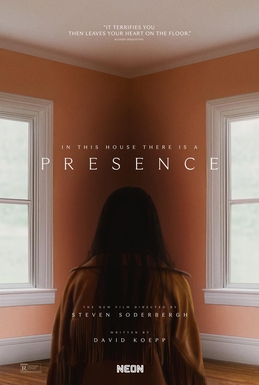
Presence is a fairly new movie, for me anyway.  I was able to stream it at the price of commercials, so I gave it a chance.  It was provocative and to discuss it I’ll probably need to reveal the ending.  For now, however, I’ll just say it’s a ghost story from the point of view of the ghost.  It reminded me of A Ghost Story, which I also saw shortly after it was released.  Both are melancholy and explore the dilemma of a ghost having to watch as time passes.  In the case of Presence, however, it is a future ghost.  As I say, more will be given away, so be advised.  The movie is about a family of four buying a very nice house in Cranford, New Jersey.  Well, it doesn’t say Cranford, but that’s where it was filmed.  The parents, who have a bit of a troubled relationship, have a teenage son and daughter.  The daughter’s close friend has recently died and they’ve moved, in part, to try to shake her out of it.

We watch from the ghost’s point of view as the realtor shows them the house, the painters get it ready, and they move in.  The daughter, Chloe, is having trouble adjusting and the presence lingers about her room.  It’s obviously concerned about her.  Chloe sometimes senses it.  When Tyler, her brother, brings a friend over the friend starts to show an interest in Chloe.  The presence tries to intervene to prevent him from taking advantage of her.  When the friend drugs her, intending to kill her (as he did her friend earlier, which, of course, she doesn’t know), the ghost rouses her brother who saves her by tackling his friend out the window, killing them both.  As the family is about to move again, the mother sees in a mirror that the presence is Tyler, their son.  He was protecting Chloe, as a future ghost.

I found it an engaging film.  Sibling rivalry—the parents play favorites with the opposite gender children—and Tyler’s often harsh dismissal of his sister’s grief, dominates their family life.  The fact that Tyler is the presence protecting his sister even when, in real time, they don’t get along, is a form of redemption.  That brief reveal at the end is what makes the movie.  Is it horror?  It has a ghost and there are moments of considerable tension.  As I’ve argued from time to time, horror isn’t a precise genre at all.  I found this listed as horror in a streaming service and although jump startles and visible monsters aren’t evident, the affective aspect is clearly there.  Yes, in my opinion, it’s horror. And it’s well done.


Dark History

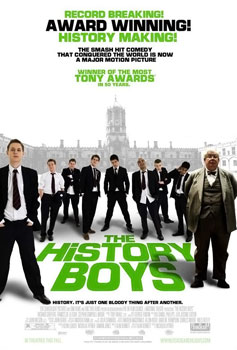
I wouldn’t have watched The History Boys had my current interest in dark academia not emerged.  A comedy-drama based on a play by Alan Bennett, it’s set in a British boys’ school where the seniors who’ve made record-breaking A-levels, are set to try to get into Oxford and Cambridge.  The movie revolves around two teachers, “Hector,” who is unorthodox but full of humanistic spirit and Irwin, who urges the boys to stand out in originality, even if it means bending the truth, or outright lying.  The darkness, although played lightly, is that Hector gropes the boys.  This has led to some criticism of the film since Hector is presented in a positive light.  Bennett, who also wrote the screenplay, pointed out that the “boys” are actually consenting age, and know that Hector does nothing more than fondle them when fully clothed.  This hasn’t protected the film from the furor of those who find the idea offensive.

Beside the divergent approaches of Hector and Irwin’s completely opposite angles, although understated, remains the middle voice of Mrs. Lintott, the history teacher.  She does make the point as the boys prep for their entrance exams, that women have been silenced in history and they should never forget this.  The Cutler’s Grammar School boys all win entry to Oxford, and the movie ends by each of them saying what has become of them.  There’s really too much going on in the movie to chase down every plot line.  For example, the very religious physical education instructor’s story.  He’s brought up short while using Jesus to urge the boys on when one of his students is Jewish and another Muslim.  Of course, school life is all-encompassing, and vignettes are the most that movies might offer.

The History Boys is a film that would bear rewatching for the words alone.  Since the movie is based on a play and the playwright wrote the script, it is naturally very well written.  The dialogue contains many potentially quotable bits.  Dark academia tends to be that way.  At least some of it is.  Often set in educational locations, it recalls how we came to understand our world.  It really is a fraught journey.  Here the coda showing what happened to the boys is a reminder that our fates choose us rather than the other way around.  And that’s what dark academia explores—we may set out to do one thing, becoming an expert, only to find ourselves scratching out a living doing something else.  I know I’d see this again, to continue my own education.


More Curtis

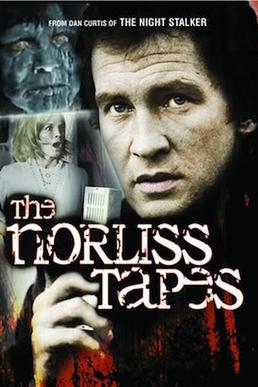
Dan Curtis was the mind behind Dark Shadows, an important part of my childhood.  Reading about his work in film and television, I learned that he produced a lot more than Barnabas Collins, and was an influence in horror in his own right.  A friend recommended that I find The Norliss Tapes, which I did.  This made for television movie was cut from the same cloth as The Night Stalker, which Curtis also produced.  The ending of the movie makes clear that The Norliss Tapes was a pilot for an intended series that never materialized and is a good representation of religion and horror, which is likely why it was recommended to me.  Here’s the story.   David Norliss was given a large advance by a publisher to write a book debunking the supernatural.  Before he can, he goes missing, leaving behind a set of tapes explaining what happened.  The first tape is the pilot episode.

Norliss is contacted by Ellen Sterns Cort, a widow who claims to have had a supernatural episode.  Upon following her dog to her late husband’s studio one night, she encounters her undead husband.  She shoots him, but the police can find no evidence of any body.  It’s revealed that he purchased an occult scarab ring that permits him to return to life to raise a demon who will, in turn, bring him back to real life.  To get the raw materials he needs (such as blood) he has to kill a few people and this again alerts the authorities but they insist on covering it all up.  Removing the ring from his finger will stop him, but that’s easier said than done.  At the end the demon is stopped but this is just the end of the first tape.  His publisher starts to play the second tape.

Dan Curtis productions have a certain feel to them.  I’m not sure how directors and producers do that—I’m not sure of all the tools they have in their box.  What is obvious is that watching The Norliss Tapes brings back echoes of Dark Shadows.  That’s not surprising since Dark Shadows wound down just two years before the Norliss Tapes came out.  The Night Stalker was sandwiched between them, but Kolchak: The Night Stalker was not a Curtis production and doesn’t have a Curtis feel to it.  Even though I’d never seen Norliss before, it was nostalgic watching the movie for the first time.  There’s a trick to it, I just don’t know what it is.


Disney Dark

I write a fair bit about dark academia, but one of the strangest higher education events in my life was when the American Academy of Religion and Society of Biblical Literature held their annual meeting in Orlando.  At Disney World.  Seeing the world’s top academics in the field against a backdrop of Snow White, or whatever, was surreal, expensive, and just a bit off.  I guess others felt that way too, because the conference never returned.  I have never had a desire to visit any Disney theme parks.  It is something that simply has no appeal to me.  As much as I appreciate fantasy in my reading and movie watching, in real life I prefer to visit places with home-grown authenticity.  At the same time, I realize many people adore Disney attractions.  (I just can’t get over why you’d want to visit a manufactured Main Street when there’s a real one not terribly far away.)

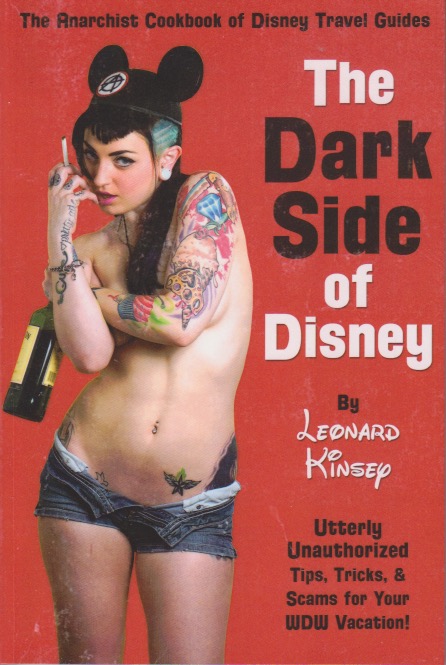
The Dark Side of Disney by Leonard Kinsey is one of those books that grew out of a blog.  Believe me, I’ve been tempted more than a time or two to pirate my own work here to try to make something that people would pay to buy.  In any case, Kinsey is a Disney fan.  Growing up poor, I was never accustomed to summer vacations.  One year we made a memorable trip to Washington, DC.  I didn’t realize it then, but that was where my grandmother, who lived with us, had been born.  I remember aspects of that trip and realize that it was my model of what a vacation was meant to be.  Kinsey grew up not far from Disney World and with a mother with a bit more free cash than mine.  This book is his exposé of the less-expected aspects of Disney.  Not only an exposé, but a “how to.”

I do understand the desire to be a “bad boy”—I suspect most of us do (chose your gender-appropriate nouns, of course).  The thing is, I’m not a rule-breaker.  Realizing that the guardrails in life are generally set up to help people, as much as I’m curious about what goes on behind the scenes, I prefer legal means of finding information.  I’m no fan of large corporations, but if they set the rules (you have to pay to get in, and once you’re here agree to uphold the illusion) then that’s the right thing to do.  In my opinion.  Then again, when you’re with a bunch of academics of religious studies there’s a limited amount of trouble to be had.  Unless you read about dark academia.


That’s Odd

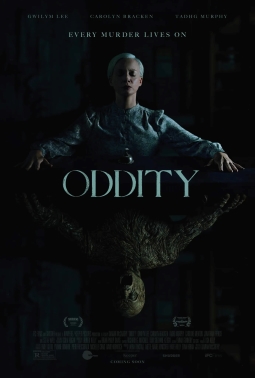
Some vaccines just wipe me out.  The shingles vaccine did it, and so did the pneumonia one.  It was bad enough that I had to take the next day off work.  One benefit of such things is being able to watch movies during the day, when you can stay awake.  The downside, as always, is affording them.  A bit fuzzy-headed, I selected one not on my list (which seems only to consist of expensive movies—I wonder why?) and found a very good one streaming on a subscription service I use.  From Ireland, Oddity is Euro-horror.  And it is distinctly creepy and, perhaps because of my state, made me literally jump once or twice.  (My usual, critical headspace scans for jump-startles on a regular basis, but this one caught me.)  A doctor in an asylum for the criminally insane is on the phone with his wife.  She’s alone at their secluded country house when one of his patients shows up and tells her someone crept into the house while she was at the car.  You don’t know whether to believe him or if someone is locked in with her.  She doesn’t survive the night.

Her identical twin sister, who is blind, runs an antique shop called Oddities.  The doctor has found a new girlfriend and she suspects that his wife’s (her sister’s) death wasn’t accidental.  She sends an oddity in the form of a wooden man, essentially a goy golem, to the house before showing up herself.  Much of the creepiness comes from that life-size figure sitting at the dining table in a shadowy room.  As the plot unfurls, it becomes clear that the husband had met his new girlfriend prior to his wife’s death.  His patient wasn’t her killer, but his orderly was.  Justice only comes when the golem comes to life.  Even so, the doctor gets away with it.  The sister, who is also murdered, sent the doctor another oddity from her shop before expiring.

Much of the movie takes its energy from the utter skepticism of the doctor—he presents himself as completely rational, not believing in anything supernatural—and the clearly paranormal events taking place around the oddities.  Also, the rational doctor is very immoral, preferring murder to telling the truth.  The sister, however, is concerned for justice and the supernatural is on her side.  This makes for a very creepy, compelling film.  I’ve been impressed by much of the Euro-horror that I’ve seen over the last several years.  This one is going into my personal cabinet of curiosities.


Being a Fan

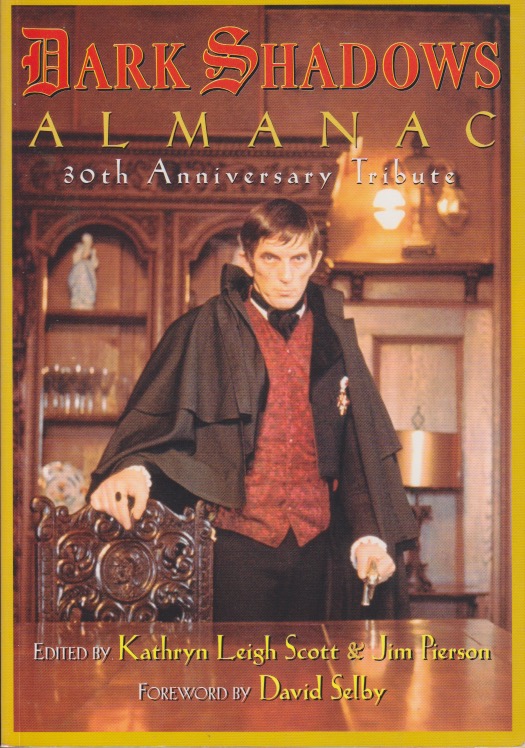
Fandom is a weird thing with me.  Having wide-ranging interests, coupled with an at times obsessive personality, my likes are intense but fall short of the kind of fan who purchases everything associated with their fascination.  A friend kindly sent me the Dark Shadows Almanac, edited by Kathryn Leigh Scott and Jim Pierson.  I try my best to read books friends  send me, and working my way through the Almanac, I realized just how far short of real fandom I fall.  Dark Shadows was likely my gateway to horror.  Watching it after school is one of my early memories.  But I was quite young at the time and beyond Barnabas, Quentin, the wonderfully gothic house, and the opening music and waves crashing into the rocks, specifics didn’t last.  Dark Shadows was one of the earliest fan-congregating shows.  Before Comic-Con, there were Dark Shadows conferences.  Kids eagerly bought all things Barnabas related.

I was about seven when the show hit its zenith.  I do remember watching it, and the wonderful, creepy feeling it gave me.  As a child I couldn’t have named any of the actors.  A lot was happening in my life at the time.  My mother was divorcing my alcoholic father.  My grandmother, who lived with us, lay bed-ridden and dying in what had been our dining room.  We lived in a run-down old apartment with very little money.  Heavy stuff for a kid.  And television also offered funny shows in the evening.  And Saturday morning cartoons (which included, yes, Scooby-Doo). I’ve always been amazed at just how much stuff there is in the world and I yearn to understand it deeply.  It was probably pretty much fore-ordained that I would try to be a professor.

Reading the Almanac not only reinforced how influential the series was, it also made me aware of just how complicated producing a television show is.  Many, many people are involved, specialists in artistic and technical fields.  Most of them make modest livings with, if they’re lucky, mentions in the credits.  The stars we know.  I think, for me, Barnabas Collins was a father stand-in.  What I noticed, even as a child, was that he was sad.  A certain type of person is drawn to sad individuals.  I always want to cheer them up because I know how it feels.  This is the part of me that wanted to be a minister.  I tried that a number of times but it never worked out either.  Reading an almanac like this isn’t really a deep intellectual exercise, but it is a learning experience.  And one of the things we might learn about is ourselves, whether a true fanatic or not.


That Night

I’m pretty sure I’ve seen Fright Night before.  It seems that it may have been on one of those trans-Atlantic flights where you exit the plane not quite sure what took place during those missing hours on earth.  I do recall that I had the hazy idea I wanted to see the movie under more controlled circumstances—with my feet on the ground and no pressurized cabin anywhere in sight.  It is certainly a passable vampire movie.  Tom Holland’s first as director.  Ironically, just the weekend before I’d had a hankering and rewatched Child’s Play, which he directed a few years after Fright Night.  I hadn’t realized they had the same director.  In any case, since the movie is now forty years old I’m not going to worry too much about spoilers.  Besides, I’d forgotten most of it since my last viewing, which was thirty or fewer years ago.

Copyright HAG ©2008

Charley Brewster and his mother live next door to a fixer-upper.  Charley, who’s a fan of the campy television show Fright Night, keeps getting distracted from his girlfriend Amy by goings on next door.  He immediately and correctly deduces that their new neighbor, Jerry Dandrige, is a vampire.  But nobody believes him, not even Amy.  As a teenager, he’s rather helpless and can’t take on the vampire alone.  When Amy sees their friend “Evil” has been transformed, she believes and eventually the unemployed star of Fright Night, Peter Vincent, styled “the vampire killer,” also joins them.  They have to stop Dendrige before Amy ends up a vampire forever.  There are a few good frights and the story still feels rather fresh.  The weird thing, it seemed to me, was the long, lingering reaction shots of Vincent (Roddy McDowall).  The pacing felt a bit off, but otherwise it was a fine movie.

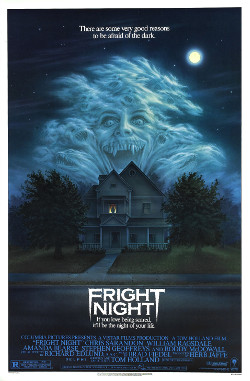
The name Peter Vincent combines the two stars Holland wanted for the role, Peter Cushing or Vincent Price.  The campy performance of this character balances the body count and gore.  Although it involves teens, it landed an R rating, almost considered necessary for any serious horror movie.  The movie poster also makes it look like this might be more comedic than it is.  It has a distinctly 1980s horror film feel to it.  Now this is going to make me feel old, but I’m starting to be able to discern the differences between seventies and eighties horror films by remembering what those decades were like.  I don’t know when I saw Fright Night before, but I’m glad I saw it again.  And I’m keeping an eye on the neighbors, just in case.


Eyes Have It

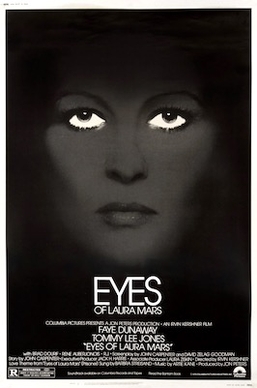
Seeing things from another person’s eyes is perhaps the most important social trait our species has.  We can empathize because we see someone else’s suffering.  It’s a shame to see this breaking down in real time.  Nevertheless, in the case of Laura Mars it may have saved her life.  The Eyes of Laura Mars is a psychological horror film about a controversial photographer (Mars), who suddenly sees things through the eyes of a killer.  The movie is a whodunit, keeping viewers guessing who it is that’s stabbing the eyes out of those Laura works with and cares about.  It’s not a great movie, despite the fact that it was written by John Carpenter.  Both this film and Carpenter’s Halloween were released in 1978.  Eyes is often considered a photo-slasher and Halloween was, of course, a full-blown slasher.  The former was Carpenter’s first major motion picture, while the latter was his first as director.

Screenshot

I’m about to spoil the ending, I fear, so please be warned.  Before I do, however, I will say that the film isn’t bad, even if it isn’t that good.  I had guessed the villain reasonably in advance of the reveal, but the movie did keep me second-guessing my conclusions.  The speculative element of Mars’ ability makes this a supernatural horror film, but one which seems relatively believable.  And the Bible is quoted in it, making it eligible for a Holy Sequel.  The characters—a high society artist and a New York City cop—aren’t terribly religious, but John Neville, the detective, moralizes about Mars’ work at a publicity event.  Okay, so here comes the spoiler.

After floating several possible murderers—a couple members of Mars’ crew are hinted at, as is her ex-husband—it turns out that the detective has dissociative identity disorder and although he and Laura have fallen in love, the moralizing part of his personality is a killer.  He provides Laura with a gun and tells her to shoot the man who comes after her.  When he finally does, he begs her to do it.  The twist ending, at this remove from the original, may be guessed ahead of time, but there is still quite a lot of tension in the story.  The murderer falling in love with his intended victim is a reversal of the more common lover-turned-murderer trope.  It’s not a bad freshman try on the part of John Carpenter, but when his directorial debut came out two months later, his ability in the horror genre was more fully in view.


Play Time

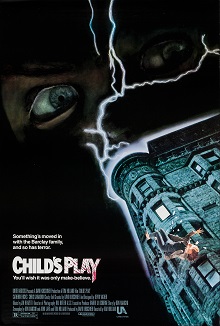
Of course I’ve seen Child’s Play before—what kind of poser do you think I am?  But that was back before I started blogging.  After writing a post about Puppet Master, I thought I should watch it again because it didn’t really strike me as memorable the first time around.  Probably the reason for that is I knew the basics of the story before I saw the movie and, like zombies, possessed dolls are a little hard to buy into.  Still, on this second viewing I was a bit more impressed.  The idea of the monster that won’t stop coming is a scary one, and I’d forgotten just how much Chucky had to be dismembered before being stopped.  And there are some legitimately scary scenes, despite unanswered questions.  In case you’re not familiar: criminal Charles Lee Ray is shot to death in a toy store, but not before transferring his soul, through voodoo, into a Good Guy doll.  This doll is bought on the black market by a widow who can’t afford one, for her son’s birthday.

Chucky befriends the boy but starts taking revenge on those who’ve wronged him, including the police officer called to investigate his first murder.  The officer happens to be the one that shot Ray at the beginning of the film.  Nobody believes that the doll is alive until it attacks them personally.  Nobody, that is, except Andy, the six-year-old owner of Chucky.  (Although it isn’t cited as such, I have to wonder if Toy Story’s Andy wasn’t actually based on this one; that’s not the official story, but still…)  Child’s Play wasn’t the first horror film to portray an animated doll, but it was perhaps the most influential.  Chucky went on to become a repeat slasher villain with wide recognition.

I’d completely forgotten the appropriation of voodoo as the animating force behind Chucky.  Of course, that leads to the very obvious weirdness of a doll using a voodoo doll to kill someone.  To modern sensitivities, the use of Vodou feels inappropriate, but this was in the eighties, and other religions were fair game for horror.  In fact, religion was fair game.  Without it, no animated Chucky, and no threat to Andy and his mother.  Religion and horror have played together from the very beginning.  The possession aspect also ties into religion and there have been no end of possessed dolls since Chucky first lunged out the screen with his knife.  It was a good play date, it turns out.


City Children

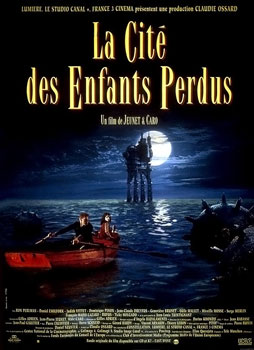
Some movies are very difficult, if not impossible to classify.  City of Lost Children is one.  One label that seems to have stuck is steampunk, and I think that’s accurate.  A touch confusing, not least because it’s in French, it is visually stunning.  So, the lost children are kidnapped by a kind of mad scientist who cannot dream.  He takes the children’s dreams (with pre-echoes of Inception).  The initial dream sequence of multiple Santa Clauses could be horror—much of the film is unnerving, as well as disorienting.  This mad scientist is attended by a set of clones, a tiny wife, and a brain in a fish-tank.  Meanwhile, thieving orphans, controlled by women who are conjoined twins, steal valuables.  A circus strongman, One, sets out to find his kidnapped “little brother,” and finds the orphans.  He helps them on one job but one of the lead orphans, Miette, takes pity on him and tries to assist in finding his brother.

The brother is in the hands of the mad scientist.  Miette is nearly drowned but saved by an amnesiac submarine pilot.  She leaves to fine One, whom the twins tried to kidnap.  One and Miette team up once again to rescue “little brother.”  They find the mad scientist’s lair, but the submarine pilot is about to blow it up.  One and the children escape, but at the last minute the submarine pilot regains his memory and realizes that he was the creator of the mad scientist and clones, but he is blown up along with the lab.  Accompanying this there are striking visuals in a world that is a cross between Existenz and The Matrix, but with steampunk overtones.  I suspect multiple viewings may be needed to get it, but the cinematography would make that a pleasure.

The cyclopses (did I mention them?) are the religious part of this world.  They believe in the plucking out of eyes in order to see.  This they do with eyes from the scientist and the cyclopses, in turn, capture the children for him.  Their religion is violent but somewhat biblical.  Although this is an alternate universe, it’s one where such features as religion might cross over.  Often religion is neglected in world-building, even though it comes naturally to our species.  It’s easy to get lost in this kaleidoscopic world.  Even so, you come to care for One and Miette and the value of loyalty.  Funny, creepy, confusing, and emotional, City of Lost Children is a movie that has to be seen to be believed.