Firestorms

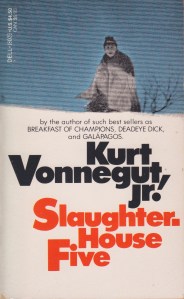
Banned Book Week technically doesn’t start until the week after next, but I have a pathological fear of being late.  I don’t know why.  It could be that I’m aware time is of limited quantity and much of it is owed to the beneficent corporation that keeps you alive, so you have to trade it for food.  And books.  Not much of it is left to do what you want to do.  In any case, my last book for the 2018 Modern Mrs. Darcy Reading Challenge was in the banned book category.  Long ago I had decided it would be Kurt Vonnegut’s Slaughterhouse Five.  I’ve read it before, of course, but it had been long enough that the details had been sanded away and I could only remember parts.  One thing I’d forgotten is how much Vonnegut brings religion into the story.

Writers who avoid religion miss the motivating factor of the majority of human beings’ lives.  This has always seemed a strange denial to me.  I’m not suggesting that every novel should mention religion, but since it is concerned with ultimate interests, it is somewhat surprising that it’s so often overlooked.  Not that it plays a major role in Slaughterhouse Five, but any novel concerned with death is inherently in the realm of ultimate concerns, I should think.  Right, Dr. Tillich?  In any case, I’d forgotten that Slaughterhouse Five was such a poignant, funny, and sad novel.  Vonnegut’s experience of World War Two clearly haunted him—most writers are haunted by something—and his musings were, and often are, banned.

If there were banned books in my high school (and I grew up in a conservative area, so surely there were) I didn’t know about them.  Let’s face it, teens seldom sit around talking about significant novels.  Many, at least among my classmates, didn’t read those that were assigned in English class.  Slaughterhouse Five wasn’t one of them.  I learned about Kurt Vonnegut from a friend while in college.  This is the third of his novels that I’ve read in 2018.  The first two I’d never read before.  So it goes.  I’m keenly aware of time.  I’m also aware that those who would ban books are often those who obtain elected office.  And when you find that your own nation has turned on you, remembering the fire-bombing of Dresden is an appropriate response.  For such reasons Banned Book Week remains important.  It should be a national holiday, at least among those of us underground during the firestorm.
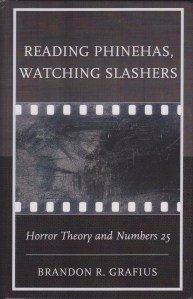

Scriptural Slashers

Let me relish this a moment.

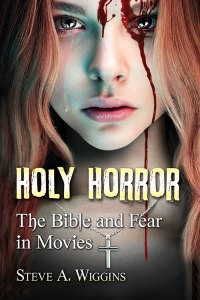
Thanks.  You still there?  It’s not too often, you see, that I get to feel like I’m near the front of the crowd.  I began writing Holy Horror when there were a small handful of books on the market concerning horror and the Bible.  I wasn’t aware of Brandon R. Grafius’ work at the time, but it sure is gratifying to see that others have noticed the connection.  Reading Phinehas, Watching Slashers: Horror Theory and Numbers 25 is pretty much what its title says.  I’ll be having more to say on it in a different venue—don’t worry, I’ll let you know—so I’ll keep to the basics here.  My spellcheck, and I’m sure not a few others, might have trouble identifying Phinehas.

In one of those weird, short, violent episodes for which the Good Book is justly famous, the story of Phinehas is clearly part of a larger, untold narrative.  Like the sons of the gods marrying the daughters of men in Genesis 6.  The grandson of Aaron, Phinehas was one of the hereditary priests of early Israel.  The Israelites wandering for their 40 years in the wilderness were nearly as xenophobic as the Trump Administration.  When one of the chosen people chose a foreign wife, Phinehas, full of zeal, grabbed a spear and skewered the couple.  Tradition says in flagrante delicto.  This act of violence stops a raging plague sent by the Almighty, so Phinehas looks like a hero in context.  If you want to read the story the subtitle tells you where to find it.  Or you could read Grafius’ excellent book.

Horror, which should be already obvious, enters the picture in the form of theory.  Yes, there is such a thing as horror theory.  Grafius uses it to analyze this story, along with other methods.  This is what I’m relishing.  I certainly wasn’t the first to notice the connection.  Many years ago Phyllis Trible wrote Texts of Terror, noting how the Bible seems less holy (my expression, not hers) when read from the perspective of a woman.  Indeed, many accounts that seem like standard issue narratives of God laying down the rules and humans disobeying tend to fall pretty heavily on females.  And the punishments used are fit for horror films.  Grafius focuses specifically on slashers, but one gets the sense that this book is just the start of something larger.  This reader, at least, hopes that is the case.


Look Both Ways

One of the things I miss the most about my teaching career is learning from the young.  While some professors in my experience believed the learning only went one way, I always found a kind of reciprocity in it.  I passed on what I learned from taking classes and having my face in a book all the time, and they taught me about popular culture.  Academics don’t get out much, you see.  It’s a basic issue of time—we all have a limited amount of it and research, if done right, takes an incredible chunk.  In fact, when hot on the trail of an idea, it’s difficult to think of anything else.  Pop culture, on the other hand, is what the majority of people share.  Now it’s largely mediated by the internet, a place that some academics get bored.

Speaking to a young person recently, I was initially surprised when he said that his generation was more interested in the Devil than in God.  Parents have always been concerned that their children not go astray, but this was, it seemed to me, more of an intellectual curiosity than any kind of devotion.  God, he averred, was thought of as aloof, pious, self-righteous; in a word, Evangelical.  The internet can be downright ecclesiastical in its affirmation that our inclinations can be what used to be called “sinful.”  Not that these things are always bad, but they are the kinds of things we’re taught to feel guilty about.  The divine response?  Anger.  Displeasure.  Shaming.  Young people, my interlocutor thought, found the Devil more understanding.

Perhaps this is the ultimate result of Evangelical thinking.  We’re watching in real time as the party of Jesus is becoming the party of intolerance for anyone different than ourselves.  Rather than turning the other cheek, it’s fire when ready.  Eager to retain the “brand” of “Christianity,” they slap the secular label on any outlook different than their own, although their own faith is without form and void.  It used to be that this was the realm of the Devil.  This sheds a different perspective on what my young colleague was saying.  Instead of bringing people to God, the Evangelical movement is driving them away.  Traditionally, the Devil was after the destruction of human souls.  That seems to be one of the new values of the right wing of the church.  There’s quite a bit to think about in this observation by this young one.  I’m glad to know that traffic still moves both directions on this street.


Appily Ever After

While in the theater to see The Nun (which ended up being the biggest take) this weekend, I couldn’t help but notice that the pre-movie adds were all about apps.  I couldn’t help it because, much to my own chagrin, I’d left the house too quickly and I hadn’t brought a book to read while waiting.  This may not be news to some people, but different cinema chains have different “channels” of what passes for entertainment and ads to try to draw viewers in early.  The movie house we used to frequent in New Jersey had a variety of goods on show, most of the time.  The one we visited here in Pennsylvania presumed that everyone had their phones in hand, waiting for the show to begin.  On screen was the idolization of the app.

My phone is old enough that most modern apps don’t work on it.  Most of the time that doesn’t matter to me since I’m not addicted to the device.  Of course, when you’re trying to park your car in a town that offers only online options for such a convenience, I sometimes wish I could download the relevant necessary software.  Otherwise, I often wonder what we’ve lost in our lust for connectivity.  Coming out of New York on the longer distance bus recently, the driver called out, as leaving the Port Authority, “Lights on or off?”  The unanimous chorus, for I didn’t speak, answered “Off!”  I glanced around.  I was surrounded by devices.  I carry a book-light with me on the bus, for this has happened before.

“Drink the Kool-Aid” has become post-Jonestown slang for simply following the suggestion of someone without considering the consequences.  I sometimes wonder if our smartphones come in more than one flavor.  I’m not talking about features or physical colors.  As apps chip away at our money, a little bit at a time, they also take larger pieces of our time.  I’ve experienced it too, but mostly on my laptop (I don’t text—my thumbs aren’t that limber, and besides, the apocopated messages often lead to misunderstanding, emojis or not), the wonder of one link leading to another then realizing an hour has disappeared and I still feel hungry.  Perhaps that’s the draw to the modern commuter.  Or movie goer.  I’m sitting in the theater, taking a break from unpacking.  In my version of multitasking, I’m also doing research by watching a horror movie.  Around me eyes glow eerily in the dark.  I’m lost in the forest of unsleeping apps.


Nun Among Them

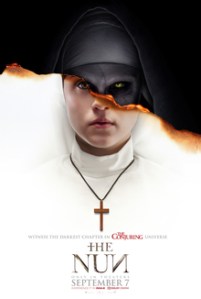
Life is sweet when watching a horror movie counts as research.  It’d be sweeter, of course, if a university paid for it, nevertheless, I went to see The Nun on its opening weekend.  My wife gamely went with me (no sponsor was paying for this) on a rainy Saturday afternoon.  Now, if you haven’t been following The Conjuring universe, you might not know about The Nun.  The full story will be revealed in Nightmares with the Bible, which is coming along nicely.  Suffice it to say it’s a movie about a haunted convent in Romania.  Those who know the Dracula tradition will perk up at the mention of the location.  The scenery is quite lovely in a horror genre kind of way.  And it also has ties to The Conjuring diegesis that bring the story full circle.

Ghostly nuns, it turns out, can be scary.  Religion, after all, involves coercion and threat as well as love and salvation.  Sister Irene, the protagonist, is a novice nun sent on a mission to investigate said convent.  The film reveals both an awareness of religious motivation and a seeming lack of research regarding monastic life.  Sister Irene, for example, tells the students at her school that the Bible isn’t to be taken literally.  It’s “God love letter to humanity.”  Well, parts of it are.  Still, the struggle with biblical literalism is a present-day issue that the movie addresses head on.  It was difficult to believe, on the other hand, that even a novice would walk into a chapel where someone is praying and call out “Hello?”.  Many years at Nashotah House taught me something.

Cloistered environments, although not part of most people’s experience, are great locations for horror.  For example, the first night she spends in the monastery Irene is told that the great silence is observed until dawn.  Did I mention that in chapel no one can hear you scream?  There’s an element about that in actual cloistered life.  The discipline of secrecy is heavy and full of threat.  We spent a great many silent days at Nashotah House and the sense of violation as sin was heavy indeed.  The part that truly stood out, however, was where the nuns used their only recourse against evil; they had to pray.  In the world of action movies, striking out with whatever is at hand is the expected response.  Spiritual entities, although the film does relent, can’t be touched except with spiritual threats.  The praying nuns looked so helpless in the presence of a demon.

There were less than a dozen people in the theater.  The Nun may not be a runaway hit.  The devoted will see it, however, and some of us will include it in our working life as a kind of spiritual exercise.


Horrible Delays

It’s not that the delay is actually horrible.  Horror movies, after all, come into their own with the darkening days of fall.  Nevertheless it occurred to me that now August is about to exit stage left, some may be wondering where Holy Horror is.  After all, the website originally said “August.”  The truth is nobody really understands the mysteries of the publishing industry.  Like so many human enterprises, it is larger than any single person can control or even comprehend.  I work in publishing, but if I were to subdivide that I’d have to say I work in academic publishing.  Further subdivided, non-textbook academic publishing.  Even further, humanities non-textbook academic publishing.  Even even further, religion—you get the picture.  I only know the presses I know.

It suits me fine if Holy Horror gets an autumn release.  I don’t know, however, when that might be.  I haven’t seen the proofs yet, so it’s hard to guess.  Appropriate in its own way for horror.  The genre deals with the unexpected.  Things happen that the protagonists didn’t see coming.  In that respect, it’s quite a bit like life.  My work on Nightmares with the Bible is well underway.  When you don’t have an academic post your research style necessarily changes, but I’m pleased to find that books can still be written even with the prison walls of nine-to-five surrounding one.  It may be a bit like Frankenstein’s monster (happy birthday, by the way!), but it will get there eventually.

Of my published books so far, Holy Horror was the most fun to write.  It wasn’t intended as an academic book, but without an internet platform you won’t get an agent, so academic it is.  It’s quite readable, believe me.  I sometimes felt like Victor Frankenstein in the process.  Pulling bits and pieces from here and there, sewing them together with personal experience and many hours watching movies in the dark, it was horrorshow, if you’ll pardon my Nadsat.  We’re all droogs, here, right?  I do hope Holy Horror gets published this year.  Frankenstein hit the shelves two centuries ago in 1818.  Horror has been maturing ever since.  So, there’s been a delay.  Frankenstein wasn’t stitched up in a day, as they say.  And like that creature, once the creator is done with it, she or he loses control.  It takes on a life of its own.  We’ll have to wait to see what’s lurking in the darkening days ahead.


Stand-in Line

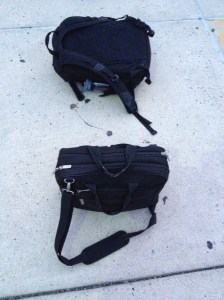
Pop culture borrows from religion without knowing it.  Or maybe it’s just that religion has become so irrelevant that people no longer care.  Whichever may be the case, those who contribute to pop culture have a rich treasury from which to take withdrawals.  This occurred to me while waiting for a bus into New York.  Many people don’t want to stand in line (who does, really?).  In the Park-n-Ride subculture, you may leave an avatar in your place.  It’s probably not called an avatar, but since there’s nobody here to ask, I’m going to use the pop culture name.  You put your bag on the pavement, marking your place and then go sit in your car.  Since I’m going to be sitting in a big car for the next two hours, I prefer to stand outside.

The idea of an avatar is mediated to most people through either computer language or the movie.  I first encountered the term in the former sense in Neal Stephenson’s Snow Crash.  I was an internet neophyte and had trouble conceiving a virtual world in those days.  Some time later came the latter.  James Cameron’s film embodied the idea—linked through software, the tired hardware of physical bodies could be given new life.  In some senses it was an even better life.  Now everyone knows what an avatar is.  Perhaps except that the idea is native to Hinduism.

Hinduism was never an organized, intentional religion such as Christianity.  It is rather a wide array of traditional beliefs that, in the light of missionary activity, had to be given a name.  There are many gods in Hinduism, and when a deity descends to earth s/he appears in a form recognizable to humans—an avatar.  Not being an Indologist, my understanding of the concept is very basic, but it’s enough to know that this religious idea found a role in pop culture first through computer representations of human beings.  We had flattered ourselves with being gods, since we had created a virtual world.  A world we couldn’t physically enter.  Avatars were, therefore, how we wanted others to experience us.  Snow Crash is peopled with all kinds of representations.  The internet today, nearly 30 years on, has many more.  After all, there are many gods.

I glance at my watch.  The bus should be here any minute now.  When it enters the lot I’ll see the deities behind these canvas and leather avatars.  They’ll be less impressive than I’ve imagined them, I’m sure.  And although we’ve created virtual reality, I still have to get on a physical bus to go to virtual work.


Financial Ethics

In a conversation with a professional colleague recently, I was discussing what might happen to ethics when sex with machines becomes common.  That statement might seem a little bizarre out of context, so let me widen the net a bit.  We were discussing the Bible and sexual ethics.  This led to the question of how those who apply the Bible straight from antiquity might apply their beliefs to a world vastly different than first century Palestine.  In biblical times, in other words, sexual options were limited and people didn’t understand the whole issue of human sperm and eggs, neither of which can be seen without a microscope.  Applying their outlook directly to today is problematic, and so how do we apply a book without outdated views to a world vastly more complicated?

Someone recently paid me a small debt via PayPal.  If sex is complicated, then let’s not even get started on Bitcoin or Apple Pay—for some of us money is money and even getting paid electronically is somewhat suspicious.  I sometimes buy things online with PayPal.  It goes straight onto one of my credit cards and then I write an old-fashioned check to pay for it.  So I had to approach the altar of PayPal itself to figure out what it meant to have money in my account.  What am I to do with it?  Then I found the FAQ—TFIA (The Future Is Acronyms).  One of the questions: “What is PayPal’s policy on transactions that involve sexually oriented goods and services?”  Now, here’s a question of biblical proportions.

Paying for sexual “goods and services” goes all the way back to the book of Genesis when none other than the ancestor of David and later progeny did so.  This is nothing new.  But the question of ethics now looms extra large.  For those who pay for such things, a new layer of complexity has apparently been added—can you pay with PayPal?  My transaction had to do with tickets purchased for a concert online, where we wanted seats together so someone had to do the buying for everyone.  What if the purchase had involved a somewhat more intimate setting?  Who needs paper or plastic when a string of 16-digits, or even a username and password, will do?  That’s to say nothing regarding the ethics of the transaction—this is, as it were, purely mechanical.  What would Moses say?  Surely this is a question of appropriate tips, for Tamar veiling herself by the side of the road had the moral high ground over her father-in-law who was simply looking for a good time.  A staff and seal, however, were no less complicated that paying for goods and services online.


Enoch Enough

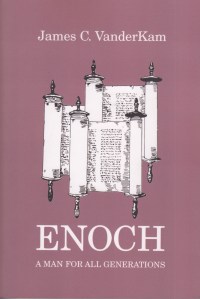
For a person referenced so little in the Bible, Enoch captured popular imagination in a way difficult to comprehend.  Even in ancient times speculation about him was rampant.  The seventh generation from Adam, and great-grandfather of Noah, Enoch lived a remarkably short 365 years before “he was not, for God took him.”  Now, there are lots of obscure people in the Bible.  Many of them have very little afterlife in later tradition.  Enoch, however, became the putative author of a collection of booklets that goes by the name of 1 Enoch.  This book fed speculation in antiquity and became a vehicle for many esoteric traditions that continue even into the present day.  It might seem that there’s little information to go on for an entire book, but James C. VanderKam’s Enoch: A Man for All Generations finds plenty of material with which to work.

A careful scholar like VanderKam doesn’t delve much into speculation, and he rather cautiously examines many of the ancient texts that discuss Enoch and draws some basic conclusions.  There’s a lot of information in this book.  With my own fascination concerning the Bible and popular culture, what stood out to me was how Enoch went from the “mere” man who didn’t die to become, in some traditions, the Metatron, or “the lesser Yahweh.”  Having been a fan of Dogma since teaching at the perhaps too sanctimonious Nashotah House, I’d never researched the late, great Alan Rickman’s character.  I supposed the Metatron was a character like the Muse—some extra-biblical quasi-divine functionary thrown in for fun.  I didn’t doubt such a figure was known in early Jewish or Christian writings, but I had no idea that Enoch had been promoted to that level.

Since I’ve been researching demons lately, the book of 1 Enoch has been a major source of interest.  One of its sections, The Book of the Watchers, expands on that odd story from Genesis 6 where the sons of God lust after the “daughters of men.”  Ever coy, the biblical passage doesn’t directly say that their offspring were giants, but this idea was developed by sources like 1 Enoch.  And these fallen angels—the nephilim—in some traditions, become demons.  Studying Enoch is a fine introduction to a mythological world every bit as rich as Dogma.  These characters—Enoch, nephilim, watchers, and demons—populated the imagination of early readers of the Good Book as much as they do modern speculators’ worlds.  Not bad for a character barely mentioned at all in the Bible.


A Few of My Favorite Monsters

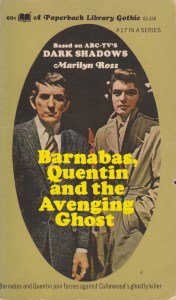
It was a guilty pleasure read.  We’d just moved and I needed a new novel for bed-time reading.  Most of our undamaged books were still boxed up and, well, enough excuses: I like Dark Shadows novels.  Hardly well written, these pulp potboilers are like extended, Gothic Scooby-Doo episodes.  I first started finding them used at Goodwill when I was a kid and I’ve re-collected a number of them as an adult.  Although they feature a vampire, and sometimes a werewolf and witch, the crisis of the story generally devolves to a hoax at Collinwood.  So it was with Barnabas, Quentin and the Avenging Ghost.  I hadn’t thought to write a blog post about it until I came across a passage mentioning Rocain.  In context, one of the characters explains how Rocain, the son of Seth, shows that sorcery goes all the way back to Genesis.

Genesis was one of my lines of research during my academic career, although I never published anything I was working on.  I didn’t, however, recall having read about Rocain.  The internet quickly pointed me to Legends of Old Testament Characters by Sabine Baring-Gould, chapter 8.  Clearly this was where Marilyn Ross, or his source, got his information.  Baring-Gould sits on my shelf as the author of The Book of Were-Wolves.  He also wrote the hymn “Onward, Christian Soldiers.”  There was an era, overlapping with Baring-Gould’s lifetime, when a minister could be an independent scholar of repute.  Although much that’s found in his many publications is now disputed, his was a lively and lifelong curiosity that led to several books.  

Upon reflection, Sabine Baring-Gould, who was a priest fascinated by occult topics, would have fit quite well into the Dark Shadows diegesis.  Although set in the late 1960s into the mod ‘70s when the television show aired, these were Victorian vignettes of a conflicted vampire and his strange, wealthy, and somewhat clueless family.  All kinds of guests, some of them quite Lovecraftian, drop into the Maine mansion and its grounds.  The writing of the novels is tepid at best, but the series was surprisingly literate.  Dark Shadows is nevertheless undergoing a kind of revival these days, and friends sometimes tell me they’ve just discovered this oddly compelling world.  I invite them in.  I’ve unpacked a few more boxes since selecting this pulp novel, and one of them, I note, holds books by Sabine Baring-Gould.  The guilty pleasure read?


Special Delivery

Apotropaic is a word that can be translated as “turning away evil.”  For all that, it’s a perfectly good English word, although seldom used outside realms such as religious studies and anthropology.  Although the word itself may be unfamiliar, the concept is one that everyone recognizes—the charm that wards off evil is the most common example.  The rabbit’s foot means good luck (except for the rabbit) because it’s an apotropaic device.  In perhaps one of the oddest twists in Christianity’s somewhat lengthy history is the fact that the Bible itself has become an apotropaic device.  You’ll see this quite a lot in horror films, and if you read Holy Horror when it comes out you’ll see it quite a bit, although I don’t use the technical term for it.  Apotropaic outlooks also pervade society as a whole.  A recent article on Mysterious Universe proves the point.

Pennsylvania is a weird state.  Having grown up here, I know that to be the case.  In Wilkes-Barre (which itself is a strange name) a ghost-hunter was arrested for breaking into a haunted house bearing a sword, shotgun, and Bible.  That should cover your bases.  Of course, I couldn’t help but notice the odd equivalence of these three weapons.  One is intended for close combat (the sword), one for a reasonable distance (the shotgun), and one for an enemy so close that they might get inside (the Bible).  Make no mistake about it; the Bible is indeed a weapon.  Probably intended as an apotropaic device in this context, it was nevertheless an object to defend the ghost hunter from evil.  The sword and shotgun, however, seem to betray a lack of trust in Holy Writ.

The Bible has been used for offensive purposes ever since people figured out that it can be used to control others.  Coercion, in whatever form, is a kind of violence.  Interestingly, reading the Good Book would seem to indicate that such usage of holy things is inappropriate.  Then again, the Bible doesn’t refer to the Bible.  The idea of Scripture as a powerful object developed only after the Good Book had become an iconic object.  The final authority.  Who can argue with what is claimed to be the word of God?  That idea has become more important than what the Bible actually says, as any “Bible-believing” Trump follower will prove.  Against ghosts, however, it might serve as an apotropaic device, but it won’t prevent you from being arrested, it seems.  A lesson worth pondering.


Trending Horror

It’s not often that I can claim to be ahead of the curve.  A “late bloomer,” I was a timid child whose reaction to most of the world was a species of phobia.  It probably didn’t help that I watched monster movies and was an early fan of the original Dark Shadows.  As I learned to relate to others and take consolation in religion, these more macabre interests became latent rather than obvious, only to come out into the open when working at a Gothic seminary in the woods of Wisconsin and then being fired from said seminary, casting me into the outer darkness.  I found myself being interested in horror again although I’d put it aside from bachelor’s to doctorate.  Now it started to feel therapeutic.

My wife sent me an NPR story by Ruthanna Emrys titled “Reading Horror Can Arm Us Against A Horrifying World.”  The premise is one I’d read before—we find horror compelling because it gives us skills that we need to survive.  It teaches us how to separate evil from mere shadow and how to (or not to) fight such evil.  In other words, horror can be heuristic.  Those who know me as a generally calm, quiet—shy even—individual express surprise when I confess to my secret fascination.  One of the most common responses is the question of “why?”  Why would anyone want to watch such stuff?  My observation is that those who ask haven’t tried.  Horror is not often what it seems.  Or perhaps they have better coping mechanisms than I have already in place.

The names of many writers of what might be considered horror have gained mainstream respectability.  Stephen King’s name alone is enough to assure the success of a novel.  These days you can mention the name Lovecraft and a fair number of people will have at least heard of it (him) before.  Jorge Luis Borges has respectability for having been Argentine.  Joyce Carol Oates for being both an academic and a woman.  If you’ve read their works, however, there’s no doubt that something scary is going on here.  As Emrys points out, with our world becoming a more polarized and frightened place, horror may be ready to hang out its shingle saying “the mad doctor is in.”  In fact, it may become even more popular than it is already.  We human beings set ourselves up for horror constantly and repeatedly.  I’m seldom ahead of the curve.  I hang back to see what might happen to those out in front.  Call it a survival technique.


Hidden Origins

This blog was born at the very lake I’m about to leave.  Although it’s relaxing, there’s an element of chaos to a family vacation that stirs up creativity.  Tomorrow’s long day of travel back east, however, will mean another day without a post.  Flights leave so early that you barely have time to slither out of bed to the shuttle, and the airport hotspots want your money to connect.  I’d rather maintain radio silence for a day.  That doesn’t mean I won’t keep my eyes open for religion hidden in the interstices of American life.  Since religion and mythology share sleeping quarters, I’m reminded of something I saw up here in the northwest the other day.  While in a local grocery and souvenir shop (for all groceries in this area carry souvenirs) I saw sasquatch dolls.

Such cryptids are unknown to science, of course.  Even if they really exist, their liminal status now places them firmly in the realms of mythology.  Being in the wilderness can be an uncanny experience.  Long accustomed to dwelling in cities and towns, we feel vulnerable out in the open.  Taking walks in the woods might just put you in the path of black bears, grizzlies, or mountain lions.  Who knows what else might be hiding in these woods?  It’s easy to believe in our myths here.  Vacation, in addition to being the ultimate reality, counts as time borrowed against work and its punishing rationality.  Religion thrives in the quiet moments when you’re not sure what might be hiding just out of view.

Did ancient people devise belief in such circumstances as this?  (Well, without the wifi and indoor plumbing, of course.)  It’s not hard to feel the spirit of the lake.  Standing chest-deep in the water, being rolled by the waves, there’s a kind of secular baptism taking place.  In the quiet unearthly voices can be heard.  No television or newspaper tells you that it can’t be happening.  Listening is much easier with no distractions.  These woods are vast.  Human access to them is limited to marked and maintained trails.  Beyond these borders, who knows?  Science comforts us with the assurance that there are no monsters out there.  Standing isolated from any other human beings, surrounded by ancient trees, you might begin to wonder if such assurance is as certain as it sounds.  The sasquatches are children’s toys, and the sense of the numinous you feel can, like all extraordinary things, be explained away.


Bitten by Religion

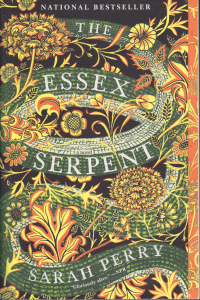
The Essex Serpent isn’t what it appears to be.  Sarah Perry’s debut American novel (although it’s her second elsewhere, publishing being the strange beast that it is) was much anticipated.  Like the serpent itself, the novel is difficult to describe.  It comes down to a minister, a widow, and the people with whom they associate.  Instead of going through the complex storyline, I would instead note that once again a novel that explores religion has garnered quite a lot of attention.  It’s difficult to believe the official narrative that we’re constantly fed that religion is well beyond its expiration date when it continues to appear in print media as a prime motivator for people in all kinds of situations.  Novels, however, aren’t popular in the way television, movies, and video games are, so this is worth pondering.

While novels are sometimes disparaged in higher education, their clientele tends to be an educated one.  It takes more commitment to sit down and read a 400-page tome than it does to flip on some device and meander from app to app, channel to channel, or website to website.  Novel reading takes some concentrated effort.  Remembering characters and connections across a span of days or weeks as you wend your way through.  And one thing novelists do, at least in my experience, is explore the way religion makes us who we are.  I don’t choose novels for that reason; I thought The Essex Serpent would be a monster story (remember, I don’t read reviews before reading the book).

My guess is that if you read this blog you’re a potential reader of novels like this, so I won’t offer any spoilers.  The book is suffused with biblical language, as befits a story with a clergyman as a major character.  The protagonist, however, is an irreligious widow on a journey of self-discovery.  Having been dominated by a wealthy husband, she now explores paleontology in a Victorian context.  Although the year is never stated, the novel manages to find that Gothic near-ghost-story feel with the close interplay of death by consumption and fear of the dark.  It’s not a scary book by any means, although there’s plenty of mist in Essex, and a little gruesome detail of what people can do to each other.  The novel caught my attention via reviews I never read and has left me pondering what I’ve just experienced.  And it has reinforced my conviction that, despite what the critics may say, religion is what motivates us, whether we admit it or not.  And serpents may not be what they seem.


You’ve Never Seen

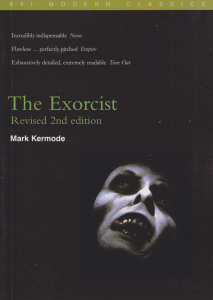
In spite of accusations of puerile voyeurism, horror is a genre containing many deep films. I have no training as a film critic, but it’s evident that among the more weighty of horror heavyweights is The Exorcist. Mark Kermode is, on the other hand, a film critic, and his book named after the movie demonstrates just how much a viewer can see. I’ve watched The Exorcist quite a few times and there were things I’ve consistently missed. I also realize that I’ve only ever seen The Version You’ve Never Seen (the 2000 theatrical re-release). Having been too young and far too skittish to have seen its debut, I’ve been happy—if that’s the right word to use with such a production—with the version I’ve seen. That’s the human condition, I guess. Kermode made me wonder what it would’ve been like to have experienced it before the spoilers became universally known.

Yes, there are striking special effects—especially for the early 1970s—but the message is what really holds the depth. The story is the classic struggle of good and evil. Demons are, after all, a form of evil personified. The fact that a young girl is the victim may be a little too true to life, but it also gives the drama considerable emotional resonance. In the end, according to the view of the writer and director, good wins. The struggle, as they portray it, is real and costly. It’s always informative to find out what those who made a film thought it was about. Even with the motive of making money, many involved in the industry still have the hearts of artists. Maybe even priests.

Having learned at the feet of post-modernists, we know that no interpretation—even that of the creators—is privileged. Just as there’s no such thing as “only reading,” no one “only watches” cinema. The acts of reading and watching inherently involve interpretation. Kermode draws that out nicely in this little book. His interpretation, as insightful as it is, is but one way of looking at it. Was The Exorcist the version originally released in 1973? Bill Blatty and Bill Friedkin disagreed to the end about what the definitive version was. The many sequels and spin-offs have reinterpreted the story in their own ways. So it is with the struggle against evil. There’s no one single way to go about it. Some make horror movies to demonstrate that point precisely. At least in my view they do.