First Look

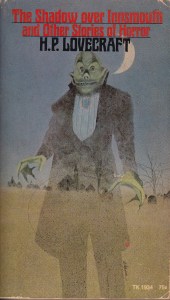
Youth might be described in a number of ways. One, of course, is in biological years. Another may be in exposure to experiences which change your life. There was a time, for example, when you can’t believe you were ever so naive. No matter how youth might be defined, a patina of fond memories tends to cling to images from that time with the passage of years. For me, unsurprisingly, those images are frequently books. I still recall the cover images of books from my tweenage years, and often think that if I found such books in a second-hand store, I would buy them for their ability to conjure past times. One such book comes not from my physical youth, but from my days teaching at the University of Wisconsin, Oshkosh. It was at that time, when the internet was also still young, that I began to try online research into H. P. Lovecraft. I found an edition of his stories titled The Shadow over Innsmouth for sale on a used book website. I was under-employed, but it was cheap and my curiosity inflamed.

Mainly I was interested in what I would now call the reception history of Dagon. Dagon is an ancient Mesopotamian deity mentioned briefly by name in the Hebrew Bible. He is also part of the pantheon of gods borrowed and invented by Lovecraft to populate his eldrich, watery world. I purchased this book for the titular story, where Dagon doesn’t actually appear, but his worshippers do. It is often claimed to be Lovecraft’s best story. As I sat down to read the whole book, however, I was struck by the strangeness of the collection. This edition, from 1971, included such unusual choices as “The Transition of Juan Romero,” “In the Walls of Eryx,” and “The Festival.” Also bundled here was the Houdini ghostwritten “Imprisoned with the Pharaohs.” When I first purchased the book I’d only read “The Shadow over Innsmouth” and “The Colour out of Space.”

As my interest in Lovecraft grew, I acquired other, more representative editions of his work and have consequently read most of his oeuvre. It was that sense of yesteryear, however, that led me back to this browning, aged collection. It was, in truth, the cover. Looking at it brings back that very office in Oshkosh where I sat as I found the edition online for less than five dollars. No doubt, I was younger then. The call of Cthulhu has echoed across the web since then. For me, however, the first exposure will always be a beat-up paperback that I ordered secondhand.

Night of the Museum

I admit to being a relative stranger to contemporary commercial television. We don’t have “triple play” at home, and since the internet provides more information and entertainment than one person can possibly handle in a lifetime, why pay extra? On a visit home, however, where internet does not yet exist, I fell to the default of watching TV. Scrolling through the cable channels available in this small town, I start to understand why we don’t pay extra for this at home. Much on offer appeals to the lowest common denominator, and although some educational programs exist, they have to put somebody in danger in some remote location in order to draw the viewers in. Then I stumbled on Mysteries at the Museum.

For those of us hopelessly enamored of the past, museums are an irresistible draw. I joined the program already in progress. It was talking about Stroudsburg, Pennsylvania, through which we’d driven to get here. A resort town in the Poconos, I always think of Stroudsburg as a traffic bottleneck, particularly on a holiday weekend. Instead the story was telling of a haunted jail in which a prisoner had to be exorcised after it was found that he could make it rain inside his cell. Then the name of the Warrens was mentioned. The Bible used in the exorcism is from their occult museum (thus the tie to the title of the program). Ed and Lorraine Warren, as my regular readers know, get mentioned here every once in a while. Real life ghost hunters, they kept a museum of the occult in their Connecticut home. I’d missed the part of the program where they revealed the provenance of the artifact. Now things started to make sense. After the commercial break, however, the story shifted to a historic pair of hiking boots.

Image credit: Creative Commons Share Alike 2.0 Generic license. Photo by Doug Kerr, Wikimedia Commons.

What was so striking about this brief segment of the show was not the implied credulousness of the investigation, but rather the certainty with which those interviewed declared this was a water demon case. Okay, so I’d just finished a seven-hour drive and I may not have been at my sharpest, but where did such certainty come from? Who were these experts telling us what had happened? I’ve read enough of the Warrens’ accounts to get a sense of how they worked, but not even the name of the priest was presented, let alone that of the demon. What we had, then, in this 15-minute segment, was a Bible and an anecdote of rain falling in a Stroudsburg jail. As I switched off the program to go to bed, I knew that I’d find the missing information on the internet. Even without triple play.


Birth of a Notion

Childhood is an impressionable time. Our phobias begin then. Children are vulnerable. (Of course our current government is intent on making us all afraid of bullies again.) This theme of childhood keeps coming up in interviews with directors of horror movies. A friend recently sent me a New York Times article by Erik Piepenburg about Annabelle: Creation. The piece includes some horror auteurs discussing what frightened them as children. We all experienced fear at a young age. For some of us it hung around awhile longer. Horror movies have, despite their low brow reputation, been reliable revenue streams from the beginning. People will pay to be scared, for a little while.

I have to confess to having fallen behind on The Conjuring diegesis. Since I’m the only one in the family who really likes to watch horror, I don’t see these movies in theaters and, well, there’s a lot to do besides watching movies these days. And finding DVDs is getting harder as well. Streaming scares me. Anyway, I missed The Conjuring 2 and the original Annabelle. I’ve read accounts of what supposedly happened in real life—Annabelle is one of the cases investigated by Ed and Lorraine Warren—and it has been written about a number of times. The Warren’s take on it was that a doll can’t actually be possessed. (Sorry Chuckie.) They suggested that it could act as a conduit that would’ve eventually allowed a demon to possess the two young women who kept the original Annabelle in their apartment. The doll showed up in The Conjuring, although it wasn’t part of the main story. The haunted doll trope is scary enough that the second knock-off in this universe focused on it.

Interviews with older horror directors reveal that they often grew up without fathers. Despite the gender profiling, for kids fathers are generally thought to represent protection. A child without a father often feels insecure. Even today when people talk of their fathers I have to remind myself that they can be a good thing. I often wonder if those of us who like horror films had childhood parental issues as a regular part of our pasts. I’m generalizing, of course. Growing up into Trump’s America has given us all plenty of things to fear in the present. Since January a number of high profile horror films have gotten notice in the press. Sometimes a real bully can cause as much fear as a possessed doll. That’s especially the case when our government wants us to submit like a bunch of frightened children. Childhood fears may, in some cases, serve us well.


Celestial Happenings

Science fiction used to be the mainstay of my reading. Unlike a true fan, I was never exclusively devoted to it—my tastes are far too eclectic to be contained by any genre. Nevertheless, at a used book sale, on a whim, I picked up Frederik Pohl’s The Day the Martians Came. It had a cool looking spaceship on the cover, and I recognized his name from my childhood reading. I prepared myself for an adventure. Instead I found a disillusioned tale of humans and their foibles, many of them religious. Many tales, in fact. Indeed, I wasn’t surprised to find out that this was originally a set of discrete short stories later laced together into a novel. The point, it seems, would be appropriate to Qohelet. Human beings run around doing their pointless things and failing to communicate with one another. That much was true to life.

The Martians, who are more evolved and intelligent than humans, but who appear to be mere docile animals, are discovered near Christmas. Much is made of the fact that humans still celebrate Christmas on Mars. And, if you can cut through all of the snark, there’s also a message that we like to live out our prejudices whenever possible. So the humans, excited about Martians being transported back to earth, try to take advantage of each other any way they can. Some of the most complex of the stories involve religious leaders who dismiss science and assert mystical knowledge of these extraterrestrials. These leaders, of course, are only after the money of the gullible. They’re playing the popularity circuit, or running cults, and the clueless are drawn to them. And so the book isn’t really about Martians at all, but about human folly. Mainly religion.

Science fiction means different things to different people. In a used bookstore I noticed Neil Gaiman under science fiction. As much as I enjoy his work, I’d classify it as general literature instead. Genres are there to help us find related material. The name Frederik Pohl and the word “Martians” in the title suggest science fiction, but the book itself doesn’t really meet the criteria. At least for me. Perhaps it’s because we’ve landed rovers on Mars and are now talking about a human expedition. Mars has become somewhat less exotic. Religion, meanwhile, continues to churn and muddy the waters. Not always as cynical as the leaders seem to be in this book, nevertheless they are part of the discussion since once we get off this planet we’re going to have foreign deities with which to deal. Whether we respond with snark or science fiction is entirely up to us.


Thy Fandom Come

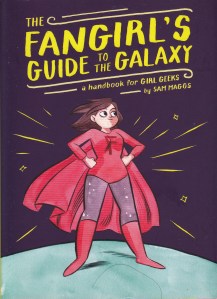
It’s not hard to feel that you’re from another planet. If you were born in the sixties and had kind of a rough transition to this whole internet thing, you know what I mean. Still, I want to be part of it—it’s kind of like New York City, only bigger. And faster. The commute doesn’t take nearly as long, now that dial-up’s a thing of the past. So I bought someone who was into fandom Sam Muggs’ The Fangirl’s Guide to the Galaxy: A Handbook for Geek Girls. This particular fandom, well, fan, gave me the book to read. I’m a feminist, so I don’t have any issues with reading a book intended for girls. What became clear to me, however, is that I don’t understand the internet nearly as well as I thought I did, and that girls find they’re oppressed there too. What is it with men and control?

It is an ethical issue. I don’t blame people in the past for not thinking like we do, but today there’s no excuse whatsoever for considering somebody a lesser person because of their gender. Women and girls have just as much right to “guy things” like geekdom as do males of the species. Fandom is all about fun. Enjoying the fantasy of living, for a little while, in other worlds. From the way many men treat women it’s no wonder that they feel that need just as much as my own self-identified gender. Religion, unfortunately, bears much of the blame for this. In the largest religious bodies in the world women are still excluded from leadership roles. Religion is kind of like fandom in that way, I suppose. It can be all about exclusion. We exclude others to make ourselves feel special. Why not celebrate difference and find a place for everyone?

It’s difficult to read The Fangirl’s Guide as a man simply because you’re constantly reminded (and not intentionally, because it’s written for girls) at how inhospitable men have made much of the world for their female earthling compatriots. I was reminded at several points in this book of how films like Wonder Woman and the recent Ghostbusters stand out in their sympathetic portrayal of women heroes. And equally how men find reasons to criticize them. Then I consider the White House and shudder. When a nation elects an open and avowed patriarchalist as president we all could use a fantasy world in which to hide. This little book didn’t make me into a fangirl, but I do hope it makes me a better man.


Movie Meaning

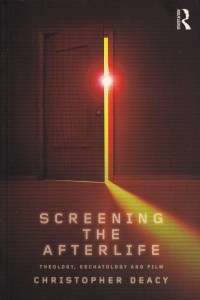
Theology has never been my thing. Now, those who don’t parse things too finely may find that an odd statement. “This blog almost always addresses religion,” they may say, “how can you say theology’s not your thing?” Perhaps for the layperson “theology” means anything having to do with religion. In the biz it has a more specific meaning. Theology is tied to a faith system. It tries to explain, rationally, what that belief system entails. Religious studies is more about studying what religion is and how it works. It was this fine distinction that put me off from reading Screening the Afterlife: Theology, Eschatology and Film. Christopher Deacy treats the subject theologically and, depending on the theologian, that can mean a lot of effort for little result. I was, however, pleased about a number of things in Deacy’s book. He doesn’t shy away from horror, for one. And he takes cinema seriously.

The idea behind the book is straightforward—theology and movies should be in dialogue about the afterlife. At a number of points Deacy makes it clear that films reach a wider audience than theology books. Again, those of us in the biz know that to be very true. If people watch movies they begin to accept what those movies tell them as true. For those of one of the established faith systems, if things haven’t altered all the much since I was young, discussing the religious meaning of a secular film is always interesting. (Some of my friends drew the line, however, when I found Elijah parallels in a film where a bread machine went out of control, but that’s a story for another time.) People take movies seriously. During economically depressed times, movies thrive. We need to pay attention to them.

The problem with theology is, no matter how open it may be, there’s always some element of rightness involved—this perspective is right and that one wrong. It can hardly be any other way. To open the door too widely is to invite yourself to exit. Deacy selects films he finds theologically meaningful when addressing (mostly) Christian views of the afterlife. I’m guessing—and it’s only a guess—that many people get their information from popular media and theologians are completely off the screen. That doesn’t mean theology has no place, but it does mean that its place is in the hands of other scholars rather than those who just want to sit around and talk about the film they saw last night. Both may be profound, but one is more clearly enjoyable than the other.


Lovecraft Legacies

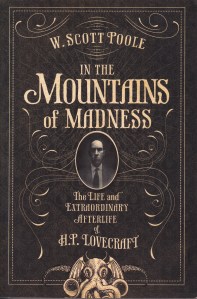
Although long fascinated by popular culture, I’ve not really been part of any fandom. I suppose this is because my interests tend to be quite broad, and finding one piece of pop culture over which to obsess is difficult. I might miss something somewhere else! While not really a “fan” of H. P. Lovecraft, I’ve read much of his writing and I’m amazed at how pervasive his cultural influence has been and continues to be. W. Scott Poole, who’s taken us into realms historians often shun, has done a great service to those interested in Providence’s most famous son. In the Mountains of Madness: The Life and Extraordinary Afterlife of H. P. Lovecraft is a thoughtful, honest, and in-depth consideration of both the man and his fiction. The basics of Lovecraft’s life are easily accessed, but the probing questions Poole puts to the evidence are thought-provoking and, in many respects, revelatory.

Perhaps the largest Lovecraft demon that Poole tackles is H. P.’s racism. There’s no secret about this, but fans often find ways of excusing it or explaining it away as being a product of his time. Those of us who write can understand that Lovecraft didn’t get out much. When he did get out he preferred it to be among people like himself. (Male, white, and gentrified.) It’s difficult to say what the origins of prejudice are, beyond the natural tendency to fear those who are different. Still, intelligent people can generally figure out that such biases are based on lack of experience or willingness to learn about other cultures. There are many, many cultures in the world and it’s often hard to think that yours isn’t the best. A large part of today’s political turmoil is based on this very thing.

An added benefit to reading Poole’s book was the realization that although Lovecraft really didn’t travel much (he didn’t live very long either, and the two are at least partially related) he did at one time visit the small town in New Jersey where I live. That came as a bit of a surprise. The last time I visited Providence, there wasn’t much in the way of signage or plaques to mark where Lovecraft had left his stamp. That may have changed in recent years as his literary star has continued to ascend. Still, to find out that he’d passed this way once upon a time was a nice little bonus in the investigation into who this man was. There’s a lot more to dig out of Poole’s book, and fan or not, if you’re interested in Lovecraft this is a must read.


Apocalyptic Dreams

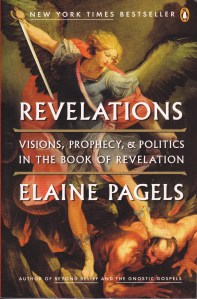
Words. They can be slippery sometimes. Take for example the word “revelation.” It can be secular or sacred, and if the latter, general or specific. Many recognize it as the title of the final book of the Bible, and some can’t even get enough of it and make it plural—Revelations. “Revelation” is actually a translation of the Greek word apokalypsis, the “original” title of the book. It has been a source of contention as well as fascination just about since John—whoever he was—put quill to parchment. Elaine Pagels, whose work is always rewarding to read, plays on the singular/plural convention that raises the ire of many a biblical scholar. Revelations: Visions, Prophecy, and Politics in the Book of Revelation is a refreshing change from what I read in college and seminary. No book exists without a history and that of the Apocalypse is colorful indeed. And it revolves around what has been traditionally taught about “revelation.”

The current final book of the New Testament presents itself as a revelation. It isn’t, however, the only book from this time period to do so. Many revelations existed, as did many gospels, in the first couple centuries of the Common Era. Some early leaders of the Christian movement who became inordinately influential decided that John’s revelation would be okay to keep but the rest should be destroyed. And they very nearly were. Some were recovered by the fortuitous discovery of the Nag Hammadi library in Egypt. These texts have preserved some of the other gospels and revelations that rivaled those of the current canon. It is in her close observations about their continuities and the motivations behind the politics of early Christians that Pagels sheds fascinating light on how Revelation became a tool of manipulation in a power struggle, primarily for centralized religious control of Egypt. Looking at headlines even now we know that it never really worked.

Revelation very nearly didn’t make the canonical cut. Many church leaders of the fourth century believed it spurious and not entirely helpful. It has, however, arguably become the most influential book of the Bible. Evangelicalism is hard to imagine without some kind of end times dispensational viewpoint that owes its existence to John of Patmos. Reformers, while not caring for the book, saw Revelation’s usefulness as a cudgel to strike at Rome. The papacy likewise saw it as a vivid threat against reformers. Those who took sola scriptura a little too literally used Revelation as the focal point of their hope and practice. Today we’re left with Left Behind and the Rapture and the Antichrist, whether they occur in Revelation or not. (They don’t, but who’s counting?) Pagels will give anyone plenty to think about here, and she’ll do it in surprisingly few words.


Making Excuses

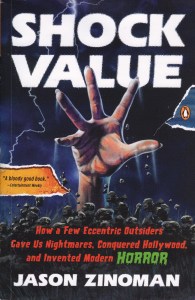
Those of us who watch horror are often asked “why?” Many of us have a difficult time answering that question. To be sure, there are those who like thrills, blood, and violence, but some of us do not. We can’t seem to help ourselves—watching those in difficult, dark places hardly seems edifying, and yet we do it anyway. After reading Jason Zinoman’s book with the supernaturally long subtitle, Shock Value: How a Few Eccentric Outsiders Gave Us Nightmares, Conquered Hollywood, and Invented Modern Horror, I may have gained a little insight in my own case. Zinoman is a film critic, so he has an automatic excuse. What I found interesting among the narratives of the directors and writers of modern horror is that these were largely men who grew up with absent fathers. Not all of them, of course—demographics are never so neat—but enough of them to start to discern a pattern. The world can be a scary place without a father.

It’s no accident that some religions use the father image to refer to God. Amid the chaos and uncertainty of life that has evolved to benefit the aggressive, the more contemplative often experience fear. Having grown up without a father, I think I might have a better idea now about why I watch what I do. As I’ve often told family and friends, I do not like being scared. Startle moments in movies bother me. I don’t like blood and gore—I’m squeamish both in real life and in the diegesis of the film I’m watching. Yet something compels me to keep coming back. Is it related to the fact that many of those who gave us the classics in the field (and yes, there are bona fide, canonical members even in this genre) know this same sense of childhood alienation that I did? The missing father is, in our culture, a source of horror.

I don’t mean to overly psychologize what Zinoman is doing here. He’s telling the untold story of the auteurs of the field. Some of them are familiar and others less so. They tended to grow up reading H. P. Lovecraft—I’m more of a Poe fan, myself, although Lovecraft still manages to deliver an existential angst that will do in a pinch—and they found ways of expressing the anxiety of being alive. Most of them are highly intelligent people. Some have even been professors. They learned to tap a deep source of fundamental fear that speaks to some of us on a level that other emotions don’t. I still can’t say why I enjoy a good horror film, but maybe now I’ll be able to do so without feeling like I need to make excuses.


Making Lovecraft

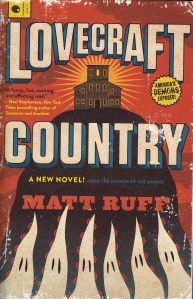
Perhaps it’s all just coincidence, but once in a while a number of unexpected things come together. Since I do a lot of reading this often happens in the context of books. The current case begins with my first noticing Matt Ruff’s Lovecraft Country. I saw a review online, and since I enjoy contemporary novels that build on the worlds created by H. P., I added it to my reading list. The first coincidental aspect of it was that I found in Buffalo Street Books in Ithaca. Like most independent bookstores, it’s not huge, so the selection of books that cater to my odd tastes is always adventitious. I found it on the staff recommendation shelf and recalled that it was on my reading list. A second coincidence came in finding Neal Stephenson’s name under a cover blurb. My brother-in-law’s name is enough to get a book onto the bestseller’s lists, but I had no idea this kind of book would be to his tastes as well.

I began reading it right away. The third happenstance is that Ruff crafted a biblically literate story here. In a day when those of us associated with the Bible are definitively passé, it is nice to see popular fiction fighting back a little bit. Not that Ruff is advocating or proselytizing, but his finely tuned story is definitely enhanced with a bit of biblical knowledge. He’s unapologetic about it. In our religion-critical outlook these days we sometimes forget that the Bible has several stories that maintain, and even reward, contemporary interest. The most obvious example in Lovecraft Country is the story of Cain. There are plenty of others that can be dug out as well, and Ruff even leaves some on the surface so that they aren’t hard to find. Not that this is a religious book. It’s just not afraid of religion.

Some may find that odd in a homage to the noted atheist Lovecraft. What they may not see is that the master himself used religion from time to time in his tales of horror. Also, for those who are willing to be honest, we know that an unsavory racism resided in Lovecraft’s outlook. Ruff, like other writers who see the positive side of this author’s work, tells a story of African-American struggles in the “idyllic” 1950s. The protagonists, dropped into a world of real Lovecraftian magic—and in a very self-aware way—are all a close-knit black family and their friends. Which led to another coincidence. Quite unconnectedly, I’d been reading Dr. Jekyll and Mr. Hyde. This plays an important part in the story as well. Sometimes reading itself can lead to a cascading set of coincidences. Lovecraft Country is one instance where it happened, but that may just be my unusual taste in books.


No Place to Hyde

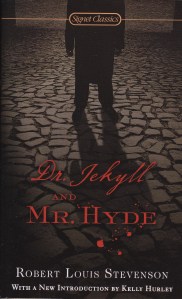
“I was driven to reflect deeply and inveterately on that hard law of life, which lies at the root of religion and is one of the most plentiful springs of distress.” These words occur near the beginning of Dr. Henry Jekyll’s confession, the very manuscript that closes Robert Louis Stevenson’s The Strange Case of Dr. Jekyll and Mr. Hyde. Upon reading the book, along with the preface and afterword clearly meant to pad out the thin volume, I realized that I was not alone in having known the story all my life but never having read it. Western culture is steeped in the idea like so much strong English tea. The story of the divided self. The eternal question of who I really am. Like Frankenstein’s creature, Jekyll and Hyde found immediate resonance in the pantheon of monsters. Here was something with which we could all identify, but which we all would deny. Or would we?

Jekyll notes that the root of religion—proper behavior, moral living—is a source of distress. And this before the era of Nones and non-believers. Religion has that reputation. “Be good or else!” Or fire insurance, as some call it. Religion, in the popular imagination, isn’t so much about sublimity any more. Or transcendence. Somewhere along the way it got fixated at about the level of our genitals and what we should never, ever do with them. Hyde’s sins, as commentators frequently note, are anything but explicit. He tramples a young girl and kills an old man. Beyond that we know nothing of his monstrosity. Is it so hard to believe the restraint concerns his sexuality? After all, his friend Utterson—well, Jekyll’s friend Utterson—enjoys his wine. Both respectable men seem to have hearty appetites. Apart from violence, what other dissipation is there?

Like many first-time readers I can’t recall how I first learned of the mad scientist and even madder thug that make up the namesake of this story. For some reason I never made—even remotely—a religious connection with it. It was a monster story, after all. Innocent fun for a Saturday afternoon. The experience of reading the book was a bit more jarring than that. Jekyll’s confession isn’t exactly easy to read. It is like going to the confessional with the curtain drawn and all the lights on. And yes, the implications are religious after all. It is a little book with a big point to make.


Big Shoes

Belief in the supernatural seems to be alive here in the northwest. At least if the culture at Sea-Tac Airport is anything to go by. I’d noticed, last year, that a sasquatch graces a restaurant in the N terminal, where jets from Newark tend to land. This year we had a bit of a layover, so we strolled through the C concourse. There I found sasquatch approved salmon in the somewhat anomalous Hudson News. Then, as I sat in one of the stylish, Seattle seats, a young woman came up next to us and sat down wearing a Sasquatch Volleyball shirt. I’m past the age when I can get away with innocently asking young ladies if I can take a photo of their shirts, so you’ll just have to use your imagination for the latter. The point is, bigfoot has been mainstreamed.

When I was growing up you got pretty mercilessly teased if you expressed any interest in such things. Now that I’ve got a respectable career others can get away with what captured my imagination as a young man. I’ve never thought of myself as being ahead of the curve. Or really ahead of anything, for that matter. Still, I trust my instincts. Maybe religion will come back into vogue some day. Or maybe it will simply be called something else. A tainted name is difficult to live down. The supernatural—or paranormal—often shares conceptual territory with religion, and although the pews aren’t getting any fuller, the number of those looking for some kind of meaning in the unusual seems to be holding steady. Physics can take us only so far in understanding what it is to be human.

Times change. Yesterday’s jokes are today’s orthodoxies. Those who spend a great deal of time peering back into history won’t be surprised by this. What is true today is true for today. New facts will be discovered and if we lived long enough we’d find that the future world will believe quite differently than we do. Not that the truth is relative. It is, however, temporary. Massive religious wars have been fought over trying to keep truths timeless. The sad irony is that the truths had already changed by the time such wars had been waged. The more rational we become, it seems, the more we open the door for the supernatural. I won’t presume to be one declaring such truth. That would take more weight than I have to offer. And anyone making such a claim would have some awfully big shoes to fill.


Average Reality

One of the stranger dynamics of higher education is its unquestioning acceptance of a one-size-fits-all methodology. Don’t get me wrong—the empirical method works. The only real problem with it is that not all phenomena in the universe cooperate with human observation. It’s something I call the problem of occasional phenomena. Perhaps because of the rancid taste left in scientific mouths by lingering creationism, anything that isn’t slow and regular enough to be directly or theoretically observed simply can’t fit in this old world. The weird, the anomalous, the strange—these open the door to possible spirits and spirits have no way of being measured. At least not yet. The most convenient way to deal with them is to call them superstition and end the discussion right there.

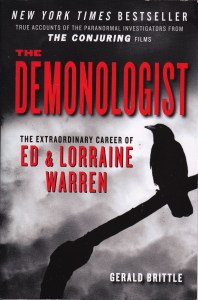
The larger problem is that people see things. Unless said people are scientists, they are considered amateur observers, liable to mistake what they see. The classic example of this is ghosts. From the beginning of recorded history people have claimed to see them, or hear things go bump in the night. Some of the first modern people to make a profession out of exploring such things were Ed and Lorraine Warren. Unfortunately, they didn’t write books about their experiences. Largely because of movies made about some of their high profile cases, there has been a resurgence of interest in the couple and the books originally published by other presses, such as Prentice Hall and St. Martin’s, have been reissued by Graymalkin Media. These are co-written tomes of uneven quality. They’re also like candy—once you start on them it’s hard to stop. Gerald Brittle’s The Demonologist is one such book. More than others in the collection that I’ve read, it concentrates on a single phenomenon that overlaps with the world of religion—demons. Unlike trained religion scholars, however, the Warrens aren’t shy about declaring what demons are (fallen angels) and how they differ from devils (it’s all about rank).

What makes these books so interesting is the dispassionate description of the cases the Warrens investigated. Unless they are pathological in their connection to telling untruths, there’s some very odd stuff that goes on out there. Although they declare once in a while that other religions and their practitioners can also deal with demons, there’s a simple kind of black-and-white view of morality that fits what you might have learned in Sunday School. One of the reasons for this, I suspect, is that most academics don’t take an academic interest in demons. Once they’re filed in the mythology folder there’s no reason to try to figure out what they might “really be.” The Warrens’ outlook, therefore, has become canonical among ghost hunters. They certainly have more credibility in that crowd than most Harvard Ph.D.s. It’s funny what can happen when you refuse to explore what the average person considers to be just as real as the physical world we all think we know so well.


Any Means Necessary

As one of his first acts as governor of New Jersey, Chris Christie cut the Access to the Region’s Core tunnel project. This was before he closed the state-run beaches so that he and his family to have one for themselves without Independence Day crowds bothering him. Liberty means something new these days, I guess. The ARC tunnel project was meant to ease some of the burden on those hapless zombies known as commuters. As a member of this undead class myself, I often think of the relief that never was as we sit, unmoving, just meters away from the Lincoln Tunnel, looking nervously at our watches wondering just how late we’ll be to work this time. Our elected “representative” leaders have no idea about the life of the average person. Having lived sequestered away among the rich and axle-greasers for so long they have forgotten that real wheels need to roll. Their bottom line is at risk.

Trump, apparently aware that torture and public transit go together, has nominated Steven Bradbury, the Bush-era policy architect, as his general counsel of the Department of Transportation. Known for his “torture memos” Bradbury has none of the charm of the sometimes macabre other Bradbury who had the courtesy of keeping his frights restricted to fiction. The most disturbing part of all of this is just how little our elected officials care about the people who keep this country going. Populism, still poorly understood, is what happens when people get fed up with business as usual. Easily duped, the average citizen can’t tell an “entertainer” from a genuine leader. The era of “I’m not a doctor but I play one on TV” has grown up and become truth. Doogie Howser where are you when we need you? It might be helpful to have Rex Morgan on hand after a session in the torture chamber.

Government has become a joke. Comic strip presidents gather the assorted nuts and dolts required build up a representative democracy, it seems. I used to tell my wife, back in January when things were bleaker than Poe’s December, that we could expect no less than outrage after outrage from a man whose sole motivation is to get people to look at him. We all knew jerks motivated by that in high school. The difference is that now they’re easily voted into office. Selfish men who will close down public parks so they can take the whole thing for themselves. They have no idea what governing is because they can’t understand that other people have wants and needs as well. Other people are for torturing when you’re bored. Sounds like a visit to October Country may be in order yet.


Wonders and Signs

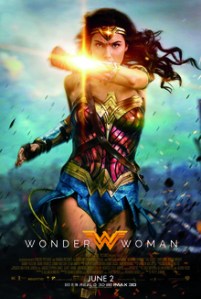
Raised by a woman who would be perhaps classified as a “single mother” these days—she was technically married except for a very brief time just before my step-father came along—I have always had great appreciation for the power of women. She didn’t have super-powers, but she raised three young boys largely single-handedly without the help a young woman has a right to expect. Wonder Woman, when I saw her on television, struck me as a very different kind of female. Strong, yes, but clearly there for men to look at. But then again, I didn’t have the benefit of Patty Jenkins’ Wonder Woman. I left the theater speechless. Apart from a few sniffles my wife didn’t have much to say until about an hour later. It’s that kind of movie.

I’ve seen many superhero movies. In fact, heroes are almost custom-made for the big screen. Comic books are basically storyboards already, and the colors and action are the very definition of spectacle. Wonder Woman, however, complicates the tale of the hero fighting for justice and truth. She fights instead for peace and love. Never supposing she’s anything but capable of defeating the evils of war, she doesn’t take orders from men. She actually shames an elderly, heavyset general for not being on the field of battle where, he acknowledges, others will die for the cause of the armistice. It’s a world inverted. Yes, the men are drawn to Diana, and can’t help but be awed by her. They don’t control her, however. She’s the first out of the trenches and she requires no man’s help when combatting the enemy.

Perhaps the most striking thing about the movie is the respect it to shows to women. Only one nude body appears in the film, and it’s male. I suspect I wasn’t the only man present made uncomfortable by the curious female gaze and the assessing questions of the goddess. Women are made to sit through countless movies as the subject of the male gaze. The embarrassment here is a reminder that making women sexual objects is the normal expectation. What if the roles were reversed? When Wonder Woman fights she is largely defensive. Men want to destroy her. She responds by declaring love will overcome war and owning her role as the “God-killer.” This is a movie with substantial subtext. It challenges the paradigm of men’s rule as wise and beneficial. A god may have to die, but the world is a better place for it. We could use some inversion about now.