Devil’s Workshop

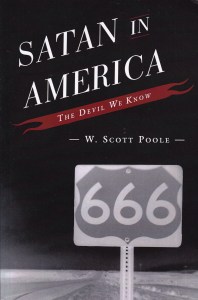
SatanInAmerSome of us prefer taking our monsters neat. With Old Scratch, however, we have a slippery, protean beast. This is amply demonstrated in W. Scott Poole’s Satan in America: The Devil We Know. Not only the Devil, but vampires, demons, and the human minions known as Satanists and witches populate this study of American culture. The Dark Lord is difficult to pin down. This is true even concerning his obscure biblical origins. As I’ve noted before, there is no Devil in the Hebrew Bible. By the time of the Gospels he’s alive and well and on planet earth. Or at least what passed for planet earth in those days. Tempter, father of lies, prince of the power of the air—he was a pretty ambitious fellow, seeking like a lion those he might devour. Those were early days, however, and Poole focuses specifically on his development in American culture. It is, as he shows, a rich culture indeed.

Beginning with the colonial era, with the Matherses, Jonathan Edwards, and their ilk, and bringing the figure up through fairly contemporary times, Poole shows us how the Devil defines America, in many ways. Please don’t misunderstand; Poole does not say America is evil or Satanic, only that our culture has had an undying fascination with Satan. Not everyone agrees, of course, with who he is or how to interpret him. Although theologians have largely left the Devil in the dust, polls tend to show about half of the American population believes in the Beast (yet another character in the mixed martini of evil Poole serves up), or more properly, Satan. It really might help to have a diabolical score card here: is the Antichrist the Devil? Is he the same as the Beast? What about demons? As a child I was taught there is only one Devil, but lots and lots of demons. Legions of them, in fact. There can be only one morning star, one Lucifer.

One thing we can say for certain about Satan, at least in the context of Poole’s study, is that he is evil. Not that some haven’t had sympathy for him. Popular culture has helped to keep the character alive. Sometimes comically, sometimes with dead seriousness, novelists, cartoonists, film-makers, and playwrights come time and time again to the font of the inexplicable evil we all seem to sense, in some sense, exists. The evidence is all around us. Whether conceived as an external agent of supernatural origin, or as some inborn tendency for—at least some—committing atrocity, we do have to explain evil. Satan has been a convenient way of doing so for centuries. But, as Poole intimates, it might be a defense mechanism. Perhaps we need to take a closer look at ourselves. Perhaps trumping our exceptionalism in the face of a world in need is a symptom that requires a serious exorcism.
Beg to Differ

Screen Shot 2016-05-09 at 4.15.19 AM

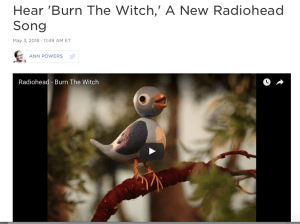
“What do you burn apart from witches?” “More witches!” Earning a doctorate is kind of like learning how to get lost. It certainly doesn’t make you either cool or employable, but it allows you a few years to accumulate enough debt to keep you out of trouble for awhile. One of the things I learned along the way is that you should always follow the crowd. I look at the schools that only hire Harvard grads and there can be no doubt. I look at all the Trump supporters and I know there can be no question. Yes, the ayes have it. So, I never learned to tell which bands were truly worth listening to until I learned to follow the critics. I never studied music. Like most people, I know what I like but I can’t say why. I only discovered Radiohead in the last few months. Some of my critics claim my complaint of lack of time is only an excuse, but I don’t listen to music unless I can really listen to music. It can’t be pure filler. Put on Beethoven’s seventh and you’ll see what I mean.

In any case, my wife alerted me to the new Radiohead song “Burn the Witch.” And you can’t listen to a new song without watching it as well. This time it’s worth it. The claymation video accompanying the song (conveniently found here on NPR) is a reprisal of “The Wicker Man,” one of the truly intellectual movies in the horror genre. Of course, that’s something I picked up from the crowd. We’re told by the most powerful and charismatic bigots of our age that life is all about acquiring stuff. Were I to argue with that, well, I guess I’d be the witch to be burnt. Before listening to/watching the Radiohead song, do yourself a favor and watch “The Wicker Man” (the original, please, accept no substitutes). Go on, everybody’s doing it.

The most dangerous thing in the world is an independent thinker. No, I didn’t learn that at Harvard. On my first walking tour through Edinburgh with one of my doctoral advisors he pointed out the part of town where they used to kill witches. He was truly an original thinker (still is) and taught me to be one too. Problem is, I should’ve been following the crowd all along. You want people to pay attention to you? Go to Harvard! Want people to vote for you? Clearly show you’ve got what it takes (money). Give a man a little cash and anything will do for brains, to paraphrase one of the smartest movies of all time. The only way forward is to do what everyone else is doing. And pick up some kindling along the way—you’re going to need it.


Comic Culture

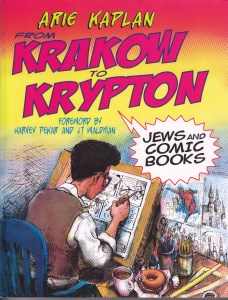
KrakowKryptonPerhaps the most obvious deviancy in my otherwise conservative childhood was MAD Magazine. I honestly suspect my parents didn’t know that it wasn’t just another comic book. I read it—like I read everything—religiously, and I was fluent enough in the lingo to discuss it intelligently with my sixth-grade teacher, a fellow fan. Having made that admission, my reading of comic books was muted since we lived in a town with no literary aspirations or conveniences. There was no book store, or even magazine shop, let alone a public library. We were one of the towns Carnegie left behind. Still, I was draw to MAD contributor Arie Kaplan’s From Krakow to Krypton: Jews and Comic Books. Over the past few years I’ve been reading academic treatments of comics as, with my beloved monsters, the high-brow academy has come to view low-brow as “culture.” (I learned the term “high-brow” from MAD, by the way.) As I grew into an Episcopalian, I tended to leave these markers of my shameful past behind, but now I’ve come once again to embrace them.

One of the odd things I’ve noticed about Jewish (and other “outsider”) analyses is just how deeply felt the anti-semitism of our culture is. This always strikes me as odd as, although it is hard to believe, I was raised to be non-prejudicial toward anyone else. (Poor folk are often that way; we know our place, beneath others.) I never felt superior to Jews, African Americans, or women. I was in awe of them. Maybe MAD helped. As Kaplan points out in his treatment, much of the comic industry was Jewish in origin because so many Jews were kept out of other businesses in New York. (Well, there is Diamond District, but let’s stick to publishing.) With few options, poor immigrant kids turned to cartoons. As a child in a humble household I often took out my frustrations by making my own comic books. I can understand the catharsis.

With the current glut of superhero movies, it may be hard to imagine a time when comic books and their denizens were considered utter foolishness. Now they’re big money. It’s not so much that the mighty have fallen than it is the humble have been exalted. I haven’t really read comic books since I was maybe fourteen. Up to that point, however, they got me through many a difficult time with the belief that there was someone out there watching over me. No superheroes ever delivered me from my troubles, but belief was sometimes all I needed. I can understand why those who are discriminated against would turn to this medium for release. Faith and fantasy share more than an opening syllable, for those with eyes to see.


Game of Thrones

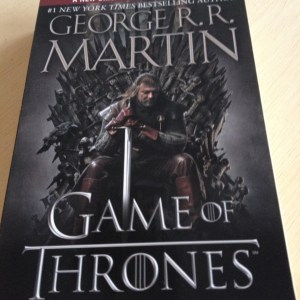
IMG_2763I risk my already flagging street cred by admitting this, but I don’t watch Game of Thrones. In fact, I started to read the first book a couple years back and I just couldn’t get into it. Well, only 80 pages into it. The fault is, I’m entirely sure, my own. I lack some gene or enzyme that makes life without Game of Thrones impossible. Still, I have to admit curiosity. A story on the Washington Post, by Ishaan Tharoor, suggests “The ancient Persian god that may be at the heart of ‘Game of Thrones’” is Angra Mainyu, aka Ahriman. This managed to catch my attention. Zoroastrianism is a religion that seems to lie behind quite a bit of modern religious thought. Although dating Zarathustra, or Zoroaster, is notoriously difficult, concepts from his religious system show up in Hinduism—one of the earliest forms of religious expression about which we know a fair deal—as well as in Judaism and therefore Christianity and Islam. In fact, many of the ideas you may associate with the central tenets of Judeo-Christo-Islamic tradition may go back to Zarathustra.

One of the certainties about Zoroastrianism is that it was a dualistic religion. Good and evil are engaged in a constant struggle for control. The good god, Ahura Mazda (which sounds like a blend between Star Trek and a Japanese auto maker) struggles constantly against Angra Mainyu. Mazda’s website states that the car line is named after the deity (according to Wikipedia, I note, losing the last vestige of cred), pushing his reach even further east. With this incredible pedigree, it is no wonder that George R. R. Martin may have tapped into it. This kind of dualism is ripe for the picking.

My friend K. Marvin Bruce wrote a satire about the Persian gods, in fictional form, that was published a couple years back in Calliope, a small circulation literary journal. He told me he even won third place in a contest for it. The idea was that a disgruntled professor wanted to start the apocalypse (a Zoroastrian idea) by summoning Ahura Mazda and Angra Mainyu to earth to try to start a fight between the two. It was a fun story, but the point, if I may speak for my friend, is serious. Warring religions stand the best chance of beginning the end of times. We don’t even need the gods to do it, really. Although I don’t watch Game of Thrones, I can’t help wonder if Martin had the same idea in mind. If you want the answer to that, don’t ask me. I’m not even a hundred pages into it, and I don’t have triple play.


Come Sail Oy Vey

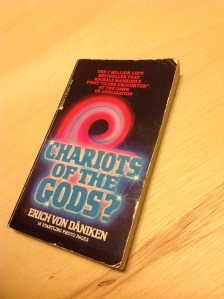
Nothing says unorthodox like a headline that reads “Smart Jews? Thank the Extraterrestrials.” Breaking Israel News ran the story recently and, being constitutionally unable to pass up anything so strange, I had to take a look. The article, by Adam Eliyahu Berkowitz, is really just a half-century retrospective of Erich von Däniken’s Chariots of the Gods?. I remember fifty years ago—not well, mind you, I was only three—but even when I was a teenager and the book had its second (of many ordinal) gasp(s), and a movie came out. People, even those not traditionally labeled as “crazy,” flocked to theaters to see it. The book went through multiple printings. The era of “ancient astronauts” was born. Von Däniken, it seems, is alive and if not exactly kicking, still making people uncomfortable.

IMG_0038

In this news story von Däniken suggests that Jews are more intelligent because of their alien DNA. Don’t quote me on this, but I’m pretty sure that was the plot line of the X-Files season 10. Isn’t Fox Mulder Jewish? Maybe I’m getting myself mixed up in some kind of plot here. I have to admit, however, to having a touch of nostalgia for Chariots of the Gods?. There was a kind of innocence to it. Nobody seemed to be inseminating anyone else, or stealing babies. It was good, clean fun.

Something bothers me, however, about the assertion that aliens are, indirectly perhaps, responsible for holy writ. I remember thinking through the implications of this idea (already floated four decades ago) that God might be more Captain Kirk than Jesus Christ. It is inherently disturbing. Especially when von Däniken says in the interview that the Jews are the chosen people, but they just got the chooser wrong. ET instead of I AM. The really interesting part is that ancient astronauts have become a somewhat accepted cultural trope. I don’t know whether they were there or not (I wasn’t around at the time), but they sure do make Saturday afternoons much more interesting. One wish I hold is that people writing about this old idea might find a new opening bit. Ezekiel seeing the wheel has been done to death. Surely a bit of creative thought might suggest a new, undiscovered ancient truth.


What’s the Message?

I said I’d come back to Bono. A story in the New Boston Post heralds a new documentary on Bono and Eugene Peterson. Both are famous in their own way, but no doubt Bono has the bigger name. Peterson, a pastor, is noted for his book The Message, a contemporary translation of the Bible. The documentary, “Bono and Eugene Peterson: The Psalms,” focuses on the book that brought rock star and scholar together, according to the story. The Psalms have a way of surprising people. In a day when the Bible is treated with considerable suspicion (how Bible scholars must feel, learning now that they are really rouges!) it’s sometimes easy to forget just how readable many of the Psalms are. The collection is, of course, uneven. Some are wonderful. Others are frightening and express immoral, if very human, sentiments. It is difficult to treat the Psalms as a whole.

437px-The_Sunday_at_Home_1880_-_Psalm_23

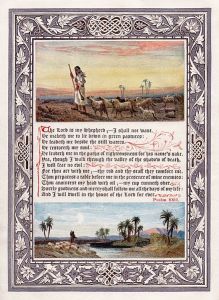
Having researched the Psalms in some depth, I found them to be one of the most challenging books to teach. We tend to have preconceived notions about the Psalter. That they are poems written by either David or God (neither of whom signed them). That they are comforting. That they are appropriate for any occasion. The reality is that Psalms is a most difficult book. Some of the poetry is sublime. Even up to the lifetime of yours truly, it could be assumed that many in secular society could recite Psalm 23 from memory. Not all of them are, however, quite so nice. Those that advocate murdering the babies of your enemies as less easy to consider holy writ.

The Psalms are generally a collection of human poetry. As I used to tell my students, whereas laws, and even narratives, are often top-down, the Psalms are one of the few places in the Bible where people are allowed to speak. There is joy in the Psalter, but there is also bitter frustration. Not all of the poems have happy endings. We seem to think that once a document becomes sacred it can no longer retain human fingerprints. The lie is given to this position in the Psalms. They are a most human book. Maybe the documentary will say why Bono finds this particular collection of poetry so inspirational. His is, after all, a human voice. There may be a message here since the Psalms are so fallibly human. And if nothing else, humans are experts at seeing the same thing in different ways.


God’s Rain

Photo credit: Micahmedia, Wikimedia Commons

Photo credit: Micahmedia, Wikimedia Commons

Music has been in the news this week with the death of the artist formerly and forever known as Prince. Also, in a lesser covered story, Bono’s friendship with Bible translator Eugene Peterson. This post will focus on the former former artist. I’ll have to circle back later to pick up Bono and Peterson. I have to admit that I haven’t listened to Prince much lately. I saw “Purple Rain” when it came out, and some of his songs have resonated with me throughout the years. What makes him such an intriguing figure is his view of sexuality. My source here is the Washington Post, specifically, an article by Michelle Boorstein stating that Prince was, beneath the sexy exterior, a conservative Christian. Specifically a Jehovah’s Witness. He would not be alone in this role since Alice Cooper is famously also a conservative Christian. Life upon the stage is that of the actor. With Prince, as Boorstein points out, the question goes deeper: he wrote about religion, but he also wrote about sex.

Those of us who indulge in creative writing know that poetry is perhaps the only place where dishonesty is impossible. Song lyrics are true. Prince often cites Christian tropes (see Boorstein’s article for samples), but his material is deeply sexual as well. This leads to the suggestion that he saw sex as a means of worshipping God. Once again, Prince doesn’t find himself alone in this place. Scholars brave enough to examine both religion and sexuality often find a connection there, and not just a tangential one. Both are about communing with something greater than the individual. Thinking back to my first viewing of “Purple Rain” I can say it wasn’t the religion part that stood out to me.

Histories of Rock-n-Roll are rife with stories of performers’ untamed sexuality, so that’s hardly news. What really strikes me is that with recent deaths—David Bowie, and now Prince—the media seems intensely interested in their views of religion. We don’t often look to artists for advice on how to live our lives, but as the polar opposites of scientists and rationalists, they are in touch with and willing to share their feelings. And we the people want to know what they thought of God. Often because it is so surprising. It’s easier to put someone in a box. Religion, however, is way more complex than most non-specialists think. It has room for creativity, for sexuality, and for exploring the meaning of life. I many not listen to Prince much, and when I do it’s not for religious advice. I am, however, inclined now to think in new ways about colorful rain.


Prayer before Meals

It was in Wisconsin. Oshkosh. I was teaching for a year in a replacement position, and my roster of classes at the university covered several aspects of religious studies. During the course of prepping a course, I first saw it. The Flying Spaghetti Monster. It was only a virtual Flying Spaghetti Monster sighting, but since Creationism was much in the news in those days, I boiled with curiosity. By now it would probably be a strain to explain the whole thing, since everyone knows about his noodly appendages and predilection for pirates. The short story is that the Flying Spaghetti Monster was an invented deity to demonstrate the ridiculousness of trying to get Creationism taught as science in public schools. For those who believed in other gods, such as the FSM, there should be equal time in the classroom, the argument went. Since that time Pastafarianism has taken on the semblance of a real religion with “believers” earning the right to have driver’s license photos taken with colanders on their heads, and even a book of scriptures being written.

An Associated Press story from Sunday’s paper tells of the world’s first known Pastafarian wedding. Bylined Akaroa, New Zealand, the blurb indicates that the Oceanic nation down under has decided that Pastafarians can officiate at weddings, and a couple was married with al dente accoutrements. The Church of the Flying Spaghetti Monster, it seems, is going the way of the somewhat more serious Jediism and Avatar religions in that people are deliberately electing fiction as their faith. Interestingly, this may not be a new phenomenon. We are told, for example, that Zarathustra deliberately outlined a new religion—one that may end up having had the greatest impact on humanity of all time, if roots are considered. In those days the strict division between fiction and fact may not have been a mental filter yet discovered. The “it really happened” test of religious veracity was still some distance in the future. Metaphor meant something then.

IMG_2753

The internet, it seems likely, has facilitated and accelerated the appearance of new religions. As with most things, the real issue comes down to money and power; if a government recognizes a New Religious Movement as legitimate, it may be granted tax exempt status. And how can it be proven that someone really does or does not believe what s/he says s/he does? If you’ve got a box of Barilla on your pantry shelf, who’s to say? It’s a short distance from that colander in the cupboard to the top of one’s head. And who doesn’t like pirates? And who’s to say that under that rotelle moon in a stelline-studded sky someone hasn’t indeed kissed their hand and swore the ultimate starchy allegiance? Keep watching the skies!


Gods and Giants

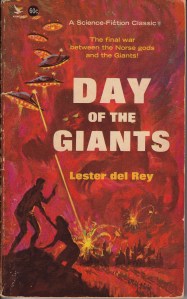
Day of the GiantsComing back to a book you first read as a tween, in the days before tweens even existed, can be a revelation. Lester del Rey’s Day of the Giants introduced me to Norse mythology as a kid, and, along with Thor comic books, was my Nordic Bible. The last time I read it was probably in the Ford administration. As part of a reading challenge I’m undertaking this year, I had to select a book I’d read before and, amazingly enough, I still had my copy. Reading the book as an adult, however, proved a very different experience from reading it as a child. For one thing, I noticed quite a bit more of the implicit theology of the story. Del Rey was no theologian, of course. This little book, however, makes a statement that is difficult to miss regarding the gods: they are victims of tradition.

It is probably not worth worrying about spoilers over half a century after a book was published, but I’ll try to be sensitive nevertheless. Leif Svensen, our protagonist, finds himself in Asgard on the eve of Ragnarok. All the familiar Norse gods are there: Thor, Loki, Odin, and kith and kin. As they prepare for the battle with the frost giants, who, in the mythology win the contest, the deities are decidedly subdued. They believe their fate is sealed by a prophecy of defeat. Leif, being a true American, gives them a rousing speech about overcoming the old ways. Gods, by nature, are conservative. They don’t have to bow to tradition—they are gods, after all. The deities are not swayed by the logic of a mere mortal, even after his apotheosis. Fate, it seems, trumps even gods.

I’m pretty sure that Lester del Rey wasn’t attempting to make any profound theological observation here. One can be an accidental theologian. Ideas of gods and what they must do can be a detriment to their own future. Even with the evidence of the failure of their own prophecy, the gods can see no way forward other than that they’ve recognized as fate. They are, without saying too much, out-maneuvered by human resourcefulness. A man tames his god, and it can become a man’s best friend. I wasn’t expecting such theological insight from a sci-fi book from my youth. Then again, you never know what may happen when you come back to a book after leaving it on the shelf for four decades.


What Vampires Abhor

IMG_2731

It began as an innocent trip to the grocery store. I was in the produce section seeking the various vegetarian foodstuffs I need to make it through the week when I came across a monster. Well, more precisely, the mention of a monster. Brad’s Crunchy Kale. Vampire Killer variety. Now, I’m not the world’s expert on vampires; I’m a dilettante at best. Still, I’ve never heard of kale as a vampire bane. (The store didn’t have wolfbane on offer, that I could see.) But this advertising ploy made me wonder about the use of vampires, and other monsters, as means of selling food. The Count Chocula family of breakfast cereals is perhaps the most famous example. Kids love their monsters. Especially with milk. Perhaps Brad is trying to get kids hooked on kale? Start them early on the right path and they’ll not soon depart from it.

Walking through the aisles I didn’t see much else that related to monsters. More the daily bread than the undead. After all, this was just post-Easter and people won’t be thinking about ghosts and ghouls until the other equinox rolls around. The brighter half of the year is a time for sunnier prospects. Monsters go into hibernation. Long, light-filled days are ahead. Why are we putting Vampire Killer on the shelves now? I looked at the ingredients. Garlic didn’t seem to feature prominently among them. I had to admit to confusion. And a desire for garlic bread.

Food, so scarce in many parts of the world, is something we need to decorate to get the attention of the modern consumer. Who’d buy a bunch of generic green, leafy stuff that requires some preparation—you at least have to wash it. And even then it might not protect you from vampires. Try a little packaging. All you have to do is open and eat. Rather like a vampire, actually.

We used to shop in one of those stores where they eschew fancy packaging and you pay for grains and dry goods by the wholesome, unwrapped pound. There seemed to be little ambiguity about what you were getting then. But we wish to be entertained by our food. This could be part of Buffy’s buffet, could it not? I find myself having to hold up a crucifix to stop from dropping it into the cart. There are vampires out there, I’m just sure of it.


Long Distance Commute

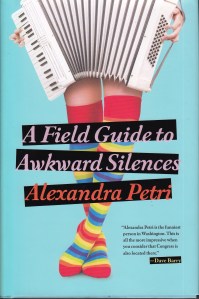
AwkwardSilencesWhat should my next book be? This is the perpetual question of the long-distance commuter for whom electronic devices are mere distractions. If that commuter is socially awkward and believes that only books truly understand them, that is. I’m as eclectic a reader as I am a voracious one. Each book suggests, in some measure, the next one. I always have to keep an eye ahead. Then I read (present tense) a book without peer. I feel lost because what will replace that experience I’ve had for the past few days of looking up and finding myself at my destination? Of actually looking forward to getting on the bus so I can read? I’ve been doing this commute for over 400 books now, and I’m at a loss for what to read next. I blame it on Amazon.

In the publishing world we use Amazon to purchase competitor’s books. Then Jeff Bezos decides to buy the Washington Post, you know, the way people do. Since my email address is on their list I get sent a daily invitation to read the most read stories on said Post. I read a story by Alexandra Petri and I was hooked. Where could I get more? A Field Guide to Awkward Silences is the rare kind of book that makes you laugh out loud on the bus, which, at six in the morning, generates its own kind of awkward silence.  Petri makes you feel like it was actually okay to be that dorky kid who read all the time.  Like there’s a world out there that responds to your longings, somehow.  A world of possibilities.

Now here I am about to climb on the bus without Petri. I’m like a kid staring disconsolately at an empty candy wrapper. “That was so good!” you think. “I wish there was more.” Petri writes as if she’s achieved Bob Dylan’s blessing and has stayed forever young. The time of life when the future seems so full of possibilities. Hers is writing that reminds you of a time when you didn’t spend hours a day nursing hemorrhoids, sitting on a hard bus seat. That reminds you it was possible, unlike your own experience of it, to be cool as an Episcopalian in Wisconsin. That reminds you of the time when you had A Field Guide to Awkward Silences to look forward to reading. No, this book didn’t make that choice of next book any easier at all.


Resurrecting Color

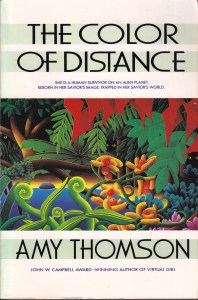
ColorOfDistanceIf you’re one of those people who’s attached to books, you know the frustration of someone who borrows a book and never gives it back. Many years ago I stopped lending out books for that very reason. I do, however, sometimes give them away. A friend recently reciprocated the gift of a book, giving me Amy Thomson’s novel, The Color of Distance. It is a profound story involving, as is common on this blog, themes of resurrection and transformation. A science fiction tale, it is set on another planet where something has gone wrong with an Earth survey team. The humans are dying on this alien world when one of them, Juna, is transformed by the alien into something like one of them. She comes back to life transformed. It wasn’t until I finished the book that I read the cover blurb that reads “Reborn in her savior’s image, trapped in her savior’s world.” Not a bad summary, capturing as it does the deep religious elements in the story.

The religious aspect, however, comes through most clearly in the environmental elements of the novel. Humans, somewhat optimistically, had set in place protocols not to interfere with alien life. So much we know from Star Trek’s prime directive. What makes this so interesting in the case of The Color of Distance is that Thomson knows that any contact is contamination. Two worlds cannot meet. They must collide. There is a gentleness, however, in her narrative. Juna, marooned (long before The Martian) on a foreign planet, has to learn to see things through alien eyes. And every little thing that humans have done has left a footprint on the planet. Protecting our own planet is a profoundly religious undertaking.

It is clear that Thomson has influenced later writers and stories. Not only does The Martian pick up on the stranded aspect, but Avatar clearly presents a world similar in many respects to the planet of the Tendu. The Color of Distance is a book not easily forgotten. The world into which the reader is drawn is indeed one of transformation and resurrection. I suppose spoilers aren’t an issue with a book two decades old, but I will satisfy myself merely with noting that another resurrection takes place as the story winds to its close. Deeply hopeful, and almost prophetic, this novel should be more widely read, for the sake of the world on which it arose.


Psychics Anonymous

New York is a city that is fascinated with itself. To me it’s kind of like rooting for a professional sports team. The members of the team come from all over the place. As Jerry Seinfeld once said, “You’re rooting for the jerseys,” or something to that effect. So it was that I found a piece in News Watch so interesting. “New York City: Psychic Capital of the World?” the headline ran. New York has to be first in this too? I’ve noticed on my daily walks through Midtown Manhattan that many psychics hang out the shingle proffering their wares. In my half decade of commuting into the city, I’ve only ever seen one person take up such an offer by pushing through the door. Nevertheless, I have been impressed by the sheer number of psychics that advertise in New York.

IMG_1178

I’m not one to rule out psi without giving it a fair hearing. Much knowledge is lost, I fear, by the ridicule factor. How many times have you thought about someone for the first time in years and then they called you? We all experience significant coincidences from time to time. Princeton and Duke Universities even set up, once upon a time, laboratories to test such things. What really interests me here, though, is that those who advertise are doing it as a business venture. Something of value changes hands for a chance at some insider knowledge. For legal purposes the psychics have to declare their wares for entertainment only—they go where no empirical evidence dares follow. Lawyers live for such ambiguity. Even so, some of the most influential people in the world of politics have relied on psychics. Some police departments do as well, very quietly.

News Watch says that psychic consultation is the closest some New Yorkers get to spiritual. If so, I’m glad they exist in such profusion. Our world has many shortages: fresh water, adequate food, and, for the tastes of some, fossil fuels. Perhaps the most dangerous shortage of all is the recognition that we are spiritual beings. Call it emotion, call it irrationality, call it feeling—our non-physical selves are what we care most deeply about. When we greet someone after an illness or surgery, we don’t ask “How do you think,” but rather “How do you feel?” We can give it many names, but the existence of our psyches is what keeps us sane and healthy. New York City is just like anywhere else, in that regard. It is a very human city.


Or Just Sleeping?

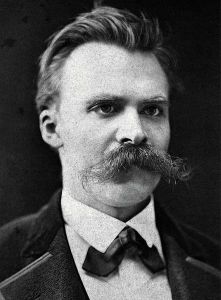
442px-Nietzsche187aYesterday was the anniversary of the death of God. The Time magazine cover, the first to be text only, asking “Is God Dead?” was one of the iconic images of the 1960s. Fifty years ago yesterday, the media ventured out onto a limb that hasn’t snapped but hasn’t exactly bloomed either. Maybe it’s because the idea wasn’t original. Philosopher Friedrich Nietzsche had suggested that God is dead in 1882, nearly a century before Time. A friend in seminary reported seeing graffiti that read “‘God is dead’—Nietzsche; ‘Nietzsche is dead’—God.” Although we laughed over it, this waggish statement contained a profound truth. The concept of God has proven remarkably resilient. Indeed, it may be part of what makes us human.

The media, nothing if not endlessly self-referential, responded. In fact, an article by Lily Rothman on time.com, is a Time story about a Time story. An endless regression of unbelief. Roth mentions theologians in her column— theologians still, and perhaps always have, debate the question of God’s existence. The ultimate untestable hypothesis, God, in that sense, is an easy target. The media reach readerships of which the rest of us only dream. I didn’t see the Time cover as a child (we did not subscribe), but it made its way into Rosemary’s Baby as a statement of the Zeitgeist more effective that a declarative sentence. It is a question that haunts. Miracles, according to the Bible, used to be large and spectacular. Today they don’t happen at all. What went wrong?

Rothman’s story begins with a seminary professor being fired. William Hamilton, at the then Colgate Rochester Divinity School, was dismissed over the question of God’s existence. Seminaries have been particularly sensitive to questions of God’s continuing presence. We sometimes forget, however, that magazines exist to make money. The same is true of some theologians. If you wanted to get noticed when the Vietnam War claimed so many headlines, you needed to say something striking. As the article points out, the question of God’s death seems a lot less radical today. Living through this campaigning season running up to the Republican National Convention it might be less difficult to disbelieve. I wonder what Nietzsche would’ve said.


Ark Apocalypse

I get lost in the web. Although my work requires that I remain plugged in to the internet all day long, I confess to feeling lost on the weekend. I don’t know what to browse or where to look for titillating new information. A friend then asked me what I thought of Gabriel’s Ark being sent to Antarctica. I had no idea what Gabriel’s Ark might be and I had to hunt through the corridors of rumor and conspiracy that make up much of the worldwide web to find it. Once I did the story grew incredible and also impossible to verify. Maybe this is why I avoid the web on weekends.

337px-Folio_29r_-_The_Ark_of_God_Carried_into_the_Temple

So the story goes like this: Gabriel, the archangel, gave Mohammed a secret weapon called an ark that would herald the last days. This ark was buried in Mecca. So the story goes, it was unearthed in September and it was the power of that ark that led to the tragic crane collapse that killed over a hundred pilgrims in Mecca last year. Days later the weapon went off again, leading to the death that the media blamed on a human stampede. Wanting to rid themselves of the ultimate weapon, the Saudi officials handed it to Russia. A research ship headed for Antarctica took on the mysterious cargo in Arabia before chugging south. Patriarch Kirill of the Russian Orthodox Church met with Pope Francis, so the story goes, to receive an ancient document to control the ark. The Patriarch then showed up in Antartica to enact a strange liturgy before the trail goes cold on the story.

No major, respected news media carried the story. That only confirms that it is a cover-up in the eyes of many. What is so fascinating about all of this is that those who continue to keep the story alive clearly believe that the end of days is being unleashed not via the Christian apocalypse, but a supposed Muslim one. It’s as if Revelation didn’t deliver, so now we need to turn to some other ancient, obscure document to document the apocalypse. Meanwhile, those who’ve spent their lives learning to read ancient texts by accredited universities scrounge for whatever work they can find. Odd people aspire to very powerful political positions. Money is the only thing that matters. Maybe it is the end of days after all.