But Loses (His) Soul

Although a couple steps from the real thing, a book review can be an art form of its own.  A short piece in a recent Wired magazine focused on an ironic bestseller that I keep seeing on the standard lists: The Life-Changing Magic of Tidying Up, by Marie Kondo.  Apart from something we’ve probably all heard from our moms, I wonder why so many people buy a book telling them to get rid of things.  Clive Thompson notes in his review (“Clutter Clash: How Tidying up Can Hamper Creativity”) that one of Kondo’s pieces of advice is that books should be on the list of things to discard.  Disagreeing in principle with this assessment, it is an even larger argument that I would like to challenge: “studies” apparently show (I’m not sure which studies) that clutter can be “soul crushing.”  Given that we have no empirical way to assess souls, I’m uncertain how to measure the number of angels crushed under my stacks of books.  Who has the right to assign clutter to the ranks of venial sins—or mortal, for that matter?
 
The book’s subtitle, The Japanese Art of Decluttering and Organizing, may provide some vague spirituality to the topic, and I agree that entropy can get the upper hand from time to time, but soul-crushing?  Some of us keep books and papers precisely because of their value in lifting the non-verifiable soul.  In fact, I was just reading (ahem) about how religions (the traditional home of wisdom about souls) revolve around their books.  Perhaps we should leave at least a showy Bible for the coffee table to display along with our copy of Feng Shui for Dummies.  My soul feels lighter already!

IMG_2727
 
When did advice for improving our souls shift from those who spend their ruminative lives asking the weighty questions to those who suggest picking up after yourself might just work as well as a life of self-denial and putting others first?  And why would you buy a book that recommends you don’t keep books?  My existential crisis deepens, and I haven’t even read it.  I can’t shake the feeling that  I spent thousands of dollars over multiple years getting an education in what turned out to be merely housekeeping.  I marvel at the clutter-free environment as much as the next person.  That’s one of the reasons I love art museums so much.  Yes, my soul does get a boost there.  If I go to the gift shop on the way out, however, I’ll likely want a book to help recapture those sublime moments.  Then I will go home, where my clutter awaits, and will truly feel peace in a place where books abide in profusion.


St. Pat Tricks

What does it say about a saint when the celebration of his day is excessive drinking? Virtue and vice, while not nearly as Manichean as sometimes made out to be, nevertheless conflict in such a setting. Like many American mutts, I have some Irish heritage. I wear green on St. Patrick’s Day, as it’s the done thing. I avoid any celebrations, however. When my job calls for travel to college campuses, I know to avoid the time around St. Patrick’s. Indeed, I’ve taught on campuses where Spring Break was always scheduled around St. Pat’s so as to minimize property damage on campus. Send them off to Florida, where they can be some other electorate’s problem.

IMG_2681

This is an interesting dichotomy. We live in a fairly permissive culture, at least when it comes to things like sex and violence. We nevertheless have built a Prohibition-Era-like mystique around alcohol consumption that makes our college-aged kids a little too curious. Binge drinking and its predictable aftermath have become far too common. Put them together with an Irish saint and all bets are off.

Historically, the Irish have been maligned in what is an acceptable way. Few complain when a nationality is non-ethnic on the surface but non-welcome nevertheless. The Irish have been historically oppressed, but today we forget all that. We hold parades with bagpipes to bolster solidarity, but only if the taps are freely flowing. Drinking with holidays is nothing new. Even Judaism has its Purim and other religions may, from time to time, relax strict rules on the evils of alcohol. But what does it say about a saint that there is apparently no other way to celebrate his day? Wearing green, yes, but that may be entirely accidental. It is, after all, a Dionysian rite of spring, our apparel matching the verdure we soon anticipate as winter wends its weary way out. Even so, I’m glad not to have to be on the streets of a major city when the parade marches by. Even with my Irish ancestry, I prefer to celebrate in my own quiet way, just by wearing green.


Lovecraft Legacy

CarterLovecraftHistory can be a funny thing. Take the way it treats some people. H. P. Lovecraft wasn’t famous in his lifetime. In fact, his isn’t exactly a household name even now. His creation Cthulhu lurks grandly in the internet, and even Lovecraft himself is finding mention in some literature courses, despite his lack of literary finesse. Yet, fiction is being written about him. I just finished Jonathan L. Howard’s new novel, Carter and Lovecraft. While H. P. doesn’t appear as an acting character in the novel, he is related to one of the protagonists in a way that is essential to the story’s plot. I won’t give away any spoilers here, but the novel takes over where Lovecraft, the non-fictional character, left off.

Lovecraft, famously, was an atheist. Nevertheless he spun a mythic world of Old Gods that has become canonical in its own right. His stories veritably teem with religious themes as well as monsters. In fact, in Howard’s treatment of the mythos, the religious elements still show up. As I’ve noted before, one need not be a theist to be a capable theologian. Fiction like that of Lovecraft, or that of Howard, inherently holds a kind of numinous quality. In fact, fiction frequently does. In reading, we allow ourselves to be drawn into another world. What could be more religious than that? The beliefs of the writer, it seems, may not ultimately matter.

At one point, at least, in Carter and Lovecraft the sentiment becomes explicit. One of the characters contemplates starting his own religion, only to realize that he’d have to write a holy book. That, he decides, would be a lot of work. As one who dabbles in various forms of literary art, I can take his point. There is something wondrously exhausting about giving birth to words. And those words make worlds. When you stop to think about it, that’s kind of a religious thing to do. I’d recommend Carter and Lovecraft to H. P. L. fans. It’s not a Cthulhu-fest, but it is an enjoyable, compelling tale that raises questions which, if not handled carefully, will quickly turn theological.


Mere Monsters

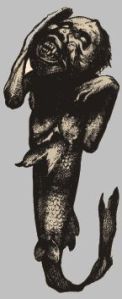
While my colleagues and I wait to hear if our monster session will be approved, my thoughts naturally turn to the taxonomy of monsters. One of the perennial problems in the study of monsters is that definitions vary widely. We might all agree that a werewolf is a monster, but what of Cthulhu? Or of a horribly deformed, but completely natural animal? What about demons? Should we all agree that we know what a monster is, how do we divide them into categories for easy study? One way of doing this might be to rely on binaries. For example: natural monsters versus unnatural monsters, living monsters versus undead monsters, monsters from earth versus monsters not from earth, monsters created by humans versus naturally occurring monsters, fictional monsters versus monsters reported in nature. It soon becomes obvious that monsters are a widely divergent group of creatures.

Monsters have won an enduring place in popular culture. I think of The X-Files. Apart from the “mythology” of the series, many episodes featured a weekly scary monster. The same is true of Sleepy Hollow, now in its third season. Monster movies, although perhaps taking a back seat to super heroes of late, are regulars on the silver screen. We just can’t seem to live without our monsters. I’ve mentioned in my many posts about monsters that the connection with religion is so obvious that it hardly requires apology. But a deeper question has occurred to me. It has to do with the nature of religion (itself not well defined).

439px-Durer,_apocalisse,_12_il_mostro_marino_e_la_bestia

Religions exist to deliver people from the trials they face. Offering Nirvana to break the endless cycles of reincarnation, or Heaven when we die after one go-round, religions claim to give us something of an assurance that things will work out. (Mostly.) In the light of this, why does religion give us monsters as well? Surely they are more than mere metaphors for the misfortunes of daily life. There has to be something more to it. What that more is, I’m not certain. I’m not even sure of how to approach the question. Monsters will, for me and many other Monster Boomers, remain a guilty pleasure that we are pleased to be able to address as adults. I am becoming more and more convinced that the more we learn about them, the more we learn about religion itself. And perhaps also about those who give shape to religious thought.


Holy Haunted Book

Religion is one of those words that defies easy definition. As I’ve suggested before, you know it when you see it, but trying to pin the idea down is a different matter. Consequently, religion is closely related to a number of other areas of interest: philosophy, ethics, monsters, and the paranormal, to name a few. I was interested, therefore to see a blog post recently concerning a “haunted Bible.” Call me naive, but the thought had never occurred to me before: could a holy book be haunted? Churches are notorious for housing ghosts, of course. As someone who’s spent overnight retreats in churches I can vouch for the fact that a sanctuary after dark is a naturally eerie place. I’ve never seen a ghost in a church, however, and I’m not entirely convinced they exist, and if they do, what they might be. In any case, a haunted Bible is a different story.

David Weatherly is a fairly well-known paranormal writer. My web search brought up his blog where he explains that the haunted Bible was for sale on eBay with an asking price of $180,000. The owner, who remains anonymous, claimed to take no responsibility for any damage the supernatural scripture might cause. Instead of thinking that we have here a genuine haunted leather scripture, I know it can be nothing other than a genuine hoax (not on Weatherly’s part). Realtors know well that a haunting can, in today’s climate, counterintuitively drive the price of a house up. With people hungry for some element of the supernatural in their lives, and ghost hunters of all sorts on their televisions, they are willing to shell out a few more dollars to have a spirit around. And since ghosts can’t sign contracts, there’s no guarantee that they’ll be there once you move in. The supernatural can, it turns out, be the perfect scam.

If items can be haunted, I suppose a Bible might as well. When an owner, however, turns down an offer of 50,000 pounds that odor you’re smelling is that of a rat. I love old books. I have a few around that have more than a century’s weight on them. Looking at used bookstores longingly, I see first editions of Poe or Shakespeare that sell for far less than the asking price of the most printed book in the western world. Bibles, if you know where to look, can be had for free. I’ve got at least a dozen of them myself. Nothing makes fakery quite so clear as greed. No wonder the haunted Bible was such a disconnect. There’s nothing paranormal about love of money. That’s all too normal for anyone who tries to sell a Bible for implied spirituality.

IMG_1235


Soul Library

LibrarySoulsThere’s a kind of trinitarian logic to the trilogy format. Long before Hegel’s model of thesis, antithesis, and synthesis, people have grouped things into threes. And there is a hook that film-makers have used to ensure that viewers will come back for the third installment: the cliffhanger. The second episode leaves everything unresolved and you’ll be sure to see the third. Think of the original Star Wars trilogy, or Back to the Future, or even Pirates of the Caribbean. In each case the first film could stand alone, but the second insisted on a third. This is a little trickier with books since, as we all know, publishing is a slow business and writing takes time. I saw Miss Peregrine’s Home for Peculiar Children, by Ransom Riggs, in 2011. I knew I would read it since the cover alone was so intriguing. Young adult literature, it turns out, has come a long way since I was able to classify myself that way. Then Hollow City came out. It ended as a cliff hanger (remember the formula), back in 2014. Just over a year and a half later, The Library of Souls was released.

Having just finished the trilogy, reading each as it came out, I would say that, like most trilogies, the first installment was the best. Freshest, a new idea, where characters exist with whom the reader participates by in filling in the blanks, a series grows more complex as it expands. Some elements that weren’t there at the beginning have to be read back into the previous installments. In my case, I’ve read so many books in the interim that some of the details have grown hazy due to the simple passage of time. Still, Riggs is to be highly commended for bringing souls back into discourse among the young. Too long we’ve been sold the story that we have no souls.

I’m not going to go into any great detail here since those who want to learn how Riggs handles the tale will read his books, but I will say that a stubborn materialism has settled over intellectual culture. Some neuroscientists have naively said, “we’ve looked for it and can’t find it, therefore it must not exist.” And since most of us don’t have access to their kinds of equipment or training, we’re told to acquiesce. Give up your souls—buy into materialism. Buy stuff. That’s what we’re all about. It is a relief, in the midst of all of this, to have a popular writer suggesting, through fiction, that it is souls that make us who we are. The books aren’t preachy. Indeed, it would be difficult to say they are religious in any conventional sense. They are, however, soulful. And for that I am very glad to have read them, even as a middle-aged adult.


Religious Laughter

Reader’s Digest famously runs a feature, “Laughter: the Best Medicine.” I’m not a Reader’s Digest reader, and I’ve generally only seen it on coffee tables and bathroom cabinets of friends. Still, that’s the feature to which I always find myself turning. The jokes, this being Reader’s Digest, are always inoffensive. Safe subjects that are nevertheless funny. Usually. As adults we come to know that the taboo subjects of childhood are often the funniest. Off-color jokes about sex or religion, sometimes both together, elicit the most boisterous laughs. We don’t use them, however, because someone will surely be offended.

A recent article in The Guardian by Gary Sinyor raises the question of religious humor. Sinyor, who is Jewish, wrote a comedy play called “NotMoses.” As he farmed the idea and advertising around to advisors and friends, he was warned how he might be putting his life on the line for his humor. Reflecting on this, he comes to the conclusion—spot on, in my opinion—that the religions that don’t laugh at themselves are somehow insecure. His parade example is Scientology, as humorless a religion as exists. As he points out, although widely banned, many Christians found Monty Python’s Life of Brian very funny indeed. Of course, some branches of Christianity weren’t, and still aren’t, laughing.

Photo credit: Richard from Canton, Wikipedia Commons

Photo credit: Richard from Canton, Wikipedia Commons

The world can be a humorless place. There is so much to worry about: the ill treatment of women, starvation, horrific diseases, Donald Trump. What right have we to laugh? I once had a close friend with cancer. Most would agree that this is no laughing matter. During treatment this friend lost all her hair and at one point another friend encouraged her to laugh about it if she could. “If there’s nothing you can do about it, you might as well laugh,” was the advice. In poor taste? Perhaps. Nevertheless, there was some truth to it. My friend recovered. The disease is not something she cares to talk about. Nevertheless, humor helped her get through it. The most serious things, in other words, sometimes cause us to laugh. Religious comedy, after all, is not laughing at religion, but at how seriously we take religion. There is a difference. And laughter can, even if I got it from Reader’s Digest, be very good medicine indeed.


Religious Monsters

Some colleagues and I are working to meet a deadline. I suppose I use the word “colleague” rather grandly, since they both have teaching positions, nevertheless, we have a common goal. We are fascinated by monsters and we’d like to see the American Academy of Religion dedicate a small section of its large annual meeting to them. We’d do all the work. At first glance, this might seem an odd topic for the serious study of religion. The fact is, however, that monsters are a part of human experience—at least in our imagination—and the conceptual space overlaps considerably with religion. Many monsters have their origins in religious thought. Some theorists go further than that and suggest the very concept of “monsters” comes to us, courtesy of religious beliefs. We can see it time and again in popular culture; the movie or television show, or novel that features monsters ventures into the territory of religion.

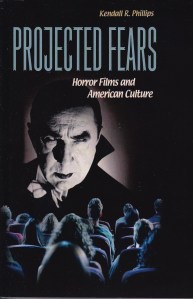
The reason for suggesting that this relationship be formalized is the fact that, although this connection exists, it has not be given adequate study. Monsters are the denizens of childhood imagination. When we grow up we leave our monsters behind. But not really. We just stop talking about them. With our mouths. The film industry knows that a horror film will generally draw in the lucre. Halloween has become a major commercial holiday. Stephen King is a household name. I’m not sure why all of this is so, but I think it might have something to do with repression. When we grow up we are taught there’s no such thing as monsters. Those who refuse to relinquish those beliefs are ridiculed. We have more important things to do. Things like making money. Deep down, however, we may still believe.

The fantastic and belief are intimate companions. In fact, belief is at the root of much of our experience. That’s not to say there are really monsters in the night, but at some level we believe there are. And we also believe that infinite deities control this infinite universe that may be only one of many multiverses. It just seems likely. Evidence may point in the other direction. Empirical proof is lacking. And yet, we believe. I’ve discovered a number of colleagues over the years who share this academic fascination with monsters and religion. I don’t know if we’ll be approved by the powers that be, but at least we will have begun to raise the question. What lurks behind it is a matter of belief.

397px-Arminianism_as_five-headed_monster


The Witch

IMG_2679

The Witch, by Robert Eggers, is a parable. The movie accepts, and to appreciate it the viewer must too, that there is actually witchcraft in New England. Unless the witch too is a parable. Set in the days before the Salem Witch Trials, the movie is worthy of Lars von Trier on history. William and his family are exiled from their unnamed community due to differences of religious opinion. William and Katherine are a devout couple, steeped in the Puritan belief that all people deserve Hell and those who are good have no choice in the matter. They have a family of four children, and after they set up homesteading in exile, a fifth comes along. When the baby disappears, the eldest daughter, on the cusp of sexual maturity, is blamed. Portraying well the boredom of children raised in a world with no diversion, the girl, Thomasin, tells her little sister that she is a witch. In reality, she is a fearful, sin-sick girl, frightened for her future salvation. There is a witch, but it is not she.

Tragedy follows tragedy for the isolated family. Their religion permits them to believe it can only be punishment from God. They pray, recite Bible, and work hard. Their oldest son, abducted by the witch, returns home to die. The two youngest children begin to have fits, claiming that Thomasin has confessed to being a witch. Her mother, Katherine, believes them. Her father too, convinces himself that she is a witch and urges her to confess. The paranoia grows and Thomasin accuses her two younger siblings of witchcraft, speaking to the family’s black goat as their familiar. Confused, angry, and out of hope, the father locks the children in with the goats for the night, determined to find the truth in the morning.

I won’t add any spoilers for the ending here. Suffice it to say, this is a parable. Thomasin’s very name suggests “sin,” and her doomed brother is Caleb, the Hebrew word for “dog.” His recitation of the Song of Songs is distinctly creepy. God is absent from the movie, despite the family’s constant prayers. The only voice heard is that of the Devil. This is a parable of what happens when a religion goes wrong. The family left England to exercise their religion freely and the free exercise of it turns them against each other. The only ones who seem to find peace are those who leave their faith behind. It is a movie that I’ll ponder for many days, I suspect. Less a condemnation of religion than an open probing of what it’s logical outcome might be, The Witch is one of those movies that demonstrates the ongoing power of parables.


Philistines in Midtown

It’s an old story. In fact, it’s in the Bible. The enemies of Yahweh perish. Since Israel’s god could not be represented iconically, the story goes, an iconic ark stood in for the divine presence. After a certain unpleasantness with the Philistines, the ark was captured and taken to the temple of Dagon. There, the statue of Dagon fell down in worship before the ark. Philistine priests, embarrassed for their deity, set the statue upright again only to come back the next morning to find their god not only toppled, but decapitated. I’ve always found this story intriguing. I wrote an academic article about it some years ago, which, as far as I can tell, has been ignored by subsequent scholars of Dagon. Of course, the Philistine god eventually went on to fame at the hands of H. P. Lovecraft. Today most scholars are far too parsimonious to care about that, so I’m left to follow my imagination when it comes to the old gods.

IMG_2671

This past week, on my way to work, I spied a mannequin fallen in the Garment District. There used to be hundreds of fabric stores around here. I’m always interested in those that remain. Cloth is so basic to human needs. The mannequin was behind glass, behind a chain fence. She’d clearly fallen in the night. She was decapitated. Of course, Dagon came to mind. I’m sure that others walking by the store had the same thought. Fallen before the invisible almighty, an idol meets its end.

Once upon a time, I’m told, biblical literacy was common. I don’t mourn its passing because I believe society has become sinful, but I do mourn it because the stories are timeless and important. There is something very poignant about the idea of a foreign deity falling, headless, before an even more powerful, invisible foe. That foe these days is the equally omnipresent and omnipotent dollar. After all, I am standing in Midtown Manhattan where the only language that everyone can speak is that of Mammon. Writers of fiction and erudite scholars beyond the reach of mere mortals ponder the great mysteries of ancient gods. The rest of us walk the streets to our assigned places so that we may participate in its endless worship.


Seekers

We live not far from an upscale mall. This mall, although over 30 miles from Manhattan, has its own bus line dedicated to it by New Jersey Transit. There is a route that runs throughout the day from the City to this mall and back. My readers know I’m hardly an uptown type. Nevertheless, an occasional trip to the mall can be a learning experience. On a cold weekend where outdoor activities felt unnecessarily ascetic we went to stroll around to see what was new. In the midst of the usual stores I never visit, there was one that had the temporary feel of an exploratory venture in high rent retail. It was, for lack of an appropriate adjective, a “New Age” store, featuring figurines from eastern religions, incense, dragons, and the aesthetic of the hippie mystique. Wandering about, I couldn’t help but notice how much of the merchandise, in one way or another, was religious in orientation.

Those of us from the western hemisphere find the quotidian aspects of Hinduism and Buddhism exotic. Otherworldly, even. In our sterile offices, we dare not burn incense. Fabrics this colorful are not worn to work. It was as if the only place true color exists is in that mystical world that religions acknowledge, but businesses deny. Yes, it was a Saturday, but nevertheless the number of patrons surprised me. The town in which the mall sits is quite affluent. We live far enough from the City that some very serious money resides at no great distance. Patrons tend to have enough, and considerable surplus. And here they are, in a store selling that is undifferentiated spirituality. A stand of silver jewelry was explicitly marked Wicca. There were even Christian figurines among the crystals.

IMG_2672

People, even (or perhaps especially) the wealthy, desire more than the dollar can bring. We’re authoritatively told that we are meat computers. Mere automatons to the forces of physics. Our human experience tells us otherwise. We are meaning-seeking creatures. There are people who will willingly sit for three hours on a bus just to reach this mall. Whether it is a hippie-friendly shop, or the latest fashion trends that draw them here, they have this in common: they’re seeking something. I glance around and spy a mirror. I came here looking for a place out of the cold, but I have discovered an unexpected insight. If we make our own, or purchase it prefabricated, we venture to our secular cathedrals to find a kind of salvation.


A Mighty Fortress

I have to admit to having not seen the Lego Movie. As a kid, I grew up without Legos. We were a family of modest means, so Lincoln Logs were more our style. When I first came to see Legos, they appeared restrictive to me with their pixel-like determination. Of course, Legos have come a long way since then. My wife sent me the story in Newsweek about the Martin Luther figure (not, I hear, featured in the movie) that surprised Playmobil, the parent company, by becoming their fastest selling figure ever. I suspect that the company put the figure out just a year before the five-century mark of the 95 theses that essentially created Protestantism, to catch a little of the interest that anniversaries always bring. Although I have no data to back me up, my guess is that the majority of sales have been to adults. Little Luther with his quill and German Bible, it seems, tickles adult minds more than pre-adolescent ones.

lossy-page1-558px-Martin_Luther_by_Cranach-restoration

This startling statistic ought to give pause to those who claim religion is irrelevant. Remember, Star Wars and Batman figures have also been available and collectable in Lego format. Even so, a German monk has outsold them all. This, it seems to me, indicates both an appreciation of irony and a very deep-seated need for finding meaning in life. After all, Star Wars is more than escapism. Lutherans are, by no measure, the largest Christian denomination. There is something, however, about Luther. Sure, those in the early modern period who had problems with the church were legion. Martin Luther did something about it. He took his life in his hands to address the wrongs he saw. Like most religious founders, he wasn’t advocating for a new religion, but a reformed one. The rest, as they say, is history.

The media tells us again and again that we are a secular people and that the church no longer moves us. Stagnating attendance figures and more vocal unbelief have become so common that many people feel a little embarrassed to admit that they believe something, anything. But do actions not speak more loudly than words? 34,000 Martin Luthers sold in 72 hours. Perhaps not Rock Star numbers, but very respectable for a bit of plastic. I wonder if this might not be a sign. Perhaps, with Luther, we ought to take the time to sit down and write out what we believe. Maybe our Wittenberg door should be that of Congress rather than a castle church. Or maybe it can be the door of our own minds. Luther, dead nearly half a millennium now, has shown us what a leader with vision can accomplish despite the centuries. And with a bit of plastic.


The Problem with Love

As far as we can tell, historically there is no Saint Valentine that is particularly connected to February 14. Even if there were, it is difficult to imagine a saint promoting what we know as love. Love is a slippery topic. The ancient Greeks (who did not marry for love) were so perplexed that they came up with three different words for it, and the nascent Christian community tended to prefer agape-type love. Love that expresses well-being for the community and has little to do with the physical attraction that people everywhere find so compelling. It is safe to say that Christianity has always been uncomfortable with the kind of love that Valentines Day celebrates. The holiday, because of its associations, has often been removed from the liturgical calendar a time or two. People are already prone to express their biological urges, so it is best not to give them an excuse, sanctioned by the church.

This is an odd situation, thinking love is wrong, or at best, tolerated. As far as we can tell, the earliest Christians had no particular concerns in this way. We can’t measure, of course, how people loved their spouses, but there was nothing inherent in the new religion to suggest physical attraction was bad. By the time Paul of Tarsus started writing his letters a couple of decades after Jesus’ life, at the earliest, some doubts had crept in. They seem to have been largely personal. We know little of Paul’s life, but we are aware that he saw the kind of love known as eros to be a problem. Concession had to be made to those who couldn’t control themselves, but otherwise, in good stoic fashion, love was to be ignored. By the time of Augustine of Hippo, some three centuries later, sex passed on original sin and love had become decidedly dark.

St-Valentine-Kneeling-In-Supplication

Attitudes change with time, of course. After two millennia a certain practicality sets in. We have moved through the troubadours and courtly love to psychology and deep human needs. Arranged marriages are, for the most part, considered like shackles from the past. And love, that feeling that we never completely outgrow, is believed to be a positive thing. Saint Valentine (and there were at least two of them) would likely have disagreed. While the Romans celebrated sexuality, they also believed in restraint most of the time. Valentines Day, however, still has something to teach us. Despite the commercialization of the holiday, in a world with a surplus of hatred, any kind of love is, as long as it’s mutual, is worth celebrating.


Grim Where?

An inordinate amount of my childhood time was spent on television. While the device of the day had been around for a decade already, I was among those who grew up learning that watching was easier than reading. Like most children, I took the path of least resistance. I watched. As a teen, however, I rediscovered reading and from that time television began to take a back seat to books. When the great switch-over to digital occurred we didn’t get a conversion box, and we could never really afford cable for as little TV as we watch. When a program gets commended, or if nostalgia takes too great a toll, we can always purchase programs—the price of watching television without the commercials. So it was that I began watching Sleepy Hollow. Very quickly in the first season the monster of the week trope was established as the plot grew more and more tangled. The Bible was so prominent in that season that I wrote an academic paper on it.

Sleepy_Hollow_-_Title_Card

Over the past few months my wife and I have been working through season two. The DVD version was delayed and we only watch on weekends. Recently we finished the eighteen episodes of the second installment. Clearly the budget had improved over the first season, but the Bible, it was also clear, had diminished. Throughout the first season the driving motif of the story was that biblical “prophecy” (from the book of Revelation) was unfolding in Sleepy Hollow. This is what one scholar has termed a “local apocalypse.” Throughout season two, however, the end of days is shut down. Molech, its architect, is killed. The headless horseman is less Death than a jilted lover. The second horseman, War, loses his armor and dies.

Magic, however, along with special effects, take on an increased roles. Instead of turning to the Bible to solve problems, the most helpful book to have on hand is a grimoire. Sleepy Hollow, which is anything but what its name suggests, is full of monsters. Powerful magic is required to contain them, and, it seems, the Bible is no longer needed as a tool to take down evil. Perhaps there is a parable at work here. I was drawn into the series by its biblical literacy, as well as its literacy in general. More action has been introduced, and fewer books. It’s a pattern I’ve seen before. I suspect I’ll watch season three presently. When I do I’ll be casting a wistful eye on the stack of books I have yet to read, and I’ll be wondering if reading may not have become easier than watching.


Steel Pennies

409px-CasablancaPoster-Gold

I remember seeing my first steel penny. At first I didn’t think it was real. Like many poor kids, I was a collector. I collected anything cheap: cancelled stamps, bottle tops from glass pop bottles, fossils, just to name a few free trinkets. And I’d started coin collecting, with pennies. I’d noticed the difference between wheat backs and Lincoln Memorial pennies, and I knew that the former might be worth something some day. There was a hobby store in town and by thumbing through the collectors’ books, before being shooed out, I’d learned that keeping an eye out for wheaties was a kind of investment. Just hold onto it long enough, and it’ll grow in value. I never saw a 1943 penny, though, until a fellow collector traded me one. During the war, he explained, copper was too valuable to use for pennies. Wartime, it turns out, changes lots of things. About the same time as these steel pennies were being minted, Casablanca was still showing in theaters.

As I sat down to watch Casablanca again last night, some new thoughts occurred to me. A wary eye can spot the cost-cutting measures of a wartime movie. Somethings never change. Nazis were bad guys, obviously, but we still didn’t know who’d win the war by then. And refugees flooded to Casablanca to try to escape Europe for America. The movie makes quite a lot of this endless waiting. It’s hot in the desert. People are waiting to go somewhere better. And there are elements of torture there as corrupt officials cooperate with Nazis, even though this is Free France. It occurred to me that this is an allegory of Purgatory. I’m pretty sure it’s not intentional, but here are lost souls waiting for deliverance. The plane to Lisbon is the soul’s escape to Heaven. Meanwhile the relentless waiting.

For a movie approaching 75 years old, Casablanca holds up remarkably well. The extras on our DVD tell us the plane in the final scenes is a cheap cutout just a few feet away on a sound stage. The mechanics attending it are little people to bring it into perspective. Tucked away in some box somewhere I’ve got a few steel pennies. These days coins change so frequently that I wonder just how stable this world really is. While the “Middle East” still has us as worried as ever, our money is, for all practical purposes, only virtual. Paychecks are mere electrons and I’m just a temporary repository between my employer and those who claim increasingly more of my pretend money. We seem to be caught between two worlds. In one nothing is really real at all. Rick’s Café Americain feels somehow very familiar, as we spend our time waiting for passage on a plane to Lisbon.