Contacting Faith

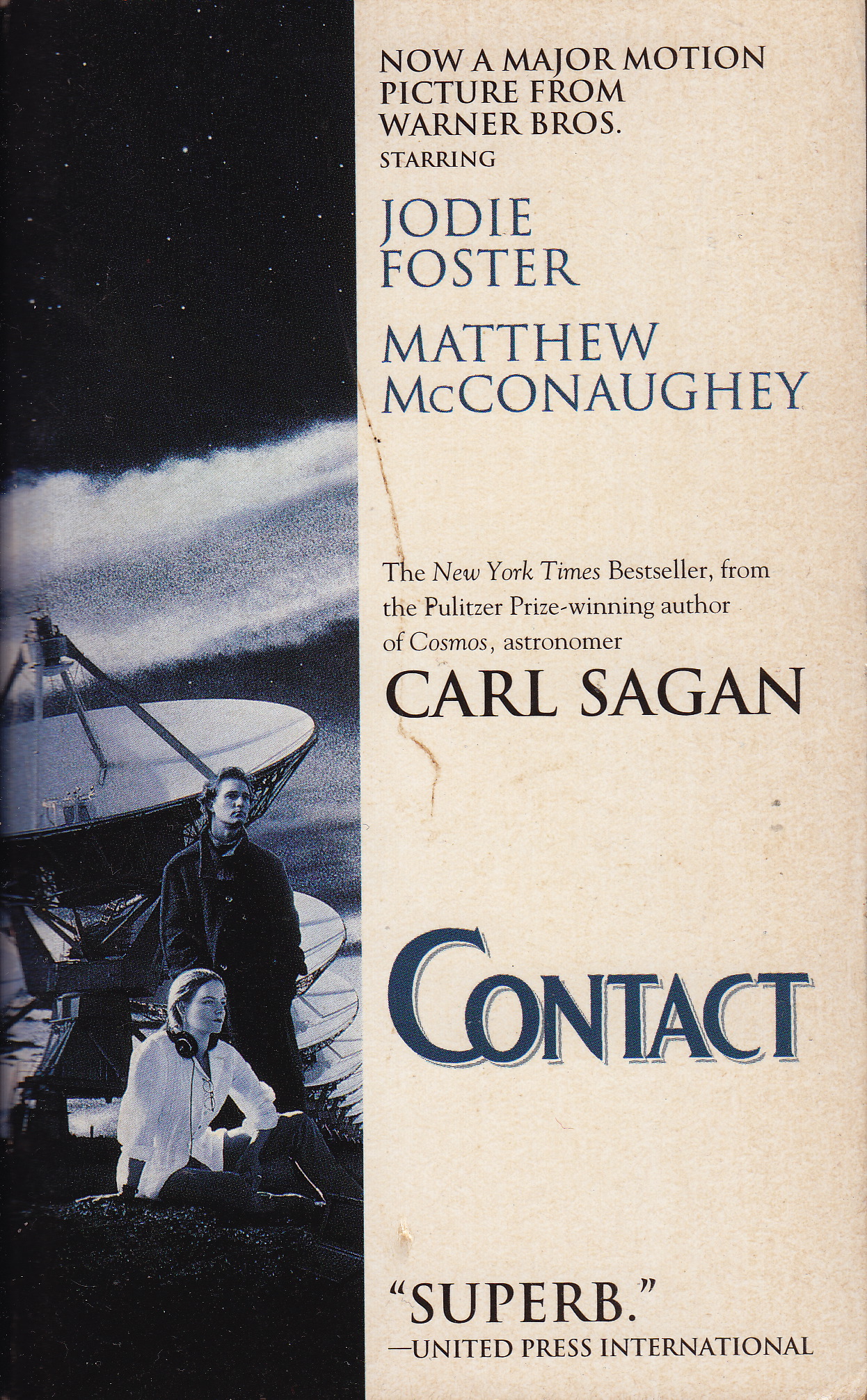
Contact_0001Sometime after the movie Contact came out, I saw it while on a flight to somewhere here or there. As with most movies on airplanes, it didn’t receive my full attention and I seem to recall not hearing a lot of the sound. Having always been intrigued by the possibility of aliens, however, I told myself I’d watch it again. Several months ago I did just that, but as Carl Sagan hoped, much of the story had become somewhat dated. I finally finished reading the novel, and this was a case of the book being better than the movie (as is frequently the case). A number of things surprised me about the story, the primary one being just how prominent religion is in the plot. In the movie some crazy preacher sabotages the first machine just as it’s nearing completion, and even though Ellie Arroway is long connected to Palmer Joss, their relationship doesn’t seem to dominate the script the way it does the book.

Almost immediately upon reading about adult Ellie, it became clear that religion was a major interest that Carl Sagan had. While the chiliasts receive many scathing comments throughout the novel, thoughtful Christian thinkers, such as Palmer, find a way of being taken seriously by Ellie, despite her own personal unbelief. Unable to understand how someone could not accept the evidence before their eyes, she wants to belittle religion but can’t when serious thinkers like Palmer remind her that they have a sophisticated worldview as well. The story represents a long struggle between alternative outlooks. While as a novel it doesn’t always flow, it pulls the reader along, partly based on the intriguing character of Sagan himself.

Carl Sagan believed in life on other planets. He was less sanguine about the possibility of either ancient astronauts or current-day visitors from space, but he kept an open mind. While he was the respected author of numerous scientific papers, other astronomers didn’t always know what to make of such a popularizer. Of course I never knew him, but I have to wonder if his true beliefs didn’t appear in his fiction rather than in his factual writing. At times I found the novel slow and plodding, and as the machine gives ambiguous results, I wondered where the rest of the story could go. Sagan profoundly brings the end back to belief. Without evidence, Ellie finds herself in the place of the religious who believe on the basis of experience and faith alone. And she finds her best friend is a clergyman. Contact, with its God-like aliens, is really a story of finding oneself a place in an infinite universe. To do that well, Sagan seems to have believed, requires both science and religion.


Magic Faith

MakingWe all like to believe we don’t believe in magic. In this day of sophisticated materialism, the idea that unseen forces might work upon the world seems terribly naive and not a little embarrassing. Randall Styers’s Making Magic: Religion, Magic, and Science in the Modern World has been on my reading list for a few years now. Not so much a history of magical thought, Styers offers a history of thought about thought on magic. There are several takeaways from a study like this. One is that magic and science share common ancestors. In fact, some theorists trace the origins of science to magical thought. The height of alchemy was also the period when experimental analysis of the natural world was blossoming. There was a mysterious sense to what we now think of as impassive particles whirling around for no particular reason. Making Magic makes clear that we can’t divorce developed thinking from magical outlooks. In many ways it is difficult to distinguish religion from magic.

Not that Styers advocates magical thought. He does, however, invite us to think about it. Another takeaway from this study is that magic, when described by religious writers, is a foil. Magic is used to show how the unenlightened think about things. Those of us here in the true light would never think such backward thoughts. Indeed, magic, as Styers makes clear, often served as a kind of social control. Lower classes think magic works wonders. The upper classes know that power lies in exploitation. Magic, in other words, can’t be divorced from politics. Those in the know would only encourage magical belief to continue. Invisible forces indeed.

Magic as a regulatory force is indeed the thesis with which Styers is working. The difference between prayer and magic is somewhat effaced when closely examined. Religious belief is seen as benefiting society while magic is for selfish benefits. I do wonder, however, where the modern magical religions, such as some branches of Wicca, would fit into this scheme. They also seek the good of society. Magic need not be selfish. Making Magic is concerned with the analysis of magic by scholars who’ve shown a surprising interest in the topic. It doesn’t really address those of today who, after finding the atomic world strangely vacuous, have turned to magic to re-enchant a world grown dull and dry. Whatever one may say about magic, it still exists, and its believers are among us. Our world with its solemn, feelingless answers could, at times, use a little such conjuring.


Only Takes a Spark

Fireworks have been the main event for Independence Day celebrations ever since I was a child. The fourth of July is a day for playing with fire. As a child I remember spending the meager allowance I had on sparklers and snakes. I haven’t seen one of those ash snakes for decades now, but the impression they made remains strong. A plug of some kind of carbonish material—you’d light the top with a match and it would flame and hiss and start to grow into a long, twisting exoskeleton of ash. They left a blackened circle on the sidewalk, and when they were cool enough you could try to lift the fragile snake in your hand, but it almost always broke apart before blowing away in the breeze. We also wasted our money on smoke bombs with their multi-colored smoke, but we never had actual firecrackers. Given the trouble we could make with an ordinary roll of caps, that was probably a wise decision on our mother’s part. All of this, however, was just a prelude to the fireworks.

As I sat under a cloudy sky last night wondering why every July fourth seems to rain, it occurred to me that fireworks are a violent form of celebration. Indeed, they are designed to imitate the sounds of battle—before the nuclear age—and we all know the thrill of when the loud, bright burst of pure light sends a shock wave through you. It is like a canon rocking your soul. Like many stirring experiences, fireworks had religious overtones from the beginning. Invented in China, fireworks were used for religious festivals. They were believed to be effective at driving away evil spirits and bring good fortune. Pyrotechnics, however, clearly have military applications as well. It is this strange nexus between religion and violence that makes, I suspect, fireworks displays so compelling.

IMG_2287

The local display here in Somerset County, New Jersey, was impressive for a region without large cities. I couldn’t help pondering the strange aesthetics of contained violence as the colorful explosions took place over my head. Illusions, I know. We always talk afterward about whether some of them are meant to represent anything. Did you see a smiley face, the United States, or even New Jersey? It depends on your angle of view. Is this a religious display or a celebration of violence? Looking around at the amazing diversity of peoples gathered here in this park with me, I feel strangely satisfied. I hear languages I don’t understand, and see people from all over the world here for a good show. Although thousands of us try to get to our cars at the same time, spirits are positive, for the most part, and all go home in a celebratory mood. Maybe the ancient Chinese were right and these pyrotechnics do drive away evil spirits after all.


Seeing the Trees

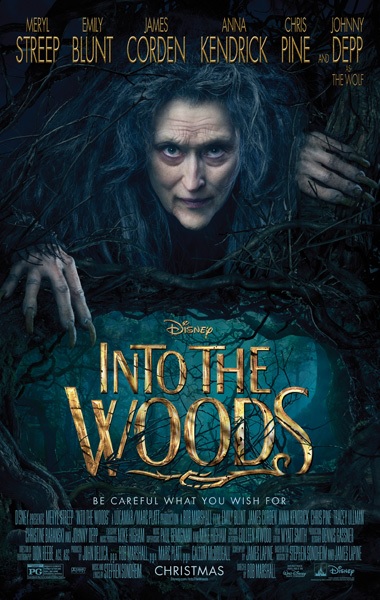
Into_the_Woods_film_posterI first learned of Stephen Sondheim’s musical Into the Woods while liking in the woods of Wisconsin. I was teaching a summer term course of mature students, one of whom used one of the songs to illustrate the point he was making during a presentation. Of course I don’t remember what the point was, but I did remember the movie. Then along came Shrek and fractured fairy tales were back in business. Enchanted brought Disney into the act, and a number of self-aware takeoffs from the brothers Grimm have followed. I’d seen the film of the stage show of Into the Woods before, but it had been a while. Over the weekend we decided to watch the new Disney offering of the story and as we did a couple of familiar, if obscure, ancient mythological motifs came to mind.

Cinderella, as we all know, was sorely abused by her evil step-mother and step-sisters. She seeks solace at her mother’s grave, in the woods, of course, in the movie version. While there, singing somewhere between a lament and a prayer, her mother appears to her in the tree that grew from a branch she’d planted there many years before. It’s a musical number, of course, but my mind couldn’t help going back to Asherah. Asherah is considered by many (without good reason, and I should know) to be the goddess of the trees. Yes, this was a mortal, a dead mortal at that, who spoke from the tree but the way she was presented in the movie was distinctly divine. Indeed, there is similar iconography from ancient Egypt. It was almost enough to make me go back on my own evidence that Asherah wasn’t a tree goddess.

The giant’s wife poses a real threat in this film. Jack’s beanstalk and the effects resembled those of Jack the Giant Slayer, a movie that I only vaguely remember as being one of many I watched with bleary eyes on a transatlantic flight a few years back. Nevertheless, Mrs. Giant is here stomping about the village when Jack and the baker decide to take her out at the tar pit, with the help of Little Red Riding Hood and Cinderella. The preferred weapon is a sling. As the giantess is pelted with stones, she grows annoyed until Jack, in the perfect image of David, strikes the giant between the eyes, slaying her. We all know the fairy tale version ends with the beanstalk chopped down. We’ve entered a new world, however. A world where Bible and fairy tale are harder to distinguish. And not only that, but even fairy tales no longer have the canonical status they once held.


More Rainbows

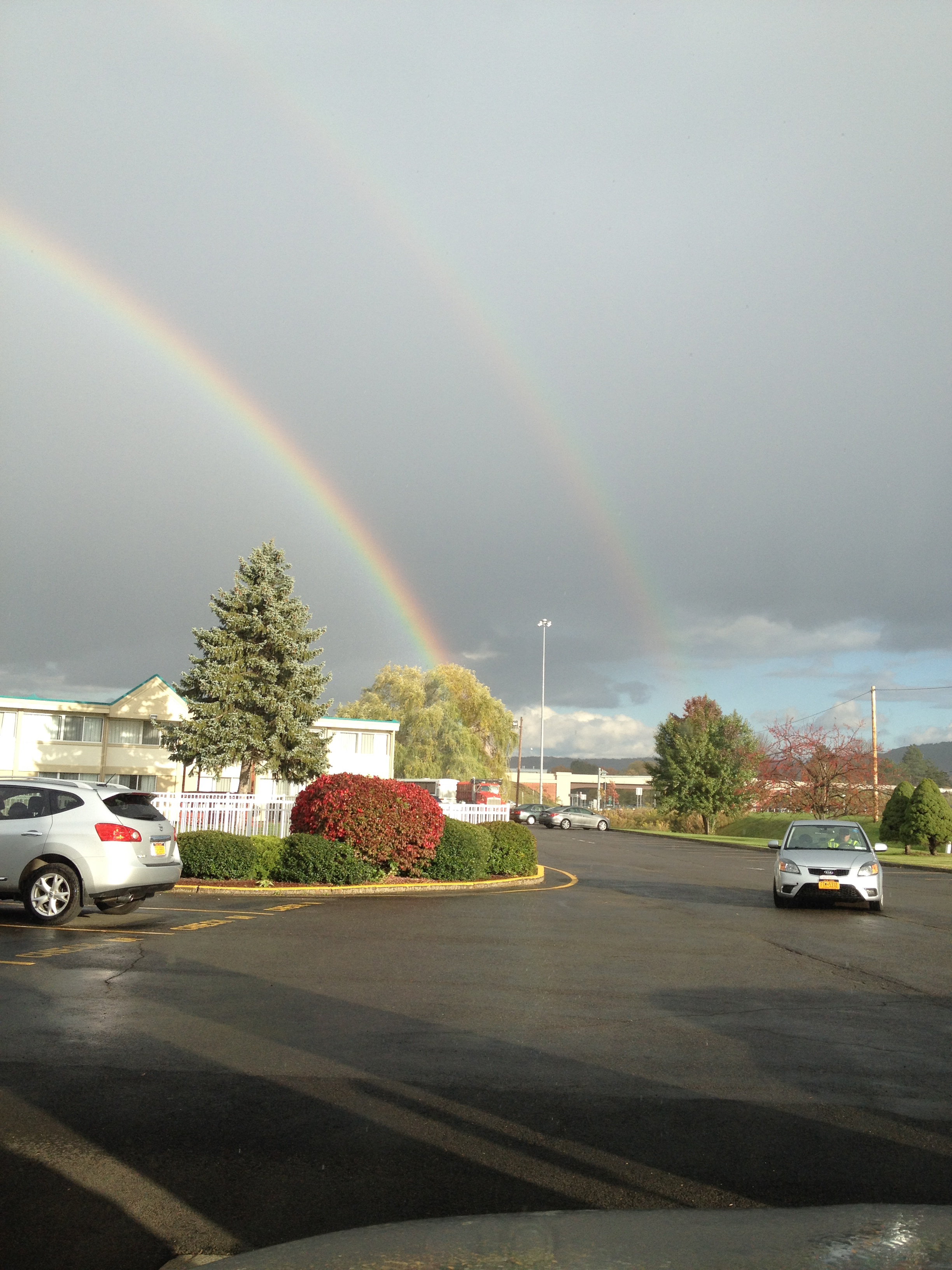
There’s been a lot of rain this June. In between there have been some glimpses of sunshine. When the rain and sun combine, I always look for rainbows. Yesterday there were rainbows. You see, I didn’t realize until physics class that the sun has to be behind you to see a rainbow. It stands to reason, of course, because the light has to be refracted before it can break into its beautiful constituent colors. If any of the colors were missing, true light wouldn’t exist. Even with many of the religious grumbling, the United States took a fumbling step toward justice yesterday. Justice is something that always comes as a bit of a surprise these days. I’m not sure that we can always trust those that money puts into power. Nevertheless, gay marriage is so in the spirit of America that I wonder it has taken so long to become legal.

I’m heterosexual and I’ve been married for over a quarter century. I know the benefits of married life, so why should they be denied any couple that love each other? Raised on conservative Christian literature that taught me homosexuality was evil, it took some intensive education to unlearn what I’d been told. The Bible has very little to say about homosexuality, and in each instance where it does there are extenuating circumstances that must be considered. The Bible, which hasn’t become authoritative for stoning adulterers (heterosexuals all) had somehow been the final word to oppress those whom nature has oriented to the same gender. I had been told “no animals are homosexual.” That is wrong. Documented cases time and again show that homosexuality is as natural as rain. Just ask the bonobos. For literalists that’s a problem because we’re not even, from their point of view, evolutionarily related.

So although it is a cloudy, rainy Saturday morning, I’m strangely optimistic. There may be rainbows today. Now if only we could spread the message wider, raise our voices louder, and maybe join in singing “Amazing Grace.” Maybe we could dare to dream that races and genders should be treated equally. Will our Supreme Court ever make true equality the law of the land? Yesterday brought us over a major hurdle. I don’t want to rain on this parade. Still, justice demands that more work be done. I rejoice with all loving humans that marriage is open to all. Charleston is still on my mind. And if some rain does fall today I can always keep what sun there is to my back and hope that there will be more rainbows.

IMG_1087


Drumheller Drama

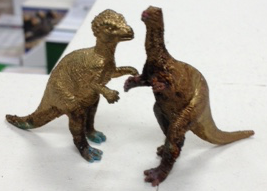
Those who’ve participated in the great drive out west—if you’ve done it you know what I mean—have passed through the range of dinosaurs. Actually, dinosaurs can be found here in the east; New Jersey once had a reputation of the home of the hadrosaurus, before an even larger beast took over the state. In my native Pennsylvania the occasional dinosaur footprint would be found. But to really see the dinosaurs, the west is best. In Makoshika State Park you can find triceratops skulls right out on the ground. You can find plenty of Christians as well. Ironically, we’ve advertised to the world that Christians and dinosaurs don’t mix, but, in fact, they can get along just fine. In a BBC story my wife sent me, one of Canada’s great western dinosaur reserves, Drumheller, Alberta, has a potential clash between sauropods and savior. Seen from one angle, at least. The story by Tom Holland points out conflicting wills for an entrepreneur who wants to build a dinosaur display and a long-established passion play that occupies the space he wants.

Dinos

News doesn’t get read without some measure of drama, so Holland pits the dinosaurs against the Christians. What seems to me, however, as the real issue is entrepreneurial expansion versus what seems like an arcane melodrama, the reenactment of Jesus’ death. Ironically, the greater part of North America was colonized by Christians of various descriptions. Many of them established their culture in various ways across the landscape. As a culture, it wasn’t always belligerent, and sometimes even beneficial. Passion plays, once upon a time, were considered the mark of culture. Jesus, I’m sure, knew nothing of dinosaurs but would have had no problem with them, I contend, if he had.

The issue here is less about science versus religion as it is about cash versus culture. Even Ahab turned his face to the wall when he couldn’t have the land that he wanted. If someone else got there first and made a recurring shrine, does capitalism have the right to slough it out of the way? I love dinosaurs. I’ve driven many miles out the way to see dinosaur trackways far beyond the trodden path. These are but shadows of footprints cast millions of years ago. Both dinosaurs and Jesus have their place in our hallowed past. While pictures of Jesus riding dinosaurs may well be over the top, the message perhaps rings true: there’s no inherent conflict here. When someone wants to make quick cash, however, there will always be sacrificial victims involved.


Don’t Answer Me

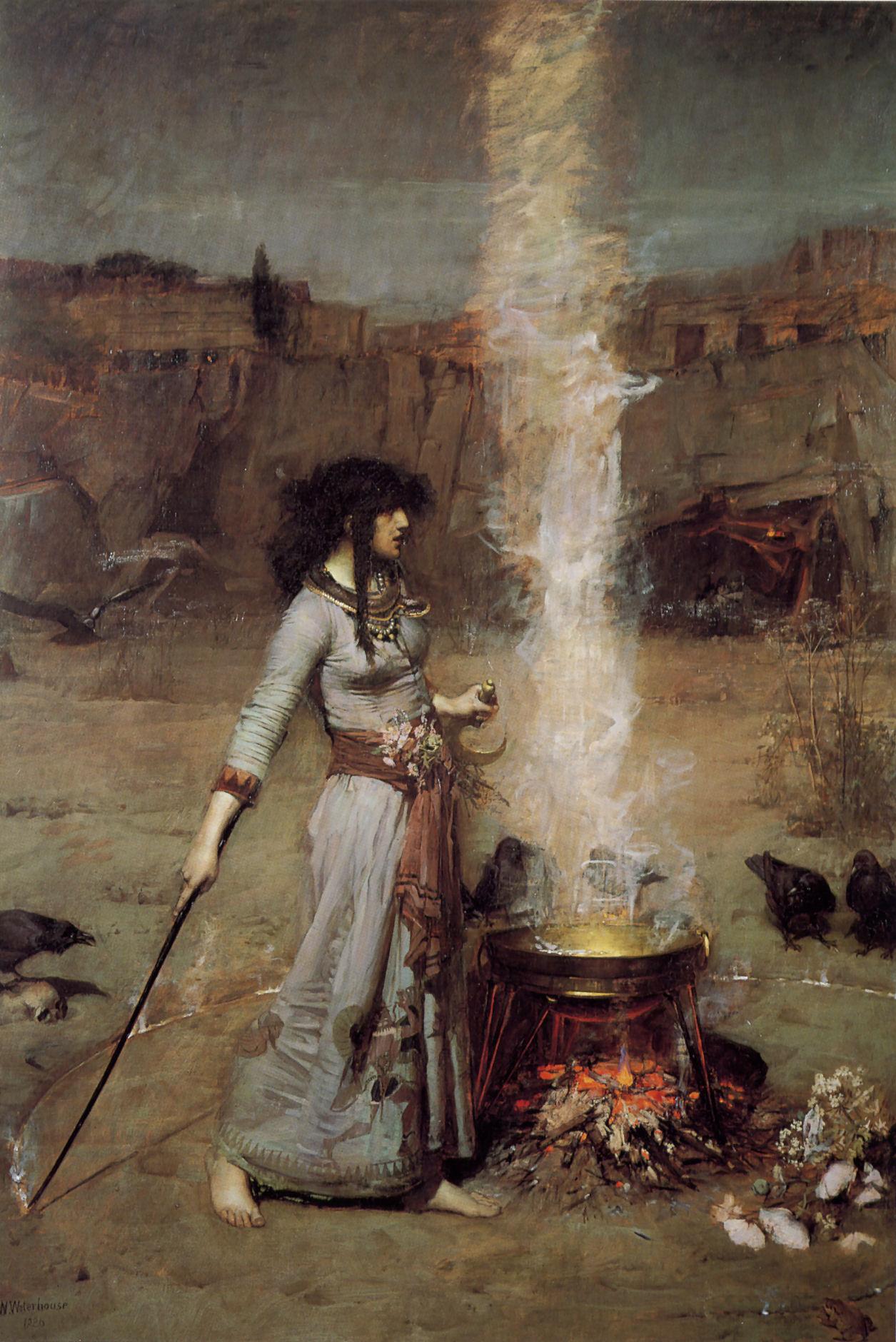
Non-directed reading sometimes follows its own track and a reader might become kind of an accidental expert. I wouldn’t claim that for myself, but I have noticed that scholars, until very recently, tended to give the cold shoulder to anything with a whiff of magic about it. Ancient magic is fair game, of course, but anything like post-Enlightenment magic is anathema, a veritable shibboleth of philistine sensibilities. No scholar worth their diploma would study such a lowbrow topic, let alone give it any credence. Popular culture, and increasingly political culture, tend to ignore academics, however. I have, in my exile from academia, become interested in those who consider themselves witches. I have, I realized recently, read quite a bit about the phenomenon and have been casting about for academic treatments that might fill in some of the gaps. It is a fascinating subject.

John_William_Waterhouse_-_Magic_Circle

Ironically, many religion scholars who swear by a mythological worldview of the first century, devalue magic, or Wicca. Many who study it handle it like a peculiar bug, something that might profitably be placed under the microscope as a living curiosity. The thing is, and I realize that academic institutions often shelter their inmates from the real world, many people still do believe in a kind of magic. It may not involve Harry Potter spells and wands, but everyday life outside the academy sometimes defies explanation. Scientists say it’s impossible, and scholars of religion are quick to lock step. Yet the number of those either openly or clandestinely joining occult groups appears to be increasing. Maybe they know something that the experts don’t?

While working on my academic paper for the Society of Biblical Literature annual meeting, I have run into the amazing void of interest in contemporary magic. The television series Sleepy Hollow has revived some popular fascination with the topic. The curious, however, have few scholarly resources to consult. Here is perhaps the paradigm that shows most clearly why higher education runs into trouble. Could it be that in the academy the Lowells talk only to Cabots, and the Cabots talk only to God? Have they forgotten how the common folk live? Those of us who grew up common are often not welcome in the academy. Our downmarket ways and simian brows mark us as the sort so gullible as to believe in some kind of magic. But the numbers are on our side. And the only option sometimes is to become your own expert.


American Bible

BibleInAmericaAny book that sets itself the task of addressing American culture has, it seems, a built-in obsolescence.  Culture shifts are radical and swift, and it would seem that distance is necessary for any serious analysis.  I am reminded of historian Barbara Tuchman’s opinion that history cannot be written without the passage of at least a half-century. We’re simply too close to the subject matter otherwise.  The Bible in America, edited by Nathan G. Hatch and Mark A. Noll, does not claim to be an analysis of the current situation, but it stands as a representative of how much has changed since the 1980’s.  The era in which the book was written is stamped all over it like the Preppy look or Doc Martens.  American culture was very different then.  Some of the contributors noted that the Bible, as we’ve often been told, is on its way out.  Elections of the new millennium would give the lie to that observation, and we might now argue the same, but I wonder if our view is long enough.
 
The source of my wonder is a basic observation.  The Bible was foundational for the idea of the United States.  Those who have joined the “melting pot” (willingly or unwillingly) have been brought into a soup whose stock is Bible flavored.  I’m not naive enough to think that it is undiluted or even anywhere near its original form, but as a former biblical scholar I’m sensitive to the motifs and themes of the Bible and I see them daily in undiminished numbers.  Transmutation is not the same as exodus.  I make no judgment whether this is a good or bad thing.  It simply is.  Those who think it is an exaggeration to put such prominence on the Bible in American culture should read the first couple of essays in this book.  It may have been that without the Bible the will to cross the dangerous water to an uncertain (and to many, catastrophic) future would not have been so pressing.
 
Like most collections of essays, this little volume has a grab bag of wisdom.  Reading it is like taking a stroll through the ’80’s again.  We seemed to know things with a certainty then that has all but vanished these three decades hence.  The Fundamentalist movement provided a Tea Party appropriate to Mad Hatters and White Rabbits alike.  Presidents declared that we were on Crusades again.  Megachurches have the budgets of small developing nations.  I’m not about to make any predictions for the future of the Bible here.  An observation, simple, but fairly obvious, will have to suffice.  Since colonial times, Americans have always had their Bible.  It hasn’t always been the same book, and it hasn’t always been interpreted in the same way, but it hasn’t ever gone away.  I can’t say about the future, but right now I’m about ready to put on my Ray-Bans listen to some Madonna.


Human Race

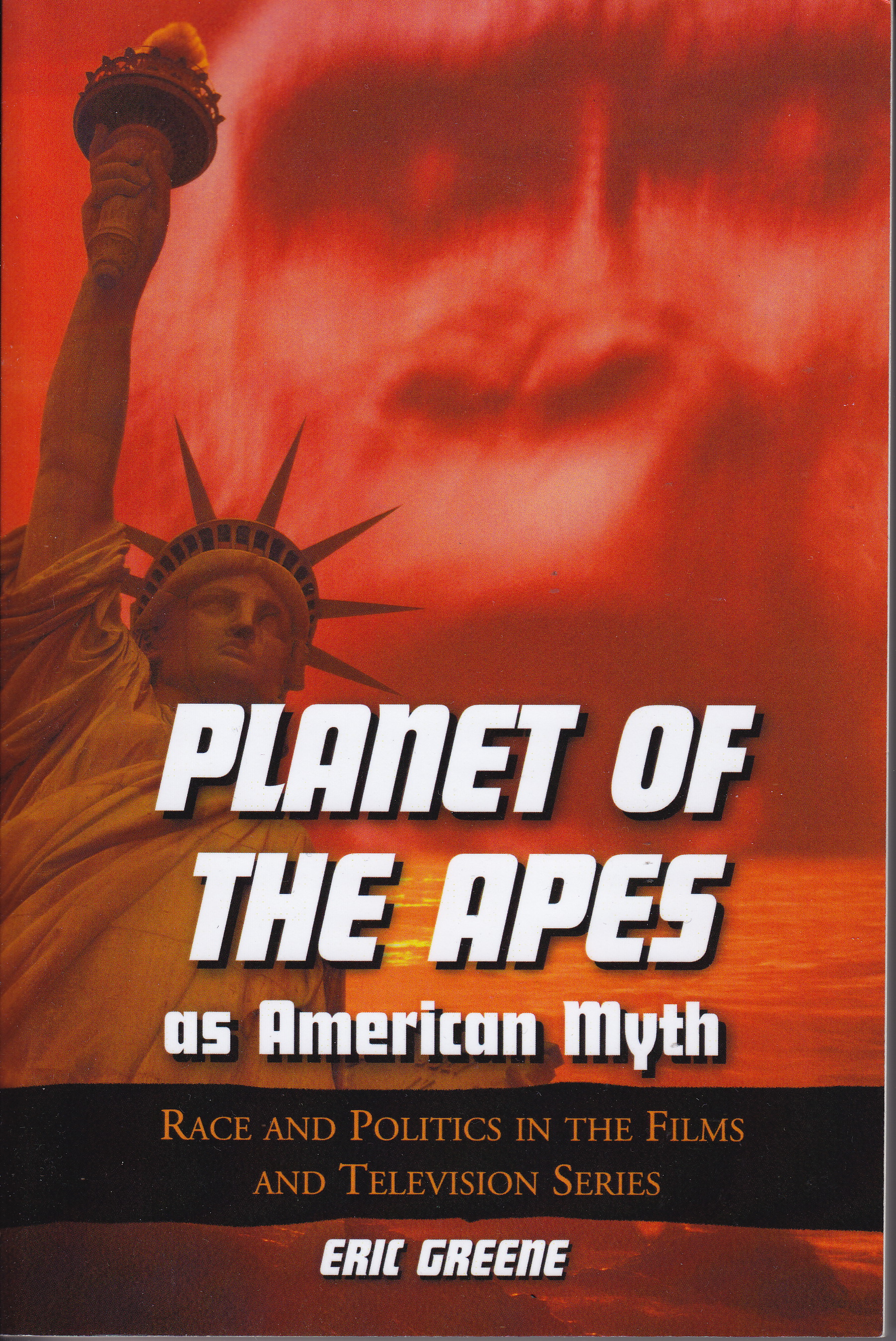
PlanetOfTheApesMythFor reasons no one fully understands, Planet of the Apes touched a deep level of responsiveness in American society. I have to admit to having fallen behind a bit; I need to see Dawn of the Planet of the Apes to be back up to speed, but nevertheless, I remember the television releases and airings of the originals, and even have gone through the entire series in the form of home theater offerings. One Saturday long ago on a visit home, I sat through a marathon of the entire five-movies sequence all in a day. It should be no surprise, then, that as soon as I saw Eric Greene’s Planet of the Apes as American Myth it went on my reading list. Race and Politics in the Films and Television Series, the subtitle read. I admit that I grew up in a conservative, but sheltered environment. Having friends who were African-American, although, admittedly, they were a small fraction of the demographic in my small town, I never realized that there was a problem. Not until I took history and social science classes in school. You have to learn things such as racial distrust.

Struck by Planet of the Apes when I first saw it, I had no idea that it was a racial tale. It makes sense now, in the light of Greene’s analysis. To a child fearing evolution as much as Hell itself, the movie was a kind of forbidden fruit, and by making it science fiction, there was no reason to suppose there was a message here. It was a powerful kind of captivity. I have watched the movie, and current adaptations, many times over. Greene does an excellent job of demonstrating that the movies came at a time of great racial distress. Civil rights, the Vietnam War, the fear of the Communist—xenophobia was perhaps at an all-time high when the apes invaded our planet. As the series goes on, the identifications become clearer and clearer.

But more than that, Greene pointed out some very obvious—in retrospect—religious symbolism in the movies. Some of it was so intentional that it was written into the script. Among the scenes from the life of Jesus, the movies borrow most heavily from Exodus. Moses figures abound. Even Charlton Heston, in his role as Taylor, was following up on the Ten Commandments. Holy families and sacrificial victims mark just about every stage of this dystopia, a world where trust is always far from any relationship with someone physically different. It’s about time that I watched Dawn of the Planet of the Apes. And after that, I need to go back to the beginning, and watch them all with renewed eyes. In the light of current events, also with the hope of a more just future.


Work Weekend

It’s a Saturday and my wife’s at work. She’s worked five days already and will still be at work tomorrow. I’m lazing in bed until 5 a.m. when I hear the neighbor’s alarm clock from upstairs. An hour later I see him headed to his car, dressed for work. I think about the concept of weekend and how it apparently means nothing any more. Well, I’m not at work, so it must mean something, but it’s not what it used to be. Don’t get me wrong—when I was a professor I gladly worked through weekends. Indeed, I was working pretty much all the time. I was paid to be a thinker, and I can’t shut this thing in my head off. My current job, however, is a 9-to-5 with expectations of more, but not entailing any extra compensation. Overtime? You lucky one, you’re “exempt!” And don’t forget to take your laptop home, in case something comes up in the middle of the night. (I do read the timestamps on my emails.)

The weekend is a religious idea. Ideal, even. We have the biblical concept of the Sabbath to thank for our free Saturdays, when they come. Christian beliefs about resurrection to account for Sundays. Days originally set aside for worship. Time off work is worship now. When else will we get the laundry done? Groceries bought? Floors swept? I leave before six each day and arrive home near seven at night. To keep up my Manhattan lifestyle I have to awake before four and head to bed at eight. If I had an extra minute to access my memories I might think this a little odd. I used to have time to write books. Where did that go? Vacation time? You have to be at the airport two hours early so you can be frisked for a plane that’s inevitably late. You get five days off, and two will be spent traveling. Work waits for no one.

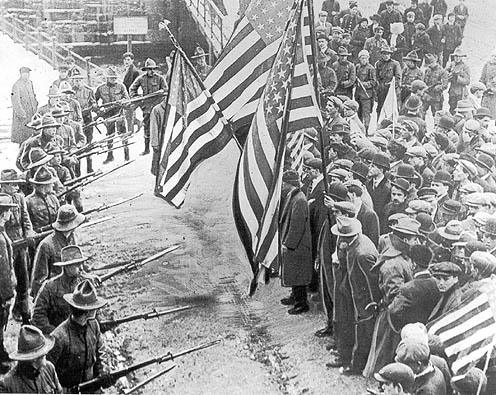
1912_Lawrence_Textile_Strike_1

I guess it’s no surprise that those who argue that we should abolish religion have jobs that either they love or that don’t require weekend hours. They have time to examine this gift horse minutely in the mouth. You know, we don’t have to have days off. In olden times, or even today on farms, the concept of a weekend is only academic. Those whose jobs are just work to keep an imprisoned soul in its weary body are, after all, expendable. Perhaps I’m just too weak. The occasional three-day weekend rejuvenates me to a degree that’s almost frightening. I wonder why we can’t add holy Fridays to our list of days to worship. There is a price to be paid for neglecting time to reflect. I can’t imagine Pharaohs and kings wanting to grant any more time off, however. We all know who we’re really working for, and it’s not the one who gave us our weekends in the first place.


Christian Horrorshow

Books & Culture is the review organ of Christianity Today. Christianity Today is the evangelical answer to the more liberal Christian Century. Working in publishing, particularly in the field of religion, it is important to keep an eye on what the popular magazines are saying about our books. Well, neither is as popular as it used to be, but still. I’ll grown used to Books & Culture taking a rather wholesome reaction to books that challenge worldviews. In fact, it’s not unusual to find a fairly mild tome castigated as somewhat insidious. Negative reviews tend to sell books as well as positive reviews. Sometimes better.

I was a bit surprised to see a two-page spread in a recent edition of Books & Culture focusing on horror stories. Horror and evangelical generally don’t play well together. Well, maybe I should temper that a little bit. The first article was actually on Shirley Jackson, best known for her excellently moody The Haunting of Hill House. That particular book has spawned or inspired at least five scary movies, two of them versions of the book itself. I have to confess that this is the only Shirley Jackson novel I’ve read. The article, somewhat strangely for an evangelical magazine, had made me want to explore some of her other offerings. Horror doesn’t have to be splatter to be effective.

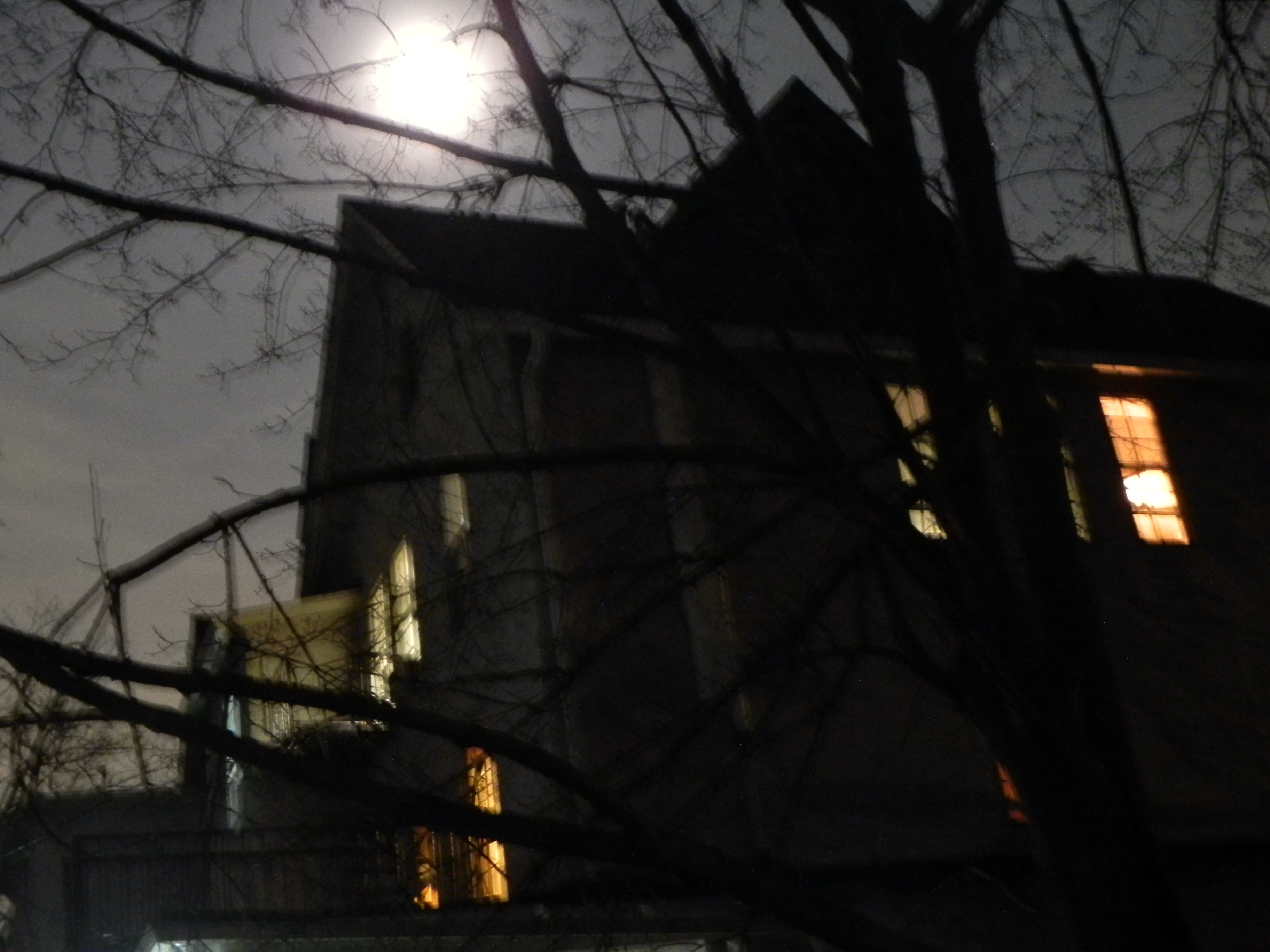
DSCN0216

The second review in this issue was for an Oxford anthology called Horror Stories. The reviewer, Victor LeValle, also comes out with a positive review of the collection. All of this makes me wonder if I missed something growing up as a conservative Christian who felt distinctively unsavory because his love of monsters and the macabre. I can’t remember ever not liking mild horror stories. They manage to evoke parts of my psyche that most other literature bypasses. I discovered Poe at an early age. That’s not to say that I like being afraid. Fear is not what I’m seeking here. It is a kind of strange redemption. In college many of my evangelical friends couldn’t understand my fascination. “Why don’t you watch something more uplifting?” I’d be asked. I was as surprised as anyone when one of my very few Grove City dates agreed to see Nightmare on Elm Street with me. Not even Shirley Jackson could’ve seen that one coming. I wonder how she’d respond to being written up as an evangelical inspiration?


Becoming an Icon

A kid among the Monster Boomers can’t let the death of Christopher Lee go by without comment. How many hours of my childhood were spent watching movies on Saturday afternoon TV with his many personae arresting my attention? And, of course, his prolific output just kept on coming. The Wicker Man, for instance, would never have been among my childhood fare, but his performance as Lord Summerisle is still captivating and sends shivers down my spine. Of course, he wasn’t always a horror movie star. His voice nevertheless conditioned us to be on our guard, for we knew something untoward was about to happen.

Photo credit: Avda, Wikimedia Commons

Photo credit: Avda, Wikimedia Commons

I often ponder the lure of monster movies. As a young boy, I couldn’t get enough of them. I tried to grow out of this stage, and managed pretty well through my doctoral work, but then when I found myself in a Gothic seminary where my life would be shredded and discarded, I suddenly found myself sitting up late to watch movies my family would not care to see. There was a catharsis happening here. Some would claim that it is puerile and immature—they would be the same people who’ve not been forced from careers and faced with unemployment and been dealt a failing hand by an institution that received full commitment during the formative years of an aborted career. No, those who’ve faced monsters cannot easily leave them alone.

Of course, Christopher Lee was only playing monsters. Now many people around the world can instantly recognize his name, face, or voice. We all face monsters. Our society teaches us to deny that they exist, much to our own peril. Little children, bewildered by this insanely complex world that adults have constructed, may be the ones to see most clearly. We watch the monsters on the screen so that we might figure out how to deal with them on the playground or in the boardroom. Christopher Lee was more than an actor. He was a teacher. And his best students learned something of human nature from him.


Once and Future Bible

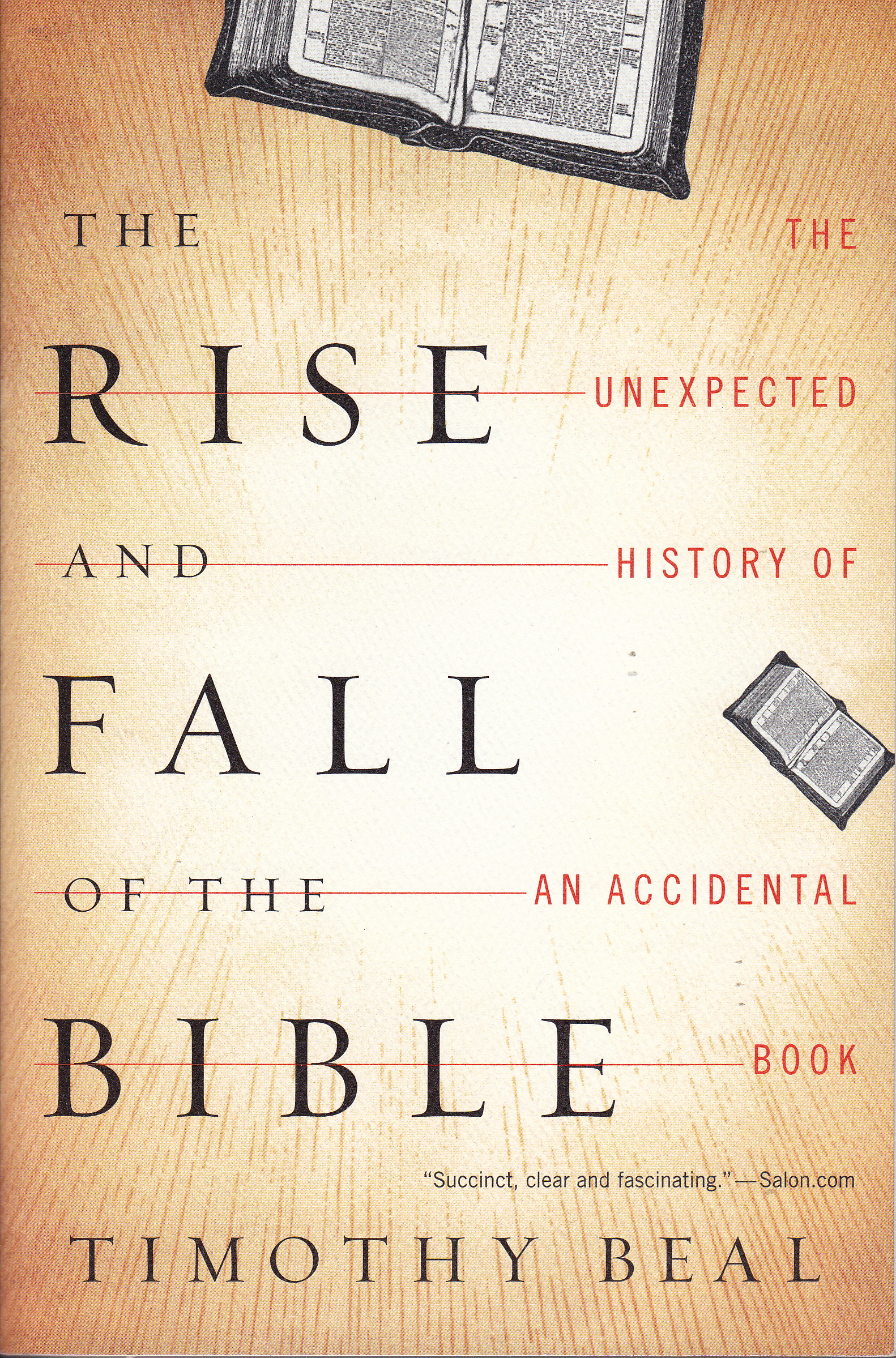
RiseFallBibleWhile I may not share Timothy Beal’s view that print culture is on its way out (I harbor hopes every time I see vinyl records making appearances in stores), he is certainly correct most of the time in The Rise and Fall of the Bible. Written for non-specialists, this book nevertheless gives his fellow biblical scholars pause to stop and think. Beginning with an eerily similar childhood experience (although mine was considerably more dysfunctional and appears to be veering back in that direction by career exigencies), Beal recounts how he came to study the Bible with a critical eye and to observe a number of important things. One of the scholars associated with the Iconic Book movement, he shows how our biblically illiterate society still values the symbolic nature of the book in various ways. We still buy, for example, lots of Bibles. We still want elected officials at least willing to swear on one. We still think it has some special kind of power.

Beal gives a brief history of “the Bible” as an idea. It is essential, as he notes, to realize that as a “thing” the concept of Bible is fairly recent. Certainly nobody in Jesus’ day thought of it as we do. What’s more, and more to the iconic element, Bible sellers have been looking for “added value” to boost the sales. Biblezines (of which I’d not heard) and Manga Bibles are only two examples of the many “extras” Bible vendors add to their texts. In essence they are making new Bibles. Beal wonders how much buyers read the actual biblical text as opposed to the other, more eye-catching material in these books. Bibles are made trendy and hip, decorated, dissected, and dolled up. And we feel virtuous for purchasing them. We play right into Big Dan’s hand, if you get my meaning.

A fascinating collection of interesting bits about the way the Bible has been re-presented to the same public for over two centuries, The Unexpected History of an Accidental Book is an appropriate subtitle here. Those who fueled the Bible craze—those that we now routinely call Fundamentalists—are among those most distressed by the indignities perpetrated upon what was once considered a sacred text. What can be more fundamental than making money off people’s beliefs? Still, for Beal and his colleagues who have managed to land the rare positions teaching Bible, there is an urgency about this whole enterprise. “These jobs,” in Bruce Springsteen’s words and my own experience, “are going boys, and they ain’t comin’ back.” Meanwhile our culture will continue to make love to its holy book, even though they may not recognize who they wake up next to in the morning.


Forest of the Subconscious

The mind is not the brain. This isn’t mystical mumbo-jumbo (although there’s nothing wrong with mystical mumbo-jumbo either). We’ve been bombarded with the message that we are meat machines for many years now. Those who have studied physics and plumbed its depths often tell us that if we had all the bits of information involved, we could figure out anything. Our minds are our brains and it is merely electro-chemical signals that form a kind of operating system for this biological computer. The idea that we have a separate mind, we are told, is an illusion. Interestingly, studies of the subconscious mind raise significant questions regarding this interpretation. The subconscious, it is generally acknowledged, was discovered by Sigmund Freud. Prior to Freud many people did things and didn’t know why. Now we know, despite debates about the details, that we have to consider the subconscious mind as well as the more familiar conscious one.

I’ve been on a Through the Wormhole kick lately. Since we don’t have television, I have to watch the episodes after they air, but at least I have the option of doing this when I have some time. I recently watched the subconscious episode. The truly amazing takeaway from this was that our minds often, daily, in fact, operate on a level that we know nothing about. There are ways of tapping into the subconscious mind—meditating, as I mentioned earlier this week, is one way. Others are more scientific. Stimulating areas of the brain with small amounts of electricity can enhance abilities that we never knew we had. In fact, we might even be able to enact a Matrix-like download of information. I think I may have swallowed the blue pill after all.

DSCN2021

Call it a gut-level reaction, but I have always had a strong resistance to the idea that we are mere automatons. Consciousness, which, increasingly we’re discovering, involves a dose of subconsciousness, doesn’t feel at all like a we’re programmed. Theologically, I always objected to the strange notion of predestination. It made no sense, theologically, or experientially. One very wise professor once told our class, “If you want to test this, tell your spouse that you’ve got her or him completely figured out. They will do something you don’t expect.” Our minds are perhaps the most miraculous parts of human beings. The concept that we are merely following the pre-determined laws of physics makes no sense unless we believe in a literal Hell that we’ve made of this world. Are we programmed to self-destruct? I believe not. Whether in my conscious mind or in the true mind that lies underneath it.


Molly Picture

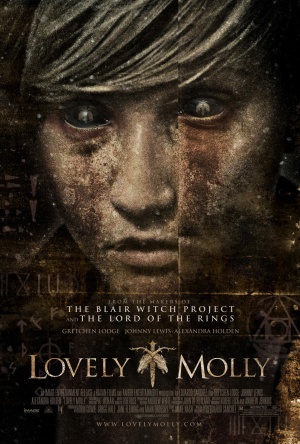
Lovely-molly-posterMaybe I’m getting out of practice with my horror movies—I don’t have time to watch them like I used to—but Lovely Molly left me a little confused. I suppose I’m more susceptible to big advertising than I’d like to admit, but I knew about Lovely Molly from the massive Times Square ads back when I was still with Routledge. I’m ambivalent about demonic possession movies, but I put it in my mental bucket list until I had a weekend evening alone to fire it up on Amazon Prime. As I’ve noted, it left me more confused than scared. Yes, watching it kept me tense, not knowing what was going to happen next (I knew nothing of the story beyond that it was a possession story) but as gruesome as a couple scenes were, the question of what’s going on never really got resolved. It’s pretty clear that Molly was abused as a child, turned to drugs to cope, and is having a breakdown after moving into her creepy childhood home. If her newlywed husband didn’t hear some of the sounds, it would seem to be a conventional breakdown story. Eduardo Sánchez doesn’t show us the monster until the very end, and even then, not clearly. I had to turn to online discussion groups to understand what I’d just watched.

While in this post-modern age no one is qualified to say what anything really means, if fans are to be believed, the DVD extra implicate the demon Orobas. I’m no expert on demons, and I couldn’t recall having heard the name before. In the “found footage” scenes where Molly eerily hums to herself while visiting the sites of childhood memory in the house, she does uncover what seems to be the symbol of Orobas. This is a horse-headed, horse-footed demon with the body of a man. Indeed, when she is being stalked by what she believes to be the ghost of her father, Molly hears horse hooves on the floor. In the final scene, she leaves a photo album for her sister to find with her father’s head covered with pictures of horse heads that she’d cut from his wall of framed pictures, apparently of prized beasts.

The real horror here, however, is in what seems to be a misogynistic implication, no matter how justified, that Molly (and her sister) are the murderers. Molly reveals that her sister killed their father, and Molly herself dispatches, it seems, the preacher, her husband, and the girl of the neighbor next door. She, however, is the one who had been victimized. If this is a case of possession, at least by implication, then the male demon is to blame, but it looks like Molly pays the price. The evidence is circumstantial and Molly disappears at the end, leaving open the room for a sequel. While I felt no need to sleep with the lights on after watching it, the movie has enough provocative material to make me think about it, trying to figure out what was supposed to have transpired. I suppose that many horror movies are more straightforward, but the more easily forgotten for being so.