Time and Again

One score and ten years ago, I graduated from college. I also enrolled in seminary and worked in a United Methodist summer camp. I bought my own car and worked as a bag boy in a grocery store. I also met my future wife. Last night we watched Back to the Future, the sleeper hit and highest grossing film of 1985. There’s been a bit of buzz about it because, discounting the sequels, Doc Brown wants to travel thirty years into the future, yes, 2015, which seemed impossibly far off back then. I have to think his envisioned 2015 was more advanced than what we’ve actually managed. Technology, instead of sending us to Jupiter like Arthur C. Clarke imagined, has instead focused on the incredibly tiny. We now do finally have Dick Tracy wrist-phones with real-time images, but we’re still pretty much earth-bound and our rockets are aimed at other people rather than outer space. Instead of fighting aliens with lasers, we’re shooting fellow humans while at church, synagogue, or mosque. Instead of presidential candidates who want to see how far we can go, we’ve got a stagnant pool of people who want to turn the clock back to, well, 1955.

Back_to_the_Future

Don’t get me wrong—this is a fascinating time to be alive. Just yesterday I sat down to recollect the number of computers we’ve purchased as a family and what each could and couldn’t do. Our first couldn’t connect to the internet since no such thing existed. Our first laptop—which we still have—weights as much as a current desktop and has a black-and-white screen. Now we walk around with the internet in our pockets, never really disconnected from a web in which, I’m sure, lurks a huge spider. But back in 1985 you could make quite a few, as it turns out, false assumptions. Church attendance was healthy and would always continue so. We had space shuttles and were looking to walk on other planets. Rock had matured into a provocative mix of selfishness and social protest. Despite the president of those years, things seemed to be improving.

In Back to the Future, Marty McFly returns to the same Hill Valley he left. A fictional town, I noticed last night, that had a seedy downtown square with adult themed stores and movies. The 1955 square had bullies and manure trucks, but a cleanness that was only on the surface. When Marty’s DeLorean reappears in the square in 1985, he crashes it into a Church of Christ. Although this detail had escaped me before, now it strikes me as somewhat prophetic. Thirty years into the future and, like Marty, we are backing out of the church into an age of nones. Our nones not only refer to our religiously unaffiliated, however. We have nones who’ve lost faith in our government, our economy, and our worldview. Instead of going to Jupiter, we stare at our palms. And like Doc Brown, we look back thirty years with nostalgia and wonder at how wrong we are when we believe in the status quo.


Witnessing Angels

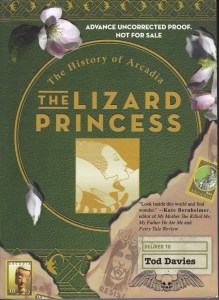
OrdinaryAngelBack in my undergraduate days, I wanted to learn more about angels. Surprisingly, there were no courses offered on the subject, even at evangelical Grove City College. When I finally took an independent study on angels, I found that few serious books had been written on the topic. I was immature as an academic, and I hadn’t learned that the subject of angels was a kind of scholarly embarrassment. Although many biblical scholars still clung to the idea of God, most had jettisoned angels along with other Medieval fabrications such as dragons and virgins. We inhabit a hardened, material world with no room for spiritual beings flitting about. As a student of ancient Near Eastern religions, I discovered angels possessed a hoary pedigree stretching back to Mesopotamia and perhaps beyond. Susan R. Garrett’s No Ordinary Angel opens the question again, and considers the many roles that angels have played and continue to play.

Subtitled Celestial Spirits and Christian Claims about Jesus, the book goes beyond the issue of angels per se, and addresses the distinctly Christian concern of how Jesus differs from them. What becomes clear in the reading of the study is that uniformity isn’t to be had. The earliest Christians already had divergent ideas on many concepts. As Roman Catholicism developed, angels attained a natural role in a world that still allowed mystery and shadows to exist. Protestants, the progenitors of much of science, cleared the closets of supernatural beings, leaving God and a table instead of the hosts of Heaven and an altar. I’m oversimplifying, of course, but there’s a sense in which the more liturgical traditions have more room for angels and demons. You don’t call a Protestant for a proper exorcism. Still, Garrett knows her stuff and shows how angels insinuate themselves into several aspects of sacred experiences of both Protestants and Catholics.

Angels come at births and deaths. They heal the sick, they protect people and they worship God. They rebel and fall, becoming Satan and his minions. Angels are, by their nature, liminal figures. They help to transition people between different states and worlds. As early back as written records, people believed in them. Outside of academia, people still do. God has become wrathful and distant in his old age and, well, you can talk to an angel without having to worry about vaporizing. In antiquity they were messengers. When God didn’t condescend to the earth, angels would come down. Now we get the sense that they’re more like us than we might have originally thought. Or maybe we’re more like them. Angels, even though they may have fallen out of academic fashion, are sure to endure longer than most weighty treatises, no matter how well footnoted they may be.


A Writer’s Life

WeHaveAlwaysLivedSometimes, an experienced editor once told me, the author’s life is just as important as the book she’s written. I can’t pretend to know much about Shirley Jackson, beyond that she wrote compelling fiction and that her name is barely recognized today. Best known for her short story “The Lottery” and her novel The Haunting of Hill House, she didn’t match the output of more prolific writers and therefore, in a world driven by capitalism, didn’t receive much notice. Her work is difficult to classify. Not exactly horror, it is nevertheless unsettling by implication. There’s something wrong beneath the surface. Jackson apparently suffered neuroses for much of her adult life, and her ability to translate angst into literature has gathered her a following among fans of ghost stories. I just finished reading her last novel, We Have Always Lived in the Castle, a funny, quirky, and serious story about two young women who live alone and who, one suspects, are thought to be witches by the local population.

This little novel is difficult to lay aside for long. The characters of Constance and Merricat are too compelling to leave alone for any length of time. The fact that they are pariahs makes the reader want to ensure that they are safe as they remain carefully inside the home they’ve always known. Even though you know one of them murdered her family, you want them to be happy and secure, perhaps because the whole town is against them. I wouldn’t presume to say what Jackson meant by this story, but to me it seems a clear description of xenophobia by a woman who felt she was never accepted. Women being persecuted in New England always brings witch trials to mind. Although we don’t know why one of the girls killed her family, it is easy for the mind to fill in the blanks.

Although Jackson died prematurely, her work has influenced novelists such as Stephen King and Neil Gaiman. Uncompromising in her outlook, she allows her characters access to those strange places of the human mind where many of us wander from time to time. Merricat, for example, practices that sympathetic magic that we all, if we’re honest, admit that we attempt every now and again. Hoping in magic doesn’t make one a witch any more than prayer makes one a priest. We Have Always Lived in the Castle, although as old as I am, reflects a world in which reality can’t be pinned down. Assumptions are made and challenged. Protectors turn out to be exploiters, and the only ghosts are very human characters hated by the community in which they live. Still this is an uncanny tale, haunted by a reality that women still face in even the most progressive countries. Listening to their voices, even if from beyond the grave, may demonstrate just how much a writer’s life might mean.


By the Time I Get to Phoenix

I remember when flying involved going to a travel agent, explaining where and when you wanted to go, and how much you could afford. The agent would contact airlines, get you your best price, and you left knowing that you’d just have to show up at the airport maybe half an hour before your flight so you got there before they closed the door. For our vacation trip, my wife used priceline.com. I’ve used it for business travel myself, but when I am going for work, certain strictures apply. For this trip, expense was a major factor. We flew, outbound, to Spokane, Washington via Seattle, on Alaska Airlines. Since our final destination was Spokane (at least for the air portion of the trip), that involved a bit of back-tracking, but, being Alaska Airlines, who could really complain?

In order to make the trip affordable, we flew back on a different airline (I’m still not sure if it was American or U. S. Air; both reference the same entity, apparently) via an alternate route. Whichever airline it was had a hub in Phoenix, so we flew from Spokane to Phoenix before heading back to Newark. I’d visited Phoenix on Routledge business, but I didn’t spend much time in the airport. It became clear from this trip, however, that the Day of the Dead is a big deal for tourists. Given the popularity of Halloween, I suppose that’s not so surprising. Nevertheless, the sheer volume of Day of the Dead merchandise was stunning, considering that these were, for the most part, impulse, carry-on items. Figurines of various sorts comprised the most popular arrays. Skeletons, fully dressed, engaged in many quotidian activities, although deceased.

IMG_2394

Amid the many daily scenes, I spied a last supper tchotchke. Skeleton Jesus and twelve skeleton disciples gathered around a table for a final meal. Maybe just a little too late. While not a theologian, I couldn’t help but wonder about the implications of this. I know little about the Day of the Dead beyond its association with All Souls Day. The last supper is set up in the Gospels as the grounding, in some way, for a divine plan or redemption. In other words, it doesn’t work if the principals are dead. Already jet-lagged and fuzzy-headed, I couldn’t think to take out my wallet. I really can’t afford baubles in any case, yet there was something profound to think about here. For some reason the market will bear much more in an airport than it will in no-fly zones. Still, as I struggled to stay awake all the long way to Newark, I couldn’t help but think that this was an appropriate image to signal the end of a much needed vacation.


Martian Ethics

MartianIf you need a boot of optimism, look to Mars. Or, more specifically, read Andy Weir’s The Martian. Not that it’s the greatest literature ever produced, but it is a story brimming with humanity. Mark Watney is accidentally stranded on Mars. His crew-mates, in the midst of their multi-month-long return journey, adjust their course to go back for him. Naturally, nothing goes as planned. Although much of the story is far beyond the believability scale, Weir has the technical background to make it all sound plausible. As an engineer, Watney fixes most problems with an optimism that would leave many humanities specialists weeping in the dust. Time after time a potentially fatal situation develops that is solved by technological ingenuity. Relying on his will to survive, and good humor, the protagonist makes a remarkable journey across the surface of the Red Planet to a potential means of escape. I shouldn’t throw too many spoilers into this post since the book is fairly new. I will say it left me feeling good about being human.

Part of being human is thinking about larger issues. Often, throughout the book, Watney wonders about belief in God. Not enough to make it a main theme, but enough to merit mention on this blog. In a somewhat humorous moment, one of the mission controllers says that he’s Hindu, so he believes in lots of gods. In contrast, Watney, alone on Mars, has a vastly different perspective. Without divine intervention, or even any aliens, he finds a way to persevere when the Fates (or the author) have stacked the odds against him. Mark Watney believes in himself, and he believes in human goodness.

The decision of his crew-mates to return for him is one of potential self-sacrifice. There are no guarantees that they’ll survive. Nevertheless, there’s no second thoughts. When they learn Watney is alive, they decide to go back, no matter what might happen to them. The story awoke a strange optimism in me. Although people are capable of horrendous acts against each other and the planet, I do believe that we are basically good. The bad ones make it into the news. We could all be better, I’m guessing. Still, we will help others when we can, even if all we get from it is the good feeling that we’ve done the right thing. Unfortunately, the only people, it seems, that don’t have the best interests of others at heart are our politicians. Watching the posturing before the primaries I do have to wonder if one wouldn’t stand a better chance abandoned on Mars than in the land of the free. This may be one of the times, it seems, that trusting in human goodness might well be equated to a prayer.


Social Media and Persia

A story appeared on the BBC recently about “sin free Facebook.” The website, which started in Brazil, is based on the idea that users don’t like having swear words and violence among their friends. According to the story some 600 words are banned from use, making me think that I’m seriously behind the times. With an “amen” button and a keyword of “bless” Facegloria has been growing dramatically. Some 100,000 friends are now on board. Of course, the concept of friends in a religious conceptual context goes back to the Quakers, but they tended not to use computers, if I remember my history correctly. The odd thing, to me, is that on social media you get to select your friends already. If you don’t like what they post, why are you friends?

Sin is going through a resurgence of academic interest these days. One of the features that emerges from all this exploration is that sin is not as clearly defined as we might think it is. Wrong and right. White and black. Things in their proper order. In the biblical world the word “sin” seemed to mean missing what you’d aimed at. From there it grew to cover all kinds of infractions. Today most people think of sin in sexual terms—those things you aren’t allowed to do. Ironically we call other things phrases like “hate crimes” rather than “hate sins.” And crime is supposed to make it worse, since sin is often not illegal. Or if it is illegal, it’s not often brought to the law.

800px-Forbidden_fruit

I have a Facebook account, but I have to confess to not looking at it much. My days are busy and although the marketing departments of publishers use Facebook, those of us with editorial roles are seldom encouraged to spend time on it when we could be doing something more valuable. I arrive home so late I don’t even check my email before bed. I guess I haven’t had the time to notice the sin on Facebook. Yes, a few of my friends use what Spock might term “colorful metaphors,” but I seldom feel the need for confession after reading a post or two. My friends, like me, are fallible and many of them are in less-than-ideal circumstances. I really don’t think social media with further restraints would help the situation. Of course, I could use an “amen” button on this blog, I suppose. I think I’d rather have it read “verily,” though.


One Flew Over Cthulhu’s Nest

Pluto is a metaphor for the ultimate of outer limits. Just one of many largish objects in the Kuiper Belt, Pluto for a while held the status of the final planet in the solar system. With the photos from New Horizons coming in, we’re discovering a world more complex than most have imagined. It’s not just a snowball after all. With discovery, of course, comes naming. The planets are all named after Roman gods, just as our weekdays are named after Germanic deities. The features on our celestial neighbors often bear more prosaic names, such as those of astronomers or decidedly non-mythological human beings. As the rules of nomenclature go, the first to find claims the privilege to christen. What shall the new features of Pluto be called?

I was gratified when the New York Times photos displayed the informal names by the New Horizons’ team. There is a large area called “the Heart,” but lurking to the lower left there’s a feature being called “the Whale,” or, more appropriately, “Cthulhu.” The internet breathed new life into H. P. Lovecraft’s literary fame. Like most writers, he remained obscure for his entire life, finding really only one publisher who favored his work. Genre fiction has always been considered the bargain basement of literary artists, and Lovecraft wrote in the lowest part of that basement, horror. (Okay, well, romance might be further down, on purely literary grounds.) Only within the last few years has horror literature begun to be recognized by academics as worthy of serious exploration. Nevertheless, it was as the Monster Boomers grew up—or failed to—that Lovecraft reemerged. The world-wide web has become the lair of Cthulhu and of his minions.

Far out in the most remote reaches of our solar system, Cthulhu awaits. Lovecraft fans know Cthulhu is one of the Old Gods, but that he is also a being from the stars. His murky, dark presence has thrived on the underworld of the internet, and now has fired imagination on the darkest planet of an obscure solar system. What more could a writer dream? A fictional creation being suggested as the name of a planetary feature. H. P. Lovecraft lies decomposing under the loam of Providence, Rhode Island. His imagination, however, has reached as far as, at least to date, humanity can possibly go and find some kind of land beneath our feet. And that land, appropriately enough, is peopled with monsters. The Old Gods lie dead but dreaming, and they will rise again.

15-152


God’s Wormhole

Can God and science mix? I suppose that the third season of Through the Wormhole would be the place to look. The entire season has a distinctly metaphysical feel to it, so it is no surprise that the final episode is entitled “Did We Invent God?” It’s also no surprise that, like the other metaphysical issues explored, no resolution is really offered. Interviewing psychologists and neurologists, the show attempts to parse how scientists might address the question of God’s reality. God, of course, being immaterial, is normally understood not to be a subject discerned by science. So instead of putting God under the microscope, human perceptions of God will have to do. Everything from theory of mind to magical beliefs are probed to find hints of whence this strange idea of God might have come. The answer: we don’t know.

The more I pondered this, the more the same result reflected on science itself. When I was growing up I thought science was the truth. If science “proved” something, there was no arguing the point. I have come to realize, however, that science must be falsifiable to be science. That means it is potentially wrong. Not that it goes as far as Creationists take it to say that something is “only a theory,” but rather that science is the best explanation that we have at the moment. Future discoveries could falsify what we now know and the science textbooks would have to be rewritten. The difference here with religion is that most belief systems do not admit of this possibility. The truth has already been revealed, and there is no adding to or taking from it. God is not falsifiable. As stated above, God is not subject to science.

I don’t expect these observations of mind to change anybody’s ideas of the world. I do hope, however, that they make clear that science and metaphysics find themselves in similar situations. Both strive to know the truth. Neither can know if they’ve arrived. Both can believe it. The final episode of the season raises this point starkly. People are hardwired to believe. What they believe in is open to many possibilities, but believe they will. From my earliest days I have taken belief very seriously. What I have believed has changed over the decades, but at each step along the way I believed it was the truth at that time. I don’t know the truth. Nobody does. We all, whether scientist or religious, believe that we have found it. At the moment.

Image credit: CorvinZahn, Wikimedia Commons

Image credit: CorvinZahn, Wikimedia Commons


Night Terrors

TerrorInTheNightNightmares are the stuff dreams are made of. Or maybe I’ve got that the wrong way around. Having grown up subject to frequent nightmares, I still occasionally have them. I suppose it is easy enough to assume someone who reads about monsters and watches horror films should not find this unexpected, however, I’m not sure they’re related. My nightmares visit issues that horror films avoid, and most of my monster reading is, well, academic. Surely the scientific study of nightmares has advanced since David J. Hufford’s The Terror That Comes in the Night: An Experience-Centered Study of Supernatural Assault Traditions, but it remains a very important book. As someone familiar with the phenomenon, I found Hufford’s study somewhat therapeutic, and it certainly does raise some interesting questions.

Apart from the unfortunately, inherently sexist, folk-title “the old hag,” Hufford is addressing a universal experience of people of all ages. Using his original setting in remote Newfoundland where his work began, Hufford collected tales of what might technically be called sleep paralysis with a specific hypnogogic hallucination of being attacked. A designation, he acknowledges, that is quite awkward for repeated use. Back in the early 1980’s, when the book was published, these accounts of nighttime attacks—a person waking up, or not having yet fallen asleep, sensing a presence in the room, finding her- or himself unable to move, and sometimes seeing or hearing an entity and feeling it on his or her chest—were rarely discussed. Especially in scientific literature. They seem a kind of embarrassing medievalism related to the ancient concepts of incubi and succubi, and even vampires. Having “the old hag” (a moniker relating to witches) is what the experience is known as in Newfoundland. Hufford, taking these accounts seriously, investigated what the sufferers had experienced. Unwilling to judge whether the event “actually happened,” Hufford’s scientific objectivity is truly admirable. Since the time of his book, the concept has become widely known and the argument is often made that having heard of sleep paralysis episodes feeds those with hypnogogic hallucinations the idea of a supernatural oppressor. In other words, now that we know about it, we don’t have to take it seriously.

Hufford is one of a small number of academics that is willing to engage with the supernatural on its own terms. Religion scholars do, of course, but we are generally dismissed from the starting block anyway. Most scientists disregard the possibility of anything beyond deluded brains and say nightmares are normal. Just deal with it. Those who’ve experienced the nighttime attack know that it feels very different than a garden variety nightmare. You can tell when you’re awake. Of course, we’re of the generation who’ve seen The Matrix and Inception, and we know that, at least in popular thought, reality has become negotiable. Nobody is much surprised any more by the idea of such an attack in the night. Waking nightmares have become as common as the headlines. If only more scholars would take human experience as more than just “old wives tales” we might all be surprised at how just rolling over can change everything for the better.


Contacting Faith

Contact_0001Sometime after the movie Contact came out, I saw it while on a flight to somewhere here or there. As with most movies on airplanes, it didn’t receive my full attention and I seem to recall not hearing a lot of the sound. Having always been intrigued by the possibility of aliens, however, I told myself I’d watch it again. Several months ago I did just that, but as Carl Sagan hoped, much of the story had become somewhat dated. I finally finished reading the novel, and this was a case of the book being better than the movie (as is frequently the case). A number of things surprised me about the story, the primary one being just how prominent religion is in the plot. In the movie some crazy preacher sabotages the first machine just as it’s nearing completion, and even though Ellie Arroway is long connected to Palmer Joss, their relationship doesn’t seem to dominate the script the way it does the book.

Almost immediately upon reading about adult Ellie, it became clear that religion was a major interest that Carl Sagan had. While the chiliasts receive many scathing comments throughout the novel, thoughtful Christian thinkers, such as Palmer, find a way of being taken seriously by Ellie, despite her own personal unbelief. Unable to understand how someone could not accept the evidence before their eyes, she wants to belittle religion but can’t when serious thinkers like Palmer remind her that they have a sophisticated worldview as well. The story represents a long struggle between alternative outlooks. While as a novel it doesn’t always flow, it pulls the reader along, partly based on the intriguing character of Sagan himself.

Carl Sagan believed in life on other planets. He was less sanguine about the possibility of either ancient astronauts or current-day visitors from space, but he kept an open mind. While he was the respected author of numerous scientific papers, other astronomers didn’t always know what to make of such a popularizer. Of course I never knew him, but I have to wonder if his true beliefs didn’t appear in his fiction rather than in his factual writing. At times I found the novel slow and plodding, and as the machine gives ambiguous results, I wondered where the rest of the story could go. Sagan profoundly brings the end back to belief. Without evidence, Ellie finds herself in the place of the religious who believe on the basis of experience and faith alone. And she finds her best friend is a clergyman. Contact, with its God-like aliens, is really a story of finding oneself a place in an infinite universe. To do that well, Sagan seems to have believed, requires both science and religion.


Magic Faith

MakingWe all like to believe we don’t believe in magic. In this day of sophisticated materialism, the idea that unseen forces might work upon the world seems terribly naive and not a little embarrassing. Randall Styers’s Making Magic: Religion, Magic, and Science in the Modern World has been on my reading list for a few years now. Not so much a history of magical thought, Styers offers a history of thought about thought on magic. There are several takeaways from a study like this. One is that magic and science share common ancestors. In fact, some theorists trace the origins of science to magical thought. The height of alchemy was also the period when experimental analysis of the natural world was blossoming. There was a mysterious sense to what we now think of as impassive particles whirling around for no particular reason. Making Magic makes clear that we can’t divorce developed thinking from magical outlooks. In many ways it is difficult to distinguish religion from magic.

Not that Styers advocates magical thought. He does, however, invite us to think about it. Another takeaway from this study is that magic, when described by religious writers, is a foil. Magic is used to show how the unenlightened think about things. Those of us here in the true light would never think such backward thoughts. Indeed, magic, as Styers makes clear, often served as a kind of social control. Lower classes think magic works wonders. The upper classes know that power lies in exploitation. Magic, in other words, can’t be divorced from politics. Those in the know would only encourage magical belief to continue. Invisible forces indeed.

Magic as a regulatory force is indeed the thesis with which Styers is working. The difference between prayer and magic is somewhat effaced when closely examined. Religious belief is seen as benefiting society while magic is for selfish benefits. I do wonder, however, where the modern magical religions, such as some branches of Wicca, would fit into this scheme. They also seek the good of society. Magic need not be selfish. Making Magic is concerned with the analysis of magic by scholars who’ve shown a surprising interest in the topic. It doesn’t really address those of today who, after finding the atomic world strangely vacuous, have turned to magic to re-enchant a world grown dull and dry. Whatever one may say about magic, it still exists, and its believers are among us. Our world with its solemn, feelingless answers could, at times, use a little such conjuring.


Only Takes a Spark

Fireworks have been the main event for Independence Day celebrations ever since I was a child. The fourth of July is a day for playing with fire. As a child I remember spending the meager allowance I had on sparklers and snakes. I haven’t seen one of those ash snakes for decades now, but the impression they made remains strong. A plug of some kind of carbonish material—you’d light the top with a match and it would flame and hiss and start to grow into a long, twisting exoskeleton of ash. They left a blackened circle on the sidewalk, and when they were cool enough you could try to lift the fragile snake in your hand, but it almost always broke apart before blowing away in the breeze. We also wasted our money on smoke bombs with their multi-colored smoke, but we never had actual firecrackers. Given the trouble we could make with an ordinary roll of caps, that was probably a wise decision on our mother’s part. All of this, however, was just a prelude to the fireworks.

As I sat under a cloudy sky last night wondering why every July fourth seems to rain, it occurred to me that fireworks are a violent form of celebration. Indeed, they are designed to imitate the sounds of battle—before the nuclear age—and we all know the thrill of when the loud, bright burst of pure light sends a shock wave through you. It is like a canon rocking your soul. Like many stirring experiences, fireworks had religious overtones from the beginning. Invented in China, fireworks were used for religious festivals. They were believed to be effective at driving away evil spirits and bring good fortune. Pyrotechnics, however, clearly have military applications as well. It is this strange nexus between religion and violence that makes, I suspect, fireworks displays so compelling.

IMG_2287

The local display here in Somerset County, New Jersey, was impressive for a region without large cities. I couldn’t help pondering the strange aesthetics of contained violence as the colorful explosions took place over my head. Illusions, I know. We always talk afterward about whether some of them are meant to represent anything. Did you see a smiley face, the United States, or even New Jersey? It depends on your angle of view. Is this a religious display or a celebration of violence? Looking around at the amazing diversity of peoples gathered here in this park with me, I feel strangely satisfied. I hear languages I don’t understand, and see people from all over the world here for a good show. Although thousands of us try to get to our cars at the same time, spirits are positive, for the most part, and all go home in a celebratory mood. Maybe the ancient Chinese were right and these pyrotechnics do drive away evil spirits after all.


Seeing the Trees

Into_the_Woods_film_posterI first learned of Stephen Sondheim’s musical Into the Woods while liking in the woods of Wisconsin. I was teaching a summer term course of mature students, one of whom used one of the songs to illustrate the point he was making during a presentation. Of course I don’t remember what the point was, but I did remember the movie. Then along came Shrek and fractured fairy tales were back in business. Enchanted brought Disney into the act, and a number of self-aware takeoffs from the brothers Grimm have followed. I’d seen the film of the stage show of Into the Woods before, but it had been a while. Over the weekend we decided to watch the new Disney offering of the story and as we did a couple of familiar, if obscure, ancient mythological motifs came to mind.

Cinderella, as we all know, was sorely abused by her evil step-mother and step-sisters. She seeks solace at her mother’s grave, in the woods, of course, in the movie version. While there, singing somewhere between a lament and a prayer, her mother appears to her in the tree that grew from a branch she’d planted there many years before. It’s a musical number, of course, but my mind couldn’t help going back to Asherah. Asherah is considered by many (without good reason, and I should know) to be the goddess of the trees. Yes, this was a mortal, a dead mortal at that, who spoke from the tree but the way she was presented in the movie was distinctly divine. Indeed, there is similar iconography from ancient Egypt. It was almost enough to make me go back on my own evidence that Asherah wasn’t a tree goddess.

The giant’s wife poses a real threat in this film. Jack’s beanstalk and the effects resembled those of Jack the Giant Slayer, a movie that I only vaguely remember as being one of many I watched with bleary eyes on a transatlantic flight a few years back. Nevertheless, Mrs. Giant is here stomping about the village when Jack and the baker decide to take her out at the tar pit, with the help of Little Red Riding Hood and Cinderella. The preferred weapon is a sling. As the giantess is pelted with stones, she grows annoyed until Jack, in the perfect image of David, strikes the giant between the eyes, slaying her. We all know the fairy tale version ends with the beanstalk chopped down. We’ve entered a new world, however. A world where Bible and fairy tale are harder to distinguish. And not only that, but even fairy tales no longer have the canonical status they once held.


More Rainbows

There’s been a lot of rain this June. In between there have been some glimpses of sunshine. When the rain and sun combine, I always look for rainbows. Yesterday there were rainbows. You see, I didn’t realize until physics class that the sun has to be behind you to see a rainbow. It stands to reason, of course, because the light has to be refracted before it can break into its beautiful constituent colors. If any of the colors were missing, true light wouldn’t exist. Even with many of the religious grumbling, the United States took a fumbling step toward justice yesterday. Justice is something that always comes as a bit of a surprise these days. I’m not sure that we can always trust those that money puts into power. Nevertheless, gay marriage is so in the spirit of America that I wonder it has taken so long to become legal.

I’m heterosexual and I’ve been married for over a quarter century. I know the benefits of married life, so why should they be denied any couple that love each other? Raised on conservative Christian literature that taught me homosexuality was evil, it took some intensive education to unlearn what I’d been told. The Bible has very little to say about homosexuality, and in each instance where it does there are extenuating circumstances that must be considered. The Bible, which hasn’t become authoritative for stoning adulterers (heterosexuals all) had somehow been the final word to oppress those whom nature has oriented to the same gender. I had been told “no animals are homosexual.” That is wrong. Documented cases time and again show that homosexuality is as natural as rain. Just ask the bonobos. For literalists that’s a problem because we’re not even, from their point of view, evolutionarily related.

So although it is a cloudy, rainy Saturday morning, I’m strangely optimistic. There may be rainbows today. Now if only we could spread the message wider, raise our voices louder, and maybe join in singing “Amazing Grace.” Maybe we could dare to dream that races and genders should be treated equally. Will our Supreme Court ever make true equality the law of the land? Yesterday brought us over a major hurdle. I don’t want to rain on this parade. Still, justice demands that more work be done. I rejoice with all loving humans that marriage is open to all. Charleston is still on my mind. And if some rain does fall today I can always keep what sun there is to my back and hope that there will be more rainbows.

IMG_1087


Drumheller Drama

Those who’ve participated in the great drive out west—if you’ve done it you know what I mean—have passed through the range of dinosaurs. Actually, dinosaurs can be found here in the east; New Jersey once had a reputation of the home of the hadrosaurus, before an even larger beast took over the state. In my native Pennsylvania the occasional dinosaur footprint would be found. But to really see the dinosaurs, the west is best. In Makoshika State Park you can find triceratops skulls right out on the ground. You can find plenty of Christians as well. Ironically, we’ve advertised to the world that Christians and dinosaurs don’t mix, but, in fact, they can get along just fine. In a BBC story my wife sent me, one of Canada’s great western dinosaur reserves, Drumheller, Alberta, has a potential clash between sauropods and savior. Seen from one angle, at least. The story by Tom Holland points out conflicting wills for an entrepreneur who wants to build a dinosaur display and a long-established passion play that occupies the space he wants.

Dinos

News doesn’t get read without some measure of drama, so Holland pits the dinosaurs against the Christians. What seems to me, however, as the real issue is entrepreneurial expansion versus what seems like an arcane melodrama, the reenactment of Jesus’ death. Ironically, the greater part of North America was colonized by Christians of various descriptions. Many of them established their culture in various ways across the landscape. As a culture, it wasn’t always belligerent, and sometimes even beneficial. Passion plays, once upon a time, were considered the mark of culture. Jesus, I’m sure, knew nothing of dinosaurs but would have had no problem with them, I contend, if he had.

The issue here is less about science versus religion as it is about cash versus culture. Even Ahab turned his face to the wall when he couldn’t have the land that he wanted. If someone else got there first and made a recurring shrine, does capitalism have the right to slough it out of the way? I love dinosaurs. I’ve driven many miles out the way to see dinosaur trackways far beyond the trodden path. These are but shadows of footprints cast millions of years ago. Both dinosaurs and Jesus have their place in our hallowed past. While pictures of Jesus riding dinosaurs may well be over the top, the message perhaps rings true: there’s no inherent conflict here. When someone wants to make quick cash, however, there will always be sacrificial victims involved.