Music Alone

Thinking back to our days in Edinburgh, I had a song come to mind. I could remember only a word or two, but the tune and the cadence were still there. Not a singer, nor even a hummer, the best I could do was ask my wife if she remembered the song based on the two words I could recall. Amazingly, she did. When I went to download it on iTunes, I learned that it isn’t available in the US. Probably copyright laws—these can be quite bizarre. Music has a way of staying with you and one of the songs unforgettable to those of us growing up in the ‘60s is Don McLean’s “American Pie.” In a recent Bloomberg View piece, Stephen L. Carter, a professor at Yale, laments the fact that McLean’s original notes for the song are going up for bids and, after five decades of guessing, we may finally learn what the cryptic lyrics mean. Or will we?
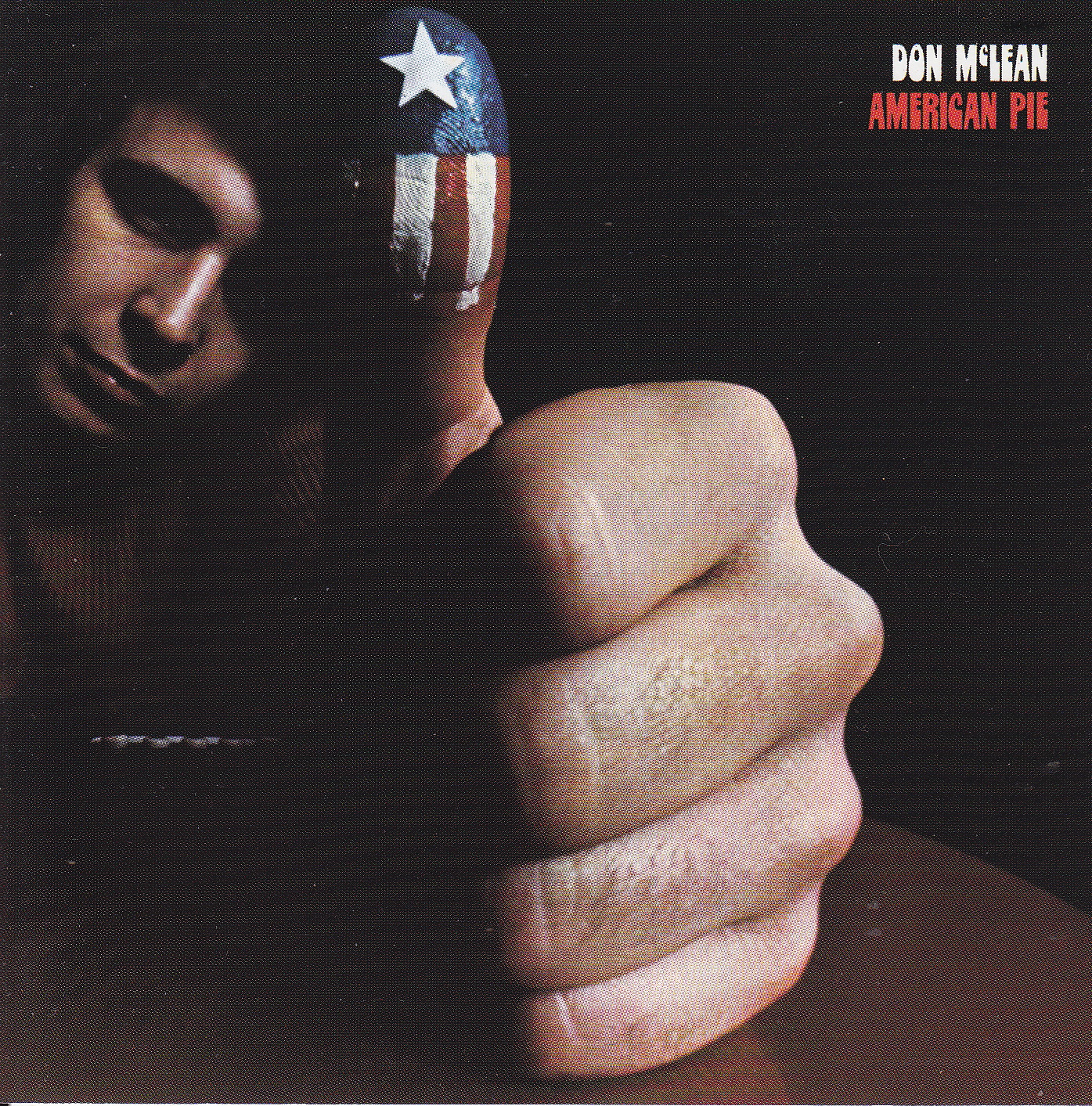
AmericanPie

A colleague of mine used to say, “words don’t have meanings, they have usages.” In the literary technique known as reader-response criticism, it is the reader who has the final say in what a passage “means.” An author may intend one thing, but who is the author to control the meme once it’s out? (You can see why some biblical students get upset by such things since the same thing applies, even if the author is God.) While I’m not po-mo enough to accept this completely, it has introduced an edge of caution to my reading. After all, if an author is dead (ahem) we can’t question him or her to find out what they meant. Even if they remember. “American Pie” is notable for its lyrics with religious imagery which, fairly clearly, are not really religious. Or are they?

Carter laments the coming unveiling. The mystery will be gone. Don McLean, the ultimate one-hit wonder, will walk away with the goods yet again. I have no doubt that there will be analyses and hermeneutical disquisitions. The learned will claim that we finally have the answers. I’m not so sure. What if the “Father, Son, and Holy Ghost” turn out to be Buddy Holly, Big Bopper, and Richie Valens? What does that mean? Perhaps Don McLean, like any old prophet, was merely a vehicle for a message received from elsewhere. The questions go back in an endless regression, and no answer will ever be final. We all know the song is about “the day the music died.” As the old camp song says, “music alone shall live, never to die.” And as I sit here trying to remember how a song I last heard two decades ago goes, I’m pretty sure that the camp song is right, whatever it means.

Animal Form

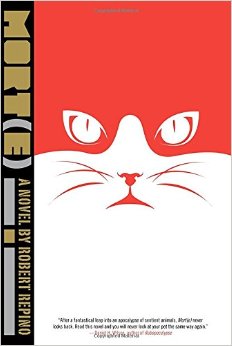
Mort(e)The fear of insects is fairly common among people. It is difficult, however, not to appreciate the “hive mind” and how insects in colonies work for the betterment of all, often at the expense of the individual. Now imagine that the hive mind resents what humans have done to insects over the millennia. And suppose that their massive mind allows them to develop a hormone that transforms animals into partial humans with consciousness and, for the most part, workable hands. Then you’ve got the premise of Mort(e) by Robert Repino. A debut novel about a cat (Mort(e)) and his desire to find a friend in the fog of war that follows the transformation of animals into people, the story is as compelling as it is creative. Add in a strong dose of religious concepts (Mort(e) is considered a messiah among the battered human population, and he has a prophet) and you’ve got a captivating story perfect for comment on this blog.

While not all novels I read have a religious element, a surprising number do. And this isn’t because I pick stories with religious themes. It is because religion pervades the human outlook on life. Repino’s novel, however, does go beyond a casual mention of religion. It turns out to be central to the plot in a way that, were I to describe it here, would constitute a spoiler, and since I want to encourage reading of Mort(e), I don’t want to reveal too much. Suffice it to say, without religion a large part of the story would be missing. No matter whether you believe religion is good or bad, you’ll find plenty to think about here.

These days I read novels liberally mixed in with non-fiction reading. Sometimes I’m disappointed after I spent a few hours on a book and find it to lack substance. (Sure, I do read as a guilty pleasure from time to time, but here I mean the kinds of books you invest in.) Mort(e) is a substantial story. The world in which the protagonist operates can be described as apocalyptic, and end-of-the-world scenarios have a way of raising questions about what we believe. The time spent reading Mort(e) is a good return on investment. And once it has been out there long enough, I’ll want to return to that plot spoiler to investigate it further. It’s that kind of book.


Overboard

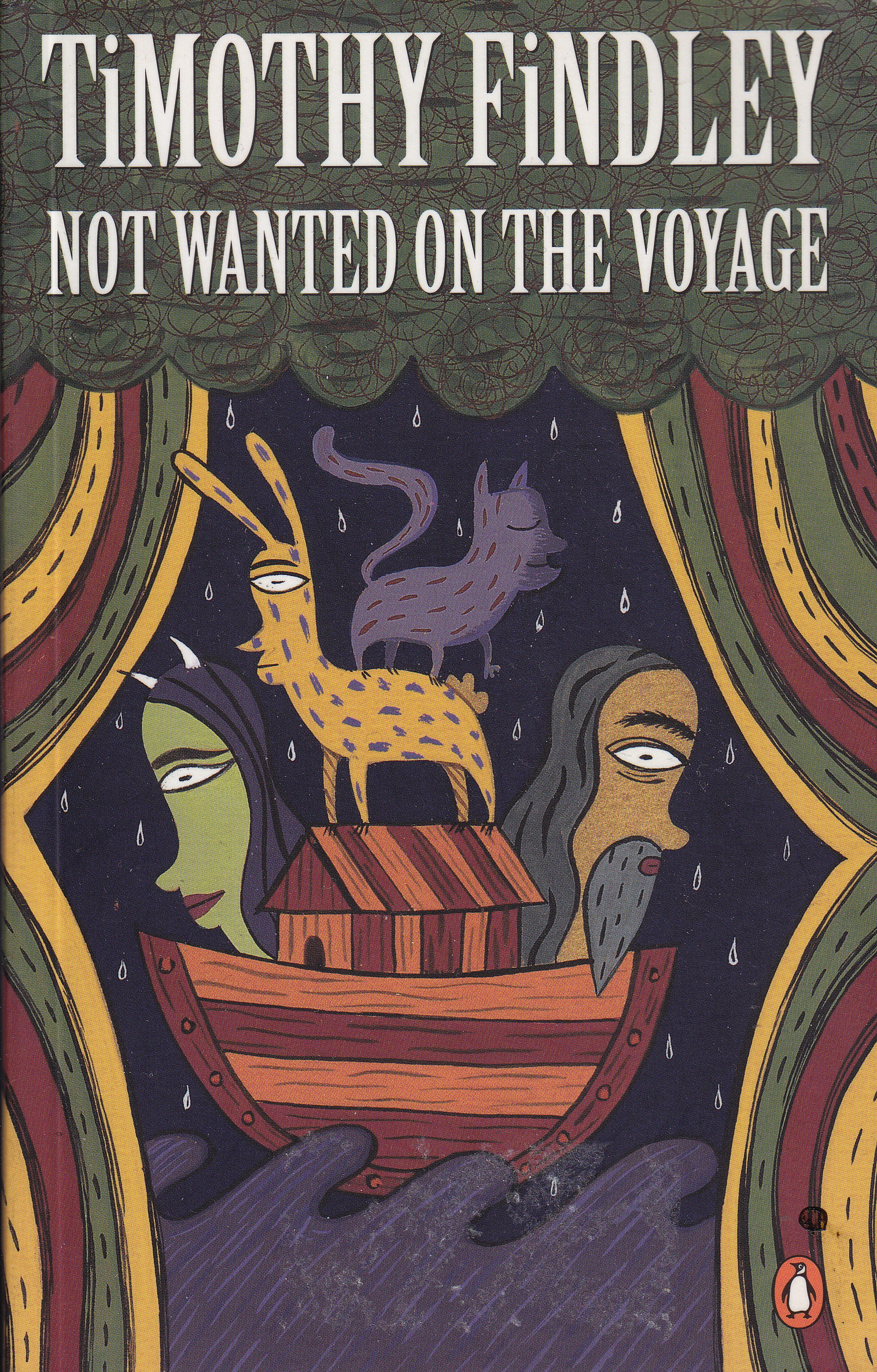
NotWantedOnTheVoyageThe story of Noah has long fascinated me. The world of early Genesis is so mysterious and compelling—a mythical time when all the action seemed to be taking place in just one bit of the world, and events were always momentous. Noah, the new Adam ten generations on, stood out as the prototypical good guy. The sort of fellow you’d like living next door. An everyday hero. The movie Noah, however, introduced a dark and brooding ark captain whose unyielding devotion to his own concept of righteousness led to a tormented journey over the flood. I wonder if Darren Aronofsky read Timothy Findley’s Not Wanted on the Voyage. Recommended to me by one of my students, this novel was difficult for me to categorize. At first I thought it might be a funny story—despite the tragic overtones, there is much in the flood story that suggests humor—but no, it was more serious than that. Noah was cast in a primeval, post-Christian world where elements of the twentieth century were freely available, while others were not. And more troubling, Noah was not at all a nice guy. Indeed, he is one of the best written antagonists I’ve encountered. You shudder when he enters the room.

Apart from Noah, however, the novel explores the premise that Yaweh [sic] sent the flood as a final, dying act. Old, feeble, yet the creator of everything, the deity is ready to give it all up as the absentee landlord who has no idea what’s happening on earth. The reader feels little sympathy for the divine. Like humanity, he set something in motion he has no hope of controlling, yet which he can destroy. As he is about to die, unbeknownst to all humans, he sends the flood. Noah, six-hundred years old and senile, oversees his ark with an iron hand. His religion has made him cruel, and I was frequently left wondering whether those who survived were more fortunate than those who did not. As a fantasy the story works, with well drawn characters and a devious plot. The problem comes in trying to reconcile it with a Bible story all too well known. In the end we’re left wondering if the flood does really ever end, and, if so, does anything turn out okay.

Known for his dark, conflicted characters, Findley adds a macabre dash of the improbable to an already unbelievable story. Mrs. Noyes, aka Mrs. Noah, is perhaps the most sympathetic character in the novel. Her son Ham, cursed in the biblical version, is clearly the best son, but one his father dislikes by reason of his love for science. Part morality play, part farce, Not Wanted on the Voyage can be a disturbing novel, rather like the movie Noah. That’s not to suggest there’s no message here. I see it as a cautionary tale of a misplaced faith taken too far. Instead of pleading to save humanity, Noah seems only to glad to let all but his own be wiped out. His sons disappoint him, and the one daughter-in-law he appreciates disappoints him in the end. Perhaps this is what destructions are all about. Does any flood really have a happy ending?


Coming of the Green

For many years I actively attended to the calendar of saints while at Nashotah House. Although we celebrated Mardi Gras, we never seemed to celebrate St. Patrick, although he does hold a place on March 17. I suppose most people were too busy wearing black to attend to the green. I always, however, donned some verdant vestment for the day, and we usually had leprechaun gifts left behind for my daughter. After leaving Nashotah, I discovered that many universities scheduled spring break around St. Patrick’s Day. This wasn’t because of any love of the Irish or of liturgy, but because campus damage was so bad after the heavy drinking of that day, that many schools decided to let that be somebody else’s problem. St. Patrick isn’t particularly associated with alcohol, but even a quick walk by the bars of New York City demonstrates that the saint has found a home among the inebriated.

Little is known of the historical Patrick. He was associated with Lough Derg, an island of which was said to contain Purgatory. The lake also boasted a sea serpent, which may give some background to the legend associating Patrick with the banishing of snakes from Ireland. The shamrock story is likely apocryphal, but there’s no denying the brilliant green of the Emerald Isle, so the tradition developed of wearing his favorite color to commemorate the day. The traditions of Patrick grew by accretion. The Irish belief in wee folk gave legs to the leprechaun connection and, I’m told, heroic drinking might lead to the seeing of the same. One reason his day might have been downplayed liturgically is that it has become an unlikely cultural holiday. Those of us with some Irish ancestry run into some pretty high numbers.

The myth of St. Patrick is more powerful than his history. This may be a lesson for us even today. The stories we tell of our cultural heroes need not be grounded in fact in order to be meaningful. Over time the religious of many faiths have grown more and more literal to demonstrate their devotion. This is a risky proposition. We know little of the life of Patrick, or even of Jesus and other various religious founders’ lives. Their followers have been free to fill in the blanks for many centuries, building meaningful legends. I have no idea if Patrick of Ireland liked green. He may have found snakes charming. Upon an intemperate evening he may have seen leprechauns dancing about his parlor. It is less the tale that is important than it is what one might choose to learn from it.

StPat


The Greens

It would take a lot to make me open a website called “Business Insider.” Despite spending far too much time on the internet, my regular sites are few and my ability to find interesting stories often depends on my wife, daughter, or friends pointing out to me what they’ve found. I knew nothing, for instance, of the dress whose color flummoxed the world for a few days. Someone sent me the link and I pondered how strange the world wide web has become. There was a deeper issue, however, and another friend sent me a story on Business Insider to underscore the point. The piece, by Kevin Loria, is entitled “No one could see the color blue until modern times.” At first I scoffed. Blue is my favorite color, and I’ve always been able to see it. Then I read the piece. (It is a bit frightening in the context of a publication called Business Insider, however.) Beginning with yet-to-be prime minister William Gladstone (when is the last time a world politician knew his or her classics?) scholars began to notice that ancient writers such as Homer did not reference blue. Apart from ancient Egypt, most ancient cultures lacked a word for the hue (and remember when you read it in the Bible you are seeing the words of a frustrated translator). Did they even notice blue? The paucity of ancient records may be to blame. But then, Loria looks at modern experiments.

People who live in particular environment develop the ability to distinguish shades of colors that are difficult for the computer-bound to appreciate. For example, Loria cites an experiment in Namibia where members of the Himba tribe could not distinguish blue from green. They could, however, pick out a very slightly different shade of green with ease. In a world surrounded by greenery, knowing subtle differences is important. And we only pay attention to what is deemed important. Scientists have known for a very long time that we are flooded with sensory information incessantly. With our five basic senses an overwhelming amount of data bombards our brains constantly. Those who survive in this world have to determine what is truly significant.

Stepping back to apply this to societies as a whole, I find myself in a distinctly Tillichian mood. What is of ultimate importance? If our society is focused on lucre, it would seem that we, like the Himba, should be able to detect thousands of shades of green. Instead, we find a world full of color. I’ve been working in Manhattan for over three years now. While interesting, I have to admit that much of the city looks gray to me. Even the green on the rare dollar bills that come my ways seems surprisingly subdued. We notice color because it is important to our survival. Artists who work with color in unexpected ways are often under-appreciated for their talent. Those who splash color flamboyantly are accused of being garish. Amid it all, I turn my eyes toward the sky whenever possible. In my youngest days I learned its color is blue. And there is no other color I would rather perceive.

SDC10629


Once Bitten

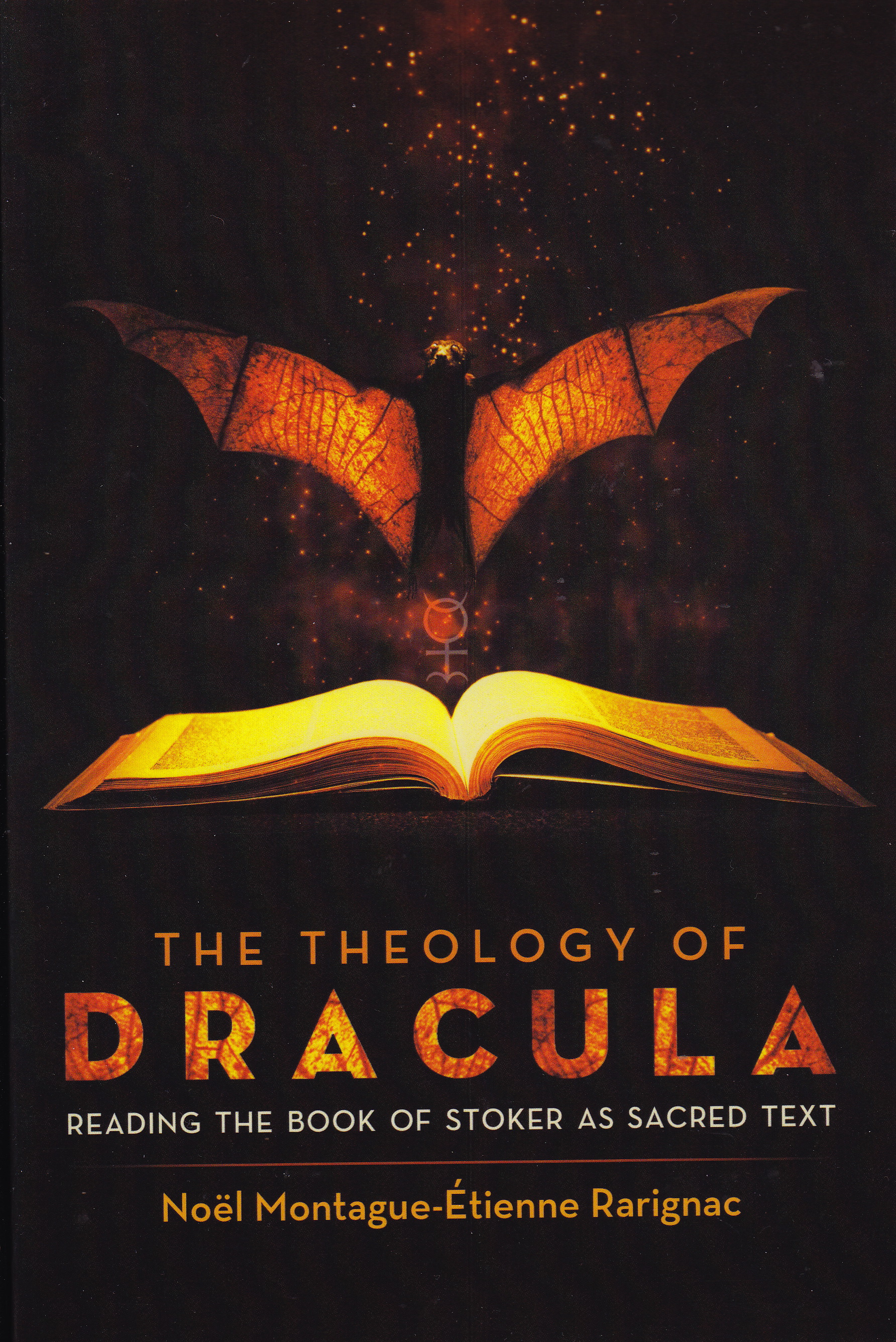
TheologyOfDraculaOnce vampires sink their fangs into you, it’s hard to shake them. I’m referring to an intellectual connection here, instead of a physical one. M. Jess Peacock’s book on theological vampires spurred me to read Noël Montague-Étienne Rarignac’s The Theology of Dracula: Reading the Book of Stoker as Sacred Text. It has been on my “to read” list for some time, and since I finished re-reading Dracula recently, I felt the canonical text was still fresh enough in my mind to take on an analysis. I have to confess that even though I grew up as a religious kid, and I loved monsters, I had no idea that the two were connected. Strangely, religion tended to elicit a fearful response while monsters gave me a kind of comfort. Of course, I always supposed that was normal. Then I learned that mature adults didn’t talk about, or even think about, monsters. I had to try to find solace in religion instead. Rarignac clearly figured out, however, that Dracula was a sacred text long before I came along.

What exactly does it mean to treat a book as a sacred text? Before anyone gets any funny notions, I need to say that Rarignac is not suggesting vampirism is, or should be a religion. That hasn’t prevented other people from seeing it that way, but that’s not what this book is about. It is about Bram Stoker’s Dracula. Devoting the kind of attention to detail that is often reserved for biblical texts, The Theology of Dracula examines the many religious traditions (not all of them Christian) that lie behind the novel. Stoker drew on many “pagan” traditions, including those of ancient Egypt and of Nordic mythology. Clearly Dracula responds to Christian symbols pretty violently, but he isn’t a classic Catholic. In fact, he seems to shy from Catholicism while admitting that its symbols work.

Rarignac, however, suggests more than this. He suggests that Dracula was written intended to be a sacred text. Not a Bible—we already have one of those, thank you—but a text that has its own mythology and symbols. Dracula‘s characters are not always what they seem. Careful scrutiny reveals that they often have celestial connections that tie them to ancient mythologies long forgotten by most modern people. We read the book expecting it to be about a vampire. Well, clearly it is. But not only a vampire. There is a much larger story at work in Dracula, and Rarignac has done an admirable job tracing its Vorlage (if I may step into jargon for a moment) and its wider context in the world of literary creations that specialize in our nightmares. There is much at which to marvel in this little book. I’m not convinced that Stoker intended his book to be read this way, but it is nonetheless a richer experience for it. Rarignac gives a simple monster tale real teeth.


Theological Fiends

SuchADarkThingVampires are among the most theological of monsters. Not that I’m a theologian, but I sometimes read those who are. Although zombies and vampires rival one another for the ascendent monster of the moment, I’ve always had a soft spot for the vampire, conceptually. The actual idea of drinking blood has always distressed my vegetarian sensibilities, but there is a deep intrigue about the character who constantly takes and never gives. And sees in the dark. And is practically immortal, unless violently killed. All of these aspects, and more, have theological undertones. M. Jess Peacock’s Such A Dark Thing: Theology of the Vampire Narrative in Popular Culture deals with such ideas and more. A self-admitted fan of all things vampiric, Peacock finds unexpected angles to the undead metaphor that make for connections between Christianity and the cultural vampire. He explores Otto’s understanding of the holy and how vampires fit aspects of it, the importance of blood, theodicy, and sin, as well as religious iconography and why crosses work against vampires (when they do). Most fascinating, however, is how vampires effect social change.

Since I often write about monsters, and specifically vampires, on this blog, it should be no surprise that I should read such a book. The question of why vampires have such staying power in our society is one that many have pondered. Peacock, by tying the vampire into deep theological needs (and we’ve been taught for many decades that theological needs are unrealistic fantasies themselves) has perhaps found a reason why. Just because we deny a need doesn’t mean it isn’t real. Think of all those Medieval monks denying sexuality. Biology, no matter how transcendent our focus, has a way of reminding us that we have needs. Vampires are, if anything, very forthright about their requirements. You have blood, they need blood. They will take it any way they can. And this leads to its own kind of ethic where, in some movies and stories, we, the victims, end up rooting for the vampire.

The social justice aspect of Peacock’s study is the one I found most compelling. We live in an era in which financial vampires openly and selfishly drain the blood of any victims they may find. What they do is done in daylight and no crucifix is large enough, no stake is strong enough, to stop them. We sit in our theater seats and watch as the economy rises and falls with the wealthy and their willingness to invest (or not) in the very economy that made them rich. Elections are won now by money supplied by corporations. Yes, the presidency can be, and is, purchased. Most politicians don’t know the price of a loaf of bread. Christianity, in any case, understands bread and blood to be analogues. The two are complementary, and represent the totality of human need. The vampire, as Peacock notes, can symbolize the difficulties of social justice. They may have their fangs deeply embedded in our necks, but at some level we have come to love our vampires. Even when they give us nothing in return.


Live Long and Prosper

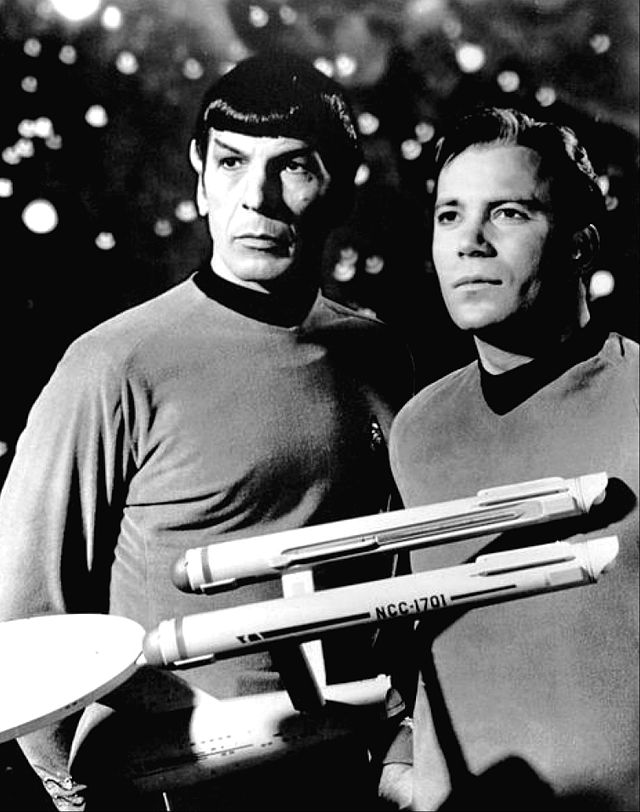
He lived long and prospered. Perhaps it’s a generational thing, but the icons of my youth have been dying. I have to confess to having sat far too many hours in front of the television as a young person, but fantasy of all sorts helped me cope with reality. Leonard Nimoy was a kind of father figure, in a way. Similar to Jonathan Frid, Russell Johnson, and Fred Rogers, all of whom stood in for an absentee parent and showed me different aspects of what it meant to be a man. Watching them die is like having someone tear pages from the book of my life—they made strong impressions, even though it was all make-believe. It’s difficult to say why Leonard Nimoy’s passing hit me so hard. I guess that the conceit of Spock living far longer than humans took hold at some level, and the rational, unflappable Vulcan seemed like a stable, if somewhat emotionally cold father to a child who was, in his own mind, conceived by the television itself.

I don’t really consider myself a nerd. I don’t have the tech to back me up. I’m more like a hermit who spends weekdays in Manhattan. Still, when anyone says Kirk or Picard, there is only one right answer. I watched Star Trek when it was new, still in original reruns. My mother decried it as “silly nonsense,” but along with other monster generation kids, I had my face pressed to the screen waiting to see what new and weird form of life might appear. It was the late sixties and all of this was fresh and untried. Star Trek became a vital part of my childhood. I think it might have been because this was a place with no limits. No limits beyond a shoestring budget, in any case. Space, as I was learning, was vast. There were endless possibilities out there.

Leonard_Nimoy_William_Shatner_Star_Trek_1968

As an adult, the possibilities seem somewhat severely effaced. I’ve tried to be rational and moral and conscientious, but I haven’t really held down a regular career. I don’t watch television any more, and instead read books and ask probing questions. Why does Spock resonate so much with me? Was it because he was apparently immune to emotion? Or maybe he was simply able to rise above it, since everyone knows he is half-human and even Vulcans have emotions, albeit deeply buried. Those of us who followed the original crew through the movies suffered through his death before. And his resurrection. This time, though, it’s not Spock who’s gone. Leonard Nimoy is one of those few people who, in their own lifetime, become a symbol. And symbols, if they are of any use, live long and prosper well after their creators pass on.


A Night at Culture

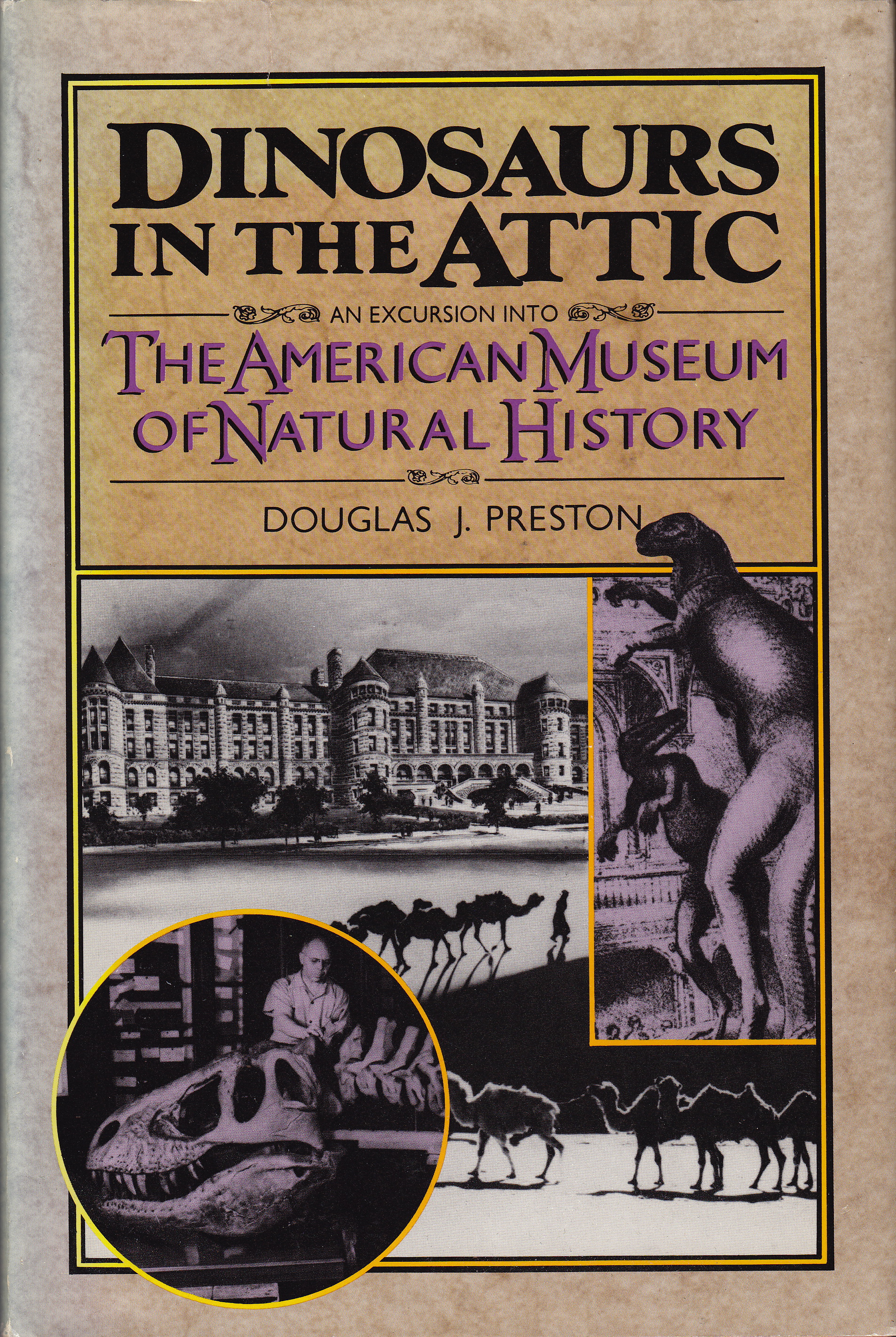
AmericanMuseumOne of the undisputed benefits of living in the greater New York City metropolitan area is the potential for culture. I know that culture exists everywhere, and that is precisely one of the points behind Douglas J. Preston’s Dinosaurs in the Attic. I picked this up at a used book sale because of my love of dinosaurs, but the subtitle provides more of a description: An Excursion into the American Museum of Natural History. Just when the first Night at the Museum movie came out, the American Museum of Natural History offered a program of nights to sleep in the museum, geared toward children. A generous family member bought us tickets and we got to sleep in the oceanarium under the giant whale dangling from the ceiling. We were allowed to explore galleries by flashlight, including the most famous collection of dinosaurs in the world. Who wouldn’t want to read about the backstory of such a museum after such an event?

As might be expected, with roots in the late nineteenth century, it was a different world in which this museum was conceived and built. Rare animals were shot to be part of exhibits, artifacts were acquired and shipped across national borders, and even world-class bird collections were bought to help an indiscrete baron avoid the humiliation of having an affair revealed by a blackmailer. Still, the religious element was clear. One of the founders for the museum, Albert Bickmore, went off in search of artifacts with his Bible tucked under his arm. Exotic places and peoples were still allowed to be called exotic, and the museum eventually became famous enough to star in a movie.

What struck me the most about this fascinating story, however, is when Preston points out that the most fragile, and valuable possession of the museum are the myths. Early ethnographers visited peoples that, even then it was already too clear would become extinct (culturally), and recorded their religious stories. This, and not the thundering Tyrannosaurus Rex, was the true purpose of the museum. Museums are about people. What we discover, what we make, and how we impact our planet. Myths, religious stories, are some of the most unique and delicate pieces of information that we can leave behind. Even materialists have beliefs. We all believe in something. Although nobody goes to a Night at the Museum to read dusty old stories, it is a source of comfort that they are there. Many of the cultures have indeed died out. Were it not for the foresight of those who could see where globalization would eventually lead, they would have been forever lost. And a world without myth is not a world worth living in.


Lazarus, Come Forth

The red-cast face staring down from the giant LCD billboard this side of the Lincoln Tunnel has my attention. Having become an unwitting fan of horror movies, the genre was clear from the creepy, black-eyed gaze that found me even in mass transit. The Lazarus Effect, it said. I stored the information away knowing that it would be a movie I’d have to rent and watch alone—I don’t know many other true fans, and I don’t like going to a theater by myself. Then I started thinking about Lazarus. The man raised from the dead, according to the Gospels. When I was a child I always confused this Lazarus with the one from the parable of the rich man and Lazarus. I’d never known anybody with that name, and to find it twice in the same book must imply, at some level, that they were the same guy, right? I mean, they’re both dead. So my juvenile thinking went. In the parable Lazarus, whose wounds are licked by dogs, is taken into the comfort of heaven when he dies. The rich man, it turns out, isn’t so lucky.

769px-Bonnat01

This was a bitter cold day. Dressed like I was headed to McMurdo Station rather than central Midtown, I tried to keep my head down as the wind howled through the channels constructed by excess wealth. I am always distressed to see the homeless out and about on such days. I’ve got on more layers than an onion on steroids, and I’m still chilled through. What must it be like to face such weather threadbare? There, on Madison Avenue I saw a dog being taken for a walk. He had on a warm sweater and fancy purple slippers to keep his canine feet from touching the cold ground. That dog was better dressed against the cold than some of the people I’d passed. I thought of the dog licking the sores of Lazarus. “Father Abraham, have mercy on me,” the rich man cried.

“Son, remember that thou in thy lifetime receivedst thy good things, and likewise Lazarus evil things: but now he is comforted, and thou art tormented.” The words are almost as harsh as this wind. We’ve become a society that will spend more readily on our pets than on our compatriots. Dogs, at least the breed I saw on the street, have evolved to grow thick coats. I’ve seen pictures of huskies running across the snow like their wolfen ancestors. Indeed, the wolves, where we’ve not hunted them to extinction, still manage in the winter. But then, there’s the Lazarus Effect. I’m feeling guilty thinking about putting out the money to rent it, several months down the road. There’s a real life Lazarus who could use any spare change right now. And the well-heeled dogs, I’m sure, would be made to turn up their noses from even getting near enough to lick his wounds.


Biblical Script

The popular perception of the Bible generally does not match the actual contents very well. Like most books, the Bible has its highlights: Creation, Flood, David and Goliath, Jonah, Daniel and the lion’s den, Jesus, the Apocalypse. Between all the fascinating narrative, however, come the instructions. More instructions, in point of fact, than most people would care for. Nevertheless, over the centuries the Bible has acquired an aura in western civilization. It has become what some colleagues call an “iconic book.” It is this aspect of the Bible that stands out most clearly in the Fox series Sleepy Hollow. I wrote a post about Sleepy Hollow as I began to watch the first season on DVD. The headless horseman is an agent of the Apocalypse, and clergy and witches play a prominent role in the story. I wondered if the role of the Bible would diminish once the audience was drawn into the conceit of the four horsemen thundering out of Revelation into Sleepy Hollow. Just the opposite, in fact, occurred.

Sleepy_Hollow_-_Title_Card

As the series unfolds, the Bible is drawn more and more into the story. Demons and detectives both want to get their hands on it. Not to read the Ten Commandments or the Sermon on the Mount, but because the Bible contains esoteric information. Those “in the know” can unlock its secrets and thereby save society. Ironically, this is a subtextual version of the biblical metanarrative. It is all about (from the Christian perspective) salvation. The means, however, are quite different. Jesus is not really part of the Sleepy Hollow story. The Bible belongs to George Washington, cryptically bringing politics into the story. The text is not secure; there are extra verses in Washington’s Bible, just as there are many excised bits in Thomas Jefferson’s. Washington leaves instructions for saving his fledgling nation from the evils that roamed its shores during the Revolution. Or is that Revelation?

Right up to the cliff-hanger ending of season one, the Bible comes back time and again, focusing the viewer on its magical qualities. It is a book of secrets and mysteries. Meanwhile in the real world, biblical studies positions are being slashed from universities as if the horseman’s axe were anything but fictional. We don’t want to know about the real Bible. Politicians, real ones, use it as their own sword to force their personal faith agendas onto the electorate, but we generally do not even understand what the Bible really is. We’ll fund economics, that dismal science, and business, and maybe even actual science. The humanities, however, the stuff that makes us human, we will gladly call luxuries and deny them fiscal security. So the Bible grows in stature even as it diminishes in stature. Those who don’t know the factual Bible can easily be swayed by the fictional one. Are those hoofbeats I hear in the distance?


Love the Sinner

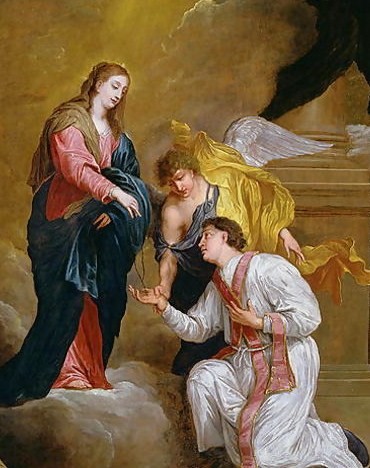
Nashotah House, in the many years I taught there, was very saintocentric. Our daily lives revolved around Saints’ Days, many of whom I’d never heard. Not having grown up Episcopalian, I wasn’t accustomed to all the obscure people recognized as worthy of having their own day. I was, however, surprised to learn that the church did not venerate the two most well-known secular saints: Patrick and Valentine. Perhaps having its origins as an all-male institution, St. Valentine’s Day was considered a dangerous concept to commemorate? But no, he wasn’t even on the calendar of saints in the Book of Common Prayer. While the rest of the world was celebrating love, we were generally getting ready for Lent.

The truest holidays mark the observations of subtle shifts in nature. With our indoor, virtual lives, we’ve lost track of the fascinating rhythms of the natural world. The birds begin to pair off and mate, so the etiology goes, around this time of year. So to baptize that pagan erotic longing, St. Valentine was brought into the picture. So the story claims. Religions have always found love somewhat of a stumbling block. On the one hand, it is the highest ethical good—the greatest moral regard you can have for another person is love. (We try not to tell them that, because it might betray too much, however.) On the other hand, love can lead to physical intimacy and there things get a little dicey. Religions of all descriptions attempt to regulate sexuality. It may be a fearful thing, so perhaps we should put a saint’s face on it. Could act like cold water on the natural fires of biological creatures in February.

St-Valentine-Kneeling-In-Supplication

So instead, Valentine’s Day has become a secular holiday. Kids send one another cheap cards indicating their enforced regard for one another. Guys carry flowers awkwardly through the streets of Manhattan. The clerk at the chocolate shop, even several days in advance, sends you out the door by saying “Happy Valentine’s Day.” It’s the secret we all know. Ironically, the church has backed away from Valentine. Perhaps, if our religious institutions took seriously what it means to be human, and promoted love as the highest good rather than political conformity, we would truly have cause to celebrate. But don’t mind me—more likely as not, I’m just gazing out the window, watching for birds and the hope of spring.


Addam’s Evve

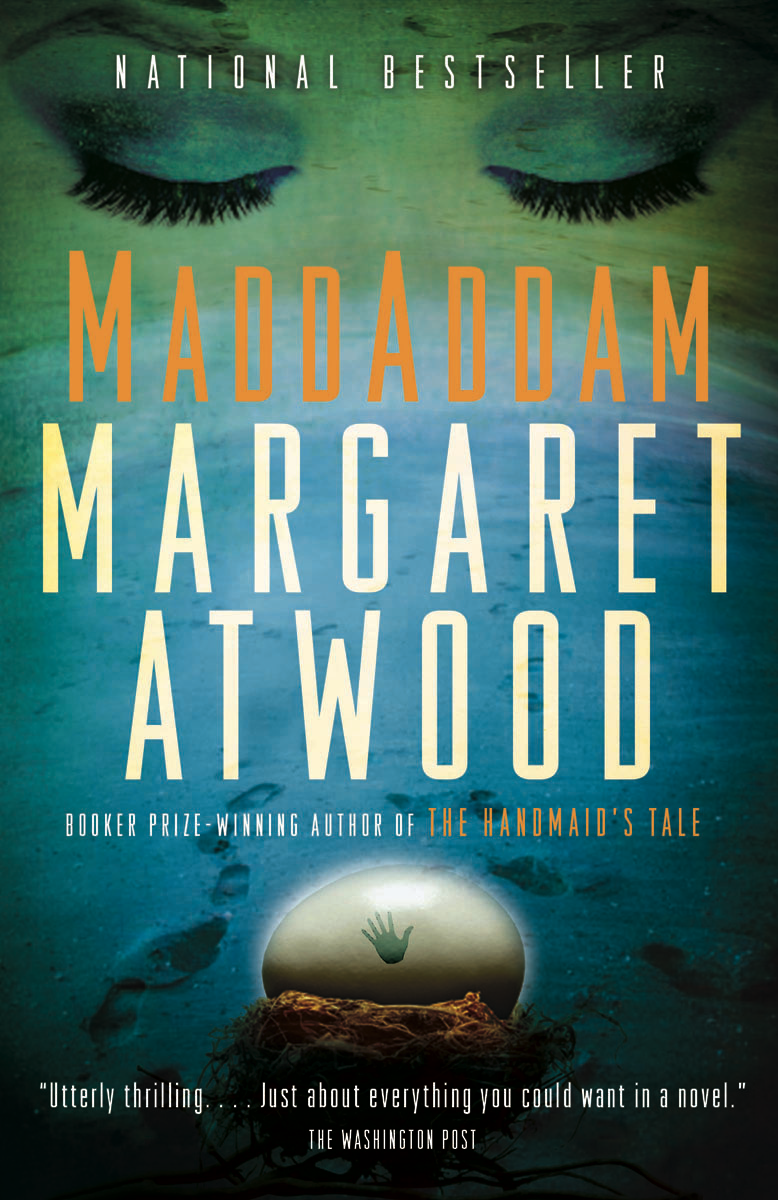
MaddAddamDystopias can be optimistic. I just finished reading Margaret Atwood’s MaddAddam, and came away from it strangely at peace. The third of its eponymous trilogy, the story takes place in a future that is simply a continuation of where we are at the moment. Things have gotten pretty bad—most of humanity has been wiped out, genetic engineering has taken dreadful liberties with creatures human and non, and corporations have fulfilled their dreams and have taken over at last. The few good people left are tormented by those society has made into sociopaths. Global warming has proven the naysayers false, and yet, despite all this, there is room for hope. Tying together the various strands from the previous two books, Oryx and Crake, and The Year of the Flood, MaddAddam is probably the most eco-conscious trilogy on the planet.

Apart from the many obvious biblical allusions (I often wonder what it must be like to miss so much, for want of familiarity with holy writ), the book also introduces a fully functional faux church. Atwood can be at her best when taking on the charlatans of piety. Cynical and calculating, “the Rev,” father of two of the ensemble cast, is everything a televangelist is, and more. Indulging in all that he denies his flock, even Elmer Gantry would have trouble keeping up. The Church of PetrOleum represents the most damaging of industries in a world already suffering the consequences of the greenhouse effect. Corporations make it rich while the Rev takes out his personal issues on his wives and children. Instead of being on the side of paradise, the church introduces chaos.

Through the gloomy scenario she’s foreseen, Atwood is able to see glimmers of a future that has possibilities. The protagonists are the members of a commune of a green religion, earth-centered and bearing a resemblance to both Wicca and monastic Christianity. That spiritual tradition, an offshoot of more established churches, is seen as dangerous by the corporations. And with good reason. Despite what televangelists tell us, spiritual truth is not on the side of big business. Jesus was no trickle-down economist. Reagan was no messiah. Corporate greed leads to blocking laws to clean up our world. We do not have control over what geneticists are doing, and, in fact, most of us have no idea what we’re eating or wearing any longer. Or what it is they’re packaging our food in. We are the consumers. Taught always to consume more. And the more that we are told to consume is the very planet that gave us life. My hat is off to Atwood, who still seems some possible cause for hope.


Jedi Night

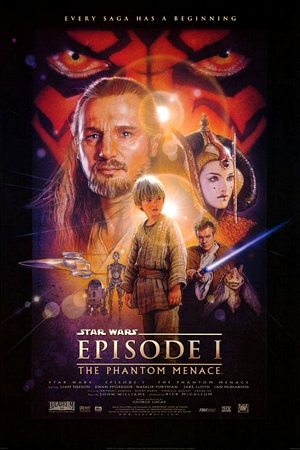
Star_Wars_Phantom_Menace_posterIt all began with that trailer. You know, the teaser for the new Star Wars movie. I was among those many small-town boys crowding into theaters in 1977 to have their small-town minds blown with a Luke Skywalker, somehow just like us, getting to go on a galactic adventure and conquering evil. It was a transformative experience. Later I was to learn that noted Jungian mythologist Joseph Campbell had advised on the story, helping to produce image after archetypal image that spoke to deep levels of viewers’ psyches. Hungrily we watched, as even through some missteps, the franchise grew to trilogy proportions, creating its own cultural memes (has “I am your father” ever been the same since?). Then somehow I missed The Phantom Menace, or episode one. It could be that work at the time (Nashotah House) was an epic struggle in its own right. With a small child and not sure about baby-sitting options, taking a night out to watch the prequel to a story that had already nicely resolved itself felt kind of pointless. We already knew how it ended. But that trailer. Now it seems, the story will continue.

So it was that my wife and I decided to catch up. Over the weekend we watched The Phantom Menace. Of course, I’d seen clips before. I’d also read the reviews that were less than complementary (Joseph Campbell had died in the meantime and George Lucas couldn’t seem to come up with archetypes on his own). I was curious, but not curious enough to rent the video (as people did in those days). So The Phantom Menace, cast from the same die as episode 4, also has a strong religious resonance. The Jedi (and already the religion of Jediism has begun to appear) filled the backstory with near invincibility, and all the aliens seemed somehow comic, yet we are told remarkably little about the Force. Perhaps episode 4 had said enough. When Darth Vader is introduced as a prescient boy, the audience (at least this audience) finds it hard to believe he is the result of a virgin birth. Indeed, Lucas throws us the midi-chlorians as a sop, but we know that when a woman gives birth with no male intervention we’re in messianic territory. And of course, non-Muppet Yoda tells us straight up that he may be the chosen one.

Introducing the Sith, who are the embodiment of the dark side of the force, we are treated to a devil in only a thin disguise. The red and black greasepaint warn us that when he removes his hood he will have horns. Although we’re not shown, I suspect he has cloven feet as well. So through the movie with its gratuitous cameos of creatures we already know from episode 4, we come to an end that is strangely familiar. We’re back where we started. The Jedi favor earth tones over white, however, and the Sith is neither all red nor all black. The evil of the galactic empire seems to be no more than the very real overtaxation of the poor. And yet for all my disappointment, there’s that trailer we all saw in December, and using my own version of the Force, I foresee an attack of clones in my future.


Sporting Chance

IMG_0997

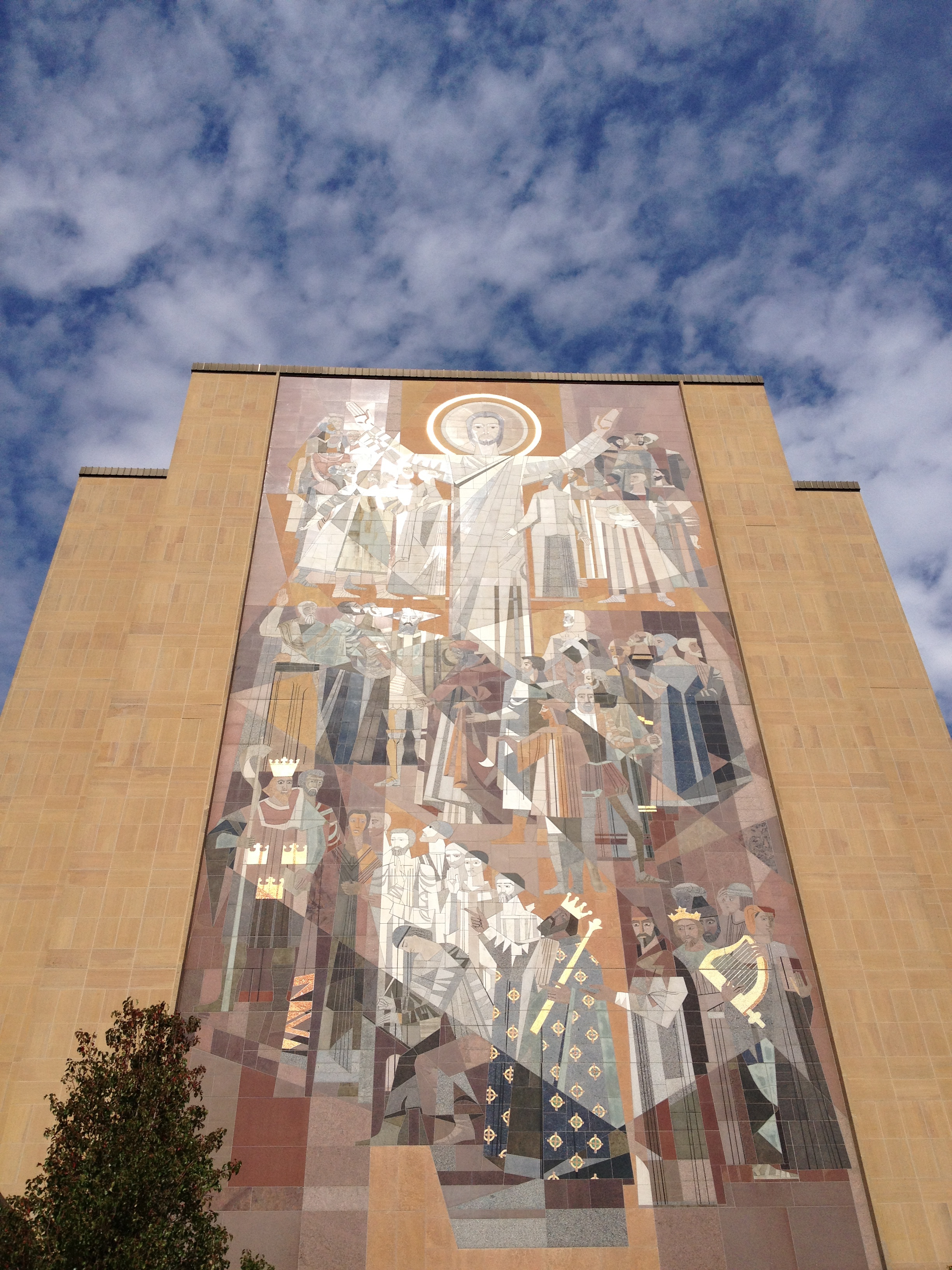
I didn’t watch the SuperBowl last weekend. In fact, I haven’t had television service for over two decades now. I don’t really miss it too much since I don’t have time to watch TV (the commuting life leaves time only for sleeping and working, except on weekends). Still, for special events, I think, it might be nice to see things live. (My wife raises this point every time the Olympics roll around. I seem to recall them being every four years, but now it seems they’re seasonal, and about twice as frequent. Could it be that advertising revenues are really that important? Maybe I missed that, not having television…) Even when I have managed, over the last couple of decades, to pull the SuperBowl onto a fuzzy, snowy screen, it was for one major reason—the commercials. I wonder what that says about a society? I now spend precious weekend time watching commercials on YouTube, sometimes having to watch a commercial for the privilege of watching a commercial. The substance without the fluff of the actual entertainment.

So it was that I saw the Mophie commercial about the apocalypse (here’s the link, in case you’re as entertainment-challenged as I am). So as the world comes to an end, the weather goes even more wonky than we’ve already made it go, Fortean fish fall from the sky, dogs walk their owners and priests steal plasma television sets. Then the punchline, God’s cell phone dies and the end of the world ends. It isn’t the shock of seeing an African-American God—Morgan Freeman led the way there with Bruce Almighty—but rather the technique, the divine delivery, if you will, that is the shock. Not even God is anything without his cell. (I wonder when we’ll see a Latino woman as God? Dogma came close, but not quite.) Is the smartphone really not the deity here?

God, it seems, has become a null concept. I don’t mean because of different racial or gender presentations, but I do mean that the concept itself is completely up for grabs. God, according to Anselm of Canterbury, is that being greater than which nothing can be conceived. In fact, God seems to be that which people worship, more of a Tillichian ultimate concern. A wired world should, in theory, be a world headed toward peace and equality. If we know what’s going on everywhere, shouldn’t we be doing our best to ensure that it is fair and just? The truth of the matter gives the lie to such optimistic musings. I would hate to confess just how much my phone bill is every month. Even without the “triple play” (no television) it is the biggest expense after college tuition and rent. And it goes on, in saecula saeculorum. When I pull out my smartphone, I gaze upon the face of the Almighty. And perhaps that’s a good thing, because how else would I entertain myself without television?