Am I Famous Yet?

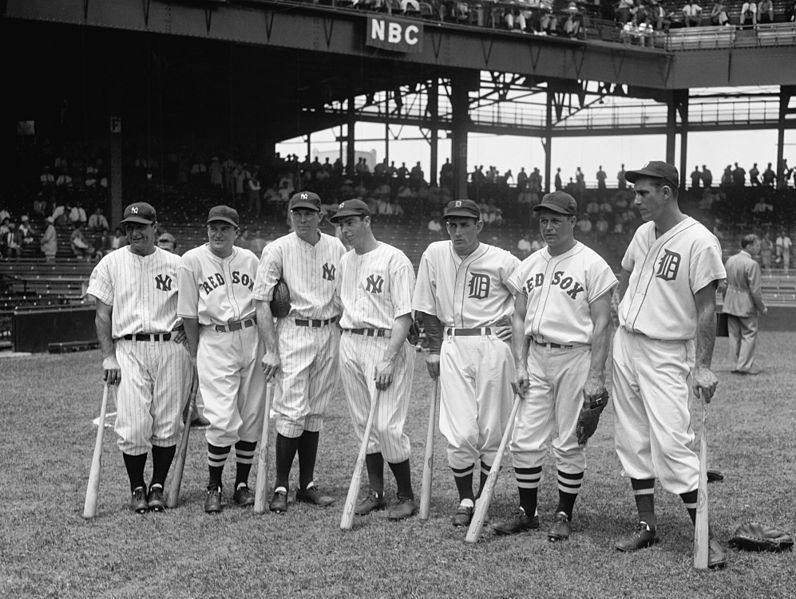
Sweat is running down my back and my chest.  The sun beating down on my head feels like a hammer of the gods.  East 42nd Street is clad with a wide, red carpet and drivers are honking in a way that assures you that they are seriously irritated.  I step out into Second Avenue when the little white person appears on the crosswalk sign; it is 93 degrees and I’m due back at work.  A motorcade stops me as three tour buses cascade by, and an NYPD officer waves mere pedestrians back to the baking pavement to wait another rotation of the lights.  Helicopters high overhead fail to stir this heavy, hot air.  Hazily I wonder if the president is in town, or royalty of some kind.  It’s clear that the plebeians are of less importance this afternoon in New York City.  Then I spy a banner-the All-Star Game.  I’m being broasted on this street corner for a bunch of baseball players, not one of whom I can name.  This is such a facile way to learn your place.

Chance often enters my thoughts.  There are those who become rich and famous because they are driven to it, but they happened to be in the right syzygy of circumstances to take advantage of that opportunity.  There are some who would say that attaining greatness is an act of God, and others who claim it is only fate, or luck.  The fact is, the only reason some people are more special than the rest of us is that they were offered an opportunity that opened a gate.  I’m not suggesting that hard work’s not involved, but hard word alone doesn’t suffice.  You need to have a leg up to get to ride in that air-conditioned luxury bus down Second Avenue while your fellow citizens, and not a few seriously sweating fans, step aside for you.

I’m sure it’s just sour grapes. Like most little boys I really enjoyed playing baseball. I never considered it a job, though. We were far too pedestrian in my neighborhood for that kind of thought. My goal was to be a janitor. It was only when I reached beyond this calling appropriate to my state that I ran into difficulties. The marionette dancing at the end of the strings of puppet-masters who had better opportunities than I. Sour grapes and hellish city streets—what wine will ferment from this alchemy? There go the All-Stars. In many parts of the world, as in my head, their names are unknown. Today, however, one of the busiest streets in Midtown Manhattan is stopped just for them. We’re all in the same oven, but some are in air-conditioned coaches while others are melting on the sidewalks. The red carpet is not for the likes of us.

1937_all_stars_crop_FINAL2


Before Twilight

Despite the summer with its long, languid days, The Telegraph reported on vampires last week. In an article entitled “Polish archaeologists unearth ‘vampire grave,’” Matthew Day narrates how archaeologists have uncovered skeletons buried with their heads—decapitated, obviously—on their legs. This was apparently a not uncommon medieval practice for ensuring that suspected vampires stayed safely in their graves. Interestingly enough, Day comments that the practice mainly began after the Christianization of the pagan cultures that had preceded them. Even pagans, he suggests, ran the risk of being accused of vampirism, a broadly defined threat in the Middle Ages. Of course, the Twilight series had not been written then so that the safe, Mormon cast of vampire was unknown.

Vampires represented a couple of concepts terrifying to people before the scientific revolution: they were a source of draining an individual of some life essence, and they were the problematic undead. The decapitation, in Tim Burton-Sleepy Hollow style, was intended to prevent the vampire from being able to locate its head after death. Unable to find the business end of its vampiristic corpus, the undead might remain just plain dead. Of course, staking works, if the tales of the Highgate vampire, near whose grave I recently stayed while in London, are to be believed.

The belief in vampires, or at least fascination with them, has been very hard to shake. One of the earliest horror films made was Nosferatu, a rip-off of Bram Stoker’s Dracula that was nearly obliterated because of copyright violations. Nosferatu continues to be ranked among the scariest of horror movies, and the Werner Herzog’s 1979 remake is a classic in its own right. The Shadow of the Vampire was an even more recent movie about the filming of the F. W. Murnau original. Among the earliest of the Universal monster movies was Tod Browning’s Dracula, which forever identified the face of Bela Lugosi with the infamous Count. No matter how deeply we bury them, the vampires keep coming back to stalk our nights and nightmares. When future archaeologists uncover the detritus of our civilization, no doubt they will conclude that we too, in a secularized world, feared the undead.

Bela_lugosi_dracula


Hansel and Regretel

HanselGretelHansel and Gretel: Witch Hunters was on offer on the trans-Atlantic flight. Since I missed it in theaters, I decided to watch it on my mini-screen inches from my face. Witches, among the classical monsters, have a strange longevity into the world of science—like van Helsing (of movie fame) the protagonists have steam-punkish gadgets to destroy the naturally invincible foes. What’s not to like? I could not help but be disturbed, however, at what seemed to be the inherent misogyny of the film. Perhaps it was the lighting on the plane, but I saw only one male witch among the monstrous hordes of females who were battered, shot, and burned with apparent sangfroid. Women were guilty, it seemed, until proven innocent. And Mina, the white witch, again underscores that women who are “clean” are still potential witches underneath. Naturally, she dies before it’s over, but in a noble way.

The witches in the movie are strangely removed from a traditional, satanic context. They derive their power, like modern wiccans, from nature and strange mixes. The source of their magic is never explored very deeply, but when they catch trespassers in their forest, their queen states that even God himself fears to go there. Bewitching bravado, to be sure, but where does this image of God originate? A god afraid of the very nature that (in a film such as this, certainly) “he” created? The sacrifice of children is a good biblical trope, but seems to do little more here than to build the tension.

Monster movies, I realize, are “guy flicks.” Something about all that testosterone seems to be energized by images of ordinary people fighting monsters, against incredible odds. The monsters here, however, are barely distinguishable from regular women. Folklore has a deep well of traditions about witches from which the savvy might draw to write an intelligent, entertaining tale of witch-hunters. After all, the real antagonist, traditionally, is the male devil. He is, in medieval tradition, the source of witching magic. By removing Satan from the picture, we are left with strong women who must be repressed, and the world is really no safer when Hansel and Gretel are done. In fact, the end of the movie implies that they will never be finished. An opportunity for a subtle shift of paradigm was missed in this film, and, as usual, it is women who end up paying the price.


Caledonia Dreamin’

“Edinburgh is a mad god’s dream.” So penned poet Hugh MacDiarmid with sentiments that could’ve been composed by H. P. Lovecraft. My association with Edinburgh seems accidental, but there is little in my life that compares to this mad god’s dream. The Gnostics used to believe that there was nothing in divinity that precluded a kind of divine madness. Philosophers, back when they still considered god a postulate, argued about whether the deity was good or evil. If they’d come to Edinburgh, I suspect, the debate would’ve taken on a whole new cast. In his poem “Edinburgh,” MacDiarmid captures the untamed nature of a city that has never been given the accolades of Paris, London, or New York, but is just as edgy and twice as beautiful.

Dreaming gods, of course, are nothing new. Vishnu, according to some strains of Hinduism, is the god whose dream is the universe. In the Ugaritic Baal Cycle, it is a dream that reveals to the ancient god El that Baal has returned from the land of death. And, of course, Cthulhu lies dead but dreaming in the city of R’lyeh. To me, Edinburgh is a wonderful alchemy of divine dreams. I was a young man, still so very naive when I moved here. Looking back at those old photos, I see a much younger face from the past, telling the camera that yes, he’d found paradise, the very place of God’s dreaming. Our human politics, however, trump divine dreams every time. Although I never wanted to leave, I was not permitted to remain. Yes, the camera does, at times, capture the soul.

DSCN3490

I am on the train that will take me from Edinburgh, having seen it anew through my daughter’s eyes. I came here penniless some twenty-four years ago, but with a head full of dreams. Life has taught me the cost of dreams since that time, and I have had to pay with wrecked careers and uncertain futures, trusting that the god who is dreaming all this is mad indeed. Nevertheless, like the gods, I refuse to stop dreaming. As much as Hugh MacDiarmid captures the spirit of Edinburgh, as I sit here, with a wee bit of mist in my eyes, my mind is on the words of another poet, Baroness Nairne. To her I will have to leave the last words, from this south-bound train. “Fareweel, Edinburgh, where happy we hae been.”


Something to Believe

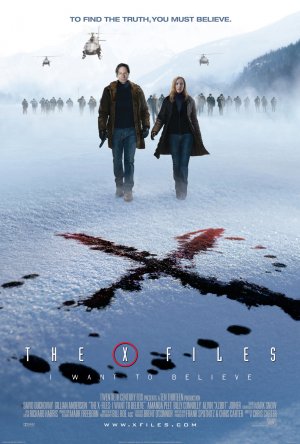
Xfilesiwanttobelieve After a rough week at work, nothing helps so much as simple escapism. Thinking back to my glory days in the classroom, I remembered the movies I used to get students thinking about how the Bible is represented in popular culture. One of those movies was The X-Files, I Want to Believe. Not that the movie was my favorite, but escapism isn’t picky—there’s one reality I want to escape, and just about any other will do. As I watched the film again last night I was struck how very much the whole movie is premised on religion. I suppose the title should’ve given that away, but since it is the slogan of Mulder’s famous poster, I’d not really given it serious thought. Scully is now a practicing doctor in a Catholic hospital, and the number of lingering scenes with stained-glass icons in the background simply can’t be ignored. She has given up chasing monsters in the dark, and come to live in a very Gnostic kind of light. Through a pedophile priest (Father Joe), the darkness finds her again. How could I have missed the centrality of a priest to the plot?

The scene I always pointed out to my students was where Father Joe goes into a seizure while quoting Proverbs 25.2, again citing Gnostic hidden ways. The Bible slips from his trembling hands and falls, closed, to the floor. Later, as Mulder is literally about to be axed to death, Scully finds him by noticing the mailbox number 25-2. A proverb was a prophecy and the Bible retains its ability to guide the believer toward salvation. Through paranormal means, of course. After all, this is the X-Files.

Faith versus science, religion versus reason; these are the underlying motifs of the entire film. Scully the skeptic is the one who believes. Mulder, the high priest of the preternatural is just waiting for her to come home. It isn’t the greatest of movies, but it is based on some classic themes. Wanting to believe, but not being able to believe—isn’t this one of the most religious tensions possible? For years now the internet has been buzzing with rumors of a third, and probably final, X-Files movie. And yes, many people are wanting to believe. And if work continues with weeks like this past one, I’ll be needing a lot more escapism as well. Yes, I want to believe.


Guiding Girls

Girl Guides are the British equivalent to the Girl Scouts. I first learned about them during the three years that I lived in the UK, although, as far as I know, they don’t sell cookies. An article in the Huffington Post last week announced that the Girl Guides have decided to drop God from their pledge, as a move toward inclusiveness. I’ve often pondered the place god holds in various social societies. At my daughter’s Girl Scout bridging ceremony a couple weeks back, I noticed God in the pledge. In New Jersey, where diversity is synonymous with breathing, I wondered how this antiquated oath felt to those who maybe grew up without the concept. Stretching my mind back a few years, when my daughter was in Middle School, she was awarded a good student prize by the Elks. As I sat in the tastefully decorated meeting room, with only a very faint tinge of beer in the air, I wondered if I might ever join a fraternal order. One of the officers stood to welcome us, inviting applications for membership. Democratically, she was a woman in a “fraternal” organization. She reeled off the requirements. As an afterthought she said, “and you have to believe in god.”

How does one measure belief in divinity? It has been my experience that many beliefs fluctuate with time. I can decide to believe, but in many ways, belief decides me. As a mantra to modern society, on the old X-Files series Fox Mulder’s famous poster read, “I Want to Believe.” To join the Girl Scouts, the Boy Scouts, or the Elks, you have to say you believe. Nobody’s going to hook you up to a polygraph machine, but you need to make your public declaration. At least in the last case, beer come later.

Religious diversity is a reality of our lives. From the invention of the steam engine, it became inevitable. Our world was going to grow smaller as we met people who had previously been isolated from us by distance. In 1893 the World Columbian Exposition was held in Chicago. As part of it, the Parliament of the World’s Religions introduced many Americans to the religions of the world for the first time. Hinduism, once an exotic strain quaintly captured in the archaic spelling “Hindoo,” became a sudden fascination. Buddhism was a curiosity. How had it been that the United States seemed only to know about Christianity, Judaism, and Islam (in that order) when other belief systems existed? How could we have missed them? More importantly, what were we going to do now that we knew about them? We couldn’t unknow them, like you can unfriend someone on Facebook. We were going to have to learn to live together. After all, we all have just one planet to share. Social organizations are great places for introducing tolerance. You can be moral without being Judeo-Christian. And if our social organizations want to promote equality of membership, maybe the Girl Guides are truly living up to their name.

1918_girl_guides


Z War to End

World_War_Z_posterWorld War Z is playing in theaters and I haven’t even had time to stock up on water and canned goods. Zombies are everywhere. And we can’t say that we didn’t see them coming. As movie critic Stephen Whitty points out, there are over 900 movies featuring zombies and the vast majority of them are recent productions. Major news corporations have been analyzing this undead interest for a few years now. No doubt the zombie is a populist monster, but why does it have such a potent effect on the modern imagination? Stepping back from the screen a minute, I think perhaps an answer is very obvious.

We live in an essentially programmed society. Philosophically we believe in free will, but economically much of our lives are predetermined. Among the happiest years—speaking strictly from the point of view of what I have been required to do for work—of my life were those of adjunct teaching. I had finally broken into the realm of the major university, and I had class after class of students who wanted to learn. Many disparage undergraduates. I never did. They come to college with what they have been taught, and that teaching comes at the behest of a society that informs them college is all about money. Who needs to really learn to not split infinitives? Or reason out that even if you know that Genesis 1-3 is a myth that evolution is not about religion at all? Who needs to learn to think when your boss will not want criticism? Do what you’re told. Be a good citizen. Be a zombie.

Our children are not stupid. I had many intelligent conversations with many bright young people at our state universities. I learned from them, and I hope they learned from me. The voice of the adjunct instructor, however, is nowhere near the decibel level of higher earnings. Is not the price of being a zombie worth having an adequate home, crippling debt, and access to wifi? The zombie, after all, is the antipode to the life of the mind. Zombies are, by definition, mindless. They carry around a carcass that does only what, in the classical sense, it is told to do. And so, if I loved that bohemian life so much, why did I hypocritically leave it? I have a family that requires healthcare. I have a child to support through college. I have a retirement fund that will not support a modest lifestyle for more than a single year. Yes, I too am a zombie. World War Z is indeed already here.


Supergod

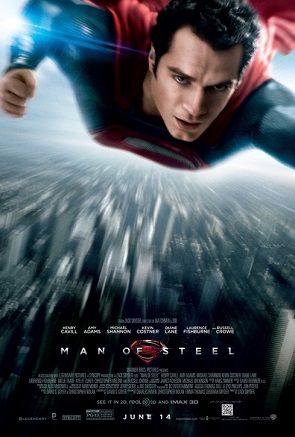
ManofSteelThis weekend the most-seen UFO in the skies was the Man of Steel. I didn’t see the new Superman movie, partly because, I suppose, of my own inadequacy issues. Also partly because I’ve always had trouble warming up to Superman. He’s just got too much going for him. Don’t get me wrong—I love heroes. But heroes are vulnerable. In fact, their vulnerability is the key to their strength. Superman, truly threatened only by kryptonite, is maybe just a little too perfect. A little too… messianic? So it would seem, according to CNN’s Belief Blog. According to a post by Eric Marrapodi, Warner Brothers is pushing hard on the Christian imagery of Man of Steel, encouraging church discussion groups, and even providing a study packet of Jesusesque tropes to discuss with the faithful. All this for a hero dreamed up by a couple of Jewish kids in the 1930s.

A telling observation appears somewhere in the middle of the article, where Ted Baehr is quoted as saying “I think it’s a very good thing that Hollywood is paying attention to the Christian marketplace.” Did you catch it? Christian marketplace? No surprises here, really. Christianity has “been good” to many who advocate the prosperity gospel—god wants the good to be rich. And since I haven’t been able to walk through Times Square for two weeks without seeing the Man of Steel, larger than life, flying off of massive billboards into the crowds of tourists and locals, I have no doubt the movie did very well over the weekend. Some may have even had their faith restored. Others will have had their pockets lined.

A few years back I was asked to present a program for adult education for a church in Princeton. They wanted someone to talk about religion and movies, and this is something I’d often addressed in my classes. I selected movies to discuss that were not “religious”—no films premised on religious characters or situations—and had no difficulty filling an hour with example after example. Movie makers have long known the benefits of movies based on Christian concepts. Self-sacrifice, redemption, and resurrection permeate the movie industry. This is a Christian culture. The parallels between Superman and Jesus have long been noted by critics of religious imagery in both films and comic books. And those who make films have also realized that Christianity is more than just a belief system. Indeed, it is a marketplace. And with enough money, even a regular mortal can bend steel.


Whatever Happened to Whimsy?

American Gothic is one of my favorite paintings. I’ve never seen the original, and I know of no other paintings that Grant Wood produced, although I’m sure there are some. The mood in what has been called “the most famous American painting” is unsettled. There’s something not quite right here. When one of my authors wanted to use the image on a book cover, it led to quite a bit of serious discussion. I was a bit surprised by the negative impressions—not of the painting, but of its use on a serious academic book. The discussion seemed to turn on money rather than on wit and whimsy. I confess to being a dreamer, and I admit that the aspects of life that truly inspire me are never financial. When I crave wealth it is so that I might free up some time for creativity. That’s not the way business works.

Sometimes I feel a stranger in my own country. The unquestioned triumph of unbridled capitalism means that you can go from city to city to city and not really be able to tell much of a difference. If you want to buy a bit of tubing or a piece of wood, it’s Home Depot or Lowe’s for you. Office supplies—Office Max or Staples are your only choices. If you want to buy intelligent books, well, you’re just plumb out of luck unless you go to Amazon. The big financial corporations have won. Just admit it. Every time I visit my hometown I come away depressed at all the vacant stores and lost hopes of the small businesses that offered something just a little different. Something to tickle my fancy. Something to tempt me to wonder. Something with a tinge of American Gothic.

AmGoth

The messages we receive from every angle echo Madonna’s hit song, “Material Girl.” Only this includes all genders. Reductionistic materialism tells us that we’re just proteins walking. Mind is an illusion. Soul is a myth. I work a job where the money I’m paid is transferred electronically and if I want to see some of it in paper form I face a robotic ATM rather than a human face. I went to the mall last night and wept. Call it a mid-life crisis if you will. Say nostalgia has no place in a forward-looking society. I just want a few more options besides the plastic, the smart-chipped, and the sterile. The world needs more whimsy. Maybe that’s why I insisted on American Gothic on the cover of the first book I put under contract.


Sweet Morality

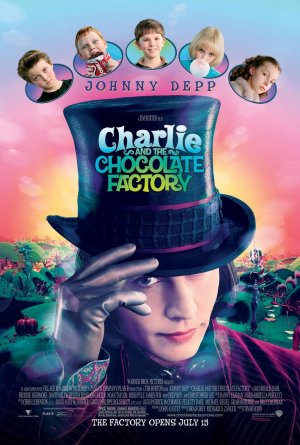
CharlieandtheChocolateFactory When I saw Willy Wonka and the Chocolate Factory as a child, I had never heard of Roald Dahl. Although I enjoyed the movie, it was never a favorite. Like any kid I liked candy, but I’ve seldom been motivated by sweets. I discovered Roald Dahl when my daughter was young, and read for the first time his somewhat more disturbing original version of the story. Tim Burton has a reputation for going back to the roots of beloved childhood characters and revealing their darker sides. When his Charlie and the Chocolate Factory came out in 2005, the appeal went beyond sweets, for this was a modern, if sinister, morality play. While rewatching the movie recently a number of what should’ve been obvious religious motifs suggested themselves. The first came when Charlie Bucket is shown in the main chocolate processing room reaching for a candy apple. Violet Beauregarde steps in and snatches the apple from the tree in a defiantly Evesque move. She later receives her punishment by being transformed into a fruit.

Augustus Gloop receives a strange, chocolatey baptism is what might otherwise be the waters of life. After all, the Oompa-Loompas are shown bowing down in worship to a cocoa bean in a flashback. When Veruca Salt attempts to catch one of Willy Wonka’s nut-sorting squirrels, in a rather disturbing scene reminiscent of Ben, the squirrels pin her down and carry her to the garbage chute. She is carried in classic cruciform style, emphasizing the martyrdom she receives at the hands of her indulgent father. Even Mike Teavee undergoes a kind of resurrection after being atomized and projected into a television.

A friend once told me that the characters in the film represent various deadly sins. Augustus Gloop easily falls into gluttony, and Violet Beauregarde is an emblem of pride. Veruca Salt clearly represents greed, and Mike Teavee is full of wrath. Willy Wonka is part devil and part god in the film, doling out just punishment in a seemingly unfeeling way, while rewarding the few instances of virtue. Deprivation forges virtue in Charlie Bucket demonstrating how clearly the movie is in the realm of a morality play. With its horror film tropes and forays into the truly strange, Charlie and the Chocolate Factory is an example of how morality persists even in the vision of those often considered completely secular. Without it the movie becomes just another excuse to overindulge in sweets.


Monsters Incorporated

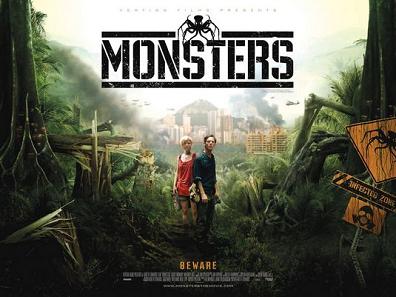
Monsters

Monsters. What’s not to like? With a title so innocuous and limited US marketing, this 2010 British indie film only just came to my attention. I hadn’t even heard anything about it as I sat down to view it. The premise of invading aliens is as old as H. G. Wells, if not earlier, but this is a film without over-the-top CGI and a very human story. Showing far more tension than bloodshed, Andrew and Samantha, their Anglo names very prominent, are caught in alien-infested northern Mexico. Somewhat predictably, Samantha has a rich daddy who happens to be Andrew’s boss, but the couple has to find their way back to the United States as giant insectoid-octopi rampage through the night, destroying just about anything they can get their tentacles on. So far it sounds like standard Saturday-afternoon fare. As Andrew and Samantha reached the Rio Grande, however, overlooking the huge wall the US government built to keep out the aliens, I realized what the film is really about.

During the Bush years, shortly after the Berlin Wall had come down, a new wall was snaking its way along the Mexican border. America had become weary of “Give me your tired, your poor.” This was the land of opportunity, instead, for the chosen few. Never mind that we know that many of the jobs most of us don’t want are gratefully accepted by those who may not be technically legal in this country. Never mind that we deny social justice, in many ways, to those who make our lifestyle possible. Andrew and Samantha face the massive wall that says, “keep out.”

Of course, they make it back to Texas. They discover, however, that the aliens have breeched the walls as well. And they really pose no threat beyond wanting to draw strength from the abundant light-sources of a power-hungry world. The film’s ending is a bit ambiguous, but then again, the plight of the alien generally is. I watched the film with no expectation beyond a bit of sci-fi action to help give me the energy to make it through another week of work. Instead I saw a brash American coming to a deeper sense of humanity while standing in a church where hundreds were mourning their dead. The death of one small girl was as much a tragedy of as the breeching of the borders. Until humanity prevails over artificial borders, there will indeed be monsters. Were that they were only giant insectoid-octopi.


Mr. Hubbard’s Legacy

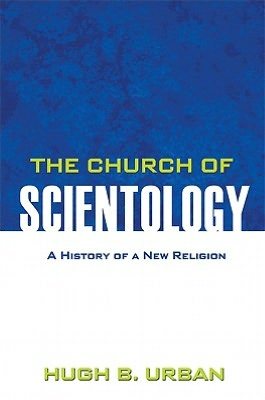
churchofscientology As a child just discovering the joys of reading in the early 1970s, I found science fiction captivating. We were poor, and our town had no library, so I’d buy my books on Saturday trips to Goodwill. In other words, you take what you can get. I recall buying a book by a guy named L. Ron Hubbard. I don’t remember the title or the story, but I recall my surprise when, as a religion major some years later, I learned that this same sci-fi author had started a new religion. Scientology was not something you’d likely encounter in a poverty-stricken, sub-Appalachian town in rural Pennsylvania, and with no Internet it wasn’t so easy to learn about such things even if you had. We did have TV, though, and we watched Welcome Back Kotter (Risky Business was a little too risky). When I discovered that John Travolta (“Vinnie” as we thought of him) was a Scientologist, I was curious. But only to a degree. When I first taught World Religions and spent a few years researching the Scopes Trial for a book I never had the chance to write, I became very interested in American religions. They don’t come much more American than Scientology (and Latter-Day Saints).

As soon as Hugh B. Urban’s book The Church of Scientology: A History of a New Religion appeared, it immediately went onto my reading list. Like most interested laity, I’d found it difficult to trust much of what I’d read on the Church of Scientology from media sources. Now I had a reliable guide! Even better, Urban frames his study around a question that pervades this blog: who gets to decide what is a religion? As Urban deftly points out, it is odd that government agencies are often those tasked with a job more fitting for those of us who’ve studied religion with the rigor that a physicist devotes to quarks and neutrinos. Some of us have parsed religious texts to bare bones and then dug up the skeletons beneath and examined their ossified remains as well. The world doesn’t take religion studies too seriously, however.

Urban’s book, well written and solidly researched, maintains that rarest of academic feats: objectivity. When approaching a religion, particularly a controversial one, emotions are easily engaged and objectivity is challenged. While confessing that he isn’t a Scientologist, Urban lets the historical facts speak for themselves. He doesn’t try to belittle those he studies, but he doesn’t coddle either. Reading his fascinating account, many questions are raised about the rights of religions and the role that secrecy plays. And we know that Urban is only skating across the surface of a deep and mysterious pond here. Sitting in my room with a yellowed, used copy of some L. Ron Hubbard pulp fiction story in my hands, I would’ve never guessed, as a child, what I was really holding.


To Obey the Scout Law

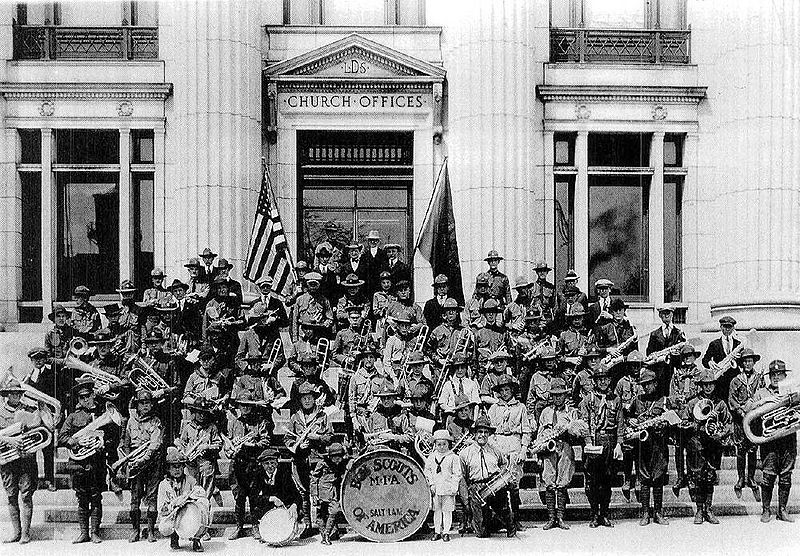
Society’s prurient interests have been on display again with the intense media blitz concerning Boy Scouts of America and the fraught issue of sexual orientation. As is to be expected, certain religious bodies have sounded the final trump once again as they frenetically posture against equality. The story is so old it is difficult to see how it counts as news. When I saw that the Church of Jesus Christ of Latter-Day Saints (the oldest sponsor of Boy Scouts and the denomination with the highest numbers) had made a statement about the issue, I almost didn’t even click on the link. We already know the official stance of such conservative groups, right? So I was genuinely surprised when I saw the note. This Mormon Church has no problem with the admission of homosexual boys since, and rightly so for a youth organization, the members are expected to behave according to the code of conduct. That code forbids sexual relationships, no matter a boy’s orientation, no matter with whom.

800px-CAB_with_Scouts

We all know that ideals are seldom observed. We should lead by example. I spent my high school years deeply involved in the feeder program for future clergy in a major Christian denomination (the one with the second highest number of Scouts). The youth programs frequently involved having hundreds of youths together for multi-day events. Chaperoned, of course. But kids with active hormones are about the most clever creatures on the planet. I frequently heard that opportunities to find some time alone with your favorite “spiritual advisor” were not difficult to arrange. And when I enrolled in a program to study for the ministry officially, I learned that the name seminary was somehow overly appropriate. Codes of conduct exist for a reason, and those who hold to them reward the trust of adults who institute them. Society can’t operate without such rules. What happens in reality, however, is a different matter. Anyone who reads the headlines can see that.

I applaud the Mormon Church’s stance on this issue. The Boy Scouts is a social organization with nary a merit badge for sexual knowledge or experience (at least not in the Handbooks I’ve seen). Those matters, as with adults, are private. Religious groups often act as if admitting admitted homosexuals somehow changes the Jamboree into a Woodstock. The problem is with the imagination of puritan adults. The solution to the anxiety is rather simple. For those concerned, volunteer to lead a troop. Attend a meeting. See what actually goes on. The fact is, kids will be kids, and making rules to satisfy uptight adults will not change that. Many groups could learn from the Mormons here: Scouting is not about sex. It takes the imagination of adults to make it so. Boys, as the saying goes, will be boys.


God has Left the Theater

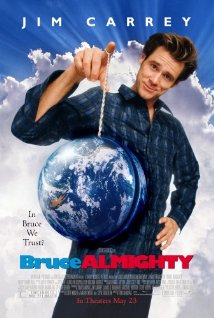
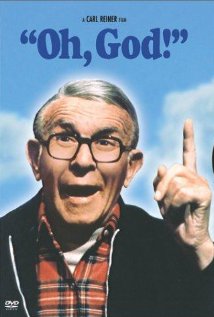
When teaching religion at the University of Wisconsin Oshkosh, I realized that an effective way to engage students was through popular culture. I could assign them just about any choice of movie and have them look for the religious themes of whatever class in it for a short paper. Of course, most went for the low-hanging fruit, over my teaching years, and I eventually had to ban movies with obvious religious themes or premises. One of those movies was Bruce Almighty. In a fit of nostalgia, I recently rewatched it. Never a big Jim Carrie fan, I nevertheless always enjoyed Bruce Almighty—it was such an improvement over those truly dreadful Oh, God! movies that were so popular in the late 70’s and early 80’s. I never found George Burns funny, and he made for an awfully feeble God. Everyone was buzzing in the new millennium when God was portrayed by a black man, Morgan Freeman. Still, we await a director who dares cast a female God. Patriarchy runs deep.

BruceAlmighty

One of the features that movies portraying God run up against is showing a believable omnipotence. The powers granted to mortals always seem so petty. Theodicy is always raised in these kinds of movies—why people suffer if God is good and all powerful—and since movies rely on directors and writers rather than theologians, they often leave the answer at the doorstep of free will. Human suffering is our own fault. In our society we can’t have a movie that actually pins the blame back on the divine, because that wouldn’t be funny. And movies where people meet God are almost always comedies. But Bruce Almighty is actually a bit more sophisticated than it seems at first. That is best seen in the outtakes perhaps, where Morgan Freeman seems to care more about people than George Burns did. Of course, my memory on the older movies is hazy. They were considered slightly blasphemous three-and-a-half decades ago. Today they seem tame.

OhGod

Why do movies with God in the cast rake it in at the box office? A couple of reasons suggest themselves. As humans, we like to place ourselves in the role of the divine to consider what we would do with unlimited power. Who wouldn’t, like Bruce Nolan, at least include their own satisfaction in the package? I think, however, there is a deeper, more serious reason. We do genuinely wonder about God’s motivation. Most of us don’t have the training to know how to grapple with the often incomprehensible arguments that theologians make. Even when we do, they still make no sense. Our movie gods appeal to us because they are so terribly Freudian—made in the human image. We can’t conceive of a god who’s not like us, so we at least make the situation funny. If we can’t achieve omnipotence, at least we can hope for a few laughs.


Iconic Book

A recent Associated Press story celebrated the achievement of Phillip Patterson. In an age when we just can’t get enough technology, when we live with, sleep with, and dream of electronically generated reality, Mr. Patterson was feted for his arcane accomplishment. Decidedly low tech, at that. After four years Phillip Patterson has finished copying a book, word-for-word. I don’t even have to mention which book, because we already know it can only be the book that Americans recognize without reading. It is the iconic book. The holy book. Sometimes working up to 14 hours a day on the quest, according to AP, Patterson was not undertaking a spiritual journey here. He was simply wanting to learn about the book. If it had been any other book, it would hardly have been newsworthy.

An iconic book (photo by David Ball)

An iconic book (photo by David Ball)

I have recently been introduced to the concept of the iconic book. A colleague of mine kindly shared the idea during a campus visit. He and I happen to share advanced training in reading the same book, but, as he pointed out, it is the book and not its contents that our society recognizes. This is what makes it an iconic book. When we go to court we are asked to place our hands upon it and swear—something the book itself would doubtlessly consider some form of idolatry. We use it for inaugurating the highest officials in our land. We see it laid out in public places and private homes. We consider harming or disrespecting it to be an act of sacrilege. To us, it is more than paper, ink, leather and glue.

The dedication of Phillip Patterson ought to be celebrated. As he noted, to learn more about a book, you have to be willing to dig deeply. Look at every single word. Not that such treatment is fashionable. In a society enamored of power, we prefer the power of the iconic book over its often troubling content. It is certainly much easier trumpeting it than reading it. As I listen to the debates about public policy, the endless attempts to legislate morality, I ponder how little people actually read Mr. Patterson’s book. That’s what makes his accomplishment so remarkable. In producing an iconic book, a book that I don’t need to name because anyone might figure out what it is, our protagonist actually read it. In this age of technology, that is an accomplishment to be celebrated indeed.