Centuries

Although it may not be obvious, history marks us as hopelessly shortsighted.  As a species we’ve only been keeping written records for about four millennia.  History, as we know it—without the intervention of gods—is an even more recent phenomenon.  Since living a century is a rarity (although becoming more common), a hundred years seems like a very long time.  Our lives spin out over a brief span of active decades until we run out of energy and let others make the important decisions.  We hope, against hope, that they will have learned from our collective mistakes.  Learning isn’t always our strong suit as a species.  In just one century we forget and arrogantly refuse to read our history.

One hundred years ago the War To End All Wars ended.  World War One was a slaughter on a scale unimaginable, involving nations around the world distrusting each other and hating one another enough to threaten all the advances of millennia of civilization.  When the war was over we thought we’d seen the last of conflict.  Two decades later it started all over again and the Second World War wiped out millions of lives.  The aggressors, known collectively as fascists, were strong nationalists, believing in racial superiority and privileged rights for those in power.  When that war ended, just about seven decades ago, a stunned world took little for granted beyond the awareness that fascism was, at least, gone for good.

Today we stand on the brink of a chasm that spans one century.  Fascists are in power in the United States and elsewhere.  International tensions are running high and the “leader of the free world” openly eschews reading history.  Protests against the war in Vietnam were largely prompted by the real-time coverage on television.  Now we have a world-wide web, but no basis for truth beyond the tweets of madmen.  For many people the decade-and-a-half that they spend in school seems a long time.  We used to believe that it took that long to learn what our restless youth need to survive in a complex society.  We teach them, among other things, history.  The need to learn from our past is perhaps even more important than technology.  My generation of academics, reaching over half-a-century now for many of us, has been taught that lifelong learning is the value we must instill in students.  Given that we’ve collectively had a century to learn, and that we’re still edging toward the same collapsing precipice, a hundred years seems not nearly long enough.


And Found

For a kid who grew up on a steady diet of television, I have to admit being out of practice.  A combination of Gilligan’s Island and Dark Shadows informed much of my young outlook.  Starting all the way back to our days in Edinburgh, my wife and I had stopped watching TV.  We were in our twenties then, and it was a matter of not being able to afford the luxury.  Back in the States, cathode-ray tubes were ubiquitous, but cable was expensive and my employers not generous.  We had a television but only watched very occasionally, and then only what fuzzy programs we could pick up on the aerial.  So it continued.  We’re now at the point of not having had television service for over half of our lives, and we understand from the younger generation that a good internet provider makes cable superfluous anyway.

This prologue is simply a way to introduce the fact that we have finally, after two or three years of watching (we still have little time for it), finished Lost.  Now, I don’t get out much, but I had heard people talking about it when it originally broadcast.  More importantly, I’d read about it in books published by university presses.   I knew going into it—spoiler alert for those even more behind the times than me!—that the castaways were in Purgatory.  That seems to have been the point all along, but when money keeps rolling in because the story is compelling, you don’t want to reveal your hand too quickly.  Last night we watched the final episode where what was suggested back at the beginning was made clear: the passengers of Oceanic flight 815 had died in the crash and were making up for past sins.

The role of Jack’s father (Christian Shephard) as leading the passengers to the light may have been a bit heavy-handed, but the church where they finally meet has the symbols of many world religions, conveying the message that there is more than a single path.  The truly surprising aspect of all this is how popular the series was.  There were religious overtones from the beginning, but since the series wasn’t preachy, viewers apparently didn’t mind.  Yes, as the star character’s surname indicates, people don’t mind being led.  In fact, the names of many of the characters are indicative of some of the paths up that mountain.  I have to wonder if those who vociferate loudly and longly about their religion being the only way might not learn a lesson from television.  Even if the suggestion only comes from someone who grew up watching Gilligan’s Island.


Residual Thoughts

I feel compelled to say that this book was not among the overwritten tomes I mentioned in yesterday’s post.  Indeed, although the title reflects the outlook of the author, you need to get to the subtitle to find out what the book’s about.  Although I work at an academic press, I disagree with academic book pricing models.  Graham Twelftree’s previous book, Jesus the Exorcist, had to be picked up in a paperback reprint edition before it could be affordable to the likes of mere mortals.  After reading it I learned that Twelftree had written a more popular book on the topic—Christ Triumphant: Exorcism Then and Now.  Putting much of the material from the previous book in less technical terms, this version goes on to ask questions that can’t be put into a standard dissertation, such as “should exorcisms still be done?”

The academic is necessarily a skeptic.  One of the biggest problems our society faces is the open credulity of those who haven’t been taught to think critically.  Twelftree is a rare academic who keeps an open mind while approaching the material with a healthy skepticism.  Often it’s too easy to suggest that disregarding that which doesn’t fit a theory is the only way forward for an academic.  Sweeping off the table that which we don’t like.  The word Twelftree uses is “residue”—that which remains after the majority of possession cases have been explained medically.  The usual response is to disregard this small fraction of anomalous material and claim “case closed.”  In this book Twelftree dares to go further.

The supernatural has become an embarrassment for many, even in believing communities.  An interventionist god, or demons, would set off chain reactions that would distort the known laws of physics, so such things simply can’t exist.  Things which we can’t explain only exist because we haven’t got all the variables yet.  I recall how cold that made me feel when I first encountered the idea in physics class.  “Scientific determinism” it is sometimes called.  This little book rehearses the New Testament material covered in Twelftree’s dissertation, but goes on to raise the implications from that study and apply them to modern times.  It’s a brave thing to do in an academic world where brushes and brooms are very common.  Where residue is wiped up and tossed away without a second thought.  Those who stop to think through the implications are rare, which makes them so much the more interesting reading.  And not being from an academic press, such books are often  affordable.


Universal Books

I’m reading an overwritten book right now.  In fact, I just finished an overwritten book.  Such works, I suppose, are the results of being taught how to write.  It’s not that people can’t be taught to compose, but for various reasons some authors, either through the privilege of having high-powered publishers, or their own conviction that they don’t require correction, overwrite.  I suppose overwriting is, like beauty, in the eye of the beholder.  Several years back I recall a critic stating Lemony Snicket’s A Series of Unfortunate Events was overwritten.  I thought it was fun.  Yes, deliberately exaggerated, but nevertheless well-composed.  Those books were enjoyable to read because, I think, they refused to take themselves seriously.  Writers can be temperamental people.

As an editor something I need to repeat—for academics are consummate overwriters—is to keep your intended readership in mind.  No book is written for everyone.  In fact, many people can’t make it through books like the Bible because they’re hard to read.  Religious books often are.  There’s no such thing as a universal book, but some believers in some religions make the claim for their sacred texts.  Like many curious people I find it rewarding to read the scriptures of other traditions.  It’s not always easy—in fact, it seldom is.  It’s frequently disorienting and I look for an edition with an introduction.  The reason is when it comes to books, even sacred ones, it’s not one size fits all.  Many religious conflicts in the world could be resolved if we’d just realize this.

Someone who reads a lot is bound to be disappointed from time to time.  We turn to books either looking for a certain mood or specific pieces of information.  Authors often take things in their own directions.  Our minds don’t all work in the same way.  That’s why, in my opinion, reading is so important.  I prefer “long form” writing—I always have.  Sometimes an idea can be well expressed in an article, but taking the time to develop ideas requires a nuance not all publishers appreciate.  (Yes, I realize that by expressing this sentiment in a brief essay like this I leave myself open to deconstruction—one of the overwritten books I just read was written by a deconstructionist.)  Still, I have trouble abandoning books that take ideas in a way I wouldn’t go.  Usually when I start reading, I’m committed to finish.  Some would say that’s foolish.  I take it as a learning opportunity.


Whose Canon Is This?

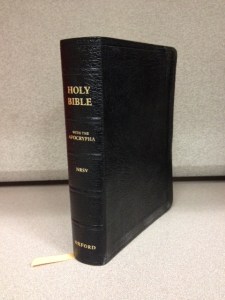
Being a Bibles editor, I suppose, is a rare kind of job these days.  The book that defined our culture now rests in the back seat under discarded fast food bags and covenants of a more modern kind.  Often it surprises me how little we really know about the Good Book.  When I was a teenager I discovered that Catholic Bibles had more books than the Protestant versions with which I’d grown up.  Had I been more attuned to historical issues at that point this surely would’ve raised a crisis.  Had we left out some sacred books?  That would seem to be a grave mistake.  As I was making my way through all the translations of the Bible you could find in a rural area in pre-internet days, I began to read the Apocrypha.

The title “Apocrypha” translates to “hidden” or “obscure.”  Martin Luther’s argument was that these books were never in the Bible recognized by the Jews (therefore, by extension, Jesus), and therefore should be left out.  My question upon reading them, as it was regarding just about any book, was “did this really happen?”  That was the acid test for a Fundamentalist youth.  If something really happened it was, by definition, true.  The implications of this for the books of the Protestant Bible only became clear later.  Scripture is more subtle than that.  So it is that I’ve been thinking about how we in Bible-land privilege the western canon.  Not only are the Deuterocanonical books called “Apocrypha,” we leave out the books of the Ethiopian Orthodox Tewahedo Church, despite its 45 million members.

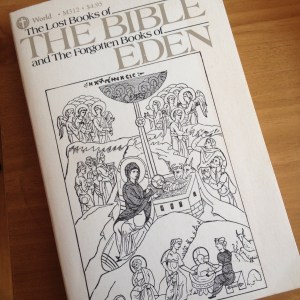
The books of 1 Enoch and Jubilees are included in the Ethiopian canon, but they can be tricky to find even now in the wide world webbed together.  Western biblical scholars have begun to take strong interest in these books, but the days are long passed when scholars could determine the content of the Bible.  The Good Book has taken on a life of its own that no amount of scholarship can challenge.  Minds have already been made up and tightly closed, even as we continue to gain information on ancient contexts and the massive collection of writings that never made it into anyone’s Bible.  Fundamentalism, so very certain of itself, has defined a circumscribed Bible to which nothing may be added or taken away.  Even as John of Patmos wrote that admonition, however, the Bible recognized by early Christians was growing.  And, ironically, some even left out his book.  Such matter remain hidden indeed.


Giving a Hand

A friend sent me a news story that really spoke to me.  A bookstore in England, forced to move because of rent, asked for volunteers to help move their stock to a new storefront.  The response?  They had to start turning people away after 250.  A human chain was formed to pass books down by hand to their new home.  Book people, it seems to me, are like that.  I spent a recent weekend looking at downtown Easton—one of the triplet cities that make up “the Valley” (Allentown and Bethlehem being the other two).  Surprisingly, I found two used book stores within blocks of each other.  The proprietors (especially of the first) were friendly and helpful.  They were book people.

I mentioned to said first proprietor that two of the books I was buying were to replace copies ruined during our move.  The look of alarm and sympathy on her face was genuine.  Book people know that look.  They can feel each other’s pain.  They will freely give of their time to hold knowledge in their hands, if only briefly, to pass it along to others.  Now, like most bookish people, I’m aware that I’m considered odd by the average guy who enjoys sports, mechanical stuff, and money.  I’m content with a book, either reading or writing, and the occasional foray out among the more active and boisterous.  I like to think that if I lived in Southampton I’d have given up a vacation day to help out.  Saving books is saving civilization.

Book people know there’s more to life than themselves.  Ironically, such readers are often quiet and sometimes thought to be stuck up.  If you go to help move books by hand, I suspect that gives the lie to feeling above other people.  Reading is thought of as a passive activity, but it makes the mind more active.  There’s a reason our species have large brains.  It’s not that all books are for everyone—I’ve had plenty of disappointments in my reading life—but the unread book is full of potential energy.  And often that already read rewards us when we turn back to it.  Books, you see, are the ultimate givers.  Those who sell them may make a profit, but the return on investment tends to be quite high for the buyer.  If you have to move and you hire a moving company chances are they’ll complain about your books.  You’re better off asking book people for an unstinting hand.


V November

“Remember, remember the fifth of November,” begins the parable V for Vendetta before opening on a government not unlike our own.  Fascist, built on hatred, an angry white man speaks for the few who worship nothing but power and call it God.  Tomorrow is election day, and V can also stand for Vote.  Two years ago our nation awoke in shock.  Since that day we’ve seen hate crimes transform from illegal to commendable as Neo-Nazis are described as very fine people and those who actually do the labor for the nation have been disenfranchised so the uber-wealthy can have tax cuts.  Violence isn’t the answer, but voting can be.  As soon as the GOP sensed it might lose, it began voter suppression measures.  They have never watched V.

The hope for any democracy rests in the volition to vote.  We have to be willing to inconvenience ourselves to get to the polling station tomorrow for an outcome that will decide the fate of this nation.  We’ve had “fake news” spewn out at every fact that is distasteful.  Open, bald-faced lies backed up by sycophantic adoration of a non-charismatic hater—well, have you watched V for Vendetta?  Graphic novels, it turns out, can indeed be prophetic.  And since there are other nations out there that look to emulate the land of Amerigo Vespucci’s legacy.  We have forgotten what it was like to be a colony.  Instead we prefer following blind leaders—those who can’t understand that hateful words lead to hateful deeds.  Those who can’t understand that a terrorist can be an elected official.

I’m describing V for Vendetta, of course.  The coincidence of the Roman numeral five and the word “Vote,” however, hasn’t been lost on me.  I’ve talked to those displeased with the results of election day two years ago who hadn’t gone to vote.  What we see as V designs his intricate plan is that the will of the people still matters.  But for your will to be known, you must use your voice; you must vote.  Or be victims of our own system.  We’ve had two years to see what damage can be done—a constitution treated as a napkin and due process subverted in order to ensure ill-gotten gain.  Vivid colors have been used to stain this canvas.  We don’t often receive a chance to correct imbalances but there’s a lot at stake this time.  If you doubt me, at least watch V for Vendetta and remember that parables are, by definition, true.


The Myth of the Extra Hour

The selling point of an extra hour of sleep is, unfortunately, a myth.  I’m not talking about young people who can sleep on demand, but your average, everyday working body who adheres to a schedule set by the man.  Like many Americans I probably don’t get enough sleep.  Long years of habit are hard to break, and besides, I still have to commute into New York City.  Not every day, but every couple of weeks.  Still, my sleep-deprived brain knows that means awaking early on those days and since getting up extra-early is hard, why not maintain the status quo ante?  Habitual early risers don’t really benefit from setting the clocks back.  You see, you’re never given something without it being taken away again elsewhere.

Humans can’t seem to help themselves from messing with nature.  There’s always something to do on the farm, and other creatures don’t keep clocks.  Interestingly, standardized time (instead of the more natural local time) only came into being with the railroad.  Trains were scarce and to make sure those down the line didn’t miss one, time had to be synchronized.  Even earlier, the process of navigating the oceans required knowing what time it was back home—local time could be determined by the sun—to determine one’s longitude.   With railways, however, the nine-to-five could become the accepted norm so that business could be conducted and time could be divided into profitable and domestic.  And everyone knows which one is more lucrative.

No doubt some will wake this morning well rested.  Others will have stayed up later, knowing they’d have an extra hour this morning.  For the rest of us, biology moves us along the same trajectory it’d been keeping ever since March.  Daylight Saving Time could be instituted all year, you know.  When we set the clocks back in March we could just keep them there.  The slow, steady rhythms of time would adjust.  Yes, the gods of Greenwich would be annoyed, but mean time could mean time that is useable.  The modern commuter lives by the clock.  Work depended on that train or bus or camel.  You don’t want to miss it.  And if you think camels are an odd addition to the list, it could be that the present writer isn’t getting enough sleep.  No matter what longitude, or mass transit schedule, nothing beats a good night’s sleep.  And changing clocks doesn’t help.


Last Call

The alarm that wakes you in the middle of the night.  There’s something primal, something visceral about that.  We humans, at least since our ancestors climbed down from the trees, have felt vulnerable at night.  If our sleep is constantly interrupted we don’t think clearly.  We build secure houses. Lock our windows and doors at night.  Say our prayers before we go to sleep.  Last night I discovered that the homeowner has even greater concerns than the humble renter.  While 11:30 may not be the middle of the night for some, for early risers it is.  And there’s nothing to strike terror into the heart of a homeowner like a tornado warning.  Especially here—our realtor laconically told us that they never have tornadoes in eastern Pennsylvania.  The weather warning system disagreed with him last night.

Getting up as early as I do, first light is hours away.  Hours before I might check for damage with the light of old Sol.  My wife had to work, no less, at a venue some distance away and we both had to rise early and wonder what the damage might be.  We knew, of course, that the pointless ritual of changing our clocks would occur tonight, but that does alleviate concerns about whether the roof was still on the house or not.  You can’t take anything for granted, not even the continuity of time.  Thus my thoughts returned to Weathering the Psalms.

Severe weather led to that book.  If I were to rewrite it now it would come out quite differently, of course.  No one would write the same book the same way after a decade and a half.  Still, there may have been some things I got right in it.  The weather is a cause of awe and fear.  The sound of the wind roaring last night was impressively terrifying, even in a technological world.  Especially in a technological world that relies on an unwavering power grid and constant connectivity.  In the midst of a wakeful night, alone with thoughts too haunting for the day, the weather has a power with which we’re foolish to trifle.  Global warming is a myth if it gets in the way of profits.  Then darkness falls and we realize just how very small we are.  In the light of dawn, the damage was not too bad.  A frightened car meeping its mewling alert.  And a strange justification that perhaps my book contained some truth after all.


Leftovers

It looks like I forgot to click “publish” yesterday, so my blog post never appeared.  With apologies for doubling up, I need to complete the trilogy today.  So here goes…

Unlike All Saints Day, which, we were told, was a day of obligation, All Souls Day, today, was not.  It was kind of a leftovers day.  Ironically, it developed into Día de Muertos—the Day of the Dead—along with Halloween and All Saints.  Yes, there are many who declare, and rightly so, that Día de Muertos is something different.  It is and it isn’t.  Cultures around the world have always felt that at this point in the year something odd was going on.  The carnal summer was becoming the spiritual autumn.  Thoughts of those who’d died come back.  So it is a three-day celebration—not officially recognized in the United States (it would interfere with business, which is, as we all know, a thing not to be imagined)—has become a commercial boon.

Still, not being among the saints, I have to wonder if the leftovers—All Souls—are somehow second-class citizens in the afterlife.  Does the social stratification we experience daily here carryover to there?  The view of Heaven among the poor is generally one of comfort and equality.  Fairness, which is in very short supply down here, will finally see the end of the moral arc of the universe, to borrow from a departed sage, bend toward justice.  And sharply.  The idea is ancient and powerful.  Primates of other species don’t object to having leaders.  They do, however, reject leaders who abuse power.  And so it is that we’ve evolved beyond that.  Civilization teaches us our place.

The Day of the Dead has become commercial, along with Halloween.  Why not stretch out the profits, which, after all, come from the leftovers?  There is a capitalist vision of Heaven, you see, and it is one we see working out on earth these days.  Those with money take power and use their money to buy more power that in turn leads to more money for them.  We call it “making a living.”  Those who are wise, however, recognize something deeper in Día de Muertos.  It is the time when we welcome family home, indeed, when family becomes more important than job, or status, or power.  It is a very human, if supernatural, holiday.  All Souls, it seems, has received less than its fair share of attention.  The Day of the Dead, in its own way, warms up those leftovers.


November Novina

One of my New Testament professors was fond of saying early Christianity was exclusive so that people would want to join.  “If everybody could be a Christian,” he suggested, “why would anyone want to be?”  There is a snob appeal to such a country-club approach to religiosity (although I believe it to be false) that has somehow come to be attached to All Saints Day.  As the holiday that spawned Halloween (or so some say), All Saints seems to hold us the exclusive members of a sect that began with radical equality.  The slight was addressed in All Souls Day (tomorrow), when the rest of us might have a chance of being remembered.

There was a death in my extended family yesterday, of someone not much older than me.  I won’t reveal the personal details here, but I do ponder the coincidence of his passing so close to All Saints.  When we’re gone, we hope, people will remember our good, opposite to what Shakespeare suggested might be the case with Julius Caesar.  There are those who touch our lives for good, be it loudly or softly, and we tend to think of that good as who they were.  But sainthood?  Isn’t that a bar too high for anyone to achieve?  And if we think we’ve made it, even that very thought is enough to disqualify us.  Some sects of Christianity treat any member as a saint, but that leaves little to which to aspire.

Carlos Schwabe, Death of the Undertaker; Wikimedia Commons

For the rest of the world this marks the beginning of November—that month when cold settles in along with longer nights, but no reduced working hours.  We are approaching the holiday season, for we need some help to make it through times when loss can feel so close at hand.  The veil separating worlds—something science has tried hard to dismiss—was believed to be more permeable at this time of year.  All Saints was a bright day of upbeat music and glory, while All Souls followed in black and more somber tones.  That’s kind of like November.  I grew up, as did my departed kin, without the awareness of these holidays of transition.  Protestants sometimes miss the complexity traditional Catholicism had carefully grown.  At Nashotah House this was a day of obligation (although they all were, really), and we’d be invited to add names to be recited in mass.  I have a name or two to add this year, and I like to think anyone should be free to join.


Halloween Mood

As America becomes scarier and scarier, I appreciate the fact that I grew up loving Halloween.  I don’t know why the dark mood appeals to me—I don’t like being scared, and I certainly don’t want others to suffer.  It’s more the mood that appeals; think of it as Halloween in the abstract.  I begin to feel it in August when I walk into stores already beginning to stock their black and orange wares.  It grows stronger through September as the dark comes on noticeably earlier each day, culminating after an October of anticipation.  Unlike some consumers of horror, what I’m after is the mood.  I started reading Poe as a young person, and “The Fall of the House of Usher” remains my favorite short story.  It’s the mood.  The narrator riding his horse through the woods toward dereliction.  There’s a sublimity in it that’s hard to match.

Yes, I watch contemporary horror.  I even write books about it.  Still, it’s difficult finding others who share my sensibility concerning horror.  I don’t like the jump scares or the gore.  I’m after the mood.  Poe knew about mood—he wrote stories that maintained it throughout.  A kind of beautiful hopelessness.  It’s a feeling in the air around Halloween when it’s clear nothing is going to stop the leaves from falling and the onset of a long and lonely winter.  Writers will shiver in their garrets, allowing their thoughts to flow despite the pale sky and feeble sun that is the only hope of continued life on this isolated planet.  Halloween tells us there is a spirit world no matter what the scientific authorities say.  It’s a world you can feel, but you can’t find it rationally.

Masquerading is a theme in some of Poe’s work as well.  We, as social beings, tend to excel at it.  We hide our real feelings so that others won’t hurt us, or so as not to hurt them.  We all know the childhood feeling of putting on that Halloween mask that permits us to act as we really feel, within limits.  Even as a Fundamentalist, I knew the catharsis of masquerading.  I read Poe and I understood him in my own way.  As an Episcopalian, I saw how fear of death was hidden behind All Saints and All Souls.  Masquerading.  Halloween was the Eve of All Hallows, but it usurped the master in its own form of beautiful dereliction.  The holidays following this are more comforting and heimlich, until the solstice comes to remind us that light will return, no matter how feeble at first.  We need Halloween.


Body or Soul?

Something’s wrong with Buddy Love.  He doesn’t act like a professor.  Meanwhile, Sherman Klump, heavyset but brilliant, feels that human companionship is passing him by.  Still, he’s a professor and has the support of a major university—at least as long as he brings the grant money in.  The Nutty Professor, a re-envisioning of the 1963 Jerry Lewis film, is instructive to watch.  One of the immediately obvious things to those of us who’ve been professors, is that movie makers don’t really understand what it’s like.  And it’s not just comedies—Indiana Jones doesn’t get it any more than Dean Richmond does.  Academics who watch these films shake their heads, if they think about the presentation of their profession.  Indeed, for being high profile, it is a job the public does not understand.

That’s not really what this post is about, however.  Although it’s been a few years, I suspect The Nutty Professor still has some currency.  In case I’m wrong, here’s the gist: it’s a modern, funny version of Dr. Jekyll and Mr. Hyde.  An overweight professor invents a formula that leads to instant weight loss.  The formula, however, also has side-effects, such as a boost in testosterone levels that leads to instability and violence.  In the climactic scene of the movie, Eddie Murphy transforms back and forth from Sherman to Buddy while on stage at the alumni ball.  Papa Klump, who has paid to attend, calls out, “Someone had better go and call the exorcist!”  

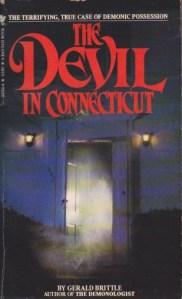
Now, this is screwball comedy.  Still, it reflects something that I’ve been struggling with in my current book—the public view of possession.  Demons aren’t generally known for changing body mass indices.  They’re after the soul, after all.  Still, there’s an element of truth, according to church teaching, about what Papa Klump says—demons are bodily afflictions.  Traditionally, they can’t impact a person’s soul.  In fact, possession is not considered a sin, and those under demonic influence aren’t held responsible for sins they commit while under that influence.  The soul is considered, unlike the physical body, something that cannot be “possessed.”  I know not to take movies like this seriously, but they do contribute to the pool of public “knowledge” about possession.  In this way, at least, it’s important to pay attention.  Such films may not really comprehend what the lives of professors are like, but they do reflect, even if in a nutty way, what people believe.


Organic Experience

Holy Horror, it looks like, has been delayed until January.  That doesn’t mean that I have to wait to find some relief in the escape to film.  Over the weekend my wife surprised me by being willing to watch The Exorcist with me.  As we settled in to see it, a few things occurred to me—watching horror with someone else isn’t nearly as frightening as watching it alone.  I know this from experience, and it seems that it has something to do with the willing suspension of disbelief.  It’s harder to do when someone is with you.  Left to one’s own devices, it’s possible to believe what you’re watching, even if intellectually you know that it is merely a movie.  That tells us something about the way brains are wired.

I object to the word “wired,” really.  As organic beings, we are not computers.  What invented consciousness would watch a scary movie for pleasure?  What is the rationale for it?  It was a gray and rainy Saturday evening in late October.  In human experience that may be all that it takes.  Seeing orange and black in the stores sets a mood that computers, I strongly suspect, simply can’t feel.  They lack the human experience of childhood trick-or-treating, or throwing on another layer as the days grow chillier, or watching the leaves turn and slowly drift down from weary trees.  No, these aren’t wired experiences—they’re very organic ones, and often those that mean something even to adults as the seasons wend their way through the calendar.

The author waiting for proofs is rather like an expectant parent.  Well, that analogy’s not quite right either, but you get the point.  I know the book is coming.  It was accepted and submitted long ago.  The publication process, however, is more complex than most people might assume.  In fact, in the publishing industry it is often the main role of the editorial assistant to assure that manuscripts make it through all of the necessary hoops to move from finished manuscript to printed book.  Johannes Gutenberg likely had a simpler process worked out, although, in the early days of book-buying you could purchase the pages and have them bound by your choice of bindery.  Now cover and content are glued or stitched together in what one hopes is a seamless way.  Still, that stitching can’t help but to recall Frankenstein’s monster.  It is, however, another gray, rainy day in October.  It’s just a shame my computer can’t share the experience with me.


Like One of Us

Some envision America as a nation of—God help them!—only people like themselves.  This is Trump’s America, and therefore, the America of the Republican Party.  We can’t quite say it’s a white male America because there are many white males who simply don’t share that vision, but it is hate-filled enough to rouse bombers and shooters and Mitch McConnell.  American terrorists, in a word.  Yesterday, the Sabbath, saw a shooter in my familiar city of Pittsburgh who left 11 dead.  The response of Trump?  The synagogue should’ve had armed guards.  I propose that we ought to put walk-through metal detectors outside churches—better yet, full body scanners like they use at airports.  Might as well see everything the faithful bring with them.

Apart from the obvious tragedy of the innocent victims, another disturbing element of this horrific event is that Trump can’t see that his own rhetoric encourages it.  His mouth may say we shouldn’t hate, but his mouth says a lot of things.  Most of them lies.  His public posturing as the angry white man, the “Christian” bully, the Rambo of the Lord, has jarred people across the world.  When you rail against the media daily from the highest position in the land, you’ve got to expect sycophants (e.g. Republicans) to try to please you with their own acts of outrage.  What more cowardly way can one devise than to shoot those at worship?  Does 45 not understand that armed guards would make a very mockery of what goes on inside?  What do they teach at his church?

Coming up on two years ago, after election day, many people warned that just this sort of thing would happen.  Knowing that the Manchurian candidate they’d nominated couldn’t think for himself, the GOP decided it was a good time to polish up their hit-list.  Those who don’t belong in their white bread, white face, white male country.  This is evangelicalism gone wild, no, Rev. Graham?  Those who can think for themselves are not welcome in a party run by hatred so pure and rife that decent people feel they must take a shower after they leave its presence.  And what of the dead?  For the “party of Lincoln” they have died in vain.  They should’ve had armed guards, as if worship were some kind of dangerous, subversive activity.  The party of the NRA, formerly known as the GOP, has never watched The Witness.  It has never shed a tear for the dead.  And it most assuredly has never been to church, or synagogue.

Image credit: Musée d’art et d’histoire du Judaïsme, via Wikimedia Commons