Self Promotion

Perhaps I lack ambition, or maybe my inner critic is over-caffeinated, but I’ve never applied for a book prize.  Don’t misunderstand: when I submit the books to publishers I think they’re good—I wouldn’t do so otherwise.  As with any of the woodworking I’ve done, however, I can see the flaws.  These days young scholars are being encouraged to submit their books for prizes.  Many of them want nominations for several awards.  I’ll admit that once in a while I wish one of my publishers would say, “Hey, this is pretty good, maybe we’ll submit it for something.”  After six books this has never happened, and I don’t want to put myself out there.  Some of my fiction has been nominated for prizes by the publishers.  Some I’ve even entered into contests.  I believe in my work.  It just means more if someone else would be willing to take the next step.

Photo by Giorgio Trovato on Unsplash

My time in the academy—about 19 years in some kind of professorial role—ended 15 years ago.  Even so, during my time as a grad student and professor, nobody suggested book prizes.  There are very few in religious studies, perhaps because the motivation to study the subject seems to come from a higher plane.  Of course, in those days potential professors didn’t have to be self-promoters, although some were.  All I was seeking was a steady teaching position to do what I do best, and which allowed me to write a book now and again.  Although I taught full-time for 14 years, I never had a sabbatical.  Or any research leave.  I managed to write a second book in any case.  The thought of submitting it for an award never occurred to me.

Slowly I’m beginning to realize that the academy has become a foreign country to me.  A place where scholars have to reassure themselves—book prizes being one such means—that their work is exceptional.  The real factor, it seems to me, is time.  Will any of your books still be referred to or cited years after a scholar becomes old?  Perhaps asked to leave the academy?  There are so many academic books published these days; publish or perish has become a mantra in the dark academy.  It is more difficult to stand out.  My next nonfiction book (half written), if it ever gets finished, will not be published by an academic publisher.  And were it to be nominated for a book prize (unlikely), the initiative will, I assure you, come from someone else.

On October

October has come quickly this year.  September was quite transitional.  Mostly pleasant, but we shivered through the recent sunless days of the nor-easter around here.  Between work and full weekends, I wish the approach of my favorite month could feel more regal.  I know die-hard horror fans watch movies in that genre every night of this month.  My schedule won’t allow it, and I’ve been so busy that I’ve fallen behind on movie watching.  Most of the time the movies I discuss on this blog are ones I’ve seen the previous month or two.  It seems I have lots of other things to write about.  And I’ve been trying to step up my reading this year.  Goodreads tells me I’ve finished sixty books so far in 2026.  And so October snuck up on me.

For scholars of religion, and those of us who pretend to be such, October starts in earnest the planning for the American Academy of Religion and Society of Biblical Literature annual meeting.  It will be in Denver this year.  Last time it was there I shivered the whole time.  A colleague recently asked me to contribute to a volume on Ugarit.  I had to decline, being so out of date.  I could’ve said, “My mind is preoccupied with October.”  Horror movies and Halloween.  The changing of the leaves.  Jacket weather and reading gothic novels.  Pumpkins and apples. October is the month when many in this climate feel that they come alive, just in time for the darkness and cold of winter to settle in.

For many years I’ve been pondering the spirituality of the dark.  I don’t mean “dark powers” or Satanism or anything like that.  I mean the restorative, contemplative nature of being in the dark half of the year.  Since the equinox it’s been more dark than light.  We spend half of each year in this way.  Instead of cursing the dark, it seems to make sense to try to find its spiritual benefits.  In the Middle Ages monks used to awake in the night to say their prayers.  Even today spiritual writers occasionally venture into the realm of asking what we might learn to appreciate in the dark.  October’s a good time to think about such things.  Others have also begun to explore the spirituality of horror films.  This began to occur to me, in rudimentary ways, when I was a student in seminary.  So suddenly October is here.  Hopefully it will have some time tucked away for reflection.  Between watching horror movies, of course.


B’s and Q’s

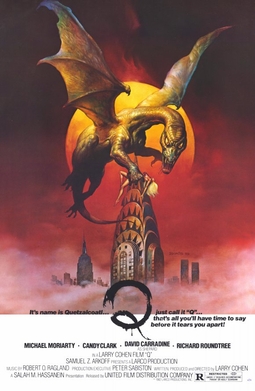
A friend who read my review of The Stuff recommended Q: The Winged Serpent.  The former was the first Larry Cohen movie I’d seen, one that I stumbled upon while looking for something free to watch.  I was favorably impressed—it was a comedy horror that worked.  Q was earlier and was more of a low-budget horror, but with elements of satire in it.  As well as social commentary.  If you can handle stop-motion animation, and you want to see the inside of the Chrysler Building dome, you might enjoy this monster flick.  And there was a good deal of theology in it.  It’s certainly worth talking about in the context of horror and religion.  One warning in advance: if you’re like me, all the camera motion—many aerial shots of Midtown Manhattan, it might make you a little woozy.  It did me.

The movie follows a petty criminal who discovers the lair of Quetzalcoatl inside the Chrysler Building.  Meanwhile, a priest of Quetzalcoatl is sacrificing willing victims in Manhattan to bring the deity back.  A cop who’s willing to believe (Detective Shepard) researches beliefs in the Aztec god and tries to connect the sacrificial murders with people who are disappearing—often from Manhattan rooftops.  The question arises: is this a god or just a monster?  That’s a freighted question these days.  This idea is that if it can be killed it’s just a monster.  If not…

The story has its shortcomings and the direction isn’t great, but overall it’s not bad.  A creature-feature with some thought.  As Shepard chases down experts he starts to understand that even if this is just a monster, there are devotees of Quetzalcoatl in Manhattan killing (willing) victims.  At one point Shepard says, upon seeing a victim with his heart cut out, “All we have to do is eat the bread and drink the wine,” or something similar.  This is fairly sophisticated coming from a B movie.  Religion is also behind some of the humor as well.  When the Aztec priest comes after the petty criminal he can’t kill his victim unless he says a prayer.  The criminal refuses, and in doing so saves his life.  Interesting thought.

While having the trappings and feel of a B movie, Q gives the viewer of religion and horror movies something to think about.  The movie doesn’t reference the Bible or quote it, so it can’t make Holy Sequel, but it’s worth a lazy weekend afternoon to give you something to think about.


Heavenly Scent

There’s a disappointing scent to books printed on demand.  Upon first opening them, they release a waft of laser printer.  The friendly smell of offset printing is banished.  I need to qualify that, however.  While teaching at Nashotah House I acquired a book via interlibrary loan that I remember not for its content, but for its unpleasant odor.  I’m not sure if it was the paper used, but the book smelled unpleasing.  Almost too offensive to read.  I’m not referring to the kind of musty, basement bouquet that some used books, long stored, possess.  No, that aroma isn’t offensive.  It suggests both mystery and the human condition.  How books smell is important.  Upon recently opening a POD (print on demand) book, I was transported to office work rather than the musty study of a scholar.

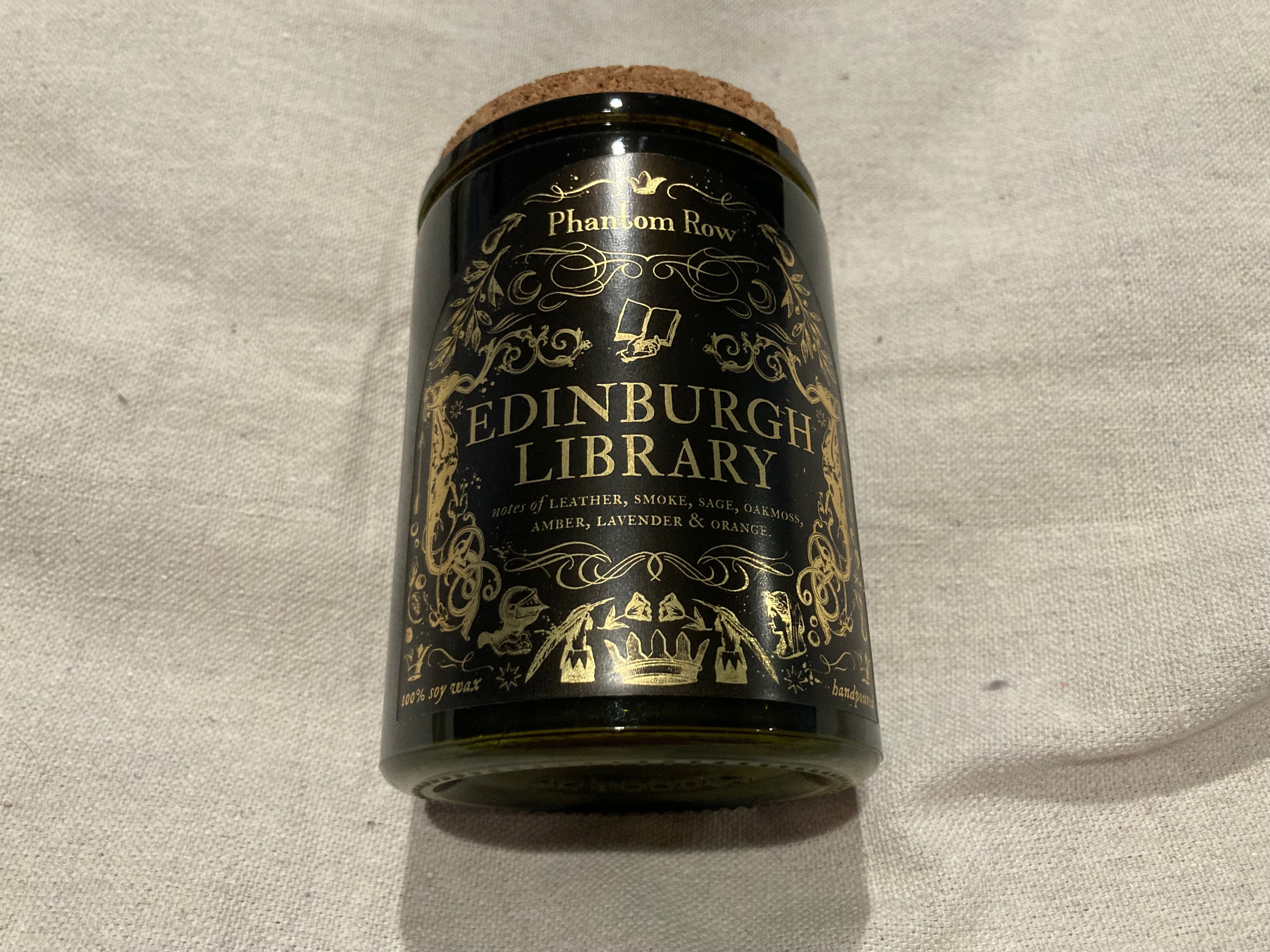
There are companies that sell scented candles intended to suggest libraries.  Libraries smell wonderful.  The small Franklin Public Library in my hometown has a wonderful, evocative aroma.  I remember it well from childhood.  On a visit to my mother before she passed, my wife, daughter, and I took her to that library.  We didn’t check anything out.  I simply had to smell it again.  Olfactory stimulus is very personal.  Indeed, in polite company we tend not to comment on how a person smells unless it is particularly pleasant.  “Nice perfume/aftershave, etc.”  (You have to be very close to a person to comment on less pleasant odors.) Scent has always been an important sense to me.  I like to sniff things.  When I’m out jogging first thing in the morning, I snuff the air like a bloodhound, eager for the first whiffs of fall during the heat of summer.  Like a dog I tend to think there are no bad smells, but there are some I don’t seek out.  Smells will take you back to the past, as the ultimate time travel.

In my mother’s kitchen I used to sit by her spice drawer and pull out each little bottle and jar to sniff them.  She never had anything as pungent as the asafoetida that my wife and I once bought for a recipe, but I recall those moments fondly.  Mom would be cooking nearby, and it seemed to me that I was smelling far away places that I’d never go.  I did make it to Scotland, however.  Edinburgh often smelled of the McEwan’s brewery.  At least the Old Town did on many a foggy morning.  We live not far from a micro-brewery and when its bouquet escapes, it take me straight back to Auld Reekie.  And, of course, Edinburgh was full of books and their distinctive smell.  All of this makes me want to go plant my nose in a book.


Serious Series

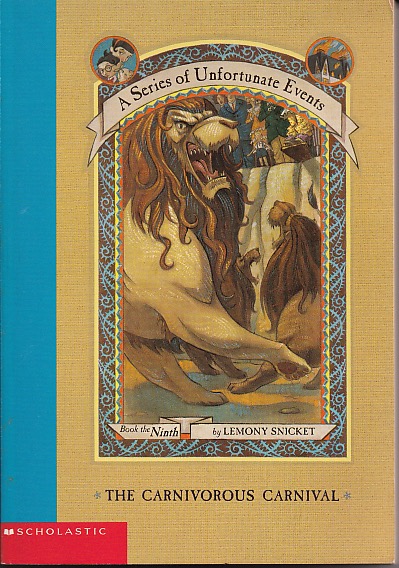
The Carnivorous Carnival continues to reveal more of the Baudelaires’ unanswered questions.  At the Caligari Carnival the orphans disguise themselves to fit into a freak show, and meet Madame Lulu, who reveals important information—the V.F.D. has split into two parties.  The children still don’t learn what the initials stand for, but they discover that some of the influential adults in their lives were part of it.  The story grows quite gripping and more seriously dark than I remembered it being when I read it to our daughter many years ago.  One of Count Olaf’s associates isn’t mentioned after The Hostile Hospital, where presumably they died.  In this volume, another of his associates is thrown to the lions that give the book its title.

I couldn’t help but think of Daniel in the lion’s den as I read this one.  And Olaf’s plan is only too eagerly lapped up by the crowd wanting to see violence (and sloppy eating).  The reference to Daniel here can’t be coincidence.  The story also has the children questioning their own motivations.  Are they villains too?  Madame Lulu was a good member of V.F.D. who’d turned bad.  The children helped her reform, but in the end she betrayed them to Count Olaf.  Were their motives really pure?  For the first time in a Series of Unfortunate Events, the orphans end up separated at the end.  Neither Mr. Poe nor the Quagmire Triplets appear in this part of the tale.  It does seem, as noted, darker than usual.

Daniel Handler continues his subtle talking over the heads of children, though.  When explaining “déjà vu” for children, he gives other examples such as “ennui” and “la petite mort.”  The latter he explains that it’s a feeling that part of you has died, but Handler certainly knows that the common usage for the phrase is a circumlocution for “orgasm.”  Something many adults know as well, I suspect.  And there is humor for younger readers as well.  The “freaks” with whom the orphans share their job at the carnival provide some comic relief.  As an adult reading the books for myself, I get the feeling that, by this far into the series the story—while remaining pure fantasy—is aimed more at older readers.  It’s amazing what you can forget over the course of a couple of decades.  I trusted Lemony Snicket all those years ago, not to write anything that would seriously disturb our child.  I still trust him as an adult as I look forward to book ten.


Demons Amok

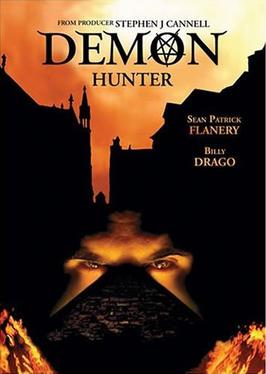
Not all low budget movies are bad, but some really struggle.  Demon Hunter perhaps more than most.  Not only is the script poorly written, the overall story fights for comprehension.  The basic idea—Jake, a half-breed demon, hunts and kills demons for the church when exorcisms fail—is contrived.  It doesn’t help that many aspects of the Catholicism it portrays it simply gets wrong.  And the common issue that most demon-monster movies can’t seem to overcome, that demons are incorporeal, makes this into a slug-fest rather than really having any kind of film with a statement.  Okay, let’s step back a second: Jake is hired by Cardinal White to stop Asmodeus, the demon of lust.  Asmodeus had made it to the earthly dimension and is trying to populate the world with his spawn.  The Cardinal sends a nun, Sara, with Jake but she just can’t kill demons.

When Asmodeus tries to rape Sara, she is revealed to be a half-breed demon as well and she kills him.  Jake tries to rescue her but has no choice but to kill Sara.  The Cardinal, who has tough-guy priests blocking his door, reveals that they knew about Sara all along and knew that Jake would end up killing her too.  Feeling betrayed for the set-up, Jake goes and keeps on killing those who’ve been seduced by demons.  Bad storytelling can be bearable if some aspects are believable, such as the religious elements.  The problems begin from the opening scene, which is an Exorcist knock-off.  The priest is reciting Latin prayers from a Bible instead of the Roman Rite.  He’s also not dressed for an exorcism, but this is California and it was perhaps a warm night.

Cardinal White walks around wearing a stole all the time.  One of the priests attending him is packing heat.  Demons can’t tell demons, or at least half-demons, from human beings.  And Jake can’t seem to respond to anything without a snappy comeback.  Demons are killed with crosses (not crucifixes) with the bottoms whittled down into points.  Although they have inhuman powers they fight to the death with fisticuffs.  I kept looking for something, anything, to hold onto to that might make this movie make some sense.  The story, which is mercifully brief, is padded out with driving sequences that take a little too long.  A few scenes in the movie weren’t too bad, but there weren’t enough of them to redeem this one.  But it does end up in Holy Sequel, for what it’s worth.


Making Monks

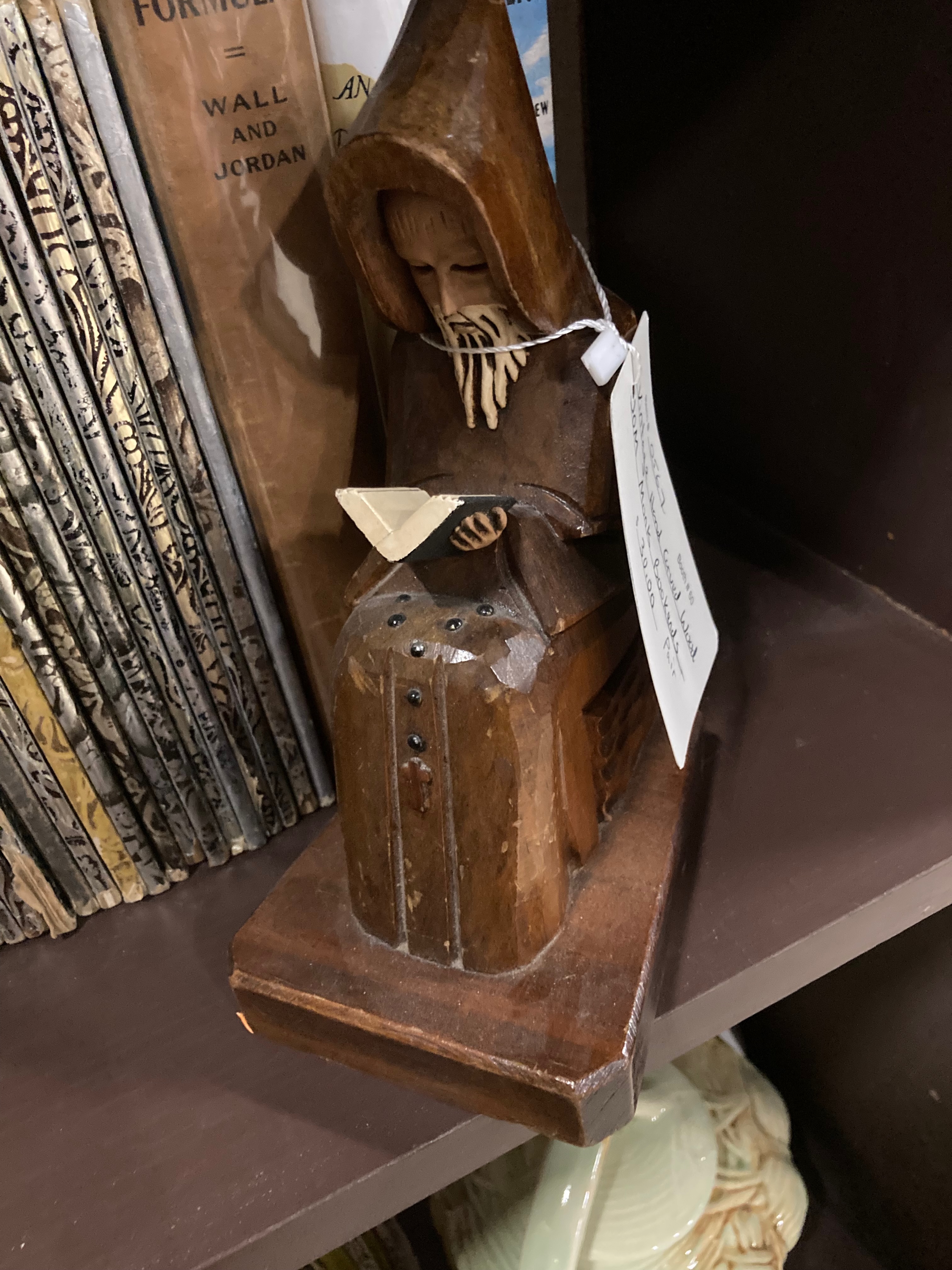
Now that I’m an antique, antique stores have a special draw.  They’re kind of like museums with free admission where you can buy the artifacts.  There’s a particularly large one in Allentown that I’ve visited a few times.  It’s the kind of place that, if you want something you see, you buy it right away because it’s not likely to be there next time you go back.  Back in March I saw a pair of bookends that caught my attention.  They were carved in the shape of monks reading books.  The reason I was fascinated by them is that I had bought my wife a very similar figurine (too small to be a bookend) when I first started teaching at Nashotah House.  We didn’t have much money, but I thought it was a whimsical reminder of where I was when I had to be away all week so that we could keep our academic couple dreams alive.

By the time I got back to the antique store the “bookends” were long gone.  What I was really curious about was whether there could be a connection with the Nashotah House curio I purchased nearly 35 years before.  There’s probably something I’m missing.  Was there a Platonic original somewhere?  When I failed to find them at the antique store, I did an online search and discovered a very similar one on Etsy, listed as being made in the 1970s.  I bought the one we have in 1992.  It was clearly handmade; the Nashotah House bookstore had a few of them on display at the time.  They no longer carried them after the inventory sold out.  I’d supposed they were made by a local Nashotah House person—which may be true—but where did they get the idea?

A bit more time on Etsy revealed another exemplar, this one listed as from the 1940s, specifically from Mexico.  One of the Etsy sellers is listed as being in Florida.  I bought mine in Wisconsin.  I found a pair in an antique store in Pennsylvania.  What is the missing link here?  This is the kind of rabbit hole academics are liable to tumble down.  Since I’m a dark academic, it strikes me as a research topic for someone without tenure worries to consider.  Or perhaps a detective who was raised Catholic.  All the five examples (two on Etsy, two in the antique store, and one from Nashotah House) follow the same plan and are stained and painted similarly.  This antique is curious about the origin story of those other antiques.


Early Romance

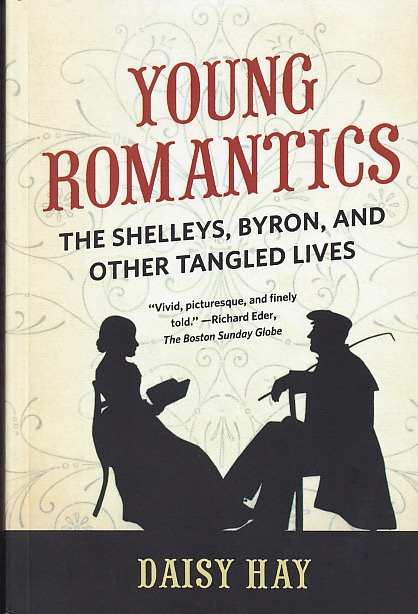
One of the more recent fascinations for me has been the fateful meeting of Lord Byron and Percy Bysshe Shelley, Mary Godwin, Claire Clairmont, and John William Polidori that took place in the summer of 1816.  That gathering famously led Mary, later Mary Shelley, to write Frankenstein and Polidori to compose “The Vampyre,” based on an idea of Byron.  Daisy Hay casts her net a bit further in Young Romantics: The Shelleys, Byron, and Other Tangled Lives.  Particularly, Hay considers the often unsung role of Leigh Hunt, a young journal publisher, who brought together a coterie of creatives that included Byron and Shelley (although those two met later), but also John Keats and a host of others.  Romanticism pervades this group with Keats, Shelley, and Byron all dying young.  (And Polidori as well, but he’s not really much in Hay’s narrative.)  These three poets threw a very long shadow.  As recently when I was in school, we still learned about them.

In my reading over the past many months Leigh Hunt’s name had naturally come up, but I never considered looking more into him.  He never achieved the fame of his circle, and he fell out of favor by writing an account of Byron that was unkind to the poet, even as his posthumous star was in the ascent.  This account makes for fascinating reading.  Shelley and Hunt shared the scandal of marrying and having the sisters of their wives live with them.  Victorians would, of course, assume something improper was happening.  Byron, it was well known, had many affairs, including one with his half-sister.  People love gossip and even though Hunt’s sister-in-law, Beth Kent, made a name for herself publishing books on plants, both she and Claire—the other women—have largely been ignored.  Claire outlived everyone in the circle apart from the late interloper Edward Trelawny, who cast himself as a fast friend of Shelley and Byron.

Hay does an excellent job of pulling all of this together.  The lives are indeed tangled.  Of course, relationships in general are quite tangled.  This book begins with Hunt and pretty much ends with him.  Hay provides some previously unpublished notes from Claire and has to bring the story to a close with Trelawny.  Historically he was the last survivor.  He was also known in his lifetime for making up incredible stories about himself.  I’ve read his account of Shelley and Byron’s deaths.  That book, with its dark academia vibes, may have been the first I read on this fascination.  It’s been with me, however, at least since 1987.  And it will likely continue.


Eating Sin

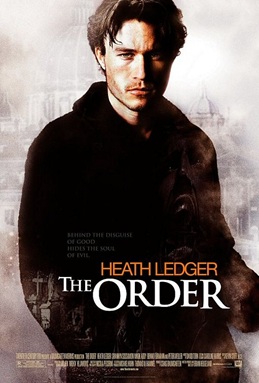
Although a good example of religion and horror, and a member of Holy Sequel, The Order isn’t a great movie.  For a plot that delves into Catholicism, it doesn’t have a great understanding of religion.  It misuses the term “theosophy,” to boot.  So, Fr. Alex is a Carolingian priest, one of two remaining.  He says the mass in Latin with his back to the congregation.  Then he’s sent to Rome by a corrupt Cardinal to investigate the suicide of his mentor.  Before setting off for Italy he invites his last fellow Carolingian, Fr. Thomas, to come.  A woman who escaped a mental institution after shooting him during an exorcism also comes.  Once the investigation begins, Fr. Alex determines a sin-eater killed his mentor.  The Cardinal gives him a special, ritual knife that is needed to kill the sin-eater.  His associate, Fr. Thomas, knows how to get underground Catholic knowledge leading to said sin-eater.

The sin-eater convinces Fr. Alex to seek what he wants.  The priest wants the girl who tried to kill him, so he renounces his vows to sleep with her.  The sin-eater wants to die—he’s been at this for five centuries and is weary.  He attacks the girl, making it look like suicide, so Alex has to eat her sin to get her to Heaven.  He then kills the sin-eater.  The corrupt Cardinal had made a deal with said, dead sin-eater, that if he arranged for the sin-eater’s release, he’d become Pope.  Alex, who has now taken over as the sin-eater, foils this plan and decides to use his now power for just causes.

All fairly convoluted.  Of course, the sin-eater idea would be picked up a few years later in the Fox series Sleepy Hollow.  That’s where I was first exposed to the concept.  A sin-eater is a folkloric concept going back at least to the seventeenth century, mainly in the British Isles.  It has been under-explored by academics (it has “history of religions thesis topic” written all over it).  It’s an interesting idea but isn’t handled well in this movie.  There’s the trope of esoteric Catholicism at play, and interestingly, The Da Vinci Code came out that same year.  Dan Brown’s novel played into the Zeitgeist regarding things the Catholic Church didn’t want laypeople to know (supposedly).  The novel sold an obscene amount of copies.  For all that, we’re no closer to learning the actual history of sin-eaters.  Thesis topic calling!


In Public

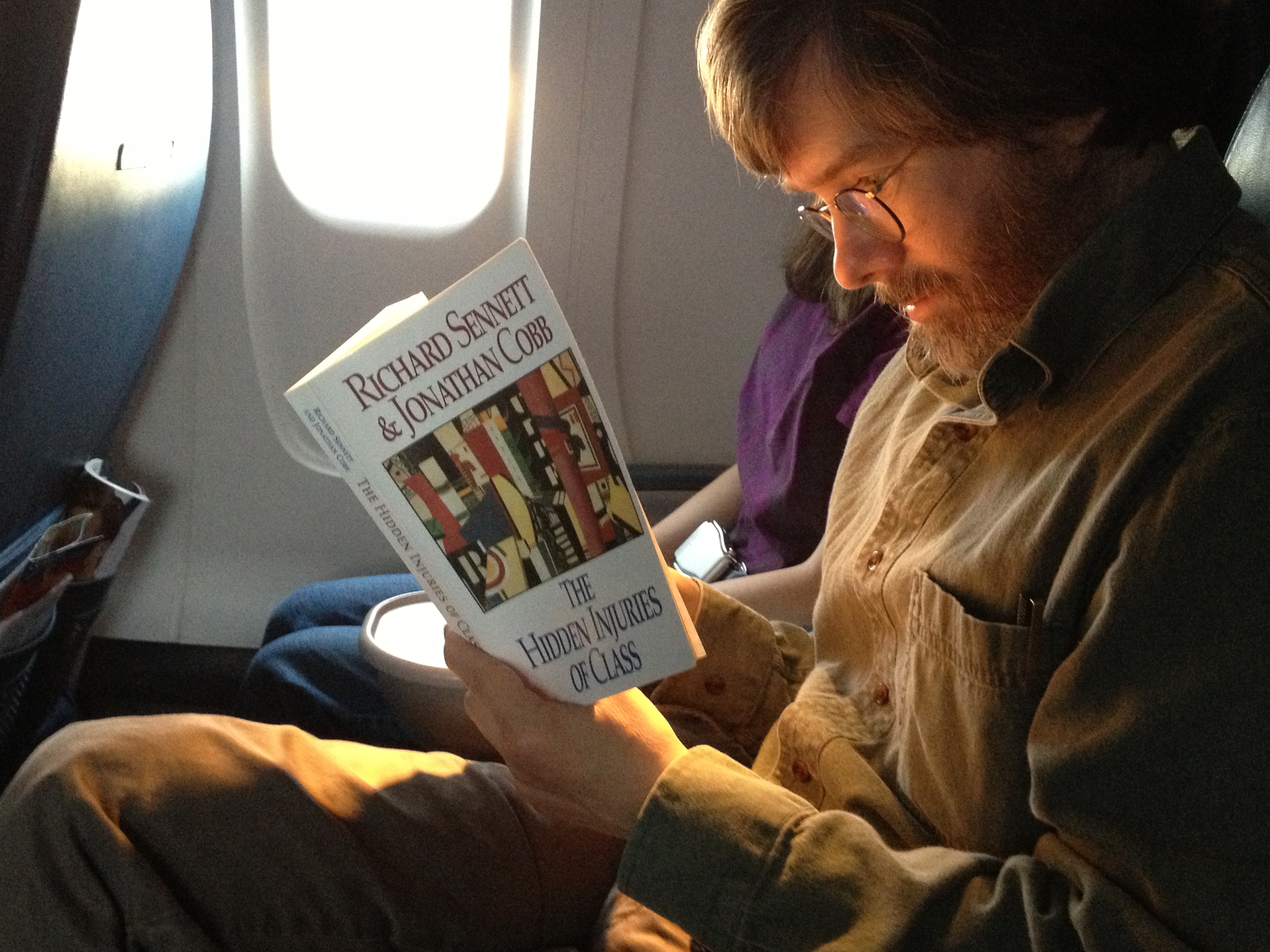
I’ve written about the virtues of reading in public before.  Book reading, that is.  I was reminded once again how restorative an exercise it can be.  The occasion this time was a book sale at the Bethlehem Public Library.  We didn’t realize this was one of those bi-monthly kinds of events—at least this year there are six such sales.  We met some friends there and I exercised considerable restraint, buying only two books.  One was a copy of Strunk & White’s The Elements of Style.  I’d had a copy of this, but it was ruined in the flood.  I decided to replace it.  The other book was a collection of all Flannery O’Connor’s stories.  I’d been thinking just the day before that I should read some of her work.  It happened that I finished before other members of our party so I waited in the hall and started reading the story “Geranium,” with which the book starts.

After a few minutes a college-aged guy walked by and said, “Great book.”  I thanked him for affirming my choice.  He said, “I’ve just been reading O’Connor, you’re in for a real treat.”  This brief exchange reminded me of being in Easton on a warm evening a few years back, reading in a public square.  I was there to pick someone up and they weren’t quite ready yet.  A couple of young women, probably Lafayette College students, walked by and asked what I was reading.  It was Toni Morrison’s Beloved.  They weren’t familiar with it and asked me what it was about.

Now, I’ve always been quite a shy person.  I don’t mind responding when someone talks to me, but initiating a conversation is something I don’t do very well with strangers.  I’m happy to respond when someone shows an interest in a book I’m reading.  I’ve had dentist hygienists ask about the book I inevitably bring in with me, asking if it’s any good.  The few times when I forget to bring a book and I have to try to entertain myself on my phone (it’s not easy; I quickly grow bored), I’ve never had anybody stop and ask what was interesting on my phone.  It’s the printed book, at least in populations with college students, that seems to bring out a willingness to chat.  I wonder how much of that bookish sociability that we’ve lost now that the electronic revolution has taken place.  How many discussions does a Kindle start?  It’s a virtue to read an actual book in public.


Seasonal Equality

Despite a few heat spells, around these parts the summer was reasonable.  More rain than lawn care and weeding would prefer, after a somewhat dry June, but really not horrendous.  I had my first snuffs of autumn in the air in late July.  I have a fairly keen sense of smell, and when I’m jogging before the sun is up, sometimes I get a whiff of change.  Of course, we had August yet to go, and temperatures rebounded, as they will in August, but the change had started.  Today we have equal night and day, but from here until the winter solstice, nights will grow longer.  It’s the season of harvest and Halloween, and, increasingly, scary movies.  We’ll need to turn the furnace on for the season before too long.  Energy bills will go up, but October and November tend to be cozy rather than frigid.

My inner pagan appreciates the change in seasons with an enthusiasm that may not often show.  I remember well my first semester at Boston University.  Other students at the School of Theology knew I wasn’t exactly the smiley sort.  One September day the clouds, temperature, and scent in the air were just right.  I couldn’t help beaming.  A woman who knew me from class asked why I was smiling, “That’s not like you,” she said.  It was the coming of autumn.  

I’m not a person who wishes time away.  I like summer.  I like not having to grab a coat before going outside.  I like not having to put on layers indoors to keep warm.  I also like winter.  The bleakness of the season appeals to the joyful melancholy I often feel.  I don’t enjoy being cold all the time, but the feeling of the season buoys me up.  Spring I always greet with relief.  The constant chill begins to loosen its grip and, although I grumble about having to start up yard work again, I love watching the flowers bloom, welcoming back the warmth.  I wish none of this away.  Born in a temperate zone, it all feels so necessary to me.  But autumn is my favorite.  Leaves began changing around here back in July.  The yellows are beginning to grace the walnuts, and sumac is blushing its scarlet.  It will be some weeks before the deep green of later summer disappears, but we are entering the season of melancholy personified.  I think I can understand why the ancients celebrated these changes.  They are the heartbeat of the temperate life.


Not Really

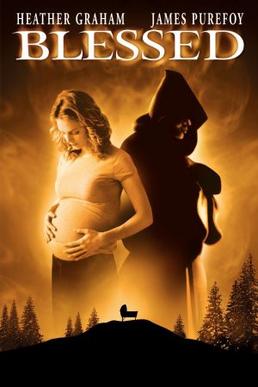
Some horror films just have trouble finding their way.  Blessed is one such movie.  The writing is one problem.  The misunderstanding of religion is an even larger issue.  Samantha and her novelist husband Craig can’t have children.  When he gets a large advance for his first book (dream on) they visit a fertility clinic in upstate New York where Samantha becomes pregnant with twins.  The lake scenery in a light winter (actually in Romania) is the best part of the film.  It’s quite evocative.  The clinic, in any case, shares facilities with a cloning company.  And Craig gets introduced to a tycoon who works in multiple industries, including publishing and, hmm, cloning.  As Samantha grows visibly more pregnant Craig becomes more focused on his writing, neglecting her and visiting the tycoon in the city whenever he can.  It’s implied that they have an understanding, but that doesn’t hold with the ending.

An Italian priest starts to warn Samantha about the evil at the clinic.  Not only that, but the tycoon tells her about his fascination with saints, including Ambrose who killed an angel—Lucifer—whose blood was sealed in a vial recently stolen from the monastery in which it was kept, as per the Italian priest.  That blood made its way to the cloning clinic and so, yes, Rosemary, Samantha’s carrying twin children of the devil.  The priest kidnaps Samantha and prays with her, insisting that she take poison to banish the evil.  He then tries to burn her to death and he also drives into the clinic and sets it on fire.  Samantha survives the fire and her twin girls kill another child at a Halloween party a few years later in Manhattan.

This is one of those movies that tried to improve on Rosemary’s Baby and although some of it is eerie, it’s not really scary and many elements are simply dropped or stuck in for no apparent reason.  The novelty was twin Antichrists who were both girls.  They, like Adrian, appear only late in the movie and the visual cues for what is happening are off.  It’s an interesting attempt to bring science and religion together in horror, but it has trouble understanding the religion it represents.  Quite often in horror, and perhaps other genres, a veneer of religion is used without any kind of research into what any tradition actually believes and/or does.  The, presumably, Catholicism here is strange.  There maybe a scene with the Bible, so I’ll add it to Holy Sequel, in the maybe category.


Class Privilege

A recent article in the New York Times explores something many of us know from experience: your hopes of getting tenure in higher education plummet if you’re from the working class.  One of the causes the article points out (I think I can gift it, if anyone wants to read it), is that working class folks don’t learn networking from their parents.  That was like a lightbulb being switched on.  Schmoozing is so essential when dealing with anyone in power.  I started to learn this at Nashotah House.  My mother taught me always to be honest and forthright.  Employers have walked all over me ever since.  I never learned to schmooze well.  I still don’t do it.  Until reading this article, in my sixties, I didn’t realize that my academic career was doomed from the start.

It’s like this: neither of my parents finished high school.  I grew up poor and working class.  My grades were great throughout high school and college and I was being groomed to be a minister, not an academic.  But I felt the call of academia as soon as I’d acclimated to Grove City College.  I love reading and learning.  I have innate curiosity.  I question everything.  This seems to fit teaching better than preaching.  Before settling on a doctoral institution, I asked my professors where I should go.  Their advice: Europe.  Bad mistake for pre-internet days and a kid who knew nothing about networking.  Edinburgh is a world-class research university.  Its only real connection (at the time) to US schools was Princeton.  Particularly Princeton Seminary, if your degree was from New College.  Otherwise, the professors didn’t pay much mind to American higher education.  Networking, which I didn’t realize you needed to do, wasn’t emphasized or encouraged.

I was hired by Nashotah House because of two factors: they could find nobody else, and I was Episcopalian.  The chances of networking while at a remote, conservative campus in the woods were nil.  I went to conferences, but Ugaritology was a very small field.  I remained an unknown.  I wondered how my friends, if they ran into unemployment situations, always managed to find other jobs.  They knew, apparently, something I did not.  Networking.  Even getting into publishing was rocky for me.  I had two editorial posts for two years only.  I didn’t network or schmooze.  Authors loved me because I was honest and forthright.  Those are working class values.  And, it seems, they will be deficits to advancing in your career.  Be careful before deciding on a doctorate.  It can backfire unless your parents went to college and taught you what to do.


Haunting the House

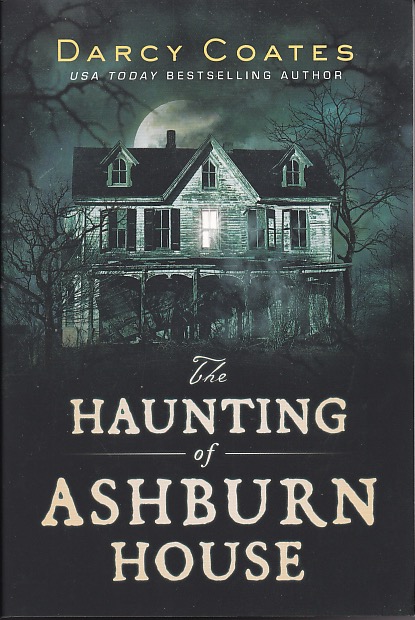
Although it starts off a little slowly, the premise of The Haunting of Ashburn House keeps you reading.  I don’t mind taking the time for a story to unfold.  I know many people want action to draw them in, but I’ve been reading about quiet horror and since it often takes its time, I know to appreciate it.  I’ve not read Darcy Coates before, but as this tale unspooled itself it grew gripping.  Even before the action took off, the situation was intriguing enough to draw me in.  I do quite like a haunted house story.  So, Adrienne has inherited a big old house from a great aunt she only vaguely remembers meeting once as a child.  A writer a bit down on her luck, she’s glad to have a place to live, but she knows nothing of the recently deceased relative who lived there.

Ipson, the town outside of which Ashburn House sits, is peopled with citizens who remember, often incorrectly, the tragedy that took place in Ashburn decades ago.  An entire family, apart from a young daughter, had been slaughtered there.  The daughter, sent to a foster family, returned as an adult to care for the house.  It has many secrets.  The people have been kept away from the house during the aunt’s long life alone there.  Adrienne arrives with little money and no acquaintances, and no knowledge of the history of the house.  She soon discovers that it’s haunted.  Not one to believe in ghosts, it takes some time to convince herself that the occurrences are supernatural.  Once that’s confirmed in a very stark way, much of the rest of the novel unfolds over the course of another day and night.

I don’t remember where I learned of this novel, but I do recall it was on a list of gothic literature.  Indeed, it is gothic.  And it’s a horror story.  The monster—“ghost” is a bit mild—has to be explained, but it fits within the context.  These days to make horror stories work you need to isolate protagonists from phones or “signal.”  Putting Adrienne in a small town, in a house with no wifi, and even partially without electricity, serves this end quite well.  Making her more or less penniless raises a bit of anxiety—such things can happen far too easily in real life.  The story is nevertheless well told and once the monster attacks it becomes difficult to put down.  I don’t remember where I learned about The Haunting of Ashburn House, but I’m glad that I did.


Wooly Sleuthing

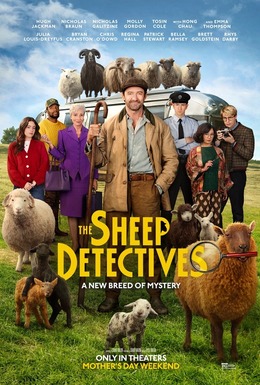
The Sheep Detectives is a family-friendly movie (for the most part) and a sweet story.  I’ll try not to reveal whodunit.  George is a vegetarian shepherd.  He raises sheep for wool, not meat.  He lives just outside the small village of Denbrook, in England.  One night he’s murdered.  The local policeman (singular) doesn’t seem very bright and has to be shown that it’s murder.  The sheep, who loved George, decide to investigate.  (The sheep talk, among themselves.)  George used to read them detective novels in the evening, so they get quite good at deducting things.  Led by Lily they investigate.

One day the sheep head to town.  They can roam freely with nobody suspecting them.  They initially decide on the wrong suspect.  They help the detective come up with a method of investigating by leaving hints for him.  Lily was George’s smartest sheep.  Sebastian is the most world-wise.  And Mopple is the sheep who never forgets anything.  As Sebastian leads Lily and Mopple into the churchyard for the first time, they have the following conversation:

Sebastian: This is the church, where someone named God lives.

Lily: Who’s God?

Sebastian: It’s a bit confusing, God is a shepherd.

Mopple: So he could be our shepherd?

Sebastian: No. Because he’s also a lamb.

Lily: What?

Sebastian: And he’s also invisible. And he’s made of bread. And he damns things.

Lily: Dams things? Like a beaver?

Sebastian: Yes.

Lily: So God is a big invisible lamb beaver, made of… bread?

Sebastian: Yes. And they eat him on Sundays.

The movie is a comedy, of course, but this passage should be exegeted.  Many people believe God lives in churches.  The 23rd Psalm is invoked (“the Lord is my shepherd”), but is complicated by Jesus—the lamb of God.  Of course, God can’t be seen and is therefore invisible.  Made of bread?  Communion, of course.  And the homonymous nature of “damn/dam,” which confuses kids, lead to the conclusion that God might be like a beaver.  This is a fair bit of theological humor for a lighthearted movie.  

The film was based on a novel, written originally in German, but I’m tempted to read it to see if this conversation comes from the book.  In any case, the movie is about acceptance and finding your place in the flock.  And learning not to be mindlessly led to your slaughter—one of the darker themes in the story.  I even enjoyed the good-natured use of “vegetarian” intended as slander.  A fun movie that leaves you with green pastures, it seems to me.  And a message worth considering.