Incident at the Wailing Wall

While reading about Jerusalem lately, I recalled my first visit to the Wailing Wall. The Wailing Wall is the only standing part left of the temple that Herod the Great refurbished on the site of the temple originally built during Solomon’s reign, destroyed by the Babylonians, and rebuilt under the Persians. This was called the “Second Temple” because the first had been razed and although Herod had basically rebuilt it, the second one had never been destroyed (that would happen a few decades down the road). Today the Wailing Wall, the western wall of that magnificent temple, is a sacred site to Jews, and to not a few Christians. My visit took place in 1987. I was volunteering on a dig at Tel Dor, and on a free weekend I’d taken the bus to Jerusalem with some friends to look around.

It was late Friday afternoon. I was on my first trip overseas, and, like most fresh-eyed youngsters, photo-documenting as much as I could. I raised my camera. A guard walked up to me. “No pictures on the Sabbath,” he said. He had a machine gun and I didn’t, so there was no arguing the point. Besides, I had just finished the roll. (Does anyone out there remember film cameras?) I stepped into the shade of an alcove to change the roll. A couple of Hasidic men stopped me. “No photos on the Sabbath,” they warned. I assured them I was just changing my film. It was clear, however, that no more pics would be snapped. I rejoined my party and took out a notebook—at least I could jot down a few impressions. Another guard approached, “No writing on the Sabbath,” he said.

This episode has stayed with me over the years. With Trump’s international tour, I’m reminded that I’ve always striven to avoid the “ugly American” syndrome. I respect the local rules. The incident at the Wailing Wall, however, was a case of religious rules, wasn’t it? Does the enforced rest of the Sabbath apply to Protestants? Indeed, I’d been warned that if I didn’t catch a bus before sundown I’d never make it to Jerusalem on a Friday evening at all. Conflicting theocracies have led to more than their share of international sorrow. Why not take the high road and simply absorb what is going on around me? There’s a profound wisdom in that. Travel should inform our worldview. Those who encounter walls should stop and consider all they might mean to all who will eventually face them.


Human Omniscience

This might take some thought, but please bear with me. I’ve been reading about how some scientists are eager to promote rationality only as the true understanding of the universe. The flaws in this logic are immense. The greatest gaff here is assuming that evolved biological creatures with only five senses have come to comprehend the vastness of a universe in which we matter very, very, very, (and some scientific notation may be helpful here) very little. And we assume that’s all there is to know. Consider that when you want to spot the Pleiades in the nighttime sky, the best way to do it is not to look directly at the constellation. Our rods, which are far more sensitive than our cones, are not concentrated in the center of our field of vision. That means, in some circumstances, you see something better by looking slightly away from it. Don’t take my word for it, test it yourself on a clear night.

We also know that some animals have senses that we don’t. When’s the last time you picked up the earth’s magnetic field? We know it’s there and we know that some animals sense it. We don’t. Or consider the ant. If ants make you itchy, any hive mind will do. There are creatures right here on earth that think collectively, not as individuals. As humans we’ve evolved to think that our limited experience tells us everything there possibly is to know about truth. We don’t know how living under water influences perceptions because we can’t do it. No, we’re a race of surface dwellers. (There’s a metaphor there for those of you who believe in such things.) We’ve learned some basic laws of physics and suddenly we preside over the courtroom of the universe since our evolved logic is the only and the best the cosmos has to offer.

Evolution, however, also made us religious. If logic is at all what it seems we have to admit that study after study has shown the benefits of religious belief to the beleaguered human psyche. If we try to measure it empirically it crumbles in our fingers. Only logic would tell us simply to ignore it then. I’m no enemy of reason. It’s the best way we have of getting along in this world. I love science and support its evidence-based health. It’s just that as I’m standing here in the dark wondering where the seven sisters are, I sometimes have to trust my rods instead of focusing on what I can see plainly with my everyday sight. Logic tells me there are other things outside my sensory range as well.

Photo credit: NASA


Cloaking Device

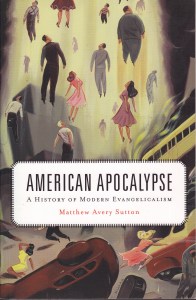
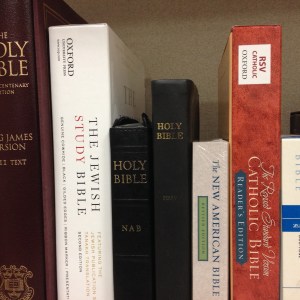
America’s book is seldom read. Those of us who spend an unusual amount of time with the Bible know this from personal experience, but others are starting to notice too. Kenneth A. Briggs’ The Invisible Bestseller: Searching for the Bible in America is a rambling account of the way a variety of everyday people from prisoners to academics and clergy use, read or not read, and perhaps inwardly digest the Good Book. There are moments of stark insight in this book, but with no narrative arc it is somewhat easy to feel like you’re reading about what random people say about the Bible. I don’t need a book to tell me that I’m odd, but much of what I read here was old hat to a guy who grew up Evangelical, went to seminary but never got ordained, completed a doctorate and taught the Bible nearly two decades before being booted out of its company. I’m not sure what I expected to find. Perhaps redemption?

Briggs does provide some useful statistics, and not as maniacally as sociologists do. We learn that few people read the Bible and the numbers are declining. Still, people buy the Bible and tend to have multiple copies in their domiciles. It is cheaper than insurance, after all. Holy Writ, however, is an alien among us. Few people have any idea what it was like to live before smart phones, let alone before the smelting of iron. The concerns and dialogues of the Bible seem so terribly provincial and, to be honest, unenlightened (if one can say such a thing about divine revelation). Still, we won’t accept a president who doesn’t lay his (and it’s always his) hand on the Good Book and swear to uphold America.

The Invisible Bestseller gave me plenty of information to ponder. Some of the tales Briggs tells are interesting. Others are so mundane as to be stultifying. The overarching fact is that the Bible is an established object in our culture. Some take it seriously enough to read it and stick with it—this isn’t easy to do, and I speak from experience here. Such people are rare. After all, apart from getting you a hall pass out of Hell, the Bible doesn’t seem to do much for people these days. Still, when I take a moment to read the Sermon on the Mount, I can’t help but feel we might be missing some wonderful rhetoric by ignoring the Good Book so much. But then again, I’m fully aware that I’m the one that’s odd. Briggs’ book stands as a testament to a couple of testaments that continue to wield enormous power without ever being read.


Sleepy Holy

Fox recently announced that, after four seasons, Sleepy Hollow is being cancelled. The news, while not unexpected, is still disappointing. The initial success of the series caught just about everybody by surprise. Intelligent, witty, and literate, this program tapped into a number of themes dear to American sensitivities. One of those sensitivities, surprisingly, was the Bible. I sometimes wonder if the Bible might’ve been able to save Sleepy Hollow. In my limited view the first season was the best. It started out with an all-American apocalypse. To survive an apocalypse you need a Bible. George Washington’s Bible featured throughout the mythology of the first installment. Two of the four horsemen of the apocalypse had arrived in Sleepy Hollow. Then something went wrong.

In season two, Moloch—clearly a stand-in for the Devil in the series—was killed off. Apocalypse no. The end of the world, in Scofield’s canonical view, had been cancelled. Even Ichabod and Abbie began to wonder what good it is to be mentioned in Revelation if your role as world saviors has been made redundant. A new arch-villain was needed. The coven that had shielded Ichabod, headless without its horsemen, simply faded away. Ichabod learned how to drive. Where’s an enemy when you need one? Enter Pandora for season three. But wasn’t she rather a sympathetic figure? Sure, she unleashed lots of negativity but hardly with malicious intent. There’s no villain like a biblical one.

Where do you go after the apocalypse is over? What use is the Bible in such a world? Pandora has no book of Revelation behind her. No special effects budget can rival Pestilence, War, Famine, and Death. What can make you shudder like that pale horse and its skeletal rider? In a world with ebola and zika it would seem that pestilence still has a place. Famine in a world of plenty is horror defined. Two out of four isn’t bad, I suppose, but when you start off with Death you’re not leaving yourself much room for maneuver. Of course, after the horsemen there are three seals left. Perhaps if Sleepy Hollow had stayed with the script and followed through until just before the final trump, it might still be here among the land of the living. Just like creation, the “end of the world” has multiple versions in the Good Book. The Bible’s a consistent narrative only in the imagination of harmonizers eager for easy answers. The possibilities are endless. Where there is no vision, the people parish.


Seven Deadly

If your outlook contains the word “supremacy,” I would humbly suggest, it’s time to rethink your philosophy. Borne of a deep insecurity—or overweening pride, which may be the same thing—the idea that one characteristic of this complexity we know of as being human makes one group better than another is misguided. No recasting of the terms makes it any better. No matter from which angle you shine the light, belief in superiority always looks ugly. As someone the world has classified as a “white male”—and often I wonder what that’s supposed to mean—I can’t understand why that categorization defines me more than any other. This came home to me once when I walked past a black supremacist gathering where the leader was none too shy about saying what his adherents should do to “the white man.” Does anyone deserve to be judged for their genetic makeup? You can’t just change your genes.

When I look at human beings my cones fire more than my rods. Black, white, or shades of brown? I’m not denying that historical wrongs—horrendous evils—have been done. Was it because of racial disposition or because of ignorance? I think there’s only one way to answer that. When our children are raised in mixed racial environments prejudice tends not to appear. Although the world seems to be reacting against globalization at the moment, sharing a classroom with those who are different lessens the desire to lob missiles in one another’s direction. Being a supremacist is an argument against your own case. It’s one of those ironies that rusts when exposed to the air. We’re different from one another, not better or worse.

Back in the medievalist days among the European sect, seven sins were identified as particularly pernicious. They were so bad as to be called deadly. One of them, it seems to me, is worse than all the others. Pride does very strange things to people. Does technological achievement make anyone better than anyone else? Sure, it may make someone a more efficient killer, but in what sense does that make them any better? Indigenous populations—and I’m not advocating that weirdly self-aggrandizing “noble savage” mentality here—get along just fine until modern technology arrives. It shows us what the other has and I do not. Another of the deadly seven is greed. It may be worse even than pride. I have to wonder if, when you get all of the deadly sins together, do they argue among themselves which is the best of the worst? All sins, perhaps, come in grayscale instead of black and white. Is a superior sin ever a good thing?


Revisiting Frankenstein

There’s nothing like going back to the classics. Many people don’t realize that one of the best-selling books of the nineteenth century was Mary Shelley’s Frankenstein. It has never been out of print. As a novel it has its issues, but the tale strikes something deeply responsive in readers. And the story may not be what you think. You see, the movies have made Frankenstein’s monster into something Shelley never intended. Indeed, today’s Frankenstein monster is pieced together from various monster images, just like the mad doctor’s original creation.

After a lapse of many decades, I decided to read Frankenstein again. It must’ve been in my tweenage years that I’d last done so. I recall putting the book down thinking how sad it was. Something happens, however, when you return to a book after a span of many years. This time I was looking for the mad doctor and hoping to determine if the monster deserved that title at all. The story won’t let any easy answers come. Victor Frankenstein is a young, impulsive man carried away by an idea. He doesn’t contemplate the consequences of what he’s doing. It’s like buying a dog without considering that you’ve just realigned your priorities for several years. Not noticing that his growing creation is hideous to the eyes until it’s too late, he simply abandons the creature without a word. (The parallels with an absentee father should be obvious.)

The creature—monster is a bit harsh—wants acceptance. He isn’t a mute brute with bolts in his neck. He’s not a robot. He is Adam kicked out of the garden with no Eve. He doesn’t start out evil. The rejection of his creator forces him to murder in a desire for revenge. Shelley’s world was deeply influenced by the Bible as well as Milton. Religious concepts are constantly under evaluation. The child of radical parents—her mother was one of the first feminists on record—Shelley questions everything here. No doubt in Victor’s mind he’s created a demon. Or has the monster created Frankenstein? Until the very final pages nobody else actually sees his monster, or at least hasn’t seen him and lived to tell about it. What fuels the creature’s fury is rejection. Evil doesn’t just happen in the world of the mad doctor.

Sympathies are divided in Frankenstein. We feel for the monster. His creator never apologizes. Never reflects that he somehow shares (or completely owns) the blame for the sad fate of that which he’s created. Living under a Frankenstein presidency, these unanswered questions hang thickly in the air. Lack of foresight seldom ends well. The monster isn’t always who you assume it to be.


Becoming

It’s pretty difficult to summarize the feelings when watching your own child graduate from college. Of course, she’s not a child any more, but that’s always the way you’ll think of her. Binghamton University, a “public ivy,” is a competitive school to attend. Hard to get in, and hard to get out. And you know that there were serious struggles to get to this point. Courses conceptually impossible for a humanities ex-professor to understand marked the trail to this point. The academic robes, the positive energy, and the overall sense of accomplishment make this one of those joyous occasions that mark the transition from being the instructed to becoming the instructors. It’s a time unlike any other.

Most of my collegiate thoughts, despite my three degrees in religious studies, have focused on science and engineering. It’s not that the basis of truth has shifted, but the practicalities of “finding a job” have to take precedence these days. The STEM universe may be the only real one, according to those smart enough to know such things. It’s difficult not to feel that studying religion was chasing a chimera, if not a little deluded. Tomorrow, though, the college of arts and sciences will send forth even more graduates into a world where employment itself may be a reverie. Still, I can’t help but think these engineers from the Watson School are just a little brighter than their more humanities-inclined classmates. Parenting is its own kind of bias.

Commencement is a singular moment. Parents sitting in the crowd want to attract their child’s attention for just a moment. Each one down there is a star. You want to be seen by them, recognized if only for a fleeting smile or subtle wave. They’ve accomplished something and everyone is here to cheer them on. Your meaning is tied up in being associated with that person that you’ve coached through so many aspects of life, and you hope you’ve done it well. They’re ready to leave academia behind and experience a bit of the wider world. It’s a cycle as old as this planet’s first molten rotations as it revolved around a distant star. And as those walking across the stage are growing in magnitude, those of us cheering them on try to recollect what it was like to have so much loving goodwill focused on us. It’s difficult to summarize these feelings, but I’m pretty sure I’d call them religious.


One Size Fits All

The divide between religion and science is often artificially widened by one side or the other. Of course the divide’s artificial—both science and religion are human constructs, after all. This is illustrated well in the sense of wonder in an article titled “True Story Of Volcanic Eruption Told By Aboriginal People For 7,000 Years” by Robin Andrews on IFLScience!. The very concept that a scientifically verifiable event survived in oral tradition for thousands of years completely unbalances those accustomed to think that the ancients were superstitious dupes who looked to the gods to explain everything. What’s often not realized is that the gods were an early version of science. Think about it—ancient people observed their environment for cause and effect. They couldn’t use the empirical method because it hadn’t been invented yet. That didn’t mean they were unsophisticated.

We look at the pyramids and wonder. How could such archaic people construct such advanced monuments? The rudiments of science actually begin to appear in the human record very early. Our species is a curious lot. The explanations for the close observations tended to be mythological. Gods are great for filling gaps. What we don’t see is any conflict between knowledge acquired by reason and ideas conjured by imagination. They fit together nicely. Human brains evolved that way. Belief is a strange thing—it influences reality, at least on a quantum level, but somehow it must be denigrated when compared to “pure science.” A large part of the blame, of course, has to go to those who had learned to take the Bible literally, particularly beginning in the eighteenth century.

The Bible had a disproportionally influential role in the founding of European empires. From the regular Roman under Constantine to the Holy Roman under Charlemagne, what became Catholicism informed political structures. In the British Empire, ever vacillating between Catholic and Protestant, the Bible played a major intellectual role. Real problems developed, however, when the idea of science alone took over. This was after Newton, Galileo, and Darwin. None of these lights suggested religion had no place. The real issue isn’t vanquishing, but finding proper balance. No matter how well calibrated our instruments may become, until we learn to detect “spirit” we have to admit that science can’t replace religion. Such harmful ideas as eugenics and behaviorism indicate that we need a balance and not a slam dunk. Who knows? Some of even the Bible may be true. Unless we learn to admit we don’t know all, those sitting around the fireside telling stories should be given credibility regarding what they’ve seen.


Size and Its Matters

Have you ever wondered where your Bible came from? No, I mean physically. There are many possible answers to such a query, so the other day I was searching for Bible printers on the web. A great many Bibles are printed by Royal Jongbloed, in the Netherlands. They specialize in the super-thin paper used in much Bible printing. The reason the paper is thin is purely pragmatic. The Bible is an economy-sized book and if printed with “regular” paper it would be large and unwieldy—something desirable only by those with nefarious purposes, I suspect. Bible paper, by the way, was developed originally by Oxford University Press. And in case you’re wondering, the convention of printing Bibles in two-column format is also a space-saving convention. So I was looking over the Jongbloed site, wondering if they’re nervous at all about the increase of Nones. Then I remembered that in many parts of the world Christianity is actually growing, so there should be security in the Bible printing market for some time.

The Netherlands had a large role to play in the development of Protestantism and its love of the Bible. Many English non-conformists found it a welcoming place. Bibles were welcome. But Bibles aren’t all that Jongbloed does. They print scientific manuals too. Now that caught my attention. There’s nothing mercenary going on here—some scientific manuals are really big and are printed on (of all ironies) Bible paper. Is there some kind of conflict on interest going on here? I mean, which is it—science or religion? Or maybe there’s a third way. Maybe it’s not an either/or proposition. Maybe Occam shaves a little too closely.

The craziness flooding out of the District of Columbia has us all worried. Science is being attacked. If you’re being attacked you look around for your enemies. Religion! But wait, is religion really science’s enemy? How easy it is to forget that science developed from alchemy and astrology, both religious practices. Even today many scientists see no inherent disagreement between the two. If we want to be effective in warding off the pressing insanity we need to realize who the real enemy is. Science and religion can both be honest searches for the truth of this universe we inhabit. No, the natural enemy of science is personal greed. It’s also, if we take any kind of religion at it’s word, the enemy of religion as well. What we see bursting the floodgates of Foggy Bottom is the desire for personal gain cloaked as governance for the masses. We should never forget that the Netherlands facilitated a movement that changed everything. Besides, it’s just too expensive to print Bibles in a land badly in need of a Reformation.


It’s Okay

It once seemed improbable that an entire book could be written on one word. The first time I noticed this I was a doctoral student who’d run across the late William Holladay’s published dissertation on the Hebrew word shuv. Wow, I thought, an entire book on a single vocable. One syllable, nonetheless. Thus I was predisposed to read Allan Metcalf’s OK: The Improbable Story of America’s Greatest Word. The justification Metcalf gives for his “greatest word” award is the fact that OK is the most-used word of American origin world-wide. Even in languages with other scripts, there are ways of fabricating the “okay” pronunciation and everybody knows what it means. It’s really quite interesting. All the more so since OK first appeared as a joke. It’s now used by everybody in all seriousness. Just think of what one says to someone who’s been hurt or is ill. Isn’t the first question inevitably, “Are you okay?”

OK, you may be saying, but you say your blog’s about religion. Yes, and I’m getting to that, okay? Along about halfway through the book, Metcalf discusses how OK tends not to be used for products because it suggests mediocrity. An exception was James Pyle’s O.K. Soap back in the 1860’s. One of the ads included this affidavit: “The most intelligent classes in New-York use it. Editors of most of the religious papers patronize it.” I had to smile at that. Religious folk had, and sometimes still have (when they’re not too oily) the reputation of clean living. If you’re selling soap, you’re selling sanctity. It’s a very ancient connection. Anthropologists have shown time and again that purity is a concept that the religious own. Something about being worldly makes you feel like you should take a shower.

And it’s not only soap that makes okay religious. In the concluding chapter that describes OK as an American philosophy based on the “I’m Okay—You’re Okay” transactional psychological school, Metcalf notes we treat religions in just that way. Religious tolerance is saying “your religion’s OK.” That’s a lot to think about, considering that we’re talking just two letters here. And this book was written before the 2016 election, when tolerance was a word Americans were just beginning to understand. Maybe our hope is in getting OK back into circulation. After all, giving national security secrets away to Russia is okay. If you’ve got a Republican majority who’s going to quibble? Even Russians know what OK means, at least when it works to their advantage.


Spiritual Spelunking

Looking at the headlines it’s sometimes difficult to believe we’ve evolved. I still trust evidence-based science, despite official government policy, however. So when a friend sent me a story about a new human cousin I knew it was worth a look. Homo naledi bones date from much more recent times than they should. At less than 400,000 years old (which means they might fit GOP ideology pretty well) they are almost contemporary with Homo sapiens. And, apparently, they buried their dead. Now much of this is still speculation. The bones were found in caves with openings so small that onlyfemale spelunkers could fit in, and the question of whether dropping bodies in a hole counts as burial has raised its head. Still, the human family tree is being redrawn, and in a way conservatives won’t like.

I became interested in evolution because of Genesis. My mother gave us a few science books as children even though we were Fundamentalists. One of them talked about evolution and I was intrigued. Clearly it didn’t fit with the creation story—I was young enough not to notice the contradictions between Genesis 1 and Genesis 2—and yet scientist believed it. They likely weren’t Christians, I reasoned. College gave the lie to that deductive thinking when I ran into Christians teaching the required “Science Key” who believed in, and yes, taught, evolution. I’d missed something, obviously. Once I discovered evolution could coexist with Scripture I was eager to learn as much as a non-biologist could. In my teaching days I focused on the early part of Genesis and even began to write a book on it.

Image credit: Margaret A. McIntyre, from Wikimedia Commons

It’s much more honest to admit that we’re related to the rest of life on this planet than to set ourselves aside as something special. Evolution has done something that the Bible never could—brought all living things together. There are too many towers of Babel and chosen people themes in Holy Writ to allow for real parity with our fellow humans, let alone other creatures. Yet the human family tree is wondrous in its diversity and complexity. We now know that Neanderthals were likely interbreeding with Homo sapiens and I wonder how that impacts myths of divine chosen species. Did Jesus die for the Neanderthals too, or just our own sapiens sapiens subspecies? You can see the problem. For a literalist it’s just easier to crawl into a cave. But only if the opening is large enough to admit males, since the Bible says they were created first, right?


Write or Wrong

Lots of people write for lots of reasons. Some love it. Some hate it. Some can’t help themselves. For those who know me primarily through this blog, it may not be obvious which of these sorts I am. After having read Dani Shapiro’s Still Writing: The Perils and Pleasures of a Creative Life I finally feel confident putting myself in category three. It’s not that I don’t like writing—I live for it. The kind of person Shapiro describes, however, is the one who defines their entire being through writing. Each day I post between 300 and 500 words on this blog. I’ve been doing it since 2009, which means I’m somewhere over the million-word mark. But those compelled to write will never be satisfied with just that. One does not live by blog alone, after all.

Once in a great while I get asked how many books I’ve written. Well, that’s not a question with a straightforward answer. Two of my books have been published. I’ve written at least ten. Some of them never made it from my desk to a publisher’s wastebasket. A few of them have. Like others who are addicted to writing, I can’t stop. Ironically, with a decade of experience working in publishing I’m not so good at getting my own work placed. Some of it is fiction. Some of it is non. Some of it is even poetry. If you’re a graphomaniac, I don’t need to explain any further. If you’re not, think of chocolate, or sports, or anything else you just can’t get enough of. That’s what it’s like.

Shapiro’s book, although not point-for-point, but more than not, is like wandering through my own gray matter. I had no idea that other writers—including a successful one like Shapiro—felt the same constant, nagging doubts and insecurities. I didn’t know that others considered staring off into the middle distance (there’s not always a window nearby) as work. Or that sometimes you write something and when you’ve finished it seems like it wasn’t you at all. Writers can be a trying lot. We tend to be introverts. We have odd habits (in my case, waking up at 3 a.m. to write on a daily basis). We tend to be able to spot one another in a crowd, but more likely as not we won’t say anything to each other. And strangely, we write even if we don’t get paid. With lifelong royalties somewhere in the low triple digits, economically it makes no sense to do what I do. Generally the world feels creative sorts aren’t terribly productive. It’s because we measure value differently, I expect. I’m glad to have met another traveler on this path although, as is often the case, our meeting will only be through writing.


Ironically

Irony is a national resource that’s in abundant supply. Those who inadvertently create it may be the least equipped to appreciate it, but that’s ironic, isn’t it? Time magazine used to be considered conservative. That was before the days when telling the truth was, by definition, liberal. A few weeks ago the famed news magazine ran a cover that was aimed at those of us who remembered the same cover that same week 51 years earlier. It read: Is God dead? That cover ran in the wake of a new wave of theology that perhaps may have been the last time that discipline held any public interest. Some thinkers had been tinkering with the idea that God might not be there. That was newsworthy.

Nature doesn’t work in round numbers, so just over a half-a-century later we found ourselves in a possibly even more dire world than one without God. This one has no deity, but it does have Donald Trump. Addicted to lies like they’re opiates, our commander-in-chief contradicts himself at 45 rpm. Comey was fired for mishandling the Clinton files. Then, moments later it was because of Russia. Then, moments later, I had been planning it all along. Kellyanne applauds from her alternative fact bunker. No truth may penetrate here. And we call this the free world. Where there is no truth there can be no freedom. Mitch McConnell and Paul Ryan, riding on the tsunami of disinformation, are loving the surf. Not a word from the thumbs of the president can be trusted.

Truth used to be an anchor. Now ships just drift. You can never tell whether they’re headed to North Korea or not. The GOP, in true American style, is attempting to rig the voting mechanism of this country so they can never lose power again. “It’s democracy,” they lie. They propose new health-care laws to which they will be exempt. Somewhere deep in these twisted pipes is a value long rusted shut. It’s rusty because it’s made of irony. And should that valve ever be wrenched open again we’d understand that draining swamps is a very bad idea. Yes, mosquitoes and other bloodsuckers may abound, but they’re all a part of the natural order of things. The dragonflies eat the mosquitoes and the fish eat the dragonflies. The greatest fish story of all is that the Republican Party believes in anything beyond its own supremacy over the entire nation it is lawfully bound to serve. Ironically, God’s not here to see this.


Mothers’ Daze

Washington’s war on women has made this Mother’s Day especially poignant. As hard as it is to believe, Paul Ryan and Mitch McConnell had mothers. I can’t comprehend any male being anything but grateful and humble in a woman’s presence. Don’t accuse me of idolatry—I know women aren’t perfect. Neither are men. Especially not men. Mother’s Day isn’t an excuse to treat our moms as less-than-special other days of the year. We sometimes forget that life is a gift. And we should always say “thank you” to those who give. Pregnancy isn’t easy on a woman’s body. Indeed, until recent times childbirth was the number one killer of women. At some periods in history female life expectancy was only into the twenties. Giving birth is a self-sacrifice. We would do well to remember that daily.

Social organization outside the home was conveniently male early on, but not necessarily so. Without our mothers none of this would’ve been possible at all. Why do we fail to give back when we’ve been given so much? Yes, our moms are special to us, but women everywhere are mothers, daughters, and sisters to all of the men out there. To be human is to be both female and male. How could we ever forget that? How is it possible to use woman as political bargaining chips as if one person has any kind of right to tell another how to use her body? When we look at mom do we see only a physical body? Do we not see a mind? Emotions? Love? How can we look into the face of all that and claim that men are in any way superior or deserving of more than their share of power and prestige? Mother’s Day should be a revolution.

I don’t mean to be combative, but I’ve been pushed into a corner. From my earliest days I’ve felt women were stronger than men. Being raised by a mother on her own can be a revelatory experience. I emerged with nothing but gratitude for the sacrifices one woman had made to be called a mother. If any men have forgotten that lesson, use this Mother’s Day to repent. If you’re alive to read this, or to share it, you have a mother to thank. And tomorrow’s no excuse to forget that and act as if this one day were enough to show gratitude to those who have taught the human race to love. It’s Mother’s Day, but so should every day be.


An Elephant’s 100 Percent

When I walked out of that dissertation defense, still a little unsure whether I’d passed or not, I thought my testing days were over. My early memories of struggling with exams—I wrote that a sphere was a kind of weapon on one vocabulary test I recall—made me anxious for an end of the process. Hadn’t I proved myself time and time and time again? People are funny that way. We’re suspicious of those who pass. Are they really as smart as that, or have they learned to game the system? (Admittedly, with what’s going on in Washington these days doubts about intelligence have definitely earned their keep.) Tests, however, have become less common these days, at least in the fearful exam room context. Now we’re giving them to animals.

It has long been clear to me that animals are quite intelligent. When that mouse, cat, squirrel, or robin pauses in front of you, looks you in the eye, then decides its course of action, it’s clearly thinking. Of course, some animals are more on the GOP scale of intelligence, such as deer that bolt out in front of cars, while others—ironically including elephants—show up 45 in tests we assign. An article in The Independent describes how elephants are far smarter than we’ve given them credit for being. Jealousy, perhaps, makes the elephant’s own party withdraw protections from endangered species. We’ve got to be sure nobody shows us up. At least not while we’re on camera.

Animals have greater thinking abilities than we’ve been willing to admit. For being so highly evolved, we’re an awfully petty species. We don’t want to share our great accomplishments with others. We’ll call the amazing architecture of the bowerbird “instinct” rather than admit they can build homes better than many in the Appalachians can. We’ll kick over anthills rather than face the fact that a hive mind is a terrible thing to waste. We’ve known for decades, if not more, that all life is interconnected. Because we’ve got opposable thumbs and reasonable cranial capacity, we’re the best thing this planet could hope to evolve, so we tell ourselves. What has made us so insecure? Why do we find the prospect of animal intelligence so frightening? It’s terribly hard to give up the role of being lord and master, I guess. Or if we were to switch it to a classroom analogy, we always want to be the teacher, never the student. But after walking out of that dissertation defense twenty-five years ago I learned that the testing had only begun.