Believe Eve

While NORAD has already begun to track Santa with DSP (Defense Support Program) satellites, and last-minute shoppers are being bombarded with Christmas carols to cinch out that extra dollar or two, it may be odd to consider the music Sine Nomine by Ralph Vaughan Williams. Better known as the music of the stirring hymn “For All the Saints,” Sine Nomine (“without name”) is some of the most inspiring music of the liturgical year. I remember a friend once leaning over after the hymn and whispering, “hard to believe it was written by an agnostic.” Vaughn Williams was an Anglican agnostic. At this time of year his piece “Hodie: A Christmas Cantana” may be heard in the households of anglophiles around the world. “Hodie” (“this day”) is an anthology of poems set to Vaughn Williams’ music. One of the poems, “The Oxen,” was written by Thomas Hardy. I really never paid much attention to it, until my wife pointed out the words and the liner notes by Alain Frogley on our CD of “Hodie.” Hardy’s poet recalls believing in his youth that oxen kneeling (as oxen do) was a reverential act on Christmas Eve. Now as an adult, the poet writes that if someone should invite him to see the kneeling beasts, “I should go with him in the gloom, hoping it might be so.” Frogley’s notes point out that Thomas Hardy, like Vaughn Williams, held a “complex agnosticism.” It is not the solid rejection of the divine that is all the rage these days, but a difficulty in believing something that is hard to let go. And Santa flies over Russia.

Faith can be a many faceted stone. We keep the myth of Santa Claus alive for our children, thinking it merely harmless fun. Then comes the moment of truth. Some prescient children at that point begin to extrapolate: what else have you been telling me that isn’t real? That the creator of an infinite, but expanding universe took time out of a busy schedule to be born in a cattle stall in Bethlehem two millennia ago? That a government might turn on its children and kill them rather than face a challenge to literal, kingly authority? That emissaries from the Middle East might come with rare and precious gifts? That Santa visits that homeless man I saw curled up on a corner of Seventh Avenue last night under a black umbrella as chilly rain pelted New York City? So much to believe!

Screen Shot 2013-12-24 at 6.59.21 AM

I once held a secure job in an anglophile seminary. The music of Vaughn Williams was often heard to echo through St Mary’s chapel, and many myths were propagated. Standing out under a frigid, clear Wisconsin night, it was almost possible to believe that Santa was up there somewhere, being tracked by North American Aerospace Defense Command. Yes, the oxen would be kneeling on such a night. This morning before dawn, I glanced at NORAD’s page. I saw the words “Secret Santa Files” and my mind flew to NSA. A government that keeps track of our personal emails and private phone calls even holds secret files on fictional characters whose motive nobody ever questions. Truth in advertising indeed. So, on this Christmas Eve, I imagine myself out among the free range cattle and sheep of first century Judea and there I happen upon two shivering artists in the dark, huddled around a campfire while others claim they hear angels singing. Vaughn Williams and Hardy exchange knowing glances, and Herod prepares to roar his decree from his one-percenter throne.

Revelations

BeringWhyIsThePenisSex. Religion. Death. One of these things is not like the others, if Sesame Street taught me anything. But in this case, the three actually are of a piece. In my teaching days I pointed out that every religion, without exception, tries to deal with sex and death—the two great, towering markers of human experience. Nevertheless, I cowered close to the window on the bus, choosing the left-hand side so the cover wouldn’t be visible, to read Jesse Bering’s Why Is the Penis Shaped Like That? From the first sentence you’ve got to like this guy. Although irreverent, Bering is never obnoxious as he asks questions about the basics of human existence that few would be willing to take on in the name of science. It’s a fascinating book, and, as I knew it would, it addressed religion and death as well as, well, you know.

Bering is an evolutionary psychologist, and he tends to lean toward a materialistic universe. His book raises a very important point, however; the belief in determinism statistically correlates with anti-social behavior. That is to say, those who believe they have no free will tend, to some extent, not to care about society. As Bering also points out, perspective is very important. I wonder if truth is subject to perspective. Actually, I’m rather certain that it is. I have fought determinism from my youngest days, although I generally feel out of control of my own life. I first encountered determinism in that insidious theological position known as predestination. The deity of a universe that predestines most people to Hell is a monster, no matter how saintly his/her portrait. One professor conceded after a vigorous debate in class: “on philosophical grounds free will wins, but on scriptural grounds, predestination does.” I disagreed. Still, he could go home happy—my challenge had, after all, been predestined.

Worse yet were the “double predestinarians.” They were those who believed that every little detail of life was predestined. I actually had a professor say, “if you fail an examine, it was predestined.” Already the illogic of it all struck the same timbre of distaste that materialistic determinism does. By its fruits you shall know it. As much as I enjoyed Bering’s book, I wondered how anyone obviously so intelligent could believe that this magnificent mental world we inhabit is nothing more than sparks tickling chemicals in our brains. Or even the biological wonders he explores. As I huddled up in a ball on the bus, my book close to my face, I knew that this behavior wasn’t natural at all. Not even science could have predicted it.


Duck, Dynasty

The Fundamentalist mouth has no filter. I’m a bit surprised by the furor raised by Phil Robertson’s comments about race and sexuality. Did A&E not realize that it was dealing with a Fundamentalist family on Duck Dynasty? I’m frequently amazed at how Fundamentalism is exoticised by the media as some quaint, back-woodsy phenomenon. Do they not realize that similar views are held by several members of congress and the pre-Obama presidential incumbent? By the numbers, Fundamentalism is a powerful force, but, like our universities, the media can’t be bothered to try to understand religion until a large demographic is suddenly threatened. A&E supports equality across sexual orientations, and, as it should go without saying in the twenty-first century, races. Prejudices, however, run very deep. Perhaps it’s just not so surprising to me, having been raised in a Fundamentalist environment. There was nothing exotic about it. It was, as we understood it, simple survival.

Phil Robertson has been suspended from his own show for comments made off-air. Wealth does not necessarily make one a better person. In fact, the figures trend in the other direction all too often. If instead of just promoting books written by the stars of the anatine series, the studio executives read those books they might have foreseen something like this coming. The Fundamentalist mind, I know from experience, tends to see things as black or white. Despite the camo, gray is a loathed color. Rainbow is even worse. The Fundamentalist psyche is not encouraged to try to see things from the other’s point of view. There is only one perspective: the right one. And when asked a straightforward question, a straightforward, if misguided answer will be given. It’s the price of fame.

The Robertson family, according to CNN, has closed ranks with their founder, claiming he is a godly man. There’s no irony here, folks. Fundamentalism isn’t into irony or subtle possibilities. Religious rights and freedoms are being press-ganged to the aid of those who long to speak free. Not about ducks, or guns, or calls. But about the naturalness of white skin and heterosexual love. And the Bible as the only possible source of the truth. The media often treats Fundamentalism as if it were a game, turned on or off at a whim. In reality it is a comprehensive worldview in which the inmates are commanded to speak the truth. The filters are not on their mouths, but are in their minds. Until we can learn to take them seriously, no duck anywhere will be safe.

Even the Roman Empire didn't last forever...

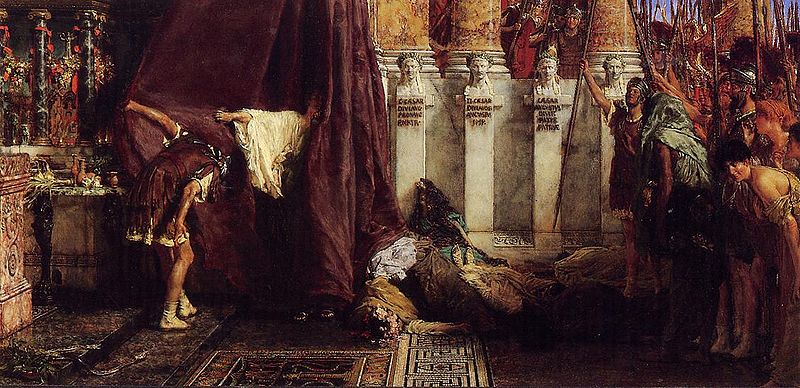
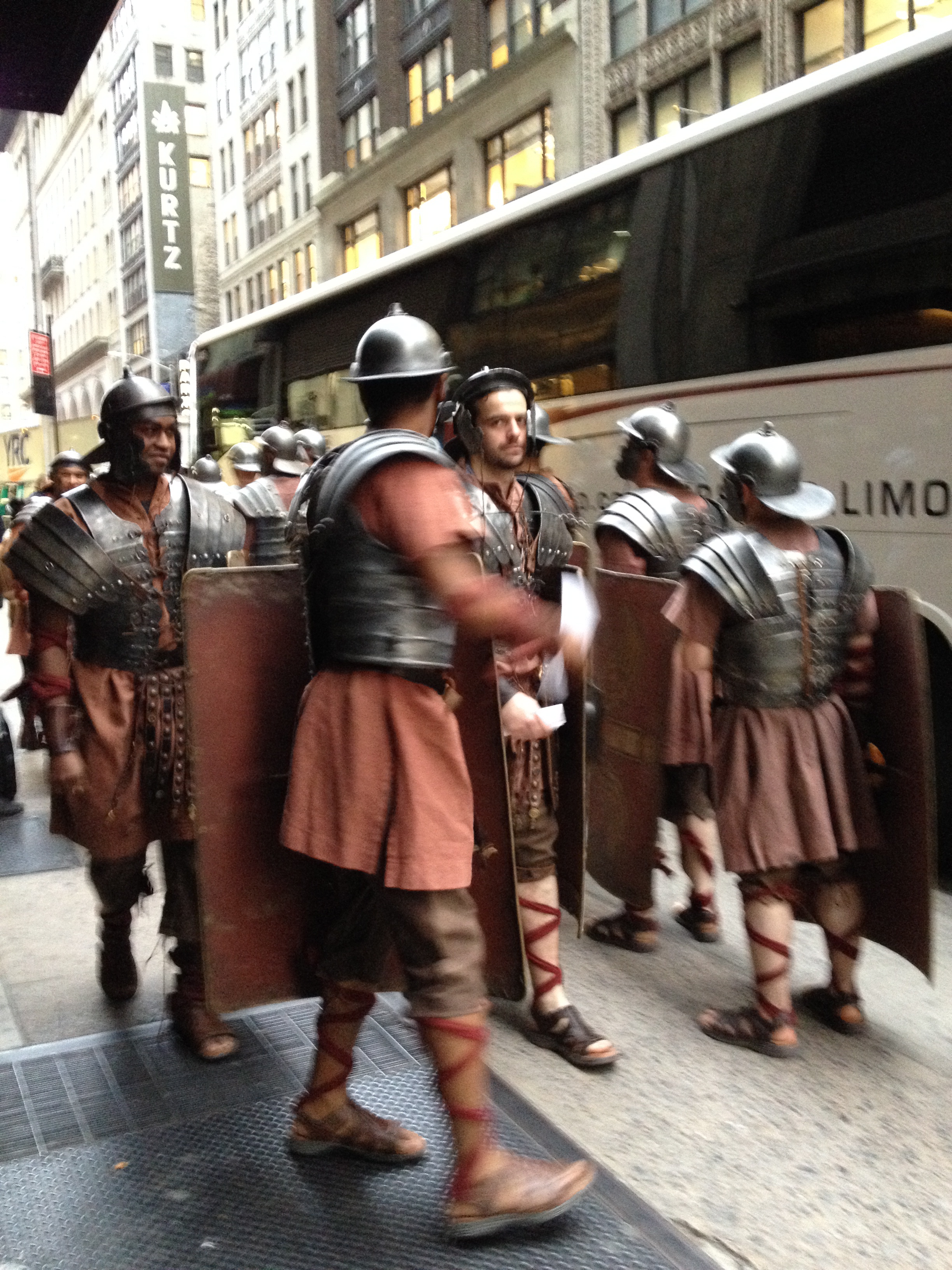
Even the Roman Empire didn’t last forever…


Exegeting for Peanuts

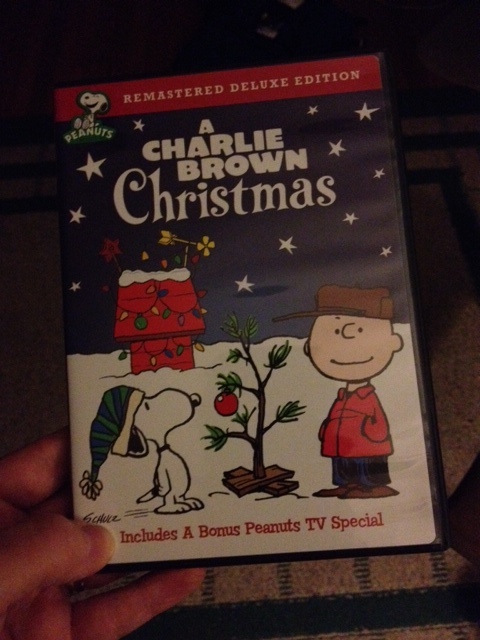
Peanuts, the cartoon, is about as pure as the Bible itself. Like the Bible it is included in ritual, as in the annual viewing of A Charlie Brown Christmas in our home. I grew up in the generation that eagerly awaited the special to be aired on television (if you don’t know what I’m talking about, ask your parents). When we were finally feeling affluent we purchased the DVD to continue the tradition with our daughter. Last night as we watched, however, it struck me that, like the Bible, many variant traditions are present in A Charlie Brown Christmas. I began to suspect a kind of documentary hypothesis. The program begins with Charlie Brown, in his house, wearing his famous yellow zigzag shirt and black shorts, getting ready to go outside. This must be the oldest tradition since wearing shorts in the winter is the lectio difficilior, or the more difficult reading—any good Bible scholar knows the more difficult text is most likely to be the original because later scribes try to make the story make sense. I’ll call this Urtext C. The crisis is evident because as Charlie Brown pulls on his coat to go outdoors, he is wearing shorts. He steps outside in the next scene wearing long pants. This represents a harmonization by a scribe uncomfortable with a child on a snowy day outdoors in shorts—a simple scribal correction. This source, designated H for long pants (lange Hosen in German), subsequently appropriates the script since Charlie Brown is not shown wearing shorts again.

When Charlie Brown consults with his psychiatrist, Lucy van Pelt, however, the real evidence emerges. Lucy’s sign on the front of her stand originally reads “The doctor is out,” each of the first three words occupying its own line. When Lucy spies Charlie Brown she runs over and switches the “out” sign to one that reads “real in,” representing the story line of H. When the tight shot to emphasize “real in” closes on the desk, however, “The doctor is” has now come to occupy two lines instead of three, “The doctor” sharing the top register, and ‘Is” on the line with the new status of the analyst. This is the work of S, the Schilderhersteller, or Sign Maker. A further variant tradition appears in the shot of the two characters talking since “The doctor is real in” once again occupies three lines. Either H is reasserting itself or D, the Deutero-Schilderhersteller has tampered with the text. When the desk is then shown with epigraph “The doctor is in” on three lines, we are clearly dealing with a redactor with literalist tendencies, L, or perhaps this is C, our Urtext, having been further elaborated as “real in” by S, for obviously theological reasons.

The composite nature of the script is even more evident with the Christmas tree. When purchased by Charlie Brown and Linus, the tree has three branches, obviously a reference to the Trinity, so a later addition. It is easier to explain branches taken off a tree than a dead plant growing new ones. In the auditorium, however, the tree has five branches. In the next scene, six. When Linus gives his hortatory address, the tree is shown with four branches. Then in the following scene, seven. When Charlie Brown attaches an ornament, the tree again has five branches (an obvious nod to the Pentateuch), but when the children decorate it, it has transformed into a full tree on which it is impossible to count the number of branches. This will take a more adept scholar than me to unravel. I’ve lost track of the Urtext. Could a university-employed academic help me out here?

If any of this sounds far-fetched to you, remember that Charles M. Schulz bore a German name. Like Moses, he gave us the original text, and like Graf and Wellhausen, he forever changed the way we viewed the faith tradition. It is my hope that you enjoy the holiday season. I’m going to be too busy trying to piece together the corrupt tradition of that miraculous tree.

Final, canonical form.

Final, canonical form.


Manuscript Madness

A friend recently pointed me to a story of a “new” manuscript, recently discovered, that portrays Jesus predicting the advent of Mohammad. The article on sott.net, suggests that the manuscript, wanting to be seen by the Pope, may be the Gospel of Barnabas. Of course, the Gospel of Barnabas is already known from a medieval Italian manuscript and a new, authentic discovery would be of great excitement to epigraphists and text critics, but few others. Barnabas is not a canonical gospel and is considered by the majority of scholars to have come from centuries after the fact. Quite apart from the sensational headline “1,500 year-old Bible found in Ankara, Turkey: Vatican in Shock!” (posted in September of last year, before Francis came along), the manuscript raises a number of questions concerning what one colleague calls “the iconic book.” To be sure, there are documents yet to be discovered. The Bible, however, will not be reconstituted and the door has long been sealed shut on written revelation. What remains is the perception of sacred books.

How many movies and novels are based on the premise that an ancient document has been discovered and suddenly everything about the world changes? It is a common enough theme. This idea is based on the magical concept of scripture—the hidden wisdom of the ancients somehow overrides all that we know of the world. It lies in some cave or monastery or synagogue, waiting to be discovered, unleashing divine power. No doubt the dramatic (and dramatized) discovery of the Dead Sea Scrolls plays into this mythos. Nobody knew they were there, but suddenly, new information! How many people on the street today, however, can say anything of what was contained in the Dead Sea Scrolls? They’ve been mulled over by furrowed-browed scholars for over half a century, but haven’t triggered any apocalypses, at least not yet.

There are hidden documents. Working for Gorgias Press put me in the place where I could learn about some texts kept under lock and key in remote monasteries in Syria. They are generally kept for their monetary value rather than their spiritual revelations. The manuscript on sott.net made me think of those manuscripts for the first time in years. In all likelihood, if a manuscript is being hidden it is lucre, not illumination, that is at stake. The Vatican library, researchers who’ve been there tell, requires immense patience and a willingness to be repeatedly turned away. There’s just something about those old texts. No surprise that the Bible and Qur’an lead to such fiercely protective sentiments in some believers. In the meanwhile, I wouldn’t advise selling all your possessions and anticipating the apocalypse. Unless, of course, you take some ancient documents literally.

An ancient manuscript (not the hidden one).

An ancient manuscript (not the hidden one).


Piece on Earth

The New York Times recently ran a story about the academic boycott of Israel by the American Studies Association. For those unfamiliar with the ways of academics, many who teach in higher education participate in professional organizations. In my line of work it is usually either the American Academy of Religion or the Society of Biblical Literature. These organizations take on personalities of their own, often representing the character of the strongest voices within them. For example, a few years ago the American Academy of Religion decided it didn’t like the Society of Biblical Literature any more, and decided on a trial separation from their joint annual meeting. Like in most divorce cases, the children suffered. Eventually the two got back together and the study of religion could move ahead apace. The American Studies Association is an organization that has run out of patience with the Palestinian issue in Israel. The academic society is boycotting scholarship from Israel, as if professors agree with and support the policies of the government. A rare scenario indeed.

Growing up as a middle child, I often find myself in the role of peacemaker. Like AAR and SBL children, I know the lifelong insecurities caused in kids by divorce, and I know that it is important for people to talk to each other. The situation between Israel and Palestine is fraught. It is so much easier to make a decision about who is right when you don’t have as both sides populations that have been historically victimized. Like most people I have my personal opinions about who is in the wrong here, but I also realize the situation is far more complex than this small-minded biblical student’s ability to declare anything ex cathedra. It seems surprising that any academic organization would be willing to take such a stand. In most instances I’ve read of, it is politicians, not professors, who are the problem.

Of course, at the very root of the situation lies, like a snake curled, ready to strike, religion. It seems that mixed messages have been received from on high. Bethlehem, much in people’s minds this time of year, represents the issues coldly. Two groups claim the same land, broadly speaking, claimed by three major religions. Despite their common ancestry, the three major monotheistic faiths differ vastly from one another. The problem is, there is only so much habitable land. Historic ties going back hundreds, and in some cases, thousands of years, are not easily severed. Divorce hardly seems an option when both parties continue to live in the same house. Academic societies have minimal influence on public policy. They, however, can show public faces. Perhaps the best way forward does not involve silencing the voices of any who wish to speak. After all, we are told, even angels sang over the lowly town of Bethlehem in a time of deep political turmoil.

Ich habe einen Traum.

Ich habe einen Traum.


Fears of a Clown

A few weeks back, over on EsoterX, I was reading about circus oddities. Perceptive as always, EsoterX notes that the carnival or circus used to be disturbing. Before being commercialized and sanitized, otherwise civilized folk crept out of town to gaze at the bizarre and troubling aspects so effectively hidden from 9 to 5. Among the most disconcerting of the carnies was the clown. Horror writers and film makers have long focused on the ambiguity of the clown—faces are our clues to the intentions of another person. A face painted is opaque and we feel as vulnerable as in the presence of the false evangelical smile that hides a spiritual deadness in hardened eyes. You are about to be victimized. It is no wonder that small children—and not a few adults—are freaked out by clowns. At times they make us laugh, but mostly they make us tremble.

ClownThose who know or read me may have a difficult time believing that I once was a clown. Not a professional one, of course—it is even more difficult to believe I’ve ever been a profession anything—but part of a campus clown ministry. Beyond simple titillation, I state this fact because, like most things in my life, I researched clowning before I became a part of it. Those books are, of course, packed away with other forgotten bits of personal marginalia but I remember bits and pieces. The origins of the clown are religious. In fact, in the most ancient of societies clowns were most often played by priests. Their early bungling, which may go back to the third millennium BCE, was perhaps a way to indicate that even the somber role of the cleric could be taken too seriously. Like modern concepts such as Mardi Gras or Carnival, that which is sacred builds such pressure that normal people become a little unhinged. We erupt into frivolity while the divine turns a blind eye. Or secretly smiles.

Clowns for Christ was a Grove City College organization that I revived in my Junior year, serving as president and acquiring a campus charter. Based on 1 Corinthians 4.10, we declared ourselves “fools for Christ,” reprising, unknowingly, an ancient pagan custom. We visited nursing homes and mental hospitals and other campus events, bringing the good news in the form of silent skits. The clown traditionally does not talk. Even today when I hear a clown in makeup speak I give him or her a glare—clowning is physical, not audible. As I left college I left behind my childish ways (at least some of them). And the years since have taught me to be afraid of clowns, as any reasonable person should be.


Pope of Deliverance

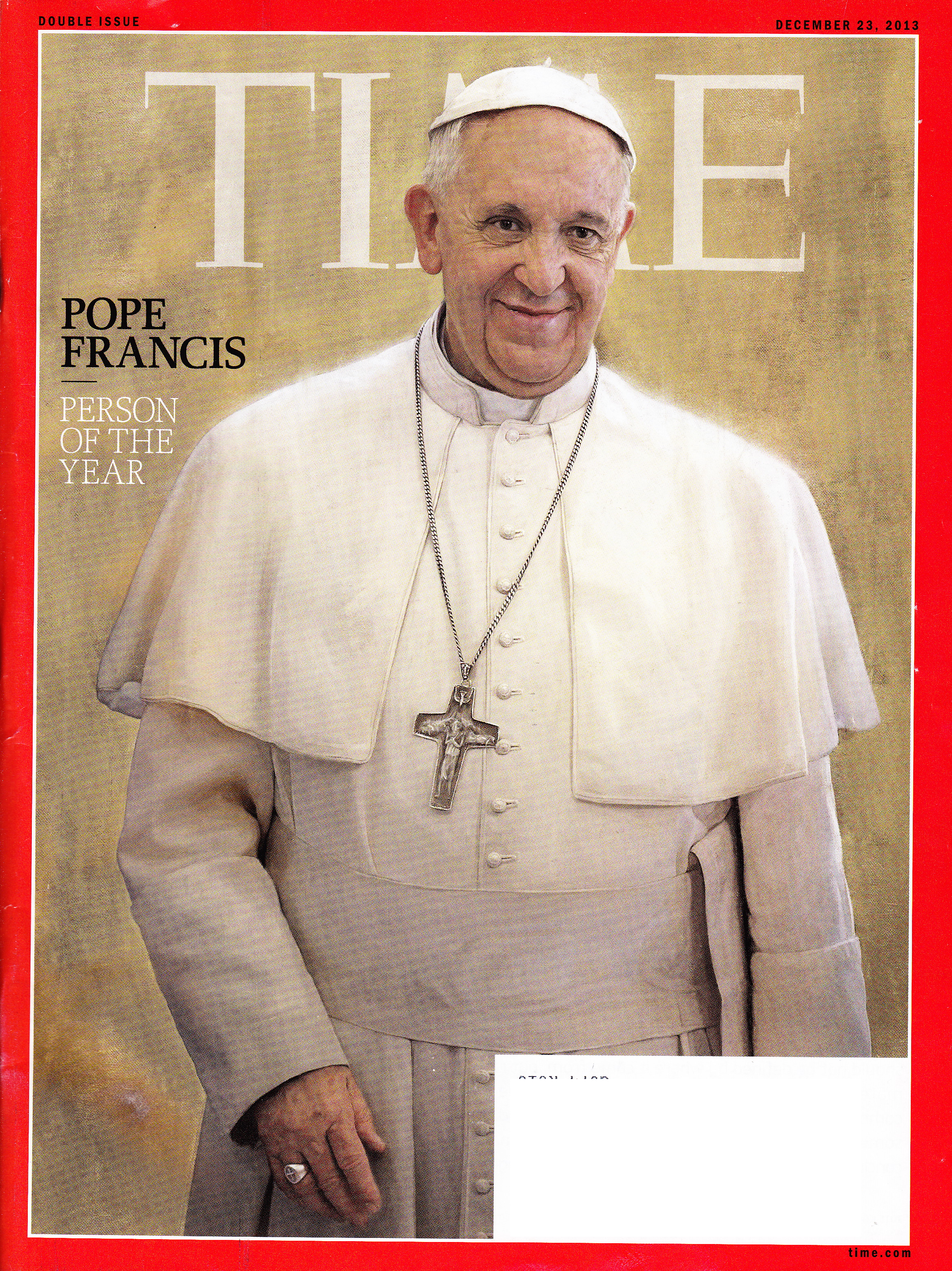
TimePopeIt’s the Time of year. The time of year Time chooses a person of the year. Not for the first time in recent memory, a religious figure has been chosen. Granted, Time declares the person of the year is the most newsworthy, not necessarily the best to emulate morally. Notorious scoundrels have made their way onto one of the nation’s top news magazine’s covers, while many more worthy will never be selected because they just don’t garner the notice. Despite this, Pope Francis is certainly the most deserving pontiff in living memory. Over this year he has demonstrated that the Catholic Church does have some historical memory of its original call and mission to the Christian faith.

Ossification is a natural tendency with institutions. We tend to think the earliest universities are still the best (in some cases that may be true), while in fact better educations are often found elsewhere. We want to believe that as it was in the beginning, is now, and do I really have to finish it? Times change, institutions evolve. Within half a millennium the Christian movement went from a bunch of persecuted, fearful peasants hiding in corners to the power brokers of a powerful empire. Problem is, once you’ve tasted empire, there’s no going back. Until now. How odd it is to see a person who could live a life of opulent self-service giving it up to be kind to his fellow humans. It is almost as if the Vicar of Christ has somehow become incarnate. A pope who is one of us. And the world stares in wonder.

I don’t mean to pick on the Catholics here. We see it in many religions. Someone humble and spiritual joins a religious movement for obvious reasons. They then grow through the ranks, acquiring a craving for power. What a temptation it must be to stand before an audience of thousands, knowing that by television hundreds of thousands more are watching you—hanging on your every word. Our underlings tell us we are great and it isn’t so hard to believe them. The man who steps down from his kingly throne to mingle with the laity, who doesn’t ride bulletproof cars to represent a man who willingly, so the story goes, gave himself up to die. What saddens me is that this is newsworthy. Not to detract from the spirit Francis has injected into a stony Vatican, but that we find it incredible is a comment on what has come to pass for religion in this time. Thanks, Time, for holding up this important mirror to our society.


White Christmas Revisited

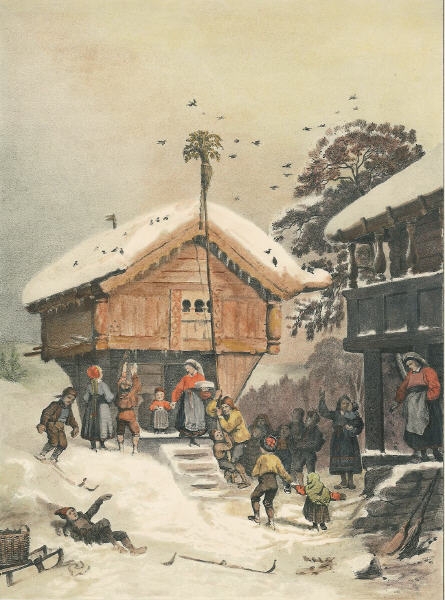
In the light of yesterday’s post, I’d like to tip my metaphorical hat to Brian Regal of Kean University for a piece he wrote in the New Jersey Star-Ledger. Entitled “The Real Meaning of Christmas,” Regal’s piece shows the striking disconnect that comes between the image of a “Christian” Christmas and the oft-ignored words of Jesus that make him such a great example to follow. We want the image and the affidavit without having to do the hard work of loving those we don’t like. This really seems to be the heart of what was once know as gospel—it’s okay to be who you are (for those of that bent, “who God made you.”) Too often “Christian” has come to mean someone who wears their hair far shorter than Jesus, who shuns those welcomed by Jesus, and who smile far more than Jesus. My Bible says “Jesus wept.” I don’t recall any verses reading, “Jesus put on his ‘I love you’ smile.” Ours is a society that wants it both ways—all for me, but isn’t that what Jesus really wanted? You know, he must’ve smiled a lot.

Regal rightly points out that the majority of Christmas traditions are admittedly pagan, and we are glad to baptize them as long as we don’t have to let the homeless into our churches or admit equal rights to those of all genders, races, and orientations. What seems to be the real desideratum is a “white” Christmas. A white, affluent Christmas. The very idea of the ownership of a holiday characterized by giving is a phenomenon worth serious study. Religion can certainly be used to justify such self-centeredness, but it is condemned by that very same faith. What are people worried about? Christmas has been a commercial holiday essentially from its origins in the modern period. It is one of the few holidays to which nearly everyone looks forward, at least for a break from work or school, if not for a windfall of new stuff.

Privilege as blessing is a perverse theology, as is shown repeatedly in the Bible. Israel’s long line of descent is chosen from the least, the youngest, the meek. Now we are constantly told that God rewards those who are blessed, and that the poor and underprivileged have only themselves to blame. At Christmas time it may be worse than many other seasons of the year. We want not only to keep good cheer, we want to keep a holiday only partially of our own making for ourselves, and then congratulate ourselves on just how good we are. It would seem that the spirit of Christmas might lie, as the pagans said, in giving. I am not a fan of commercialism, as my regular readers know. I can’t help but think that believing one deserves special rewards for righteousness in their own eyes will only have the opposite effect. Remember: he sees you when you’re sleeping, he knows when you’re awake…

Adolph_Tidemand_Norsk_juleskik


Won’t Someone Think of the Gods?

The annual holiday tradition of fighting over peace on earth has begun. It’s difficult to attribute blame since the “Keep Christ in Christmas” crowd do have a certain historical parsimony about them. Still, it was with tongue frozen in cheek that the Freedom From Religion Foundation put up a billboard in Pitman, New Jersey, with the message “Keep Saturn in Saturnalia.” Won’t someone think of the gods? In just the short span of my lifetime (well, half-a-century is really not that long) many assumptions about American religiosity have come to be questioned. There are those who seriously believe the Greco-Roman gods exist and they do have a right not to have their religion belittled. Those who find all religions laughable, I suppose, have the right to belittle. Some are devoted to Saturn. Others take seriously the Norse gods. Belief is like that—rationality is not a huge part of it.

Megyn Kelly, an anchor on Fox News, boldly declared this past week that Santa is, by dint of historical fact, white. I suspect she wasn’t thinking of Nicholas of Myra, but rather the jolly (white) man with glandular problems and the magical ability to visit every house in the world in a single night. The historical Saint Nicholas was born in Turkey. Kelly also made an unequivocal claim for Jesus’ whiteness, although he was clearly Semitic and historical records about him are extremely dicey. Conservatism, it seems, can only be pushed so far. I tend to think the problem is with making people into gods. Once a person becomes divine, in a monotheistic system—apart from all the theological casuistry than ensues—the nature of godhood is irrevocably associated with one race only. Of course Kelly, and many Fox News fans, have co-opted Christ from Judaism and suppose he was rather Nordic, as an article on CNN’s Belief Blog notes. Kind of like Thor, for what carpenter doesn’t know how to use a hammer?

To keep (white) Christ in (white) Christmas does betray a lack of familiarity with the Christmas story. Apart from angels appearing to some shepherds, the event was obscure—in the part of town across the tracks. Even the wisest men in the world had to stop and ask directions because they couldn’t find the place. The first Christmas, in as far as we can reconstruct it, was a silent affair with only the sounds of birth and the quiet desperation of a working class family far from home. No malls stayed open late that night.

The solstice is literally the darkest day of the year, the time when the slow return to light begins its weary trek over the next six months. We think of the cold, the dark, and hope for peace. No matter the holiday tradition, you’d think that peace would be one thing we could all agree upon. But gods are jealous beings, and, technically, they belong to no human race at all.

O holy night?

O holy night?


Not Knowing

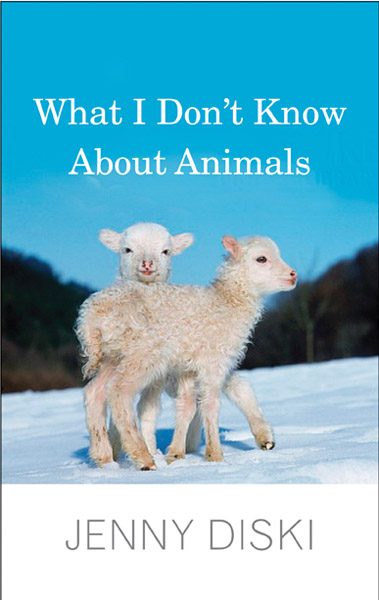
WhatIDontKnowAboutAnimalsBegin with a basic premise: we cannot know what a creature without language thinks. Add in the thoughtful anxieties of a post-domestic writer who knows about animals and you have What I Don’t Know About Animals, by Jenny Diski. Part biography, part science, part philosophy, wholly human. I knew from the day the book was released that I would read it since, like the author, I am one haunted by the relationship between the exploited and the exploiter. Diski’s confessions are difficult to read at times, veiling herself, as she does behind the curtains of one’s most private experiences, but she reveals plenty to those who read on. We can’t know for certain what another person thinks, so how can we know what a sentient animal thinks? Some, following Descartes and Skinner, would declare that animals don’t think, they simply do as programmed. The rest of us know that they are wrong. The evidence accumulates more each year that animals think and feel, but, as Diski repeatedly points out, we need to drive with the brakes on. We can’t get inside them to actually know if human experience corresponds at all with animal experience. We’ve shared the planet for millions of years, but we’ve lost track of our common origins.

As I suspected, the Bible came into the discussion. The book of Genesis lurks in the background of most human-animal rationalizations. The divine division into separate “kinds” must be kept discrete at all times. The problem is, nature won’t always play along with that game. One type slowly morphs into another and some biologists are even questioning the usefulness of “species” at all. Fear of bestiality, as Diski points out, is found already in the Bible. Best to keep everything in its proper pigeon-hole, whether that’s where it belongs or not. Genesis gives us the right to exploit, and so we continue to use animals for our own purposes. Although the feline, it turns out, may have figured out how to set this order on its head. In some cases.

What I Don’t Know About Animals is not a defense of vegetarianism or of radical, thoughtless abandon. Diski writing on spiders will cause many heads to nod in agreement, and her rage against the loss of the common lady-bug struck an amazingly responsive chord with this reader. The lady-bug’s demise came at human tampering, importing asian beetles as pest control—beetles that eventually edged out the harmless lady-bug, replacing the Volkswagen of beetles with a biting, omnivorous, massing pest. In Wisconsin the southern side of our faculty house was literally blanketed with them in the spring. Diski uses the same word I did then: biblical. Swarms seem to be the way that the Almighty has of telling us too much of even a good thing will go bad. Although I couldn’t agree with every statement Diski makes, I have the feeling this is a book I will reread more than once. Wisdom often comes in the form of admitting just how little we know.


Eating Your Prophets

Ezekiel was an odd character, even for a prophet. He’s become a kind of patron saint to ancient astronaut theorists, and his name in fiction often denotes someone slightly off balance. In his defense, he believed that God was demanding his many strange actions. A priest in a period of exile from the “one true temple,” Ezekiel lived an existence as a captive in a foreign land and came to some radical conclusions about the nature of Israel’s god. His visions and actions were considered the original weird, even by his contemporaries. Since Ezekiel believed Babylon would conquer Jerusalem, the people there would have to go on starvation rations. In chapter 4 of his book, Yahweh tells the prophet to try to make a bread out of wheat, barley, beans, lentils, millet, and spelt. This odd mixture is to be eaten in very meager portions to symbolize the coming privation for 390 days (during which time he is to lie on his left side). His bread is to be cooked on dung.

IMG_1156

I eat breakfast around 4 a.m. My bus to the City comes before 6:00 and there are no restrooms on NJ Transit buses. Many New Yorkers eat breakfast in the office, but I’m just too Episcopalian in sensitivity for that to really be an option. I don’t like really sweet cereals, but granolas are often quite sugary unless you want to pay top dollar (and most of my dollars are bottom dollars) for some organic, European blend. Then I spied Ezekiel 4:9. Knowing full well the context of the reference should’ve given me pause, but it was two dollars less a box than some of its competition—downright exilic prices—and my curiosity was roused. What would Ezekiel eat?, I asked myself.

Most people don’t realize that so many of us eat breakfast cereals due to the efforts of our Seventh-Day Adventist friends. Adventists, in addition to being literalistically inclined, advocate healthy living. Will Keith Kellogg, a faithful Adventist, believed that eating cereal for breakfast was healthy and widely promoted the idea through the company he founded to produce cereals. Kelloggs does not produce Ezekiel 4:9. Food for Life, an organic bakery, are the purveyors of this organic breakfast. Their religious convictions, if any, aren’t evident from their website. Just about the time I’m climbing aboard the bus, I know that even as Ezekiel saw the wheel, I’m in for a moving experience. Isaiah-os or Jeremiah Flakes may be difficult to imagine, but with Ezekiel nothing really surprises. Today’s Bible lesson may be as close as the larder shelf. I just skip the cooking on dung part.


Sweet Something

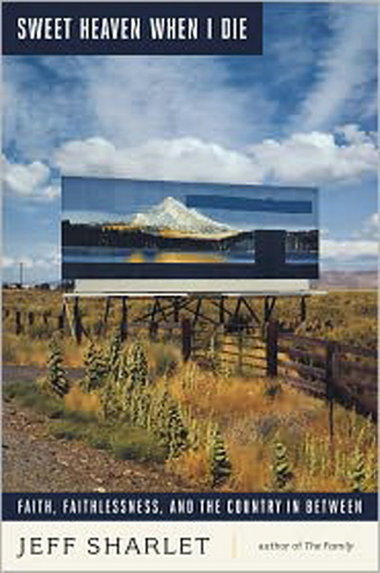
SweetHeavenWhenIDieAs an observer of religion who always struggles to get published, I found a companion soul in Jeff Sharlet’s Sweet Heaven When I Die: Faith, Faithlessness, and the Country In Between. Although the book is a collection of very disparate essays, it shows the subtle faces that religion frequently takes. We’re used to hearing religion described in bombastic terms, but Sharlet is more attuned to its soft rhythms than that. Yes, an essay or two may have a strident believer, but most of the faith found here is so deeply woven into the lives he examines that you might not even notice it was there had Sharlet not already warned you. Here is a man of no particular religious conviction showing us how it is—not judging, not ridiculing, not pandering. Religion, despite the gleeful proclamations of its detractors, is not likely to die out. It is more likely just to go unnoticed.

A number of the essays here gave me pause. In the first Sharlet notes of a friend, “She was fascinated by the thought that God was entitled to kill you at any time.” This friend is, of course, of Christian persuasion. I had never thought of the biblical paradox in that way before—divine entitlement. It is so like Job; the Lord giveth and the Lord taketh away. Christianity, historically, comes with a whole cartload of guilt: not only is God entitled, but we deserve to be killed. The Christianity in which I grew up was explicit about this—we live on borrowed time. As a child I heard more than one evangelist thunder this good news. We really deserve to die. Once we are good and vulnerable, the preacher offers us a way out. Pass around the collection plate. God is entitled; I shall not soon forget that.

Toward the end of the book another of Sharlet’s interviewees declares that doubt is a calling. Again, the professional religionist is stunned. Many religions eschew doubt as somehow evil—wickedly questioning the divine. Doubters, however, seldom cause religious trouble. Those whose convictions lie deep and untested will burst open like a spring-loaded trap at various provocations. Those who survive are left to weep and wonder. The doubter, the friend of Thomas, does not seek to harm, but can’t live without discovering the truth. This is true religion.

There are any number of stories here of persons of various levels of faith conviction. You’ll find few clergy or specialists among them, but you’ll find a book whose honesty cannot be doubted. At points I struggled to find an implicit religious, or faith-based theme. It is there. You just have to listen. And trust that Jeff Sharlet will not lead you astray.


The Importance of Being Published

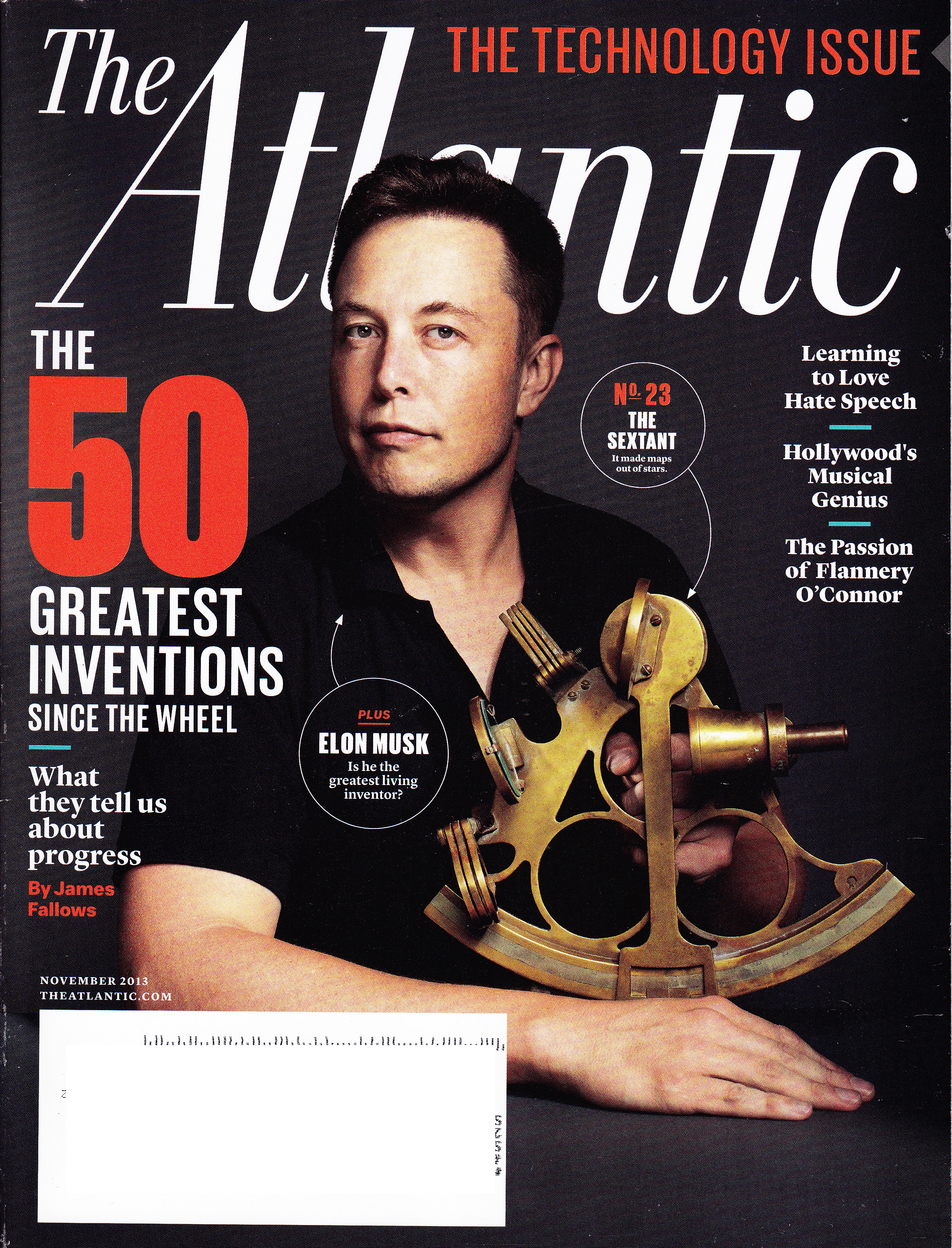
AtlanticThe crowd over at The Atlantic Monthly magazine are a formidable lot. Even with a Ph.D. and a modicum of writing ability, I’ve been frightened off from ever submitting to such an intellectual periodical. These are people whose opinions count. When The Atlantic named, in last month’s issue, the fifty most important inventions since the wheel how could I not peek? Especially when number 39 included a picture I recognized from my childhood in the cradle of the oil industry: Col. Edwin Drake standing outside a fledgling oil derrick in Titusville, Pennsylvania—just the next town up route 8. I felt like I might be somebody, by association. We all know that number one is best, so I wondered, as I flipped through the pages, what the most important invention was, although I suspected I already knew. The printing press, dating back to the 1430s, is certainly a contender, and was Atlantic‘s winner. Those of us historically inclined tend to think in regressions. The internet has forever changed our lives, but what is the internet without reading? (Okay, well, it is lots of funny pictures of cats and pornography, but you still have to be able to type in “cat” or “nude” or whatever, to bring you there.) It took the printing press to catapult reading from the academy to the hearth, and to reach that critical mass so that the Kindle could surpass the printed book.

My interest in studying the Hebrew Bible for a doctorate actually included an ulterior motive. You see, the Bible was among the first books printed. As much as western civilization owes to the New Testament, my regressive thinking insisted that the New Testament was based on the Old. As I learned in seminary, the Old was based on an older, and that on an even older, in a pleasing kind of regression. I ended up in Ugaritic, the earliest known alphabetic language. The alphabet, I might contend, vies with the printing press for most important invention since the wheel. Before the alphabet writing was so cumbersome that only very skilled specialists could read written languages cobbled together from signs that represented letters and symbols and entire words and entire classes of words. But, ah, it was writing! Mesopotamians seem to have brought the idea into existence, specifically, those of ancient southern Mesopotamia that we call the Sumerians, who, incidentally, also invented the wheel.

Those of us in the book industry feel a constant worry in our stomachs when we look at book sales figures. Even in the most highly literate of social periods a very small percentage of people would actually purchase books (especially in the New World). With electronic media, that number has declined alarmingly. Still, the internet—number 9 on The Atlantic list—owes its life to good old paper (number 6) and pen (which failed to make the list at all). And paper wouldn’t have evolved without clay—the very substance of which early written myths claim that humans are made—and stylus. Thoughts locked in our clay heads cry out for expression. Some of us are compelled to put them in the form of written words for others to see. It’s just that we know our place and wouldn’t presume to send them to The Atlantic Monthly, or any other magazine, where they would be certain not to make the cut.


Almost Human?

Last week the New York Times ran a story on the efforts of the Nonhuman Rights Project to have chimpanzees declared “legal persons.” Naturally this has set many legal persons at arms, given the unstated, biblical origin of the concept of human superiority. Without the biblical mandate we simply have to admit that we rule over animals on the basis of “might makes right,” a philosophical concept that never makes it far either in the classroom or the courtroom. We hold animals captive and experiment on them because we can. They can’t speak, can’t register protest, so we assume their silence as complicity and carry on. Research over the past several years, however, has pushed the human-separatists harder and harder. Animals are more like us than we are willing to admit. We acknowledge that we’ve evolved from them, but we suppose that at some point—probably the vocal cords—we surpassed them and therefore if they can’t speak they can’t think and they can’t feel. Even today many people still hold to the biblical orthodoxy that animals are merely here for our enjoyment and exploitation.

Considering how we treat other human beings, this is probably, sadly, no great surprise. In a world where many nations still allow women to be treated as property, putting a chimp in a cage and labeling it “mine” doesn’t appear so odd. Only the most crass of chauvinists would dare say that women are not human, but far too many, based mostly on religious biases, have no problem stating that women are inferior humans. Again, “the Bible tells me so.” This kind of thinking, prevalent even up until the 1950s in “civilized” countries like the United States, has yet to die out fully. What is it about the male psyche that insists on its own superiority? The Bible, it seems, has much for which to answer when found in the hands of men.

What makes us think that we are all evolving toward the “high point” of white males? Some of us in that class know that it is long past time that this glass “ceiling” should have been irreparably shattered. Nonsense, however, has staying power. Some of us even feel inferior just knowing such distinctions were ever made. Not that long ago Africans were said, by some, to be closer to apes than Caucasians. Women were said to be closer to snakes than men. What has been lacking is a sense of balance. Common sense. Genders and races equal but variable. Until that minimum bar is reached, how can it be hoped that fair treatment of nonhuman persons can ever be achieved? Some animals have been taught to read, at least in basic, symbolic ways. They understand that certain symbols stand in for defined rewards. Given time it might even be that this most human of inventions could be shared among nonhuman persons. If they do not learn to read the Bible with more sense than some human persons, however, we face a future of many other layers of distressing oppression.

787px-Chimpanzee_Ham_in_Biopack_Couch_for_MR-2_flight_MSFC-6100114