Is That Cookie Free?

I offer free editorial advice here, from time to time.  Not many academics, I expect, pay any notice—what have they to learn from a mere editor?  Still, it’s a public service, so here goes.  It really pays to do your research.  I don’t mean about the topic of your book, but research into what publishing is and how it works.  Some authors, for example, think that if they pay an Open Access fee their book will get bells and whistles that other mere monographs won’t.  They underestimate how much it costs to print a book, especially when they’ve already undercut their own sales by making it available for free online.  There some basic business sense lacking here.  There’s a free cookie but then there’s also giving away the whole box.  Who’s going to buy what’s free?  (There are good reasons for Open Access publishing, but wishing for special favors isn’t one of them.)

I make no claims to be some kind of publishing guru.  I tend to think of myself as a guy who got lost along the way, career-wise.  But I’ve learned that I wish I’d known more about publishing when I was teaching.  I see the same rookie mistakes over and over and over again, made even by senior scholars sometimes.  I remember, however, when I was teaching.  It never even occurred to me to find out anything about publishing.  In the academic’s eyes, publishers are there to serve up what researchers discover.  To a point that’s true, but publishers vary quite widely in their tolerance for the purely academic exercise.  You see, you actually have to sell books to stay in business, and if your research to too obscure, well, I guess you could try to find some Open Access funding.

One of the things that amazes me about the biz is just how many academics assume that editors are menial workers in the larger enterprise of getting their important ideas in print.  My time in publishing has been an education in itself.  I may not have time to keep up with Ancient West Asian studies anymore (the draw is still there, but it’s a terribly expensive habit).  Horror’s a bit easier to handle since you really have only about two centuries to cover, rather than four millennia.  But I can’t help but muse on what a missed opportunity presents itself when a free cookie is passed up.  It’s far easier to stay wrapped in that academic shell than it is to try to break out and discover what is freely offered.  Strange how the world works sometimes. Have a cookie…


Terrible Comedy

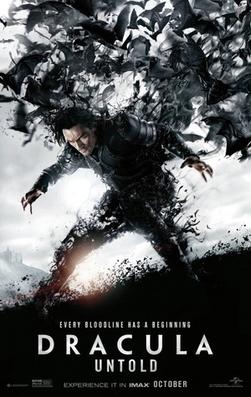
Frankly, I expected better.  The Comedy of Terrors seemed to have a lot going for it.  With my current interests in American International (AIP), Vincent Price, Jacques Tourneur, and Richard Matheson, watching it for free was a no brainer.  And I mean, no brainer.  Maybe it lacked the Roger Corman touch.  The premise is cute enough, bring together horror icons and have them take the mickey out of Shakespeare’s Comedy of Errors.  Peter Lorre and Boris Karloff join Price and Matheson scripts generally don’t disappoint.  Tourneur had a string of great horror movies behind him.  But the magic just isn’t there.  Comedy horror, or horror comedy, is difficult to pull off well.  Particularly if it’s deliberate.  What Young Frankenstein got right just went wrong in Comedy.

All of this makes me more conscious of just how impressive a great movie is.  With so many moving parts, films leave plenty of gaps where things can go awry.  The vast majority of movies perish with little notice, of course.  Success—earning more than it cost you (still waiting for that with my writing)—comes to some, and that’s what has me vexed here.  Tourneur was a talented director.  The actors all had proven themselves repeatedly.  Matheson brought life to so many horror and sci-fi movies and television shows.  Even AIP had a number of hits after starting out as notorious for their low-budget approach.  The jokes in Comedy aren’t funny and the horror’s not scary.  Some have opined that the sarcasm is spot-on, but it didn’t seem so to me.  There’s even some disagreement as to whether the film earned its budget back or not.

Horror movies come in all stripes.  And spots.  Even solids.  Comedy horror isn’t my favorite, but some of the gems of the genre (Rocky Horror Picture Show, Gremlins, Shaun of the Dead, Ghostbusters) show that the combination can work but ought to serve as cautionary tales.  (Both Ghostbusters 2 and Gremlins 2 failed to capture the magic of their forebears.)  If everything falls together just fine, step back and bask in wonder.  Trying too hard (of which I’ve been accused) sometimes doesn’t work while you’re attempting to be funny.  It’s pretty clear that Nicholson and Arkoff thought bringing all of this talent together was a recipe for success.  Of course, there are plenty of moving parts and a director, or even a producer, is entitled to a blunder or two.  I like a good laugh as much as the next guy, and after seeing this flick I could use one.


Under Construction

It’s fascinating, watching a book taking shape.  Just yesterday I noticed Sleepy Hollow as American Myth is now up on McFarland’s website.   And yes, it’s on Amazon too.  Go ahead and preorder!  (It hasn’t made it to Bookshop.org yet, though.)  I have to say the feed to Amazon was much quicker this time than it was with The Wicker Man.  That book took several weeks to appear, probably because it was with a UK publisher.  Yes, it does make a difference.  Now the trick is to try to get people interested in the Legend of Sleepy Hollow again.  I’m thinking I ought to join Historic Hudson Valley.  They might be interested in such a book.  It is, in a sense, right in their back yard.

The thing about writing a book is that you come to suppose other people are interested in your obsession.  I know that Sleepy Hollow is deeply embedded in American culture.  I also know that some of the fandom began to die down when Fox’s Sleepy Hollow went off the rails.  Most analysts suggest, with good reason, that the show failed when it began foregrounding white characters and writing Americans of color into the background.  A great part of the appeal was the melting-pot aspect of the cast, no doubt.  In the book, however, I suggest a somewhat different reason for the decline.  It’s one I’ve seen no one else suggest.  I’m hoping that we can both be right.  In any case, that was the fandom that got this book started.

You see, I had written my first popular culture article on the role of the Bible in Sleepy Hollow.  That article, published in the Journal of Religion and Popular Culture, led to the book Holy Horror.  I was already thinking about a project around Sleepy Hollow then, but I had a couple more books to finish first.  I’m excited about this one because it marks a move away from publishing primarily about religion to publishing primarily about a story.  There’s still religion there, of course.  We have the Old Dutch Church to pay mind to, but there’s even more about the Headless Horseman, and Ichabod Crane.  And so much more!  Sleepy Hollow as American Myth was a lot of fun to write.  I’m not sure when the book will be out, but I’m hoping next year.  Maybe if I can generate a little excitement around this Halloween—it is closely connected with the story, as I explore—there’ll be some interest next time.  Until then there are still plenty of steps to be taken. 


Finding Poe

A gift a friend gave me started me on an adventure.  The gift was a nice edition of Poe stories.  It’s divided up according to different collections, one being Tales of the Grotesque and Arabesque.  This was originally the title of a collection of 25 stories selected by Poe himself in 1840.  I realized that much of my exposure to Poe was through collections selected by others such as Tales of Mystery and Terror, never published by Poe in that form.  I was curious to see what Poe himself saw as belonging together.  I write short stories and I’ve sent collections off several times, but with no success at getting them published.  I know, however, what it feels like to compile my own work and the impact that I hope it might have (if it ever gets published).  Now finding a complete edition of  Tales of the Grotesque and Arabesque turned out to be more difficult than expected.

Amazon has copies, of course.  They are apparently all printed from a master PDF somewhere since they’re all missing one of the stories.  The second-to-last tale, “The Visionary,” is missing.  I searched many editions, using the “read sample” feature on Amazon.  They all default to the Kindle edition with the missing tale.  I even looked elsewhere (gasp!) and found that an edition published in 1980 contained all the stories.  I put its ISBN in Amazon’s system and the “read sample” button pulled up the same faulty PDF.  Considerable searching led me to a website that actually listed the full contents of the 1980 edition I’d searched out, and I discovered that, contrary to Amazon, the missing piece was there.  I tried to use ratiocination to figure it out.

I suspect that someone, back when ebooks became easy to make, hurried put together a copy of Tales of the Grotesque and Arabesque.  They missed a piece, never stopping to count because Poe’s preface says “25” tales are included, but there were only 24.  Other hawkers (anyone may print and sell material in the public domain, and even AI can do it) simply made copies of the original faulty file and sold their own editions.  Amazon, assuming that the same title by the same author will have the same contents, and wishing to drive everyone to ebooks (specifically Kindle), offers its own version of what it thinks is the full content of the book.  This is more than buyer beware.  This is a snapshot of what our future looks like when AI takes over.  I ordered a used print copy of the original edition with the missing story.  At least when the AI apocalypse takes place I’ll have something to read.


Free Word

“Anything free is worth saving up for.”  That’s a line from one of my favorite movies of all time.   Free, though, can mean many things.  The “free cookie” is something good to entice you to buy more.  It often works.  Free, for a person, indicates the ability to do what we want (within the constraints of capitalism, of course).  But “free” can often mean cheap, overly abundant.  I like to decorate our lawn with rocks, which are often free, but if you want decorative rocks you’ve got to pay for even the ground beneath your feet.  So it is that when I attend book sales I marvel about the fact that Bibles are nearly always free.  It occurred to me again when I attended a spring book sale a few months back.  I always look through what’s on offer—call it an occupational hazard.

I used to attend the Friends of the Hunterdon County Library book sale in New Jersey.  I believe it is the largest I ever visited.  I used to get there early opening day to stand in line.  One year, one of the volunteer friends came out and announced that they had a really old Bible (only 1800s) that would be $100.  People do, however, tend to donate Bibles to book sales in great numbers.  I suspect organizers are reluctant to put Bibles in the trash.  They also know that people aren’t going to shell out money for them, so they try to give them away.  What does this say about being free?  Is it desirable to be so abundant that you’re left on that table in the back while everyone else is leaning over the more exciting items on offer?  There’s perhaps a message here.

Of course, Trump is selling Bibles for $60.  That’s a bit steep, even for an academic Bible (which his is not).  It might be suggested that this $60 is cheaper than free.  Now, I work with Bibles that are sold at a profit.  One thing I’ve learned is that Bibles sold are always for profit. Those who are honest admit what they do with the lucre.  Although he’s tried to keep it under cover, the Trump Bible does funnel profits to the GOP hopeful.  Yes, he is making money off the Bible and wants to be elected.  If that happens, freedom will disappear.  He’s said as much at his rallies.  Looks like stormy weather to me.  There are organizations that give away Bibles.  Somebody, however, pays for them.  In this strange experiment of a country, anything free is worth pondering.  Nothing, it seems, comes with no strings attached.


The Cycle

The last of the Roger Corman Poe cycle was The Tomb of Ligeia.  I haven’t seen all eight films in the set, at least I don’t think I have.  A couple don’t sound familiar to me but I didn’t keep track of all the movies I watched growing up.  Although critics were, well, critical of a number of the films, at least three of them weren’t bad.  In that number I would count Ligeia.  The usual problem with making Poe films is that Poe wrote short stories.  Getting them to the length necessary for a feature required padding, sometimes by borrowing against some other Poe tales.  Ligeia isn’t too far off from Poe’s original and although Corman reportedly didn’t want Vincent Price in the star role, because of his age, he pulls off what seems to me a winner.  Atmospheric, and well-acted, the story is a touch slow, but manages to bring in some solid horror themes.

I’ve been pondering Poe as a horror writer lately.  I suspect that the master himself would’ve been surprised, and probably not pleased with the characterization.  Yes, he wrote stories that would become horror hallmarks, but his fiction output included detective stories (a genre he invented), something akin to science fiction, drama, and comedy.  Some of his funny stories retain their humor today.  I suspect that one reason he became remembered as a horror author was H. P. Lovecraft’s adoration of him.  Lovecraft wrote mostly what we consider horror today, although there’s variation there too.  But since Lovecraft saw the horror, so did others.  When Corman began shooting movies he soon fell into the horror trend and, known for that genre, incorporated Poe.  By the end of the sixties, Poe was a horror writer.

What makes The Tomb of Ligeia work is Price’s tormented performance of Verden Fell.  His Byronic character is caught in the realm between death and life.  Unable to free himself from Ligeia, and she, unwilling to renounce her will, they are caught in a belief that a local declares blasphemy while Verden calls it “benediction.”  The theme of resurrection—presented mostly in the form of Egyptian artifacts—is an inherently religious one.  The setting in a ruined abbey—original to Poe—also plays into the sublimated resurrection theme.  Critics didn’t care for the movie, but separating Corman’s Poe cycle out over time allows a viewer to consider each piece separately.  In this light, this appears to be one of the best three.  Of course, I haven’t seen all of them yet.


Running on Irony

I recently remarked that my life runs on irony.  I was thinking back to when I was trying to get out of Gorgias Press (long story) and I was interviewed by Irving Louis Horowitz, founder of Transaction Press.  He listened to my account of myself and said, “What you need is a leg up.”  He didn’t offer me that leg up, but I always remembered his kindness in giving me a shot at a non-existent position.  As it turned out, I was hired a couple years later by Routledge.  Routledge is owned by Taylor & Francis, an Informa company.  Publishers grow in two main ways: by the volume of books that sell well, and by acquiring other companies.  While at Routledge we were encouraged to talk to those higher on the ladder about prospects for acquisition.  I made a small case to one executive about acquiring Transaction and was summarily dismissed.

Then I was actually dismissed.  For reasons never explained, I was handed a pink slip the day after returning from a business trip to Arizona.  So life goes.  I found another job, more stable, in the academic publishing world.  One day I was recollecting my conversation with Irving Horowitz.  I’d contacted Transaction out of the blue because it was based in Piscataway, New Jersey.  Gorgias Press was also located in Piscataway, and I’d moved my family to nearby Somerville so that the commute would be only fifteen to twenty minutes.  (I was so naive about commutes at the time.)  Besides, that semester I’d been assigned to teach on the Livingston Campus of Rutgers University as an adjunct, and Transaction operated out of a building either on or adjacent to Livingston.  It all seemed right.  Except it never happened.

After Routledge let me ago, I again contacted Transaction.  I knew that Horowitz had passed away but his widow sent me a packet of information that I never opened because a job offer had been made by my current employer by the time I received it.  After some time I’d heard that Transaction had been acquired.  The irony was that the publisher is now considered defunct because of the acquisition.  In my reverie, I decided to look up by whom.  Of course, Taylor & Francis had bought Transaction and rolled it into Routledge.  I am absolutely convinced my sophomore suggestion had nothing to do with this this.  Someone else, probably higher up, had noticed a smaller press ready for assimilation.  I’m pretty sure that I didn’t keep the somewhat hefty envelope I’d received from Transaction when I was again in need of a job.  If I had, and if it had contained an offer, I would’ve found myself again working for the company that had let me go.  My life runs on irony indeed. 


Mad Homework

Watching movies can be studying.  It’s all a matter of what the exams are.  I studied enough when I was young to know that Vincent Price was a horror star.  Probably I had no conscious idea what “horror” was yet, contenting myself with terms such as “scary movies” or “monster shows.”  The Mad Magician was one of his earlier efforts and not really a great film.  The Prestige, of course, makes any magician film pale in comparison.  Still, many special effects were new in 1954 and gimmicks could be used to lure audiences in.  Many of these movies, such as Mad Magician, are ironically difficult to locate these days, having had their distribution rights bought up by various companies who know that some of us still have homework to do.

Although classified as a horror movie, there are really only a few tense moments in the whole.  It seems pretty clear who’s going to be magiced to death before it happens.  One does wonder how you avoid massive blood splatter when cutting someone’s head off with a buzz-saw.  (It might’ve made quite a 3-D effect, had they decided to put it on camera.)  Audience tolerance (and the Hays Code) wasn’t up to that level in the fifties.  It seems there was a lot of learning going on in the day.  How to make a movie frightening without violating strict rules regarding what might be shown?  Of course, the combination of writers, directors, producers, and actors have to combine just right to make a winning film and stories that rely too much on 3-D tend to show.

The villain in this case, as is often true in early Price movies, has justification.  The murders begin because his sponsor insists that any trick he invents, on or off company time, belongs to him.   Many modern employers try to institute similar terms—their salary buys you, in essence—while claiming to offer a good work/life balance.  That’s a new and foreign concept to our farming ancestors, I suspect.  People (and corporations) like to own other people to do the hard work for them.  Our awareness of this too-human tendency led to the necessity of unionization and other ways for employees to push back against the machine.  In other words, there is a bit of pathos in this early Price horror film.  There isn’t much horror but there is some social commentary.  And, of course, Price would move on to other films that could better showcase his talents.  Not all studying feels rewarding, but it’s necessary.


Gothic Folk

I smelled autumn on the air during yesterday morning’s jog.  Pseudo-non sequitur: Cambridge Elements are one of the many series of short books that academic publishers are promoting these days.  Elements is divided into different categories, one of which is “The Gothic.”  (Thus the pseudo.)  When I saw that Dawn Keetley had written a volume on Folk Gothic I knew I had to read it.  In some ways it reminded me of my own short book, The Wicker Man.  Although I analyze that movie as holiday horror, it is widely known as a textbook example of folk horror.  Just as many people haven’t heard of holiday horror as a category, I hadn’t heard of folk gothic.  Autumn is a gothic time of year, and I enjoy folk horror, so I wanted to find out what this genre is all about.

Keetley is an able guide through all things horror.  She co-runs Horror Homeroom, a wonderful website that sometimes publishes my own musings on horror and religion.  There’s a lot packed in this brief book.  One of the draws to these fascicle-like series is that you can learn a lot in a relatively short time.  As a weary scholar, I do appreciate the monograph—I read plenty of those as well—but something that distills is also appreciated.  So what is folk gothic?  Well, if you want a good, short introduction, read this book.  If I were haltingly to try to put it into a sentence, I would suggest that it is a form of horror with no obvious monsters; one that draws on folklore to set up a melancholy scenario that often involves violence.  If you want a better definition, I would recommend reading what an expert has to say about it.

One of the films discussed in this Element is The Wicker Man.  One of the early folk horror movies, it has no obvious monster.  Folk horror often relies on the very landscape to create a sense of unease.  This is something I always feel as autumn approaches.  I still have a ton of summertime chores to do outside—the too hot summer weekends aren’t conducive to physical labor for a guy my age—but I enjoy the melancholy of that first whiff of autumn.  It brings gothic sensitivities to the fore.  I picked a good time to read Folk Gothic.  I’ve seen nearly all of the movies discussed in the book, but some of the fiction I have yet to read.  There’s so much to do to get ready for autumn’s chill.


Not Really Free

I admit that I’m a cheapskate.  When you grow up poor, that comes naturally.  For some of us the myth of scarcity is less of a fable than it is for others.  Perhaps that’s why I like Roger Corman movies.  Or usually do.  And it’s also the reason that I bought the Classic Features Horror Classics DVD set years ago.  50 movies!  And cheap!  Now, in my defense, I bought this collection before streaming was a thing.  I’d become somewhat addicted to horror movies and renting was pricey and hey, fifty movies!  Of course, they’re public domain.  Some of them are pretty bad.  You can stream most of them for free, but with commercials.  I was in the mood for my fellow cheapskate Roger, so I decided to try Swamp Women (it’s in the collection).  Now, why it was considered horror I don’t know.  It must be pretty difficult to find that many public domain movies in any category.  It was just over an hour and I thought of it as homework.

Three tough-talking cons break out of prison with the help of an undercover cop.  They’re all women, of course.  The cop is there to make sure the stolen diamonds they hid are found.  And to get out alive.  This was a very cheap movie.  The writing is puerile and there are plot holes large enough to row a boat through.  Still, it’s a Corman film.  The only real horror comes from an alligator and a snake—it seems that couldn’t afford more than one of each—and it ends up pretty much as you’ve pegged it will once the endless stock footage of Mardi Gras is over.  What I found interesting, after reading a history of American International Pictures, is that even though co-founder James Nicholson was helping Corman raise money for the film AIP didn’t serve as the production company.  After seeing it, it’s pretty clear why not.

The critics gave this a pretty tough time back in 1956, sometimes noting that it did at least attempt some female psychology.  Really the only psychology on display was who might end up with the one guy they decide to keep as a hostage.  When his girlfriend drowns after trying to steal the only boat, he barely frowns.  I was hoping (I try not to read about movies before watching them) that there might be a swamp monster or something.  I mean, swamps and monsters naturally go together, don’t they?  I guess even those putting together public domain movie collections might be a bit cheap from time to time.  All of us skinflints understand each other, I guess.


Bible Lives

How well do we know our parents?  Occasionally I think about the things I’ve never told my daughter.  This was brought home to me when, looking through a box hurried packed after my mother’s funeral, I came across an artifact.  I should say that my mother died going on a year ago, and the emotions had been a bit too raw to look at the things I’d picked up in a moment of grief.  This particular artifact was one of her Bibles.  Mom never had as many Bibles as I do (or did).  I remember distinctly asking for, as my sole Christmas present, the New International Version when it came out in 1978.  I have no idea how I knew about it (pre-internet) but I was pretty tapped into evangelicalism then.  I still have that Bible.  I also have the Bible my grandmother gave me in 1970, when, at the age of eight, I was, as it is termed, “saved.”

What makes my mother’s Bible an artifact, to me, is the information inscribed on the various dedication pages.  The Bible was my mother’s sixteenth birthday gift.  That made me stop and think.  Mom used to tell me about being a rebellious youth (she did not get along with her mother).  She smoked and drank and eventually married someone her parents disapproved of.  She gave up smoking when she was pregnant and gave up drinking when she saw what it was doing to her alcoholic husband.  I wonder what my mother’s rebellious years were like.  My entire life she was just “Mom.”  As stable as she could be, religious as she needed to be, and as selfless as a saint.

How did she feel as a sixteen-year-old receiving a Bible as a birthday present?  I never got to ask her that, but she saved the Bible and even did a DIY recovering of it with shelf-paper when the faux leather cover began to come apart.  It was a King James Version, and I knew from conversations with her that she preferred The Living Bible because it was easier for her to read (she never finished high school).  Ours were lives defined by the Good Book.  I don’t know the story of what prompted that sixteenth birthday gift.  I was sixteen when I begged for the NIV.  Now I work surrounded by Bibles.  And I’m no closer to knowing what it was that my mother really wanted when she turned sixteen.  I do know, however, that it eventually defined my life.


Not Kid’s Stuff

Sometimes when I go into a bookstore I don’t find anything on my list.  (My list is pretty strange, and it includes many older titles.)  I feel strongly about supporting bookstores, however, and I search for something I would like to read.  So I found Lydia Millet’s A Children’s Bible.  I hadn’t previously heard of it but it was in the speculative section and it wasn’t 400 pages or more.  It turns out that it’s set at an indefinite time but it seems to be not too far in the future, when global warming has really kicked in.  A group of kids whose parents are affluent, but not ultra-wealthy, are spending the summer at a large house on the coast.  You get the sense that this house is a lot further inland than the present east coast.  The parents are childlike in their hedonism, whereas the kids really despise their constant drinking, drug use, and general lack of care.  The kids are independent and try to make their own way, but then a massive hurricane hits.

In the aftermath, the kids run away.  Society has broken down, however, with bands of roving armed men breaking in and taking whatever supplies they want.  They find the compound the children are using, setting this almost as a horror story.  I won’t say anything more about the plot because that might give too much away.  Astute readers know that it isn’t possible to say definitively what a book is about, but I would say this is almost a parable about global warming—it has “parable” written all over it.  Irresponsible adults have let this happen and the children have to figure out solutions.  And yes, there is a Children’s Bible in the story and it plays a part in the plot.  I have to admit the the title is what first caught my attention.

I don’t know Lydia Millet’s other work, but this was not exactly an enjoyable novel, it seems like an important one.  I’m glad to have read it.  The kids in the novel, the older ones, are skeptical of the Children’s Bible when it’s introduced.  Two of the younger kids, see it as providing direction on how to survive in science-versus-nature world.  All of the kids here are incredibly prescient and precocious.  The adults are unable to adjust to the changing world and although the Bible remains with the children it leaves the reader with the haunting question of what comes after Revelation.  This is a book that would benefit from serious pondering.


Pearl X

The danger to starting something new is that you’ll get hooked.  I watched the unusual horror film X because it was getting some good press, only to find out that by the time I saw it Pearl, the prequel, was underway.  It took some time before Pearl came to a streaming service within reach, so once it showed up I had to sit down and see it.  Like X, it has a strong element of religion in it but Pearl is really the exploration of a mental imbalance slowly taking over a life.  Set toward the end of World War I, Pearl lives with her parents while her young husband is “over there.”  Her father’s an invalid and her German mother is controlling and critical.  (My grandmother, also of Teutonic stock, had a similar outlook, I recall from her living with us.)  Pearl wants to be in show business, but down on the farm there are always chores and very little opportunity.

Along with her sister-in-law, she tries out for a dance troupe (auditions in the local church), but this is only after she has committed a triple homicide (one of them, arguably, accidental).  In her mind she’s brilliant, but the judges see it more like her late mother warned her.  Perhaps the most stunning shot is the long, uncut confession she makes to her sister-in-law.  Of course, she now has to kill her as well.  Her sister-in-law had won the dancing part, after all.  The progression of Pearl’s madness is set off against a retro filming style that borrows from The Wizard of Oz.  Bright colors and period costumes add to the feel and underscore that something just isn’t right.  In other words, it’s quite a disturbing movie.

I suppose this film might trigger those who feel uncertain of their grip on what we normally consider reality.  It also raises the danger of desiring something that is, in reality, out of reach.  For someone who’s longed for a career that those who know me have always declared the one best suited for me, I felt a tug or two.  My need doesn’t reach as far as murder.  As a pacifist and a vegan I’m not the best candidate for such things.  But I do know what it is to be denied a deeply held dream.  In fact, I do dream about it with some regularity.  (Teaching, for the sake of clarity, not murdering.)  The plot seems to line up a little crookedly with that of X, but the two movies are very different, yet similar.  I hear a third installment’s on the way, and that’s dangerous news.


Book Stages

There are stages to it.  Writing a book, I mean.  One stage, for me, is realizing that you’re writing one.  I started work on Sleepy Hollow as American Myth years ago, without realizing it.  That was followed by the stage of comprehending that I had a book idea and intentionally writing it.  I suspect that, in the throes of The Wicker Man, I thought “I should do a similar book on Sleepy Hollow.”  Devils Advocates, which is an excellent series, however, feeling the strain on academic presses, was moving to hardcover-first releases (the kiss of death).  I started writing the book anyway, hoping that maybe it might find trade interest.  It is still possible that an agent is out there who would’ve moved it in that direction, but I wanted the book out before Lindsey Beer’s movie gets released.  After the book is drafted, the next stage: find a publisher. (Unless you have an agent.)

Since this is my sixth book, I felt confident (a strange, foreign feeling for me) that I could locate a publisher.  I’d done it five times before.  McFarland did a nice job with Holy Horror, but what sold me is that they dropped the price on it.  Many academic publishers continue to raise prices each year, so if you don’t buy a book right away you’ll end up paying a lot for this muffler.  The next stage is waiting to see what the cover will look like.  That wait is over.  Here it is, the cover of Sleepy Hollow as American Myth:

(Feel free to share widely, get everyone all excited!)  I’m currently in the waiting stage.  Waiting for proofs.  Of course, I’ve been working on my next couple of books as well.  You can’t just sit around, otherwise these tomes will never get written.  I haven’t decided which one will cross the finish line first.  If I had an agent they’d be able to tell me which might be more marketable, but since I work alone I’m left to my own devices.  I am bound and determined that the next book will go to a trade press.  I’m trying hard to scrub any whiff of academia from it.  In the meantime, however, I’m enjoying looking at the cover for my current book.  There aren’t a ton of nonfiction books out there on “The Legend of Sleepy Hollow.”  In fact, as nonfiction I know of only one other.  This isn’t what we in the biz call “a crowded bookshelf.”  I’m doing all the pre-publication promo that I can.  I’d be grateful for any shares or likes at this stage.


Academic Politics

Being the curious sort, I followed up on the post I dropped the day before Valentines.  I had written about Scholars Press and how details were hard to find.  I kept digging after that post.  I learned some things.  The Society of Biblical Literature (SBL) used to meet regularly with the American Schools of Oriental Research (ASOR).  ASOR was all about archaeology.  Then, in the year 1969 SBL and the American Academy of Religion (AAR), formed the Council for the Study of Religion.  The next year they began holding their conferences together.  ASOR was still part of it.  In fact, the three societies, along with Brown University, formed Scholars Press.  (For those in the know, this is why SBL now publishes Brown Judaic Studies.)  Scholars Press churned along, but ASOR was increasingly being shunted aside.  The conference started being called AAR/SBL, with no ASOR.  In 1997 (I remember this personally) ASOR started holding separate conferences.

Two years later, in 1999, Scholars Press dissolved.  SBL, the oldest of the societies, began publishing as Society of Biblical Literature.  AAR partnered with Oxford University Press to do their publishing.  (By the by, AAR started out as Association of Biblical Instructors in American Colleges and Secondary Schools).  ASOR went its own way, and Brown settled on SBL to continue its religious studies publishing.  As a young scholar, I was a member of all three societies.  (I didn’t attend Brown, though.  But I did go to a graduation there once, if that counts.)  I wondered why they couldn’t get along.  In a word, it was because of politics.

Those who know me personally likely know that I have tried to pursue the ordination track in three different denominations.  What they may not know is that the reason I never got through the process was, you guessed it, politics.  I started to learn, when in college, just how many power plays were involved in covens of ministers.  When dealing with the ultimate power, I guess, everyone wants to get the upper hand.  That bothered me as a seminarian.  The second and third denominations both showed their politics up front, and those sharp, flashing teeth made me realize that I’d never be free of politicking had I moved ahead.  I suppose I could go be a hermit and live in the desert—I might escape it that way, but whenever two or three are gathered, the politics start to show.  ASOR, SBL, and AAR have quite a lot in common.  All are under threat as part of the dreaded “humanities” category, and yet that’s not enough to make them want to pull together.  Politics just go that way.