Consider the Ant

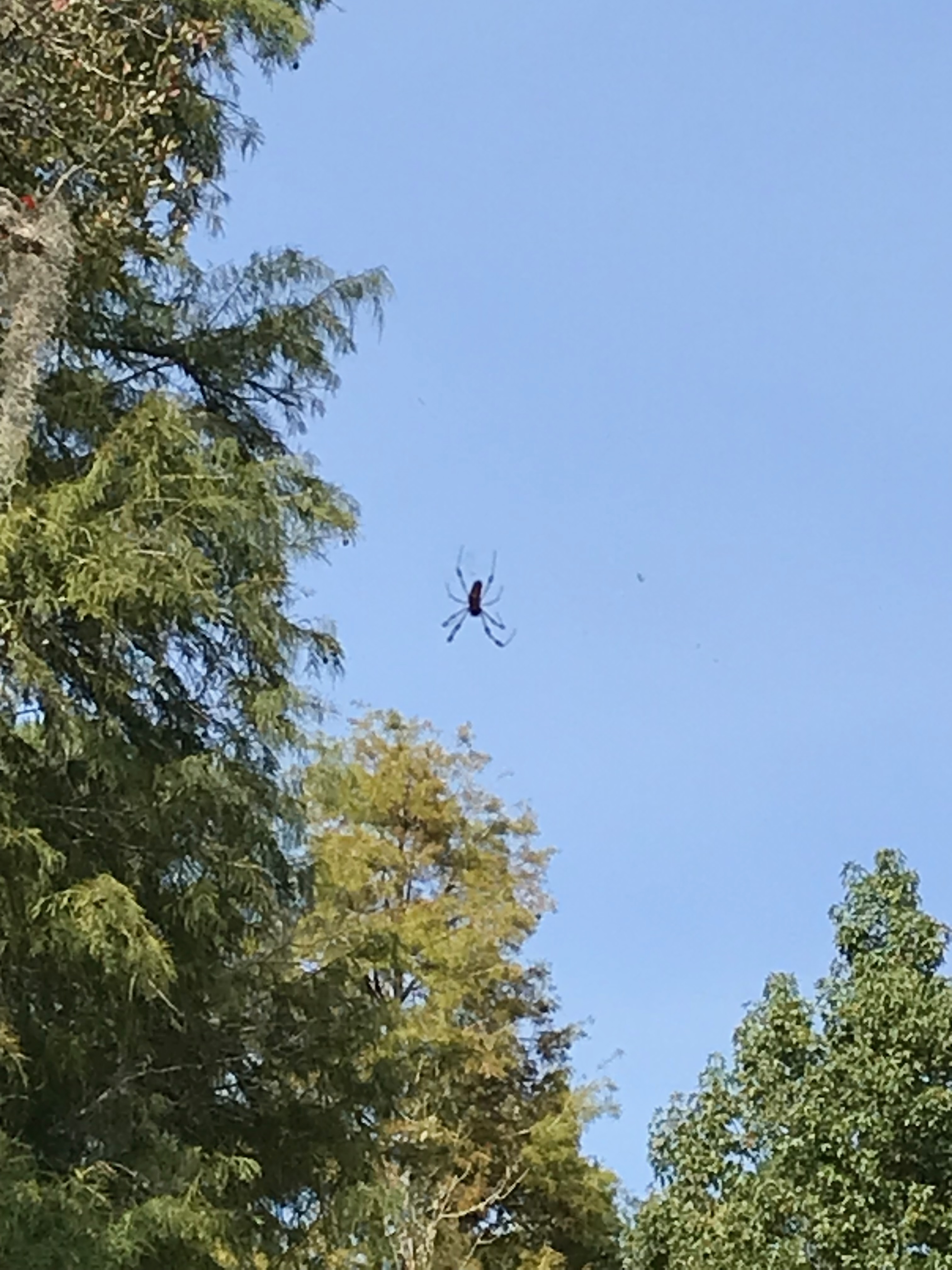
Ants, the Bible suggests, are worth both watching and learning from. I was reminded of this while at the Easton VegFest a couple weeks back. The VegFest is an annual event promoting vegan food in a riverside park. I’d given someone a ride and ended up finishing earlier. I could either walk all the way back to the car or spend the time outdoors. It was a pleasant enough day and there were places to sit (with no back support, however). One such sitting venue is a concrete retaining wall about 12-feet high, that borders a walking trail along the river. Since there’s a lively inner tubing business along the Delaware and Lehigh Rivers, you could watch groups float by, looking very relaxed in the way that only being on the water can make you. It was while sitting along the top of this wall that I realized I was on an ant highway.

Image credit: Fir0002/Flagstaffotos, under CC BY-NC license, via Wikimedia Commons

While individual ants don’t live very long, colonies (and their lives are very interconnected) can last several years. Some queens even make it to 30, which is impressive for an insect. As I was sitting (more like leaning, since the wall has a rounded top and I have a fear of falling) I’d notice some larger ants approaching with great determination. I would stand to let them pass. They weren’t in a close line or anything, so if I didn’t notice one in time, I became part of the trail. Looking confused—if an ant can look confused—at missing the chemical trail, they’d nevertheless continue in the same general direction unless some microscopic bit of a dropped piece of lunch on my lap caught their attention. Their determination was a lesson. They simply don’t give up.

Although the wall predates any of their individual lives, it has become their highway just as any interstate becomes ours. They didn’t build it, but it has become their recognized and known pathway. This was clear because in the course of my hour there, several members of what I presume was the same hive came by. I suspect the writer of Proverbs wanted readers to notice their busyness, but what I saw was their marked will power. Not even a giant wearily resting on their road deterred them. There was an utter conviction about what they were doing. Obstacles were simply climbed or gone around in the assurance that the trail would resume on the other side. Their sense of hope was admirable and, in its way, contagious.


Closure of a Trilogy

So the final part of Jessica Verday’s Hollow trilogy really moves into supernatural explanations of life after death.  At least for those destined to become shades.  Since we’re at the end here, I won’t worry about spoilers.  Also, the series has been out for over a decade now, so we’re fairly safe, I think.  (Young adults aren’t my demographic, I don’t imagine.)  To recap, Abbey is in love with Caspian, who is a shade.  Caspian isn’t seen by many people, but he does appear to Abbey.  Throughout the story she mourns the death of her best friend Kristen.  As the action builds, Revenants begin to appear in Sleepy Hollow.  Revenants are beings that assist people who are to become shades as they die.  This indicates to Abbey that she won’t live to graduate from high school.  She will, however, get to be with Caspian—“complete him”—in a form of life where few will see them but they will live on in a limited sense.

The universe here isn’t particularly Christian in background.  Revenants operate in pairs, one tending toward good, the other evil.  They are sent to do a specific job and when it’s over they move on.  As in the movie Dogma, however, one Revenant doesn’t want to move on.  He figures that if he fails to do his assigned task he’ll continue on as an immortal on earth.  At the end he reveals that he killed Kristen in Abbey’s place so a difficult decision’s in order.  To straighten out the mess that’s been made on some cosmic scale, Abbey can die, history will be altered, and Kristen will be the one who survived.  This will involve self-sacrifice, which kinda does bring us back into Christian territory.

This trilogy emerged following the obvious success of Stephanie Meyer’s Twilight saga.  Teen paranormal romances were in, and publishers hearkened to the demand.  It does reflect our times that writing for young readers has taken on an impressive quality.  This trilogy is a great example of how someone who recollects well what it was like to be a teen is able to transport many of us back to that stage of life.  The awkwardness.  The constantly making wrong decisions.  The bewilderment of falling in love.  And of course, if you throw in some ghosts and some light violence, you’ve got a winning combination.  I enjoyed getting to know these characters.  I knew, once I put volume one down that I would have to see how the rest of this story unfolded.  I’m glad I did.  I have a sense of closure, for this series at least.


Funny Scares

Camp has its own aesthetic.  I’m not talking about the kind with tents and sleeping bags, but that has its own aesthetic too.  No, I mean campiness in pop culture.  Creepshow, which was released in 1982, has maintained its value as camp and you pretty much still have to pay to see it (at least it’s free not on any streaming services I use).  For an episodic film it’s not bad, and since it’s comedy horror it won’t keep anyone up at night.  And of course both Stephen King (who wrote the script) and his son Joe (future horror writer as well), appear in the movie.  The elder King in a charmingly overacted segment based on one of his short stories clearly influenced by H. P. Lovecraft.  Put this all together with direction by George Romero and a cast including Leslie Nielsen and you’re in for a fun afternoon or evening.  (Or morning.  I won’t judge.)

It’s definitely a period piece.  The attitudes are those of the late seventies and early eighties.  That fact underscores, for me, how media affects everything.  Cultural outlooks change periodically and the more we know about what other people think, the more quickly they change.  Of course, since this is camp you can’t take it seriously.  And yet you somehow do.  The first vignette is, appropriately, holiday horror.  It has to do with Father’s Day which is, I suspect, a holiday to which most men acquiesce rather than anticipate.  This story is about a dad who takes it too seriously and a daughter who takes it too far.  Until…

The plots of all the stories are comic booky, and they contain many of King’s early themes.  “Something to Tide You over” is probably the most disturbing of the tales, at least by implication.  It reflects some of King’s fears as presented in some of his short stories but the method of execution is particularly distressing.  The comic book ending, however, shows it’s all for fun.  The prologue/epilogue reflects, I expect, the experience of many of us growing up.  I remember having comic books to which my mother objected because they were “too scary” for young boys (in our context).  I even recall her trying, and perhaps succeeding, to take them away and put them in the trash.  This is a situation as old as media for children.  The brothers Grimm knew just as well as King does that kids like scary stories.  Some grow out of that.  And others of us find a couple hours to watch Creepshow as an adult.  At least those of us who enjoy camp.


Reframing

Theory can be tough to stomach, but once you get through it you can often find all kinds of valuables in an academic book.  I learned quite a lot from Cecilia Sayad’s The Ghost in the Image.  It’s a brief but powerful book.  One of the under-explored areas of life is how our inventions affect reality.  We invent things and they change us.  Photography is one of those inventions and it seems like we should step back for a decade or two and try to figure out just how it’s remade reality.  Sayad explores that specifically in the realm of horror.  Not just movies, but other technology associated with images (and even other senses).  She makes the case that the frame that separates an image from the “reality” outside the frame—think of going to an art museum and how the frame sets a painting off from the “real” wall behind it—has become permeable.  Thus the theoretical part.

Applying that principle to horror, she has fascinating chapters on Amityville and Enfield, the found-footage fictions of Paranormal Activity, and the Slender Man meme.  She also discusses spirit photography, which is really the precursor to the horror film, and what used to be called video games.  I’m not a gamer, I’m afraid, and I’m sure I’m missing out on some culture because of it, but researching and writing books beyond work takes up quite a bit of time.  In any case, the amazing thing is that Sayad does all this without judging.  She doesn’t say that ghosts are “real” but she doesn’t say that they’re not.  Part of the reason for this is that reality is part of the quest here.  We define reality partially (largely) through our technology.  Would politicians become “celebrities” without photographic media?  They’re hardly the cream of the crop anymore (let’s be honest here).

So this book left me thinking.  Imaging technology invents, instigates a new reality for creatures as visually oriented as our species tends to be.  Sayad also explores how other senses are brought into this—sound, most obviously, for movies—and help to confirm that reality.  Theaters have toyed with touch and smells to widen the diegesis of the movie (taste is a bit trickier), each layer brings the image further outside the frame.  The internet has, of course, only accelerated all of this.  The fact that horror is the genre that perhaps best lends itself to this kind of impact on society is, in itself, a telling point.  I need to step back for some time and ponder how this all fits together in what I perceive of as reality.


Self-Correcting

A comment by a friend regarding Wikipedia recently got me thinking about self-correcting systems.  When I was teaching, I didn’t eschew Wikipedia like many of my colleagues did.  In case you’ve been living in a cave the last two decades, Wikipedia can be edited by anyone.  When I had more time than I do now, I used to correct errors I found there.  The thing is Wikipedia shouldn’t be used as the final word.  It’s a good place to start and, if you’re concerned about the truth, you’ll follow up by checking footnotes and looking up the references.  (Standard operating procedure for academics.)  Readers always need to keep in mind that what they’re reading may have been manipulated and distorted, which is why you want to check with established sources—some of us still prefer print, which isn’t so easily altered.  Still, Wikipedia is self-correcting and it works fairly well.

This got me to thinking about other self-correcting systems.  Those who know me know that I take criticism pretty hard.  That’s because I was raised with a crippling fear of Hell that let me to self-correct whenever I discovered an error.  And to scan my thoughts and motivations constantly for mistakes.  Sensitive bosses know that I only need to learn about an error I made, even obliquely, and that I don’t need to be told to fix it.  Of course I don’t!  Hell awaits those who let mistakes fester.  I’m not sure this is a good kind of self-correcting system, but it keeps me on my toes, and at times, even on my toenails.

The human body is often a self-correcting system.  We need the help of physicians when disease or injury occurs, but healing is part of a self-righting system.  (I’m indebted to an episode of Northern Exposure for reminding me of this recently.)  On an even larger scale, life on earth is self-correcting.  We humans have done more than our fair share of damage, and the self-correction (e.g., extreme weather because of global warming) may not be to our liking, but it is a system doing what it does best—righting the ship.  This kind of self-correction is inspiring and inspirational although we often take it for granted.  If healing didn’t occur none of us would be here to notice just how remarkable it is.  I don’t dismiss Wikipedia just because we can’t be sure everything’s written by experts.  Self-correcting systems are often the way of the world.


Life Semesters

Some people have a school calendar in their blood.  For me, that was one of the great appeals of the teaching profession.  I worked a lot during summers—class prep and research take a lot of time and the two go naturally together.  I didn’t mind the ten hour days, and more, during the semester either.  When you’re doing something you love, you become your job.  It was quite a shock when the job counselor at the University of Wisconsin Oshkosh told me that I had to separate myself from my job.  The two were one.  I would sit in that Oshkosh office researching for classes I’d never taught before.  My first year at Nashotah House I was writing 90 pages of class notes per week.  Anxious, but loving it.  There was so much to learn!  But that calendar has some natural breaks.

Academic careers involve sprinting that goes on for about four months straight.  Then you get a break of a month or two before sprinting again.  For those of us with my mental condition, that way of living just fits.  The 9-2-5 job is parsimonious second-pinching.  I’ve talked to other professionals in the field and they say the same thing—when your job involves thinking, there are no such things as fixed hours.  When I’m out on my jog before work and my mind comes up with a solution for that intractable problem that awaits me once I fire up the laptop, I’m working.  It’s just not “on the clock.”  It’s gratis.  Part of the problem is I don’t cotton onto sitting in front of a computer all day. Being “in the office” ironically hurts productivity.  In the teaching world you walk around and talk to people.  Summer days are spent with your nose in a book.  What’s not to like?

Not everyone, I know, is stimulated by that kind of lifestyle.  For me, it just works.  Some years I’m able to carve out a week’s vacation in the summer.  I try to save up enough vacation days, however, to get the week between Christmas and New Year’s off—a mini semester break.  When a person’s mind works in a certain way, finding employment that coincides with it is important.  Many people like the structure of a work day.  It tells you when to sign in and when to knock off.  It tells you when to eat lunch and when to take breaks.  Others prefer alternative work arrangements.  The 9-2-5 has never sat well with me.  It’s because the school calendar is in my blood.


How Many Stairs?

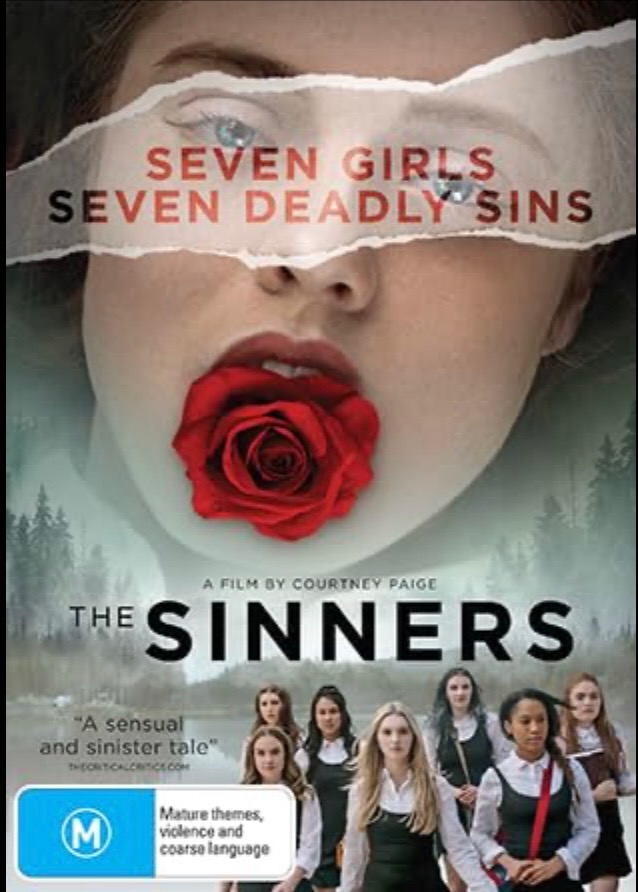
It tries.  It really does. Still, The Girl on the Third Floor is just not that good.  It got quite a few accolades, but I was waiting for something extraordinary.  It seemed to fall down on two counts—the writing isn’t very good and we’re allowed to build very little sympathy for the protagonist.  If you can’t feel for somebody and the dialogue does only light lifting, what’ve you got to go on?  Some critics suggest that if you know the star (Phil Brooks) and his persona you’ll appreciate it more.  That must be a problem for many movies where baked-in personalities are counted on—early Disney used to do this to make cartoons attractive to adults.  If you don’t know them the appeal evaporates.  In any case, a couple buys a house. He (Don) goes to renovate it while she (Liz) works to support them.  The house used to be a brothel and Don has no problem cheating on his wife when a hot ghost shows up.

The reason I watched the movie was the connection between horror and religion.  The first person to check in on Don is Ellie Mueller, the pastor of the church across the street.  She’s simply identified as “Protestant” and she drinks bourbon and swears, so it’s fair to guess she’s not Baptist.  In any case, she warns him about the house but ever confident, Don carries on.  Later, as all the ghosts come out and Liz shows up unexpectedly, Ellie shows up again.  This time she advises Liz to leave but she frames the evil of the house as a matter of choices.  Don (who succumbed to the ghosts) consistently made bad choices in order to get what he wants.  Liz and Ellie, however, think of others.  In that sense there’s a parable here.

The haunted house tropes have mostly been seen before.  Some manage to be a bit freaky, but many of them don’t really shock.  Or maybe I’ve seen too many movies for them to have an impact.  The heavy metal soundtrack is a bit—ahem—heavy-handed.  Using marbles as weapons is a little unexpected and angry ghosts often make for effective monsters.  Still, these seem to succumb to a sledge hammer pretty easily.  One of them keeps coming back, however, and one is more a monster than a ghost.  In any case, there was real effort here.  For my taste, however, good writing can cover a multitude of sins.  And it really helps if you sympathize with the main protagonist, even if just a smidgen.


Whence We Are

Rootless.  Or perhaps a better word is “wandering.”  Although I was born in Pennsylvania, neither of my parents were and back another generation, few of the grandparents stayed where they were born.  Being an American mutt also means not having terribly strong ties to a parent-land.  But still, I’m surprisingly attached to Pennsylvania.  It’s a fascinating place.  One of only two colonies to actively promote religious freedom, it seems an ideal place for spiritual seekers such as yours truly.  I’m driven by an obsession to find the truth and this takes me to some pretty strange places.  Pennsylvania has an interesting religious heritage.  Founded by Quakers who nevertheless wanted diversity (or at least permitted it), my home state attracted a wide range of—particularly German—religiosities.  Not only were there Lutherans, there were also Moravians (pietists),  Mennonites and mystics.

Rural Germans kept many superstitious practices alive.  Many early Americans did, actually.  Daniel Leeds was a banished Quaker.  Now, without doing a ton of research (for which I don’t have time at the moment) you can’t find out much about Daniel Leeds (i.e. he has no Wikipedia article).  He was a rival printer to Benjamin Franklin, and a bit of a freethinker.  His family was later literally demonized as being the origin of the Jersey Devil.  Leeds was influenced by the mystic Jacob Boehme (who does have a Wikipedia article).  Böhme, as his friends knew him, also influenced Johannes Kelpius, and thereby Johann Conrad Beissel, a couple of good Pennsylvania German mystics.  Leeds began to have ideas too outré for the Quakers, and, I like to think, inspired future Pennsylvania mystics.  Leeds died in 1720 and deserves at least a Wikipedia piece.

Pennsylvania housed some pretty interesting religions over the years.  The Germans with their folk beliefs (Benjamin Franklin didn’t care for Germans) would go on to influence a number of American folk traditions.  I often wonder whether, if Pennsylvania had not displayed religious tolerance, things would’ve developed radically different in the early United States.  It does happen that, although a mutt, much of my heritage is teutonic, and I seem to share the religious curiosity that these folk displayed over time.  Upstate New York also had its fair share of new religions as well—beating out their southern neighbor and longest border sharer.  Of course, I have ancestry in upstate as well.  Perhaps it was inevitable that, being born in Pennsylvania, I would turn out the way I did.  Wandering and all.


More Young Fear

Okay, so the second one has a cliff-hanger ending.  I should’ve seen that coming.  This installment of Jessica Verday’s The Hollow Trilogy moves the story pretty directly into the realm of the dead pervading the everyday world of Sleepy Hollow.  For young adult literature from the era of Twilight, it does raise issues that, although they were around when I was young, have become more prominent in the thinking of teens.  Overdoses, college choices, attempted rape (or at least threatened), seem like things our society might’ve either overcome or matured about.  Instead, we start putting these pressures on our young and wonder why society has a hard time coping.  Sometimes I wonder if we’ve made society too complex.  As an adult it’s become so complex that I’m never quite sure if I’m getting things done correctly, or if they might come back to haunt me later.

In any case, in the first novel of the set, The Hollow, the protagonist/narrator, Abbey, discovers that her boyfriend has been dead all along.  The Haunted, volume two, is about how she copes with that.  I read many years ago that certain narratives are something like preloaded in human brains.  Given even the most basic pieces, our minds fill in the blanks.  When girl meets boy and likes him, our thoughts go toward getting them together.  Of course, a story is all about the difficulties that threaten to prevent that from happening.  For most of us, we start to experience these things as teens and even as adults we remember it well.  These are intense emotions and society complicates them because just when we think we know what we want at high school age, college separates us and we start over again.  Thus college visits.  It’s even more complicated when your boyfriend is a shade/ghost.

How the material and spiritual relate is an unresolved issue.   Materialists have already decided by cutting the spiritual out altogether, but the rest of us, perhaps trusting our feelings more, wonder.  Although these books are more paranormal romances than philosophical musings, they nevertheless raise questions that even adults struggle with (or should).  We don’t have all the answers and we hope that our children might get further along this path than we did.  Young adult literature helps them do so.  Some choose to respond by banning books.  The rest of us know that literature can help to discuss difficult topics in a world we’ve made far too complicated, for young and old alike.


Good Horror

As strange as it may seem, my goal in life has always been to bring more good into the world.  As they phrase it in Nerdfighteria, helping “to decrease world suck.”  There are many ways to do this—give encouraging words to others in a cancer support community, volunteer time (structured or otherwise) to civic organizations, even trying to help make sense of it all through an obscure blog.  My motivation in entering teaching as a profession was to help make the world a better place.  (Also, I’m pretty good at it.)  When that fell through as a profession, I began yet another odd way to try to bring good into the world.  Writing books about religion and horror.  Please hear me out—this is part of a larger plan which, in the nature of plans, may or may not work out.  It involves getting people’s attention for a moment (kind of like teaching).

There are a significant number of people who enjoy horror.  The vast majority of them are not bad people.  They find something enjoyable, or cathartic, or perhaps even spiritual in consuming horror.  I’m one of them.  My piece “Exorcising The Pope’s Exorcist” appeared yesterday on Horror Homeroom.  (Hey, it’s free—check it out!)  Exorcism, as a social/religious phenomenon, owes its popularity to a horror movie.  And if the rite brings some measure of relief to someone suffering mentally, spiritually, or physically, it has decreased—you guessed it—world suck.  It makes this planet just a little bit better for a little while.  Movies that promote exorcism can, believe it or not, help people.

Some time back I was invited to offer a course at the Miskatonic Institute of Horror Studies.  I am deeply honored because if you look at the list of names of past (and present) teachers there are some superstars in there.  By the way, my course is titled “Believing in Sleepy Hollow.”  (Maybe those of you who read daily may now understand why I’ve been posting so much on Sleepy Hollow of late.)  Teaching a course that will bring enjoyment to others is a way of bringing a small measure of good into the world.  Once you leave secondary education, you’re never obligated to take a course.  It’s something we want to do. That means if someone gets something out of my course I’ve brought just a little bit of good into the world.  It counts, I hope, toward my life’s amorphous goal.


Christian Horror

Following the lead of a friend (I don’t regularly read Christianity Today on my own), I found “How Horror Uncovers Our ‘Holy’ Hypocrisy,” by Sara Kyoungah White.  It seems that some evangelical Christians have begun to notice the popularity of horror movies.  This isn’t the same as condoning, of course, and this article took me back to the writing of Holy Horror.  One of the reasons for the book was that, at the time, few people (very few) were exploring religion and horror.  Web searches inevitably brought up the question “is it okay for Christians [subtext, “evangelicals”] to watch horror?”.  Since that time I’ve been exploring why the connection of horror and religion is so appealing.  If you’re a daily reader here, no doubt you’ve noticed it before.  I read on, noting that White has a difficult time finding anything redeeming in horror, apart from trying to stretch it to cover the usual evangelical concerns.

Photo by Stefano Pollio on Unsplash

Some of us, however, are seeking a kind of holy grail—an articulation of how horror contributes positively to spirituality.  That it does is beyond question.  The real puzzle is why.  It might help if we had a better definition of spirituality.  What exactly do we mean by that?  Even some of my Unitarian friends are put off by the word.  Still, it’s part of the human make-up.  You might call it “mind,” “psyche,” “personality,” “spirit,” “consciousness,” or “soul”—or any of a host of other words—but there’s something about people that makes us reflect on realities outside ourselves.  Some of do it with a great deal of awareness that we are undertaking such a quest.  Others may seldom or never think of it consciously.  We all do it, however.  We don’t all use horror to help us think through, or experience it.

I have long used movies for therapy.  It’s only been in the last several years that I’ve begun to notice that horror puts me into a spiritual frame of mind more than other movies tend to.  White notes “nearly every one of the top horror movies of all time deal with some kind of Christian theme or portray a Christian character.”  Some of us have noticed that in the course of our exploration of the genre.  Of course, that depends on how we decide on “the top horror movies of all time.”  The list she cites is the ever-shifting IMDb “Top 50 Horror Movies” list, which has far too many recent films on it.  Still, her claim holds if you go back to the classics and move forward.  There’s definitely a connection there, and, I suspect, it has nothing to do with the showcasing of our sins.


Lights, Camera

I’m not quite sure how the monster in Lights Out should be classified.  Perhaps a tulpa?  A tulpa is a materialized being brought about by the power of thought, and at the end this seems to fit.  But I’m getting ahead of myself.  Rebecca and Martin are half-siblings.  Their mother Sophie has abandonment issues—I knew this was getting into personal territory here, but I kept watching.  Rebecca’s father had left when she was young and Martin’s father is killed in the film’s opening scene.  But there’s a monster who’s responsible for all of this.  Rebecca, it seems, fears attachment.  Her boyfriend Bret, however, is faithful and devoted.  All of them are threatened by the entity Diana, who can’t stand light.  She can only be seen in the dark.  She is the one who killed Martins’s father (and possibly Rebecca’s).

This intriguing premise is tied in with the idea of mental illness.  Sophie, the mother, spent some of her early years in a mental hospital being treated for depression.  It was there that she met and befriended Diana.  Diana died, but not before insinuating herself into Sophie’s mind.  This is why a tulpa suggests itself.  A woman who fears abandonment conjures an entity who ends up developing its own agenda.  Diana doesn’t want anyone to discover who or what she is.  Such knowledge would offer a way of treating Sophie’s mental illness that might prevent Diana from existing in her mind.  This is pretty sophisticated stuff.  Not only that, but the movie plays on the very natural human fear of the dark.  It makes you want to turn on all the lights.

I won’t spoil the ending here, but I will say it’s disturbing.  I also think that it’s important to note how mental illness here is implicated as a kind of strength.  Sophie felt abandoned and created a means of feeling accepted.  If, however, Diana was really a separate entity inhabiting Sophie’s mind then we have here a form of possession.  I don’t know of anyone who’s parsed movie monsters to so fine a degree but it seems to me a project worth undertaking.  I’m not suggesting science should be used to appreciate horror films—there is a science of studying monsters, called teratology, but its use in the mainstream has come to mean something different—yet we can use scientific methods to treat our various fears.  We do tend to find light from looking at and understanding what exactly our monsters are.  


Used, Again

It may be impolitic to admit it, but I have positive associations with Amazon.  This goes back to before they started using smily boxes.  Before Amazon, getting books often involved mail orders and checks and several weeks before delivery.  Now Bookshop.org does a similar service, and with more of a conscience, but Amazon showed everybody how.  I do have a complaint, however, with the internet giant.  They allow used book sellers to be the top place when ordering a book, since they sometimes have a lower-than-retail price.  I used to sell used books on Amazon, back when I had no full-time job.  I took great care to list books according to the accepted standards of book conditions.  I know I’ve written about this before, but two recent used book orders simply didn’t measure up.  So, herewith, a tutorial:

“Like new” means in mint condition.  You should not be able to tell the book was read.  Look for soft rather than sharp edges on the pages, slight curling of the cover (especially paperbacks) from repeated opening.  Hey sellers, if you have any of this, the proper category is either “fine” or “very good”—not “like new.”  I’m not really a collector (in that way), but if I order a book “like new” I expect that I won’t be able to tell it’s ever been read.  Normally I opt for “very good.”  This brings it down to a less expensive bracket and it implies things are in pretty good shape.  If your book has extensive writing or highlighting in it, it is not “very good,” but “good.”  If it does have minor markings you are required to list them.  I recently bought a “very good” book in which practically the whole first chapter was highlighted.  This isn’t easily missed, and it’s certainly not “very good.”

I get it, classifying books takes some discrimination.  The categories are there, however, to protect the buyer.  People do all sorts of weird stuff to their books.  The used book seller, on Amazon, is morally obligated to tell us about what’s going on.  And Amazon, please make clear when a book is “new” or not!  I recently bought a book that was listed as new but it had clearly been read at least once.  Be honest, people.  Book folk, in general, are good folk.  Reading is so important for a civil society.  Books are collectible items.  If you’re thinking of going into the biz, please remember that I’ve found books for a buck at library book sales in better condition than many “very good” books I found used online.  Just be honest—you’ll still sell the book, even if for a few pennies less.


Hidden Improvement

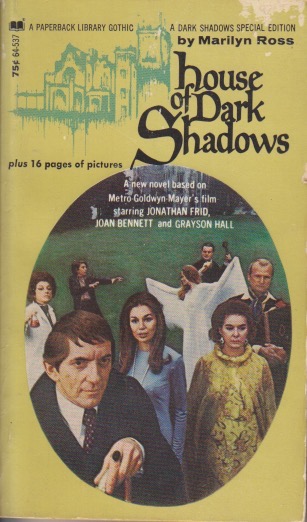
I believe in improvement.  Even for a journeyman writer like W. E. D. (Marilyn) Ross.  At least in his Dark Shadows books.  For much of the series the plot is largely the same: a young woman is threatened and finds herself in Collinwood.  Often the threat comes in the form of a mysterious stranger.  The woman falls in love with Barnabas Collins, but in the end it doesn’t work out.  The bad guys are stopped, however, whether they’re supernatural or not.  In Barnabas, Quentin and the Hidden Tomb things have moved on somewhat.  The main female character, Ellen, a southern belle from just after the Civil War, doesn’t fall for Barnabas.  She is attracted to him, of course, but not really in love.  That’s a plus.  And Barnabas is temporarily cured of his vampirism in this story.  Quentin is, despite earlier story lines, really pretty good, if misunderstood.

This installment begins in the Hudson Valley where Ellen’s intended lives.  Unbeknownst to her, her fiancé has died and has been substituted with his identical twin vampire brother.  This northern family lost their fortune during the war and need the marriage to bring Ellen’s cash into the coffers/coffin.  Ellen is rescued by Barnabas, who is a family friend.  He takes her to Maine, figuring she’ll be safe there.  Unlike other women in the series, she has already fallen in love with someone other than Barnabas, so the tension is focused elsewhere.  The disguised enemies come, of course, but this story feels a bit less formulaic.

As I’ve confessed numerous times regarding this series, these are guilty pleasure books from my childhood.  I don’t read them expecting belles lettres, but rather a rush of nostalgia.  They seldom fail to deliver on that front.  There are a limited number of them.  They hearken to a different time when the ability to crank out book after book (Ross published at least 24 novels the year this one appeared—that’s the rate of two per month) didn’t hurt your ability to find a publisher.  Some of his fiction, I’m told, is quite good.  Others, such as the Dark Shadows books, are of a different purpose.  They were meant to supplement the income on an unexpectedly successful soap opera that would go on to become a cultural icon.  It will be no surprise that Barnabas and Ellen prevail in the end.  The enemies are unmasked and, strangely for the series, the vampire is destroyed.  And the legend lives on.


Not the Exorcist

It’s too bad The Pope’s Exorcist didn’t come out before Nightmares with the Bible.  In that book I tried to make the connection between demons and nightmares and in this movie Asmodeus, the “named demon” gives his name as “Nightmare.”  Released in April of this year, The Pope’s Exorcist received a considerable amount of fanfare.  Starring Russell Crowe as Fr. Gabriele Amorth (two of whose books I’ve posted on), the entirely fictionalized account ends up coming across as, I shudder to say it, rather silly.  Using just about every exorcism movie trope available, the film goes over the top and really doesn’t have much scare in it.  Let’s start from the beginning.  Fr. Amorth is in trouble at the Vatican but the Pope’s his personal friend, so no worries there.  Meanwhile an American woman has inherited a decrepit abbey in Castille, Spain.  Her late husband owned nothing else and she has to be there personally to oversee restoration, dragging her two kids with her.

It turns out that this abbey contains evidence of a centuries’ old conspiracy during the Spanish Inquisition covered up by the Vatican.  It’s also the home of Asmodeus, king of Hell.  And one of 200 locations that fallen angels came to earth.  After the demon scorches a couple of restoration workers, the woman, Julia, is left in the spooky abbey alone with her kids.  They both end up possessed, but the boy, Henry, is the focus of the body horror.  Since Asmodeus has clearly seen The Exorcist, he says outright that he’s after Fr. Amorth, who is sent by the Pope himself to take care of this.  To save the boy Amorth has to be possessed in his stead (as in The Exorcist).  Together with a younger priest (really, is any of this sounding familiar?), the demon eventually has to capitulate.

Apart from not being “based on a true story,” the movie also takes seriously the fictionalization of characters.  “The Pope,” never named, in the 1980s was John Paul II.  He’s portrayed as bearded and in poor health.  Amorth (Crowe) is also bearded, although historically Amorth, like most Roman priests, was clean-shaven.  The “silliness” of the movie derives from not having researched Roman Catholicism thoroughly.  All of this makes me wonder if an exorcism movie can be made that surpasses The Exorcist.  Much has been written on that movie since William Friedkin recently died (and much was written on it before).  It’s difficult to put a finger on just what made that film so superior.  It doesn’t stop others from trying, of course.  And now there’s talk of a sequel for The Pope’s Exorcist.  The nightmares, it seems, never end.