Weather to Panic

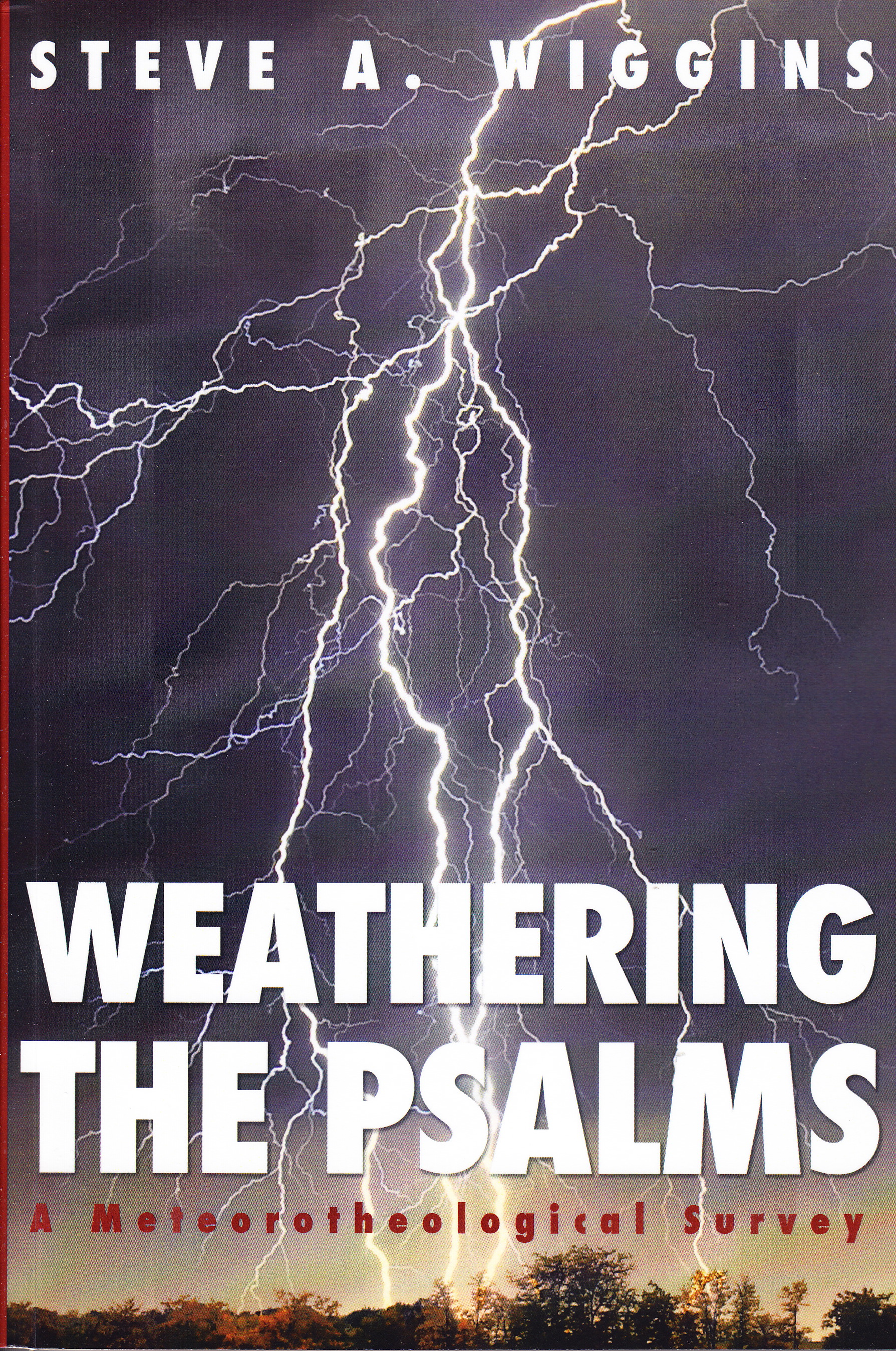
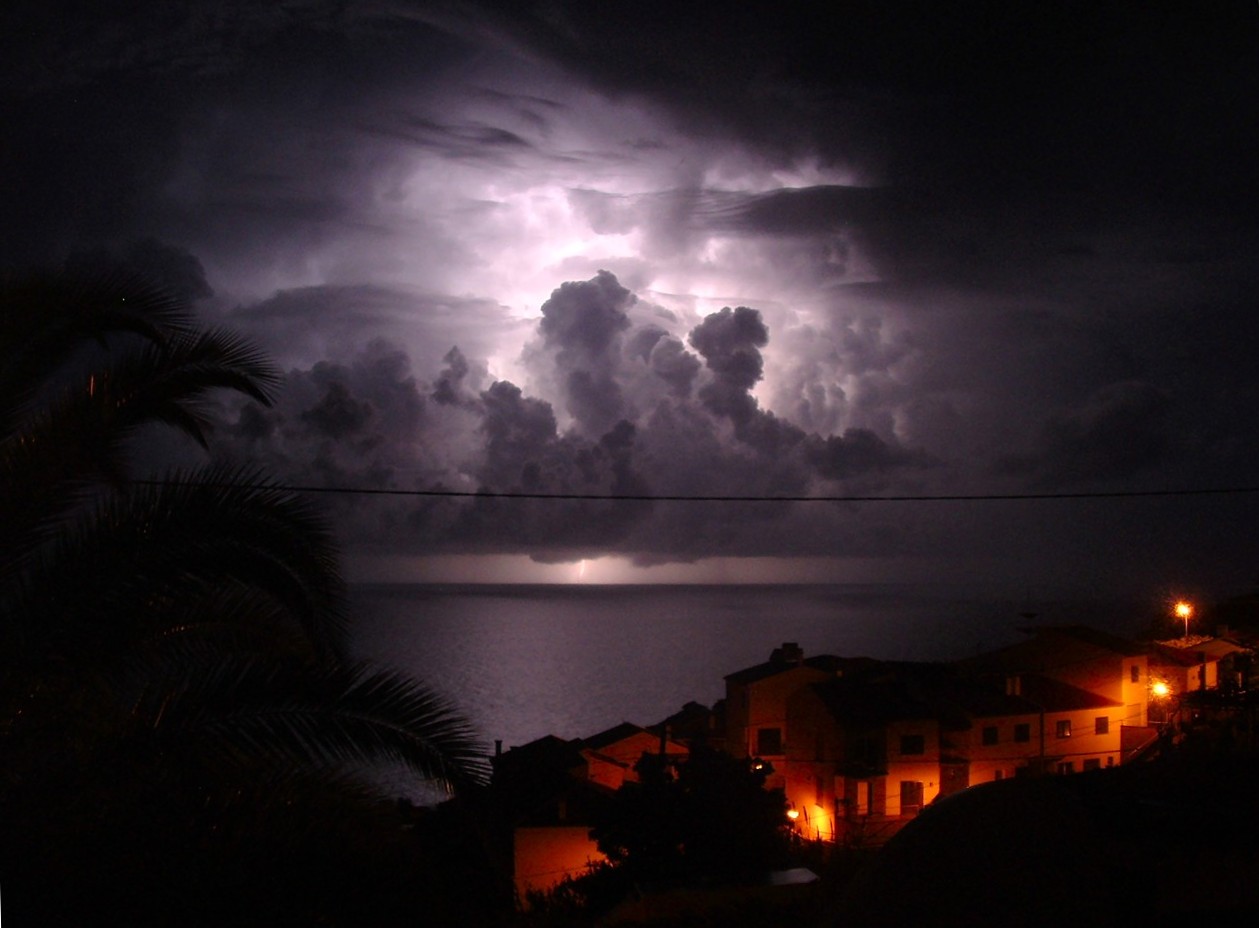
Over the long weekend, our furnace kicked off two days in a row. This January has been chillier than some, and we’ve been sitting around with blankets on our laps waiting for the air temperature to reach a tolerable level. We keep our place cool, in any case, partly from environmental concern, and partly because we can’t afford to do it any other way. So I was interested to see an article from the Guardian that my wife forwarded to me about the weather. I’ve been interested enough in the weather to write a book about it (Weathering the Psalms—available now!) and since I stand outside every morning waiting for a frequently tardy bus, I do tend to notice when it’s cold, raining, or snowing. The article, “I don’t care what the weatherman says when it’s just hysteria,” by Martin Kettle, makes a good point. The weather used to be information on the news, now it is entertainment. We dramatize and give names to storms as if each is a miniature apocalypse. As Kettle notes, most of us have been around long enough to know how to survive a cold snap or two. But an apocalypse?

We’ve become accustomed to the controlled environment. Many of us define our “work” as sitting in front of computers all day, tapping out virtual ideas that other people will see, indoors, and we probably don’t even have to step outside to get the message delivered. The weather might make it difficult to get to work. We might lose a day of productivity. That snow that was fun as a child has become an impairment to those adults driving to work to get inside so we don’t have to be made uncomfortable any longer than is strictly necessary. Snow never makes it into the forecast, but a storm personified with a name and with destructive intent. No wonder the biblical world saw weather as a divine weapon.

That which Kettle terms “[t]he debauching of the weather” is a sign of the times. We seem to be deemed unable to process facts. We must be entertained. How many mornings have I sat worried in the dark, wondering if I’ll make it in to work or if I’ll spend a good portion of the day trapped on a bus frozen on the Parkway? How much energy do I expend trying to decide whether I should spend extra money to take the train, even though I’ve already paid for a month of bus service? Will the weather throw itself on us all and prevent us from another day’s work? In the Psalms, the response was often one of wonder and praise. These were things only the deity could do. Now, however, we are in the realm of the media meteorologist. If they don’t entertain us, we might just turn off the television or computer and go outside to check for ourselves. If only we would we might discover one of the true wonders of nature that doesn’t require comment. It might be the ability to judge for ourselves.
DSCN0099


Maritime Dreams

MaineEarly in my teaching career, I used to arrive in Milwaukee on a train after midnight. A student from Nashotah House on work-study would pick me up at the train station and drive me the thirty miles to the seminary so that I could teach the next morning. Along the way, depending on the student, conversation ensued. One time I asked the driver why he was interested in what seemed to me an arcane topic (and that’s saying something!). He replied, “Who can ever say why they’re interested in something?” There was some deep wisdom there, I realized. Can any of us say why we’re interested in what we are? I, for example, don’t know why I’m interested in life on the sea. And in the sea. I fell in love with the idea of living on the coast when I was a landlocked child. The ocean came to me only in books, and I never actually saw an ocean until I went to graduate school. The experience confirmed for me that this was where my heart lies. The salt air, the gray waves, the constant call of the pounding surf. Moby Dick immediately became a kind of personal scripture when I first read it. A life near the sea felt right.

I could never really answer the question why. I don’t swim, and besides, the ocean currents I have experienced are really too strong for the placid kind of swimming a lake or pool seems to offer. I don’t own a boat, and I’m a poor pilot when asked to drive one. I’ve been out over the ocean on commercial boats only a couple of times. Still, the imagination is fired by the idea of the ocean. Especially the stormy north Atlantic. As a child Rachel Carson’s The Sea Around Us was one of my favorite books. Just staring at the cover could transport me to places I’d never seen. When landlocked in Wisconsin for several years, I turned to the Great Lakes for consolation. “Those who go down to the sea in ships” Psalm 107 declares, “Who do business on great waters; They have seen the works of the Lord.” Even so those who dream of the sea.

Ironically, for the Psalm, the Israelites were not a seafaring nation. Good harbors are rare on the coast of ancient Israel, and the maritime trade of antiquity was dominated by the neighbors to the north, the Phoenicians. Still, even the psalmist could dream of the sea. It has been said by various commentators, that the sea represents sexuality, or transcendence, or both. It is larger than we are. Indeed, the earth is by far mostly water as opposed to dry land. Life, even according to Genesis, first began in the waters. So I find myself in the midst of winter thinking about the ocean. It has been a long while since I’ve indulged in a day on the coast, even though I’m pretty much daily in a city on the sea. But I can’t experience the ocean so well with so many people around. Besides, there’s work to do. In those moments when my time is my own, however, I still dream of the ocean and the endless possibilities it represents.


Weathering the Storm

WeatheringThePsalmsI had almost forgotten the validation of being published. Colleagues sometimes ask me if I’m still working on any books without realizing that employment in publishing, with rare instances, constitutes a conflict of interest. Editors are acquirers of content, not producers thereof. As I’ve been preparing Weathering the Psalms for release on the world, I often consider how differently all this may have turned out, should I have found academic employment after Nashotah House. The day my contract was terminated, I was working on this book. It had recently been declined by Oxford University Press, and the reviewer (whom I had unwittingly met) had informed me that the book wasn’t really salvageable. It was a jumble of data with no narrative thrust. I was working on giving the data a different frame when I was called to the Dean’s office and told to read a legal memo in the presence of a lawyer. Every time I tried to turn back to my book after that, the nightmarish scene replayed in my head. Besides, I had to try to find a job.

It was only when working for what I thought was a stable Routledge that I had the chance to revisit the manuscript. Ironically, it was only after I was no longer in a position to do research that colleagues began to approach me to review submissions for journals, to invite me to write articles, and to express an interest in my research. Of course, it was too late for me to begin full-fledged research again. Despite the internet, scholars require two things I did not (do not) have: access to a university library, and time. Early on in my commuting days I discovered that the quality of the time on the bus did not allow for in-depth research. Too many other passengers have too many other agendas. I can read on the bus, and sometimes academic books, but anyone who’s tried to take notes when crammed into the space usually taken up by a backpack knows the difficulty of writing notes without the use of your arms or hands, over the constant electronic noise of your neighbor’s unsilenced electronic games.

All of which is to say that I’m very pleased to see Weathering the Psalms is out. Like a child untimely born—at the risk of sounding biblical—the book is being printed as I write. Working in publishing I know better than to expect phenomenal sales, still, many of my readers over the years have said they’d buy a copy if it was ever published. If you’re serious about that, take a look at the website of Wipf & Stock and click on the Cascade Books imprint. Finishing this book has, I must admit, awakened a hunger. I have, of course, started to write another. It may be another decade in the making, and, should it ever garner the attention of a publisher, a similar post may come along before I’m too old to think clearly. The ideas are there; the opportunity to express them is not. Still, despite the cruel vagaries of academia, I feel as though I’ve received a small validation, and I am very grateful for the honor. Wipf & Stock offers a service that other academic presses might do well to emulate. It’s not all about the earning potential of a title. Sometimes it’s just a storm.


Medusa on the Rocks

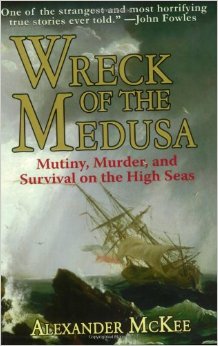
WreckOfTheMedusaShipwrecks possess a compelling resonance that is difficult to explain. I have seldom been on boats, but from my youngest days I’ve been drawn to the coast. While a student in Boston I made weekend trips to Gloucester to be near the place where ships go out to sea, sitting by the quote from Psalm 107 at the base of the famous fisherman statue. Moby Dick has passed under my eyes many times. While at Nashotah House I was frequently tormented with nightmares of sinking ships. Titanic was a huge movie late in those years, and even before watching it, I dreamed of going unceasingly down. In a used bookstore, Alexander McKee’s Wreck of the Medusa recently caught my attention. Although I’d never heard of the Medusa, the name suggested classic themes, and the shipwreck, I knew, would entail suffering and loss and human drama. I knew I had to take it home with me.

The true story of the wreck is tragic in just about every conceivable context. The year was 1816 and aristocracy was still openly practiced. The Medusa, bound for Africa from France, ran aground and, in echoes of what would happen (at least in some instances) a century in the future, the insufficient number of lifeboats were claimed by the wealthy and powerful. The most tragic aspect, however, was the matter of the raft. The masts were felled and a poorly designed raft was hastily constructed (the Medusa was grounded, not sinking). The greatest number of people were herded onto this raft where the water came up to nearly their waists, as the six boats towed the makeshift craft toward shore. At the instigation of the about-to-be-installed governor of Senegal, those towing the raft dropped the line and rowed themselves to safety. The raft, with no means of propulsion, was left adrift where 135 people of the 150 on board slowly died over the next two weeks. The governor and his party made it safely to their destination.

To me, this election week, it seems that I’ve just read a potent parable. We have public officials in place who, like those safely in the boats, cry out “we abandon them” before the masses of those who expect and deserve their protection. Power, it is said, corrupts, and as we witness the constant increase of political power over the sea of humanity taught that their religion favors the party able to quote the Bible the loudest, we sometimes forget that sinking ships may leave very long memories. In another week we will reach the commemoration of the sinking of the Edmund Fitzgerald. The Essex, the Medusa, and countless other tragically doomed ships may easily slip our minds now being propelled at full speed toward the spending frenzy of Christmas. Meanwhile, I urge us all to take a few November moments to consider where this ship is heading, and if there is yet time to change her course.


Whether the Psalms

How about that weather? Changeable, isn’t it? I have spent a large part of the last few days going over the proofs for Weathering the Psalms, the book I wrote over a decade ago. While I’m excited with having the validation that comes with publication, I worry a bit about the changes that the last decade has brought. Although I live near some impressive libraries, my time is devoted to commuting and working and anyone who has tried to be a serious scholar as a weekend warrior only knows that it is unsustainable. One element that good research absolutely and uncompromisingly demands is time. When I began commuting into New York City three years ago, I taught myself to read on the bus. As someone who easily gets car-sick, this took an enormous effort, but it paid off in the number of books I’ve been able to finish. There are limits, however. Seriously research-oriented academic books do not fare well on a noisy commute or at early hours. As much as we scholars like to think our books are riveting, try reading them at 6 a.m. Perspective makes all the difference. In short, I had to leave the main body of the text of my book as it was a dozen years ago.

There is a lot of good information there. You notice things by laying out all the Psalms that refer to weather side by side. I can’t tell you those things here, since that’s the point of the book, but suffice it to say, I still agree that the material should be published. One of the main reasons is the change in worldview over the last several millennia. Although we like to complain about the weather, for most of us it is merely the inconvenience of being outdoors that brings it to focus. We spend our days behind computer screens, living a virtual reality. But when we have to trespass outdoors—weather awaits us. For those in the world of the Bible the opposite was true. Indoors was shelter, but not insulated like today’s homes. Most of the day would be spent outdoors, weather permitting. They knew a lot more about the practical aspects than we tend to. We, on the other hand, know the science but have tended to forget the experience.

IMG_1520

My book surveys a cross-section of the biblical worldview (the Psalms) for what it tells us about the weather in ancient thought. I suspect others have begun to explore this since I wrote my humble contribution to the discussion. Today I would have done it very differently, but Weathering the Psalms was written by a scholar isolated in a seminary, literally and figuratively in the woods. The fact that other scholars had noticed the weather now and again showed me that the task, though halting, was necessary. Rereading it is like a time-capsule. These were the thoughts of a younger man, employed full-time in a kind of academic setting. Hopeful that the next job would be worthy of tenure. Believing that there was a next job. But the weather is changeable. Indeed, we know it is unpredictable. Despite its archaic cast, I look forward to Weathering the Psalms and hope that it inspires others who are isolated to keep up the effort. Even if it’s raining.


Psalm 151b

sinead-oconnor-take-me-to-churchI can’t claim to know much about Sinéad O’Connor. When she did her Saturday Night Live act a few years back, I remember the outrage among several Nashotah House students muttering unholy threats. Not that they were Catholic, having *ahem* celibacy issues, but they objected to a picture of Pope John Paul II, known colloquially as “J2P2,” being torn up. This symbolic gesture lost her, on campus anyway, about a dozen fans. I had nearly forgotten the Irish bardess when my wife sent me an NPR story on her recent song, “Take Me to Church.” I was immediately struck by the lyrics that, to this old Psalter reader, sounded very much like a Psalm. The lyrics, while some will certainly disagree, resonant very strongly with the self-confession that permeates the hymnal of ancient Israel. Not that O’Connor has suddenly become a proper Catholic, but she has entered the band of David.

Many popular artists over the years, I would contend, have struck that familiar chord. Anyone who reads the Psalms at face value will find it hard to miss the angst of the writer who tries to do right only to find that s/he needs someone to “take them to church.” Music is the confessional of the soul. Psalms can be a most secular book. The way some biblical scholars like to explain it is that the Torah and the prophets are God speaking to (read “commanding”) people, and Psalms are the opportunity of people to speak their mind to the divine. This might explain the otherwise inexcusable anger that pours out in invective which, if we’re honest, we’ll have to admit to having felt from time to time.

The line we draw sharply between sacred and secular is attenuated in the Psalms. In fact, it is in any honest religion. When religions present themselves as strictly lived as if people could be truly righteous while others should be excluded, trouble is on the horizon. Pictures get torn up, and the “faithful” grow angry. I know few who would argue that humans are perfect just the way we are, yet, for the most part, we try to do what is right. The standards any religion proffers are too high, and we are bound to fail. Perhaps the saving grace, if I may borrow a bit of religious language, is that even the secular can write effective psalms along the way.


Dark Sight

TimeDarkBarbara Brown Taylor is a name about which I wish to learn more. Although Time magazine predictably runs a religious-themed issue around Easter, the year’s cover story, “Finding God in the Dark,” hit some resonant chords immediately. A friend of mine writes a blog called Bleak Theology, and my own posts often linger in those nether regions where, if we’re honest, we don’t know what we might find. Barbara Brown Taylor has been exploring these themes for years on a spiritual journey that has her deciding, as many of us know, that the dark is not evil. Fear is a kind of spiritual elixir. I watch horror movies. I read gothic novels. I awake daily before the sun, and do my best thinking in the dark. The key, as I would humbly suggest, is to be honest about life. When I preached, the students who understood that would say they appreciated my honesty. After all, before the beginning, all was darkness.

The article on Taylor, by Elizabeth Dias, is moody but appreciative. Taylor has the experience of being an Episcopal priest, a professor, a preacher, and a recognized author as her journey has led her to appreciate the dark. Some of us understand that the biblical books that are the darkest—Ecclesiastes, Job, and Psalms—are also the most honest. These are books to read in the dark.

Nature has evolved us to trust our eyes for survival. Fear of the dark is not something instilled in humans by protective parents—it is a consequence of having to survive in a jungle where you too are prey. We can’t see well at night, so that is the time we close our eyes and make ourselves vulnerable to the nocturnal beasts. Those beasts are, of course, spiritual. Somewhere on our journey to shallow religions of the modern era, we’ve come to believe that religion is all about sunshine and light. Evangelicals often believe that feeling good is a sign of blessing and depression is from the devil. Religion, however, from the beginning, has not shied away from the heavier side of human existence. If all were clear and bright, what need would we have of religion? In our experience, however, life has a substantial amount of trials and difficulties. There’s a lot of fumbling in the dark. If we can learn, with Barbara Brown Taylor, that not seeing is true insight, we might indeed learn a lesson about life in a world that is dark, literally, half of the time.


Weathering Qohelet

Over the weekend I finished the initial formatting of Weathering the Psalms, my long-suffering book on the weather terminology in the Psalter. While I’ll have to give it another going over, a strange cocktail of feelings has come over me in the process. Scholars age quickly. The time between putting that last period on that last sentence and the book showing up in a few dozen hands is generally over a year. You feel outdated. Not only that, but this book was finished, for all practical purposes, a dozen years ago. In this world of endless, indeed, almost insane academic publishing, many books and even more articles have appeared that I should have read, pondered deeply, and incorporated into my work. That, however, is a luxury reserved for those society deems fit to place in colleges, universities, and seminaries. The predominant feeling, apart from relief, was a kind of melancholy, however. The book represents a world that no longer exists. Indeed, a young scholar who no longer exists.

From the day I started teaching at Nashotah House in 1992 (or even before), I knew it would be a limited-time engagement. The then dean, interviewing me, knew that I was too liberal to fit the medieval theology then current (and still current) at the school. As a teacher of the “Old Testament,” however, the damage I might do was deemed minimal. I wrote several articles on my beloved Ugaritic, but no job interviews came. Those who’d sussed the system suggested I try publishing biblical material—after all, that’s where the jobs are. (Ha!) So I began. Weathering the Psalms took several years to research and write in scholarly isolation. I began rising at 4 a.m. to find the time to do the writing. Most of the book was written between four and six in the morning. Yes, it’s rough. And tentative. A young scholar unsure of himself. Now I’m an old man even more unsure of himself. Still, there are insights in that outdated tome that I hope some will find worth their time.

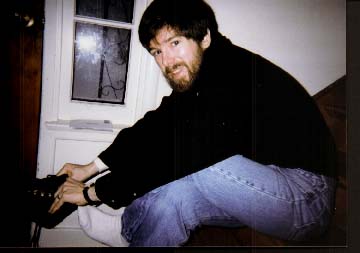
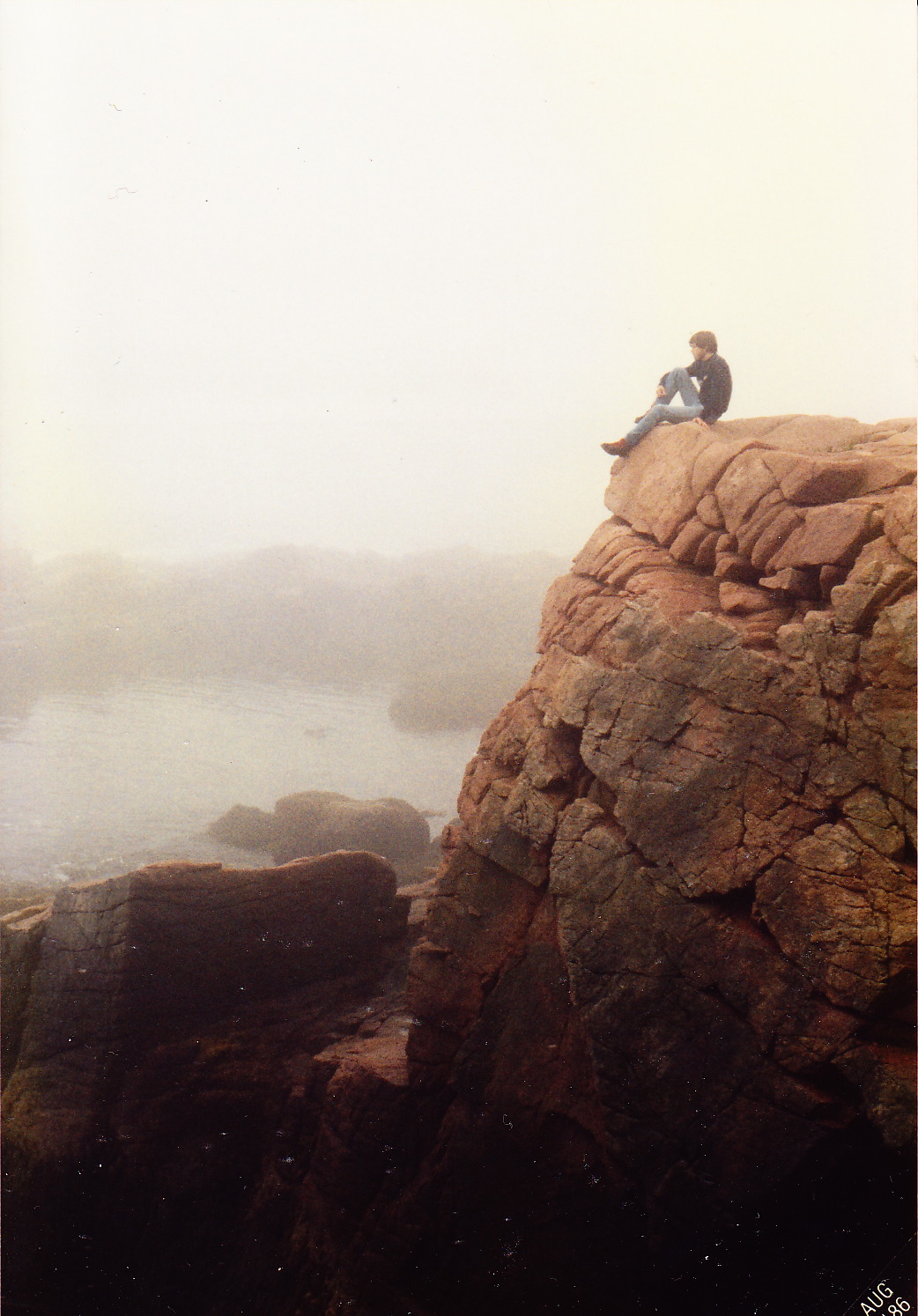
I have a photograph of myself that my daughter took at the time. I was putting on my boots to go shovel some snow. The face in the photograph is young. Optimistic, even. I was facing the weather. I’ve come to realize that all photographs are lies. They capture an instant of time that has already vanished. In my case, a livelihood. A dream that was shredded on the plains of some theologian’s ideological Somme. Winters seem to have become much harsher since then. Colleagues who’ve found jobs prosper while the rest of us fight against nightmares and that sense that all we ever tried to do was, in the end, vanity. One of the questions in the study, The Bible in American Life is, which is your favorite book of the Bible? Mine has always been Ecclesiastes. And even as I make final preparations to ship my manuscript to Wipf and Stock, I know that the preacher is right: there is nothing new under the sun.

snowman


Royal Reading

Post-Christian America still reads its Bible. One of the perks, such as it is, of working with Bibles is getting such vital news early. The Center for the Study of Religion and American Culture at Indiana University-Purdue University Indianapolis (IUPUI) has just released a study that was underway when I visited the school a couple years back. “The Bible in American Life,” available online, presents the results of a scientific survey of Bible reading in the US. Suffice it to say, we’re not done with Holy Writ just yet. In our world of high tech gadgets where the waves and particles that make the internet possible penetrate our bodies constantly, it is sometimes easy to forget that the Bible in many ways made this all possible. Both the good and the evil that drove western civilization to colonize its world had at least some dusty memory of “manifest destiny” embedded in sacred writ about it. And those who take the Bible seriously have continued to read, mark, and inwardly digest it.

The Bible in American Life, already picked up on by major media, indicates that about half of the population of the United States reads the Bible outside of worship. Perhaps not surprising given the still faltering civil rights dream, African-Americans are the biggest Bible reading demographic in the country. In fact, the study states, race is the single largest indicator of probable Bible reading. Those who are low on the economic scale also tend to read Scripture more. Those for whom “success” isn’t what it seems to be at first. Those whom “success” has passed by. Even Hispanic readers outnumber the white majority. People who have been distracted by material success, predictably, have little time for ancient wisdom. Still, half the country does turn to the Bible on occasion. Among the more interesting demographics is the fact that nones—those who are unaffiliated with any religion—also turn to the Bible for learning about life.

434px-King_James_I_of_England_and_VI_of_Scotland_by_John_De_Critz_the_ElderThe media seems to have picked up one of the major points as well—few Bible readers turn to Holy Writ for political advice. To hear the news weavers tell it, politicians and rabble-rousers trawl the Bible for its scant words about homosexuality and abortion—issues ignored by Moses and his ilk, for the most part. In fact, most people rate such issues very low on their scale of why they turn to the Bible. It is read more for consolation than for political intrigue. Having just about finished my formatting of my book on the Psalms, it warms my heart to read that the Psalter tops the list of favorite books of the Bible, narrowly inching out the Gospel of John. The study doesn’t, and can’t, come right out and say it, but the Bible is read by people to help them feel better. They still prefer the King James by a considerable margin. And in this world of self first, they can still read, “For what shall it profit a man, if he shall gain the whole world, and lose his own soul?” Even though Bible readers are, in the majority, women. Good old King James still shows the way, as the ruling white man always has.


Weathering the Psalms

Book contracts make me happy. In the case of an academic out of water, they are rare. Few people care what a PhD has to say unless s/he has a university appointment to back him or her up. Still, I wrote Weathering the Psalms while I was fully employed at Nashotah House. I carved the time out by waking at 4 a.m. to do my writing (a practice that has stayed with me ever since), and from 1995 to 2000, the bulk of the book slowly emerged. The day I was terminated at Nashotah I was working on a revision of the manuscript, a bit uncertain of what direction to go. After the trauma of that day, I couldn’t face my little project without the anxiety of association tainting the effort. It seemed to represent my failures in finding the job I knew I was meant to do. Such potent reminders soon weary even those of us who awake well before the sun.

Working in isolation, I had noticed that the weather is a very common motif in the Psalms. The problem is, any attempt to fit the evidence into an overarching scheme is artificial. I undertook a survey of all the weather references in the Psalms, and explained them as scientifically as a layman could. The result was not the smoothest reading, nor was it tied together with a strong thesis, but it was important. Although I have not been in a position to keep up with the research such a project requires, I’ve not seen anything similar emerge. The weather, however, still happens. And people still blame it on the divine. In ancient times there was no natural world. What we call nature was actively directed by the divine. The weather is probably only the most obvious example. We all know the phrase “everything happens for a reason.” This encapsulates the biblical view of the weather. This winter with its series of storms has reminded me of this, forcefully.

Photo credit: Don Amaro, wiki commons

Photo credit: Don Amaro, wiki commons

Ironically, editors started to show interest in the project only after I’d abandoned hope of ever getting it published. It was the fruit of my despair. It represented several years of my academic life, but, like its creator, it was growing older. So last week when a contract landed on my desk from Wipf and Stock, a profound happiness settled in. A sense of completion. I am not in a position to update the contents, but at least one academic publishing house sees the worth in the manuscript that came from so much personal experience. A decade is a long gestation period. I suppose if I had to write the book today it would reflect much more the experience of world-weariness that comes from not ever finding the job you know you were meant to do. Nevertheless, it is a small offering to the deity of the weather, and I am glad that, come next year, others will be able to share in my struggles to make sense of that world.


Snow Job

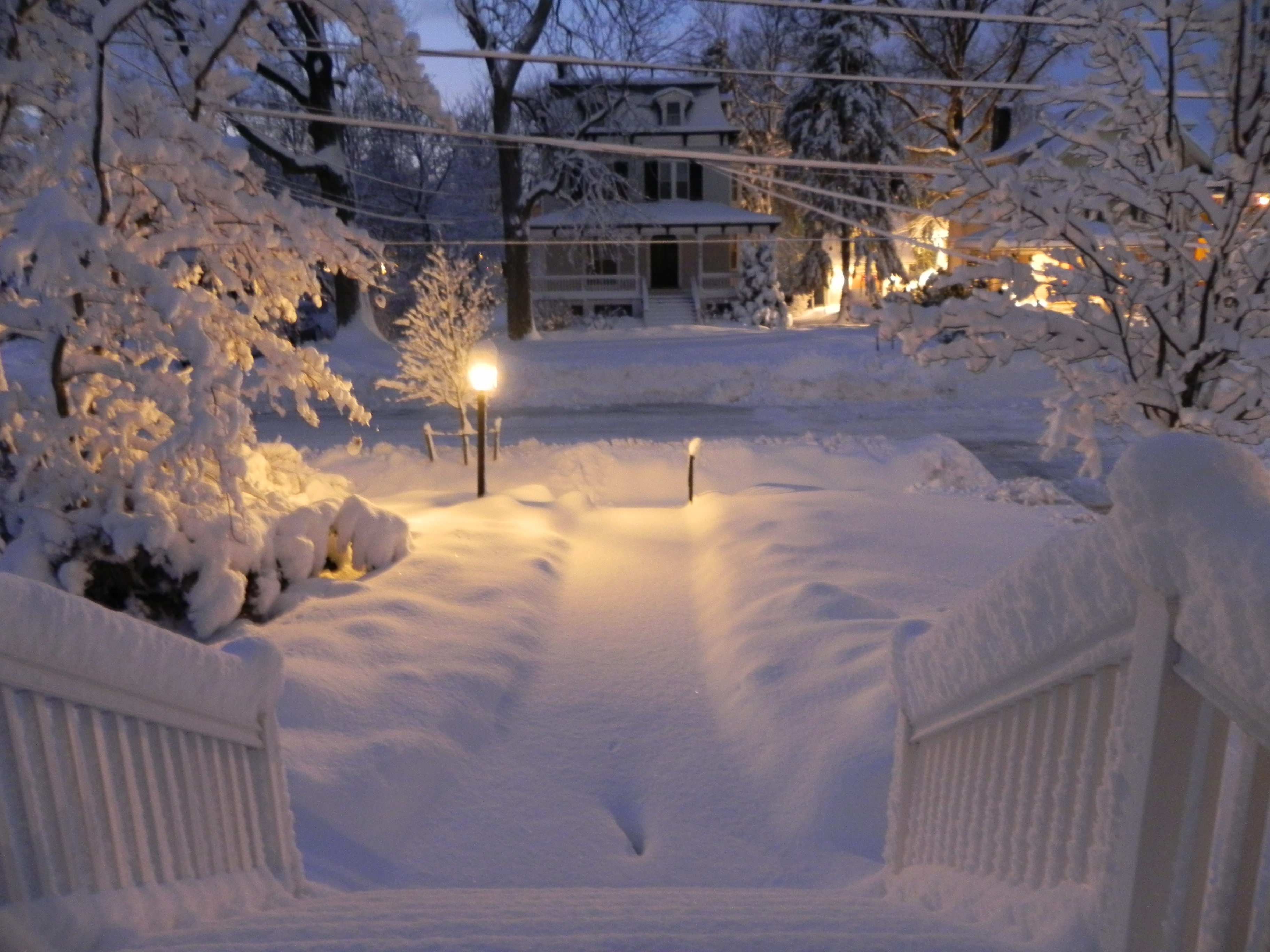
Snow does not get mentioned very often in the Psalms. Sometimes it surprises people unfamiliar with Israel that the Bible mentions snow at all. It does, and snow does fall once in a while on the higher elevations of the hills of the Levant. This year has been a memorable one for snow in the New York City area. Generally speaking, the coastal cities of the northeast are not known for their snow. This year, however, global warming is flexing its muscles as erratic weather brings storm after storm to the region. Interestingly, an internet rumor of a thirty-inch snowstorm (supposed to have come earlier this week) demonstrates just how gullible we’ve become. If it’s on the internet it must be true.

A story in the New Jersey Star-Ledger traces how the rumor began, starting with an experimental weather model by a credentialed meteorologist, which, in the keyboards of novices, grew to biblical proportions. Fact checking is something we just don’t bother with any more. The facile understanding of “global warming” as tropics for everyone shows that. The internet makes information—true or false—available at nearly the speed of light anywhere on the globe. Except where the power is out, perhaps due to weather. Not only does knowledge spread quickly, ignorance is just as fast. People weary of snow are perhaps more open to suggestion than others. We don’t hear our Minnesota or Wisconsin friends complaining (at least not too much).

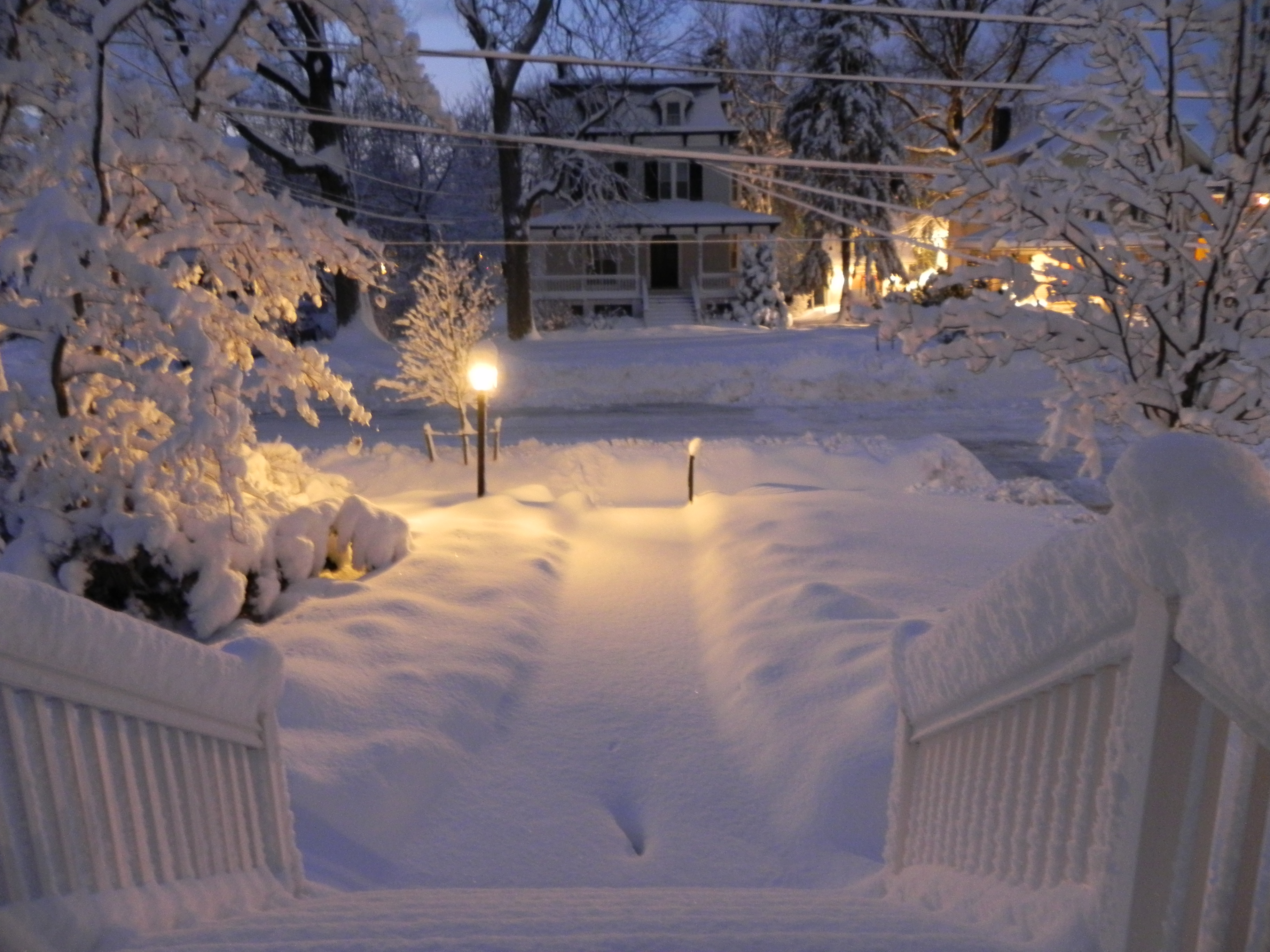
There was a time when the standard sources of authority determined what we would believe. We didn’t accept just anybody’s word for it just because they had a Facebook account. For all the debunking that we hear about, it is easier to preach than to practice. Don’t get me wrong, sledging to work through piles of snow is not fun and the old circulation isn’t as vital as it used to be, so I have to add more layers than is practical to keep warm. But I’m not expecting palm trees and rain forests in Manhattan any time soon. Nor am I expecting a three-foot dump of snow. I know better than to trust what I read on the internet. After all, they even let me post things on it every day. Talk about your theoretical blizzard…

DSCN0099


‘S No Day in New York

“You’re waiting for a train. A train that’ll take you far away. You know where you hope this train will take you. But you can’t know for sure.” Yet you’ve been standing on the windy platform in Newark for twenty minutes and they’ve announced the next train to New York will be an hour late.  A man you don’t know says the PATH train will take you to New York, but New York is a big city, and you only go there to work.  It must be a snow day.  Well, almost.  I work for a company that only closes when New York City Public Schools close for weather.  Today, kids, school’s open; but all is not lost—field trips are cancelled.  And so, the constellation of companies who take their cue from NYPS truck (sometimes literally) their New Jersey-based employees across or under the river, into a city where slush half a foot deep awaits them on every street corner, and that doesn’t slow those muck-flinging cabs down at all. 

With the weather we’ve been experiencing this year, I hear a lot of people saying that Mother Nature is still in charge.  Allow me to differ.  You see, I’ve been researching the weather and the Bible for years now and I’ve come to a slightly different conclusion.  In the Psalms, anyway, it is clear that God is in charge of the weather.  Given that New York is such a sinful place, I guess none of us should be surprised.  Still, I’m not sure the Bible has got this one quite right either.  After all, I’ve walked through ice-crusted snow up to my knees for a good part of my walk to the station, and I have my coat open so the cold breeze will cool me down a little bit before I have to walk into work with crazy hair and a scowl frozen on my face.  Didn’t some great theologian once say “sin boldly?”  No, it is not Mother Nature in charge.  It is not even the deity.  It is something far more powerful than God—money.  Can’t lose a red cent when there are human resources to be utilized.

I’ve never been on a Port Authority Trans-Hudson train before, and I’m not sure where this one stops.  I heard someone say 33rd Street, and that sounds encouraging, so when the train stops I follow him across the platform.  Sheep, as any shepherd knows, will follow a random person who looks confident enough.  I emerge from the dark underground, not quite sure where I am, and I just can’t find a Psalm in my heart at the moment, unless it’s an imprecatory one.  I stepped out of my front door into freezing rain three hours ago.  My trousers are wet to the knees, and I’m a little sick from facing the wrong way on the PATH train for a lengthy ride.  The cars, I notice, are shaped like Krell.  Yes, this is a forbidden planet and I don’t know where I might end up.  Excuse me, Mr. Mayor, but I think you got it wrong.  Field trips are not cancelled after all.  And I’m not sure I’m even worshipping the right god.

Deceptively peaceful

Deceptively peaceful


Blown Away

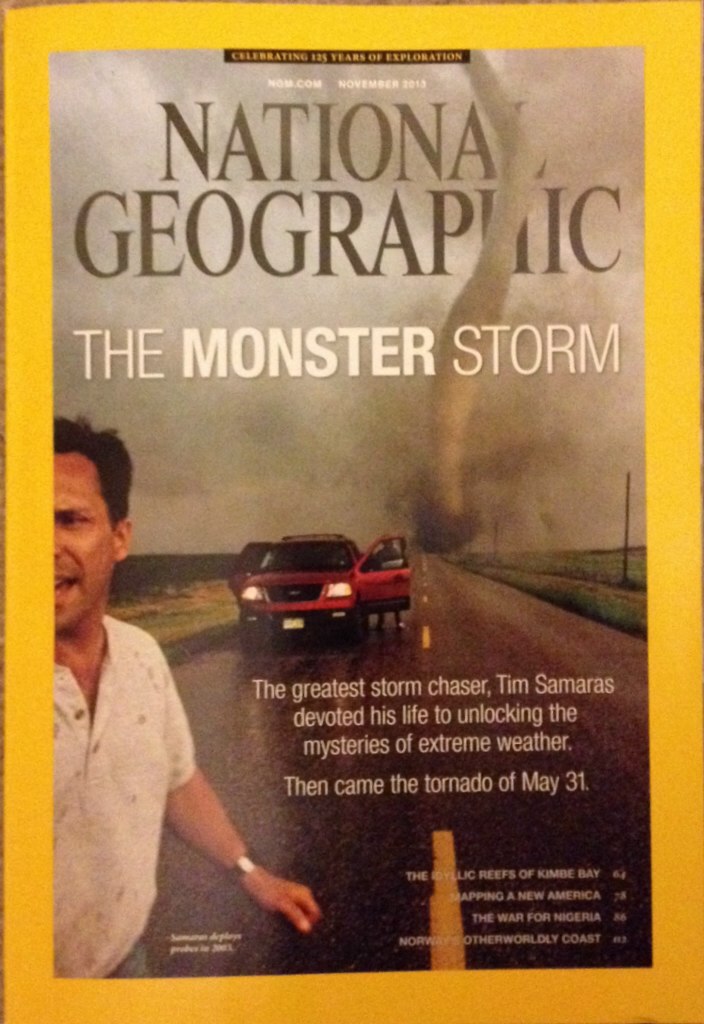
NovNationalGeoWith the weather that has dropped down over much of the US this past week, I can’t help but think of the religious implications of the weather once again. I’ve had a couple of discussions of my weather book, and perhaps it will be worth reviving; meanwhile the meteorological divine is alive and well. I recently had the chance to look through a November edition of National Geographic. We used to subscribe, but with the loss of too many jobs and the attendant moves, they became literally too heavy, and since the magazine is relentlessly prolific we finally had to donate our back issues to a loving home. In any case, this November’s issue proffers a cover story on Tim Samaras, the storm chaser who was killed by a tornado back in May. It was tornados that first led to my interest in the divine implications of the weather since the twister is often described as the symbol of an angry deity. The article on Samaras, however, took a different approach to the tornadic.

Describing the fatal May 31 tornado in El Reno, Oklahoma, Robert Draper, the article’s author, tends more toward language of the diabolical. Defining the terminal whirlwind as a “dense, moist leviathan,” Draper adopts the language of the chaos monster of antiquity. Over time leviathan came to be associated with evil (although originally it was morally neutral), even with the devil. That isn’t a biblical assessment but in a modern world swiftly becoming depleted of superlatives, leviathan has come to stand in for Satan. A few sentences later the trees are shaking “as if possessed by the devil.” Weather is often the provenance of the divine, but it can also be the tool of the devil. And since this was a fatal storm, one must be careful of blasphemy.

I have never witnessed a tornado first-hand, but I have been within a few miles of one or two. The utterly savage and random nature of the destruction translate to one of the most frightening atmospheric conditions imaginable. Reading about the growing storm, knowing that it will eventually murder the protagonist, reminds me of the stresses that led to my line of research at the very beginning. We have overcome so many of our natural predators that being completely vulnerable to the weather bestows a kind of metaphysical cast to it. We can still be frozen, washed or blown away, or overheated by the weather. It can desiccate us and begin wildfires to consume us. Its scale is immense. The origins may seem celestial, but the results infernal. Perhaps I will return to my book on the weather; it is clear that it remains one place where human power must bow before something so immense that it can only be divine or diabolical. Or both.


World War 1.2

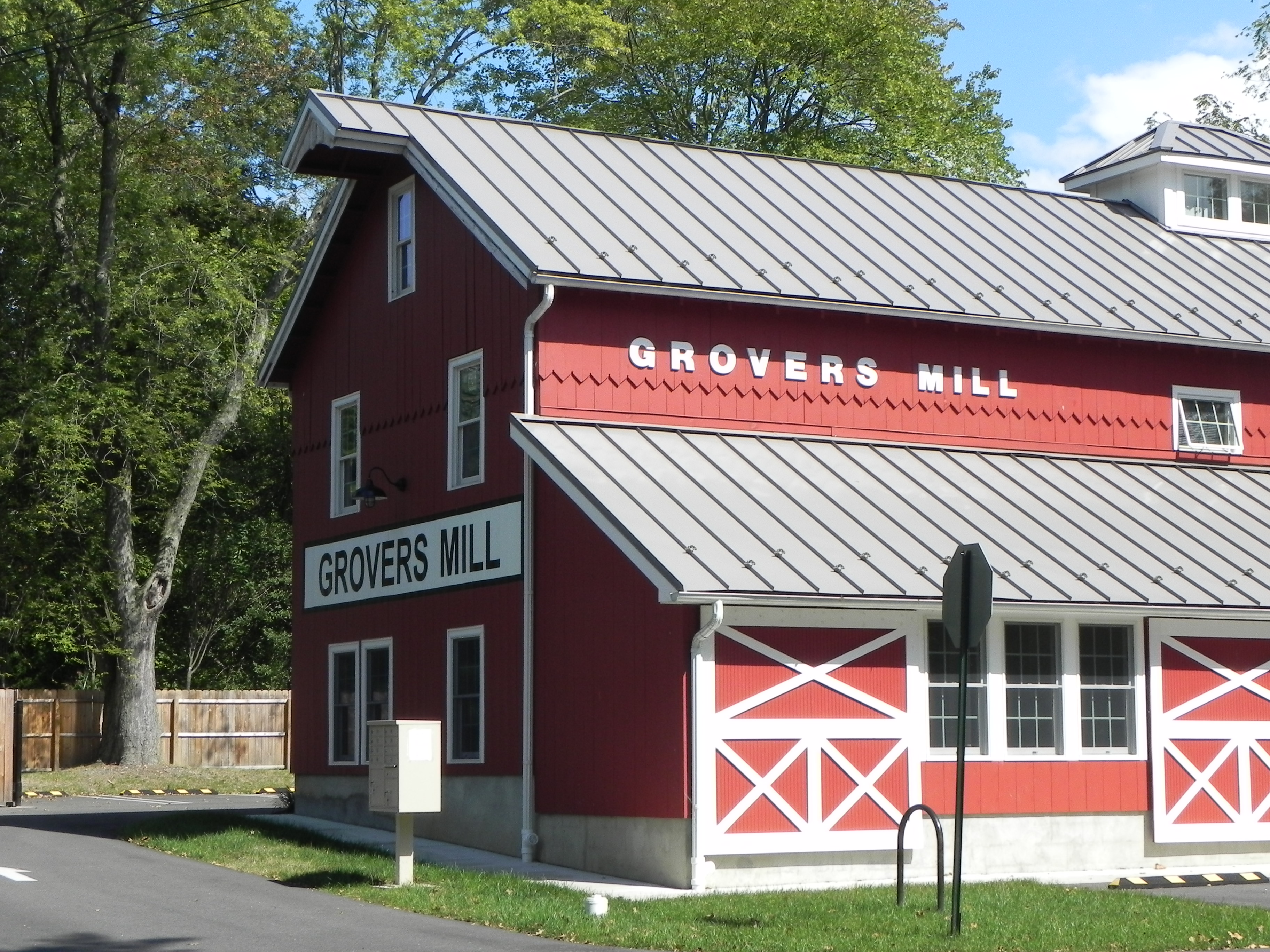
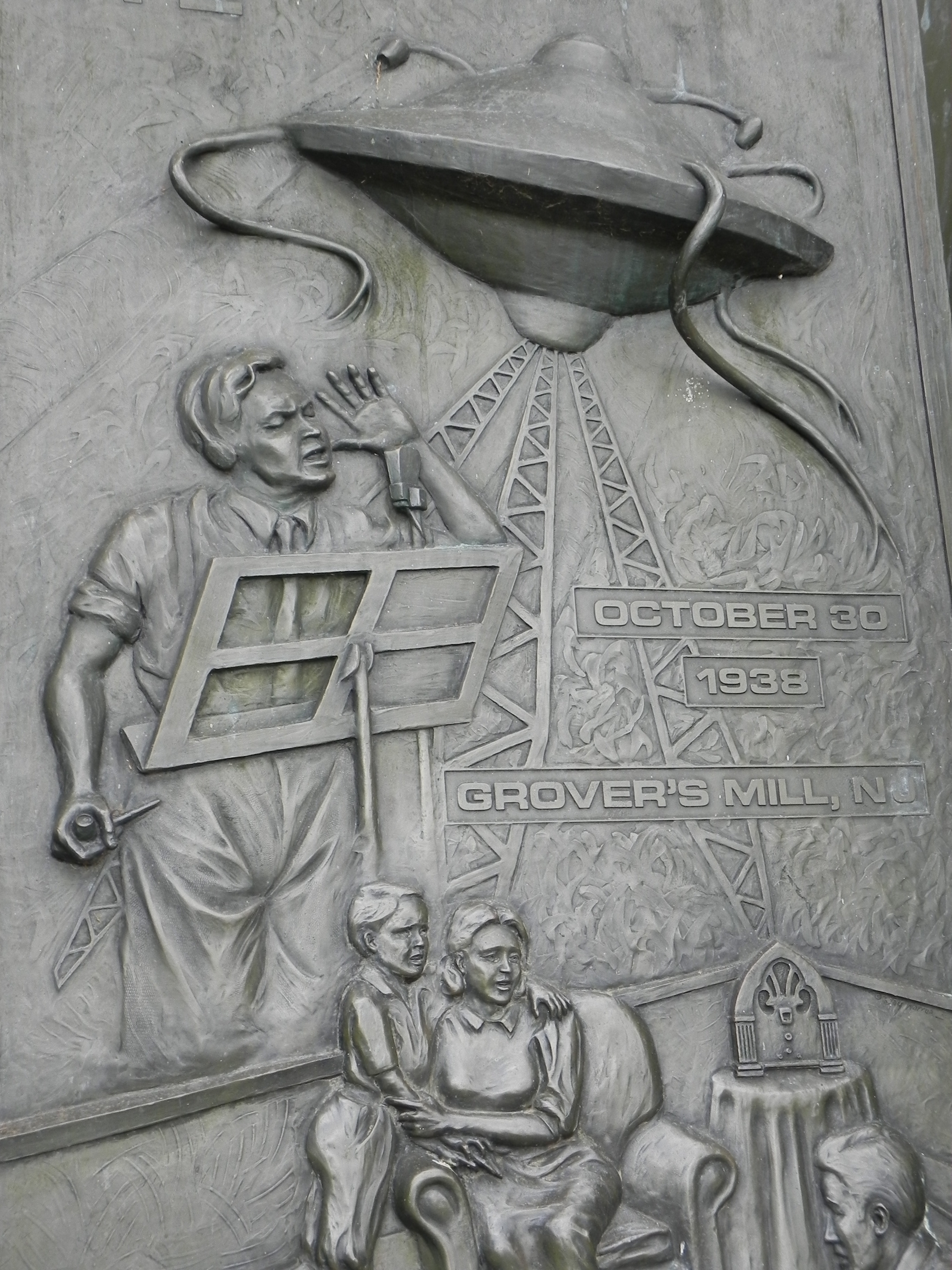
75 years ago today Orson Welles presented a radio drama version of The War of the Worlds. Perhaps it was the looming fear of the Second World War in a society that hadn’t yet overcome the trauma of the First, or perhaps too few people had read H. G. Wells’ novel, but the result was surprisingly catastrophic. Panic arose as listeners supposed that the invasion was real—the broadcast, although announced as a radio drama, followed a news bulletin format that overrode the rational faculties of many. This episode would influence government decisions about what to reveal to the public for years. And, naturally, it all began in New Jersey. Unlike the novel, the radio broadcast set the invasion, initially, in Grover’s Mill, New Jersey. This tiny town is difficult to locate even today, falling as it does between the busy north-south roadways that run through the central part of the state.

DSCN4241

The Hindenburg disaster had taken place the previous year in Lakehurst, New Jersey. Welles, impressed by the radio coverage of that celestial fear, used those broadcasts as models for his play. A few weeks ago I ventured to Grover’s Mill to let my imagination roam free for a while. A great deal of history may have been determined by that broadcast and the public reaction. We are ready to believe that danger lurks above. The First World War began to make early use of the airplane as a weapon. The sky, previously, had been obtainable only with the slowly moving balloon. Only eleven years earlier Charles Lindbergh had crossed the Atlantic by plane for the first time. The Second World War would see air combat as a major component of victory, also for the first time. My mother grew up in New Jersey, watching planes searching for German U-boats off the shore. The skies were not so friendly then.

DSCN4239

As I stood in Grover’s Mill, I recollected an unpublished book I once wrote about the weather in the book of Psalms. The thesis, somewhat loosely, suggested that for the average person the sky reflects the mood of the divine. Dramatic clouds still look angry, even when God is removed from the equation. The Reagan era gave us all new things to fear raining down on us from the skies. September 11, 2001, brought the skies crashing to the earth again. Invasion from above is an apt way to add a chill to Halloween, for it takes the prerogative of the deity and makes it either human or alien. At least most people who believe in God think he’s on their side. When the Wright brothers took their heavier-than-air craft briefly to the skies in 1903, The War of the Worlds had only been on the market for five years. The coming decades would drive God from the skies and we would come to learn that what falls from above would no longer have our best interests at heart.


Oklahoma

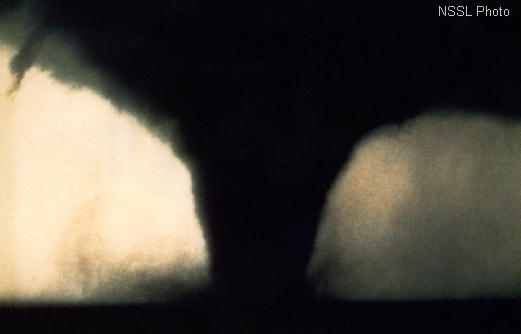
The tragedy outside Oklahoma City transcends petty human differences. Tornadoes, no matter how we dress them up, look like the wrath of God incarnate. The fifteen years I spent in the Midwest were filled with literal nightmares of tornadoes and even a few hours spent cowering in the basement. Such phenomena remind us that we are quite small in the face of nature, and the news reports are full of religious sentiment as people want assurance that God hasn’t abandoned them. Nature doesn’t favor humans over anything else that happens to be in the way of whirling 200 mile-per-hour winds. Even one’s belief might get blown away. Yet it doesn’t.

Although a tornado hit New York City last year, my terror of the storm evaporated when we moved back east. In the Midwest, although there were hills, I felt so exposed under the open expanse of the heavens. In the utterly flat part of central Illinois, I recall some truly awe-inspiring storms. The sky was so ubiquitous and overpowering, and you could see clouds towering thousands of feet over your head, throbbing with constant lightning. It was then I began having the idea for my book on weather terminology and the book of Psalms. Humans helpless in the face of nature. This is the raw material of religion. Like children we pray to God to make it go away. Storms do not obey prayers.

TornadoBlack

By their very nature tornadoes are capricious. We like to believe the good are spared and the evil punished, but as schools are destroyed and children killed we have to face the cruelty of nature. What happened in Oklahoma was a random act of nature, as much as hurricanes Andrew, Katrina, and Sandy were. We can’t help, however, any more than the people of the Bible, supposing that God must somehow be behind the weather. We may influence it, as global warming has repeatedly demonstrated, but seldom for good. And when we look for the divine in the fierce winds, we will end up facing tragedy.