Hic Sunt Dracones

Even a visionary like Thomas Edison can’t know the directions in which an invention might be taken. The idea of the moving picture has immersed human beings in an alternate reality that is sometimes difficult to separate from the physical world we daily inhabit. As soon as movies were invented, producers and directors began to explore the depths of fear with the monster movie. What they were really exploring was the mystery of religion. I frequently write of the nexus of religion and the monstrous, and Timothy K. Beal wrote a book on that subject a decade ago in which I found another affirmation of my suspicion. Forthrightly titled Religion and its Monsters (Routledge, 2002), Beal’s playful yet serious exploration of the scary traces the origins of monsters to Genesis, and even earlier. Taking on Leviathan, the biblical sea serpent, Beal demonstrates the pre-biblical pedigree of this fierce monster and shows that, like most truly frightening entities, it began as a god. Indeed, what we call religion today grew up around fear of those forces beyond our control, a nature so harsh it could be none other than divine. The writers of the Bible clearly knew this story as Beal traces it from Genesis to Job, from Psalms to Jonah, from Leviathan to Devil.
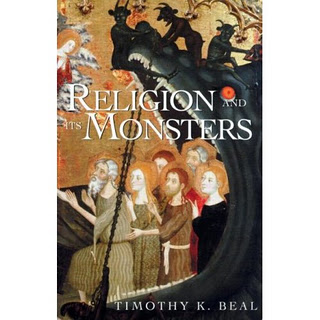
In a shot/reverse shot formation, Beal takes us to modern-day monsters and shows their religious origins. Those things that frighten us on the big screen crawl there from their origins in the temples, shrines, and chapels of religions that don’t manage to subdue evil completely. The claims are made that the gods are stronger than the chaos that surrounds us, but they are still fighting nevertheless. From Dracula to Godzilla, the monsters have the gods on the run. And when the human protagonists finally get their monster pinned down, they discover that it is often God wearing a mask. Our monsters are gods gone bad. How else could they revive from the dead at the end of the reel? They never truly disappear. And if they do, there’s always more where they came from. The reason, Beal concludes, is that we are, in fact, the monsters.

According to the analysis of W. Scott Poole, Timothy Beal, like myself, falls into the “monster kid” generation. As I grew up, I quickly learned that to confess my interest in monsters was to risk the labels of juvenile, naïve, and immature. Grown ups are interested in money and sex and power. Only kids have any interest in dinosaurs, mythology, and monsters. An epiphany of sorts, however, seems to be unfolding. Scholars of religion in my generation are peeling back the rubber masks of our movie monsters and are discovering the face of the divine. Perhaps we are all adolescents at heart, fixated on the weird and bizarre because the paths to money, power, and temptations of the flesh are blocked to us. Or perhaps we are the Magellans charting a course for regions off the map. It is those regions, as Beal reminds us, that are illustrated with sea serpents and inscribed hic sunt dracones, “here be dragons.” Doubt it? Read your Bible and find out for yourself.
Tomorrow Ever After

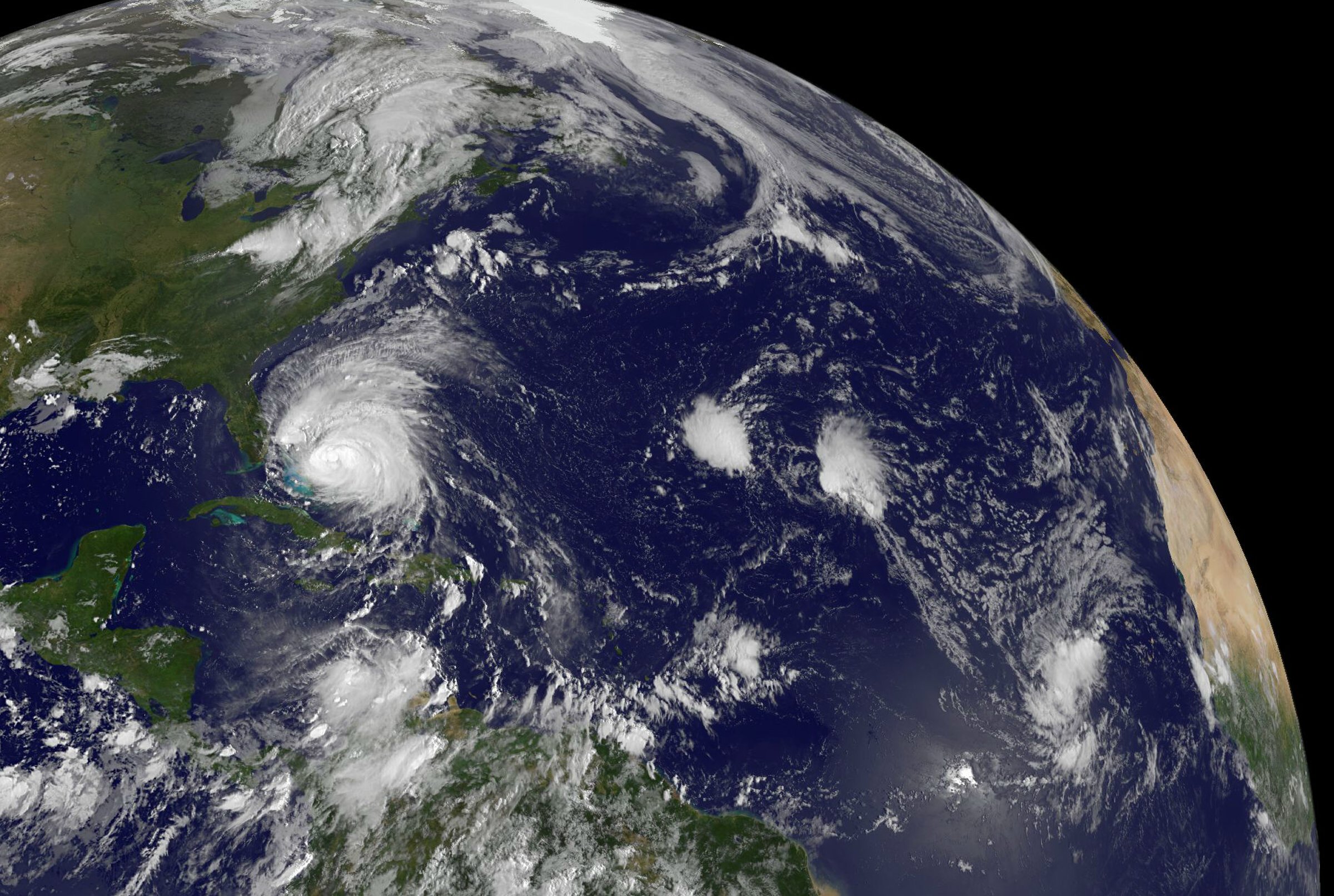
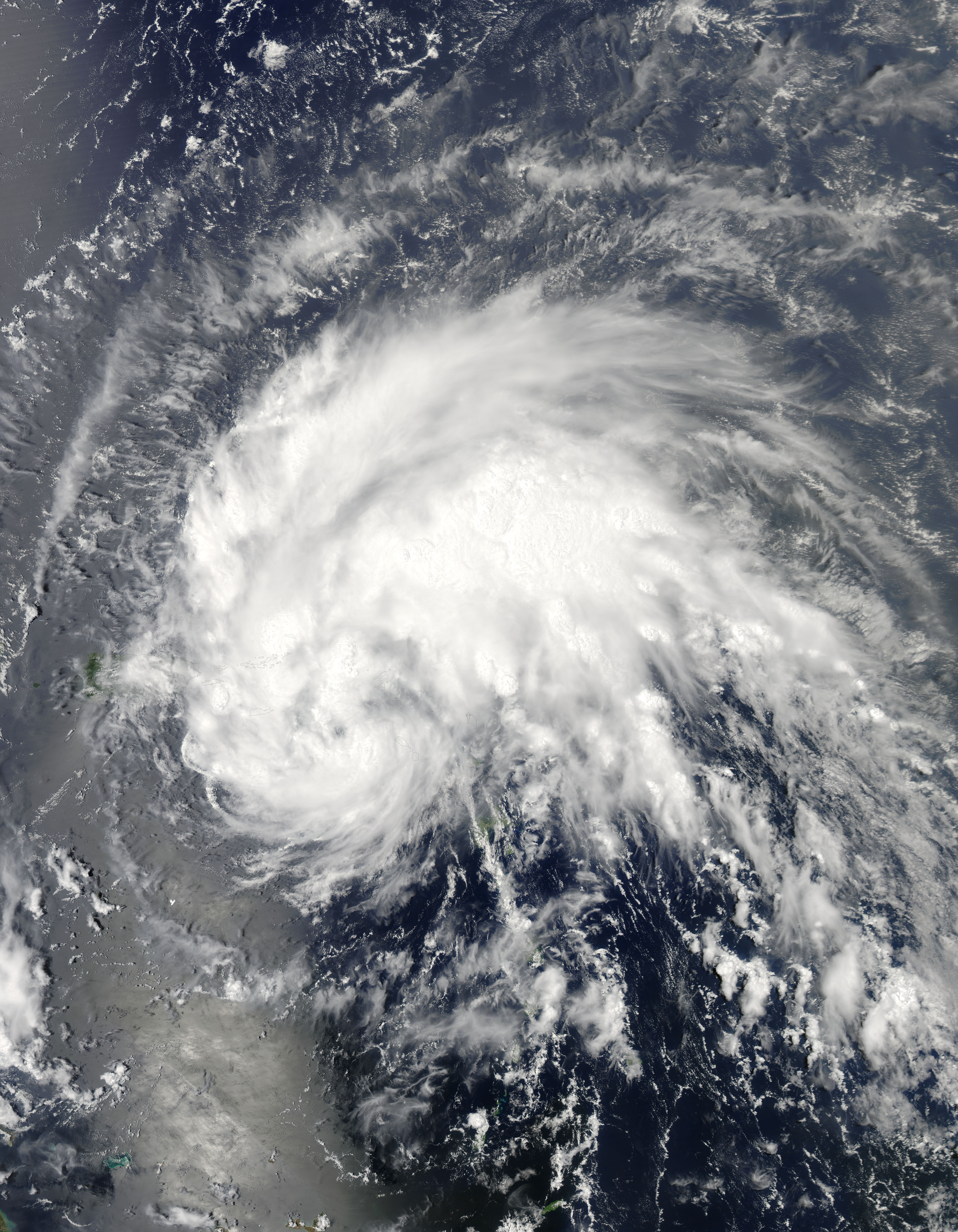
Last night as we said goodnight to Irene, my family decided to watch The Day After Tomorrow. Beyond The Perfect Storm and Twister we didn’t have any other weather-related disaster movies on hand. I became convinced long ago that weather was somehow key in the conception of divinity. Working at a seminary that required attendance at chapel twice daily where we would lugubriously and laboriously recite every verse of every Psalm according to the unforgiving schedule of the Book of Common Prayer, I began to notice the weather. Among the more common images used in the “hymnal of the second temple,” weather was seen as an essential aspect of divinity. Religions with celestial orientations frequently view the sky with a sacred aura. I began to compile all the Psalm references to the weather and eventually brought them together into a book, still unpublished. What became clear at the end of this exercise was that ancient people had no way to interpret the weather other than as a divine phenomenon. Listening to all the hype about Irene, it still seems to be the case.

In The Day After Tomorrow, our ill-fated teenagers are trapped in the New York Public Library as a super-chilled tropospheric wind freezes New York City. They build a fire and when you’re in a library, naturally, you burn books. I kept looking at all the furniture they spared as they consigned the books to the flame. A minor character called Jeremy is shown clutching a Bible. A girl named Elsa asks if he thinks God will save him. Replying that he is an atheist, Jeremy says that this is a Gutenberg Bible, “This Bible is the first book ever printed. It represents the dawn of the Age of Reason. As far as I’m concerned, the written word is mankind’s greatest achievement. You can laugh, but if Western Civilization is finished I’m gonna save at least one little piece of it.” This little dialogue represents the full circle of the celestial god. Jeremy doesn’t believe in this god, and the Bible requires human protection. Instead of being the instrument of war and political badgering and tea parties, it is seen as a symbol of enlightenment. It represents the first steps toward reason.

As Hurricane Irene still gusts outside my window, dropping rain as if New Jersey were a desert receiving its first drink in a century, the Tea Party is busy crafting ways of getting the Bible back in the White House. Their Bible is the antithesis to the Age of Reason. It is the symbol of superstition and prejudice and authoritarianism. It is the means of political power. The god of the Tea Party is a white-bearded man living in the sky, sending his fury against the liberal cities of the East Coast in a mighty wind. He is the punishing god of the Psalms. As the helicopter lifts off over a frozen Manhattan, the teenagers saved by a flawed father who walked from Philadelphia to New York to find his son, the camera pans across Jeremy as he hugs the Bible to his chest. I was in Boston for Hurricane Gloria back in 1985. Watching the waves crash on the beach at Winthrop I felt the power of fierce nature at the beginning of my own journey to, I hope, enlightenment. When it was over, however, there was not yet a Tea Party threatening an even worse, unnatural disaster to follow.

Irene, the early days


Calm Before the Storm

All the build-up for Hurricane Irene masks a deep-seated fear of the uncontrolled. If the storm devastates anyone, there will be Biblicists who say, like Job’s friends, that they must have sinned. Such pronouncements accompany nearly every natural disaster, as if God is huddled over the globe attempting to concoct more horrid and sinister ways to punish sinners. Natural disasters, however, have a way of effecting good and bad alike, just as the benevolent sunrise and the soft kiss of the rain (both according to someone mentioned in the Bible as being the son of someone important). But when danger looks down its barrel at human communities, they don’t neatly divide into sheep and goats. All people are a mix of virtuous and vice-ridden in varying ratios, and only the God of the Marquis de Sade would slam the iron maiden shut on all alike. The East Coast saw this earlier in the week when a benign earthquake shook our world. Barely had the ground stopped trembling before we were informed it was divine punishment. For what, no one could really say.

Interpreting nature according to the Bible is so misguided that it is difficult to know where to begin the critique. Yes, some biblical writers with a flare for the dramatic will claim that Yahweh was behind some disaster. Of course, they had no concept of science, in this case, meteorology, upon which to draw. Nature acts in unexpected ways because God has his fingers in the bowl. Even the early church gave up on that way of interpreting things as soon as natural processes could substitute for God. When religion because politicized, however, we started to see a backlash of backward thinking. It is a simple enough deception to utilize. People fear natural disasters, and the politically savvy know that few have any theological training. You can very easily encourage panicked masses to follow you if you claim to have read the Bible. From years of teaching it, I can certainly affirm that many clergy have not read the whole thing. Yet we use it as the barometer of divine wrath.

I, for one, am not worried about Hurricane Irene. As New Jersey has zigzagged in and out of the predicted track of the storm, it seems as though God may be wavering. If it misses the politically astute will say it is Chris Christies’ righteous policies of helping the wealthy at the expense of the poor. If it hits they will claim it is the sinfulness of the liberal camp that led the winds this way. It is all wind. Having written a book-length manuscript on weather in the Psalms, I know a fair bit about biblical perceptions of weather in the world of ancient Israel. Although over-zealous translators ill-informed about meteorology used to translate a word or two as “hurricane” the fact is that biblical Hebrew has no such word. Due to the rotational direction of the planet (about which they also did not know) hurricanes never hit Israel. Herein lies the basis of my confidence in the face of Irene. If the Bible doesn’t mention hurricanes, they can’t possibly exist. Literalists up and down the coast should heave a sigh of relief. But just in case, I have stockpiled several gallons of water, right next to my Bible.

Good morning, Irene -- if that is your real name.


Six Red Flags

Answers in Genesis’ biblical theme park with its life-sized ark was back in the news yesterday. Journalists just seem to be fascinated that people really do believe in their religious convictions. Having grown up in a religious family, I understand where they’re coming from. The version of the Bible they offer to the public, however, is much too tame. I spent the day dreaming about a literalist Bible theme park that would put Evangelical Christianity back on the map. I’m thinking it should be in Rick Perry’s Texas and we could call it the Literalist Six Red Flags.

The first attraction would be the Garden of Eden—sans clothes. If we’re going for the full Bible experience we should go all the way. The full Methuselah. For those who are worried that this might lead to morality concerns, I would assure them that experience belies that. From the few nude beaches I’ve stumbled upon—who would’ve thought there’d be one in New Jersey? New Jersey!—it is my guess that this might be the most effective way to scare kids into religion. Why pass up an evangelical opportunity like that?

Station number two would be the Egyptian Late-Term Abortion Clinic. By this I mean Exodus chapter 1, with a nice tie-in to Leviticus 20 and Psalm 137. The pro-lifers could leave a little green but very self-righteous after seeing what the Bible prescribes for uppity children.

Our third flag could be the battle of Jericho. Especially interesting for the kids would be the visit of Joshua’s spies to the prostitute who betrayed her city. Children could blow on ram’s horns, carry a plastic ark with authentic death-rays emanating from it, and shout while the Styrofoam walls come tumbling down. If they wanted to be really literal, however, they’d have to explain that archaeology demonstrates that Jericho had been abandoned for a century before Joshua showed up, but who wants to dampen all that youthful, Christian bloodlust?

Flag four could be the story of Samson. After leaving his first wife to visit a prostitute, kids could watch in fascination as Samson heaves the city gates of Gaza from their place, showing that the Lord approves. Since he’s a muscleman who likes to have affairs, maybe we could check to see if Arnold Schwarzenegger is too busy to take on the role of God’s version of Hercules. I’m sure that Delilahs would not be too difficult to recruit. Perhaps this could be an audience participation event.

Attraction five has to be the Story of David. This would be a good opportunity for parents distraught after the previous stations to take out some aggression with the sling. I’m sure my friend Deane could come up with some giants for them to practice on. Otherwise, maybe something could be worked out with the NBA. After killing a few giants, the station could lead to the palace roof with a view to Bathsheba’s bathroom. Since David didn’t want to send her to the clinic (see station number two), he decided to have her husband killed instead. Maybe we could have a side exhibit: Uriah’s Last Ice Cream Stand. (He was only a Hittite, after all.)

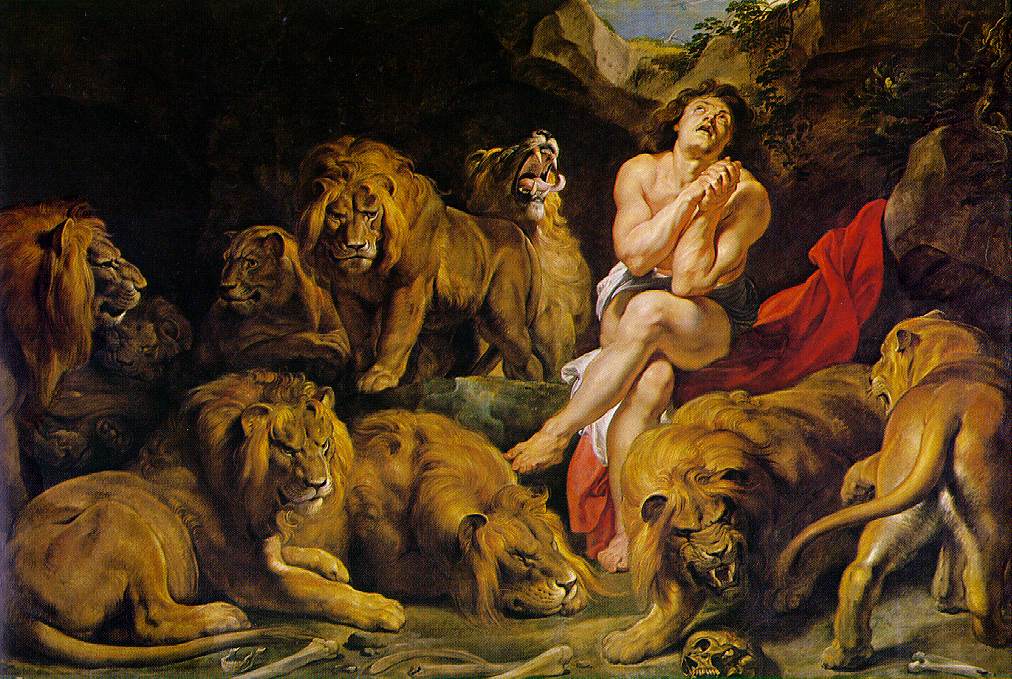
Our sixth red flag would be the Lion’s Den. Here we could offer Tea Partiers and NeoCons the opportunity to prove their faith by spending a night in a den of hungry lions. They like to claim loudly that their faith is being castigated, just like Daniel’s was—here would be the opportunity to prove it! Somehow I believe that the lion’s den would remain empty and crickets could be heard chirping throughout our Literalist Six Red Flags even before it opened its festively decorated gates.

"Oh please let Rick Perry be nominated!"


Eye in the Sky

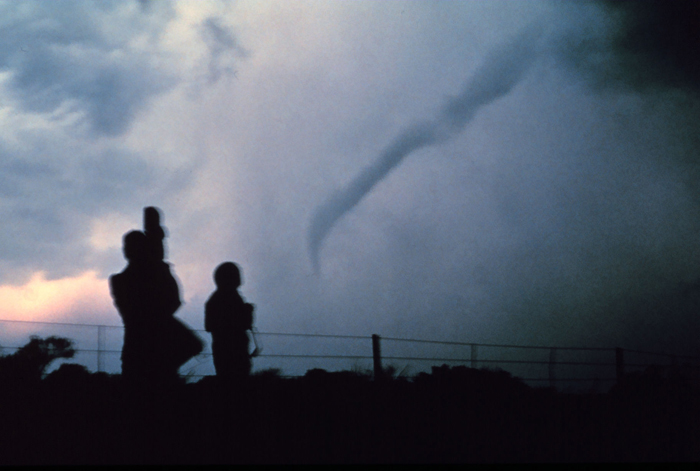
No one is safe. The calamitous tornadoes that have been devastating the south are indeed tragic. Some years ago while working on my weather in the Psalms book, I experienced a brooding fascination with tornadoes. Since I was living in Wisconsin at the time, this was natural enough, but the facet that always gleamed the darkest was the arbitrariness of it all. Tornadoes are notorious for destroying one building while leaving the one next door unharmed in a rapture-like abandon. And there are those who claim the righteous survive while others soberly state the good die young. The fact is life always ends in death, and if tornadoes don’t get you, earthquakes, comets, or microbes will. Our religions help us cope with the fact that consciousness leads to a sense of victimization—things are always after us. Religions teach us that something (God, spirits, Tao, karma) will balance it out. We so hate to see the bad guys win.

Tornadic devastation does have the divine edge, however. Apart from the randomness are the celestial origin, the sharp distinction between those reaped and those sown, and, of course, the angry brow of the frowning wall cloud. What is purely a natural event feels like punishment from our species-specific view. And who doles out the punishment if not a parent stronger than the cowering children? Does religion reassure in this case? The one who is begged for comfort is the same one who sent the storm. As humans the best we can do is help those who are within reach.

The photos emerging from Joplin, Missouri are heart-rending. The more we build the more we stand to lose. Long before European settlers laid claims to this land, cool, dry air masses tumbling over the Rocky Mountains collided violently with warm, moist air flowing in from the Gulf of Mexico. For as long as prevailing weather patterns have been established, there have been tornadoes. Believing in God’s protection and blessing we build on dangerous fault lines, in drought-stricken plains, and in the shadows of biding volcanoes. Disasters are a matter of perspective, for they are as natural as the air we breathe. Perspective transforms them to divine chastening and us into helpless children.

Coming for you?


Ice Father in Heaven

The Internet can be a window into the collective consciousness of a nation. In a world where even the Weather Channel invites comments on its forecast page, the outlook of many Americans is laid bare. This latest shot of winter weather on the northeastern quarter of the country is an excellent example. It is still March, the tempestuous month of the war god, so a little snow in the northern latitudes should come as no surprise. An unnamed dean at a state school here in New Jersey had just sent out an email blast the week before stating, with decanal authority, that there would be no more weather delays this year. Yesterday there was still snow on the ground after the storm. Frustrated citizens cursed – actually cursed – the winter on weather.com.

For years I have maintained that the weather is key to understanding the human perception of the divine. From ancient Sumer’s An and Enlil through classical Greece’s Uranus and Zeus, the gods unquestionably in charge are the sky gods. The guys who control the weather. In Israel Yahweh took that job description from a reluctant Hadad – aka Baal – and many people considered this a serious mistake. Don’t mess with the weather god! As the snow begins to melt once more, even those of us in the enlightened twenty-first century should be reminded that our sense of what the world should be is an illusion. Nature evolved our brains, and now our brains think they have the right to take over.

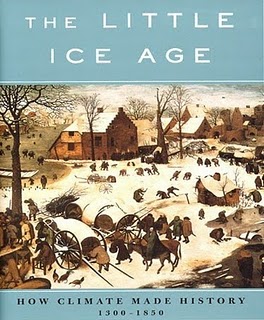
Once, back in Wisconsin, I stepped outside on a chilly June morning and saw flecks of snow in the air. It wasn’t “snowing” – it doesn’t snow in June – but there was definitely a frozen sort of precipitation hanging tentatively in the air. I was teaching at the most self-righteous of seminaries at the time, and it became clear to me, once again, that we are not in control. Among the scariest books I read in Wisconsin was Brian Fagan’s The Little Ice Age. I was at work on my book on weather language in the Psalms (still unpublished) and the unsettling truth drifted around me like this winter’s snows: if a new ice age settles in, there is nothing we can do to stop it. Geologists still can’t state what triggers these periodic events, or even what their timetable might be. If earth’s ice caps again begin to grow, however, I am certain that we will also see a dramatic increase in religiosity. For the gods, we all know deep down, are in the skies.


The Triumph of Baal

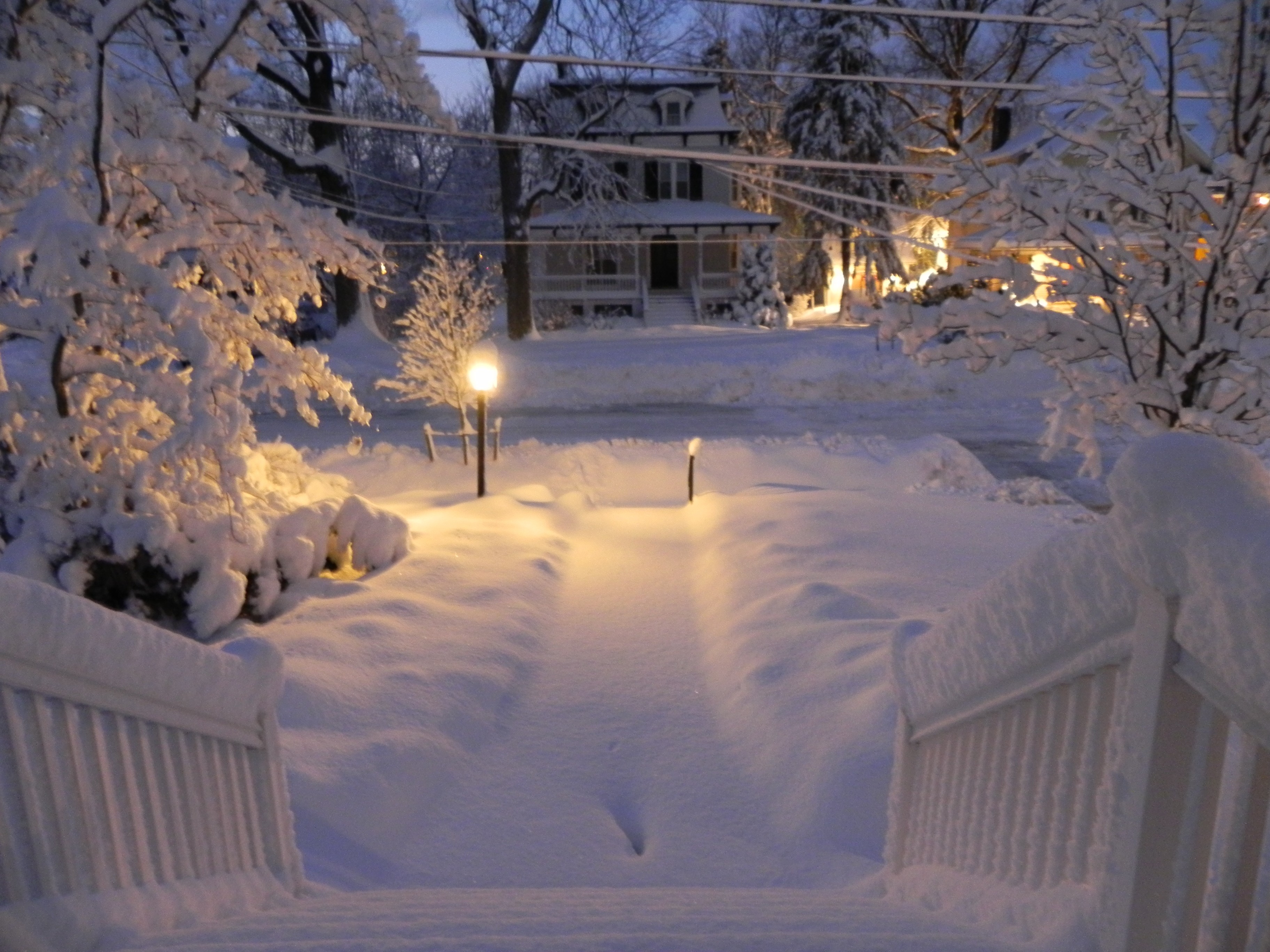
“Snow weariness” is no strange phenomenon even to those of us who were reared in the legendary snow belt of Lake Erie. Although Buffalo consistently topped our records, months of deep snow burying all the familiar features of our landscape in northwestern Pennsylvania were regular expectations of winter. Snow weariness generally settled in around March when we longed for green pastures and unstill waters. As an adult in generally snow-deprived New Jersey, the weariness sets in much quicker. Attempting to drive on highways with sneophytes is a challenge; before I had my license I had driven in plenty of snow, otherwise I’d have had to hibernate from December through April of each year. Digging out from New Jersey’s third major snow-plop of January, however, the magic seems to have vanished.

Baal was a god who controlled the weather. Some years back I finished a book (still unpublished) on weather terminology in the Psalms. Many psalms are notable for containing archaic imagery and phrasing, leading some scholars to suggest they might have been new, revised “Canaanite” versions of songs originally dedicated to Baal. Perhaps so. The Psalms frequently note the wonder of weather, even occasionally of the snow. Psalm 147 contains the lines:

16 The one giving snow like the wool,
he scatters hoarfrost like the ashes,
17 throwing his rime like crumbs,
before his cold who will stand?

Originally a paean to Baal? Who knows? It’s just that we’re all shivering down here. And Israelites didn’t have to shovel a path to their cars to turn over reluctant engines to get a modicum of warm air circulating before they actually arrived at work.

Once Israel’s monotheism set in, Yahweh took control of the weather, thank you. Even a glance at the Psalms demonstrates the superiority of Israel’s divine weather-maker. From the view down here, however, it looks like maybe Baal has a few tricks still to play. Would Yahweh ever cause a Bible class to be cancelled because of inclement weather?

Dawn in the new snow Baal


Hallelujah of a Long Night

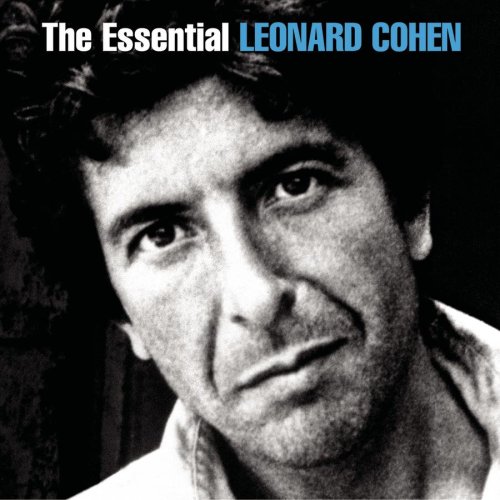
I discovered Leonard Cohen is an unusual way. Having grown up with very limited funds for purchasing music, most of what I listened to growing up was what I heard on the radio out of a small-town station or what I heard emanating from my older brother’s room. My musical tastes, however, always included a “religious” element, whether that be a blatant religious message or provocative lyrics combined with compelling tunes. It was only when I first watched Shrek that I learned about Leonard Cohen. The moving scene where Shrek and Donkey have gone their own ways, both disappointed in love, is framed by John Cale’s rendition of Cohen’s “Hallelujah.” It is particularly poignant even in an animated movie, and I wanted to learn more about the haunted composer. The official movie soundtrack included the song covered by a different artist, but I found Cohen’s name listed as the writer. That’s when I began to explore.

I can’t pretend to be a groupie of any performer, but I find much of Cohen’s music to be moving and provocative. His lyrics, self-effacing and tentatively assertive, seem to capture the ideals of many religions. Reach out but don’t touch. Seek your own fulfillment, but put others first. I was reminded of this the other day while listening to some of his songs. A commentator once described Cohen as an artist with a Psalter in one hand and a picture of a naked woman in the other. An artist who struggles to overcome his humanity, yet who thoroughly enjoys it. “Hallelujah,” Cohen once explained in an interview, began as a religious song and ended up an erotic one.

As the nights grow longer and the days grow colder, my thoughts return more often to his provocative lyrics. After viewing Shrek I began to purchase Cohen CDs (this was back in the day when I was fully employed). I was amazed at what I’d been missing. There is an honesty about Cohen’s work from which many who overtly claim religion could learn. Cohen is the sinner who does not pretend to be a saint. His work openly expresses the struggle. If those who want others to join their religion could learn this simple trick of being honest, they might be surprised by the results. Self-assured bravado cannot convince as readily as the confessions of a lost but sincere seeker.


Weather the Psalms

Among the academic detritus cluttering my desktop is a book I wrote while employed at Nashotah House. Not being a native Midwesterner and finding myself where severe thunderstorms are a blasé fact of life for much of the year, I was captivated by and terrified of the weather. At the same time, daily recitation of the Psalms was a major part of our required, twice daily worship. With the thunder louder than I could ever imagine it outside, we’d calmly read the Psalms, at our stately pace, confident that he who rides upon the clouds could protect us, his humble servants. After many years of recitatio continua I noticed the plenitudinous mentions of the weather in the Psalms. After a painstaking five years of reading and rereading the entire Psalter, I had translated every verse with a weather reference and had written commentary on them.

Publishers showed no interest, this despite the enormous success of Sebastian Junger’s The Perfect Storm, and Erik Larson’s Isaac’s Storm (both of which I eagerly read) and the recent release of Twister. One publisher deigned to make comments as to the great problems of my thesis, so I sat down to revise this behemoth of a book. The very day I was called into the Dean’s office and fired was the last time I looked at the material. I had been revising the book that very morning. The one sad aspect of this entire episode is that every colleague to whom I mentioned the book was excited to read it when it came out. There was a real interest, but no publisher willing to take on the project, this side of vanity publishing.

Some days I think I may go back to that dead beast of a project and try to resurrect it. My academic publishing has slowed to a tortoisene pace without full-time institution support or interest (independent scholars are not worth investing in, I have learned), especially under the weight of teaching nearly a dozen classes a year. Nevertheless, the idea seems sound to me. I keep a weather-eye on the academic horizon and I have yet to spot a book like mine anywhere within the publication catalogues. Considering the importance of storm gods in the ancient world, perhaps we’ve simply moved beyond this interest, tucked away in our interior settings. Nevertheless, when a rare thunderstorm comes to New Jersey, I still remember the majesty of the weather and a forgotten book on the Psalms.

Even the NWS recognizes Noah


In the Morning

The arrival of the most recent issue of MAARAV (15.2) was a poignant blend of joy and melancholy. Joy in that my article about the odd Hebrew word galgal was finally published, and melancholy in that this will likely be my last academic article. I began publishing academic pieces back in the early 90’s and kept a steady stream going until being abruptly dismissed from Nashotah House. Research requires a regular, steady employment situation with access to obscure materials and a somewhat predictable teaching load. Since being cast into the outer darkness of the adjuncts’ world, well, it’s awfully dim out here to try to devote the scant free time to in-depth study. Such is the world of academics.

This article was a spin-off of a much larger project – a book that was completely written and rejected by a noteworthy publisher and lies dormant on a hard-drive somewhere – on the weather terminology in the Psalms. Several publishers expressed minimal interest, and this article was an effort to demonstrate how weather language has been sublimated due to faulty methodology. The unusual word galgal likely derives from a root with connotations of circularity. Nineteenth-century travelers in the Levant associated the word with tumbleweeds, and this association has stuck ever since. In my article I sort through the lexical information seeking some kind of consensus in the West Semitic language family for a more solid understanding of this troublesome lexeme. To the unbiased observer, the earlier favored translation of “whirlwind” still holds a considerable amount of evidence.

This particular paper holds an enduring place in my memory. I first read it at the Society of Biblical Literature Annual Meeting in 2001 in Denver. Well, I started to read it. The morning of my paper I’d visited the Denver Museum of Nature and Science to see the famed dinosaur and mineral exhibits. While in the museum I became violently ill and had to take a taxi back to my hotel. When I tried to read the fated paper that afternoon, nausea swept over me and I couldn’t finish it. Somehow, returning to a project that had made me physically ill held little appeal, no matter what its academic merits. The paper sat, forgotten, until I thought to submit it to MAARAV a couple years back. Now it awaits the criticism of others while I move on to other things. I do hope that this humble contribution to Hebrew lexicography might be taken seriously since like Denver’s dinosaurs, it is the last of its kind.