Paper or Electronic?

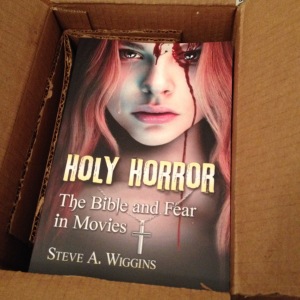
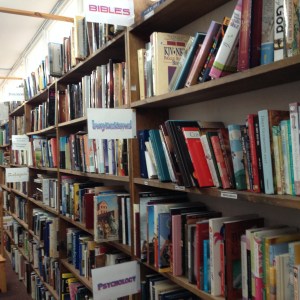
Publishers are scrambling (and who can blame them?) to get ebooks out.  Since bookstores have been closed (I’d classify them as essential businesses, in an ideal world), they need to get “product” to customers.  Still, I’m thinking back to my recent interview with an undergraduate about Holy Horror.  She told me the cover really generated interest as she walked around school with it.  (This was before the pandemic.)  That’s old school book advertising.  Although I do learn about lots of books online, I very, very seldom buy ebooks.  It seems like buying air to me, and I wonder if publishers are missing out on the free advertising of the person carrying an interesting book around.

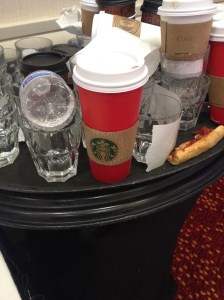
Back before the pandemic I’d noticed how just about everybody was walking around with that awkwardly proud “I’ve got a cup of Starbucks in my hand” look.  It was everywhere.  No matter where I went, for there was free travel in those days, people had only one hand free, showing the world their craft coffee.  If only it were so cool to be seen carrying books!  I stopped commuting about two years ago, for all practical purposes.  When I did get on a bus, however, I always had a book in my hand.  Did publishers see any bumps from curious New Jerseyans who saw the strange cover of the weird book I happened to be reading at the time?  You never got a seat to yourself on New Jersey Transit, and I know I was always curious about other readers (there weren’t many).  I hardly have the profile to define “cool” and “some guy on the bus” probably doesn’t cut it for many people, but still, the thought of someone curious about a book because of the cover is very compelling.

Book covers are artworks.  At least some of them are.  I recall the ennui I felt approaching some academic books with just words on cloth for the cover.  (I later found out the cloth is usually paper made to look like cloth—there are layers in everything.)  It was difficult to muster the energy to open the book because you knew there would likely be hard slogging ahead.  That’s why I decided to stop writing academic books.  The next trick is to find nonacademic publishers so that prices in the range of real readers might be offered.  If people opt for the ebook version, how will others see it?  And viruses only last on paper for about a day.  That’s a quarantine I can live with.


Ancient History, Part 3

It was an old idea.  I had it when I was still teaching at Nashotah House, that’s how ancient it is.  It seemed to me that if brains evolve with the rest of us, our perceptions of gods might change over time.  I’d been working on this for an Ugaritic conference held in Sherbrooke, Quebec.  The conference took place, but I’d been ousted from my position at Nashotah House.  The conference organizer, in what was an amazingly magnanimous move, came up with funding for me to attend.  I delivered the paper and Jean-Marc Michaud, of blessed memory, encouraged me to submit it to the tome with the very academic title Le Royaume d’Ougarit, de la Crète à l’Euphrate. Nouveaux axes de recherche, Actes du Congrès International de Sherbrooke 2005, Faculté de théologie, d’éthique et de philosophie, Université de Sherbrooke, 5-8 juillet 2005 (Coll. POLO–Proche-Orient et Littérature Ougaritique 2).  Unemployed and unable to access libraries, I had to decline the publication.

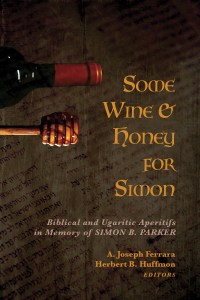
In one of those great ironies of life, I began to be approached to take on projects after I lost my academic position.  (This continues to happen; I received an invitation to contribute just last week.)  I often have to turn them down because I still have no access to an academic library and academics generally have no idea just how draining a nine-to-five is, with or without the commute.  In any case, a Festschrift for Simon B. Parker was announced.  I knew Simon as a student at Boston University School of Theology, and he wrote many letters of recommendation for me.  His sudden death shocked many of us.  Herb Huffmon, of Drew Theological Seminary, asked me to contribute to the Festschrift.  I still had this article that required some work, so I decided to try to finish it.  I received a note that the volume is about to go to press with Pickwick.  Academic publications won’t let me go.

If I had my druthers, I’d be getting along with my fiction.  I’ve had over twenty short stories published, and I’ve got many more in the works.  Every time I think, “Now I’m in the clear, I can focus on writing that is fun to read,” I get another academic invitation.  Those invitations don’t come with job offers, so I wonder why I have such trouble saying “no.”  Anyone who writes wants to be remembered.  We have ideas that we hope others will find engaging.  In academia you publish to keep your job.  Most of your work will be forgotten unless you’re groomed as an academic superstar (yes, they exist!).  I’ve never been groomed.  I write because I have ideas that beg to be expressed.  One of those ideas, many years old, will soon be available for consumption at Pickwick Press.


Without Peer

Peer review makes the world go round.  Well, at least the academic world.  It’s based on a simple enough premise: if your academic work is passable other scholars will be able to tell.  It’s a process fraught with peril, however.  Scholars, being human, are subject to fits of pique or of hypersensitivity, or just having gotten out of the wrong side of bed that morning.  Perfectly good projects can be shot down with a single, well-placed arrow.  Or even dart.  Problem is, there’s no better system for deciding if academic work is adequate, or even good.  There may be some objective measure out there in the universe, but if there is we don’t have access to it.  We have to rely on peer review.

During my teaching years, which numbered nearly twenty, I was never asked to peer review anything.  My first invitation came while I was working as an editor.  Of course I said “yes.”  A number of scholars, however, don’t share the basic reality that if nobody peer reviewed their work, they’d never get published.  Many scholars decline offers to review their colleagues’ work.  I even had a very senior scholar once blithely tell me that he had his own research to do, so why should he take time to review that of others.  Professional reserve prevented me from pointing out that if his colleagues felt the same way he’d be as unpublished as a fresh doctorate-holder.  Scholarship is a cooperative venture, no matter how many Lone Rangers ride the cuesta.  So why is it so difficult to find peer reviewers?

I’ll read your book if you’ll read mine!

Something I’ve noticed is that many scholars are coddled.  Constantly told that they’re brilliant and gifted, they come to believe it like miniature Trumps.  More to the point, perhaps, is the shrinking number of academic positions.  The few who hold actual jobs are bombarded with other tasks, including committee work, advisory duties, and sometimes even teaching (depending on the adjunct pool).  I know it’s tough.  Been there, done that.  Nevertheless, academia cannot survive without the basic peer reviewer.  Education is a cooperative venture.  We may imagine the academic alone in her or his study, but breakthroughs generally come through when people work together.  Of course, my job is one performed in isolation.  Increasingly, academics can be found not in their offices, but working remotely from home.  Is the sense of “peer” itself breaking down?  My own book, Nightmares with the Bible, was slowed down by peer review.  In a sense I’m glad it was.  Hi ho Silver, away!


Voice of Experience

Trust your publisher.  Well, if you have one, that is.  I’m not the only erstwhile academic to have ended up in publishing, but what constantly surprises me is that academics care little about those who give voice to their ideas.  Now this blog is self-publishing.  It contains my ideas, but they are free for the taking, and here’s a bit of useful advice: trust your publisher.  These days with easy online publication and formatting that makes your posts look like a pro (not here, mind you), it’s sometimes difficult to realize that publishers actually provide more than just an imprint.  They offer services to make your book look serious, scholarly, and also to be useful to others.  Those of us who write books are often far too emotionally involved to see this.

I regularly run across academics who tell publishers how the text should look on the page.  I’m not talking about those weird and wonderful sections of ancient texts with <lacunae>… ellipses… [brackets] and whatnot.  No, there are those who want to control kerning, leading, and all sorts of things.  There are those who want practically every single word indexed, although research shows that most researchers access searchable PDFs rather than wasting their time thumbing through pages to find a reference.  And that traditional chestnut, “written for general readers.”  Publishers have access to book sales figures (at least of their own books).  There’s no need to bluff; if your book is only for scholars (does it have words like “reify” or “heuristic” in it?  Be honest now!), publishers know how to handle that.

We’re all nervous when our book gets through the acceptance process.  Peer review always breaks me into a cold sweat.  Believe me, we understand!  Take a soothing sip of tea.  Go for a walk.  Better yet, jog.  Scholars tend to be precise thinkers.  We get that.  When, however, is the last time someone used a map from a Bible for navigation?  Most of those cities don’t even exist any more!  This strange mix of online savvy and adherence to the old ways of print (which I love and of which I shall never let go) clash in ways that cause publishers great stress.  You can find a YouTube video on how to make your own book.  Those of us in the biz can tell at a glance if a book’s self-published or not.  And believe me, we’re rooting for you.  We want your book to succeed.  Why not trust those who know what they’re doing?


Amendments

Funny thing about freedom of speech.  It doesn’t really exist in a capitalist system.  Words, I suspect the powers that be know, are extremely potent.  Any system that brooks no rivals will insist on silencing dissidents.  And not just on a national scale.  Several years ago I was interviewed by a Catholic magazine for an editorial position.  I was between jobs and this looked like a good fit; in fact, the woman who arranged the interview told me that if this position didn’t work out they’d likely be able to find a different one for someone with my particular skill set.  When the power that was interviewed me, however, he noted that I had a blog.  “If we hire you, you’ll need to take it down,” he said.  It would confuse readers who might think I was speaking for the Catholic Church.  My candidacy did not proceed.

In a job I would eventually get, in academic publishing, a similar concern was expressed.  Although I hold an earned doctorate from a world-class research university, my opinions might be mistaken for those of some true authority.  Problematic.  This issue keeps coming up.  I write fiction and publish it under a pseudonym.  Sometimes I think about coming out of my literary closet, but the issues pour in hard and fast when the door’s opened.  What would those who read my nonfiction (both of them!) think?  Would I discredit myself because I have too much imagination?  What would an academic employer say?  If I ever went back on the ordination track, would a congregation of any sort understand a clergy person who thinks such things?  I get enough flak from writing about horror films.

The fact is, freedom of expression is very, very limited.  Capitalism measures all things by the bottom line and anything that might cause that trend to waver is forbidden.  Lack of team spirit.  If you want to publish, don’t work in publishing.  It’s like saying (if I might be so bold) that you shouldn’t teach if you earn a doctorate, because you might actually contribute to what we hopefully call knowledge.  This dilemma has become an entrenched part of my psyche.  I grew up innocently writing fiction.  I completed my first stories about the age of 12 or 13.  I was eventually groomed for the ministry and so the fiction had to be set aside as one of those “childish things.”  Was it?  Perhaps.  More likely though, it was simply a lesson that I would find repeated throughout my adult life.  Give lip service to freedom of speech, but don’t ever use it.


Qohelet’s Advice

Academic hypersensitivity.  I fear it’s on the rise.  I know I’ve experienced it myself—that flushing rage and disbelief that someone has written a book on the very topic on which you also published a book, and didn’t cite you.  How could they have overlooked your contribution?  I’ve seen scholars angered to the point of wanting to ruin someone’s career for not citing them.  Now academics can be a sensitive lot.  Remember, some of them specialize to a point of general social incompetence.  Anyone publishing in their specialization is like making a claim to have slept with their spouse.  This subject is theirs!  They’ve spent years reading and researching it.  How dare some new-comer not know this!

One thing many academics don’t realize is just how much material is published.  The flip side of this is just how obscure their work is.  Trade publishing and academic publishing aren’t the same thing, and the former are the books that really get noticed.  When I wrote my dissertation, back in the early 1990s, I had read everthing I possibly could on the goddess Asherah.  When I proposed the dissertation topic there had been a total of about three books written on Asherah that I knew of.  Enough to have a research base, but not enough to suggest it was a crowded field.  While I was whiling away my time in Edinburgh, another American ex-pat was writing on the same topic in Oxford.  The day of my doctoral defense, the outside examiner came in with a book just out on Asherah—in German, no less—and asked how my dissertation related to it.  Even today when I see a book on Israelite religion I flip to the back to see if my book’s listed.  Generally it’s not.  Today it’s impossible to read everything published on Asherah.

In my own case, however, I’m slowly coming to perceive the reality of the situation.  Books continue to be produced.  Articles are published at a blinding rate.  Even Google has to take a little time to find them all.  An overly inflated sense of self-importance can be a painful thing when it meets with the sharp pin of reality.  Your academic book may well go unnoticed.  Even if it’s good.  It may be priced at over a hundred dollars—I still pause and fret and kick the dirt a few times before buying any book that costs more than twenty.  Silently and slowly, I suspect, the frustration builds.  You see a book, then two, then three, that seem to be oblivious to your contribution.  A new book for review lands on your desk and Vesuvius erupts—why am I not cited?!  Has my work been forgotten?  Calm down.  Breathe deeply.  The book of that neophyte before you will also become obscure in due course.


Atlas

The other day I had a hankering for Religion Index One.  I don’t think it exists anymore, at least not in the format I once knew it.  RI1 was a print volume produced by the American Theological Libraries Association, or ATLA.  This tome was an indexed list of journal articles that had come out on any given topic in the past year or so, and it stretched back to the 1940s.  The idea was that it was as close to “one stop shopping” as a scholar could get for finding publications while doing research.  I suspect it’s all done online now.  One of the tricks of the trade I’ve learned from not being part of the academy is that if you maintain membership in one of the larger bodies—the American Academy of Religion, or the Society of Biblical Literature—you can find out who’s working on what by searching the programs of their annual meetings.

This may sound like a terribly geeky thing to do; admittedly it is.  Nevertheless, I’ve uncovered lots of information by doing just this.  If you want to know who’s been researching a topic, look for who’s presented a paper on it over the past few years.  It’s not failsafe, of course.  Some of us aren’t really encouraged to give papers on company time anyway (and what time isn’t company time?) but we nevertheless research anyway.  All the journal articles and book chapters that I’ve contributed over the past six years or so have been invited submissions, with one exception.  Ironically, I taught and published full-time for nearly 15 years with no outside invitations made.  Once I was no longer in a position to access RI1 people started to invite me to submit papers.  It’s pretty difficult to do in current circumstances.

With the continuing factories churning out doctorates in religious studies—itself a stagnant job pool—there’s plenty being published.  Online sources mean even more venues to get things “in print.”  There really is no clearinghouse to find it all, beyond Google.  ATLA still exists, and they now produce a searchable database.  Like JSTOR, however, it’s only available to the traditional academic and the occasional wealthy bystander.  Since the AAR and SBL programs are open to the public for searching, even sorts like me can gain access to a small wealth of knowledge.  Or at least a wealth of papers and publications, which may not be the same thing.  Still, in quiet moments I reflect on walking to a physical library and thumbing through a book made of authentic paper, and feeling, at the end of the day, as if I’d accomplished something.


Writing Prophets

So I was sitting at a table with two writers I’d just met.  It was at the Easton Book Festival and since I’m new to the area I was very aware that I didn’t know anybody.  I was also aware that my book, Holy Horror, wasn’t on anybody’s radar screen, despite it being mid-October.  As we were talking my two interlocutors mentioned the advances they’d received for their books, one of whom was able to buy a house with said advance.  As I listened I kept my mouth shut, because that’s polite, even though my jaw was slack.  The other person hadn’t been able to buy a house, but after writing on a topic so obscure I can’t remember it, had been able to do something noteworthy with the advance.  My royalties from Holy Horror wouldn’t have covered the cost of this dinner.

In the weeks following the festival—always busy with AAR/SBL looming, then Thanksgiving, then December—I began some soul-searching.  What was I doing wrong?  I also did some web-searching.  One of the articles that came up, written by a business writer, suggested pulling up your socks and getting to it, demanding money for your writing.  I don’t see anywhere to put a coin slot on this blog, which is more of a labor of love than anything anyway.  Then the kicker came.  This business writer cited Hosea 4.6, “My people are destroyed for a lack of knowledge,” as the basis of why people would pay for content.  Now pardon me for taking things a little literally, but I doubt Hosea was in the business of giving business advice.  The knowledge people lack, in context, is knowledge of Yahweh.

Now here I was back on familiar territory.  I’ve taught classes on Hosea, and this intriguing prophet was commenting on Israel’s lack of knowledge of God’s ways.  There were some folks akin to prosperity gospelers back in the pre-Gospel days, suggesting that if you kept God happy rewards would roll your way, but history had other plans.  Israel fell to the Assyrians shortly after Hosea’s time, his writing advice apparently unheeded.  As I revise Nightmares with the Bible for publication—the reviewer felt it was too tradey—I have to wonder about my conversation back in October.  Neither book of my conversation partners was one of broad appeal.  In fact, the second was rather technical.  They had, however, been paid for their work.  Academic publishing is built on the paradigm that the writer already has a university job and doesn’t need the money.  Hosea also said, if I recall, something about what happens if you sow the wind.


Honest Labor

When an artisan begins a new job, s/he must acquire the tools of the trade.  During a period of unemployment I seriously considered getting certified as a plumber.  I’d done some plumbing repair and, unlike many people, I wasn’t afraid of it.  (I am, however, terrified of electrical work.)  When I was looking into it, it became clear that there would be a significant outlay of tool purchasing up front.  While all of this may seem obvious, people are often surprised to learn that writing books also involves tools acquisition, although it generally pays far less than plumbing. The tools used to be made of paper, but they can wrench pipes apart and rebuild a bathroom from scratch.  I’m referring to books, of course.  In order to write books you have to read books.

Long ago I gave up on trying to read everything in an area before writing.  There’s just too much published these days.  When I was teaching and actually had a modest book allowance I would attend AAR/SBL only to come back with armloads of books that I needed for my research.   Of course I had the backing of the seminary library as well, so I could find things.  As an independent scholar doing the same work, however, you have to do a lot more tool acquiring since no library will back you up.  Nightmares with the Bible came back from peer review with a standard-issue academic who wanted me to “show my work.”  (I.e., document everything.)  Apart from slowing the book down (it is written), this also means acquiring tools.  AAR/SBL always reminds me of just how much is being published these days and that my toolbox, although already quite hefty, isn’t nearly big enough.

As I’m going through Nightmares rewriting and adding footnotes, I’m discovering more and more material that could be included.  As an editor myself I try hard to keep to assigned word counts, and the entire allotment could easily be taken up by bibliography alone.  I am very modest in my spending at conferences now—independent contractors have to be.  Nightmares will likely be my last academic book; I can’t afford to keep going like this.  I don’t plan to give up writing, of course, just academic publishing.  Both this book and Holy Horror were written for non-specialist readerships, to showcase my non-technical way of explaining things.  Both ended up with academic presses and are slated to be among those specialist tools that the beginning artisan covets but for which s/he has to budget.  And when this house is finished it will have an impressive, if most unusual, private library.


J L Seagull

Perhaps it has happened to you as well.  At some undisclosed period life became so busy that you felt as if—in a good southern California metaphor—you were riding on a huge wave and you couldn’t get off.  Back in my teaching days I had time to plan my trips to AAR/SBL and fit in some human activities as well as maybe even getting around to see the outside once in a while.  It’s great to run into so many people from every stage of my academic life—toddlerhood at Grove City College through my current doddering editorship—but I can’t help having the feeling that I’m popular now because I’m thought to have something others want.  The keys to the kingdom.  A possibility of getting published.

Those of you who read my daily reflections know that I’m glad to share publishing knowledge.  I encourage academic authors to learn a bit about the publishing industry.  It’s rapidly changing and when you have an inside track (here is the real added value) you need to look beyond your current book project to see what goes on behind the veil.  Widen the focus.  There’s a whole world out there!  My glimpses out the hotel window inform me that there’s an entire bay to be explored.  I watched seals or sea lions (it’s hard to tell from this distance) playing in the water as the sun rose.  Then a seagull flew up and landed inches from my face on the windowsill of my room.  It stayed for nearly a minute, looking me over as I looked it over.  Noticing the tiny white feathers that formed a W on the edges of its beak.  Its Silly Putty pink feet with small black nails.  The emerging red patch on the underside of its bill.  It took a step off the ledge, spread its wings and looked elsewhere for a snack.  I soon learned why.  A second later a larger gull landed in its place.  We too regarded one another curiously.  Had the glass not been there, we could’ve easily touched.  It also lept off to be replaced by an even larger, more mature gull.  None of the three were in any hurry to get away, but when they realized I couldn’t give them what they wanted, they left.

I’m a great fan of metaphor.  Academic writing, unfortunately, doesn’t encourage the craft of utilizing it (neither does it often encourage being coherent).  Later this morning—it will be early afternoon back home—I have to rush to the airport to catch a hopeful tailwind back east.  Someone else will check into my room.  If, perchance they sit by the window with the curtain drawn before dawn, the gulls will visit.  And maybe a lesson will be taken away.


Focus on Religion

Publishers Weekly, or PW to those in the biz, is a great place to get information about, well, publishing.  I often spend AAR/SBL telling authors and prospective authors something that I wish I’d been told when teaching: time spent learning about publishing is never wasted.  PW every year has a “Religion and Spirituality Update” released in time for this meeting.  Despite the relatively small number of sales, religion is a discipline that loves its books.  I’ve only been quoted in PW’s special edition once, and it’s not been for a few years, nevertheless I always learn a thing or two from this free—yes, if you’re here in San Diego it’s free!—update.  It may seem odd to suggest that religion titles can be hot, but it is indeed possible.  Sexuality is hot.  I suppose that goes without saying.

A number of titles dealing with religion and sexuality appear every year.  What caught my attention, however was an observation from Jennifer Banks, from Yale University Press.  Noting the rancor that sexuality often introduces to discussions of religion, she observes that (and this is a quote from PW, not directly from Banks) “some Christians apparently need others to go to hell.”  (I can send the full citation, if you want to know.)  In an era when academics have been stressing inclusion, the retrenched religious world has been spinning in the opposite direction.  Instead of inviting everyone to Heaven, as might, say a Universalist, many conservative Christians consign fellow believes to Hell, and gleefully so.  It’s almost as if Christianity and capitalism have merged into a zero-sum game.  If some win, all the others have to lose.  They haven’t however, studied the history of Hell very well.

It’s kind of an insidious idea.  Given that we all want to justify ourselves, some go to the extremes of demonizing those who see things differently.  This form of religious thinking was original neither with Christianity nor the Judaism from which it grew.  There was no Hell in the Hebrew Bible.  The idea, when it did develop, wasn’t a place to torture your enemies, but rather a place demanded by justice.  Those who were utterly and unrepentantly wicked couldn’t hobnob in God’s country club with those who tried to be righteous.  In the modern evangelical narrative those who make certain medical decisions for basic human situations are among the utterly wicked.  Not surprisingly their sins are usually sexual.  If you want to see this in a wider context, pick up a PW when you pass by the stand.  “Anything free,” to quote another sage, “is worth saving up for.”  And who knows, it might keep you from Hell?


Sister Monsters

Every once in a while you read an inspirational book.  I’m hoping readers will keep in mind that inspiration comes from different locations for some of us.  Monster, She Wrote: The Women Who Pioneered Horror and Speculative Fiction, by Lisa Kröger and Melanie R. Anderson, is a source of inspiration.  With the usual Quirk Books touches, this isn’t a tome heavy on literary criticism, but it is a wonderful compendium of brief bios on women who walk(ed) on the dark side.  I find books like this encouraging in a number of respects.  First of all, these are women who did what they loved and were recognized for it.  Secondly, it gives the rest of us some hope that getting through the establishment to actual publication isn’t as impossible as presses would have us believe.  And third, it’s also a lot of fun.

It isn’t often pointed out that women played a major role in the development of the horror genre.  Some of the earliest Gothic novels were by Ann Radcliffe and Margaret Cavendish.  Probably the first fully fledged horror novel was Frankenstein, by Mary Shelley.  The real learning kicks in when the other names come out—many women found, and continue to find, the genre compelling.  Most of them, like most of us, are lost to history, but many of them have been rediscovered.  Here again is cause for hope; those of us who write, I think, have our eyes set on the far distant future.  We’re inscribing our “Kilroy was here” on paper—I still can’t think of ebooks as actually existing—in hopes that those down the road might know us a little better.  The fact that some of our sisters have been found suggests that we too may be resurrected some day.

There’s no plot here, and the point isn’t to present some great discovery.  This is a book that encourages women to be who they are through example.  The fact that it involves monsters and horror is simply a bonus.  As a non-female reading this it struck me time and again that women have long been informed of what they should or could do by men.  Men don’t like to see women knowing as much as they do about the shadow side of human existence, even as they relegated them to the shadows.  It’s my hope that this book will inspire women to be themselves.  And if they want to invite monsters along, so much the better.


Author Revise Thyself

Monster fans may have noticed that, despite the season I haven’t been writing much on the topic.  One of the reasons for this is that I’m in that dread stage known as “revision.”  As an editor I often see book proposals—or even entire books—that have never been revised.  You can tell.  I learned this while writing Holy Horror.  If you’re one of the people who took out a second mortgage to buy a copy, the book you purchased was based on a manuscript rewritten thoroughly at least five times.  The idea is that like rocks in a river, all that pouring over a text smooths the words like stones over the millennia.  Few rocks emerge from volcanic or sedimentary situations as smooth and round.  That takes revision.

My peer review report for Nightmares with the Bible came in a few weeks ago.  Nightmares had been revised a couple of times, at least, before I submitted it.  I understand the review process very well, as I deal with it daily.  Sometimes single blind (the writer doesn’t know the reviewer’s identity), other times double blind (neither reader nor writer know the other’s identity), the process is meant to provide feedback on a manuscript.  Having written many more manuscripts than have seen publication, I know just how useful peer review can be.  Like anything, however, it can also be treated legalistically, as if the reviewer knows more about a subject an author has just spent years researching.  No matter your impressions about this, once the reports come in, revision is in the cards.

Self editing is difficult.  And occasionally embarrassing.  You read again what seemed to make sense to you at the time, but even after you hit the “send” button you’ve continued reading.  New information comes to light.  Monographs are a very expensive form of dialogue.  Well, not so expensive as all that.  Many people are happy to pay out the cost of a monograph for a dinner out, which lasts an evening.  A book, mutatis mutandis, lasts much longer.  Like that meal, it’s taken internally and digested.  You can read the same book twice, however, without having to pay the second time around.  It’s a good idea, then, to revise before sending it to a patron’s table.  Ironically, revising a book on monsters takes time away from writing about monsters.  I also have essays awaiting revision, circling overhead like planes at Newark’s Liberty Airport.  And then there’s work, which has nothing to do with my own writing at all.  There’s a reason Nightmares occurs in the title.


Dead Language

Tis the season for returning from the dead.  Goodreads is one of the few websites that I allow to send me notices.  I try to check them daily, and I even read their monthly updates of new books by authors I’ve read.  I was a bit surprised when November’s newsletter began with The Andromeda Evolution by Michael Crichton.  I really enjoyed The Andromeda Strain when I was in high school.  The fact that I was in high school four decades ago made me wonder about the robustness of Dr. Crichton, especially since I knew that he had died over a decade ago himself.  I don’t know about you, but the writing industry feels crowded enough without dead people keeping in the competition.  It’s like those professors who refuse to retire, but also refuse to teach or do research.  Some people, apparently, can never get enough.

We live in an era of extreme longevity.  In the scope of human history, people haven’t lived so long since before the flood.  Some of us—not a few, mind you—work in fields with limited job openings.  We are the sort who don’t really get the tech craze, intelligent Luddites who’d rather curl up in the corner with an actual book.  There are very few professorates available.  Even fewer editorships.  And anyone who’s tried to get an agent without being one of the former knows that there are far too many writers out there.  Now the dead keep cranking ‘em out.  I’ve got half-a-dozen unpublished novels sitting right here on my lap.  Crichton’s gone the way of all flesh, but with an active bank account.

The end result of this Novemberish turn of events is that I want to read The Andromeda Strain again.  I haven’t posted it to Goodreads since when I read it the internet itself wasn’t even a pipe dream, except perhaps in the teenage fantasies of some sci-fi fans.  Since you can’t rate a book twice on Goodreads, and because paper books don’t disappear when you upgrade your device, I can do it.  I can actually walk to the shelf and pull a vintage mass-market paperback off it.  Even if the Earth passes through the tail of some comet and all networks are down.  And I seem to recall that the original strain came from outer space.  As did the strange radiation that brought the ghouls back to life on The Night of the Living Dead.  Now if only some of the rest of us might get in on the action.


After Easton

I’m still recovering.  The Easton Book Festival was a fine example of liminal time.  Ordinary time—the day-to-day, or “workaday” variety of time—may pay the bills but comes up short on meaning.  Literary time is rare and sacred.  No, there weren’t great crowds at my two sessions.  In fact, the crowds were modest.  More people showed up for my church presentation on Sunday morning than came to either of my more “secular” presentations.  The festival, however, wasn’t about numbers.  It was about the love of books.  Much of the time those of us who love reading are perceived as “Poindexters” who deny the excitement of a life spent in sports and adventure.  There’s no reason, however, that the two can’t get along.  After all, authors write about adventure and sports as well as religion and philosophy.

As Halloween nears and November encroaches on the days of trees losing their leaves, I reflect on how my entire October was leading up to this.  Half a year ago I was contacting libraries and bookstores about doing Holy Horror presentations in the autumn.  Only the Moravian Book Shop and the Easton Book Festival took me up on my proposal, but they allowed me, as my wife expressed it, “to put myself out there.”  To be part of the conversation.  People are busy, I know.  Still, I came away with the business cards of a few more successful writers, and I gave away a handful of bookmarks for my too-expensive tome.  I was after conversation, not fame.

Although I met the director of the festival a couple of times, I don’t know the results.  I do sincerely hope that another will be offered next year.  Gatherings of the bookish are dicey affairs.  I attended the banquet not knowing a soul, but left having learned of others nearby who practice the craft.  Many had made that transition from workaday to writer.  I learned that getting the pennies I do for my books is, really, an aberration of the academic publishing scheme.  Most academics have good paying university jobs and don’t really need the cash.  Book festivals are opportunities to learn, classrooms in everyday life.  I met authors of topics more obscure than my own who’d earned healthy advances.  This was liminal time indeed.  I feel honored to have been included among those feted for putting their words out there for reading and possible rejection.  Books are conversations, and in a world far too busy, book festivals are a source of truly significant discussions.  Long may they continue!