Epigraphic Ephemera

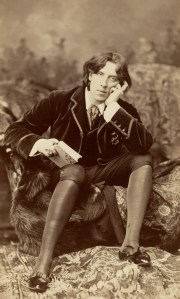
Photo credit: Napoleon Sarony, via Wikimedia Commons

“We live in an age when unnecessary things are our only necessities.” ― Oscar Wilde

In certain kinds of books, epigraphs are popular.  In fact, I’m currently reading a book where every part of every chapter begins and ends with an epigram.  It starts to taste like an epigram cracker after a while.  Don’t get me wrong, every great once in a while there’s a quote that just illustrates your point in a chapter so pithily that you can’t resist.   Still, epigraphs ought to come with a warning label.  Working in publishing one of the first things I learned is that unlike quotes in the body of a text, an epigraph that’s covered by copyright isn’t considered “fair use.”  It’s an ornament, an embellishment.  If you want to use one, you need to get permission from the rights holder.  (Unless it’s in the public domain.)

While the idea of copyright itself isn’t that complicated—the creator of intellectual property is the owner of said property—copyright laws can be complex.  Publishers discourage the use of epigraphs (which only academics seem to use any more) because of permissions complications.  You see, when you publish a book (or article) you’re trading your copyright for whatever emoluments the publisher or the journal has to offer.  Most publishers, no matter how noble, are businesses.  There are costs with producing books.  If someone wants to reuse part of a another book—apart from the standard academic quote—they must have permission to do so.  Epigraph permissions can really slow a book down.  And make it expensive.

Reading is an involved process.  We human beings are seldom given such direct access to the interior lives of others.  Think about it—books are private thoughts made public.  Sometimes writers like to show that others have been thinking along similar lines, especially if what they have to say challenges convention.  Thus the epigraph.  The quotable quote.  But did you have permission to take that?  I like poetry.  It takes longer to read than prose, but it says so much in so few words.  That means using poetry in epigraphs becomes a nightmare.  Rights holders often charge by the percentage of the poem used.  And once a book becomes e book there no stopping the spread of its epigraphs used so carefully by permission.  Indeed, e-books are easily pirated, increasing the concerns of those who sell other’s thoughts for a living.  Before sticking that clever quote at the start of your chapter, it’s worth pondering the epigraph above (in the public domain, of course).
OBSO

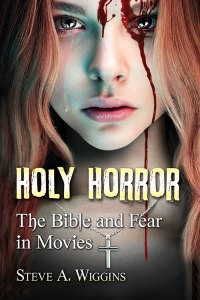
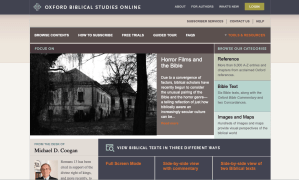
Oxford Biblical Studies Online is a subscription service for institutions that gives access to many biblical studies resources produced by the press.  It also features current essays that stand on this side of the paywall, written on contemporary issues.  In a shameless self-promoting plug, I’d direct you to this link to see my latest publication.  You see, I’m not alone in looking at Bible through the lens of horror.  As the acknowledgements to Holy Horror reveal, many conversations were going on that led to that book.  While the ideas contained in it are my own, I’m by no means the only one to have noticed that the Good Book makes guest appearances in genre fiction.  One of the points I made to my students when I held a teaching post was that the Bible is ubiquitous in our culture, whether we know it or not.  Just look at the Republican Party and beg to differ.

The idea is not without precedent.  For those who read the Bible real horror isn’t hard to find.  The Good Book can be quite a scary book.  Consider for just a moment the final installment—Revelation, apart from being full of amazing imagery, is an amazingly violent book.  Attack helicopters and atomic bombs may not yet have been invented, but there was no shortage of ways to kill people in the pre-gunpowder world.  Revelation paints the world in the throes of horrible suffering and death.  Indeed, the completely fictional Left Behind series rejoices in the death of the unrighteous who are, well, left behind.  Even today there’s a significant segment of “Christianity” that rejoices in the chaos Trump has unleashed.

In the OBSO article I sketch a brief history of how this came to be.  The history could work in the other direction as well.  The fact is the Bible and horror have always gone fairly well together.  Among genre literature, however, horror is a distinctive category only after the eighteenth century (CE).  Early horror novels, under the guise of Gothic fiction, often involve religious elements.  Culture was already biblically suffused then.  This is a natural outgrowth of a would steeped in violence.  Personally, I don’t like gore.  I don’t watch horror to get any kind of gross-out fix.  My purposes are somewhat different than many viewers, I suspect.  What we do all have in common, though, is that we realize horror has something honest to say to us.  And it has been saying it to us since from in the beginning.


Not about Pigs

Pseudepigrapha always struck me as a great name for a pet guinea pig.  Neither members of the porcine family nor from Guinea, these rodents are remarkably companionable.  But like the word pseudepigrapha, this post isn’t about guinea pigs.  I’ve been reading various documents among this sprawling category of texts, and I can see the fascination they hold for scholars of Second Temple Judaism.  My own specialization was on the earlier end of the spectrum—Ugarit had ceased to exist even before a first temple was built and provided clues to how this whole religion got started in the first place, but that’s a story for another time.  The account of the pseudepigrapha  cannot be summarized easily.  Some of the documents have been known to scholars for a very long time.  Others have been (and continue to be) discovered, some quite recently.

Not a pig.

The documents classified as pseudepigrapha generally bear the name of someone who couldn’t have been their “author.”  We now know that ancients didn’t think of writing the same way we do.  They didn’t publish books like modern writers do, and scholars have been exploring how the category of “book” distorts even the Bible, let alone books that didn’t make the cut.  None of this diminishes the intrigue of these ancient texts.  The world into which Jesus of Nazareth was born contained many texts and traditions.  There was no Bible as we know it today—it was still being written (or compiled)—and no canon, literally a measuring stick, existed to determine what was holy and what was not.  

As discoveries in Mesopotamia have made clear, although few could read or write, writing itself was prolific, at least given the technological limitations.  Today if one wishes to specialize the literature of one subsection of one time period, and probably even some subdivision of that, has to be selected.  Universities don’t see the point, and much of this ancient material is understudied because there remains money to be made in looking at economically viable topics.  The pseudepigrapha have nevertheless come into their own.  Perhaps because some of the stories these documents contain have made their way into pop culture.  Even as I make my way through many of these texts that are young in my eyes, I realize the proliferation of writing made such growth almost inevitable.  There remains, however, a high-pitched squealing that demands attention, regardless of what the exact genus and species of the creature may be.


Instant Gramification

To be a writer these days, so industry publicists tell us, one must be savvy on social media.  But do not spend too much time, they tell us, on that same media.  What publicists don’t understand is that social media has become a zero-sum game.  It demands your time.  Just for instance, I was trying to get set up on Instagram.  Why?  Because, apparently, there is a large presence of those who like looking at pictures of books on Instagram.  The real problem for anyone who writes is to let people know when you’ve got a book out.  (By the way, I have a book out.)  Print catalogues and newspaper ads don’t have the same punch they used to, and social media is the reason.  So I tried to get set up on Instagram.

It took a few hours before I realized that Instagram is meant only for mobile devices.  My phone is several years old now and although it does (mostly) what I need it to do, it has trouble with upgraded apps.  Instagram, for instance.  You might say “it’s time for a new phone, then,” but I don’t like feeling coerced into upgrading when an iPhone 4S is already smarter than I am and it functions just fine as a phone.  And a camera.  And a GPS.  And a tape recorder.  What it doesn’t do so well is social media.  Ah, yes, and that’s what got me into this mess in the first place.  My thumbs aren’t dextrous enough to text, let alone post.  I feel old fashioned because I use a computer.

After a few hours, during which Dropbox kept telling me my storage was almost full and for a recurring charge I could upgrade it, I finally managed to get a photo (not my best) posted on Instagram.  I can’t access my “library” where a number of decent photos dwell.  It complains vociferously if I try to access said photos.  I’m not even sure it will do any good to bring awareness to my recent publication.  Our publicists like Twitter better anyway.  You can’t tweet during the day, however, when people from your company follow you.  Herein lies another of the dilemmas of a working writer.  You’ve got to manage to keep your day job.  Writing books, unless you’ve got an agent, doesn’t bring in enough money to pay your electric bill, let alone your mortgage.  And besides, work is where I learn such valuable things from publicists, like using social media so that I have a readership for my reduced time to write.


Book Birds

I just read an interesting article about how social media, and the internet in general, hijacks our time.  If you’re reading this, no doubt you’ll agree.  Those of us who write books on our “free time” know that the way books are both found and sold is on the web.  Publishers  encourage authors to build a social media platform, usually involving Twitter.  Academics are often hopeless at social media—they’re lousy at following back on Twitter, as I know from experience.  There is a kind of self-importance that comes with higher education which makes many of the professorate assume the work of others is less important than their own.  It’s more blessed to be tweeted than to tweet others.  After all, such-and-such university has hired you, and that proves the value of what you have to say.

Head-banging tweeter

Book publishers, however, will be looking at how many followers you have.  Not that all of them will buy your book, but at least a number of them will know about it.  Curiosity, indeed, drives some sales.  Just like many academics, I’m jealous of my time.  I’m also conscious of that of others.  These blog posts seldom reach over 500 words.  I tweet only a couple times a day, although I understand that’s not the way to get more followers.  You need to tweet like a bird, often with images or memes, but try explaining that to your boss when each tweet is time-stamped.  The academic is uniquely privileged to be given control of their time outside of class and committee meeting.  Tweet away.  That doesn’t mean they’ll follow you back.

The reason for tweeting is, of course, self-promotion.  45 may understand little, but he understands that.  You can commit treason and people will overlook it if you tweet persistently enough.  My own Twitter activity is like the eponymous birds after which the site is named; it is active before most people are awake.  And it, like this blog, is not designed to take up your time.  Since my tweeting during the work day is limited, my tweets are seldom picked up.  I try following other academics, but often they don’t follow back.  After all, what does a mere editor have to say that could possibly be of interest to the high minded?  Alas, I fear my advanced studies of the Bible have become bird-feed.  And my forthcoming book won’t get noticed.  I only wish more colleagues would consider the adage, tweet others as you would like to be tweeted.


I’ll Be Googled

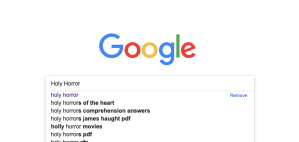
It’s a strange sensation to do an innocent web search only to find yourself cited.  (And no, I was not googling myself.  At least not this time.)  I was searching an obscure publisher and my own pre-publication book, Holy Horror, came up on Google books.  Now, the computer engineers I know tell me that Google remembers your searches, and this has a way of being unintentionally flattering; when I search for my book it pops up on the first page because I have searched for it before.  Still, it was a bit of a surprise to find myself where I had no idea I’d been cited.  All of this drew my mind back to my “post-graduate” days at Edinburgh University.  To how much the world has changed.

One of the first things you learn as a grad student is you can’t believe everything you read.  Granted, most of us learned that as children, but nevertheless, with academic publishing a new bar is raised.  That which is published by a university press is authoritative.  So we’re led to believe.  But even university presses can be fooled.  This prompts the fundamental question of who you can really believe.  Our current political climate has elevated that uncertainty to crisis levels, of course, and the vast majority of people aren’t equipped to deconstruct arguments shouted loudly.  Where you read something matters.   Even publishers, however, are fallible.  So what am I to make of being cited by the web?  And is my book already available before I have seen a copy?

Even credibility can be bought and sold.  Colleagues make a much better living than me with the same level of training, but with more influential connections.  It was just this reason that I decided to try to shift my writing to these who don’t need credentials to impress each other.  Some of the smartest people I ever knew were the janitors with whom I started my working life.  As a fellow post-grad in Edinburgh once said, professors are always ready to fail you for your lack of knowledge but most can’t tell you what an immersion heater is.  (That’s one of those Britishisms that no amount of graduate courses at Harvard will teach you.)  I suppose when it’s all said and done nobody else will ever search for the obscure publisher that brought my book to Google’s attention.  No matter, at least Google will always flatter me.


Editing the Week

Every great once in a while I have to pull my head from the clouds and remind myself I’m an editor.  Actually, that happens just about every Monday morning.  Surprisingly, academics who have trouble getting published don’t bother to consult editors for advice.  Having sat on both sides of that particular desk, I certainly don’t mind sharing what I’ve learned since publishing isn’t as straightforward as it seems.  It has its own mythology and authors—I speak from experience here—feel extremely protective of their books.  Nevertheless, editors are under-utilized resources when it comes to figuring out how to approach a topic.  They often possess valuable advice.

It’s easy to think publishing exists to preserve and disseminate ideas and insights, tout court.  The idea that if you get past your dissertation committee you’ve done service that requires wide readership is natural enough.  Publishers, however, have other angles to consider.  Books incur costs, and not just paper, glue, and ink.  There are many people involved in bringing a book from idea to object, and each of them has to be paid to do their part.  (Many academics in the humanities may not understand the concept of “overhead,” but it’s an everyday reality in the publishing world.)  Not only that, but even the book itself is a matter of negotiation.  My latest book (and I suspect well over 90 percent of the authors with whom I work have no idea that I write books as well) had a chapter expunged and a new one written at the behest of my McFarland editor.

One of the pervasive myths in this business is that authors write whatever book they want and then find a publisher.  Sometimes that works.  Often when it does the authors are disappointed in the results.  There are presses that specialize in cranking out such works, slapping an enormous price tag on them, selling them to libraries, and then letting them go out of print.  I’ve been there.  I know.  Academics want prestige presses to take their books to a higher profile, but without having to change things according to the advice of an editor.  There are hidden lives of editors.  I can’t share much of that here, but I can expound its corollary—taking advantage of free editorial advice makes good sense.  I wouldn’t be bothering you with such mundane thoughts on this blog, but when I rolled out of bed today I learned it was Monday morning.


Time Taking

Publishing is a slow business.  In a world of instant information, such plodding may appear to be old-fashioned.  Outdated.  Each step of the process takes time and anyone can sit down and type thoughts directly into the internet, so why bother with traditional publishing?  These thoughts come to me as I read through the proofs of Holy Horror, and work on the index.  This is time-consuming, and time is hard to come by.  That, I suppose, is a major reason for doing things this way.  Ironically, people don’t have a problem seeing that handmade items—which tend to take time and be less efficient than machine-made articles—are more valuable.  They represent care and quality, things that a machine can’t assess well.  This is the world beyond math.  It is the human world.

Those of us born before computers took over sometimes have difficulty adjusting.  The world of the instant goes well with inflation—the myth that constant growth in a limited world is possible.  The fact is that value is a human judgment and we value things that take time.  It’s true that most non-fiction books are instantly dated these days.  Often it’s because information flies more quickly than pre-press operations.  It takes a couple years to write a book and a publisher takes a year or two getting it into print.  Back when the process was invented news traveled slowly and, I venture to say as a historian of sorts, didn’t often carry the dramatic shifts we witness today.  A book could take a long time to appear and still be fresh and new when it did.  For the internet generation it may be hard to see that this is an issue of quality.

Most of us are content with the satisfactory.  We’re willing to sacrifice quality for convenience.  We do it all the time.  Then, in the recording industry, vinyl starts to come back.  Corporate bigwigs—for whom fast and cheap is best—express surprise.  Why would anyone buy a record?  The question can only be answered by those who’ve listened to one.  There is a difference, a difference that we’ve mostly been willing to jettison for the convenience of the instant download.  Our lives are being cluttered with disposable-quality material.  Even now I’m writing this daily update for my blog rather than continuing the drudgery of working on an index.  We all have expectations of alacrity, I guess.  The slower world of publishing is more my speed.


Proof in the Pudding

Writers anticipate and dread proofs.  After several months of delay, I have received the proofs for Holy Horror—it should be out in the next couple of months for both of you who’ve asked about it.  Anticipation is pretty straightforward, but why the dread?  Those of us who write books have to deal with the fact that publishing is, by nature, a slow business.  What I’m proofreading now is material that I wrote a couple of years ago; the final manuscript was submitted back in January.  The internet has accelerated the pace of everything, and now that I have a daily record of my public thoughts on this blog, I can see how my own outlook has changed in that time.  Reading proofs reminds you of whence you came, not where you are.

I suspect that has something to do with the internet and instant access to information.  I also suspect that’s why many of us trust books more than the “open web.”  The oak that has taken centuries to grow is a hardy tree.  The handcrafted piece of furniture lasts longer than the mass produced.  Books, hopefully, stand the test of time.  Writing is an exercise in building eternity.  These thoughts, the author hopes, will be around for some time to come.  As long as libraries endure.   Looking at the proofs, there’s pressure to get things right.  Was I correct in what I wrote down so long ago?  Since then I’ve read dozens of books more.  I’ve even written the draft of another book myself.  I face the proofs and shudder.

Part of my angst, I suppose, is that Holy Horror will likely sell better than my previous two books.  It may actually get read.  No, it won’t be any kind of best-seller, but perhaps a few hundred people will read it.  That’s a lot of pressure for those of us who’ve primarily written for other academics.  Perhaps this fear is the reason I’ve moved to writing about horror films.  Those of us blocked from the academy have to build our own credibility, one book at a time.  Reading the proofs, although already dated, I find myself liking this book.  It was fun to write, and it has a good message, I think.  Even prestige presses know that books about horror films are of popular interest.  As I read through where my mind was in days stretching back before the nightmare of Trump, I see that I had only just started on this path.  Before me are the proofs of that.


Dark Houses

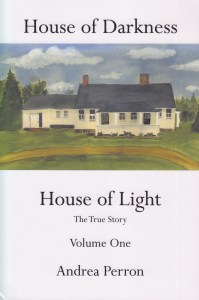
A book can be whatever an author wants it to be.  When it goes through the publication process, however, it becomes a group effort.  Granted, the other parties are motivated by money rather than by the message of the book, but they are professionals.  Editors can point out what’s irrelevant, or beside the point.  What you’ve already said, if you happen to repeat yourself.  What you’ve already said, if you happen to repeat yourself.  They change things, often, authors admit upon reflection, for the better.  The self-published book shows itself as just what an author wants it to be.  House of Darkness, House of Light: The True Story, by Andrea Perron is a case in point.  In three volumes of about 500 pages each, it is (they are) the insider story of the family portrayed in The Conjuring.  After having finished volume one, it’s clear the book needed an editor.

Don’t get me wrong; there’s some good stuff here.  The first couple hundred pages are fascinating, although there’s a slow build-up into moving into the Harrisville house.  One thing academics have always been too quick to do is dismiss the experience of non-trained observers.  We have to be skeptical, of course, to spot those who are intentionally deceitful, but a person doesn’t write 1,500 pages without cause.  People do experience strange things, and this book is a family’s recollection of events that inspired a horror movie.  There were a few points in the course of reading through that I found myself pondering new perspectives on the realm of ghosts—shifts of point of view.  There were many points, though, that I found myself muttering that an editor would’ve helped.

As a fully trained academic in the field of studies that handles issues of the soul, I am hungry for primary sources.  Sociologists and psychologists get their information from observers—ordinary people.  It’s only when the claims become extraordinary that such observations are called into doubt.  We have all heard of haunted houses.  We all know that sometimes strange things happen in them.  We can explain such happenings in different ways.  The skeptical explain them away as misperceptions, normal occurrences masquerading as paranormal.  The credulous accept everything at face value.  Truth, it seems to me, is a middle of the road phenomenon.  I’ve always sat on the fence regarding ghosts.  Too many people over too many centuries have reported them with great detail—witnesses include some very reputable and rational individuals—to dismiss them in toto.  After volume one, it seems that something worth exploring took place in the eponymous house.  For full impact, however, who you gonna call?  This time you’d better make it an editor.


Universal Books

I’m reading an overwritten book right now.  In fact, I just finished an overwritten book.  Such works, I suppose, are the results of being taught how to write.  It’s not that people can’t be taught to compose, but for various reasons some authors, either through the privilege of having high-powered publishers, or their own conviction that they don’t require correction, overwrite.  I suppose overwriting is, like beauty, in the eye of the beholder.  Several years back I recall a critic stating Lemony Snicket’s A Series of Unfortunate Events was overwritten.  I thought it was fun.  Yes, deliberately exaggerated, but nevertheless well-composed.  Those books were enjoyable to read because, I think, they refused to take themselves seriously.  Writers can be temperamental people.

As an editor something I need to repeat—for academics are consummate overwriters—is to keep your intended readership in mind.  No book is written for everyone.  In fact, many people can’t make it through books like the Bible because they’re hard to read.  Religious books often are.  There’s no such thing as a universal book, but some believers in some religions make the claim for their sacred texts.  Like many curious people I find it rewarding to read the scriptures of other traditions.  It’s not always easy—in fact, it seldom is.  It’s frequently disorienting and I look for an edition with an introduction.  The reason is when it comes to books, even sacred ones, it’s not one size fits all.  Many religious conflicts in the world could be resolved if we’d just realize this.

Someone who reads a lot is bound to be disappointed from time to time.  We turn to books either looking for a certain mood or specific pieces of information.  Authors often take things in their own directions.  Our minds don’t all work in the same way.  That’s why, in my opinion, reading is so important.  I prefer “long form” writing—I always have.  Sometimes an idea can be well expressed in an article, but taking the time to develop ideas requires a nuance not all publishers appreciate.  (Yes, I realize that by expressing this sentiment in a brief essay like this I leave myself open to deconstruction—one of the overwritten books I just read was written by a deconstructionist.)  Still, I have trouble abandoning books that take ideas in a way I wouldn’t go.  Usually when I start reading, I’m committed to finish.  Some would say that’s foolish.  I take it as a learning opportunity.


Masses and Markets

The other day I had to go somewhere that I knew would involve a wait.  I’ve always thought of waiting as a theological problem—time is very limited and I don’t have it to squander while dallying about for my turn.  That’s why I take a book.  The problem is that many books I read, I feel, require explanation.  That’s because many of them are the 6-by-9 format preferred by publishers these days.  The idea behind the paperback that fit into your pocket—the “mass market paperback”—was that it was essentially disposable.  Cheap, easily printed in large quantities, it was handy for taking along while on a bus, plane, or submarine.  It didn’t take up too much space.  It was easy to keep private.  I miss the mass market paperback.

The majority of my books—fiction as well as non—are larger than the mass market.  That’s the price you pay for reading books that don’t sell in those quantities.  If your interests aren’t the lowest common denominator, you have to buy a copy that won’t easily slip into a pocket.  And everybody can see what you’re reading.  I work in publishing, so I get it.  The idea is that the book cover is a form of advertisement.  The thing is, reading is generally a private activity.  I post on this blog most of the books I read (but not all!).  I want to support those who write and actually manage to find publishers to advocate their work.  But I’d really like to be able to put the book into my pocket between appointments.  

The waiting room is a kind of torture chamber of daytime television and insipid magazines.  Most of the people in here are looking at their phones anyway.  I have a book with me, and I’m vulnerable with everyone freely able to read my preferences.  I want to explain—“I’m writing a book about demons, you see.  It’s not that I believe all this stuff…” and so on.  It would be so much easier if the book were small enough to be concealed by my hands.  If others want to know what I’ve been reading, they can consult this blog.  Well, the stats show they haven’t been doing that.  They might, however, if my own books had been published in mass market format.  Available in the wire-rack at the drug store or vape-shop.  Then the readers could easily hide their interest by putting it into their pocket.  None would be the wiser.


Writers Reading

A lot of misconceptions about books abound out there.  One of those misconceptions that has become clear to me is that authors write books to teach.  (Or to make money.  Ha!)  That may well be part of the motivation, but for me, the larger part has been writing books to learn.  You see, the frontiers of human knowledge cannot be reached without stretching.  Writing a book is a way of learning.  Long gone are the days when a person could read every known published work.  Indeed, there aren’t enough hours on the clock for anyone even to read all published books on the Bible, let alone the far bigger topics these days.  And so writing a book that deals with a biblical topic—let’s say demons—is the ultimate learning exercise.  It’s a very humbling one.

I recently read an article where book pirates (yes, there is such a thing!  I should explain: there are those who believe authors are ripping off society by getting royalties for their books.  These pirates, like those of galleys of yore, take ebooks and make them available for free on the internet.) call authors “elitists” for wanting to earn something from their labors.  These folks, I’d humbly suggest, have never written a book.  Most books (and I’m mainly familiar with non-fiction publishing here, but the same applies to the other kind) take years to write.  Authors read incessantly, and if they have day jobs (which many do) it is their “free time” that goes into reading and writing.  They do it for many reasons, but in my case, I do it to learn.

The doctoral dissertation is accomplished by reading as much as possible beforehand and writing up the results quick, before someone else takes your thesis.  It is the practice I also used for my second book as well, Weathering the Psalms.  The third book, Holy Horror, was a little bit different.  Yes, I read beforehand, but much of the research went on after the body of the book had largely taken form.  I had to test my assumptions, which are on ground most academics, needing and fearing tenure, tremble to tread.  I read books academic and popular, and having been classically trained, often went back and read the books that led to the first books I read.  It is a never-ending journey.  I could easily spend a lifetime writing because I’d be learning.  But like other misconceptions, those who write books don’t lead lives of luxury.  They work for a living, but they live for the chance to learn.  And that’s worth more than royalties.  Besides, the nine-to-five demands constant attention.


Banned Wagon

In celebration of Banned Book Week (go ahead, let your hair down!), I thought I might muse about some good news.  Since I already posted on my banned book (Slaughterhouse Five) I need another angle of approach.  One of the less envious aspects of being an editor at an academic press is being yoked to facts.  Many authors have a basic misconception about numbers in their heads.  They think their book will sell on the scale that Barnes and Noble, such as it is, will stock them on the shelves.  I have to admit that I dream of walking into a bookstore and finding one of my titles on the shelf—and I know it’s not likely to happen.  Those of us who work in publishing see the hard figures, how many copies have actually sold.  And the results can be quite sobering.

The news isn’t all bad, though.  I ran across an article by Andrew Perrin titled “Who doesn’t read books in America?” and the way the question was phrased made me think.  I’m used to thinking of it the other way around: how many people read, or buy, books?  I once read that about 5% of the US population constitutes the book-buying market.  Now, that is a large number of people, even if it’s on the smaller end of the overall spectrum, but Perrin’s article from the Pew Research Center states that only 24% of Americans state they haven’t read a book, whole or in-part, over the past year.  This, I think, is cause for celebration.  It means more of us are reading than are not, even if we don’t always finish the books we’ve started.

Think of it like this: whether print or electronic, people know to turn to books for information.  Oh, there are all kinds of details I’m leaving out here—the safeguards of a reputable publisher over the self-published manifesto, as well as the self-published brilliant book over what managed to squeak through the review process at a university press because an editor felt the pressure of a quota—but the numbers are encouraging nevertheless.  Looked at this way, more people are reading than are not.  And the best way to promote books is to suggest they should be banned.  That’s why I don’t despair of the shallow books praising Trump—if they’re banned they become prophetic.  Academic books, my colleagues, don’t sell as many copies as you might think, even if they’re not banned.  The good news is, however, that we haven’t forgotten whence to turn for knowledge.


Free Reading

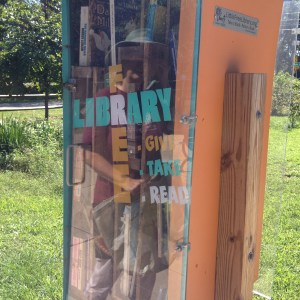
I think I was driving through Montclair, New Jersey when I first noticed one.  A “little free library” in someone’s front yard.  Then I began to notice them around elsewhere.  Neat little outdoor kiosks filled with books.  Despite my love of literacy I’m not inclined to take books from such places.  For one thing my reading tastes are odd, and for another I want other people to catch the interest in reading.  And “free” is a great motivator.  The idea is simple: set up a little free library on your property, seed it with books, and watch it work.  People are encouraged to take what’s there for free.  And leave books they want to donate, if so inclined.  Now that we’re in Pennsylvania we discovered one in a nearby park.  A community feels more homey with books.

Searching for the concept online, I came to LittleFreeLibrary.org.  I’m not sure if they started the trend, but it provides the basic idea.  They even have plans for how to build your own and get your neighborhood reading.  If anyone wants a clue for making America great, here’s a free hint: it will involve books.  They’re a commodity unlike any other.  Mass-produced (often too enthusiastically so) they are generally inexpensive and can be used over and over again.  One of the biggest headaches for publishers is the used book market—since a book is a handful of ideas, once they’re released they’re difficult to control.  They can be sold again for less than market value, and yes, even given away.  Those who read see the value in giveaways, even if there’s no personal profit in it.

Early in our tenure here we decided to take a book to donate each time we go to the park.  Sometimes we forget, of course.  Our first donation was there for two weeks, but then found a new home.  A strange kind of joy accompanied finding the book gone.  Perhaps we’d done some good simply by opening a door and leaving something we were no longer using.  Then something unexpected happened—I saw a book from my reading list in the local.  Should I take it?  I have a list of books to seek in used bookstores, for, to the chagrin of my own industry, I participate in the used book market.  I had been looking for this tome for a few years, reluctant to pay full market value since it has been around since the sixties.  In the end I couldn’t resist.  Next week, I told myself, I’ll take two books to give back.  Literacy’s that way—it’s something even introverts can share.