Independent Bookstore Day

Many modern mini-holidays are centered around things you might buy. I don’t mind that so much in the case of Independent Bookstore Day—of which I wish you a happy one. Quite by accident I found myself in an independent bookstore just last night, not aware I was prematurely celebrating. If anything might save us from the muddle we’re in, it’s books. We live in a society with plentiful distractions, many of them shallow. Books take some effort. They demand your time. They make you take some quiet space to think. Books came along with, and perhaps were the source of, civilization. Today we’re harried and hurried and frantic with an electric source of information and entertainment that never turns off. And we’re seeing the results of that playing out on an international scale. How different it would be if we’d grab a book instead!
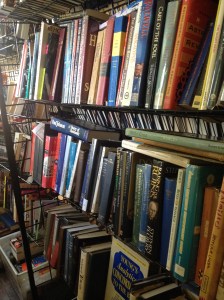
The strange thing is that those inclined to action often suppose reading to be an utterly passive activity. The basis for human progress, however, has often been what someone has read. Surprisingly, books can be the source of progress. When we see reactionary elections taking place around the world, leaders who don’t read emerge as the hailed champions of regress. We’re living through that right now. Books can be dangerous. Think about it—you’re being given access, however briefly, to someone else’s mind. The combined power of minds is an impressive thing. If what I’m reading is anything to go by, the hive mind is a source of incredible strength. You want action? Put multiple minds together. There’s a reason that civilization has gone hand-in-hand with literacy.

In the wake of Borders going under, independent bookstores have started to make a comeback. Those of us who work in the publishing industry have to keep an eye on those numbers. A visit to a bookstore is all about discovery. Quite often I’ve walked in with a list in hand. When I exit my list has grown rather than shrunk, and the purchase I’ve made was likely not on the list to begin with. Independent Bookstore Day gives us a chance to think about how very much we do not know. Unlike those who claim power and brag that they don’t read, admitting that we have more to learn is the way toward progress. I may not be the most active man in the world, but I do recommend action in the form of getting to a bookstore. If we each do our part, we can’t help but to make the world a better place.
The Labyrinth of Copyright

Here’s another post originating from my daily work as an editor. (As an editor you tend to assume nobody’s really interested in what you do all day, but I’ve been told this isn’t so.) What is copyright? And do I have it? First of all, a caveat: I’m not a lawyer. Copyright is complex and, to answer my second question first, yes, you do have it! So what is copyright? Essentially it’s the protection of intellectual property. As long as that property remains in your head, it’s yours alone. Once it’s expressed in writing, art of any kind, music, or even as a chart, it is automatically covered by copyright. If you want to use something someone else wrote, or produced, in your book, you need permission. Small quotes are generally considered fair use, but don’t push that doctrine too far! Fair use is listed as just that, a doctrine.

What many authors don’t realize is that your book contract is an exchange—you’re selling your copyright to the publisher for their services (they publish your book, promote it, register the copyright (it already has copyright, but registering helps to protect it legally), and handle the financial aspects of selling your book). You can’t publish your own work again without permission of the publisher. Sometimes I’ve had people ask me to use my artwork (from my own published articles) in their work. I don’t mind, of course, but I don’t own the copyright! If I published my work, the publisher has taken that copyright and I remain simply the author. If I want to publish my own published work somewhere else, I have to ask permission. Copyright, however, doesn’t last forever.

The only safe date before which material can be used without fear of infringement is 1922. Works published before then are in the public domain. Right now new works (such as this blog) are covered by copyright for the life of the author plus 70 more years. After that, unless the law changes, you don’t need permission to reuse these idiosyncratic musings. Not that that’s ever been an issue. I’m not a litigious person, but I do like to be cited. (Who doesn’t?) In any case, if you’re working on an academic piece, and you want to reuse somebody’s drawing, or an extended piece of writing, or even a tiny bit of a poem, you must have permission to do so. That’s what copyright does for you. The “fair use doctrine,” like most doctrines, doesn’t hold up well in court. If in doubt, just ask. Before you do, though, you might want to consult a copyright lawyer, just in case.

All opinions my own.


Publisher’s Breakfast

I recently had the opportunity to discuss publishing to a room full of academics. (Ooo, I can feel the envy rising already!) Although I discuss books quite frequently on this blog, I generally don’t discuss publishing much. One of the reasons is that publishing isn’t easy to tie into religion sometimes. Another—and this may be the bigger factor—is that publishing is work. This blog, which is technically a form of publishing, is more for letting my mind wander outside the paddock after being penned in at work for too much of my adult life. Still, I’m glad to give publishing advice for those who want it.

The focus of these talks (of which I’ve given precisely two) is how to get published. My main approach to this question is to point out that higher education and publishing are diverging rapidly. The reasons for this are complex, but simply put, publishers need to make money. Having been on the receiving end of tuition statements for a good deal of my life, I have no doubt that institutions make ready money. They may have trouble meeting the costs of all those administrators for whom they keep creating positions, like any good business, so each semester the bill creeps up a bit until suddenly you realize your bank account’s empty and you’d better get to commissioning some more academic books. After all, this is all about money, is it not?

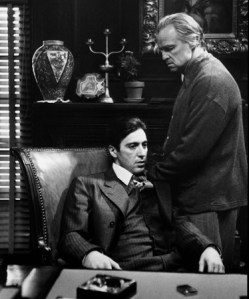
Like many in higher education, I courted academia as a hopeless romantic. I believed that love of subject and ardent devotion with ample proofs of said love would woo the academy into a permanent relationship. I’ve always been an idealist. Now I’m on the side of the desk where colleagues approach me to ask favors. It’s kind of like The Godfather, really. Only those who kiss Don Corleone’s ring tend to do so knowing that favors require some kind of reciprocity. The academy may not welcome you but would you mind helping us out now that you’re in a position to do so? No fear of horse heads here. Perhaps by now you understand why I don’t write much about publishing on this humble little blog. The focus of The Godfather, after all, is really young Michael Corleone and his devolution from an upstanding citizen (shall we say “academic”?) to a mafia crime boss. I’ll leave the other side of the equation blank. Trade secrets, after all, are worth money.