Diggers, Ranters, and Muggles

Great Britain, despite its relative secularity today, has historically been the Petri dish in which many religions have been cultured. A large part of this phenomenon derives, I suspect, from the relative indecision during a crucial period of what the official religion should be. It is quite possible for a state to dictate a religion, and historically religions have often served the purposes of the state. Governments support the religion that serves them best. Beginning with Henry VIII, however, Britain had a difficult time making up its royal mind. The Church (in Rome) had decreed divorce immoral, and the interests of patriarchy run deep in some men’s souls. In the flip-flopping between Protestant and Catholic that took place, many new groups emerged from the froth. The True Levellers, popularly known as “Diggers,” were one such group. Taking the book of Acts literally, they believed true Christians should have everything in common. They formed farming communities (digging the soil) to support themselves as dissenters. As with most utopian communities, however, this kind of radical sharing just didn’t last. After only two years the Diggers had disbanded.

Around the same time another sect known as the Ranters abounded. The Ranters, early rivals to the Quakers, held ideas well beyond the simple communism of the Diggers. Pantheists in an age of omnipotence, they didn’t really stand a chance of survival. They didn’t trust the authority of the church, and being Christians, as well as pantheists, they urged their English compatriots to listen to the Jesus inside instead of the one proclaimed in a limited way by the church and the Bible. Their antinomianism led to the perception that they were a threat to the social order. Interestingly, there seems to be evidence that the movement was somewhat widespread in the seventeenth century. Eventually they disappeared, absorbed into the Quaker movement or simply losing their cohesiveness by dint of their native antipathy to order.
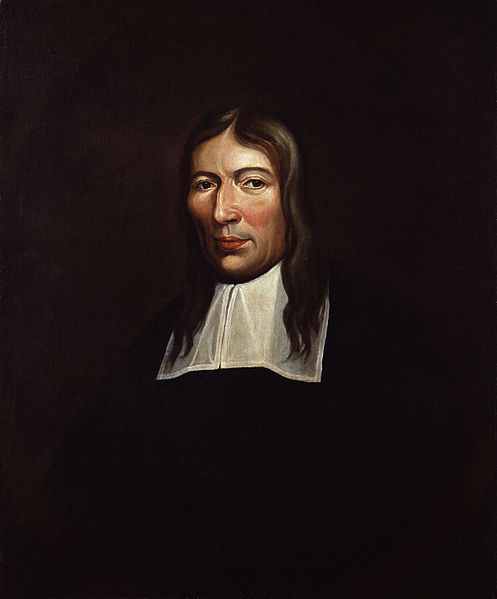
Mr. Muggleton, I presume

One of those influenced by the teaching of the Ranters was Lodowicke Muggleton. Technically a tailor, Muggleton is remembered as a religious thinker (a rarity in itself) largely because of his writings and Muggletonianism, which he founded (and which lasted until 1979). Apart from the Ranters, he also rejected the Quakers. Muggleton believed only in that which could be physically embodied, denying many aspects of an early modern world still alive with miracles and superstition. Even angels were beings of pure reason. Tracing the origins of fictional concepts may be a fool’s errand—and if so I am well qualified—but I wonder if J. K. Rowling’s “Muggles” derive from the name of this former Ranter who came to see life as having no magic. Muggleton’s world had no place for witches, magic, or divine intervention, yet it was profoundly religious. Once religion enters the public domain, it is sculpted to the satisfaction of individuals in search of their own meaning. Some of those searchers will be Muggles and others will be Ranters and a few may remain Diggers. Without any of them, the fabric begins to unravel.


Explanatory Value

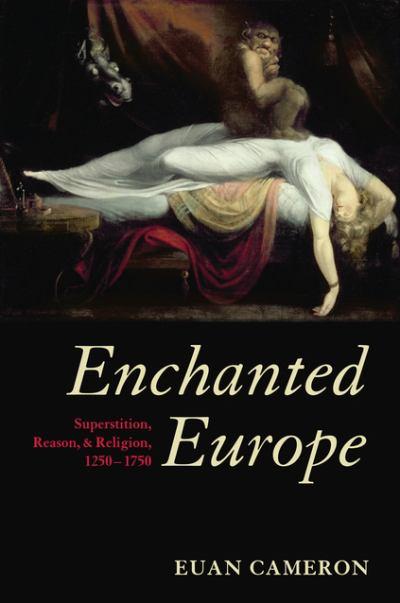
The dividing line between superstition and religion is thin and growing more effaced all the time. Nowhere does this become clearer than in studies of the history of religion. One of the critiques early made between “true religion” and superstition is that the latter involved magic, but today anthropologists find that line difficult to discern as well. Many religions are defined by their insistence on supernatural occurrences. The world as is, is by definition, secular. That’s one of the reasons Euan Cameron’s Enchanted Europe: Superstition, Reason, and Religion, 1250—1750 is so interesting. Cameron, an historian with a precise grasp on theological nuance, traces Christian responses to the world of the supernatural through the Middle Ages. Various theological responses are then explored as the author searches for that elusive distinction that makes one belief religious and another superstitious. It is really a matter of perspective.

Nowhere is this clearer than in the late Middle Ages. As Cameron notes, physics, to the mind attuned to God’s direct intervention in the cosmos, looks like the occult. How could a person seriously believe that two physical bodies, such as the sun and earth, or earth and moon, could attract each other? If you put God back into the equation just to take him out for an instant, this sounds extremely occult. Does not attraction imply volition? How can physical objects attract one another? Thus scientists such as Galileo and Newton often found opposition for their ideas based on the fact that science and superstition can also bear a passing resemblance.

As science’s superior empirical evidence became clearer, the God who’d stepped out of the room temporarily was eventually locked out. This vast universe could be explained without the supernatural at all. What was needed was better glasses. Microscopes and telescopes, and now cyclotrons and space telescopes, provide a consistent and ever sharper image of a universe that gets along just fine without the divine. But what of superstition? Has it gone away? We still routinely construct buildings without thirteenth floors. The sigh of relief from the worker or guest on floor fourteen seems never to be obviated by the fact that they are really on a renamed, empirically thirteenth floor. Your daily newspaper (although quickly growing extinct) will still offer you your horoscope before you hurry off to the lab. Call it what you will—superstition, religion, occult, magic—as long as we’re human no scientist or theologian will ever convince us that there’s not at least some whisper of a ghost in the machine.


The Idea of a University

I have to admit that my sense of justice has been a bit offended by the loss of reputation of my chosen field. Seeing how universities are fast becoming job-training institutes, I fume about what once had been and no longer shall be. History is the lens through which I view the world (a subject many industrialists consider “useless,” but to their cause actually “dangerous”). Historians dispute which university was the earliest, although something similar to the idea of a university was developed in Bologna, Italy, around 1088.  The University of Paris was also very early, as were Oxford and Salerno.  While “business” as it was then known could be studied to some degree, a primary function of early universities was the training of clergy. No doubt, paranoia concerning heterodoxy and heresy helped spur on the idea that future clergy required extensive training. As universities caught on, many centers for the studying of theology (indeed, a branch of religious studies) sprang to life.  It could be argued that this was a “trade mentality,” but very quickly this became an academic point.  Who else but a theologian would every worry about how many angels could dance on the head of a pin?

Science was incorporated into theological studies from the beginning.  We all know about the antagonistic relationship between the Church and Galileo, but less often do we hear about the religious thinkers who were trying to put it all together into a workable system.  Often the university was among the few places where such abstract and critical thought could occur. Some of the great universities in the United States began as seminaries: Harvard, Yale, Boston University—they started as places to train clergy. How often do graduates of the Harvard Business School toot that particular horn? Permit me the privilege of a mournful sigh as I watch the torch pass from abstract thought to the abstract symbol of the gold standard. Money only possesses the value we assign to it.  Currency can be measured in less material avenues as well—the ability to think clearly and precisely and compassionately; these abstractions, I would lament, have inherent value.  Alas, the heart of the university has gone another direction. I have undergone the heartache of breakups before, and always one needs a little time to adjust to the loss.

The University of Virginia’s recent object lesson to higher education should perhaps serve as a warning tap on the brakes to those who would see higher education kneeling abjectly before the towering statue of commerce with its head of gold.  Maybe there is more to life than money?  Maybe education for its own sake is what sets civilization apart from life in the savage jungle.  Those who castigate our great institutions of learning seldom turn down the offer of an honorary degree.  While these academic niceties require neither coursework nor dissertation, they do offer a kind of credibility that the rich seldom find on their own.  So what is the idea of a university? Is it a place to learn a trade?  Sometimes.  The humble request those of us deemed useless make is that the university not forget its humble origins as a place of speculative thought in the service of religious thinking.  Critical thinking. Otherwise it will be more than irony that the city that gave us higher education is also the one that also gives its name to baloney.

from Wiki Commons


My Cultic Breakfast

The word “cult” is no longer used by religious specialists to refer to New Religious Movements, but when I was growing up in a fundamentalist home it was liberally applied to suspect groups. While having breakfast this morning I realized just how deeply rooted in American culture such groups are. I reached for my cereal. The reason that many Americans eat cereal for breakfast stems directly from the healthy lifestyle advocacy of John Harvey Kellogg of the Seventh Day Adventists. Adventists are vegetarians and are very concerned about healthy eating. Kellogg was a devout Adventist and produced Corn Flakes as a means of providing a—pardon the term—kosher choice for breakfast foods. Of course, growing up I’d been warned against the “cult” of Adventism, even as I happily munched their Corn Flakes.

So today I decided to have some Apple Jacks instead. Apples made me think of John Chapman, better known as Johnny Appleseed. Americans learn about the eccentric apple-planter from childhood, but most never learn that he was also a missionary for the Swedenborgian Church. Named after the Swedish scientist and theologian Emanuel Swedenborg, this New Church taught doctrines that set traditional Christians’ teeth on edge. Believing that Christ had already returned in the words revealed to himself, Dr. Swedenborg didn’t ingratiate the fundies by rejecting the standard interpretation of the Trinity and by promoting mystical beliefs. John Chapman spread Swedenborgian ideas along with his apple seeds. I’m sure that as we sang the Swedenborgian hymn at Methodist Church camp, we didn’t realize its heterodox origins: “The Lord’s been good to me, and so I thank the Lord, for giving me the things I need: the sun, the rain, and the apple seed—the Lord’s been good to me.”

What good is cereal without a spoon? As I grab my Oneida spoon, selected by my wife and me when we registered for our wedding, I’m sure I didn’t know at the time that the Oneida company is what is left of the Oneida Community. Founded by John Humphrey Noyes in the Burned-Over District back in 1848, the Oneida Community was one of the Perfectionist groups common at the time. Their town of Oneida held everything in common—everything. That included “complex marriage” which meant that all members had sexual access to all members of the opposite gender. They worked to support themselves, and one of their products was silverware. With the death of Noyes and concern of secular authorities about the interesting sex that was going on, the Oneida Community quietly closed, leaving us a company to produce fine stainless steel implements with which to eat our cultic breakfast.


Think Again

Within a few blocks of my office is Midtown are at least three temples related to the New Thought movement. New Thought has been variously interpreted, but generally it is considered a religious movement, challenging, as it does, the very perceptions of reality itself. New Thought is usually traced back to Phineas Parkhurst Quimby, a nineteenth century American philosopher and inventor. A watchmaker by trade, Quimby came to believe that mind had ultimate reality and New Thought opined that the divine is true human selfhood, and what we call God is ubiquitous. One of the corollaries of this outlook is that the mind is capable of healing the body. A woman who was a patient of Quimby took his ideas and developed them further. Mary Baker Eddy would eventually found the Christian Science movement. Although the Mother Church of Christian Science is in Boston (and is a somewhat imposing building), over on East 43rd Street in New York stands the First Church of Christ, Scientist.

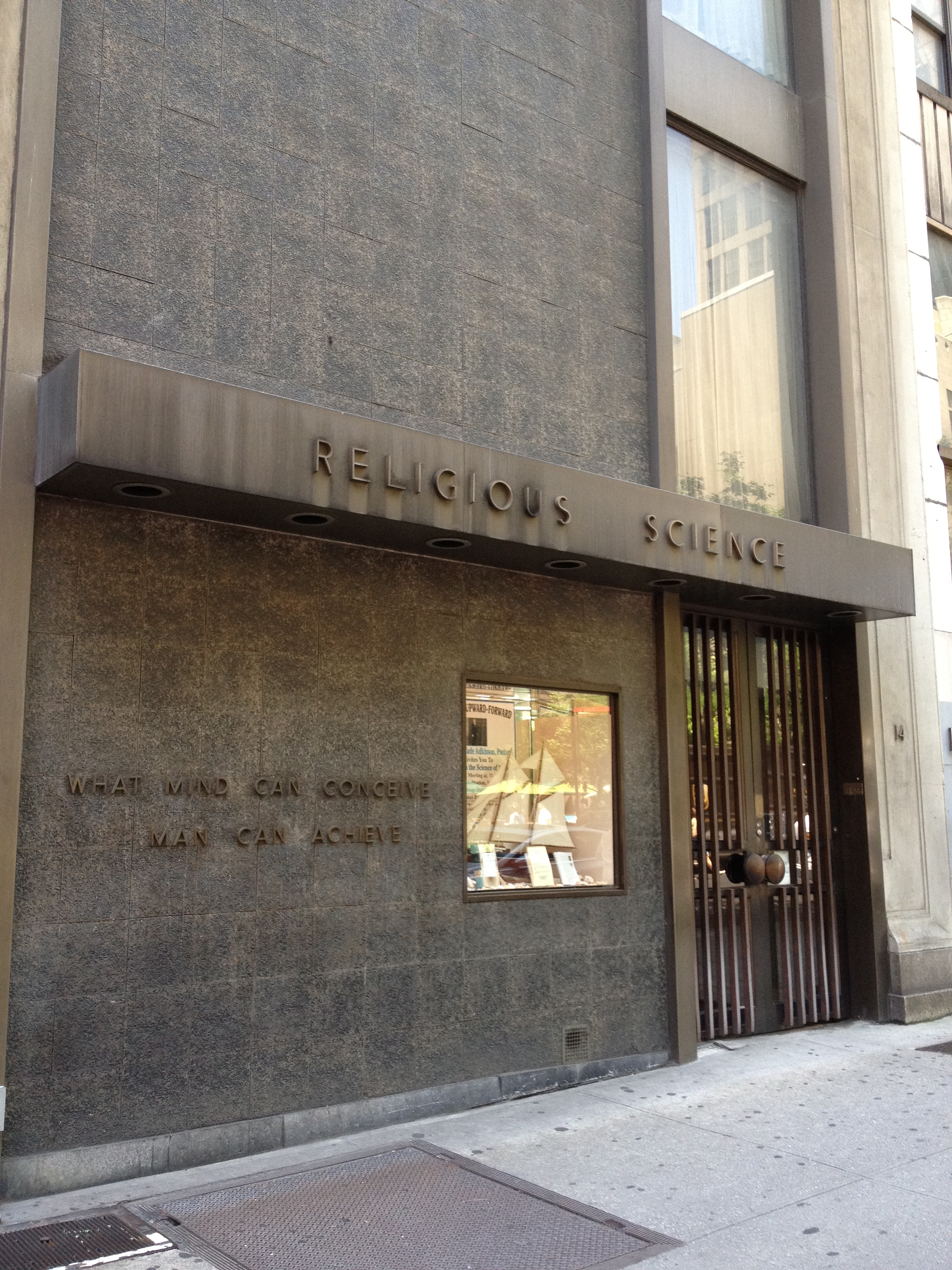
New Thought was noteworthy in that many of the leaders of the movement were women. Unburdened from traditional Judeo-Christi-Islamic ideas of paternal divinity, New Thought had no use for male-centeredness. One of the early leaders of the movement was Emma Curtis Hopkins. Originally a disciple of Mary Baker Eddy, Hopkins split off from Christian Science and began to organize the New Thought movement. One of her followers was Ernest Holmes, the founder of Religious Science. While based in Los Angeles, Religious Science had roots in New York where Holmes spent some of his younger years. Holmes would eventually write The Science of Mind and his followers would become recognized as another New Thought “church.” While on a lunchtime errand I came across the Religious Science center on East 58th Street, just a few blocks from its kin down by Grand Central.

Theosophy is probably better classified as an esoteric religion rather than New Thought. What ties them together is their beginnings in the late nineteenth century in the Northeast. Helena Blavatsky and Henry Steel Olcott began meeting in New York City and the movement grew out of their mutual interest in the religions of antiquity and the far east. The Theosophical Society moved its headquarters to India with a main US office in Wheaton, Illinois. Nestled between the Church of Christ, Scientist and Religious Science, an office of The Theosophical Society sits quietly on East 53rd Street.

One brief lunch hour will take you past all three. These New Religious Movements attest to the vitality of religious thought. Some of them continue to try to combine science with the world of the mysterious, spiritual universe in which we find ourselves. The obituary for religion was written long ago, but a stroll through Midtown on lunch hour will show it was certainly premature.


Gothic Religion

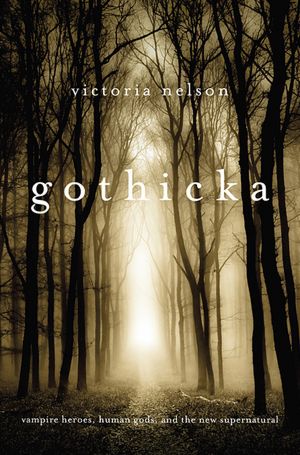
Every great once in a while, you run across a book that seems to have been written just for you. I’m cheap enough to wait for most books to be issued in paperback (and storage is getting to be an issue in our cozy apartment), but sometimes the urgency is too great and I can’t resist. In Providence a few weeks ago, I visited the university bookstore—one of my favorite places in town. On the new arrival table was Victoria Nelson’s Gothicka. For what seemed inexplicable reasons, I always found Gothic tales among my favorite growing up. Poe was a standard, but he was accompanied by other stories that elicited the same cocktail of sensations, accompanying a dark and mysterious atmosphere with a suggestion of menace. Transfixed by even the mere presence of this book, I knew I was in the power of a force to which I would eventually succumb. And, unexpectedly, the book helped to explain part of my childhood.

Not every book I read has to do with religion. Far from it. I expected Nelson to discuss literature and movies and culture—all of which she does—but not necessarily religion. The first three chapters proved a revelation in that regard. Nelson deftly explains how Gothic largely overlaps with the characteristics of religion, bringing the supernatural into human lives and insisting that we tremble before it. Perhaps best explained by pastor Rudolf Otto in The Idea of the Holy; the transcendent is something that terrifies as well as compels. In a culture where organized religion appears to be losing ground, Gothic offer the opportunity to tremble before the supernatural, and many people find it almost a religious experience. As becomes clear, the “almost” may appropriately be dropped.

Tracing the trajectory of my own reading interests, Nelson next provides an insightful chapter on H. P. Lovecraft. In many ways the initiator of worship of the dark divine, Lovecraft’s Cthulhu and kith and kin represent an undisguised secularization of deity. At the same time, the trembling is still very much present—indeed, it is a native part of the experience. Lovecraft, who was an atheist, understood the literary utility of gods. They frightened and haunted him with their very non-existence. That is power. Gothic acknowledges and embraces that power while never relinquishing its darkness. Nelson’s Gothicka holds the potential of a journey of self-discovery. As she ranges deeper and deeper into that world, the reader discovers just how much it is part of being human in a world tormented by fallen gods.


Help from the Friend

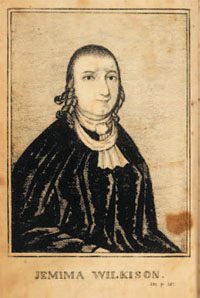
Being unconventional does carry certain risks. I first learned of the Publick Universal Friend, born Jemima Wilkinson, from Mitch Horowitz’s Occult America. There are many things, I imagine, worse in life than being labeled “occult,” but the Publick Universal Friend seems to have been more eccentric than occult. The “Friend” of her chosen moniker was a mark of her Quaker roots. The Quakers, while never among the most numerous of Christian sects, are infrequently considered occult. Two U.S. Presidents were Quakers, as is that friendly face smiling at you from your breakfast cereal box. What Jemima Wilkinson did that pushed her over the edge into the unconventional was actually the fault of her father: she was born female. In the 1770s religious leadership was nearly unanimously male. 

Wilkinson underwent a near-death experience that, like John Wesley some 70 years earlier, led her to believe that she was born to some higher purpose. Quakers, or Friends, generally eschewed excess showiness and the Publick Univeral Friend liked to make her presence known. She rode a white horse into Philadelphia and rode around in a carriage with her own logo, a kind of evangelical branding, if you will. Eventually tiring of the criticism of city folk (Publick Universal Friend was strictly platonic, advocating absolute celibacy), she moved to a region of New York that would eventually become the birthplace of several distinctive American religions. She settled near Keuka Lake and formed a community called Jerusalem.  New York and Pennsylvania would eventually harbor many utopian groups.  Both states were (and are, to a large extent) rural and it was a fairly easy matter to locate unclaimed real estate and establish a little bit of heaven here on earth. 

The message of Publick Universal Friend was peace and friendship, nothing too radical.  If preached by a male it would have been considered gospel. In fact, in a less darwinian world it might actually work.  The pull of nature on some people is too strong.  On others it is too weak. Maybe it is the legacy of having been born in a state that began as a “holy experiment” by William Penn, but I find it sad that the Publick Universal Friend has been nearly forgotten. Perhaps the Friend will have the final laugh. It seems that a young man named Joseph Smith might have been influenced by her in the days before writing up the Book of Mormon. As I’m sure Joseph Smith learned in the town of Carthage, we can all use a Friend who encourages us all to get along.


Ebenezer

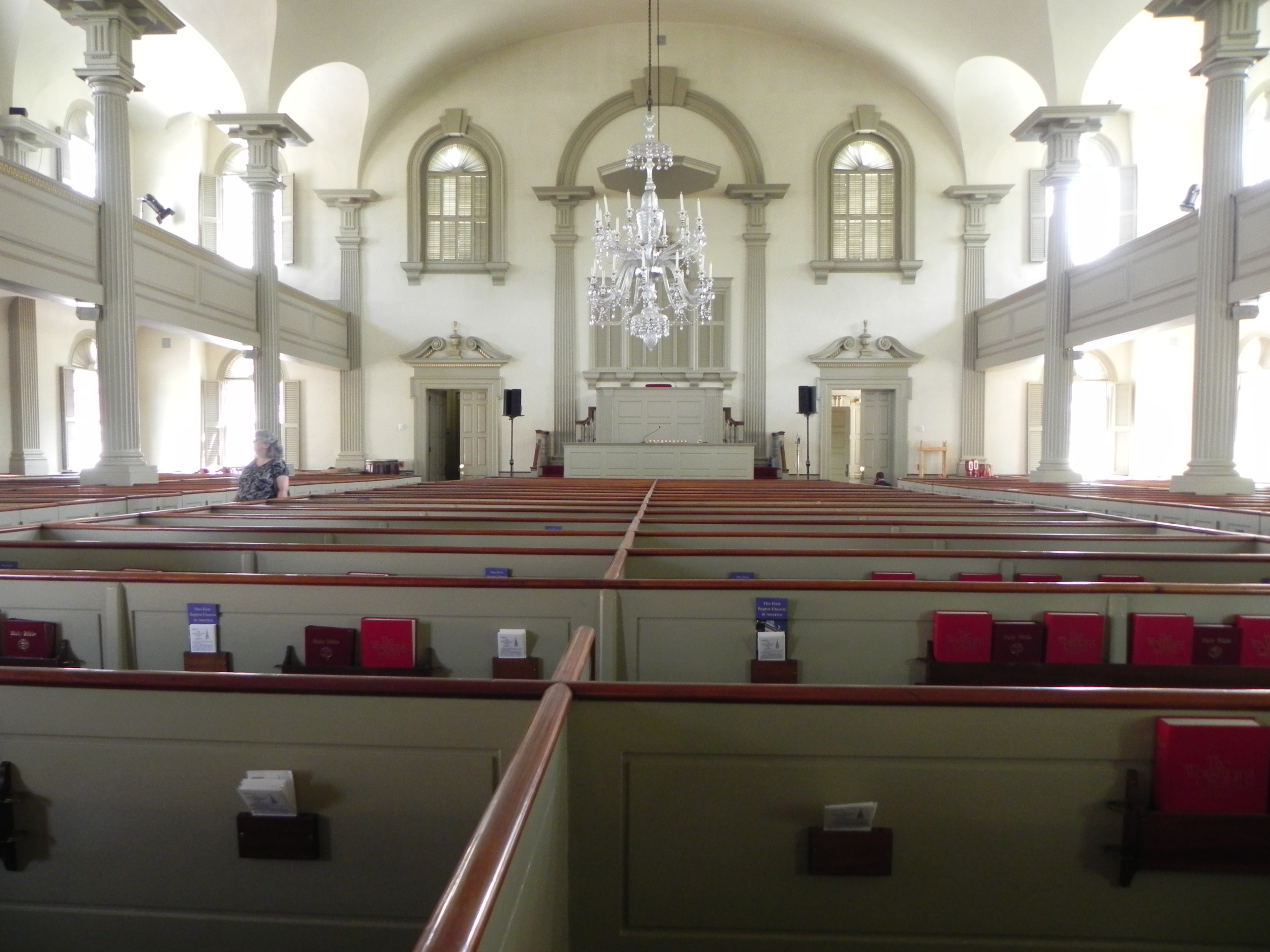
Providence has been on my mind lately. Most obviously, traveling to Providence for my niece’s graduation from Brown brought the city back to mind.  A book I’ve been reading has been referencing H. P. Lovecraft, a person readily associated with Providence as well.  And who can forget the Baptists?  While in Providence we visited First Baptist Church, widely considered to be the actual first Baptist church in America.  Portions of the commencement ceremony are held here, but between times it was open for the curious.  I guess I qualify.

Baptists are a widely diverse group.  In the United States they are often guilty by association with the shenanigans of the Southern Baptist Convention, and given the numeric force of the Baptist Church that can appear a little intimidating.  Nevertheless, Baptists were (and generally are) great defenders of religious tolerance.  Their own non-hierarchical tradition allows considerable freedom within the denomination itself.  Houses of worship (originally meeting houses, not churches) were plain and devoid of symbolism.  That is still a hallmark of most Baptists today.  Inside First Baptist, I was surprised to see a symbol.  A chunk of rock, an Ebenezer, rested on the table at the back of the meeting house.  The origin of a “stone of help” (an adequate translation of “ebenezer’) is certainly biblical-the reference goes back to the story of Israelite victory over the Philistines in 1 Samuel 7.  Samuel is reputed to have set up the stone as a memorial of the unanticipated victory.  After that story, the stone never reappears in the Bible.

The Baptists have always been concerned with idolatry. They do make a point that some Christian traditions rely very heavily on trappings to get the message across.  They are also correct in that early Christianity was a much simpler faith than the densely layered, extremely complex, imperfectly blended varieties of religion that today claim the title “Christian.”  It isn’t a copyright-protected brand and there is little that all Christians could be said to have in common.  As I touched the stone of help, I realized not even all Baptists share the stringent standards of no symbolism in their churches.  That is probably a good thing, because that, in itself, is symbolic.


Making Light

Back when I was a starry-eyed camp counselor in the Western Pennsylvania Conference of the United Methodist Church, “Christmas in July” was a chic (in as far as Christians can be chic) trend. Kids lucky enough to be at camp that week were treated to a neo-Christian holiday that included a half-birthday for Jesus and cheap gift-giving. (The fact that Jesus’ birthday, in as much as it can be determined, is mid-way between December and July seemed a strangely mute point.) Our “gifts” were generally manufactured from natural products found in the woods and were a diversion to help the homesick campers concentrate on the truly Christian practice of getting stuff. Interestingly, here on Midsummer (the solstice is actually the first day of astronomical summer, but our pagan forebears were more into astrology, it seems, than astronomy) we are on the second most-celebrated holiday in the northern latitudes. With its midnight sun in the far north, and warm temperatures starting to make a regular appearance, light outweighs darkness for just a little bit, and life is never easier than this. No wonder Midsummer appeals to the archetypal mind.

Of course, Christianity could not accept a purely natural holiday, attributed as it was to the beneficence of heathen gods. In an even more dubious exercise than fixing the date of Jesus’ birth, Midsummer became the nativity of John the Baptist, or St. John’s Eve. While some scholars dispute the historical existence of Jesus (not terribly convincingly), the case against John the Baptist might be a little stronger. The prototypical forerunner, the herald announcing something greater than himself is so uncharacteristic of religious folk that it lends itself to considerable doubt. John is described like Elijah, one of the greatest prophetic figures of biblical times. John’s birthday? Anybody’s guess. Since he is second to Jesus, put his birthday on the opposite solstice. (I realize the solstice was June 20; at this early hour of the morning, I think today may also qualify.)

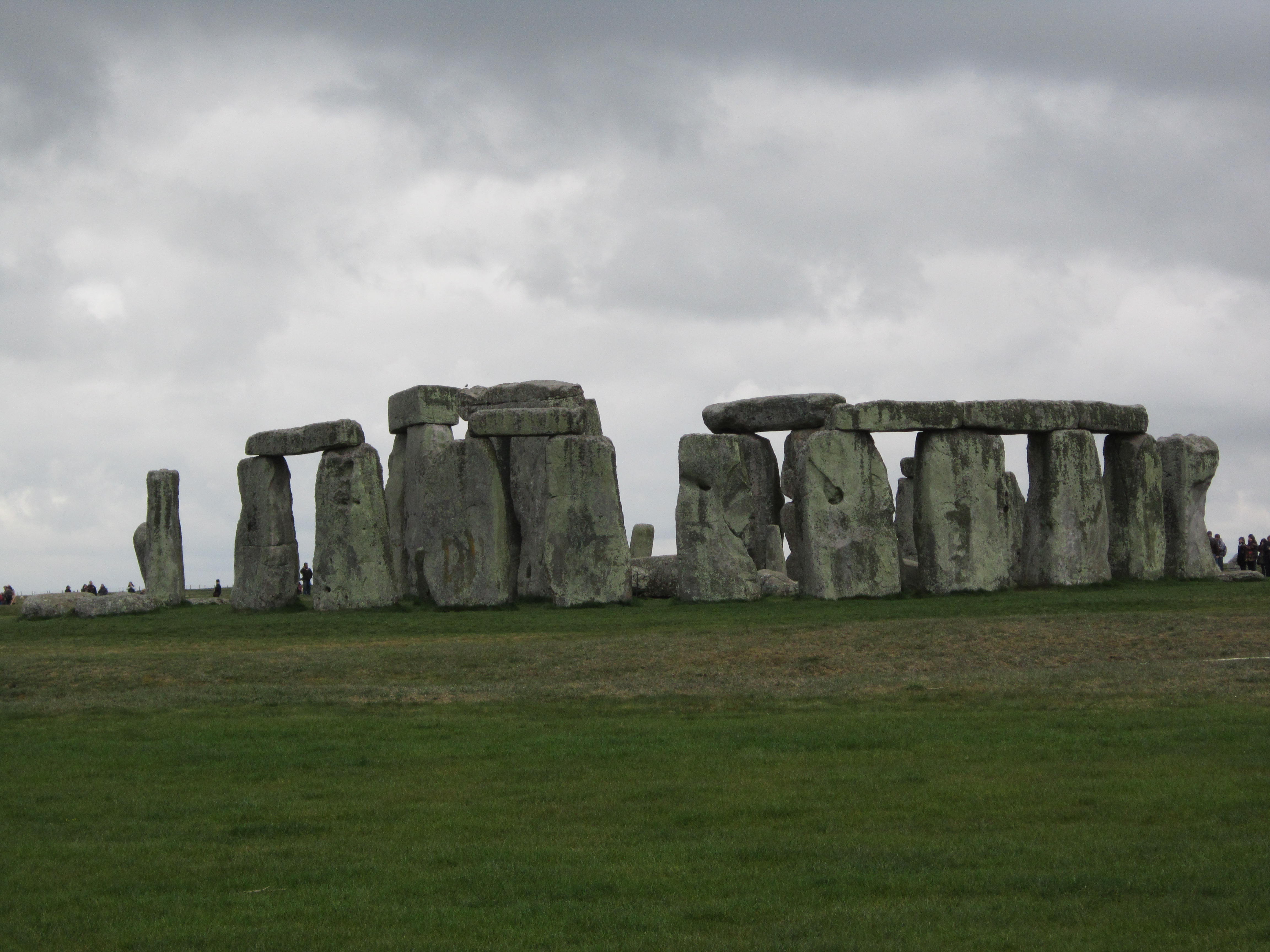
Back at Easter, historically near the vernal equinox, I found myself at Stonehenge. Knowing I was missing Druid priests by a full set of quarter days, it was still an exhilarating experience. Ancient people welcomed the return of increasing light with religious fervor. The effort it took to move these monoliths to the barren plains of Salisbury is nearly unimaginable. They represent, at some level, the invincible nature of the sun, our warmth and light. In physical, astronomical, terms they had no idea what the sun might be. It was, undoubtedly, the source of light and warmth, and even every lizard and turtle sunning itself on a rock participates in welcoming its return. So we’ve come to the solstice once again. It is the high point of the year. Now we begin our slow descent back into nights that will grow longer until the winter solstice once again reverses the trend. We don’t need Christmas in July–we already have it in June.


Home Grown

In a seedier neighborhood of Midtown stands a five-story apartment building that would be easily overlooked on an ordinary day. Back in the late nineteenth century an investigator of the Lincoln assassination, and lawyer, by the name of Henry Steel Olcott began to meet in this apartment with a Russian mystic who came to be known as Madame Blavatsky. Their base of operations was call the Lamasery. The “religion” that resulted from their collaboration came to be known as Theosophy.

I remember distinctly when I first learned of Theosophy. I was attending an academic conference and as I passed along the bookstalls I noticed the Theosophical Society with their table of wares. A newly minted doctor of philosophy, a nagging worry sprung up in my head: was this a form of philosophical thinking that I should’ve learned about? Had I somehow forgotten lessons on Theosophy? Should I rush back to the library (this was before the Internet, let alone Wikipedia) and find out what Theosophy was? Well, I did make the effort and soon learned that it was considered an occult group and therefore I need not concern myself any more.

What I hadn’t fully realized is that although Theosophy did indeed integrate some elements of the Spiritualist movement, it was in many ways America’s introduction to Buddhism and Hinduism. America in the nineteenth century had some experience of Islam, but generally the only religions that were widely recognized were Christianity and Judaism. Anything else sounded occultish and vaguely heathen. Olcott and Blavatsky raised awareness that religions elsewhere in the world did not necessarily conform to American tastes. There was more to religious belief than met the eye.

Theosophy never made it big in the New World, but it continues to survive to this day. America has become the premier place for new religions to emerge. Indeed, it would be difficult to imagine a religion like Mormonism—a distinctly American belief system—gaining an infant foothold anywhere else in the world. Although largely identifying ourselves amorphously as “Christian,” Americans are great religious experimenters. And Theosophy was a faith that grew out of experimental ideas in New York City with tendrils stretching all the way to India and China. The movement even bestowed upon Gandhi his famous epithet of Mahatma. The words inscribed on his Serbian monument would serve us all well to memorize: “non-violence is the essence of all religions.”


Alien Deities

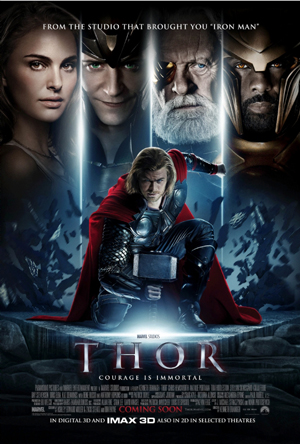
What with The Avengers making such a big pre-summer splash this year and all, I decided to refresh my memory and watch Thor again this weekend. In many ways it is a very impressive movie—very loud in the theater last year, and necessarily quieter in our apartment over the weekend. Often when I see a movie on the big screen I can’t keep track of all that is said or implied, especially when there’s so much action going on. Of course, Thor is an unusual hero in the Marvel Universe, being a god. Being supernatural is not limited to deities in that universe, but the other mutants are the results of science: the Hulk and his gamma rays, Captain America’s experimental treatment, and Iron Man’s good, old-fashioned engineering. They are modified humans. Thor comes from a different place. Upon rewatching the movie, the line about the Norse gods as beings from another dimension worshipped as gods came through loud and clear. Jane Foster comes to believe in the ancient alien hypothesis.

As a solution to the lack of omnipotence on the part of the gods, casting Thor and Loki into the role of aliens serves comic-book universes very well. In reality there are well-meaning and serious people who believe that any entity recognized as a god by human religions might have been a space traveler mistaken for divine. This is an idea I first encountered in Erich von Däniken’s Chariots of the Gods? (Hey, I couldn’t help it—I grew up in the seventies!) The world has enough high strangeness without von Däniken’s hypotheses, but in the case of Thor we have a fictional realm that explains how heroes gain their strength. The same could be postulated, I suppose, for Superman, but then, he never commanded a formal cult in antiquity.

Beyond the theological conundrum, Thor also participates in the nearly universal theme of resurrection. Realizing that his arrogance has led to the troubles of the human race, Thor faces the Destroyer (a creature with origins in the Hebrew Bible and Israelite mythology) and willingly lays down his life. This is generally the prerequisite for resurrection in any effective mythology. Of course, Thor returns and, like any good savior, rescues the world. Setting the story in New Mexico only assists in reasserting the mysterious events at Roswell where, like in the movie, something strange fell from the sky. In this subtext the feds rush in and commandeer the data, for people are not capable of making the correct decision. Yet, they leave the god behind. Marvel Studios has been rightly praised for its mastery of the genre. For those willing to look deeply, even Thor has its social commentary.


Artifacts or Theodicy?

Last week the Huffington Post ran a story that ties archaeology, religion, and monsters together in a package too neat for some researchers. Digging in a sixteenth-century grave for plague victims (something that strikes me as being so foolhardy as to be religious) archaeologists found a corpse with a brick in its mouth. The preliminary conclusion? Sixteenth-century Italian plague-weary society was attempting to stop a vampire. The find has, of course, been disputed. Other archaeologists, the story notes, claim that a loose brick could have fallen into the cadaver’s agape mouth just making it resemble the little-known technique of stopping a vampire by bricking its mouth open. This story, written with Huffington Post’s usual pluck, raised an issue I quite often encountered as a doctoral student in ancient Near Eastern religions: anomalies are generally categorized as religious.

When my wife first pointed this story out to me I thought I might learn something of vampire lore—itself inherently religious—from the sixteenth century. The fact is, however, that artifacts (including people) under the ground accumulate a lot more than dirt. Mystery attends the lives of yesteryear, and the further back we go in time the less we understand. It was a standing joke among those of us in the textually-based field of religious studies that any artifact for which no function could be discerned would most certainly be labeled “religious” by archaeologists. When no logic attends an action, call it religious. This might be a motto for academics and their approach to the study of religion. There are some who claim religious studies is not a proper field of inquiry at all. Excuse me, but where are you intending to fly that plane?

Vampire scares (whether or not that’s what was found in Italy) do, however, follow their own logic. Although early scientists may have made connections implicating rodents (and their fleas) as carriers of plague, the average citizen would have only seen the supernatural dimension. Morbidity on the scale of the Black Death is almost inconceivable and as Europe suffered through periodic outbreaks of plague it seemed that a good God couldn’t be behind it all. Evil creatures, such as vampires, get God off the hook. They are a device of theodicy. “Theodicy” is the jargon for the theological justification of God in a world full of suffering. When God’s goodness effaces to such a point that people grow frightened, well, isn’t it just easier to say a vampire is behind it all? The conclusion that logic draws is quite different. Nevertheless, I think I’ll be replacing the garlic on my nightstand with a brick. What will the archaeologists of the future say?


Convergent Evolution

Back when my opinion mattered—in higher education, you must realize, a scholar’s outlook only matters when s/he has a teaching post, no matter how abysmal the school. Once that post is gone you just become another guy with an opinion—I was invited to a conference. This is quite an honor for someone consigned to the bargain basement of academia, and for my paper I read from a burgeoning book that died a sudden death along with my academic career. In that stillborn tome I argued that many aspects of ancient mythology—including some in the Bible—made better sense in the light of science. I suggested that some of the infelicities in ancient texts might be the signs of continuing evolution of the human brain. Ancient people were able to believe what we find troubling. By the end of the conference many respectable scholars were looking askance at me when I stepped into the room. Honestly. I heard the word “Wiggins” uttered as if it were an archaic curse. Shortly after that I found myself working out of some guy’s basement for a salary fit for a knave.

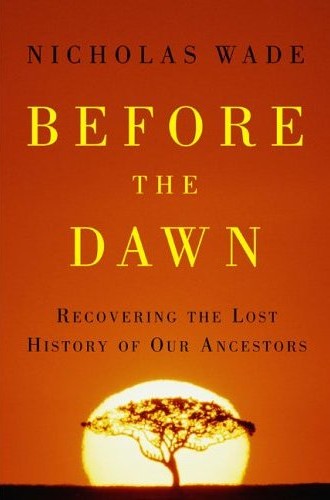
Imagine my delight, then, at finding a reputable scholar who argued that the human brain indeed continues to evolve. In fact, it has speeded up the pace as new challenges have emerged. Before the Dawn: Recovering the Lost History of Our Ancestors by Nicholas Wade was recommended to me by my brother-in-law. As I was updating myself this week on how we became human, I was surprised to see Wade suggesting what I had suggested in my paper—the patterns of human behavior (we both have an interest in religion, it seems) are tied to the evolutionary state of our brains. Sitting on a bus next to many other drones commuting like ants to New York City, I felt strangely vindicated. I had an idea scorned by my colleagues that is being suggested by science. Not that everyone will accept Wade’s conclusions. Many scholars of ancient religions will never even read them. When I explained my thesis to a colleague after losing my academic status, he said, “I don’t give much credibility to science.”

Convergence is the phenomenon of two species evolving an adaptation independently. Often it is difficult for people to believe that a trait shared by two populations is simply nature’s way of trial and error that happened to work twice, in different situations. Nicholas Wade and I experienced convergence on this point. He, of course, is a famous writer and I am nobody. Nevertheless, my unpublished idea was presented at a conference the year his book must have been in production. We had both been reading about evolution and wondering what its effect on religion might have been. I will comment more on Wade’s specific ideas about religion in the book in another post. He, of course, went on to write The Faith Instinct, which was widely acclaimed. At that time I was struggling to find work and it seemed that natural selection hadn’t selected me at all. I am glad, however, that my idea made it into print, even if it was evolved by someone else who is far more fit for survival.


Living with Art

A day spent among art can be more spiritual than a month of Sundays. Few become rich by being artists—in fact the opposite is society’s expectation. The masterpieces artists leave behind then become among the most valuable of all human creations when their often tragic lives end and it is recognized that no more genius is forthcoming. As a lifelong dabbler in the arts, I know that nothing like a perturbed state of mind serves to bring about the pieces I like best. Seeing the art of others, however, is a deeply satisfying experience. In a pre-Mother’s Day celebration, we met friends yesterday to revisit Grounds for Sculpture in Hamilton, New Jersey. We’ve grown accustomed to gray skies this spring, so the fact that it was sunny and warm came almost as a divine sign that this was a day to spend outdoors among the artwork of both humans and nature.

As rational as we strive to be, emotion remains our main motive force. Psychologists and neuroscientists, approaching the human mind rationally, inevitably conclude that emotion and reason are hopelessly entangled in the psyche. Not only does this explain the persistent draw of art, but also of religion as well. If possible, pull back and try to listen to someone, anyone, describe their religion in rational terms. How quickly it breaks down! And yet, reactions against a purely scientific—and doubtlessly empirically correct—explanation of the origin and development of life on earth lead to very hostile reactions. For many such explanations are not emotionally satisfying. We need a little more magic in our imaginative diet. Art allows us to indulge without embarrassment in our need for emotional expression. In the art galleries I’ve seen, whether Edinburgh, London, Paris, New York, Milwaukee, Corning, or Hamilton, there have always been hundreds of others seeking something there as well.

What we are seeking can’t be purchased with money, and it can’t be grasped by greedy hands. It can only be held in receptive and hungry internal places—the space pre-scientific individuals called the soul. And there it will remain. The first time I saw the Mona Lisa and the statue of winged Nike will never leave me. Yesterday, wandering the acres of art called Grounds for Sculpture, once again artistic expression claimed another willing victim. In our money-fevered world where “real life” is squandered chasing material goods to outstrip everyone else, art, the spiritual quest, lies quietly awaiting the weekend. The time people value most. And those who spend that time among art will be the most blessed of all.


Beyond Measure

Thinking back to my first course in World Religions, I recollect learning about Hinduism, Buddhism, Islam, and Confucianism for the first time. It is likely that Taoism was also mentioned, but I had to do a ton of research before I taught the course for the first time at Oshkosh. I remembered learning nothing about Sikhism or Shinto, not to mention Jainism or any host of religions boasting smaller numbers, by gosh. Now that I’m in the business of commissioning books on world religions, I have come into a quandary. As I know from experience, those who teach world religions are faced with a classic case of TMI: too much information. These religions I’ve mentioned only begin to scratch the vast surface of human religious expression, while your typical semester is only 14 weeks in duration. How do we cover all the smaller religions, some of which may have even a million or more adherents, and may be, at times, geared toward violent behavior? There’s simply no way.

This is where the quagmire grows thickest—are “major religions” quantified by numbers alone? From comments of readers of this blog it is quite clear that Christianity is no uniform religion. The differences go deeper than Protestant or Catholic or Orthodox. Most of us follow rather idiosyncratic blends of various religions we’ve experienced. It is not unusual for a Christian to practice yoga or to engage in meditation. And there are thousands of smaller religions as well, and the beliefs are deeply embedded in the lives of those who hold them. A good example would be Native American religions. There isn’t just one. Various tribes held their own beliefs and yet try to find a textbook that covers the differences between them. (Ah, but publishers are bound by the need to sell many copies to make such books profitable, and what professor is going to have the time to parse out different belief systems of these small, sometimes powerless groups?)

It is the curse of categorization. In our free market economy bigger is always better. Religions, on the other hand, do not always concern themselves with winning the most tricks. The Zoroastrians, who gave us the concepts of Heaven and Hell and much else that became standard theology in the monotheistic religions, continue to exist. In small numbers. So small that, as a religion major, I didn’t really learn about them until I began teaching classes exploring the origins of our modern religious concepts. When the modern eye assesses the importance of something, it does so by crunching the numbers. Religions have been our human means of seeking the truth since civilization began, perhaps even before. Often numbers and truth just don’t align.