Hallowed be thy Kane

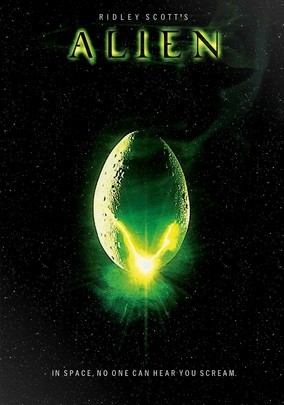
Watching the alien burst from Kane’s distended abdomen as he appeared to have eaten too much seemed somehow appropriate on Thanksgiving. I’m well aware that my taste in movies does not always match expectations and few bother to comment on my idiosyncratic observations. Nevertheless, it had been years since I’d watched Alien and on this particular holiday it felt like synchronicity. I’ve seen the film a few times before, but this is the first time since starting this blog. Not surprisingly, some biblical allusions popped out at me as I watched the crew of the Nostromo struggle with alien life. And I’d just read of NASA’s “exciting discovery” on Mars, a discovery whose official announcement for which, like Christmas, we’ll have to wait until December. Learning that the gut-busting alien was modeled on Three Studies for Figures at the Base of a Crucifixion by Francis Bacon (a contemporary one) only sweetened the analogy.

Character names hide aspects of personality and intention. Sometimes the writers may not even be aware of all the shades of gray. The alien’s first victim is Kane. On paper he seems an ordinary citizen, but on the screen the euphony with the first human child, Cain, is obvious. As Parker is lamenting how large the alien has grown in just a short time, science officer Ash whispers, “Kane’s son.” Or is it Cain’s son? Cain, the infamous ancestor of the sinful Grendel and any number of other villains of literature and cinema. Cain is, significantly, the first child born in Genesis, himself the genesis of sin in the world since his murder of his brother is the first act that the Bible declares a “sin.” The alien, born worlds away, conforms to biblical expectations.

Since Ash is actually an android and has no real feelings, he admits the alien to the ship and protects it until he is destroyed by his shipmates. He represents unfeeling science amid the horror of human bodies being invaded and rent apart. When accused of admiring the alien, the resurrected (!) science officer states, “I admire its purity. A survivor… unclouded by conscience, remorse, or delusions of morality.” Is he not really describing science itself? Religion is running rampant on the Nostromo. As Ripley sets the detonation charges and finds her escape blocked, she races back to the console and cancels the self-destruct order which the HAL-like Mother ignores. In a secular prayer Ripley calls out to Mother who, like any deity, does not answer all human pleas. And even as she escapes the detonating ship, Ripley will find that Cain’s son is still lurking in the corner of the emergency shuttle, for the science can never truly escape from Genesis.


Gitche Gumee

Up on the rugged western shore of Lake Superior the lamp atop Split Rock Lighthouse will be illuminated for the only time this year tonight. Immensities and superlatives fail at some sites, and as the cold waves lap eternally at the shore, this is one of them. Split Rock illumines its beacon in commemoration of the sinking of the Edmund Fitzgerald on the far end of that great lake on this date many years ago. While not as large as the Titanic, the Edmund Fitzgerald outstretched two football fields and carried more than fifty million pounds of cargo, immeasurables we are forced to recalibrate into yardage and tonnage. When the Fitzgerald sank during an unnamed November storm in 1975 only twenty-nine people died, but the tragedy soon became part of American legend. The image of immensities battling for the souls of twenty-nine human lives possesses an eerie, epic quality. When faced with the raw rage of nature, we are helpless indeed.

Shipwrecks may be the ultimate metaphor, for like ships we are consciousness in a protective vessel. Of course some deny that a soul exists, but in November it is difficult to doubt. A century ago the Titanic sank, and we still wonder in fascination. Human life is fragile when confronting the north Atlantic, or Lake Superior, or even the great waves that wash ashore and sweep some away. Great bodies of water, some psychologists say, represent forces larger than ourselves in the human psyche. Some suggest the ocean in dreams represents sex, but others would say it’s God. In the realm of metaphor anything is possible. It is no accident that many Christian sects begin the rite of membership with total immersion in water. When the Fitzgerald was baptized, twenty-nine men died.

Standing on the vast shoreline of a gray Lake Superior has a way of making you feel insignificant. Enormity was easily related to divinity in the primitive mind, but standing next to something truly vast still sends me into a protective crouch as I ponder just how little I really am. In this year of destructive storms, as we’ve taken to naming the winter squalls that whip across the continent with noble names such as Athena and Brutus, we are still at the mercy of something unspeakably large. The weather is the ocean above us, and it bears children named Andrew, Irene, Katrina, and Sandy. Each reminds us that we are constantly at the mercy of something far larger than human comprehension. Every year as the tenth of November rolls around I think of the Edmund Fitzgerald and the overwhelming forces that surround us. There is indeed a metaphor hidden here, for those willing to plunge into the frigid depths to find it.


Two Swords

One of the more interesting situations to emerge from Hurricane Sandy’s aftermath was the celebration of Halloween. I know that I’ve already lost some readers right there since Halloween is a disputed holiday. Often Halloween is maligned as “Satanic,” a claim that is absolutely untrue. It may have some paganism in its roots, but then, so do most religious events and ideas. Halloween is a Christianization of various folk customs, frequently Celtic in origin, on a night when the protective wall between the living and the dead was believed to be especially thin. As adults grew more sophisticated and scientifically informed, the holiday lingered as a children’s fun day with dress-up and pranking, both normal childhood ways of playing. This neutered holiday has proved to be commercially viable as well, now supporting September-October Halloween stores at a density of about a dozen per square mile. Its success is rivaled only by Christmas.

In light (or perhaps dark) of the devastation of Sandy, New Jersey Governor Chris Christie canceled Halloween. We heard the news on our battery-operated radio, sitting in the dark. While this was one of those rare times when I think Christie was motivated by the concern of both poor and rich, I did ponder the implications of a government canceling a holiday. All Hallows’ Eve is the night before All Saints’ Day. “Hallows” is simply another—less used but more evocative—word for “Saints.” While largely secular in its present guise, Halloween is a religious holiday. My mind went back to the doctrine of Two Swords that I learned about many years ago. Originating in the papal bull Unam Sanctum, very early in the fourteenth century, the doctrine teaches that in spiritual matters the church holds the sword while in temporal matters the state holds its own sword. Who has the right to cancel a holiday?

Of course, Chris Christie has his own ways of issuing bull, but his real concern was that conditions were too dangerous for trick-or-treating. Indeed they were. On a short walk, I saw power cables dangling like electrified cobwebs on just about every block, snaking along the ground. Branches were still falling from trees. Curfews (many still in effect) were widespread. Not a good night for masked strangers to show up at your door. But as in the case of the Grinch leaning out over Whoville after he’d stolen all the trappings, Halloween came, it came just the same. What we saw on Halloween was people helping one another. No tricks (for the most part, although among the first to recover were businesses who recorded new ads to broadcast on the radio before the wind even stopped blowing), just good natured mortals helping one another, protecting others from the grim reaper. To borrow a line from Charles Schultz, “That’s what Halloween’s all about, Charlie Brown.”

Will the real Halloween raise its hand?


Shaman on Us

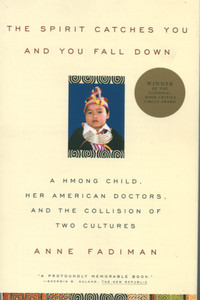
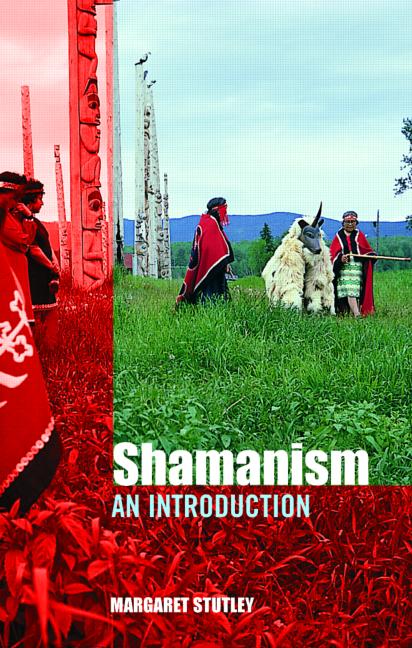
My reading habits are unorthodox. I don’t follow a fixed plan, but hope for something that will keep me engaged for the fifteen or so hours I spend commuting each week. I began October with a book about werewolves and followed it up with a book on the Hmong. Apropos of neither and both, I turned next to Shamanism: An Introduction, by Margaret Stutley. While not the best organized book, it does provide a smorgasbord of shamanistic traditions, principally from Siberia, where Shamanism was first recognized. Before I’d finished, I’d read about both epilepsy and werewolves.

Shamanism is not a “religion” per se. There is little agreement among scholars about what a religion is at all. Shamanism is very much a local set of beliefs and practices that have only very basic elements in common (shamans being one of them). It is a good example, however, of how moral heathens can be. Shamans often accompany egalitarian societies who do not require governments and religious leaders telling them to be nice to each other. No, this is not the noble savage myth, but it is a clear indication that major religions are not required for morality. It evolves on its own. Often shamanism is not constrained by overly left-brain influence, and sees connections science can only deny. The plight of Lia Lee was explained here in a way physicians could access—epilepsy and other diseases are problems of the soul as much as the body—if only they read books about religion. Healing involves calling the soul back. Treatment of the body misses the point. And sometimes the dead become werewolves.

We live in a world where real suffering is caused by lack of understanding about religion. Assuming a cultural hegemony of Christianity, or Islam, and sometimes even other religions, we discount those who believe differently than we do. The New Atheists frequently overlook just how seriously people take the world of the emotions and belief. That realm is a large part of what makes us human and it plays by no logical rules. Nor does it care to. In a country, such as the United States, where money is believed to be the very warp and woof of the good life, shamans sometimes secretly cut the thread. Still, don’t ask universities to expand the study of something as insignificant as religion because all intelligent people know that nobody really believes that stuff any more.


Good-bye Lia

While The Spirit Catches You and You Fall Down, by Anne Fadiman, is not about religion, it is all about religion. The tragic story of Lia Lee is one where Hmong lives, completely immersed in what we would term “religion,” came into conflict with American perceptions of what religion should be. One of the events in Lia’s life involved the government removing her from her parents for their failure to follow doctor’s orders. Fadiman notes that this has been an issue is court cases with Christian Scientists and Jehovah’s Witnesses and other groups that refuse certain kinds of medical treatment for religious reasons. Adults may refuse—it is their constitutional right—but children cannot be subjected to an adult’s religion if it endangers their lives. Here is the rub; American religion only stretches so far. Sure, many of the faithful pray for loved ones, but they also trust the doctor’s knowledge. Not too put too fine a point on it, God doesn’t seem to do the healing unless the physician is involved. For many from traditional religions, like the Lee family, that is hardly trust at all.

Much of the problem in Lia’s case came down to taking the soul seriously. It is clear that the Hmong believe, really believe in the soul. It is the essence of a person. Reductionism declares that when all the matter is burned off, no soul remains to be found. Lia’s parents, however, could tell whether her soul was present or not just by looking in her eyes. Although she never recovered from her major seizure, the physicians had tried to prepare her parents for Lia’s immanent death. Removing her from the feeding tubes and sterile conditions of the hospital, the Lees took her home where she survived for years, although in a persistent vegetive state. Even as the book ends with Lia at seven, they are hoping for her soul to return. Lia died just two months ago, at the age of thirty. She was diagnosed as terminal at the age of four.

Diversity adds color (from Wikipedia Commons)

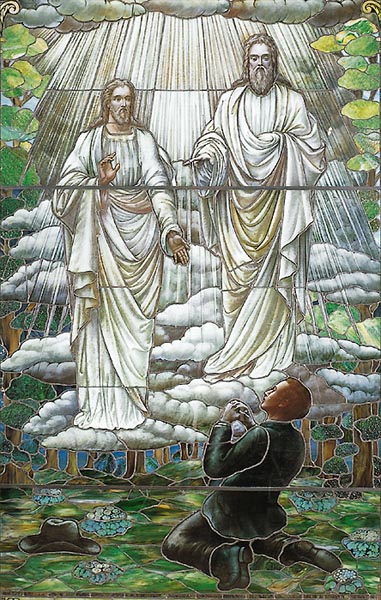
The story of Lia Lee is sad and one with no real villains (after the Secret War in Laos, and its aftermath). One of the most interesting aspects revolves around how the Hmong observe American religion. Well-meaning missionaries tried to convert them, but psychological studies have demonstrated that those who are the worst off are those who converted to western religions. At one point a Hmong girl, at a sacrificial ceremony to placate the spirits, tells Fadiman that she’s a Mormon. In another instance a Christian family tried to give their Hmong neighbors advice before a long drive, telling them they should pray to the Lord, not their ancestors. The Hmong honestly replied that the Lord had given him too many problems in America. It seems to me that the real issue here is just how seriously religion is taken. To the Hmong, it is their life. In capitalist America, it is very difficult to make religion your life. Even clergy have to have bank accounts, bills, and oil changes—all very secular aspects of life. If religion were taken as seriously here as among the Hmong, we would be facing a very different race this November.


Disease Divine

Diseases, for most people of the modern West, are difficult to diagnose as divine. At my wife’s urging, I’ve been reading Anne Fadiman’s The Spirit Catches You and You Fall Down: A Hmong Child, Her American Doctors, and the Collision of Two Cultures. I have a feeling I’ll be commenting on various aspects as I read through it, but something caught me almost immediately. Although the book is not about religion, the culture of the Hmong (about which I knew nothing just hours ago) is truly imbued with religion. Our medical science is, well, science (unless perhaps you’re from Athens, Georgia). Western culture since the Enlightenment has come to understand many of the body’s systems intimately, discerning just which chemicals to proscribe to treat this or that electro-chemical reaction in the body. And we consider it normal. Epilepsy, the condition of Lia Lee, is a disease that, as Fadiman points out, has had a long divine pedigree even in the west. The Judaic tradition at various stages considered it demonic possession, the Romans understood it as a kind of deity-induced madness.

Interestingly, Fadiman uses the case of Tony Coelho, an epileptic and congressmen, to make a point about the Hmong community. Coelho, she notes, had been intending to enter the priesthood but the Church has a canon forbidding ordination to an epileptic. This gave me a considerable pause. Clergy in many cultures must be “perfect” physical specimens. According to the Hebrew Bible, men who had certain deformities “down there” were disqualified, although, one notes, that they would have served fully clothed. Epilepsy, having been putative cured by Jesus many times, might seem a strange disqualifier from priesthood. I wondered why it was singled out from among the many maladies that might have seemed more pressing. Even in our enlightened age, epilepsy still bears the scars of the divine.

Narrating the experience of the Hmong in a Thai refugee camp, Fadiman notes that the subtext was often conversion. As she points out, for the Hmong medicine is religion. Although the missionaries had converted some, their very enthusiasm ensured that the Hmong would not generally go to them for treatment. Here is a stark difference between a people whose religion permeates every aspect of their lives and westerners for whom religion is compartmentalized in a different place than medical science. For the Hmong, wellness is part of a larger picture from which religious belief simply can’t be separated. For some epilepsy is a disease to be cured, if possible. For others it is a sign of a budding shaman. I look forward to reading more, as it is clear that by shifting perspectives, even the enlightened might have something to learn from those they deem uneducated.


Five Century Hypothesis

More than likely it is simply an oddity of history, but roughly every five hundred years a new major religion appears.  The newcomers sometimes grow into a serious concern for conservatives in the older traditions, but at other times they are simply ignored until the two (or more) come into inevitable contact.  Peering far back into history, the roots of the earliest religions of lasting durability are sometimes lost.  For a very rough starting point, we can consider Hinduism.  With roots going back to about 1500 BCE in the “Pre-Classical” era of the religion, Hinduism developed independently of the monotheistic traditions that would appear in the western half of Asia.  Although some would credit Judaism with equal (or even greater) antiquity, we get an idea that some of the basic thought that would coalesce into Judaism seems to have, very roughly, begun around 1000 BCE.  About five centuries later, Buddhism appeared.  At the turn of the era, Christianity had emerged from Judaism.  About five centuries later, Islam appeared.  Countless other religions, of course, existed concurrently with these early exemplars, but each of these has grown into a major world religion. 

Around about 1000 of the Common Era, Christianity began to fragment.  The first major, official split was between Orthodoxy and Catholicism. Christianity’s penchant for fragmentation would eventually lead to Protestantism—a religious form quite distinct in many ways from traditional Christianity—and that happened roughly five centuries later.  The most obvious split took place around 1500 with the Reformation, but it was also around that time that Sikhism appeared.  The new religions of the common era often involve irreconcilable differences within an established religion. In the western world we tend to overlook Sikhism, but in sheer numbers it is one of the largest religious traditions. And of course, there are many, many others.

As with any over-simplified scheme that tries to make sense of history, I am certain that no historian will be convinced. To me it seems obvious. Once every five centuries or so, some new religion will be born and will flourish. Perhaps it is already among us. We are about due. Like the evolution of new species, some new religions are poorly adapted to survival: one thinks of Branch Davidians or Heaven’s Gate, or Jonestown. Others, however, quietly thrive until someone looks around and says, “Where did Mormonism come from anyway?” Some will argue that it is just another sect of Christianity. Those who study its theology will realize that its conceptual world is vastly different. But anyone with a long enough calendar can see that it began about five centuries after Sikhism and the Protestant Reformation occurred. And anyone with two cents can sense its enormous bankroll—no surer sign of a religion’s viability can be offered.


Puppet Master

Usually I resist mentioning books I’m reading on this blog until I have finished them. It is probably because of some misplaced Protestant guilt at taking a small measure of undeserved satisfaction at claiming an achievement that I haven’t legitimately earned. Or maybe it is my innate fear that the author will say, on page 200, “by the way, everything before this is wrong.” In any case, sometimes I forget the important initial stages of a grand argument by the time I reach the final chapters, neglecting any ideas that may have arisen along the way. I just started Victoria Nelson’s The Secret Life of Puppets. I read her Gothicka earlier this summer, and couldn’t wait to get started on Puppets. Besides, when was the last time I saw an academic book with a back-cover sound-byte by Neil Gaiman?

The idea that is so compelling in The Secret Life of Puppets is that in the modern era religion and art have reversed roles. That is to say, people tend to turn to literature (and movies or other media) to discover a sense of transcendence—previously the bailiwick of religion. Religion has transformed into the receptacle of literary imagination instead of remaining the inspiration for it. New Religious Movements grow out of fictional sources—consider Scientology or Jediism or the religions growing from Avatar. But the connection runs to even more profound depths. Quoting a screenwriter she met, Nelson points out that horror movies are often the only genre of film in which God comes naturally into the conversation. Elsewhere God-talk feels high-handed.

Religion has become a kind of fiction while fiction writers preserve the prerogatives of the divine. We suffer from repressing our intuitive way of knowing. Perhaps it is only logical that I select an example from science fiction here. Since the late ’60’s the figure of Mr. Spock has stood sentinel over the neurosis of the flawlessly logical. Just one glimpse and we know this is not homo sapiens sapiens’ behavior. We think with both halves of our divided brains. Scientists sometimes commit the oh so human fallacy of supposing evolution is robbing us of passion. Falling in love would be a lot less enjoyable if it made sense. No, we have not outlived our need for the gods. I think Neil Gaiman would back me up on that.


The Force

A long time ago in a galaxy far away, or so it seems, I began studying religion not knowing where it would land me.  One of the great things about studying religion is the perpetual refreshing of religious thought that grows with human culture.  Anthropologists and philosophers and sociologists have difficulty defining exactly what religion is.  It is clearly a belief system of some description, but in many parts of the world religion is not so much reflective and reflexive—doing the ancient rituals and getting on with life.  Every great once in a while I learn about a new religion.  Those who don’t spend too much time thinking about it might be surprised to learn that new religions emerge quite frequently, and sometimes with the most unlikely of inspirations.  Consider Scientology.  While reading about new religions recently I discovered Jediism, or Star Wars religion.  Like Scientology, it is based on science fiction.  For those of us alive in another universe in 1977 it is difficult to convey to more recent hominins just how impressive Star Wars was.  Life-changing, in some instances.  Jediism takes the concept of the Force and makes it a central tenet of a belief system for the twenty-first century.
 
Having witnessed the impact of Avatar in even more recent lightyears, perhaps we should not be surprised that fantasy worlds spawn new religions.  After all, although death and suffering pervade even the most pristine of human-concocted galaxies, good ultimately wins over evil in these realms.  It is something worth hoping for.  Maybe even believing in.  Some people question how serious those who call themselves “Jedi” on religious surveys really are.  There are online Jedi sanctuaries, and even humor can be a part of a serious religion—consider the craze of Christian clowns that was going around in the 1980s.  For those of us from long ago, religions just don’t seem authentic without some antiquity to them; they should’ve been started centuries ago by founders who can be mythologized to sainthood or divinity.  We have more facts about the life of Yoda than we do of Jesus.


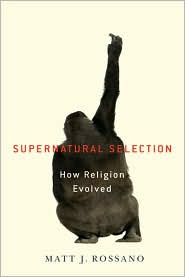
The thin line between fact and fiction grows more effaced every day.  Can religions be based on fictional founders?  Of course they can!  Without any means of determining objectively which religion is right (if any), we are left with only a person’s word about what s/he believes.  If I choose to believe that Sherlock Holmes was a real person what harm does it do?  It may even benefit the estate of Sir Arthur Conan Doyle.  As Matt Rossano points out in his book Supernatural Selection, religions are about perceived relationships.  Many people have relationships with fictional characters, sometimes falling in love with one or fantasizing about being one.  Basing a religion on a fictional character may be the greatest sign of trust.  After all, we can’t even define religion in a way on which all specialists will agree.  Religion itself may be the ultimate fiction.  May the Force be with you, just in case.


Searching for God (Rock)

The last time I visited my native western Pennsylvania I went on a quest to find the “Indian God Rock.” This is a local landmark that contains a rare set of Native American petroglyphs from around 1200 C.E., and which I have never seen. Having heard of the stone since my earliest days in the local school system, I was curious to see it. The moniker “God Rock” is complete speculation, based on early assumptions that the Algonquin wouldn’t have inscribed the stone without religious motivation. Since that time, however, the site itself has been deemed a numinous place by some by dint of having authentic petroglyphs. What makes any site sacred is the experience of the visitor. I had lived in this area for the first two decades of my life and never found it. Of course, there was no Internet in those days and its location was remote. Sacred places should be difficult to reach. It was about time.

The Indian God Rock is located on a bicycle trail. For me that now translates into bicycle trial. I used to take epic bike trips with my brother, but although they say you never forget how to ride a bike I am agnostic on the point. I have ridden a bicycle a few times in the last decade or two, and always with unusual aches when it’s over. I still like to jog, but perhaps having my feet in contact with the ground is a kind of sacred behavior in itself. In any case, when I went after the God Rock, I was on foot. Although I’m motivated in a fairly serious way when I’m on a quest, I also know what it is to be outvoted (unlike some politicians). Without a map, perhaps on the wrong trail, in the rain, after a couple hours of walking, I had to bow to the wishes of the majority and give up.

On the way back to the car, I found a newt. In my younger days in this region I used to find them in our yard following a good rain. They are delicate creatures. When you pick them up, they try to scrabble out of your hands, supposing, as nature informs them, that to encounter a larger force is to risk being consumed. I think that this must be similar to human religious motivation. In the presence of something larger than ourselves, something that boggles the mind, we assume it is a god. The reality of the matter, however, is that the life within us is the closest we get to the divine. The newt in my hands is the true wonder. Somewhere not far from here is an Indian God Rock that I have never found, but right now life is in my hands. I later discovered I had been on the wrong trail all along.


Supernaturally Selected

Things are seldom as simple as they seem. Religion, for example, is frequently cast as the villain or the hero of human society, when, in truth, like most human institutions, it is a little of each. I’ve read many theories on the origin of religion, and none has been completely convincing but most contain persuasive aspects while I’m reading them. After having read several books proclaiming the end of religion in the last several months, I just finished Matt J. Rossano’s Supernatural Selection: How Religion Evolved. Many books with a similar goal begin with the suggestion that religion may have had some biological utility for people at one time, but that we’ve outgrown our need for it and we should classify it with other obsolete, arcane concepts that have no further purpose. Rossano suggest that religion grew out of the need for social bonding and that we could not have become human without it.

Basing his ideas on genetics and anthropology, Rossano notes that even with our genetic similarity to chimpanzees there remain striking differences. Mostly they are social in nature. Many of the differences are reflected dimly in our primate cousins, but the human penchant for gathering in groups with ritual behavior to offset overwrought emotions applies only to us. That ritual behavior includes healing rites, something that Rossano suggests might be the earliest, shamanistic, religion. Back in my teaching days I’d been telling students that the earliest evidence for religious behavior dated to the paleolithic period. This is something I’d reasoned from the artifacts found in pre-historic communities. I was happy to find confirmation in a more competent scholar than myself.

While I’ll no doubt revisit some of the fascinating hypotheses of Supernatural Selection over the coming days, one point especially stood out on my initial reading. Religion is a communal phenomenon in what is a largely individualistic society. In other words, religion itself continues to evolve. Even the hermit in his or her cave is only considered religious in comparison with his or her less dedicated, secular compatriots living la vida de fe. Since religion is communal, Rossano suggests, it is impossible to argue someone out of their religion—based on perceived relationships as they are. Indeed, it seems that his hypothesis predicts a behavior we find only too evident when we prepare to line up at the polling booths, but which will immediately fall into the background again once the level is pulled.


Martian Religion

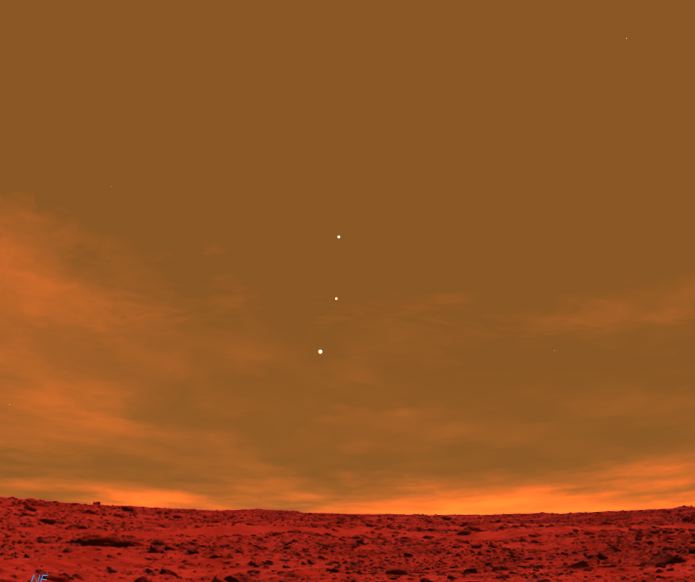
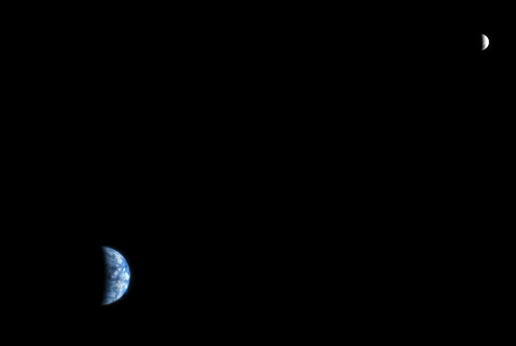
The early morning sky has been putting on a beautiful, celestial waltz this week as the crescent moon, Venus and Jupiter swing close then part along the ecliptic. On such days it is easy to see how ancient people would have attributed motive and intentionality to the solar system—there’s definitely something going on up there. Then we get the images from the Mars rover Curiosity, showing us ourselves, lost in space. One of the truly iconic photographs from the last century was the earthrise taken from the moon. Until that moment it was difficult to conceive that we really were spinning through space, unattached to any biblical pillars with an affixed firmament above. Now we are looking at ourselves from a distance of some 225 million kilometers, and our troubles have never seemed less significant, our god never smaller. We are the eyes in our own sky—or, more impressive yet—the eyes from some other planet’s skies. I can’t see how this would fail to have religious implications.

Is this real life, or just fantasy?

Religion often involves introspection—looking at oneself from the outside, or from another perspective. Our religious ancestors, who had no way to assess what the planets were with their conceptual framework, generally assumed them to be alive. Some cultures called them gods, others creatures, but their movement in the sky is often lost on modern people who only occasionally glance at the sky, when their smartphone is taking a little too long to download something. How sobering it is to consider that we are one of those bright dots when seen from Martian eyes. (Unfortunately I’ve been unable to confirm the stunning image that’s been circulating on the Internet claiming to be from Curiosity.) Ancient religions, by necessity, are geocentric. The earth is all they knew. Of course, religions have grown increasingly defensive as new realities have been discovered; even the Book of Mormon was written before the planet Neptune was decisively named and claimed. Changing worldviews is never easy.

From NASA’s photo library

Religion is often a coping mechanism to keep us grounded. Many concepts of divinity are celestially based—pointing to some divine realm in the sky. That is the perspective of an earthling. Once in space, what direction is God? We find that our up and down, near and far, are only relative terms. What the means is that increased knowledge forces further reflection on religious beliefs. We can’t stand still and let the universe revolve around us like an obsolete firmament. Religion must engage reality to remain relevant. And right now reality is rolling across the surface of Mars, looking homeward with alien eyes. How small our steeples and cathedrals look from our solar system sibling’s perspective.


Coexistence

Sometimes I think I’m a punching bag. Not uncommon among scholars of religion, I suppose. I have read my fair share of overt attacks on religion: Hitchens, Dawkins, and even Jillette, and sometimes limp out of the ring wondering why I even bother. Still, science doesn’t completely explain the universe I inhabit either. Thus is was with some glimmer of hope that I read a story in Monday’s Chronicle of Higher Education entitled “Does Religion Really Poison Everything?” There can be no doubt that religious behavior has a track record of some execrable atrocities—some very bad behavior has been engendered by fervent religious belief. At the same time, those who despise religion have a hard time explaining it. As the Chronicle piece points out, religion is likely an evolved trait. There is some survival value in it, otherwise it would, by natural selection, disappear. Religion is seldom a rational enterprise. That doesn’t mean that it can’t be rationally studied, but rather that religion is primarily experienced as an emotional phenomenon. We find ourselves motivated by feelings, although reason will often drive us to do things we don’t feel like (like going to work). And emotion is necessary to be truly human.

It is often difficult to respond to those who castigate religion as an evil or poison, not for lack of reason, but because of feelings. Having spent most of my life with religion, it is not surprising that attacks on it often leave me feeling ashamed. But ah, that is an emotional response! It seems rational on the surface, but really, shame and embarrassment are typical emotional responses. This is the realm of religion. Reason may indeed indicate with great accuracy the way the universe works—of this I have no doubts. At the same time, I’m not sure the entire universe is something that humans can adequately comprehend. I have a hard time remembering what’s on a short shopping list if I accidentally leave it at home. Our brains aren’t equipped to the task of comprehending universes. Feel overwhelmed when facing a physics test? That overwhelmed feeling is an emotional response. With considerable cheek, might I suggest it might even be a little bit religious?

The Chronicle is a high-profile source for academic rectitude. I am pleased to see Tom Bartlett pointing out that the line-drawing in the sand between religious Fundamentalists and pro-science New Atheists will not solve anything. Religion is often guilty as charged. It is not, however, pure evil. There is enough evidence out there to suggest that religion is a tremendous coping mechanism for billions of people. And coping is not a bad thing, all things considered. Wisdom that is often attributed to the Greeks suggests that “all things in moderation”—the golden mean as it’s known—is the way to human happiness and success. The idea is older than the Greeks, and indeed, can even be found in the Bible for those who are willing to look. One need not be religious to see that, like most human inventions, religion has both good and evil uses. Evolution gave us religion, and it gave us science. It also gave us brains divided down the middle and strong reasoning that must dance with creative emotion in a tango that frequently makes abrupt shifts of direction. Our job, as humans, is to learn the steps to the dance.

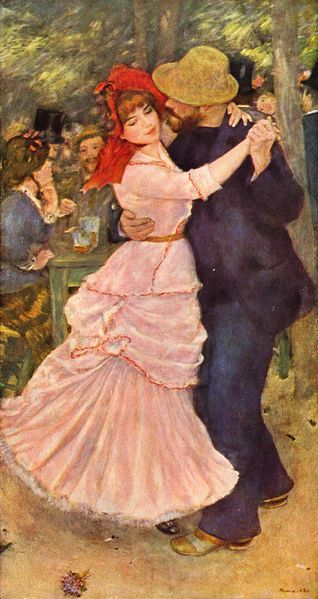
Different, but equal.


Charon’s Obol

One of the concomitants of spending time with religion is a non-morbid fixation on death. As a college student I was surprised to learn that other people my age did not think about death nearly every day. Perhaps with a typical college student’s obsession with the other end of the life cycle this is only natural. Ever since I was a child, however, I felt frustrated by the lack of permanence that characterized all of the striving involved with life. We work very hard and then we die. I suppose that is one of the reasons religion appealed so strongly to me—it had an answer to this dilemma. Science, as I began to experience it about the same time, suggested a radically different conclusion: we have no souls, and so it is best to accept the fact that death is the end and get on with life. No wonder Ecclesiastes has always been my favorite book of the Bible.

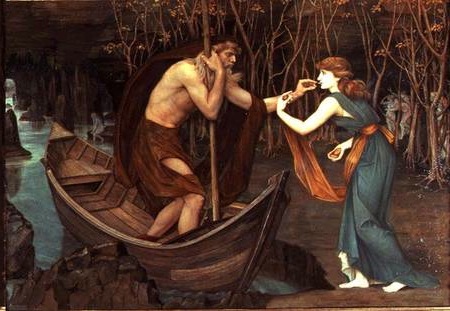
While reading about–shhh!–death recently, I came across an interesting tidbit. Pope Pius IX was buried with a coin. I’ve read that even John Paul II was buried with coinage, but I’ve not been able to find credible sources on that. What is fascinating about this practice is that no matter how it is vested, burial with money is a form of Charon’s obol. With movies like Clash of the Titans, many modern people are aware of the need to pay Charon to cross the River Styx. (Back in the radical days of traditional education just about everyone would’ve learned this in the course of studying the classics. In any case…) The gifting of the dead with money represents the survival of a pagan custom that likely stretches back well before ancient Greece. Even before money was invented people buried the dead with goods that the living would never be able to use again. They may not have considered this payment to a ferryman, but the principle is the same.

This idea has a strong grip on our psyches. Not one of my favorite movies, I have watched Ghostship a time or two. What initially brought me to the movie was the fact that it is a horror-movie built around the character of Charon. The mysterious stranger who lures the crew of the Arctic Warrior onto the Antonia Graza laden with gold is named Ferriman. The salvage crew quickly forget the tons and tons of metal that they came for in exchange for the a few dozen bars of gold. Of course, a sole survivor lives to tell the tale. The thing about Charon’s obol is that once he is paid, death is inevitable. Thus death and money are inextricably twined like earbuds carelessly tossed into a backpack. It seems that no matter how you measure it, the only winner is Charon. Maybe the Greeks have something to teach us yet.

Charon’s got ahold of our Psyches


Disputed Parentage

What has Athens to do with Jerusalem, Tertullian famously asked. Much, seems to be the rhetorical answer. Today, August 1, is Lammas. It is said to commemorate the wheat harvest and Lammas is taken to be derived from Anglo-Saxon hlaf-mass, or “loaf-mass.” Beneath this apparent Christian celebration is the pagan festival of Lughnasadh. I’ve posted on Lugh before, but holy days are often seasonal, and it is time to consider Lammas again. Lammas is the last of the cross-quarter days that divide the European pagan year. Some communities bake bread to celebrate it, sometimes in the shape of a person (those of you who’ve seen the original Wicker Man know what I mean).

Christianity was born a persecuted religion that grew to be a persecutor. Deeply rooted pre-Christian traditions were eradicated or sublimated in the growth of Christendom. The modern pagan movement may not have an unbroken line of tradition, but it is a tradition that has ancient antecedents. What Christianity could not conquer it assimilated. Much of what became Christianity derived from Judaism. Much of Judaism had its origins in folk religions of ancient Western Asia. In its European context, Christianity adopted the heathen traditions that fit within the pattern of Christian thought. Agricultural celebrations quite frequently matched events in the imperial religion. Or, if no so events existed, new traditions were invented. It is quite plain that that is why we celebrate Christmas in December.

Why is it that Christianity has so vociferously disavowed its lowly parentage? Being a chthonian religion should be no mark of shame. What is wrong with different but equal? Many people fear and despise those who declare themselves pagan, but paganism is a religion like any other, concerned with morality, justice, and living in accord with the power “out there.” So as August wends its way into the calendar, and the earth begins its inevitable tip towards lengthening nights and the cooling of the days, we might do well to consider Lammas. Whether from the Christian angle of Saint Peter in Chains or from the Pagan angle of Lughnasadh, Lammas is a time to eat bread and reflect, two of the most human of activities. And perhaps with thought will come tolerance.