Just Druid Again

It would be difficult to suggest an ancient class of people with greater New Age credibility than the druids. Although I spent three years among the Celts, I claim to have no special knowledge of the druids, and when I saw Peter Berresford Ellis’ book on the subject, I decided to learn more. Not really a straightforward history—not enough of the druidic culture survived in any material form for the writing of such a history—Ellis instead summarizes a complex gallimaufry of evidence and speculations into a reasonable facsimile of who the druids might have been. Ellis suggests that the druids were more a caste of society, rather like the Brahmin caste among Vedic culture. Should that seem far-fetched, it would be difficult to read A Brief History of the Druids without noticing the obvious connections between the cultures. The Celts, of which the druids are a subset, have their origins in eastern Europe rather than the usual supposition of a homeland over the sea in Ireland, Scotland, or Wales. Connected to India via a common ancestral language, Indians and Celts both derive from the same Indo-European linguistic family tree.

Ellis’ book is so full of information that it is unwieldy at times, especially for those of us who find the formidable Gaelic names intimidating. Nevertheless, it is an excellent source for learning about the religion of the druids, insofar as it may be reconstructed. One of the most striking aspects of Celtic culture that emerges from the book is how it differed from the Roman culture that would come to dominate the western world. An obvious example is that Celtic society offered a much more enlightened place for female rights and leadership than would emerge along the Tiber. Another important difference was the Celtic antipathy to abuses of private property ownership. Gaelic bishops earned the ire of Rome by declaring that egalitarianism is the will of God. In the words of a fifth century Celtic bishop:

“Do you think yourself Christian if you oppress the poor?… if you enrich yourself by making others poor? If you wring your food from others’ tears? A Christian is [one] who… never allows a poor man to be oppressed when he is by… whose doors are open to all, whose table every poor man knows, whose food is offered to all.” Words a Perry or Bachmann might do well to read.

So noble were the druids in the eyes of eighteenth-century antiquarians that many suggested Abraham was the original druid and that the great figures of the Bible were part of the druidic heritage. The world, alas, has gone after Rome instead. Rather than druids we have CEOs and politicians worth a mint before they ever “swear” an oath of office. If the current Celtic revival brings back some powerful druids, perhaps the world might just become a more tolerable place.
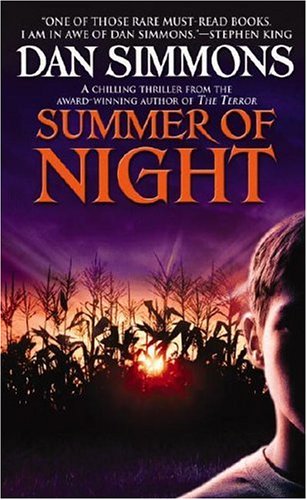


A Summer Fright

Although primarily known for his science fiction, Dan Simmons has also strayed down the dark path of horror fiction as well. During the depths of winter I found Simmons’s A Winter Haunting a moody and appropriate concomitant to the season. Not realizing that it was a sequel, when I saw his Night of Summer while at a Borders going out of business sale, I wondered if the same effect might work in warmer times. Both books rely on Egyptian funerary cult to move the story along, although in Night of Summer it is difficult to determine if the real menace is Osiris or the Judeo-Christian devil. Simmons has characters refer to Osiris as the power behind a haunted bell, but the climax of the story bears little resemblance to Egypt and quite a bit to standard monster flick tropes. “The master” of the reanimated dead is not explicitly identified. The use of Anubis in A Winter Haunting is quite effective, but the infernal characters were intermixed a little too much for my liking in Night of Summer. Better the devil that you know…

Perhaps it is simply that summer represents a time of relative ease and recovery from the frenetic pace of the remaining three quarters of the year. Although the heat and high humidity often make the season feel unbearable, the blush of abundance is all around. It is not easy to be afraid. When the air begins to chill and nature seems prepared to shut down production in the autumn, we naturally turn towards the desolate and constant struggle that will see us through the winter. Ancient people needed reassurance that warmth and relative ease would return. New Year’s rituals frequently marked autumn or spring, sometimes both. The death or life of the crops symbolized things to come.

Osiris, the god of the dead, also served as a god overseeing the renewal of crops for the ancient Egyptians. Death and life were knotted so tightly together that to unravel them was to fray the essence of the divine world itself. Among the cultures of the ancient world the Egyptians boasted the most developed concept of an afterlife. Even Paleolithic human burials contain grave-goods, demonstrating a belief in some kind of continuity beyond death. Simmons plays on that primal fear by resurrecting the dead in his novel. Beliefs about death and what might come thereafter have been one of the constant identifiers of religion from antiquity to the present. When evil pollutes the process the genre shifts to horror: witness the current fascination with vampires, zombies, and other undead entities. Religion and death are inextricably bound. Although Night of Summer may not live up to its sequel, the correlation between religion and fear meets the expectations of the genre, even during the long days of relative ease.


Demonic Beginnings

A friend recently asked me what seemed like an innocuous question: what is the origin of demons. I typed out an answer on the basis of my outdated reading on the subject only to realize that this is a very complex question indeed. While teaching my Ancient Near Eastern religions class over the past three years I regularly told students that there is no regular word for “demon” in Akkadian, the language of ancient Mesopotamia. Mesopotamian religion was the dominant system of belief in sheer size of area and antiquity in the Ancient Near East. There are characters recognized as demons: Pazuzu of The Exorcist fame among them. Their origin, however, is murky. In Mesopotamia demons are generally a mix of human and animal components supposed in some way to be responsible for misfortune. They are not evil, but they carry out the punishments decreed by the gods. In the first millennium BCE demons were understood to inhabit the Underworld, paving the way for Hell, once Zoroastrianism contributed the necessary duality for the region.

The Hebrew Bible contains no uncontested word for “demon” either. The words generally translated that way do not indicate evil spirits in the sense that the Christian Scriptures seem to depict them. In the Hebrew Bible they appear to be associated with the worship of “false gods” and the inhabitants of deserts and wastelands. In neither the Mesopotamian nor Israelite concepts do demons appear to “possess” people. By the time of Christianity, with its Zoroastrian-fueled dualism, we have an anti-God (the devil) and his anti-angelic minions (demons). One purpose here seems to have been to clear the monotheistic God of charges of originating evil. If there is only one God where does evil come from? Better to posit a devil than take that one where logic leads.

Back in the days when I was still in school, demons were regularly cast as the explanation for various mental illnesses and epilepsy. In a society that had trouble understanding the sudden onset of an epileptic fit or a sane individual growing insane, such misfortunes could appear supernatural. In a supernatural realm where evil is mediated by the devil, demons naturally volunteer for their old role as purveyors of divine punishment. Eventually the mythology of a revolt in the world of the gods emerged, probably based on the dualistic outlook of Zoroastrianism, and we soon have verses referring to the king of “Babylon” being reinterpreted as literal episodes on a spiritual plane. Once Jesus utilized this language to describe the suffering souls of his day, it became heresy to think of demons in any other way than as physically, or at least spiritually, real. In the modern day they are still with us as “spiritual entities that have never been human” according to Ghost Hunters. They do, however, resemble people in significant ways more than they resemble their mythic forebears. Where do they come from? The dark recesses of the human psyche. Their mythic origins, however, remain obscure.


August Ancestry

Lugh

Now that August is in full swing, it is appropriate to think of Lugh. It would have been more appropriate, I suppose, to have considered him on Lughnasadh (August 1) but I’m afraid I missed the deadline. August is the only month with no officially recognized holidays, either lighthearted or serious, in the United States. Back in Celtic Britain the first of August was one of the quarter days, or days when the rent was due and religious festivals were celebrated. When Scotland was Christianized, Lughnasadh was kept under the name Lammas-mass, a festival of the first harvest of the year. The Christian correlation became the deliverance of Peter from prison or Saint Peter in Chains.

Lugh was, without doubt, one of the most important gods of the Celts. It has been suggested that the Celts understood their gods not to be transcendent beings of a different order than humans, but rather as their own ancestors. They apparently believed that gods came from great humans. Lugh is a warrior god, and occasionally god of the sun. His favored epithet is “long arm” or “long hand,” indicating his felicity with spears and swords. So widely was he known that many important cities were named after him, including Lyon in France, Vienna (known by one of his epithets), and perhaps even London itself. When Romans conquered the Celtic lands, the festival in August was that of the Caesar from whom the month takes its name, Augustus. Apart from the minor Christian festival of Peter in Chains, the month of August was simply forgotten as the seat of holy days.

The origins of gods differ in diverse cultures. The assumption of most people today seems to be that gods exist as an ontological reality and we reverence them because of their factual existence. The Celts, on the other hand, grew their own gods in the tradition that a noble human was worthy of veneration and full of undying power. Lugh may have been one such person. If he was, he has been lost in the heavy haze of hoary antiquity. He comes to us today in August, but more often in March. The word leprechaun is an Anglicized version of the Irish phrase “Lugh the cobbler” (one of his many associations). As such he is remembered every time we pour ourselves a bowl of Lucky Charms.

Part Lugh, part Potter


Slash and Burn

Extinction is an evitable part of life in the universe we’ve inherited. Throughout the eons of our planet mass extinctions have occurred several times, and the new world that emerges is strange and unexpected. We as primates owe our existence to such a natural occurrence at the end of the Cretaceous Period. We evolved religion, which, in some species, bestows the right upon us to alter, or even destroy, our environment. The lame reasoning that generally accompanies such amateur theologies is that a deity is about to sweep down and reclaim those “he” (inevitably) likes. All the rest are just part of a hellish charade to make the righteous feel their entitlement more acutely. So we now find ourselves facing, as scientists warn, another great extinction. This one is of our own making.

The causes are not too difficult to discern. For centuries the dominant religions in the western world have preached messages easily mistaken for selfishness. The perverse aberration called the “prosperity gospel” is one such bastard theology. (I use that term in its literal sense here: the prosperity gospel claims false parentage in declaring that Jesus rewards the affluent with material wealth.) An article in Sunday’s New Jersey Star-Ledger points out that the unprecedented human involvement in extinctions. Using Haiti as a test-case, Faye Flam of the Philadelphia Inquirer notes that 99 percent of that nation’s forests have been wiped out as the poorest people in the western hemisphere seek wood for the basic necessities of life. Just over six hundred miles to the north begins one of the most affluent nations in the world where as long as we get our own, the rest of the world can go extinct. We are so blessed. While the loss of forest barely keeps the people of Haiti alive, it drives unnumbered species to extinction.

Entitlement is an odd phenomenon. Without those further down the food chain, the advantages of privilege disappear. When there are no poor to support the wealthy, the comparison fails. The same is true on a species level. As privileged Homo sapiens, we have climbed to the top of the mountain and made ourselves gods. Other species are counted as chattels to be divided up among the wealthy. The rarer they are, the more valuable. Problem is, once rarity reaches extinction there’s no turning back. Our environment placed us in this position and gave us the grey-matter to figure it out. Instead we liken ourselves to gods who do not need this world that gave us birth. Biology disagrees, as time will tell.

Icon of the prosperity gospel.


Who Made Whom, Now?

John Lennon has great currency, in part, because he is a martyr. Music has moved on since the ‘60s and ‘70s, but aging Boomers still like to quote him, especially his song “Imagine.” In an article written for the Los Angeles Times, reprinted in the local Sunday newspaper, J. Anderson Thomson and Clare Aukofer cite “Imagine” as the statement of what a world “that makes sense” looks like. I applaud their idealism. Citing psychological and sociological work that has been done over the past decade in the attempt to unravel “homo religiosus” they entitle their article “God didn’t make man: man made gods.” Much of the evidence they cite has been discussed elsewhere on this blog, but the overarching issue—whether this explains human religious behavior or not—remains open. In other words, if evolution provided us with religion, it must have some survival benefit and humans are not easily going to dismiss it.

Admittedly, the evidence for human conceptions of God arising from the need for close connections in community is pretty convincing. Nevertheless, the issue of whether there is a God or not will never be answered by empirical observation. As I tell my students, belief is not based on empirical observation. We do not yet know why people believe, and even if we find the right node, neuron cluster, or sensory stimuli, there will always be those who insist that the hardware is sparked into action by the unseen Other outside the system. It is the classic chicken or egg debate, taking place in that henhouse in the sky. The problem is that God is more like the rooster in that scenario.

The human brain is an endless source of fascination. Science has given us a sense of wonder about our own on-board computer, but it has not managed to capture the sine qua non of the totality of the experience of owning one. Scientists also read, go to shows, make love and eat fine meals for the enjoyment of it all. But as Cipher says in The Matrix, “I know this steak doesn’t exist. I know that when I put it in my mouth, the matrix is telling my brain that it is juicy and delicious. After nine years, you know what I realize? Ignorance is bliss.” Our perception of the world as a stable, unmoving center of existence is an illusion. Science has revealed an even stranger reality involving equations that used to haunt my nightmares. Should God ultimately be reduced to formulae, true believers will find another entity to name as the divine. “Imagine… no religion too”? As long as humans are humans such a world remains pure imagination.

Imagine


Sanctuary

Sanctuaries are often difficult to get to, but are often even more difficult to leave. Various religions make use of the concept—a sanctuary is a safe place, somewhere away from the normal world. Perhaps this is one of the reasons humans devised religion to begin with; the world feels heartless and threatening much of the time, and a place where the unseen parent will keep us safe is a desideratum anxiously quested. The problem with sanctuaries is that too much safety inhibits growth. As history repeatedly demonstrates, sequestered religions grow stagnant and antiquated—frequently hindering more than helping.

The concept of a sanctuary is of a piece with the amorphous idea of sacred space. The idea that some places are different, special, or spiritually vibrant is one that admits of no testing or verification. Nevertheless pilgrims will seek out such places in order to recover a sense of balance or peace. Even scientists know the feeling, although it is frequently consigned to the psychologist’s couch. Finding that spot that gives momentary tranquility is big business, as any travel agent knows. While we may invest our sanctuaries with divine trappings, the practice is, at its roots, very human.

The world was not created for us. Congealing from a rapidly spinning mass of superheated rock and dust, it took a few billion years before life might even manage to float atop the cosmic embers. As part of this fascinating development called life, we have learned its hard lessons. Nature is beautiful and dangerous. We are its masters and its slaves. Some of us take great pains to escape to it and when it is time to leave we are ripped from it like a crying babe from its mother’s arms. Sanctuary is a human concept with divine implications.

A sanctuary


Dead Wood

nurse log

Whether it makes a sound or not, when a tree falls in the forest it joins that great cycle that embraces all living things. Decomposition is as much a part of life as conception. Rotting logs provide homes and minerals and nutrients to other living creatures. Although the individual life is over, life as a whole goes on. Nowhere is this more evident than in nurse logs. Nurse logs are those trees that directly host seedlings after they die. While examining such a nurse log yesterday my daughter said, “It’s life after death.” Resurrection. The more I reflected on nature’s resurrection, the more selfish the human concept seemed to become. We want—and some of our religions offer—individual resurrection, the continuance of me, not mere life.

Nature has no theology. In its immediacy and pragmatism, creatures live without pondering what it means, striving to pass on the gift of life they’ve been given through their offspring to keep the cycle going. Evolution may shape forms into new varieties along the way, but we are more amoeba than angel. We are part of something larger than ourselves. Unfortunately our society has evolved to emphasize individual drive over collective effort. We don’t want to tax the ultra wealthy, for they are where we all want to be. It is the poor who are sacrificed on the unholy altar of this thinking that truly reflect what nature intends for us to be.

To justify our selfish outlook humans made gods in their image, adding prerogative to perfidy. Somehow we deserve more than others—longer life and even more life after that. Evolution has, in its non-directional way, distorted the picture by providing us with inordinately parsimonious attribution of souls, according to theologians. Nature belies our paltry attempts at self-deification. Quietly in the forest a tree dies, offering its life for those that will come after. The nurse log knows the true meaning of resurrection, while we fumble to gain more for ourselves, backed by the religions we’ve invented.


Metaphor

Author Neal Stephenson, inspired by fellow author George B. Dyson, built a baidarka a few years back. The baidarka, an Aleutian version of the sea kayak, was such a necessity of life among the Aleut that it was treated as a living being. Whenever I find myself at the same latitude and longitude as the baidarka Neal built, I like to take it out for a relatively safe lake voyage. I’m not much of a swimmer, and taking boats out on the big water always chills me before the water actually touches my skin, but this is a kind of ritual that I feel compelled to observe. It is a participation in the mythic world of the Aleut. As spiritual beings, kayaks were a necessary part of life for island dwellers. In their own way, I suppose, they are saviors.

Author and partner in the baidarka

Traveling by water, I find, is a spiritual experience that eschews scientific quantification. It is a feeling, not a measurable commodity. To quote the great sage Rat in Kenneth Grahame’s The Wind in the Willows, “There is nothing—absolutely nothing—half so much worth doing as simply messing about in boats.” We are born of water, mostly made of water, and ineluctably drawn to the water. Rachel Carson suggested in her classic, The Sea Around Us (always one of my favorite books), that having evolved from the sea we are forever yearning to get back to the sea. Water is life as much as blood is.

broken water

When water breaks by being forced into an unyielding shore or by being thrown over a cliff to become a waterfall, flinging refreshing spray into the air, its great energy is released. Although its flow may be interrupted it will break apart granite and basalt, literally moving mountains and carving coastlines. Water that is placid in the morning may be raging by the end of the day. Water is life, and if life is anything more than a metaphor no one has yet convinced me of it.


Voted Off the Island

One of my readers sent me an article about the Church of Sweden. According to this article only about 15 percent of the members of this national church “believe in Jesus.” The question raised by this statistic is a vital one in a world where politics and religion become inextricably intertwined: what is Christianity and who decides? As the recent vote in New York permitting gay marriage (about time!) shows, many who identify themselves as Christians in America equate that religious outlook with conservative political views (even on issues the Bible says little about). It is what the believer says they “believe” that defines the religion. Ancient religions, as I have noted before, show that this outlook on devotional practice is not the only alternative.

Religions began as a matter of praxis—what people did rather than what they believed. What does an almighty deity gain from theological assent in the heads of believers? Is it a warm, fuzzy feeling or something more? Belief, a very strong motivating factor in humanity, is a psychological phenomenon, not a spiritual one. Many religious groups today are reluctant to accept that psychology covers the territory formerly covered by spirituality. Both phenomena (or the phenomenon) occur in the brain. If a brain does not assent to the typical belief structure, is it thereby deported from the gathering of a religious body? Many times in religious history that has been the case, but what do we say to the Church of Sweden? Kick out 85 percent of your members? I can see many unhappy, unemployed clergy in such a future.

What does it mean to be Christian? Is it to deny civil rights to anyone who differs in outlook or lifestyle from you? Is it sleepily to say “yea” when you wake up after a sermon? Or is it following the teachings of Jesus? The same one who once taught his followers to love those who differed from them, to turn the other cheek instead of proactively pulling out their handguns? It seems that in the modern furor to laid hold of claims of absolute righteousness humanity has somewhere fallen between the cracks. I’ve never been assaulted by a Swede, and I don’t recall, in recent years, Sweden invading other countries to further its economic fortunes. Could it be that, to paraphrase a religious thinker of antiquity, a Swede shall lead them?


First Byte

The scientific study of religion poses dangers to the native environment. It doesn’t take a specialist to realize that different people respond to different religious stimuli; some like smells and bells and others prefer the stripped-down Puritanical style. Even beyond that some people get their religious thrills from nature, others from meditation, and some from controlled substances. In a story on CNN late last week, it was revealed that some Apple users find worshipping their favored brand a religious experience. A study by British neurologists discovered that the same areas of the brain are stimulated by both thoughts of the deity and Apple gadgets. MRIs have been utilized for many years now to study where the brain “lights up” during intense spiritual states. It seems we now have proof that God is a Mac user.

While some would cite this story as an example of idolatry, others would interpret the results in a more technological way. Our brains resemble motherboards, in some sense. Even Stephen Hawking’s famous interview of last week had the genius saying that human brains are just like computers. (I must confess to siding with Stuart Kauffman (Reinventing the Sacred) on this one—the brain does seem to be more than the sum of its parts.) If our brains are computers, then the Mac question is a literal no-brainer. Having worked in offices where every PC tries to be a Mac knock-off (wake up, folks! Windows is a Mac emulation environment) I too can sense a superior being behind that Apple with Eve’s first byte removed.

Should we attempt to explore where religious impulses originate? As intimated by Newberg, D’Aquili, and Rause (Why God Won’t Go Away), if we are able to find the God centers in our gray-matter and stimulate them electronically, we may trigger religious rapture on demand. How does this artificial stimulation differ from the religious experience brought on by years of meditating, praying, or fasting? Or Apple products? Our brains are complex and only imperfectly understood. Religions have been around long enough for us to get a grip on their origins. Billions of believers worldwide, however, would prefer that other people keep their hands off their Apples.

Original thin?


Fear Itself

Who you gonna call?

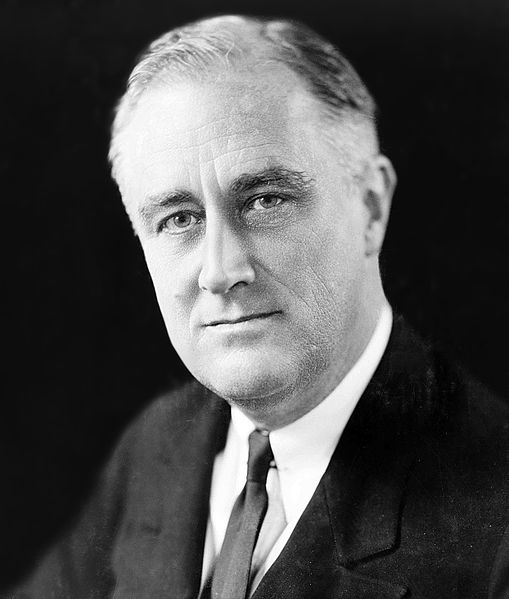
“The only thing we have to fear is fear itself—nameless, unreasoning, unjustified terror which paralyzes needed efforts to convert retreat into advance.” These bold words from Franklin D. Roosevelt’s first inaugural address could just as readily be applied to religion. Frequent readers of this blog will have no doubt noticed the recurring references to horror films and the occasional scary novel. Aside from everyday fears, (such as yesterday’s when I learned that my summer course, my only source of income for next month, had been cancelled) there are more deeply seated phobias that lurk in our subconscious minds. A reasonable conclusion might suggest that this undercurrent of fear is what buoys up the horror movie industry—people really are afraid. Fear is, in the final analysis, the original basis for religion.

Along with the evolution of consciousness, humanity has also acquired the knowledge of uncertainties and troubles ahead. We project to the next day and realize tomorrow is never secure. In desperate hope we beg the higher power for protection. If we were in control of our own destinies, we would not need the gods. Over the course of civilization, there have been luminaries who’ve tried to wrestle religion from the realm of fear into a more pleasing sphere. Jesus, for example, tried to stand religion on the basis of love. Within a couple of decades, however, Paul came along and managed to twist it back into the domain of fear once again. Fear of Roman persecution, fear of Hell, fear of life itself.

Religion is an embodiment of our fears. Many today choose to place their trust in reason and technological development. No doubt these arenas of human endeavor have improved life for many people. Yet, even with our growing global awareness, fear creeps in and we use our technology for weapons to keep us safe. We don’t call it religion any more, but national security, or the defense industry. Or, God help us, the TSA. The end result is the same: we fear more than fear itself. We place our trust in something we can’t fully comprehend. No matter how rational (or unemployed) we become, religion will never go away.


Triskaidekaphobia

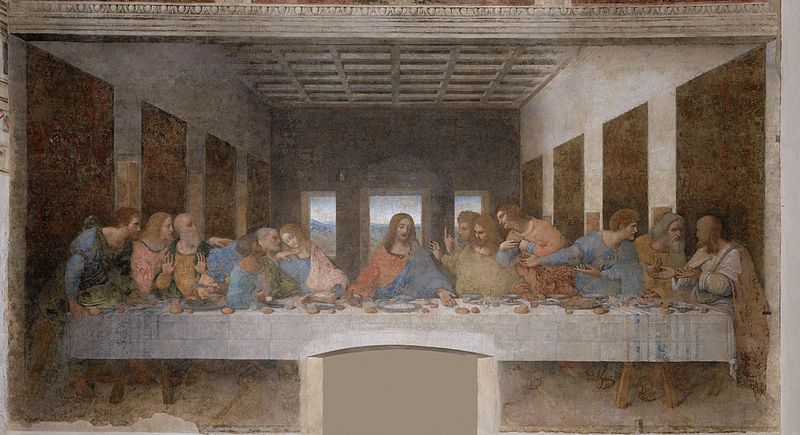
Friday the thirteenth. The very concept awakens images of horror movies and inauspicious happenings. An interview with a Psychology professor at Rutgers recently discussed this unusual phobia. Mike Petronko of the Graduate School of Applied and Professional Psychology had this to say: “Exactly how this got started is difficult to say, but the belief appears to date back to ancient times. Often, superstitions are rooted in religion. Some folklorists believe the fear may stem from the Last Supper, when, according to Christian belief, Jesus and his 12 disciples gathered for the final meal, which set the stage for his crucifixion, on Good Friday.” There is no doubt that the origin of the superstition is religious and that Fridays earned their notorious reputation because of Good Friday. Even today, as any Roman Catholic can tell you, Friday dietary requirements differ from those of other days.

But wasn't this a Thursday?

Thirteen is a little harder to pin down. It is a prime number after ten, but then, so are eleven and seventeen. It may have its unlucky associations back in the old Mesopotamian base-six numerical system. Once you reach past the first doubling of six you meet thirteen. Even today hotels are designed with no thirteenth floor, although pasting a fourteen over the actual thirteen is merely for psychological relief. Mathematics insists thirteen follows twelve. As Petronko notes, the fear is real. Airliners do not have row 13 and hundreds of millions of dollars of revenue are lost because so many people refuse to engage in regular practices (such as flying) on Friday the thirteenth.

Religion and fear are not strange bedfellows. In fact, religion, in its earliest origins, seems to have been a coping mechanism for fear. People are afraid of many things – that is the curse of consciousness. We can anticipate eventualities that will never materialize. We imagine them happening to us. Religion seeks to placate those forces that are beyond our control. We may lay claim to a highly advanced and technologically sophisticated society, but millions of people are anxiously awaiting the end of this day. Rutgers, like most universities, hardly sees the need to fund the study of religions. Nevertheless, our very culture belies that indifference. Many people are afraid today and we still don’t even know why.


Inventing God

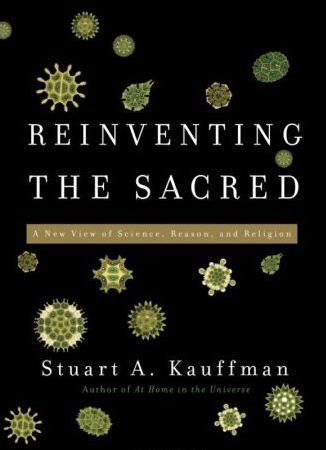
Reductionism has been a hallmark of science for many years with the most extreme forms suggesting a kind of cold determinism in the universe. Having known since my undergraduate days that science is the key to knowing, yet having the experience of believing as well, I wondered how they fit together. If they fit. I have just finished reading a very important book on the topic – Stuart A. Kauffman’s Reinventing the Sacred. A theoretical biologist, Kauffman has come to the conclusion that reductionism cannot account for many aspects of the world we actually experience. Evolution, biologically as well as culturally, demonstrates again and again a creativity that cannot be predicted, no matter how much data is acquired. Kauffman suggests that this non-reducible creativity is what might properly be called “God.” Not a believer in a transcendent creator God, Kauffman does not wish to remove the God meme from our psychological vocabulary, but to reinvent it.

In many ways, I found Kauffman’s work to be some of the most affirming science writing I’ve ever read. He believes there is a place for creativity in the overall human experience of knowing and being. Values are not simply arbitrary points selected by people, nor are they imposed on us from a personified God. Values and beauty are emergent phenomena. As Kauffman argues, they are clearly and blatantly real, but not reducible to physics. He also demonstrates that economics falls into the same category of real but non-reducible. As a researcher in complex systems, Kauffman quickly left me in the dust when he reached the more theoretical material. I am not equipped to assess his scientific conclusions. Overall, however, his book possesses a rare sort of urgency for a scientific exploration, and it values the whole of the human experience.

Demonstrating that ethics emerge not from “on high” but from a human sense of value and “right,” Kauffman suggests that we desperately need a global ethic to realize our full potential. In the ongoing debate between science and religion, Kauffman is a voice of both reason and compassion. Science is the way we know – there is no point in debating that. If you are reading this on a computer, Q.E.D. If you are a human being, then you have also experienced the phenomenon of believing, whether or not it is religious. Kauffman has addressed the question directly and has given both specialists in science and in religion a trenchant analysis of an intractable issue. His irenic approach is to be applauded, and hopefully, widely read.


Palm Versus Palm

“Mankind [sic] has managed to accomplish so many things: We can fly!” The words are not mine, but, depending on whether he was standing or sitting when declared, the Pope’s or God’s. In his Palm Sunday sermon yesterday the Pope addressed the issue of technology. Acknowledging flight a mere century after it began is breakneck speed for the Roman Catholic Church, but the concern behind the sentiment is real enough. Can religious systems survive the full onslaught of the technological revolution? As one small sample of the larger picture, ethics must react to increasing advanced technological scenarios. Raymond Kurzweil’s proposed Singularity where human and machine are fully integrated is perhaps an extreme example, but by no means the most extreme. Without fully understanding the context, our technical ability has soared way beyond our capacity to foresee implications. Believe it or not, many people alive today cannot use personal computers, have no palms, no cells. Sounds like they might be living free.

Palm Sunday is a day of tradition, heavily freighted as the start of Holy Week (in the Western tradition; of course, many Christians think it is a little too early some years, but that’s for a different post). Fronds from actual trees are waved as the Pope speaks. In the crowd palms are also being utilized to send the news home that one is waving a palm in the presence of the Pope. Traditional Christianity can survive with only the most rudimentary of tools. Religion, from the available evidence, began in the Paleolithic Era – earlier, I am pretty sure, than even the first integrated circuit. With its iron grip on the human psyche, religion is not about to disappear. Instead, technology is either ignored or embraced by it. As long as religions rely on human participation, however, technology will need to be reckoned with.

It's still a date (or palm)

The fact is technology has changed the perception of the world for many, especially in the western world. Even the revolution in Egypt earlier this year was conceived on the Internet. All the indications point to increased usage of technology rather than its imminent demise. Yet religious leaders still enjoin us to wave palm branches. Virtual Church websites abound where the faithful can wave electronic fronds and nary a tree will be harmed. Sermons, discussion groups, Bible readings, prayers – they can all be dispensed through wireless networks and modems. While many traditionalists turn from such ideas in disgust, it would behoove us all to pay attention. With the Vatican now onto the fact that we are flying, within mere decades we might receive a divine message on – oh, wait a minute – I’ve got mail!