Stranger and Stranger

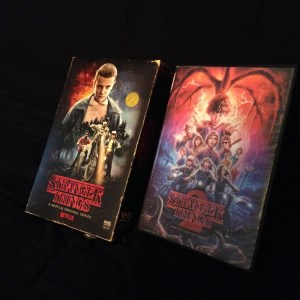
Like many fans of the X-Files and the early years of Sleepy Hollow, I’ve fallen into the Stranger Things orbit.  While I don’t have a Netflix account, I have friends who do and they got me hooked.  If you’ve watched it you’ll know why, and if you haven’t I’ll try not to give too many spoilers away.  The reason I raise it now, when we’ve gone such a long time without a new season, is that Stranger Things 2 took on shades of The Exorcist, but without any of the attendant religion.  Secular exorcists do exist, and possession is a feature of cultures with all different kinds of belief systems.  Exorcism works based on the belief system of the possessed, it seems, and if there’s no religion there’s no problem—call a secularcist!

Spoiler alert: Will is possessed by the mind flayer.  As the authorities flail around and get eaten by demidogs, his mother figures out how the exorcism has to work.  The thing about possession is that nobody really knows what demons are.  Dungeons and Dragons, which I confess I’ve never played—my life is too complicated already, thank you—gives the analogy for the possessing entity.    No matter what the demon, however, the only way to get it out is through exorcism.  Quite apart from sci-fi and fantasy, this is also the case in real life.  Part of the appeal to Stranger Things, I suspect, is that it indulges in the mysterious without the burden of religion.  While religion makes for good horror, good horror may exist without it.  Or can it?

Contrast this with Sleepy Hollow, now defunct.  Possession was a trope there as well, but the story had obvious elements of religion embedded in it.  As I point out in Holy Horror, religion often drives the fear.  That doesn’t mean it’s the only driver.  People fear being taken over by something else.  Stranger Things knows that if nobody can really figure out what that something else is, it can be scarier still.  We know it comes from the upside down.  We know it can possess people.  And we learn that it can be exorcised.  Although the setting is completely secular, there are elements of religious thinking even here.  It’s simply part of the human psyche.  We can deny it exists.  We can try to describe it only by analogy.  We can try to exorcise it.  It is there nevertheless, even as we eagerly await the advent of the third season.

Tempestuous Wind

There was quite a windstorm that blew through here yesterday.  It reminded me rather forcefully of Weathering the Psalms.  Firstly, it blew loudly enough to wake me up a few times in the night.  When I finally climbed out of bed, listening to the blustery concussions beating the house, I remembered that the first chapter of Weathering was about the willful wind.  That’s not just a poetic phrase—according to the Psalter, the wind does the will of God.  Like much of the weather, it’s weaponized by the Bible.  Seeing what the wind can do, the reasons for this should be obvious.  Hurricanes are tremendous windstorms (although unknown in the land of the Bible), but they are also known for their tremendous rain.  Tornadoes, however, are pure wind and are among the most destructive forces on the planet.  (Before people came along, anyway.)  Wind commands respect.  We’re a very long way from taming it.

When thinking of meteorology, it’s easy to forget wind.  Rain and snow are pretty obvious.  Even desert heat is impossible to ignore.  The wind, invisible and powerful, is perhaps the most godlike of weather’s many features.  To the ancient way of thought, it was also inexplicable.  We understand the earth’s rotation and temperature differentials between water and land and the uneven heating between the surface of the ground and air aloft.  The ancients understood it more to be a pure act of God.  The wind certainly can seem spiteful.  It’s not difficult to attribute agency to it.  Such things go through my mind when the howling is loud enough to wake me.

Invisibility suggests power.  It wasn’t so much the “monotheism” of Israel that made it distinctive as it was the inability to see its deity.  That lack of visual confirmation not only necessitates a kind of faith, but it also veils a threat.  We humans tend to be visually focused.  We fear the dark.  Foggy, misty settings can give a story an atmosphere of foreboding.  Placing the divine out of site only enhances supernatural powers.  So it is with the wind.  As is to be expected, the windstorm has mostly blown itself out by now—moving on to another location until the temperature differentials even out and its howl becomes more of a whimper.  It will have done its work, however, for even as it passed through it brought to mind the proper respect for that which cannot be seen.  


Edifices

In a process that’s been going on for decades, church buildings have been sold and repurposed.  Part of the reason is the fact that spirituality has come to resemble a free market and there’s increasing competition from the Nones.  Thinking back over a lifetime of attending various services, many of which seemed to do nothing more than demand I pull out my wallet, I can understand this lack of public engagement with established religions.  At the same time the rather shallow, but emotionally based evangelical tradition continues to grow, largely based on the emotional payoff it gives.  Ironically, it makes the claim that it’s the doctrine responsible for this appeal, but it seems more likely that it’s the way the doctrine allows you to feel about yourself that’s the key.  And still the wallet comes out as the mega-churches grow.

There’s a profound beauty in dereliction.  Some of the more solidly built structures—for even the way a church was constructed was a theological statement—have lent themselves to creative reuses.  I’ve visited churches converted to used bookstores, and this seems fitting.  The trade-off of doctrine for knowledge is appropriate.  In Pittsburgh, years ago, I was intrigued by the Church Brew Works.  Occupying a closed Roman Catholic Church, the brew pub is a trendy gathering place and the titillation of drinking in a once hallowed location is part of the draw.  People find such irony irresistible, it seems.  Better than letting an abandoned building simply fall to ruin.  When it first opened some were scandalized—a lingering belief in sacred places may account for this.  People were married here.  Baptized.  Funerals were held.

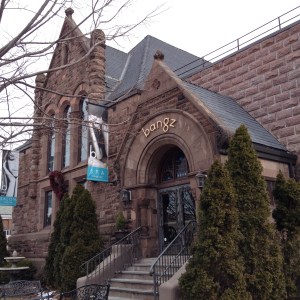
While walking through an unfamiliar neighborhood recently I found a church building that has been converted to a spa.  The idea struck me as so counterintuitive that I had to think through the implications.  Churches, for all their faults, are places advocating spiritual growth.  Whether or not it takes place is quite a different question, of course, but this is all about interior life.  Spas are about the surface, physical beautification.  Indeed, often personal pampering.  This is building space come half circle.   An edifice built of heavy stone, implying the gravity of the business inside might have eternal consequences is now a place to beautify the body.  Perhaps the building itself has gone through a similar process.  What used to advertise to the world that depth could be found  here has now become merely an exterior.  Market forces dictate what it will become on the inside.


Friends with the Devil

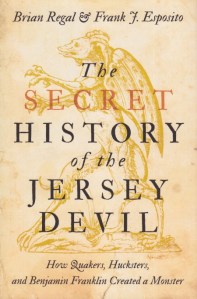
The Pine Barrens of New Jersey strike the first-time visitor as eerily odd, even today.  Stunted trees grow from sandy soil, crowded close together and growing hard up to the edge of the road.  You can see the sky above, but dwarf trees of uniform height block your lateral views over any distance.  It feels claustrophobic.  Add to this tales of inhospitable residents and an actual profusion of tree-climbing lizards, and you’ve got the grounds for wondering what else might lurk in the deciduous woods.  Brian Regal and Frank J. Esposito aren’t so easily frightened.  Their fascinating book, The Secret History of the Jersey Devil: How Quakers, Hucksters, and Benjamin Franklin Created a Monster is a bit of a chimera on its own.  The subtitle gives a pretty good idea of what you’ll find in the book.  For someone who had lived in Jersey for a dozen years, and who loves monsters, it was a must-read.

Not to provide too many spoilers, Regal and Esposito spend some time in colonial New Jersey sketching the little that can be known of the rather prominent Daniel Leeds.  Anyone from Jersey knows that its eponymous state demon is also known as the Leeds Devil.  This particular family had good connections despite being Quakers—a capital crime in some parts of the British Empire.  Daniel, however, had a falling out from the Friends and made his name by publishing an almanac.  This almanac and the proximity of Philadelphia to the Barrens brings Benjamin Franklin into the story.  Franklin competed with the Leeds almanac, and Poor Richard eventually won out in this war of the words.  Demonized by their former Friends and gently satirized by Franklin, the Leeds family was eventually all but forgotten.  Then stories began to emerge of a dragon-like monster in southern Jersey.

To get the details you’ll need to read the book.  Particularly interesting for this blog is the way religion and monsters interplay.  There’s a good bit of history of monsters in the story, including Quakers and early attempts among scientists to understand birth defects.  The very word “monster” is, in its “word cloud,” related to ideas such as revelation and portents.  Early scientists resorted to divine anger when they couldn’t explain what nature had wrought.  And of course folklore is a very potent lubricant.  There are some gaps in the story here, but this is an enchanting exploration of whence monsters might come.  The Jersey Devil has international fame now, and its birth may have begun with insults flashed back and forth among religious believers that eventually were taken literally.  The devil’s in these details.  Or at least in the spooky topography of the Barrens.


Lore of the Folk

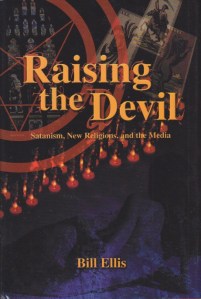
Once in a great while you read a book that has the potential to shift paradigms.  The unusual and provocative Raising the Devil: Satanism, New Religions, and the Media, by Bill Ellis, is such a book.  Perhaps the main reason for this is that Ellis is a folklore scholar who takes his subject seriously.  He cites some unusual sources non-judgmentally, but critically.  He suggests that folklore can actually dictate reality for its believers, while not demanding that it defines how everyone else sees the world.  This fine parsing allows him to examine the satanic cult scares of the 1980s and ‘90s with a kind of passionate dispassion.  He traces the historical contexts that made such panics possible, all the while keeping belief structures in place.  In the end, the giving in to this folklore on the part of society can lead to tragic results.  Understanding folklore might well prevent that.

Since our prevailing cultural paradigm is a materialism based on empirical observation, at least among those deemed “educated,” it is easy to lose track of how belief constructs our worlds.  Ellis finds the cradle of satanic panics in the Pentecostal tradition where deliverance ministry—a Protestant form of exorcism—takes seriously the belief in demons of many kinds.  This leads to a study of ouija boards and Spiritualism.  Although neither led to Pentecostal theology, both play into it as doorways for demonic activity, in that worldview.  Add into this dissociative identity disorder (what used to be called, and what Ellis refers to as “multiple personality disorder”) and the recipe for a spiritual mulligatawny is simmering away.  You need not believe what the victim says, but if s/he believes, you must pay attention.

Outside the strict confines of Satanism, other cultural phenomena allowed for panics to grow.  Popular narratives, largely false, of satanists cum evangelists (think Mike Warnke) mingle with cultural fears such as the Highgate Vampire scare and cattle mutilations to make a narrative of satanic ritual abuse believable.  A folklorist sees the connections that a strictly wielded razor by Occam tries to shave away.  All of this fits together.  When we don’t pay attention to how real this is to those involved, a half-baked public panic can erupt.  Ellis suggests such circumstances might well have led individual witch hunts into large-scale witch crazes.  While both are unfortunate, the latter tend to lead to many, many ruined lives.  The subtle awareness that one need not believe in order to understand those who do is something worth pondering.  Reality may be far more complex than the activity of electro-chemical signals in a strictly biological brain after all.


Love, Not Fear

How do we celebrate Valentine’s Day when our governments advocate hate?  You have to wonder when the autocrats last fell in love.  Building entire polities on hatred harshes the elevated feelings of letting love, well, love.  The only time Republicans seem to smile is when they’re taking advantage of someone else.  But it’s Valentine’s Day, so I’ll try to think charitable thoughts about even them.  

My reading recently has been taking me into the realm of sin.  Let me rephrase that—I’ve been reading a lot about sin recently.  One of the more striking aspects about badness is that it seems closely related to love, or at least lust.  I’ve often pondered why Christianity especially has tended to treat sex as bad.  While all religions take an interest in sexuality, not all of them declare it a negative aspect of life.  In fact, many see as it quite the opposite.  Since I like to trace things to their origins, I wonder why this might be.  Why did Christianity, whose putative founder declared the greatness of love, decide that although love is well and good that making it is problematic?

Paul of Tarsus, whom some credit with being the actual founder of Christianity, considered his celibate lifestyle to be superior.  While he didn’t mandate it of his followers, he highly recommended keeping their commitments to divine causes rather than to prurient human ones.  He believed a second coming was going to occur any day now, and that was nearly two millennia ago.  He was also, through no fault of his own, an inheritor of an incorrect understanding of gender and sexuality.  Even today there’s much about these that we don’t understand, but we do have more evidence-based ideas about what’s going on.  And not surprisingly, we tend to find that love is good and expressing it (appropriately) is also good.  Valentine, after all, was a saint.

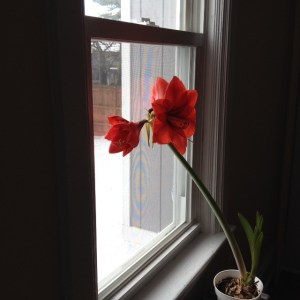
Looking out my window, it’s still clearly winter.  There’s snow on the ground from the most recent storm and I’m aching from the upper-body workout that it required to get it off the walk.  But still, in the pre-dawn hours I start to hear—rarely but clearly—the birds begin to sing.  The amaryllis on the sill has sprung into full bloom.  The thing about love is that there’s enough to go around.  It’s a renewable resource.  If only our leaders showed a fraction of interest in it as they show in hate and fear. 


Something Blue

I’ve worked for two British publishers.  This probably has nothing to do with the fact that I lived in the United Kingdom for over three years, but the two situations have this in common: they’re bloody complicated.  I say that for a reason.  I’ve always wondered why “bloody” is considered swearing in Her Majesty’s realm, but not over here.  Profanities tend to be culturally specific, of course, while some forms (scatological and blasphemous, in particular) are generally universals.  I had always assumed “bloody” had something to do with religion, kind of like the more tame “zounds” is an abbreviated form of “God’s wounds.”  In fact, the folk etymology of bloody suggests just that.  Folk etymologies, I learned as a budding philologist many years ago, aren’t the same as scientific etymologies.  In other words, like folklore, they aren’t entirely accurate.

One of the lessons I learned in Britain was that if you wish to cite a lexicon, it should be the Oxford English Dictionary.  It’s The authority.  So I thought I’d bloody well check it out on this.  There, it turns out, the emphatic use of bloody has to do with breeding, not bleeding.  Back in the seventeenth and eighteenth centuries there were rowdy aristocrats, or “bloods,” that gave the phrase it’s referent.  These privileged wealthy classes, as befitting the stereotype, could afford idle drink.  They did not work, so life was a matter of passing the time with aristocratic pursuits, such as imbibing.  This led to a phrase “blood drunk,” which, disappointingly, didn’t refer to Dracula, but meant drunk like a blood.  It was only a short, tipsy walk to “bloody drunk.”

Antoine-Jean Duclos, from Wikimedia Commons

Disengaging the adjective—like the saucer part of the Enterprise pulling away from its iconic Star Trek hull—you get stand-alone “bloody.”  This swear has nothing to do with sacred blood, but rather blue blood.  Which brings us to the realm of sacre-bleu, in which the word “blue” (bleu) features.  But this has nothing to do with the color blue (such as Marian blue, known from mythology of the virgin) but from the fact that bleu rhymes with dieu, and using the name of a deity (although “god” is actually a title, not a name) is swearing.  In fact, it is technically what is meant by blasphemy.  Working for British-based publishers has been its own kind of education.  It’s easy to get lost in etymological labyrinths.  But is that the bloody time?  I’ve got to get to work.


Ground, Candle, and February

The world’s hairiest prophet?

Relying on the prophetic ability of a rodent may seem like a fool’s errand, but to understand Groundhog Day you have to go back to Candlemas.  Apart from when I lived at Nashotah House, I’ve never been anywhere that people knew what Candlemas was.  It’s also known as the Feast of the Presentation, and it in itself is built on an archaic ritual based on a creative understanding of biology.  In ancient Israel, a woman was considered impure for seven days.  The eighth day, if the child was a boy, he was circumcised.  Thirty-three days later the woman, finally considered pure enough to approach the temple precincts, was to take a sacrifice for her purification.  And oh, if she bore a girl the impurity lasted sixty-six days.  It’s all there in Leviticus.

What does any of this have to do with Groundhog Day?  Well, according to the much later tradition that Jesus was born of a virgin on December 25, if you do the math you’ll find Mary’s purification falls on February 2.  And if Jesus had been a girl Candlemas would be a moveable feat since February sometimes has 29 days.  Since it’s still dark out for most of the time in February a couple of traditions developed: one was a way of finding out when winter would be over and the other was the blessing of candles since you’d still be needing them for awhile.  That gave the feast its common name.  The tradition grew that clear weather on Candlemas meant that winter was to last for a good long time yet.  Since Germanic peoples love their Christmas traditions, a badger was used for the long-range forecast part of the celebration.

In Pennsylvania Dutch territory, badgers are rare.  Woodchucks, or groundhogs, are just about everywhere and they live in burrows like badgers do.  In a carryover from Candlemas’s clear weather foretelling the future,  the belief was that a badger or groundhog seeing its shadow—because it’s clear, get it?—meant six more weeks of winter.  Of course nobody knew about global warming in those days.  Candlemas, it turns out, was one of the earliest Christian celebrations and it was part of the Christmas complex of holidays.  It’s still winter out there.  It’s also Saturday which means I already have a list of chores as long as a badger’s shadow.  Now I’ve got to remember to get my candles blessed as well.   Winter, it seems, never ends.


Evolving Intelligence

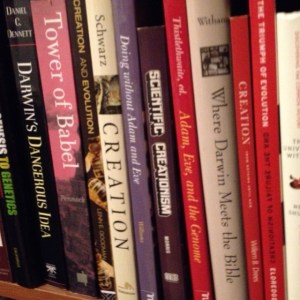
In the process of unpacking books, it became clear that evolution has been a large part of my life.  More sophisticated colleagues might wonder why anyone would be concerned about an issue that biblical scholars long ago dismissed as passé.  Genesis 1–11 is a set of myths, many of which have clear parallels in the world of ancient West Asia.  Why even bother asking whether creationism has any merit?  I pondered this as I unpacked the many books on Genesis I’d bought and read while teaching.  Why this intense interest in this particular story?  It goes back, no doubt, to the same roots that stop me in my tracks whenever I see a fossil.  The reason I pause to think whenever I see a dinosaur represented in a museum or movie.  When a “caveman” suggests a rather lowbrow version of Adam and Eve.  When I read about the Big Bang.

The fact is evolution was the first solid evidence that the Bible isn’t literally true.  That time comes in every intelligent life (at least among those raised reading the Good Book).  You realize, with a horrific shock, that what you’d been told all along was a back-filled fabrication that was meant to save the reputation of book written before the advent of science.  The Bible, as the study of said book clearly reveals, is not what the Fundamentalists say it is.  Although all of modern scientific medicine is based on the fact of evolution, many who benefit from said medicine deny the very truth behind it.  Evolution, since 1859, has been the ditch in which Fundies are willing to die.  For this reason, perhaps, I took a very early interest in Genesis.

Back in my teaching days it was my intention to write a book on this.  I’d read quite a lot on both Genesis and evolution.  I read science voraciously.  I taught courses on it.  I’d carefully preserved childhood books declaring the evils of evolution.  To this day Genesis can stop me cold and I will begin to think over the implications.  When we teach children that the Bible is a scientific record, we’re doing a disservice to both religion and society.  This false thinking can take a lifetime to overcome, and even then doubts will remain.  Such is the power of magical thinking.  I keep my books on Genesis, although the classroom is rare to me these days.  I do it because it is part of my life.  And I wonder if it is something I’ll ever be able to outgrow.


OBSO

Oxford Biblical Studies Online is a subscription service for institutions that gives access to many biblical studies resources produced by the press.  It also features current essays that stand on this side of the paywall, written on contemporary issues.  In a shameless self-promoting plug, I’d direct you to this link to see my latest publication.  You see, I’m not alone in looking at Bible through the lens of horror.  As the acknowledgements to Holy Horror reveal, many conversations were going on that led to that book.  While the ideas contained in it are my own, I’m by no means the only one to have noticed that the Good Book makes guest appearances in genre fiction.  One of the points I made to my students when I held a teaching post was that the Bible is ubiquitous in our culture, whether we know it or not.  Just look at the Republican Party and beg to differ.

The idea is not without precedent.  For those who read the Bible real horror isn’t hard to find.  The Good Book can be quite a scary book.  Consider for just a moment the final installment—Revelation, apart from being full of amazing imagery, is an amazingly violent book.  Attack helicopters and atomic bombs may not yet have been invented, but there was no shortage of ways to kill people in the pre-gunpowder world.  Revelation paints the world in the throes of horrible suffering and death.  Indeed, the completely fictional Left Behind series rejoices in the death of the unrighteous who are, well, left behind.  Even today there’s a significant segment of “Christianity” that rejoices in the chaos Trump has unleashed.

In the OBSO article I sketch a brief history of how this came to be.  The history could work in the other direction as well.  The fact is the Bible and horror have always gone fairly well together.  Among genre literature, however, horror is a distinctive category only after the eighteenth century (CE).  Early horror novels, under the guise of Gothic fiction, often involve religious elements.  Culture was already biblically suffused then.  This is a natural outgrowth of a would steeped in violence.  Personally, I don’t like gore.  I don’t watch horror to get any kind of gross-out fix.  My purposes are somewhat different than many viewers, I suspect.  What we do all have in common, though, is that we realize horror has something honest to say to us.  And it has been saying it to us since from in the beginning.


The Problem with History

The problem with history is that it shows foundational views are constantly shifting.  Let me preface this statement by noting that although I taught Hebrew Bible for many years my training was primarily as an historian of religion.  More specifically, the history of a religious idea that shifted over time.  My dissertation on the topic of Asherah required specialization in Ugaritic and in the religions of the ancient world that included Israel.  I have subsequently been researching the history of ideas, and my current, apparently non-sequiturial books on horror and the Bible are simply a further development of that interest.  The focus has shifted more toward the modern period, but the processes of uncovering history remain the same.  Many people don’t like horror.  I get that.  It is, however, part of the larger picture.

History, to get back to my opening assertion, is not fixed.  It’s also tied to the dilemma that I often face regarding religion.  Since Jesus of Nazareth never wrote anything down, and since Paul of Tarsus was writing to specific groups with their own issues, no systematic theology of Christianity emerged during that crucial first generation.  What eventually grew was an evolving set of premises claimed both by Catholicism and Orthodoxy to be the original.  Neither really is.  Then Protestantism made claims that the establishment had it wrong and the Bible, which was a bit ad hoc to begin with, was the only source for truth.  It’s a problematic source, however, and systems built upon it have also continued to evolve.  Herein lies the dilemma.  With stakes as high as eternal damnation, the wary soul wants to choose correctly.  There is no way, though, to test the results.

Eventually a decision has to be made.  Christian history is full of movements where one group or another has “gone back” to the foundations to reestablish “authentic” Christianity.  The problem is that centuries have intervened.  That “original” worldview, and the sources to reconstruct that worldview, simply no longer exist.  The primitivist religions have to back and fill a bit in order to have any foundation at all.  What emerges are hybrid religions that think they’re pristine originals.  Historians know, however, that no originals exist.  We have no original biblical manuscripts.  Teachings of Catholicism, and even Orthodoxy, change in response to the ongoing nature of human knowledge.  History contains no instructions for getting behind the curtain to naked reality itself.  At the same time the stakes have not changed.  The consequences are eternal.  Those who choose must do so wisely. 


Christmas Lights

How many people read a blog on a major holiday?  The process of writing takes no vacations, however, and I often think of holidays as a time to write.  It doesn’t really matter if anyone reads it; writing is our witness to the cosmos that “Kilroy was here.”  Even if most of us have no idea who Kilroy was.  So I find myself awake earlier than most children on Christmas morning.  My long habit of rising early to catch the bus hasn’t been easy to break.   I creep down the stairs and water the tree before turning on its colorful lights.  I make a cup of coffee and wash the dishes left in the sink after a festive Christmas Eve.  And I think.  There’s always the thinking.

The meaning of Christmas, as the holiday classic tells us, eludes Charlie Brown.  Linus van Pelt gives one rendition—that of the Gospel of Luke—as the canonical meaning, but in my experience it shifts during a lifetime.  Christmas, after all, is one of a host of solstice celebrations.  My thinking these days is that it’s all about light.  Shimmering angels, glowing stars, light coming into the darkness.  These ideas seem to have, for the most part, Zoroastrian origins, but they’ve been thoroughly appropriated and, in true American style, commercialized.  The news headlines read how disappointed retailers always are.  The take could’ve been bigger.  Capitalism relies on Christmas to make the third quarter.  Light in the darkness, in its own distorted way.

As I sit for these quiet moments in the glow of only a tree, I think of those for whom the holiday has become a kind of disappointment.  Not a cheery Christmas thought, I know, but an honest one.  As families grow and diversify the childhood Christmas of excited children scrambling under the tree to excavate the next gift for me starts to fade.  Our economic system separates, and the dearth of days off around the holidays makes travel back to childhood homes difficult.  We do the best we can, but the fact is the sixties (speaking for me) are over.  Our reality is colder and darker than it used to be.  I part the curtains and look for any sign of dawn.  It will be a few hours yet before the sun brightens this winter sky, but then, that’s what the holiday has come to mean for me.  At least this year, it is the hope of light returning.  And that, alone, makes it a holiday.


Reflecting on Light

Now that we’re approaching the winter solstice, light is pretty much on the minds of those of us in the northern hemisphere.  Or lights.  The use of Christmas lights and Hanukkah lights may have symbolic value to the religions that promote them, but both also reflect the pagan use of sympathetic magic to bring back the light.  Human beings tend to be visually oriented, and many of us feel the increasing darkness deeply.  Days are brief enough to be awake for the entirety of daylight’s duration, and then you still have to get home after work.  After dark.  All our enlightened hours are spent for the benefit of the company.  It takes its toll.  And so we string holiday lights, bringing cheer into the preternaturally long hours starved for illumination.

Although the snow hasn’t stayed around here, I did notice an interesting reflection of light outdoors the other day.  The windows of a house were casting a light-shadow on a fence that had the look of a cross.   It took some convincing to assure me that this was pareidolia—the assigning of intentionality to random “signal.”  We see faces where they don’t really exist, and when we see crosses in this evangelical haven of America we have to assume they’re intentional.  Sometimes, however, they’re simply a trick of the light.  The sun has a low angle this time of year, and the light that is otherwise scattered back into what is wonderfully termed airglow—the natural illumination caused by sunlight as its luminosity brightens the daytime sky—is focused lower.  Light takes shape and sometimes it seems religious.


In New York City, where repeated patterns are pervasive, such reflections often appear on neighboring buildings as “X-Files” symbols of Xs in circles, giving the city a mysterious look.  Out here, however, they appear as crosses.  You see what you want to see.  Or, sometimes you can’t help seeing what appears utterly obvious to credulous eyes.  I’ve had people insist that crosses like this are intentional.  In reality, they’re a natural result of rectangles reflecting the morning light when the sun follows its low profile ecliptic during the waning of the year.  That doesn’t mean that it can’t be read for something else, of course,  Religion is all about interpretation.  Light forms patterns and seems strong enough to banish darkness.  And given how many hours it’s dark these days, I’m willing to take what help I can get.  The solstice will soon be here.


Epistle Writer

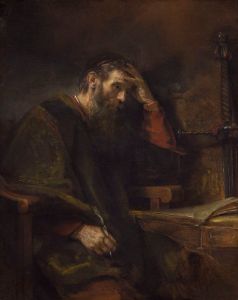
I’ve been reading about Paul.  You know, that Paul.  What has struck me from this reading is that if he weren’t in the Bible rational people would likely think Paul was writing nonsense.  Getting into the Good Book is a big score, for sure, but a close look at what this particular apostle wrote does raise eyebrows, as well as questions.  Over my editing years I’ve discovered quite a few methods of dealing with the saint from Tarsus, but what they really point to is the elephant in the room—we don’t really know what Paul was on about.  A few basic facts stand out: the Paul of Acts doesn’t match the Paul of the authentic letters, and although Paul never met Jesus he became the architect of much of Christianity.

There’s a reason that I focused my doctoral work on the Hebrew Bible rather than the New Testament.  Still, it remains fascinating to look closely at Paul’s claims.  At some points he sounds downright modern.  Like a Republican he declares that he can be tried by no human power.  Specially selected by God himself, he can’t be judged by the standards of normal people.  This is dangerous territory even for those who eventually end up in the Good Book, especially since it wasn’t written as an abstraction, but to a specific readership in a specific place dealing with specific issues.  Galatia wasn’t the same as Corinth.  The issues at Philippi weren’t the same as those in Rome.  Yet, being in Scripture makes all his musings equally inspired.

The more we learn about Scripture the more difficult it becomes.  Perceptions evolve over time, and we know nothing about how various books were selected.  There are no committee minutes.  We don’t even know the committee’s name or if it was ad hoc or standing.  With repeated and long-term use these books became Bible.  Take Paul’s letters—it’s virtually certain that we don’t have them all.  He makes reference to letters that we don’t have.  What might he have written therein?  Is part of divine revelation missing?  The discovery of other gospels and many contemporary religious texts to those that made the Bible cut raises questions that can only be resolved with the category “inspiration.”  Christianity isn’t unified enough to add any more books, although some sects do nevertheless.  Paul is very much like that—an example of not being subject to human trial.  For a founder of a major religion we know surprisingly little about him.


The Dots

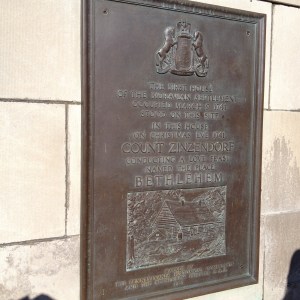
Connections have always fascinated me.  Maybe it’s because life is a random stream of stuff constantly thrown at you that makes a mockery of any plans you might try to implement.  Me at Nashotah House?  Really?  Nevertheless, these events shape us and everything that happens thereafter is seen in light of them.  So when connections occur amid this continual flux, I sit up and take notice.  For example, I had never thought of moving to eastern Pennsylvania.  Now, around Christmastime, I find myself not far from Bethlehem.  Bethlehem was so named because it was founded on Christmas Eve by Moravians who’d settled in the area.  Although not counted among the most numerous of Protestants today, Moravians had a profound effect on the founder of Methodism, John Wesley.  In fact, he met Count Zinzendorf, whose name appears on this handsome plaque in historic downtown Bethlehem, at a pivotal moment in his own spiritual journey.

Having grown up Fundamentalist, the United Methodist Church would not have been our choice, although we had unwittingly attended one of the Methodist offshoots—the Church of the Nazarene—from time to time.  In one of those unplanned things, we found ourselves in Rouseville, Pennsylvania, where the only Protestant church was United Methodist.  Once ensconced in the UMC it was my plan to become a minister in that tradition.  That led me to Boston University School of Theology where I first learned about the Wesley-Zinzendorf connection.  It was also there that I met my wife.  And subsequently joined the Episcopal Church.  Why?  John Wesley had been adamant that his followers not drop out of the church in which he was an ordained priest.  I was only following instructions.

Had that not happened I would never have had my first, and so far only, full-time academic job.  Nashotah House was conservative, and I was not.  We nevertheless had a connection.  Growing up I’d barely heard of Wisconsin, let alone planned to live there.  When Nashotah no longer required my services my career had to change as well.  None of this was in the plan.  Who plans to move to New Jersey?  And now everyone thinks of me as an editor, a fallback position if there ever was one.  Since I work in New York City, moving back to my native Pennsylvania wasn’t really on the agenda.  An outside agent led to that.  So I find myself near Bethlehem in the Christmas season, staring at Count Zinzendorf’s name, which I first heard of in a seminary now far away.  Connections, even with those long gone, are always worth noting.