Rusticated Fears

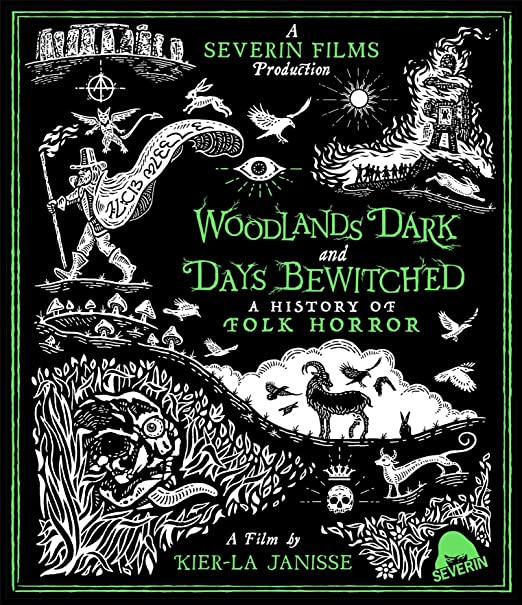
I don’t recommend sick days.  This one was weird with all the symptoms of illness but really having them just be the side-effects of a shingles vaccine.  I don’t recommend it, but I was able to use the day, between dozing off, by watching Woodlands Dark and Days Bewitched: A History of Folk Horror.  This late 2021 documentary is over 3 hours long and I’d been wondering when I’d have the chance to view such a lengthy movie.  Besides, when you’re feeling utterly miserable, horror is a kind of elixir to make it all better.  Watching the film made me aware of just how many movies I haven’t seen.  Another way of putting it is that I still have my work cut out for me.

Folk horror, you see, has a natural appeal for those of us who grew up away from urban centers.  Much that we did in the small towns of my childhood was, frankly, weird.  As the interviewees make plain, cities are the centers of economic and cultural power.  The big educational institutions are there and those of us from the hinterlands might not obey the rules that city dwellers seem to absorb through their feet.  In reality, I suspect, urban culture largely derives from folk culture.  Those who venture away into the large cities take pieces of their home with them.  Cities tend to blend all this together and transform it into something different.  Those in rural areas, however, have their own way of doing things.

Perhaps it’s embarrassing to center this much, but it was clear to me in watching Woodlands Dark and Days Bewitched that much of the fear showcased to city folks (for movies tend to be shown in urban settings) is the weird religion of the country cousins.  Both the words “pagan” and “heathen” are references to those who dwell outside urban areas.  “Pagan” comes from Latin for rustic, while “heathen” means those out in the heath.  Mainstream religion is that of the cities—the Vatican is located in Rome, and the large mosques, synagogues, and cathedrals are in population centers.  There’s no telling what the country dwellers might get up to if left to their own devices.  And religion taken seriously can be quite dangerous to outsiders, as we’ve seen time and time again.  Folk horror never really went away but it is undergoing a resurgence at the moment.  As the documentary suggests, this tends to happen in times of social instability.  At least we have something to look forward to as the world collapses around us.  Folk horror will help us cope, if my experience is anything to go by.


The Nature of Epiphany

Last year on January 6 we had an epiphany.  Many of us thought, I suspect, that since the angry mob wanted to kill Republicans and Democrats both that their actions would be condemned unilaterally.  Instead we learned that the Republican Party said, “Boys will be boys.”  And of course boys like to kill things.  A year later the GOP has stalwartly refused to condemn the attempt of a violent takeover of the government by a legitimately defeated candidate.  If the other party tried this they’d be calling “treason.”  We had an epiphany of a double-standard masquerading as evangelical Christianity.  Now, instead of thinking of today as the Christian epiphany, well, wait a minute.  Maybe that’s the epiphany we had—understanding what Christianity can become.

One of the tenets of democracy includes the freedom of religion.  Studying ancient religion can be quite revealing.  For one thing, we get a better idea of what religion was.  Few ancient authorities were concerned about what individuals actually believed.  Religion was largely what the powerful and influential did to placate gods who were easily bribed by sacrifice and praise.  The role of the average person was to be taxed to support this, and the monarchy.  I’ve been watching how, since the 1970s, the United States has been going that route.  We’ve always been a religious nation (“Christian” is much more debatable), but Richard Nixon’s ploy to swing evangelicals to the Republican Party worked.  Those not blinded by ideology will know that evangelicals tended to be staunchly Democrat.  Through the ensuing decades we watched Republican presidents giving our tax money to religious organizations they supported.  Why not throw another lamb on the altar while you’re at it?

The sacrificial system, you see, supported the temple staff.  Somebody had to eat all that meat!  Even in the Bible it was recognized that God didn’t exactly consume it the way a human being would.  Then last year on Epiphany, the party that’s supported just this kind of thing tried to throw all but Trump—yes, even Pence—onto their sacrificial pyre.  A year later we see those very senators saying, “well, it might be useful to have such people in reserve, just in case.”  Early Christians believed that you could tell another believer by their actions.  In that they weren’t wrong.  And those who are able and eager to kill in order to get their way have revealed, by their actions, their true beliefs.  It was, and still is, an epiphany indeed.


Love Letter

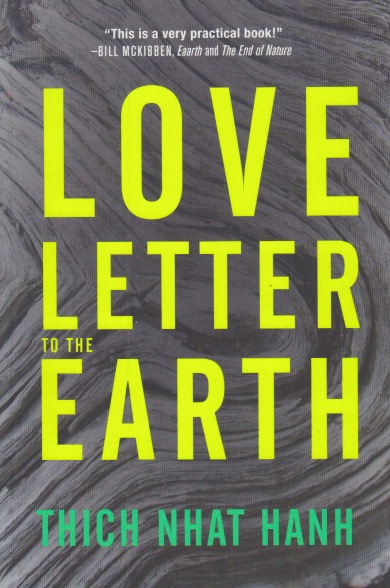
One of the more insidious things about religions is their claim to exclusivity.  The belief than any religion is the “only true religion” is bound to run up against the fact that there are many religions in the world, most of them sincerely believed.  We have much to learn from religions outside the one (if any) we were raised in.  I’ve known about Thich Nhat Hanh for quite a few years now.  One of his books was published (perhaps republished) by Routledge.  As their religion editor I was familiar with it, but as he was not “my author” (that’s the way publishing works), I didn’t contact him.  One of the most famous Buddhist religious teachers, Thich Nhat Hahn strives to transcend religion, which seems like a noble goal.  His Zen approach is simple and important.

This book’s title, Love Letter to the Earth, indicates what it is.  A reflection on environmental sensibility, it includes literal love letters to the planet.  Arguably it is probably a book best read in small batches with time to contemplate between each reading.  Although some aspects are clearly Buddhist, there are also noticeably Christian elements as well.  Christian spiritual leaders, such as Thomas Merton, knew there was no inherent conflict between Christianity and Buddhism.  Thich Nhat Hanh is also remarkably prolific, having written over 150 books.  World religious leaders need to take a lesson here concerning speaking out about environmental justice.  Certainly there are those who will disagree with aspects of his theology, as reasonable and important as it is.  The message is larger than that.

This book is based on the truth that we are all made of this universe and we contain within ourselves that universe.  The earth is our mother, understood by Nhat Hahn in an almost, if not literally, literal way.  While this isn’t news it is nevertheless profound.  When religions are used as excuses to attack the earth they cease to be true in any sense.  Those who don’t buy that perverted outlook are being condemned by those who do.  The earth is our home and it is our responsibility to preserve it not only for our own sake, but that of all creatures.  Thich Nhat Hanh does without being judgmental.  He instead calls for a religion that takes other religions as part of a non-conflictual belief system.  Religion starts wars.  Wars, of course, come at great cost to the planet, quite apart from the human suffering.  There is much wisdom in this slim book which would benefit many to read.


Sects and Violence

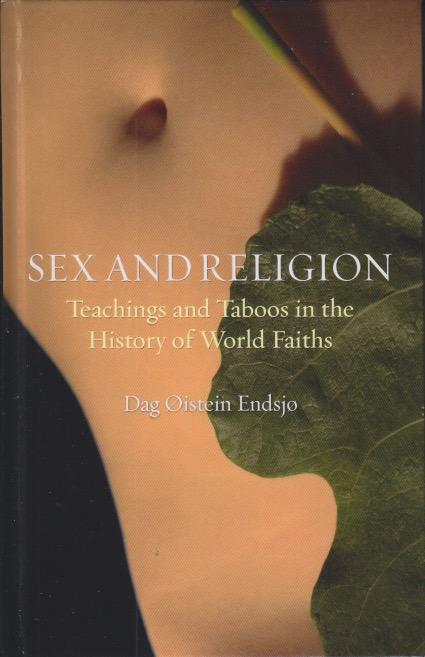
Important books often suffer because of poor distribution.  There are really only five publishers in English (“the big five”) that can reliably get their books into commercial bookstores.  I was reminded of this when reading the very important book Sex and Religion: Teachings and Taboos in the History of World Faiths, by Dag Øistein Endsjø.  The book is virtually unknown here in the States for a number of reasons.  It was originally written in Norwegian.  The author isn’t a household name.  The publisher who bought English rights is British.  It’s not comfortably priced.  None of this, however, gainsays its importance.  This book has much to teach us about hypocrisy and how religions codify prejudices, and, despite rhetoric, still value women less than they value men.  Religion is intimately connected to sex.  As I’ve written before, no religion ignores it completely.

Endsjø offers here a reasoned, logical, and religiously expert analysis of several aspects of human (and to a degree, animal) sexuality.  Contrary to much monotheistic teaching, sex is often treated as a good thing—within limits—in world religions.  Of course, that allows monotheists to step in and claim all others are pagans and debased, a tactic as old as the Good Book itself.  Religions’ real enemy, it seems, is education.  We should be open to compare what others believe—the wisdom their elders have passed down, just like the disciples.  And we should be honest about the fact that we change the rules to suit our situation.  One of the starkest examples of this Endsjø points out is that the Bible is much more stridently against divorce (which evangelicals now freely use) than homosexuality.  But guess which is the political issue?

Religions change, no matter what any true believer says.  We adapt to all kinds of new situations and new information, except when it comes to sexual behaviors we don’t like.  Even though most religions prohibit murder, the punishment for sexual offenses is frequently more stringent.  In other words, as Endsjø points out, religions care less for human life than for their own sexual prejudices.  The fact is just about all monotheistic religions have a male god and favor males over  the other half of the human race.  It even seems likely that Muslim over-reactions to homosexuality arose from copying evangelical Christians in the west.  This is an important book and if religious leaders of all stripes read and comprehend it, we would find ourselves in a much more human, and humane, world.


Justice Hungry

Social justice is very important to me.  At the same time I realize I’m just a single individual, and a small one at that.  I have a little group of internet friends (rather strangely called “followers”) but what I do and write has barely an impact with so much wrong in the world.  I suspect most people fall into this same dilemma.  A recent thread on the local Nextdoor app, for instance, reminded me how much people care for strangers in difficult times.  I side with Batman here—people are generally good.  Most of us are easily led, however.  And as we were taught in kindergarten, just one bad person spoils it for everyone.  So we find ourselves in a world disastrously off kilter and with nobody able to fix the problem.  Problems.  There are so many that it’s overwhelming.

Democracy seems like a good idea.  The problem is that the system is easily gamed by autocrats.  World news shows us the Hitler’s playbook is alive and well, even, if not especially, among “Christian” nations.  Jesus had no political power.  As soon as his followers gained it, the message of their master faded.  Today it’s unrecognizable.  “Bible believing” Christians who violate every principle in the Good Book to retain power is hardly something the carpenter from Nazareth would’ve advocated, or even, I venture, comprehended.  Bullies with only their own interests in mind take up the reins of state and convoluted laws allow them to do so.  The selfish win.

Photo by Sarah Ardin on Unsplash

I have great admiration for the people I know who work for social justice incessantly.  The kind of people you tremble to see coming because you know you can never measure up to their level of commitment.  Needed change, however, comes in small steps.  People are fearful and don’t welcome overnight paradigm shifts.  I admire social justice warriors even as I admire hose who throw themselves in front of buses or trains to save others.  I find myself watching their heroic action while calculating the best way to help, overthinking the problem.  I’ve marched in a number of protests, and it felt good.  I’ve not been able to free myself from capitalism long enough to really make a difference, I fear.  An idealist, conceivably, but not, I hope, an unawoken one.  So I struggle for justice and contribute what I can to right causes.  At the same time I’m compelled to acknowledge and thank those who do it so much better than I ever will.


Devils and Witches

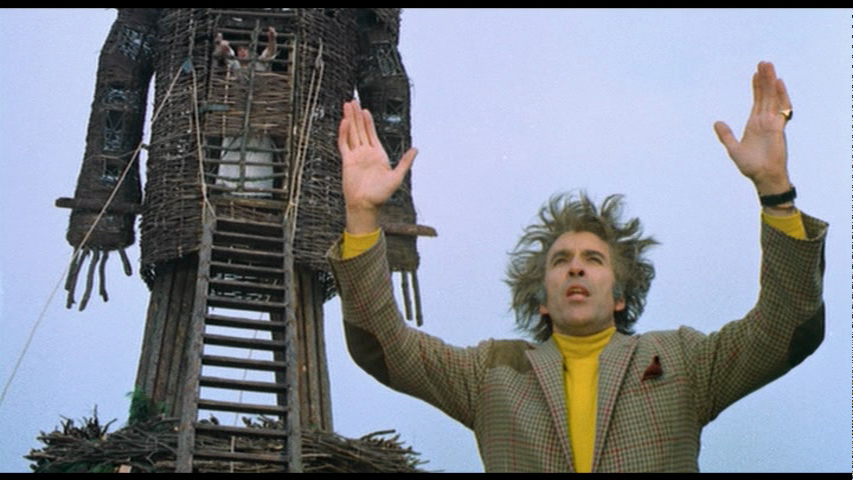
If you’re a regular reader (thank you!) you know that I’m currently under contract to write the Devil’s Advocates series volume on The Wicker Man.  As an editor myself I’m aware that academic series, often unlike fictional series books, tend to vary quite a bit from one another.  I want to try to get my submission close to the goal, however, so I’ve been reading volumes by other authors.  You may also know that The Wicker Man is part of an “unholy trinity” of early British folk-horror, with the other films being Witchfinder General and The Blood on Satan’s Claw.  Of the three my least favorite is Witchfinder General, so I’ve put off reading the particular volume on that film by Ian Cooper.  That has nothing to say about the author, but rather a lot to say about the base film.

The book is quite good.  Cooper is clearly aware of the controversy surrounding the movie and he points out some of the difficulties with it as well as what it does well.  His treatment is quite insightful.  The movie is violent and it’s an representation of the historical violence we thought we outgrew.  Matthew Hopkins was an historical “witch hunter” who was, in reality a serial killer,  mostly of women.  Fearing witches, while getting paid to find them, he was responsible for over 200 deaths.  As Cooper makes clear, the film lingers a bit too long on the abject nature of many of the tortures, not allowing us to look away.  For this reason many critics found the film distasteful.  I personally found it hard to watch.  Education isn’t always easy.

There’s quite a bit of film history in the book.  Cooper does a great job placing the movie in its cinematic context.  Like The Wicker Man, Witchfinder General is sometimes said not to be a horror film.  Indeed, there’s nothing supernatural about it.  Still, it fits the bill for many of those in-between movies that cross over into horror.  In this case it’s due to the violence.  For me, monsters are preferable to human monstrosity.  They’re easier to walk away from.  Although the witch hunts ended centuries ago, violence against women has remained.  Whether it’s legislative or physical or economic, women deserve better treatment than they’re offered by the male establishment.  Movies, and books about movies, like this one may be difficult to watch/read, but they carry important reminders that power continues to corrupt and it must be challenged and changed when it reverts to the mentality of Matthew Hopkins.  His spiritual kin, unfortunately, continue to thrive. 


Abominable and Biblical

In many ways Holy Horror was an initial volume.  The Bible  is fairly prevalent in horror, and had the book done any better I might’ve considered a sequel.  Take The Abominable Dr. Phibes.  I’d literally never heard of it until I saw on a website listing states’ favorite horror films that it was number one in Pennsylvania.  At that point I decided I would have to see it one day.  That day came and I later found out that quite a few critics hold it in high regard.  It is very campy, almost worthy of the live action Batman series with which I grew up.  Phibes is out for revenge and kills his victims (more on this shortly) with vampire bats and acid.  It may have been the first movie I’ve seen with death by brussels sprouts and locusts.  None of this makes it fit Holy Horror’s premise, however.

Phibes is a serial killer using the Bible as his road map.  About halfway through the film we learn Dr. Phibes’ doctorate is in theology.  He is using the ten biblical plagues to kill his victims.  The police consult a rabbi to learn about the plagues but even here the Bible’s misquoted.  Interestingly for this period, the inspector refers to the plagues as a myth.  The first plague shown is of bats.  There is also a plague of rats.  Neither of which occur in the Good Book.  The Bible’s a fairly easy tome to find, but it takes quite a bit of ingenuity, I guess, to murder by gnats or the death of cattle (which doesn’t prevent The Reaping from trying).  Plot holes are large enough to drive a chariot through, but the Bible clearly has a starring role in the narrative.  And Vincent Price is able to pull it off because he’s, well, Vincent Price.

Drawing some inspiration from The Phantom of the Opera, and featuring a scene set in Highgate Cemetery, this movie has its fingers all over the place.  I do have to wonder why so many people in Pennsylvania picked this as their favorite horror film.  I grew up in the state watching horror, much of it camp, and much of it worse, but never heard a thing about this.  It’s not really scary.  Perhaps it appeals to those who think they know the Bible but really don’t.  Of course, having amulets inscribed with Hebrew letters to symbolize the plagues is classy.  I doubt The Abominable Dr. Phibes will give anyone nightmares, but it could stand a bit of analysis in its use of the Good Book.


Celts and Gods

We’re accustomed to religions being written out.  Indeed, many world religions have sacred texts from the Avestas to Dianetics.  Some ancient cultures, however, didn’t have written traditions and when they disappeared, as all cultures eventually do, their religion became nearly impossible to understand, or reconstruct.  Miranda Green has tried to provide, in written form, a summation of her understanding of The Gods of the Celts.  Celtic mythology, interestingly, had long ago caught the attention of New Religious Movements, as well as the New Age movement.  Much of the Wiccan calendar is based on Celtic religion and many New Age practices trace their roots to the ideas of Ireland, Scotland, and Wales lost to the mists of time.  What we actually do know about these cultures is about as fascinating as what’s been reconstructed.

Green’s study shows us a religion that grew out of profound respect for nature as well as human prowess at fighting.  (The “fighting Irish,” indeed may touch on an historical pulse.)  Celtic gods reflected a large swath of thinking throughout western, and parts of eastern, Europe.  Their names may be less familiar to us, and some may well have been lost to the vicissitudes of time, but there was a vibrant devotion to them that went as far as human sacrifice.  We know that it occurred, but it probably wasn’t frequent.  Although polytheistic, Celts were moral in their own understanding of their world.  Morals tend to come from human understanding of their place in a world they didn’t create.  How do you live in somebody else’s property?

Unlike the more literate Greeks, or even the Semitic religions on which they drew for their stories, we have no narrative Celtic mythology.  We have fragments and glimpses.  Nobody had a recorder while sitting around the fire, recounting the activities of the gods.  Later, sources such as the Mabinogion were written down, which surely held some memories of such fireside tales.  The originals, however, we’ll probably never have.  Such is the way of conquered peoples.  What the Romans started the Christians finished.  We’re left with some deities, such as Brigit, made into saints, but their stories forgotten and not originally written down.  Our time looking back isn’t ill-spent.  It teaches us who we are and guides who we might become.  Our own violent politicians, threatening to murder those who are different, clearly have learned nothing from history, ancient or modern.


Learning to Like

The shout-out is an always appreciated gesture.  Among the guests on The Incarcerated Christian podcast, I’m pretty clearly the one with the smallest following.  That makes me doubly grateful to Robin and Debra for the work they’re doing.  If you want to get a sense of what their initial year involved, please take an unrushed moment or two and listen to their year-end reflection.  Better yet, follow them wherever you follow podcasts.  I’ve been watching some YouTube lately (I know, I know, the world has gone after TikTok instead) and I’ve come to realize that even those channels with millions of views have to remind people every single episode to click like, share, and/or notification.  Nobody knows it’s worth their time if readers/watchers don’t share!

One of the things about writing is that is craves readers.  There’s an almost Hebraic sense in which my writing is intended as a statement, whether or not it’s even read.  Ideas build up until they must be expressed.  You start to get to know other people by their words, written or spoken.  I sincerely wish I had more time to listen to podcasts.  I’m one of those people who can’t write with music or talking going on.  Nor can I work that way.  Those two activities make up the majority of my waking hours (perhaps I’m trying too hard, if there is such a thing).  Even the smallest Who, however, has his “Yop” to express.  In that case, however, he ended up saving the world.  I suspect many people have no idea what this blog’s about.  If you know, please tell me.  (There’s a comment section below.  Don’t forget to click like and share when you’re down there!)

The Incarcerated Christian has had everyone from evangelical pastors to obscure religionists such as yours truly on their podcasts.  People who aren’t afraid of the dark.  There’s an episode about the divine feminine.  There’s another by a blogger who used to follow my blog and comment on it in the early days until his own efforts took off.  And there are the hosts, Debra and Robin, whose stories are intriguing in their own right.  They approached me not knowing my own history with abusive religions—perhaps it comes through in my writing, or at least my choice of subjects?  There’s a strange comfort in knowing that others have had similar experiences.  Religion can be a monster, devouring people and spitting them out, all in the name of sanctity.  Listen to the Incarcerated Christian podcast, and don’t forget to like and share alike.


Horror Week

“Remember, remember, the fifth of November,” the old rhyme goes.  Earlier this week I advocated for Halloween being the start of the holiday season.  There’s been a lot going on this week and I’m now reflecting on how Halloween also took some of its identity from Guy Fawkes Day (or more properly Guy Fawkes Night), here on November fifth.  Halloween, as we know it, incorporates traditions from Samhain (actually November 1), All Souls Day (November 2), as well as Guy Fawkes (November 5).  All the while the Hispanic world is observing Dia de los Muertos, a multi-day holiday whose origins are somewhat uncertain but which shares similarities with Halloween.  In other words, it’s a veritable week of spookiness to get our November started off right.

Ironically, at least in corporate America, none of these are work-free holidays.  For the Celts Samhain was the most important day of the year.  A day when the dead might wander into our realm or we might stumble into theirs.  For the modern person it’s a day of checking email, making deals, trading and evaluating how well we did at it.  Pretty mundane stuff.  The message of all of these holidays is that there are matters of deeper import going on.  We should perhaps look up from our monitors and see.  Just as that veil between the living and dead thins at this time of year, so does that line between work and personal life, when our laptops are as omnipresent as a haunting deity set to keep our minds on the sin of not working.  

Guy Fawkes is about rebellion.  More specifically, putting down rebellion.  Keeping the status quo.  Halloween and its siblings are all about challenging the way things are usually done.  I often wonder what it would be like if people took it seriously.  The costumes are fun, yes, and the trick-or-treating, but there’s something more serious underneath.  Perhaps symbolically we pretty much ignore All Saints to Guy Fawkes, or Dia de los Muertos as pleasant diversions.  There’s some spiritual heavy lifting going on behind the scenes, however.  It’s not all about fun and games, because fear is always with us.  We know there are problems but it’s more comfortable keeping things as they are.  Guy Fawkes, perhaps for a cause we see as obsolete—restoring a Catholic monarchy—was trying to change things for the better.  What’s more, his motivation was religious.  There are spooky parallels here, even today.  It might be good to take a day off work to ponder the implications.


Interview Two

October turns the northern hemisphere mind toward Halloween.  It must be strange to receive northern media while living in the global south—Halloween occurs just as spring is getting underway.  I guess that’s what May Day’s for.  In any case, in the United States Halloween thinking is in nearly full swing.  My last two books, while not Halloween themed, look at horror films which, in keeping with October, are on everyone’s mind this season.  And it’s been quite a week for interviews.  The second half of my podcast interview on The Incarcerated Christian was posted yesterday.  If you want to hear more fun Q & A with Robin and Debra, click here.  I’ll post more about this Friday, but tomorrow my interview with Eric Ziolkowski of Lafayette College will air as part of the Easton Book Festival.  The festival’s going on right now, so be sure to check out the offerings online.

One bit of advice that I give as an editor: if you want to make it as an author you need to promote your own work.  Some of us were reared to believe that it’s in poor taste to do this, but in the internetted world it’s pretty much a requirement.  Something I learned from political activism is that every election is local.  Getting noticed also has to start in your own backyard.  I love doing interviews.  It’s always flattering to know that someone’s read your book and wants to know more about it.  I’ve started to explore the newish area of religion and horror.  From what we see in the news, it seems like it’s an area that’s likely to take off.  But only if those who work in it get their stuff out there where it can be seen.  (Or heard.)

Neither Holy Horror nor Nightmares with the Bible have sold very well.  They’re expensive, and academics, who will spend money on books, are still trying to decide if this area’s worth exploring.  I admit that there’s a puerile kind of naughtiness to taking monsters and “low brow” entertainment as a subject of study.  Horror, however, has lots of fans.  Perhaps not in the academy, but in the real world.  I like to think such marginal areas bring people together.  Horror, like demons, isn’t going away any time soon.  Instead of running away from what you fear, why not try embracing it?  If not even that, please consider the free content available on The Incarcerated Christian and the Easton Book Festival.  After all, Halloween’s just about here…


Book or Movie?

The funny thing about people, or at least one of the funny things, is that when individuals get together we notice different things.  It can happen at in-person meetings or “virtually” through books.  I’m working on a book on The Wicker Man, as I recently noted.  Others have written on the movie, of course, and I’ve read some of their analyses already, but I’m continuing to read more.  Recently I finished Studying The Wicker Man by Andy Murray and Lorraine Rolston.  This particular book—more along the lines of a booklet, actually—has quite a few observations about the movie that I had missed.  Connections, or interpretations, that I’d failed to make despite having watched the movie many times.  It takes the meeting of the minds to bring many things to light.

One of the questions they raised (and there will be spoilers here) is why the movie bears the title it does.  Obviously the climatic moment of the film features a wicker man.  Murray and Rolston noted, however, that more could be going on in this title than is obvious.  Sgt. Neil Howie, the protagonist, is a lot like a wicker man himself.  I won’t repeat their wonderful work here but I will say it’s convincing.  The literary trope of “the hollow man” (it could be woman, or hollow person, but I’m writing from personal experience) can be a poignant one.  We know that life may carry on biologically, but what makes us who we are is what goes on inside.  The hollowness may be intellectual or emotional.  Either way it’s a trial.  It’s something that I wouldn’t have thought of without help.

Studying The Wicker Man may be slim, but it has some powerful ideas.  As a society we’re often impressed with size.  When a promotional photo wants to show an author with gravitas, they generally ask him or her to hold a thick book.  There is certainly a place for large books, but insight can come in any size.  This particular book is obviously designed for film studies courses focusing on this particular movie.  It does point out that “cult classics” become such by not being widely seen, so I realize many of my readers (presuming there are many) won’t be terribly interested in a book that analyzes a movie they haven’t seen.  If you’re one of them, and if you don’t mind a movie with an ending that will stay with you, I would recommend watching the film before reading the book.


Druid Redux

I know I’ve talked about this book before.  I had cause to learn about the Druids again, and Peter Berresford Ellis’ book was handy.  I’m pretty sure I have Stuart Piggot’s book somewhere, but I haven’t seen it since the move, so I turned to Ellis again.  The first time I read him I was commuting and couldn’t take notes.  (My specialized form of research has its limitations.)  This time it took several days’ more reading, and doing so with more active engagement.  One thing that really stood out to me this time was the Indo-European connection.  Druids, according to Ellis, were essentially Brahmins—the intellectual class in a stratified society.  Having derived from a common ancestor, the two societies diverged with Brahmins surviving in India and Druids going extinct with the somewhat genocidal treatment of various other groups against the Celts.

Druids were egalitarian as far as the sexes went.  This is one of those examples where Christianity’s masculinist orientation furthered a trend that led to women being treated as inferior.  Evidence points to early female Druids, and even female political leadership among the Celts.  As the male godhead took over the remaining influence of women eventually evaporated.  The Druids, you see, were extremely focused on learning the truth.  Their pre-Christian judicial system was oriented toward fairness and finding out what really happened.  In other words, ethically they required no conversion.  That was a matter of theology, and theology often brings its own set of issues.  

The Romans, who’d had a long and protracted war against the Celts, drove them to the fringes of their empire.  Britain (and Brittany in France) were far enough removed from the base of power in Rome that the Celts survived in the edges of the islands: Cornwall, Wales, Scotland, the Isle of Man, and Ireland.  As a distinctive culture, Celts have been in fashion for some time now, but that’s a new development, historically speaking.  Ellis’ book explores this angle quite a bit since understanding the Celts is essential to comprehending who the Druids were.  The lack of native written accounts (Druids forbade writing their wisdom, passing it on by memorization over the centuries) hampers our ability to have a coherent history.  Ellis, however, seems to have reconstructed well.  Modern Druid revivals necessarily contain speculative elements, and historically the Druids wouldn’t have been perfect either—nobody is.  They do seem to have had a reasonable and just society for the most part, something we’ve managed to lose, along with much of their wisdom.


Thoughts on Job

The book of Job has been on my mind lately.  Leave aside the remarks of Eliphaz, Bildad, Zophar, and Elihu, it is one of the most honest books ever written.  Many people think Job is trying to answer the question of why the good suffer.  If so, it does a poor job.  No, Job is an exploration of suffering, and Job really isn’t looking for an answer why.  Instead, he simply wants his pain to be heard.  No fixers, no advice.  Simply to be heard and to know he’s been heard.  You see, in the world of the Bible words were significant.  Many prophetic utterances were simply that—utterances because it needed to be said.  Job ups the ante quite a bit, however, when he begins to wish that God would answer him.  God, after all, is responsible for his pain.

William Blake’s Job

The world is full of sadness.  Some people feel the sadness of others deeply.  We all strive for some kind of equilibrium, some balance.  There are, however, a lot of people out there that truly do suffer and for no particular reason.  Job is a polarizing book.  Many people dislike it intensely.  I suspect that some of them don’t like to think of the world in this way.  Those who do good should be rewarded.  (The book makes plain that Job is perfect.)  Those who do evil should be punished.  Job makes clear that that’s not the way the world actually works.  For reasons we can’t know (who’s privy to the divine council and its deliberations about our fates?) we may end up losing our hopes, dreams, health, and wealth.  Job is kind of a horror story.

There are those who read Job and argue from the point of view of his friends.  In the book itself God condemns the outlook of the friends, noting that Job—no matter how challenging his words were—spoke honestly.  Life is seldom fair.  We as human beings must strive for fairness as best we’re able since we sense that it’s morally good.  Indeed, much of the Bible upholds fairness.  The book of Job questions it.  Not it’s goodness or morality, but rather why the world doesn’t reflect it.  When someone is suffering one of the most helpful and difficult things we can do is listen to them.  We need not open our mouths to fix, suggest, or advise, like Eliphaz, Bildad, Zophar, and Elihu.  We simply must let the words be said.


Healing Time

Twenty years ago today I walked into the refectory at Nashotah House after morning mass and wondered why the television was on.  Normally people had their own theological issues to hash out over breakfast, so this was unusual.   When I saw what was happening, I skipped breakfast and went home to my family.  I remember the feeling of shock and terror of those days.  America, I knew, wasn’t the innocent nation it projects itself as being.  We had provoked, but none of that mattered as the isolationism of over two centuries on a mostly friendly continent crumbled.  We were vulnerable.  Living in the woods of Wisconsin there was no immediate danger, but the sense of confusion—and certainly the feeling that a less-than-bright president wasn’t up to handle this—made us all feel weak, even with the most powerful military in the world.

Yesterday the New York Times headlines ran a consideration on whether we’ve emerged better in the ensuing two decades.  Looking at where we are—a deeply divided nation because a narcissistic president that the majority of voters voted against put (and still puts) his ego ahead of the good of the country—the answer seems obvious.  It will take years, if not decades, to heal the damage that one man did.  His putative party (really his only party is himself), seeing his popularity as their means to power, refuse to distance themselves.  We simply cannot move forward.  Not in the midst of a pandemic where Trump followers won’t get vaccinated causing new waves of the virus to surface and thrive.  I’d like to think that on September 11 we might reflect—yes, I know it’s hard work—on how we all need each other.

Photo by Jesse Mills on Unsplash

Little could I have guessed in 2001 that a mere ten years later I would find myself working in Manhattan.  Somewhere in my mind on every day of that long commute I wondered if something might again go wrong.  On the bus I was thrown together with people of every description—well paid and just getting by, women and men, gay and straight, from all around the world—and we knew our fates were linked together.  Differences had to be put aside.  Selfishness has no room on a crowded bus.  That was my introduction to life in New York City.  Those who hear only the poison rhetoric of 2016 through 2020 should try commuting with an open mind.  If we all took the bus, life after 9-11 might’ve turned out very differently.