Zoom Game

Perhaps you’ve notice it too.  The technology blame-game, I mean.  Although it’s grown more acute since the pandemic, it has been around for as long as the tech disparity has existed.  A typical scenario goes like this: someone (often of a more senior generation) encounters a techical problem communicating with someone else (often of a more recent generation) and asks them what the problem is with their (the younger person’s technology).  I sent you the message, the narrative goes, there must be something wrong with your tech if you didn’t receive it.  Believe me, I understand how bewildering this can be.  We’ve sold seniors (one of which I am rapidly becoming) on the idea that this little device in your hand can do anything.  When it doesn’t work, it must be somebody else’s fault.  The young, however, often have the latest tech and fastest speeds and broadest bandwidth, so the problem is probably on the sending end.

I run into this quite a bit since I run a small program for some local folks that involves weekly Zoom meetings.  I’m no Zoom maven.  My wife trained me in it and I can do passably well at running a meeting.  Many of those older than me, however, often have problems.  They wonder what is wrong with my broadcasting rather than their receiving.  I’m not sure how to say ever so gently that we pay (through the nose) for high-speed connectivity.  We have to since I work from home as a matter of course.  Now my wife also works from home and the two of us use our bandwidth all day long with multiple simultaneous meetings without any issues.  The tech here seems good.  We have no way of checking the tech on the end of those who are having connectivity issues.

I’m not setting myself up as any kind of tech prophet.  If you read my blog you know that I am deeply ambivalent about this whole thing.  I’ve been thinking a lot about overpromising recently and I wonder if that’s not a major part of the problem.  Technology will not solve all of our problems.  The fact that you need a regular source of electricity for it to run shows its inherent weakness.  It is a tool like any other, and if the tool is bladed to be useful it must have a dull part onto which one might hold.  Our Zoom society is bound to have issues.  Once we can see each other face-to-face again, all we’ll have to worry about is whether the laptop will communicate with the projector, or if the microphone is on the fritz this morning.  So it always has been.

Bad Seeds

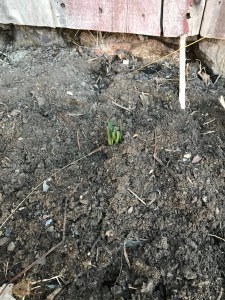
Strange things happen.  I doubt anyone would deny that, even the most skeptical.  Sometimes the strange has an edge to it, though.  A recent story on WTVR reports that residents of Virginia are receiving packets of unidentified seeds from China.  Perhaps a nation naive enough to elect 45 believes in magic beans?  If I recall correctly the beanstalk incident didn’t really end well, although Jack may have survived when it was all over.  WTVR is compelled to say what should be obvious: if you receive unexpected seeds in the mail, don’t plant them.  Not so many years ago I would’ve supposed most Americans were smart enough to know that.  Four years later I’m left wondering.  America’s critical thinking levels appear to be at an all-time low.

Upon first seeing this story my immediate reaction was to question it.  Was it a hoax or a scam?  The kind of thing Trump Enterprises might do to drive business?  If it did happen haven’t scientists (if there are any anymore) been able to figure out what kinds of seeds these are?  Isn’t there an app for that?  Increasingly, it seems, people rely on Facebook rumors for their fact checking.  Of course, that’s the beauty of this kind of plot, if it indeed is one.  A simple thing such as sending a packet of seeds can start a panic.  And with a Gross Domestic Product like China’s I’m sure the postage isn’t even all that expensive.

I also wonder if this isn’t in return for something that the US has done.  We currently have no foreign policy to speak of, but I wonder if people in China have been receiving tariff-free shipments from us.  But do we even have a functioning Post Office anymore?  What if the seeds are from the US and were made to look as though they came from China?  My suspicion goes deep, I guess.  Several years ago I got dressed down at an academic conference for being too skeptical.  My notebook has nullius in verba written inside the front cover.  I tend to think that I just like to ask questions.  Nobody sends you anything for free—being raised in capitalist heaven taught me that.  WTVR says these seeds may be invasive species.  Waging a continuing war against trees of heaven (also an invasive species) I know how much time can be wasted on the task.  Just when you think you’ve got them all, another one pops up.  Strange things indeed.

Wonder what’s growing?


Bonded

It happened this way.  When my daughter was young she was interested in dinosaurs.  Most kids are.  In fact, my wife and I went to a public lecture by a paleontologist in Edinburgh where he pointed out that the real experts on the subject in the audience were generally twelve or younger.  I took an interest in what my daughter found fascinating, and you can’t study dinosaurs without knowing a bit of geology.  Now, the professor’s lifestyle is a thing of wonder.  You may have a heavy teaching and publication load, but the freedom to spend your unstructured summer time pure learning was (still is) a huge draw.  I began studying geology.  I joined the Wisconsin Geological Society.  I was even made an officer.  My, a biblical studies professor.

At one point I bought a jeweler’s loupe.  Many geologists have them.  To get down to the level of the crystalline structure of most rocks you’ll need something more powerful, but for fieldwork (and I’ve got a garage full of rocks to prove it) your average loupe will do.  When Nashotah House decided I should no longer be a professor (and the rest of academe acquiesced) I seriously considered going back to school to study geology.  Time was against me, however.  I had to find a job with a family needing support, and so here I am in publishing instead.  And not only that, but I’m a Bibles editor.  Most people have no idea what that means.  Some days even I don’t.  But one thing I have learned is that you’ve got to know your leather.

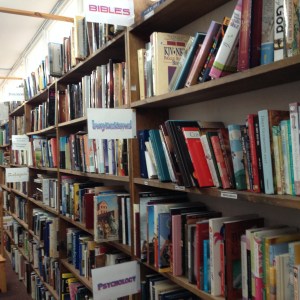
This is a bit uncomfortable to me as a vegan, but I have learned that many people want their Bibles wrapped up in animal sacrifice.  I’ve also learned there are many different kinds of leather.  The typical leather Bible is pigskin.  Yes, that’s right.  In the trade you can call a Bible with any animal hide leather.  Bonded leather means that it’s pieces glued together.  The most expensive Good Books are “genuine leather.”  Cut from whole cloth, as it were.  I keep my jeweler’s loupe in my work desk.  Sometimes I need to look at something closely, off screen.  My loupe came in a leather case.  One of the sides peeled off during our move and I could see clearly what bonded leather means.  In fact, the “nded” part of “bonded” is clearly visible like a secret Bible code on the underlayer of my case.  Nothing, it seems, is ever wasted.


Hebrew Class

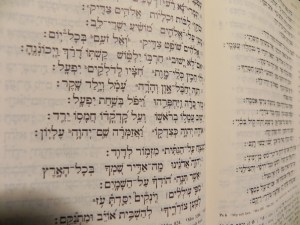
It is utterly remarkable that in this year of the Common Era 2020 that even in Unicode you can’t write Hebrew in Microsoft Word without gymnastics.  The task at work was a fairly simple one: proofread the Hebrew in a typeset manuscript ready for the printer.  This means the manuscript is a PDF at this point and to get Hebrew to appear in a comment bubble you need to copy it from Word and paste it in.  But wait!  Word only has some Hebrew letters in its Symbols menu.  Try getting a yod to appear.  I looked up a Unicode chart, copied and pasted the Unicode unique identifier and Word gave me a capital P.  Not a jot or tittle to be found.  So, to get the yod I had to fetch my personal Mac and use the language menu and type the word out.  Copy.  Paste in an email from my personal account to my work account.  Wait.  Open work email message.  Copy again.  Paste again.

Using this method, a task that would take me maybe twenty minutes stretched into hours.  There was simply no way to get Microsoft Word to display a full Hebrew alphabet shy of changing the language on the computer.  And since I don’t read Modern Hebrew I had a feeling that would lead to disaster.  Part of the problem is that programmers thought it would be smart to make Unicode Hebrew automatically appear right to left.  This has been the bane of many of us since the earliest word processors tried to replicate the language.  We grew used to typing it in backwards.  Now you never know which letter is going to disappear if you hit delete—it doesn’t help that it can act differently on a Mac than on your standard business-issue PC.  Not only that, but when you paste it the receiving document often automatically reverses word order.  Can I get a pen and paper over here?

I sometimes jokingly lament the hold that technology has on us.  In some instances the joking takes on a serious tone, I know.  I do wonder about having techies drive where we’re going.  It’s one thing to make it possible to print Hebrew letters in electronic form, but it is quite another to read them and have a sense of what they’re saying.  And those of us challenged by the whole right-left orientation and a cursor blinking on one side of a word but having its effect on the other wonder if it’s worth the effort.  There’s a reason ancient people wrote in clay, it seems. 


Quantum Religion

Quantum mechanics shows deep connections based on empirical evidence.  This is Einstein’s famous “spooky action at a distance.”  Particles that split apart from one another seem to be in communication as they track on trajectories away from one another at incredible speeds.  It’s almost as if there’s will involved.  Maybe there is.  If intention is part of the natural world, we’re in trouble.  Well, at least stark materialism is.  You can’t measure will.  We all know what it is because we feel it.  Try to define it.  Isn’t will a matter of what you want?  What could a particle possibly want?  If it’s small it can’t hurt us, right?  But once it crosses a certain level, it no longer works.  Science trembles at quantum mechanics being applied at the non-microscopic level.

Ironically science is wedded to an idea proposed by a medieval cleric.  Early scientists were often clergy—an association most scientists would prefer to forget these days.  William of Ockham (fourteenth century) proposed an idea that became the surefooted stance of science in its toddler phase.  Simply reduced it goes like this: the single natural explanation, without relying on outside forces, is probably the best.  It’s known as Ockham’s Razor (aka Occam’s Razor).   Yet Ockham was a Franciscan Friar, a cleric.  His thinking and reasoning were necessarily informed by ecclesiastical thought.  Or, not to put too fine a point on it, theology.  His razor avoided entanglements.  Ironically, science refers to this quantum connection as entanglement.

Humans, it seems, have a tendency toward contrariness.  We’re oppositional.  When we’re told that quantum mechanics applies only to the very small, we wonder if maybe the same principles don’t work “up here” at our scale.  It’s hard to conceive that even our scale is simply a matter of perspective.  Since we’re uncomfortable with the idea we suggest that only our species is conscious.  That way we can keep the will out of animals as well as subatomic particles, let alone larger scale entities such as planets, galaxies, and universes.  Maybe entanglement suggests Ockham’s Razor is dull.  Before getting out the philosophical strop, perhaps we should ask if the simplest explanation is really the best after all.  Maybe the best answer is far more complex than we’d like to admit.  I love science.  I still, when I have time, read science books written for the laity.  It’s just that science, like religion, is part of a larger picture.  As much as we fear entanglement, it is an empirically observed part of life in our universe.


In the Clouds

So I’m looking for a photo.  An electronic one, of course.  And since my camera, or phone, or whatever it is, automatically names them for the benefits of machines, I don’t know what it’s called.  When I want to search for it I have to scroll and scan through hundreds of images.  It’s the price we pay for letting technology run things.  Okay, so it’s made life easier; I’m down with that.  Still, I would like to know where my info is.  I learned to find files by navigating to them, something computers taught me how to do.  But computers move things around while we sleep.   

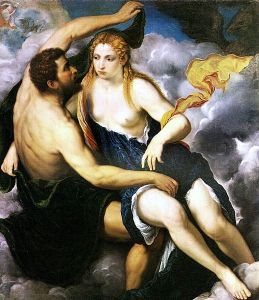
Now that Covid-19 has moved in to stay, we all use meeting software to stay in touch.  Most of us use Zoom so businesses naturally prefer Microsoft Teams.  I don’t know the details of Teams so I watch a video tutorial.  The Microsoft official (well-paid enough to dress casual) is explaining that you can attach things in Teams, something that we’ve all had to learn how to do in email school.  He says that those sharing in your chat don’t know where the actual document is.  “Who needs to know?” (I’m paraphrasing here), he says.  “Nobody needs to know where it is.”  This is my fear—my personal files need to be where I can find them, not on some sleepy server halfway around the world.  Just the other day the internet went out here.  Just for a little while, but those were panicked minutes nonetheless.  I don’t want my files bumping around in a cloud when I need to know how to navigate to them.  What if the server goes down right when I need them?   I don’t trust clouds.  Zeus raped Io in the form of a cloud, remember.

Bordone, Zeus and Io; a picture I did find!

I’d feel better about all this if those of us pen-and-paper types were involved in the discussion.  Nothing says “ephemera” like documents made of electrons.  Maybe I need to spend more time with religions of east Asia where the idea of lack of permanence is key.  Knowing where to find important things, however, has been a hallmark of Euro-American thought.  And if your very own personal documents are being kept where you don’t even need to know where, how can you sleep at night?  Some of us are kept awake still wondering where that thing we can find since we’ve moved might be.  I get the spooky feeling that technology is training us.  For what nobody can guess.  As for me, I’ll get in line once I find that photo that I didn’t even name.


Up the Downgrade

My computer’s been telling me that it wants to upgrade.  In fact, when I first bought this laptop several years ago, and started it up the first time right out of the box, a message popped up that a system update was available.  The tech business, you see, never really sells you a computer.  They’re working on it constantly, often at the same time I’m trying to use it.  In any case, the reason I haven’t upgraded has been that I need to clear off space on my hard drive.  Each upgrade requires more and more of the limited space I have, so my work has to be shoved off onto external drives that I stack like bricks in my attic.  And that takes time.

This wasn’t a problem with my pre-internet computers.  You bought them to do PowerPoint for work and word processing for publications.  Said publications were printed out and sent via mail to publishers.  Just typing that makes me feel old.  The fact was, however, you could get by on those computers without any upgrades at all.  The system that came with it was sufficient for the life of the machine.  Once you get connected to the internet, though, you have to keep up.  I often run into websites on my work laptop, which doesn’t have the latest system, that simply don’t work.  If they’re going to upgrade, I have to upgrade, and to upgrade I have to discard stuff I want to keep.  Every day I get the red warning signal—computer is hungry but can’t be fed until I start throwing my hard work away.  Or at least putting it where it will take extra effort to get it back.

Also, how are you supposed to find the time for upgrades when you use your computer constantly?  A typical download and install takes over an hour.  If we’re so wired, when are we possibly going to find the time for that?  And I still haven’t cleared enough space on my hard drive.  My external drive’s getting too full.  I guess it’s impossible to keep everyone happy.  In the midst of all this I squeeze in some time to use my laptop for that which I actually bought it—to do my research and writing and, during the pandemic, to buy the necessities of life.  And if I don’t upgrade Zoom’s going to stop working because it’s upgrading too.  I need to buy a computer that does nothing but upgrade itself.  That might be the solution.  That, or going back to good old-fashioned pen and paper.


X-Files Redux

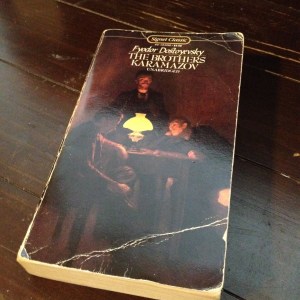
So, after writing a post about The X-Files, I finished season three, forgetting up until then that the last episode was “Talitha Cumi.”  Apart from being part of the alien mythology arc, the biblically literate recognize the title as the words Jesus said to Jairus’ daughter as he raised her from the dead.  Appropriately enough, the episode features an alien-human hybrid that is able to raise the dead and to shape-shift.  This particular episode also has an intriguing dialogue between the Smoking Man and Jeremiah Smith (the hybrid) where they discuss whether the alien agenda for people, or that of the shadowy cabal, is better.  With a theology drawn from the Grand Inquisitor chapter of The Brothers Karamazov (according to Wikipedia, and which I have no reason to doubt), they argue from different perspectives.  The Smoking Man explains that they have given people science instead of God and miracles will only confuse the issue.

While not exactly Fyodor Dostoyevsky, this scene raises some very real questions.  Are people happier not believing?  Not only that, but the cynicism of the Smoking Man matches rather precisely the modus operandi of our government some two decades later.  There’s a reason we keep coming back to the classics.  The X-Files mythology is, like the Cthulhu Mythos, woven throughout a larger tapestry whose warp and weft both seem to be religion.  It ran far longer than Sleepy Hollow ever did, and it would take considerable effort to tease all of the Bible, let alone religion, out of it.  They make the story far more believable.

This particular episode also displays the staying power of the classics.  Long, ponderous books like The Brothers Karamazov require concerted effort to read in these soundbite days of internet hegemony.  That Grand Inquisitor chapter, however, has been enormously influential.  (I recall during my most recent rereading of the novel that I hit that wonderful chapter and then realized I still had hundreds of pages to go.)  We often have trouble telling God from the Devil.  Just look at today’s political scene and try to disagree.  In the X-Files diegesis there is a shadowy, high-powered group that got to the extraterrestrials first.  They keep the secrets to themselves while the masses play out their insignificant lives that enrich those in charge.  Democracy, it seems, used to be about elected representatives seeing to the will of the people.  It perhaps assumes a greater educational base than we’ve been able to retain.  But still, with chapters like “Talitha Cumi” we see that there may be some glimmer of hope after all.


Sunrise Sunset

The earliest sunrise doesn’t take place on the longest day.  Things like this are what kept me out of a career in astronomy.  No, the earliest morning occurs about a week before the summer solstice.  It keeps staying light later in the evening, but the darkness creeps back in the a.m.  I know this because I awake before sunrise and I jog at first light in the summer.  For a couple of weeks now I’ve been having to start my jog later and later as I wait for the sun to catch up.  The latest sunset is about a week after the solstice.  Now matter how you count it, the days are getting shorter now.  Another lesson I’ve learned from my early morning jogs is that it’s chilliest just before sunrise.  The temperature keeps dropping from what it is around 3:00 a.m., meaning that it’s coolest just before the sun comes up.  Life lessons from the jogging trail.

I took astronomy both in high school and college.  Always fascinated by space I guess I was optimistic that perhaps the mathematics would’ve dropped out of it somewhere between diploma and baccalaureate.  My mind is more of the humanities type, dealing with approximations and analogies.  The concepts I get, but I can’t swim in formulas.  One of the main sources of perplexities was just what I’ve been describing about the earliest dawn and latest evening.  Shouldn’t they be the same day?  And how is it that the longest day is neither the earliest sunrise nor latest sunset?  Math may explain that, but I can’t.  There’s a wonder in it all.

Jogs before work (for I start that early as well) are possible only a few months of the year at this latitude.  They will give way to lunchtime breaks soon enough and yet summer has only just started.  The days will seem longer although in fact they are getting shorter.  You see what I mean about approximations and analogies?  I still occasionally read books about astronomy, and when NASA (or some privately funded venture) makes announcements about what’s going on in the heavens I pay attention.  Yes, I would liked to have gone into astronomy, but life has a way of steering you down certain paths.  Besides, there’s a certain wonder in retaining the mystery of how the longest day occurs three times in the course of two weeks, depending on your definition.  


Just the Beginning

It occurs to me that my post on Sunday may have been a touch cryptic.  (I can be naughty at times.)  Horror Homeroom was good enough to publish a piece I’d written about the movie Midsommar, a film that got its hooks into me earlier this year.  Here’s the link in case you’d like to read it (it’s free): http://www.horrorhomeroom.com/midsommar-and-cross-quarter-day-horror/.  It’s not an article using the Bible and horror as in yesterday’s post, but rather it is an exploration of the broader relationship between horror and religion.  The origin of religion has long been a fascination, and the more I look into the connection with what makes us afraid, the more I find in common.  But why midsummer when summer’s only just beginning?

Ancient peoples in temperate zones, according to the records they left behind, carefully observed the change of seasons.  Without a tilted, spinning globe as a model the science of the time (which was likely their religion) suggested that the heavenly bodies were migratory.  If you use raw observation that’s what seems to be the case.  Now that I sit in the same office every day with a south and a west window, it becomes very clear how the sun shifts over the course of the year.  In the winter it seems to be on a journey far to the south.  Religions of such science would want to know, of course, when it would start coming back.  The years were divided into segments—we still recognize four of them in our seasons although, in truth, they are merely gradual changes that take place in the weather as the earth’s tilt moves our hemisphere toward or away from the sun.

Midsummer was a northern European festival to celebrate the longest day.  Whether this is the start of summer or the middle of summer is merely a matter of interpretation.  The film Midsommar plays on the disorienting long span of daylight in northern Sweden.  Without the dark to guide us, sleep and the regular rhythms of daily life can become difficult.  When the people believe the old religion, well, let your imagination run wild.  Horror films often lurk in these transitional times of the year.  We tend to associate them with Halloween, but there’s enough to be afraid of right now.  Not all horror has religious components, of course.  Nevertheless it has been there from the beginning, from when van Helsing pulled out a crucifix to frighten off Dracula.  And it continues, in perhaps more sophisticated ways, even in the broad daylight.


Weathering Frights

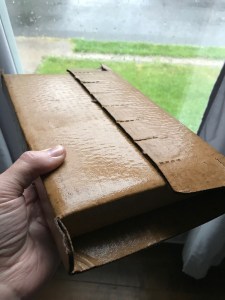
It reminded me of a nightmare.  The box, containing a book, was soaked through.  A sudden thunderstorm had come before we knew the box was even there on the porch and memories of several boxes of rain-ruined books came back uninvited.  Water and books just don’t mix.  This particular book, I knew, was Peter Thuesen’s Tornado God, which I had ordered back in December and which has just been released.  The irony wasn’t lost on me.  My own second book, Weathering the Psalms, was a rather inelegant treatment on a similar topic and I’ll discuss Thuesen’s book in further detail here once I’ve read it.  The point is that no matter how arrogant we become as a species the weather just remains beyond our control.  The rainbow at the end of this small storm was that although the packaging was soaked, I found the box before the book itself had time to get wet.

My research, ever since my first book, has largely been about making connections.  The weather is so quotidian, so common, that we discuss it without trepidation in casual conversation.  It is, however, one of the most dangerous things on our planet.  Severe storms kill both directly and indirectly.  Cyclones, typhoons, and hurricanes can do so on a massive scale.  So can their dramatic opposite, drought.  Snow and melting ice caps also threaten life, as do floating chunks of ice in chilly oceans.  It’s no wonder that the weather has been associated with gods from the earliest times.  Even today literalists will say God is in the sky although meteorologists and astronomers can find no pearly gates when they look up.  We just can’t shake the idea that weather is some kind of reflection of divine moodiness.

As weather becomes more and more extreme—it’s already a system that we’ve tipped seriously off balance—I suspect more and more people will start to assign it some kind of divine agency.  This June we’ve already gone from shivering mornings with frost on the roof to nights when sleep is impossible because it’s so warm and humid, all within a matter of a couple of days.  And this isn’t that unusual.  Wait’l the gods really get angry.  Weather is closely related to the water cycle, of course.  We can learn about such things from books.  We can’t take them out during a storm, however, and homeownership is all about keeping water out, or only in prescribed locations indoors.  When the delivery driver leaves a box on your porch, however, it remains within reach of the storm gods.


Ancient Technology

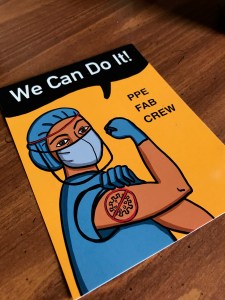
The pandemic, like any news event these days, has generated a whole new vocabulary.  I had to look up PPE on Google (Personal Protective Equipment, if you live in a cave like me).  I want to help with the effort to curb the coronavirus, but being a non-essential worker, I’m not sure what I can do.  Then my wife found an organization making PPEs.  In this case the equipment they make is face-shields.  And they were looking for, believe it or not, transparency paper.  Well, it’s really not paper, but acetate.  Although we’ve had to move several times since being pushed out of the Nashotah House nest, when I went looking for that box of transparency film that I paid for out of my own pocket in the PPPD (Pre-PowerPoint Days), I found it without too much trouble.  We still had 25 unused sheets left, and we donated them to the cause.

Nashotah House used to have one semester of required Hebrew and one semester of Greek.  Since the curriculum was highly regulated in those days, there was no opportunity for further courses in either language.  If you teach Hebrew you know that no textbook assumes just fourteen to sixteen weeks to learn it.  I quickly gave up using textbooks and had students begin translating as I walked them through it.  I had to use an overhead projector since Nashotah had no internet connection until the turn of the millennium.  It was such a small account that the cable companies didn’t want to go all the way out there to lay the physical lines then necessary for connectivity.  So I bought transparency film.  I even learned how to run it through my printer which, thankfully, wasn’t dot-matrix.

Over the years I bought quite a few boxes of the stuff.  Then the Enlightenment.  Let there be PowerPoint.  I converted all my teaching to PowerPoint slides while others made fun.  When my services were no longer required, I had to purchase a projector so that I could continue to teach on a freelance basis.  But I kept that expensive transparency film.  Now it is out there covering faces, and hopefully, unlike seminary education, saving lives.  As an erstwhile teacher of Greek and Hebrew I’ve found myself having to make some flashcards to learn the new words the crisis is giving us.  It’s a good thing, then, that when I was looking for transparency film I also found a couple packs of unopened index cards.  Sometimes antiquated pedagogy is commodious after all.


Is It Real?

I’ve been reading an ebook and I feel lost.  I resorted to the ebook because I was invited to join an informal virtual bookclub.  Book discussion group may be a more accurate description.  Since I don’t see many people this seemed like a good idea.  Although I often take recommendations, reading a book someone else chose is kind of an infringement on my already crowded “to read” list, but connection is connection.  The problem was I couldn’t get a physical copy of the book delivered before the first meeting.  I struggled with whether or not to buy the ebook for hours.  I just can’t get over the feeling that I’m paying for something that can disappear at the next upgrade and all my effort in reading it will have been lost.  I’m a book keeper.  (Not a bookkeeper.)

After a morning of angst, I finally clicked on “buy.”  I’ve been reading the book but I’m finding it disorienting.  When I read an actual book, I quite often take a look at the physical object and assess it as I’m reading.  Appraise it.  Who is the author again?  Who published it?  When?  In the ebook world that information is obviously available, but it’s not where I expect to find it.  And there’s the matter of pages.  I measure my progress of book reading by the location of my physical bookmarks.  I can tell at a glance to the top of the book how my progress is.  A slider bar just doesn’t do it.  I click out of it and check on Amazon.  How many pages does this book actually have?  Why does my e-version have a different number?  Won’t that confuse the discussion?

I don’t feel so guilty about marking up an ebook, I’m finding.  Highlighting in a print book always annoys me—I don’t want some previous owner telling me what I should remember.  This ebook won’t get passed on to anyone else (that’s the genius of the business model—the ebook isn’t available for resale, which more durable, actual books are).  As I’m doing this I recollect that I’ve only ever read two ebooks before, both fiction.  They didn’t make much of an impact because it was only in writing this post that I remembered them at all.  The world of the coronavirus has taken its toll, I guess.  I’m reading an ebook and I can’t wait to finish so I can get my hands on the real thing again.


Koyaanisqatsi

I recently saw Koyaanisqatsi for the first time.  This was initially prompted from an excellent blog post over on Verbomania, suggesting words to describe our current crisis.  I had never heard of the movie before.  In case you’re in that same jolly boat, Koyaanisqatsi is a feature-length film from 1982 with no plot and no spoken lines.  A score by Philip Glass underlies, and sometimes dominates, images of an earth beautiful in desolation (the Badlands, Monument Valley, Grand Canyon) juxtaposed with technology.  The images are fascinating and disturbing.  The title translates to something like “life out of balance” and the images of sausages being mass produced cross-cut with humans being lifted by escalators speaks volumes.  The long, slow footage of 747s on the ground was enough to make me wonder if they really can fly.

Frenetic is perhaps the word that best captures images of life in the early 1980s.  The images of Grand Central during rush hour show just how like ants we are.  On the other hand, some of the scenes of people waiting for trains show a high percentage of them reading—we have perhaps lost ground in the last four decades.  The mechanized, technologized way of life has perhaps made us something less than we could be.  There are people in the movie, but not many of them look happy.   Back when I commuted into New York I can’t think of any reason I would’ve been smiling on my way too or from work.  Crowded streets, often smelling bad.  Harried and harassed even before I reached the revolving door to my building.  I watched the movie that was a slice of my life and wondered if so much of my time commuting couldn’t have been better spent.

Of course, I did read on the bus.  On average I was able to finish about forty books more per year than I do now.  Even home owning participates in koyaanisqatsi.  It’s spring during an epidemic.  Cold, yet rainy, the grass continues to grow and there’s no sunny time off work to mow it.  It’s now May and it feels like we haven’t moved since March.  Watching Koyaanisqatsi during the pandemic was itself a haunting experience.  All those crowds.  So many people bunched so closely together.  I don’t miss the crowds.  The cross-cut images of computer chips and city layouts made me wonder just what it’s all about.  The SARS-CoV-2 reality has plunged me into a philosophical mood.  I’m hoping when the crisis is over we might strive for a better sense of balance.


White Rabbit

There are books that make you feel as if everything you know is uncertain.  D. W. Pasulka’s American Cosmic is such a book.  Its subtitle, UFOs, Religion, Technology, only pauses at the brink of the rabbit hole down which this study will take you.  Over the years I admit to having been jealous of colleagues who’ve been able to make an academic career stick.  The credentials of a university post open doors for you, even if you’re a professor of religion.  Pasulka has opened some doors here that I suspect many would prefer to have kept closed.  This is a compelling book, threading together many themes tied to religious studies.  There are things we might see, if only we’ll open our eyes.

Although immediately and automatically subjected to the ridicule response, UFOs are a fascinating subject.  This book isn’t about UFO religions—of which there are many—but rather it connects this phenomenon to the study of religion itself.  In Pasulka’s related field of Catholic studies, there are those anomalous accounts of saints who did the impossible.  Like UFOs, they are subjected to the ridicule response, making serious discussion of them difficult.  Might the two be related?  As you feel yourself spinning deeper and deeper down that hole, technology comes into the picture and complicates it even further.  Pasulka was a consultant on The Conjuring.  I’ve written about the movie myself, but what I hadn’t realized is how media connects with perceptions of reality.  Yes, it has a religious freight too.

Every once in a while I reflect that my decision—if it was a decision; sometimes I feel certain my field chose me—to study religion might not have been misplaced.  Perhaps all of this does tie together in some way.  American Cosmic is a mind-expanding book that assures me all those years and dollars learning about religion weren’t wasted after all.  I had a discussion recently with another doctoral holder who’s been relegated to the role of editor.  We both lamented that our training was in some sense being wasted on a job that hardly requires this level of training.  Still, if it weren’t for my day job I probably wouldn’t have known about this book, and that is perhaps a synchronicity as well.  Life is a puzzle with many thousands—millions—of pieces.  Some books are like finding a match, but others are like informing you that you’ve got the wrong box top in hand as you try to construct the puzzle with the pieces you have.  If you read this book be prepared to come close to finding the white rabbit.