Just the Beginning

It occurs to me that my post on Sunday may have been a touch cryptic.  (I can be naughty at times.)  Horror Homeroom was good enough to publish a piece I’d written about the movie Midsommar, a film that got its hooks into me earlier this year.  Here’s the link in case you’d like to read it (it’s free): http://www.horrorhomeroom.com/midsommar-and-cross-quarter-day-horror/.  It’s not an article using the Bible and horror as in yesterday’s post, but rather it is an exploration of the broader relationship between horror and religion.  The origin of religion has long been a fascination, and the more I look into the connection with what makes us afraid, the more I find in common.  But why midsummer when summer’s only just beginning?

Ancient peoples in temperate zones, according to the records they left behind, carefully observed the change of seasons.  Without a tilted, spinning globe as a model the science of the time (which was likely their religion) suggested that the heavenly bodies were migratory.  If you use raw observation that’s what seems to be the case.  Now that I sit in the same office every day with a south and a west window, it becomes very clear how the sun shifts over the course of the year.  In the winter it seems to be on a journey far to the south.  Religions of such science would want to know, of course, when it would start coming back.  The years were divided into segments—we still recognize four of them in our seasons although, in truth, they are merely gradual changes that take place in the weather as the earth’s tilt moves our hemisphere toward or away from the sun.

Midsummer was a northern European festival to celebrate the longest day.  Whether this is the start of summer or the middle of summer is merely a matter of interpretation.  The film Midsommar plays on the disorienting long span of daylight in northern Sweden.  Without the dark to guide us, sleep and the regular rhythms of daily life can become difficult.  When the people believe the old religion, well, let your imagination run wild.  Horror films often lurk in these transitional times of the year.  We tend to associate them with Halloween, but there’s enough to be afraid of right now.  Not all horror has religious components, of course.  Nevertheless it has been there from the beginning, from when van Helsing pulled out a crucifix to frighten off Dracula.  And it continues, in perhaps more sophisticated ways, even in the broad daylight.


Weathering Frights

It reminded me of a nightmare.  The box, containing a book, was soaked through.  A sudden thunderstorm had come before we knew the box was even there on the porch and memories of several boxes of rain-ruined books came back uninvited.  Water and books just don’t mix.  This particular book, I knew, was Peter Thuesen’s Tornado God, which I had ordered back in December and which has just been released.  The irony wasn’t lost on me.  My own second book, Weathering the Psalms, was a rather inelegant treatment on a similar topic and I’ll discuss Thuesen’s book in further detail here once I’ve read it.  The point is that no matter how arrogant we become as a species the weather just remains beyond our control.  The rainbow at the end of this small storm was that although the packaging was soaked, I found the box before the book itself had time to get wet.

My research, ever since my first book, has largely been about making connections.  The weather is so quotidian, so common, that we discuss it without trepidation in casual conversation.  It is, however, one of the most dangerous things on our planet.  Severe storms kill both directly and indirectly.  Cyclones, typhoons, and hurricanes can do so on a massive scale.  So can their dramatic opposite, drought.  Snow and melting ice caps also threaten life, as do floating chunks of ice in chilly oceans.  It’s no wonder that the weather has been associated with gods from the earliest times.  Even today literalists will say God is in the sky although meteorologists and astronomers can find no pearly gates when they look up.  We just can’t shake the idea that weather is some kind of reflection of divine moodiness.

As weather becomes more and more extreme—it’s already a system that we’ve tipped seriously off balance—I suspect more and more people will start to assign it some kind of divine agency.  This June we’ve already gone from shivering mornings with frost on the roof to nights when sleep is impossible because it’s so warm and humid, all within a matter of a couple of days.  And this isn’t that unusual.  Wait’l the gods really get angry.  Weather is closely related to the water cycle, of course.  We can learn about such things from books.  We can’t take them out during a storm, however, and homeownership is all about keeping water out, or only in prescribed locations indoors.  When the delivery driver leaves a box on your porch, however, it remains within reach of the storm gods.


Ancient Technology

The pandemic, like any news event these days, has generated a whole new vocabulary.  I had to look up PPE on Google (Personal Protective Equipment, if you live in a cave like me).  I want to help with the effort to curb the coronavirus, but being a non-essential worker, I’m not sure what I can do.  Then my wife found an organization making PPEs.  In this case the equipment they make is face-shields.  And they were looking for, believe it or not, transparency paper.  Well, it’s really not paper, but acetate.  Although we’ve had to move several times since being pushed out of the Nashotah House nest, when I went looking for that box of transparency film that I paid for out of my own pocket in the PPPD (Pre-PowerPoint Days), I found it without too much trouble.  We still had 25 unused sheets left, and we donated them to the cause.

Nashotah House used to have one semester of required Hebrew and one semester of Greek.  Since the curriculum was highly regulated in those days, there was no opportunity for further courses in either language.  If you teach Hebrew you know that no textbook assumes just fourteen to sixteen weeks to learn it.  I quickly gave up using textbooks and had students begin translating as I walked them through it.  I had to use an overhead projector since Nashotah had no internet connection until the turn of the millennium.  It was such a small account that the cable companies didn’t want to go all the way out there to lay the physical lines then necessary for connectivity.  So I bought transparency film.  I even learned how to run it through my printer which, thankfully, wasn’t dot-matrix.

Over the years I bought quite a few boxes of the stuff.  Then the Enlightenment.  Let there be PowerPoint.  I converted all my teaching to PowerPoint slides while others made fun.  When my services were no longer required, I had to purchase a projector so that I could continue to teach on a freelance basis.  But I kept that expensive transparency film.  Now it is out there covering faces, and hopefully, unlike seminary education, saving lives.  As an erstwhile teacher of Greek and Hebrew I’ve found myself having to make some flashcards to learn the new words the crisis is giving us.  It’s a good thing, then, that when I was looking for transparency film I also found a couple packs of unopened index cards.  Sometimes antiquated pedagogy is commodious after all.


Is It Real?

I’ve been reading an ebook and I feel lost.  I resorted to the ebook because I was invited to join an informal virtual bookclub.  Book discussion group may be a more accurate description.  Since I don’t see many people this seemed like a good idea.  Although I often take recommendations, reading a book someone else chose is kind of an infringement on my already crowded “to read” list, but connection is connection.  The problem was I couldn’t get a physical copy of the book delivered before the first meeting.  I struggled with whether or not to buy the ebook for hours.  I just can’t get over the feeling that I’m paying for something that can disappear at the next upgrade and all my effort in reading it will have been lost.  I’m a book keeper.  (Not a bookkeeper.)

After a morning of angst, I finally clicked on “buy.”  I’ve been reading the book but I’m finding it disorienting.  When I read an actual book, I quite often take a look at the physical object and assess it as I’m reading.  Appraise it.  Who is the author again?  Who published it?  When?  In the ebook world that information is obviously available, but it’s not where I expect to find it.  And there’s the matter of pages.  I measure my progress of book reading by the location of my physical bookmarks.  I can tell at a glance to the top of the book how my progress is.  A slider bar just doesn’t do it.  I click out of it and check on Amazon.  How many pages does this book actually have?  Why does my e-version have a different number?  Won’t that confuse the discussion?

I don’t feel so guilty about marking up an ebook, I’m finding.  Highlighting in a print book always annoys me—I don’t want some previous owner telling me what I should remember.  This ebook won’t get passed on to anyone else (that’s the genius of the business model—the ebook isn’t available for resale, which more durable, actual books are).  As I’m doing this I recollect that I’ve only ever read two ebooks before, both fiction.  They didn’t make much of an impact because it was only in writing this post that I remembered them at all.  The world of the coronavirus has taken its toll, I guess.  I’m reading an ebook and I can’t wait to finish so I can get my hands on the real thing again.


Koyaanisqatsi

I recently saw Koyaanisqatsi for the first time.  This was initially prompted from an excellent blog post over on Verbomania, suggesting words to describe our current crisis.  I had never heard of the movie before.  In case you’re in that same jolly boat, Koyaanisqatsi is a feature-length film from 1982 with no plot and no spoken lines.  A score by Philip Glass underlies, and sometimes dominates, images of an earth beautiful in desolation (the Badlands, Monument Valley, Grand Canyon) juxtaposed with technology.  The images are fascinating and disturbing.  The title translates to something like “life out of balance” and the images of sausages being mass produced cross-cut with humans being lifted by escalators speaks volumes.  The long, slow footage of 747s on the ground was enough to make me wonder if they really can fly.

Frenetic is perhaps the word that best captures images of life in the early 1980s.  The images of Grand Central during rush hour show just how like ants we are.  On the other hand, some of the scenes of people waiting for trains show a high percentage of them reading—we have perhaps lost ground in the last four decades.  The mechanized, technologized way of life has perhaps made us something less than we could be.  There are people in the movie, but not many of them look happy.   Back when I commuted into New York I can’t think of any reason I would’ve been smiling on my way too or from work.  Crowded streets, often smelling bad.  Harried and harassed even before I reached the revolving door to my building.  I watched the movie that was a slice of my life and wondered if so much of my time commuting couldn’t have been better spent.

Of course, I did read on the bus.  On average I was able to finish about forty books more per year than I do now.  Even home owning participates in koyaanisqatsi.  It’s spring during an epidemic.  Cold, yet rainy, the grass continues to grow and there’s no sunny time off work to mow it.  It’s now May and it feels like we haven’t moved since March.  Watching Koyaanisqatsi during the pandemic was itself a haunting experience.  All those crowds.  So many people bunched so closely together.  I don’t miss the crowds.  The cross-cut images of computer chips and city layouts made me wonder just what it’s all about.  The SARS-CoV-2 reality has plunged me into a philosophical mood.  I’m hoping when the crisis is over we might strive for a better sense of balance.


White Rabbit

There are books that make you feel as if everything you know is uncertain.  D. W. Pasulka’s American Cosmic is such a book.  Its subtitle, UFOs, Religion, Technology, only pauses at the brink of the rabbit hole down which this study will take you.  Over the years I admit to having been jealous of colleagues who’ve been able to make an academic career stick.  The credentials of a university post open doors for you, even if you’re a professor of religion.  Pasulka has opened some doors here that I suspect many would prefer to have kept closed.  This is a compelling book, threading together many themes tied to religious studies.  There are things we might see, if only we’ll open our eyes.

Although immediately and automatically subjected to the ridicule response, UFOs are a fascinating subject.  This book isn’t about UFO religions—of which there are many—but rather it connects this phenomenon to the study of religion itself.  In Pasulka’s related field of Catholic studies, there are those anomalous accounts of saints who did the impossible.  Like UFOs, they are subjected to the ridicule response, making serious discussion of them difficult.  Might the two be related?  As you feel yourself spinning deeper and deeper down that hole, technology comes into the picture and complicates it even further.  Pasulka was a consultant on The Conjuring.  I’ve written about the movie myself, but what I hadn’t realized is how media connects with perceptions of reality.  Yes, it has a religious freight too.

Every once in a while I reflect that my decision—if it was a decision; sometimes I feel certain my field chose me—to study religion might not have been misplaced.  Perhaps all of this does tie together in some way.  American Cosmic is a mind-expanding book that assures me all those years and dollars learning about religion weren’t wasted after all.  I had a discussion recently with another doctoral holder who’s been relegated to the role of editor.  We both lamented that our training was in some sense being wasted on a job that hardly requires this level of training.  Still, if it weren’t for my day job I probably wouldn’t have known about this book, and that is perhaps a synchronicity as well.  Life is a puzzle with many thousands—millions—of pieces.  Some books are like finding a match, but others are like informing you that you’ve got the wrong box top in hand as you try to construct the puzzle with the pieces you have.  If you read this book be prepared to come close to finding the white rabbit.


WHO Believes?

These days it’s pretty clear that if you want to listen to anyone for advice it shouldn’t be the government.  I suppose that’s why I spend so much time on the World Health Organization’s page.  I’m no medical person and I certainly don’t understand epidemiology.  Contagion I get, because religion operates that way.  So WHO has been making somewhat frequent references to faith.  A recent status report noted that 84% of the world’s population reckons itself as religious and that many coronavirus outbreaks have taken place because of continued religious gatherings.  To that I suspect they’ll need to add political rallies supporting governments you shouldn’t trust, but what is such blind faith in leaders who don’t know what they’re doing if not religion?  People want to believe.

Religious gatherings also provide crucial support.  The community with which I associate has been using Zoom gatherings since mid-March.  It’s not perfect, of course, but during our virtual coffee hour I’ve been put in breakout rooms with people I don’t know.  I’m starting to get to know people I might be too shy to speak with in “real life.”  More than that, I’m asking myself what real life really is.  Technology has been pushing us in this direction for some time.  We relate virtually rather than physically.  I’ve never met many of the people with whom I have some of my most significant exchanges.  The internet, in other words, has an ecclesiastical element to it.  The words “church” and “synagogue” both go back to roots meaning “to gather.”  Faith, despite the stylites, is not lived alone.

WHO suggests that since religious leaders influence millions of people, if they would turn their message to prevention it could have a tremendous human benefit.  Consider how one man’s personal crusade in the mid-nineteenth century led to elections being decided on the basis of abortion alone.  If faith leaders were to take the good of humankind to heart and spread that message, it could well outstrip the virus.  Alas, but politics interferes.  Many religions also want to determine how people live.  There’s power in that.  We’ve seen it time and again with televangelists.  WHO has faith that these leaders might set aside their scriptures for a moment and read situation reports based in science and rationality.  WHO apparently has faith as well.  Until someone smarter than politicians sorts all of this out we’re probably safest meeting virtually.  Who knows—perhaps there are hidden benefits to that as well?


Denying Reality

The science-deniers in the White House have had to accommodate themselves to evidence-based facts and they look none too happy about it.  Science denial has a long and venerable history in a certain type of evangelicalism.  Science teaches us that most things are more complex than they seem and this is also true of religions.  There are evangelicals all over the board, but those claiming the name most loudly have been outspoken Trump supporters.  The administration has had a three-year spree of decrying science and now that a very real virus is killing us they have no choice but to listen, albeit reluctantly.  So why do certain strains of evangelicalism deny science?  Is it all for profit?  Is there some kind of biblical mandate?

As someone who spent many years making a living as a biblical scholar (and it still plays into my work), I often think about this.  There is the underlying reliance on miracle as opposed to naturalism, for sure.  If God can do anything then science is ever only contingent.  Any moment a miracle (a word that doesn’t occur in the Bible, by the way) could happen and there’d be no way to measure it.  The main reason, however, goes back to Genesis and its creation stories.  When you read a book first impressions are important.  The Good Book begins with a theological account that eventually came to be taken literally.  It’s as if someone decided to live by a poem, taken as fact.  Some things can’t be expressed except with metaphorical language.  But since this creation takes place up front, any challenge to it is an affront to the Almighty.

The antagonism set up by Darwin’s discovery of evolution set the whole confrontation in motion.  Evangelicals in the late 1800s were feeling pushed into the corner by the overwhelming evidence that the creation accounts in Genesis were not factual.  This insult to miracle has simmered for well over a century—the Scopes trial, well into this period, took place 95 years ago.  Fear that the Bible’s loss of science authority might somehow lessen its spiritual message became a ditch in which to die.  Big business learned, back in the seventies, that evangelicals made great followers and could constitute a voting bloc if only a cause could be raised around which they’d rally.  We all know what that was.  That issue has led to the denial of science and the acceptance of anyone ill-informed enough to accept such denial.  Only after learning that you must fight pandemics with science has the White House had to start changing its story.  When it’s all over, however, it will go right back to denying everything.


Disease Divine?

I suspect many religious people are wondering where God is amid the current pandemic.   Theodicy (explaining the suffering of the innocent while defending the goodness of the Divine) has always been the bête noire of monotheistic belief systems.  (Polytheism has the advantage of always being able to blame another god.)   People have been pointing articles out to me that show the religious implications of a crisis.  I’m not at all surprised by the irrationality of the subjects.  The first article was an opinion piece in the New York Times.  It makes a good case that the religious right paved the way for the COVID-19 contagion in the United States.  The religious right is anti-science because they (wrongly) believe the Bible is a science book.  Even a small dose of seminary could cure that ill.  Katherine Stewart nevertheless makes a strong argument that the survivors of all of this will know whom to blame.  Science denial is not the same as authentic religion.

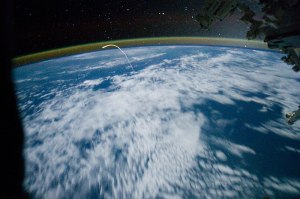
From NASA’s photo library

The other news stories that arise are of evangelical leaders defying government bans or guidance, even when delivered by messiah Trump, to large gatherings.  One of the main reasons for this is that said messiah kept saying the coronavirus was nothing to worry about.  Only when re-election seemed unlikely with all the uneducated dead did he finally start issuing warnings to avoid such idiotic congregating.  In the midst of it all, Jerry Falwell Junior (why did all these evangelists have to propagate?) decided to reopen Liberty University.  No doubt confident that God will keep them from any harm, the university officials decided it would be good to gather students from all over the country and put them together in dorms again.  If you’ve ever lived in a dorm I’m sure you can see why the decision is anything but wise.

It’s sad that evangelicalism has decided to pander to the uneducated.  You can believe in Jesus (many mainstream Christians do) without parking your rationality in the farthest parking spot from the door.  Many of us, huddled in our houses, not having seen other living people for days, are trying to isolate this thing and drive it to extinction.  Meanwhile, those who trust their own version of the supernatural are doing whatever they can to ensure the virus continues to spread.  Why?  They have long been taught that science isn’t real.  Never mind that their cell phones work and they get the news of open dorms through the internet, the science behind it all is bunk.  An entire executive branch administration that doesn’t believe in science is as sure a road to apocalypse as any.


Occam’s Disposable Razor

Since new books are kind of rare right now, I’m reading through some of those I’ve collected but haven’t actually read.  One is Near-Death Experiences: Understanding Visions of the Afterlife, by John Martin Fischer and Benjamin Mitchell-Yellin.  I bought the book because the topic, as addressed by a university press book, is interesting.  Fischer and Mitchell-Yellin approach the subject as philosophers.  Their main focus is on the widely accessible and successful books by Eben Alexander and Todd Burpo.  Also the somewhat less well known efforts of Jeffrey Long and Pim van Lommel.  (Instead of taking up blog space with all these titles, just email me if you’re curious, or read my Goodreads post.)  Applying standard scientific methods to spiritual experiences isn’t easy, and Fischer and Mitchell-Yellin are clear that they aren’t trying to take the value out of Near-Death Experiences (NDEs), but rather they are challenging how these authors try to make them authentic.

Philosophers parse words finely.  The authors show that “real” is not the same thing as “authentic” and demonstrate how some of the more spectacular NDEs can possibly be explained by science.  Those who’d temporarily died might’ve caught onto things that happened just before or just after brain activity ceased or restarted, for example, and then misremembered them.  As a still-living guy who can’t remember where he left his wallet half the time, misremembering is an authentic reality.  Still, I couldn’t help but wonder.  Science and religion ask different questions.  One of the mainstays of scientific method is Occam’s Razor—the solution that requires the least mental gymnastics to explain something is the most likely to be true.  Many times this razor is flashed in the face of those trying to make a religious case for something.

Ironically, the authors here dismiss Occam’s Razor.  They state that sometimes the more complicated solution is the right one.  I happen to agree with them on this, but it proved a real distraction in reading the book.  Many scientists use the exact opposite argument against spiritual things.  It also struck me that a book so brief (less than 200 pages) would necessarily struggle to explain a complex phenomenon convincingly.  Trade books, such as those by Alexander and Burpo, aren’t meant to be held up to the stiff standards of peer review.  They are meant for selling lots of copies.  Their authors aren’t philosophers.  It’s almost a mismatch in categories.  Some academic presses are now publishing on NDEs and asking plenty of questions about them.  It’s no surprise that philosophers favoring physicalism would do the same.  It seems a little hairy, however, to do so with Occam left firmly in the shaving kit.


Making Frankenstein

Some days ago I mentioned reading a book about Frankenstein.  This was Making the Monster: The Science behind Mary Shelley’s Frankenstein, by Kathryn Harkup.  I’ve read several books like this, many of them written about on this blog (search “Frankenstein”—there is a search box out there!), about the context of Frankenstein.  The base story is all the more compelling for having been written by a teenager who’d eloped with a married man who would eclipse her literarily.  Mary Shelley never got rich off Frankenstein, but it is one of the best known novels of the nineteenth century.  It had an impact during the author’s lifetime and has continued to have one these centuries later.  Harkup, however, is a scientist.  Her specific interest, apart from being a female writer herself, is in the science of the story.

Arranged thematically, Making the Monster covers several of the developments which would’ve been “in the air” at the time.  Mary and Percy Shelley both read science also, and knew many of these things.  There was the question of reanimating the dead that coincided with the early dissections of humans that made the modern study of anatomy possible.  There were medical breakthroughs—some of the more difficult parts of this book to read—and there were experiments with electricity.  There were cases of children raised in the wild that had been found and their subsequent stories documented.  There was evolution (in the form known to Charles Darwin’s grandfather Erasmus), there was revolution.  It was a time with so much happening that Frankenstein became a cathartic outpouring of the human soul amid the science that both Shelleys atheistically accepted.

Much of this book is fascinating, even after reading other similar accounts to the background of the novel.  What really brought it all together for me, however, was reading through the chronology at the end.  It takes me several days to read books.  What with the monster of daily work I often forget some of what I’ve read along the way from introduction to conclusion.  Having a chronology at the end reminded me of just how much information is packed in between these covers.  The narrative covers about a century (longer, if you include the alchemists), and shows how Mary was using fiction to address some very real science.  Harkup never loses track of Mary Shelley’s personal experience, however.  Estranged from her father, constantly on the move, widowed fairly young, losing several children, treated poorly by aristocratic in-laws, hers was a story of perseverance and ultimately influencing the western canon.  It shows that science and art can assist one another to make us all more human.  And the monsters left behind endure.


Running with Scissors

I suspect that, like many, I’ve come to see the coronavirus as an indictment of political foolishness.  Electing unqualified officials feels like all fun and games until a crisis emerges and the leadership has no idea what to do.  The Trump administration announced itself as anti-science and began breaking down the carefully built institutions that made our way of life possible.  His fans cheered.  Now they’re huddled in their bunkers with their stockpiled Purelle and toilet paper and Fox News on 24/7.  It’s a good thing that a stable genius is in charge.  He’s trying to get Germany to move production of the most promising vaccine to the land of his anti-vaccers, something Germany’s reluctant to do because 45 has a reputation internationally.  It seems he’s made America infectious again.

As those of us with brain stems try to find some way to comfort those we know and love, we keep coming back to the fact that this kind of pandemic is new in the internet-linked world.  No matter what you try to do right now you have to assess whether it involves meeting other people, potentially infected, and whether it’s worth the risk.  I had to go to a grocery store and Target over the weekend.  I’ve never seen so many empty shelves before.  This is what panic looks like.  The difference is that even W., who will never be considered among the smartest of presidents, recognized that institutions are there for a reason.  America’s greatness grew slowly by building on what’d gone before.  Tearing everything down in a narcissistic tantrum and claiming all we need to do is adore our autocrat, we now see how great this country has become.  Greatly afraid, that is.

Coronavirus closed schools more effectively than Betsy DeVos.  Businesses are reeling as the businessman president fumbles with facts and figures he can’t understand and can’t admit that science is real because, well, global warming and all that.  Internationally people are looking for solid leadership and finding that the autocrats they’ve elected have no idea what to do.  Self-aggrandizement is no basis for leadership.  The Republican senate had their chance just two months ago, but they were banking on their personal bank accounts, it seems.  Even in the face of this crisis Mitch McConnell persists on insisting it’a all a game.  As a child raised in a Republican home I was taught never to run with scissors.  But then, I had all my vaccines.  Mad dictator’s disease hadn’t yet been released upon the world.


Data Driven

People just aren’t good at thinking things through.  Consider all the data on data.  Everything is data-driven these days, as if there’s no such thing as human spirit.  We do data all day at work and wonder why we having trouble making ourselves get out of bed in the morning.  If we had enough data I bet we could come up with a metric for arousing the soporific before the sun rises.  You could get the precisely correct amount of sleep.  Awake to precision-measured caffeine.  And get back to your data for another eight-plus hours.  There—feeling productive?

I miss the humanities.  There was a time when someone who didn’t give a fig about data could make a decent living pondering what it is to be human.  Even birds and bees know how to count.  Can’t we ratchet it up a bit?  Use our vast imaginations to come up with meaningful employment?  How you gonna measure that?  Some things just can’t be quantified.  How much joy is enough?  Too much?  Precisely how long is any coastline?  Even if we could measure it down to the nanometer, could that capture how it feels to sit on the rocky shore and feel the waves breaking against the cliff beneath you?  Even data has its limits.  Those who want to make a living without it will be sucked into its black hole nevertheless.  No light escapes.  Only numbers.

Companies like Amazon collect data.  Search engines like Google collect data.  All of those autosuggests?  They’re based on past searches.  I’m surprised just how wrong Amazon and Google are about me.  I was only searching dogs because I was curious about what kind the neighbor has, not because I plan to get one.

A wise man once said to a class full of wide-eyed neophytes, “If you want to get a surprise in your marriage just go home and tell your spouse you know everything about them.”  There’s no better way, he intimated, to get a completely unpredictable reaction.  Is that slap, or kiss, or knee to the groin driven by data?  Where’s the passion in that?  No matter whether you prefer Spock or Data, human motivation is emotional.  There are those who actually enjoy looking at data all day.  Dreaming about numbers and their hegemony over the workplace.  Others of us grew up with the classics and we have romanticism deep within our souls.  We nod our heads at Blake’s “dark satanic mills” and start to look for a coastline upon which to sit.  Perched upon this rock with the crashing waves, I suspect, I’ll be better able to think things through. 


Future Warming

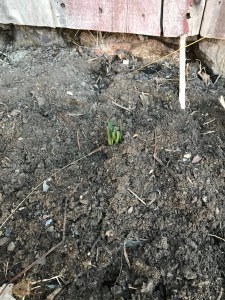
It’s a good thing global warming is a myth, but somebody forgot to tell the hyacinths and lilies in my backyard.  February in Pennsylvania is not when you expect to see spring flowers.  Now I’m fully aware that unseasonal warm snaps and cold spells aren’t an indication of the global climate; they’re far too localized.  One thing I’ve learned in my several decades of life is that heat takes time to transfer.  If you’ve ever had to wait for a pan of water to boil when you’re hungry, you know that to be true.  On cold morning’s my coffee’s ice coffee before I finish the mug, but it does take time for that transition to happen as the cup empties.  With something so inconceivably large as the atmosphere, it takes time.  As our hemispheres take turns pointing at the sun and warming up, the air tries to reach equilibrium and so the weather goes.

Scientists are now talking about, once we get the deniers out of the White House, what long-term remediation plans we have to make.  We’ve already set in motion extreme weather events.  We’ve had decades of warning, but those who control the money just can’t bear to let any of it go.  It’s a safer bet to wreck the planet.  You can just cash in your insurance money and buy a new one.  That’s the way it works, isn’t it?  So I’m standing outside in my shirtsleeves in February staring at April flowers who think winter’s over already.  I don’t know what to say to them.

You can’t drive a car without a license, nor can you practice law or medicine.  To be a world leader you don’t even have to be literate.  I often imagine what the future survivors will say.  They’ll likely be there, since people have a way of getting by.  They may wonder if we knew this was coming.  Of course, the internet won’t be up and running then, and who knows what’ll happen to electronic information when there’s no power left to keep the servers going.  In any case, my perhaps futile answer to their imagined question is yes.  We did see this coming.  Some of tried every legitimate tool in the box called “democracy” (you’ll need a dictionary for that one) to introduce sanity into the discussion, but bluster wins over hard thinking every time.  I cup my hands around the tender, if resilient leaves.  They’re only doing as nature directs.  If only our species could pay such attention to what the planet is saying.


The Tube

I’m sitting in a medical facility waiting room.  I’m not afraid of dying, but medical stuff terrifies me.  To calm me down, inane daytime television is on.  I may be one of the very few who brings a book to such places, but I can’t read with the insipid chatter going on.  This time, since I’m waiting for someone else, I brought my laptop.  Nevertheless, I can’t help but think of Ray Bradbury at times like this.  Many people think Fahrenheit 451 is about burning books.  Bradbury did write about burning books in his short stories, and it does happen in Fahrenheit 451, but that’s not what the book is about.  In interviews he said that he intended, as is pretty obvious from a straightforward reading of the text, to warn about the invasive nature of television.  It was, metaphorically, burning books.

Waiting rooms always bring that to mind.  Not only that, but it’s Valentine’s Day and all the talk shows are going on about how it’s “the day of love” (every day should be).  It’s not a day off work; I had to cash in a sick day to be here.  The word “holiday” keeps cropping up on the television, to which I have my back. Ever since leaving Nashotah House I haven’t watched television.  On our recent move to Pennsylvania our cable company didn’t offer a non-television option.  It was unthinkable.  We pay for something we don’t use.  Burning books.  I don’t have time for television.  I see shows that have proven their worth via DVD well after they’re off the air.  And that only when I can read or write no more in a day.  I guess I’m a Bradbury disciple.

Like any disciple, I have changed certain teachings of my leader.  Bradburyism is a religion objecting to ubiquitous television.  At the same time, I grew up watching the tube, and to this day I’ll stop just about anything to watch DVDs of The Twilight Zone.  Rod Serling, however, selected stories and teleplays that were well written.  This was a literate show.  Besides, my daily life often feels like the Twilight Zone.  Like Valentine’s Day in a waiting room.  The book beside me remains unopened.  It’s the same when I take the car to the garage, or go in for an oil change.  You can’t escape it, even though everyone else is paying attention to their phones.  How long until we learn to switch off?  Of course, medical waiting rooms are the places where I may need brainless distraction the most.

Photo credit: Smithsonian Institution