The Philosophical Neanderthal

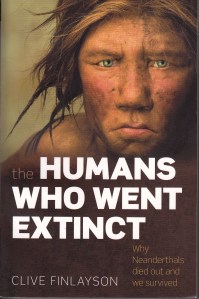
HumansExtinctExtinction. It’s a depression concept, but one that nevertheless constitutes a reality in evolution’s world. When applied to members of our own species we term it genocide and declare it an evil. Our perspective—not to dispute the value judgment—is hopelessly foreshortened. Our brains have evolved to promote individual survival, not to see the longue durée. How often do we worry about the extinction of Homo erectus? Or the australopithecines? Without them we wouldn’t be here, and yet, they’re gone. The case of the Neanderthals is perhaps closer to home. We now know that Homo sapiens overlapped with Neanderthals. Some of the questions raised by Neanderthal extinction are given serious consideration by Clive Finlayson in his study, The Humans Who Went Extinct: Why Neanderthals Died out and We Survived. To get a sense of how this works out, and how it applies with our current contribution to global warming, we must be prepared to view the extreme longue durée. Duration beyond comprehension.

One thing that becomes clear from the very beginning here is that climate has driven evolution perhaps more than we often think. Species, which tend not to live through the relatively long reach of climate change timescales, adapt to the circumstances of their environment. They either do, or they go extinct. Climate, however, is a balancing act teetering toward equilibrium. Hot and cold, evening each other out. Over an even longer duration, our sun will run out of metaphorical steam and things will get quite a bit chillier out there. For the meantime, however, shifts between ice ages and periods of warming will continue to seesaw across time and our race, among many, will need to adjust to survive. Perhaps acknowledging our own role in the current global warming might be a way to start. Our species tends to be short-sighted.

There is an irony here. History and prehistory have shown that, as Finlayson points out, that those best equipped to survive radical changes are the poor. Extinctions—some of them quite dramatic—have occurred before. They will surely come again. When times get tough, it seems, the comfortable get going. Going extinct, that is. Those who climb the corporate ladder the highest have the longest distance to fall when things go bad. The poor, who have to struggle every day to survive, are the ones who know how to get along in circumstances that turn sour. I have called this an irony for what might seem obvious reasons. There is another as well; here we have science pointing again in the direction of the Bible. There it was noted long ago that the meek would inherit the earth. And that’s a bit, it seems, that should be taken literally.


As (Not) Seen on TV

Screen Shot 2016-04-04 at 4.16.28 AM

Last night, I fear, I did not see “The Story of God with Morgan Freeman.” Our “double play” service already rivals the cost effectiveness of a ballpark lunch, and a triple play is out of reach for as little time as we have for television. This may be one case, however, where I’d be inclined to sacrifice some Sunday evening sleep to watch. I’ve seen numerous episodes of Through the Wormhole. I’ve noticed that over time the topics have grown more and more metaphysical. Yes, there is an uneasy after-shave burn to Occam’s razor. We’ve been told for so long that reductionistic materialism can account for everything, even these unorthodox thoughts in my head of an early Monday morning, and that religion is what’s left over after cleansing a dirty pig. Yet still, yet still…

A few years back, when I was still active in FIRST Robotics, I noticed a few things. Many of the mentors to the teams were not opposed to religion. Far from it. Not only that, but the national (now international) finals of the competition were met with religious fervor. Then, my last year as a mentor it was announced that “God himself” (aka Morgan Freeman, a reference, of course, to Bruce Almighty) would be present for the event. Science and religion are met together; technology and spirit have kissed each other. Perhaps this one size fits all universe is a bit premature?

“The Story of God” will spend six weeks on the National Geographic Channel exploring the origins of religious belief. People who haven’t learned that this is all nonsense will watch and wonder. Universities will, however, continue to close departments where such things are explored. Just because something is interesting doesn’t mean it’s profitable. One must think of such things when one has a business to run. I’m no prophet, but I do have to wonder if this might not be a sign. Maybe Occam’s razor-burn is chaffing a bit more than we thought underneath this white collar. Maybe it’s time to let the beard grow a little and see what the face really looks like. Maybe it’s time to watch TV.


Fossilized Views

Not all Fundamentalists are the same. I grew up believing the Bible was literally true, but in my family we recognized that fossils indicated the earth was older than just a few thousand years. Keep in mind that I never tested this with any preachers—we didn’t need to. We knew that evolution was wrong, but that didn’t mean there had never been dinosaurs. Kids are as sure of dinosaurs as they are of angels. Besides, we lived beside a tributary to the Allegheny River that was rich in fossils. We’d spend summer days wading in the water looking for rocks with impressions of various bivalve shells in them. They weren’t hard to find. And being collectors of just about anything inexpensive (or free, as in the case of fossils) we brought them home. We really didn’t see any great disconnect between the black book on the table and the rocks in our hands. There was room for both.

It must’ve been a slow news day at Huffington Post recently when a story titled “This Guy Is Pretty Sure He Found Fossils From Noah’s Flood” ran. The guy in question is from Texas, and, finding fossils probably not unlike those we used to, supposed that they were laid down during Noah’s flood. This was an idea that I only encountered after I’d left home. We couldn’t afford many books when I was growing up, but we did have conventional dinosaur material. Nothing strange enough to suggest that the flood created all the landforms and fossils on the planet. That would’ve sounded just a bit strange. Today, however, it is common to suppose all Fundamentalists are naive and enemies of science. Not all are. Some, I hope, are like I was, trying to find a way to fit their faith into a world that science has come to help define a bit more clearly. Positions have, however, polarized a bit since my tender years. We now fight over things we used to wonder about.

IMG_2734

The fossils I found as a kid found their way back into nature before I grew up. If I ever have the time when visiting home these days, I still try to get an hour or two to spend down by the river to look for the rocks that filled me with such awe as a child. That was a world where belief was fairly easy. I loved science. I loved my religion. I loved the fossils that told me the story was a complicated one. Only I wouldn’t have believed that decades later I’d still be trying to suggest to others that the world is big enough for both facts and faith. I haven’t been a Fundamentalist for decades, and given a few million years, who knows how even the nature of the debate might evolve.


Ethology Theology

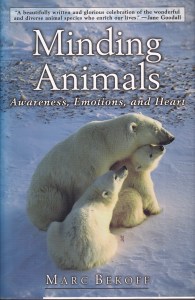
MindingAnimalsProminent public intellectuals, we’re used to hearing, often lament the survival of religion into a rationalist age. As an obscure private intellectual—if I may be so bold—I am always pleased to see when a credentialed scientist asks if we are being too hasty. No, but actually says we’re misguided to dismiss the evidence of our own observations. Marc Bekoff’s Minding Animals: Awareness, Emotions, and Heart is an encouraging study by a balanced individual. Bekoff, unlike many scientists, realizes that emotion does play into observation and reasoning. More than that, materialistic reductionism does not account for human or other animals’ experience of life. Historically motivated by religions to separate ourselves from animals, we have only come to know slowly—painfully slowly—that the distinctive markers of humanity are shared in degree by other animals. Bekoff is bold enough to give the lie to the belief that animals have no emotional life. Traditionally science has said that we cannot know what goes on in animal brains so it is best to take animal emotions off the table. Then scientists go home and love their dogs, who love them in return. When’s the last time I read a scientist writing about love?

Minding Animals is a manifesto. We have, in our arrogance, made unwarranted assumptions about both animals and our unique status on the earth. We drive other species of animals to extinction at a rate that required an asteroid collision or some other catastrophic event in the past. And we use animals as if they had no interests of their own, even such basic interests as avoiding pain and suffering. “They’re just animals,” we’re told. Bekoff is an ethologist—someone who studies non-human animal behavior. As common sense, both the sine qua non and bête noire of science, reveals, animals experience and express happiness, anger, and love. They can be depressed. They can be overjoyed. And we treat them as if they were objects to do with as we please.

Bekoff admits some of his fellow scientists treat him as if he’s gone soft. Like Diogenes, however, I search for an honest man and I think I have found him. Instead of castigating religion, Bekoff ends his book with a chapter on theology. Not to make fun of it, but to show that even scientists must integrate different kinds of knowledge. Not only is the science that Bekoff describes appealing to the emotions, it also makes sense. No scientist is completely objective. Even Mr. Spock breaks down once in a while. We all have perspectives. And that includes our fellow earthling animals. We evolved from the same ancestors and yet treat them as if we own them. Minding Animals will—or at least should—make us feel guilty about that. Being human and being humane, after all, are only a silent e apart.


Apes’ Asherah?

As a part of my class on Ancient Near Eastern Religions, since we were dealing with the earliest textually recorded religions, I explored origins. Specifically, the origins of religion. For years I told my students that biologists had observed behavior among chimpanzees that was proto-religious. Imagine my delight in seeing an article on New Scientist headlined “What do chimp ‘temples’ tell us about the evolution of religion?” The article, by Rowan Hooper, describes chimpanzees banging rocks before a “sacred tree” and storing the rocks in the tree in a ritualized fashion. That’s a long way from Episcopalians putting on their Sunday finery, but it is a fascinating piece of a larger puzzle. As the article points out, other symbolic action among chimps has been observed—some of it the basis for what I discussed with my students. The impulse to acknowledge the power of the Other runs deeply within animals, particularly mammals and birds.

This may seem an odd thing to suggest. We do know, however, that among the earliest attested behavior or Homo sapiens, along with hunting and seeking shelter, is religious behavior. It is part of who we are. Primatologists, such as Frans de Waal, have noted that the great apes engage in altruistic behavior. It is only when they become billionaires, apparently, that the urge dies. Again, other mammal species and some birds also show altruistic behavior. We are part of the natural world. Our religion, rather than being a collective insanity, is part of a continuity with that natural world. It is much a part of who we are as is seeking food or putting on clothing.

DSCN6152

The more rakish side of my imagination goes to the fact that this article begins with a sacred tree. Tree worship is part of early religions. Some scholars suggest it is part of Asherah’s cult in the ancient world. (I discussed this in technical terms in an article some years back; take a look at my Academia page if you can’t sleep without reading it.) Goddess or not, trees are essential for our survival—call them a godsend. Would it not make sense for religion to include reverence for trees? It seems that some great apes, at least, agree. Are these primates religious? We can’t say. One thing, however, is certain. Our fellow animals show more moderation in their use of the environment than our species does, and that in itself is both logical and religious.


Long Live Life

Horseshoe CrabsShortsighted and arrogant. No, I’m not describing Richard Fortey’s Horseshoe Crabs and Velvet Worms, but rather the collective human race. I love people—I really do. Collectively, however, we sometimes act in the most inexplicable ways. This thought came to me repeatedly while reading Fortey’s book. The subtitle might explain the subject a bit fuller: The Story of the Animals and Plants That Time Has Left Behind. Fortey is a paleontologist who tells the stories, almost biographies, of various creatures that have survived eons with little change. He is quick to point out that all creatures evolve, but in the case of some, evolution has been minimal. Animals, such as his titular examples, and many others (cyanobacteria, tuataras, and, of course, coelacanths, just as a sampling) can sometimes be so well adapted to their environments that they change very little over time. In this book Fortey travels to see the living examples of those creatures he’s studied in fossils, and tells the story of an amazing continuity in a world of constant change.

Some of the species, particularly the plants and microscopic organisms, I’d never heard of before. I also have to admit to being surprised at how many very old life forms still exist. And admittedly, this is only a snippet of a much larger cloth. Throughout, I was pleased to see, Fortey mentions various religions—themselves often throwbacks—but not disparagingly (except the creationists). Noting that some creatures have a Buddhist-like calm, or that the Bible occasionally provides the phrase a naturalist writer seeks, here is an irenic meeting of science and religion that is so much needed. So why did I say “shortsighted and arrogant” at the start of this post?

One of the more disturbing truths revealed, and not just about charismatic megafauna, is that people have often hunted animals to extinction. Fortey suggests it has always been so. Large animals (megafauna) are easy targets and we have repeatedly hunted (and continue to hunt) them to extinction. We destroy habitats and thereby drive species extinct that we haven’t even yet discovered. What could be more arrogant of a single species? Looking back over 4 billion years of evolution should give us some perspective. We’re relative newcomers on this planet, and it isn’t ours to do with as we please. Fortey is gentle, but he does remind us that some of the creatures in this book will likely, no matter how great the catastrophe, long outlive us on the planet. Ours is a brief day in the sun. Shouldn’t we care for our planet rather than pillage it for our own gain? Ask the horseshoe crab. When we understand its language we might be able to begin to call ourselves wise.


Soul Library

LibrarySoulsThere’s a kind of trinitarian logic to the trilogy format. Long before Hegel’s model of thesis, antithesis, and synthesis, people have grouped things into threes. And there is a hook that film-makers have used to ensure that viewers will come back for the third installment: the cliffhanger. The second episode leaves everything unresolved and you’ll be sure to see the third. Think of the original Star Wars trilogy, or Back to the Future, or even Pirates of the Caribbean. In each case the first film could stand alone, but the second insisted on a third. This is a little trickier with books since, as we all know, publishing is a slow business and writing takes time. I saw Miss Peregrine’s Home for Peculiar Children, by Ransom Riggs, in 2011. I knew I would read it since the cover alone was so intriguing. Young adult literature, it turns out, has come a long way since I was able to classify myself that way. Then Hollow City came out. It ended as a cliff hanger (remember the formula), back in 2014. Just over a year and a half later, The Library of Souls was released.

Having just finished the trilogy, reading each as it came out, I would say that, like most trilogies, the first installment was the best. Freshest, a new idea, where characters exist with whom the reader participates by in filling in the blanks, a series grows more complex as it expands. Some elements that weren’t there at the beginning have to be read back into the previous installments. In my case, I’ve read so many books in the interim that some of the details have grown hazy due to the simple passage of time. Still, Riggs is to be highly commended for bringing souls back into discourse among the young. Too long we’ve been sold the story that we have no souls.

I’m not going to go into any great detail here since those who want to learn how Riggs handles the tale will read his books, but I will say that a stubborn materialism has settled over intellectual culture. Some neuroscientists have naively said, “we’ve looked for it and can’t find it, therefore it must not exist.” And since most of us don’t have access to their kinds of equipment or training, we’re told to acquiesce. Give up your souls—buy into materialism. Buy stuff. That’s what we’re all about. It is a relief, in the midst of all of this, to have a popular writer suggesting, through fiction, that it is souls that make us who we are. The books aren’t preachy. Indeed, it would be difficult to say they are religious in any conventional sense. They are, however, soulful. And for that I am very glad to have read them, even as a middle-aged adult.


Dream Time

DreamingLike most people, I seldom remember my dreams. When I do, or when only the powerful feeling remains, I know that they are very emotional events. Something is always going on, and my attention is riveted. I recently read J. Allan Hobson’s Dreaming: An Introduction to the Science of Sleep. It must be intimidating, I have to note right away, for a neuroscientist to write a book. Our understanding is changing so rapidly that even academic treatments become a kind of ephemera. Published over a decade ago, it shows its age. Even I’m aware that changes in brain science have occurred and perceptions have changed somewhat since then. What struck me most, however, is Hobson’s absolute confidence that mind is a function of the brain, and that dreams are merely the madness we experience when we sleep. The madness I don’t mind so much. The materialism, however, I think is largely wrong.

Consciousness remains a great unknown. There is disagreement around whether it is emergent—coming from the brain, or receptive—perceived by the brain. Or perhaps something completely different. One of the greatest human foibles is to claim that we understand anything completely. I’ve always been amazed—knowing that the world involves much more than just sight, sound, scent, taste, and touch—that some scientists are so quick to write off complex experience as “merely” activity in the brain. Some animals, for example, seem to perceive magnetic fields. Others use navigation devices we simply don’t comprehend. They may experience senses we don’t even have. And yet, we happily claim that we’ve gotten this one nailed down. Dreams are only activities in the brain when we sleep.

Only? How can any dreamer say that this is only chemical reaction in our heads? The experience of dreaming is, implicitly, so much more than just random thoughts. Hobson does a good job describing how dreams are a form of madness, a psychosis when the reasoning part of our brains are inhibited. Fair enough, but who can experience madness and think it completely material? Our minds are more complex, it seems to me, than we give them credit for being. Hobson begins the book by noting that dreams used to be within the purview of religion. Since has now claimed them. We have an entire universe in our skulls, and yet we insist that although we don’t understand it, we can be certain that it is nothing but material. My dreams continue to suggest a different reality.


Super Reality

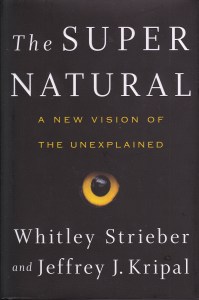
Super NaturalReality is not often, if ever, what it appears to be. As creatures that evolved to survive in this particular environment, we have passed along and received the skills that make this possible. One of those skills is filtering. We filter out most of the stimuli that surround us daily (and nightly), and that with only five senses. We don’t experience reality as it is. It is with this in mind that I read The Super Natural by Whitley Strieber and Jeffrey Kripal. Perhaps unlike many who will read this book, my attraction was based on Jeffrey Kripal’s involvement. In anticipation, late last year I read Whitley Strieber’s Communion, but I have great respect for Jeffrey Kripal’s work, and consider anything he writes well worth the reading. This book, then, is a strange hybrid between the experiencer and the open-minded analyst who brings the toolbox of religious studies to what most academics dismiss as “the paranormal.”

This is one of those books that will distort perceptions of reality. That’s not because Strieber and Kripal simply accept each other’s versions of events or conclusions. They don’t. Both are free to disagree with one another. Kripal, as a recognized academic, brings something rare to the table. He is willing to listen to people who have experienced what standard approaches wipe away as “merely anecdotal.” Ask yourself: what do we have to say that isn’t anecdotal? We don’t experience all of reality, and the filters we use go both ways—what we perceive is filtered, and what we share with others is filtered. As much as a materialist may hate to admit it, she or he still has feelings. And our senses, keep in mind, can be fooled. We’ve all seen mirages or thought we heard something that nobody said. Our brains evolved with lots of false positives. Who are we to judge that someone else’s anecdote is impossible? That’s what super nature can do to you.

It is also refreshing to see that, although the day when a physicist’s name as a household word may have passed (excluding Sheldon Cooper, of course), those who remain recognizable from the past—Niels Bohr, Werner Heisenberg, Wolfgang Pauli, Erwin Schrödinger—were not strict materialists. As The Super Natural points out, these foundational figures of quantum physics all turned to mysticism of some sort or another to help them come to grips with what the empirical evidence was showing. I do wonder how we’ve come, since then, to have so many brilliant people who have lost a sense of wonder about the anomalies that exist in everyday experience. Who hasn’t felt a shiver of pleasure at a particularly poignant coincidence or glitch in the matrix? Maybe most of us will never have as many uncanny experiences as Whitley Strieber, but we might be losing something valuable if we don’t at least listen to what he, and others like him, have to say.


Chilling Thoughts

GlaciersI don’t think much about glaciers. At least I didn’t. Now they keep me awake at night. Literally. I just finished Jorge Daniel Taillant’s Glaciers: The Politics of Ice. Never have these ice sheets ever seemed to have so much personality before. I don’t live near glaciers, but I have seen a couple. A number of years ago I visited Glacier National Park in Montana. It was summer and the one glacier that was right by the road (Highway to the Sun) was melting. It was the first glacier that I knowingly saw, and I went my usual way, not thinking any more about them. Taillant’s book, however, indicates why everyone should be concerned about ice sheets. Not only is global warming a reality, our ice caps are melting on what appears to be a runaway timetable and we are not likely able to reverse the process until the damage is done. Not only our ice caps endangered, but our glaciers as well.

Why should anyone care about glaciers? For purely selfish reasons, I might point out that they are crucial to supplying drinking water for much of the world. Looking at the globe, it seems there is plenty of water to go around. Only about 3 percent of all water on the planet is fresh water, however. And of that 3 percent about three quarters of it is locked up in glaciers. Glaciers are the only source of fresh water in dry climates during years of drought or excessive heat. Whatever water isn’t used as these ice giants melt flows into the ocean, becoming part of the salt water majority. When the glaciers are gone, they’re gone. They are part of the fine balance that makes life on earth possible. The politics enter the picture when Taillant reveals that large mining interests, particularly in South America, have been destroying glaciers to get at the gold underneath. They block legislation and provide disinformation, all in the name of wealth. When they destroy glaciers, they destroy future prospects for life in the regions they mine. It’s an issue of social justice.

On our little planet that seems so big, we don’t often stop to consider that we didn’t really show up here by accident. We evolved with the features that our planet gave us—notably water—and we have continued to thrive only in the presence of water. It has often been said that future wars will not be fought over petroleum, but water. We can live without oil. We can’t survive without water. And our industrial action is blithely wasting away the largest reserves of drinkable water on the planet. I don’t live near any glaciers. I’ve only seen one or two in my lifetime, but I now worry for their health. Their future is, in many respects, our future. And that makes me want to pour a glass of water and reflect.


Act of Balance

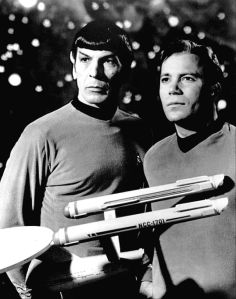
They call it the green-eyed monster. Jealousy. Under its weightier name of envy, it becomes a deadly sin. I often wonder if envy isn’t behind the debate that seems to have atheists and believers in religion talking past one another. Each seems to want, it appears to me, what the other has. Atheism has emerged in this new century as the current brand of intellectualism. Those who rely on reason alone don’t require comforting ideas such as God or salvation to get along in a world that has learnable rules and no magic. On the other hand, as an article by Barbara J. King on NPR points out, some religionists (Alister McGrath, while good for illustrative purposes, may not be the most representative choice) insist that atheists miss out on the meaning of life. Goal-oriented behavior, which we all understand, in a traditional monotheistic context is a divine mandate. We want to get to a better place either here on earth or after we die, and God has given a set of rules to follow to enable us to get there. Along the way, nature veritably drips with the dewy beauty with which God has infused the universe. Those Mr. Spocks among us miss it all, for their non-nonsense approach to reality.

Leonard_Nimoy_William_Shatner_Star_Trek_1968

It’s pretty clear, as I’ve traced it out here, that the believers envy the reputation of solid rationality readily claimed by scientists. We all would like to be able to prove we’re right. Pointing to a law of physics and declaring, “this law can never be broken” carries a satisfaction that is rare in the theological world. Still, I wonder if some atheists aren’t just a little jealous of the teleology of having a goal set by someone else. Heaven and Hell may be passé, but you have to admit that having challenging rules laid out is somewhat invigorating. Doing something because you “should” can infuse a sense of meaning into life. Some people, if they could just do what they wanted, would opt for no more than eating, sleeping, and meeting biological necessities. They sometimes claim religion gives them the motivation to do more. It can make a difference if a deity takes the initiative.

You’ll never, however, be able to prove a religious point empirically. Gravity pulls things downward as surely as sparks fly upward. And we can send a person into space to prove it’s true. No astronauts, as far as we can prove, have ever seen God in space (RIP, Edgar). Reason and emotion, religion and science, thought and action—these things need each other in order for a balanced life. Problems arise, it seems to me, if we take an extreme position. Life is complicated, and simple answers just don’t apply. Perhaps if we allowed for a bit more balance, we might all find life just a bit more satisfying.


Digging to Look up

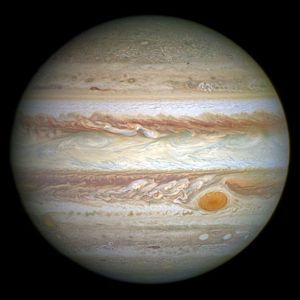
Ancient technology is a growing field of interest. A couple years back I gave a talk about ancient technology at a local Steampunk convention. The smallish audience that attended had lots of questions about how ancient people accomplished marvels such as the Antikythera Mechanism, or even the pyramids of Egypt. As new discoveries continue to show, our antique forebears had access to knowledge we have always assumed to be beyond them. An article in Gizmodo tells the story of how Matthieu Ossendrijver, an astroarchaeologist (and hey, this was simply not a job description I ever found in a college catalog, for the record!) at Humboldt University, has been studying an Akkadian clay tablet (the article doesn’t specify which one, beyond “text A”) that demonstrates that the Babylonians understood one of the principles that led to calculus. Tracking the movement of Jupiter, the Babylonian priests knew that measuring the area under a curve could provide the distance traveled by an object. This principle, in the annals of science, wasn’t discovered until about 1350, C.E. Babylonians knew it over a thousand years earlier.

Jupiter_and_its_shrunken_Great_Red_Spot

Although we marvel at the engineering of the ancients, we tend to think of them as superstitious. After all, they believed in gods and things like that. As Maddie Stone points out in her article, however, priests were also astronomers. Believing that messages from the gods existed among the stars, peoples of ancient times kept careful track of the heavens. Apart from romantic couples looking for time alone, how many people spend an evening under the stars, looking up at a universe that is so much larger than the internet that it can actually made you shudder? There is a wonder out there that can’t be replicated electronically. People knew that the sky and the gods somehow belonged together, and they knew this millennia ago.

Given that many of us hold doctorates in reading ancient, dead languages (too many, perhaps), you’d think all the clay tablets found would’ve been read, catalogued, and neatly stacked away by now. This is far from the truth. Tens of thousands of tablets were excavated back in the days before archaeology became an endangered practice in places like Iraq and Syria. Crates full of these tablets were shipped to museums and few have been transcribed, let alone translated. There is ancient knowledge stored away among the receipts and chronicles and myths of people who lived in the cradle of civilization, and now that information remains buried in museum basements because it is deemed not worth the money spent to provide jobs for those who can read them. As is often the case, however, when we are willing to listen to others, even long dead, we are amazed at what we can discover.


Not Your Father’s Demon

AmericanPossRegan MacNeil is a name that can still send shudders up and down stout spines. Despite advances in CGI and special effects, The Exorcist is consistently rated among the scariest movies of all time. Demon possession, clearly, is a very troubling thing. American Possessions, by Sean McCloud, is not a place to go to find Catholic priests expelling the forces of darkness. Subtitled Fighting Demons in the Contemporary United States, the book, one might suspect, is saying more than it seems to be letting on. This is a book about Third Wave evangelicalism and its demon-fighting manuals. Although the term “Third Wave” may be unfamiliar, the next time you go to a Tea Party you’ll know you’re among them. These born again uber-capitalists believe in a literal demonic world. In fact, demons are so common that Jesus would’ve had a hard time keeping up with their exponential economic growth. These demons are more frightening than those that possessed Regan. The are more akin to a different Reagan.

Especially popular among Pentecostals (the fastest growing form of Christianity) this modern day belief in demons sees them in places Jesus didn’t think to look. Family curses (at places ruled out in the Bible, but still, apparently, possible), addiction, depression, sexual urges—these are all demonic. And once these modern demons are cast out, unlike that of Regan, they can come back. And if they don’t possess you they will oppress you. And they can live in your material goods, your house, and even the land it is built upon. They are everywhere, and they have to be fought against constantly. They also, apparently, vote Republican.

This view of the world, strange as it is to many people with a basic education in science, motivates a large sector of the United States population. Expelling these demons requires a specific view of Christianity—a view that absolutely excludes Catholics. And it is a view that promotes free market economics, blaming the victims of poverty for allowing themselves to be oppressed by demons. Many aspects to this belief system will strike the reader as completely unbelievable, all the more for being so seriously believed. At the same time, we are told, we should pay no attention to religion, at least as educated people. The problem with this is that these true believers vote. And the kingdom they would have come on earth is, in a way they would certainly deny, possessed.


Thinking about Thought

The history of thought can be compared to a slow-moving pendulum. At other times it can be more like a ping-pong game. Acceptability for ideas can take time, but sometimes the perceptions change rapidly. Having been raised in a small town in a Fundamentalist setting, it is difficult to assess where exactly the “status quo” was when I was growing up, but by the time I had reached college it was pretty clear that the challenge science posed to my particular brand of religion was pretty firmly entrenched. Materialism—in the philosophical sense—had obviously gained several champions. B. F. Skinner and his followers applied this template to human beings, and it became fairly common to hear that we were basically automatons. (Ironically, double predestination in the Calvinism I was learning about taught pretty much the same thing.) Today there are even more vocal heralds proclaiming that all that is, is material. If it can’t be measured empirically, it can’t exist. The pendulum, or ping-pong ball, has come to one side of the table, or arc, awaiting rebuttal.

An article in Scientific American from two years ago (my personal pendulum sometimes moves slowly as well) asks the question “Is Consciousness Universal?” The article by Christof Koch describes panpsychism, the theory that anything beyond a certain level of organization is conscious. Koch begins by discussing dogs. Those of us who’ve spent time with dogs know that they are clearly conscious, although a materialist would say they are just as much dumb matter as we are. But panpsychism goes beyond dogs and horses and other “higher” mammals. Anyone who has taken the time to study any animal in depth, particularly those that are obviously mobile and can seek what they wish to find, knows that animals have will, and intension. The loss of meaning only comes with materialism.

Integrated information is the term Koch uses to describe the baseline of consciousness. Of course, this would need to account for more than the merely biological. Computers may be sufficiently complex, but the information they “possess” is not integrated, thus keeping them from being truly conscious. I’m not enough of a scientist to understand all the technicalities, but I do know that something as simple as common sense suggests that consciousness is part of all animals’ experience of life. As some scientists have long realized, feeling, or emotion, is integral to the thought process. Only when we realize that we share this world with a great variety of conscious creatures will we begin to make any progress toward understanding the difference between mind and mindfulness.

DSCN5295


Illusions

While out driving one winter evening, the sun was setting below a distant horizon that I couldn’t see. Trees lined the sides of the road and, while creating not exactly a tunnel, they blocked the actual view of the orb itself. The day had been partly sunny with cloud forms shifting between layers of the atmosphere. Even though I had studied weather pretty intensely for a number of years, I couldn’t readily identify the cloud types. Thin, smooth lengths of cloud seemed to be suddenly rising up into cumulus banks, heavy with snow. Not far away, the sky was clear. As the sun was going down, these dramatic clouds were lit with the colors of fire: yellows, oranges, and reds. Further to the west, a high, broken bank of clouds glowed a rosy red against a twilight sky. Since the highway we were on was straight, I had a fairly consistent view of the warm tones of the sun highlighting the impressive clouds. My camera couldn’t hope to catch the intensity of the palette revealed to my eyes. When the sun finally fell beyond the range of the clouds, they appeared gray and prosaic against a darkening sky. They had been alight only moments ago, and now they were dull, and not even white.

IMG_2657

What I’d learned of physics reminded me that even these colors were not inherent to the clouds—colors are simply reflections of light rays and the range that we see depends on our eyes. An object’s color, in other words, is a kind of illusion. It’s an illusion we share, and although some people are color-blind, we make the conventions of color part of everyday life. Red means stop, and green mean go, for example. Objective reality is simply the fact that objects reflect different wavelengths of color. Depending on the light source, they appear a specific color to us. While we take colors for granted, they are actually a way of conveying meaning that isn’t entirely real.

Ancient people looking at the colors in the sky could only understand them as caused by the activity of the gods. Bright hues in the clouds suddenly diminished to gray could be the basis for a myth of heavenly conflict. A rainbow, according to Genesis, is a sign that such a conflict is finally over. I don’t know what the gods might have been doing overhead that night, but as the sun disappeared and a full moon rose, throwing soft, but pervasive light from the broken clouds that have only moments before had appeared red, another reality seemed to be taking over. I suspect that we have lost much by no longer watching the sky. My daily work generally involves sitting in a windowless room, and in Midtown the sky is occluded with human attempts to climb to heaven. When I can see the sky for an extended period of time, it seems that the gods are putting on a show, if only we’d watch.