Make Believer

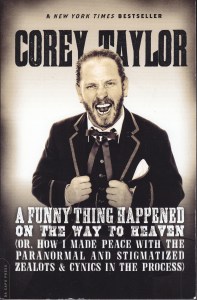
SmthgFunnyMy brother is way cooler than I ever hope to be. While I was busy learning all a tween and teen could about the Bible, he was listening to Lou Reed and David Bowie and Black Sabbath. Since the “door” between our rooms was only a curtain, I heard the forbidden sounds and, despite myself, had to admit that I liked what I heard. In fact, I once gave a lecture on Christian influence in secular rock music, and found many students staring at me in surprise for knowing so much about such debased music. In any case, when my brother recommends a book I know it will always be an adventure. Thus I came to read Corey Taylor’s A Funny Thing Happened on the Way to Heaven: (Or, How I Made Peace with the Paranormal and Stigmatized Zealots & Cynics in the Process). I didn’t want to admit to my brother that I’d never heard of Corey Taylor and that I couldn’t identify a Slipknot song even on Spotify, but the book sounded interesting, blending as it does bad-boy attitude with ghost hunting. November seemed a perfect time to read it. It could lead to some street cred on the bus.

It is difficult to distrust people like Taylor who write with absolutely no pretension (I’m a working-class kid, too). You know that what you’re getting is the real deal. It is also clear that like my brother and many rockers, Taylor is of above-average intelligence. Being smart can sometimes feel like a curse, and Taylor lashes out in several ways during the course of his narrative. He finds it odd to be an atheist who believes in, and has personally experienced, ghosts. I’m not sure that he would find it comforting to know that such a position is not at all as rare as he seems to think it is. Science deals with neither gods nor ghosts, and the average person is left to their own devices to decide who might speak with authority on such issues. Where are we supposed to look when scientists refuse to address such things? Personal experience is a powerful influence.

As with most books by opinionated, brash extroverts, it is difficult not to find yourself liking the writer. Trust may be too strong a word, but I do believe that Taylor writes without guile. After all, people have experienced ghosts for as long back as we’re aware. Why should it be any different for a celebrity? Is Taylor’s house haunted? (Or, more accurately are his houses haunted.) That’s a question no one can answer with certainty. Ghosts are beyond our realm of knowledge. Although plumbers can use scientific instruments, until actual scientists try to explain the immaterial we will be left to choose whom to believe. A metal singer can know just as much as a priest. Or even more, depending on the context.


Upgrade Downgrade

I don’t have to have the latest toys. In fact, I am happy to stay with what I have as long as it works. I’ve been a frugal lad all my life. The increasing demands of technology worry me. Nobody has to tell me that I keep odd hours. Waking up between 3:00 and 3:30 is hardly normal. Since I post on this blog before I go to work, I get up and turn on the computer, ready to write. As I learned three laptops ago, if you don’t keep your updates updated, you soon find yourself unable to do anything on the web. With my last laptop, whenever an update notice came, I immediately acquiesced. “What humble work I have to do, sir, pales in comparison to your mighty plans.” Now updates begin automatically. Most often I have no say in the matter. In fact, the first thing I saw when I started up my most recent computer was a message saying that a software update was ready to install. So what does all this have to do with my insomniac habits?

2015-11-07 18.47.57

Computer companies assume nobody is getting up and working at 3 a.m. While we’re sleeping our computers are making their electronic deals and sending out their electronic handshakes. We mortals need our slumber. I don’t even know what half this software on my computer does. I know that if it’s out of date, problems are sure to arise. So when I awake to find my computer’s too busy to accommodate me, I wonder how to post on my blog. Some updates politely run in the background, but others necessitate that I turn off the software I actually know how to use until it’s done updating. By the time it’s finished, I’ve forgotten what I was going to write. The computer now determines what might be expressed. When something goes wrong, we’re forced to learn its language. We’re in its country now. Technology is its national language, by law.

Once I was told that travel faster than the speed of light was impossible because of navigation. If you can’t see what’s in front of you because you’re traveling as fast as anything can, how do you know you won’t run into a planet, comet, or software update? You have no means of getting feedback in time to react. It strikes me that we’re already traveling well beyond the speed of light. I grew up writing without a typewriter. I wrote stories and articles on paper with lines, using a pen or pencil. Now I rely on my devices to store my ideas, but they’ve got other plans. I have to wait until they’re done to do my work. Of course, we must conform. At 3:30, human, you should be in bed. My advice to you, dear reader, is this: don’t wake your machine at the witching hour. You might not like what you find.


Think Bigger

PlanetRagesI’ve spent a lot of time with academics. Having been one myself, I know something of their habits. Getting through a doctoral program involves, at least in some fields, becoming the specialist on a very tiny piece of information. Since people have been thinking about things for millennia, finding something new to say can be a challenge. Often, by the time they’re done, newly minted doctors know an incredible amount about a very specialized topic. This is, in many ways, simply an intensification of the human experience. We think small. Part of the problem is that our brains haven’t evolved to think big. Having learned an awful lot about the weather in the book on Psalms, I have instinctively taken an interest in natural disasters. Charles Officer and Jake Page share this interest, as is evident in When the Planet Rages: Natural Disasters, Global Warming, and the Future of the Earth. This, however, is a big idea book. Globally big.

Throughout the first two sections of the book, which deal with humans in the face of nature, God often comes up. As scientist and science writer (respectively) Officer and Page simply reflect common beliefs. Nowhere do they advocate invoking God, but they note that throughout history, in the face of just about any species of natural disaster, people have. Many people still do. Disasters and God. What a team! We worship what we fear. Once Officer and Page reach the third section of human impacts on nature, however, God drops out of the picture and the fingers are pointing solely at us.

When I read about what we’ve already done to this planet, I, as a colleague once said, start seeking another species to join. We have destablized the atmosphere so throughly that it will take at least ten-thousand years to return to it’s pre-Industrial Revolution state. Ten-thousand years. At the same time, the largest industrial pollutor (the United States) has jury-rigged politics so that only the wealthy can attain high office. Votes can be bought and we simply won’t sign the Kyoto Protocol. Those who knowingly doom their children are the smallest thinkers of all. We have changed the course of the biosphere well beyond our share of time, and even those scientist who deny global warming know that it is true. You don’t bite the hand that signs the pay check. After all, specialists have a tendency to be very small thinkers.


Northern Ghosts

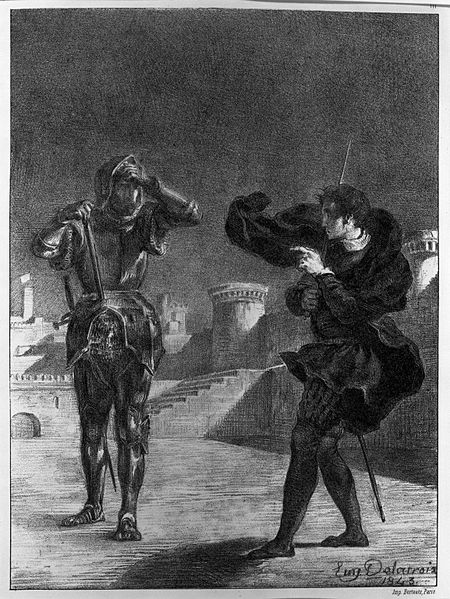
It is the time of year when respectable publications can, in a half-serious way, address the unconventional. The New York Times, for example, recently ran a story on ghost hunting in Norway. Andrew Higgins points out that Norway, among the most secular nations in the world, has come under the spell of ghosts. In a country where church attendance and religious belief seem to be endangered, there is a growing belief that people might somehow survive this mortal coil. Since such a story has to come off as bemused, we don’t get any indication that people have good reason for believing in ghosts—as one of the officials in the story says, they represent something that isn’t “generally accepted as existing at all.” But I wonder if that’s true. Scientifically, in our heads, there just doesn’t seem to be any room in this godless world for ghosts. Skeptics ask questions like “why do they wear clothes?” or “how can a soul remain behind if we have no souls?” Who told you that you have no souls?

Even with the constant materialist discourse of only physical reality, some ghosts cases have been very well documented. So have some hoaxes. People have the spirit of being tricksters, and that doesn’t always help when it comes to understanding the unseen. The point that the article is making, however, is that ghosts seem to be filling a need that the church hasn’t. Church has long been understood as being trapped in the past—concerned with issues deemed irrelevant by people who are just trying to get by in the world. I’ve heard hundreds of sermons in my life and remember less than ten. What is it that we’re trying to do?

Eugène_Delacroix._The_Phantom_on_the_Terrace,_Hamlet

I don’t know if ghosts exist. Many days I’m not sure what reality is, because if it is simply crawling out of a warm bed into a cold apartment before 4 a.m. so that I can go to work, I’m not sure this isn’t some kind of afterlife already. And maybe not the best kind. I know that as soon as people began to record their thoughts in writing, ghosts have been assumed to exist. Despite Ghost Hunters and other popularizers, vague traces are caught by enough people that we can legitimately wonder about the narrative we’ve been fed that says if it can’t be measured it can’t exist. There isn’t a nation in the world where people don’t see ghosts of some kind. Why should Norway be any different? And we wouldn’t even be asking this question if Halloween didn’t provide us with a buffer that makes forbidden topics chic.


Loving It

Given my remarks on occasion, some readers may conclude I dislike science. Nothing could be further from fact. Ever since I was a child I’ve been fascinated by science and secretly—or not so secretly—wanted to be a scientist. Complex mathematics, however, has always been beyond me. My brain simply doesn’t think that way. My gray matter is more inclined towards literature and abstracts, ideas. I am, it is true, distressed by a type of science that starts making philosophical claims as dogma: materialism. Those who make this claim have no scientific basis for doing so—it is a belief. They are entitled to their beliefs, of course, but to belittle those who suggest that maybe we don’t know everything there is to know about the unseen world seems poor sportsmanship to me. Case in point: IFL Science is a fun website. I enjoy the articles I read and it is refreshing to have those who stand up to creationists and other posers get such limelight. Interestingly, a recent article strayed into the uncanny valley.

Clown

Leading with the questions “Why Are So Many People Afraid of Clowns?” the article is categorized The Brain. Or psychology. This is one of those fields where we’re really out of our depth. We don’t understand the way that we think, and even raising the question of clown phobias seems a little odd. History can help to answer some of the questions, but IFL Science does a nice job of suggesting a scientific approach. Historically clowns were outcasts. They are liminal figures who create unease by their very existence. Those who didn’t feel accepted came to do what those who don’t feel accepted often do: try to get others to laugh at you. Sad comedians are more than a stereotype. Those who’ve clowned already know that.

Since I was a clown in college, I’ve read quite a bit about the history of the craft. Clowns were a way of laughing at misery, but also of gaining some sympathy. By exaggerating human features, they become caricatures. We aren’t allowed to discriminate against those who are different, but clowns exist to be excoriated. And deep inside, I think we all know, that those who are ill treated will eventually demand payback. It is a lesson that the world could stand to learn even today. Of course, we don’t want to be told that those who are different share something as personal and important as human feelings. Clowns make natural targets for our fears because they represent something that we know shouldn’t exist—inequality. If you can’t get accolades through hard work, making others laugh provides its own reward. The phobia may arise, I suggest, because we know that every laugh comes with a price.


To the Tower

A recent article in The Independent shows once again how deep our human need of magic can be. The Tower of London, among the oldest buildings in the city, and often considered the most haunted, was apparently protected by magic. Archaeologists have discovered ritual marks on the support timbers of the representative of the Queen’s residence that they believe were intended to keep the devil out. Given that building has been around for a few hundred years, that’s really not all that surprising. The amazing aspect, at least to me, is that the signs are a rare admission on the part of those in power that they are occasionally not in charge. In any case, now that Halloween is in the air, it seems appropriate to think about how even the most rich and powerful aren’t secure from spiritual anxieties. It’s no wonder that bishops were so powerful, back in the day.

IMG_0338

Since I’m writing a paper that discusses grimoires, magic has been on my mind lately. Anyone who follows the books I post on either this blog or Goodreads might easily discern that. The concern that Medieval people had with witches was their supposed ability to work magic. Ironically, historians of science are now suggesting that the study of magic may have led to what we now think of as science. In order to manipulate the physical world, you have to understand how that world works. Magic might have had some benefits for society after all. And we are still prone to magical thinking. It is deeply embedded in the human psyche. Magic, like miracles, can be fortuitous, but the prudent know better than ever to count upon them.

The Tower of London was the, or one of the, castle(s) of the city. Political prisoners were held there and often left with their heads in separate compartments. Even a regular tour of the grounds will include references to ghosts. A city as large and as sophisticated as London still can’t escape the past. The hex marks found by archaeologists may date from the early modern period—the time of the Reformation and thereabouts—but the human mind has not much changed since then. While we may not put secret marks on our buildings any more, we still instill them with a sense of magic. And people move out of haunted houses so often that some states have requirements to reveal troubling histories of properties before someone decides to buy. We are a society enamored of technology and future progress, and yet we stop and wonder when Halloween is in the air.


Ordinary Magic

ConjuringSpirits copyThe concept of grimoires, as well as being seasonal, has been on my mind as I finish up my paper for the Society of Biblical Literature annual meeting next month. Grimoires, books of magic, have eluded, for the most part, the interests of scholars. Who takes magic seriously, anyway? Slowly our gaze is working its way away from our noses and out to the magical world beyond. Conjuring Spirits: Texts and Traditions of Medieval Magic is a textbook example of what happens when you bring the two together (scholars and magic, that is). Like most collected works, the pieces range from fascinating to somewhat magical in their ability to cause the eyes to close. Nevertheless I learned quite a bit from this book edited by Claire Fanger. Magic is not nearly so rare as we like to claim it is.

Perhaps the biggest takeaway from these essays is that grimoires were not only written by witches. Indeed, in the Middle Ages many of them were written by clerics and monks. They were avidly used by doctors, as science likely has its roots in magic rather than in some sudden enlightenment that matter is all there is. Medicine was still beholden to Aristotle, Hippocrates, and Galen. Humors and stars could make you unwell, and the wise physician would do well to pay attention to magic as well. Today we’re too sophisticated for that, but we still call the unexplained the placebo effect.

Although the church became the great enemy of magic, it was also one of its main sources. The Mass, with transubstantiation, seemed alchemical. Miracles of healing, known throughout the Bible, suggested that the improbable was indeed possible. A number of grimoires contained instructions to work such wonders. One of the most vehemently condemned was a book informing how to attain the beatific vision—a worthy enough goal—but it did so in a way that circumvented the power of the church. Garden variety magic was also available, of course, as were recipes calling for brain of black cat and blood of bat. Witches, after all, were mainly sought out by the church. Those with power are not easily compelled to relinquish it. It should surprise no one then that magic continues to thrive.


True Natives

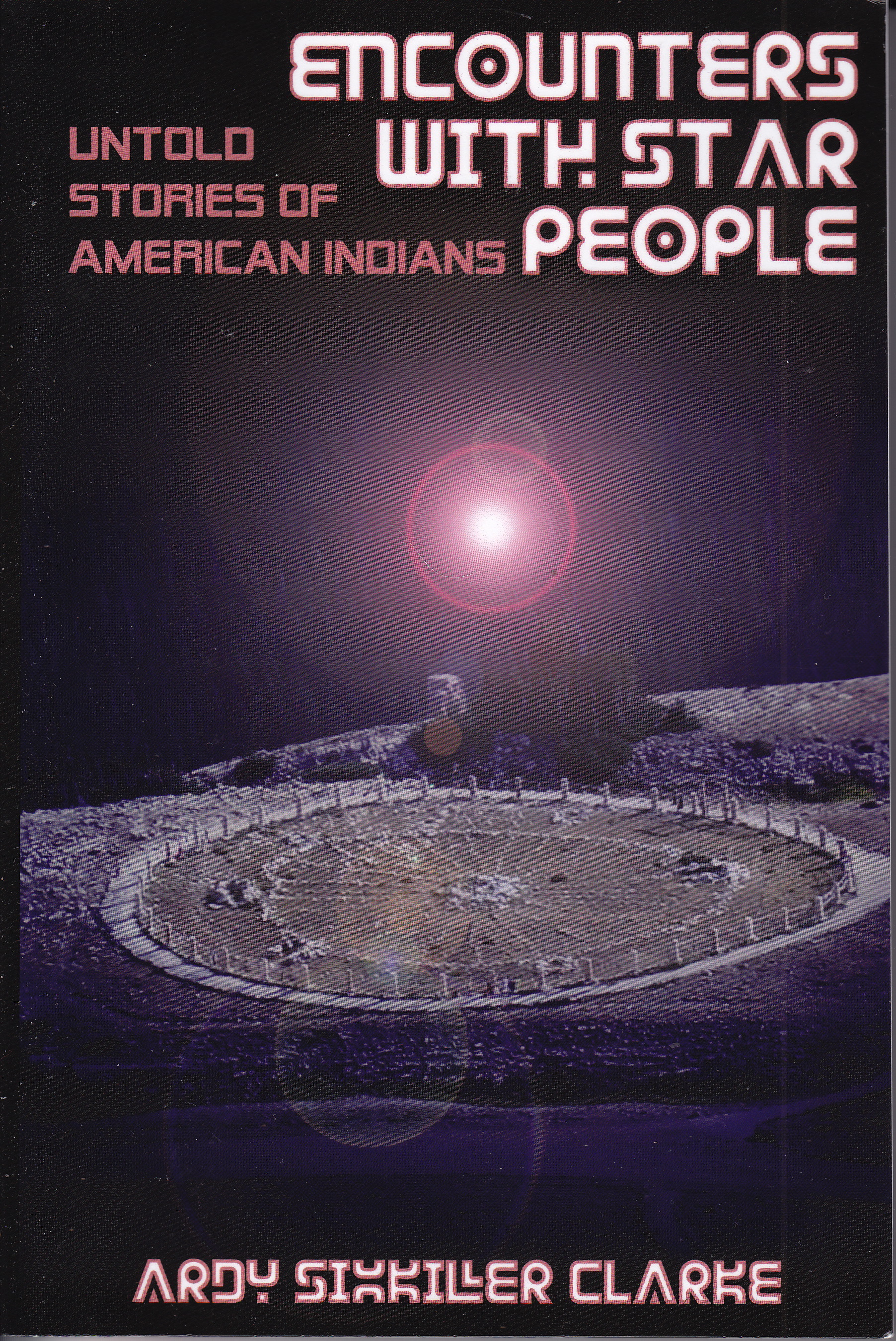
StarPeopleI have long been fascinated by American Indian folklore. In fact, the first book I read this year was a set of Indian tales. Just this week I finished a most unusual book by Ardy Sixkiller Clarke entitled Encounters with Star People: Untold Stories of American Indians. Clarke, who is herself Indian, taught at Montana State University and collected stories from various tribes concerning Star People. Mainstream western science has already made up its mind that Homo sapiens are the most advanced species ever to grace this universe, and so any discussion of visiting non-terrestrials is off the table. What Clarke shows us, however, is that just because there’s no such thing doesn’t mean that all worldviews agree on that point. In many interviews with indigenous peoples of the Americas, belief in Star People emerges as perfectly normal. As does not talking about it because white people will ridicule and belittle anything that doesn’t fit into their limited cosmos of technology and money.

Reading these stories felt like absorbing wisdom from those who observe nature more carefully than those of us of European stock are inclined to do. With eyes pressed to microscopes and telescopes, it is sometimes possible to miss the big picture. We crowd into cities and have no idea how to live under the stars. We can’t even see the stars most of the time. Have we lost our ability to wonder?

Purely from an academic point of view, I wonder why aliens can’t be taken seriously. I try to think of other topics that are simply laughed out of discussion before examining the evidence. To me it seems that human pride is at stake in this case. We are a very proud species, enamored of our own accomplishments. If we can’t reach the stars, nobody else can. This to me is troubling. Aliens, after all, don’t fall into the category of “supernatural” unless we mythologize them into yesteryear’s angels. If they are real, they are as natural as we are. They would have a technology that we haven’t replicated yet, and anyone who doubts interstellar flight should consider the impossibility of carrying a computer around in your pocket or on your wrist only thirty years ago. No, if there are Star People, they are natural. Whether or not they might exist is simply a matter of belief.


Nothing But the Truth

Blurbs are the way of the future. It is so much easier to read something brief than to have to wade through an entire article. Is that the way the future’s going? I read the blurbs for Christian Century’s round-up page when it lands on my desk at work, and I find plenty of interesting things there. For example, a recent issue suggested that truth may be getting harder to find. It began: “George Johnson [New York Times was the source] says modern culture is reaching the point at which there are no longer any incontrovertible truths, just competing ideologies and narratives.” It goes on to describe how issues like creationism are less concerned with “truth” than with fitting the world into their view. Likewise, those who object to putting telescopes on Mauna Kea see science as cultural hegemony. In a post-modern world there is no objective truth. Even as a college student I remember learning that if I found the Truth, with a capital T, there was no way to know it was actually the truth. “All truth is God’s true” some professors used to say tritely.

That doesn’t stop those of us who’ve been motivated our entire lives by the search for the truth. But how will we know when we get there? I first learned about post-modernism in my teaching days. Some of its ideas are perfectly logical: we can’t completely share an author’s meaning; words have no meanings, only usages; when we read we bring our own meaning to the text; an author’s intention is not definitive for what a text means. These ideas are deeply disturbing when we look at them closely. Then I began to read that scientists recognize that our brains did not evolve to discern the truth. Our brains evolved to survive, and even a dim approximation of the truth will help us get to reproductive age. In fact, dim approximations of the truth might explain much of our dating behavior. So, we’re led to conclude, there’s no Truth after all. Just “competing ideologies and narratives.”

DSCN2025

I studied a fair amount of philosophy in my time, and I do believe in Truth. That’s not the same as saying I’ve found it, since no one can honestly make that claim. All that we can admit is that we believe we’ve found it. Those who object to evolution say they know the Truth and it is special creation. All the evidence points against it, but all the evidence doesn’t fit the worldview. We lose something that can’t be replaced when we jettison the truth. As soon as I learned about existentialism I realized that it had long been my philosophy—making our own meaning in a world where certainty is unknown. Even those who claim that science will give us the answers have to admit that if faced with ultimate Truth we might not like what we find. We can only believe that it will be good. And hope that we are right.


Living Undead

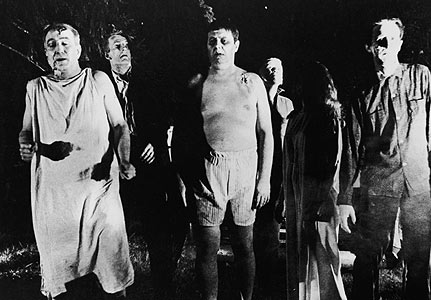
Now that autumn is in the air, my thoughts turn to zombies. I’ve read a few monster books lately, and as I pondered the attraction of zombies to the post-modern psyche, I began to wonder if they weren’t becoming, in their own secular way, a religion. Think about it. Zombies, first and foremost, are about resurrection. In a world ruled by rationality and science, we know that resurrection is impossible. What isn’t possible in science may indeed emerge in the world of monsters. The zombie, often not speaking, proclaims a distorted kind of gospel that the end is not really the end. Resurrection is not all that it seems. Zombies are spattered with gore, reminding us that the visceral existence we know as quotidian experience is temporary. Resurrection comes at the loss of a soul. The zombie is the monster of science: the animating principle is no longer spiritual. It’s just physical.

NightoftheLivingDead

Not only do zombies proclaim resurrection, they are the ultimate proselytizers. Their zealous hunger leads them to bite and their biting infects and creates new zombies. Their brainless goal—as they are unthinking consumers—is to convert the entire human world to their point of view. Once the zombies take over completely, there will be nowhere left to go. The way of the undead flesh may be a dead end, but rationality doesn’t always play a role in zealotry. The zombie is all about making more zombies. They are unbelievable, and unbelieving, but they have the making of a mega-religion nonetheless.

As a student of religion, I wonder how belief systems get started. We hold irrational beliefs on any number of things, including our religions. The difference that zombies make is, in real life, nil. And yet we can’t help tuning into the Walking Dead, or watching World War Z. The zombie is the most recognized symbol of the proletariate among the workers of the world—the brainless, soulless drone in the machine. Mega-churches draw in thousands every week for a religion that doesn’t require much intellectual engagement. Keep doing what you’re doing. Think of others once in a while. God really does want you to be rich. And the minions go out and make disciples of all nations. It is a world full of zombies. We see them in our dreams and in our mirrors. And although we think they’re only entertainment, they are oh so much more.


Ghost Rider

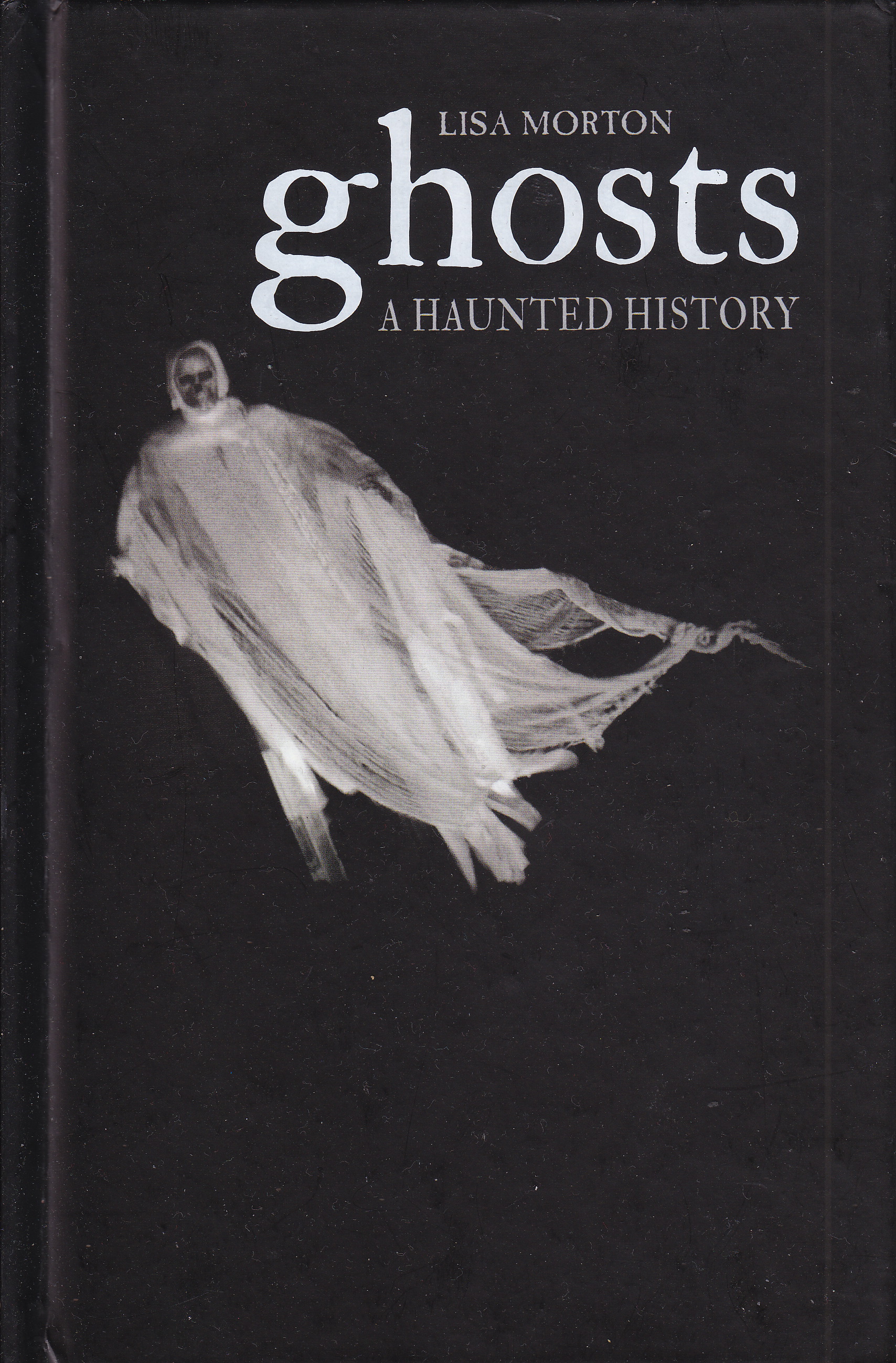
GhostsOf all frightening creatures, ghosts are by far the most ubiquitous. Believed in by every civilization ever recorded and throughout the world, not even science has been able to displace them. Lisa Morton’s Ghosts: A Haunted History offers a brief tour through the realm of the dead. With a sense of how ancient the phenomenon is, she also notes time and again how religions have an uneasy but steady relationship with disembodied spirits. After all, religions give us souls that science strives to take away. What makes Morton’s study so interesting is its restlessness. Not focusing on one culture or time period, the reader learns about Asian ghosts as well as the familiar translucent variety favored in the western world. Ghosts are everywhere.

Now that October has invited thoughts of long nights and falling leaves, I often ponder a world without ghosts. If rationalism of the materialistic variety had its way, this would be simply a natural season like any other. No need to be frightened as the sun takes on that quality that suggests some things should not be seen, and the air feels as if anything might happen. Spooky houses are merely wanting maintenance and every creak and rustle can be explained. There are no ghosts in the night and Halloween is only for children. It seems to me, rather, to be the season of belief. It’s more tangible now, the world where unanswered questions dwell. Ghosts, whether in our mind or in this physical world, are part of the ambiance without which autumn isn’t worth having.

Are ghosts real? I can’t say that I have any evidence one way or the other. We all die, and we all wish we didn’t have to. In this world some are lucky enough to make their wishes come true. Might it be that some have found a way to stay when the physical party is over? Religions are uncomfortable with ghosts since they refuse to be contained in any Heaven, Hell, or Purgatory. They simply are. People of every education level and social standing see them and some believe while others explain them away. Without going over to the other side we likely will never be able to prove whether they are really real or not. As Morton amply demonstrates in her thoughtful little book, they will never go away as long as consciousness and death coexist.


Monster Smash

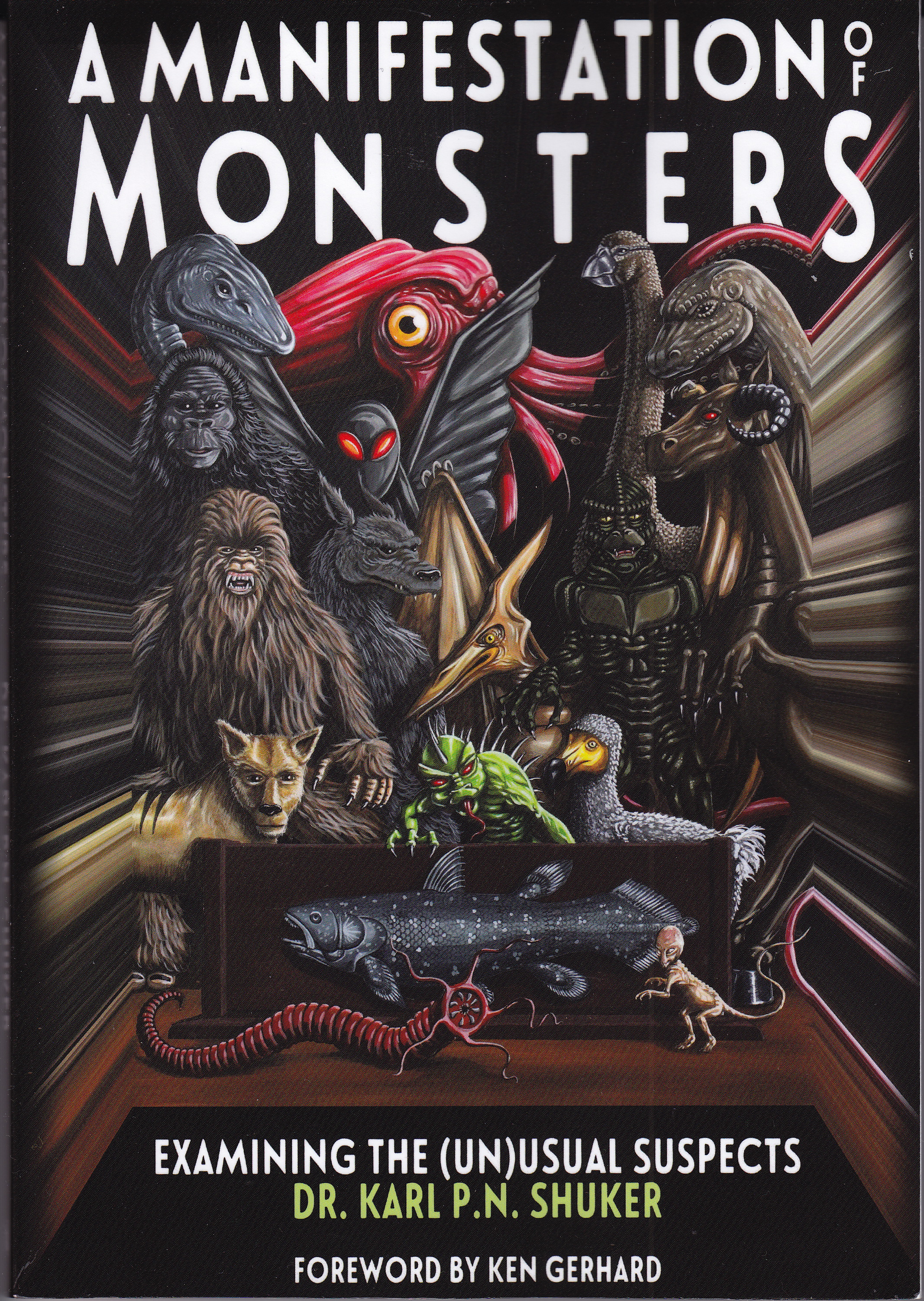
MnfsttnMnstrsIt’s the time of year when young men’s minds turn to monsters. Well, at least this middle-aged man’s does. Seeing a book by Karl P. N. Shuker entitled A Manifestation of Monsters, I was intrigued. I had some Amazon points burning a hole in my internet, so I took a chance on it. The fact is good books on monsters are hard to find and Shuker is listed as “Doctor” and that sometimes stands for something. Subtitled Examining the (Un)usual Suspects, the book is a curious Mischwesen of folklore, actual animals, and cryptozoology. The latter should be no surprise as Shuker is a noted cryptozoologist. Compiled from many of his previously published articles, the book contains some fascinating accounts of extinct creatures and some improbable accounts of modern monsters.

Since Banned Book Week is a time to explore challenged ideas, why not read about some cryptids? They are anti-establishment monsters. Banned creatures. As is usual with monsters, there’s little rhyme or reason to the arrangement. Unlike many in the field of cryptozoology, Shuker is skeptical of outlandish claims, and has actual training as a zoologist. What stood out to me as I read accounts of unusual creatures is that some people report seeing the oddest things, and that other people are driven to hoax all kinds of monsters. It is clear that the human mind is programmed to believe in the possibility of the improbable. Critical thinking, as anyone with advanced training knows, is hard work. Belief can be a far simpler matter. We crave a world with the exotic, and potentially dangerous. Shuker’s piece on the mythical chupacabra demonstrates that nicely.

While I’m pondering things that are banned, I consider how some who use critical faculties well like to disparage others. This, of course, is not in the best interest of science. We haven’t discovered everything yet. We think that because of the internet we’ve gone about as far as we can go in hive-mind mentality. Never mind that bees and ants beat us to it. People, many of them very intelligent, continue to see things they can’t explain. Others say that any living creature larger than a breadbox has already been discovered. I tend to think the world is a pretty big place and that people prefer to huddle together in cities for a reason. The mountain gorilla, for example, was discovered just in 1902. Now that the season for monsters is upon us, I like to imagine what else might be wandering around unseen by human eyes. And I hope banned ideas may continue to thrive in the forests of our minds.


Soaring Prophets

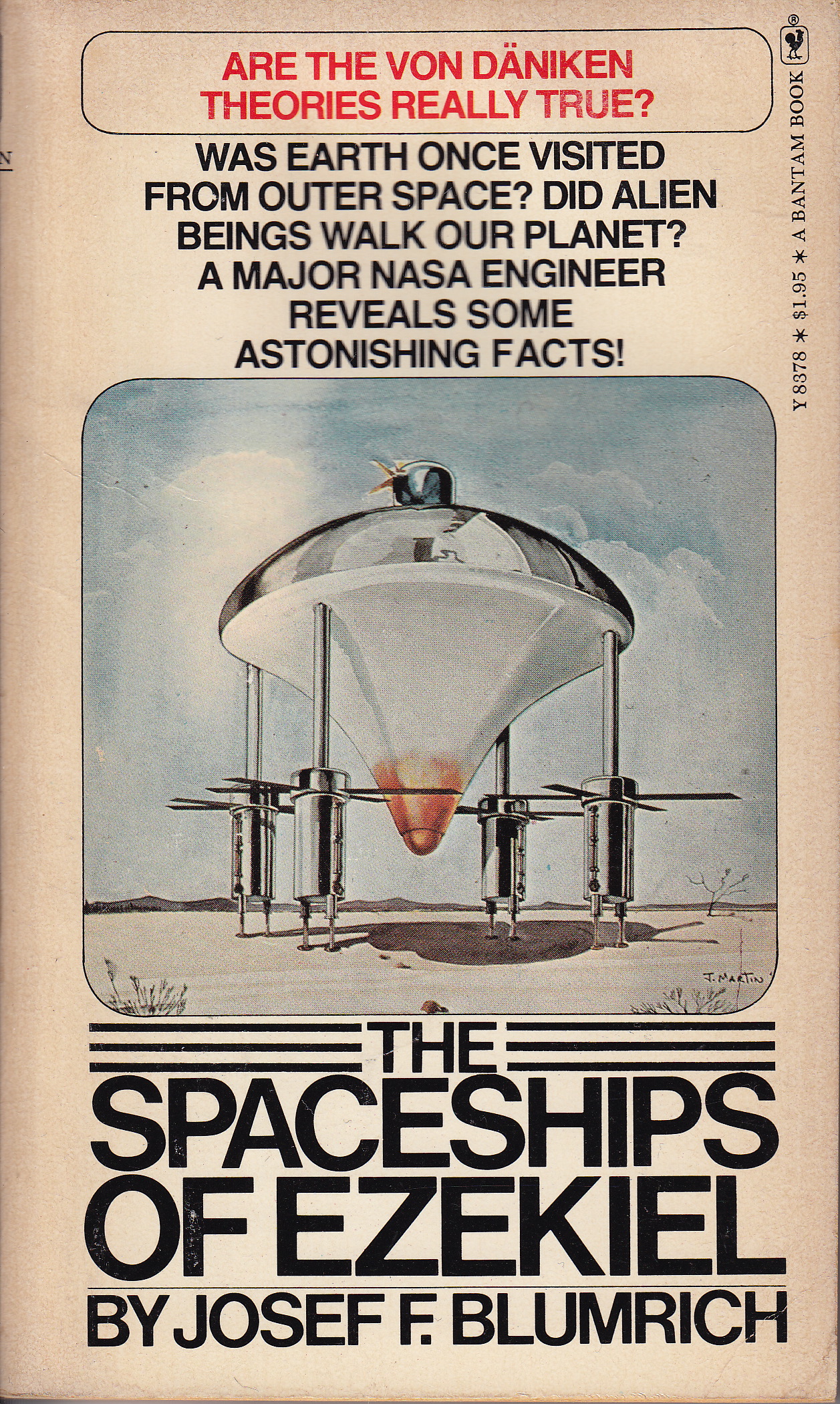
EzekielSpaceshipOkay, so I pulled the book off the shelf, and I feel now like I need to read it. Call it an occupational hazard. Josef F. Blumrich’s The Spaceships of Ezekiel, despite its von Däniken-like sales, has never been taken seriously by biblical scholars. Blumrich, no doubt a brilliant engineer, simply had no street cred among biblicists. His handling of biblical passages is awkward and he leaves out anything that really can’t be explained by his theories. Not exactly professional exegesis. He suggests, of course, that the “chariot” vision of Ezekiel was, in fact, a spaceship. The figure Ezekiel assumes is God is actually a commander of the ship and the message (which accounts for the vast majority of the book) really doesn’t matter in this context. In my earlier post, having not read the book then, I made the error of supposing that the helicopters were impractical in space. Reading it, I instantly saw my error. This was engineered as a landing craft from the mothership circling the earth above our heads. Boy, do I feel stupid now.

The overall mistake Blumrich makes is the “unforgivable sin” of eisegesis. Suspecting that he has a well-engineered spacecraft on his hands, he draws out the implications—such as the propellers—which would not be necessary, but must be there because of a “literal” interpretation of Ezekiel. Once the eisegesis is done, it can be used to explain further episodes throughout the prophetic book. The message of Jerusalem’s destruction and the hopeful prospect of a return from exile get lost in the space dust raised by these propellers. Blumrich was quite right, however, that technical people and humanities people need to be willing to learn from one another. Ezekiel may have seen something unexplained, but his function was that of a prophet, and prophets say the strangest things.

Even more odd, from my unprofessional reading, was the sense that Blumrich saw capitalism as the default economic system of the galaxy. Time and again he mentions how expensive such interplanetary travel must have been. How do we know, I wonder, that aliens like to exploit each other as capitalists do? If they are a more advanced species, surely they must have an imagination that reaches beyond one percent controlling 99 percent of the wealth to aggrandize themselves. I can imagine a society without money. A society with fair trade where everyone is cared for by medical individuals who don’t charge an arm and a leg to treat an arm and a leg. A world where doctors don’t worry about being sued by lawyers. A world where dreamers are free to dream and society values it. Ah, I’d better be careful since, it seems, I may be beginning to sound like a prophet.


The Climate of Belief

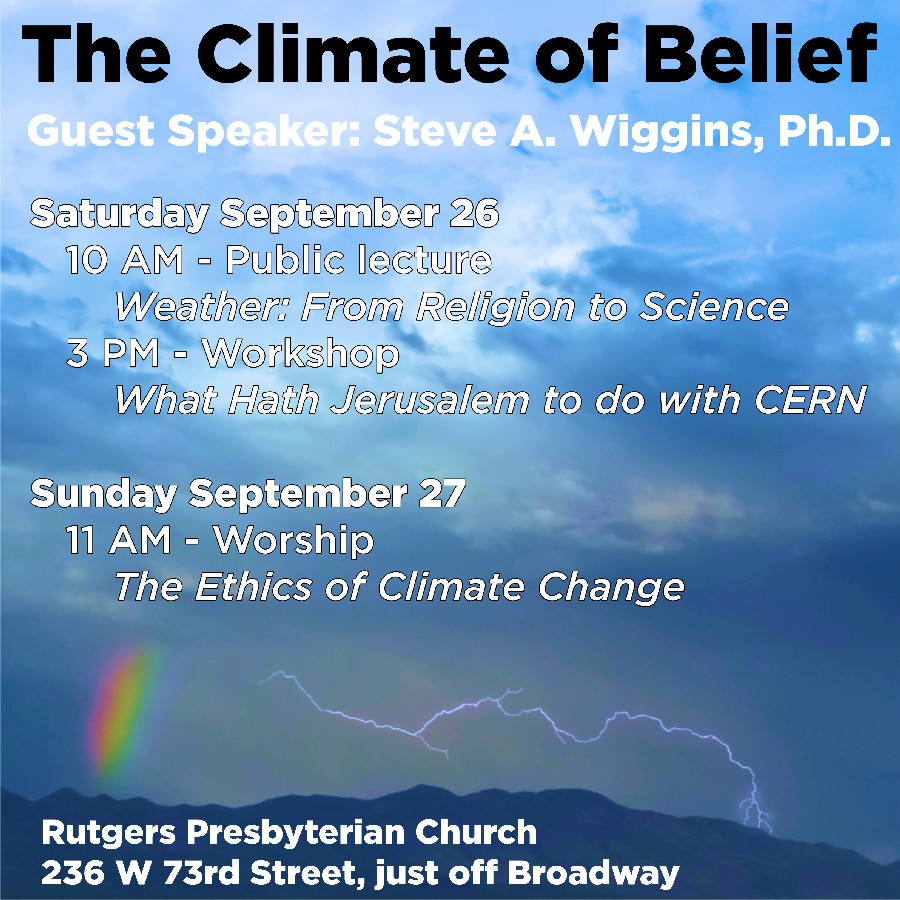
As I’ve noted before, in our culture where an individual voice is hard to hear, those without institutional affiliation are generally considered self-promoting hacks. That’s really too bad, given that so many highly educated people end up in menial positions—our society’s “greatest resources” squandered away behind a counter or sequestered in a cubicle. So it was my great honor to be asked to present Rutgers Presbyterian Church’s Autumn Guest Lecture this year in Manhattan. When I taught at Nashotah House invitations to speak came frequently, even though it was a small school. I even once received an invitation to talk when I was an adjunct at Rutgers University. Since “going corporate,” it seems, I have nothing to say. It really is wonderful to be asked to speak again. Practicing my talk brings back many fond memories. Lecturing is in my blood. The Pastor asked me to come after my book, Weathering the Psalms, was published. Never intended as a best-seller, it has quietly sat on the sidelines, like its author.

weather wiggins ii sml

I suppose a bit of shameless self-promotion might be in order, but of course, I will feel ashamed for pointing out, when it’s all over. If you happen to be in New York City this coming Saturday and Sunday, so will I. Rutgers Presbyterian is located on the upper west side, not far from Lincoln Center and the Museum of Natural History. I’m always glad for an audience. See? Now I feel bad for having said so. My theme over the weekend will be “The Climate of Belief.” In addition to the weather, we’ll be talking about religion and science. Two worldviews that seem to be in constant conflict are not really the bitter enemies they seem to be. I won’t give away any spoilers since then you’d have no reason to come to my New York debut.

Further along, I am scheduled to give a paper at the Society of Biblical Literature annual meeting in the Society for Comparative Research on Iconic and Performative Texts (SCRIPT) session on sensing scripture. My talk on that occasion will be on how the Bible is presented as an iconic book in the first season of Sleepy Hollow. Be sure to mark your November calendars now! It’s not too often that a person with no institution willing to back him gets to speak twice in a year. Someone who’s in a position to hire professors once told me that with so many candidates out there, you have to wait until you fall in love with one. Being a Don Juan, whether in amore or academia, has never been my strong suit. Still, if Elijah is to be believed, even an unamplified voice may carry. I’ll utter my “yop” for those who wish to listen.


Galileo’s Tool

GalileoMiddleEarly in my academic career I got into trouble not because a Harvard professor hadn’t adequately checked his data, but because I had pointed out that a Harvard professor hadn’t adequately checked his data. You see, I was a naive realist. I believed academics were objective, factual sorts who looked for the truth no matter how uncomfortable it was. My honesty didn’t earn me many friends, and I still can’t mention this professor by name because I have seen grown men melt into tears at his name, due to their overwhelming loyalty. By contrast, a fellow Edinburgh student once told me that he disagreed with our mutual dissertation adviser, “on principle.” As the old saying goes, nullius in verba, take nobody’s word for it. Reading Alice Dreger’s Galileo’s Middle Finger: Heretics, Activists, and the Search for Justice in Science drove home a number of important points, one of the most memorable being that academics take real risks when they won’t fudge the facts to fit the establishment’s expectations.

Although this autobiographically revealing book is about as honest as a writer can be, it deals largely with issues of social justice in the context of those who “don’t fit.” Intersex individuals, especially, are treated before they can give consent and live their lives based on other people’s expectations of what their gender “should be.” Like most people I was raised thinking there were only two genders. Science has consistently demonstrated that “gender” is a construct that occurs along a continuum. Some species change gender in their lives. Some have such complicated reproductive techniques that far more than two genders are postulated to make sense of it all. And yet, when it comes to humans, we suppose that we’re either female or male. And religions consistently claim that any sex outside those parameters is evil. We are so naive.

Dreger focuses her attention much more widely in this important book. She shows how universities, constantly becoming more corporate, often don’t support research that challenges their investments, or “branding.” She demonstrates first-hand the character-assassination that academic snipers use so well on those who follow the evidence. She is living proof that education and activism should go together. Intricate and with bizarre loops and twists thrown in, her account of what some people will do to silence others, and get it peer reviewed, saddens me. I’ve always believed that education is the surest way to solve social ills. Education, however, is increasingly being purchased by special-interest groups that protect the establishment. The establishment may no longer be the church, but we need another Galileo, and soon.