Back to School

“We want to make certain that we view culture through the eyes of faith, that we don’t view our faith through the eyes of culture.” The words are those of Stephen Livesay, president of Bryan College, according to a recent New York Times article. Bryan College in Dayton, Tennessee, already famous as the school that evolved out of the Scopes Monkey Trial, has been toying with adding a more specifically fundamentalist statement to its panoply of faith. Instead of stating simply that humans (more precisely, “man”) were (was) created by God, Livesay wants to clarify that this means by special creation, no evolution involved. Hey, we’re all thinking it. Why not just say it?
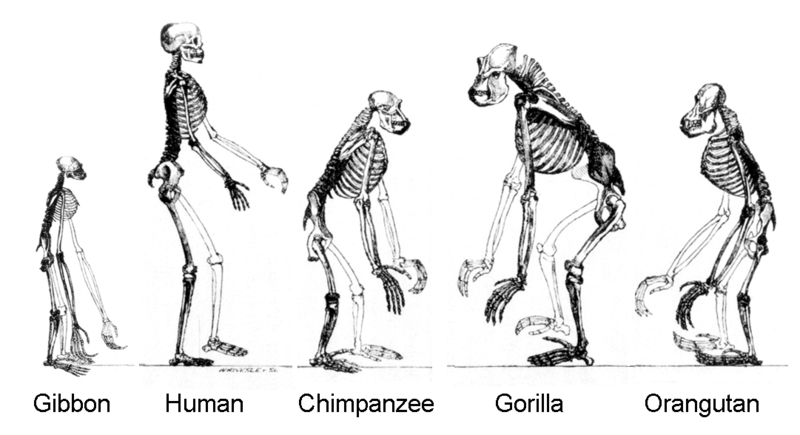
800px-Ape_skeletons

With the characteristic, journalistic eye-rolling that inevitably accompanies stories about creationism, I frequently wonder why there aren’t more calls to try to understand this viewpoint. It’s easier to condemn and say that narrow minds can’t widen out, but some of us who had believed in Bryan’s hypothesis at one time have managed by dint of reading and reason to climb our way out of the slime. If we understood what made literalism so appealing, we might be able to figure out why only America lags behind the developed world in accepting what is otherwise universally regarded as a fact. Instead, faculty members nationwide willing to call this into question are summarily fired and nobody bothers to do a thing to support them. Collateral damage of the culture wars. Perhaps we should add a statement about not letting the door hit you on your way out.

Evolution through natural selection stabs very deeply into the heart of human self-worth. We still refer to other animals as “lower” than us, and we exploit them in any way we see fit. Then we don’t wonder why being told you’re just like them isn’t disturbing. This is trench warfare. Lines in the sand dug deeper and deeper. Those who believe in creationism aren’t simple. Even with all our space telescopes and Mars rovers, we’re told the most complex thing known to humanity is still its own brain. And that brain makes people with Ph.D.s think that they’re special—either a separate creation by an invisible god, or because they can recognize how irrational our own brains make us. No intelligent being would want to understand why this is so by studying it rationally. That would make far too much sense.

Double Blind

When I read Isaac Asimov’s three laws of robotics as a child, I assumed that I’d not live to worry about them in real life. What we don’t know can indeed hurt us. Time magazine frightens me sometimes. This week’s offerings include a small blurb about drones. When I was a kid, a drone was a bee—dangerous in its own right—or it was a verb used to describe an uninspired teacher or preacher’s monotoned wisdom. Now drones are robotic planes that can operate themselves without human input. Time reveals that technology has been developed that would allow drones to kill without human input. Asimov’s laws have become truly science fiction. Proponents argue that “collateral damage” might be minimized if we allow robots to kill with precision, and some have argued that the research should be prohibited. The fact that it has been developed, however, means the line in the sand has been crossed. If it has been done once, it will be done again.

800px-MQ-9_Reaper_in_flight_(2007)

Even as a daily user of technology, a deep ambivalence besets me. Maybe if it weren’t for the fact that every once in a while my computer (most often at work) freezes up and issues a command I can’t understand, I might feel a little more secure. Instead I issue a ticket for IT and when they call on me sometimes even a specialist can’t figure out what went wrong. Once the bullets are flying it’s a little too late to reboot. Maybe I’m just not yet ready to crawl into bed with a technology that might kill me, without feeling.

Just five pages earlier Time notes that 1 in 5 is the “Ratio of people who would have sex with a robot, according to a U.K. study.” All things are fair, it seems, in love and war. The part of the equation that we haven’t accounted for in our artificial intelligence is that thought requires emotion—which we don’t understand—as much as it requires reason, upon which we have only a toddler’s grasp. And yet we continue to build more and more powerful devices that might kill us with ease. Isaac Asimov was a prescient writer and a forward thinker. He was from the generation that aspired to ethics being in place before technology was implemented. At least as an ideal. We’ve reversed the order in our world, where ethics is continually playing catch-up to the new technologies we’ve invented. Now it’s time to decide whether to make love to it or to say our final prayers.


Real Life

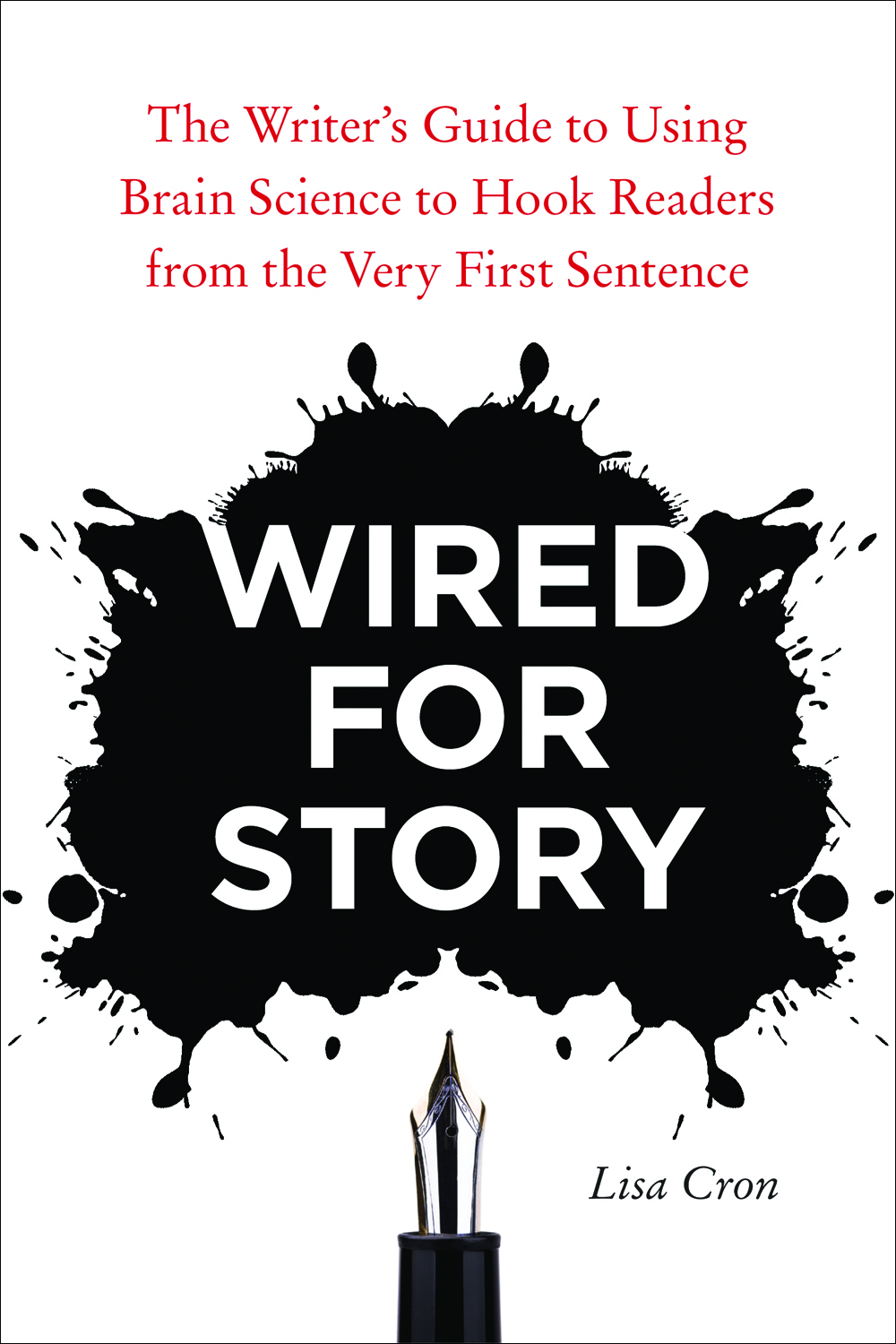
WiredForStoryThe brain, it seems to me, holds all of the cards. After all, what we call “reality” is actually a perception of what’s “really” there mediated by our brains. Philosophers and scientists have long warned us that direct participation with the universe is a figment of the, um, brain. This kind of thinking may have led me to trouble in certain jobs I’ve held, but there is no escaping it, unless we posit that there is another thinking center in the body. If there is, it must be invisible. As a dabbler in the literary arts, I couldn’t therefore pass up Lisa Cron’s Wired for Story. The premise spawns one of those “aha” moments so large that you wonder why nobody had tripped upon it before: brain science can reveal what makes a good story. For example, were I smarter, I would’ve begun with that wonderfully witty story told by Uncle Frank that kept us engrossed as kids, and left us roaring with leonine laughter. Only I don’t have an Uncle Frank, and the stories I grew up with were of the written species.

Cron, however, reminds us of a very important point: if it weren’t for feeling, thought would not be possible. This isn’t telling tales out of school. Even the most Spock-like rationalists know it’s true: emotions are essential to the thought process. Even the most proficient of thinkers can be stopped by the vague, “I don’t feel like—” (fill in the blank). To think well, we must feel that we can. When we greet someone we don’t lead with “how are you thinking?” but with “how are you feeling?” (often apocopated to “how are you?”). We interpret our world through a combination of reason and emotion. Both are necessary for survival. Think about it: does the world really make sense?

In writing, emotion plays an essential role. We lay aside the story that makes us feel nothing. Reductionistic materialists often espouse that getting down to the smallest piece of the smallest particle will eventually explain it all. The more spiritually inclined will ask them how it makes them feel. Emotion is the under-appreciated of these twins. While great ideas may come through in a novel (I can’t help but mention Moby Dick again), it is the feeling of the protagonist—the spiritual (call it what you will) struggle—that draws us in and keeps us reading. It may be secular or religious, but the realm of emotion reminds us that to be human is to feel. And if by chance you’re still reading this, I have a feeling that you might agree.


Fire Bearer

Prometheusposterfixed

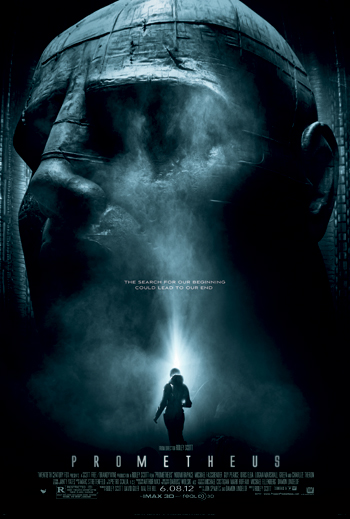
Part prequel and part religious odyssey, Prometheus both treads familiar ground and explores new territory. In keeping with my invariable sense of timing (I saw none of the Alien trilogy in theaters), I waited until well after the fact to see the movie. I had heard Prometheus called a prequel, but even if I hadn’t some of the Ridley Scottish touches might’ve given it away: a large ship bound for a distant planet, evidence of unexpected inhabitants—yes, they knew about the “engineers” (we could call them “watchers”) but not the proto-Aliens they were breeding. We even have the android that understands science’s need to be greater than that of human need. Déjà vu. Still, there’s something very different here—direct discussion of religion and how faith plays into the work of scientists. Elizabeth Shaw, the sole survivor, wears a cross as she tries to work out what her father’s teaching about religion might mean. The cross isn’t hidden in the background—it is brought out into the open and discussed.

If you haven’t seen the movie, the premise is that ancient artifacts (including the ubiquitous Sumerian, Egyptian, and Mayan templates) added to a new discovery in Scotland, demonstrate that a race of giants have been inviting us to their planet for thousands of years. In fact, they had engineered us. (Ironically, the biologist who espouses Darwin is among the first to die.) Peter Wayland, industrialist billionaire who doesn’t want to die, funds a trip to meet these engineers. The engineers, save one, died long ago. Apparently of some plague (cue the aliens!) that were created to destroy humans. They were about ready to send the nasty beasties to earth when they were overcome, with only a single survivor. No coincidence that this planet was reached on Christmas day. It becomes clear to Dr. Shaw that these engineers were intent on destroying the human race they created. And still, she slips her cross back on before facing the engineers of life and death. This was Noah without all the water (and much better writers).

Of course we think we know the rest of the story. Sigourney Weaver bravely led us through three alien attacks before sacrificing herself in a New Testament kind of ending. But what about Elizabeth Shaw? She who bore and aborted the mother of aliens in a very maculate conception? She is off to a prequel’s prequel to find out why these engineers wanted to destroy us. Rumor tells of Prometheus 2, and I wonder if we will get to meet our maker’s makers. Although Scott is an atheist, he brings us Moses later this year, and has already given us Mary and Jesus wrapped up into one with Ripley and her spiritual mother, a sci-fi St Anne, in Elizabeth Shaw. After all Elizabeth was cousin to Mary, and now that the question of faith has been openly discussed, it will have to be more fully addressed. Among the unanswered questions is whether I be able to make it to the theater on time to see this one, or will two years vanish before I find the time to address the eternal questions that Ridley Scott always seems to pose.


Science Fiction Double Feature

Two news stories last week—one from the Associated Press and one from the Chronicle of Higher Education—hit upon a common theme: scientific illiteracy. Both articles presented scientists who felt that if they could just reach the (mostly) American public with easily digested facts, then belief in the Big Bang, evolution, and global warming would suddenly make sense to everyone. It may not be my place to say, as I’m not a scientist, but I believe they’re wrong. Don’t misunderstand. I do believe in the Big Bang, evolution, and global warming. In fact, I spent part of last week flagellating myself (metaphorically) for not posting something appropriate on Earth Day. I worry a lot about global warming and what we do to our only planet. What I mean is, these scientists don’t understand religion. People don’t willfully reject the facts. That takes religion.

One of the reasons that I continue my daily efforts on this blog is that our educated elite constantly refuse to acknowledge the blue whale in the room. People are naturally religious. Some grow out of it, some are educated out of it. For most, however, the price to do so is far too high. Science offers little to take the place of faith. For all of its innuendo, the Big Bang tends to leave most of us cold. I don’t support religions spreading ignorance, but even the Bible recognized that it is useless to say to a poor person, “stay warm and well fed” if you don’t offer a blanket and some food as well. It’s chilly in an infinite, yet expanding universe. Why don’t scientist understand that if you give a jacket, maybe people might actually warm up and listen?

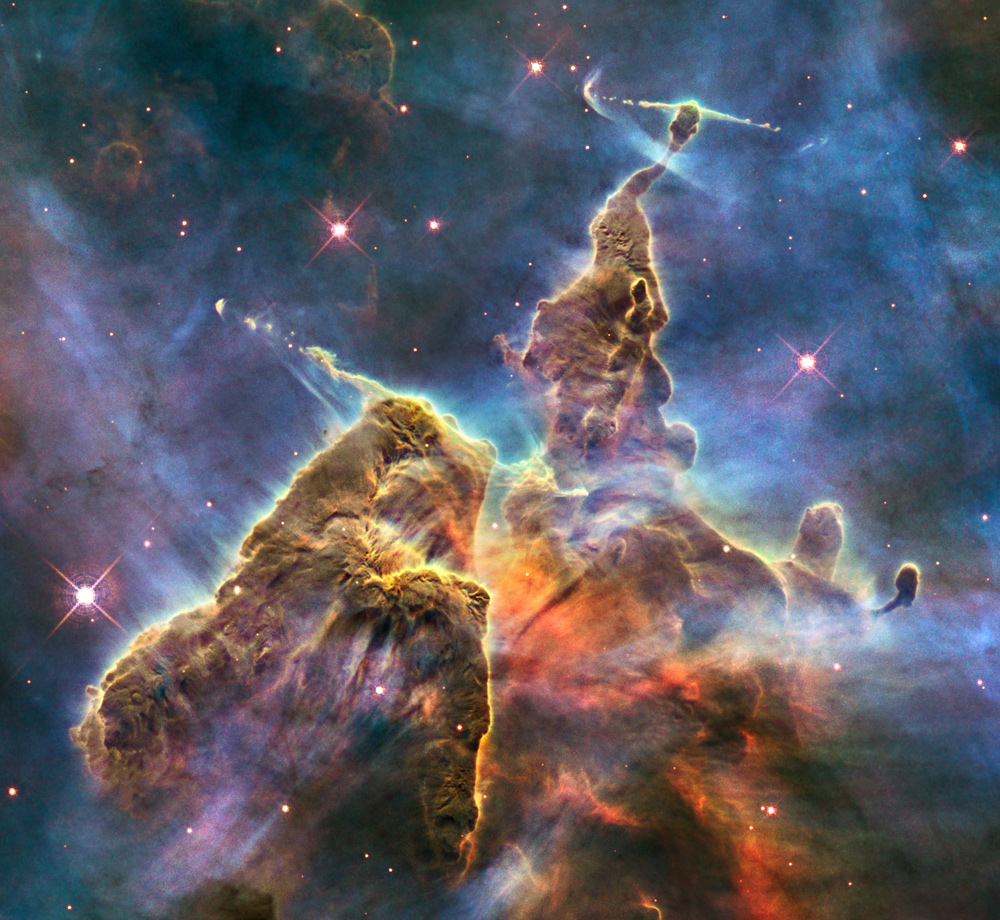
hs-2010-13-a-large_web

Religion, however we define it, is a coping mechanism. Even many atheist biologists admit that it has an evolutionary utility, embarrassing as that may be. Evolutionary scientists also tell us that we don’t evolve according to plan. Nature (de-personified, of course) opportunistically uses what’s at hand to help creatures survive. Instead of trying to understand religion, many in the hard sciences think that speaking loudly in single-syllable words will convince those who’ve found meaning in evolution’s solution of religion that somehow evolution was wrong. The worst thing we can do is to waste more money trying to understand religion! I hear it’s very cold in outer space. Still, things seem to be warming up down here. For those who can’t evolve gills, it’s time to learn to swim.


To Thine Own Self

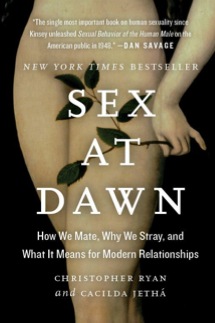
sexatdawnAmong the books that I would rate very important, Christopher Ryan and Cacilda Jethá’s Sex at Dawn would need to be on top, or nearly so. As I’ve often stated on this blog, religion and sex are very closely related. Every religion, in some way or another, intimates itself into sexuality. Like religious belief, however, it is something about which we blush, look at our feet, and politely change the subject. Perhaps it would be helpful to shift focus, then, to the subtitle: How We Mate, Why We Stray, and What It Means for Modern Relationships. Well, not even that reaches the depths to which this book plumbs. Ryan and Jethá actually peer back deep into prehistory and look at the changes that agricultural life brought onto humanity. Comparing that information to conclusions drawn from evolutionary theory and serious biological study, they derive a picture of a much more equitable culture for which humans clearly evolved. Agriculture, and just plain culture, changed all that.

With culture, you see, comes the materialist idea of possession. Hunter-gatherers, even today, are the best sharers in the world. Their generosity isn’t noble, as Ryan and Jethá point out, but entirely practical. In addition, their lives are longer, healthier, and happier than those of the modern, stressed-out, perpetually frustrated, “cultured” individual. We are constantly trying to get ahead, and own more. Of course, we don’t want to mention or think about the fact that when we die, all that ownership will mean nothing. We invent complex laws that so only our biological (we think) offspring will carry on that legacy until the last bit is parceled out so fine that all that remains is a name that few will remember millennia down the road. For that we suffer nearly constant frustration. I’ve not read a book in decades that made me want to throw all of this off and head out to the woods, sharpened stick in hand. (Problematic, since I’m pretty solidly vegetarian.)

Some of the larger implications, however, that Sex at Dawn doesn’t address, are the roles that religion plays in problematizing what we’ve evolved to be. Of course, sex scandals in churches are referenced, since they are such crucial evidence. What is overlooked, for the purposes of the book, is that religions have always tried to define and control sexuality, at least since the dawn of agriculture. We don’t often consider that agriculture, in addition to making us fat, and lazy, also gave us organized religion. It may be that religion came first, but it only grew into a coercive social force with the temple culture of ancient Sumer, and it has been with us ever since, dictating who may love whom, when, and for what purpose. Sex at Dawn is not for those who are set in their ways, nor for those who take a one-size-fits-all attitude toward life. For the rest of humanity, however, there is hope that perhaps we can learn to be a little more true to what nature intended us to be, and to understand that nature may be many things, but it is seldom evil.


Floaters and Swimmers

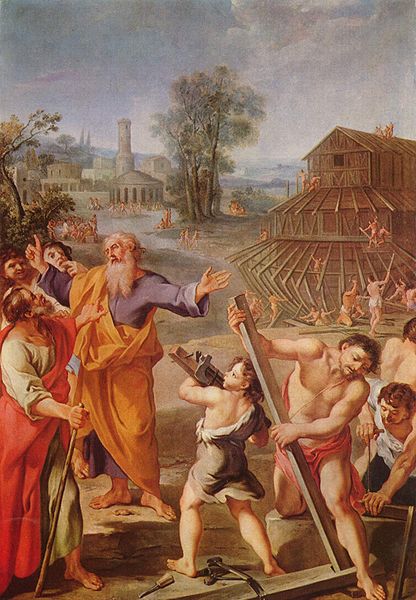
Noah seems to have found a renewed audience these days. Nothing like a major motion picture to make even one of the most famous biblical characters even more notable. And the spin-off stories are now considered news as well. One of the many impossible stories of the Bible, the ark, as scholars have long known, would not have been a physical possibility. Quite apart from the building in days before metal smelting was invented, there was the problem of volume. Since evolution is ruled out de rigueur, each separate species had to have been represented, since no changes are allowed from that time to this. The sheer number of them, especially since new ones are being discovered even now, was deemed impossible to fit on an ark of even biblical dimensions. Add in the food necessary for 150 days, especially considering the carnivores, and the human-power required to care for all those beasts (only eight are permitted by Genesis, and Noah was 600 years old at the time) and you get the picture. Then Mesopotamian flood stories even older were discovered. It was quickly recognized that this was a myth with a larger message to tell.

Now, according to geobeats, and to the relief, I’m sure, of Russell Crowe, physics students at the University of Leicester have calculated that the ark could have floated. The story, in a one-minute sound bite, is a little shy on details. The students used the biblical cubit, and figured there were 35,000 distinct species at the time. I’m not sure where that number originates, but it doesn’t take into account how Noah got the koala’s to swim from Australia. According to present evidence, the earth is home to about eight-million-seven-hundred-thousand different species. And since they can’t evolve, that’s an awful lot of swimmers.

According to the university website, this was not intended as an exercise in biblical literalism. “The aim of the module is for the students to learn about peer review and scientific publishing. The students are encouraged to be imaginative with their topics, and find ways to apply basic physics to the weird, the wonderful and the everyday,” according to Dr. Mervyn Roy, the instructor. The students, working the math angle, didn’t expect the results to work. That they did surprised everyone. Except Noah, one presumes. The story makes clear that the number of animals was used to calculate mass, not dimensions, so squeezing all the beasts in might have been quite another chore altogether. Miraculous, one might say. As for me, I am waiting to see that pair of koalas swim from Darwin to the Persian Gulf, and then back again once the waters finally recede.

Don't forget to see the movie!

Don’t forget to see the movie!


Heaven Can Wait

“Like a good neighbor, State Farm is there.” So the jingle goes. Or went. I’ve only met my upstairs neighbors once. Twice now. Apparently last weekend I slept through the fire alarm—one of the dangers of awaking ridiculously early on a daily basis. The neighbors found the source of the smoke and turned off the furnace in the basement, but told me first thing in the morning before the coffee really kicked in. I avoided a close call, perhaps. What if they’d not been home?

I have no delusions about understanding how the Internet works. I’m still trying to figure out the telegraph. Perhaps having this inconsequential blog has put me on somebody’s radar, or maybe it’s just some bored robot that searches for strange combinations of words in the wee hours of the night. In any case, I ended up with an email with the trailer for Heaven Is For Real embedded in it. I recall when the book was on the New York Times bestseller list, and I suppose the Easter weekend release date is no coincidence, but the trailer still bothered me a bit. It’s not the resurrection part—the film industry wouldn’t get very far without that trope—but it is the implications of what heaven would be like. I haven’t read the book, but apparently Colton Burpo had a near-death experience and then for a considerable time afterward began describing things that were impossible for him to know. A miscarriage where his sister died, what his grandfather looked like as a young man, what his parents were doing when he was dead in the hospital. Talk about your spooky effects at a distance!

Despite my penchant for watching scary movies, I don’t think I’ll see Heaven Is For Real. There’s just too much emotional build-up here, and Life After Life traumatized me for weeks a couple decades back. Still, I am very interested in the possible explanations for what might have been going on. Near-death experiences have never been adequately explained. Scientists suggest that a lot can happen in a complex brain in a matter of nano-seconds, and we have no chronograph precise enough to know whether the thoughts and images happened before death, during death, or during resuscitation. Still, how people frequently know precisely where others were, who were not in the room at the time, and how they heard things that, medically speaking, they couldn’t have heard, remains eerie and hopeful at the same time. What does appear to be without question is that consciousness is far from being explained.

Botticini's vision

Botticini’s vision

Heaven is always described as pleasant. That concept differs radically for people, and you have to wonder how it can be one-size-fits-all. Some people prefer to be in crowds, while others like to be alone. Some like it hot. Some like it cold. And those who experience near-death phenomena often report having a body of some sort “up there.” Some people would prefer a different body. According to the trailer, Colton says we’re all young over yonder. For me, such things are far more about questions than answers. We don’t know what goes on after death. Nearly every religion ever invented says that clearly there’s more to the story. Some say we come back, others say we stay away. Maybe it is different for each. Maybe it is just a matter of having good neighbors after all.


Sowing the Wind

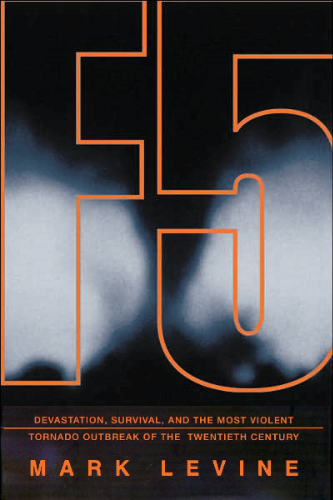
F5On May 31 in 1985, I was working at a church camp outside Uniontown, Pennsylvania when some severe storms rolled through the area. I had trouble sleeping through the thunder and lightning. I awoke the next morning to hear the news, in groggy disbelief, that tornadoes had invaded the county where my family lived. Frantic for their safety I tried to phone, but lines were down. It turned out all right—the nearest twister had been about five miles away from my home. This event was a shock because I grew up believing we never had tornadoes in Pennsylvania. I have always been terrified of them. I suppose that’s why I wrote my little book on weather in the Psalms. I just finished reading Mark Levine’s F5: Devastation, Survival, and the Most Violent Tornado Outbreak of the Twentieth Century. I’m not sure why I’m compelled to read about what scares me so much, but I suspect it’s because tornadoes have a whiff of the divine about them. Indeed, Levine’s book makes several reference to religious imagery when describing the utter destruction of Limestone, Alabama during the Super Outbreak of April 1974. It gives me little comfort that the storms that raked Ohio, Pennsylvania and Ontario eleven years later were the second deadliest outbreak following that of the book’s exploration, up to that time. There’s so much left to chance, with tornadoes.

Despite the complete lack of any intentionality behind the raw forces of nature, the phrase “finger of God” has become a fixture in the tornadic lexicon. Perhaps it is because the human perception of divine intervention has always been sporadically applied. One person’s miracle is another’s nightmare. Obeying only the complex rules of meteorology, the weather has ways of its own that even computer models cannot yet fathom. We still stand helpless in the face of the tornado. I have often thought, without a whole lot of data to back me up, that weather has played a major role in the human understanding of the divine. Quite apart from the obvious celestial orientation, the weather is easily forgotten until it turns bad, and when it does there is nothing humanly possible to do about it.

In April of 2011 a super outbreak of 358 tornadoes swept through the eastern United States and Canada, killing 348 people. In terms of damage, it was one of the costliest natural disasters in US history. And the capriciousness of the tornado stands at the center of it all. F5 is a hard book to read. The story practically turns its own pages, but the loss in human terms in the cold face of a planet that doesn’t exist for us is sobering indeed. Many religious people in the south were asking how God could allow children to be killed and hundreds of people maimed both physically and mentally for the rest of their lives. They prayed for answers that never came. And this may be the cruelest aspect of the apparently random nature of the weather. It maintains the right to kill, and prayers seem to bounce back from that brazen sky that comes just before a tornado strikes, and especially afterwards. Skies are silent. When they are not, it is time to duck and cover.


Heavenly Beings

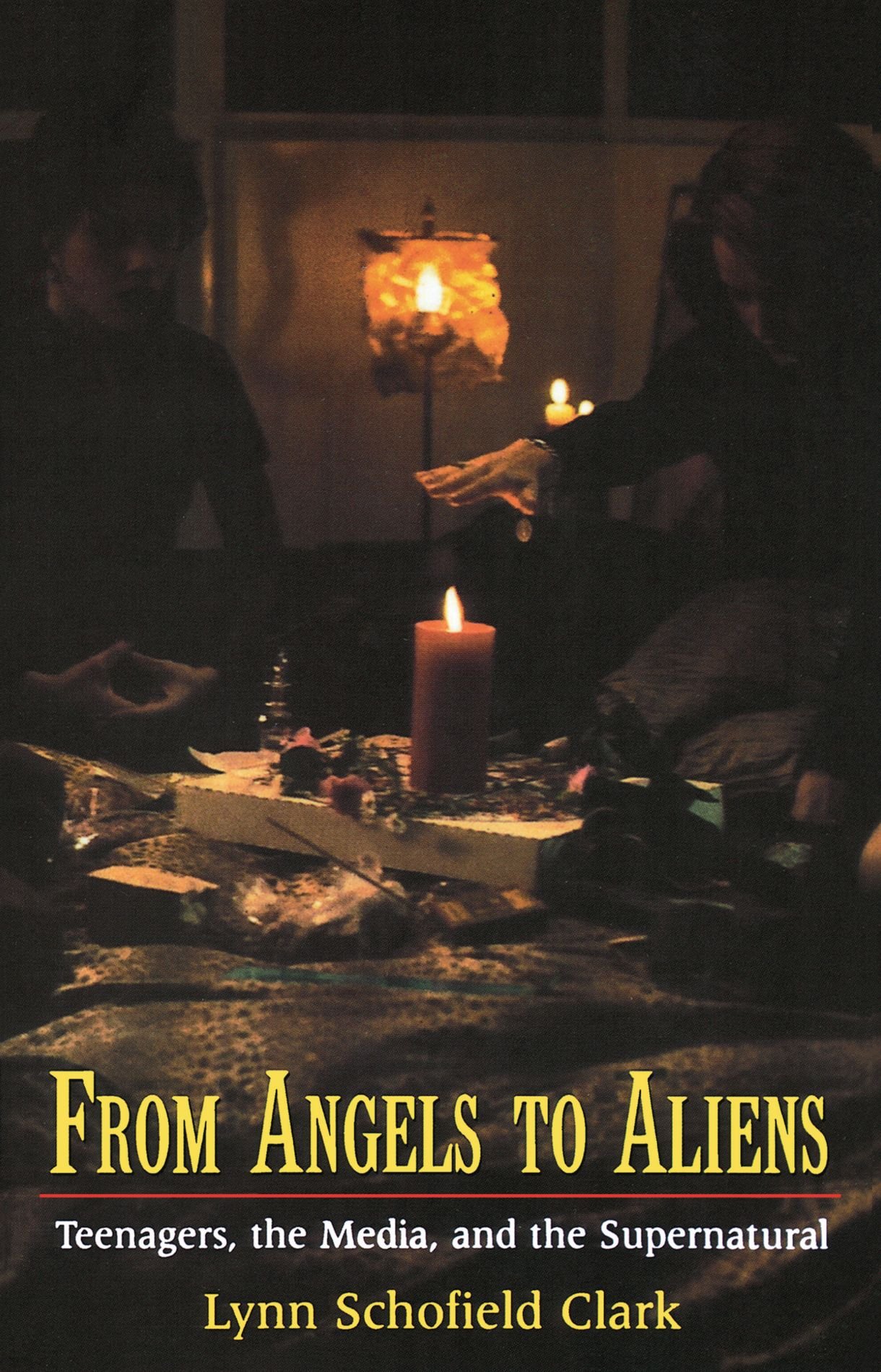
FromAngelsToAliens Religious tolerance suggests that it’s less important what you believe than it is that you believe. After all, where you are born—socioeconomically as well as geographically—determines which options are open to you. And now that the world is virtually inter-connected, the media must play into the idea of what we believe as concepts mix and brew and distill. Lynn Schofield Clark’s From Angels to Aliens: Teenagers, the Media, and the Supernatural, is a study that takes all of this seriously. We know teens as the ultimate disenfranchised demographic. For those of us who were once there, no doubt concerning that status exists. But what of teens in an age where God seems to be effacing and angels and aliens invading? At least according to the media. Clark interviews several teens and their families about their belief in the supernatural, and, in keeping with what the statistics of national surveys continually show, belief in some world beyond ours is indeed deeply rooted. Many youth, however, have trouble distinguishing angels from aliens.

Not literally, of course. Rather, supernatural entities are so much a part of our media experience, and church attendance so little, that clear ideas of how these things all fit together, if they do, are lacking. Scientists are looking for life in space while denying that if it exists it ever could have intentionally travelled here. We are, after all, the most intelligent species in an infinite universe. (Did I say that belief in God was effacing?) Socially, however, angels are much more acceptable than aliens. Belief in aliens is easily equated with mental instability, while belief in angels is normal, if not a little naive. To the average person, it seems that we’re not alone. As many popular media portray, however, God remains silent and we have to wonder if there’s anyone really driving a universe with no real up or down and with an exploding singularity at its center. It’s all a little disorienting—rather like being a teenager.

Clark remains wonderfully open-minded as she asks her questions to the younger generation. I felt a bit of recognition when she mentioned her church experiences in theologically conservative western Pennsylvania, the area in which I grew up, and where neither aliens nor angels were particularly uncommon. And we were in a media black hole in those days. Stations from Pittsburgh or Erie didn’t boost their signal to reach those of us in the boondocks with much reception beyond the big three. Of course, there was nothing beyond ABC, CBS, and NBC. Well, there was PBS in the background, but this was a universe still awaiting its big bang. Angels were good, aliens were evil, and God never remained silent for very long. And nobody really cared what teenagers thought. We have evolved since then, but we still look to the sky and wonder who, if anyone, is out there.


Making Sense

Science is more than meets the eye. Even since I was a child I’ve tried to follow what I can of science without a real microscope or telescope and a doctorate in some incomprehensible subject like chemistry. I guess that’s why I’m a fan of popular science—the kind that is written so a layperson might understand, or at least pretend to. Indeed, one of the complaints from scientists and others alike is that science has become so complex that only a specialist can really understand. I suspect that’s one reason religion continues to thrive; anybody can be an expert in religion, even a scientist. Nevertheless, science is based on empirical observation, now with instruments fine tuned to receive data better than human senses. So I sometimes watch Through the Wormhole to find out what is happening in the realm of pure knowledge. Although simplified to the digestibility level of the laity, Through the Wormhole tries to stay on base with interviews with mainstream scientists who are working at the cutting edge of what’s out there. I recently watched the episode entitled “Is There a Sixth Sense?”

I have no way of knowing what scientists think of such things, but I was glad to see the everyday experience of normal people addressed in this particular episode. Who hasn’t felt that weird pre-cognition from time-to-time, or felt like they were being stared at only to learn that they were? These might be the spooky effects at a distance that so unnerved Einstein, but they are part of human experience. We all go through it, but mainstream science comes up with a convoluted scheme whereby our brains project what actually happened back in memory before it happened so that it just seems like we knew something was about to transpire. Of they point to false positives—how many times did we think something was about to happen and it didn’t? We just don’t remember those. Still, this particular show brings together mainstream physicists and theorists usually considered outsiders, such as Dean Radin and Rupert Sheldrake (strangely omitted from the IMDB cast list). Several smart people, it seems, wonder if we are really all connected.

Mainstream science has grown terrified of metaphysics. The suggestion that anything might be remotely like the world of religion is frightening to those who believe we just need more precise calipers and higher resolution imagery to explain an entirely physical universe. This little universe we carry around in our skulls, however, is attuned to what we might just have to call the “spiritual” or some such moniker, just to differentiate it from the particles that we are told make up everything. Or is it strings? Don’t ask me; I couldn’t tell an up quark from a down quark. Interestingly, one is even called a “charm.” And then there’s the God particle, the Higgs’ boson that briefly reminded the world that Edinburgh is a top-rate university, although, as we all know, there’s no place like Harvard. For the rest of us, however, there’s the everyday business of work to face. And if I try to read a blog while on the clock, I definitely have a sense of being stared at, even when I’m alone in here.

One of the last fearless scientists

One of the last fearless scientists


Apocalypse Then

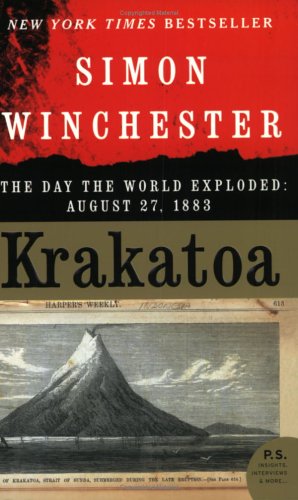
Krakatoa Sometimes everything blows up in your face. Literally. Simon Winchester’s Krakatoa has been on my reading list for years. Boys seem to have a fascination with volcanoes that they never outgrow, and given the world-wide implications of Krakatoa’s 1883 eruption, it is a tragedy that keeps me ever curious. We live on an angry planet. I know that’s projecting agency on nature, but like thunderstorms, to a human sensibility, volcanoes are raging phenomena. As Winchester points out, many indigenous cultures in the “ring of fire” consider volcanoes either gods or messages from the divine world. Honestly, I didn’t read Krakatoa to find out about religion, but it was there nevertheless. For human beings, it has an unparalleled explanatory power.

Krakatoa caused a stint of global cooling after its nineteenth-century eruption, leading to failed crops throughout much of the world, and perhaps played into larger political issues that would stress a world already attempting to cope with fast changes in technology. The story of the volcano is fascinating enough, but the religious dimension, it seems, played itself out more than just in a Gilligan’s Island sort of way. Despite what analysts say, people take their religious beliefs very seriously. So when I reached the end of the eruption, I wondered how Winchester was going to spin this book out for another fifty pages. It turns out that among the effects of the volcano was a religious rebellion. The East Indies, as they were called, were under Dutch colonial rule. This led to a bit of tension with the native Muslims (Islam has long been a major religion in Indonesia). As Winchester points out, the Islam in the region before the eruption was a syncretistic, almost laissez faire, faith. It blended with Hinduism and local beliefs, and even tolerated the Christian Dutch.

Symbolically, or literally, after the explosion that killed thousands, a religious movement that had been waiting for a sign came to life. A more strict Muslim sect saw the events as a predicted display of divine anger. A short-lived rebellion broke out, cut off by Christian repeating rifles, that led to a more strict version of Islam in the region. Although Winchester doesn’t linger on this too long—he is writing about a natural disaster after all—it does raise many very human responses. In the event of a cataclysm, science is cold comfort. We may rationalize, but human beings also feel. And it is religion that will attempt to answer for that pit in your stomach or that worry in your head. That’s what it does best. Science tells us that we can’t really stop volcanoes—we are too small and the planet too overwhelming. Religion, on the other hand, offers a grip on the very forces behind cataclysm—imagined or not. Although seeing natural disasters as divine punishment is never reasonable it is, in the words of a famous philosopher, human, all too human.


Steampunk Messiah

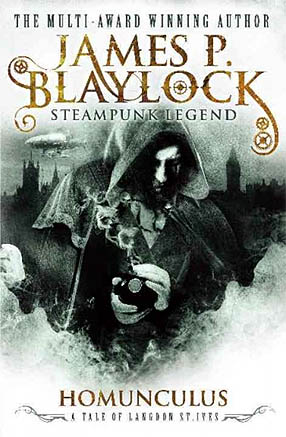
HomunculusSteampunk emerged as a genre of science fiction just as I was finishing seminary. It went largely unnoticed as I continued my “serious” academic work, with my first introduction being Neal Stephenson’s The Diamond Age. Since then, I’ve picked up the occasional Victorian tale and enjoyed an escape into an alternative history. Most recently that escape took the form of one of the originals of the genre, James P. Blaylock’s Homunculus. Considered to be one of the first exemplars of the emergent literary type, it has rollicking, free-wheeling tone—full of strange characters who are attempting to find various hidden treasures. One of those characters is a latter-day prophet by the name of Shiloh, who believes himself the new messiah. Since, as an emerging genre, no rules had been established, steampunk was free to cast whatever characters it found intriguing. A religious fanatic who often drives the action through his own need for self assurance is a tried and true actor in any literature that considers what motivates the masses. Firmly in the cast of “bad guys” in the story, Shiloh patronizes the mad doctor who’s experimenting with reanimating the dead. And Blaylock manages to squeeze a bit of profundity into the role as well.

Nevertheless, the character with the best quote is the ambiguous Bill Kraken, on the side of right, generally, but deeply flawed. In a conversation about immortality, he says “I’m a man of science and the spirit both, and I don’t trust to neither one entirely.” In this he sums up the dilemma of the honest individual who takes science seriously, but who knows that science can’t completely encapsulate the human experience. He trusts science, but Kraken has seen the living dead. There’s an alchemy at work here, and that box he carries on his lap houses the very homunculus that gives the book its title. An alien, actually, the homunculus is sought after by Shiloh, who supposes him to be his father. It is the homunculus who animates the dead and flummoxes the scientists.

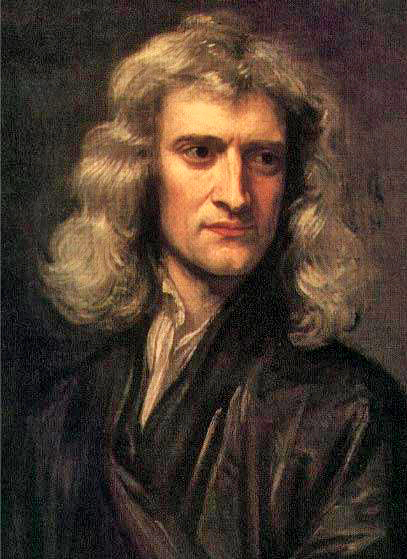
Fiction often leads us where fact simply cannot. I strongly suspect that Blaylock had no moralizing message here, other than perhaps to beware of fanatics, and yet a message remains to ponder. That which we seek the most is that which most wishes to escape us. In the end neither scientist nor religious aficionado ends up with the homunculus under control. This is an alternate reality, after all, and the limits of human experience remain untested. Perhaps such bright thinkers as Galileo, Newton, and Einstein had it right. Perhaps the universe in which we find ourselves is not either-or, but both-and. It was our religion that brought us to science, and it is sometimes our fiction that points to the facts.


Brave Old World

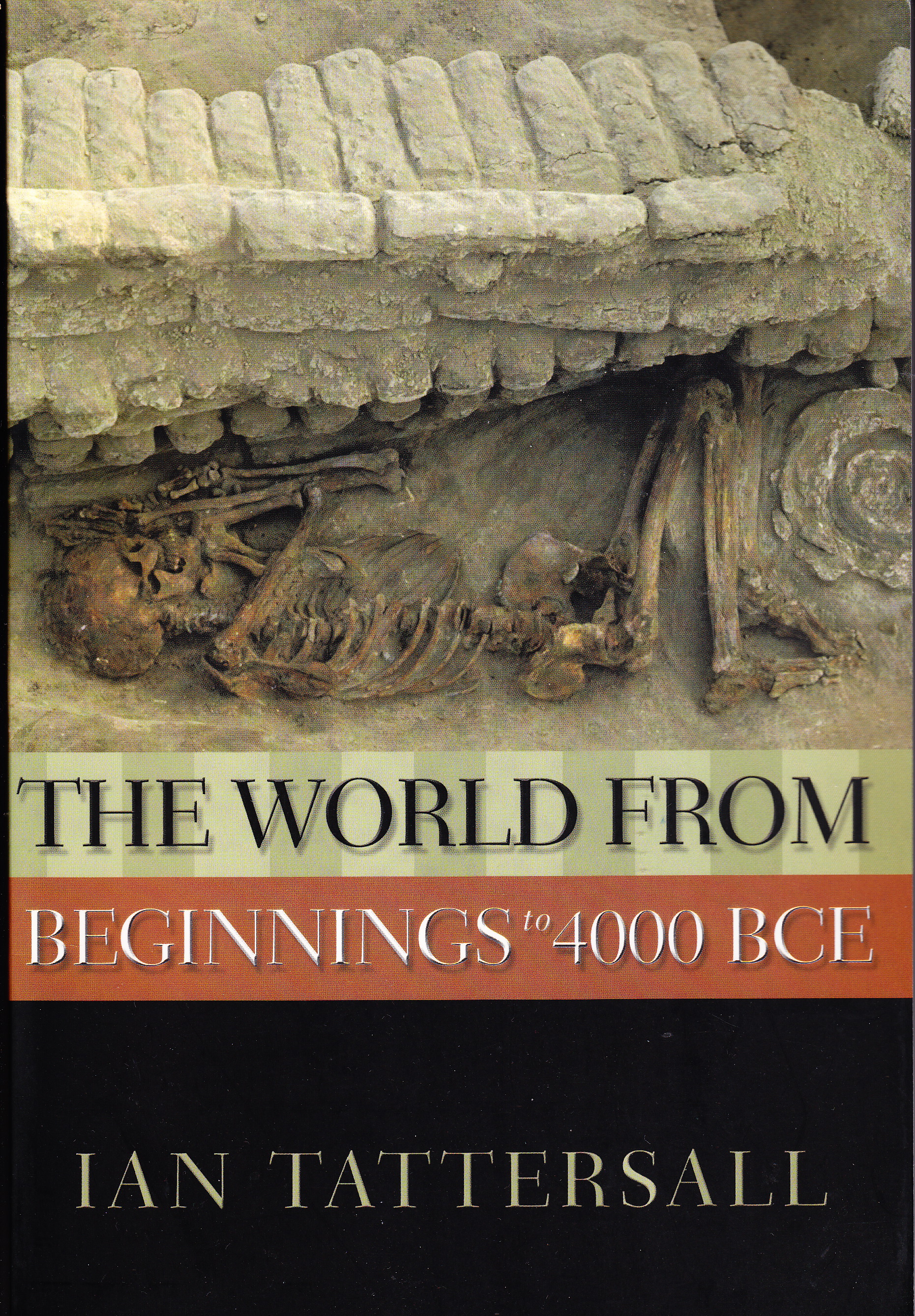
WorldFromBeginningsAs we continue to evolve, it is helpful to learn where we’ve been. Besides, the title, The World from Beginnings to 4000 BCE is difficult for an old Genesis reader to pass up. I knew Ian Tattersall’s book was about human evolution—a subject that has made me feel naughty ever since being raised to believe, quite opposite of reality, that evolution was a myth and Genesis fact. I remember the strange disconnect from my earliest years. Standing under the 13th Street Bridge, just before French Creek joins the Allegheny River, the main tributary of the Ohio, and, in turn, the Mississippi, my brothers and I would look for fossils. And find them we did. If you found the right kind of rock, preferably with a recent fracture, you could find the impressions of dozens of sea shells jumbled together in a glorious, fluted profusion. These were the exoskeletons of animals dead for millions of years, and thinking myself a budding scientist, I stared at them in awe, not quite sure what to make of it all. At church I learned the earth was young—not even a teenager in geologic terms—and yet, in my hand, encased in rock, contrary evidence.

Indeed, Tattersall begins his book, as many college-level texts do, apologizing to the culture that still somehow believes that the earth is just 6000 years old, despite the Tyrannosaurus towering over your head at the Carnegie Museum. Humans are latecomers on this scene, however. Tattersall gives a solid introduction to the current human family tree. Instead of being ashamed of our heritage, I’m more inclined to feel a little pride. Our ancestors, prey to large carnivores, took a distinctive evolutionary track that enlarged our brains to help us outwit our natural enemies and learn how to destroy the very planet we inhabit. Well, maybe pride is a little too strong a word. Good and evil, it seems, always stroll hand-in-hand. So we evolved, but not yet to perfection.

Evolution always makes me think of the future. A strange sense of accomplishment makes prominent thinkers, particularly those who declare themselves bright, marvel at our greatness. I can’t help but to think that something better must lie ahead. We’re told that evolution has no direction in mind—traits that help to survive until reproduction are all that really count—and yet, having the minds we do, it seems that something more might be going on. Have we built all this merely to have sex and die? Glorified May-flies? Isn’t the future a wonder of what we might become? Evolution takes so long, even with punctuated equilibrium, that we’ll never live to see it. I have a suspicion, however, that if we give it enough time, we might offer our as yet unimagined offspring a world as full of wonder as it always has been. And they’ll still be standing by the river, staring in amazement at animals made of stone.


Apes and Atheists

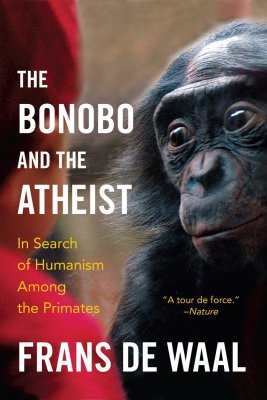
Bonobo&AtheistFrans de Waal is among the sanest of popular science writers. I’ve been following his non-technical work since Our Inner Ape through The Age of Empathy to The Bonobo and the Atheist. As de Waal himself explains, he tended to leave religion out of his earlier works since, for a scientist such topics are generally taboo. His direct address to religion in The Bonobo and the Atheist is refreshing and enlightened. As he notes, de Waal does not believe in God, but he doesn’t believe in the abolition of religion either. This sets him against his fellow biologist Richard Dawkins, who is so bright that the rest of us are burnt out dimmer bulbs by comparison. As de Waal soberly asks: what does science offer in place of religion? What is the point of taking away something that has evolved from our early primate days without offering anything to fill its spot? Even an ape would object.

What makes The Bonobo and the Atheist so engaging, apart from de Waal’s writing, is the openness of his outlook. De Waal suggests that the origins of morality and empathy can be glimpsed in apes and monkeys. He cites the reaction of chimpanzees to rain storms and even waterfalls that hint at early religious development. As I’ve suggested on this forum before, religion may even be allowed to animals. Their experience of religion is certainly not the same as ours, but there is evidence of both thought and feeling. When these are brought together they form religious belief in Homo sapiens. Why not in our ancestors and fellow animals? No, animals don’t develop elaborate doctrines or precious rituals. They do, however, reverence the powerful, ponder death, and feel emotion. Some of our great thinkers are ready to cast all that aside in the name of progress. More humbly, and circumspectly, de Waal considers that evolution is telling us something. And when evolution speaks, its children should pay attention.

Descriptions of reactions and behaviors that we consider unique to humans among the animal world draw me to de Waal’s books. As a scientist de Waal has to draw logical conclusions, and those conclusions point to an inner world that is not so much unique in humans as it is evolved. Religion, I believe, is one of those traits. If animals show some of the early stages of religious development, including a basic form of ethics, how does that devalue our human efforts to explain our universe? Religion is in good company, along with opposable thumbs and basic language comprehension. Looking at how we treat each other, I consider being related to animals a compliment most of the time. Without a doubt some of the ethics Frans de Waal illustrates among the bonobos exceed those I’ve experienced at the hands of many who think of themselves as made in the image of God.